Connect with us
DAPA Banner

Tech

In Chiles V. Salazar The Supreme Court Issues A Bad Good First Amendment Decision

Published

on

from the good-bad-decision dept

The Supreme Court’s decision last year in U.S. v. Skirmetti, upholding a law depriving young trans people the healthcare they need, is insupportable, rendering people unequal in a way the Constitution cannot possibly suborn. But its new decision in Chiles v. Salazar regarding the First Amendment standard to use regarding Colorado’s law regarding conversion therapy is different. Despite its similar subject matter relating to sexual orientation and gender identity sounding similar to Skirmetti, it’s actually another 303 Creative, another case that endorsed bigoted views unacceptably hostile to LGBTQ+ people. But for much the same reason that 303 Creative was an important articulation of the First Amendment’s expansive protection—despite the apparent prejudice the plaintiff (and the Court) advanced—so is this decision.

That’s what’s good about this decision, that it recognizes that the First Amendment operates in the professional licensing space and requires heightened scrutiny before states can be permitted to constrain licensing when those constraints are predicated on viewpoints expressed by the licensee, including as part of the provision of services. Heightened scrutiny is what makes the First Amendment’s protections meaningful, and the Court has not always been consistent or coherent in requiring it, particularly with respect to licensure. But when heightened scrutiny isn’t required, it becomes much harder to fight censorial actions taken by the government, including those driven by animus, and including those driven by anti-LGBTQ+ animus—which would also include those actions targeted at therapists supporting LGBTQ+ patients, such as those recently announced by Ken Paxton in Texas. This Supreme Court decision now makes it much, much harder for him to get away with silencing those therapists whose therapy affirmed their patients’ identity by putting their license at risk if they do.

The main problem with this decision however is that the Court picked a law prohibiting conversion therapy as the moment to finally articulate that heightened scrutiny applies with respect to licensing, including medical licensing. Conversion therapy, as Justice Jackson described in her dissenting opinion, is a scientifically-discredited approach “designed to ‘convert’ a person’s sexual orientation or gender identity, so that the person will become heterosexual or cisgender.” [Dissent p.3]. Historically it has been provided via “aversive modalities,” that many have likened to torture, such as “inducing nausea, vomiting, or paralysis in patients or subjecting them to severe electric shocks to telling patients to snap an elastic band on their wrists in response to nonconforming thoughts.” [Dissent p.3]

Importantly, however, to the extent that any law prohibits these practices, those laws remain in force—this decision does not affect such laws. (“The question before us is a narrow one. Ms. Chiles does not question that Colorado’s law banning conversion therapy has some constitutionally sound applications. She does not take issue with the State’s effort to prohibit what she herself calls ‘long-abandoned, aversive’ physical interventions.” [Majority p.7]). But it does reach conversion therapy delivered via talk therapy, where therapists “seek to encourage patients to change their behavior in an attempt to ‘change’ their identity” still are. [Dissent p.3]. As Jackson explained, this approach also causes real harm. [Dissent p.4-5]. And it’s a kind of harm that states like Colorado, who passed the law challenged here, have an interest in stopping. [Dissent p.5-7].

Advertisement

Making it hard for states to do so raises a number of concerns, such as that the decision will give a veneer of legitimacy to conversion therapy and stoke the hostile anti-LGBTQ+ attitudes driving it, as well as create the risk that conversion therapy, at least insofar as it includes talk therapy, might be something that minors could be legally subjected to in Colorado and elsewhere. There is also the fear that even if the Court has now articulated a good rule about heightened scrutiny it will only remember to apply it in cases like these where it will lead to results consistent with the Court majority’s biases—in other words, while the Court may be happy to subject Colorado’s anti-conversion therapy rule to strict scrutiny, there is the fear that it will conveniently forget to apply it to, say, Texas’s law trying to punish those who refuse to engage in it.

It also raises a collateral concern even on the speech-protection front, that subjecting licensure requirements to strict scrutiny could have the practical effect of diluting the standard. As Jackson also noted, we have long allowed states to regulate medical professionals, [Dissent p.8], as well as other licensed professionals like lawyers, and much of the regulation is directed to how licensed practitioners speak in some way as they provide their services. Perhaps all these efforts could actually pass strict scrutiny. In fact, it’s even still possible that Colorado’s law might yet survive it; although Justice Gorsuch’s majority opinion casts some doubt, the case is not over.

Rather than deciding it for themselves, the Court remanded the case back to the lower courts to this time apply the more exacting strict scrutiny standard rather than the less-demanding rational basis review they originally applied. Presumably there will be more opportunity for briefing and argument to show how the particular harm of conversion therapy creates the compelling state interest Colorado needed to act, and that its prohibition of licensed therapists from providing it via talk therapy is a remedy that is sufficiently narrowly tailored.

But the problem with applying strict scrutiny to so much regulation targeting licensing is that it might start to become too easy to satisfy when there are strong policy reasons to favor the government action, and as a result strict scrutiny will no longer be useful as a standard if it essentially allows everything, instead of being a meaningful filter. There are after all always compelling reasons for the government to care about the quality of the services licensees deliver via their professional expression, but just because the government has a valid reason to regulate does not mean that everything it does to regulate is constitutional.

Advertisement

Strict scrutiny also requires that the state action be narrowly tailored, in addition to being motivated by a compelling reason, and it’s too easy for courts to skip that part of the analysis, as we saw with the TikTok ban when it was somehow blessed by the DC Circuit. And the fear is that the more strict scrutiny is applied to what is fairly ordinary state regulation—of licensed practitioners—the more likely it will have the practical effect of creating precedent that dilutes the standard so that it is no longer so strict when we need it to be, especially for state action that is more exceptional. (On the TikTok ban the Supreme Court had greenlighted it using a lesser standard, which was itself extremely problematic as the ban should have been found unconstitutional, but at least the tool that should have applied to it remained sharp for future use, rather than dulled by this bad decision.)

On the other hand, a decision upholding the lower courts’ use of rational basis review would have done no one any favors. As Justice Kagan wrote in her concurrence, joined by Justice Sotomayor, it is easy to imagine a law that mirrors what the Colorado one does, prohibiting talk therapy that accepts LGBTQ+ identity instead of challenges it, and now advocates are left with a much more powerful tool to challenge it.

Of course, it does not matter what the State’s preferred side is. Consider a hypothetical law that is the mirror image of Colorado’s. Instead of barring talk therapy designed to change a minor’s sexual orientation or gender identity, this law bars therapy affirming those things. As Ms. Chiles readily acknowledges, the First Amendment would apply in the identical way. [Concurrence p.3]

As Texas shows, such a situation is not hypothetical. But now with this decision people challenging such censorial government efforts can turn to long-established First Amendment doctrine in their fight. And the doctrine remains stable, rather than something now swiss-cheesed with bespoke exceptions tied to certain policy preferences. No matter how valid those preferences, if they can be given special constitutional treatment then so can the bad ones. This decision helps buttress the guardrails preventing speech from being protected or not based on whether the government likes it, which is the whole reason we have the First Amendment, to make sure government preferences cannot dictate what views people can express.

Which is especially important when the courts cannot be trusted to overcome their biases to have good sense about which policy preferences are good and bad. The Supreme Court of course only has itself to blame that the public is so primed to believe that its decisions are driven by its biases and not neutral, sustainable doctrine. But nevertheless this decision still stands as an important declaration of law that is consistent with existing First Amendment jurisprudence and one that will ultimately leave everyone, including those challenging government actions attacking LGBTQ+ interests, far better off than if the Court had let the lower courts’ decisions invalidating the law stand after using a less speech-protective rule. In fact it will be an important one for anyone fighting censorship in any context, including those we generally talk about here, to use, because with this decision, the rule that has long been the rule remains the rule: when a government action non-incidentally touches on speech, is content-based, and is not viewpoint neutral, strict scrutiny applies.

Advertisement

Per this decision, a law targeting what therapists can say inherently involves speech, and not in an incidental way. And it targets it in a way that is not viewpoint-neutral; it has a specific preference, that conversion therapy is bad. As a result, as a law that targets the content of speech in a way that is not viewpoint-neutral, strict scrutiny, a more exacting standard than the rational basis review the lower courts had used, is required.

Turning to the merits, both the district court and the Tenth Circuit denied Ms. Chiles’s request for a preliminary injunction. The courts recognized that Ms. Chiles provides only “talk therapy.” And they acknowledged that Colorado’s law regulates the “verbal language” she may use. But, the courts held, the main thrust of the State’s law is to delineate which “treatments” and “therapeutic modalit[ies]” are permissible. Accordingly, the courts reasoned that Colorado’s law is best understood as regulating “professional conduct.” At most, they continued, Colorado’s law regulates speech only “incidentally” to professional conduct. As a result, the courts concluded, Colorado’s law triggers no more than “rational basis review” under the First Amendment, requiring the State to show merely that its law is rationally related to a legitimate governmental interest. Because the State satisfied that standard, the courts held that Ms. Chiles was not entitled to the relief she sought. [Majority p.6]

[…]

Consistent with the First Amendment’s jealous protections for the individual’s right to think and speak freely, this Court has long held that laws regulating speech based on its subject matter or “communicative content” are “presumptively unconstitutional.” Reed v. Town of Gilbert, 576 U. S. 155, 163 (2015). As a general rule, such “content-based” restrictions trigger “strict scrutiny,” a demanding standard that requires the government to prove its restriction on speech is “narrowly tailored to serve compelling state interests.” Ibid. Under that test, it is ” ‘rare that a regulation . . . will ever be permissible.’ ” Brown v. Entertainment Merchants Assn., 564 U. S. 786, 799 (2011) (quoting United States v. Playboy Entertainment Group, Inc., 529 U. S. 803, 818 (2000)).

We have recognized, as well, the even greater dangers associated with regulations that discriminate based on the speaker’s point of view. When the government seeks not just to restrict speech based on its subject matter, but also seeks to dictate what particular “opinion or perspective” individuals may express on that subject, “the violation of the First Amendment is all the more blatant.” Rosenberger v. Rector and Visitors of Univ. of Va., 515 U. S. 819, 829 (1995). “Viewpoint discrimination,” as we have put it, represents “an egregious form” of content regulation, and governments in this country must nearly always “abstain” from it. Ibid.; see also Iancu v. Brunetti, 588 U. S. 388, 393 (2019) (describing “the bedrock First Amendment principle that the government cannot discriminate” based on view-point (internal quotation marks omitted)); Good News Club v. Milford Central School, 533 U. S. 98, 112–113 (2001); Barnette, 319 U. S., at 642. [Majority p.8-9]

[…]

As applied here, Colorado’s law does not just regulate the content of Ms. Chiles’s speech. It goes a step further, prescribing what views she may and may not express. For a gay client, Ms. Chiles may express “[a]cceptance, support, and understanding for the facilitation of . . . identity exploration.” For a client “undergoing gender transition,” Ms. Chiles may likewise offer words of “[a]ssistance.” But if a gay or transgender client seeks her counsel in the hope of changing his sexual orientation or gender identity, Ms. Chiles cannot provide it. The law forbids her from saying anything that “attempts . . . to change” a client’s “sexual orientation or gender identity,” including anything that might represent an “effor[t] to change [her client’s] behaviors or gender expressions or . . . romantic attraction[s].” [Majority p.13]

But even if the law as it stands can’t survive strict scrutiny, in her concurrence, joined by Justice Sotomayor, Justice Kagan suggested ways the law might be amended so that it could be upheld.

It would, however, be less [likely to be unconstitutional] if the law under review was content based but viewpoint neutral. Such content-based laws, as the Court explains, trigger strict scrutiny “[a]s a general rule.” But our precedents respecting those laws recognize complexity and nuance. We apply our most demanding standard when there is any “realistic possibility that official suppression of ideas is afoot”—when, that is, a (merely) content-based law may reasonably be thought to pose the dangers that viewpoint-based laws always do. Davenport v. Washington Ed. Assn., 551 U. S. 177, 189 (2007). But when that is not the case—when a law, though based on content, raises no real concern that the government is censoring disfavored ideas—then we have not infrequently “relax[ed] our guard.” Reed, 576 U. S., at 183 (opinion of KAGAN, J.); see Davenport, 551 U. S., at 188 (noting the “numerous situations in which [the] risk” of a content-based law “driv[ing] certain ideas or viewpoints from the marketplace” is “attenuated” or “inconsequential, so that strict scrutiny is unwarranted”). Just two Terms ago, for example, the Court declined to apply strict scrutiny to a content-based but viewpoint-neutral trademark restriction. See Vidal v. Elster, 602 U. S. 286, 295 (2024); id., at 312 (BARRETT, J., concurring in part); id., at 329–330 (SOTOMAYOR, J., concurring in judgment). In the trademark context, as in some others, experience and reason alike showed “no significant danger of idea or viewpoint” bias. R. A. V., 505 U. S., at 388.

The same may well be true of content-based but viewpoint-neutral laws regulating speech in doctors’ and counselors’ offices.* Medical care typically involves speech, so the regulation of medical care (which is, of course, pervasive) may involve speech restrictions. And those restrictions will generally refer to the speech’s content. Cf. Reed, 576 U. S., at 177 (Breyer, J., concurring in judgment) (noting that “[r]egulatory programs” addressing speech “inevitably involve content discrimination”). But laws of that kind may not pose the risk of censorship—of “official suppression of ideas”—that appropriately triggers our most rigorous review. R. A. V., 505 U. S., at 390. And that means the “difference between viewpoint-based and viewpoint-neutral content discrimination” in the health-care context could prove “decisive.” Vidal, 602 U. S., at 330 (opinion of SOTOMAYOR, J.). Fuller consideration of that question, though, can wait for another day. We need not here decide how to assess viewpoint-neutral laws regulating health providers’ expression because, as the Court holds, Colorado’s is not one. [Concurrence p.3-4]

Ultimately, despite all of the concerns, the decision is still a good one that will leave everyone better off. And not just for cases that reach the Supreme Court but in every state and federal court hearing every challenge of laws trying to penalize certain views, including those accepting of LGBTQ+ identities. Whereas a decision to the contrary, one that would have allowed a rational basis standard to be the test for the law’s constitutionality, could be used to defend laws that, instead of fighting LGBTQ+ prejudice as this one tried to do, instead advanced it. As Texas illustrates, already there are examples of certain government actors attempting to impose their biased viewpoints via licensing requirements for therapists. This decision, even if it may stand as an individual reflection of LGBTQ+ animus by this Supreme Court, still makes further state action motivated by it that much harder for any government actor to impose.

Advertisement

Filed Under: 1st amendment, chiles v. salazar, colorado, conversion therapy, free speech, strict scrutiny, supreme court

Source link

Advertisement
Continue Reading
Click to comment

You must be logged in to post a comment Login

Leave a Reply

Tech

Alexander 3D-Printed a Real Engine That Runs

Published

on

3D-Printed Working Engine
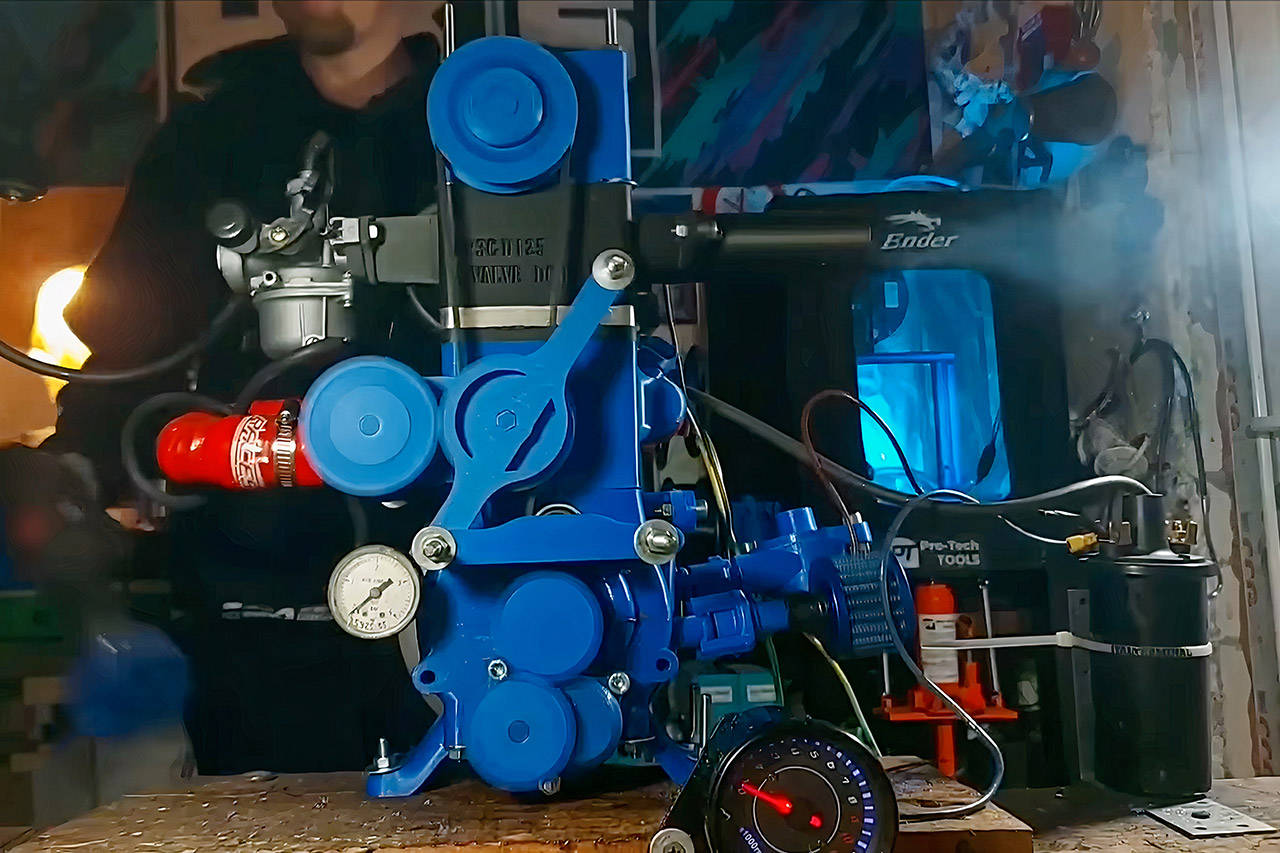
Alexander worked in his workshop for years on a simple goal: to turn spools of everyday filament into a workable internal combustion engine. That is, anything with a few hundred horsepower to get the aging bones going. His third generation of this made-from-scratch engine, known as the AP3 Carbon D125, has recently met that target. The new design surrounds a 125cc single-cylinder four-stroke engine, which is commonly found in scooters.


The majority of the engine parts were created in his workshop using an Elegoo Centauri Carbon 2 Combo printer and a variety of different types of filament, specifically ASA, ABS, and PET-CF, but the cylinder bore is lined with a stainless steel sleeve, giving the entire thing a bit more reliability than the other parts. A friend at a CNC shop delivered the head, which was machined from aluminum to contain four valves and dual overhead cams. Bearings, belts, and some odd bits of hardware were required to complete the engine. The previous attempts taught us a lot of hard lessons, as the second engine ran for four minutes before heat melted the cylinder body and killed the compression completely, the nuts were in some awkward spots, torque was impossible to apply evenly, and water and oil mixed inside the head. Alexander had to virtually dismantle everything and start from scratch.


Bambu Lab A1 3D Printer, Support Multi-Color 3D Printing, High Speed & Precision, Full-Auto Calibration…
  • High-Speed Precision: Experience unparalleled speed and precision with the Bambu Lab A1 3D Printer. With an impressive acceleration of 10,000 mm/s…
  • Multi-Color Printing with AMS lite: Unlock your creativity with vibrant and multi-colored 3D prints. The Bambu Lab A1 3D printers make multi-color…
  • Full-Auto Calibration: Say goodbye to manual calibration hassles. The A1 3D printer takes care of all the calibration processes automatically…

3D-Printed Working Engine
This time, however, he put an oil pump directly into the crankcase. Four small bearings and a pair of gears revolve inside a printed enclosure to accomplish this. A basic pressure regulator fits in the main gallery and ensures that the oil gets to where it needs to be. There’s no need for an external pump this time. He also installed a separate positive crankcase ventilation system to keep the oil where it belonged. The cooling system underwent a similar makeover. A mechanical water pump was printed onto the cylinder body. Its impeller rotates on bearings and a timing belt. Coolant circulates through passages in the cranium and around the sleeves. Long story short, there are no fancy electric pumps and no mysterious leaks between the oil and water lines.

3D-Printed Working Engine
Now, he used the old crankshaft from his prior attempts, but first checked it with a dial indicator. The needle changed only 0.05 millimeters, which is well within the tolerance for a 125cc engine. He also created a head gasket with braided copper wire around the sleeve and a high-temperature material rated for 1,000 degrees Celsius. Putting it all together was a tedious task. Alexander hand lapped the valves and carefully sealed each joint. When everything was ready, he filled the crankcase with 10W40 and attached it to a test rig.

3D-Printed Working Engine
The initial crank brought instant effects, and this time it caught, settled into a steady idle, and kept the compression, which was a good start; however, a brief timing check revealed that the water-pump pulley was spinning at the incorrect speed due to a slipped tensioner. A little tweak and it was all set. On the second run, the pump operated well and the coolant flowed properly. However, the oil pressure gauge remained silent, either because the sender required calibration or because the tolerances were just a little too loose, and a suspected vacuum leak appeared on the intake side where the epoxy had not yet been entirely applied. Still, it ran smoothly enough to demonstrate that the main architecture held together properly.

3D-Printed Working Engine
Alexander believes the crankcase oil pump was the true game changer; seeing the oil pour through the gallery during a bench test gave him the confidence to put the rest together and see it operate. Every printed part not only survived, but appeared to manage the heat and vibration of the first few minutes with ease.
[Source]

Source link

Advertisement
Continue Reading

Tech

How to watch London Marathon 2026: Free Streams & TV Channels

Published

on

The London Marathon 2026 live streams will feature a stellar lineup of the world’s elite long-distance runners tackling the iconic 26.2-mile course, which winds from Greenwich to The Mall, via the famous dry dock, the Cutty Sark, in the UK capital. Alongside defending champions Sebastian Sawe and Tigst Assefa, more than 59,000 runners will pound the tarmac, including former F1 world champion Sebastian Vettel and Olympian Laura Kenny.

The 29-year-old Sawe claimed victory in 2:02:27 twelve months ago, finishing ahead of Jacob Kiplimo, the half-marathon world record holder, on his marathon debut. The Ugandan will once again expect to contend for a podium place. Ethiopia’s Deresa Geleta is the third runner to have gone under the 2:03 mark, while Joshua Cheptegei and Tamirat Tola, the reigning Olympic champions over 10,000m and the marathon respectively, are also in contention. Amos Kipruto, the 2022 London Marathon champion, is also set to line up.

Advertisement

Source link

Continue Reading

Tech

Today’s NYT Mini Crossword Answers for April 26

Published

on

Looking for the most recent Mini Crossword answer? Click here for today’s Mini Crossword hints, as well as our daily answers and hints for The New York Times Wordle, Strands, Connections and Connections: Sports Edition puzzles.


Need some help with today’s Mini Crossword? Read on for all the answers. And if you could use some hints and guidance for daily solving, check out our Mini Crossword tips.

If you’re looking for today’s Wordle, Connections, Connections: Sports Edition and Strands answers, you can visit CNET’s NYT puzzle hints page.

Advertisement

Read more: Tips and Tricks for Solving The New York Times Mini Crossword

Let’s get to those Mini Crossword clues and answers.

completed-nyt-mini-crossword-puzzle-for-april-26-2026.png

The completed NYT Mini Crossword puzzle for April 26, 2026.

Advertisement

NYT/Screenshot by CNET

Mini across clues and answers

1A clue: Alternative to electric, for a stove
Answer: CASA

5A clue: Developer’s projects
Answer: APPS

6A clue: Sketch comedy spinoff launched on March 21, 2026
Answer: SNLUK

Advertisement

7A clue: One of 24
Answer: HOUR

8A clue: Gas brand with a green-and-white logo
Answer: HESS

Mini down clues and answers

1D clue: Kayak alternative
Answer: CANOE

2D clue: Great grade
Answer: APLUS

Advertisement

3D clue: N.B.A. team with the 7’4” star Victor Wembanyama
Answer: SPURS

4D clue: “___ not what your country can do for you …”
Answer: ASK

6D clue: Sound made with a finger to the lips
Answer: SHH

Advertisement

Source link

Continue Reading

Tech

Today’s NYT Connections: Sports Edition Hints, Answers for April 26 #580

Published

on

Looking for the most recent regular Connections answers? Click here for today’s Connections hints, as well as our daily answers and hints for The New York Times Mini Crossword, Wordle and Strands puzzles.


Today’s Connections: Sports Edition is a tough one. If you’re struggling with today’s puzzle but still want to solve it, read on for hints and the answers.

Connections: Sports Edition is published by The Athletic, the subscription-based sports journalism site owned by The Times. It doesn’t appear in the NYT Games app, but it does in The Athletic’s own app. Or you can play it for free online.

Advertisement

Read more: NYT Connections: Sports Edition Puzzle Comes Out of Beta

Hints for today’s Connections: Sports Edition groups

Here are four hints for the groupings in today’s Connections: Sports Edition puzzle, ranked from the easiest yellow group to the tough (and sometimes bizarre) purple group.

Yellow group hint: Whack!

Advertisement

Green group hint: Hoops team monikers.

Blue group hint: Common last name.

Purple group hint: Not 2 or 3.

Answers for today’s Connections: Sports Edition groups

Yellow group: Hard-hit baseball.

Advertisement

Green group: NBA teams with singular nicknames.

Blue group: ____ Johnson.

Purple group: What “1” might mean.

Read more: Wordle Cheat Sheet: Here Are the Most Popular Letters Used in English Words

Advertisement
completed NYT Connections: Sports Edition puzzle for April 26, 2026

The completed NYT Connections: Sports Edition puzzle for April 26, 2026.

NYT/Screenshot by CNET

What are today’s Connections: Sports Edition answers?

The yellow words in today’s Connections

The theme is hard-hit baseball. The four answers are frozen rope, laser, liner and screamer.

The green words in today’s Connections

The theme is NBA teams with singular nicknames. The four answers are Heat, Jazz, Magic and Thunder.

Advertisement

The blue words in today’s Connections

The theme is ____ Johnson. The four answers are Flau’jae, Gus, Lane and Randy.

The purple words in today’s Connections

The theme is what “1” might mean. The four answers are fastball, pitcher, point guard and top rank.

Source link

Advertisement
Continue Reading

Tech

The climate tech IPO window could finally be cracking open

Published

on

Climate tech startups are capital intensive, timelines are long, and the technology is often considered “first of its kind.” What’s more, a key value proposition is addressing pollution — an externality that is, at best, poorly priced by the market. Those aren’t the qualities stock pickers tend to favor.

And yet, public markets appear to be warming to climate tech startups — or at least some of them.

This week, nuclear startup X-energy went public, raising $1 billion in an upsized share offering that appears to have delivered a windfall for its investors, including Amazon. Retail investors apparently can’t get enough, with the stock popping 25% in its first hour of trading. Also this week, geothermal startup Fervo said it filed for an initial public offering. The size of the Fervo IPO has yet to be disclosed, but private investors have valued the company at around $3 billion, according to PitchBook.

The move to go public aligns with what investors told TechCrunch at the end of last year. After years of tepid attitudes toward climate tech companies, they expected public markets to start welcoming energy-related startups. Nearly every investor that weighed in on the question said the startups with the best chances of going public specialize in either nuclear fission or enhanced geothermal. Fervo, specifically, was mentioned several times.

Advertisement

Thank data centers for that. The AI craze has taken a trend of rising demand for electricity and made it sexy and salable. Companies that were already betting on the upswing lucked into a trending narrative that coincided with their technological maturity. Fortune certainly favors the prepared. 

The IPOs are also certain to please investors, letting them return capital to their LPs. The recent dearth of IPOs has kept a chunk of climate tech funding locked up, at a time when many funds would like to start cashing out.

But it’s not just about cashing out.

Techcrunch event

Advertisement

San Francisco, CA
|
October 13-15, 2026

Fervo and X-energy have followed the traditional route to public markets, suggesting there is confidence that a broad base of investors wants to participate. If it were just about freeing up investor capital, the startups could have followed the SPAC route. (Several have.) But these two companies took the longer path.

Advertisement

Yet for all that success, a wide swathe of climate tech will probably be left out of the IPO wave.

Companies that aren’t entangled in energy markets will have to find other ways to press on — and without access to the deep pockets the public market provides. The divergence suggests the climate tech world is starting to go K-shaped, a trend which Mark Cupta, managing director at Prelude Ventures, suggested when I spoke to him a little over a week ago.

Companies stuck on the poorer side of the IPO window still have private investors to lean on. But there, too, a K-shaped trajectory is starting to appear.

Venture capital and growth funds raised about $6.5 billion last year, according to Sightline Climate. That’s the same as in 2021, but because there are more funds today, each fund is now smaller. For founders, that could be bad news since funds have less to draw on. On the upside, more competition could drive better fundraising results.

Advertisement

At the same time, the big funds keep getting bigger. Infrastructure dominated climate tech fundraising last year, with 42 funds raising 75% of all dollars in the sector, according to Sightline Climate. That success will spill over into the startup side if it’s a company with a mature technology that is ready to build big. 

Sightline said that many new infrastructure funds are specializing in renewables, grid technologies, and energy storage. In other words, the K-shape isn’t going away anytime soon.

When you purchase through links in our articles, we may earn a small commission. This doesn’t affect our editorial independence.

Source link

Advertisement
Continue Reading

Tech

OpenAI CEO apologizes to Tumbler Ridge community

Published

on

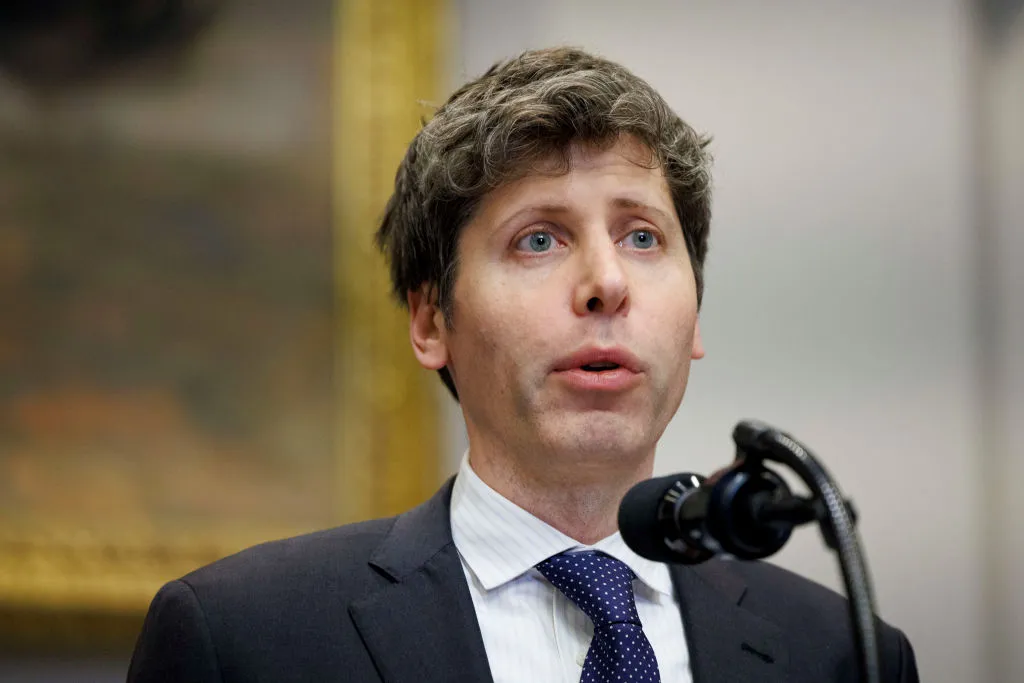
In a letter to the residents of Tumbler Ridge, Canada, OpenAI CEO Sam Altman said he is “deeply sorry” that his company failed to alert law enforcement about the suspect in a recent mass shooting.

After police identified 18-year-old Jesse Van Rootselaar as a suspected shooter who allegedly killed eight people, the Wall Street Journal reported that OpenAI had flagged and banned Van Rootselaar’s ChatGPT account in June 2025 for after she described scenarios involving gun violence. The company’s staff debated alerting police but ultimately decided against it, eventually reaching out to Canadian authorities after the shooting.

OpenAI has since said that it is improving safety protocols, for example by putting more flexible criteria in place to determine when accounts get referred to authorities, and by establishing direct points of contact with Canadian law enforcement.

In Altman’s letter, which was first published in the local newspaper Tumbler RidgeLines, the CEO said he’d discussed the shooting with Tumbler Ridge Mayor Darryl Krakowka and British Columbia Premier David Eby, and they’d all agreed “a public apology was necessary,” but “time was also needed to respect the community as you grieved.”

Advertisement

“I am deeply sorry that we did not alert law enforcement to the account that was banned in June,” Altman said. “While I know words can never be enough, I believe an apology is necessary to recognize the harm and irreversible loss your community has suffered.”

Altman also said that OpenAI’s focus will “continue to be on working with all levels of government to help ensure nothing happens like this again.”

In a post on X, Eby said Altman’s apology is “necessary, and yet grossly insufficient for the devastation done to the families of Tumbler Ridge.”

Techcrunch event

Advertisement

San Francisco, CA
|
October 13-15, 2026

Canadian officials have said they are considering new regulations on artificial intelligence but have not made any final decisions.

Advertisement

If you are in a crisis or having thoughts of suicide, call or text 988 to reach the 988 Suicide and Crisis Lifeline.

When you purchase through links in our articles, we may earn a small commission. This doesn’t affect our editorial independence.

Source link

Advertisement
Continue Reading

Tech

The Online Civil War About ‘Michael’ Is a Battle Over Truth

Published

on

Is truth determined by the size of the audience it reaches?

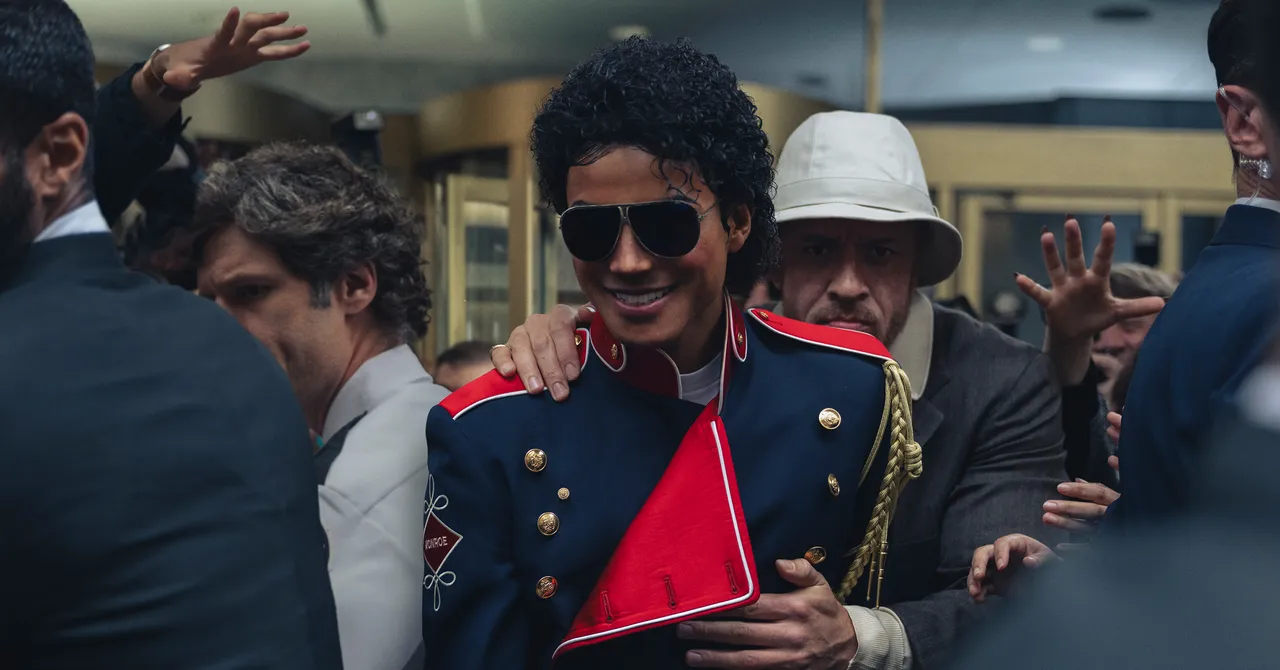
If so, Michael—a new film about the pop singer Michael Jackson that is on track to have the biggest-ever opening for a music biopic, with projected earnings of $70 million at the US box office, despite critics saying it sanitizes the reality of who Jackson actually was—intends to supplant the King of Pop as the apotheosis of artistic virtue.

The film’s release has sparked a civil war online, between those eager to reclaim the music and myth of Jackson, and those who see any celebration of him as a failure of accountability.

Musically, Jackson was in a class all his own. In the pre-social media days, before AI artists charted on Billboard and he became a recurring meme online, Jackson was the epitome of monoculture: 13 number one singles, countless awards, twice inducted into the Rock & Roll Hall of Fame. He remains, even in death, one of the best-selling music artists of all time. But his legacy was also defined by multiple allegations of sexual abuse, an occasionally eccentric personal life, and Jackson’s on-record admission of sharing his bed with underage boys. “This guy was worse than Jeffrey Epstein,” Dan Reed, the director of Leaving Neverland, the 2019 Emmy-winning HBO documentary about Jackson’s alleged sexual misconduct, recently told the Hollywood Reporter.

Advertisement

Director Antoine Fuqua, who maintains Jackson’s innocence, never intended to fully avoid the allegations that circled Jackson later in life. According to him, the original cut of Michael included a reenactment of the 1993 police raid on Neverland Ranch, where Jackson was strip-searched to verify the physical description of his first accuser, Jordan Chandler. But the scene was ultimately scrapped along with the film’s entire third act—totaling $15 million in reshoots—because of a legal clause in a settlement with Chandler that prohibited the depiction of his experience on screen.

The result is a film that stops abruptly in 1988 and erases the most controversial two decades of Jackson’s life. Instead, the film emphasizes Jackson’s musical legacy—the story arc is structured around career-defining music moments, like the making of the “Thriller” video—over the more contentious aspects of his personal behavior.

Scrubbing the Neverland Ranch scene, but also choosing to completely write around any of Jackson’s alleged misconduct, is not surprising given that the Jackson estate had approval over the use of his music, essentially granting it veto power over the film’s final cut. One argument that keeps surfacing on social media is that critics should judge Michael on its own terms rather than on what they think it should have been. “It seems like people wanted a movie [that] was never going to exist,” noted one X user. “So it was never going to be salacious or introspective”

Jackson’s fans argue the allegations shouldn’t eclipse his musical and artistic legacy, separating the artist from the work, while critics insist that a biopic should present a complete picture of Jackson, regardless of how unflattering that picture may be. As film critic Sean Burns characterized it on X, ending “with the release of Bad is like ending an OJ biopic with him winning the Heisman.” A good Michael Jackson movie, wrote the artist Harmony Holiday, “would be part tragedy, part farce,” calling attention to how the film lacks the real kind of interiority that made Jackson so polarizing.

Advertisement

“Watching it feels more like being frog-marched through a wax museum than watching a movie, each milestone restaged with an off-putting, uncanny-valley resemblance and no interiority,” critic Alison Willmore noted in Vulture.

Source link

Continue Reading

Tech

California Engineer Identified in Suspected Shooting at White House Correspondents Dinner

Published

on

A 31-year-old engineer and computer scientist was identified in media reports and President Donald Trump as the suspected shooter at the White House Correspondents Dinner on Saturday night.

Cole Tomas Allen, of Torrance, California, was apprehended following the firing of shots at the Washington Hilton, where Trump was scheduled to deliver remarks to a ballroom full of journalists, cabinet officials, and Hilton staff. Allen’s name surfaced in media reports shortly before Trump posted two photos of a suspect following his apprehension. The person in the photos Trump posted matches photos of Allen.

In dramatic scenes, several shots were heard outside the ballroom, after which Trump and Vice President JD Vance were immediately rushed off the stage by the United States Secret Service. In the immediate aftermath of the shooting incident, it briefly appeared as if the event would proceed—Trump posted “LET THE SHOW GO ON” on Truth Social—but the event was eventually shut down.

According to the Metropolitan Police Department, the suspect “charged” a Secret Service checkpoint at the Hilton hotel, and was intercepted by agents. MPD interim chief Jeffery Carroll said the suspect was carrying a “shotgun, handgun, and multiple knives.”

Advertisement

At a White House press conference following the shooting, Trump said one United States Secret Service agent was shot but saved from serious injury by his bulletproof vest. Trump said the agent, who was not named, is “doing great” and in “great shape.” No other injuries were immediately reported.

The suspect was later transported to a local hospital “to be evaluated,” according to Carroll, who said he appears to be a “lone actor.”

Around the time Trump’s press conference began on Saturday night, he posted a picture on his Truth Social account appearing to show the suspected shooter on the ground, with his hands restrained behind his back, and a foil warming blanket covering the lower half of his body.

A WIRED review of public databases shows a seemingly minimal online presence associated with Allen’s name. According to his LinkedIn profile, he graduated from Caltech in 2017 with a bachelor’s in mechanical engineering from California State University Dominguez Hills in 2025 with a master’s in computer science. A photo that appears to be of Allen appears on the Caltech site identifying him as a member of the school’s Mechanical Engineering 72 class, described by the school as a “two-term engineering design lab” for building robots and autonomous vehicles. His name is also listed in a 2025 Dominguez Hills graduation program. A search in a public facial recognition database returns only two images, both apparently of him as an undergraduate.

Advertisement

According to the shooter’s LinkedIn profile, he has been employed part-time since March 2020 at C2 Education, a private company that helps students prepare for the SAT and ACT exams. In December 2024, C2 Education said in posts on LinkedIn and Facebook that he was the company’s “December Teacher of the Month.”

Since 2018, the suspected shooter self-identified on his LinkedIn profile as a “self-employed” indie game developer. He appears to have released an “atomic fighting game” called Bohrdom on Steam in 2018. He advertised the game using accounts on YouTube and X that appeared to have little to no following. The caption for a trailer of the game describes it as a “non-violent, skill-based, asymmetrical fighting game loosely based on a chemistry model that is itself loosely based on reality.”

Relatives of Allen’s did not immediately respond to requests for comment. C2 Education and the Metropolitan Police Department also did not immediately respond to requests for comment.

Source link

Advertisement
Continue Reading

Tech

The next Xbox could be waiting on the memory market

Published

on


Sharma described the decision-making process as an equation, noting that memory costs influence multiple variables. She said Microsoft’s focus is on building a console capable of running great games – including PC titles – while accounting for market conditions that remain in flux.
Read Entire Article
Source link

Continue Reading

Tech

Anthropic created a test marketplace for agent-on-agent commerce

Published

on

In a recent experiment, Anthropic created a classified marketplace where AI agents represented both buyers and sellers, striking real deals for real goods and real money.

The company admitted this test — which it called Project Deal — was only “a pilot experiment with a self-selected participant pool” of 69 Anthropic employees who were given a budget of $100 (paid out via gift cards) to buy stuff from their coworkers.

Nonetheless, Anthropic said it was “struck by how well Project Deal worked,” with 186 deals made, totaling more than $4,000 in value.

The company said it actually ran four separate marketplaces with different models — one that was “real” (where everyone was represented by the company’s most-advanced model, and with deals actually honored after the experiment) and another three for study. 

Advertisement

Apparently, when users are represented by more advanced models, they get “objectively better outcomes,” Anthropic said. But users didn’t seem to notice the disparity, raising the possibility of “‘agent quality’ gaps” where “people on the losing end might not realize they’re worse off.”

Also, the initial instructions given to the agents didn’t appear to affect sale likelihood or the negotiated prices.

Source link

Advertisement
Continue Reading

Trending

Copyright © 2025