Connect with us

NewsBeat

BBC airs footage of hip hop star Loyle Carner rapping ‘f*** Nigel Farage’ and ‘free Palestine’ during Reading Festival set

Published

on

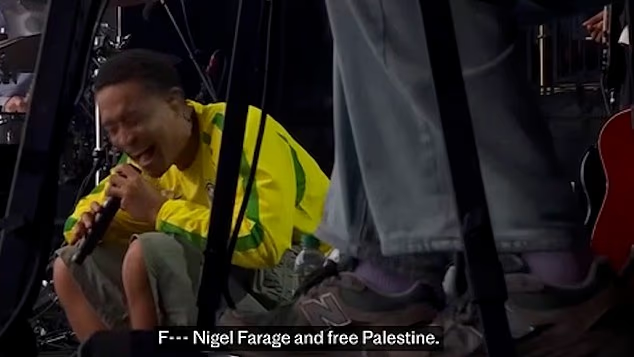
Loyle Carner – one of Sunday's most anticipated acts – rapped the line 'f*** Nigel Farage and free Palestine', which was met with cheers from the crowd

The BBC has sparked fury after airing footage of rapper Loyle Carner saying ‘f*** Nigel Farage‘ during a performance at Reading Festival.

A recording of the set was then uploaded to BBC iPlayer where it was dubbed ‘poignant’ and ‘uplifting’ by the corporation.

Carner – one of Sunday’s most anticipated acts – rapped the line ‘f*** Nigel Farage and free Palestine‘, which was met with cheers from the crowd.

It comes after a forced apology from the BBC last year after it livestreamed a set by punk duo Bob Vylan at Glastonbury in which the band chanted: ‘Death to the IDF (Israel Defence Forces)’.

Advertisement

In footage from Sunday, Carner dons casual clothing as he passionately raps the line before laughing and covering his mouth.

The BBC gives two warnings on the video for ‘strong’ and ‘discriminatory’ language but offers no specific comment on the reference made to Mr Farage.

It captions the clip: ‘A poignant, uplifting set from the twice-Mercury-nominated British rapper.’ 

Commenting on yesterday’s performance, one viewer said on X: ‘We shouldn’t be forced to pay money to this biased corporation simply because we want to watch live television. They must be forced to become an independent subscription broadcaster.’

Advertisement

Another added: ‘BBC captioned this performance from Reading Festival as ‘a poignant, uplifting set’ Defund the BBC.’

Loyle Carner – one of Sunday’s most anticipated acts – rapped the line ‘f*** Nigel Farage and free Palestine’, which was met with cheers from the crowd

The BBC gives two warnings on the video for 'strong' and 'discriminatory' language but offers no specific comment on the reference made to Mr Farage

The BBC gives two warnings on the video for ‘strong’ and ‘discriminatory’ language but offers no specific comment on the reference made to Mr Farage

Advertisement
In footage from Sunday, Carner dons casual clothing as he passionately raps the line before laughing and covering his mouth

In footage from Sunday, Carner dons casual clothing as he passionately raps the line before laughing and covering his mouth

Carner previously criticised the Reform UK leader on stage at Glastonbury last year.

During his performance, he said ‘Ff** Nigel Farage, man, I’m sorry’.

Carner, 31, also used his set at the festival to comment on vocal gender critical campaigner and Harry Potter author JK Rowling.

Advertisement

As he introduced his song Horcrux, named after a magical object in the Harry Potter books, he said: ‘This song is called Horcrux ’cause I love Harry Potter. But I don’t really like JK Rowling, do you know what I mean?’.’

Carner, whose full name is Benjamin Gerard Coyle-Larner, was born in Lambeth in south London and has released four studio albums – two of which have been nominated for the Mercury Prize.

He has raised awareness of issues such as male suicide and previously ran a cooking school for children with ADHD.

Carner has been a particularly vocal critic of Reform, suggesting he ‘hates Nigel Farage’ at the Brit Awards in February.

Advertisement

He added: ‘But for me, what feels more powerful instead of being negative all the time, which is so easy because there’s a lot of negativity around me, is to try and find ways to express some sort of hope and generosity to the people who exist like me who maybe feel marginalised or oppressed or left behind. Because there’s enough s*** – on the news that’s making me feel sad.’

Kneecap are pictured during their 2025 performance at Glastonbury. Over the weekend they used their headline slot at Reading to call Prime Minister Andy Burnham 'a w*****' after he ruled out a referendum on a United Ireland

Kneecap are pictured during their 2025 performance at Glastonbury. Over the weekend they used their headline slot at Reading to call Prime Minister Andy Burnham ‘a w*****’ after he ruled out a referendum on a United Ireland

In 2019 he wore a t-shirt which said ‘I Hate Boris’ during his set at Glastonbury where he told the crowd: ‘F*** that guy.’

Four years later at Glastonbury, Carner used his platform to give a speech about knife crime in the UK.

Advertisement

Also over the weekend, Northern Irish rappers Kneecap closed the festival – using their headline slot to call Prime Minister Andy Burnham ‘a w*****’ after he ruled out a referendum on a United Ireland.

The musicians also said ‘f*** Benjamin Netanyahu’ as a Palestinian flag was draped over their DJ deck.

Band member Mo Chara said: ‘It’s important to us that we use this platform for what we believe to be right, and some people aren’t as f***ing lucky right now, and that’s our brothers and sisters in Palestine.

‘So I just need to take some time to show some solidarity as Irish people; we understand displacement, colonialism and forced starvation of a population that we see right now in Palestine.

Advertisement

‘So just remember how lucky we all are to be in a field with all our best f***ing mates listening to tunes, and let’s be thinking at the same time about our Palestinian brothers and sisters, so f*** Benjamin Netanyahu, and free, free Palestine!’

The BBC said it provided ‘extensive coverage of Reading Festival across the weekend, featuring performances from a wide range of artists’.

A source added the content is in line with editorial guidelines and audience expectations. 

Source link

Advertisement
Continue Reading
Click to comment

You must be logged in to post a comment Login

Leave a Reply

NewsBeat

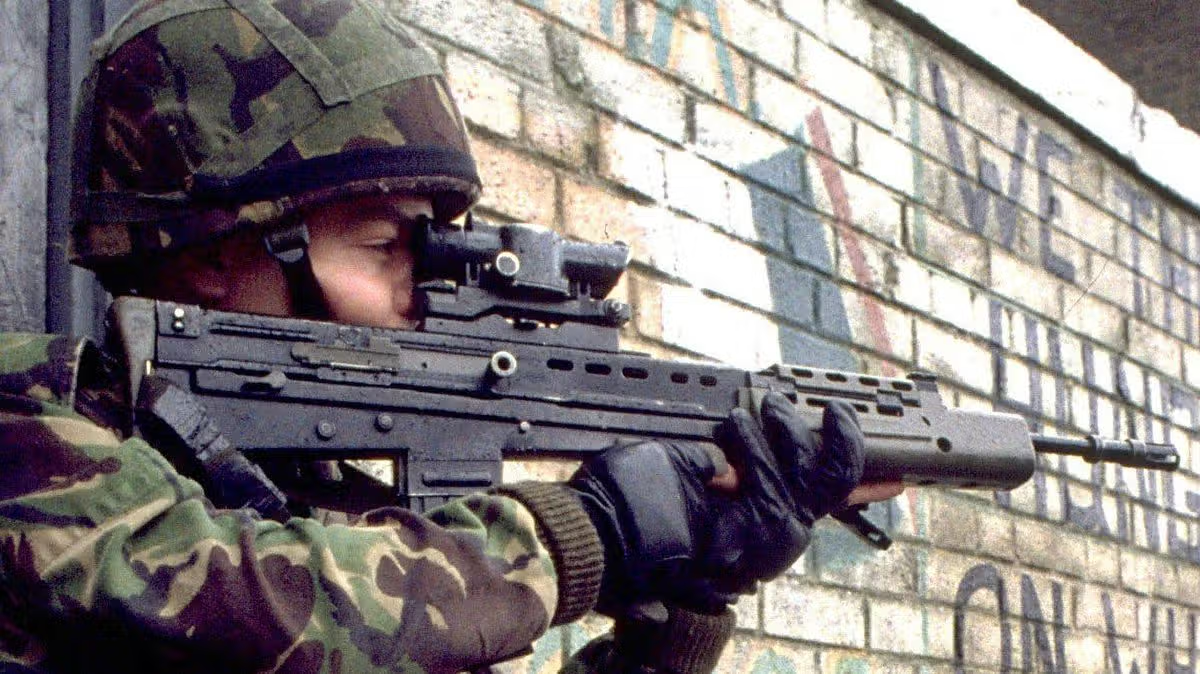
SAS veterans who fought in Northern Ireland ‘face endless legal jeopardy’ warns former UK defence minister

Published

on

Belfast Live

A new report argues soldiers who fought the IRA are now being judged using human-rights standards developed after conflict took place

SAS veterans who served in Northern Ireland should not face “endless legal jeopardy” decades after the Troubles, a Labour former defence minister has said.

Al Carns, a former Armed Forces minister who served for 24 years in the Royal Marines, backed a new report from the Policy Exchange think tank.

The report argues that soldiers who fought the IRA are now being judged using human-rights standards developed after conflict took place.

Advertisement

It says the Labour Government’s Northern Ireland Troubles Bill could leave older veterans facing investigations, uncertainty and potential prosecution.

Speaking in Belfast last week, Andy Burnham said the Bill would be brought back to Parliament in the autumn.

The 2023 Legacy Act was introduced by the previous Conservative government and offered conditional immunity for perpetrators of some Troubles crimes in exchange for co-operation with a new body, the Independent Commission for Reconciliation and Information Recovery (ICRIR), which would oversee investigations.

The Labour Government has since introduced a new Bill to Parliament to overhaul the Act, with MPs already voting to repeal the conditional immunity provision and scrap a bar on future legacy compensation cases as the new Bill is still being debated.

Advertisement

Mr Carns wrote in a foreword to the report: “No soldier should be above the law. Equally, no soldier should face endless legal jeopardy.

“Accountability is not the same as perpetual investigation. Justice is not served when the process itself becomes the punishment.

“That is why this paper matters. It gives voice to men who were there, making decisions almost impossible to recreate 40 or 50 years later.”

Advertisement

Labour peer Lord Maurice Glasman also backed the report, arguing that any pursuit of prosecutions against veterans could damage military morale and recruitment.

He wrote: “We owe a debt of great gratitude to the veterans of the SAS who served in the long deployment in Northern Ireland.

“They served with great courage and honour in extremely dangerous and violent conditions.

“It is a breach of our military covenant that veterans are investigated and prosecuted in their old age because of an understanding of the law that did not exist when they were active.”

Advertisement

Source link

Continue Reading

NewsBeat

US judge allows Smucker’s case against Trader Joe’s to proceed

Published

on

US judge allows Smucker's case against Trader Joe’s to proceed

A federal judge has ruled that J.M. Smucker can proceed with a lawsuit against Trader Joe’s over frozen sandwiches that Smucker claims are too similar to its Uncrustables.

Smucker sued Trader Joe’s in federal court in Ohio last fall, claiming Trader Joe’s committed a trademark violation when it introduced frozen peanut butter and jelly sandwiches with the same round shape and crimped edges as Uncrustables.

The lawsuit further alleged that Trader Joe’s put its crustless PB&Js peanut in packaging that too closely resembled the coloring of an Uncrustables box and featured a similar photograph of a sandwich with a bite taken out of one side.

In court filings, Trader Joe’s said its frozen sandwiches aren’t round but shaped as “squircles,” or square sandwiches with rounded edges. The company said the crimped design is necessary to keep the contents inside the sandwich and Smucker, based in Orrville, Ohio, shouldn’t be allowed to monopolize it.

Advertisement

Trader Joe’s also said Smucker’s current Uncrustables packaging, which it only introduced in 2024, is not famous enough to meet the standards of a federal trademark dilution claim.

“Smucker reaches too far. Its sandwiches’ appearance and cartoon avatar are no Nike swoosh or McDonald’s golden arches,” Trader Joe’s said in a January court filing that asked for the case to be dismissed.

But U.S. District Judge John Adams ruled Friday that Smucker had devoted significant resources to developing Uncrustables and protecting the brand in the past 20 years. Adams said customers have come to associate Uncrustables’ design trademarks with the brand.

The judge also declined Trader Joe’s request to move the case to California, where it is headquartered and where the third-party supplier of its frozen sandwiches is also located.

Advertisement

The Associated Press left messages seeking comment Monday with Trader Joe’s and Smucker.

Smucker is seeking restitution from Trader Joe’s. It also wants a judge to require Trader Joe’s to deliver all products and packaging to Smucker to be destroyed.

Advertisement

Source link

Continue Reading

NewsBeat

Truth about the breast cancer risk from your nightly glass of wine – and HRT: I’m sharing everything I’ve learned in 50 years of treating patients… and this is where I think we’re going wrong: PROFESSOR IAN E SMITH

Published

on

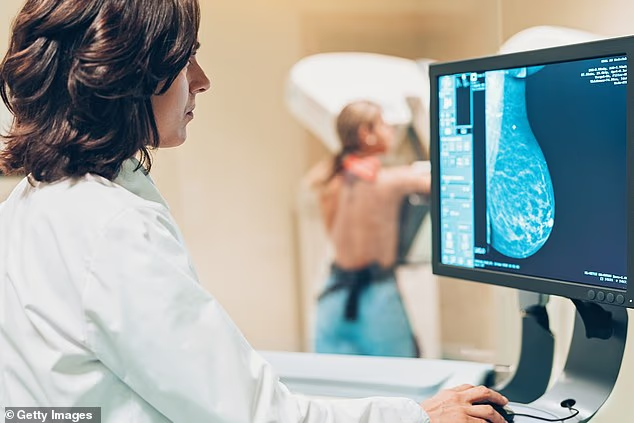
The future is much brighter for those who have breast cancer than it was in the 1970s, writes Professor Ian E Smith. Today, most women are cured; fewer than 30 per cent die

Five women waited on the ward, sitting up anxiously, stripped bare to their waist. This was on their surgeon’s orders, to save him time as they were examined by him ahead of their surgery that morning.

He led the way around the beds at The Royal Marsden Hospital with me, a trainee oncologist, bringing up the rear of the team.

This was the reality of breast cancer treatment in the 1970s when I began my career.

Did those women mind? Did they feel embarrassed, sitting half-naked with seven men around their bed? No one ever asked them, as far as I was aware. But even at the time it felt awkward to me. Such a practice would be inconceivable nowadays. And it’s not the only thing that’s changed.

Advertisement

In the 1970s, most women who developed breast cancer died of it – at least 60 per cent. Today, most women are cured; fewer than 30 per cent die.

I’ve changed too. Today, 50 years on, I am no longer the junior at the back – I became, until recently, a professor of cancer medicine at The Institute of Cancer Research, as well as being head of the breast unit at The Royal Marsden Hospital, in London. I’ve conducted international trials into treatments for breast cancer, among them research into the use of the drug Herceptin for early breast cancer.

And, of course, I’ve cared for many thousands of women.

Through treating them, I’ve learnt so much, which I want to share with you – with the wish this insight might give you hope if you or someone you love is diagnosed with breast cancer. For there are many reasons to be hopeful. The future is much brighter for those who have breast cancer than it was…

Advertisement

The future is much brighter for those who have breast cancer than it was in the 1970s, writes Professor Ian E Smith. Today, most women are cured; fewer than 30 per cent die

Why chemotherapy isn’t always right

Not long after I became a consultant around 1980, I treated a gentle middle-aged woman called Mrs Baker. It’s no understatement to say she changed my professional life.

Three years after her original breast cancer diagnosis, she developed secondary cancer in her liver, for which there is no cure.

Advertisement

Of course, this is very serious. But you can live with metastases in the liver, sometimes for many years, without any significant symptoms, provided the disease is controlled with treatment.

I started Mrs Baker on chemotherapy. The cancer on her liver did regress but she found the side-effects – nausea and exhaustion – very hard.

Each month, I cajoled her to have another course; each month, she reluctantly agreed.

Then, one day, the clinic nurse came to me and said: ‘Look at this.’ She had found in her notes a photo of Mrs Baker before her treatment, smiling, looking well.

Advertisement

Six months later, she was almost unrecognisable, her face thin and drawn, with an ill-fitting wig as a result of hair loss – and, most heart-rending of all, an expression of pure misery.

I was shocked. She had trusted me, and I had done that to her. This was a perfect example of a treatment being worse than the disease.

This would have been bad enough if it had been the only option – but it wasn’t. Hormone-blocking drugs, given in tablet form, also cause cancers to shrink, sometimes for a long time, years rather than months, without the toxic side-effects of chemotherapy.

I could – and should – have simply given her hormone-blockers, with a good chance she could have lived a few more years of quality life before needing to turn to chemotherapy.

Advertisement

I saw, painfully clearly, that I had been very wrong.

Mrs Baker led me to question whether chemotherapy was necessarily the best first option.

Since then, I’ve tended to be much more conservative in its use, both in early and advanced breast cancer.

Indeed, trials have since confirmed that for patients with advanced breast cancer that is oestrogen-receptor positive (ie they grow in response to the hormone oestrogen), the best treatment is generally hormone-blocking tablets first, and often second, too.

Advertisement

Chemotherapy should be reserved until tumour resistance to hormone therapy has developed.

Despite this, there’s still an instinctive belief amongst some of my colleagues that if a patient is young, or if they have disease in the liver, for example, then it’s better to give chemotherapy first, ‘because it’s more likely to work’ or ‘because it works faster’.

Neither of these dogmas is backed up by convincing data.

Don’t get me wrong. Chemotherapy used in the right context can relieve symptoms, improve quality of life when the patient is feeling very ill from cancer, and undoubtedly saves lives.

Advertisement

But ‘the right context’ is key. Far too often, chemotherapy is used too early and in too large a dose, and in patients with advanced breast cancer, when other options – including, sometimes, a simple ‘watch’ policy – are more appropriate.

In my view, we could sometimes try a smaller dose of chemotherapy than the maximum permitted level or duration. We don’t have strong evidence this would be detrimental to outcome, so why not use less when we know a moderate reduction in dose can lead to a marked reduction in side-effects and toxicity, with a better quality of life?

Some younger cancer specialists seem more enthusiastic about chemotherapy’s widespread use than older specialists. It seems to me a failure on my part, and of my contemporaries, not to have argued for greater caution more strongly.

And yet concurrently interest is now starting to grow in designing less intensive and much less toxic chemotherapy treatments. This has been a long time coming.

Advertisement

The reality is cancer treatment doesn’t always need to be torturous to work.

When to tell a patient their life expectancy

Fran’s story, however, shows the power of chemo – and of hope.

Aged 26, Fran, a personal trainer, had breast cancer for which she had surgery. She was later discovered to have a brain tumour. After this was removed, a cancer specialist told her: ‘I’m afraid this cancer doesn’t look good’ and that there were bound to be residual cancer cells in her body.

A scanning electron micrograph of a breast cancer cell. Trials have confirmed that for patients with advanced breast cancer that is oestrogen-receptor positive, the best treatment is generally hormone-blocking tablets first, and often second, too

A scanning electron micrograph of a breast cancer cell. Trials have confirmed that for patients with advanced breast cancer that is oestrogen-receptor positive, the best treatment is generally hormone-blocking tablets first, and often second, too

Advertisement

They said she had two years to live and all she could be given was palliative treatment. All hope had been taken from her, but she sought a second opinion and found her way to me.

I saw immediately she wasn’t going to give in without a big fight.

The most important question in my mind was whether Fran really was incurable beyond doubt – in that case, palliative treatment with low toxicity was the best and kindest approach – or whether there was the slightest hope.

If the latter, treatment would involve chemotherapy for months and specialised radiotherapy to the brain to try to mop up any lingering cancer cells.

Advertisement

In general, brain metastases in breast cancer are not good news. But Fran only had one, rather than the usual multiple metastases. This had also been present right from her original diagnosis – highly uncommon.

So I thought, why not be optimistic and go for a cure, particularly in someone with so much life left to fight for?

Today, over five years on, Fran has celebrated her 30th birthday, and she takes tamoxifen (a hormone blocker). She’s still a personal trainer, now working with cancer patients.

I have real reservations about telling a fit and well patient such as Fran they have only two years left to live.

Advertisement

If a patient is dying and has only a few weeks left, then of course they need to know. But giving someone like Fran a specific life expectancy, be it two years or six months, takes away hope.

And one thing I have truly learned in my long career is hope is what keeps many people going.

I’m not advocating dishonesty, but it is possible to give an accurate picture without taking away all hope – the one thing that might help to get them through the many months, or even years, of treatment ahead.

This is particularly true for advanced breast cancer, which is very unpredictable, but patients can sometimes live for many years.

Advertisement

If they can remain well for a while, a new drug may turn up, as has happened with several of my patients.

But if you give a specific time limit, the patient will hold on to that number and then the hope is gone.

Women who can now avoid surgery

One of the most significant developments in understanding breast cancer has been the realisation it’s not one disease with a one-size-fits-all approach.

Instead, it consists of several different subtypes, each behaving in its own way, and each needing its own treatments.

Advertisement

Nowhere is this more evident than in the field of preoperative chemotherapy, where chemo is given before surgery.

The cancer subtype called HER2-positive (which grows in response to the HER2 protein produced naturally in the body) is particularly responsive to this approach. A combination of anti-HER2 drugs, including Herceptin, and chemotherapy usually causes very marked shrinkage of the cancer.

Indeed, in around half of patients the cancer disappears completely, and they have a very good long-term outlook.

This raises an intriguing possibility. Do patients with HER2-positive breast cancer whose cancers disappear completely need surgery – which can range from excision of the tumour bed to complete mastectomies – at all?

Advertisement

You might call this question the final frontier for breast cancer.

We don’t have a definitive answer yet, but no surgery is gradually becoming an option at The Royal Marsden – and in a few other cancer centres for these particular patients.

And, so far, results are very encouraging, with no one in our own experience having had a relapse. One patient of mine had treatment without any surgery 12 years ago, without a recurrence. These patients are, however, still having radiotherapy as a precaution. But there is a question about whether even this is necessary.

This has so far never been tested formally, but let me tell you about a patient I shall call Jean. She was in her early 90s when I first met her, but still very fit. She loved open air and long walks. She had a lump which was a fairly large HER2-positive breast cancer. Her husband of many decades was dying of a different cancer and she was unenthusiastic about any treatment.

Advertisement

I persuaded her to try Herceptin, along with as gentle a form of chemotherapy as I could devise, using only one drug and in a small dose.

After three shots of this, her cancer had shrunk dramatically.

At this point, she gently, but firmly, declined any more chemotherapy, but she agreed to continue Herceptin.

She remained adamant she didn’t want surgery – or radiotherapy. I had to tell her this was risky but secretly, I was on her side; she was sharp and completely understood the issues.

Advertisement
Professor Ian E Smith is a world-renowned breast cancer specialist. He's conducted international trials into treatments for breast cancer, among them research into the use of the drug Herceptin for early breast cancer

Professor Ian E Smith is a world-renowned breast cancer specialist. He’s conducted international trials into treatments for breast cancer, among them research into the use of the drug Herceptin for early breast cancer

Each time I saw her, I expected to find the lump had reappeared. Eight years have passed and so far this hasn’t happened.

Her life remains full and happy. Although nothing is certain in breast cancer, her particular subtype is one that usually recurs within five years, or not at all.

It seems to me Jean is, so far, one of the very few patients anywhere whose breast cancer has been cured by drugs alone.

Advertisement

I use ‘so far’ deliberately; I hope and believe she’s the forerunner of many more patients, as our treatments and our experience develop in this new area.

The Holy Grail: curing secondary cancer

I’ve always hoped to one day start curing secondary breast cancer – which is usually incurable, albeit sometimes proving fatal only after many years. The frustrating reality is this hasn’t happened.

But there is a promising area of research being pioneered by one of my close colleagues at the Marsden, Professor Nick Turner, who is beginning to change the way we monitor breast cancer patients through the use of liquid biopsies – these detect tiny parts of the cancer cell DNA in the blood left behind after initial treatments.

Potentially, Professor Turner’s technology allows us to kill off these tiny cells before there are too many and they trigger another tumour.

Advertisement

Liquid biopsies also reveal the mutations of that particular cancer cell, potentially giving us clues as to what treatments might work for that individual patient.

Another big advantage is that this cancer cell DNA (or ctDNA) can be detected with a simple blood test, in contrast to secondaries in the internal organs, including liver, lung and bone, that require special needle biopsies under imaging guidance – an uncomfortable experience for the patient, and potentially a risky one, too. This also means ctDNA samples can be taken regularly during treatment to monitor whether the therapy is working.

The big problem up until now has been that we don’t know which patients will relapse. Now a major trial called TRAK-ER, led by Professor Turner and currently under way in multiple hospitals in the UK and France, is looking to identify patients at risk of relapse, by regular blood tests to detect the presence of ctDNA for early signs of recurrence before it appears on scans. It involves patients who have ER-positive breast cancer, found in around 70 per cent of patients.

Most patients with this subtype are cured with surgery and hormone tablets, but around 20 per cent will relapse over the next 20 years. The trial is currently running well and we hope it will pave the way for regular ctDNA analysis to become a routine approach.

Advertisement

Truth about the cancer risks of HRT and wine

One of the most common questions patients ask is: ‘Why did I get this?’ They are anxious that they’ve done something wrong. Usually, though, most patients are just unlucky.

Nevertheless, some recognised factors – such as ageing or obesity – might put a woman at increased risk.

But I feel some factors are overblown, for instance, HRT. Notoriously, the 2002 Women’s Health Initiative trial found an increased risk of 25 per cent for breast cancer after using HRT and certainly this caused a lot of worry. But this refers to the relative increase compared with women not taking HRT.

Over the trial’s five years, there were four extra cases of breast cancer for every 1,000 women taking HRT, an additional 0.4 per cent. Not exactly a big risk.

Advertisement

This reminds me of a patient, a doctor herself, who I recently met by chance 20 years after seeing her to discuss HRT.

Menopausal symptoms had been ruining her life, and she was considering early retirement; she’d been told under no circumstances should she take HRT.

I told her the risk, even for women who’d had breast cancer like her, was small – and showed her published data confirming this. I thought she should start HRT – and she did. Since then, she has gone on to become a figure at the top of her profession. ‘You changed my life,’ she said, simply. ‘Thank you.’

While there’s also evidence alcohol increases the risk of breast cancer, the figures again refer to relative risk, so could sound more alarming than they are.

Advertisement

Around one in seven women in the UK are going to get breast cancer – around 14 per cent of all women. One drink per day is going to increase that by around 10 per cent of the 14 per cent – ie, the woman’s risk would be 1.4 per cent greater than a woman who didn’t drink this amount.

Some may feel this is enough to avoid alcohol. Personally, I sometimes feel the anti-alcohol argument is overdone, and women who enjoy a glass of wine might conclude a one or two in 100 extra risk is worth taking when balanced against the pleasure of a drink.

Adapted from Doctor, I’ve Found A Lump by Professor Ian E Smith (DK Red, £20), to be published September 10. © Ian E Smith 2026. To order a copy for £18 (offer valid to 15/09/26; UK P&P free on orders over £25) go to mailshop.co.uk/books or call 020 3176 2937. 

Source link

Advertisement
Continue Reading

NewsBeat

You’ve got the wrong black man! Humiliation for ex-Sun editor who became Britain’s most pompous media pundit as he mixes up Kwasi Kwarteng and James Cleverly

Published

on

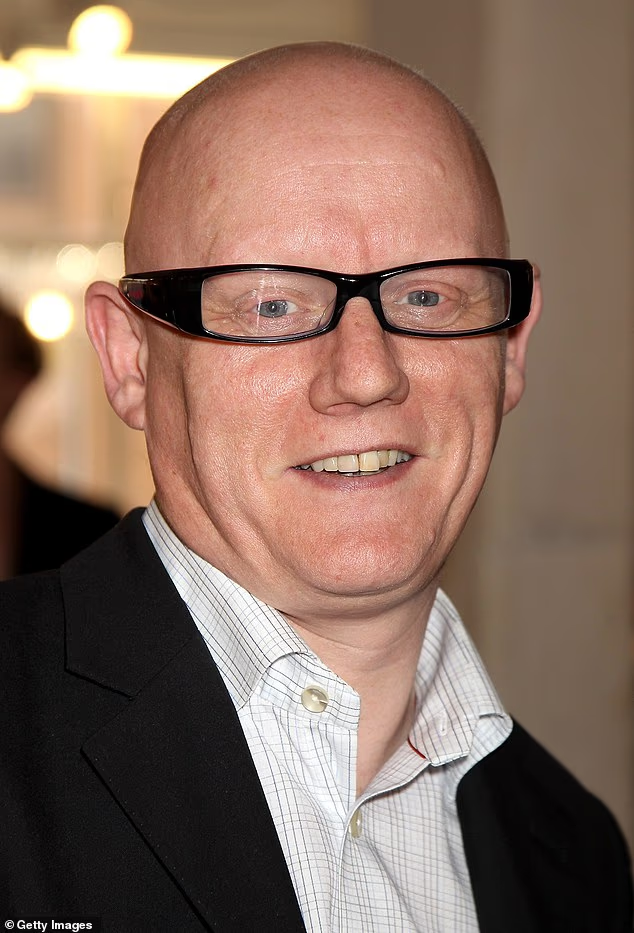
David Yelland, a former Sun editor who co-presents BBC Radio 4 podcast When It Hits The Fan, admitted he’d made a ‘stupid error’

A BBC podcast presenter was embroiled in a furious ‘race’ row today after being accused of mixing up two prominent black Tory politicians.

David Yelland posted a story on social media about Tory MP Sir James Cleverly‘s move to leave the front benches and run for London mayor, describing him as ‘Liz Truss’s Brexit chancellor’.

But former MP Kwasi Kwarteng was in fact Ms Truss’s chancellor during her short-lived stint as prime minister in 2022.

Mr Cleverly, who quit as the Tories‘ housing spokesman on August 29, was forced to inform Mr Yelland that he was ‘the other black one’ after the mistake went viral on social media platform X.

Advertisement

Mr Yelland, a former Sun editor who co-presents BBC Radio 4 podcast When It Hits The Fan, admitted he’d made a ‘stupid error’.

But he refused to apologise, insisting he’d mixed up Mr Cleverly’s job title rather than confused him with Mr Kwarteng. At the time, Mr Cleverly was Ms Truss’s foreign secretary.

The row erupted last night after Mr Yelland posted a story on X from the Daily Mail with the headline ‘Northerner Burnham has “declared war on London” says Cleverly in pitch to be capital’s Tory mayor’.

This was a reference to Mr Cleverly launching his campaign by saying that Prime Minister Andy Burnham was ‘anti-London’. 

Advertisement

David Yelland, a former Sun editor who co-presents BBC Radio 4 podcast When It Hits The Fan, admitted he’d made a ‘stupid error’ 

Amid the simmering row, James Cleverly replied to David Yelland, posting on X that he was 'the other black one'

Amid the simmering row, James Cleverly replied to David Yelland, posting on X that he was ‘the other black one’

Kwasi Kwarteng was Ms Truss's chancellor at the time of her ill-fated mini-budget, which brought down her government after it caused economic turmoil

Kwasi Kwarteng was Ms Truss’s chancellor at the time of her ill-fated mini-budget, which brought down her government after it caused economic turmoil 

Advertisement

Alongside the article, Mr Yelland posted: ‘Is this the state of our politics?

‘Liz Truss’s Brexit Chancellor for ten seconds says Andy Burnham has “declared war on London” and expects that to persuade a sophisticated electorate in the capital to elect him as Mayor…this is abysmal PR…ill-judged messaging…awful.’

But Mr Yelland was left red-faced after X users pointed out that Mr Cleverly was not Ms Truss’s chancellor and that Mr Kwarteng was.

Chris Rose, a Reform UK member and black man, posted: ‘This is awkward. David Yelland confuses James Cleverly and Kwasi Kwarteng.’

Advertisement

Tory peer Lord Jackson of Peterborough added: ‘Yelland is a buffoon.’

Daily Mail columnist Andrew Neil said: ‘Why does anybody take Yelland seriously?’

Wading in, Talk TV host Mark Dolan posted: ‘Yikes! Ultra woke ex-Sun editor David Yelland thinks Kwasi Kwarteng and James Cleverly are the same man. I wonder why that would be?’

Amid the simmering row, Mr Cleverly replied to Mr Yelland, posting on X: ‘David, I’m the other black one.’

Advertisement

Mr Yelland responded: ‘I made a mistake and corrected it. I should have said Foreign Sec [rather than chancellor].

‘Making an admittedly idiotic error then saying sorry does not make you a buffoon.’

He added: ‘I confused the jobs not the men actually. I meant to say Foreign Sec and put chancellor. I corrected and apologised as soon as I saw. My fault, my error.’

It is unclear why he mentioned Brexit in his post, given the historic vote to leave was many years before in 2016 and Britain left the EU in 2020.

Advertisement

Mr Cleverly also went on to be foreign secretary for more than ‘ten seconds’, as he carried on in the post for more than a year after Ms Truss’s 49-day premiership collapsed.

Born in London, Mr Cleverly is of mixed heritage. His black mother was a midwife originally from Sierra Leone while his father was white, from Wiltshire and ran a small business as a surveyor.

Mr Kwarteng was also born in London but his parents were both black and came to the UK from Ghana in the 1960s.

He was Ms Truss’s chancellor at the time of her ill-fated mini-budget in Autumn 2022, which ultimately brought her premiership crashing down after sparking economic turmoil. 

Advertisement

Source link

Continue Reading

NewsBeat

ITV Trigger Point viewers issue same demand as series returns

Published

on

Wales Online

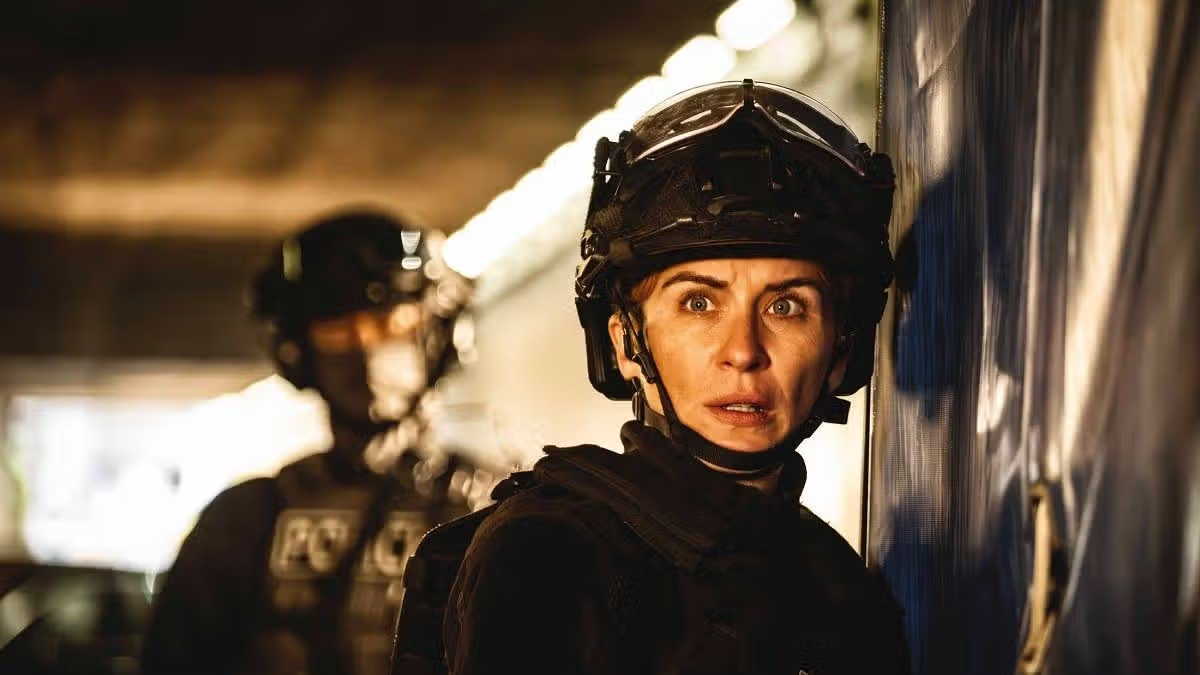
ITV viewers have been left saying the same thing as Vicky McClure’s Trigger Point returned for a fourth series.

ITV viewers have issued the same demand after Trigger Point’s return. Line of Duty actress Vicky McClure reprised her role as Lana Washington, as the drama made its comeback for a fourth series.

Advertisement

ITV had previously teased: “The series opens with Lana on the front line with Counter Terrorism Command as London is rocked by a wave of devastating bombings. The attackers are the most skilled and dangerous adversaries Lana has ever faced, and together with her team, they do all they can to track them down and prevent further casualties.

“But as the hunt for the bombers intensifies, unsettling cracks begin to appear in the investigation. Even those Lana works closely with are hiding dark secrets. Time is running out. The fate of the capital hangs in the balance, and Lana confronts her greatest challenge yet…”

After binging all the episodes of the new series of Trigger Point, fans have already been issuing a demand for a fifth instalment. One person questioned: “TRIGGER POINT!!!!!!!!! Hands down the best show @ITV has ever shown. Vicky McClure should be given an award for her services within the show. Without spoiling it, it was an amazing end to an excellent series. Will there be another?”

Advertisement

“I need Series 5 NOW!” another said, as someone else said: “Had to binge the entire new season in 24h more pls.” Another person shared their excitement, writing: “On the edge of my seat, heart in my mouth. Vicky McClure absolutely brilliant.” Someone else had said: “Just watched first episode of new series of #triggerpoint. Wow! Had me on the edge of my seat.”

“So pleased it’s finally back,” another echoed. Another called the new series “absolute cinema”, while one said it was “the best series of #TriggerPoint yet”. Creator Jed Mercurio previously teased what fans can expect, sharing: “With returning series it’s always about giving the audience a good helping of what they love about the show, but also working out where we can break new ground dramatically.

“Finding the balance between those two things is the fun part, and it’s the privilege of having a returning show. As always, series four of Trigger Point gives us both a threat that creates jeopardy for Lana and her team, and a mystery – who is behind this bombing campaign, and where is the next attack going to be?

Advertisement

“All I can say is that this is the most dangerous bomb threat that the team has faced. We raised the stakes as high as we possibly could. We also made a conscious decision at the start of series three to give ourselves a bigger canvas and use the characters around Lana much more.

“We’re incredibly fortunate that we have a great ensemble – everybody is lovely and very talented, so we have spent time carving out those characters and opening a door on their personal lives, which has been a very exciting part of the process. We’ll delve more into the lives of the team, and their personal relationships this series.”

He also hinted at a possible fifth series, adding: “We feel very fortunate and privileged to have the audience that we do, and we have a lot of respect and love for them. Generally, conversations about another series boil down to whether the broadcaster feels there will be viewers, so we will see.

Advertisement

“But I would be up for it, I think everyone on the show would be – we’re really proud of the work we do, and the connection that we have with our audience, so we want to give them more.”

Vicky echoed Jed’s comments, saying, of a fifth season: “That’s down to the audience, it’s always their decision. If we’re going again then we’ll need to go even bigger and better, because that’s what they deserve after backing the show for this period of time.

“It’s tough these days because we have a completely different way of watching television, but our viewing figures have been incredible. If that continues and people still have the desire for the show then it’d be crazy to say no.”

Trigger Point is available to watch on ITVX.

Advertisement

Source link

Continue Reading

NewsBeat

‘I walked all the way from Merthyr to Asia. There’s only one route I’ll do when I get back’

Published

on

Wales Online

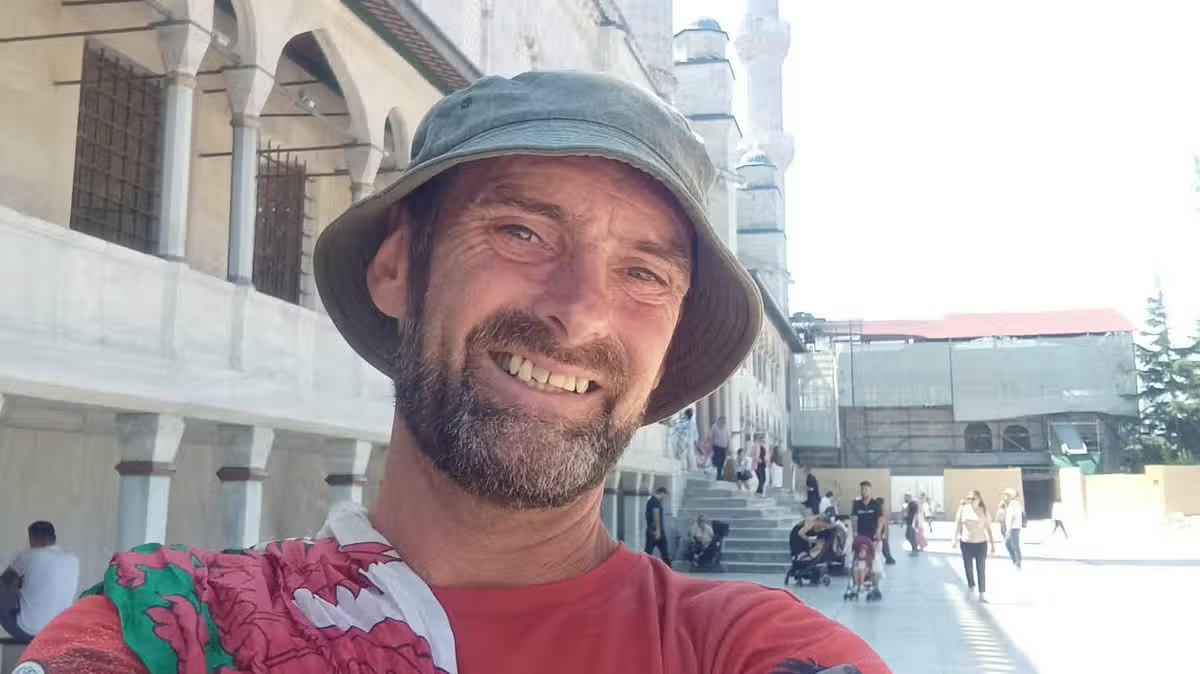
Jamie Bevan has walked solo for 145 days from Merthyr Tydfil to Istanbul

He’s done it – champion walker Jamie Bevan has arrived in Istanbul 145 days after setting out from Wales on the trek of a lifetime. His incredible journey has raised nearly £20,000 and counting for his local community, smashing his original target of £3,000.

The 3,000-mile solo hike took the Welsh language translator through 11 countries across some of Europe’s wildest terrain. He arrived at his destination, the Asia side of Istanbul, on Monday August 31 after reaching the city’s European side 20km away on August 30.

On ending his journey, Jamie said: “I am exhausted and relieved”. After tucking into a huge celebratory meal of Lahmacun, a Turkish stuffed flatbread, he joked that the furthest he’ll be walking back home is from his sofa to the kitchen. You can read more about Jamie’s adventures on his walk here and here.

Advertisement

Jamie’s journey has all been in a good cause. By Monday afternoon The father-of-two had raised nearly £20,000 for his local Welsh language nursery, Cylch Meithrin Y Gurnos, with donations still coming in.

Since he left home in Merthyr Tydfil in April, Jamie has crossed mountains and forests in some of the remotest areas of Europe, rarely visited by tourists.

Hiking from the UK he walked across mainland Europe and down through the Balkans crossing from Bulgaria into Istanbul last week on the last leg.

Advertisement

Having slept in his tent and hostels, he said he’s been welcomed by strangers throughout his journey. He’s had a free meal in a Michelin-starred restaurant in France, been invited to share a barbecue at the roadside, enjoyed cakes and pastries in Germany and Austria and shared stories with people he met along the way.

Jamie has also been spreading the word about his mother tongue, telling people he met about the Welsh language, whilst hearing about theirs. He said he has missed chatting in his mother tongue, but he had a brief meeting with his parents who came to see him as he passed through Belgrade.

He has also been chatting Welsh on his social media updates which have garnered an ever growing following as news of his walk spread and he met supporters along the way.

Advertisement

Touching the ground in Istanbul, he said: “I arrived in the city lines on Sunday but had 20k more to get to the end which was crossing the Bosphorous to the Asian side of Istanbul. I wanted to walk from Merthyr to Asia and I’ve done it.

“I have walked the whole way apart from a couple of ferroes. I had to take a ferry across to the Asia side of Istanbul. It doesn’t feel real to be here, there’s definitely a sense of overwhelming relief.

“I am really looking forward to going home, much as I have enjoyed the countries and people on the walk.”

Advertisement

Jamie plans to stay for the next couple of days in Istanbul to rest and organise a flight home – he definitely won’t be walking back.

He didn’t want a welcome party for the end of his journey and instead spoke to his close family by phone. Since then he’s also been inundated with messages and calls.

Thanking supporters, he said: “I did the walk to raise money for my local cylch, that’s close to my heart but I was also doing this trip for personal reasons and never expected it to be such a public thing.”

Advertisement

Although he joked he’ll only walk from his sofa to the kitchen back home in Merthyr, Jamie admitted he is looking forward to his usual strolls along the Taff near his home and getting a large coffee from his favourite coffee shop there, Caffi Soar.

Amazingly, Jamie still has the same pair of walking boots he set out in, says his feet are “great” and that his hike of a lifetime hasn’t put him off walking, though he hasn’t got his next adventure planned – yet.

Llongyfarchiadau mawr, Jamie!

Advertisement

To donate see here and you can buy Jamie a coffee to help him celebrate here

Get daily breaking news updates on your phone by joining our WhatsApp community here. We occasionally treat members to special offers, promotions and ads from us and our partners. See our Privacy Notice.

Source link

Advertisement
Continue Reading

NewsBeat

Pictured: Captain of doomed Cyprus ferry amid claims he abandoned ship as it sank in disaster that has left at least eight dead

Published

on

Mustafa Oz was named as the vessel’s captain as crew members and company officials were seen being led into court on Monday over the disaster

The captain of the doomed Cyprus ferry has been pictured after his identity was revealed by a senior Turkish Cypriot official.

At least eight people were killed and 20 remain missing after the Filo Jet, carrying 267 passengers and crew, sank off the coast of Girne on Sunday – with survivors claiming the captain abandoned ship as it capsized.

Mustafa Oz, 66, was named as the vessel’s captain as crew members and company officials were seen being led into court on Monday over the disaster.

They are among 16 people facing arrest warrants as police carry out a wide-ranging investigation into the sinking on suspicion of causing death through negligence.

Advertisement

Turkish Cypriot transport minister Erhan Arikli released documents naming Oz as the vessel’s captain as he said he was ready to resign if necessary over the disaster.

The ship’s captain and crew, company officials and port authorities are all under scrutiny, with police understood to have taken statements from more than 100 people and to be examining footage from before and after the disaster. 

Crew members reportedly told investigators that the ferry’s ‘bow section broke off’, with technical examinations now under way to establish exactly what caused the vessel to sink.

Investigators are also examining the ship’s technical condition before it set sail and its navigation and safety permits, although initial information indicates it had the necessary approvals.

Advertisement

Mustafa Oz was named as the vessel’s captain as crew members and company officials were seen being led into court on Monday over the disaster

Terrifying footage shows passengers desperately scrambling to escape from deep inside a sinking ferry off northern Cyprus after it was battered by waves

Terrifying footage shows passengers desperately scrambling to escape from deep inside a sinking ferry off northern Cyprus after it was battered by waves

The double-hulled ferry, which had 267 people aboard, took in water and flipped over on Sunday just off the port city of Kyrenia, leaving survivors clinging to the overturned hull

The double-hulled ferry, which had 267 people aboard, took in water and flipped over on Sunday just off the port city of Kyrenia, leaving survivors clinging to the overturned hull

Advertisement

Rescuers in the Turkish Republic of Northern Cyprus, which is only recognised by Ankara, pulled 239 people to safety, but eight others died ‘and the search continues for 20 people,’ prime minister Unal Ustel said. 

Survivors have claimed the captain ignored warnings that the ferry was taking on water before abandoning ship as it capsized.

The captain, seven crew members and a shareholder in the company operating the ferry were arrested and appeared in court on Monday.

Terrifying footage from inside the stricken vessel shows passengers scrambling to escape from deep inside the sinking ferry after it was battered by waves as frightened screams and cries ring out around them.

Advertisement

At one point, a man is seen perched on the side of the sharply tilted ferry with a phone pressed to his ear, appearing to call for help as others scramble around him. 

Other harrowing footage captures the aftermath outside, where survivors are seen bobbing in the choppy sea alongside the partially submerged ferry.

Some cling to one another in the water while others are seen trying to pull people from inside the ship. In further footage a rescue helicopter is seen hovering overhead.

Harrowing accounts of passengers’ ordeal have since come to light.

Advertisement

Ayten Bicer told how she felt her 12-year-old daughter slip from her hands and disappear as a ferry capsized on Sunday.

Her daughter Miray, and six-year-old son Mehmet Asaf, are among 20 people still missing on Monday as search teams scoured waters more than 500 metres (1,640 feet) deep.

‘She was saying, “Don’t let go”. And I didn’t let go of my daughter. I swear, I didn’t let her go,’ Ms Bicer sobbed.

Crew members arriving at court today, escorted by security

Crew members arriving at court today, escorted by security 

Advertisement
The ship's captain and crew, company officials and port authorities are all under scrutiny

The ship’s captain and crew, company officials and port authorities are all under scrutiny

A rescue mission continued into the night after a ferry carrying 267 passengers capsized shortly after departing from the coast of northern Cyprus on Sunday

A rescue mission continued into the night after a ferry carrying 267 passengers capsized shortly after departing from the coast of northern Cyprus on Sunday

Some cling to one another in the water while others are seen trying to pull others from inside the ship

Some cling to one another in the water while others are seen trying to pull others from inside the ship

Advertisement

A suitcase fell on top of her, forcing the girl from her grasp. The mother caught hold of the daughter’s foot, but her shoes, coated in engine oil from the overturned vessel, slipped through her hands.

The double-hulled ferry with 267 aboard took in water and flipped over off the port city of Kyrenia, leaving survivors clinging to the overturned hull. They were rescued by passing vessels and the coastguard authorities.

Separate accounts said the wide-bodied vessel jolted violently before slamming onto the sea surface with part of its bow bursting open on impact. Severe storms hit Cyprus on Saturday and the seas were still rough on Sunday.

Debris remained scattered across the water on Monday, including a black wheelie suitcase bobbing on the surface and a sheet of steel that appeared to have broken away from the ferry.

Advertisement

The boat was struck by one wave before a second hit as the captain tried to regain control, causing the ferry to begin taking on water, according to Mr Ustel.

The privately owned ferry had originally been scheduled to travel to Turkey on Saturday, but its journey was delayed because of poor weather conditions, Mr Ustel said.

Naif Ezer, one of those waiting anxiously outside the port for news of passengers through the early hours of Monday, said: ‘We’ve been waiting since the morning, for 12 hours or maybe more.’

Of three friends travelling home to see their families, one had been found but the other two were still missing, he added.

Advertisement
Other harrowing footage captures the aftermath outside, where survivors are seen bobbing in the choppy sea alongside the partially submerged ferry

Other harrowing footage captures the aftermath outside, where survivors are seen bobbing in the choppy sea alongside the partially submerged ferry

Some of those waiting sat and silently wept, while others scrolled through their mobile phones for updates.

It was unclear whether people remained trapped inside the vessel, which has now sunk and is lying on the seabed at a depth of more than 500 metres (1,640ft).

Divers from Turkey were assisting the search, officials said.

Advertisement

Officials gave differing estimates of the number of people still missing, with some saying 19 and others 18.

The ship’s captain and seven crew members were detained as part of an investigation into ‘how this tragedy occurred’, Mr Ustel said.

Authorities are also attempting to recover the ferry’s black box recorder to establish what happened.

Shortly after the doomed vessel departed from Kyrenia around midday on Sunday, passengers realised that there was a problem.

Advertisement

They had discovered that the boat had begun to take on water and warned the captain and crew that they needed to return to port.

Unmoved by their concerns, the ferry continued on towards the Turkish port of Tasucu.

Fearing for their safety as the boat continued out to sea amid a storm, the terrified passengers scrambled to find lifejackets, only to realise they were in short supply.

Passengers try to pull people out who are still trapped inside the ship

Passengers try to pull people out who are still trapped inside the ship 

Advertisement

They heard a blast come from the ship’s bow and the vessel began to capsize, leading to an exodus of passengers who frantically jumped into the sea to escape, many without any buoyancy aids.

Among the first to abandon ship, according to survivors, was the captain himself, who was arrested alongside seven of his crew members later on Sunday.

One rescued passenger said he spent an hour-and-a-half in the water before being rescued.

The man, aged in his 50s and not named, told local Turkish Republic of Northern Cyprus television that the front of the boat ‘exploded’ and the side windows ‘blew out’ as the boat took on more and more water.

Advertisement

‘Those who could, got out,’ he said, adding that he saw the captain among the first to abandon ship ‘without organising anything’.

Several rescued passengers told local media that a blast had gone off at the bow before it rolled over.

Another witness, in his 30s, corroborated reports of an explosion. He said he had reported water leaks to the captain.

‘The seats started to float, the captain kept going, and the bow exploded,’ he said.

Advertisement

Source link

Continue Reading

NewsBeat

BBC viewers ‘switch off’ Vigil as they make identical complaint about new series

Published

on

Daily Mirror

Those tuning into the BBC drama have been sharing their frustrations online with some even turning off the show altogether

Vigil season three BBC trailer

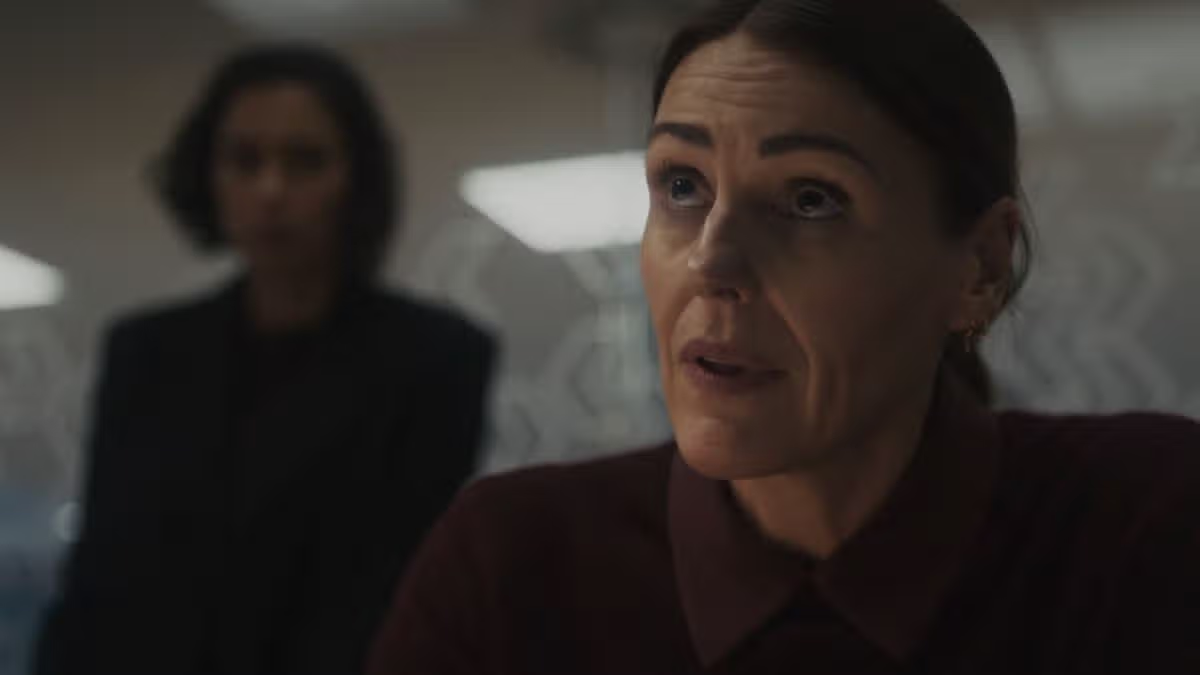
BBC viewers have raised an identical complaint about returning drama series Vigil.

The star-studded thriller returned for its third season on Sunday night (August 30), with Suranne Jones and Rose Leslie reprising their roles as DCI Amy Silva and DI Kirsten Longacre respectively.

The latest season follows the pair as they head to a remote Arctic research station in the wake of a murder. The victim is a member of a covert British special forces mission, meaning the pressure is well and truly on to hunt down the killer responsible.

A BBC synopsis reads: “Amy and Kirsten need to catch the killer and defuse a potential international confrontation, as different nations compete for control of the Arctic and its resources in the changing polar climate, with both their careers and relationship on the line.”

Advertisement

Episodes air on BBC One on Sunday and Monday nights, with episodes also released two at a time to BBC iPlayer every Sunday morning. The second episode which aired tonight (August 31) saw Amy looking further into the kidnap of a government minister and start to close in on the person responsible.

Fans have been discussing the first two episodes across social media, but many flagged that they had struggled with poor sound quality. One viewer fumed: “Mumble mumble mumble. Switched off!”, before adding: “I couldn’t understand any of the dialogue.”

Advertisement

Another fan claimed parts had been “indecipherable”, but they persevered. “Not sure what was going on,” the viewer continued, “However, started to get into it about halfway through.”

Meanwhile a third questioned what had happened during a crucial scene, asking: “What did the scared wife at the bedside say???” Yet another vented: “Poor sound and diction made it difficult to understand what was being said,” as a fifth echoed: “Half the dialogue is incomprehensible.”

“The sound wasn’t very clear. I switched over after 15 mins, didn’t know what it was about,” said another disgruntled viewer.

Advertisement

While some had their struggles with sound, many have been raving about the show’s return to telly. “Enjoyed it a lot, can’t wait for next Sunday’s episodes,” said one fan.

Another remarked: “I really enjoyed it! Can’t wait until Sunday for more. When do we think Amy will join Kirsten?”

Vigil airs Sunday and Monday nights at 9pm on BBC One and iPlayer.

Source link

Advertisement
Continue Reading

NewsBeat

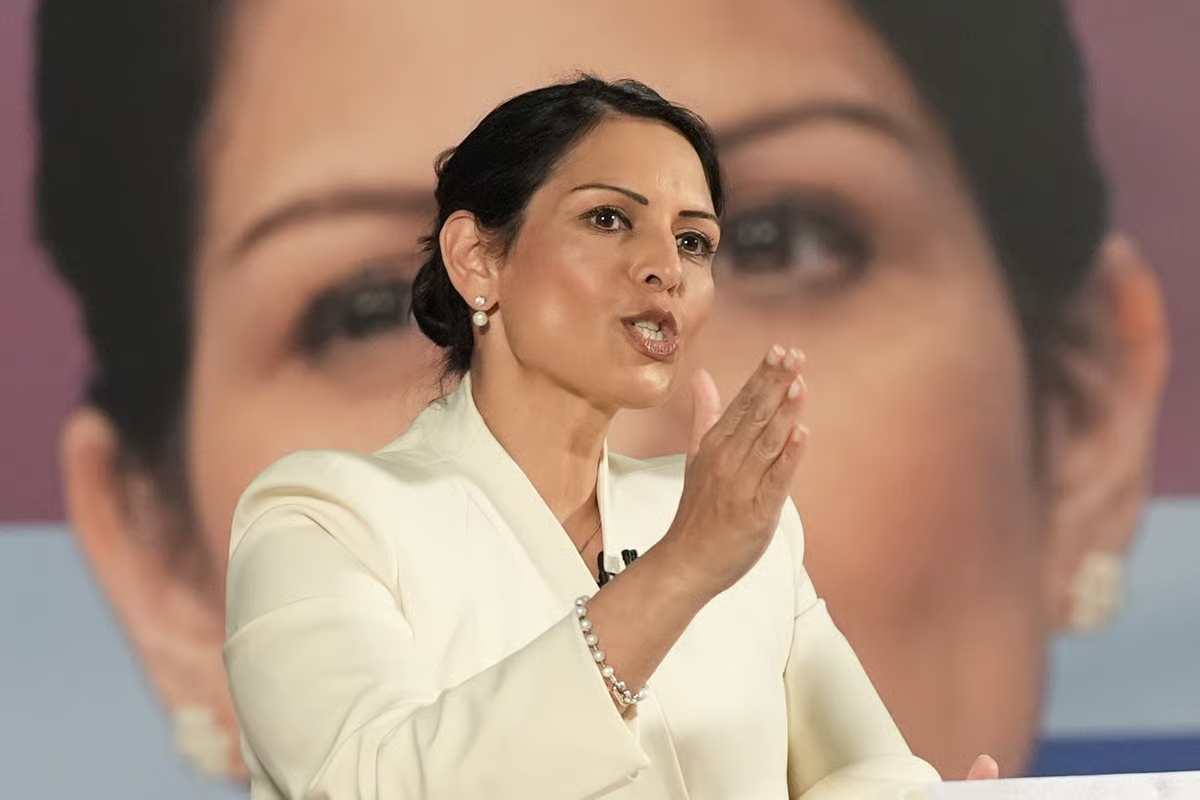
Top Tory Dame Priti Patel ‘to be replaced by Tom Tugendhat’ as shadow foreign secretary

Published

on

Dame Priti Patel returns to back benches to take on ‘international role’

Dame Priti added: “With Labour axing key transport schemes, cancelling plans for a new school, threatening to destroy our countryside, councils and communities and cutting policing, I will be a vocal champion for my constituents in the House of Commons defending their interests and demanding action.”

Source link

Continue Reading

NewsBeat

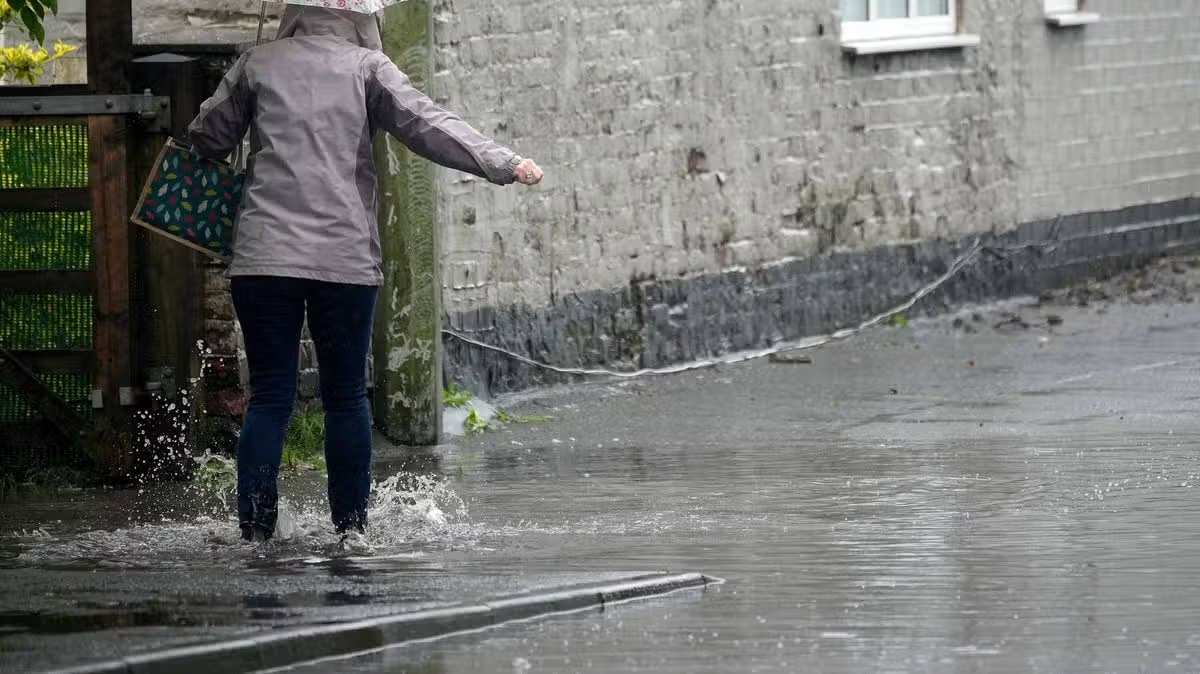
Met Office heavy rain forecast as 10 areas of Scotland facing downpours on Wednesday

Published

on

Daily Record

The Met Office is forecasting heavy downpours for 46 areas across the UK this Wednesday, with weather charts turning blue from Scotland to the Midlands and Wales.

Britons are bracing themselves for torrential rainfall this week, as the Met Office predicts numerous regions across the UK will be drenched on Wednesday.

The most recent meteorological charts have shifted to blue, indicating millions are expected to experience wet conditions on Wednesday morning, spanning from Scotland through to the Midlands and Wales.

Advertisement

Current weather projections suggest up to 8mm of rainfall hourly across parts of Scotland, Northern Ireland and Wales, reports the Express.

A Met Office outlook covering Wednesday through Friday states: “Remaining changeable with showers or longer spells of rain for most, although some drier and brighter spells also developing.

“Temperatures near normal for early September, although often mild by night.”

Advertisement

These predictions arrive following the nation’s unpredictable weather throughout the Bank Holiday weekend, when a combination of sunshine and showers intensified, accompanied by thunderstorms in certain areas.

During the previous week, the Met Office issued yellow thunderstorm alerts affecting dozens of areas across the UK. Additional downpours are anticipated throughout the remainder of the week and extending into September.

10 areas of Scotland facingrain on Monday

  1. West Lothian.
  2. Mid Lothian.
  3. East Lothian.
  4. Lanarkshire.
  5. Berwickshire.
  6. Ayrshire.
  7. Dumfriesshire.

  8. Kirkcudbrightshire.
  9. Roxburghsire.
  10. Wigtonshire.

Source link

Advertisement
Continue Reading

Trending

Copyright © 2025