Connect with us
DAPA Banner
DAPA Coin
DAPA
COIN PAYMENT ASSET
PRIVACY · BLOCKDAG · HOMOMORPHIC ENCRYPTION · RUST
ElGamal Encrypted MINE DAPA
🚫 GENESIS SOLD OUT
DAPAPAY COMING

NewsBeat

Beloved woman, 31, identified as alligator attack victim killed after predator ripped off both her arms… as nightmarish new details of her final moments are revealed

Published

on

The 31-year-old woman who died during a horrific alligator attack in central Florida on Sunday has been identified as Orlando native Brittany Clark

A woman who died during a horrific alligator attack in central Florida on Sunday has been identified, with her terrifying final moments also detailed in a harrowing report.

Brittany Clark, 31, had been enjoying a hike in the picturesque Little Big Econ State Forest with her boyfriend and friend when they took a dip in a river just after 1.30pm. 

Chilling 911 audio from the scene previously revealed how an alligator stealthily approached the trio before viciously attacking Clark by tearing off both of her arms. 

Now, a medical examiner’s report obtained by the Daily Mail has given more details about Clark’s final moments, including how her boyfriend heroically fought the gator even as it dragged them both underwater into a ‘death roll’.  

Advertisement

A ‘death roll’ is a technique alligators use to subdue prey by violently twisting onto their backs before attempting to pull the victim underwater to drown them.  

The report describes how Chance Allison risked his life and eventually managed to pry his girlfriend from the gator’s jaws – but it was too late to save her. 

It also details how officials tracked down the 12-foot apex predator in the aftermath and ‘put it down’, before decapitating it and keeping its head as ‘evidence’.  

The horror unfolded when Clark, Allison, and an unnamed friend were swimming in ‘shoulder-deep water’ in the Econlockhatchee River close to a popular hiking trail. 

Advertisement

The 31-year-old woman who died during a horrific alligator attack in central Florida on Sunday has been identified as Orlando native Brittany Clark

Clark had been enjoying a hike in the picturesque Little Big Econ State Forest with her boyfriend and friend when they took a dip in a river just after 1.30pm

Clark had been enjoying a hike in the picturesque Little Big Econ State Forest with her boyfriend and friend when they took a dip in a river just after 1.30pm

‘While they were swimming an alligator grabbed (Clark) by her arm and began the “death roll”,’ the report reads. 

Advertisement

‘Her boyfriend Chance grabbed the alligator trying to get it to release her when it took them both underwater’. 

Allison managed to get the gator to release her arm ‘for a moment’ – but it seized its jaws on her other arm instead.

‘Chance attempted to bring them both to shore when the alligator finally let go and CPR was started on shore by her boyfriend, and 911 was called,’ the report states. 

The report did not state whether Allison grappled with the alligator before or after making the emergency call, but audio of the call suggests he dialed 911 while still fighting the predator.  

Advertisement

Screaming and crying could be heard in the harrowing recording, as Allison told call handlers he was ‘still trying to get her arms away from the alligator’s mouth’. 

Moments later, he told the operator that ‘both her arms, both her arms are off’, while her friend told them that one arm was ‘hanging by a thread.’ 

When the dispatcher asked where the other arm was, the woman replied: ‘Gone’. 

Clark's boyfriend, Chance Allison, heroically tried to fight off the alligator, the report reveals

Clark’s boyfriend, Chance Allison, heroically tried to fight off the alligator, the report reveals

Advertisement
The report describes how Allison risked his life and eventually managed to pry his girlfriend from the gator's jaws - but it was too late to save her

The report describes how Allison risked his life and eventually managed to pry his girlfriend from the gator’s jaws – but it was too late to save her

Allison described the situation as ‘bad, real bad’ while urging responders to ‘please hurry… she’s losing a lot of…’ before his voice trailed off. 

The gator eventually ‘went away,’ Allison told the operator, before describing his girlfriend’s injuries as ‘horrible’.  

Allison said he had stepped in to help, and he dragged Clark out of the water with the help of her friend. 

Advertisement

‘We’re far off the trail, we’re off of a little launch area by the river… We need help now!’ he told the operator. 

‘You may see a helicopter. If you see it, just try and flag it down if you can,’ the operator responded.

Barr Street Trailhead, the popular hiking route where the horror unfolded, is now closed until further notice.

The vicious attack unfolded as the trio took a dip in the shallows of the Econlockhatchee River (pictured above) in Little Big Econ State Forest, 20 miles north-east of Orlando

The vicious attack unfolded as the trio took a dip in the shallows of the Econlockhatchee River (pictured above) in Little Big Econ State Forest, 20 miles north-east of Orlando

Advertisement

Clark’s Facebook page shows she was a big fan of the outdoors – pictured frequently on hikes and swimming in nature.  

The horrific incident marks the third alligator attack in central Florida over the last week.

Seven days before, a gator attack was reported at Rainbow River in Merriam County, and a child was injured in another incident in the same county on Saturday. 

Attacks on humans are rare in the US, according to the Florida Wildlife Commission, but alligators are more territorial during mating season, which lasts from April until the end of June.

Advertisement

Source link

Continue Reading
Click to comment

You must be logged in to post a comment Login

Leave a Reply

NewsBeat

M&S, Aldi, Lidl and Sainsburys school uniform deals are back

Published

on

M&S, Aldi, Lidl and Sainsburys school uniform deals are back

The limited-time sale comes as families prepare for the expensive return-to-school season, with experts warning that popular sizes often sell out well before the end of the holidays.

M&S says its uniforms are designed to last the entire school year, with anti-stain technology, fade-resistant fabrics and easy-iron finishes helping clothes stay looking smart for longer.

With multipacks starting from £7 before the discount, it’s one of the retailer’s biggest uniform promotions of the year. The full range is available here.

Retailers release their school uniform collections weeks before the end of term for one simple reason – the most popular sizes often sell out long before September.

M&S school uniform sale: best buys

Some of the standout deals include:

Advertisement
  • 3-pack stain-resistant polo shirts from £7
  • 2-pack school trousers from £11
  • 2-pack pleated skirts from £10
  • 2-pack school jumpers from £11
  • 3-pack easy-iron school shirts from £10
  • Leather school shoes from £28
  • Backpacks, socks and school accessories also included

M&S uniforms feature StayNew technology to help colours stay brighter after repeated washing, while StainAway fabric helps repel everyday spills.

Many pieces also include adjustable waists, grow-with-me hems and crease-resistant fabrics to help children get more wear from each item.

M&S is giving early shoppers the chance to shop for school uniform for less (Image: M&S)

The 20% discount starts on July 2 for a limited time.

Aldi’s famous £5 school uniform bundle is back

If your priority is spending as little as possible, Aldi has once again brought back its hugely popular £5 School Uniform Bundle.

Available while stocks last, the bundle includes:

Advertisement
  • Two polo shirts
  • Sweatshirt or cardigan
  • Trousers, skirt or shorts

The retailer also includes a 12-month satisfaction guarantee, making it one of the cheapest school uniform offers available anywhere on the high street.

Other Aldi highlights include:

  • Leather school shoes — £7.99
  • Football boots — £9.99
  • Backpacks — £9.99
  • Hair accessories — £1.99
  • Lunch bags from £4.99

M&S red cardigans (Image: M&S)

Because Aldi uniforms are sold as Specialbuys, parents are being urged not to leave shopping until August, when many sizes disappear.

Lidl’s £5 bundle returns for a fifth year

Lidl has also relaunched its popular £5 school uniform bundle, matching Aldi on price.

The bundle includes:

Advertisement
  • Two polo shirts
  • Sweatshirt
  • Choice of trousers, shorts or skirt

Individual items start from £1.50, with practical features including water-repellent fabrics, machine washable materials and tumble dryer-safe finishes designed to survive the school year.

The range is available in stores while stocks last.

M&S grey school skirts (Image: M&S)

Tu keeps prices frozen for a fourth year

Sainsbury’s Tu Clothing is taking a different approach by freezing prices for a fourth consecutive year.

Although its earlier 20% promotion has now ended, shoppers can still benefit from prices that have remained unchanged since 2022.

Highlights include:

Advertisement
  • Uniform starting from £3
  • Two complete uniforms from around £14
  • Reinforced knee trousers
  • Permanent pleats
  • Non-iron shirts
  • Scuff-resistant school shoes
  • Easy Dressing range with pull-on trousers and touch-fastening clothing for younger children

For parents who missed recent discount events, Tu still remains one of the strongest value options available.

Which school uniform deal offers the best value?

Each retailer has a different strength depending on what you’re looking for.

M&S is ideal for parents wanting longer-lasting uniforms with premium features, especially with the new 20% discount.

Aldi offers the lowest upfront cost thanks to its famous £5 bundle, but shoppers will need to move quickly before stock disappears.

Lidl matches Aldi on headline price and offers practical everyday essentials from just £1.50.

Advertisement

Tu remains a solid all-round option thanks to its price freeze, durable fabrics and wide availability in Sainsbury’s stores.


Recommended reading:


Shop early to avoid the biggest problem parents face every summer

Parents who wait until the final weeks of the holidays can find fewer sizes available and may end up paying more elsewhere.

With M&S now launching its 20% sale alongside bargain bundles from Aldi and Lidl, early shoppers have the best chance of saving money before demand peaks later this summer.

Advertisement

What’s your best back-to-school tip? Tell us in the comments below.

Source link

Advertisement
Continue Reading

NewsBeat

Can Blue Badge holders park in parent and child spaces?

Published

on

Can Blue Badge holders park in parent and child spaces?

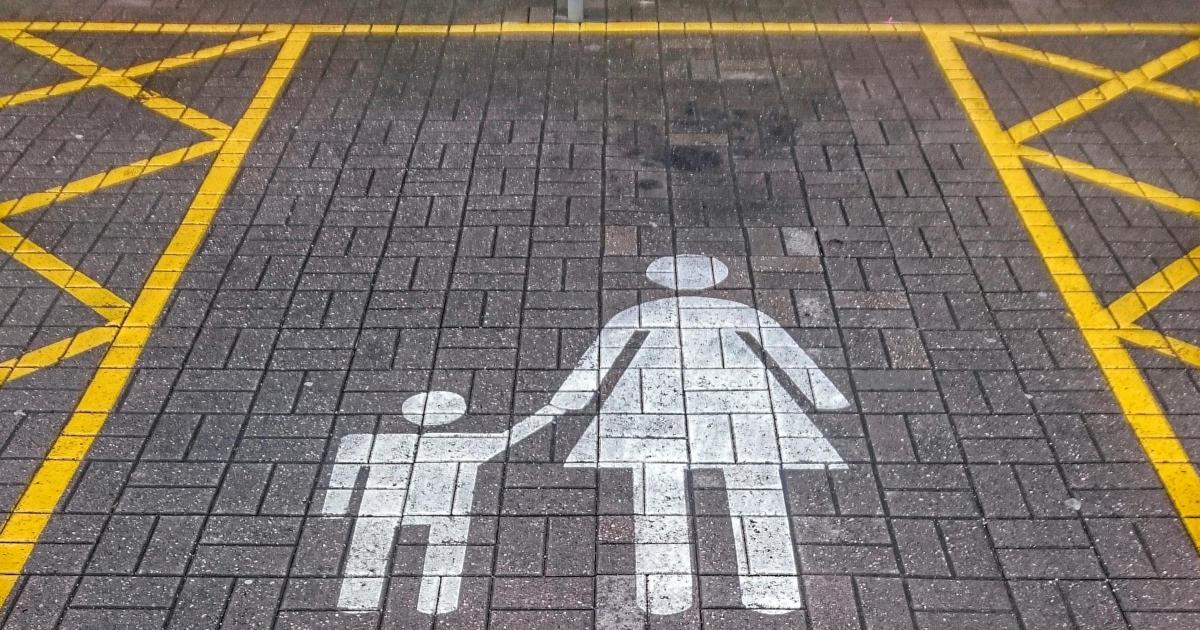
Many drivers assume displaying a Blue Badge automatically allows them to park in a parent and child space at supermarkets and retail parks. In reality, the rules are very different – and getting it wrong could leave you facing a parking charge.

The confusion comes because Blue Badges are primarily designed for on-street parking and council-run car parks, while parent and child bays are usually located on private land, meaning different rules apply.

Can Blue Badge holders use parent and child spaces?

In many cases, no.

Advertisement

Parent and child spaces are intended for parents or guardians travelling with young children, typically under the age of 12. They are wider than standard bays to allow room for pushchairs, child seats and safely getting children in and out of vehicles.

If you’re a Blue Badge holder visiting a supermarket, shopping centre or retail park, you should normally use one of the designated disabled bays instead – unless signs tell you otherwise.

Why doesn’t my Blue Badge apply?

The Blue Badge scheme mainly applies to parking on public roads and local authority car parks.

Government guidance makes clear that off-street car parks such as supermarkets, hospitals and shopping centres operate under their own rules, with operators deciding how disabled parking and parent and child bays are managed.

Advertisement

That means supermarkets are free to decide who can use their parent and child spaces and whether a Parking Charge Notice should be issued if the rules are broken.

Could you get fined?

You won’t usually receive a council Penalty Charge Notice because supermarket car parks are private land.

However, you could receive a Parking Charge Notice from the private parking company managing the site if you park in a parent and child bay without meeting the retailer’s conditions.

Individual retailers have different policies, so it’s always worth checking the signs before leaving your vehicle.

Advertisement

What can Blue Badge holders use?

A valid Blue Badge can provide a range of parking concessions, including:

  • Parking in designated disabled bays.
  • Free parking at many on-street pay-and-display bays – those on public roads administered by the council, not private companies.
  • Parking on single or double yellow lines for up to three hours where loading restrictions do not apply – although check with your local council as this can vary.
  • Access to council-operated disabled parking concessions, depending on local rules.

These concessions generally do not automatically extend to private supermarket or retail park car parks.

Blue Badge holders also need to remember…

The badge can only be used when the disabled person is travelling in the vehicle, or is being picked up or dropped off.

Allowing friends or relatives to use your badge when you are not present is a criminal offence and can result in the badge being confiscated and a fine of up to £1,000.

Expired badges, copied badges or badges belonging to someone who has died must also not be used.

Advertisement

Frustrated parents have taken to Mumsnet to complain about not being able to get a parent and child space, with one saying: “No matter where I go I struggle to get a parent and child space because they’re all taken up by idiots with no children.”

Another added: “The amount of times I had to just go home and try another day as there was no child parking free. I had twins and I NEEDED the bigger space to have any chance of getting both sides of the car open wide enough for both car seats.
It’s mostly single males that I’ve noticed parking there and they just hurl abuse if you dare question them.”

One poster responded that she had previously used the spaces when there were no disabled spaces free: “Irrelevant now as I have a baby and I’m pregnant but if the disabled were full (usually with no badges displayed) and I had my disabled husband with me I’d use them.”

Another agreed: “Only when no disabled bays left… which is often.. because those are taken up by able people with no blue badge.. it’s a vicious circle really..”

Advertisement

Many said they were abused by selfish drivers who were not disabled and had no children: “Most people I see using them without kids drive overpriced and oversized cars and exit them with a swagger of self importance and entitlement.”


Recommended reading:


Quick Q&A – blue badges and parent and child parking

Can I park in a parent and child bay if I have a Blue Badge?
Not automatically. Parent and child bays are usually on private land and are reserved for drivers travelling with young children.

Does a Blue Badge work in supermarket car parks?
Not necessarily. Supermarkets set their own parking rules, although most provide dedicated disabled parking bays for people with blue badges.

Advertisement

Can I get a parking ticket?
Yes, but not a council one. Private operators may issue a Parking Charge Notice if you use a parent and child bay contrary to the site’s rules.

Where does a Blue Badge apply?
Mainly on public roads and in local authority parking areas, subject to local restrictions and conditions

Source link

Advertisement
Continue Reading

NewsBeat

An American asked Stan Collymore if he’d ever played a sport – it did not go well for him

Published

on

Manchester Evening News

The former Nottingham Forest and Liverpool player responded with an impressive rant

As you’ve probably seen or heard, the FIFA 2026 World Cup is well and truly underway.

On Wednesday England face the Democratic Republic of Congo in their Round of 32 match, having won their group in the tournament, which is taking place across the USA, Canada and Mexico.

Advertisement

While the decision to expand football’s most prestigious tournament from 32 teams to 48 has proved controversial, perhaps the most notable change to play for this edition of the World Cup has been the inclusion of hydration breaks – effectively turning the game of two halves into a game of four quarters.

Click here to get the biggest stories straight to your inbox in our Daily Newsletter

This has not gone down well with many fans, who have taken to booing the hydration breaks, which many view as a chance to cram more adverts into the games.

And it is not just fans who are unhappy with the change. Former footballer Stan Collymore has taken to social media to express his annoyance with the change, which he said he viewed as unnecessary.

Advertisement

While Mr Collymore – who played for teams including Liverpool, Nottingham Forest, Aston Villa and Crystal Palace – may be a well known name to anyone who watched English football in the 1990s, his fame does not appear to be international.

Responding to his comments, one American user on X, formerly Twitter, decided to question his credentials on the subject.

He wrote: “Have you ever played a sport for more than 45 minutes straight? Would your performance had been better with a short break to hydrate and rest? Do you think fans want to see athletes perform at their best?”

Content cannot be displayed without consent

This may have been a mistake, as Collymore – with 287 appearances and 110 goals in his professional career and three England appearances – responded on Tuesday night. And the result was impressive.

Advertisement

He wrote: “Yes, I’ve played elite level sport where my particular job was running with a ball at feet at around 30kph+ multiple times a half. 6 ft 4, 95kg. The tactical information given to me through a 7 day, not 3 minute period sufficed, as did the occasional squirt of electrolyte water per half.

“My performance would not have been improved at all by a hydration or tactical break. Pretty much like 99% of players over a 150 year period playing the most popular and most played sport on the planet by far. So maybe you can tell me.

“When was the last time you put your f****g Doritos, big gulp and chicken wings down long enough to know what professional sportsmen need rather than advertising executives or couch potatoes who need to be told 6 times in 20 minutes to buy a Jeep Cherokee, Whopper or diabetes medication instead of just enjoying the sport?”

No need for a penalty shoot out to determine the winner in that exchange.

Advertisement

Source link

Continue Reading

NewsBeat

Starmer’s defence plan is woefully inadequate and the price we could all pay is unthinkable. Will Burnham do any better? Our enemies are watching: GENERAL THE LORD DANNATT

Published

on

Starmer's Defence Investment Plan is woeful, considering that the Ministry of Defence said £28billion of extra spending would be needed to ensure the UK is prepared for war with Russia

In January, it emerged that a Ministry of Defence analysis of the Strategic Defence Review calculated that £28billion of extra spending would be required to fund its recommendations and ensure the UK is prepared for a potential war with Russia as early as 2030.

What Starmer announced in yesterday’s Defence Investment Plan is woefully inadequate.

Despite his tub-thumping about ‘doing what it takes’ and ‘meeting the new world head-on’, the reality is that a huge shortfall is built into the defence budget. And it’s likely to get bigger – quickly.

Far from being given £28billion more, the Ministry of Defence will have to make do with just £15billion – of which nearly £4billion is money that was already allotted to other projects.

Advertisement

Yes, there were some eye-catching elements in the DIP package. Yesterday’s headlines focused on Britain’s ‘largest ever drone investment’, for example, with £5billion allotted to unmanned aerial systems. But the reality is that only 20 per cent of that figure is additional investment.

The MoD will also spend £500million on new tech for Special Forces, including the Royal Marine Commandos, and an extra £50million on attack drones equipped with cameras that give the operators a ‘first-person view’, as well as interceptor devices to bring down enemy drones.

There is £115million in the DIP to bolster our defences against the threats posed by artificial intelligence. And the plan includes jet-powered drones taking off from aircraft carriers, and six ‘common combat vessels’ (CCVs) as part of a ‘hybrid Royal Navy’.

Advertisement

Starmer’s Defence Investment Plan is woeful, considering that the Ministry of Defence said £28billion of extra spending would be needed to ensure the UK is prepared for war with Russia

General the Lord Dannatt, a former Chief of the General Staff, says it is a terrible mistake to assume that modern warfare relies entirely on new tech. The old weaponry is not yet redundant.

General the Lord Dannatt, a former Chief of the General Staff, says it is a terrible mistake to assume warfare today relies entirely on new tech, as the old weaponry is not yet redundant

These will serve as control hubs for drones, meaning that when the Navy identifies a foreign vessel as a threat, such as a Russian ship, ‘they will do so with outriders, uncrewed ships above and below the surface,’ according to the PM. But this capability will come at a high cost, since that money could have been spent on upgrading our traditional fleet. Instead, the CCVs are expected to replace our Type 45 destroyers, which are currently a mainstay of our sea defences.

At the same time, the Royal Air Force will develop its own drones as well as autonomous ‘wingmen’ designed to fly alongside fighter jets such as Typhoons. Starmer claimed these aircraft, which are due to be ready for testing by 2030, would be ‘invisible to enemy detection’.

Advertisement

The PM also reiterated Britain’s commitment to the £8.6billion Global Combat Air Programme in partnership with Italy and Japan, based on sixth-generation Tempest fighter jets. These, he said, ‘will secure our skies for decades to come’.

All the above goes to show that warfare has become more complex than ever. But it is a terrible mistake to assume it now relies entirely on new tech. The old weaponry is not yet redundant. Britain needs destroyers and main battle tanks as well as drones. We are at real risk of neglecting the unglamorous but necessary parts of our fighting machine, while placing too much trust in the latest electronics.

And we will achieve the appropriate combination of weaponry only if we increase our defence budget.

At the Munich Security Conference last February, Starmer was telling our allies that Britain would be committing 3 per cent of its GDP to defence by 2029, up from about 2.3 per cent.

Advertisement

The reality revealed yesterday is that the actual figure will be nowhere near that – more like 2.7 per cent.

Worse, he also talked of hitting 3.5 per cent of GDP by the middle of the next decade. That target is already slipping away from us – and fast. By contrast, Germany is on target for 3.7 per cent of GDP by 2030 and Sweden is not far behind at 3.5 per cent. Meanwhile, Poland is already spending 4.8 per cent of its GDP on defence and is calling for Nato allies to up spending to 5 per cent by 2030.

Our allies have every right to accuse us of backsliding.

In the years since the end of the Second World War, Britain has been at the forefront of defending Europe, spearheading Nato in its role as the West’s peacekeeper.

Advertisement

As recently as 2022, when Russia invaded Ukraine, we took the lead in going to its defence. But we are no longer in that position. The potential cost of our failure is incalculable.

Last year, Starmer told our allies Britain would be committing 3 per cent of its GDP to defence by 2029. But it has since been revealed that the actual figure will be nowhere near that

Last year, Starmer told our allies Britain would be committing 3 per cent of its GDP to defence by 2029. But it has since been revealed that the actual figure will be nowhere near that

In his ¿coronation¿ speech in Manchester on Monday, Burnham made no mention of defence and only the briefest of references to national security, Lord Dannatt writes

In his ‘coronation’ speech in Manchester on Monday, Burnham made no mention of defence and only the briefest of references to national security, Lord Dannatt writes

Join the discussion

Advertisement

How should Britain balance spending on defence with urgent needs at home and abroad?

Starmer would have been far less vulnerable to Andy Burnham’s coup if he had taken a strong, decisive stance on our national security. Instead, he failed to back his former defence secretary John Healey and former Armed Forces minister Al Carns, who quit in protest – the final death knell for his premiership.

The new Defence Secretary, Dan Jarvis, would surely not have taken the job without a guarantee that more money would be forthcoming. But the top-up was minimal.

Healey and Carns resigned because the increased spending in the DIP amounted to 0.08 per cent of GDP. That has now risen to 0.09 per cent.

Advertisement

Despite protests from Burnham’s team that Starmer had no right, in the dying days of his premiership, to be talking about future plans at all, the outgoing PM insisted on making the announcement. But we have no idea whether Burnham will honour it.

What we do know is that, during his ‘coronation’ speech in Manchester on Monday, Burnham made no mention of defence and only the briefest of references to national security.

He told us repeatedly that other things, such as devolution, were the ideals closest to his heart. The unwelcome inference is that he is not putting defence at the top of his agenda. Tory leader Kemi Badenoch highlighted this, declaring that if Burnham refuses to find the money to fund defence, he should call a General Election.

This isn’t purely a matter of money, though. It’s about restoring Britain’s role at the front line of Europe’s collective security.

Advertisement

We need to accept that we can no longer rely on the US to come to our aid when next we face attack. That means a readiness to fight a war in whatever form it takes and, as we have seen in Ukraine, that can mean the brutal realities of old-fashioned battlefield conflict as well as developing modern electronic and uncrewed weapons.

The Strategic Defence Review was not a starting point for negotiations and haggling. It identified the bare minimum that our Armed Forces require if we have any hope of keeping Britain safe. And what Starmer announced yesterday falls far short of securing that objective. We need £28billion; he conceded £15billion. We’re aiming for 3 per cent of GDP by 2030 and 3.5 per cent by 2035 but, as we have seen, we’re struggling to get to 2.7 per cent.

Military budgets are not about the cost of fighting a war. That’s incalculably higher, in human lives most of all, as we have seen in the daily tragedy of Ukraine’s struggle to hold back the Russian invasion.

The point of spending money on defence is so that we don’t have to fight a war. It’s about deterrence, not aggression.

Advertisement

Right now, Britain does not have the deterrent we desperately need. The price we could all pay for this failure is unthinkable as this underfunded settlement heightens the risk to our security.

Keir Starmer is a gambler in the last-chance saloon. Andy Burnham is calling ‘time’ – but will he do any better? Our enemies, our allies and our electorate are all watching.

General The Lord Dannatt is a former Chief of the General Staff

Source link

Advertisement
Continue Reading

NewsBeat

Concern over ‘toxic’ chemicals at potential Cambridge railway site

Published

on

Cambridgeshire Live

The land was previously used as a landfill site

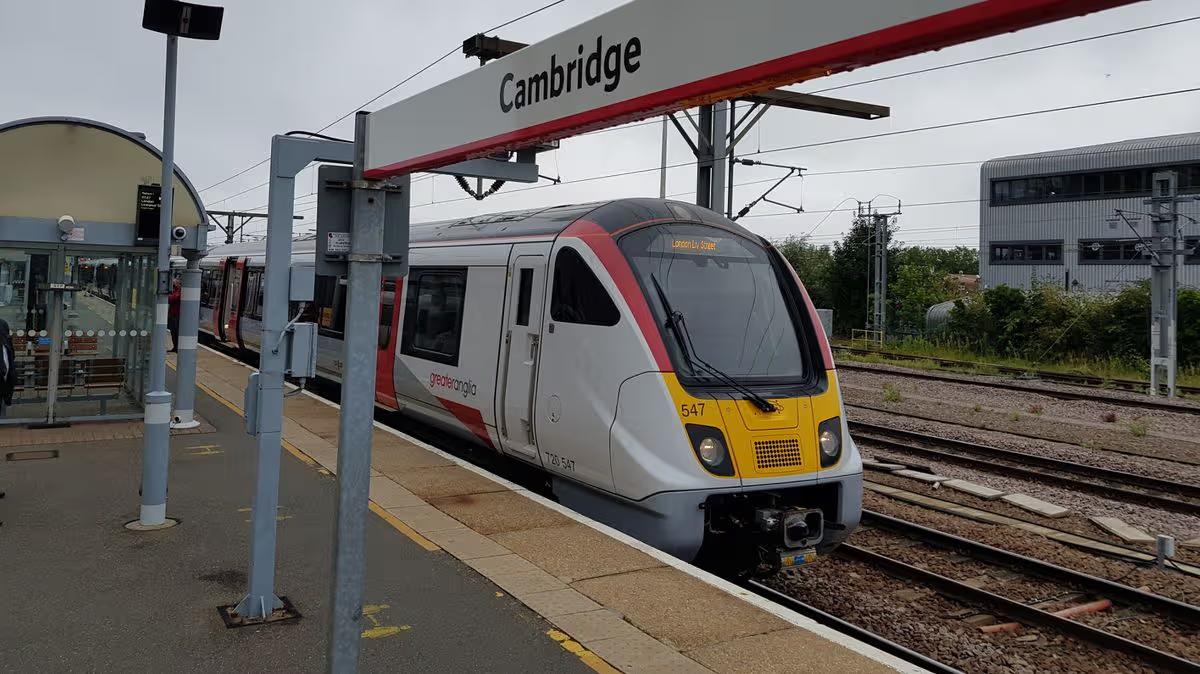
A campaign group claims the site for a potential new train station could be on “toxic” land. While Cambridge South has just opened in Cambridge this week, there are plans for a potential fourth train station in the city.

Advertisement

Last year, East West Rail put forward plans for a Cambridge East station, which could be based near Cambridge Airport. The land where the station could be built has raised concerns from the Campaign to Protect Rural England – Cambridgeshire and Peterborough (CPRE).

The land was previously used as an industrial and domestic waste landfill site. The CPRE feels the land could still contain “toxic” materials.

CPRE spokesperson Ian Ralls said: “Because of the unconsolidated nature of the landfill’s contents, buildings cannot be placed directly on top of the former landfill. Any construction will require driving piles through the contents of the landfill to anchor them to the bedrock.

“Developing this site risks disturbing the contamination and causing harm to public health, the environment, groundwater and nearby watercourses. The unknown nature of the contaminants on site risks releasing a Pandora’s Box of toxic compounds into the wider surface and water environments.”

Advertisement

Ian believes the proposals could be a “dangerous project”. He added: “As little is known about what compounds are contained in the site, the authorities cannot plan in advance how to counter any potentially negative effects resulting from their release into the atmosphere.”

The CPRE claims the site could contain Chromium VI and Cyanide, which are both highly toxic chemical compounds.

Natalie Wheble, external affairs director for the East West Railway said the company is “aware” that the site in question was previously used for landfill and “extensive desktop studies and site investigations” had taken place to understand the conditions of the site.

She added: “Cambridge East has been identified as our preferred location for the proposed station because it best meets the project’s operational and engineering requirements. The safety of our workforce, future passengers, local communities and the environment is our absolute priority.

Advertisement

“We will only confirm this site as the location for the station if we are satisfied that there is a robust and feasible remediation strategy in place, and that approach has been accepted by both the Environment Agency and the relevant Environmental Health authority.”

Natalie said the company is working with specialist consultants who have previously “successfully remediating former landfill sites” and they are making “good progress towards identifying a solution that would allow the station to be delivered safely and responsibly”.

Natalie added: “If we are unable to demonstrate that the site can be remediated to the required standard, we will not proceed with it and will instead pursue an alternative location for the station. We expect to provide a further update on this work in the autumn.”

Source link

Advertisement
Continue Reading

NewsBeat

France 3-0 Sweden: Kylian Mbappe continues blistering form as Les Bleus cruise into last-16

Published

on

France 3-0 Sweden: Kylian Mbappe continues blistering form as Les Bleus cruise into last-16

But for a half-chance that fell to Alexander Isak, Sweden were simply nowhere, and after Olise came close with two chances, the third duly arrived in delicious fashion when Mbappe played a superb one-two with the Bayern Munich star before lofting his second into the roof of the net.

Source link

Continue Reading

NewsBeat

Beverley – sports bar could be coming to Flemingate centre

Published

on

Beverley - sports bar could be coming to Flemingate centre

A planning application has been submitted to East Riding of Yorkshire Council to convert a vacant retail unit – formerly The Refill Jar – into a golf-themed sports bar.

The proposed change of use application from a retail unit to a sports bar relates to Unit 24 at the Flemingate Shopping Centre in Beverley, where the applicant is seeking to transform the space into a leisure venue featuring golf simulators, a bar, dining facilities, and crazy golf on the first floor.


Recommended reading:

Advertisement

The plans, outlined in a supporting design and access statement, highlight the economic and social benefits the new venue could bring.

The statement said: “The development will contribute positively to the vitality of the shopping centre, enhance natural surveillance, and reinforce the active frontage character that is encouraged within town centre environments.”

Plans say the applicant believes the proposed change of use will increase footfall and strengthening the vitality and viability of Beverley town centre.

If approved, the ground floor would feature four golf simulator bays, a bar area, customer seating, a dining area, and an open commercial kitchen.

Advertisement

The first floor would house crazy golf facilities, staff offices, and ancillary space.

The scheme would create three full-time jobs and four part-time positions.

Planning documents included with the application said modern town centres increasingly rely upon a mix of retail, leisure, hospitality, and entertainment uses to remain vibrant and economically resilient.

The venue would offer an “inclusive and accessible destination for all users.”

Advertisement

The applicant argues that the use would complement existing businesses in the area, given the presence of other restaurants, bars, and leisure operators nearby.

The proposed operating hours are Monday to Saturday from 12pm to 10pm and Sundays from 12pm to 8pm.

The statement said: “The proposed hours are considered appropriate given the town centre location and the presence of existing restaurants, bars, and leisure operators within the surrounding area.”

A decision on the planning application is expected to be made by East Riding of Yorkshire Council in the coming weeks.

Advertisement

Source link

Continue Reading

NewsBeat

‘I put my dreams on hold but dad’s life-changing accident inspired my return to university’

Published

on

Belfast Live

For Rachel, becoming a mum to son Jake at a young age wasn’t easy; it meant putting higher education on hold

After putting higher education on hold while raising her son Rachel Milliken was inspired to return to university having witnessed her father begin his own studies following a serious accident.

Advertisement

For Rachel, aged 39 and from the North Coast, becoming a mum to son Jake at a young age wasn’t easy; it meant putting her dreams on hold. But Jake became her whole world and best friend, as Rachel recalls: “We went through some very tough times together, and he was always there for me.”

Years later, Rachel’s father Jim experienced a serious motorbike accident which changed his life.

Remembering that difficult time, she reflects: “My dad worked hard all his life. He loved the gym and his motorbike until the day a terrible motorbike accident changed everything. He broke his back, and for a time we didn’t know if he would ever walk again.

“At surgery they had to insert titanium rods into his spine. He eventually recovered, but life as he knew it was gone. He could no longer work, and the depression hit hard.”

Advertisement

However, instead of letting the accident define him, Rachel’s dad used his experience to set himself a new challenge.

“My dad did something remarkable. He enrolled at Coleraine Northern Regional College to do an Access to Higher Education course and went on to earn a First-Class Honours degree from Ulster University,” Rachel said.

“He kept telling me to go and do it, that it would be the best thing I ever did, and not to wait any longer. But I was happy in my job and earning good money, so I never really took it seriously.

“Then came his graduation day. I stood there watching him – this man – my daddy, who was 54 surrounded by 21-year-olds, laughing and smiling as he collected his degree and I was overwhelmed with emotion and pride.”

Advertisement

Inspired by his example, Rachel began working towards a degree, a journey that has now culminated in her Doctor’s graduation. Dr Rachel Louise Milliken will graduate on Tuedsay with a Doctor of Philosophy from the School of Pharmacy at Queen’s University Belfast.

“In that moment, I knew two things: I wanted that feeling for myself, and I wanted him to feel that same pride for me. So, I applied to SERC Bangor, signed up for a part-time course, and over the next ten years I completed an Access to Higher Education course, a BSc in Biomedical Science, an MSc in Industrial Pharmaceutics, and a Doctor of Philosophy in Pharmacy at Queen’s!”

Rachel’s time at university has been a rewarding and enriching journey. The support and guidance she received from staff, mentors, and fellow students helped her overcome challenges, develop new skills, and grow both academically and personally.

Advertisement

She adds: “I have to mention Professor Dimitrios Lamprou. He was the Director of the MSc course when I first met him and later became my doctoral supervisor. I owe him an enormous amount. He saw something in me that I couldn’t yet see in myself.

“He pushed me when I felt like I wasn’t good enough, and he gave me opportunities that have shaped who I am in academia today. He gave me my chance, and I will be forever grateful.”

Rachel is currently working as a KTP Associate through the Knowledge Transfer Partnership (KTP) programme, which creates and supports collaborations between academic institutions such as Queen’s University Belfast and businesses.

Speaking on how much she enjoys the KTP experience, she says: “I feel genuinely grateful for this opportunity. I work as a formulation scientist with Provita an animal healthcare company, while simultaneously being supported by Professor David Jones at the School of Pharmacy at Queen’s.

Advertisement

“It feels like the best of both worlds; I’m learning to bridge the gap between academia and industry in a way that very few roles allow. Queen’s plays a vital part in making that possible. The University works with Innovate UK and companies to secure funding and create opportunities.”

Jake is now a second-year student himself at the University of Portsmouth.

Rachel adds: “We truly did life together. Now, at 39, being the mum of a 20-year-old feels incredible. We have the most amazing relationship, and he has been my biggest supporter throughout my entire university journey. Now he is off on his own life adventure at university in Portsmouth, and I feel like my life is only just beginning and so is his.”

Rachel hopes to inspire others who may feel like university is not be for them and speaking ahead of her graduation, she says: “I had always worried that being older would mean I would;n’t fit in but that couldn’t have been further from the truth. For the first time in my life, I truly felt like I belonged. I found my people, made incredible friends from all around the world, and created memories I will carry with me forever.

Advertisement

“I never in a million years dreamt that ten years later I would be where I am now or have achieved what I have achieved. I thought I would get an undergraduate degree, go work in industry as a scientist, and that would be it. But my story turned out to be something I could never have imagined, and I feel incredibly lucky.

“I hope that this story reaches even one person who thinks they are too old, not intelligent enough, or too afraid to take a chance on something new. Just go for it if I can do this, anyone can.”

For all the latest news, visit the Belfast Live homepage here and sign up to our daily newsletter here.

Source link

Advertisement
Continue Reading

NewsBeat

The ‘picture perfect’ Teesdale ‘village of churches’

Published

on

The 'picture perfect' Teesdale 'village of churches'

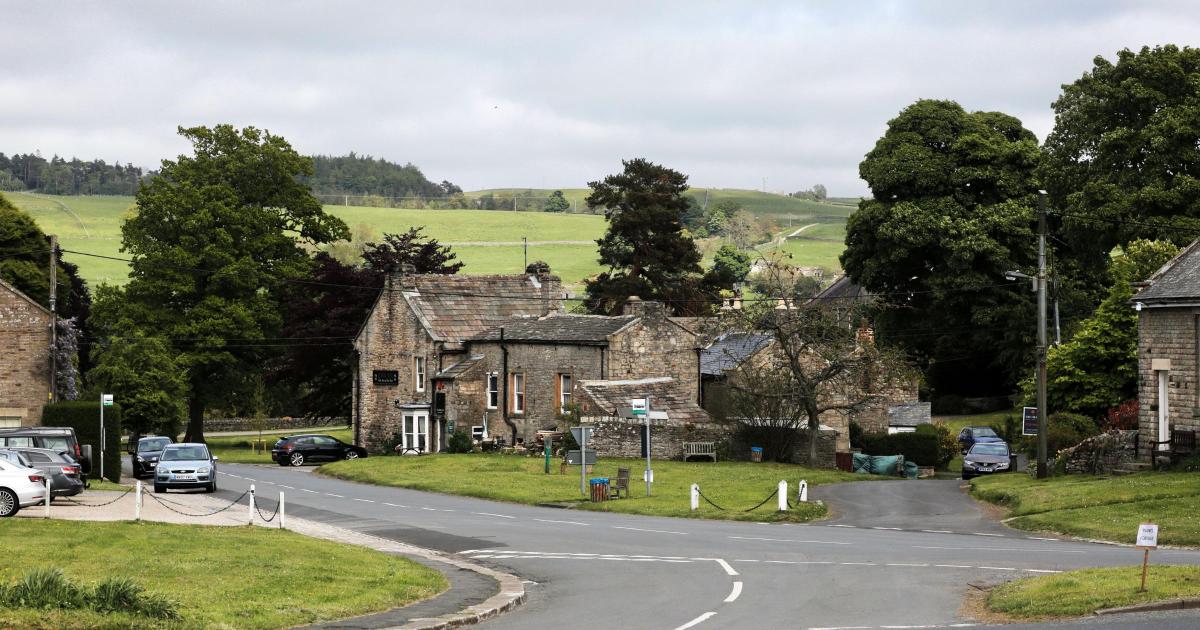
Often called “the village of churches,” it is the kind of place people describe as looking like it belongs on a biscuit tin — and it has the history and walks to match the view.

The village of three greens

Romaldkirk sits in the River Tees green valley, criss-crossed with drystone walls, roughly six miles from Barnard Castle.

Unlike many villages that have grown around a single main street, Romaldkirk is arranged around three separate village greens, each edged by stone cottages and farmhouses.

Advertisement

On the main green you will find the old village pump and a stone water trough, still in place, along with the original village stocks quietly facing the road.

Writers who visit tend to reach for the same language: “a fairly typical English village with a green,” “charming and picturesque,” “one of those rare places which have not really been affected by modern times.”

In an age of infill housing and modern extensions, the fact that most of Romaldkirk’s buildings still carry their original character is part of why it feels so timeless.

St Romald’s: the “Cathedral of the Dales”

The village takes its name from its church.

Advertisement

St Romald’s stands beside the main green and dominates views in every direction, earning the local nickname “Cathedral of the Dales” not because it is huge, but because of its presence.

It is a Grade I listed building, placing it among the most important historic structures in England, with surviving masonry that stretches back to Saxon times.

Historic England describes it as a parish church whose late 12th–early 13th century nave incorporates earlier Saxon work, with later aisles and transepts added in the 13th and 14th centuries and further alterations in the 15th, 18th and 19th.

Inside, you can still see sections of Anglo‑Saxon wall either side of the chancel arch, a late medieval rood stair, a 12th‑century font, and a stone tomb effigy of Hugh Fitz Henry, who died on campaign with Edward I in 1305, carved in chain mail.

Advertisement

The church has some stories attached. The most famous is the “Devil’s Door” — a blocked doorway in the north wall that local tradition says was sealed up in the Middle Ages to keep Satan out.

Whether you believe that or not, noticing the door and then the blocked arch beneath it is one of the small satisfactions of walking slowly around the building.

“Village of churches”

Romaldkirk’s unusual nickname — “the village of churches” — reflects just how central St Romald’s has been to the surrounding area for centuries.

Historically, this was not just a small parish chapel: Romaldkirk once sat at the heart of a very large medieval parish, with outlying chapels and responsibilities stretching across Teesdale.

The name itself comes from Old Norse and means “the church of St Romald,” pointing to its importance long before the current stone building took shape.

Advertisement

Today, the church is still very much alive, used by the Benefice of Lower Teesdale for regular services, weddings and community events, and open to visitors who want to step into what one writer called “somewhere calm and timeless” in the middle of the village.

Pubs, food and staying over

For a village with fewer than 200 residents, Romaldkirk is unusually well served for places to eat and stay.

The Rose & Crown, directly on the green, is an award‑winning country hotel with an emphasis on good food, local ales and walking breaks, and its bar and restaurant are open to non‑residents. The Kirk Inn, a short distance away, is a more traditional, old‑school village pub.

Holiday cottages in and around the village trade heavily on the setting: “one of those rare places which have not really been affected by modern times” is how one local cottage operator describes it, adding that the combination of church, green, stocks and pump is what makes it feel so special.

For visitors, that means you can eat well, sleep in characterful buildings and then step straight out into the kind of view normally reserved for calendars.

Advertisement

Walking from the village

Romaldkirk is one of the best bases in Teesdale for short and medium‑length walks.

From the front door of the Rose & Crown you can drop down to the River Tees and pick up the Teesdale Way, following the river to Cotherstone and back along the old disused railway line, now a footpath that continues through Mickleton towards Middleton‑in‑Teesdale.

A popular 2.5‑mile circular route, starting on the green between the Kirk Inn and the village trough, combines the village’s history with riverside scenery and open Teesdale views, visiting Low Garth Farm and the Fairy Cupboards caves along the way.

Longer circuits link Romaldkirk into routes that take in Hury and Grassholme reservoirs, Bowlees Visitor Centre, and the waterfalls at Low Force, High Force and Cauldron Snout, making it a natural overnight stop for walkers stringing several days together.

This is also classic cycling country, with lanes rising onto the surrounding fells and giving access to the North Pennines Area of Outstanding Natural Beauty, Hamsterley Forest and, just over the county boundary, the Yorkshire Dales National Park.

Advertisement

Why it feels like a biscuit tin

Part of Romaldkirk’s appeal lies in how much history is concentrated into such a small, coherent space.

On a short wander around the greens you can see Saxon masonry, medieval effigies, original village stocks, an old pump, and a church that has watched over Teesdale for centuries, all within a few minutes’ walk of two pubs and a cluster of stone cottages.

Travel writers who come expecting “just another nice village” tend to come away surprised.

One described it simply as “quite picturesque,” another as “charming and well worth visiting,” and local tourism bodies emphasise that the surrounding valley, with its drystone walls and riverside paths, is as much part of the experience as the village itself.

Advertisement

Put together, it is exactly the sort of place you could imagine painted on a biscuit tin — but here, the scene is real, and you can walk through it

Getting there

Romaldkirk lies in Teesdale in the Pennines, within the historic North Riding of Yorkshire but administered by County Durham since 1974.

The village is around six miles west of Barnard Castle, which sits on the A688 and is easily reached from the A1(M) at Scotch Corner via the A66. From Barnard Castle, minor roads follow the Tees upstream to Romaldkirk, with signposted routes via Cotherstone and Mickleton.

Advertisement

There is roadside parking around the village greens (postcode DL12 9ED), used as the start point for several published walks.

The nearest railway stations are Darlington and Bishop Auckland, with bus services into Barnard Castle and onward local connections into Teesdale; always check current timetables before travelling, as rural routes can be infrequent.

Source link

Advertisement
Continue Reading

NewsBeat

Drugs, shootouts and trips to M&S: Forget the Costa del Sol – how the NETHERLANDS became the new playground for British gangsters

Published

on

Liverpool gangster Paul Parker - in sunglasses - was shot dead in the Netherlands on June 1. Dutch news outlets reported that Parker was a suspect in the murder of Pieter Hoovers (pictured left) and his Thai wife, Tae Kawepanya

Knife in hand, Paul Parker bursts into a garage and is confronted by two men. He stabs them, but one manages to draw a gun and shoot him, inflicting a fatal wound.

The 52-year-old’s death last month was sudden and violent. Given he was a veteran of Liverpool’s vicious gang scene, that is hardly surprising. 

More unexpected, however, was where he met his end: an industrial estate in Heerhugowaard, a Dutch commuter town 25 miles north of Amsterdam.

Detectives will want to know what Parker was doing in Heerhugowaard. But his death also shines a light on something rarely discussed outside law enforcement: the deep ties between the British and Dutch underworlds.

Advertisement

Parker, 52, was no stranger to the Netherlands. At the time of his death, he was wanted over the 2017 murder of Dutchman Pieter Hoovers and his 32-year-old Thai wife, Tae Kawepanya.

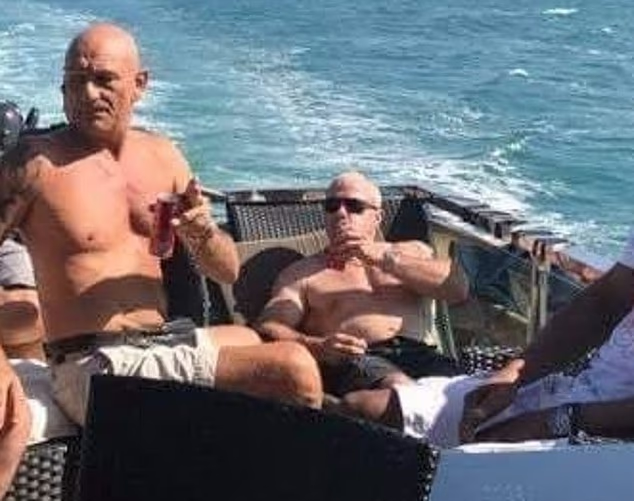
A photo shows Parker sitting next to Hoovers on a boat, suggesting they were once on friendly terms. Yet within a few years, Hoovers had been gunned down alongside his wife in an Amsterdam apartment.

Local police reportedly identified Paul Parker as the prime suspect, implying that he could have been working as a hitman for an organised crime group.

A Dutch source told the Daily Mail that Parker (who went by the name ‘Tommy’ in the Netherlands) was in Heerhugowaard to enforce a debt, which adds further weight to the theory he was working as hired muscle for a gang.

Advertisement

According to the source, he had been living on the Continent for at least two decades and was recently based in Portugal before entering the Netherlands on a fake passport.

Liverpool gangster Paul Parker – in sunglasses – was shot dead in the Netherlands on June 1. Dutch news outlets reported that Parker was a suspect in the murder of Pieter Hoovers (pictured left) and his Thai wife, Tae Kawepanya

The police investigation focused on an unknown man who appeared on camera footage three times around the time of their murders in Amsterdam

The police investigation focused on an unknown man who appeared on camera footage three times around the time of their murders in Amsterdam

Advertisement
Mr Hoovers, who has a background in martial arts, founded record label Outland Records before selling the business and relocating to Thailand in the mid-1990s

Mr Hoovers, who has a background in martial arts, founded record label Outland Records before selling the business and relocating to Thailand in the mid-1990s

This comes as no surprise to long-time observers. While Spain’s Costa del Sol has long had a reputation as the leading European hub for British criminals, the importance of the Netherlands has been largely overlooked. 

Unlike in southern Spain, where gangsters flaunt their wealth and engage in bloody turf wars, their Netherlands-based counterparts tend to stay under the radar.

In the land of tulips and windmills, multi-million-pound deals are struck in backstreet cafes or via text messages on encrypted apps, while disputes are resolved behind closed doors.

Advertisement

British traffickers began arriving in the Netherlands in the 1980s, when it emerged as a key European meeting point for international drug gangs.

‘The Netherlands – and Amsterdam in particular – became the stock exchange of the drug world – it was the place to go to do deals,’ explains Peter Walsh, author of Drug War: The Secret History.

‘The Dutch have strong trading connections with countries in South America and the Caribbean.

‘Drug possession is tolerated, and Amsterdam has bars, brothels and cannabis cafes – which are all things people connected with the drug trade enjoy.’

Advertisement

The 1990s saw the arrival of Liverpool kingpin Curtis Warren, who earned an estimated £200million fortune – and a place in The Sunday Times Rich List – by forging direct supply lines with South American cartels.

His unlikely Dutch base was an isolated farmhouse, where he kept a stash of automatic weapons and hand grenades hidden in guest bedrooms. In 1996, it was raided by armed police, who found £125million worth of cocaine and MDMA.

Today, much of Europe’s cocaine still makes landfall at ports such as Rotterdam – the continent’s largest container hub.

Café De Ketel, a cafe that was run exclusively for gangsters in the port of Rotterdam

Café De Ketel, a cafe that was run exclusively for gangsters in the port of Rotterdam

Advertisement
Curtis 'Cocky' Warren (pictured February 2020) operated in the Netherlands in the 1990s

Curtis ‘Cocky’ Warren (pictured February 2020) operated in the Netherlands in the 1990s

One British gang smuggled £7billion worth of heroin, cocaine and cannabis inside cargoes of onion, garlic and ginger - a failed attempt to distract sniffer dogs

One British gang smuggled £7billion worth of heroin, cocaine and cannabis inside cargoes of onion, garlic and ginger – a failed attempt to distract sniffer dogs 

Ringleader Paul Green, from Widnes in Cheshire, was jailed for 32 years in 2024

Ringleader Paul Green, from Widnes in Cheshire, was jailed for 32 years in 2024

The sheer volume of trade means only a fraction of cargo can be inspected, while corruption serves as a vital lubricant.

Advertisement

One British network, led by Paul Green from Widnes in Cheshire, smuggled £7billion worth of heroin, cocaine and cannabis inside cargoes of onion, garlic and ginger.

The operation – thought to be the largest drug smuggling conspiracy ever detected in the UK – continued for a two-and-a-half-year period until Green was caught and jailed for 32 years in 2024.

Organised crime in the Netherlands is dominated by the Mocro Maffia, a network of criminal groups recruiting from the Dutch Moroccan community.

Under the leadership of crime boss Ridouan Taghi, it gained a reputation for savage violence. In one raid, police found a makeshift torture chamber inside a shipping container containing a dentist’s chair alongside pliers, hammers and a hedge trimmer.

Advertisement

Taghi himself has been linked to at least ten murders, including the 2019 assassination of Derk Wiersum – a lawyer who was representing a key witness against his gang – and the killing of celebrity crime reporter Peter R. de Vries two years later.

Since Taghi’s arrest in 2019, the Mocro Maffia has moved away from high-profile displays of violence and reinvented itself as a middleman for other drug gangs, including those supplying the UK.

‘They secure cocaine shipments from South American cartels before meeting up with British gangsters in the Netherlands and selling it on wholesale,’ says Chris Dalby, who runs the consultancy World of Crime.

‘It’s become an integrated ecosystem. British dealers are often based in or passing through the Netherlands. The groups have almost become sister organisations.

Advertisement

‘Surprisingly, you don’t hear too much about violence by British drug dealers in the Netherlands like you do in Spain.

‘I think it’s about competition. If you look at southern Spain there is a higher degree of drug violence because it’s a far more contested market with drug dealers from lots of different nationalities. But you don’t have that in the Netherlands.’

Ridouan Taghi, leader of the Mocro Maffia, a network of criminal groups recruiting from the Dutch Moroccan community

Ridouan Taghi, leader of the Mocro Maffia, a network of criminal groups recruiting from the Dutch Moroccan community

A makeshift torture chamber, discovered by Dutch police in 2020 in the village of Wouwse Plantage. Mercifully, it was never used

A makeshift torture chamber, discovered by Dutch police in 2020 in the village of Wouwse Plantage. Mercifully, it was never used 

Advertisement

One example of this discreet cooperation was the Café De Ketel in Rotterdam, which became a known meeting point for traffickers from across Europe.

Open for 18 hours a day, it looked like an ordinary café on the surface, but a buzzer system ensured only recognised criminals could enter. The organised crime entrepôt finally shut up shop after being raided by the National Crime Agency in 2013.

In Amsterdam, the British presence has become so entrenched that gangsters have built their own routines and meeting places.

One of them was a branch of M&S, which became popular with criminals from Liverpool.

Advertisement

‘We would all pile into Marks for a cooked chicken and some sticky buns,’ one man who spent time out there says.

‘You might bump into faces from back home and have a chat about the game and that. All the scallywags could jump on a budget flight from Liverpool to Amsterdam or even get the ferry from Hull.’

The branch closed in 2016, forcing traffickers to go elsewhere for their home comforts.

One notorious gangster to ply his trade in the Netherlands was Francis Coggins, one of the brothers behind the Huyton Firm, one of Liverpool’s most feared gangs.

Advertisement

The 60-year-old had been living in the coastal town of Zandvoort, where he bought cocaine and heroin before shipping it to the UK via the UPS network.

He remained at large after his younger brother Vincent – who focused on the gang’s UK operations – was arrested and jailed in 2020.

Francis Coggins had managed to evade the authorities for five years before he was arrested by Dutch police for being drunk and disorderly. He had rarely been pictured before this mugshot

Francis Coggins had managed to evade the authorities for five years before he was arrested by Dutch police for being drunk and disorderly. He had rarely been pictured before this mugshot 

Coggins sent drugs from mainland Europe to North Wales by putting them into parcels with UPS waybills attached

Coggins sent drugs from mainland Europe to North Wales by putting them into parcels with UPS waybills attached

Advertisement

But like many Brits before him, Francis overindulged in Dutch hospitality and was found ‘collapsed’ in the street outside a house after an alcohol-fuelled bender. He was promptly arrested and flown back to Britain, where he was jailed for 18 years in 2025. 

If British drug peddlers appear relatively unlikely to resort to public violence in the Netherlands, the reason is hardly comforting.

‘What causes violence is a missed payment, protecting turf or a betrayal,’ says Chris Dalby. 

‘But there’s now so much cocaine around – and so much demand from the UK – that there are fewer reasons for friction. That’s what makes Parker’s death relatively unusual.’

Advertisement

In other words, Britain’s insatiable appetite for illegal drugs means there is more than enough business to go round.

And peace, after all, is profitable. 

Source link

Advertisement
Continue Reading

Trending

Copyright © 2025