

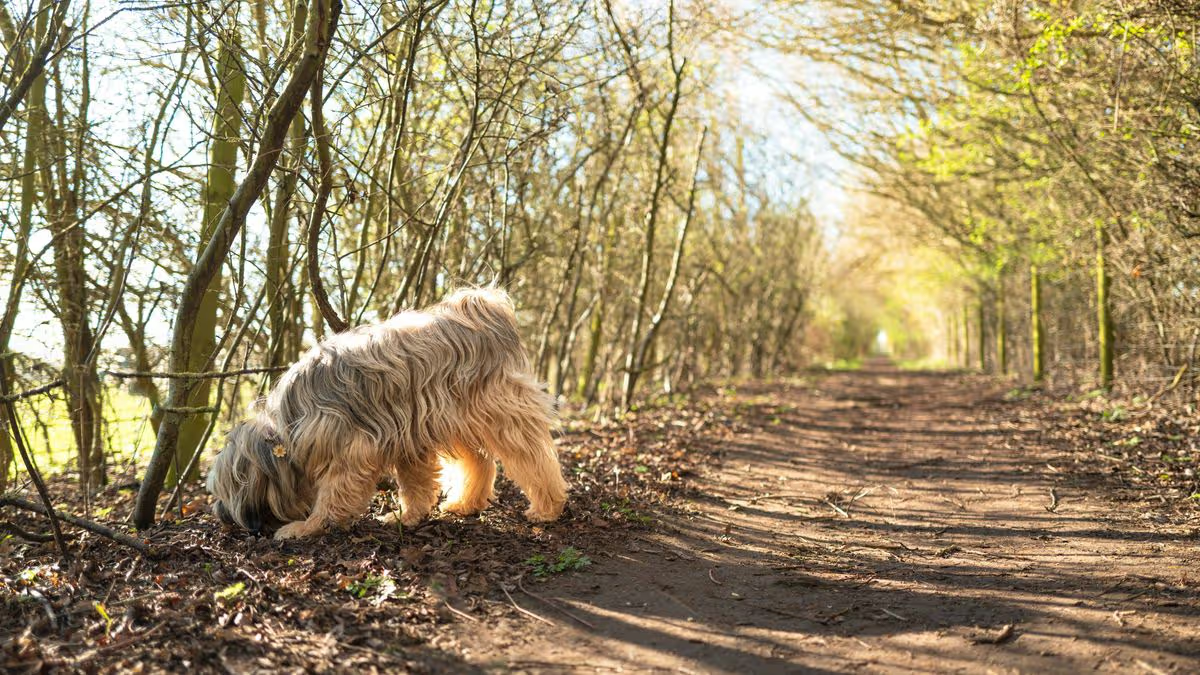
Dog owners are being warned about a major dog law change that could see them hit with unlimited fines
Dog owners are being alerted about a significant legal change that could result in them facing unlimited fines. The Dogs (Protection of Livestock) (Amendment) Act 2025 officially took effect on March 18, 2026, introducing some of the most substantial updates to countryside regulations in decades.
The alert comes as extended daylight hours and milder temperatures encourage more people to venture outdoors for walks. Under the new legislation, which is applicable in England and Wales, the previous £1,000 maximum penalty has been scrapped, meaning courts can now impose unlimited fines on owners whose dogs are discovered to have worried livestock.
Crucially, “livestock worrying” doesn’t simply mean an attack; it encompasses chasing animals or causing them fear or stress, even without any physical injury. Simultaneously, police have been granted enhanced powers to investigate incidents.
Officers can now seize and detain dogs suspected of involvement, enter premises with a warrant and gather evidence, including obtaining DNA samples or mouth impressions to assist in identifying the dog responsible. For numerous owners, it’s a development that feels considerably more severe than previously.
Michael Nelson, from Kennel Store, said: “A lot of people still think this law only applies if a dog actually attacks or injures an animal, but that’s not the case. Even something as simple as chasing livestock can be enough.
“Owners often say their dog is friendly and wouldn’t hurt anything and that might be true in most situations. But around livestock, instinct can take over very quickly, and that’s where problems start.”
Major dog law change means roads and paths now included
One of the most significant changes catching people by surprise is where the law now applies. Previously concentrated on agricultural land, the revised legislation now covers incidents occurring on roads, paths and public rights of way near livestock, not just within fields.
Michael explained: “That’s a big change that hasn’t really cut through yet. You don’t actually have to be walking through a field anymore. If your dog reacts to animals from a nearby path or road, you could still be in trouble.”
The law has also been amended to reflect the genuine impact these incidents can have. Livestock don’t need to be physically injured for an offence to occur; stress alone can cause serious harm, including miscarriage or long-term health issues.
Michael added: “From a distance, it can look harmless, a dog running or barking, but for the animals involved, it’s a completely different story. They can panic, run, and injure themselves very easily.”
He also cautioned that once an incident occurs, the consequences can escalate rapidly: “People don’t always realise how serious it can become. You could be dealing with police involvement, your dog being taken away while it’s investigated and potentially a very significant fine.”
Courts can also order owners to cover the costs associated with seizing and caring for a detained dog, adding to the financial impact.
Michael said: “If you’re anywhere near livestock, the safest thing you can do is keep your dog on a lead. It’s not about whether your dog is well-trained or friendly. It’s about understanding that in the wrong moment, any dog can react.”













































You must be logged in to post a comment Login