


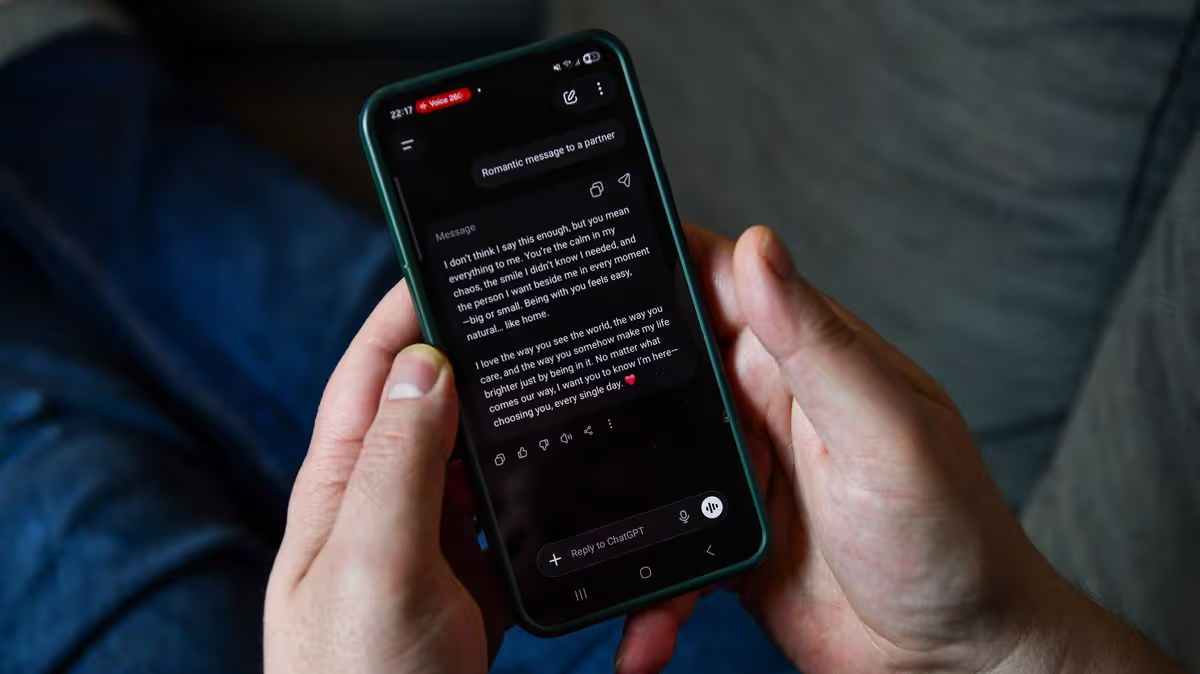
Brits are turning to AI for help as many are guilty of not sending messages to struggling friends or family because they were stuck for words
Four in 10 Brits have turned to AI to compose messages to friends and family for life’s most delicate moments – including love letters, apologies, and condolences. A survey of 1,500 adults exposed the scale of the nation’s writer’s block when it comes to demonstrating they care, with 50% having skipped reaching out to a struggling friend or relative because they couldn’t find the right words.
This anxiety about saying the wrong thing has also led to 22% never receiving a card during a challenging period in their life. Nevertheless, 64% said even a brief message can be “deeply meaningful”, particularly when experiencing a difficult day.
To stop the trend of saying ‘nothing at all’, 43% are now using artificial intelligence to help generate messages of support or sympathy.
Georgie Smallwood, chief product and technology officer at Moonpig , which commissioned the research, said: “It’s clear even the briefest message or token can mean so much, so we are encouraging people to be braver in those situations when it’s difficult to know exactly what to say.
“While AI tools obviously can’t replace the human touch in these moments, they can be very helpful in scenarios when you really can’t seem to express yourself – there to push you in the right direction and get the words flowing, rather than write them all for you.
“It’s always better to say something than nothing, so take the help where you can get it for life’s difficult moments.”
The study revealed 45% find themselves completely lost for words during difficult periods, confessing they recognise they have feelings to convey but find it challenging to commit them to paper.
The fear of causing offence or distress is the main reason behind this reluctance, with 46% saying they are held back by the fear of saying the wrong thing. What’s more, 44% said crafting a message to mark any significant life moments, let alone delicate ones, feels stressful.
A stark contrast has also been highlighted between different generations, as 25–34-year-olds are struggling the most – 61% of this group admitted to delaying messages and 55% to obsessively deleting and rewriting them before sending. In comparison, only 37% of over 55s reported the same hesitations.
Interestingly, 49% of women admit that translating their thoughts into words is a challenge, compared to 41% of men. However, despite finding the writing process a challenge, women still find the written word easier than expressing their feelings in person.
They are significantly more likely than men to express deep emotions in a card or note rather than face-to-face (47% versus 40%).
Men, meanwhile, have embraced AI more readily to draft messages, being more likely than women to use tools for romantic notes (28% vs 22%) or to find the right words for an apology (26% vs 22%).
Georgie Smallwood, for Moonpig, added: “Every day, customers use our creative tools to help them write messages that really matter, expressing their care, support, sadness, or just to check in and let someone know they’re loved.
“One in two cards sent we send are created using our personalisation tools, making them completely unique.
“It really feels special that we are helping people to stay in touch and say the right thing at the right time.”











































You must be logged in to post a comment Login