

Connect with us
DAPA Banner
DAPA Coin
DAPA
COIN PAYMENT ASSET
PRIVACY · BLOCKDAG · HOMOMORPHIC ENCRYPTION · RUST
ElGamal Encrypted MINE DAPA
🚫 GENESIS SOLD OUT
DAPAPAY COMING

NewsBeat

California labor union could scale back billionaire tax proposal

Published

on

California labor union could scale back billionaire tax proposal

SACRAMENTO, Calif. (AP) — A labor union behind a controversial tax on California billionaires significantly scaled back its proposal a day after it qualified for the November ballot, but the offer Thursday wasn’t enough to get the governor on board.

The proposal from the Service Employees International Union Healthcare Workers West to impose a one-time, 5% tax on individuals whose net worth exceeds $1 billion faces staunch pushback from a wide swath of critics, including Democratic Gov. Gavin Newsom. The union said Thursday that it would abandon the 5% tax proposal if Newsom would join them in supporting a 2% levy. The updated proposal would instead have to be passed by the Legislature, given a June 25 deadline for the measure to qualify for the ballot.

Tara Gallegos, a spokesperson for Newsom, said scaling it back doesn’t change its “fundamental flaws that harm working Californians.”

“The Governor supports making the wealthiest Americans pay their fair share, but this poorly designed state-only measure will defund teachers, schools, clinics, and public safety,” she said in a statement.

Advertisement

The tax, to be paid by those living in the state as of Jan. 1, 2026, is meant to generate $100 billion in revenue, mainly to counter federal cuts to healthcare for low-income people with some money going to food assistance and education programs.

“A 2% one-time tax on that accumulated wealth is modest by any objective measure especially if it means keeping emergency rooms open and saving patient lives,” backers wrote in a letter to Newsom.

Secretary of State Shirley Weber, a Democrat, said Wednesday night that petitioners collected more than the roughly 875,000 signatures needed to place the original proposal before voters.

States have been debating how to respond to the major tax breaks and spending cuts legislation President Donald Trump signed last year. The proposal has already divided Democrats and major labor unions and triggered an expensive campaign to defeat it. The proposed tax is backed by prominent progressives including Vermont Sen. Bernie Sanders.

Advertisement

Silicon Valley tech moguls have spent millions to defeat it, and prominent players in Sacramento have opposed it. They include the California Medical Association and California School Boards Association, which helped launch a committee this week urging voters to reject it if it ends up on the ballot in November. Newsom also opposed a ballot measure in 2022 to increase taxes on the wealthy, which would have funded programs that help people buy electric cars or install more chargers. Voters rejected it.

Critics say the original measure would decrease state revenue over time by pushing the ultrawealthy to leave, taking the money they would contribute in income taxes with them. That would deal a huge blow to a state that relies on its top 1% of earners for nearly half its personal income tax revenue.

Advertisement

“This flawed measure is the wrong approach for California’s small businesses and working families,” said Roger Salazar, a spokesperson for Golden State Promise, a political committee fighting the tax.

The nonpartisan Legislative Analyst’s Office estimates that the 5% tax would generate tens of billions of dollars in the first few years, but that income tax revenues could subsequently decline by hundreds of millions of dollars annually.

Since the proposal was announced in October, Google co-founder Sergey Brin has donated $82 million to a political committee called Building a Better California that backs a variety of initiatives designed to blunt the billionaire tax proposal. It has raised more than $118 million, counting Brin’s contributions, from fewer than a dozen donors.

State lawmakers passed budget bills this week that aim to raise revenue in other ways, including by extending a tax on healthcare providers. Newsom and legislative leaders agree to this approach, Senate President pro Tempore Monique Limón said.

Advertisement

“The budget, as approved by the Legislature and now being negotiated with the Governor, does not include the billionaire’s tax,” the Democrat said in a statement. “Instead, it reflects additional revenues to address our long-term structural deficit.”

Source link

Advertisement
Continue Reading
Click to comment

You must be logged in to post a comment Login

Leave a Reply

NewsBeat

Eight ways to sleep well in hot weather

Published

on

Eight ways to sleep well in hot weather

When temperatures rise, sleep often suffers. Hot nights can make it harder to fall asleep, increase waking during the night and leave people feeling less rested the next day.

One reason is thermoregulation, the body’s ability to keep its internal temperature within a safe range. Sleep is closely linked to body temperature: to fall asleep and stay asleep, the body usually needs to lose some heat. Hot bedrooms make that harder.

And UK summers are becoming hotter. The Met Office has reported that the chance of exceeding 40°C in the UK is now more than 20 times higher than it was in the 1960s, with a 50% chance of another 40°C day in the next 12 years.

Humidity can make the problem worse. Research on humidity and heat stress shows that high humidity can increase the strain heat places on the body. The body cools itself partly by sweating. As sweat evaporates from the skin, it carries heat away. But when the air is already humid, evaporation becomes less efficient.

Advertisement

So how can you sleep better in hot weather?

Air conditioning is one answer, but it is not affordable or practical for many households. According to the Energy Saving Trust, the electricity unit rate under the July to September 2026 price cap is 26.11p per kWh for direct debit customers. A small portable air-conditioning unit using about 1kW for seven hours a night over 30 nights would cost around £54.83 in electricity alone, before buying the unit.

Research on overheating in homes shows that shading and ventilation can be important passive cooling strategies: reducing indoor heat without mechanical cooling. Before cooling the air, then, it helps to reduce the heat entering the home. Overheating usually comes from sunlight entering through windows, known as solar gain, and warm outside air.

Advertisement

These eight steps can help keep bedrooms cooler before nightfall.

1. Keep sunlight out during the day

On sunny days, keep curtains or blinds closed on sun-facing windows. This reduces sunlight entering the room and heating up floors, walls and furniture. External shading, such as shutters, awnings or shades, can be even more effective because it stops some sunlight before it reaches the glass.

Be careful with windows. If the air outside is hotter than the air inside, opening windows can bring heat in. Open windows when the outside air is cooler than indoors, often early in the morning, evening or overnight. Close them during the hottest part of the day if the outside air is warmer.

2. Use cross-ventilation when the air outside is cooler

Cross-ventilation means opening windows or doors on different sides of a home so air can flow through. When outdoor air is cooler, this can help remove heat that has built up indoors. Studies of passive cooling in homes have found that night-time ventilation can reduce overheating, although effectiveness depends on the building, outdoor temperature, safety, noise and air quality.

Advertisement

3. Reduce heat from conservatories and sun-facing rooms

Conservatories can become very hot because sunlight passes through the glass and warms the surfaces inside. Keep them ventilated during the day and, where possible, close internal doors between the conservatory and the rest of the house. Reflective films, blinds, shutters, awnings and shaded roofs can all reduce heat gain.

Window shutters and retractable awnings in Mediterranean countries. (Professor Amin Al-Habaibeh, author provided)
Professor Amin Al-Habaibeh, Author provided (no reuse)

Loft spaces and top-floor rooms can also become hot because roofs absorb solar heat. Loft ventilation or reflective roof materials may help in some homes, although these are usually more substantial interventions. For example, solar panels on the roof can generate electricity and at the same time act as a barrier to reduce heat transfer to the building.

4. Move where you sleep

If your bedroom is on an upper floor or faces south or west, it may be one of the hottest rooms in the house. Heat rises through the building, and sun-facing walls and roofs can continue releasing stored heat after sunset.

Advertisement

During a heatwave, sleeping on the ground floor or north-facing side of the home may help.

5. Reduce heat and humidity indoors

Ovens, hobs, tumble dryers, washing machines and dishwashers can all make indoor spaces warmer. Cooking and drying clothes indoors can also increase humidity, making it harder for sweat to evaporate.

On very hot days, use heat-producing appliances earlier in the day or later in the evening. Use extractor fans when cooking or showering because they remove warm, moist air before it spreads through the home. Research on moisture movement and extractor fans has shown that fans can reduce the movement of moisture from kitchens and bathrooms to other rooms.

6. Choose breathable bedding and clothing

A review of sleepwear and bedding fibre types found that bedding and clothing can affect thermal comfort during sleep. Light, loose sleepwear and bedding can help the body lose heat. Cotton and linen are often comfortable because they absorb moisture and allow air movement, although fabric weave, thickness and moisture handling also matter. Avoid heavy bedding, thick duvets and tight synthetic fabrics that trap heat and moisture.

Advertisement

7. Use fans carefully

Evidence on electric fan use in hot weather suggests that fans can be useful in many hot conditions, but their safety depends on temperature, humidity, age, hydration and health.

Fans do not cool the air. They move air across the skin, which can help sweat evaporate and make people feel cooler.

In very high temperatures, especially for older adults or people who are dehydrated or unwell, fans alone may not be enough. If using a fan, drink water, avoid directing it continuously at the face while sleeping, and stop using it if it makes you feel hotter, dizzy or unwell.

8. Try low-cost cooling aids safely

Reusable ice packs, freezer blocks or cooling pillows may help some people feel more comfortable. Wrap ice packs in a cloth or place them on a tray to avoid condensation soaking bedding or direct cold contact with skin.

Advertisement

Cooling mattress toppers and bedding that use water or phase change materials may also help. These materials absorb, store and release heat as they change state, although cost and effectiveness vary.

In hot weather, better sleep starts long before bedtime.

The most effective approach is usually a combination: block sunlight during the day, ventilate when outside air is cooler, reduce heat from appliances, sleep in the coolest room available and use bedding that allows the body to lose heat.
Advertisement

Source link

Continue Reading

NewsBeat

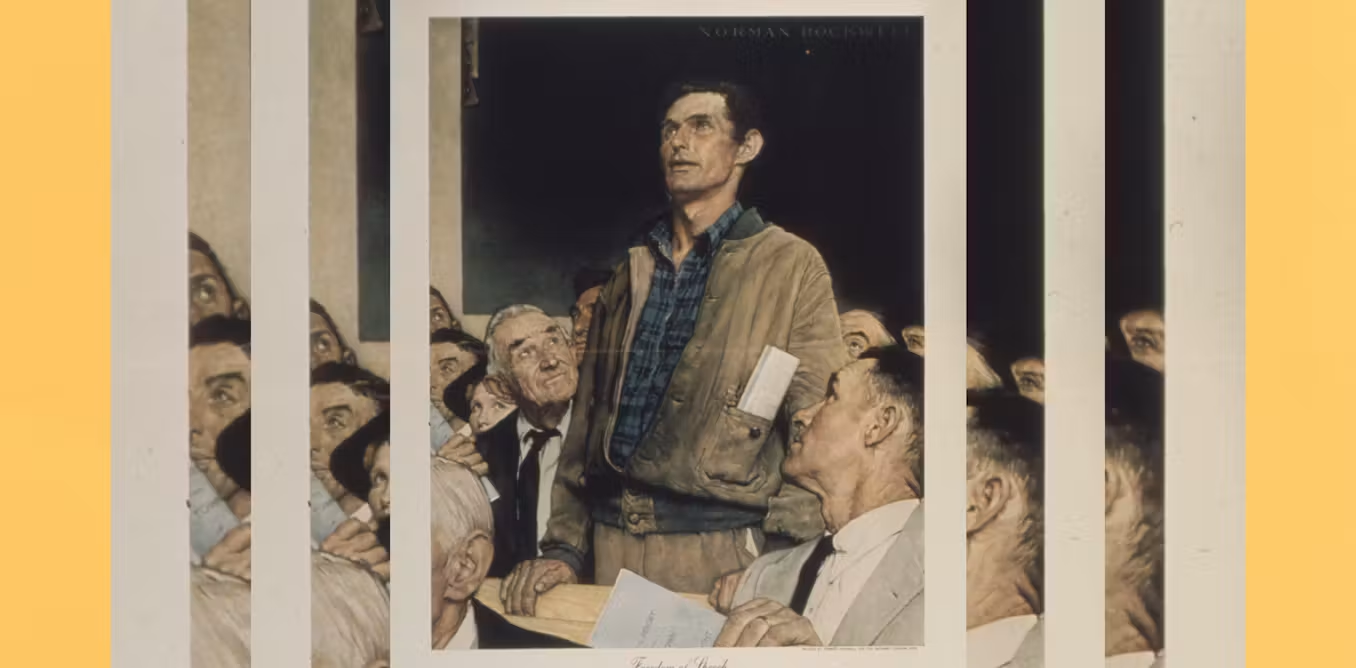
Freedom of speech takes many forms and they are always cultural

Published

on

Freedom of speech takes many forms and they are always cultural

In the early 20th century, American anthropologist Franz Boas argued that being free just means being fully in harmony with your culture. The Inuit with whom he had done fieldwork saw themselves as incomparably free, even though he saw them as constrained by traditional rules.

But the opposite was also true: they saw his (freely chosen) decision to live among them as a strange cultural compulsion. For Boas, there is no absolute freedom: “We are free in so far as the limitations of our culture do not oppress us; we are unfree when we become conscious of these limitations and are no longer willing to submit to them.”

This idea sheds light on a puzzling aspect of free speech debates. Speech is never truly free: we are limited by grammar, context, politeness, style and genre. Controversies arise not because there are limits to what you can say, but because limits feel wrong. Limitations that follow your own inclinations feel sensible and natural – merely a question of hitting the right tone, avoiding some words in order to be convincing, impressive, civil or reasonable. Even free speech absolutists are polite to their mothers.

Cultures of free speech

This vision of free speech is disturbing, though. As Boas’s contemporary Bronislaw Malinowski pointed out – if freedom is just alignment on your culture, then a fully indoctrinated citizen of a totalitarian state would be entirely free.

Advertisement

But none of us live in just one culture. Our commitments are multiple, cross-cutting and conflicting, and there are dissidents even in totalitarian regimes. Dissidents are not outside culture, however. Their desire for free speech may reflect misalignment with official truth, but it is also rooted in other cultural and historical commitments and values.

In my new book, I argue that our free speech wars could be seen as a struggle between three main visions, each with its own notion of freedom.


Pelican Books

“Reason” envisions the rational exchange of opinions within the law. “Carnival” values free speech as a radical attack on established laws and orthodoxies. “Honour” is concerned with the bravery and honesty of truth-speakers doing their duty.

Carnival and honour

The real problem with Boas’s view is that it assumes freedom is just one kind of thing – being in line with your culture. His critics often think it is the opposite: thinking outside the box and being conscious of yourself as an individual rather than following the herd.

Advertisement

This idea is central to certain free speech stances: the more shocking or unconventional, the more one is a genuine free speaker. When French students took to the streets in May 1968, their most famous graffiti read “it is forbidden to forbid”. But this freedom as the absence of constraint is itself a cultural vision, with specific historical roots. It echoes medieval carnival where there was a suspension of all rules and the inversion of all propriety.

Yet when people break cultural rules, it is often in pursuit of another cultural ideal. The 17th century Quakers, for instance, were famously bold and unconventional speakers, often insulted and beaten for refusing to call people “sir” or observe common courtesies. Committed to speaking purely and truly in the eyes of God, they rejected deference as insincere flattery and worldly pride. They broke with propriety, but their freedom of speech was the very opposite of “it is forbidden to forbid”. Instead, it entailed saying less, not more, and was felt as an obligation.

Religious freedom-as-obligation might sound strange to secular ears, yet free speech is often experienced precisely in this way. Think of whistleblowers, martyrs and truth-speakers who might say, like Martin Luther did, “here I stand, I can do no other.” This is freedom as an honourable commitment to the truth.

Honour and reason

It also echoes the ancient Greek figure of the parrhesiast – the brave truth-speaker, like the orator speaking to an angry crowd. Parrhesia (truth telling) requires personal courage and a certain disrespect for conventions.

Advertisement

But the ancient Greeks also had isegoria – an equal right to speaking in public, a matter of law and formal equality. Isegoria required not individual courage but collective rules, civility and reasonable turn-taking.

Historian Teresa Bejan has argued this distinction echoes in contemporary no-platforming debates: no-platformed speakers see themselves as courageously saying what no one wants to hear; while no-platformers claim to equalise access to public speech by giving the marginalised their turn.

But we could also read it the other way: no-platformers are sometimes seen as bravely speaking out against the system, while critics of no-platforming wish that everyone would be a bit more civil and reasonable and listen to people they disagree with.

Counting to three

None of these modes of free speech are absolute. Reason implies standards of civility some speakers fall foul of. Carnival rarely gives voice to the enemy, to those deemed “powerful” or to the “establishment”. Honour is also the language of reparation, insult and offence.

Advertisement

Reason, carnival and honour are not mutually exclusive cultures. Rather they are “modes” of free speech – like modes of transport, each gets us there differently, with different costs and implications.

In a debate on free speech which is so often binary and polarised, counting to three can help us see that the hardest choices are not always between less and more free speech – they are about the kind of freedom we are reaching for and what limits it comes with.

This article features references to books that have been included for editorial reasons, and may contain links to bookshop.org. If you click on one of the links and go on to buy something, The Conversation UK may earn a commission.

Advertisement

Source link

Continue Reading

NewsBeat

The Cambridgeshire commuter village with a ‘nightmare’ rail crossing

Published

on

Cambridgeshire Live

A South Cambridgeshire village has been described as a ‘really safe environment’

A Cambridgeshire commuter village has been praised by locals for its “small, peaceful community”. However, they complained about its “nightmare” rail crossing, which they say is becoming “worse and worse”.

Advertisement

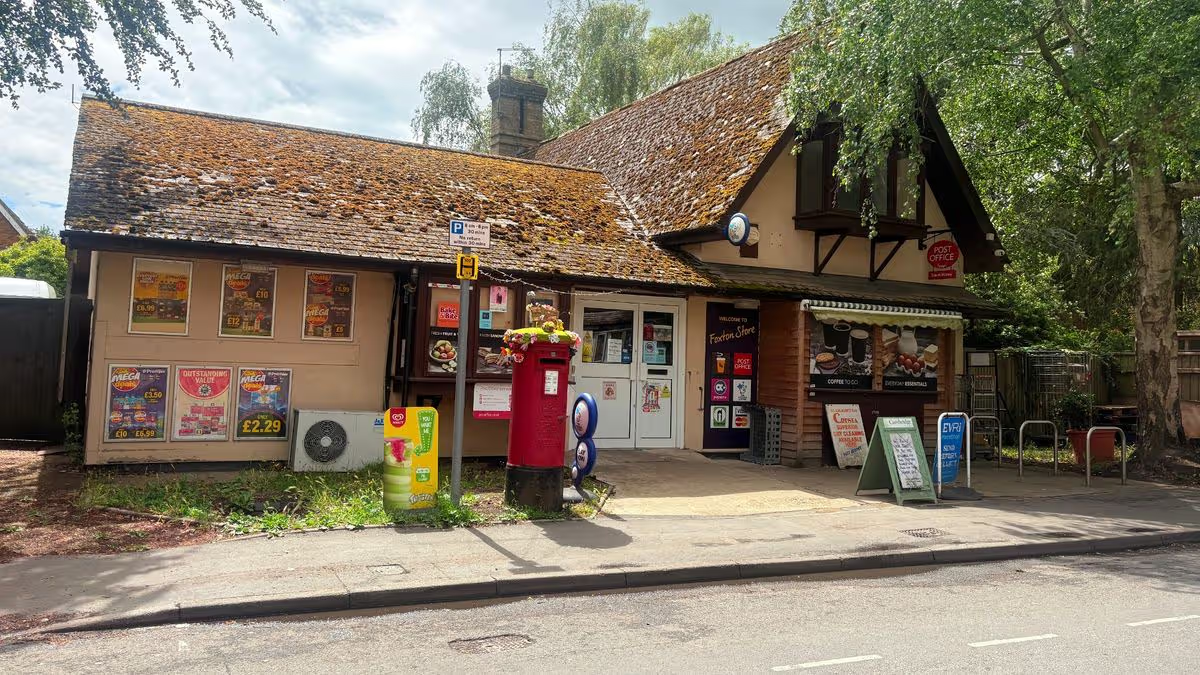
Foxton is conveniently located around seven miles away from Cambridge and is home to more than 1,200 residents, according to the 2021 census. Comprising pretty little cottages, with a true village feel, Foxton offers several local amenities including a convenience store, post office, and a pub called The White Horse.

As part of our Exploring Cambridgeshire series, we spoke to residents about what they think of it. Flavia Metcalfe has lived in the village for seven years. She used to live in the centre of Cambridge, and before that, she lived in Manchester.

Flavia said she “loves” living in Foxton as it is “very safe, especially when you have kids”. She added: “You feel really assured that you’re in a really safe environment. Everyone is really friendly too.

“It’s not very diverse, but you don’t really notice it because everyone is so welcoming, so friendly, so nice. It’s a really lovely village.”

Advertisement

Flavia shared that housing prices are relatively expensive in the area. She said the village “makes up for it with safety and friendliness”.

House prices in Foxton have an overall average of £536,178 over the last year, according to Rightmove. In comparison, the average house price in South Cambridgeshire was £433,000 in April 2026, according to the Office for National Statistics.

Flavia described Foxton as an ideal village for commuters because you can travel into the capital “really easily” as well as having a close proximity to Cambridge. She added: “I work in Cambridge so I get the train into the city really quite easily. Generally if there wasn’t a station here, you may find it difficult. But it makes a huge, huge difference.”

Advertisement

Describing the amenities in Foxton, she continued: “Socially you have a pub, a shop and now you have the café. So, for a small village you have more going on than in other villages.”

However, the local said she does find Foxton’s railway crossing a “pain”, “especially for someone that commutes quite a bit”.

Flavia added: “Often, you have times where you stand there for a good five to 10 minutes and you miss the train.” She thinks a bypass would make a “huge difference”.

A 67-year-old resident, who has lived in Foxton for around 40 years, and asked to be named only as David, said the village has a “small, peaceful community”.

Explaining that plans for a bypass have been ongoing for years, he said: “I think it needs it because that level crossing is getting worse and worse.”

David added: “You get stuck. Villagers go out the back way but it is difficult. You have to build that into your equation [for travel].”

A 72-year-old man, who wished to remain anonymous, has lived in the village for a decade. He highlighted that Foxton is very “sport orientated” and is “very much” a commuter village nowadays.

Advertisement

He said that it is a community where “you see everybody in the mornings and you say ‘good morning’” which makes for a “friendly” village.

He agrees with other villagers calling for a bypass that “something definitely really [needs to be done] because that is the only issue you’ve got living in the village is getting out into the A10”.

He said some form of improvement would be “really good” and emphasised that plans have been ongoing for a “long time” but “nothing has really come from it”. The resident said the community doesn’t know anything anymore and feels “in the dark at the moment” about the future plans.

Advertisement

Kathy Dixon said there is a “big community spirit” in Foxton and there are “always things going on and when there is a village event, everybody turns up”. She thinks Covid-19 was “evidence of how much people pull together”.

At the moment, Kathy feels as though Foxton is not necessarily a commuter village because there are “plenty of retired people here”. She said: “During the day, it doesn’t turn into a ghost village, like others do.”

She said moving from Harston to Foxton was the “best thing that ever happened” to her and she feels as though it was “fate”.

Kathy said the Foxton crossing is a “nightmare” but “at least we can go round it” because it is a bit of a “rat run”. She said that the bypass plans are going to become irrelevant because “you’ve got the East West Railway coming through and whatever plans the Greater Cambridge Partnership has got”.

Advertisement

She continued: “It escalated in price, and I think people gave up on it [the plans]. I think since Covid-19, people are working from home, so it is probably not going to happen.”

Kathy said, if more houses were built in Foxton, she “would want to see more preservation of habitat”. She continued: “There have been some fairly aggressive planning applications at the bottom of the village. So it would be okay if it was done, but if it was done tastefully and it looked like a village, rather than just more red brick.”

Source link

Advertisement
Continue Reading

NewsBeat

Heatwave threshold likely met at weekend before next week’s extreme heat warning

Published

on

Heatwave threshold likely met at weekend before next week’s extreme heat warning

Greg Wolverson, deputy chief forecaster at the Met Office, said: “While heatwave criteria will be met for some in the south and south-east of England over the weekend, with temperatures into the low 30s possible, the warmth will expand and intensify at the start of next week, which, coupled with high temperatures overnight, leads to potential impacts.

Source link

Continue Reading

NewsBeat

World Cup 2026: Bukayo Saka unlikely to start for England v Ghana

Published

on

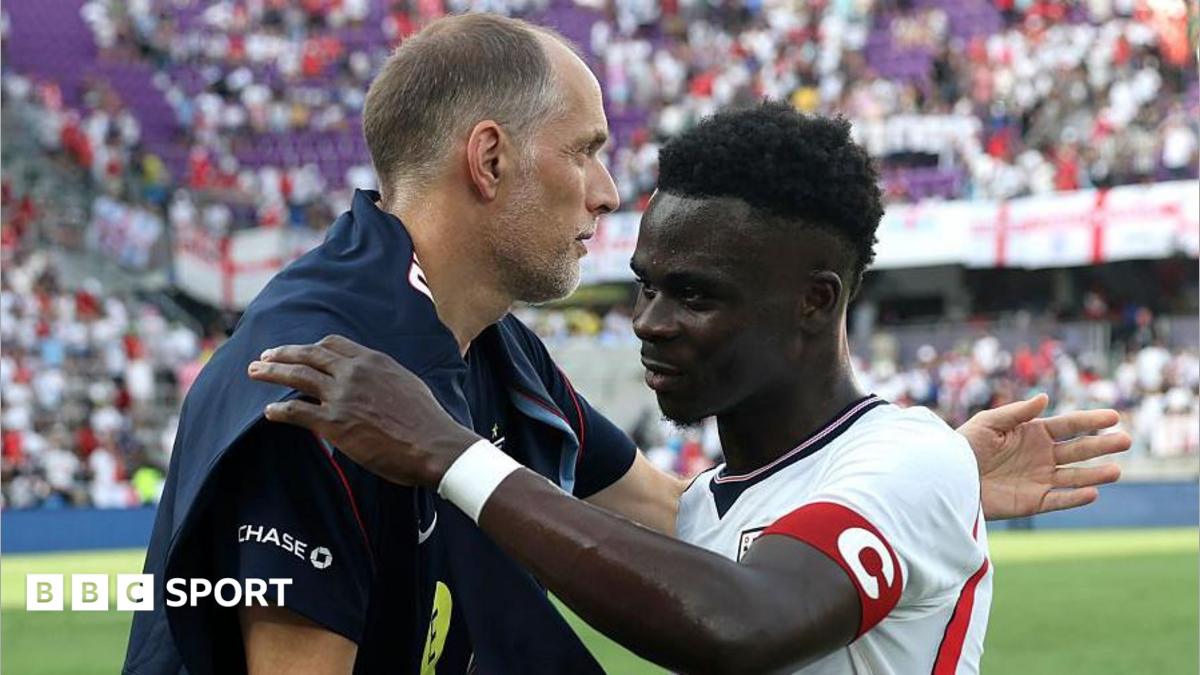
Thomas Tuchel hugs Bukayo Saka after England's friendly win over Costa Rica in June 2026

England head coach Thomas Tuchel has hinted that Bukayo Saka is unlikely to be in contention to start against Ghana on Tuesday.

Saka came off the bench in the 4-2 World Cup win over Croatia on Wednesday, and immediately provided an assist to fellow substitute Marcus Rashford, who slotted home England’s fourth.

Before the tournament, Tuchel said Saka would require managing through the opening stages because of what is understood to be an Achilles tendinitis issue.

On Monday, Saka insisted he was ready to play and was prepared to “gamble” on his fitness to help the team during the World Cup.

Advertisement

However, Tuchel says the Arsenal attacker is unlikely to start until the final group game against Panama in New Jersey on 27 June.

He said: “Bukayo is ready and will get more and more ready. I think once we go to the last game of this group he will be ready.”

Saka has been carrying the issue for some time, and while there was concern behind the scenes at Arsenal about the niggle they deemed their forward fit enough to start regularly during their triumphant title run-in.

It is understood that Saka’s ongoing Achilles issue has not deteriorated since the climax of the domestic season.

Advertisement

Arsenal boss Mikel Arteta, who is often very guarded with regards to his players’ injury concerns, has generally kept information about Saka’s condition in-house but Tuchel’s admission that the 24-year-old has to be managed through at least part of the World Cup has thrust the winger’s fitness into the limelight.

Tuchel’s latest comments appear to show that the German is protecting Saka, knowing the attacker will likely be a crucial asset during the latter stages of the tournament – but could also start the game against Ghana if required.

Source link

Advertisement
Continue Reading

NewsBeat

Emergency services respond to a collision of trains north of London that killed 1

Published

on

Emergency services respond to a collision of trains north of London that killed 1

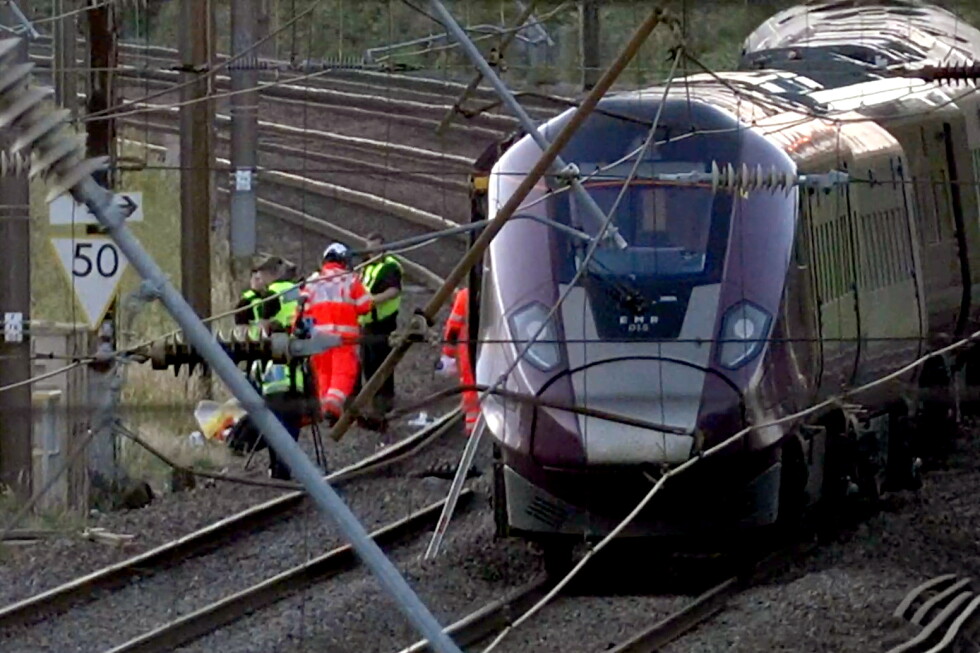
LONDON (AP) — Two trains collided north of London on Friday, killing a driver and seriously injuring dozens of people on board. A passenger described being thrown forward by the impact then seeing fellow travelers with broken bones and bloody injuries.

Both trains were traveling south to London St. Pancras station when they collided outside the town of Bedford around 5:15 p.m., according to information on rail tracking websites. Emergency services deployed a number of resources to the scene including an air ambulance and hazardous incident team from the East of England Ambulance Service.

“We know that a number of people have been injured and one person has very sadly died,’’ police said in a statement. “A major incident has been declared, and officers are continuing to respond at the scene alongside colleagues from Bedfordshire Police and the local Fire and Rescue and Ambulance Services.’’

The East of England Ambulance Service later said that 11 people had very serious injuries, 22 were seriously injured and 56 had minor injuries.

Advertisement

Eddie Dempsey, the general secretary of the National Union of Rail, Maritime and Transport Workers, said the fatality was a train driver.

Peter Knapp, a passenger, said he was in the rear train when the collision occurred without any warning.

“There was a moment of being flung into the chair in front, and then I saw smoke,” Knapp said. “People were crying, screaming. People were so scared and confused.”

“I got up and I saw a lot of people who were unable to speak, had broken legs,” he added. “And then I managed to get out of the train and because I’m quite thin I was able to squeeze out through the gap in the doors.”

Advertisement

Photos and videos posted on social media showed dozens of people, some with bandages but many who appeared uninjured, standing and sitting among emergency vehicles parked on a road that runs parallel to the train tracks.

The RMT union, which represents many railway workers, said it was monitoring the situation and expressed its concern over reports of “serious injuries” sustained by both train staff and passengers.

East Midlands Railway said in a statement that the 4:40 p.m. train from Corby to St. Pancras had been involved in the collision with the 3:50 p.m. train from Nottingham to the same station. The company said it had canceled all trains to and from St. Pancras for the rest of Friday and it was unable to confirm the schedule for Saturday.

Source link

Advertisement
Continue Reading

NewsBeat

York stay was ‘one of best experiences of my life’

Published

on

York stay was 'one of best experiences of my life'

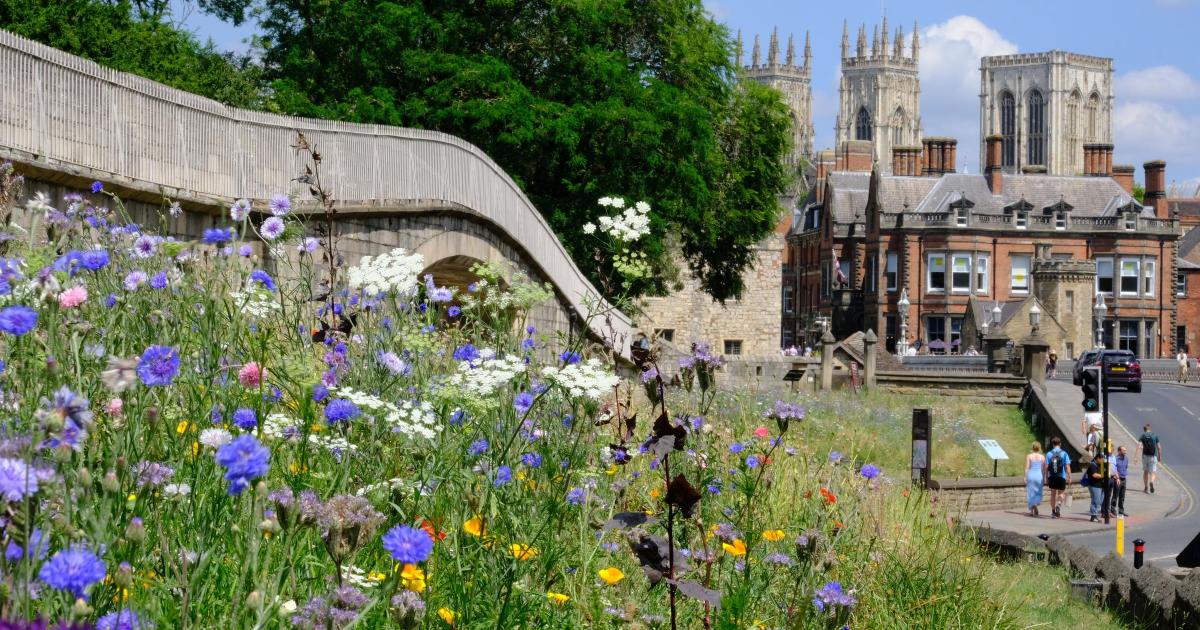
I’M writing in to express how thankful I am to the people of York for opening their city up to the world.

I’m a university student in Toronto, Canada, and I spent the past six weeks here in York as part of a scholarship that funds students to work at non-profits abroad.

It has been one of the best experiences of my life.

Advertisement

I know that having so many visitors comes with burdens, such as pressure on the housing market and crowds in the street, and I want to say thank you to York for hosting so many people each year with grace and kindness.

Everyone I interacted with here was incredibly friendly and happy to teach me about life in York – it’s not so different from Canada, but different enough that I still had lots of questions!

I would particularly like to recognise Friargate Quaker Meeting, which became my community while I was here and which exemplifies the idea of welcoming the stranger.


Read more Press letters:

Advertisement

You have a truly vibrant and beautiful city, which you are doing a wonderful job of stewarding.

It was a privilege to be welcomed into it. If anyone from York finds themselves travelling to Canada, don’t hesitate to look me up, so that I can return the same hospitality – genuinely!

Katrina Eilender,

Dalton Road,

Advertisement

Toronto,

Ontario, Canada


What do you think?

Feel strongly about an issue? Write us a letter. Please write no more than 250 words and you must provide your full name, address and mobile number. Send your views by email to: letters@thepress.co.uk

Advertisement

Write a comment

Join the debate and leave a comment in our comments section below this article – we may use your comments for a follow up article.

Source link

Advertisement
Continue Reading

NewsBeat

Scotland and Morocco fans party together outside Boston pub ahead of potential World Cup qualifier

Published

on

Daily Record

The clip of the fans uniting has warmed the hearts of people who were delighted to see their friendly interaction.

tikcdn_beubagah_com_f1f78b2b_74bc_4d24_b23a_401018f5b3f4

Scotland and Morocco fans have been partying together outside a pub in Boston just hours before the nations face off against each other in their second World Cup match.

Steve Clarke’s men stand on the brink of history as a win over Morocco at the Gillette Stadium tonight would get us out of Group C and qualifying for the next round.

Scotland’s win over Haiti means Andy Robertson and co stand just a point from guaranteeing knockout football for the first time ever.

A video being shared online shows both sets of fans lapping up the atmosphere together outside Hennessy’s Bar in the US host city, which has seen around 50,000 Scotland fans arrive in the last week.

Advertisement

Members of the Tartan Army could be seen passionately jumping up and down together in a huge crowd while chanting and waving their fists in the air.

Among them were groups of Moroccan fans who joined the party, waving their flags. The clip of the fans uniting was shared on Instagram and social media users were delighted to see their friendly interaction.

Advertisement

One commented: “Absolutely love this. So proud to be Scottish when I see this. It melts my heart. Well done, all.”

A second scribed: “Guys you need to visit Morocco in the summer! Welcome, Scottish people.”

A third chimed in: “I love how fun and beautifully respectful it’s been before and after the matches. It’s amazing.

“Scotland putting the world to rights.”

Advertisement

A fourth agreed: “This is what it’s all about,” while a fifth added: “You will always be welcome in Morocco.”

The Tartan Army out in Boston are urging the team to put the past behind us and get the result we need against Morocco tonight.

Before now, our national team have qualified for 12 major tournaments but never yet been able to get through the group.

Advertisement

The tens of thousands of foot soldiers who have made the long trip across the pond are now desperate to see us finally change that.

With the extended 48-team World Cup allowing the eight best third-placed team to get through, they reckon we have never had a better chance, and the feeling is we will get at least a point this evening.

Davy Bowman, a 51-year-old business analyst, from Irvine, told the Record: “No doubt about it, this group are getting out of this group.

“This is the difference between previous Scotland teams to this one. It’s like a club atmosphere the boys have got now… just like normal guys, but they are all very, very good at football. I think we will get the draw we need.”

Advertisement

Get Daily Record Premium for just £1 per month in exclusive offer to celebrate the world cup. Click HERE.

Advertisement

Source link

Continue Reading

NewsBeat

‘Ireland’s greatest ever sporting champion’: Boxer Katie Taylor awarded honorary degree

Published

on

Belfast Live

The university described her as “one of the most important ever figures in the history of women’s sport”.

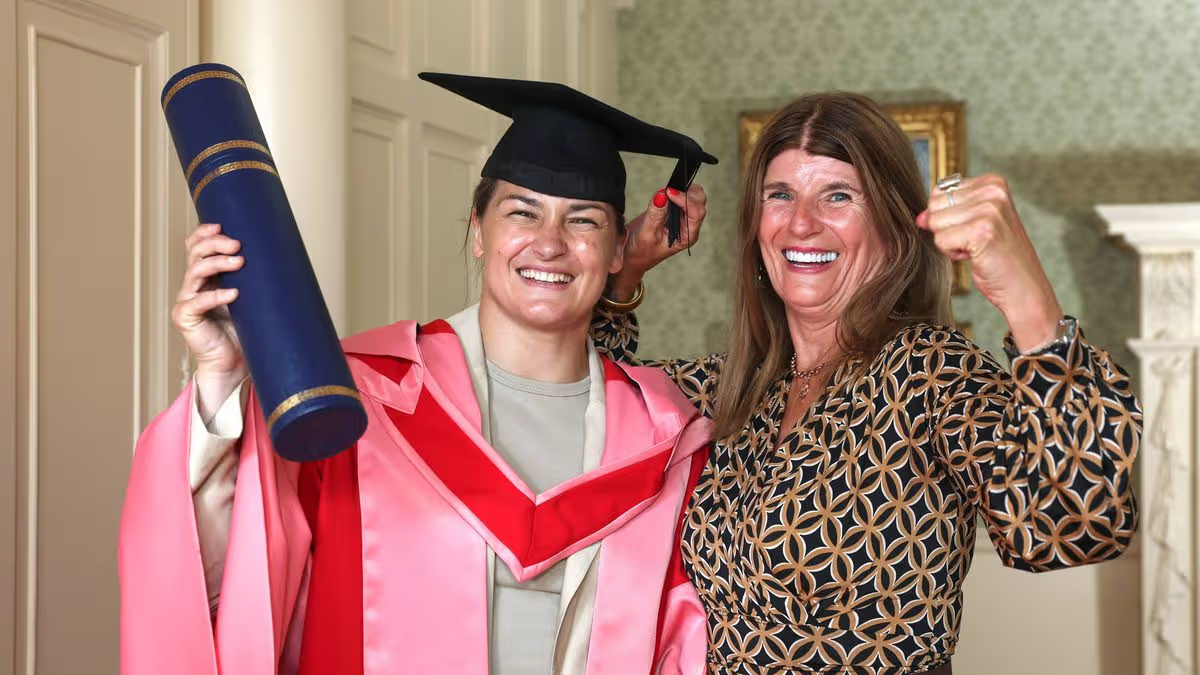
Boxer Katie Taylor has been awarded an honorary law degree by Trinity College Dublin.

The university described the Bray native as “one of the most important ever figures in the history of women’s sport”.

Advertisement

Taylor, 39, received the honorary degree at a Commencements Ceremony in the Public Theatre of Trinity on Friday, the Irish Mirror reports.

She was among Irish musician Sharon Shannon, writer Colm Tóibín, barrister Helena Kennedy, and human rights activist Helen Prejean to be awarded with honorary degrees.

Trinity College said Taylor could lay claim to be “Ireland’s greatest ever sporting champion” and said her battles in the ring have “helped propel women’s boxing to new heights of popularity and respect”.

She won five consecutive gold medals at the Women’s World Championships, six at the European Championships and five at the European Union Championships, as well as gold at the Summer Olympic Games in 2012.

Advertisement

Since her professional career in 2016, she became WBA lightweight champion in July 2017, IBF lightweight champion in 2018 and WBO and WBC lightweight champion in 2019, becoming the undisputed world lightweight champion.

In 2019 she won the WBO super-lightweight belt to become a two-weight world champion.

Her first of the famed trilogy fights against American fighter Amanda Serrano was the first women’s bout to headline at Madison Square Garden in New York, and the second was watched by more than 74 million viewers, making it the most watched female sporting event in history.

On September 5, Taylor is to end her professional boxing career with a sold-out fighting spectacle against 28-year-old Frenchwoman Flora Pili in Dublin’s famous Croke Park stadium, which has capacity of more than 80,000.

Taylor said she is excited to fight at the “iconic” Dublin stadium where she also has the chance to finish her career with all boxing titles back in in her grasp.

Trinity College Dublin said: “She has played a formative role in enhancing women’s sport and especially women’s boxing both in Ireland and around the world.

“She is widely recognised as being responsible for the introduction of women’s boxing as an Olympic sport at the London 2012 games before then going on to transform the perception of female professional boxing.

Advertisement

“In this regard, Katie Taylor stands as a beacon for women’s sport in Ireland and throughout the world, and because of what she has done for women’s boxing specifically and women’s sport generally, she will go down in history as one of the most important women athletes of all time.”

Sign up to our free sports newsletter to get the latest headlines to your inbox.

Source link

Advertisement
Continue Reading

NewsBeat

Stormont’s veto culture isn’t as dead as we had thought

Published

on

Belfast Live

“What is hard to understand is why the minimum age of criminal responsibility needed the protection of a mechanism intended to safeguard minority rights.”

Advertisement

There was always going to be disagreement over whether Northern Ireland should raise the age of criminal responsibility.

Some experts argue it should be increased to 14. Others believe the current age of 10 remains appropriate. Most of the political debate in recent months has centred on where the line should be drawn.

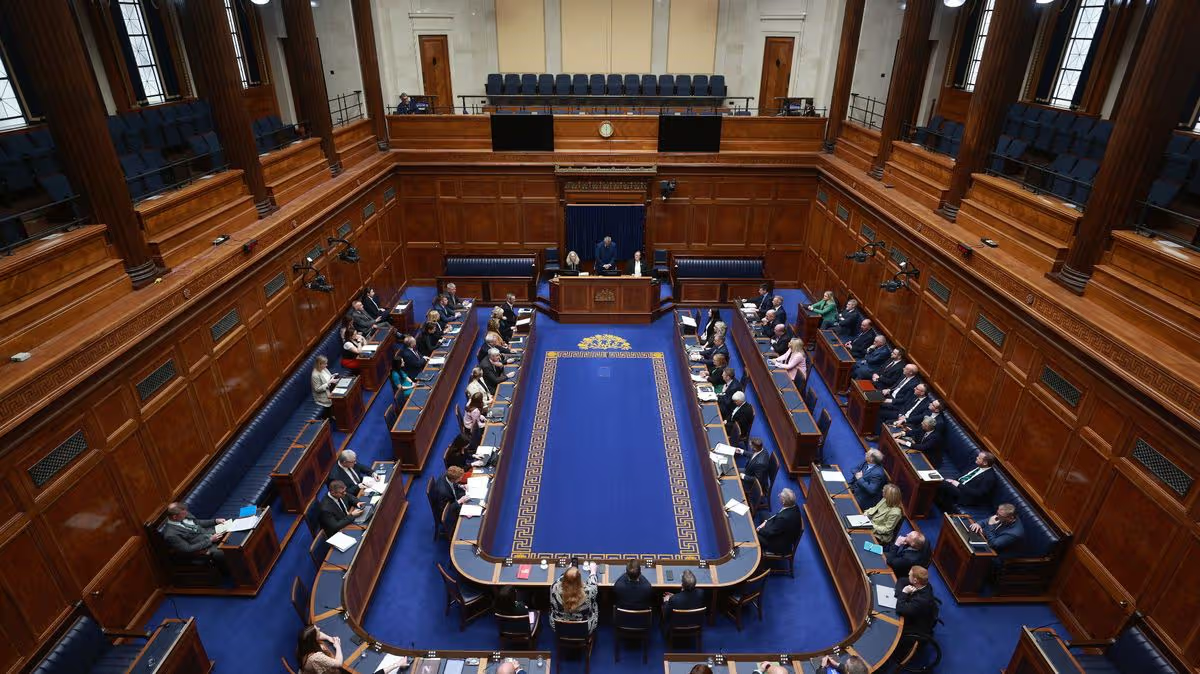
But what happened at Stormont this week was ultimately about something else. The DUP’s decision to use a Petition of Concern to block an amendment to the Justice Bill has reignited an old question about one of the Assembly’s most powerful mechanisms and what it is actually for.

Alliance MLA Sian Mulholland’s proposal would have raised the minimum age of criminal responsibility to 14, with exceptions for the most serious offences. It was a significant change, and not everyone supported it.

Advertisement

Yet there was also a middle ground available. Former UUP MLA Doug Beattie had proposed increasing the age to 12, bringing Northern Ireland into line with Scotland and the Republic of Ireland, while stopping short of the more ambitious reform advocated by some children’s rights organisations.

There was a respectable argument for supporting that compromise. Equally, there was a respectable argument for rejecting it. That is normally how legislatures work. Parties make their case. MLAs vote. The side with the numbers wins. Instead, the debate became something rather different.

The Petition of Concern occupies a unique place in Northern Ireland politics. It was never designed as a routine parliamentary tactic. It emerged from a political settlement that recognised that simple majority rule would not be enough in a divided society.

At its core was the idea that there should be protections against one section of the community imposing its will on another. This helps explain why the mechanism has generated so much controversy over the years.

Advertisement

Long before the reforms introduced in New Decade New Approach, the Petition of Concern had acquired a reputation for being used in circumstances far removed from the role envisaged by its architects. Critics argued that it had evolved from a safeguard into a veto.

The reforms that followed were intended to restore confidence that it would be reserved for exceptional circumstances. This week’s vote inevitably raises questions about whether that ambition has been realised.

Nobody seriously argues that raising the age of criminal responsibility engages the kind of communal protections the Petition of Concern was designed to provide. This was a disagreement about criminal justice policy. A significant disagreement, certainly. An important one. But it was still a policy disagreement. Indeed, there appears to have been majority support within the Assembly for some form of change.

That does not mean reform was necessarily right, but it does mean that the normal legislative process was prevented from running its course.

Advertisement

The DUP will argue that it acted in what it believes to be the public interest. The UUP members who supported the petition will say the same. They are entitled to hold those views.

What is harder to understand is why those views needed the protection of a mechanism intended to safeguard minority rights.

The decision is also awkward for the UUP. Without the support of Jon Burrows, Diana Armstrong, Robbie Butler and Alan Chambers, the petition would not have succeeded. That leaves the party sharing responsibility for an outcome which sits uneasily alongside years of criticism about how the mechanism has been used in the past.

What happened this week is unlikely to be the last argument about the age of criminal responsibility. The issue will return.

Advertisement

But the Petition of Concern survives because most people accept there are circumstances in which it remains necessary. The challenge has always been ensuring that those circumstances remain exceptional.

Every time it is used to settle what appears to be an ordinary policy dispute, that distinction becomes a little harder to defend and every time that happens, the argument for revisiting the rules grows a little stronger.

For all the latest news, visit the Belfast Live homepage here and sign up to our daily newsletter here.

Advertisement

Source link

Continue Reading

Trending

Copyright © 2025