I have never been skinny. And that has never particularly bothered me. But feeling lumbersome does. I probably felt most confident in my early-30s when I exercised regularly, averaged 10 stone and was a curvy size 12-14.
With my first pregnancy, at 36, I put on at least a stone. With my second, two years later, at least another. Some of that was shed through exercise and bouts of dieting. Some of it piled back on with menopause and a bit came off again later – the yo-yoing has never really stopped.
You name it, in my 54 years, I’ve tried it: Weightwatchers, Atkins, MyFitnessPal tracking, The Fast Diet, Joe Wicks, The 5-2, HIIT (High Intensity Interval Training), the Couch to 5K, swimming, yoga, The Human Being Diet… Much of what I have tried has worked to some extent, some of it even been quite enjoyable.
But then my good intentions have petered out. Either because the undertaking became too boringly time-consuming, unvaried, and mentally draining to squeeze between the competing demands of work and family life. Or because the calorific restrictions were just too punitive. Is it ever not weird to be feeding others generously when you are starving yourself – and probably moaning about it to boot? And what does that actually model to young people?
I am a hungry person – hungry, not just for food, but variety and experiences. I’m also, a foodie: eating, cooking and feeding people is one of my greatest pleasures. My instincts are actually pretty healthy – I very rarely have chips or takeaways. But at breakfast, I am wondering what I might have for lunch; at lunch, dinner.
On holiday, I love exploring places through their cuisine. We hear a lot these days about food noise, and how it has been quietened – for millions, worldwide – by weight-loss jabs. Good on them.
But for me, food noise is absolutely not an irritant like a mosquito’s drone, but anticipated pleasure: the lip-smacking sizzle of a steak or the slicing of a summer peach, ice tinkling in a glass. Personally, I’d rather spend some extra cash feasting with friends and family than switching off my appetite.
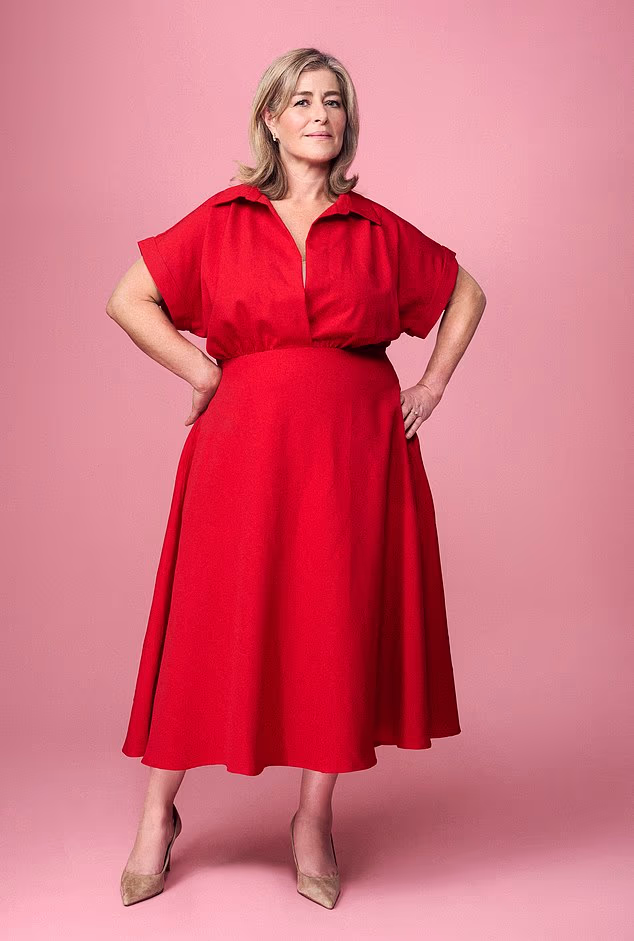
BEFORE: Patricia Nicol had tried every diet out there and admitted that most of them worked to some extent but she’s never been able to keep the weight off
But I’d still like to be a healthier size and weight than my current size 14-16 – at present, just over 12 stone as a summer holiday loomed rather than the sub-11 I was before kids – and live longer well.
I dream of being around 10 stone, again. So, is there a regime that can help this foodie stay slim, without boring me senseless and leaving me feeling half-starved? The 30G Plan, developed by nutritionist Emma Bardwell, is the only plan I have tried, in what might be 40 years of on-off dieting, on which I have never felt hungry (or indeed, hangry).
Do you want to lose a stone in six weeks?
Hi, I’m Emma Bardwell, a nutritionist with more than 15 years’ experience helping people improve their health and lose weight.
I’ve been there. I was overweight, unhappy with my skin and stuck in a rut. Then I changed the way I eat. You can now do the same with my tried-and-tested healthy eating plan. And for DailyMail+ subscribers, it’s completely free.
Click here to sign up and start your journey
<!- – ad: https://mads.dailymail.co.uk/v8/de/lifestyle/lifestylefitnesswellbeing/article/other/mpu_factbox.html?id=mpu_factbox_1 – ->
I am quite a more is more person, and so part of the appeal of The 30G Plan, is that it takes quite a maximalist, even gamified approach, to pushing macronutrients. ‘So, what can you expect? The short answer is: plenty,’ writes Bardwell in her introduction to the cookery-book. The core principles are that at each meal you are aiming for about 30g of protein to build muscle, each day you are trying to eat 30g of fibre to aid digestion, balance blood sugar and lower cholesterol.
And the goal that I enjoyed the most: every week you are aiming to eat at least 30 different plants, because apparently your gut biome will thank you for that variety. The latter might sound forbidding, and costly, if you are just envisaging trying to fit a whole fruit and vegetable stall in your trolley, but it also includes cupboard staples, and things which can easily be bought in bulk: nuts, spices, tins of beans, packets of dried lentils, oils, seeds, vinegars, even sauerkraut, kimchi, coffee and chocolate (though high-in-flavonoids dark chocolate – not a Yorkie bar.)
Flavonoids are plant chemicals found in many fruit and vegetables, credited with many health-giving benefits, including reducing inflammation and helping cardiovascular and cognitive function.
A competitive person at heart, I got quite the kick from trying to reach my 30 plants by midweek. And it is easier than you might think: a hearty bean and veg soup might include seven; a breakfast with mixed berries, seeds and nuts, four or five; a rainbow salad, six. Sprinkle on some spices, toss on some herbs, spritz on some lemon, and you’ve added a few more. This was the bit I liked best.
Probably quite literally full of beans, the other thing I have enjoyed is how much energy I have had. ‘Nothing is prescriptive or restrictive, and there is no elimination of foods or demonisation of certain ingredients,’ insists Bardwell. ‘Instead, you’ll learn how to mix and match meals, adapt recipes to suit your taste preferences and create balance without overthinking every last bite.’
AFTER: Following Emma Bardwell’s diet plan, the busy mother-of-two has lost half a stone and feels better than ever
I have tried some very spartan diets in my time. In my 20s, I was the only girl in an Edinburgh flatshare, whose menfolk delighted in a misprint on my Cabbage Soup diet rubric, that instructed that one day was ‘soap only’.
In Spring 2024 I lost almost a stone over three months on the Human Being Diet devised by another nutritionist Petronella Ravenshear. As a diet it is excellent for rapid weight loss and has helped many women lose weight they feared would never budge, especially post-menopause and around the waist. But it is prescriptive. In its initial phases, it advises against all but the gentlest of exercise. There are solid reasons for this: calorifically, you are on reduced rations. But I love exercise, not just for its physical benefits, but its psychological and social ones. I work alone from home, so going to my local gym, park or church-hall to do a class is a social outlet for me. The chats I have poolside or post-class feel as valuable to my wellbeing as any seed or supplement.
I want to be strong: one of those pensioners still pumping weights, powering up and down the pool, and going on hiking holidays. Following Bardwell’s plan, with its higher daily calorific target and focus on energy-boosting fibre, I was able to carry on with strength-training exercises while also dieting. I also boosted my step-count: averaging 10,000 but on a couple of days managing more like 23,000, without feeling I might collapse from hunger. Bardwell is a big fan of a post-meal stroll to boost digestion. I have felt both fuelled enough to do this exercise, but also that the diet’s focus on protein and fibre was building muscle.
In the past, I have fantasised about being sent off to one of those austere European health-clinics where your sole obligation is to shed some weight and everything is geared to that purpose. I feel sure I would return from that clear-skinned, mentally unfettered and at least a stone lighter. But that kind of pristine, controlled environment (Austrian, I’m thinking), is so far from my every day.
My husband and I share our house with two teenage sons, one of whom seems to believe crisps are enshrined in the UN Convention on the Rights of the Child, and another who burns off enough calories doing sport to comfortably accommodate six meals a day yet remain whippet thin. Meanwhile, I am back and forth from visiting my elderly mother who lives 500 miles away. I work. I admin. I launder (pants, socks, sheets etc, not the lucrative, bad kind). It is quite a lot, but also so much less than some people have to contend with.
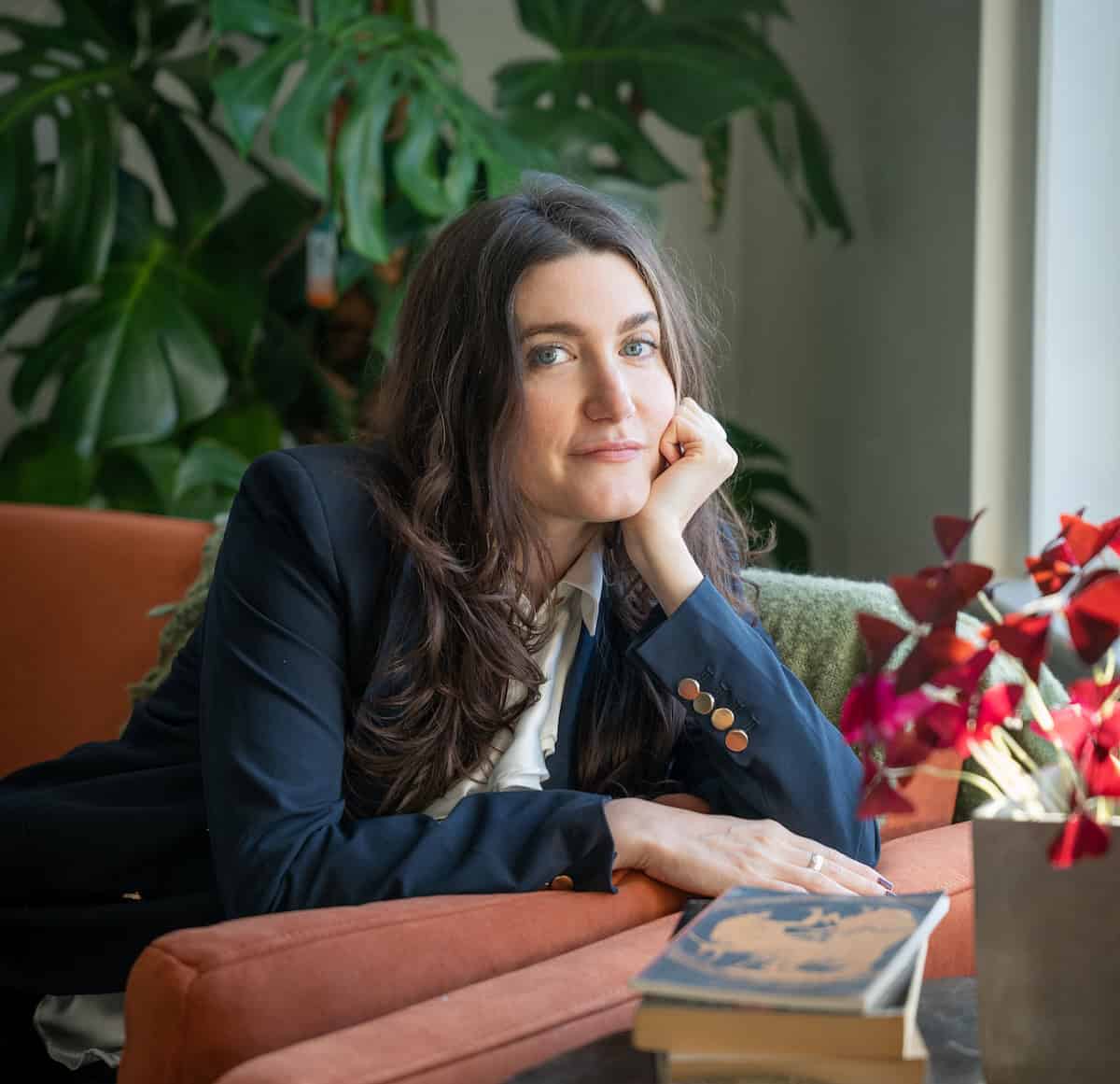
Open-minded: Nutritionist Emma Bardwell, whose 30g Plan allows Patricia to eat the foods she really enjoys
But realistically the diet I need is one that offers healthy variety rather than limitations. One that can ideally provide quick meals for hungry teenage boys as well as their post-menopausal mother’s sluggish metabolism. There are enjoyable, filling recipes in Bardwell’s book that have fitted this bill: a wholemeal pasta bake with a feta, red pepper, tomato, squash and basil sauce; breakfast burritos stuffed with beans, sweetcorn, spinach, feta and egg; a chicken and vegetable stir-fry with peanut-butter noodles.
Returning to food noise, on a restrictive regime it can be hard to block out others snacking; with this, it wasn’t a problem.
Also, the principles of the 30G plan are pretty adaptable. I tested this diet at what turned out to be an unexpectedly full-on period. I knew already that I had a weekend away planned and several visits to university towns with my eldest son who will be applying in the autumn.
Then, unexpectedly, my mother was in hospital recovering from spinal surgery for all of this period. I have spent a month travelling on trains and planes, living as much in someone else’s home as my own, and yet I have mostly managed to follow the principles of this diet. And I believe it has genuinely nurtured me: I’ve been stressed, but I’ve also eaten well, slept soundly and kept up with exercise.
That is partly thanks to Bardwell being pretty open-minded about some things that other nutritionists can be, frankly, quite snooty about. One of the more galling ironies of being part of the exhausted ‘sandwich generation’ (the insubstantial filling between children and elderly parents) is that most fashionable diets eschew all but artisanal bread – and therefore sandwiches – advocating instead for lower-carbohydrate fare.
Bardwell is not pro white carbs, but she does allow bread, as well as pasta, rice and other grains as they are high in fibre. You’ll thank her when you are stuck somewhere, feeling a little sorry for yourself, and thinking that the most soul-crushing thing that could happen next would be to pay a small fortune for a boiled egg and a leaf of spinach.
Emma Bardwell’s 30g Plan is built upon four simple – but effective – pillars
Bardwell is also clear that not all fast foods are ultra-processed horrors: she is a big fan of pouches of pre-cooked rice and grains. And after a few weeks doing this diet, I am too. She doesn’t vilify eating out either – life’s too short to be miserable, she says, though she would prefer it if you went for something grilled with vegetables than a fat-filled sauce.
Obviously, if you want to lose weight, alcohol will never be your friend, though Bardwell does not ban it outright.
It hasn’t been entirely plain sailing. At just below 5ft 4 I am around the height that Bardwell cautions you might find it necessary to eat a little less than the targeted 30g protein and fibre to achieve weight loss. Initially I glossed over that, but right enough, though I felt full and energised during the first fortnight, I did not actually lose any weight.
It was only when I started tweaking downwards – taking the oats, syrup, vanilla and coconut oil out of her delicious breakfast granola parfait, but retaining the yoghurt, berries, nuts and seeds, or mixing in a bit less rice or hemp seeds into a lunch or dinner, that things began to shift. Sometimes I did this rough downsizing by weight or spoon measurement, but mostly by eye. The variety was still there.
I haven’t lost a stone as some have following her plan, but I have, despite a busy, on-the-move, often stressful few weeks, lost half a stone (from 12st 3 to 11st 9). In the five weeks of following the diet – three once I started scaling portions down a little, and being firmer about saying no to a glass of wine – I have felt strong, nurtured and energised throughout.
This diet does genuinely feel good for you. I am off on a week’s holiday soon, but I’ll be packing some extra seeds and nuts, eating widely, and not abandoning the 30G completely. Then I look forward to returning to it.
























































You must be logged in to post a comment Login