Connect with us
DAPA Banner
DAPA Coin
DAPA
COIN PAYMENT ASSET
PRIVACY · BLOCKDAG · HOMOMORPHIC ENCRYPTION · RUST
ElGamal Encrypted MINE DAPA
🚫 GENESIS SOLD OUT
DAPAPAY COMING

NewsBeat

Cancer patients facing dangerous delays to diagnosis and care due to NHS staffing crisis

Published

on

Daily Mirror

The Royal College of Radiologists (RCR) has demanded action to address “extremely dangerous” delays as research revealed eight in 10 radiology leaders and half of cancer leaders believe staff shortages are causing patients’ conditions to get worse

A staffing crisis is sparking “extremely dangerous” delays to diagnosis and cancer care in the UK, doctors say.

Advertisement

The Royal College of Radiologists (RCR) said the NHS needs more workers if patients are to avoid harm while on lengthy waiting lists. The RCR surveyed clinical directors at all 159 radiology departments in the UK, together with every head of service at all 60 cancer centres in the UK.

It found eight in 10 radiology leaders and half of cancer leaders believe staff shortages are causing patients’ conditions to worsen, and people are facing delays in being diagnosed. Nine in 10 cancer leaders said they had seen delays to patients starting radiotherapy or drug-based treatment such as chemotherapy as a result of staff shortages.

The RCR found that workforce shortages are worse in deprived and rural areas of the country while recruitment freezes affecting radiology departments and cancer centres everywhere have doubled in a year. One cancer centre lead said: “[Staff shortages are causing] delays in patients starting both chemotherapy and radiotherapy treatment.”

Advertisement

Another said: “Workforce shortages in diagnostics especially radiology and pathology are critical and lengthening pathways which is leading to patient harm.” One more said: “Significant delays in [scan] acquisition and reporting of a wide range of patients have negatively impacted prognosis, potential treatment options and resulted in harm.”

According to the RCR, the UK has 32 per cent – more than 2,300 – fewer radiologists and 17 per cent – more than 230 – fewer clinical oncologists than it needs to meet current demand. These workforce shortfalls have risen since 2024, from 29 per cent to 32 per cent for radiologists and 15 per cent to 17 per cent for clinical oncologists, with the problem set to get worse, it said.

The RCR’s report warned that demand for scans is growing at more than twice the rate of radiologists to interpret them while staff are also retiring. Despite this, the RCR said recruitment freezes that stop hospitals from hiring the radiologists and oncologists they need have doubled in a year.

A ban on hiring permanent staff also means hospitals fill the gaps with expensive agency staff and paying overtime. The RCR said that when it comes to radiology, the UK spent a record £362 million in 2025 on outsourcing, paid overtime, and locums to plug gaps.

Advertisement

Leaders also raised concerns about the quality of work when it is outsourced, with scans needing further checks. A radiology clinical director said: “Workforce shortages delay report turnaround time, impacting on patient care. Increasingly, the shortfall is met with outsourcing which reduces quality of patient reports and increases pressure on local radiologists for second review.”

Dr Stephen Harden, president of the RCR, said: “Delays to diagnosis and cancer treatment are extremely dangerous, particularly in deprived and rural communities where shortages are worst. Despite our members’ extraordinary efforts, we simply don’t have enough clinical radiologists and clinical oncologists to meet rising demand.

“Recruitment freezes and growing reliance on outsourcing are making the situation worse not better. Alarm bells should be ringing for governments across the UK. Without urgent action to train, recruit and retain more doctors, more patients will suffer.”

Genevieve Edwards, chief executive of Bowel Cancer UK, said: “Behind every delayed test result is a real person lying awake at 3am waiting for news that could change everything. Too many people affected by bowel cancer are already waiting far too long for tests, scans and answers, and workforce shortages are making it worse. That weight of uncertainty is something no one should have to carry longer than necessary.”

Advertisement

Melanie Sturtevant, associate director of policy, evidence and influencing at Breast Cancer Now, said: “With a significant proportion of the specialist breast cancer workforce approaching retirement within five years, urgent action must be taken to stop the situation deteriorating further. NHS staff are working tirelessly under intense pressure but they cannot continue to deliver the care patients need without workforce capacity that matches rising demand.”

Last week, NHS figures for England showed 75.9 pr cent of patients in England urgently referred for suspected cancer were diagnosed or had cancer ruled out within 28 days in April. This is down from 79.4 per cent in March but is above the current target of 75 per cent.

The proportion of patients who began their first definitive treatment for cancer in April within 62 days of an urgent referral or consultant upgrade was 70.0 per cent, down from 72.8 per cent in March. The Government and NHS England had set a target of March 2026 for this figure to reach 75 per cent.

Juliet Bouverie, chief executive of the Stroke Association, said: “The shortage of radiologists is affecting people with a variety of health conditions, not just those with cancer. Stroke patients who could benefit from thrombectomy, a procedure which can dramatically reduce lasting disabilities for the 240 people who survive stroke every day in the UK, are also missing out.”

Advertisement

Source link

Continue Reading
Click to comment

You must be logged in to post a comment Login

Leave a Reply

NewsBeat

Ashfield Caravan Park near Hartlepool goes up for sale

Published

on

Ashfield Caravan Park near Hartlepool goes up for sale

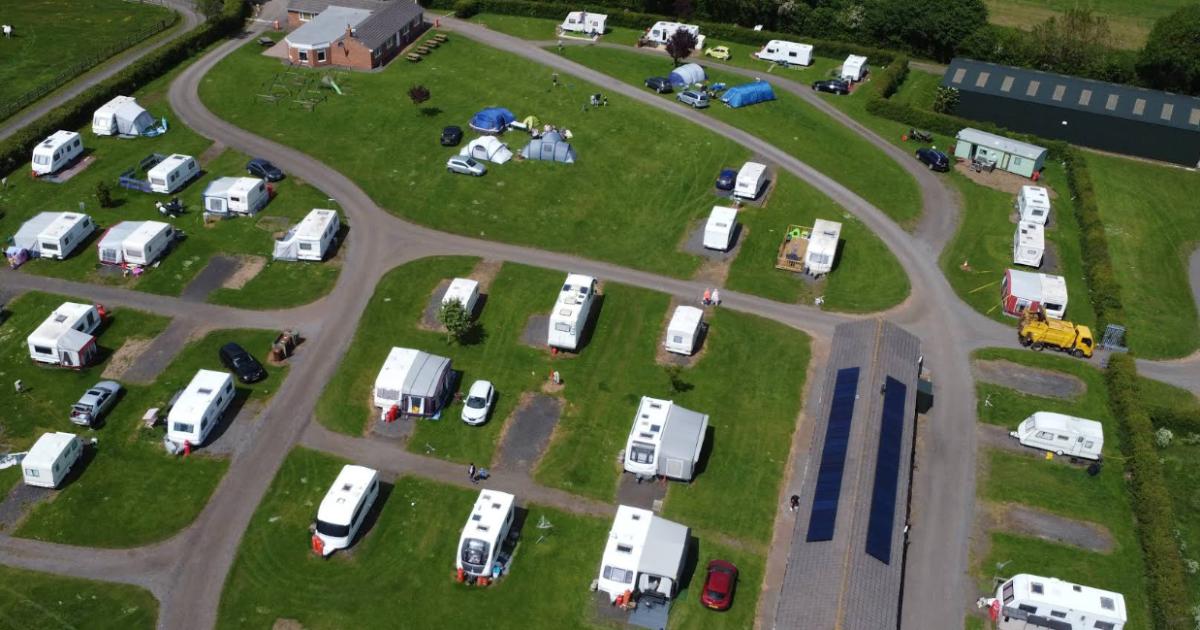
Ashfield Caravan Park, on the outskirts of Dalton Piercy, near Hartlepool, is on the market.

The park spans around 11 acres and includes planning permission for 37 static holiday caravans, with the potential to increase to 47 units, and storage for up to 143 touring caravans.

Ashfield Caravan Park (Image: GSC Grays, Farm Agency)

It also has planning permission for a four-bedroom detached house.

The caravan park is operational all year round, with each of the 105 touring pitches developed with hardcore bases and electric hook-up points.

Advertisement

The site is divided into three main areas.

The western side, which makes up almost five acres, is home to the touring caravan pitches.

The north eastern section, covering about 1.8 acres, has planning permission for the storage of up to 143 touring caravans and a four-bedroom dwelling for owner or manager accommodation.

To the south eastern section, covering just over three acres, there is planning permission for 37 static holiday caravans, with potential to increase to 47 units, subject to further surveys and planning guidelines.

Advertisement

The park also includes a central reception with a licensed social club, a fully equipped amenity block, and a single static caravan for staff use.

The amenity block, built in 2006, provides a reception foyer with space for a convenience store, staff amenities, a commercial kitchen, and rear access into the social club with a bar and seating.

The block also includes showers and toilets, baby changing facilities, and a pot-washing station for all touring pitches.

Part of the internal space is currently used for storage, but it could be converted to self-contained manager accommodation, subject to planning consents.

Advertisement

The park is located in a rural landscape close to the coast, offering a peaceful and scenic environment.

The sale of the park includes numerous vehicles, plant, and equipment, with an inventory to be provided to seriously interested parties.

The sale of the park, which is bordered predominantly by mature hedgerows and open farmland, is listed by GSC Grays, Farm Agency.

Advertisement

Source link

Continue Reading

NewsBeat

World’s number one golf course planning to modify legendary links

Published

on

Belfast Live

The prestigious golf club have announced a planning application for ‘modifications to the championship course’

Royal County Down is widely regarded as the finest golf course anywhere on the planet.

Advertisement

But as anyone in the sporting world knows, if you are standing still, you are falling behind.

The prestigious golf club have announced a planning application for ‘modifications to the championship course’.

It’s difficult to improve on perfection.

The course recently came top of Golf Digest’s annual top 100 courses in the world list, and has been hailed as the best there is by the likes of Rory McIlroy and others many times.

Advertisement

With the stunning Mourne Mountains as the backdrop – on a clear day – the links sit right against the Irish Sea on the edge of Newcastle, Co Down.

Old Tom Morris’ famous track is renowned for its natural, rugged look, devilishly deep bunkers and dramatic blind tee shots. That all combines for one of the toughest tests in the game.

However, change is afoot at the bottom of the Mournes.

The Golf Club has filed a pre-application planning notice, proposing modifications to its championship course.

Advertisement

The finer details of those changes will be revealed on August 26, online – through their consultancy firm Clydeshanks – and at a consultation meeting in Newcastle.

The proposal to the council states: “Information relating to the proposed development will also be available to be viewed at www.clydeshanks.com/public-consultations, where an online consultation magazine will be available from 26 August 2026, and will be available to view for a minimum of 28 days thereafter.

“The online consultation will display details of the proposed development and facilitate comments from members of the public, relating to the proposed development.”

Advertisement

A cover letter on the proposal also explains: “The community consultation will take place at Newcastle Centre, 10-14 Central Promenade, Newcastle, Co. Down, BT33 0AA on Wednesday 26 August 2026 from 4-7pm.

“It will comprise a number of large wallboards that will graphically explain what is proposed, enabling interested parties to understand the nature of the development and how the scheme may look when completed.”

Sign up to our free sports newsletter to get the latest headlines to your inbox

Source link

Advertisement
Continue Reading

NewsBeat

how convents helped power medieval Vienna’s economy

Published

on

how convents helped power medieval Vienna’s economy

Retirement planning might seem like a thoroughly modern concern, with pensions, investments and annuities forming part of today’s financial toolkit. But these financial tools are much older than they appear. In the later Middle Ages, people were already exchanging lump sums for steady income streams – and, in cities like Vienna, these arrangements underpinned entire urban economies.

Less expected, perhaps, is who helped make this system work. Alongside merchants and elites, communities of nuns quietly emerged as some of the city’s most reliable financial operators.

Annuities existed in several forms, each suited to different needs. At their core, these contracts involved one party providing a lump sum in exchange for a regular payment, usually secured on property or urban revenues. The most common type in medieval Vienna – my area of research – was the perpetual annuity, which generated a fixed annual return without a set end date and could be transferred or sold.

Advertisement

The Artist’s Sister in the Garb of a Nun by Sofonisba Anguissola (circa 1535–1625).
Southampton City Art Gallery

Alongside these stood life annuities, which paid people an income for their lifetime. This arrangement provided security in old age and helped with managing inheritance. There were also public annuities issued by civic authorities, through which the city itself raised funds by promising regular payments backed by its revenues.

These different forms of annuity supported a wide range of financial strategies. Households used them to access liquidity, investors secured predictable income streams and institutions managed long-term assets.

In cities such as Vienna, this system formed the backbone of urban finance and enabled sustained economic activity in the absence of formal banking institutions.

Women, credit and the records of a city

My research in Vienna’s city records offers an unusually detailed view of this system. A data-set of more than 2,000 annuity contracts recorded in the Grundbücher, the city’s property registers, between about 1360 and 1450 makes it possible to trace who participated in these markets and how their activity evolved over time.

Advertisement

Women are especially visible in these records, appearing frequently as both borrowers and lenders. Wives participated in household finance alongside their husbands, widows managed and reinvested their assets and some women acted as independent economic agents in their own right. Far from being marginal, women were embedded in the everyday functioning of late medieval credit markets.

Over the course of the 15th century, however, these patterns began to change. Individual women appear less frequently in annuity transactions. In their place, a different kind of female economic actor becomes increasingly visible: the convent.

Painting of a woman gathering tulips in a garden with a nun in the distance.

The Convent Garden by George Dunlop Leslie (circa 1857-1870).
National Museums Liverpool

Life cycle stages shaped how women engaged with credit within Vienna’s legal framework. Urban regulations defined when women could control property, including widowhood, entry into a convent and recognised economic maturity later in life.

Within these conditions, women appear in the annuity market across different stages, sometimes acting independently and sometimes with spouses or kin. At the same time, wider institutional changes shaped how credit moved through the city. Women remained an integral part of this system, even as the forms of their participation evolved.

Advertisement

One of the most striking developments during this period is the growing importance of female religious houses as lenders. As individual women appear less in annuity transactions, convents emerge as increasingly active providers of credit.

This shift becomes particularly visible after 1420, when Vienna’s Jewish community – long an important source of credit – was expelled. As established channels of lending contracted, new opportunities opened up. Convents stepped into this space, expanding their lending activity and becoming key providers of urban credit.

Convents as lenders

Convents gathered resources through dowries, donations and rents, building up substantial pools of capital behind cloistered walls. They then deployed this wealth through annuity contracts, often over long periods, carefully spreading risk by lending to a wide range of borrowers.

Convent administrators tracked payments, negotiated contracts and cultivated reputations for reliability. In a world where trust underpinned financial exchange, nuns became known as dependable creditors.

Advertisement
Painting of a group of nuns gathered round a sickbed
Miracle of Sister Candida Agudi by Filippo Abbiati (1610).
Milan Cathedral

Their borrowers varied too. Viennese private annuity records show households, artisans, elites and institutions all turning to convents for credit. These loans supported property transactions, the management of existing debts, household needs and investment. Convent lending formed part of the everyday functioning of Vienna’s economy.

Understanding these records reshapes how women’s economic history can be understood. Though individually women were less represented in the financial systems, there was a shift toward collective and institutional forms of financial participation. Women continued to shape economic life, often through structures that organised and amplified their resources.

At a time when discussions about financial inclusion and stability remain central, there are lessons to be learned from Vienna. Trust, adaptability and a diversity of participants are integral to any healthy financial system. When established sources of credit change, new ones can step forward to sustain the system. In this case, female religious communities played a central role in supporting economic resilience.

Source link

Advertisement
Continue Reading

NewsBeat

18-year-old dies after being thrown from horse-drawn carriage in Central Park

Published

on

18-year-old dies after being thrown from horse-drawn carriage in Central Park

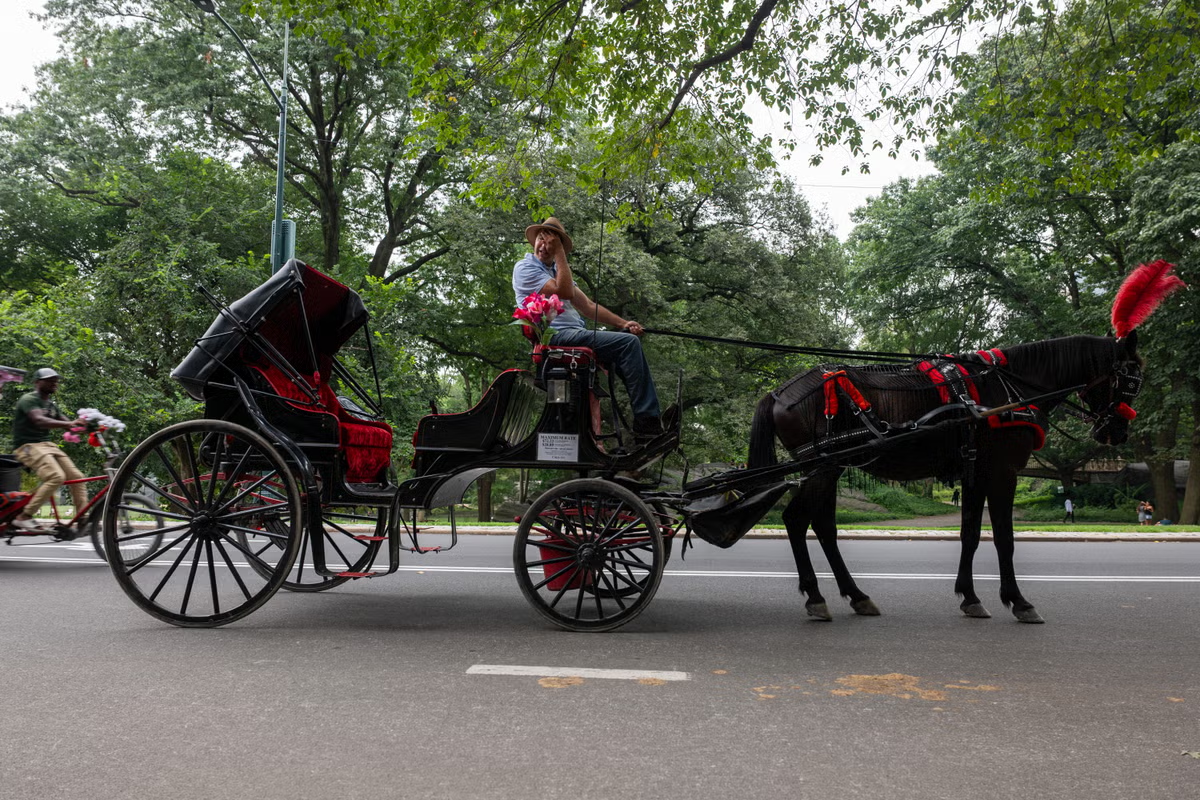
An 18-year-old has died following a harrowing incident in Central Park where a horse-drawn carriage bolted, throwing him and other passengers to the ground.

The New York Police Department confirmed the teenager‘s death after he was initially hospitalized in critical condition.

The accident occurred just before 3 p.m. on Wednesday. The 18-year-old was one of four passengers in the carriage when the horse suddenly took off, causing at least two individuals to be ejected from the careening vehicle.

A representative for the Transport Workers Union, which represents carriage industry employees, stated that the driver had dismounted to take a photograph of his passengers, an action they are not permitted to do. The other passengers involved in the incident reportedly refused medical treatment at the scene.

Advertisement
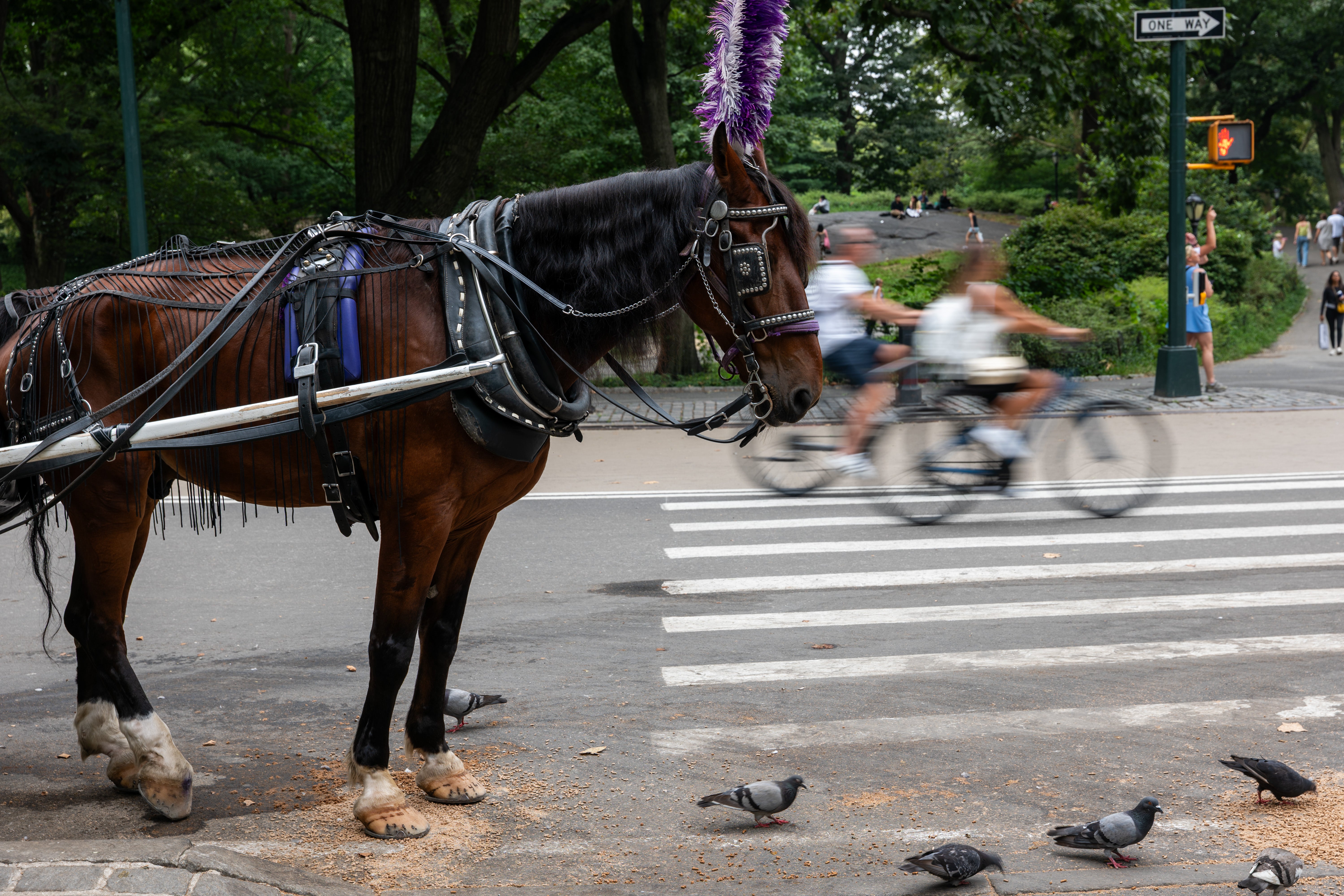
The horse had been in the park for only six weeks
The horse had been in the park for only six weeks (Spencer Platt/Getty Images)

The horse had been in the park for only six weeks, according to Alexander Kemp, the administrative vice president of the union’s local chapter. He said he wants a full investigation.

“Safety in the park has been a growing concern among many, and improvements are needed to be made with respect to all vehicles, including e-bicycles, delivery vehicles, pedicabs, and horse-drawn carriages,” he said in a statement.

Video showed the horse sprinting through the park as two people appeared to jump from the four-wheeled carriage. A second video shows the cab toppling over after clipping the wheels of another carriage on the park’s busy loop.

It’s a fraught moment for Central Park’s 150-year-old horse-drawn carriage industry, which is facing the growing threat of a ban from opponents who say the rides are both inhumane to horses and a danger to city residents.

Wednesday’s event follows several recent horse-related problems in the park, including the fatal collapse of a horse last week.

Advertisement

The Central Park Conservancy, the nonprofit which operates the park and came out last summer in support of banning horse-drawn carriages, said the back-to-back events should bring an end to the industry.

“A young man came to enjoy our park and lost his life,” the group said in a statement. “That is not an acceptable cost of an antiquated industry operating in the middle of one of the most heavily used public spaces in America.”

Source link

Advertisement
Continue Reading

NewsBeat

Man charged with burglary, assault and having offensive weapon

Published

on

Belfast Live

Suspicious activity was reported near a property in South Belfast

A man has been arrested following suspicious activity near a property in South Belfast.

The incident took place in the Iverna Close area of the city on Wednesday June 17.

The 31-year-old man now faces several charges including burglary with intent to steal, common assault and possessing an offensive weapon.

Advertisement

A statement from the PSNI on Wednesday evening said: “A man arrested following a report of suspicious activity at the Iverna Close area of south Belfast on Wednesday 17th June, has been charged to court.

“The man, aged 31, has been charged with a number of offences including burglary with intent to steal, common assault and possessing an offensive weapon in a public place.

“He is expected to appear before Belfast Magistrates Court tomorrow, Thursday June. 18 As is usual procedure all charges will be reviewed by the Public Prosecution Service.

For all the latest news, visit the Belfast Live homepage here and sign up to our daily newsletter here.

Advertisement

Source link

Continue Reading

NewsBeat

Spate of new care home approvals in Belfast vital for “chronic shortage”

Published

on

Belfast Live

Belfast is at least short by 820 beds in terms of elderly care

A spate of newly approved Belfast care homes are vital to address an ageing population across the city, particularly in East Belfast, planners have explained at City Hall.

Advertisement

This week the Belfast City Council Planning Committee approved four major applications relating to care homes and assisted living quarters for the elderly -three of those pertaining to East Belfast, one at the old Netherleigh House, two at Stormont Hotel, and one at Halifax House, the Gasworks, South Belfast.

One of the planners involved with Netherleigh House said there “was a chronic shortage” of beds for “an ageing population,” and said the city is already 820 beds short for those elderly members of the public in need.

READ MORE: Sinn Féin push through care home plans for Stormont Hotel despite local opposition

READ MORE: No extra crime or antisocial behaviour reported outside site of controversial Belfast homeless centre

Advertisement

Two of the applications courted controversy in the chamber on Tuesday evening. Sinn Féin pushed through plans in East Belfast to convert the Stormont Hotel site into a huge care home and assisted living complex, despite major opposition from local residents and elected representatives. The applications got through on knife-edge votes in the chamber.

The first application involves the change of use from hotel, conference centre and offices to a 97-bed care home and 1,559 square metre diagnostic medical facility, with associated access, car parking, landscaping and open space. The site is the still functioning 105 bed Stormont Hotel, 587 Upper Newtownards Road.

The second application involves outline planning permission for independent living units and up to 62 assisted living units, as well as associated internal access roads, communal open space, revised access and car parking, and landscaping. The plan involves the demolition of a host of dwellings at Castleview Road and Summerhill Parade.

The applicant for both is Summerhill Retirement Developments Ltd, Victoria House, Gloucester Street, Belfast. The council received 47 third-party representations, from 26 persons, all of which objected to the scheme. Objectors and local elected reps objected to the closure of a tourist offering, and said car parking for the new facility would overwhelm residential areas.

Advertisement

A representative for the applicant told the committee: “Retirement living has become a highly sought after housing requirement across the city, not least in this part of Belfast. East Belfast has a very high level of population over the age of 65, much higher than the average across the rest of the city.”

Two other major applications relating to elderly care were passed at the Planning Committee, without controversy.

In the Gasworks area of South Belfast, councillors unanimously approved a proposed change of use from offices at the Halifax Building, 24 Cromac Place, to a nursing home comprising 156 bedrooms.

The application, by the Healthcare Ireland Group, Holywood, includes an ancillary scanning unit and all associated accommodation including dining and café areas, day rooms and lounges, a hairdressers, cinema rooms, treatment rooms and internal courtyard. The proposal also includes ancillary offices, landscaping, and cycle parking.

Advertisement

The five storey office building is currently vacant and was previously occupied by Lloyds Banking Group and Halifax. Healthcare Ireland says the proposal represents an investment of £16 million to the local economy, with the potential for 80 to 100 construction jobs and creation of 180 permanent employment positions.

Only NI Water objected from the list of statutory consultees, and council Planning officials recommended the application for approval. There were no third party objections.

A plan to convert the former headquarters of Stormont’s Department for the Economy into a nursing home was also approved at the Planning Committee on Tuesday.

Councillors unanimously approved the conversion of the listed Netherleigh House and existing blocks, at 1 Massey Avenue, East Belfast, to a nursing home, and the erection of assisted living apartments over two four-storey blocks. The site is currently vacant.

The residential and nursing care facility plan involves extensions to an existing office block, including a fourth storey floor, eastern and western gable extension and two front projections from the northern elevation. The proposed development overall will provide 209 one bed residential units and 36 assisted living apartments.

Further works will include new site parking, landscaped amenity areas, and woodland trails across the six acre site. The applicant is Y3 Care Ltd, of Holywood.

Council Planning officials recommended the application for approval, while NI Water objected to the plan. The council received one letter of objection and one letter of support from third parties.

Advertisement

The Planning officer’s report states: “Policy states that Planning permission will be granted for the change of use of a listed building where this secures its upkeep and survival and the character and architectural or historic interest of the building would be preserved or enhanced.

“The new use of residential and nursing care is considered appropriate for Netherleigh House and will bring the vacant building back into use which ensures that the architectural and historic interest of the building is preserved.

“Although the proposal does not include any extension to Netherleigh House itself, it includes various extensions and alterations to the existing built form on site which is attached to the listed building along with two new build assisted living units and are consequently subject to the same level of statutory protection.”

Alliance Councillor for Ormiston Hedley Abernethy asked at the committee meeting: “How do we assess the need for nursing care facilities? It seems everyone must be getting sick in East Belfast, because we seem to be getting more of these facilities.”

Advertisement

An agent for Y3 Care Ltd replied: “We highlighted in our submission that in the 2021 census, data obviously shows there is an ageing population. We highlighted stats around the need for specialist residential and nursing dementia services, all which will be offered in the Netherleigh House proposal.

“The council’s own team states there is an additional need for another 820 bed spaces in residential care homes during the planned period of the Local Development Plan. The council’s LDP team is supportive of this proposal and that we have demonstrated that there is a need for the proposal.” He said there was “a chronic need and a chronic shortage of beds.”

A council officer said: “The Local Development Plan identifies the need for beds, and we take that statement of need and consult. The consultation response said there was a fall in nursing bed care due to certain homes closing since 2015.

“We had a baseline of 820 beds, but we have identified that due to those closures but there are probably more than that. And we certainly haven’t exceeded that in terms of any of the applications we have seen so far.”

Advertisement

For all the latest news, visit the Belfast Live homepage here and sign up to our daily newsletter here.

Source link

Continue Reading

NewsBeat

England fans react after Mr Brightside played during hydration break in World Cup opener against Croatia

Published

on

Manchester Evening News

“Playing The Killers at full volume in the middle of a game during the hydration break. Games never been more gone man”

Whether you like it or not, Mr Brightside by the Killers is the iconic soundtrack to thousands of nights of partying.

It doesn’t matter if it’s a particularly raucous bar, the final few moments of a wedding or a dozen other types of occasion, many people have at some point found themselves bellowing the chorus out with a pint in hand.

Advertisement

Now it seems the song has started making appearances in more place – second half hydration breaks in the World Cup 2026.

The breaks, which essentially divide the game into four quarters, have proved controversial, with many England fans booing the one during the first half of the team’s opening match against Croatia on Wednesday night.

Click here to get the biggest stories straight to your inbox in our Daily Newsletter

However the familiar tune was played during the hydration break in the second half, with many fans at the stadium singing along.

Advertisement

There was a bit of a mixed reaction to the popular song being blasted out however – with users on X, formerly known as Twitter, divided.

Some people welcomed the choice, with one writing: “They are legit playing the English national pub anthem during the hydration break..”

Another wrote: “Not sure I’ll ever get over that Mr Brightside hydration break. Soccer.”

Content cannot be displayed without consent

A third added: “Watching the footy and the music during the hydration break is Mr Brightside by The Killers …. I would bet good money that it’s one of the few songs that everyone in the world knows pretty much all the words to.”

Advertisement

Another added: “They are legit playing the English national pub anthem during the hydration break.

Not everyone was happy however.

One fan wrote: “Hydration break and if that isn’t bad enough they’re playing Mr Brightside. And just in case that isn’t bad enough, the crowd are singing along to it.”

Another added: “Playing The Killers at full volume in the middle of a game during the hydration break. Games never been more gone man. The Yanks have won.

Advertisement

Source link

Continue Reading

NewsBeat

Wales breaking news plus weather and traffic updates (Wednesday, June 17)

Published

on

Wales Online

Gwent Police have launched an appeal for information following a report of a robbery in Nash Road, Newport, at around 4.15pm on Wednesday 17 June.

Officers investigating the robbery would like to speak to anyone in the Nash Road area between 4pm and 4.30pm who might be able to assist our enquiries.

Superintendent Mike Preston said: “We understand that reports like these will prompt concern from our communities so it is possible that you will see officers in this part of the city as we conduct enquiries.

Advertisement

“If you have any concerns about this report or other matters, then please take the time to talk to our officers.

“Anyone with CCTV or dashcam footage could hold a piece of information that could assist our investigation, so we would urge you to speak to officers.”

Source link

Advertisement
Continue Reading

NewsBeat

Trump wanted to see ‘real deal’ gold at Versailles. He signed the Iran deal inside the palace

Published

on

Trump wanted to see ‘real deal’ gold at Versailles. He signed the Iran deal inside the palace

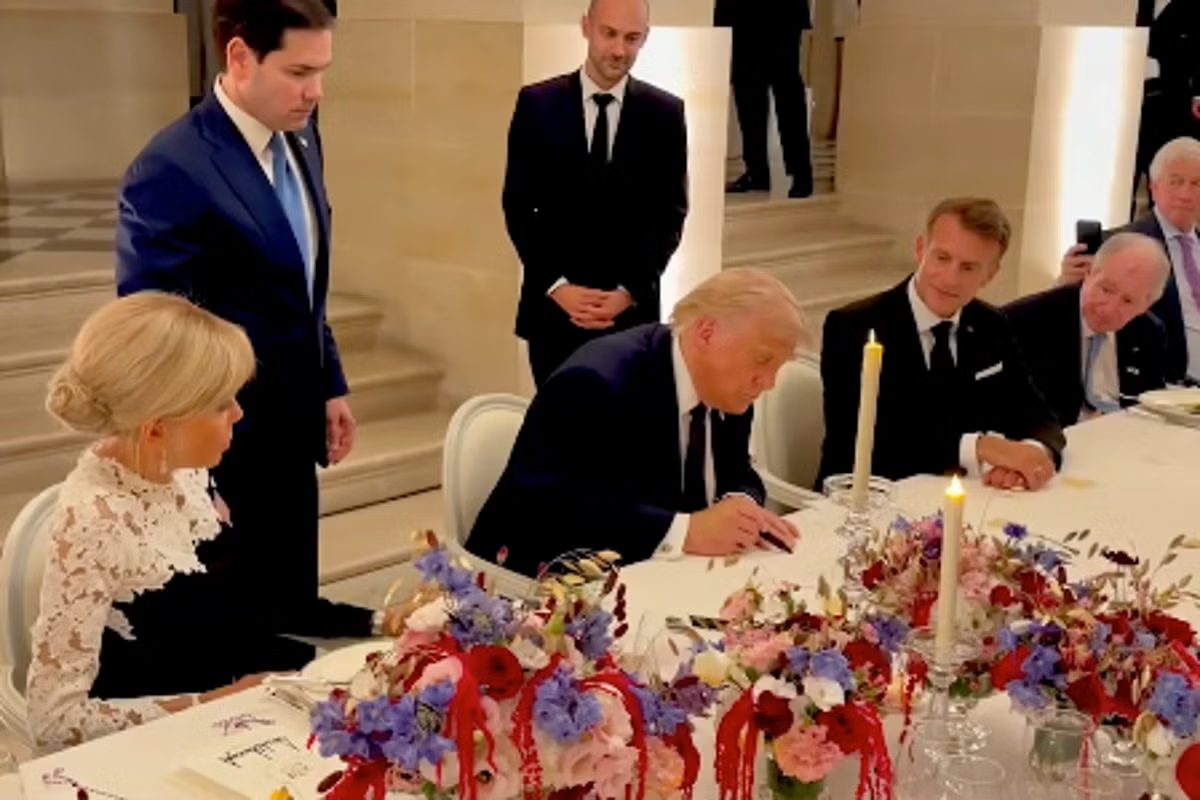
President Donald Trump, famous for his love of gold, toured the opulently gilded Versailles palace on Wednesday alongside French President Emmanuel Macron, and the Republican used the royal venue for some high-level statecraft of his own, signing the Iran deal during the visit.

“It’s signed, yeah,” Trump told reporters as he left dinner with Macron at the palace. “I signed it in Versailles.”

The signing was something of a surprise, and prior to the visit, Trump had described the upcoming tour as more about architectural appreciation than international diplomacy

“I’m a fan of beautiful places,” Trump said Tuesday of his decision to accept Macron’s invitation to tour the palace. “And Versailles is not a gold leaf. Versailles is the real deal.”

Advertisement

Upon arriving on Wednesday evening, Trump again praised its beauty, thanking the French president and First Lady Brigitte Macron.

President Donald Trump on Wednesday signed the memorandum aimed at ending the Iran war during his visit to Versailles
President Donald Trump on Wednesday signed the memorandum aimed at ending the Iran war during his visit to Versailles (White House)

“This is so beautiful, and we thank the president,” Trump told a group of waiting reporters. “Brigitte is an amazing woman.”

As photographers snapped pictures of the trio, a reporter shouted out a question about whether Trump would do more to support Ukraine in its war with Russia.

The American president smiled wordlessly and kept walking with his French hosts.

Inside, prior to the signing, Trump took in the splendor of the palace, which features more than 1,000 kilograms of 22-carat gold across its iconic gates, sculptures, and interior trim.

Advertisement

Tourists outside complained that Trump’s visit shut down access to the French landmark.

“We came out here expecting to go inside,” visitor Ben Olson told The Associated Press. “That is not the case today as we learned upon our arrival, so it’s quite unfortunate.”

“I don’t know what they’re going to talk about,” he added. “I don’t know what their relationship is like. Personally, I dislike Trump, so it’s ever more disappointing that that’s the reason it’s closed today.”

Trump has openly imitated Versailles in his commercial projects, and his gold-plated renovation of the White House resembles the palace
Trump has openly imitated Versailles in his commercial projects, and his gold-plated renovation of the White House resembles the palace (Reuters)

Gold is the president’s aesthetic signature, adorning his company’s logo and the famous escalator in Trump Tower, which he used to announce his 2016 presidential campaign.

Since returning to office, the president has decked out the White House in numerous bits of Versailles-esque, gold-toned trim, and he and his aides regularly proclaim the U.S. is living through a new “Golden Age” under his leadership. He also rolled out a “gold card” visa for wealthy immigrants.

Advertisement

The Republican is so enamored with Versailles that he previously said he modeled a ballroom at his Mar-a-Lago club after the palace.

“I modeled the interior after Versailles, and there is nothing like it in the United States,” Trump said in a 2005 magazine interview.

Foreign leaders have picked up on Trump’s love of all things gold, often incorporating it into elaborate gifts.

Dignitaries and business leaders often incorporate gold into gifts they give to President Trump
Dignitaries and business leaders often incorporate gold into gifts they give to President Trump (AFP/Getty)

Trump has gotten a golden pager from Benjamin Netanyahu, a golden replica crown from a Korean delegation, a gold-and-glass plaque from the CEO of Apple, and a gold Rolex desk clock from a group of Swiss leaders.

Versailles, whose gold-flecked incarnation was meant to embody the power and prestige of Louis XIV, the “Sun King,” eventually became a symbol of the decadence of the French monarchy.

Advertisement

A 1789 march on Versailles was among the key moments of the French Revolution, and Versailles continues to be used as a byword for opulent and out-of-touch leaders.

Doubters have referenced the French palace as part of their criticisms against Trump’s proposed $600 million ballroom complex at the White House, which is being funded through a mix of public money and high-dollar donations from large corporations.

“Trump could spend his time fighting childhood hunger, reforming healthcare, or building affordable housing,” Democratic Rep. Jim McGovern of Massachusetts wrote on X in August of the project, sharing a rendering of the gilded ballroom design. “Instead, he’s focused on turning the White House into Versailles. His billionaire buddies get a tacky ballroom to feast on champagne & caviar. The rest of us? Let them eat cake!”

Critics have invoked Versailles in arguing against Trump’s proposed White House ballroom, claiming the project is inappropriately opulent at a time of economic difficulty for many Americans
Critics have invoked Versailles in arguing against Trump’s proposed White House ballroom, claiming the project is inappropriately opulent at a time of economic difficulty for many Americans (Getty)

The president has embraced a similar royal preoccupation with fountains and classical monuments as part of his efforts to renovate Washington.

His administration has poured millions of dollars, thus far with uneven results, into cleaning up the Lincoln Memorial Reflecting Pool, and the White House has proposed a French-style victory arch for the capital.

Advertisement

After the president’s dinner with Macron, he may stay in Europe to attend a signing ceremony in Geneva on Friday for a tentative deal to end the Iran war. He joked with reporters that he may not attend the ceremony, so that Vice President JD Vance will take the blame if the agreed-upon early-stage memorandum of understanding later falls apart.

“It’s very important,” Trump said. “But it might not be the kind of document I should be signing.”

“This way, if it works out, I’m going to take the credit,” Trump added. “If it doesn’t work out, I’m blaming JD!”

Source link

Advertisement
Continue Reading

NewsBeat

Dad found guilty of murdering his baby son by ‘shaking him violently’

Published

on

Belfast Live

Bradley Thomas, 23, was found guilty of the murder of his 14-week-old son, Emmerson-Oak Thomas, by a jury at Teesside Crown Court after the baby boy wouldn’t settle during the night

A father from Redcar has been convicted of murdering his infant son.

Bradley Thomas, 23, “violently shook” his 14-week-old baby, who refused to settle during the early hours of October 5 last year.

Advertisement

A jury at Teesside Crown Court delivered the guilty verdict against Thomas. During the trial, Thomas’ partner testified that he had consistently shown gentleness towards their son, Emmerson-Oak Thomas, and she couldn’t fathom him causing any harm.

She described her relationship with Thomas, who earned his living as a window cleaner, as “near perfect” and said he was content to handle night-time feeds. The court heard that she continues to visit Thomas while he’s in custody and they remain together.

That morning at 5.30am, she initially assumed he was calling out to show her something Emmerson had done. However, she detected “terror” in Thomas’ voice.

Emmerson was lifeless and pale, with Thomas having captured footage of his “raspy breathing”. The mother immediately started CPR while instructing Thomas to ring for emergency services, reports Teesside Live.

Advertisement

By the time paramedics reached them, the little boy had lost consciousness. Three days later, baby Emmerson passed away in hospital. Medical experts confirmed he had sustained “catastrophic brain injuries” which were “non accidental”.

A doctor informed the court that Emmerson’s injuries were comparable to those that might result from a fall from a third storey window onto concrete. The court heard it was impossible for the infant to have sustained bleeding on the brain from tumbling off his father’s lap onto carpet, contrary to Thomas’s account.

Alongside the brain bleeding, Emmerson had also suffered bleeding on his spinal cord and haemorrhaging behind both eyes.

Dr Jennifer Bolton, a pathologist, gave evidence that the injuries resulted from the child’s head being “vigorously moved backwards and forwards”. An expert in paediatric ophthalmic pathology determined that the eye haemorrhaging “was severe and very characteristic of an abusive head trauma”.

Advertisement

Thomas maintained he had never shaken his son. Prosecutor Toby Hedworth told jurors that Thomas had “lost self control and become angry” when Emmerson refused his bottle that evening and remained “unsettled” from 2am onwards.

The court accepted that Thomas was alone downstairs with Emmerson that night, while his partner slept upstairs.

Jurors were informed that police discovered cannabis at the family’s Eston residence, with Thomas stating in his testimony that he smoked “one joint” each evening outdoors after Emmerson had gone to bed.

On Wednesday afternoon, Judge Clive Sheldon expressed gratitude to the jury for their service, remarking: “We’ve had difficult evidence to hear but you’ve carried out your responsibilities with care and consideration”.

Advertisement

Thomas, currently residing on Grasmere Road in Redcar, is due to be sentenced on July 15. He has been remanded in custody until that date.

Following the sentencing, Detective Superintendent Deb Fenny, from Cleveland Police, said: “Emmerson-Oak was an innocent three month old child whose life was cruelly and senselessly taken. I am pleased that today we have secured justice on his behalf.

“This has been an exceptionally complex and deeply distressing investigation, not only because of the nature of the injuries involved, but also due to Emmerson-Oak’s age and vulnerability. Throughout, our officers and staff remained steadfast in their commitment to securing justice, demonstrating diligence, professionalism and compassion in the most challenging of circumstances.

“While no outcome can ever undo the harm caused or bring Emmerson-Oak back to his family, today’s verdict ensures that Bradley Thomas is rightly held accountable and will have to live with the consequences of his actions”.

Advertisement

Source link

Continue Reading

Trending

Copyright © 2025