Connect with us
DAPA Banner
DAPA Coin
DAPA
COIN PAYMENT ASSET
PRIVACY · BLOCKDAG · HOMOMORPHIC ENCRYPTION · RUST
ElGamal Encrypted MINE DAPA
🚫 GENESIS SOLD OUT
DAPAPAY COMING

NewsBeat

Carolyn Wood Sherif, pioneer of feminist psychology who foresaw the risks of scientific bias

Published

on

Carolyn Wood Sherif, pioneer of feminist psychology who foresaw the risks of scientific bias

In the US state park of Robbers Cave, Oklahoma, Carolyn Wood Sherif is standing squinting up at the sun. The two wooden cabins before her rattle with shrieks and cries from excited 11-year-old boys. They have been split into two groups of 11 and encouraged to bond.

Over three long, laborious weeks in the summer of 1954, Wood Sherif watches as these boys become enthusiastically dedicated to their allocated groups. When instructed to compete for resources, they grow hostile towards their opponents. The experiment descends into inter-group violence and aggression.

This research was among the first naturalistic psychological studies to show how group formation can lead to prejudice and intense conflict. It is considered a classic study upon which the subdiscipline of social psychology – how mind and behaviour are influenced by the presence of other people – was born. Wood Sherif should have made her academic career from it.

But in many ways, scientific research is a culture, a club. There are people with the power to warmly invite others to participate, and others who are intentionally kept out. Many female scientists have suffered because of this power imbalance.

Advertisement

Video: Cummings Center for the History of Psychology.

‘A wife helping her husband’

Wood Sherif ran the Robbers Cave study with her longstanding collaborator, colleague and husband, Muzafer Sherif. Yet while he enjoyed an illustrious career, her intellectual contributions to social psychology were literally written out of the historical record.

Wood started working as Sherif’s research assistant in 1944. At the time, his department at Princeton University did not allow women to be faculty members or graduate students, but he had the power to make an exception. They married a year later.

The pair collaborated extensively for over a decade. Wood Sherif was often the driving force behind their research, yet her scientific writing was often attributed solely to her husband. Wood Sherif’s name was removed from academic papers when they were circulated. “I was seen as a wife helping her husband,” she later recalled.

Advertisement

After her husband was awarded the American Psychological Association’s Distinguished Scientific Contribution Award in 1968, Wood Sherif began to realise that social psychology might never welcome her in the same way. She joined the American women’s movement, a national campaign for legal, social and political gender equality. This connected her with more women in her discipline who were having similar frustrated experiences. Finally, Wood Sherif found a welcoming academic home.

She turned her focus sharply to identifying and exposing the presence of bias in psychology. Her core thesis was that it was flawed because most research was based on men’s experiences and treated male behaviour as the “normal” standard, leading to distorted and damaging views of women.


This series is dedicated to lesser-known, highly influential scientists who have had a powerful influence on the careers and research paths of many others, including the authors of these articles.

Advertisement

In 1979, Wood Sherif wrote my favourite psychological paper of all time. The paper, titled Bias in Psychology, offered a demolition job of psychological science over 16 glorious pages.

She warned that psychologists had gone awry by attempting to mimic the methodologies of the “hard sciences”, such as physics and chemistry, without first considering how these standards did not naturally apply to the scientific study of human beings in context.

Wood Sherif argued that people should be studied within their social context. She criticised psychologists for reducing complex human experiences into compartmentalised units that might have been easier to study, but were disconnected from real life.

She explicitly rejected the discipline’s reliance on experimental methods. Rather, she implored her peers to embrace the messy human aspects of their work in order for it to be useful, writing:

Advertisement

What goes on in our laboratories, clinics and classrooms must be seen for what it is: cultural phenomena and events where we can learn about individuals, provided we understand the times and the larger societies of which they are parts.

Wood Sherif set the agenda for a new, critical subdiscipline: feminist psychology. This includes analyses of how gender shapes both our experiences as people and the work we do as psychologists. Longstanding male bias in psychology has served as its manifesto.

As she pivoted away from social psychology, Wood Sherif’s work became funny, personal and prophetic. In their 1998 reappraisal of her seminal 1979 paper, psychologists Rhoda Unger and Arnold Kahn noted how her writing “provokes and excites as well as amuses”.

Sadly, this writing was also largely ignored. Cited predominately by feminist scholars, it never gained the discipline-wide impact it deserved.

The story of Wood Sherif, and psychology’s longstanding rejection of her work, has had a powerful impact on me. She helped me understand that we cannot evaluate the state of our science without first evaluating who is welcome within it. This is the crux of my own research, which I categorise as “feminist metascience”.

Advertisement

The garden of forking paths

Wood Sherif died in 1982 aged 60, but her ideas are arguably more relevant now than ever. Following widespread concerns about the replicability of psychological research in the 2010s, many psychologists are realising their research may be less objective than was previously believed.

Issues such as confirmation bias and the “garden of forking paths” (the many flexible decisions researchers make during analysis that can produce misleading results) are receiving widespread attention.

But while psychology is now in an era of science reform, there are two parallel conversations going on – by those who continue to insist upon reproducibility to strengthen psychological research, and those trying to reform the science as communal, compassionate and open to issues of bias.

The latter approach has been championed by a new generation of women in the discipline. They are forced to repeat the same critiques Wood Sherif made decades ago, because her warnings about bias and objectivity were not heeded.

Advertisement

There are, of course, many other examples of women’s contributions being written out of the scientific record. As I document in my new book Absent Minds: The Untold Story of the Women who Changed Psychology Forever, women have time and again been relegated to supporting roles as wives, secretaries or assistants of scientists, rather than scholars in their own right.

There is one, simple, enduring lesson that stories like Wood Sherif’s tell us: listen to women.


This article features a reference to a book included for editorial reasons, and a link to bookshop.org. If you click on this link and go on to buy something from bookshop.org, The Conversation UK may earn a commission.

Advertisement

Source link

Continue Reading
Click to comment

You must be logged in to post a comment Login

Leave a Reply

NewsBeat

‘Hate cannot be allowed to win’: NI justice minister urges end to violence in wake of knife attack

Published

on

Belfast Live

Northern Ireland’s Justice Minister Naomi Long has said “hate cannot be allowed” to win, as disorder broke out in a number of areas following a knife attack in Belfast on Monday.

Advertisement

Ms Long said: “Earlier today, I stood beside the First Minister, deputy First Minister and the PSNI Chief Constable and we appealed for calm.

“Sadly, there are those who have chosen to ignore those pleas; they are intent on wreaking destruction on the very communities they claim they are trying to protect.

“They are weaponising the genuine hurt, concern and anger that people are feeling for their own misguided purposes.

“There is no place for masked thugs to take to the streets and threaten, intimidate, disrupt and cause wanton damage – it is simply disingenuous to claim this is being carried out for the good of Northern Ireland.

Advertisement

“I would appeal once again to communities not to allow themselves to be used and abused in this manner. Disorder on the streets, such as we are seeing tonight, is diverting valuable police resources away from those who genuinely need them. These are not the actions of people who genuinely care about their communities.

“While I recognise and understand the concerns following on from the attack in north Belfast, hate cannot be allowed to win.”

For the latest on this developing story follow our live blog here.

Source link

Advertisement
Continue Reading

NewsBeat

Deaths in Congo’s Ebola outbreak pass 100 out of 550 cases

Published

on

Deaths in Congo's Ebola outbreak pass 100 out of 550 cases

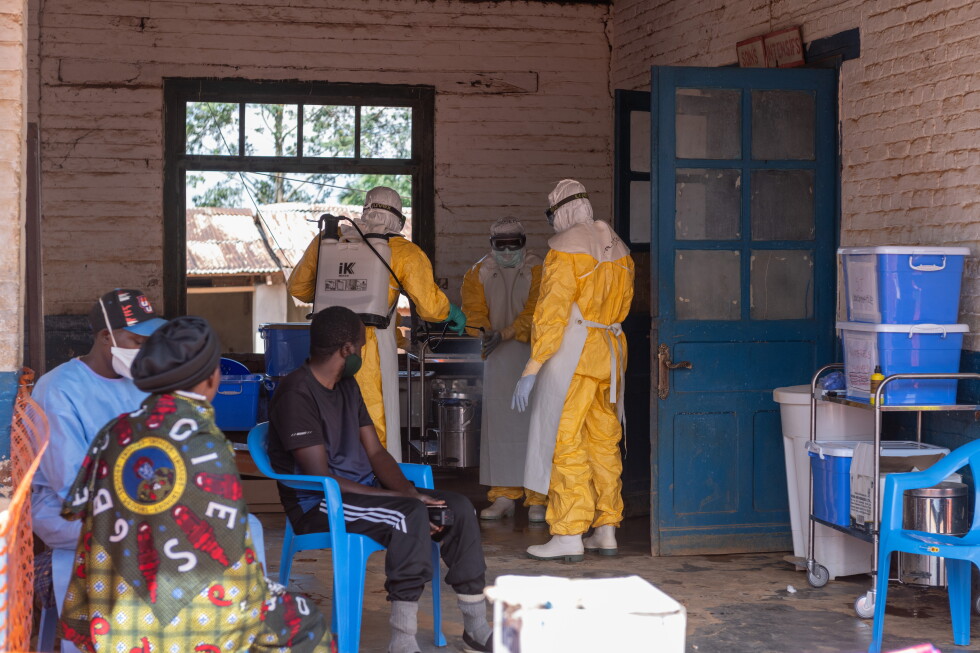
BUNIA, Congo (AP) — More than 100 people have died from Ebola less than a month after authorities declared an outbreak of the disease in eastern Congo, a grim toll as officials intensify efforts to slow the disease discovered weeks late.

Attacks on health workers from angry residents, skepticism among some locals and armed conflict in hot spots continue to challenge efforts to stop the Ebola outbreak declared on May 15, caused by a severe form of the disease.

Out of the 550 cases confirmed as of Sunday, there have been 101 deaths and 19 recoveries, the latest situation report said late Monday. The outbreak is concentrated in Congo’s eastern province of Ituri, which accounts for more than 90% of the cases. Cases have also been recorded in the North Kivu and South Kivu provinces, and has spread across the border to Uganda.

However, the number of cases in Congo is believed to be higher because the outbreak was confirmed weeks late and the contact tracing coverage rate, which has improved in recent days, is still at 64%.

Advertisement

The World Health Organization said Tuesday that over the last 24 hours, only 137 samples have been tested, with 35 coming back positive.

The latest Ebola outbreak is caused by the rare Bundibugyo virus, which does not have an approved vaccine or treatment unlike the “Zaire virus,” another name for the Ebola virus, responsible for most of Congo’s past 16 outbreaks of the disease.

The rapid increase in the number of cases is partly due to the scale up of diagnostic capacities, enabling testing of the backlog of previously collected samples, authorities said.

The outbreak disrupts a provincial capital

Health measures put in place to limit the spread of Ebola have disrupted daily life in Bunia, the bustling capital of Ituri province.

Advertisement

Justin Abekani, who ferries customers on his motorcycle, said they are “now only allowed to carry one customer per motorbike.”

There is still widespread skepticism and disregard for health protocols in some parts of the province. Survivors of Congo’s 2018 Ebola outbreak, the second-biggest in history, have warned that a repeat of past mistakes could lead to a high number of preventable deaths.

Front-line health workers, who labor with little pay or rest, have been attacked multiple times by angry residents, and have been unable to reach some communities cut off by conflict involving armed rebels.

Eastern Congo has for years seen attacks by dozens of separate rebel and militant groups, some of them with links to foreign countries or the extremist Islamic State group.

Since the outbreak was declared in mid-May, more than 520 incidents impacting the work of health professionals have been reported, according to Marie Roseline Darnycka Belizaire, WHO’s emergency director for Africa. She did not elaborate on the incidents or say whether anyone was hurt.

Advertisement
Red Cross workers carry the body of a person who died of Ebola into a coffin at a health center in Rwampara, Congo, Wednesday, May 20, 2026. (AP Photo/Moses Sawasawa)

Red Cross workers place the body of a person who died of Ebola into a coffin at a health center in Rwampara, Congo, Wednesday, May 20, 2026. (AP Photo/Moses Sawasawa)

Advertisement
A security guard runs in front of an Ebola treatment center in flames in Rwampara, Congo, Thursday, May 21, 2026. (AP Photo/Dirole Lotsima Dieudonne)

A security guard runs in front of an Ebola treatment center in flames in Rwampara, Congo, Thursday, May 21, 2026. (AP Photo/Dirole Lotsima Dieudonne)

Advertisement

Conflict and movement complicate disease tracing

The fighting is “disrupting surveillance and response activities, and increasing the risk of undetected transmission,” WHO said Monday. “Such incidents underline the challenges of the context and the importance of working closely with local leaders and communities.”

Nearly a million people have been displaced by conflict in Ituri, according to the U.N. humanitarian office, making contact tracing difficult as people flee attacks or move frequently in the vast province with dense forests, poor roads and remote villages that can take days to reach.

Tracing also is difficult among the thousands of artisanal miners who regularly move between remote sites in the mineral-rich region.

Advertisement

WHO currently assesses the risk of spread for the rest of Africa and at the global level as low.

“(Ebola) patients can recover if they get the medical support they need,” WHO Director-General Dr. Tedros Adhanom Ghebreyesus said Monday during a visit to Uganda.

Protests in Kenya over US plans for Ebola quarantine

On Tuesday, Kenyan police fired tear gas to disperse protesters in the town of Nanyuki, near a military air base where the United States plans to build an Ebola quarantine center, a project that has since drawn protests but was later halted by the courts.

A heavy deployment of riot and regular police prevented the protesters from marching toward the base.

Advertisement

Last month, U.S. officials said Washington intends to send Americans exposed to Ebola while abroad to a new facility in Kenya rather than flying them back home. They said the center would be located at Laikipia Air Base with a capacity of 50 quarantine beds.

A Kenyan court later suspended construction of the facility and barred the arrival of any foreign patients, pending the outcome of a case filed by the Law Society of Kenya and a constitutional watchdog group. The petitioners cited concerns about Kenya’s fragile health system and the lack of transparency surrounding the bilateral agreement.

Kenya has not recorded any Ebola cases but neighboring Uganda has reported 19 confirmed cases.

___

Asadu reported from Abuja, Nigeria. Associated Press writers Mark Banchereau in Dakar, Senegal, and Evelyne Musambi in Nairobi, Kenya, contributed to this report.

Advertisement

___

For more on Africa and development: https://apnews.com/hub/africa-pulse

The Associated Press receives financial support for global health and development coverage in Africa from the Gates Foundation. The AP is solely responsible for all content. Find AP’s standards for working with philanthropies, a list of supporters and funded coverage areas at AP.org.

Advertisement

Source link

Continue Reading

NewsBeat

Convicted child sex trafficker spotted on the run in Birmingham after he’s granted bail

Published

on

Daily Record

Sharam Muhamadi was last seen in Birmingham after he vanished after being granted bail

A manhunt has been launched for a child sex trafficker who failed to appear in court for his trial after being granted bail.

Today (Tuesday June 9) Sharam Muhamadi was found guilty of two counts of arranging or facilitating travel of another person with a view of exploitation at Sheffield Crown Court. However, he was convicted of the crime in his absence as he failed to appear for the trial, which started on May 18.

Advertisement

Last month, the 21-year-old was remanded in custody between being charged and his trial date, but he won a bail application submitted by his defence team and has seemingly vanished, reports Birmingham Live.

South Yorkshire Police said officers had been searching for him ever since but had been unable to appeal for the public’s help until the end of the trial due to reporting restrictions.

It said its officers were ‘actively conducting extensive enquiries’ to find Muhamadi and had trawled through hours of CCTV, and phone records.

His last known sighting was in Birmingham on Monday, May 18 – the date of the start of his trial.

Advertisement

He was known to be in the city centre and then travelled to the Coventry Road and Small Heath Park area but then the trail went cold.

South Yorkshire Police said: “Enquiries have established that Muhamadi has links to the West Midlands area, and we know he travelled to Birmingham New Street Station via train between Saturday 16 and Monday 18 May.

“Our officers rushed to the Birmingham area where, working alongside West Midlands Police, they have conducted extensive enquiries over multiple days – patrolling the streets, officers have shown his photo to members of the public.

“The last confirmed sighting of Muhamadi was at around 9pm on Monday 18 May in Birmingham city centre.

Advertisement

“He then travelled in a taxi from the centre towards Coventry Road and the Small Heath Park area, southeast of the city.

“We do not know where Muhamadi travelled from there, but we are determined to find him and are now appealing for the public’s help.”

South Yorkshire Police said: “Enquiries have established that Muhamadi has links to the West Midlands area, and we know he travelled to Birmingham New Street Station via train between Saturday 16 and Monday 18 May.

“Our officers rushed to the Birmingham area where, working alongside West Midlands Police, they have conducted extensive enquiries over multiple days – patrolling the streets, officers have shown his photo to members of the public.

Advertisement

“The last confirmed sighting of Muhamadi was at around 9pm on Monday 18 May in Birmingham city centre.

“He then travelled in a taxi from the centre towards Coventry Road and the Small Heath Park area, southeast of the city.

“We do not know where Muhamadi travelled from there, but we are determined to find him and are now appealing for the public’s help.”

Assistant Chief Constable Hayley Barnett said: “Our priority has been and will continue to be securing full justice for the victims tragically involved.

Advertisement

“They have shown commendable bravery throughout our full investigation and the complex trial which followed. We are wholly focussed on finding Muhamadi and ensuring his faces the consequences of his actions.

“Officers have been relentlessly pursing all lines of enquiries. We are keeping an open mind of his whereabouts.

“We believe he is still in the country, but if he is found abroad, we will seek the Government’s help in doing everything we can to extradite him.

“We will not stop until we find him, and we will ensure these young girls get the justice they deserve.”

Advertisement

Anyone who sees Muhamadi was asked not to approach him but to call 999 quoting South Yorkshire Police incident number 610 of 21 May 2026.

People can also report any information anonymously to Crimestoppers, online at https://crimestoppers-uk.org or by calling 0800 555 111.

Source link

Advertisement
Continue Reading

NewsBeat

Northumbrian Water discharged sewage into rivers 27,000 times

Published

on

Northumbrian Water discharged sewage into rivers 27,000 times

The figures show there were 27,352 recorded discharges from storm overflows during the year, lasting a combined 123,521 hours.

The data has prompted GMB to call for workers to be given representation on the board of the Government’s proposed new water regulator, which is set to replace Ofwat.

A waste water pipe on the beach (Image: PA MEDIA)

Delegates at the union’s annual congress debated a motion on Monday (June 8), calling for “a permanent worker seat on the board to safeguard from future failures”.

Water campaigner and former Undertones frontman Feargal Sharkey addressed delegates in support of the motion.

Advertisement

Speaking at the conference, Mr Sharkey criticised the privatised water industry and regulation of the sector.

“The brutal reality is as employees, bill payers, as customers, we have been lied to, we’ve been misled, we’re being extorted, we’ve been cheated,” he said.

“For 37 years, we’ve been subjected to nothing more than the greatest act of organised criminality perpetrated against the British people.”

He added: “We’ve had little in return apart from corporate greed, profiteering, financial engineering, political failure and regulatory incompetence.”

Advertisement

Water coming from a pipe into the river (Image: PA MEDIA)

However, Northumbrian Water said the figures relate to permitted storm overflow discharges, which are designed to operate during periods of heavy rainfall to prevent homes, businesses and infrastructure from flooding.

A spokesperson said: “We share our customers and communities’ passion for having clean waterways, and we understand that reducing the use of storm overflows is one of the most important things we can do.

“Between 2025 and 2030, we are investing £1.7 billion in environmental improvements, which will help reduce the number of spills from storm overflows and enhance water quality across our coasts and rivers.

“Data for 2025 shows that spills from our storm overflows have decreased by 32 per cent over the past year, and this is partly due to investment in infrastructure and trials of our world-leading Smart Sewers project, which uses AI to predict rainfall and reduce the reliance on storm overflows.”

Advertisement

Storm overflows are permitted by the Environment Agency to discharge excess water during periods of heavy rainfall when sewer systems risk becoming overwhelmed.

The discharges are typically heavily diluted with rainwater and are intended to protect properties and sewage treatment works from flooding.

The Government announced earlier this year that Ofwat would be abolished and replaced by a new water sector regulator, although details of its structure and governance have yet to be confirmed.

Advertisement

Source link

Continue Reading

NewsBeat

World Cup 2026 LIVE: Latest news and updates as Iran tickets revoked

Published

on

World Cup 2026 LIVE: Latest news and updates as Iran tickets revoked

As for England, the Three Lions face Costa Rica at the Inter&Co Stadium in Orlando, Florida, in their final warm-up match. That should include the four late-arriving Arsenal stars, before the squad fly out to their World Cup base in Kansas City, Missouri, on June 13. You can follow all the latest news and updates from across the tournament – including insight and analysis from Dom Smith in the States – with our rolling news live blog below!

Source link

Continue Reading

NewsBeat

Teenager arrested amid police clampdown on behaviour in three parts of Cardiff

Published

on

Wales Online

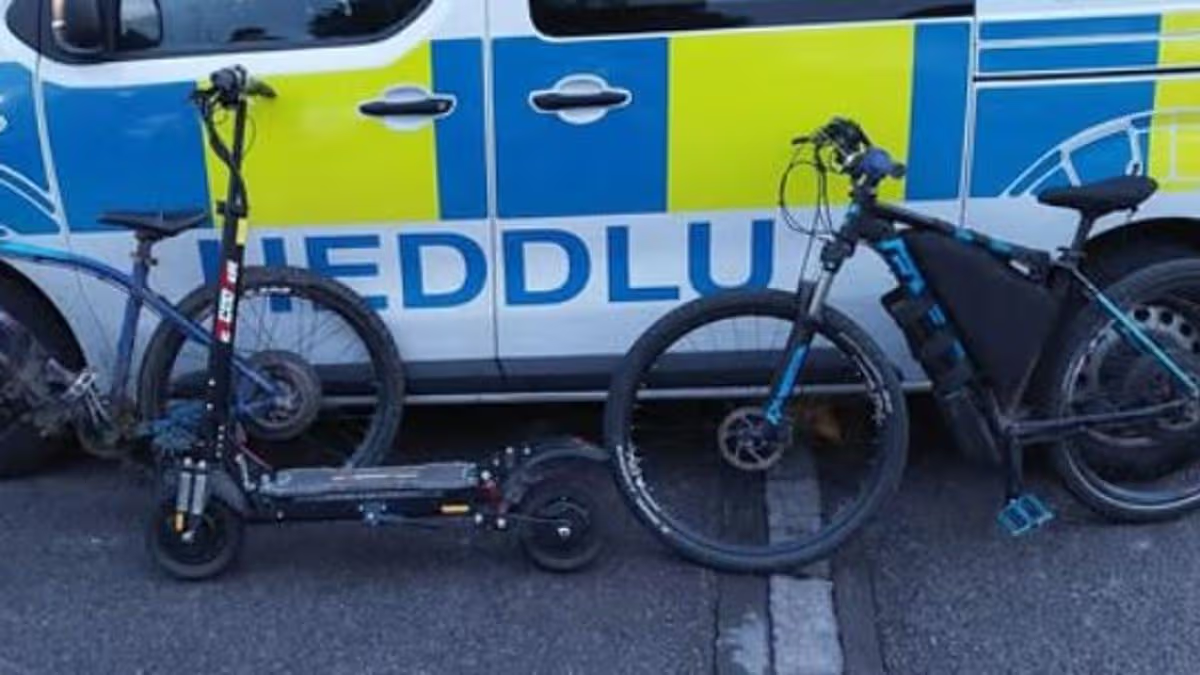
Numerous E-bikes and E-scooters were seized in the operation

A 15-year-old boy was arrested on suspicion of possession with intent to supply drugs and possession of a knife.

Advertisement

He was apprehended as part of a police probe into illegal and antisocial use of E-bikes, E-scooters, and motorbikes in Cardiff.

Officers carried out the operation after what they said were ongoing concerns. They seized a number of E-bikes and scooters in the Fairwater, Gabalfa, and Whitchurch areas of the city.

Cannabis, cash, a mobile phone, and knife were also seized as a result of stop-searches.

A 15-year-old boy was arrested on suspicion of possession with intent to supply drugs and possession of a knife.

Advertisement

The operation in Cardiff comes after police in Swansea city centre seized 29 illegal E-bikes in the months of April and May.

Riders were “given words of advice in most cases as officers aim to provide education on the law in the first instance,” they said.

PC Scott Pearson, from Swansea and Neath Port Talbot officers, said: “These bikes have been seized under Section 165 of the Road Traffic Act due to the riders not having a license or proof of insurance. In either case, the E-bikes are also not registered for use on UK roads.”

Advertisement

South Wales Police is urging people to check the law before buying an e-bike or e-scooter.

The force says on its website that electrical scooters (also known as E-scooters) and unregistered E-motorbikes are classed as motor vehicles under the Road Traffic Act.

This means the rules that apply to motor vehicles also apply to E-scooters including the need to have a licence and insurance.

There are two ways of using an E-scooter:

Advertisement
  • by privately owning one
  • by renting one through an authorised rental scheme.

It’s not currently possible to get insurance for privately-owned E-scooters. This means it’s illegal to use them on the road or in public spaces such as parks, street pavements, and shopping centres.

If you use a privately-owned E-scooter in public you risk the vehicle being seized under the Road Traffic Act for having no insurance.

If you cause serious harm to another person while riding an E-scooter or E-motorbike the incident will be investigated in the same way it would if you were riding a motorcycle or driving a car.

If you own an E-scooter you can only use it in on private land such as in a garden but you must have the permission of the landowner to do so.

You can rent E-scooters in some parts of the UK. Where a rental trial scheme is running rental E-scooters can be used on public roads, some cycle lanes, and other public spaces. But you must follow the relevant road traffic laws or face prosecution.

Advertisement

To use a rental E-scooter in an approved area you must:

  • hold the correct driving licence
  • have insurance (the rental companies provide this when you hire from them)
  • meet the minimum age limit (this can vary depending on the rental company)

If you breach the rules when using an E-scooter or E-motorbike you could face a fixed penalty notice as well as the seizure of your E-scooter/E-motorbike and its disposal.

Forces set and enforce penalties differently so the penalty will vary depending on where the offence is committed.

The fixed penalty notice could include:

  • a £300 fine and six penalty points on your licence for having no insurance
  • a £100 fine and three to six penalty points for riding without the correct licence

You could also be committing an offence if you’re caught:

  • riding on a pavement: fixed penalty notice and possible £50 fine
  • using a mobile phone or other handheld mobile device while riding: £200 and six penalty points
  • riding through red lights: fixed penalty notice, £100 fine, and possible penalty points
  • drink-driving: the same as if you were driving a car meaning you could face court-imposed fines, a driving ban, and possible imprisonment

If you’re using an E-scooter or E-motorbike in public in an antisocial manner you can also risk the vehicle being seized as has happened in Cardiff.

Get daily breaking news updates on your phone by joining our WhatsApp community here. We occasionally treat members to special offers, promotions and ads from us and our partners. See our Privacy Notice.

Advertisement

Source link

Continue Reading

NewsBeat

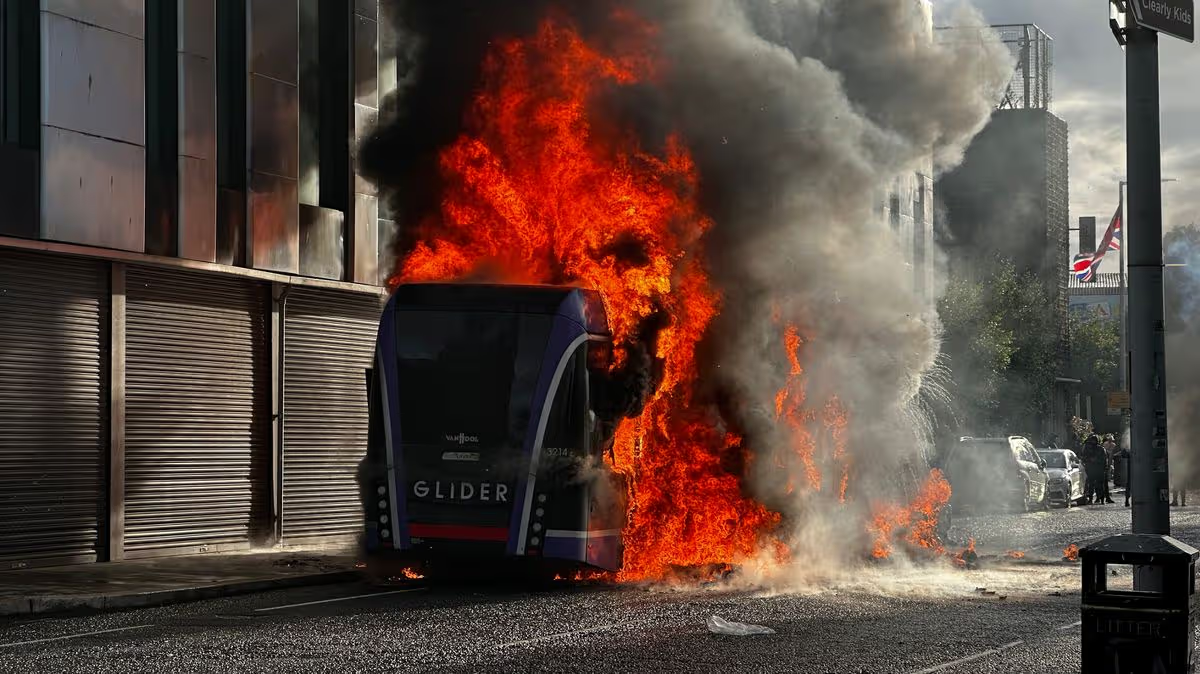
Belfast protest live: Bus set on fire as protesters gather after ‘brutal’ stabbing

Published

on

Daily Mirror

At a press conference at Stormont this afternoon, PSNI Chief Constable Jon Boutcher briefed reporters on the status of the investigation.

Commenting on the prospect of disorder, the police chief warned people against being influenced “from afar through social media”.

“There will be an increased police presence across Northern Ireland this evening and in the coming days to provide help, support, and reassurance for all our communities, and to keep everybody safe,” he said.

Advertisement

“There is considerable posting on social media. I appeal for everyone to be mindful of what they view and share online. Sharing footage risks causing further trauma to the injured man’s family and loved ones, and may impact on this investigation.

“We are aware, of course, of protest activity being discussed across Northern Ireland this evening, and we continue to monitor this very carefully.

“And I understand that last night’s attempted murder will leave people feeling enraged with emotions from fear to anger, but please, please let the PSNI, let the police do their job unfettered and undistracted by wider concerns there may be about disorder.”

Source link

Advertisement
Continue Reading

NewsBeat

Xi’s silence on nuclear arms bodes well for North Korea’s Kim Jong Un

Published

on

Xi's silence on nuclear arms bodes well for North Korea's Kim Jong Un

TOKYO (AP) — Chinese and North Korean state-run media this week devoted thousands of words to Xi Jinping ‘s summit with Kim Jong Un, but made no mention of a key matter for Washington: the North’s steadfast pursuit of nuclear weapons that could threaten the United States and its allies in Asia.

The silence says more than reams of the carefully framed propaganda.

Until disarmament talks finally fell apart in 2019, Washington and Beijing were yearslong partners in diplomacy seeking to persuade North Korea to abandon its nuclear ambitions in return for much-needed aid and political recognition.

Beijing routinely called for “denuclearization” — a bureaucratic term for nuclear disarmament — and there was hope in Washington, as well as in Seoul and Tokyo, that China would use its perceived influence as Pyongyang’s diplomatic and economic protector to push the North on the nuclear standoff.

Advertisement

Xi’s visit to Pyongyang on Monday and Tuesday — his first visit there in seven years — could spell the end of that hope — and signal a significant shift in how he views the North’s nuclear weapons.

From Beijing’s perspective, Xi’s silence may be an acknowledgment of how far North Korea’s nuclear program has come since Kim Jong Un took power in 2011 — and also how unlikely it is that diplomacy could get the North to give up the weapons it sees as its largest guarantee against outside interference.

Xi’s silence on nuclear arms is golden for North Korea

The Chinese leader’s last trip to North Korea, in 2019, was starkly different — Xi was quoted in Chinese media as saying his nation would play a constructive role in the denuclearization of the Korean Peninsula.

Beijing wants, above all, stability in North Korea and the region. A collapse in Pyongyang could send millions streaming across their long shared border.

Advertisement

To that end, China has often avoided directly pushing for the end of North Korea’s nuclear program, according to an analysis by Jiyong Zheng, dean of the Institute of Regional Studies at Tianjin Foreign Studies University in China.

Instead, Beijing called for the denuclearization of the entire Korean Peninsula — a careful wording that allowed China to also express a desire for an end to U.S. commitments to use its nuclear arsenal to protect South Korea and the deployment of U.S. nuclear capable bombers near the Korean Peninsula.

In recent months, Beijing has signaled it wants to prioritize stabilizing the situation on the peninsula, with denuclearization as a second aim, Zheng wrote.

“China is increasingly concluding that a rigid denuclearization-first approach is impractical and may worsen the regional security environment,” he said.

For Kim Jong Un, the lack of any public mention or criticism of his nuclear bombs is a win. He has long demanded international recognition for his country as a nuclear weapons state, which could lead to the lifting of U.N. sanctions.

For Seoul and Washington, Xi’s silence is bad news

When asked on Tuesday whether Seoul should lower its expectations about Beijing after Xi appeared to avoid the nuclear issue in Pyongyang, South Korean Foreign Ministry spokesperson Park Il insisted that China continues to support the nuclear disarmament goal.

Advertisement

Similarly, after last month’s summit between U.S. President Donald Trump and Xi, the White House said the two leaders confirmed their shared goal to denuclearize North Korea.

China, however, only said the U.S. and Chinese leaders discussed the nuclear issue on the Korean Peninsula.

On Sunday, Kim’s sister and senior official, Kim Yo Jong, dismissed as “false information” the U.S. readout of the Xi-Trump meeting.

Last week, Kim Jong Un unveiled a new plant to produce nuclear ingredients and vowed to bolster nuclear forces “at an exponential rate.” His sister also said that any U.S. push for the denuclearization of North Korea was an “anachronistic dream.”

Advertisement

It may be that China doesn’t want to see North Korea and the U.S. growing too close, said Park Won Gon, a professor at Seoul’s Ewha Womans University, adding that Beijing might prefer to keep the North within its sphere of influence and use that relationship as leverage with the U.S.

Xi may be tacitly accepting North Korea’s push for nukes

South Korean President Lee Jae Myung told reporters on Monday that North Korea is producing enough nuclear fuel annually for about 10 to 20 bombs and is close to perfecting its intercontinental ballistic missile technology, which could deliver a nuclear bomb to the U.S. mainland.

Kim, meanwhile, has stressed that nuclear weapons are an essential part of the North’s national identity. He has enshrined North Korea’s nuclear status in the constitution and dedicated a growing share of resources, industry and bureaucracy toward sustaining it.

Some analysts see China’s avoidance of the word “denuclearization” in Xi’s visit this time as a clear change in Beijing’s stance, and a tacit acceptance of North Korea’s nuclear status.

Advertisement

This shift could mean that efforts by the U.S., Japan and South Korea to deter the North will become a regular push rather than something seen as more temporary, according to Seong-Hyon Lee, a senior fellow at the George H.W. Bush Foundation for U.S.-China Relations.

“Beijing’s silence should not be viewed as a bureaucratic oversight but as a deliberate strategic signal,” Lee said. “By tacitly accepting North Korea’s nuclear status, Beijing strengthens its position as an indispensable stakeholder in any future negotiations.”

Even so, China’s acceptance of North Korea’s military ambitions may have limits.

While Xi’s visit signals a “strategic embrace of Kim,” it is “not a blank check for North Korea,” said Leif-Eric Easley, also a professor at Ewha Womans University.

Advertisement

Beijing wants stability and respect for its regional ambitions, Easley said. “North Korea’s persistent expansion of military capabilities is pushing the limits of what its larger neighbor will tolerate.”

___

Associated Press reporters Kim Tong-hyung and Hyung-jin Kim in Seoul, South Korea, Huizhong Wu in Bangkok, and Simina Mistreanu in Taipei, Taiwan, contributed to this report.

___

Advertisement

EDITOR’S NOTE: Foster Klug, the AP’s news director for the Koreas, Japan, Australia, New Zealand and the South Pacific, has reported on North Korea and traveled there frequently since 2005.

Source link

Advertisement
Continue Reading

NewsBeat

More swings for AI stocks drag Wall Street back on the roller coaster

Published

on

More swings for AI stocks drag Wall Street back on the roller coaster

NEW YORK (AP) — Another sudden reversal for high-flying artificial-intelligence stocks sent Wall Street reeling on Tuesday.

The S&P 500 fell 0.3% after careening between an initial gain of 1% and a midday loss of 2.3%, pulling further from its all-time high set a week ago. After similar yo-yo moves, the Dow Jones Industrial Average added 86 points, or 0.2%, and the Nasdaq composite dropped 1%.

Indexes swung lower after companies selling computer chips, memory and other building blocks of the AI boom broke from early gains to losses. Micron Technology went from a jump of 4% to a plummet of 10%, for example, before finishing with a drop of 1.4%. That’s a day after it soared 9.9% and two days after it plunged 13.3%.

The computer memory company’s stock has already tripled so far this year, raising criticism that it’s gone too far, too fast. Following last week’s industrywide sell-off, the question is whether AI stocks broadly are heading for a long downturn or just needed a shake-out to get rid of excessive optimism.

Advertisement

Marvell Technology dropped 7.6%, and Advanced Micro Devices sank 3% after both AI winners also erased early-morning gains.

All the while, several big-name AI companies are racing to list their stocks on a U.S. exchange and sell them at high prices. OpenAI, the maker of ChatGPT, said Monday it was the latest to file confidential paperwork with U.S. regulators top open the door for an initial public offering. SpaceX’s IPO could happen later this week.

The weakness for AI stocks drowned out the benefit Wall Street got from easing oil prices. Nearly three out of every four stocks within the S&P 500 rose, despite the sharp swings for the overall index, as the price for a barrel of Brent crude oil sank 3% to $91.45.

Advertisement

Oil prices have been unsteady as hopes rise and fade that the United States and Iran can reach a deal to reopen the Strait of Hormuz. A reopening would allow oil tankers to resume delivering crude from the Persian Gulf to customers worldwide.

Oil prices pared their losses, though, after President Donald Trump said Iran was responsible for downing an American military helicopter near the Strait of Hormuz and that the United States “must” respond to the attack.

High oil prices caused by the war with Iran have already created a painful acceleration of inflation for U.S. shoppers. They have also pushed bond yields higher worldwide, raising the pressure on stock prices.

Treasury yields eased Tuesday with the fade in oil prices, relaxing some of that pressure. The yield on the 10-year Treasury fell to 4.52% from 4.56% late Monday, though it’s still well above its 3.97% level from before the war with Iran.

The latest monthly updates on U.S. inflation will arrive later in the week, with one on consumer prices coming Wednesday and one on wholesale prices coming Thursday.

Inflation is high enough, and the U.S. job market looks strong enough, that traders on Wall Street largely expect the Federal Reserve will have to raise its main interest rate at least once by the end of this year. Higher interest rates would keep a lid on inflation, but they would also threaten to slow the economy and undercut prices for stocks and all kinds of other investments.

Advertisement

The average long-term U.S. mortgage rate recently hit its highest level in nine months, and high costs to borrow money could discourage the building of AI data centers that are fueling the U.S. economy’s growth.

On Wall Street, airline stocks flew higher after the drop in oil prices hinted at less pressure on their fuel bills. American Airlines rose 3.6%, and Delta Air Lines gained 3.8%.

J.M. Smucker jumped 10.4% after reporting a stronger profit for the latest quarter than analysts expected. The company behind the Folgers, Hostess and other brands benefited from higher prices charged for coffee and sweet baked goods. It joined a long list of U.S. companies delivering stronger profit growth than analysts expected, which has helped drive the S&P 500 to record after record this year.

Nuvalent soared 39.3% after GSK agreed to buy the biotech company for $10.6 billion. The shares of U.K.-based GSK that trade in New York added 1.2%.

Advertisement

All told, the S&P 500 slipped 19.08 points to 7,386.65. The Dow Jones Industrial Average added 86.10 to 50,872.11, and the Nasdaq composite fell 250.84 to 25,678.82.

In stock markets abroad, indexes dipped in Europe following bigger moves in Asia.

South Korea’s Kospi jumped 8.2% and nearly recovered Monday’s plunge of 8.3%. It’s been beholden to the performance of big tech stocks like SK Hynix and Samsung Electronics.

___

Advertisement

AP Business Writers Matt Ott and Elaine Kurtenbach contributed to this report.

Source link

Advertisement
Continue Reading

NewsBeat

DWP urges people born after 1960 to check State Pension age as rise to 67 begins

Published

on

Cambridgeshire Live

The UK State Pension age is gradually increasing from 66 to 67 between April 2026 and March 2028 for those born after April 1960

People are being advised to verify their State Pension age as the long-anticipated rise from 66 to 67 is currently taking place. The adjustment began in April and means those born in the early 1960s may not retire at 66, with their State Pension age instead being calculated according to their date of birth.

The State Pension age is rising from 66 to 67 between now and March 2028. Those born between April 6, 1960, and March 5, 1961, will have their retirement age extended beyond 66, with the precise age dependent on their birth date.

Advertisement

For some individuals, this could result in waiting several additional months before they can begin collecting their State Pension. The Department for Work and Pensions (DWP) is urging those nearing retirement to verify their State Pension age so they understand precisely when they will qualify, as payments do not commence automatically.

DWP said: “Between April 2026 and March 2028, the State Pension age will gradually rise from 66 to 67, affecting those born on or after 6 April 1960.

“Use the free State Pension age calculator on GOV.UK to find your exact age – you just need your date of birth. You can also use the Check your State Pension forecast tool to see how much you might get and if you can increase it, for example, by filling any gaps in your record.”

Another crucial point is the State Pension does not commence automatically – individuals must actively claim it upon reaching State Pension age. The Pension Service typically dispatches an invitation letter approximately four months prior to an individual reaching their State Pension age, outlining the steps required to submit a claim, reports the Daily Record.

Advertisement

DWP said: “Remember, your State Pension doesn’t start automatically. The Pension Service will write to you around four months before you reach State Pension age to invite you to apply.”

Verifying your State Pension age is straightforward and can be completed online by entering your date of birth into the UK Government’s official State Pension age calculator.

The full New State Pension is now worth £241.30 a week, some £995.20 every four-week payment period. The precise sum an individual receives is determined by their National Insurance record.

Most people need around 35 qualifying years of National Insurance Contributions (NICs) to receive the full New State Pension, while those with fewer qualifying years may be entitled to a reduced amount. You need 10 years of NICs to qualify for any State Pension payments.

Advertisement

The rise in State Pension age forms part of the UK Government’s long-term strategy, intended to account for increasing life expectancy and the escalating expense of pension funding.

Additional increases are already scheduled, with the State Pension age anticipated to climb further to 68 in the mid-2040s, though the precise timeline for this adjustment remains under review.

For now, the DWP states that the key priority is ensuring those approaching retirement are fully aware of when they become eligible for their State Pension and how to go about claiming it.

Source link

Advertisement
Continue Reading

Trending

Copyright © 2025