




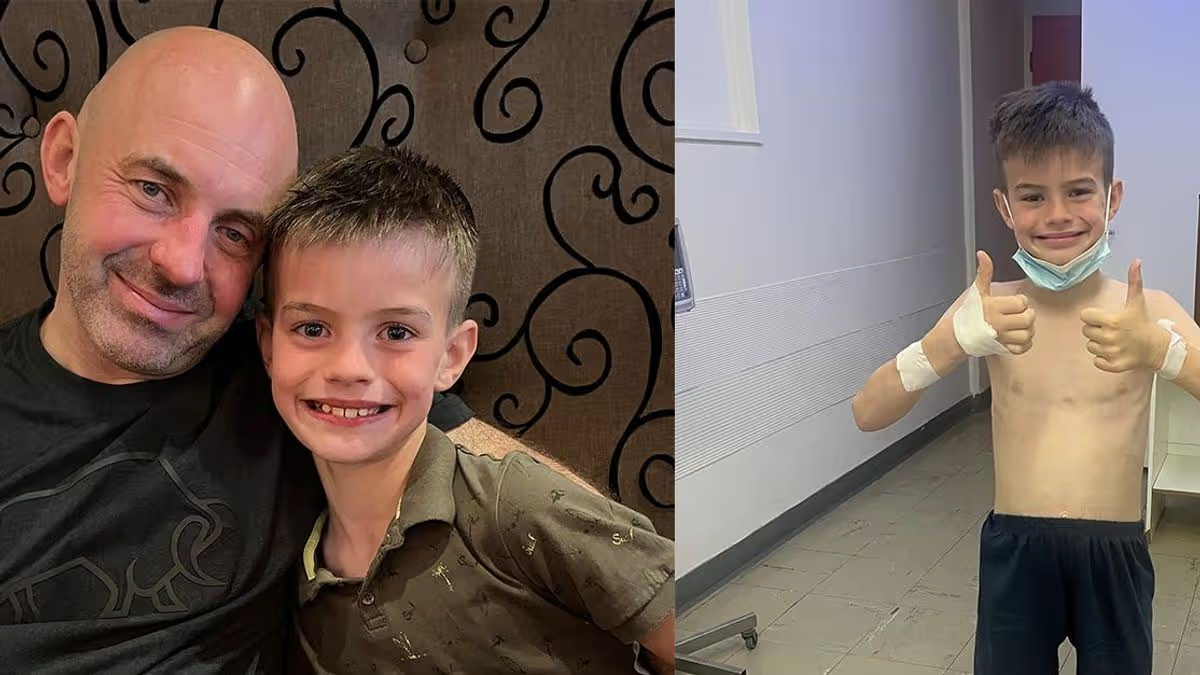
Two years ago, Luc Davies’ family were watching him die. Now an Aberdare family are speaking out about a lifechanging diagnosis.
What was meant to be a relaxing summer escape quickly became something far more serious for one Aberdare family. In a matter of days, a holiday filled with anticipation gave way to a race against time after 10-year-old Luc became critically ill far from home.
At first, nothing seemed out of the ordinary. Like many children at the end of a long school year, Luc Davies appeared tired. He had lost some weight, but it was easy to put that down to an expected growth spurt. The warmer weather explained his constant thirst, and the extra trips to the toilet barely raised concern.
Looking back now, the signs were all there. But at the time, they were easy to miss. “We should have seen the warnings. Luc was almost textbook as his ability to make insulin began to fade,” his family said. “But we had no idea about diabetes and missed every sign.” Always keep on top of the latest Welsh news with our newsletter
Two years ago, the family headed off on their family holiday to Koz, but within hours of stepping off the plane Luc was sick and off his food. Despite a visit to the pharmacy, they couldn’t seem to get him feeling well.
However it was a couple of evenings into the holiday, when things took a turn for the worst. According to Luc’s family, he couldn’t focus, struggled to breathe, and started seeing things. “We knew we had to act but it was the middle of the night, in a hotel, in a strange place,” they said.
He was carried to reception where a kind taxi driver agreed to take the young boy to a hospital. Those moments proved to be critical, as Luc’s father recalled sitting in the vehicle: “I held him in my arms, watching him die.”
The situation quickly escalated, and it became clear that Luc’s condition was far more serious than anyone had imagined. “The air force was called, and he was flown on a military aircraft to Crete because his blood glucose levels were off the scale,” his family said.
“We were told they didn’t think he would survive the journey to Athens. He was in DKA, and it was the first time our family had ever heard the term diabetic.
“We were separated as he was taken alone to an ICU unit. It was a fight, but over the next 24 hours they managed to stabilise his blood glucose levels and, two days later, I was finally allowed to see him. Nearly two weeks later, he was well enough to leave hospital and fly home.”
Reflecting on those early warning signs, his family now recognises how easily they were overlooked. “If only we had known the signs,” they said.
“He was tired… but it was the end of a busy summer term and we thought he was just exhausted from all his end-of-term activities. He was thin… but he was due a growth spurt and being with him every day meant we didn’t notice as the weight dropped off. He was thirsty… but it was a hot summer and drinking a lot was not unusual. He went to the toilet a lot. He even went three times during a cinema trip… but that was because he was drinking a lot.”
Two years on, life looks very different – but also, in many ways, reassuringly normal. Luc is now managing Type 1 diabetes and getting on with being a young teenager.
“We are now two years in and he is living his best Type 1 diabetes life, busy in Year 7 and enjoying playing football and learning karate. We were a slower taxi ride away from losing him and we completely missed the signs his body was giving. It was a terrible time, but could have been avoided. We are so fortunate and are forever grateful for those who saved his life and care for him now.”
For healthcare professionals, stories like Luc’s are a stark reminder of how quickly Type 1 diabetes can develop – and how important it is that more people are aware of the warning signs.
Aimee Grimwood, Lead Paediatric Diabetes Nurse Specialist, shared: “When I read stories like Luc’s, my heart goes out to his whole family. They did what they could once they knew something was seriously wrong – but like so many parents, they simply had no reason to connect what they were seeing to diabetes.
“We want to keep sharing this message to help every parent, guardian, family member, friend and teacher/coach recognise the signs and symptoms of Type 1 diabetes.
“Type 1 diabetes can develop very quickly, and a child can go from seeming under the weather to being critically unwell in a matter of hours.
“If your child is unusually tired, losing weight, drinking more than normal, going to the toilet frequently or having fuller nappies, please don’t wait and see – speak to your GP or call NHS 111 Wales.”
“No family should have to go through what Luc and his family experienced, and early diagnosis really does make all the difference.”















![*SOLO* GTA ONLINE CAR DUPE MONEY GLITCH! [XBOX/PS/PC]](https://wordupnews.com/wp-content/uploads/2026/04/1775646733_hqdefault-80x80.jpg)




































You must be logged in to post a comment Login