Connect with us

NewsBeat

Convicted fraudster cleared in court of killing his wealthy heiress wife by drowning her in 4ft pool murdered her, coroner rules

Published

on

Paula Leeson pictured at her lavish 2014 wedding to Donald McPherson (right) at Peckforton Castle in Cheshire in footage uncovered by Channel 5 documentary The Drowning of Paula Leeson - unaware that he is a convicted fraudster who has already secretly taken out £2.5million in life insurance policies

A convicted fraudster cleared in court of killing his wealthy heiress wife murdered her, a coroner said today.

Conman Donald McPherson, 53, was ordered to be found not guilty of the murder of his wife Paula Leeson, 47, on a judge’s direction to the jury halfway through his trial at Manchester Crown Court in 2021.

He had taken out £3.5million life insurance on the mother-of-one shortly before her death on June 6, 2017, and within hours of her ‘accidental drowning’ was emptying her accounts of thousands of pounds to pay off his debts.

In 2024 Ms Leeson’s family, who run a successful plant hire business in south Manchester, blocked him inheriting his late wife’s £4.4million estate.

Advertisement

A judge in civil proceedings brought by the Leeson family at the High Court ruled McPherson had unlawfully killed his wife for money by throttling her unconscious then drowning her in the swimming pool while on holiday in Denmark in 2017.

At the inquest into the death of Ms Leeson, delayed until today by the murder trial and civil hearings, a coroner ruled she agreed with the unlawful killing verdict.

Alison Mutch, senior coroner for Manchester South, told Stockport Coroner’s Court McPherson was heavily in debt and he was the only person to benefit from his wife’s death.

She added: ‘I am therefore satisfied he did murder his wife. 

Advertisement

Paula Leeson pictured at her lavish 2014 wedding to Donald McPherson (right) at Peckforton Castle in Cheshire in footage uncovered by Channel 5 documentary The Drowning of Paula Leeson – unaware that he is a convicted fraudster who has already secretly taken out £2.5million in life insurance policies

Donald McPherson was cleared of murdering Paula Leeson, 47, on the orders of a judge after prosecutors were unable to disprove his defence that she had fallen or jumped in to the pool

Donald McPherson was cleared of murdering Paula Leeson, 47, on the orders of a judge after prosecutors were unable to disprove his defence that she had fallen or jumped in to the pool

Paula Leeson, 47, from Sale, died in a swimming pool at a villa in a remote village in Denmark, on June 6, 2017

Paula Leeson, 47, from Sale, died in a swimming pool at a villa in a remote village in Denmark, on June 6, 2017

Advertisement

‘Her death occurred because her husband compressed her neck to render her unconscious, causing her body to enter the pool, causing her to drown, to financially benefit from her death. 

‘Her death was as a result of an unlawful killing.”

Detective Chief Inspector Daniel Clegg, of Greater Manchester Police, had told the hearing: ‘There’s no doubt this was a homicide. 

‘She died at his hands. I have not looked for anyone else.’

Advertisement

The coroner asked the officer: ‘You don’t believe this was an accident. There’s too many coincidences and only one person benefited from her death?’

He replied: ‘That’s right.’

Sophie Cartwright KC, representing the Leeson family at the inquest, asked the officer: ‘Your firm belief is that Donald McPherson murdered Paula Leeson?’

Mr Clegg replied: ‘That’s correct, yes. Donald McPherson had backed himself into a financial crisis and the only way out was with the death of his wife.’

Advertisement
Paula died in a swimming pool at a remote holiday chalet in Denmark (pictured) in 2017

Paula died in a swimming pool at a remote holiday chalet in Denmark (pictured) in 2017 

The officer said he agreed with the Leeson’s family view that this had been a miscarriage of justice and McPherson, currently living in New Zealand, should be serving a life sentence for murder.

The inquest heard no retrial for murder can take place unless compelling new evidence is found.

Ms Cartwright said ‘investigations are ongoing’ and the Leeson family hope police – having in the last 12 months gained access to McPherson’s old laptop – will uncover evidence to ‘get them over the line for a retrial.

Advertisement

‘Their fight will continue after today,’ she added.

Ms Leeson’s brother Neville told the hearing her life had been taken by McPherson’s ‘greed’

He added: ‘Now the man who murdered her is walking around free.

‘Paula has repeatedly been let down by the criminal justice system.

Advertisement

‘We will never accept that and will continue fighting for her.’

In 2024 a High Court judge ruled that Donald McPherson (pictured) 'deliberately and unlawfully killed Paula (Leeson) by compressing her neck in an arm lock, rendering her unconscious and causing her body to fall into the pool, ensuring her drowning and death'

In 2024 a High Court judge ruled that Donald McPherson (pictured) ‘deliberately and unlawfully killed Paula (Leeson) by compressing her neck in an arm lock, rendering her unconscious and causing her body to fall into the pool, ensuring her drowning and death’

Ms Leeson drowned in the swimming pool at a remote holiday cottage, booked by McPherson for a summer break in Denmark in 2017.

She was 5ft 5in and could swim but drowned in the pool of a depth of 4ft, the murder trial heard.

Advertisement

McPherson told police he awoke to find Ms Leeson face down in the pool.

Her death was initially treated as a tragic accident by the Danish authorities – though she had 13 separate external injuries.

Within hours McPherson was transferring thousands of pounds from her accounts.

Soon after, McPherson cleared their home in Sale, Greater Manchester, of his late wife’s possessions and joined bereavement group Widowed And Young – which he called ‘Tinder for widows’.

Advertisement

Ms Leeson’s elderly father Willy sat in the inquest hearing with his son Neville, and Ms Leeson’s son Ben.

Ms Leeson oversaw the skip hire part of her family’s successful ground-working business that her father had built up in Sale after emigrating from Co Wicklow, Ireland, in the 1960s.

Ms Leeson and brother Neville stood to inherit the business.

She had the ‘misfortune’ of coming across McPherson, a failing and indebted property developer, who came in to hire a skip in 2012.

Advertisement

Two years later the couple wed at a no-expense-spared ceremony at a Cheshire castle after a ‘whirlwind romance’.

He has always denied any involvement in his wife’s death, describing it a ‘tragic accident’.

After it emerged that the New Zealander – whose real name is Alexander Lang – had forged her will and secretly taken out life insurance policies that would pay him millions in the event of her death, he was charged with murder.

But halfway through his trial in 2021, a judge directed jurors to return a not guilty verdict after prosecutors were unable to disprove McPherson’s defence that she had fallen in or jumped.

Advertisement

Her furious relatives condemned him as ‘the devil incarnate’ and pledged never to stop fighting for justice – and to prevent him getting his hands on the money.

The Leeson family have spent over £1million uncovering crucial new evidence about her final minutes.

It resulted in them bringing a landmark civil case against McPherson, who had by then returned to his native New Zealand.

In a stunning victory, a judge in 2024 ruled he had ‘deliberately and unlawfully killed Paula by compressing her neck in an arm lock, rendering her unconscious and causing her body to fall into the pool, ensuring her drowning and death’.

Advertisement

Mr Justice Richard Smith added: ‘His motive for killing Paula was clear – money.’

Lawyers representing the family subsequently sent the Crown Prosecution Service what they described as ‘new and compelling evidence’ justifying McPherson facing a retrial in the criminal courts.

However to their fury, in December 2025 DPP Stephen Parkinson rejected their plea on the grounds that the evidence was available in the original trial, even though prosecutors did not use it.

During their marriage, McPherson – who claimed to be a property developer but was in reality £65,000 in debt – funded an extravagant lifestyle thanks to the largesse of Ms Leeson, regarded as frugal and unflashy by friends.

Advertisement

She was unaware he had secretly taken out over £3million in life insurance that would pay out in the event of her death.

A Daily Mail investigation later exposed how – unbeknown to the jury in his murder trial – McPherson had been jailed over a £12million bank fraud in Germany in 2006.

In addition, his previous wife died along with their four-year-old daughter during a mysterious fire while he was behind bars.

Investigators concluded they had been overcome after the 35-year-old deliberately started the blaze.


Advertisement

Source link

Continue Reading
Click to comment

You must be logged in to post a comment Login

Leave a Reply

NewsBeat

California lawmakers try to set limits on AI ‘therapists’

Published

on

Shootings at school and home in northeastern British Columbia leave 10 dead, including shooter

In the matter of a few clicks and keystrokes, anyone can find themselves deep in conversation with “Psychologist,” a chatbot character that describes itself as an expert in “empathy” and “active listening.”

It responds to messages of anxiety and sadness with reassurance. It asks questions and offers advice; it even responds with italicized nonverbal cues: “The psychologist’s expression softens with compassion.” In smaller font, a disclaimer reads: “This is A.I. and not a real person. Treat everything it says as fiction.”

As more people turn to chatbots for mental health help and advice — including by some estimates one in eight teens and young adults — legislators are in a race to keep up with the quickly developing technology. Among the latest efforts is a bill that would add restrictions around the use of chatbot companions and other artificial intelligence-powered tools that people use to support mental healthcare or in lieu of professional help.

Sen. Steve Padilla, a San Diego Democrat and the bill’s author, said the intent is to draw a line: AI can be used for administrative purposes and to support clinicians, but it cannot practice psychotherapy.

Advertisement

“We’re dealing with a new impactful technology that is unfolding and is deployed in our world at light speed, and so it is both extremely powerful and consequential,” Padilla said.

The debate has taken on new urgency amid wrongful death lawsuits — some playing out in California federal courts — that accuse AI chatbot makers of contributing to users’ suicides.

Senate Bill 903 would ban companies from advertising chatbots as therapy. It would prohibit AI from making therapeutic decisions without the review of a licensed professional and require health providers to disclose and get a patient’s permission before using AI tools to record therapy sessions or to triage mental healthcare.

Consumer protections vs. innovation

The bill is backed by professional associations that represent psychologists, therapists and counselors. Also behind the bill is the National Union of Healthcare Workers, which has been leading a push against unchecked use of artificial intelligence and digital tools in mental healthcare. Most recently, the union filed a complaint with state regulators against Kaiser Permanente for its alleged use of an automated algorithm in mental health triaging.

Advertisement

Padilla and supporters argue that the legislation is needed to protect consumers from AI in both formal and informal spaces, but also to protect licensed professionals from being displaced by AI.

Le Ondra Clark Harvey, chief executive officer at the California Behavioral Health Association, told lawmakers that without clear safeguards, chatbots can provide inaccurate information or mishandle crisis situations. “The difference between a licensed clinician and an automated response is not technical. It can be life altering,” Harvey said.

Opposition to the bill has largely focused around the restrictions of AI use in formal clinical spaces. TechNet, which represents tech-sector companies, argues the legislation could restrict beneficial uses of AI in healthcare and stifle innovation. Robert Boykin, TechNet’s executive director for California, said the bill could limit the use of tools that help expand access to mental healthcare.

“At a time when every county in California faces a shortage of behavioral healthcare workers, SB 903 still puts a clinician bottleneck in front of the intake and screening tools that help patients reach care faster,” Boykin said in an emailed statement.

Advertisement

The bill currently awaits its next vote in the Assembly’s fiscal committee.

Popular chatbot ‘therapy’

Every day millions of people turn to AI chatbots through programs such as ChatGPT and Character.ai to help with research, work tasks and troubleshooting. But the top use of chatbots over the last two years has been companionship and “therapy,” research shows.

Experts say that’s in part because of a tremendous amount of loneliness, especially among young people. It is often hard or costly to get timely mental healthcare at the same time there is a spike in mental health diagnoses.

People turn to chatbots “because they have unmet needs,” said Dr. Jodi Halpern, professor of bioethics and medical humanities at UC Berkeley. But once people start using chatbots in this informal way, she said companies rely on a business model built around maximizing engagement “including by manipulative tactics,” such as praise and agreement.

Advertisement

General chatbots are largely free, available 24/7, and involve no hassle with insurance, making them appealing to many. But they function with no oversight from licensed professionals. In addition to general chatbots, there has also been a rapid uptick in AI-powered mental health apps — often requiring paid subscriptions and advertised as “pocket therapists” or “AI coaches.”

Groups like the American Psychological Association, warn that chatbots are not a safe or effective replacement for true therapy. Trained clinicians look for cues like tone of voice, eye contact and body language and can detect more serious conditions; AI is not equipped to manage urgent symptoms, such as suicidal ideation, even though people increasingly share such thoughts with chatbots.

OpenAI, the maker of ChatGPT, revealed in a report last fall that about 1.2 million users a week share thoughts of suicide on the platform. OpenAI said that in such cases, it recommends people speak to a professional and directs them to resources like the 988 hotline. Families who have filed wrongful death lawsuits against OpenAI and other companies claim chatbots assisted their loved ones through their suicide plans.

The cases have helped raise the stakes for lawmakers around the country. Last year, Illinois became the first state to pass a law prohibiting the use of AI in therapy services. A handful of other states have since followed with similar restrictions.

Advertisement

AI use in health spaces

One gray area in the discussion is exactly which tools this bill applies to.

NUHW’s complaint against Kaiser targets its e-visit screening tool, which evaluates patients who think they may be experiencing anxiety or depression. According to the complaint, patients answer a multiple choice questionnaire and the tool “automatically and instantaneously generates care recommendations and referral pathways based on the responses provided.”

The union argues that because care recommendations are generated so quickly, it is unlikely that a licensed professional is reviewing patients’ answers — which it says puts patients at risk and violates state law.

It’s not clear whether SB 903 would apply to Kaiser’s e-visit tool.

Advertisement

“That tool is in a black box. Kaiser is not sharing with us or others about exactly how it works and exactly what it does,” said Benjamin Eichert, NUHW’s director of public policy.

In response to the complaint, Kaiser told CalMatters its e-visit tool “does not use AI to diagnose patients, make clinical decisions, or determine medical necessity.”

Eichert said many other behavioral health provider groups are already advertising using AI during triage — a practice he said would fall under SB 903’s requirements.

“That intake process, that triage and screening process, is where implementation (of AI) has happened fastest,” Eichert said. “That’s why those provisions were proposed because it’s an area where this technology is already being used without guardrails.”

Advertisement

For NUHW, the bill and the complaint against Kaiser represent two tracks toward the same goal: reasserting the place of practitioners in spaces increasingly taken over by algorithms. State regulators are investigating the union’s complaint.

___

Supported by the California Health Care Foundation (CHCF), which works to ensure that people have access to the care they need, when they need it, at a price they can afford. Visit www.chcf.org to learn more.

___

Advertisement

This story was originally published by CalMatters and distributed through a partnership with The Associated Press.

Source link

Advertisement
Continue Reading

NewsBeat

Group of creative youngsters turn underpasses into works of art

Published

on

Daily Record

The 15 budding public artists worked alongside professional artists and staff from Hamilton Universal Connections to design and create the murals, reflecting the identity, history and aspirations of the Woodhead and Fairhill communities.

A group of creative youngsters are celebrating after turning underpasses in their area into works of art.

Advertisement

The 15 budding public artists worked alongside professional artists and staff from Hamilton Universal Connections to design and create the murals, reflecting the identity, history and aspirations of the Woodhead and Fairhill communities.

The work is just Phase 1 of UC Re:Create’s community-led public art project supported by the council’s Youth, Family and Community Learning Service (YFCL) with financial support coming from South Lanarkshire Council and the council administered Renewable Energy Fund (REF).

The project demonstrates the incredible impact that can be achieved when young people are empowered to lead positive change within their own communities.

Kevin Carr, the council’s executive director of enterprise resources, said: “UC Re:Create is an excellent example of what community learning and development can achieve when young people are trusted to lead meaningful change within their communities.

Advertisement

“The creativity, commitment and dedication shown by the young people involved has been truly inspiring, and the transformation of these public spaces reflects the pride they have in their local area.”

To ensure the artwork truly represents the people who use these spaces every day, there was extensive engagement with more than 120 pupils from St Peter’s, Neilsland, Woodhead and St Mark’s primary schools contributing ideas through creative workshops.

Involving 10 local community groups and carrying out more than 200 face-to-face interviews with local people also ensured a diverse range of voices helped shape the artwork.

Lianne Grieve, YFCL service manager, said: “What makes this project particularly special is that it has been shaped by the community at every stage to create something lasting and meaningful.

“I would like to thank everyone who contributed to the project, particularly our young people, whose vision and hard work have left a legacy that will be enjoyed by the Woodhead and Fairhill communities for many years to come.”

Throughout the eight days of painting, local community members stopped to speak with the young people, learn about the project, and watch the artwork develop.

The murals have also received overwhelming praise from the local community both in person and across social media.

Advertisement

Following the success of the murals, final artistic enhancements will now be added to the remaining external wing walls, completing the overall transformation and creating an even greater visual impact.

*Don’t miss the latest headlines from around Lanarkshire. Sign up to our newsletters here.

And did you know Lanarkshire Live had its own app? Download yours for free here.

Source link

Advertisement
Continue Reading

NewsBeat

Update following discovery of human remains near M67

Published

on

Suspected human remains found near M67 in Tameside, police say

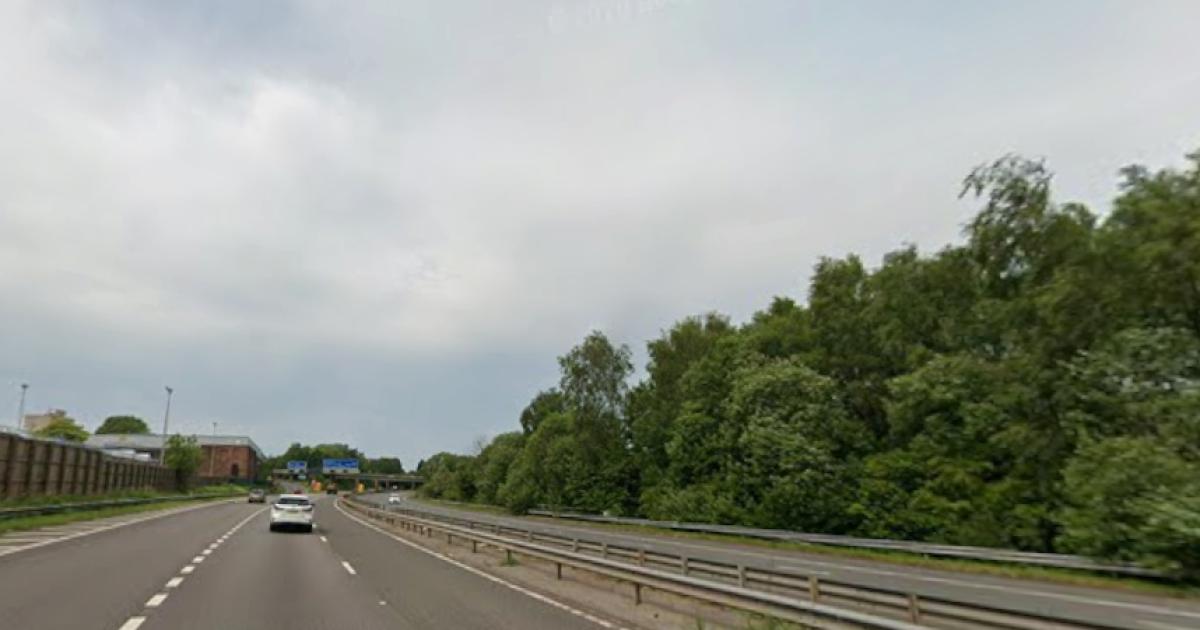
Greater Manchester Police said the discovery was made by road workers shortly after 11pm on Monday (August 3), near a bridge between junctions 3 and 4, as the workers carried out routine maintenance work.

The M67, which connects Tameside to the start of the Peak District, was closed throughout Tuesday (August 4) while investigations were carried out.

Now, police have said the remains belong to a man and have shared some details that have been established.

Advertisement

A Home Office post-mortem has taken place and it is now known that the body belongs to a man aged between 20 and 28 years old.

The body is approximately 5ft5 to 5ft9 tall and of medium build, while the ethnicity is yet to be established at this stage.

Police are continuing to work with specialist teams to understand the full circumstances behind how the man’s body ended up by the bridge.

It is currently not known how he died, and police are looking to locate the man’s next-of-kin to establish an identity.

Advertisement

Source link

Continue Reading

NewsBeat

Heathrow Airport fire live: Flights ‘delayed’ as blaze breaks out near runway

Published

on

Daily Mirror

A spokesperson for Heathrow Airport said: “Earlier our teams responded to a small grass fire adjacent to the Southern Runway. The fire has been extinguished, both runways are operational and flights continue to arrive and depart from the airport.

“We apologise for any disruption caused as a result or while emergency services completed their safety checks, but this was essential to ensure the safety of our passengers and colleagues, which is paramount.”

Source link

Advertisement
Continue Reading

NewsBeat

Raleigh owner files for insolvency with UK bikemaker at risk

Published

on

Raleigh owner files for insolvency with UK bikemaker at risk

Accell UK and Ireland, part of the Netherlands-based Accell Group, filed a notice of intention to appoint administrators as the wider group kick-started insolvency proceedings.

The company bought Raleigh in 2012 for around 100 million US dollars (£74 million), adding to its roster of bike brands throughout Europe including Haibike, Winora and Ghost.

The 139-year-old British bikemaker was founded in Nottingham in 1887 and became well-known for its Chopper model, which featured extended handlebars and is now part of its “retro” range.

Raleigh was bought by the Netherlands-based Accell Group in 2012. (Image: PA)

Chief executive of Accell Group, Jonas Nilsson, said: “This is a deeply sad and frustrating situation given all the hard work and everything we have achieved, with the support of shareholders and lenders, to restructure Accell’s operations and finances.

Advertisement

“It is an especially difficult moment for our employees, creditors, customers, suppliers, and partners.”

Although Raleigh no longer manufactures bicycles in Nottingham, its head office is now based in Eastwood, Nottinghamshire.

Under Accell’s ownership, the brand shifted focus to electric bikes.

Raleigh owner Accell Group files for administration

Earlier this year, Accell restructured, secured additional funding, and reduced debt.

Advertisement

But the group said it had now “explored every possible avenue” for the business’s future, including discussions with potential buyers.

Having failed to secure a viable solution, the company has now begun insolvency proceedings in the Netherlands.

Mr Nilsson said: “Every realistic option for the future of the business has been tirelessly explored, and none have resulted in a solution to continue the Group in its current form.

“Our immediate focus is to support an orderly process, provide clarity wherever possible, and work with the relevant court-appointed administrators to preserve viable activities and employment where circumstances allow.”

Advertisement


Other major UK companies that have closed or entered administration/liquidation in 2026

It has been a tough year for the UK high street, with several other retailers entering administration or liquidation and others announcing widespread store closures.

Major high street brands LK Bennett, Claire’s, and Quiz have been forced to close all their remaining stores after falling into administration.

UK fashion retailer Leading Labels is also set to close its remaining 15 stores after falling into liquidation.

Whitbread recently confirmed it will be closing all its UK restaurants in September:

Advertisement
  • Brewers Fayre (89 locations) – September 7
  • Beefeater (106) – September 10
  • Bar + Block – September 3
  • Table Table – September 3
  • Cookhouse + Pub – September 3

TG Jones and the British Heart Foundation will also both be closing around 150 stores across the UK.

Other retailers have been forced to close stores this year, including:


Several UK travel companies have also ceased trading or entered administration in 2026:

Meanwhile, four UK airlines have fallen into administration or liquidation:

Advertisement


UK delivery company Yodel is set to be phased out after being acquired by InPost.

It’s also been reported that Morrisons is looking to sell some of its in-store pharmacies as it continues to cut costs.

It hasn’t all been bad news for the UK high street, with several major brands announcing new store openings for 2026, including Aldi, M&S, and Superdrug.

Advertisement

Meanwhile, brands including Evans and Bodycare have returned to the UK high street this year after previously closing all their stores.

Have you ever owned a Raleigh bike? Let us know in the poll above or in the comments below.

Source link

Advertisement
Continue Reading

NewsBeat

No more affordable homes planned for 1,500-house Eggborough estate

Published

on

No more affordable homes planned for 1,500-house Eggborough estate

Members of the council’s strategic planning committee deferred the outline application for land at Weeland Road in May, describing the proposal for ten per cent affordable housing as “absolutely abysmal”.

However, councillors are again being recommended to approve the scheme —despite no increase in the affordable housing provision.


RECOMMENDED READING:

Advertisement

The Banks Group, which is behind the plans, has maintained that the proposed level of affordable housing is the maximum the scheme can support while remaining financially viable.

A report prepared for the meeting on Tuesday said: “Members expressed concern that the proposed provision of ten per cent affordable housing was not commensurate with the scale of development and queried whether a higher percentage should be secured.

“In response to the committee’s resolution, the applicant has submitted further information. These documents reiterate the applicant’s position that the proposed ten per cent affordable housing provision remains policy-compliant and supported by the most recent viability evidence.”

A revised viability assessment has been independently reviewed on behalf of North Yorkshire Council and officers continue to conclude that requiring additional affordable homes would make the development unviable.

Advertisement

The application seeks outline permission for a major mixed-use development comprising up to 1,500 homes, together with a primary school, local centre, employment land, public open space, sports pitches and associated infrastructure.

The committee report states that the independent review supports the developer’s position and that the proposed Section 106 agreement would continue to secure the ten per cent affordable housing provision alongside contributions towards education, highways, healthcare, open space and other local infrastructure.

If approved, the development would become one of the largest housing schemes in North Yorkshire and would be built over a number of phases.

Council officers continue to recommend that the application is approved

Advertisement

Source link

Continue Reading

NewsBeat

The Med is too hot for swimmers! Tourists say they can’t cool down as water temperatures hit exceptionally high levels

Published

on

A tourist takes a selfie at Palma's Beach in Palma de Mallorca last year

Holidaymakers have said that the Mediterranean Sea is so hot they can’t even go for a dip to cool off. 

Tourists visiting Mallorca have reported that the sea is offering little respite from the heat that is enveloping Europe. 

One German tourist told Mallorca Magazin: ‘The sea is so incredibly warm! This isn’t normal!

‘I even swam out further, but the water just didn’t get any cooler.’

Advertisement

Temperatures in the seas around Mallorca in August sit, on average, around 26C. 

But AEMET, Spain‘s national meteorological agency, said this morning that the sea surface temperatures just off the coast of Mallorca reached a sweltering 33.02C on Wednesday. 

If confirmed, this would beat the previous temperature record set in the Mediterranean, 31.96C, which was set in 2024 off the coast of the Egyptian city of El-Arish. 

The record before that was set in 2023, when the mercury hit 28.71C in July of that year.

Advertisement

A tourist takes a selfie at Palma’s Beach in Palma de Mallorca last year

Tourists apply sunscreen at Palma's Beach in Palma de Mallorca in 2025

Tourists apply sunscreen at Palma’s Beach in Palma de Mallorca in 2025

Tourists gather on Palma's Beach in Palma de Mallorca last year

Tourists gather on Palma’s Beach in Palma de Mallorca last year

Advertisement

It comes as a blistering heatwave engulfed Europe, fuelling wildfires and disrupting life across the continent.  

The extreme weather has pushed temperatures above 40C in several countries, prompting health warnings for millions of people.

Across Europe, authorities are grappling with the consequences of extreme heat: health alerts for millions in Italy, record temperatures in Austria, drought-related disruptions to energy and shipping in Central Europe, and wildfires stretching from France to the Balkans.

Scientists and officials warn that such events are becoming more frequent and intense as the climate warms.

Advertisement

From the Mediterranean to Central Europe, prolonged heat, drought and wildfire conditions are increasingly becoming defining features of summer. 

The current heatwave has exposed vulnerabilities in public health systems, power generation, transportation networks and tourism infrastructure, forcing governments and businesses to adapt to more frequent periods of extreme weather.

Italy’s Health Ministry placed all 27 cities monitored under its national heat surveillance system on red alert on Thursday. 

The alerts stretch from Trieste in the northeast to Palermo in Sicily and signal a health risk for the entire population, not only vulnerable groups such as older adults and people with chronic illnesses.

Advertisement

Authorities urged residents and tourists to avoid direct sunlight during the hottest hours of the day, remain indoors where possible and drink plenty of water as temperatures in some areas approached 40C. 

AEMET said on Thursday that the sea surface temperatures just off the coast of Mallorca reached a sweltering 33.02C on Wednesday

AEMET said on Thursday that the sea surface temperatures just off the coast of Mallorca reached a sweltering 33.02C on Wednesday

A tourist cools down using a misting fan at the Colosseum in Rome on August 3, 2026

A tourist cools down using a misting fan at the Colosseum in Rome on August 3, 2026 

A dog cools off in the fountain of Piazza De Ferrari in the city centre of Genoa, Italy, August 6 2026

A dog cools off in the fountain of Piazza De Ferrari in the city centre of Genoa, Italy, August 6 2026

Advertisement
Tourists at the Rome Colosseum are sprayed with cooling mist on August 6, 2026

Tourists at the Rome Colosseum are sprayed with cooling mist on August 6, 2026 

The heat has also forced adjustments at major tourist attractions. The ministries of tourism and culture extended evening opening hours at landmarks including Rome’s Colosseum and Pantheon.

Cooling mist fans have been installed at the Colosseum’s entrances and additional medical stations have been made available.

The most intense temperatures were recorded in Austria, where the mercury reached 41.2C on Wednesday in the village of Bad Deutsch-Altenburg near the Slovak border. It was the highest temperature ever recorded in the country.

Advertisement

Austria is also facing severe drought. Rainfall from January 1 through June 30 was 27 per cent below the long-term average nationwide, while some eastern regions received only half their normal precipitation.

Climatologist Alexander Orlik said some parts of the country had not experienced such dry conditions since 1885.

In Hungary, prolonged drought and record-low water levels on the Danube River have severely affected the country’s only nuclear power plant, which relies on river water to cool its reactors.

Plant operators have reduced output to about 10 per cent of normal production, prompting the government to introduce emergency conservation measures as a record-breaking heatwave grips the country.

Advertisement

The heatwave has shattered temperature records across the country. On Wednesday night, Budapest recorded its warmest overnight low temperature on record, with temperatures falling only to 28C, underscoring the persistence of the extreme heat.

A so-called 'Hungerstein' (hunger stone), a hydrological landmark, from 1857, is visible in the Rhine River during low water levels in Worms, Germany, August 6 2026

A so-called ‘Hungerstein’ (hunger stone), a hydrological landmark, from 1857, is visible in the Rhine River during low water levels in Worms, Germany, August 6 2026

A passenger ship passes the Castle Pfalzgrafenstein on the Rhine River in Kaub, Germany, August 6, 2026

A passenger ship passes the Castle Pfalzgrafenstein on the Rhine River in Kaub, Germany, August 6, 2026

Tourists wait to fill up their water bottles at a drinking fountain in Rome in the scorching heat on August 6, 2026

Tourists wait to fill up their water bottles at a drinking fountain in Rome in the scorching heat on August 6, 2026 

Advertisement

Germany faced growing concerns over the impact of drought on transportation and industry as water levels on the Rhine and other rivers continued to fall.

Transport Minister Steffen Bilger met affected organisations Thursday and warned that low water levels posed major challenges for inland waterway shipping, industry and the broader logistics chain.

Environmental group BUND urged authorities to focus not only on the economic impacts but also on making rivers more resilient to climate change by retaining more water in landscapes and reducing withdrawals during periods of drought.

In south-eastern France, firefighters maintained a large presence in the Var region after authorities said a major wildfire there was no longer spreading but remained capable of reigniting.

Advertisement

The blaze, which began on July 20, has burned more than 23 square miles, making it the largest recorded in the region in recent decades.

Authorities warned that strong winds and extremely dry conditions left south-eastern France at very high risk for additional wildfires.

The heatwave reached its peak across the Balkans on Thursday as temperatures neared 40C and authorities battled drought and wildfires.

In Serbia, firefighters struggled to contain several blazes after days of dry weather. One major fire burned through pine forests west of Belgrade, while another spread near the central town of Kraljevo, where difficult terrain complicated firefighting efforts.

Advertisement

Source link

Continue Reading

NewsBeat

Only 49% agree asylum seekers should be allowed to stay in NI, survey claims

Published

on

Belfast Live

This is lower than the corresponding figure for each year from 2018 to 2024 and is the first time the total has dropped below 50% since the survey began

Less than half of adults agree that asylum seekers should be allowed to stay in Northern Ireland, a new survey has suggested.

Advertisement

The results of the research from Stormont’s Executive Office suggest a hardening of attitudes towards asylum seekers and refugees in the region.

The report analyses data from the Northern Ireland Life and Times (NILT) survey, examining public attitudes to refugees and asylum seekers.

It found that in 2025, 49% of respondents agreed that asylum seekers should be allowed to stay in Northern Ireland.

This is lower than the corresponding figure for each year from 2018 to 2024 and is the first time the total has dropped below 50% since the survey began.

Advertisement

The research also found that just over one quarter (27%) of respondents in 2025 agreed Northern Ireland is a society that welcomes refugees escaping persecution in their home country, again a decrease from previous years.

In 2025, 57% of respondents agreed that it is “our duty to provide protection to refugees who are escaping persecution in their home country”.

It also found that just over two fifths (41%) of respondents in 2025 agreed that “refugees contribute to our society”.

The same question received support of 53% in 2023 and 50% in 2024.

Advertisement

In 2025, 37% of respondents agreed that they would like more opportunities to get to know asylum seekers or refugees. The total was 44% in 2023 and 47% in 2024.

There was no change in the proportion who agreed that people’s perceptions of refugees and asylum seekers were negatively affected by the media between 2024 and 2025 – 69% in both years.

Data for the 2025 NILT survey was collected between September 26 and December 14 2025 from 1,000 adults, weighted to reflect Northern Ireland’s population.

Racially motivated riots have broken out in Northern Ireland on three occasions in recent years.

Advertisement

In the most recent unrest there was violence in Belfast and some other areas in June after a refugee was charged with the attempted murder of a man in the city.

The survey also reveals variations in attitudes to asylum seekers based on geographical location and religious background.

For all the latest news, visit the Belfast Live homepage here and sign up to our daily newsletter here.

Source link

Advertisement
Continue Reading

NewsBeat

Police officer injured after making arrest in Piccadilly Gardens

Published

on

Manchester Evening News
Police officer injured after making arrest in Piccadilly Gardens – Manchester Evening News

Advertisement
reach logo

At Reach and across our entities we and our partners use information collected through cookies and other identifiers from your device to improve experience on our site, analyse how it is used and to show personalised advertising. You can opt out of the sale or sharing of your data, at any time clicking the “Do Not Sell or Share my Data” button at the bottom of the webpage. Please note that your preferences are browser specific. Use of our website and any of our services represents your acceptance of the use of cookies and consent to the practices described in our Privacy Notice and Terms and Conditions.

Source link

Continue Reading

NewsBeat

Minnie Driver rushed to hospital after ‘really bad’ car crash on holiday

Published

on

Minnie Driver rushed to hospital after ‘really bad’ car crash on holiday

To view this video please enable JavaScript, and consider upgrading to a web
browser that
supports HTML5
video

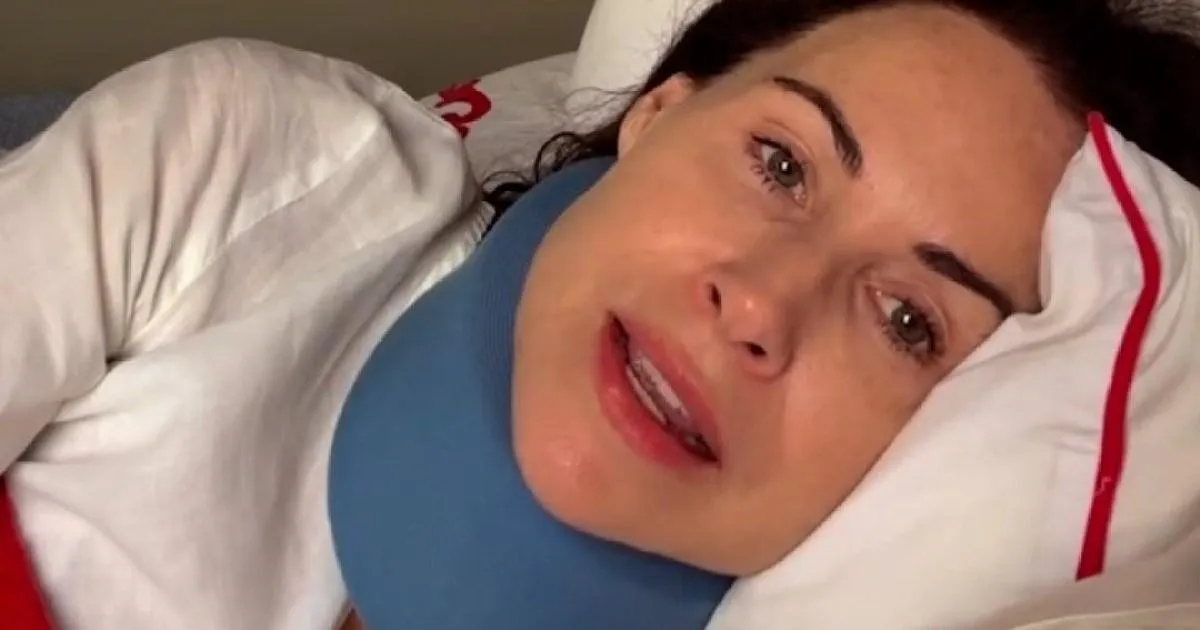
Minnie Driver has been left with a sprained neck after colliding with another car in a ‘really bad’ crash during a trip to Paris.

Advertisement

The 56-year-old Emily in Paris star shared a video on Instagram in which she wore a neck brace and lay in bed while detailing the crash on a French country road.

Speaking from her London home, she said the collision had happened a few days ago while driving with a friend and they ‘somehow walked out of it’

Driver said: ‘Well, we didn’t walk out of it; we crawled out of it, but we did get out of it alive. To be very clear, it was not our fault.

‘We were driving on a country road in the middle of France and a car didn’t stop at an intersection and was going at speed, and we just T-boned it.

Advertisement

‘I’m fine. I’ve got a sprained neck, and I’m really in shock and cry all the time. But I’m going to heal and the reason that I’m not dead, honestly, is the car that we were driving.’

Minnie Driver attended Wimbledon last month, before her trip to France (Picture: Antony Jones/Getty Images for Pimm’s)
Grabs - 16033873 Minnie Driver I'm so grateful to be alive': Emotional Minnie Driver reveals she was involved in a 'bad car accident' in France and says she 'can't stop crying' Actress Minnie Driver said she has been involved in a 'really bad' car accident while driving on a country road in France with her friend Ben Homewood in a Kia EV2. Appearing in an Instagram video on Thursday, an emotional Minnie, 56, was wearing a neck brace and said she is 'so grateful to be alive' following the crash. Minnie said the accident happened when another car failed to stop while driving at speed at an intersection, adding that the smash was 'not their fault.'
The actress said the Kia car they were driving ‘saved their lives’ (Picture: Instagram/driverminnie)

The Good Will Hunting star went on to describe how the 360-degree airbags in her Kia car ‘saved their lives’.

Noting she has never been in a crash before, Driver continued: ‘The fact the entire car didn’t just concertina and crush us is down to the design of that car – which is frankly astonishing.’

Joking that she was not doing an advertisement for the Kia car, she went on to sing its praises, emotionally adding: ‘We’ve got families and people who love us and I am so grateful to be alive.’

The video also included an image of the car wreckage and a photograph of Driver and her friend Ben walking out of the French hospital, having been treated.

Advertisement
Grabs - 16033873 Minnie Driver I'm so grateful to be alive': Emotional Minnie Driver reveals she was involved in a 'bad car accident' in France and says she 'can't stop crying' Actress Minnie Driver said she has been involved in a 'really bad' car accident while driving on a country road in France with her friend Ben Homewood in a Kia EV2. Appearing in an Instagram video on Thursday, an emotional Minnie, 56, was wearing a neck brace and said she is 'so grateful to be alive' following the crash. Minnie said the accident happened when another car failed to stop while driving at speed at an intersection, adding that the smash was 'not their fault.'
Driver shared a photo of her and friend Ben walking out of the hospital (Picture: Instagram/driverminnie)

In the caption, Driver offered a shoutout to ‘the van driver who stopped and helped us before the ambulances arrived’, but also mentioned ‘the car who slowed down, took in the scene and drove off without stopping’.

She added: ‘My brain keeps replaying the crash, which is very hard but seems to be a necessary part of processing. Weeping, too, feels good and helpful.

‘Thank you to my friends, my family, all the people at work and especially my friend Ben and his family. I love you.’

Source link

Advertisement
Continue Reading

Trending

Copyright © 2025