Connect with us
DAPA Banner
DAPA Coin
DAPA
COIN PAYMENT ASSET
PRIVACY · BLOCKDAG · HOMOMORPHIC ENCRYPTION · RUST
ElGamal Encrypted MINE DAPA
🚫 GENESIS SOLD OUT
DAPAPAY COMING

NewsBeat

Corporate courage: how cross-sector talent is powering renewables innovation

Published

on

Corporate courage: how cross-sector talent is powering renewables innovation

Clean energy is being reshaped by cross-industry thinkers, from aerospace engineers to banking boffins, and beyond

Supported by:

When Lynne McIntosh-Grieve was a young engineer working for Rolls-Royce, she made a bit of a name for herself “as something of a ‘fixer’”: someone who could go into companies in the supply chain and “problem-solve – look at their processes and understand what was going wrong, or what might work better”. 

Advertisement

Among other places, this took her to India: a “fantastic experience”, but quite an eye-opener, for both her and the plant she was visiting. “I was really young, you know, and I looked quite different to the people that were typically walking round the factory. I’m a six foot tall blonde Scots lassie, so that was interesting for the staff there!” 

Confounding expectations, in other words, which has been something of a theme: not just for McIntosh-Grieve, but for the way in which renewable energy has flourished thanks to workers transitioning into the sector from a range of other industries. It’s a much-needed transition, too. According to the UK’s National Grid, by 2050 the workforce employed in delivering net zero will need to number around 400,000, of which 260,000 will be new roles.

So there are some serious skill shortages to be overcome. That sounds like a stretch, but people like McIntosh-Grieve prove it’s far from impossible. 

Advertisement

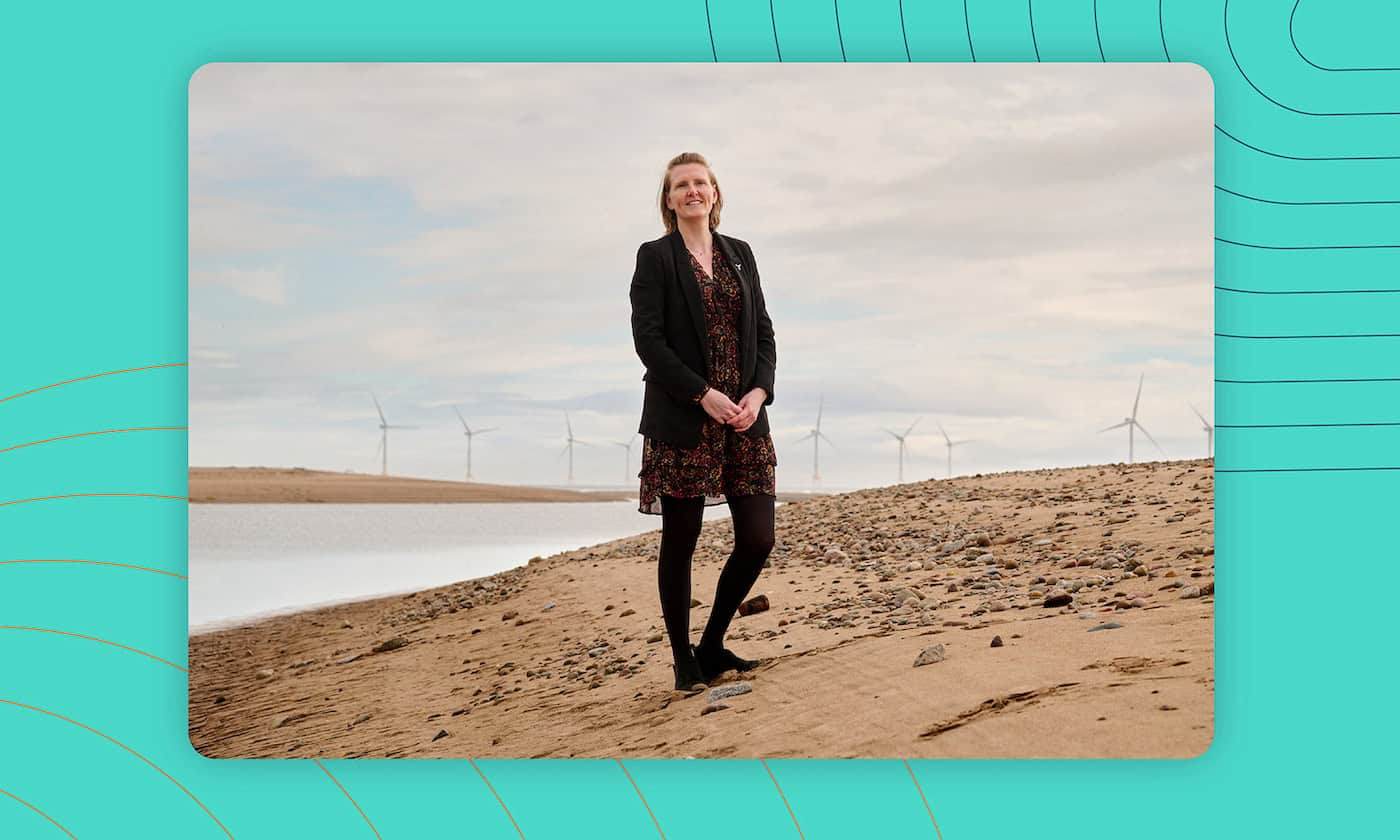
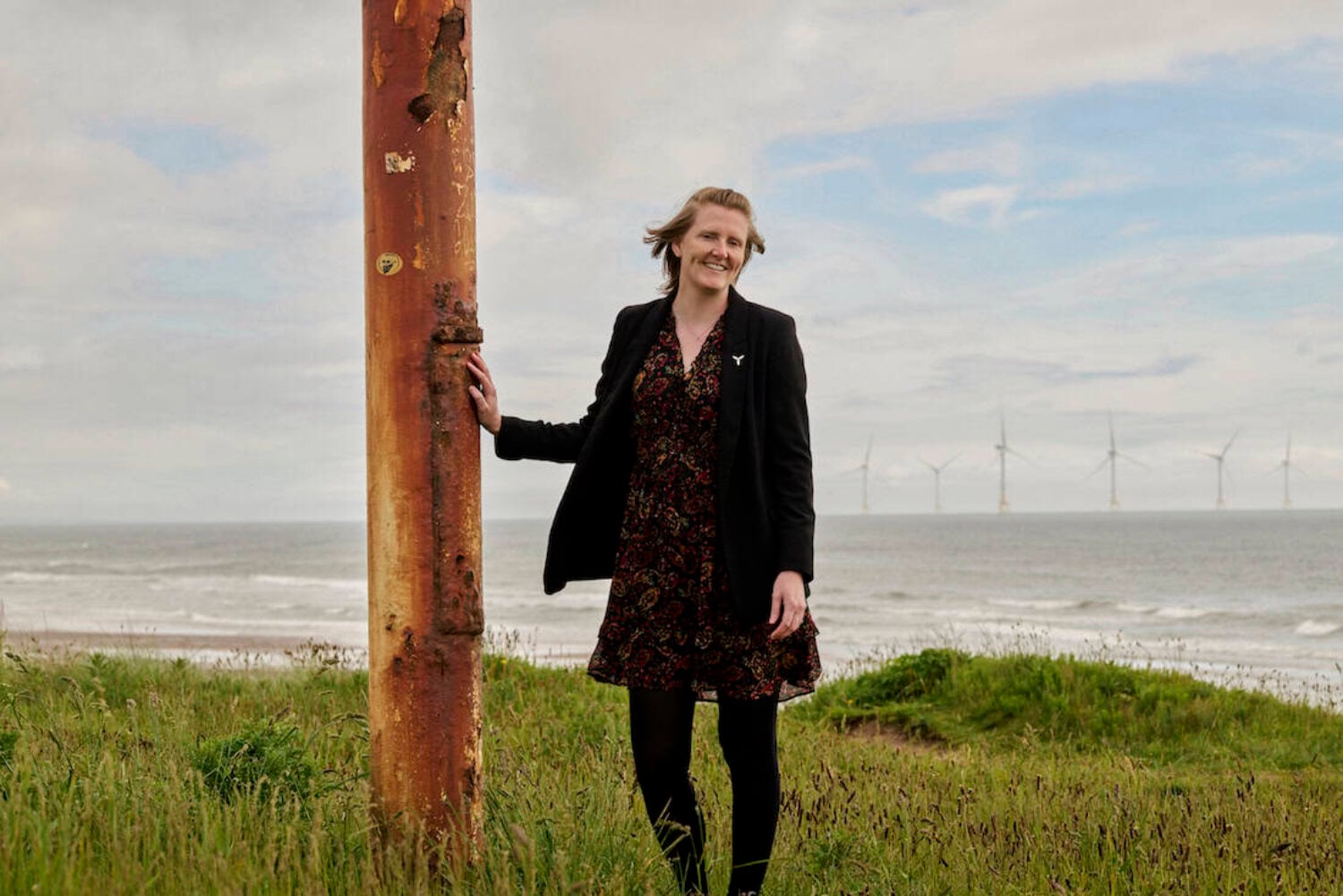
Lynne McIntosh-Grieve, head of programme delivery at the Offshore Wind Growth Partnership, on the Aberdeenshire coast

She was born and grew up in Clydebank, outside Glasgow: once a thriving industrial town, home to the “good old Singer sewing machines and the John Brown shipyards”. But by the time she came on the scene in the late 80s, it was deindustrialising fast, and job prospects for its young people seemed slim at best. 

Nonetheless, buoyed by “fantastic teachers, who really championed their pupils to aim high”, she won a place at the University of Strathclyde for a master’s in mechanical engineering. Academic life, though, wasn’t entirely her cup of tea. “I liked things that were hands-on. I liked the physical aspect of making things work, putting them together, taking them apart and putting them together again, and the university environment [doesn’t always provide] that type of experience. It was quite difficult to see what you might end up doing in real life.” 

Advertisement

So when one day in the common room, she saw a flyer advertising a summer placement at RollsRoyce, she jumped at the chance. Invited to an assessment at the company’s Derby engineering base, she looked around at the other candidates and felt “really nervous. There were a lot from more ‘esteemed’ backgrounds, from the Oxfords and Cambridges of this world. I was one of the only females there, I spoke and sounded different to everyone else. I stood out like a sore thumb, basically.” 

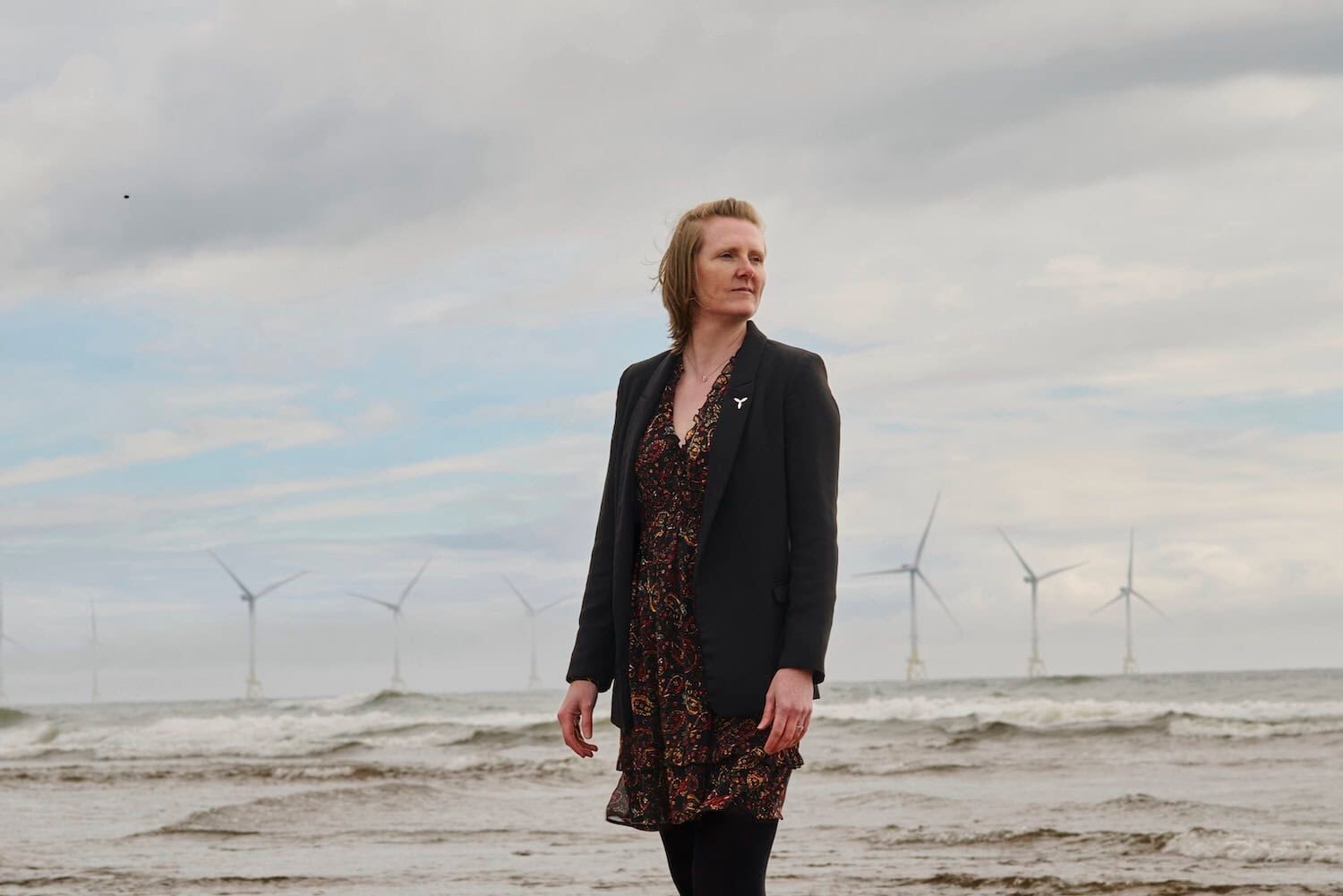
After starting out in aerospace engineering, McIntosh-Grieve now helps UK businesses seize opportunities in offshore wind

Advertisement

But McIntosh-Grieve’s obvious practical skills, and her enthusiasm for her work – which positively tumbles out of her as she talks – secured her a placement. After graduating with a first-class degree she joined Rolls-Royce in 2010 as a graduate trainee. Working on new ways of making compressor airfoils (key components of a gas turbine engine) she won rapid promotion to advanced manufacturing engineer, and soon embraced her ‘fixer’ role. 

A round of redundancies unsettled the working atmosphere, though, and while her own job was never at risk, by 2015 she’d decided to move on. Her next berth was at the University of Strathclyde’s Advanced Forming Research Centre, one of the High Value Manufacturing Catapult. (The catapults – there are nine in total – are part of Innovate UK’s government-backed initiative to provide the sort of cutting-edge R&D facilities that can help British business recover its knack for innovation.) 

The work itself played to her enthusiasm for robust, hands-on practicality, involving “hot metal forging. Lots of bashing big bits of metal, basically.” And if that sounds a little … basic, she’s quick to point out it had applications in everything from aerospace and civil nuclear power to medical technologies. So quite sophisticated bashing, then. 

Within a month, McIntosh-Grieve was promoted to team lead. “I’d never led people before, and here I was leading people with a lot more experience than me. So that was a steep learning curve, let’s put it like that.”  

Advertisement

These businesses really do have the appetite, the tenacity, to make things happen. That’s what gets me out of bed in the morning

In any case, learn she did, and she now harnesses that learning by acting as a STEM ambassador, regularly speaking in schools, offering the sort of female role model that was largely lacking for her as a young woman. Meanwhile, she progressed with growing confidence, until within a few years she’d risen to be chief technologist on its future of forging programme, today FutureForge 

Then in 2020, she made the leap to renewables. Why? The immediate trigger was personal: her partner lived and worked in Aberdeen, home to a wide range of energy activity, both in the traditional oil and gas sector, and the fast-emerging renewables one. Increasingly, the former, as it starts to wind down, is helping provide the recruits needed to power the growth of the latter. 

Initiatives like the North Sea Transition Deal are helping to ease the passage for workers from one sector to another, as is a training programme initiated by the Engineering Construction Industry Training Board. 

For McIntosh-Grieve, both the new and old energy sectors had their appeal. “I explored both – but then the role came up in the Offshore Wind Growth Partnership, and I thought it looked really interesting’”. Managed by another catapult – the Offshore Renewable Energy (ORE) one – the partnership helps British companies exploit the many and varied opportunities in the sector’s supply chain. 

Advertisement

‘Those who work with or for me can bring their full self to work in whatever way that means, because everyone’s got something to offer here’

As head of programme delivery, she helps those outside it learn how to break in, and those already within it with issues like cost-competitiveness and capabilities, so they can really compete at national and international level. “The ones I most enjoy working with are the family-owned businesses,” says McIntosh-Grieve. “Because the UK has so many of these that are doing phenomenal work, and they just need a little bit of help [to break through].”  

Advertisement

Her face shines with pride as she enthuses about businesses she’s supported that have gone on to “do amazing things, growing their companies three, four, five times over. These businesses really do have the appetite, the tenacity, the get-up-and-go to make things happen. That’s what gets me out of bed in the morning. I get quite passionate about manufacturing in the UK.” Confounding expectations, again, then – in this case, on behalf of British business’s potential to compete on the world stage. 

It’s a stage that’s growing bigger all the time, as even traditional energy centres diversify into renewables. Take Houston, Texas, arguably the beating heart of Big Oil, but now increasingly a hub for low-carbon startups. Initiatives like its Renewable Energy Alliance Houston are seeking to harness the experience of Texas’s oil and gas sector to boost the region’s new energy potential. 

Everyone’s got something to offer here. When people meet each other with care and compassion and empathy, that’s where the good stuff happens

Such programmes emphasise that you don’t have to be a dyed-in-the-wool green activist to embrace its opportunities. For her part, McIntosh-Grieve is quick to admit that she’s not a dedicated environmentalist, “but I’m interested in technology, and how to apply it in different ways. And the more I learned about the sector, the more I realised just how important it will be to the future energy system of the UK. It sparked my curiosity, and [my interest in it] snowballed.” 

The work appealed to her strengths on the technical front, but ORE Catapult appealed in other ways too. As a gay woman in engineering, she’d met in the past with some “unfortunate” reactions when she came out, but her decision to be completely open about herself was vindicated at the interview. “I remember saying: ‘I’m planning to get married, and my wife and I are going to live in Aberdeenshire’, and they were just like: ‘Oh great! When’s the wedding?’. It was the first time I really felt I could bring my whole self to work.” 

Advertisement

It’s something she feels passionate about beyond issues of sexuality, trying to ensure that “those who work with or for me can bring their full self to work in whatever way that means, because everyone’s got something to offer here. When people meet each other with care and compassion and empathy, that’s where the good stuff happens.” 

Skill swaps

Who’s moving into renewables – and why it matters

According to the International Renewable Energy Agency (IRENA), renewable energy employment worldwide is set to grow from 12.7m jobs in 2022 to 42m by 2050. That will open up opportunities for people with skills from a wide range of sectors. Among those well placed to make the transition into renewables are those with experience in the following:

Advertisement
Aerospace

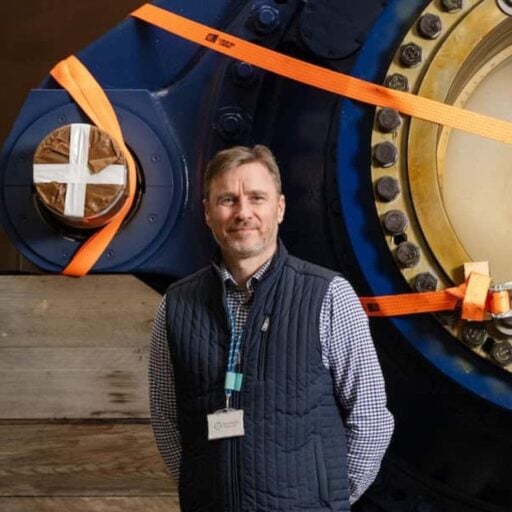
Engineering nous combined with an understandable emphasis on safety lend themselves well to renewables, as both McIntosh-Grieve and others such as James Barry (pictured left), another former Rolls-Royce employee, demonstrate. 

Image: Gordon Burniston

Advertisement
Automotive

Even before the rapid rise of electric vehicles (EVs), batteries and electronics played a key part in cars and trucks. Skilled automotive engineers are well-placed to lead the EV transition, as is happening at second life battery specialists Connected Energy. (Pictured right is Tania Saxby, head of sustainability at Connected Energy.)

Image: Sam Bush

Advertisement
Construction

Specialists in large-scale structures, such as major building projects, have some highly relevant skills when it comes to wind farms, as one-time tower crane operator Chris Akehurst (pictured left) discovered.

Advertisement

Image: Asnaya Chou

Engineering
Advertisement

Whether in wind, solar, hydro, wave or tidal power, engineering skills – not least electric engineering – are key to the successful design and deployment of renewables.

Image: Unsplash/ThisisEngineering 

Advertisement
Oil and gas

A wide range of expertise in oil and gas is transferable, according to the Renewable Energy Institute, which specialises in skills for the transition. It suggests that up to 90% of oil and gas workers already have skills relevant to green energy roles, including those in offshore engineering, power distribution and project management.  

Image: Unsplash/ThisisEngineering 

Advertisement

Beyond such specific technical expertise, the burgeoning renewables sector will, like all rapidly growing industries, require contributions from finance, health and safety, IT and AI, sales and marketing and, of course, sustainability specialists. Such is the speed and scale of the sector’s growth, that pretty much any skillset will be relevant – and, indeed, much needed.

Main photography: Callum Chapman

Advertisement

Source link

Advertisement
Continue Reading
Click to comment

You must be logged in to post a comment Login

Leave a Reply

NewsBeat

Two children, 6 and 11, rushed to hospital after being mauled by dog in playground

Published

on

Daily Mirror

Police have launched an appeal to find a woman they wish to speak to after a dog mauled two small children at a playground.

The kids, aged six and 11, sustained bitemarks to their legs and thighs, and were rushed to hospital for treatment after the dog rounded on them as they were playing on a playground on Vernon Street, near Newfoundpool, Leicester, on April 19 when they were injured.

Advertisement

Leicestershire Police have since released CCTV images in a bid to track down a woman they want to speak to, launching a public appeal in their attempt to identify a woman who they believe could help with their investigation.

A spokesperson for the force said: “Enquiries have been ongoing since the incident was reported to us and we hope the public can help us move the investigation on.

“We know the images are not the best quality, but we hope someone will recognise the woman or the dog.

“If this is you or you have any suspicions about who the woman may be, we would urge you to get in touch.”

Advertisement

Anyone with any information is asked to contact PC 4630 Samuel Senior on 101, quoting crime number 26*224111.

Source link

Continue Reading

NewsBeat

Pharmaceutical company GSK opening new flagship site in Cambridge

Published

on

Cambridgeshire Live

The new research and development centre will be located at the Cambridge Biomedical Campus

Pharmaceutical company GSK will shut its main research and development hub in Stevenage and open a new flagship site in Cambridge amid aims to slash costs by £1.9 billion to fund investment plans. GSK has said the new 300,000sq ft centre in Cambridge will house more than 1,000 scientists, with a phased move for staff by 2029.

The group said some staff currently based at Stevenage, where around 1,800 people work currently, will also move to its nearby Ware site, which is set to be upgraded.

GSK is hoping all Stevenage workers will relocate to either Cambridge or Ware. The group is spending £400 million over the next three years on the changes.

Advertisement

It revealed in half-year results that annual costs are set to be cut by £1.9 billion over the next three years to fund the investment, ramp up R&D, and help offset the hit when one of its key HIV treatments – dolutegravir – comes off its patent. It is understood there will be some roles affected, such as in support services, but GSK did not confirm numbers.

Luke Miels, chief executive at GSK, said: “To fund investment in the late-stage portfolio and R&D, we are starting a three-year cost savings programme to simplify the organisation and to reallocate capital and resources. Savings will primarily be reinvested, with some used to improve margins and profitability in the dolutegravir patent expiry period.”

The new R&D centre is being developed by Prologis and is within the wider Cambridge Biomedical Campus – one of the largest of its kind in Europe. The move will place GSK close to AstraZeneca’s major R&D site at the campus.

The new centre will be located at Discovery Drive on the biomedical campus. It is planned across three interconnected buildings. Work has begun on the first of these, a second has full planning permission, and a third recently received planning committee approval, subject to formal planning permission.

Advertisement

Andrew Blevins, SVP, Life Sciences, Prologis, said: “GSK’s decision is a powerful endorsement of Cambridge Biomedical Campus and the unique ecosystem that has been created here. Prologis invested ahead of demand at Discovery Drive because we believed global life-sciences organisations would continue to choose Cambridge.

“Having the right specialist infrastructure available allows companies to establish world-class facilities more quickly and strengthens the UK’s ability to compete for internationally significant life-sciences investment.”

Prologis said it is working in partnership with Cambridgeshire County Council to deliver the third and fourth phases of the project, with potential to create a further 2.4 million sq ft of life-sciences space. This represents an additional investment ambition of $4 billion (£3 billion) over the next two decades.

Paul Bristow, Mayor of Cambridgeshire and Peterborough, said: “Cambridge Biomedical Campus has become one of Europe’s leading centres for life sciences because it brings together pioneering research, outstanding healthcare and ambitious businesses in one place. GSK’s expanded presence is another vote of confidence in our region and demonstrates the continued appeal of Cambridgeshire as a place where global organisations choose to innovate and grow.”

Advertisement

Source link

Continue Reading

NewsBeat

Can you leave your child home alone in the school holidays?

Published

on

Can you leave your child home alone in the school holidays?

For some families, rising childcare costs mean leaving an older child at home for a few hours may seem like the only practical option.

Others may wonder whether a teenager can safely look after younger brothers or sisters while they’re at work.

But where does the law stand?

Advertisement

According to the NSPCC, concerns about children being left home alone rise sharply during the summer holidays. More than 1,200 adults contacted the charity about children being left unsupervised during last year’s July and August break, prompting fresh reminders for parents to think carefully before making childcare decisions.

Family law specialist Anna-Laura Lock, Partner at Rayden Solicitors, says there is no simple legal age at which children can be left alone.

Is there a legal age to leave a child home alone?

Many parents assume the law sets a minimum age, but it’s more complicated than that.

“There is no legal time limit or minimum age in England and Wales for leaving a child home alone,” says Anna-Laura.

Advertisement

“Instead, the law focuses on whether a child is left in circumstances that place them at risk of harm.

“That said, parents should proceed with caution. There is a clear difference between being left alone during the day or in the evening – with a parent due to return to the family home the same day – and being left without an adult overnight and for longer periods.”

She says parents should consider factors such as their child’s age, maturity, confidence, ability to deal with emergencies and, most importantly, whether they feel comfortable being left alone.

“While NSPCC guidance suggests children under 12 are rarely mature enough to be left alone for long periods, and babies and young children should never be left alone, this is guidance rather than legal rules,” she adds.

Advertisement

“The law deliberately leaves room for parental judgment, but that also means parents carry the responsibility if that judgment is found to have put their child at risk.

“In reality, the consequences of that judgment call being wrong can be serious. Instead of basing their decision on the child reaching a certain age, parents should focus on whether it is safe and appropriate for that particular child. The key takeaway is that it not a decision that should be taken lightly and without significant planning and preparation to ensure that the child in question is not exposed to ‘unnecessary suffering or injury to health’.”

In other words, the decision should be based on the individual child rather than their age alone, taking into account factors such as maturity, confidence, how long they will be left and whether they could cope in an emergency.

Can older children babysit younger brothers or sisters?

Another common question during the school holidays is whether an older child can supervise younger siblings.

Advertisement

There is no separate legal minimum age for babysitting in England and Wales. Instead, the same legal principles apply as when deciding whether to leave a child home alone.

Parents remain responsible for ensuring any childcare arrangements are safe. They should consider the ages and needs of all the children involved, whether the older child is mature enough to cope with the responsibility, how long they will be left and whether they could deal with an emergency.

If those arrangements place children at risk of harm, parents could still face safeguarding action or, in the most serious cases, criminal prosecution.

When could social services become involved?

Safeguarding concerns can be raised by neighbours, relatives, teachers, healthcare professionals or anyone else who believes a child has been left in unsafe circumstances.

Advertisement

Anna-Laura says: “Social services are most likely to become involved when a safeguarding concern is raised by someone who is worried about a child’s welfare. This could be a neighbour, relative, teacher, healthcare professional or another person who believes a child has been left alone in circumstances that place them at risk.

“Each case is assessed on its individual facts. Local authorities will consider factors including the child’s age and level of maturity, how long they were left unsupervised, and whether they had access to food, a phone and trusted adults. They will also consider whether this was an isolated incident or part of a wider pattern of neglect.

“Where professionals conclude that a child has been exposed to a significant risk of harm or that their basic needs are not being met, social services may carry out further safeguarding enquiries and may ultimately make interventions to protect the welfare of a child.

“In the most serious cases, parents could also face criminal prosecution.”

Advertisement

What if you’re separated from your child’s other parent?

The issue can become particularly sensitive for separated families if one parent disagrees with the other’s childcare arrangements.

Where both parents have parental responsibility, decisions about a child’s welfare should be made in the child’s best interests. If one parent believes the other is regularly leaving a child unsupervised in unsafe circumstances, the issue could become part of wider discussions about child arrangements and, in some cases, family court proceedings.

“Leaving children home alone can become a significant source of disagreement between separated parents, particularly where communication is already strained,” says Anna-Laura.


Recommended reading


“It is not uncommon for one parent to object to the other leaving a child home alone, especially if they believe they could have cared for the child instead.

Advertisement

“Where parents share parental responsibility, decisions affecting a child’s welfare should always be made with the child’s best interests at the forefront.

“If one parent regularly leaves a child unsupervised and the other believes this places them at risk, it may become an issue in wider discussions about child arrangements and, in some cases, could result in family court proceedings.

“Rather than viewing the issue through the lens of convenience, separated parents should work together wherever possible to place their child at the forefront of their decision making and ensure suitable childcare arrangements are in place.

“Doing so not only reduces the risk of legal consequences but, more importantly, provides children with the supervision, support and reassurance they need during the school holidays.”

Advertisement

With many families trying to balance work and childcare over the summer break, experts say parents should avoid relying on age alone when deciding whether a child is ready to stay at home.

Every child develops differently, and ultimately parents remain legally responsible for ensuring they are safe.

Source link

Advertisement
Continue Reading

NewsBeat

Bystander video shows teen lifeguard’s dramatic ocean rescue

Published

on

A life guard holds a child in the ocean.

Video captured by a bystander shows the moment 16-year-old rookie lifeguard Ryder Williams rescued a 10-year-old boy from the ocean at Seabright State Beach in Santa Cruz, California.

The child had been swept about 15 yards offshore when Williams reached him, with several beachgoers also joining the rescue. The operation lasted just over two minutes.

President Donald Trump has since invited Williams to the White House to receive a high civilian honour.

Source link

Advertisement
Continue Reading

NewsBeat

Colin Firth And David Tennant Will Star In Bridget Jones Director's New Comedy

Published

on

Colin Firth And David Tennant Will Star In Bridget Jones Director's New Comedy

!function(n){if(!window.cnx){window.cnx={},window.cnx.cmd=[];var t=n.createElement(‘iframe’);t.display=’none’,t.onload=function(){var n=t.contentWindow.document,c=n.createElement(‘script’);c.src=”//cd.connatix.com/connatix.player.js”,c.setAttribute(‘async’,’1′),c.setAttribute(‘type’,’text/javascript’),n.body.appendChild(c)},n.head.appendChild(t)}}(document);(new Image()).src=”https://capi.connatix.com/tr/si?token=8b034f64-513c-4987-b16f-42d6008f7feb”;cnx.cmd.push(function(){cnx({“playerId”:”8b034f64-513c-4987-b16f-42d6008f7feb”,”mediaId”:”c41e05a6-7ba0-42f1-8023-0f5ff30eab87″}).render(“6a68adefe4b02c67a5ae001e”);});

Bridget Jones director Sharon Maguire has worked with The Young Ones writer Lise Mayer to adapt Alex Comfort’s 1972 book, The Joy Of Sex, into a comedy film.

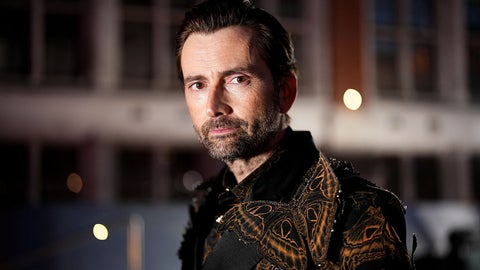
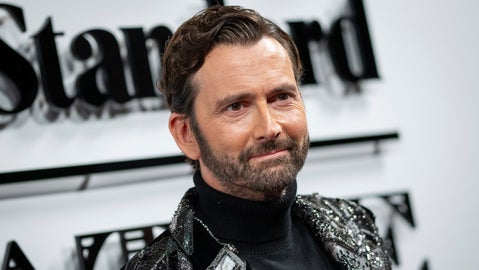
This will star Colin Firth (Alex Comfort), Julianne Moore (Jane Henderson), Laura Linney (Ruth Harris), Vicky Krieps, and David Tennant.

The movie will focus on a love triangle between husband and wife Alex and Ruth and Ruth’s uni friend, Jane Henderson. It’ll also trace the origins of the manual.

Advertisement

The Joy Of Sex is an illustrated instructive text, marketed as a “sexual cookbook”, that depicted various positions and gave couples sex advice. It sold 12 million copies and changed how the public talked about Doing The Deed.

But its back story is – as Maguire seems to have recognised – a riveting story on its own. The author, physician Alex Comfort, said he worked on the book with his then-mistress (his ex-wife’s former best friend). 

Not only that, but the poet claimed his private Polaroids of sex acts served as a basis for the illustrations in the book. 

Advertisement

The synopsis of the film reads: “This unconventional throuple in the quiet suburbs of North London challenged societal norms, lasting 10 years.

“It was the laboratory where recipes outlined in the book, as well as the instantly recognisable hand-drawn sketches of hirsute hippies having sex, were born. The book was erotic, funny, and wholesome, reinventing sex and love for ordinary people and giving them permission to enjoy sex for the first time ever.” 
Sharon Maguire 
Speaking to Deadline, director and co-writer Sharon Maguire, who grew up in an Irish Catholic family in Coventry, said: “The Joy of Sex was never allowed inside my Irish Catholic household in the ’70s.
“And as a result, its hidden promise had me in its thrall. The irony is that the book was an unashamed sex guide for loving couples, yet it was created out of a somewhat tempestuous triangle.
“Dissecting this triangle lies at the heart of the movie. It’s a story which is surprising, moving and very funny.”

Source link

Advertisement
Continue Reading

NewsBeat

Zelensky and Netanyahu meet Trump as wars in Ukraine and Iran drag on

Published

on

A woman with long, blonde hair talks into a microphone

President Donald Trump has held separate meetings with Ukrainian President Volodymyr Zelensky and Israeli Prime Minister Benjamin Netanyahu, which the White House described as “positive and productive”.

The two leaders were in Washington to attend the funeral of Senator Lindsey Graham, a staunch supporter of Israel and advocate for US aid to Ukraine, who died earlier this month.

Zelensky and Trump discussed Kyiv’s hope that the US would help bolster its air defences, although no formal commitment has so far been announced.

Netanyahu, for his part, arrived at a time when the US-Israel ties have been frayed by diverging views on Iran.

Advertisement

Ahead of the visit, Zelensky was expected to press Trump to follow through on a promise he made at this month’s Nato summit to grant Ukraine a licence to produce Patriot interceptor missiles.

Ukraine has long sought American Patriot missiles, which Kyiv says could be used to defend Ukrainian cities from escalating Russian drone and ballistic missile attacks across the country.

But the closed-door meeting ended without any firm announcement over US military assistance to Ukraine.

In a post on X, Zelensky thanked Trump for “everything we do together to protect the lives of Ukrainians”.

Advertisement

Zelensky added that the two discussed the Patriot licences and “several ideas that could help”.

“We also spoke about diplomacy,” he wrote. “It’s important that the diplomatic process be reinvigorated.”

In a separate post, Zelensky said he also met representatives of US defence manufacturer Lockheed Martin to discuss “further development of our cooperation”.

“Ukraine has a lot to share with those who help us protect lives,” he added. “We spoke about our joint capabilities related to Patriots and other systems. Our teams are already working on specific solutions to move to co-production as quickly as possible and increase our capabilities to protect lives.”

Advertisement

Zelensky was also planning to meet a bipartisan group of Senators who are moving forward with legislation to sanction buyers of Russian oil and gas to punish Moscow for the war in Ukraine.

Source link

Continue Reading

NewsBeat

Woman found dead alongside husband at remote cottage was murdered

Published

on

Daily Record

The bodies of a woman and a man were found in the Corsliehill Road area of Houston, Renfrewshire.

The death of woman found dead alongside her husband at a remote cottage in Renfrewshire was murder, say cops.

They confirmed this evening that the death of 35-year-old Stacy Mair is being treated as murder, following a post-mortem.

The death of her husband, Jim Mair, 43, is still being treated as unexplained. Police say there is nothing to suggest anyone else was involved.

Advertisement

Around 7.50am on Monday, 27 July, 2026, police received a report of concern for a person in the Corsliehill Road area of Houston

.

Emergency services attended, and the bodies of a woman and a man were found nearby.

Advertisement

A post-mortem examination on Jim, will take place in due course.

Detectives from Police Scotland’s Major Investigation Team, as well as officers from the local policing division, continue to carry out extensive enquiries to establish the full circumstances.

At this time, there is nothing to suggest any risk to the public.

Detective Chief Inspector Laura Young, of the Major Investigation Team, said: “Our thoughts remain with the families of those affected by this incident.

“They are understandably devastated, and we are providing them with support through specialist officers at this incredibly difficult time.

Chief Inspector Iain Farmer said: “This is a deeply upsetting incident for the families involved, and the impact is felt right across the local community.

“I am grateful for the support we have received as we complete our essential enquires to ensure the families and local residents get the answers they need.”

Advertisement

Anyone with concerns or information can contact Police Scotland via 101.

Source link

Continue Reading

NewsBeat

North Belfast stabbing victim raises concerns as investigation still ongoing after attack

Published

on

Belfast Live

Thomas Littles suffered face and shoulder injuries after allegedly being attacked with a knife during an altercation in North Belfast in March

A man who suffered multiple injuries after he was allegedly attacked with a knife during an altercation in North Belfast has raised concerns as nobody is yet to be charged following the incident.

Advertisement

Thomas Littles suffered injuries to his face and shoulder after he was attacked with a knife during an altercation in the early hours of Saturday, March 21, in the Cambrai Street area of the city. He and another man were arrested following the incident and bailed, but he says nothing further seems to have happened with the investigation.

Speaking to Belfast Live, Thomas said that he was attacked by a man who came to his home and during the altercation he defended himself with a baseball bat. However, he says suffered stab wounds to his shoulder and was sliced across his face with a knife.

He said: “I would just like to know what is going on with this case. I was attacked by someone who came to my home and ended up getting stabbed while I was trying to defend myself.

“Both of us were arrested after it all but I have heard nothing more about it. I just don’t want to see this person get away without any charges after what they did to me, which seems to be the case months after the attack.”

Advertisement

A PSNI spokesperson said: “Two men, aged in their 20s and 30s, arrested by police in relation to a report of an altercation in the Cambrai Street area of north Belfast in the early hours of Saturday 21st March, have been released and a report will be submitted to the Public Prosecution Service in due course.”

For all the latest news, visit the Belfast Live homepage here and sign up to our daily newsletter here.

Source link

Advertisement
Continue Reading

NewsBeat

the Spielberg film that feels more unsettling than ever

Published

on

the Spielberg film that feels more unsettling than ever

A quarter of a century ago, Steven Spielberg released one of the most unusual films of his career: A.I. Artificial Intelligence, a futuristic fairytale about a robot boy programmed to love.

Yet the movie’s origins lay not with Spielberg but another giant of cinema. For more than two decades, Stanley Kubrick had wrestled with the project, convinced it contained questions about technology, humanity and what it means to be loved. He never managed to bring it to the screen, though.

Released in 2001, A.I. arrived years before smartphones, social media and the boom in artificial intelligence. Yet today, as AI systems become woven into everyday life, the film feels newly relevant – not because it accurately predicted ChatGPT or generative AI, but because it explored the emotional and ethical questions that emerge when people form relationships with machines.

The story began with a 2,000-word short story, Supertoys Last All Summer Long, written by British author Brian Aldiss in 1969 for a special issue of Harper’s Bazaar.

Advertisement

It was set in a dystopian future where, because of overpopulation, reproduction was strictly controlled by the government and childbirth was granted through a lottery scheme. As they wait for their number to come up, Henry Swinton brings home a synthetic robotic child called David and a robotic teddy bear to keep his wife, Monica, company.

Although David is supposed to behave like a real child, there is a failure in communication between the robots and the couple. “Nobody knows what ‘real’ really means,” the teddy tells David. Despite the bear’s coaching, David is unable to please the childless couple.

A.I. Artificial Intelligence’s official trailer (2001).

Kubrick was attracted to the lyrical fairytale, mythic and cosmic qualities of Supertoys. He saw in it a modern version of Pinocchio, the story of a child who longs to become real.

Advertisement

The director began working on it in 1976 and, over the next two decades, kept returning to the story, engaging many writers to adapt it into a workable film. But rarely were they able to supply the necessary fuel to feed his imagination.

Technology presented another obstacle. Kubrick imagined David as an artificial child who would be indistinguishable from a real boy. But visual effects in the 1980s and early ’90s were not advanced enough to create such a character convincingly.

Using a child actor posed a different problem: Kubrick’s famously lengthy productions meant David might visibly age during filming. “The way we worked, the boy would be a teenager,” Kubrick’s brother-in-law, Jan Harlan, quipped.


À lire aussi :
2001: A Space Odyssey still leaves an indelible mark on our culture 55 years on

Advertisement

Faced with an impasse, Kubrick approached his friend Spielberg with an unexpected suggestion: perhaps he should direct the film instead. Spielberg initially resisted – but Kubrick continued to champion the idea, believing Spielberg’s emotional sensibility was better suited to the material.

By then, the project had been renamed A.I. Artificial Intelligence. Kubrick intended it to follow his film Eyes Wide Shut, but he died in 1999 before that film’s release. Only afterwards did his family and longtime collaborators ask Spielberg to take the project forward.

The finished film was a fascinating mix of Kubrickian irony and Spielbergian sentimentality. The odyssey of a robot boy who longs for the love of his human mother across aeons of time ends in a symphony of yearning and sadness. Robots of the future bring the boy’s mother back to life for a brief time, which no other Kubrick film had attempted. Spielberg insists he was faithful to Kubrick’s intent.

Advertisement
The dinner malfunction scene in A.I.: Artificial Intelligence.

What was A.I. really about?

Don’t be fooled by the title. The film isn’t exactly a prediction of the rise of generative and agentic AI (for that, you should watch Kubrick’s 2001: A Space Odyssey).

In fact, today’s AI systems are very different from David. ChatGPT, Claude and Gemini can generate convincing text and images, but they don’t experience loneliness, desire or love. David, by contrast, is imagined as a conscious being capable of suffering.

But this is precisely why the film feels so contemporary. As people increasingly interact with AI assistants, companion chatbots and emotionally responsive technology, questions once confined to science fiction are becoming part of everyday life. How easily do we form attachments to machines? What responsibilities do creators have towards intelligent technology? And what happens when a machine appears to need us as much as we need it?


À lire aussi :
Stanley Kubrick redefined: recent research challenges myths to reveal the man behind the legend

Advertisement

The film also reflects on the disastrous effects of man-made climate change, responding to the rapidly intensifying public debate about global warming in the late 1980s and early ’90s.

The most unsettling part of the film is the role of sex robots designed to pleasure lonely adults. Kubrick’s vision of the future blended suggestive pornographic imagery with technology. It was a futuristic Sodom and Gomorrah too hardcore for a family movie, even if Spielberg softened this when the film became his.

Rather than predicting the types of technology we use today, A.I. anticipated something more fundamental: the human desire to find companionship, meaning and connection through machines.

Twenty-five years after its release, the film remains unsettling not because its future arrived exactly as Kubrick and Spielberg imagined, but because many of its deepest questions remain unanswered.

Advertisement

Source link

Continue Reading

NewsBeat

Welsh weightlifter Laura Hughes answers your questions

Published

on

Welsh weightlifter Laura Hughes answers your questions

Laura Hughes first discovered weightlifting while training at her local Crossfit gym, making the transition from amateur gym-goer to competitive lifting.

Now a member of the Welsh national weightlifting squad, the 33-year-old holds the Welsh record for both the snatch and the clean and jerk (the two official competitive lifts in weightlifting) and is currently third overall in the women’s Welsh rankings. Hughes won bronze at the 2018 Commonwealth Games in Australia and was selected again for this summer’s Games in Glasgow.

We caught up with her for our Readers Ask series, where industry specialists answer questions from our Telegraph Recommended Reader Panel.

Advertisement

Who inspired you to get into weightlifting?

Olamilekan, South East

Originally, it was lots of different people, particularly general gym goers who were doing weightlifting at my gym. As I’ve grown as an athlete and become more competitive, I’ve had other inspirations.

Most notably, coming into [the Commonwealth Games], it has to be Gareth [Evans], our coach. Looking back at his performance in 2018 when he won his gold medal is so inspiring. [English lifter] Emily Godley was another competitor in 2018. She won the gold medal in my category and I just remember thinking that she was on fire that day.

What are the best exercises for you to build muscle mass?

Norman, Wales

Advertisement

We spend a lot of time doing our main lifts, so snatches, clean and jerks, but we also do lots of pulls and squats. I spend a lot of time doing accessory work to make sure that my body stays healthy, especially being an older athlete. I’ve put on quite a lot of muscle in this last block just from going heavier and pushing my limits with my main lifts.

What advice would you give to people who want to improve their strength?

David, North West

The most important thing is consistency. As long as you’re doing something, do it regularly, even if it’s twice a week. Don’t be afraid of picking up some dumbbells. If you’ve got somebody that can teach you how to lift weights properly, that’s going to be the best option. Do it safely, do it consistently, and don’t be afraid to try new strength exercises.

Source link

Advertisement
Continue Reading

Trending

Copyright © 2025