Connect with us
DAPA Banner
DAPA Coin
DAPA
COIN PAYMENT ASSET
PRIVACY · BLOCKDAG · HOMOMORPHIC ENCRYPTION · RUST
ElGamal Encrypted MINE DAPA
🚫 GENESIS SOLD OUT
DAPAPAY COMING

NewsBeat

Could a gut microbe help reduce weight regain after dieting? New study suggests it might

Published

on

Could a gut microbe help reduce weight regain after dieting? New study suggests it might

Losing weight is hard. Keeping it off is often even harder.

Research has shown that most people who intentionally lose weight regain at least some of it within a few years. This is often attributed to lack of “willpower”, but the evidence actually shows that after we lose weight, the body undergoes a range of biological changes that encourage weight regain. This includes increased hunger, changes in metabolism and shifts in hormones involved in appetite regulation.

Even people who lose weight using a GLP-1 drug find it difficult to maintain their weight loss once treatment stops.

For this reason, finding ways to help people maintain weight loss is a key area of research.

Advertisement

A new study published in Nature Medicine suggests that one particular gut microbe may help to prevent weight regain.

The bacterium, called Akkermansia muciniphila, is an abundant species in the human gut microbiome. It lives in the mucus layer that lines the gut. It’s able to feed on mucin (the proteins and sugars that make up this mucus), and is thought to play a role in maintaining the gut’s protective barrier and can also influence metabolism.

Akkermansia muciniphila has attracted attention in microbiome research in recent years due to its association with improved health outcomes across multiple diseases.

Studies in humans have shown that higher levels of Akkermansia muciniphila are linked with better metabolic health, including improved blood sugar control, which reduces the risk of developing health problems such as type 2 diabetes. On the other hand, lower levels of Akkermansia muciniphila are observed in people with obesity and type 2 diabetes.

Advertisement

This recent study investigated whether supplementing people with Akkermansia muciniphila after weight loss could help limit subsequent weight regain.

The trial involved 90 adults who were overweight or obese. Participants followed a low-energy diet for eight weeks. This consisted of meal replacement soups and shakes totalling 800-900 calories per day.

After this phase, participants who lost at least 8% of their body weight were then randomly assigned to receive either a placebo or daily supplements containing pasteurised Akkermansia muciniphila for 24 weeks. They were also instructed to follow a healthy diet that aligned with Dutch dietary guidelines, but were told they could eat as much or little as they wanted.

This study did not use live Akkermansia muciniphila bacteria. Instead, they used a pasteurised version (meaning the bacteria had been heat-treated and were no longer alive). This may sound counterintuitive, but previous research suggests that some of the beneficial effects of probiotics, including A muciniphila, may come from components of the bacterial cell rather than live microbes. Pasteurisation may even enhance the microbe’s effects.

Advertisement
The participants who took the supplement regained less weight.
panadda design/ Shutterstock

By the end of the study, the group receiving Akkermansia muciniphila had regained significantly less weight than the placebo group. On average, those taking the supplement regained around 1.2kg, compared with 3.2kg in the placebo group. This suggests that supplementation slowed, but did not fully prevent, weight regain after initial weight loss.

The researchers also observed some improvements in some cardiometabolic markers, including improved insulin sensitivity (meaning the body is responding to insulin more effectively) in the supplemented group.

The gut microbiome and body weight

The microbiome is highly complex. It is influenced by diet, exercise, sleep, medications and many other factors. As a result, microbiome-based therapies are unlikely to be simple, one-size-fits-all solutions.

Although the findings are encouraging, the study was relatively small and only lasted six months after the initial weight-loss phase. We still do not know whether the effects would continue over longer periods.

Advertisement

There are also questions about who is most likely to benefit, as participants with lower baseline gut levels of Akkermansia appeared to show greater cardiometabolic improvements. This highlights a broader challenge in microbiome science: people’s gut microbiomes vary enormously, and treatments that work well for one person may have little effect in another.

The study also involved substantial dietary intervention and support, including the provision of a meal replacement plan for the initial weight loss, and support from dietitians throughout the entire study period. So the microbe was not tested in isolation from lifestyle changes, nor should it be viewed as a substitute for them.

It’s also worth noting that several authors declared links to the company producing the supplement used in the trial. While such collaborations are common in translational research (studies which test lab findings in real people to understand health benefits), independent studies will be important to confirm and build on these findings.

That said, the microbiome is still a fascinating and increasingly important area of research with clear links to many aspects of human health. Our understanding of it is still developing. However, research so far shows that the microbiome plays key roles in metabolism and immunity, meaning it can influence both health and the development of disease.

Advertisement

Many probiotic supplements currently marketed to consumers have limited evidence behind them. Although studies like this suggest that carefully targeted microbiome therapies may have potential to eventually be used as part of weight-maintenance strategies, much more research is needed.

It may even be possible to support and increase Akkermansia muciniphila without supplementation. Diet plays an important role in shaping the microbiome. Diets rich in fibre, particularly prebiotic fibres (a type of dietary fibre that feeds beneficial gut bacteria), can help create an environment in which beneficial bacteria, including Akkermansia muciniphila, can thrive.


À lire aussi :
Does resistance training really improve your gut microbiome?


These fibres are found in foods such as onions, garlic, leeks, asparagus and many whole grains. Plant foods high in polyphenols (naturally occurring plant compounds that can protect cells against damage and inflammation) – such as berries and grapes – may also promote its growth.

Advertisement

For now, the findings from this study add to growing evidence that body weight is influenced by a complex interplay of biological, environmental and behavioural factors. They also contribute to an increasingly clear picture of the gut microbiome as an important regulator of metabolism and health.


Source link

Advertisement
Continue Reading
Click to comment

You must be logged in to post a comment Login

Leave a Reply

NewsBeat

The hidden assumptions that leave nurses exposed to sexual harassment

Published

on

The hidden assumptions that leave nurses exposed to sexual harassment

Three in five nursing staff and students who responded to a 2021 survey by Nursing Times and Unison said they had experienced sexual harassment at work. For many, it had come to be treated as part of the job.

More recent figures suggest the problem persists. In the 2025 NHS staff survey for England, 11.36% of registered nurses and midwives said they had experienced at least one incident of unwanted sexual behaviour from patients, service users, visitors, relatives or members of the public in the previous year.

The problem is not confined to one country or type of healthcare setting. Around the world, nurses report sexual comments, intrusive questions, non-consensual touching, intimidation and abuse from colleagues, patients and visitors. Yet sexual harassment remains under-researched and often absent from public conversations about healthcare.

A problem hidden in plain sight

Sexual harassment in healthcare can take many forms: a comment about a nurse’s body, repeated advances, sexual jokes or unwanted contact during personal care.

Advertisement

Such behaviour is often minimised. Nurses may be told that a patient “didn’t mean it”, that harassment is “part of the job”, or that it should be expected in certain settings.

This can be especially difficult in areas such as mental health or dementia care, where behaviour may sometimes be affected by cognitive impairment, illness or distress. Illness may help staff understand why something happened. It does not erase the harm caused. Nurses still need protection and proper follow-up.

Repeated harassment can affect confidence, wellbeing and willingness to remain in the profession. More detailed research is needed into how nurses experience and respond to it, and whether organisational policies work in practice.

Who is most affected?

Gender, ethnicity and workplace hierarchies shape nurses’ experiences. In the UK, almost 90% of professionals on the Nursing and Midwifery Council register are women, and around a third are from Black, Asian and ethnic minority backgrounds.

Advertisement

Sexual harassment is shaped by assumptions about who nurses are and what they should tolerate. Nurses are often expected to be caring, patient and self-sacrificing. They are also sexualised in popular culture, from fancy-dress costumes to television dramas.

Nurses may have less power than doctors, senior managers or other professionals. Their work can also involve close physical contact. Neither makes abuse acceptable. Gender, ethnicity, seniority, age, sexuality and area of work can all affect what happens, how seriously it is taken and whether a nurse feels able to report it.

When abuse becomes normalised

One of the most worrying features of sexual harassment in healthcare is how easily it can become normalised. Harmful behaviour starts to be seen as ordinary, unavoidable or not worth challenging.

Advertisement
French nurses describe sexual violence in hospitals and the difficulty of challenging behaviour that has too often been treated as part of the job.

If a nurse is repeatedly subjected to sexual comments or unwanted touching, colleagues may advise them to “laugh it off”, avoid a particular patient or handle the situation quietly.

Formal reporting can feel risky. Nurses may worry that they will not be believed, that managers will do nothing or that speaking up could damage their career. When incidents are handled informally, the burden falls on individual nurses and the wider culture remains unchanged.

Why current responses fall short

Health systems are beginning to take sexual safety more seriously. Since October 2024, employers have had a legal duty to take reasonable steps to prevent sexual harassment.

From October 2026, the duty is scheduled to be strengthened. Employers will be required to take all reasonable steps to prevent sexual harassment and will have a new obligation not to permit harassment by third parties, including patients and visitors.

Advertisement

In England, NHS England, all NHS provider trusts and all integrated care boards have signed a sexual safety charter committing them to a zero-tolerance approach to sexual misconduct.

NHS England has also published a national policy framework to help staff recognise and report sexual misconduct and access support. But discussions can focus heavily on behaviour between colleagues. What should happen when a patient repeatedly makes sexual comments, touches a nurse during care, or is confused, distressed or seriously unwell?

Without clear answers, nurses can be left to manage these situations alone.

Listening to nurses

Reports such as Surviving in Scrubs have exposed the seriousness of sexual misconduct in healthcare workplaces. More research is needed into nurses’ day-to-day experiences of harassment from patients and visitors.

Advertisement

A recent scoping review found that education and reporting systems are among the most commonly proposed responses to sexual harassment of nurses. Evidence about which interventions work remains limited.

Policies matter, but nurses also need managers who act when incidents are reported, practical support afterwards and working cultures that do not ask staff to absorb abuse in silence.

Source link

Advertisement
Continue Reading

NewsBeat

Trump administration live updates: Acting AG Tom Blanche grilled on president’s ‘unconscionable’ $1.8B ‘slush fund’

Published

on

Trump administration live updates: Acting AG Tom Blanche grilled on president’s ‘unconscionable’ $1.8B ‘slush fund’

DHS secretary grilled on Delaney Hall conditions

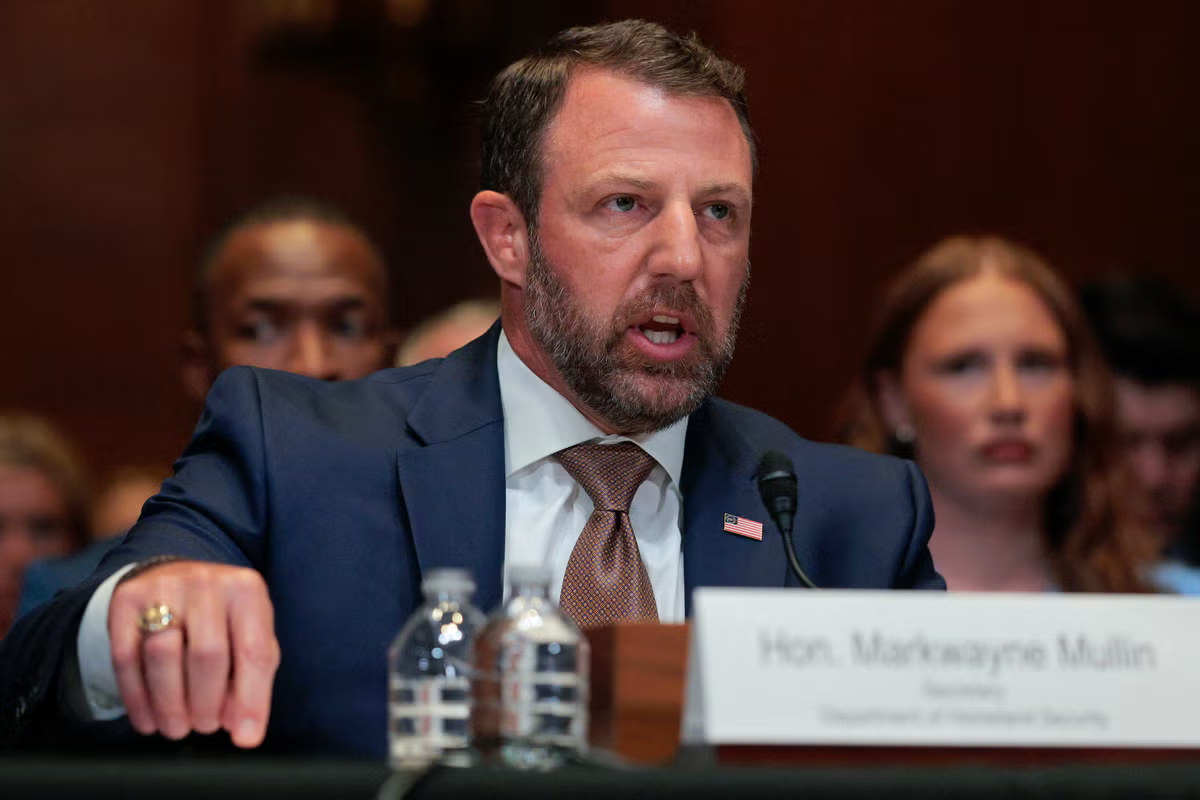
DHS Secretary Markwayne Mullin fielded several questions about the conditions and protests at Delaney Hall, a controversial ICE detention center where detainees are reportedly on hunger strike over allegedly inhumane conditions, spoiled food and lack of access to legal counsel.

But Mullin said recent health inspections “didn’t find one single violation.”

Just before he testified, however, New Jersey’s Health Department sued GEO Group, the private prison contractor that runs the facility, for “immediate” entry to investigate the jail.

Advertisement

Inspectors initially tried to enter Delaney Hall on May 27 but were barred from “full access” to the facility, according to a civil complaint filed on Tuesday. They were barred from the jail’s medical unit, toilets, shower facilities and sleeping areas, and were “unable to ascertain” whether GEO Group and ICE are “taking sufficient precautions to mitigate the serious and unchecked risk of communicable diseases to both detainees at Delaney Hall and New Jersey’s public at large.”

Alex Woodward2 June 2026 21:34

Rep. DeLauro hits out at Trump’s $1.8B ‘Anti-Weaponization Fund’

Rep. Rosa DeLauro criticized President Donald Trump’s proposed $1.8 billion “Anti-Weaponization Fund,” which she called “unconscionable.”

Advertisement

She made the remarks as acting Attorney General Todd Blanche appeared before a House Appropriations subcommittee.

“It can be used to pay out violent criminals who assaulted police officers and ransacked the Capitol on January 6. … These are the people who were arrested, they were tried, convicted, and then pardoned by the administration, and now he wants to raid the Treasury to pay them,” she said.

The plan sparked pushback from both Republican and Democratic lawmakers, with critics labeling it a “slush fund” for his supporters. Trump tabled the plan after a judge temporarily blocked his administration from “taking any further action pursuant to the creation or operation” of the fund in a ruling released Friday.

Katie Hawkinson2 June 2026 21:28

Advertisement

Mullin addreses Kilmar Abrego Garcia’s case

Lots to unpack in that exchange over Kilmar Abrego Garcia, whose wrongful removal case has been a flashpoint in the legal chaos around the Trump administration’s mass deportation efforts.

Mullin says he is not aware of Abrego Garcia’s long-running legal battle in his attempt to deport himself to Costa Rica, which has agreed to take him.

The secretary said: “Great, if he’s willing to do that we’d be happy to send him.”

Advertisement

But the Trump administration — while also trying to prosecute him in a separate criminal case — has been trying for months to deport him to Liberia.

Mullin’s statement is likely to be brought up by Abrego Garcia’s attorneys in court filings.

A federal judge is currently blocking ICE from re-deporting or detaining him, noting earlier this year that the government has made “one empty threat after another to remove him to countries in Africa with no real chance of success.”

In a memo issued in March, ICE’s then-acting director Todd Lyons argued that sending him to Costa Rica would be “prejudicial to the United States.”

Advertisement

Last month, the judge overseeing his criminal case dismissed the indictment against him after Abrego Garcia argued he was being unlawfully targeted as part of a smear campaign after he won he wrongful deportation case.

“Objective evidence” has shown that federal prosecutors only brought charges against Abrego Garcia after he won his lawsuit challenging his arrest and removal. A decision to re-open a previously closed investigation against Abrego Garcia — coupled with public statements from administration officials including Acting Attorney General Todd Blanche that tied the case to Abrego Garcia’s lawsuit — “taints the investigation with a vindictive motive,” the judge wrote.

Alex Woodward2 June 2026 21:16

Advertisement

Blanche testimony begins

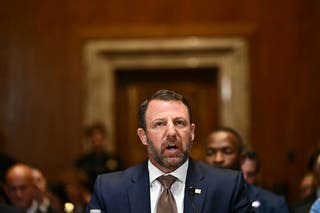
Acting Attorney General Todd Blanche is testifying before a House Appropriations subcommittee.

Acting Attorney General Todd Blanche is testifying at a House Appropriations subcommittee hearing (Getty Images)

Katie Hawkinson2 June 2026 21:11

Sen. Gary Peters grills DHS secretary over FEMA funding

Sen. Gary Peters pressed Homeland Security Secretary Markwayne Mullin over what he called the “unprecedented politicization of disaster assistance.”

Advertisement

“There are reports that President Trump has approved nearly 90 percent of disaster requests from red states, but only 23 percent from blue states, even when the request met the FEMA-established threshold for federal assistance,” Peters said.

He went on to ask Mullin if he believes it’s right for a president to “approve disaster aid based on whether a state voted for him instead of the amount of damage that actually occurred in the state.”

“Senator Peters, that’s not my experience with the president. As I said, we’ve had 37 states approved for public assistance disaster underneath President Trump,” Mullin replied.

Katie Hawkinson2 June 2026 21:00

Advertisement

DHS secretary says agents won’t ‘bother’ people unless they’re breaking the law

Homeland Security Secretary Markwayne Mullin said most DHS agents are “not going to bother you” unless “you’re breaking the law.”

“Has it been your experience that most cops, most Border Patrol officers, most ICE agents will leave you alone unless you do illegal stuff?” Sen. John Kennedy asked.

“That is absolutely correct, and they love doing their job. They don’t do it for the money, they do it because they’re called to do it. … There’s always a few bad apples, but for the most part, those officers, unless you’re breaking the law, they’re not going to bother you,” Mullin replied.

Advertisement

Katie Hawkinson2 June 2026 20:41

DHS secretary ripped over ‘outrageous’ policy proposals

Sen. Patty Murray accused Homeland Security Secretary Markwayne Mullin of floating “outrageous proposals” and said he has yet to “take back the reins from Stephen Miller.”

“You plan to withdraw CBP officers from airports in cities that don’t roll over for Trump. That is insane. It is not only dangerous, it would also spell economic crisis for blue and red states,” she said.

Advertisement
Sen. Patty Murray accused Homeland Security Secretary Markwayne Mullin of floating 'outrageous' policy proposals
Sen. Patty Murray accused Homeland Security Secretary Markwayne Mullin of floating ‘outrageous’ policy proposals (AFP via Getty Images)

Katie Hawkinson2 June 2026 20:08

Sen. Chris Murphy addresses judges accusing DHS of failing to follow court orders

In his opening statement, Sen. Chris Murphy brought up how judges across the country have accused DHS of repeatedly failing to follow court orders, including at least 96 violations in just one district in Minnesota.

Federal courts are swimming in cases alleging unlawful arrests and detentions filed by immigrants swept up in the Trump administration’s mass deportation dragnet.

Judges have ruled roughly 10,000 times that ICE officers had illegally arrested people without giving them the chance to prove they could safely remain in their communities while their immigration cases played out.

Advertisement

In the Minnesota example, ICE released the man at the center of case, but District Judge Patrick J. Schiltz unleashed his frustrations and listed 96 court orders from 74 different cases that the agency allegedly failed to follow, a count that he said was “almost certainly substantially understated.”

The fact that he can come up with a list of 96 ignored orders “should give pause to anyone — no matter his or her political beliefs — who cares about the rule of law,” he wrote.

Sen. Chris Murphy addressed how judges across the country have accused DHS of repeatedly failing to follow court orders, including at least 96 violations in just one district in Minnesota
Sen. Chris Murphy addressed how judges across the country have accused DHS of repeatedly failing to follow court orders, including at least 96 violations in just one district in Minnesota (Reuters)

Alex Woodward2 June 2026 20:01

DHS secretary responds to Sen. Murphy: ‘We’re doing the job that Congress gave us the authority to do’

Homeland Security Secretary Markwayne Mullin hit out at Sen. Chris Murphy, who claimed his agency has been “run so far off the rails.”

Advertisement

“We’re doing the job that Congress gave us the authority to do, and our men and women out there every single day are enforcing laws. If you don’t like the laws, you can change them. We’re not picking and choosing which laws we enforce, we’re simply enforcing the law,” Mullin said.

“When you throw out reckless terms and you start referring to our agents as being dangerous, unconstitutional and lawless, that’s why our agents’ death threats are up by 8,000 percent,” he added.

Katie Hawkinson2 June 2026 19:58

Advertisement

Sen. Murphy says DHS is ‘off the rails’

During today’s Senate Appropriations subcommittee hearing, Sen. Chris Murphy said the Department of Homeland Security has been “run so far off the rails.”

“The reason why Democrats and Republicans were not able to find agreement on the underlying DHS appropriations bill is because never before in the history of our nation has a federal agency been run so far off the rails as the Department of Homeland Security,” Murphy said.

“Every day this agency is breaking the law at scale and wasting billions of taxpayer dollars. DHS does not implement the law any longer. It makes up the law,” he added.

Katie Hawkinson2 June 2026 19:54

Advertisement

Source link

Continue Reading

NewsBeat

‘Comfortable’ Michael Dunlop extends all-time Isle of Man win record with Supersport masterclass

Published

on

Belfast Live

The Ballymoney man extended his Supersport winning streak at the Isle of Man TT to nine in a row, securing his 34th victory at the event on Tuesday afternoon

Northern Ireland motorsport hero Michael Dunlop has described Tuesday’s record-extending Monster Energy Supersport race win at the Isle of Man TT Races as ‘comfortable’

The Ballymoney man extended his Supersport winning streak at the Isle of Man TT to nine in a row, securing his 34th victory at the event on Tuesday afternoon.

He holds the all-time record for victories and podium finishes at the Isle of Man TT, with 34 wins and 52 podiums, surpassing the previous record of 26 victories held by his uncle Joey Dunlop.

Advertisement

Michael Dunlop overhauled early race leader Dean Harrison (Honda Racing) at the end of the first lap to eventually win by 24.47s. Peter Hickman (Swan Triumph by PHR Performance) completed the podium in third.

“It was good,” Dunlop said afterwards. “The bike’s been good all week, we’ve been really comfortable, so the main thing was to try and put it on (the podium) today.

“The conditions were a bit strange today, but the bike never missed a beat, the boys worked really hard, and it was nice to be back in here winning again.”

Delayed four hours from an 11am start to allow the roads to dry after the inclement weather on Monday and overnight, the race was also cut from four laps to three but conditions all around the course were good come the start time of 3pm.

Advertisement

Mike Browne led the field away on the Boyce Precision Engineering by Russell Racing Yamaha but by Glen Helen, nine miles into the lap, Harrison led Dunlop by 1.6s with Browne in third 4.2s further back.

As they came into the pits at the end of the lap for their mandatory stop, a first lap speed of 126.602mph gave Dunlop the lead from Harrison (126.587mph) by just 0.127s.

Jumping Ballaugh Bridge for the second time, Dunlop’s lead had almost doubled to four seconds and by Ramsey, he’d extended his lead further to 7.2s as he started the Mountain climb once more.

Dunlop continued to increase his lead through every sector and starting the third and final lap, the gap to Harrison stood at 12.5s as he looked to have broken the Honda rider’s challenge.

Advertisement

The Antrim man never looked back and with the fastest lap of the race, 127.672mph, he took the victory by 24.47s from Harrison (126.258mph) with Hickman (127.215mph) claiming third as the same three riders filled the podium position as Sunday’s Superbike race – albeit in a different order.

Sign up to our free sports newsletter to get the latest headlines to your inbox

Source link

Advertisement
Continue Reading

NewsBeat

Acting AG Todd Blanche says Trump ‘absolutely’ would have gone to prison if he lost the 2024 election

Published

on

Acting AG Todd Blanche says Trump ‘absolutely’ would have gone to prison if he lost the 2024 election

President Donald Trump was almost certainly bound for prison until he won the 2024 election, according to Acting Attorney General Todd Blanche, who previously served as the Republican’s personal lawyer.

“Is it an accurate statement to say he either wins in ‘24, wins the White House — it’s either the White House or the big house?” Fox News anchor Sean Hannity asked Blanche on an episode of the Hang Out with Sean Hannity show that was released on Tuesday.

“Oh yeah, absolutely,” Blanche responded.

The Trump official pointed to the cloud of legal scrutiny hanging over Trump during the 2024 election, which included special counsel Jack Smith’s multiple cases against the Republican in Washington and Florida, as well as the then-candidate’s guilty convictions in New York in his hush money trial.

Advertisement

“Don’t forget he had a D.C. case breathing down his neck,” Blanche said. “He had the Florida case which had been dismissed, but they were appealing it, and then he had a judge in New York who, there’s no scenario in which he wasn’t going to send Trump to prison.”

Donald Trump managed to avoid going to prison by winning the 2024 election, according to his acting attorney general Todd Blanche
Donald Trump managed to avoid going to prison by winning the 2024 election, according to his acting attorney general Todd Blanche (AFP/Getty)

Following Trump’s election victory, the special counsel dropped the federal cases against the president-elect, citing the precedent against bringing an indictment or proceedings against a sitting president.

In congressional testimony last year, Smith said he was confident he would’ve secured a conviction against Trump on his allegations that the Republican conspired to interfere with the 2024 election.

“The timing and speed of our work reflects the strength of the evidence and our confidence that we would have secured convictions at trial,” Smith told the House Judiciary Committee. “If asked whether to prosecute a former President based on the same facts today, I would do so regardless of whether that president was a Republican or a Democrat.”

The president continues to challenge the New York conviction, both in state court and in an effort to move it to federal court.

Advertisement
Donald Trump faced a pair of special counsel cases and a New York criminal conviction going into the 2024 election
Donald Trump faced a pair of special counsel cases and a New York criminal conviction going into the 2024 election (AP)

Since returning to the White House, the president has vowed to seek payback for the alleged “weaponization” of the justice system he claims to have suffered.

The DOJ is investigating an alleged decade-long “grand conspiracy” between officials who investigated or prosecuted the president.

As part of the settlement in his recent suit against the IRS, Trump also sought to create a nearly $1.8 billion “slush fund” to compensate allies and victims” of government “weaponization.”

Source link

Advertisement
Continue Reading

NewsBeat

Former Liverpool FC and Tottenham striker in talks to become next permanent Celtic manager

Published

on

Former Liverpool FC and Tottenham striker in talks to become next permanent Celtic manager

Assisted by the younger duo of Shaun Maloney and Mark Fotheringham, the 74-year-old took charge of eight matches on an interim basis last autumn and then returned to take the reins from January until the end of the campaign, solidifying his status as a hero in the eyes of Celtic supporters by leading the team to an unlikely double.

Source link

Continue Reading

NewsBeat

Police searching for missing Curtis last seen on Rawson Street

Published

on

Police searching for missing Curtis last seen on Rawson Street

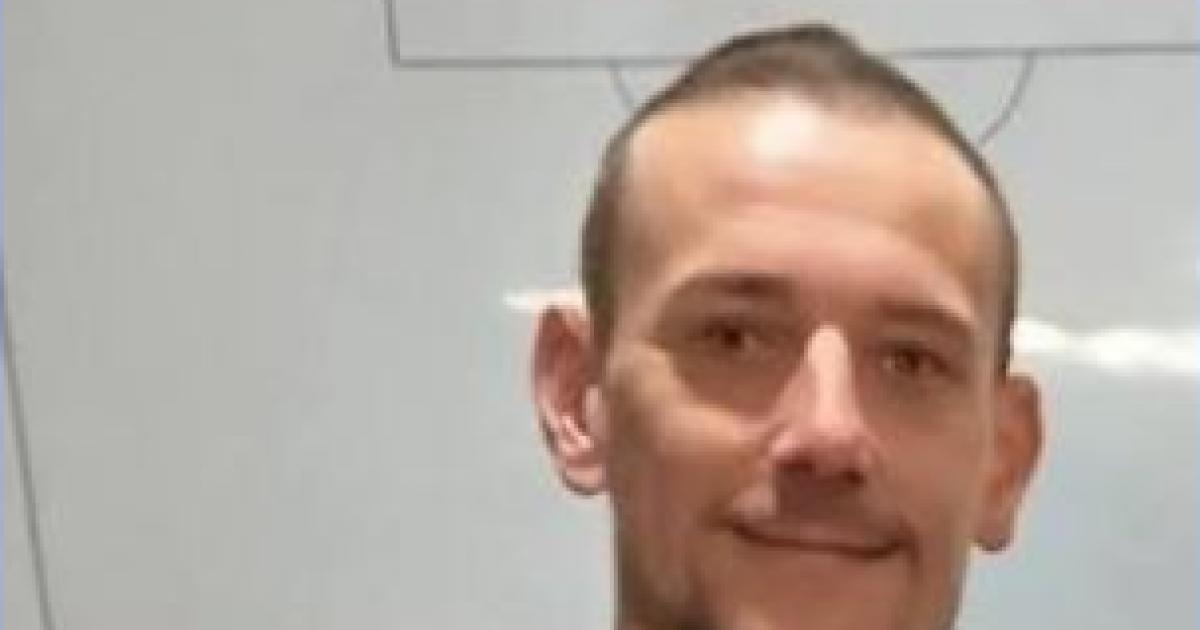
Curtis was last seen on Rawson Street in Bolton at around 1:50pm this afternoon (Tuesday June 2).

He is described as a white male, around 5ft 6ins tall, with a slim build, short hair, and shaved sides.

Curtis was last seen wearing a black ‘Technic’ branded hoody with a noticeable white logo in the centre.

Advertisement

GMP put out a statement on social media: “Can you help us find missing Curtis?

“He was last seen on Rawson Street in Bolton at around 1:50pm this afternoon (June 2).

“Anyone with information about Curtis whereabouts should contact us on 0161 856 2661 quoting log 915 of 02/06/2026. Always call 999 in an emergency.

Advertisement

“Officers are becoming increasingly concerned about him and want to make sure he is safe and well.”

Bolton GMP posted the notice to their Facebook page at around 7.15pm on June 2.

Source link

Advertisement
Continue Reading

NewsBeat

Major Cambridgeshire train company transfers to public ownership

Published

on

Cambridgeshire Live

The train company runs services through Cambridgeshire

A major train operator that runs services through Cambridgeshire has been nationalised. MP Heidi Alexander, Secretary of State for Transport, announced on Monday (June 1) that Govia Thameslink Railway, also known as Thameslink, had come under public ownership.

Advertisement

The trainline, which operates trains to London from Peterborough and Cambridge, is the fifth train company to transfer into public ownership under the Passenger Railway Services (Public Ownership) Act.

Under the new ownership, the Government is committed to delivering a range of measures to improve passengers’ experience. These include:

  • Doubling the number of Gatwick Express trains each hour between Gatwick Airport and London Victoria from December, as well as more early morning services on Saturdays and Mondays over the busy summer period
  • Providing additional Great Northern off-peak services from Moorgate from December
  • Recruiting an additional 75 drivers on Thameslink and Great Northern this year, helping to reduce cancellations
  • Enabling passengers to get support from staff directly via WhatsApp if there is disruption to services
  • Improving all 115 Class 700 units on Thameslink by carrying out deep cleaning and repairing minor damage, as well as refreshing and resurfacing all toilets to help combat graffiti
  • Providing a total of 110 Travel Safe Officers on Thameslink services
  • Completing the automatic train operation training programme by December 2026, which will support improvements in punctuality, particularly in recovering delays during disruption.

A Government spokesperson said: “Public ownership is already putting passengers back at the heart of the railway, but it is not in itself a guarantee of improved services. To truly fix the structural issues that have long plagued our railways, we need systemic reform.

“The Railways Bill continues its passage through Parliament and will establish Great British Railways (GBR), a new nationalised rail company, that will integrate the management of track and trains for passengers and freight use every day. It will also create a strengthened passenger watchdog.

“Once established, GBR will maintain and improve the railways and be accountable to passengers, freight customers and taxpayers. GBR will be empowered to build a railway that not only puts passengers and customers first but also supports the government’s missions to drive economic growth and opportunity, by improving connectivity and unlocking jobs and housing.”

Advertisement

Source link

Continue Reading

NewsBeat

The ‘pretty’ North Yorkshire village with a green and pond

Published

on

The 'pretty' North Yorkshire village with a green and pond

It sits high above Pickering, inside the national park, and feels like a place that is lived in year‑round but doubles as a handy base for people who want moorland walks and big skies on the doorstep.

Where Newton-on-Rawcliffe sits

Newton-on-Rawcliffe is a small village and civil parish a few miles north of Pickering, up on the moorland plateau rather than down in the Vale.

It’s part of the North York Moors National Park, so the countryside around it is protected and heavily used for walking, riding and cycling.

Advertisement

Roads from the village drop back down towards Pickering for shops, schools and services, while minor lanes and tracks lead out into forestry and open moor.

At the centre is that well‑known village green and pond, with stone houses and farm buildings facing onto it.

From there, a handful of lanes and short streets run out between properties, but Newton never sprawls; it stays compact, with a clear edge where the last houses give way to fields.

Advertisement

What the village looks and feels like

Most of Newton-on-Rawcliffe is made up of traditional two‑storey stone cottages and farmhouses, many with pantile roofs and long gardens.

A few newer homes and barn conversions have been slotted in over time, but the village still reads as an older, stone‑built place rather than a modern estate.

Around the green and pond you get the “postcard” view – ducks on the water, grass, trees and stone frontages – but step a little further back and you see working yards, sheds and the signs of a lived‑in rural community.

Everyday life and community

Village life runs through a mix of long‑standing farms, residential homes and holiday accommodation.

There’s a modernised village hall with a decent‑sized main room, kitchen and parking, used for local groups, regular classes, coffee mornings and private events.

Advertisement

Many residents head down to Pickering or further afield for work, school and shopping, then come back to a much quieter setting at the end of the day.

That pattern means Newton is not busy in the town‑centre sense, but it isn’t empty either; there’s a steady flow of cars, dog walkers and people going to and from the hall or pub, on top of the usual movement of farm traffic in and out of the yards.

Between green, moor and forest

Location is one of Newton-on-Rawcliffe’s main selling points. Step out of the village and you are quickly into open country: fields, forestry tracks and moorland paths that link into the wider North York Moors network.

Popular spots like the Hole of Horcum, Levisham Moor and Dalby Forest are within easy reach, and there are plenty of shorter loops starting almost from the green for evening walks or weekend strolls.

Advertisement

Down the hill, Pickering provides everyday services: supermarkets, schools, doctors, independent shops and the North Yorkshire Moors Railway.

Further out, you can reach places like Helmsley, Malton and the Yorkshire coast for bigger trips, but Newton itself remains very clearly a village rather than a small town.

Pub, food and short‑break appeal

The village pub, the Horseshoe Inn, gives Newton upon Rawcliffe a clear social centre as well as somewhere to eat and stay.

It trades on a classic country‑inn mix of bar, dining room and comfortable rooms, with a menu built around straightforward, well‑cooked food.

Advertisement

For campers, walkers and people booking nearby cottages, it’s often the default place for an evening meal without having to drive back down to town.

Around the village, farms and cottages have been turned into small guest houses, holiday lets and campsites, so Newton sees a regular flow of visitors, especially in walking season and school holidays.

Overall picture

Put simply, Newton upon Rawcliffe is a pretty, stone‑built village wrapped around a green and duck pond, sitting high above Pickering on the edge of the moors.

It offers year‑round village life – farms, hall, pub, resident community – alongside an obvious pull for walkers and short‑break visitors who want quick access to trails, forests and big views.

Advertisement

Source link

Continue Reading

NewsBeat

New season of The Conversation’s award-winning Curious Kids podcast launching this June

Published

on

New season of The Conversation’s award-winning Curious Kids podcast launching this June

The Conversation’s Curious Kids podcast is back for a second season to answer some of the fantastic questions sent in by listeners around the world!

Each episode, a curious kid joins host Eloise to ask a top researcher their burning question, such as: why do your fingers and toes go wrinkly in the bath? Why does our taste in food change as we get older? And how high can volcanoes actually send molten lava up into the air?

Advertisement

While we’ve been off air, The Conversation’s Curious Kids podcast was named Best Kids podcast at the British Podcast Awards 2025.

Follow us wherever you get your podcasts, or listen on the Yoto Player via the Discover section on the Yoto interactive audio platform for kids.

New episodes every Tuesday from June 9, or listen back to season one here. You can also read lots of answers to questions sent in by children around the world in our Curious Kids series.

Got a question? Pop it in an email, or record it and send us the audio to curiouskids@theconversation.com.

Advertisement

This season of The Conversation’s Curious Kids is supported by the University of Southampton in the UK, a world-leading research-intensive university with a global network of international students and campuses in Malaysia and Delhi.


Source link

Advertisement
Continue Reading

NewsBeat

New DWP eligibility verification powers explained for benefit claimants

Published

on

Cambridgeshire Live

The Department for Work and Pensions has published guidance on new Eligibility Verification powers that allow banks to run automated checks on accounts receiving Universal Credit, Pension Credit and ESA — here is what the rules mean for claimants and what banks can and cannot share.

The Department for Work and Pensions (DWP) has released guidance detailing what banks and financial institutions may be required to monitor under new benefit Eligibility Verification powers.

The new framework forms part of the UK Government’s broader offensive against fraud and error within the welfare system, and will initially cover those claiming Universal Credit, Pension Credit and Employment and Support Allowance (ESA).

Under the Eligibility Verification Measure (EVM), banks may be obliged to scrutinise accounts receiving certain DWP benefits and identify instances where accounts meet specific “eligibility indicators” tied to benefit regulations.

Advertisement

The DWP stated the checks are intended to help detect incorrect payments arising from fraud, claimant error or official error, while also preventing claimants from accumulating substantial overpayments that must subsequently be repaid.

According to the new Code of Practice on Eligibility Verification Notices, banks could be required to flag accounts where savings surpass benefit thresholds, reports the Daily Record.

For Universal Credit, this could encompass accounts holding more than £16,000, which represents the upper capital limit for the benefit.

The guidance further states the DWP may seek information relating to signs that a claimant has spent more time overseas than benefit rules ordinarily permit.

Advertisement

However, the DWP confirmed there are stringent legal restrictions governing what banks are permitted to share. The Code stipulates that financial institutions are forbidden from disclosing transaction details, which means the DWP is unable to access information about what people are purchasing, where they shop, or their individual spending patterns.

Banks are also barred from sharing “special category data”, encompassing details relating to political opinions, religious beliefs, ethnicity, or health information.

The guidance states: “DWP is prohibited by law from sharing personal data with financial institutions under this power, and from requesting transaction information and special category data.”

What banks cannot share

The document further clarifies that the DWP is not permitted to ask banks to search for named benefit claimants.

Advertisement

The code repeatedly emphasises that strict limitations apply to the information banks are able to provide.

DWP said financial institutions are prohibited by law from sharing:

  • Transaction histories
  • Spending information
  • Financial statements
  • Special category data such as political opinions, religion or ethnicity

Rather, financial institutions would apply eligibility criteria across their own systems, returning only limited information where accounts match the indicators outlined in an Eligibility Verification Notice (EVN).

The information that may be passed on to the DWP includes account details, names and dates of birth linked to accounts, and specifics demonstrating how an account met the eligibility indicator.

Examples might include confirmation that savings surpassed a certain threshold, or evidence that an account had been routinely used outside the UK.

Advertisement

The DWP emphasised that information returned by banks does not automatically indicate that an individual has acted improperly. The Code states: “No decisions about benefit entitlement will be made automatically on this information alone.”

Instead, the DWP is required to examine the information alongside existing evidence already held within a claim before determining whether further investigation is warranted.

The guidance further confirms that a “Test and Learn” rollout phase will take place, initially involving a limited number of financial institutions prior to any wider expansion.

Throughout this period, the DWP has stated it will evaluate the effectiveness of the system, the accuracy of the data provided, and whether the safeguards in place are functioning as intended before proceeding with broader implementation.

Advertisement

The DWP estimates benefit fraud and error resulted in £9.6 billion of overpayments during the 2025/26 financial year.

Source link

Continue Reading

Trending

Copyright © 2025