

Connect with us
DAPA Banner

NewsBeat

Dales meeting: anger over changes to home-to-school transport

Published

on

Dales meeting: anger over changes to home-to-school transport

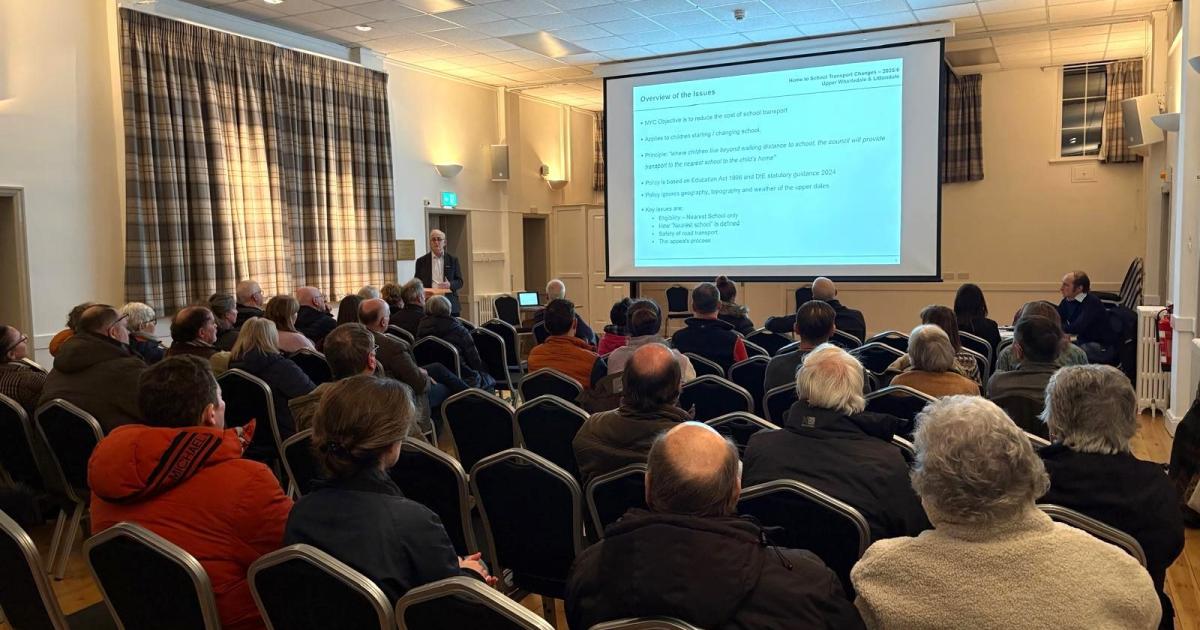
The meeting was held at Kettlewell Village Hall on Tuesday evening amid concern in Upper Wharfedale and Littondale about a change made by North Yorkshire Council.

The authority introduced a new policy in September which means free school transport is only available to a child’s nearest school, meaning families are unable to get paid transport to their catchment school if it is not also their closest.

The policy was altered in a bid to help the council reduce its annual school transport bill of more than £50m.

Advertisement

But the new rules have caused concern among families and community leaders in the Dales with journeys to nearest schools being over hazardous moorland routes in some cases.

At the meeting, Councillor Richard Ingram, chair of Buckden Parish Council, urged residents to campaig for changes to the policy, describing the new rules as “discriminatory”.

Parish council deputy chair Peter Vetch highlighted several areas of concern,  including the removal of transport to selective schools such as Ermysted’s Grammar School and Skipton Girls’ High School, despite North Yorkshire operating a selective education system.

Cllr Vetch said the policy had introduced a strict “nearest school” rule based on walking distance rather than road distance or route safety.

Advertisement

He cited examples from Oughtershaw, where the school classed as nearest on foot was significantly further and less practical to reach by road than the school previously attended by children from the area.

Cllr Vetch said that in some cases, children would be expected to travel over Fleet Moss to reach their designated school – a route residents widely regard as unsafe, particularly during winter conditions.

Families from Oughtershaw and Greenfield have already submitted appeals, arguing that these circumstances should be treated as exceptional.

However, the appeals were rejected, with factors such as safety, cost and the impact on attendance ruled outside the scope of the process.

Advertisement

Cllr Vetch added: “Speakers at the meeting warned of serious long-term consequences, including unsafe journeys for children, increased financial strain on families forced to fund private transport, and falling pupil numbers in local schools.”

Concerns were also raised about the wider sustainability of rural communities, including the impact on farming families and the future of village schools.

Anne Vetch, former chair of Upper Wharfedale Primary Federation (UWPF), said after the meeting:” The Upper Wharfedale community, teachers and parents have worked tirelessly over the years to ensure the school as part of UWPF not only has survived but thrived and has a promising future, demonstrated by an increase in numbers, financial sustainability, and a good Ofsted.

“You can imagine my dismay and that of others when we find this work seriously undermined by the school transport policy.”

Advertisement

A spokesperson for STAG, which was represented at the meeting, said: “This is one of several meetings that parishes are organising all around the county – with Sheriff Hutton and Scorton near Richmond also included in that list.

“We are not surprised that residents are getting together to challenge this. North Yorkshire Council were warned about the impact this policy would have on rural communities and now they are going to have to answer to the people who are fighting for the future not only of their children, but also of their villages.”

North Yorkshire Council has repeatedly defended the policy change, which is due to be reviewed later this year, saying it brings services in line with government guidance and will help control rising school transport costs, which have more than doubled since 2018/19.

Advertisement

Source link

Continue Reading
Click to comment

You must be logged in to post a comment Login

Leave a Reply

NewsBeat

Beer shortage warning for India as Iran war hits supply

Published

on

Indian consumers could soon face higher beer prices and potential supply disruptions as global brewers operating in the country grapple with escalating costs driven by a gas shortage linked to the Iran war.

The conflict has led to a surge in the price of glass bottles and significant shipping delays for aluminium, crucial for can production.

India, the world’s fourth-largest importer of natural gas, is particularly susceptible to fuel availability issues, relying heavily on the Middle East for its supply, with approximately 40 per cent sourced from Qatar.

Iranian attacks have partially hampered Qatar’s export capacity, tightening gas availability for Indian manufacturers.

The Brewers Association of India, representing major players such as Heineken, said glass bottle prices have soared by around 20 per cent.
The Brewers Association of India, representing major players such as Heineken, said glass bottle prices have soared by around 20 per cent. (Getty/iStock)

The Brewers Association of India, representing major players such as Heineken, Anheuser-Busch InBev, and Carlsberg, informed Reuters that glass bottle prices have soared by around 20 per cent. Additionally, paper carton rates have doubled, alongside increases for other essential packaging materials like labels and tape.

Gas is essential to keeping furnaces and production lines running, and shortages have forced several glass bottle makers to partially or fully halt operations.

Advertisement

Aluminium can suppliers have also warned of possible reductions just as India heads into its peak summer season, when beer sales typically rise.

“We are asking for price increases in the range of 12-15 per cent,” the association’s director general Vinod Giri told Reuters. “We have advised our member companies to individually approach states.”

The rising cost of production is making some operations unsustainable, he added.

Heineken’s India unit United Breweries UBBW.NS, Anheuser-Busch InBev and Carlsberg did not respond to Reuters queries.

Advertisement

The market was worth $7.8 billion in 2024, and is expected to double by 2030, Grand View Research says. Heineken alone accounts for roughly half the market, while AB InBev and Carlsberg each account for 19 per cent, the association said.

While the three companies dominate India’s beer sector, many smaller players such as Bira and Simba also operate in the market.

Glass and plastics industry crisis

Beer and liquor sales in India have grown steadily alongside rising urbanisation and a young, increasingly affluent population.

Advertisement

The Confederation of Indian Alcoholic Beverage Companies, which represents many domestic companies, said it has written to several states seeking price adjustments to offset rising freight, logistics and input costs.

India’s alcohol sector is tightly regulated, and raising retail prices typically requires approval. Around two-thirds of India’s 28 states must authorise changes.

“Brewers may find it difficult to maintain supplies in states that do not allow price increases,” the association said.

Some glass bottle vendors are warning their clients of reduced supplies and have increased their prices.

Advertisement

Nitin Agarwal, CEO of Fine Art Glass Works in Firozabad, a glass-making hub in northern Uttar Pradesh state, said he has cut production by 40 per cent at his glass bottle making factory due to gas shortages. His customers include many liquor companies as well as producers of juice and ketchup bottles.

“We’ve cut production and increased prices by 17-18 per cent,” Agarwal said.

The shortages have already affected India’s $5 billion bottled ‌water market with some producers increasing prices by 11 per cent due to rising rates of plastic bottles and caps.

And there are signs the crisis is spreading.

Advertisement

An executive at Lotte Chilsung Beverage, one of the leading South Korean soft drinks companies, told Reuters that it has up to three months of inventory for plastic bottles and plastic materials.

“The situation is serious,” he said.

Source link

Advertisement
Continue Reading

NewsBeat

Doctor highlights good foods that help ‘soak up bad cholesterol’

Published

on

Dr Emily Leeming says we are consuming ‘only about 60 per cent of the essential nutrient for heart health, blood sugar balance and gut health

A health expert has called on Brits to boost their consumption of a particular nutrient renowned for lowering cholesterol, managing blood sugar, and keeping you feeling fuller for longer. According to the National Diet and Nutrition Survey, more than 90 per cent of adults in the UK aren’t getting enough fibre.

Dr Emily Leeming, a scientist, dietician and author, describes it as the ‘forgotten nutrient’, observing that the average British person consumes just around 60 per cent of the recommended daily intake. The NHS highlights that a diet rich in fibre is associated with a lower risk of heart disease, stroke, type 2 diabetes and bowel cancer, reports Surrey Live.

Yet, targeting roughly 30g daily can help maintain a healthy, balanced diet. To put this into context, half a cup of porridge oats delivers 9g of fibre, while two carrots provide 6g. An apple offers approximately 5g, and a pear adds 6g.

Advertisement

Dr Leeming explained: “We’re missing about 40 per cent of that recommended 30 grammes of fibre that we need a day.”

She went on to stress the significance of this neglected nutrient: “This forgotten nutrient that we need to be paying attention to. It helps with your heart health, it helps to soak up bad cholesterol for that to be removed from your body as waste, it helps to balance your blood sugar levels, giving you longer-lasting energy, so it’s not only just helping with your gut microbiome, it’s having many other benefits in your body too.”

Why fibre matters

Fibre is a plant-based carbohydrate found in foods such as wholegrains and vegetables, commonly referred to as roughage. It’s essential for keeping your digestive system working properly.

By feeding the good bacteria in the large intestine, it helps create a varied and healthy microbiome (the community of gut bacteria). This can reduce inflammation in the intestines while potentially lowering the risk of both diverticulitis and bowel cancer, reports the Express.

Advertisement

Studies show that eating fibre-rich foods can support weight management by keeping you feeling fuller for longer. Choosing high-fibre options increases satiety, while a diet rich in fibre can improve digestion and prevent constipation.

Research indicates that people who eat more fibre typically have lower body weight, reduced blood pressure and lower cholesterol levels – all positive factors for heart health. Fibre-rich foods also help control blood sugar levels, as they don’t trigger the same sharp spikes as their low-fibre equivalents.

Different types of fibre

Heart UK explains that you may have come across the terms ‘soluble fibre’ and ‘insoluble fibre’. These phrases are frequently used to categorise the different types of fibre in our diets.

Advertisement

Soluble fibre absorbs water in the gut. It’s found in:

  • oats
  • barley
  • pulses (such as beans, peas and lentils)
  • some fruits and vegetables

Insoluble fibres do not dissolve in water. They are primarily found in:

  • wholegrains, especially the bran part of the grain
  • vegetables
  • the seeds and skin of fruits

How can I eat more fibre?

To boost your fibre consumption, you could: Dr Leeming concluded: “When I talk about fibre, the key foods that I really want to talk about are what I call the BGBGs.

“That’s beans, greens, berries, grains, and nuts and seeds. What might surprise people is that the highest-fibre foods are whole grains, nuts and seeds, and beans – much more so than most fruits and vegetables, which I think is quite counter-intuitive for some people.”

According to the NHS, children require lower amounts of fibre in their diet. Those between the ages of 2 and 5 should consume approximately 15g of fibre daily. Children aged 5 to 11 require around 20g, while those aged 11 to 16 need roughly 25g per day.

Advertisement

Source link

Continue Reading

NewsBeat

Foreign Office issues Turkey, Thailand and Mexico warnings ahead of summer holidays

Published

on

Manchester Evening News

The Foreign, Commonwealth and Development Office has issued travel warnings for certain border areas in three popular holiday destinations ahead of summer 2026

Britons planning trips to three popular holiday destinations have been cautioned against visiting certain regions.

The Foreign, Commonwealth and Development Office (FCDO) has issued travel warnings for parts of Turkey, Thailand and Mexico.

Advertisement

With summer holidays fast approaching, it’s crucial to take on board advice from the FCDO before organising your getaway.

Turkey

Turkey-Syria border

The FCDO advises against all travel to within 10km of the Turkish border with Syria. This is due to fighting and a heightened risk of terrorism, the FCDO said.

Thailand

The FCDO also advises against travel to the following areas in Thailand:

Thailand-Malaysia border

FCDO advises against all but essential travel to parts of the south, near the Thailand-Malaysia border due to regular attacks in the provinces by the border with Malaysia.

These areas include: Pattani Province, Yala Province, Narathiwat Province, the districts of Chana, Thepa, Na Thawi and Saba Yoi in southern Songkhla Province.

Advertisement

FCDO also advises against all but essential travel on the Hat Yai to Padang Besar train line that runs through these provinces.

Thailand-Cambodia border

The FCDO advises against all but essential travel to areas within 20km of the land border with Cambodia.

In July 2025, the countries fought along parts of the border. The fighting included the use of rocket and artillery fire. Tensions remain and unexploded landmines in the border area remain a point of concern.

Advertisement

Mexico

The FCDO advises against all but essential travel to the following areas of Mexico:

  • State of Baja California
  • State of Chihuahua
  • State of Sinaloa
  • State of Zacatecas
  • State of Michoacán
  • State of Jalisco
  • State of Colima
  • State of Guerrero
  • State of Chiapas

It is important to follow advise from the FCDO if planning a trip to Mexico for the 2026 FIFA World Cup between July 11 and July 19.

Source link

Continue Reading

NewsBeat

Linda Ervine among Irish president’s appointments to Council of State

Published

on

Belfast Live

The President of Ireland must first consult with the Council of State before referring legislation passed by the parliament to the Supreme Court over constitutional concerns.

Ireland’s president Catherine Connolly has appointed Irish language activist Linda Ervine and Professor Colin Harvey to her Council of State.

Advertisement

Ms Connolly made seven appointments to the body which assists the Irish president in considering various matters.

The President of Ireland must first consult with the Council of State before referring legislation passed by the parliament to the Supreme Court over constitutional concerns.

The president can also communicate directly with the Irish parliament on a matter of public importance after consultation with the Council of State.

Ms Ervine, who is from east Belfast, is the manager of the first Irish language centre to be based in a loyalist area.

Advertisement

She is also the founder of Scoil na Seolta, the first integrated school to teach through the medium of Irish.

Mr Harvey is a professor of human rights law and a former head of the School of Law at Queen’s University Belfast.

He is also a commissioner on the Irish Human Rights and Equality Commission, has served two terms as a commissioner on the Northern Ireland Human Rights Commission, and is a member of the Scientific Committee of the EU Fundamental Rights Agency.

Along with Ms Ervine and Mr Harvey, Ms Connolly appointed law professor and Irish speaker Fionnuala Ni Aolain, sociologist Kathleen Lynch, law professor and the Legal Aid Board member Donncha O’Connell, law professor and director of the Child Law Clinic Conor O’Mahony and former president of Ollscoil na Gaillimhe/University of Galway, Ciaran O hOgartaigh.

Advertisement

Ms Connolly said in a statement: “May I thank each of the nominees who have agreed to serve as a member of the Council of State.

“These seven members bring a unique expertise and range of experience to the Council of State which will be of immense value in considering the matters which may arise over the course of my term of office.

“I look forward to receiving their advice and support over the next seven years.”

The Council of State also consists of the Taoiseach, the Tanaiste, the Chief Justice, the president of the Court of Appeal, the president of the High Court, the Ceann Comhairle of Dail Eireann, the Cathaoirleach of Seanad Eireann, and the Attorney General.

Advertisement

It also comprises previous presidents, taoisigh and chief justices.

Want to see more of the stories you love from Belfast Live? Making us your preferred source on Google means you’ll get more of our exclusives, top stories and must-read content straight away. To add Belfast Live as a preferred source, simply click here.

Source link

Advertisement
Continue Reading

NewsBeat

Michael O’Neill wants ‘realism from media’ to aid Northern Ireland tournament hopes

Published

on

Northern Ireland have two unconfirmed friendlies in June before the Nations League starts in September. The manager is confident his emerging talents are going in the right direction

Michael O’Neill has asked for some ‘realism from the media’ after being asked what it will take to get Northern Ireland back to a major tournament.

Italy ended their 2026 World Cup dream in the play-off semi-final in Bergamo last week, which meant they faced Wales in a meaningless friendly in Cardiff.

Advertisement

The teams played out a 1-1 draw – all while Italy were knocked out by Bosnia – their third World Cup play-off exit in a row.

When asked what’s needed for his young Northern Ireland team to take the next step, O’Neill said: “Hopefully a bit of realism from the media.

“I mean we were drawn in a group with Germany and we had a play-off against Italy, so I think we’ve got to be realistic where we are,” he explained to BBC. “We’re a small nation, we’re not blessed with a squad of Premier League players.

“I think we’re punching above our weight, we gave a really good account of ourselves in the qualification.

Advertisement

“When we saw the team at full strength in the games against Slovakia and against Germany we saw what we were capable of…so just give the team a bit of time to breathe, give it time to develop and I’m sure we’ll keep progressing.”

Northern Ireland have two unconfirmed friendlies in June before the Nations League starts in September. The manager is confident his emerging talents are going in the right direction.

“When you’ve got players at this stage of their career you’ve got to be careful with them, you’ve got to handle them the right way and they’ve got to be patient as well,” he added.

“I think we’ve done that extremely well and I think the coaching staff have been brilliant with the players. They’re learning all the time and that’s all we can do, continue to work.

Advertisement

“I think this team, given the age profile of the player and given the fact that there’s only probably one or two players that may drop off in the next period of time and the lead up into obviously the qualification for Euro 2028, we’ve got the Nations League and we’ve got friendlies in June to help us develop and continue and be ready for that competition when it comes around.”

Jamie Donley raised hopes of a first Northern Ireland victory against Wales since Noel Brotherston’s winner at Ninian Park 46 years ago.

But Sorba Thomas secured a share of the spoils with an equaliser straight after the interval, extending Wales’ unbeaten run against their visitors to 10 games – five wins and five draws.

Advertisement

UEFA had insisted Thursday’s beaten play-off semi-finalists – Wales had lost to Bosnia and Herzegovina and Northern Ireland to Italy – met each other in a match ridiculed by many as a waste of time.

Unsurprisingly, there were empty seats for a fixture that had been officially declared a sell-out weeks ago.

In the event, it was a decent contest but one that inevitably lacked the edge and jeopardy of a more meaningful affair.

Both sides made inevitable changes from Thursday but perhaps not as many as might have been expected.

Advertisement

Wales made five alterations with Thomas, Ben Cabango, Josh Sheehan and Lewis Koumas included and Cardiff’s Joel Colwill getting his first senior international start on his home ground.

Harry Wilson took the armband with Ethan Ampadu among the substitutes.

Northern Ireland gave Patrick Kelly his first start in midfield as Ciaron Brown and Eoin Toal came into the defence and Conor Hazard replaced Pierce Charles in goal.

The two nations last met at Euro 2016 when an unfortunate Gareth McAuley own goal settled the tie in Wales’ favour.

Advertisement

Northern Ireland were almost punished by another lapse inside seven minutes after Koumas seized on Isaac Price’s wayward pass and warmed the hands of Hazard.

Price was more productive at the other end, flashing a cross into the corridor of uncertainty that evaded everyone, before the visitors struck after 22 minutes.

Donley headed Justin Devenny’s centre on to a post and the rebound fell straight to him.

The Spurs forward currently on loan at Oxford poked home his second international goal and might have added another with a sweeter connection from Kelly’s cross.

Advertisement

Northern Ireland’s attacks carried far greater danger and Price, just 10 yards inside the Wales half and having spotted Karl Darlow off his line, tried an audacious attempt that the Wales goalkeeper just about got to safety.

Hazard remained mostly untroubled with Colwill’s header blocked and Wilson sending a free-kick wide from 30 yards.

But Wales levelled within seconds of the restart, with half-time substitute Charles’ first task to pick the ball out of the Northern Ireland net.

David Brooks drove at the visitors’ defence and Thomas reacted quickest to the loose ball to claim his second Wales goal from close range.

Advertisement

Charles did keep out a curling Wilson free-kick and Darlow provided an excellent stop from Brown’s close-range header.

Wilson fired just wide from 18 yards as Wales probed for a winner, but Northern Ireland almost snatched it the death as Callum Marshall’s header cleared the crossbar.

Click here to sign up to our sport newsletter, bringing you the latest sports news, headlines and top stories

Source link

Advertisement
Continue Reading

NewsBeat

Will Starmer’s Cost Of Living Measures Be Effective?

Published

on

Will Starmer's Cost Of Living Measures Be Effective?

Four government measures meant to ease the cost of living are set to start on April 1 – but will they be enough to help Brits?

Iranian forces continue to effectively block the major shipping lane, the Strait of Hormuz, in response to USIsraeli strikes.

The closure of the waterway, which transports a fifth of the world’s oil supply, is rocking international markets and sending fuel costs skyrocketing.

Brits were already facing a financial squeeze before the conflict began at the end of February.

Advertisement

The latest Which? consumer insight tracker – recording from the month leading up to March 13 – found half of UK households are now making at least one adjustment, like selling their possessions or getting loans, to cover the cost of essentials on a daily basis.

The watchdog also found 67% of UK adults are now expecting the national economy to worsen over the next year.

However, the government has urged the public to carry on as usual while it puts “contingency plans” in place.

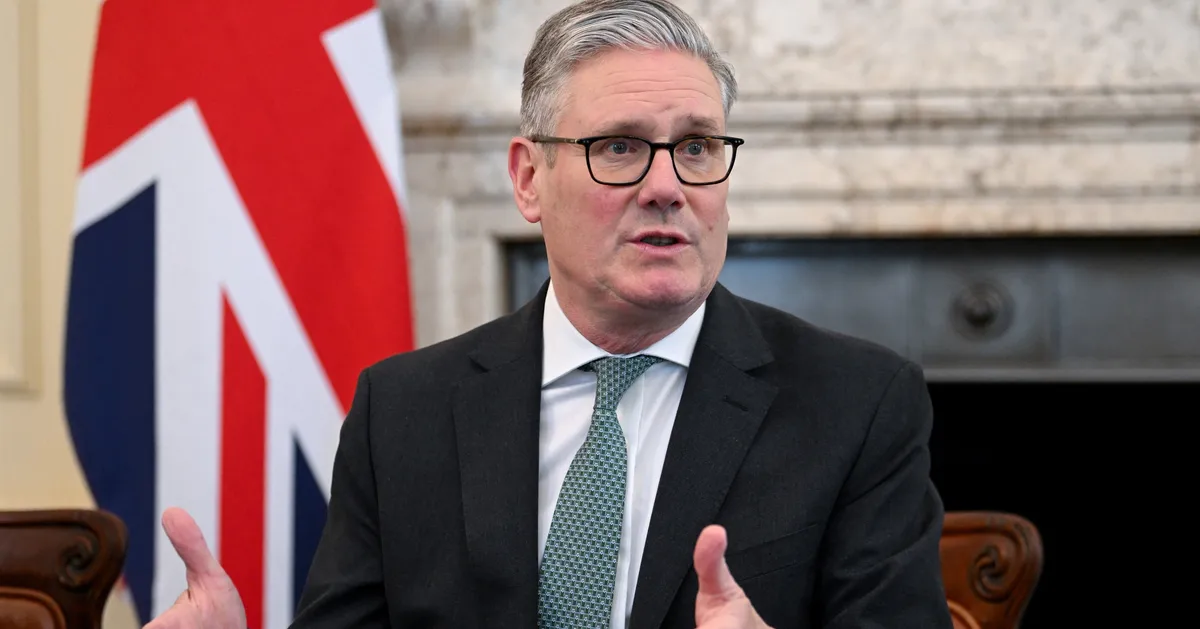
Keir Starmer also launched Labour’s local elections campaign on Monday by insisting his party understands “most people are concerned most of all about the cost of living”.

Advertisement

In a separate statement, the prime minister promised the public that they “have a government on their side, working with allies on de-escalation and bearing down on the cost of living.”

But, he admitted: “We must go further to bear down on costs, and that means pushing for de-escalation in the Middle East and a re-opening of the Strait of Hormuz.

“That is the best way we can bring down the cost of living for families and that is my focus.”

Here’s a quick look at the measures the government is introducing on Wednesday – and their effectiveness…

Advertisement

1. Increasing The National Living Wage and National Minimum Wage

The government will be increasing the National Living wage to £12.71.

That works out to a £900 increase for 2.4 million workers aged 21 and over.

More than 200,000 young workers – those aged between 18 to 20 – will also enjoy a hike of £1,500 per year as the National Minimum wage goes up to £10.85.

Advertisement

The director of the Living Wage Foundation, Katherine Chapman, said last November – when the change was announced – that this was “a really positive move’.

However, she claimed: “It will still fall short of the voluntary real Living Wage which is the only wage rate based solely on the cost of living.

“The real Living Wage is currently £13.45 in the UK with a higher rate of £14.80 in London.”

Chair of the Low Pay Commission, Philippa Stroud, also warned about the impact rising wages would have an businesses.

Advertisement

She said in November: “In our discussions this year with workers and employers alike, it has been clear that no one is having an easy time.”

2. Cutting Energy Bills

The energy regulator Ofgem has decided the energy price cap will be set at £1,641 per year between April 1 and June 30.

That’s a decrease of 6.6% compared to between January 1 and March 31, when the annual price cap was at £1,758.

Advertisement

However, the April-June cap was decided prior to the breakout of the Iran war.

The next cap, from July to September, will likely go up as a result of the conflict.

Chancellor Rachel Reeves is looking at plans to help with energy bills expected to get closer to nearly £2,000 a year from July.

The government has suggested it may implement some targeted households for those most in need, rather than the universal support offered by Liz Truss’s government in 2022.

Advertisement

Jess Ralston, the head of energy at the Energy and Climate Intelligence Unit, said: “Bills going up again because of war thousands of miles away will be a tough pill to swallow for households still saddled with debt from last time.”

3. Freeze On Prescription Prices Extended

NHS prescription charges in England have been frozen at £9.90 per item for the 2026/27 financial year to help with financial pressures.

Prescriptions will still be free in Scotland, Wales and Northern Ireland.

Advertisement

However, the Prescription Charges Coalition’s Laura Cockram pointed out that people living with long-term conditions who are not exempt still feel the cost is too high.

She said: “No one should have to worry about affording the medication they need to stay well, so although a freeze on prescription charges is more welcome than an increase it’s not enough.

“Unlike in Scotland, Wales, and Northern Ireland, people in England with Parkinson’s and other long-term conditions still have to pay for the prescriptions they need to manage their health. The UK government must rethink.

“At the least, the government should review the prescription charge exemption list so people with long-term conditions like Parkinson’s, MS, asthma, HIV don’t have to pay an ill health tax.”

Advertisement

4. Crisis and Resilience Fund

This £1 billion a year council-run scheme in England will start running from April 1 2026 until March 31, 2029.

It’s money from the government which can be used for people struggling with a financial shock or unexpected finances. The fund will be focused on those who are in or close to poverty, disabled or in older households.

Anyone can apply for the fund for money towards their energy bills, food, clothing and furniture.

Advertisement

It will replace the Household Support Fund which has now ended.

It’s thought the government may pump extra cash into the fund if fuel and energy costs do rise in the summer.

Anti-hunger charity, the Trussell Trust, welcomed the news, calling it a “major milestone”.

“Effective crisis support is crucial to prevent people from falling into severe hardship, so they can still afford the essentials we all need,” the charity said.

Advertisement

However, it warned there is still work to do and “is not a substitute for the deeper reforms needed to the inadequate rates of social security which fail to protect people from going without the essential day to day”.

Source link

Advertisement
Continue Reading

NewsBeat

I made cheesy hot cross buns and they’re better than anything you’d buy from the shop

Published

on

Daily Mirror

Hot cross buns are an Easter tradition, but this recipe has a savoury twist on the classic that beats any supermarket version

It feels as though New Year’s Day was only yesterday. In the blink of an eye, Easter is now just around the corner, even if the seasonal treats have been filling supermarket shelves for months.

Advertisement

I grew up in a household where traditional Easter fare, such as hot cross buns, never made an appearance. I have a sneaking suspicion this was down to neither of my parents being particularly fond of them… it must have been the mixed spice. I’m all for bucking the trend, and unusual flavours appear to be very much on the hot cross bun menu at supermarkets this year.

I stumbled across one particularly intriguing recipe, which swaps out the sweet flavourings of a hot cross bun for a savoury spin. Anyone tempted by cheese with their hot cross buns?

That’s right – triple cheese hot cross buns. As the years go by, I’ve certainly noticed my palate gravitating more towards savoury rather than sweet, and these really caught my eye.

Advertisement

If mixed spices, peel, or even fruit aren’t to your liking, this recipe harnesses a variety of cheeses to deliver bags of flavour. You’ll need a combination of grated cheeses alongside cubes of mature cheddar, reports the Express.

The recipe from Good Food featured in one of its magazines last year, and it’s taken me well over a year to finally give it a go. Even for the most inexperienced home baker, this recipe couldn’t be more straightforward. All it requires is just a touch of patience for proving.

The secret to ensuring the buns aren’t heavy once baked is getting the dough just right. During kneading – whether by hand or with a stand mixer – the dough needs to be soft and stretchy.

Content cannot be displayed without consent

Overall, the dough requires a total of two hours and 15 minutes proving time, provided it takes that duration to double in volume. As I mentioned, patience is essential.

Advertisement

For the cheese selection, I went for a Sainsbury’s packet of ready-grated cheese containing mozzarella, cheddar, Double Gloucester and Red Leicester. That’s in addition to the diced mature cheddar. You can never have too much cheese.

Each bun undergoes a complete transformation in the oven. The moment I removed them from the oven, the recognisable aroma of every mouth-watering bakery wafted through the kitchen. To achieve a subtle shine, simply brush the tops of the buns while they’re warm with a mixture of milk and caster sugar.

For me, I’d serve these warm – or even toasted – with a liberal spread of butter. They’re like a thicker, softer take on cheese on toast.

I’d choose cheesy hot cross buns over a traditional hot cross bun any day. This recipe suits anyone who’s had their fill of chocolate Easter eggs and sugary snacks.

Might I suggest, cheese-flavoured hot cross buns surpass the original? Could they match up to supermarket versions..?

Triple Cheese Hot Cross Buns

Ingredients

  • 500g strong white bread flour, plus extra for dusting
  • 7g fast action dried yeast
  • One tbsp caster sugar
  • 75g salted butter, cut into cubes
  • 300ml whole milk, warmed to room temperature
  • One egg
  • 200g mixed cheeses (mix of cheddar, red Leicester and parmesan), grated
  • 100g mature cheddar, cubed
  • One tsp dried mustard powder (optional)
  • Eight thyme spring, leaves picked (optional)

For the cross

For the glaze

Advertisement
  • Two tbsp milk
  • One tbsp caster sugar

Method

In a large bowl, combine the bread flour, yeast, sugar and one teaspoon of salt. Add the butter and rub it into the flour mixture until it resembles breadcrumbs.

Pour in the warm milk and egg, mixing until a soft dough forms.

Turn the dough out onto a lightly floured surface and knead for eight to ten minutes until smooth and elastic. Alternatively, use a stand mixer fitted with a dough hook for five minutes.

Fold in the grated mixed cheeses and cubed cheddar, kneading until evenly incorporated throughout the dough. If you’re using mustard powder and thyme, work them in at this stage too.

Advertisement

Roll the dough into a ball and place it in a lightly oiled bowl. Drape a tea towel over the top and leave it to rise somewhere warm for an hour to an hour and a half, or until it has doubled in size.

Once risen, tip the dough out onto a lightly floured surface and knock it back to remove any air pockets. Divide the dough into 12 equal pieces and shape each one into a bun.

Place them on a baking tray with a small gap between each. Drape a tea towel over the top and leave to prove for a further 45 minutes, or until nicely puffed up.

Preheat the oven to 190/170 (fan)/gas 5. In a small bowl, combine the plain flour with just enough water to create a thick paste.

Advertisement

Spoon into a piping bag (or a sandwich bag with the corner snipped off) and pipe a cross on top of each bun. Bake for 25 to 30 minutes, or until golden brown. While the buns are in the oven, prepare the glaze by warming the milk and sugar in a small pan until the sugar has dissolved. Put to one side.

When the buns emerge from the oven, promptly brush the glaze across the hot buns to create a shiny finish. Leave the buns to cool in the tin for roughly ten minutes, then move to a wire rack to cool down fully.

Source link

Advertisement
Continue Reading

NewsBeat

Alleged Scottish crime boss Steven Lyons set to be deported to Spain after arrest in Bali | UK News

Published

on

A Scottish man who is allegedly a high-ranking member of an international crime gang is set to be deported to Spain after being arrested in Bali.

Steven Lyons, 45, was taken into custody by immigration officers at Ngurah Rai International Airport on Saturday on arrival from Singapore. Untung Widiyatmoko, head of Interpol Indonesia, later confirmed his arrest.

He is wanted in the UK and Spain for alleged organised crime, drug trafficking and money laundering, as well as a murder that took place in Spain in 2024.

Lyons, who has been on Spain’s wanted list for about two years following a murder case there in 2024, will be extradited to Spain on Wednesday, Indonesian authorities have said.

Advertisement

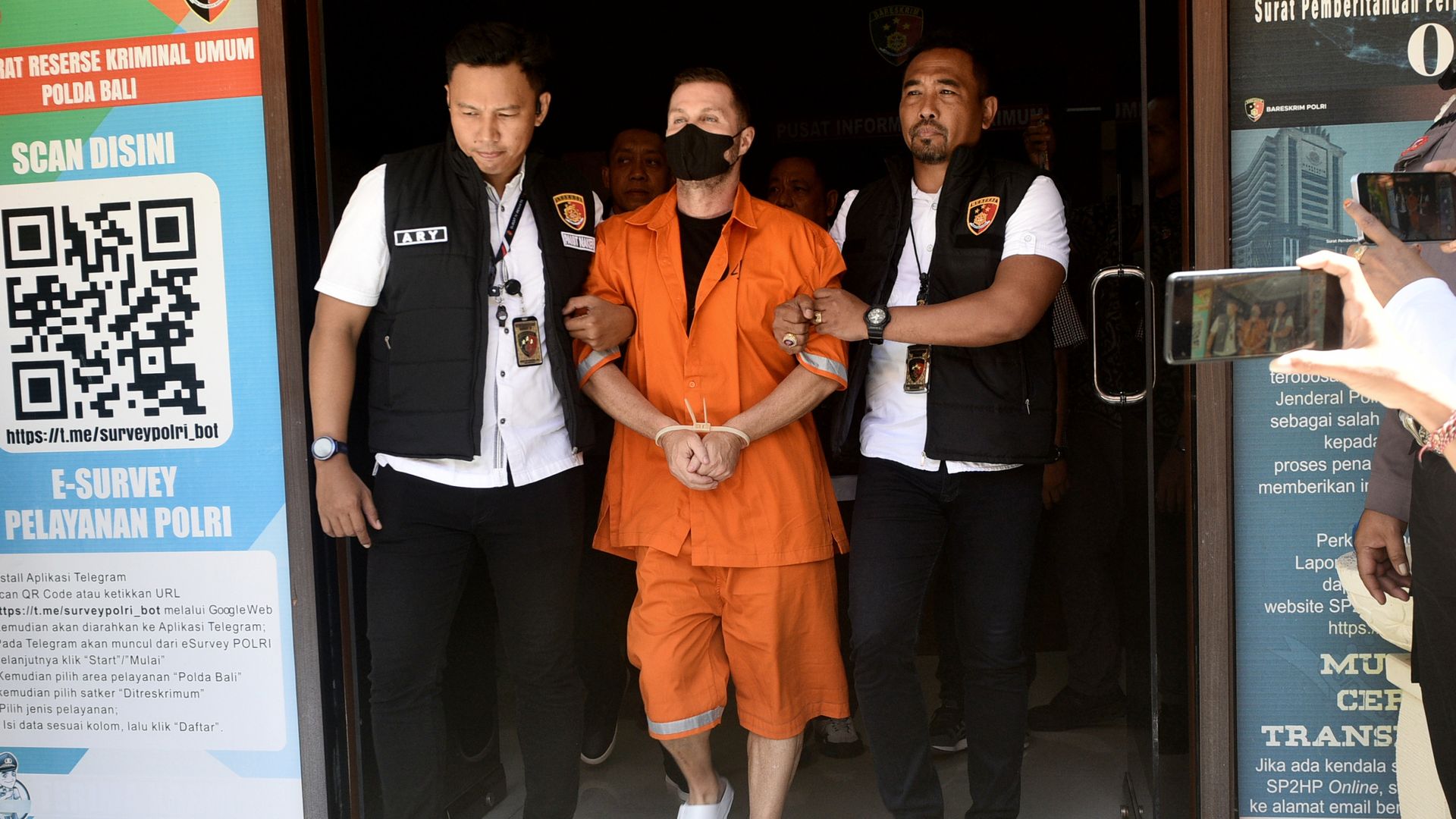
A picture taken on Tuesday shows him in an orange prisoner’s suit as he’s escorted by two police officers in Bali’s capital of Denpasar.

Bali police chief Daniel Adityajaya said the arrest was part of a joint investigation involving Spanish and Scottish police.

Advertisement

He said the 45-year-old was alleged to be the leader of “a large-scale transnational criminal organisation involved in narcotics trafficking and money laundering”.

According to Widiyatmoko, Lyons is alleged to have led a crime ring that used shell companies for money laundering in Europe and the Middle East – including in Spain, Scotland, England, Dubai, Qatar, Bahrain and Turkey.

He said police in Scotland and Spain last week carried out raids in connection with Lyons’ case, resulting in multiple arrests with the help of Europol – a European Union law enforcement cooperation hub – and also Turkey, the Netherlands and the United Arab Emirates.

Scottish media have reported that Lyons survived a 2006 shooting in Glasgow that killed his cousin and later moved to Spain before settling in Dubai.

Advertisement

Last May, his brother and an associate were shot and killed in a suspected gangland shooting at a beachfront bar in Fuengirola, southern Spain.

Read more from Sky News:
England cricket star fined for speeding at 93mph
Spurs appoint third head coach of the season

Lyons arrived in Bali with two companions who are believed to still be on the island, said Bugie Kurniawan of Bali’s immigration office.

He said Spain’s Interpol has identified them as members of the same criminal cartel but they are not on any arrest warrants.

Advertisement

Source link

Continue Reading

NewsBeat

Roberto De Zerbi appointed as new Tottenham boss despite fan backlash

Published

on

Roberto De Zerbi has been named as the new Tottenham boss on a five-year contract, tasked with saving them from a Premier League relegation despite a number of supporters’ groups having urged Spurs not to appoint him.

Tottenham parted ways with Igor Tudor “by mutual consent” on Sunday after a disastrous seven-game spell that lasted just 44 days and left the north London club in dire straits, only one point and one place above West Ham in the Premier League relegation zone and in real danger of dropping out of the top flight since 1977.

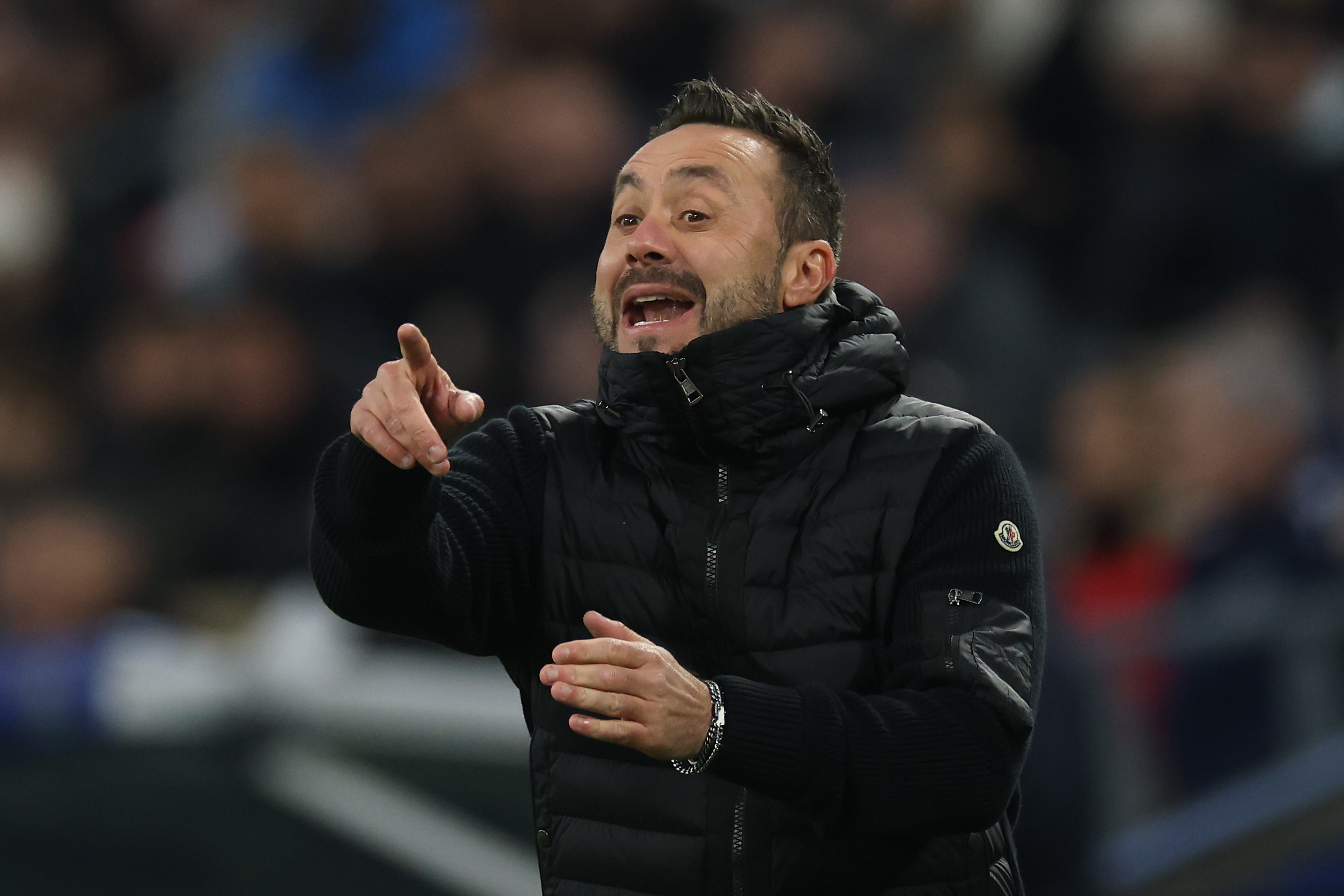
Roberto De Zerbi will be the new Tottenham manager
Roberto De Zerbi will be the new Tottenham manager (Getty Images)

They are winless in their last 13 Premier League games, their longest run without a top-flight success in 91 years and endured an embarrassing 5-2 capitulation against Atletico Madrid in the first leg of their Champions League last-16 clash before a futile second-leg success served as their only win under Tudor, who was a left-field appointment when he replaced Thomas Frank in February.

But the club has opted for ex-Brighton and Marseille coach De Zerbi, who left the Ligue 1 side in February. It was initially thought that the 46-year-old was only happy to join Spurs at the end of the season, once he knew their league status, but has had a change of heart and will become head coach immediately to try and steer them away from the drop. He has signed a long-term deal, with no relegation clause.

A Tottenham statement said: “We are pleased to announce the appointment of Roberto De Zerbi as our new men’s head coach on a long-term contract, subject to work permit.”

In a statement accompanying Tottenham’s announcement, De Zerbi insisted he is committed to the club’s “ambition for the future”. The Italian lasted less than two seasons in his previous two spells at Brighton and Marseille, and he has been immediately thrown into a relegation battle.

Advertisement

“I am delighted to be joining this fantastic football club, which is one of the biggest and most prestigious in the world,” said De Zerbi. “In all my discussions with the club’s leadership, their ambition for the future has been clear – to build a team capable of reaching great achievements, and to do that playing a style of football that excites and inspires our supporters. I am here because I believe in that ambition and have signed a long-term contract to give everything to deliver it.

“Our short-term priority is to climb the Premier League table, which will be the complete focus until the final whistle of the last game of the season. I’m looking forward to getting out on the training pitch and working with these players to achieve that.”

De Zerbi developed a reputation for possession-based, attacking football while in charge of Benevento and Sassuolo in his homeland before a spell at Shakhtar Donetsk was cut short by Russia’s invasion of Ukraine in 2022. He joined Brighton and secured European football for the first time in the Seagulls’ history during his first season in charge – ultimately reaching the last 16 of the Europa League during the following campaign.

That success saw him linked with managerial vacancies at giants such as Barcelona, Manchester United, Liverpool and Bayern Munich but his relationship with Brighton hierarchy completely broke down, leading to a mutual parting of ways at the end of the 2023-24 season.

Advertisement

He then joined Marseille, finishing second in Ligue 1 in 2024-25 but leaving by mutual agreement in February 2026 after a Champions League exit in the league phase and a 5-0 loss to Paris Saint-Germain domestically.

De Zerbi left Marseille in February
De Zerbi left Marseille in February (Getty Images)

When he was linked with the Spurs job, three Tottenham fan groups urged the club not to make the appointment, due to the Italian having backed controversial Marseille forward Mason Greenwood during his time in charge.

Ex-Manchester United attacker Greenwood was charged in October 2022 with one count of attempted rape, one count of controlling and coercive behaviour and one count of assault occasioning actual bodily harm over allegations relating to a young woman after images and videos were posted online.

The Crown Prosecution Service dropped the charges in February 2023 owing to a “combination of the withdrawal of key witnesses” and due to “no realistic prospect of conviction”. Greenwood has since resumed his career and joined Marseille in 2024.

In November, De Zerbi described Greenwood as a “good guy” who had paid a “heavy price” and added: “It saddens me what happened in his life, because I know a totally different person than the one who was described.”

Advertisement
Mason Greenwood was defended by De Zerbi during his time in charge of Marseille
Mason Greenwood was defended by De Zerbi during his time in charge of Marseille (Getty Images)

Tottenham fan groups Proud Lilywhites, Spurs Reach and Women of the Lane all started a “No to De Zerbi” campaign due to the Greenwood association.

Proud Lilywhites said at the time: “We’ve seen the reports linking Roberto De Zerbi with the Tottenham job and honestly, it doesn’t sit right. As Proud Lilywhites, we care deeply about this club, not just what happens on the pitch, but what Tottenham stands for off it. This isn’t just about results or style of football. It’s about values, identity, and the kind of people we choose to represent us.”

In a statement following De Zerbi’s appointment, Proud Lilywhites said: “Whilst we disagree with the managerial choice, in terms of culture and competence, we will continue to support the players without pretending to be comfortable with the appointment.

“Staying silent is not the answer. But choosing when and where to be vocal matters. Managers come and go. Executives come and go. Players come and go. Fans remain. We are the constant in this club. We will continue to represent the views of our members to the club, alongside the other supporter associations. This is not noise or reaction. It is a considered position, and it is not going away.”

Source link

Advertisement
Continue Reading

NewsBeat

DR Congo vs Jamaica LIVE: World Cup play-off match stream, latest score and goal updates

Published

on

Standing in their way, though, is Jamaica, still reeling from the shock resignation of manager Steve McLaren. He hung up his coach’s whistle in November after overseeing a humiliating 2-0 defeat by Curacao, also missing out on automatic World Cup qualification. But the Reggae Boyz have been in fine form since replacing him with Rudolph Speid. They are unbeaten in five, most recently beating New Caledonia 1-0.

Source link

Continue Reading

Trending

Copyright © 2025