Sir David Attenborough has brought the joy of the natural and animal world to the nation’s screens through his beloved programmes for 70 years.
His reverential, sometimes playful tone has become a mainstay of British television, while his efforts to raise awareness for conservation and climate change have inspired millions.
In a clip that has been voted one of the top TV moments of all time, one young gorilla lies across his body, while just at the edge of the picture you can see the baby gorillas who were busy removing his shoes.
The 13-part series featured footage from 30 countries. More than 500 million people tuned in – 11.4 per cent of the global population.
Advertisement
In 1984, Sir David became one of the first underwater presenters as he observed the grey reef shark in The Living Planet. Developments in full face plates allowed him not only to be able to deliver his commentary but to be recorded clearly.
Also in The Living Planet, he presented in zero gravity from the Nasa experimental plane, nicknamed the vomit comet.
He bounced and floated around as he described how we take gravity for granted, before ending his commentary completely upside down.
Sir David Attenborough is famed for his decades-long career as a broadcaster and naturalist (John Walton/PA)
In 1990, he took viewers swimming with dolphins in Trials Of Life.
Advertisement
The presenter gave viewers insights into the body language and sounds that dolphins use to communicate, strapping on his scuba diving suit to eavesdrop on their conversations.
Outtakes with an exotic bird
In The Life Of Birds in 1998, he clutched his binoculars as he walked carefully towards a lyrebird in south Australia and marvelled in delight over its extraordinary impersonation skills.
The bird’s camera shutter, car alarm and chainsaw calls were its attempts to outdo rivals and attract a mate.
Advertisement
Sir David could be seen laughing incredulously at the bird as it repeatedly interrupted his takes with its incredible noises.
Seeing a blue whale in action
Sir David’s sheer excitement at the moment a huge blue whale surfaced during 2002’s The Life Of Mammals, was heart-warming to witness. He is shown clinging on to his little boat, which is dwarfed by the 30-metre whale, the largest animal known to have existed.
Also in The Life Of Mammals, Sir David visited a group of orphaned chimps which were being taught the survival skills needed to live in the wild. As his boat neared the landing point, an enthusiastic chimp jumped straight in to greet him. He later enjoyed a nut-cracking session with a group of dexterous mammals.
Advertisement
Another spectacular moment in the series came when Sir David trudged slowly through knee-deep snow to come face-to-face with a Siberian tiger in captivity.
Sir David Attenborough has been hailed by many as a ‘national treasure’ (Chris Young/PA)
– A sequence in Life In Cold Blood in 2008 used slow motion to show the diversity in size, shape and ability of frogs and toads. Sir David lay on the floor of a Madagascan rainforest with a tiny pygmy frog resting on his fingertip to marvel at the “miracle of miniaturisation”.
– In Frozen Planet in 2011 he became the oldest person to visit the North Pole, venturing into high altitude and extreme cold at the age of 84.
Sir David met and sat with a 13-year-old hand-reared cheetah named Ares in 2014 for series three of David Attenborough’s Natural Curiosities.
Advertisement
Featured in the Impossible Feats episode, the encounter demonstrated the cheetah’s specialized adaptations, with footage showing the calm, friendly interaction rather than a wild hunting scenario.
The broadcaster celebrated his 90th birthday in 2016, and sat down with journalist Kirsty Young for the BBC’s Attenborough At 90 documentary to recount the highlights of his life and career.
Later that year, Planet Earth II was released with Sir David’s soothing narration accompanying scenes including rare snow leopard mating footage and lions attacking a giraffe in a desert.
The critically acclaimed documentary series also featured an intense, high-speed scene of a newborn marine iguana escaping from a swarm of racer snakes on Fernandina Island – which has been hailed as one of the most tense sequences in wildlife television history.
Advertisement
Making history with Blue Planet II
Sir David also returned as a presenter for Blue Planet II in 2017, which became the most-watched UK television show of 2017, with a chart-topping 14 million tuning in to the first episode of the wildlife series, which included dramatic footage of walruses fighting to find a home, along with dazzling scenes of surfing dolphins and a sex-changing fish.
The series is also thought to have triggered an increase in public, media and political attention to plastic pollution.
Sir David Attenborough at the world premiere of the BBC’s Blue Planet II (Geoff Pugh/Daily Telegraph/PA)
The debut episode of Dynasties – which focused on the chimpanzee – became the most popular programme of the month when it aired in November 2018.
Advertisement
The series, narrated by Sir David, also documented the struggles of baby penguins fighting to avoid an icy death, with the BBC camera crew intervening and coming to the rescue of the stricken birds, breaking a long-held stance of wildlife filming not to get involved.
A surprise cameo at Glastonbury
In 2019, Sir David made a surprise appearance on Glastonbury’s Pyramid stage with a four-minute trailer for the BBC’s new natural history series Seven Worlds, One Planet ahead of Kylie Minogue’s performance.
Sir David also made a speech to the huge crowds gathered, celebrating the work of Glastonbury in banning single-use plastic bottles from the Somerset event that year.
Advertisement
Sir David Attenborough made a surprise appearance on Glastonbury’s Pyramid stage (Aaron Chown/PA)
Receiving a rare second knighthood
Sir David was awarded one of Britain’s highest honours, the Knight Grand Cross of the Order of St Michael and St George, by fellow avid environmentalist the then Prince of Wales in 2022.
That year, Sir David was also named a Champion of the Earth by the UN’s Environment Programme (UNEP), and appointed a member of the Order of the Companions of Honour in the New Year Honours list recognising his major contributions to science.
Sir David Attenborough after being appointed a Knight Grand Cross of the Order of St Michael and St George (Andrew Matthews/PA)
Our region’s political landscape could be radically reshaped, with ‘all out’ elections being held in a number of areas that have been traditional Labour strongholds.
Every council seat in Newcastle, Gateshead, Sunderland, South Tyneside is up for grabs.
One-third of the seats in both North Tyneside and Hartlepool will also be contested.
Advertisement
There are no elections for either of the county councils of Durham and Northumberland, where elections are staged once every four years and were last held in May 2025.
This is a massive and complex set of elections, with political rivals fighting over more than 5,000 seats on 136 councils across England.
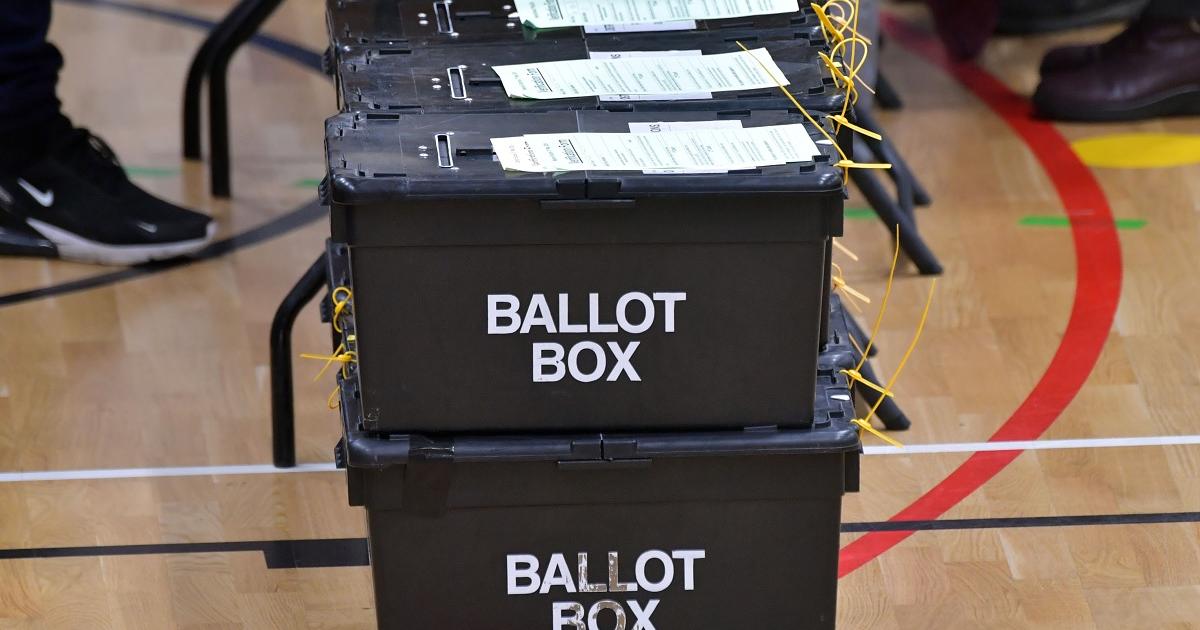
Rather than starting the process of counting votes immediately after the polls close on Thursday and declaring results overnight, most of our councils are holding their counts during the daytime on Friday, May 8.
And while counting staff in places like Sunderland and Newcastle have been famed for their speed in the past, this Friday could be a very long day – particularly for the four councils holding all out elections.
Advertisement
The fact that three candidates will be elected for each ward in Newcastle, Gateshead, Sunderland, South Tyneside means that there is a high volume of candidates standing.
The prospect of recounts and the added time taken to tally votes from ballot papers where people can support multiple candidates means there is major uncertainty among local authority staff on exactly how long the counting might take.
Based on the information we have at the moment, here is when to expect results to come through in your area:
Advertisement
Newcastle
Counting of votes will be split into two sessions, with 13 wards in the morning of Friday, May 8 and 13 in the afternoon. A first round of result declarations is expected to begin at around 11.30am, and the second from 3pm.
The city council estimates that results for all 26 electoral wards should be declared by roughly 4.30pm.
Advertisement
Gateshead
Like Newcastle, Gateshead Council’s vote counting will also be split between morning and afternoon sessions on the Friday. It is expected that all results for Gateshead’s 22 wards should be declared by 5pm.
Sunderland
Advertisement
Sunderland City Council expects that it will not declare any results before 1pm on Friday, May 8. Declarations for all of its 25 electoral wards are expected to continue until the late afternoon.
South Tyneside
The first of the results in South Tyneside’s 18 wards is expected around 12.30pm on Friday, May 8. Results will continue throughout the afternoon, with the final announcements expected after 5pm.
Advertisement
North Tyneside
North Tyneside is only holding a one-third election this year, with one councillor to be elected for each of its 20 wards. Its count will also be held in the daytime on Friday, however.
It is currently expected that the results will start to be announced at around 12.15pm and be fully declared by roughly 1.45pm.
Advertisement
Hartlepool
Hartlepool is the only council in our region staging an overnight count.12 out of its total 36 council seats are up for grabs on election day and its results are expected to have been announced by 2am on Friday, May 8.
Arsenal have qualified for the Champions League for the first time in two decades, but their red shirts still may not grace Europe’s greatest stage.
Regardless of the final’s outcome, Arsenal stand to record their best finish in the Champions League since they were denied by Barcelona in 2006.
They wore a yellow change strip in that match as goals from Samuel Eto’o and Juliano Belletti cancelled out Sol Campbell’s opener.
What kit will Arsenal wear in the Champions League final?
Advertisement
If Arsenal lift the Champions League on May 30, they may not do so in their iconic scarlet home strip.
Due to the peculiarities of the bracket system employed by UEFA in the Champions League knockout rounds.
As Arsenal were drawn into the Blue bracket, which saw them dodge the likes of Real Madrid and Manchester City en route to the final, they will be considered the away team.
Arsenal may be forced to deviate from their usual red shirt in the Champions League final
Getty / London Standard
Advertisement
Even though the final will be played on neutral ground in Budapest, one team must serve as the away side for administrative reasons.
This means that they will be the team to don a change strip should there be a kit clash.
This will certainly be the case if they face Bayern Munich, whose home kit is red and white. The Gunners could also opt to wear an away strip if they face PSG in the final, though this seems unlikely.
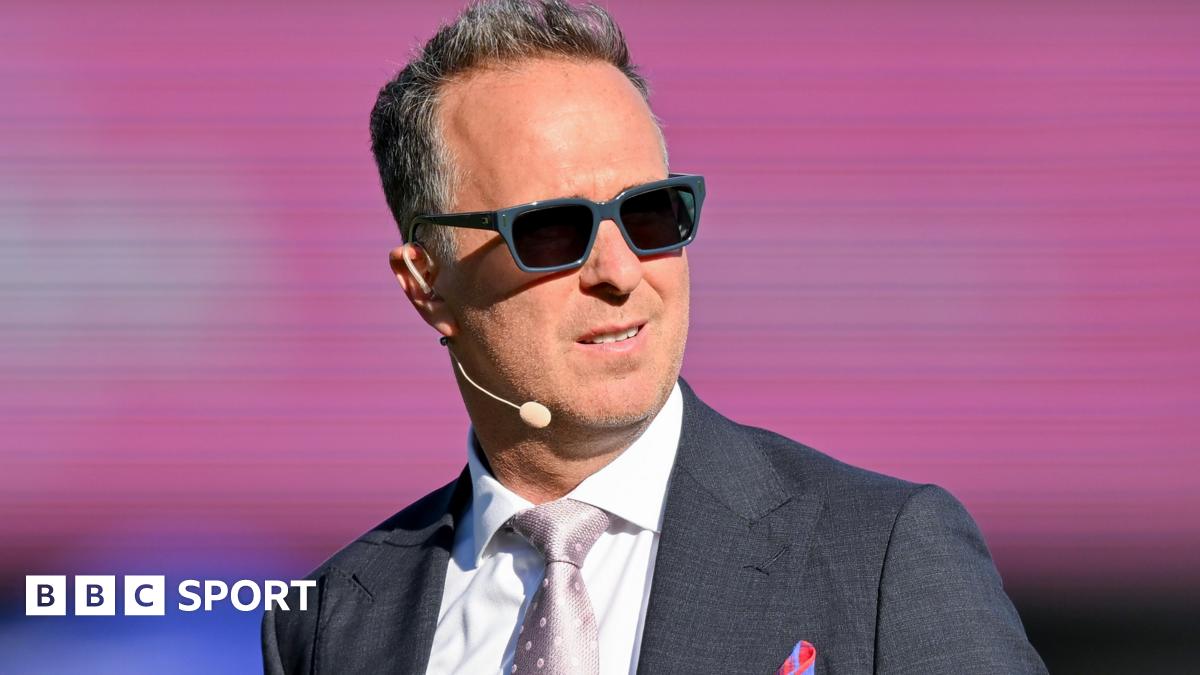
Former captain Michael Vaughan says it is “ridiculous” England are yet to appoint their new national selector.
The process to name the successor to Luke Wright, who announced he was stepping down on 22 January and left after the T20 World Cup concluded in March, has reached the final stages, with interviews for the position held this week.
There have already been four rounds of action in the County Championship and England are set to name their squad for the first Test against New Zealand in two weeks’ time.
“It’s ridiculous how they’re announcing a selector so late,” Vaughan said on the Stick to Cricket podcast.
Advertisement
“I wanted the selector there on 1 April, going out, having a look, gathering information.
“Luke Wright quit at the back end of Australia. We knew didn’t we?
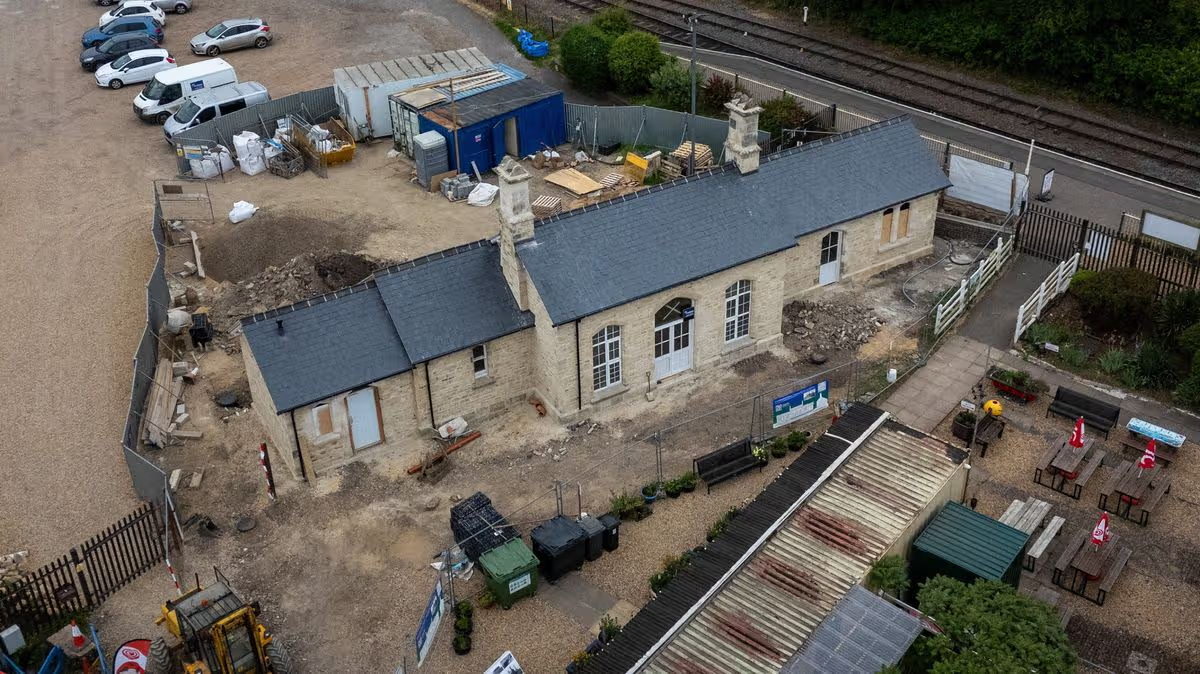
The restored station, which now has a different name, is hoped to provide an attractive gateway to a railway site
Katie Green Senior multimedia reporter and Faye Mayern, SWNS
13:00, 06 May 2026
A disused Victorian railway station that was facing demolition to make way for a major road scheme has almost completed its brick-by-brick relocation nine miles away.
Wansford Road station in Sutton, near Peterborough, was threatened with destruction to accommodate what is now the abandoned construction of a new dual carriageway on the A47. The proposed £100 million upgrade near Wansford was scrapped last summer due to costs.
However the station, which dates back to 1867, was dismantled in April 2024 and has nearly been reconstructed in the city under its new identity, known as Woodstone Wharf Station.
Advertisement
The original Wansford Road station, constructed in brick with a limestone façade and featuring a booking office, waiting room and administration office, was built to serve Wansford residents. Following its closure in 1929, it was converted into a private home before eventually falling into disuse.
Stan Bell, who has been helping to spearhead the project at The Wansford Road CIO, said: “It’s clear that the building will have a huge rejuvenating impact on this often-forgotten part of Peterborough. We’ve been incredibly lucky to have the support of National Highways.
“We’ve moved it from the original site to its new site in Peterborough, carefully moving the stones. The station will look almost exactly as it did in the Victorian times.
Advertisement
“It’s such a good example of the architecture and it’s too good an opportunity to miss. It’s very important that we save it for future generations.”
It’s anticipated that the structure will be reconstructed and sited to create an appealing entrance to the Railworld site and the Nene Valley trains.
Its primary purpose will be ticket sales and it will be styled as a Victorian ticket office, featuring period artefacts on display. The new railway station is scheduled to open in summer 2026.
Following recent antisemitic violence and aggression, calls from some quarters for a temporary ban on pro-Palestine marches have gained traction. Conservative party leader Kemi Badenoch has firmly supported a ban, while
Keir Starmer, the prime minister, has suggested that some protests may need to be stopped. The government’s independent reviewer of terrorism legislation has called for a moratorium on such marches.
Those who have made such calls do so on the grounds that pro-Palestine marches, whatever their intent, are contributing to a “tone of Jew hatred within our country”, in the words of Chief Rabbi Sir Ephraim Mirvis. Starmer has also expressed concern about the “cumulative” effect of the marches on Jewish communities.
This is an understandable position in some ways. There can be little denying that some participants in pro-Palestine events have articulated antisemitic positions. And in a period where more clearly needs to be done to address antisemitic violence and aggression, a ban appears to provide a way for authorities to send a clear message that there is no place for antisemitism in Britain today.
Yet there are also problems with such proposals. As policymakers consider their options, it is important that these problems are taken seriously.
Advertisement
Evidence on the relationship between protest activity and targeted violence outside of the protest arena is limited. The available evidence points to a complex and context-dependent relationship.
Some studies have found that when protests increase, extremism and extremist violence can also rise, especially when society is more divided. Such a pattern has been observed, for example, in the US, where the bipartisan thinktank the Center for Strategic and International Studies identified heightened protest activity and rising domestic terrorism during the early 2020s.
However, many studies of nonviolent protest show that it reduces political violence, by providing nonviolent means of pursuing social and political objectives.
Where heightened protest activity coincides with increased extremist violence, it is often unclear whether protests or marches themselves are the cause. Today, people participating in social movements are likely to access and share information through a range of (often unregulated) spaces both offline and online. It is difficult to assess how important protests themselves might be in influencing people to go on to engage in targeted violence.
Advertisement
This is not simply academic nitpicking. It means that it is possible that a ban on marches would have little to no effect on the use of targeted violence against Jewish communities.
In fact, there is a distinct possibility that banning pro-Palestine marches, even if only temporarily, might actually increase violence.
Studies show that violence is less likely to escalate when moderate groups within protest movements are present and have influence. This has been observed, for example, in research into the escalation or inhibition of violence during waves of far-right protest.
Advertisement
Expanded state repression – such as bans on certain forms of previously legal protest – can weaken the position of moderate factions. When this happens, calls for restraint and advocacy of non- or less-violent strategies can lose credibility within the movement, weakening the “internal brakes” on violence.
Practicalities of enforcement
A moratorium on pro-Palestine marches would also raise many questions about the practicalities of any restrictions. For one, calls on the police to ban other contentious demonstrations that risk hostility towards different groups would increase.
What particular types of action would be banned? Marches? Demonstrations? Would size be a factor? Would it cover a protest against the ban on the protest? What about other forms of action such as sit-ins, information stands or coordinated online action? And what sanctions would be imposed on those who did not comply?
Attempting to enforce such bans could become a significant drain on already stretched public resources, not least because activists would probably seek to increase pressure on authorities because of those costs. This is one of the most obvious lessons to draw from responses to the government’s attempts to ban the group Palestine Action.
In addition to this, police have also recently been authorised to consider the “cumulative impact” of protests on local areas when policing. They have had to grapple with how and when to incorporate this in addition to their usual powers.
Before introducing a ban, it’s important to think about the example it would set and how it could influence future decisions about the right to protest. The UK would be less able to criticise authoritarian countries and illiberal democracies that misuse counterextremism and counter-terrorism powers that limit people’s freedom.
None of this is to deny the urgency of confronting antisemitic violence and aggression in the UK. This requires sustained political commitment, effective policing and community protection. But restricting the right to protest is a blunt and risky instrument.
Advertisement
The available evidence suggests it may do little to reduce harm and could, in some circumstances, make matters worse. Politicians should therefore be cautious before treating bans on marches as a solution to complex and deeply rooted problems.
Mass job losses are feared after the owner of high street chain TG Jones announced proposals to revive the loss-making retailer
14:25, 06 May 2026Updated 14:25, 06 May 2026
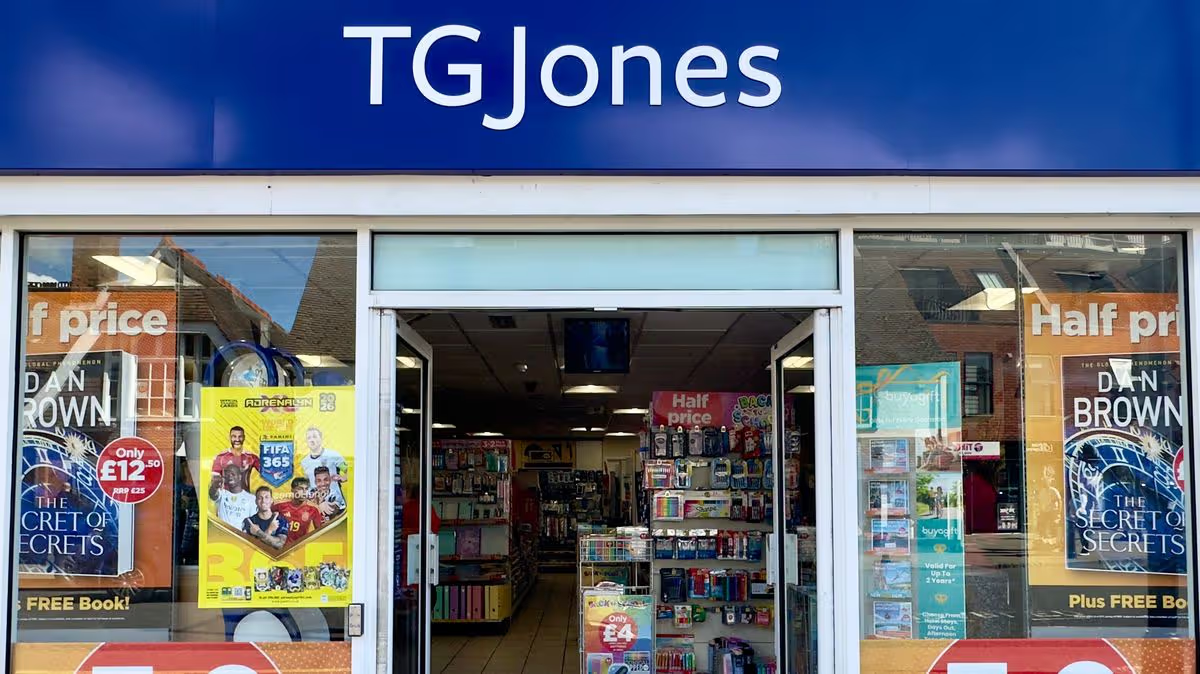
More than one in four former WH Smith high street stores risk closure under sweeping plans.
The cull of up to 150 stores – which have been rebranded TG Jones – threaten large scale job losses among its 5,000 strong workforce.
A radical restructuring has been put forward by Modella Capital, which acquired WH Smith’s high street business for £40million last year.
Advertisement
Despite ambitions to grow the business, it has instead suffered tough trading and mounting costs. Bosses have also blamed the loss of the WH Smith name for putting off shoppers. The remaining WH Smith business is now concentrated on its travel stores situated in airports and railway stations, as well as hospitals.
Insiders have also blamed the cost of refurbishing the stores, claiming many had been barely touched this century.
Modella is set to begin negotiations with store landlords that will ultimately determine the number of stores that will shut. It could result in up to 150 of the 480 TG Jones closing. The outcome will determined through two High Court hearings scheduled for next month.
Advertisement
The move also threatens the future of a large number of Post Office branches that are situated in TG Jones stores.
Modella has been prolific in snapping-up struggling retailers over the past 18 months, including Hobbycraft, the Original Factory Shop and Claire’s Accessories. However, Hobbycraft has been put up for sales and the Original Factory Shop and Claire’s Accessories have collapsed into administration.
A TG Jones spokesperson said: “TGJones has launched a formal process known as a restructuring plan to make the business fit for the future. The plan is an essential part of the company’s turnaround and will support further investment in stores over the long term.
“Modella Capital has committed to financial contributions totalling more than £35million as part of the process.
Advertisement
“This decision has not been taken lightly. While we continue to believe in the strength of the core business, TG Jones has experienced highly challenging trading conditions over the past year, along with many other brick-and-mortar retailers.
“Weak consumer spending and cost-of-living pressures, combined with rising operating costs as a direct result of government policy and recent geopolitical events, have meant that the company as a whole has remained loss-making.
“The forced name change from WH Smith has also negatively impacted consumer awareness, despite the fact that the proposition has improved.”
It went on: “The survival of this iconic 234-year-old business is our imperative. No decisions have yet been taken on how this will impact roles, but we will aim to preserve as many jobs as possible. Any potential store closures or role reductions will be subject to appropriate consultation, and we are committed to engaging openly and constructively with colleagues and their representatives.
Advertisement
“We want to be clear, however, that the plan may result in the closure of some stores and the loss of some roles. We recognise the impact this uncertainty will have on colleagues, their families and the communities we serve.”
It first aired on BBC One in the UK in 1986, before transferring to Channel 5 in 2008.
Described as a “landmark deal” between UKTV and Fremantle, the series will air weekly on U&Drama, as well as being available to watch on streaming service U.
This is the first time that the episodes have aired chronologically on British screens in decades.
Advertisement
Emma Tibbetts, UKTV’s Director of Programming for scripted content, said: “Neighbours is one of television’s most iconic and enduring dramas, and we’re thrilled to bring the back-catalogue to U.
“This acquisition further expands the breadth of scripted entertainment available on our free streaming service, strengthening our growing slate of global IP.
“We can’t wait for both long‑time fans and new audiences to rediscover the series in its entirety.”
Louise Toner, VP Distribution UK and Ireland, International, for Fremantle, added: “Neighbours is a truly iconic series, loved across generations.
Advertisement
“We’re thrilled to partner with UKTV to bring its classic episodes and unforgettable characters back to audiences old and new.”
Of the second cancellation, executive producer Jason Herbison told the Radio Times in March 2025: “We were considered a very big success on Amazon Freevee, and we’re so grateful to them for this chapter and this two and a half years.
“While we seem to be very successful on Prime, we’re just simply not part of their content strategy going forward.
Advertisement
“And there’s really no hard feelings with that. Things change, and as I say, we’re just very grateful to them to have had this chapter.”
The upcoming Senedd elections may shift the balance of power in Wales. Any new government must immediately grapple with the significant ongoing challenges of embedding educational reforms across the additional learning needs system.
Recent policy proposals to change the system of support for children with special educational needs in England have brought a heightened focus on how education systems might best support all learners. In Wales, special educational needs and disabilities are referred to as additional learning needs (ALN).
Wales reached a major milestone in August 2025 when the ALN code came fully into effect, four years after its publication.
Despite the devolution of education and increasing divergence in education policy between Wales and England, the ALN code in Wales shares some similar ambitions to England’s recent policy plans.
Advertisement
These reforms in Wales sought to increase the rights and autonomy of children and young people. They provide statutory individual development plans for those needing anything additional to universal learning provision. They also extend support for learners aged up to 25. The intention is to improve consistency and strengthen multi-agency collaboration across education, health and social care.
The progress of reform
The additional learning needs reforms in Wales reflect a commendable shift towards rights-based, person-centred planning and autonomy for children and young people and their families.
This is also a key tenet of the Curriculum for Wales. This has been implemented since 2022 in primary schools, and gradually over subsequent years in secondary schools. The curriculum framework has a focus on learner voice and providing a broad, purpose-led and flexible curriculum. It is designed to ensure that even those from disadvantaged backgrounds or with complex needs are supported to access a meaningful education.
A key issue relates to the identification of learners with ALN. Under the new system, there has been a 53% decrease in the number of learners being identified as having ALN. This is despite a reported increase in children presenting with more complex needs, indicating that learning needs may in fact be increasing. Data also suggests that it is those with low to moderate needs who are much less likely to be formally identified.
It has been suggested that this reduction could be due to children who might previously have been identified with ALN being catered for through an improved universal offering.
Some students may be missing out on support. New Africa/Shutterstock
However, teachers have reported that the proportion of learners in their classes with ALN has increased over the past five years. A majority – 65% – of teachers in Wales reported that there were learners in their classes who still needed additional support, but were no longer identified as having ALN following changes in identification criteria.
Lacking resources
This has caused hugely increased workloads in attempts to provide adequate learner support. At the same time, the number of in-house specialist staff to advise and support delivery has dramatically reduced. Without the resources to support more learners with additional needs, many teachers have reported that children are often not receiving the education they are entitled to.
Advertisement
There have been significant strides towards developing inclusive schools across Wales. Even in the best cases, though, there is a long way to go. In reality, the overall picture behind the reduction in identification of ALN indicates issues with identification criteria and resources, and whether the current policy encompasses all children in need, rather than a sudden shift to high quality inclusive education.
Schools report an increase in local authorities refusing requests for assessments or access to support for struggling learners. They have suggested the bar is being raised for access to support, without clarity or transparency. There’s also a clear indication from specialist staff in Wales that they have insufficient time to fulfil their ALN duties.
This suggests that processes and resources for identifying learners with ALN are playing a significant part in the reduced identification. Many learners could be slipping through the net, rather than experiencing effective inclusive provision.
This tension between policy intent and practice is familiar territory when it comes to inclusion. There are ongoing concerns that legislative reform has outpaced operational readiness and available resources, leading to a crisis point.
Advertisement
This crisis is exacerbated for Welsh-medium learners. The policy intention is for a fully bilingual system. But finding Welsh-medium specialists and honouring language preference is proving challenging. This has lead to families struggling to find support in their preferred language. Such battles are at odds with both Welsh Language policy and the principles of Person-Centred Planning and autonomy that are central to the reforms.
Whatever the outcome of the Senedd elections, educators and families across Wales will be hoping for an increased sense of momentum and urgency. They’ll also be looking for a commitment to sustained and appropriate levels of funding to ensure learners in Wales can be supported to access their education.
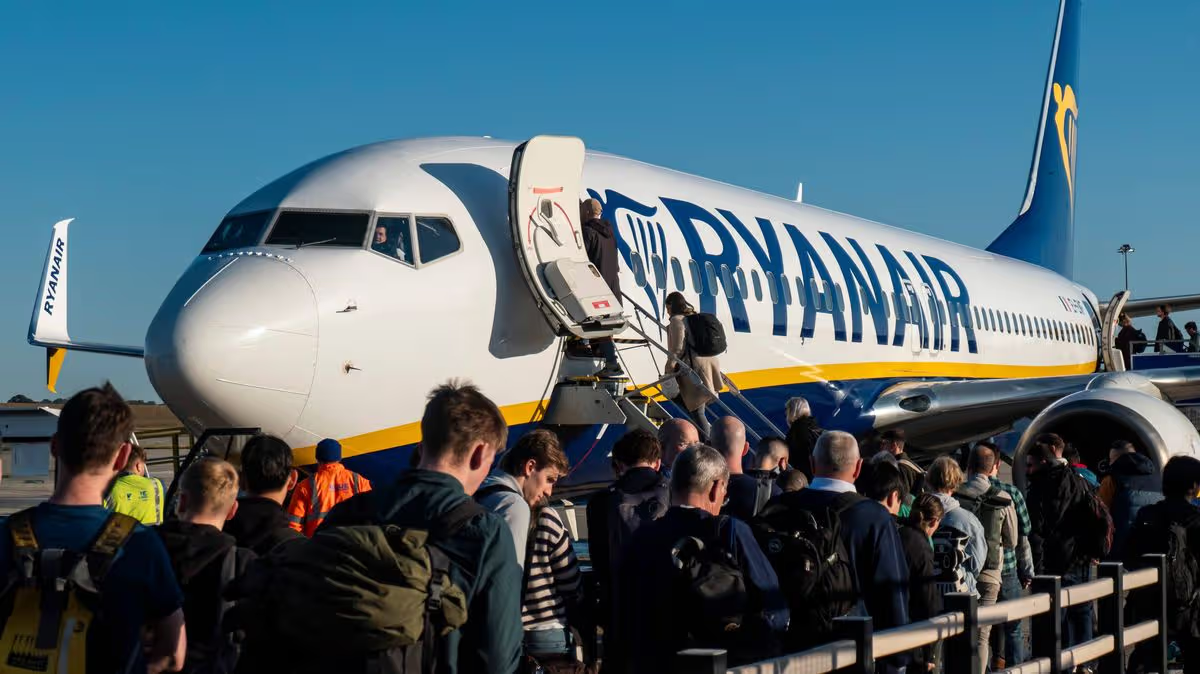
Ryanair is selling cheap flights to Spain and, if you’re looking for a bargain deal, there are some crucial things you need to know. Some say they’re so reasonable, they’re “cheaper than buying dinner”
Millions of passengers fly with Ryanair each year but, if you’re planning a trip to Spain, there’s some vital information you should be aware of. Travellers have been informed that Ryanair is selling seats that are “cheaper than buying dinner”, which is fantastic news for those on the hunt for a budget-friendly getaway.
Advertisement
The travel deals were recently highlighted by Spain Explore on Instagram, with the page eager to bring the bargains to people’s attention. The account claimed the airline has announced routes to Barcelona that are “cheaper than dinner” and, after a quick search, it’s clear that some flights from the UK are remarkably good value.
Alongside the post, the caption read: “Greece to Barcelona for just $48 (£35.26) on Ryanair. May 26, 2026 departure. This price won’t last long so grab yours NOW before it’s gone.”
However, for those travelling from the UK and Ireland, there are a few key details worth knowing to help secure the best possible deals. Ryanair typically offers very competitively priced flights to Barcelona, with fares frequently starting from around £15 to £25 for one-way tickets from various UK departure points, including London Stansted and Manchester.
Advertisement
They predominantly operate into Barcelona El Prat Airport (BCN), typically arriving at Terminal 2B, with fares that are often highly competitive and usually include just a small personal item. The London Stansted to Barcelona route is considered a popular budget option, with one-way tickets occasionally available for as little as £19.
Content cannot be displayed without consent
However, there are several important factors to bear in mind. Generally, you’ll need to book approximately 45 to 60 days ahead to secure the most affordable fares.
Additionally, the lowest prices typically cover only one small personal item. Additional fees may be incurred for cabin baggage or hold luggage.
How to secure the best offers
While a handful of bargain fares remain available this month, June presents flights from as little as £16.99 for one-way trips from airports including Birmingham, Bristol and Liverpool on selected dates.
Advertisement
For departures from Dublin, the website presently displays fares as low as €31 (£26.75) on certain days for a one-way trip, though return prices can vary. The cost is dependent on your chosen travel dates.
For those looking to depart shortly, some return flights are also on offer from just €58 (£50.06) in May. However, you’ll need to move quickly to secure these seats, as availability is restricted.
Meanwhile, departures from Glasgow Prestwick tend to be more economical mid-week in June for those planning to visit Barcelona. Some can be secured for as little as €51 (£44.02) for a return journey in May and June.
Bear in mind that flight prices vary considerably throughout the month, so acting swiftly is essential if you’re hoping to secure a bargain fare. It’s also worth noting that prices fluctuate constantly and may mean you’re restricted to travelling on certain dates.
Advertisement
In fact, costs can change several times a day, driven by real-time demand, seat availability and competitor pricing. Airlines are known to employ dynamic algorithms to adjust fares, with prices climbing as flights fill up or dropping to attract bookings, typically mid-week.
Additional factors such as travel dates, route popularity and public holidays can also influence these shifts. It’s well worth keeping this in mind when shopping around for the best deal.
The series follows police recruits Grace, Annie, and Tommy as they learn the ropes of the police force while working in a high-pressure environment.
As filming gets underway, some of the cast members revealed their favourite things about filming in the city. In a clip shared on BBC’s Instagram, actress Siân Brooke comments: “Belfast is made of the best people, end of.”
Sharing their thoughts on the city, Martin McCann added: “Belfast is made of heart, soul. It’s Northern Ireland you know, it’s beautiful. It really punches above its weight.”
Meanwhile, other members of the cast, including actors Katherine Devlin and Nathan Braniff, said it was also full of love and good craic as Nathan remarked: “For me, it feels like home.”
Katherine added: “I think it’s because it’s so vibrant as a city, and also, there are so many different textures to it. You have Holywood direction and it’s beside the sea and then you also have inner-city Belfast too.”
Following the announcement that another series was on the way, the BBC shared that Richard Dormer was returning to the role of Gerry Cliff.
Although his character was killed off in series one, fans suspect it’s likely his reprisal will be down to a flashback scene or a storyline surrounding Gerry’s murder investigation.
Fans will also see Hannah McClean as solicitor Jen Robinson and Jonathan Harden as disgraced former Inspector Jonty, in an episode that will answer important questions from the past.
Declan Lawn and Adam Patterson, co- creators and co-writers say: “We’re very excited to bring this series of Blue Lights to audiences.
“It reveals a lot of dark secrets, examines what justice looks like in Belfast today, and ties together the past, present, and futures of Grace, Annie and Tommy in an action-packed story. We can’t wait to start filming it!”
Advertisement
A synopsis for the series reads: “Three years into their jobs as response officers, Constables Grace Ellis, Tommy Foster, and Annie Conlon are operating at their limit, facing a new threat on the streets that the police can barely control.
“Meanwhile, the murder trial of Gerry Cliff exposes a dangerous and long-buried secret that leads to chaos both inside the police and across the criminal underworld. As they grapple with big decisions about their future, Grace, Tommy and Annie must find the courage to face the greatest threat they have ever encountered: the truth.”
















![UAE Just Broke OPEC! [Everything Changes For Oil & Bitcoin]](https://wordupnews.com/wp-content/uploads/2026/05/1778075782_maxresdefault-80x80.jpg)
































You must be logged in to post a comment Login