





Connect with us
DAPA Banner

NewsBeat

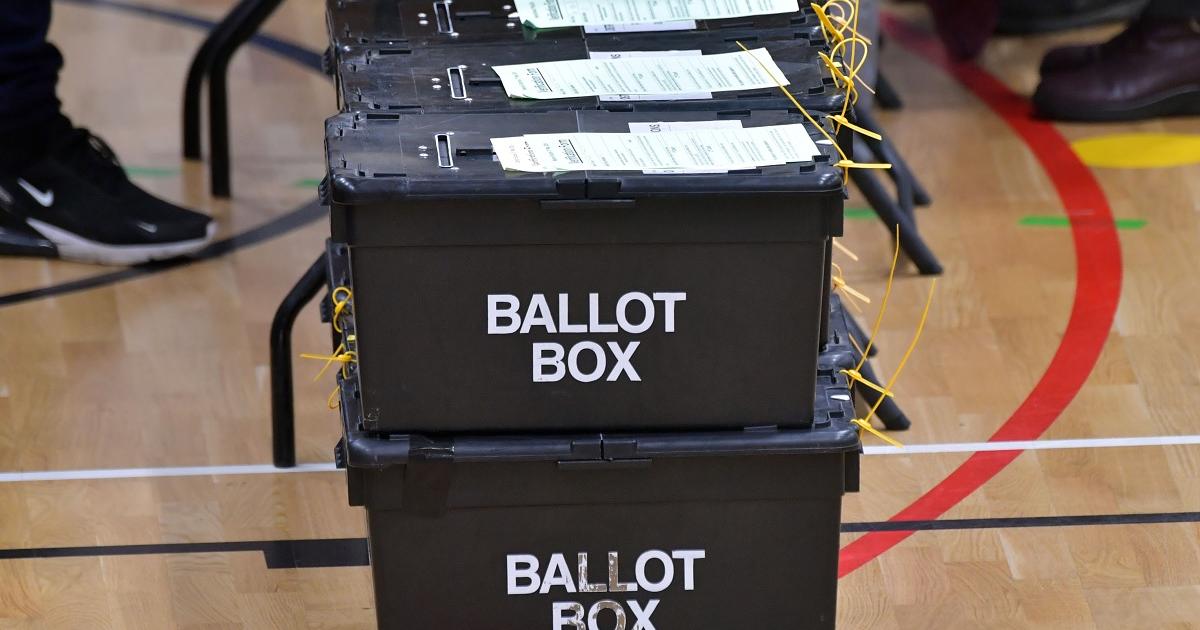
2026 local elections North East results timings

Published

on

2026 local elections North East results timings

Our region’s political landscape could be radically reshaped, with ‘all out’ elections being held in a number of areas that have been traditional Labour strongholds.

Every council seat in Newcastle, Gateshead, Sunderland, South Tyneside is up for grabs.

One-third of the seats in both North Tyneside and Hartlepool will also be contested.

Advertisement

There are no elections for either of the county councils of Durham and Northumberland, where elections are staged once every four years and were last held in May 2025.

This is a massive and complex set of elections, with political rivals fighting over more than 5,000 seats on 136 councils across England.

Rather than starting the process of counting votes immediately after the polls close on Thursday and declaring results overnight, most of our councils are holding their counts during the daytime on Friday, May 8.

And while counting staff in places like Sunderland and Newcastle have been famed for their speed in the past, this Friday could be a very long day – particularly for the four councils holding all out elections.

Advertisement

The fact that three candidates will be elected for each ward in Newcastle, Gateshead, Sunderland, South Tyneside means that there is a high volume of candidates standing. 

The prospect of recounts and the added time taken to tally votes from ballot papers where people can support multiple candidates means there is major uncertainty among local authority staff on exactly how long the counting might take.

Based on the information we have at the moment, here is when to expect results to come through in your area:


Advertisement

Newcastle

Counting of votes will be split into two sessions, with 13 wards in the morning of Friday, May 8 and 13 in the afternoon. A first round of result declarations is expected to begin at around 11.30am, and the second from 3pm. 

The city council estimates that results for all 26 electoral wards should be declared by roughly 4.30pm.


Advertisement

Gateshead

Like Newcastle, Gateshead Council’s vote counting will also be split between morning and afternoon sessions on the Friday. It is expected that all results for Gateshead’s 22 wards should be declared by 5pm.

 

Sunderland

Advertisement

Sunderland City Council expects that it will not declare any results before 1pm on Friday, May 8. Declarations for all of its 25 electoral wards are expected to continue until the late afternoon.


South Tyneside

The first of the results in South Tyneside’s 18 wards is expected around 12.30pm on Friday, May 8. Results will continue throughout the afternoon, with the final announcements expected after 5pm.

Advertisement


North Tyneside

North Tyneside is only holding a one-third election this year, with one councillor to be elected for each of its 20 wards. Its count will also be held in the daytime on Friday, however.

It is currently expected that the results will start to be announced at around 12.15pm and be fully declared by roughly 1.45pm.

Advertisement


Hartlepool

Hartlepool is the only council in our region staging an overnight count.12 out of its total 36 council seats are up for grabs on election day and its results are expected to have been announced by 2am on Friday, May 8.

Advertisement

Source link

Continue Reading
Click to comment

You must be logged in to post a comment Login

Leave a Reply

NewsBeat

why do we always forget about Anne?

Published

on

why do we always forget about Anne?

A recent trip to Haworth, in West Yorkshire, got me thinking about Anne Brontë, who died 177 years ago this month. Stepping into St Michael and All Angels’ Church, a carved stone pillar prominently declares the location of the Brontë family vault. All members of the Brontë family – parents Patrick and Maria, sisters Elizabeth and Maria who died young, the rebellious brother Branwell, and Emily and Charlotte – are all listed. Yet, not mentioned is Anne Brontë, who is buried in Scarborough, almost 100 miles away.

Charlotte Brontë’s Jane Eyre and Emily Brontë’s Wuthering Heights are repeatedly included on lists of Britain’s favourite novels and are firmly ensconced in the popular literary canon.

Anne Brontë’s The Tenant of Wildfell Hall and Agnes Grey occasionally receive an honourable mention, but are often nowhere in sight. Like their author, they have been too frequently overlooked. Googling for articles on Anne Brontë brings up very few hits. I began to wonder: why is that?

There’s not even a mention of Anne Brontë on the family tomb in Haworth.
Amy Wilcockson

Finding Anne

Agnes Grey, A Novel was the name of Anne’s first book, published in December 1847. She had been working on the text for many months before sending it off to the publisher Thomas Cautley Newby in July of that year. Emily’s Wuthering Heights was also accepted by Newby at the same time. It was a painful two months later that Charlotte finally found a publisher for her book, Jane Eyre.

Advertisement

Unluckily for her sisters, Charlotte’s publisher was more proactive than their own, and Jane Eyre became a sensation. Newby then decided to print Agnes Grey and Wuthering Heights, riding on the coattails of Charlotte’s success. More naturalistic than Charlotte’s Jane Eyre, but similarly focused on the life of a poor governess, Anne’s novel had been upstaged and was received, as the author Samantha Ellis notes, as a “pale imitation of Jane Eyre”.

Even worse, the gender-neutral pseudonyms the sisters had chosen to hide their identities (Currer, Ellis and Acton Bell), had ensured that the three books were thought to have been by only one author. Anne was not disheartened by Charlotte’s success or these authorship disputes however, and soon embarked on her second literary project.

A 19th-century portrait of Anne Brontë.
Anne Brontë by her brother Patrick Branwell Brontë, from around 1834.
Wikepedia, CC BY

Appallingly, many editions of Anne second and most famous work, The Tenant of Wildfell Hall, have been abridged. In 1854, overzealous publisher Thomas Hodgson slashed huge chunks of text which featured controversial subject matter detailing the protagonist’s concerns about her husband’s depraved behaviour, so that the novel would fit neatly into a single volume.

Brontë scholars declare this to be a “corrupt text”, which cuts four pages of the novel’s opening, all expletives (filler words), 25 additional paragraphs and most of chapter 28. While more recent editions of the novel have reprinted the original 1848 text, many of us, without knowing, have read the potted version.

This censorship of Anne’s text is frankly unacceptable, as poor editing aside, much contextual information which she included for a reason has been removed. Charlotte’s opinion of her sister’s book, writing in a letter in 1850 that it “hardly appears desirable to preserve”, also damaged Anne Brontë’s reputation further.

Advertisement

Far from Haworth

Another factor in her neglect is that Anne’s grave is miles away from the rest of her family’s. She travelled to Scarborough in 1849 in an attempt to ease the symptoms of the tuberculosis that killed her only three days after her arrival.

Only a very dedicated Brontë fan would follow in her footsteps and make the pilgrimage to Scarborough in addition to Haworth. This Yorkshire town will always be the main site of the Brontë sisters fandom as long as their home, now the Brontë Parsonage Museum, remains. Anne Brontë does not have a formal memorial in Haworth, while the rest of her family is buried there. This sets her apart even more.

Perhaps it is simply that Anne was the youngest in a remarkable family, and so in death is overlooked as she may have been in life. Or her stories are not the gothic fantasies featuring troubled and problematic literary heroes like Rochester and Heathcliff we immediately associate with the Brontë name.

Advertisement
The Tenant of Wildfell Hall was adapted into a BBC drama in 1996.

Instead, Anne Brontë’s works are visceral and real, commenting unflinchingly on the dark sides of human nature: cruelty and violence to children and women, adultery, alcoholism, and coercive control being just some of the topics she covers. Contemporary reviewers called the novel “brutal” and “coarse”.

Utterly shocking at the time, with its descriptions of alcohol abuse and a female protagonist leaving her unhappy marriage, The Tenant of Wildfell Hall is often hailed as a feminist masterpiece. Yet, this does not tie into the romantic ideal readers expect. Wuthering Heights grapples with many of the same themes, but while that novel is viewed as a gothic romance, Anne Brontë’s The Tenant of Wildfell Hall is considered by many as a social-realist text.

This enduring oversight could be for all of these reasons or a combination of some. Still, I resent the descriptions of Anne by journalists such as Charlotte Cory as the “runt of the literary litter”, and urge readers and Brontë fans to give her work a chance in its own right.

The 1996 mini-series of The Tenant of Wildfell Hall is available to watch online. To me it is a travesty that it is 30 years since there was an adaptation of this novel. And there has never been a big-screen treatment of Agnes Grey, while Jane Eyre and Wuthering Heights have seen myriad film versions. A fine writer and one who is equal to her sisters, Anne Brontë deserves better.

Advertisement

This article features references to books that have been included for editorial reasons, and may contain links to bookshop.org; if you click on one of the links and go on to buy something, The Conversation UK may earn a commission.

Source link

Advertisement
Continue Reading

NewsBeat

Racist abuse hurled at person outside York BP garage

Published

on

Racist abuse hurled at person outside York BP garage

Officers have issued photographs of two men they want to speak to after the incident outside the BP garage in Lawrence Street on Sunday, April 12.

North Yorkshire Police said two men approached the victim in an “aggressive manner and made racially abusive comments” at around 7.45pm.

The force said the men are believed to have travelled to the area from Hull Road.

Advertisement

“Suspect one is described as a man, around 50 years old, 5ft 8ins to 6ft tall, with a slim build, bald, and was wearing a black hoodie and black shorts,” a police spokesperson said.

“Suspect two is also described as man, around 50 years old, 5ft 8ins to 6ft tall, with a slim build, grey slicked-back hair, and was wearing a jacket and blue jeans.”

They said the men photographed may have information about the incident, urging anyone who recognises them to contact North Yorkshire Police.

“If you have any information that could assist our investigation, please email james.tomsett@northyorkshire.police.uk,” they said.

Advertisement

“Alternatively, you can call North Yorkshire Police on 101 and ask for James Tomsett, or contact Crimestoppers anonymously on 0800 555 111 or via their website.

“Please quote reference 12260065315 when providing information.”

Source link

Advertisement
Continue Reading

NewsBeat

Principal of West Belfast school announces early retirement

Published

on

Belfast Live

Mrs White was appointed to the college in the summer of 2014.

The Principal of a West Belfast school has announced that she will retire early at the end of the academic year.

Advertisement

In a short text message to parents, De La Salle College principal Claire White confirmed that she will be leaving her post.

Mrs White was appointed to the college in the summer of 2014. During her time in post, she took a two-year leave of absence following a staffing dispute, which led to parents protesting outside the school.

In her message, she said: “Dear Parents, I will be retiring at the end of this academic year.

“Thank you for your support through the years. It has been a privilege to lead the school and be part of your sons’ lives.

Advertisement

“I will be in touch about interim leadership arrangements for 2026/27 closer to the time and in advance of a new principal being appointed.”

For all the latest news, visit the Belfast Live homepage here and sign up to our daily newsletter here.

Source link

Advertisement
Continue Reading

NewsBeat

17-year-old girl seriously injured after Bolton car crash

Published

on

17-year-old girl seriously injured after Bolton car crash

The incident occurred on Walker Fold Road at around 6.30pm on Tuesday, May 5, after a car activated a Bolton number plate recognition camera, having previously been marked as a suspicious vehicle.

A short time later, officers from our traffic unit spotted the vehicle, which failed to stop on Old Kiln Lane.

A 17-year-old girl received life-threatening injuries (Image: Phil Taylor)

Officers pursued the car for a brief period before it crashed on Walker Fold Road in the north Bolton area.

GMP said: “Our Serious Collision Investigation Unit (SCIU) is appealing for any information after a 17-year-old girl was seriously injured following a collision in Bolton.

Advertisement

“At around 6.25pm, a car activated an ANPR camera in the Bolton area, having previously been marked as a suspicious vehicle.

The location of last night’s crash (Image: Phil Taylor)

“A short time later, officers from our traffic unit spotted the vehicle, which failed to stop on Old Kiln Lane.

“Following a brief pursuit, the vehicle crashed on Walker Fold Road in the north Bolton area.

“The driver – a 17-year-old boy – was arrested on suspicion of aggravated taking without consent, causing serious injury by dangerous driving, assault of an emergency worker, possession of a bladed article and possession of a controlled drug.

Advertisement

“One of the occupants of the car – a 17-year-old girl – received serious, life-threatening injuries and was treated at the scene. She remains in a critical condition in the hospital.

The location of last night’s crash (Image: Phil Taylor)

“A 19-year-old man and an 18-year-old female, both believed to be passengers, were arrested for aggravated vehicle taking without the owner’s consent. They were treated for minor injuries.

“If you have any information regarding the incident or dashcam footage, please call our SCIU on 0161 856 4741 quoting incident number 2936 of May 5.”

There was another collision last night on Halliwell Road, which led to slow traffic on the road between 8pm and 9pm.

Advertisement

Source link

Continue Reading

NewsBeat

Benefits cut claimant warned DWP that he would kill himself – a week later he was dead

Published

on

Daily Mirror

A benefits claimant died less than a week after telling call-handlers he was going to kill himself. Andrew Halliday, 41, had struggled with his mental health but left his job just three months before the tragedy

A benefits claimant died less than a week after telling Government call-handlers he was going to kill himself when his Universal Credit payment fell to £37 for a month. Hard working Andrew Halliday, 41, had struggled with his mental health for many years, an inquest heard. He had been forced to give up his his well paid telecoms job as a result. But in the days before his tragic death on Jan 6, 2025, he kept looking for work and had applied for a job interview.

Advertisement

But he had been telling NHS professionals and DWP workers that a reduction in his January payment to £37.50 left him fearing homelessness. During an inquest at Northumberland Coroners’ Court, Assistant Coroner Paul Dunn recorded a formal conclusion of suicide.

READ MORE: Doctor who ‘didn’t believe in fat jabs’ tried them and lost six stoneREAD MORE: Sir Richard Branson’s wife died of blood clot two weeks after fall, coroner hears

The inquest heard evidence from a report produced by Julie Inkster of the Department for Work and Pensions, along with medical reports, including one from psychiatry doctor – Dr Barbara Salas Revuelta – who had seen Mr Halliday days before his death.

Advertisement

The DWP investigated the circumstances of Mr Halliday’s death, the coroner said, highlighting an extensive report that was entered into evidence in the case. Mr Dunn said the report, produced by Julie Inkster, was “in regard to the fact that the deceased had mentioned that one of the underlying reasons for his mental health deteriorating had been a reduction in his Universal Credit”. Mr. Dunn said the report highlighted how, at the end of December 2024 Mr Halliday had made several attempts to query why his Universal Credit payment for January would be just £37. The inquest heard how he had been told this was due to the fact he had received back pay from a previous employer. However, Mr Halliday had, the inquest heard, received the back pay in October 2024 and used this to pay off debt.

It was taken into account for his January Universal Credit payment because HMRC was notified of this payment between the December assessment period which began on November 30.

Speaking after the hearing, a family member stressed that Andrew had held a well-paid job for his entire adult life and had only started claiming benefits three months before the tragedy.

“The loss of the benefits was the final blow,” said the relative. “He made about £80,00-a-year and had to take a break because of his mental health; he had never claimed benefits before. He took a sick leave and decided to leave the role to have some time to himself.

Advertisement

“The last paycheck in December affected the January benefits.”They said that because he had received that money, they had to cut his January benefit. But that December payment had gone toward his December bills. He rented, but he still had bills to pay.

“He was not sanctioned, it was a reduced payment. He looked for a job, missed no appointments, and had interviews for positions with much lower salaries to ensure he was doing what he was supposed to do.

“He had not been off work for long, it was around three months. The family believes this led to his suicide. He was passed from pillar to post, it was a box ticking exercise. “We spoke on the day he died, he called me and I went around to see him but it was too late. I was with him and called the ambulance; he called me on the Sunday afternoon and he died that Sunday night. He was still conscious when I got there. But they had to switch off his life support.” They added: “We felt there was no point in talking to the DWP. You just get passed around. No one will take any responsibility. There will be no accountability for it, he reached his last pay in December, which is why they made the decision.” The inquest heard that he had called the Universal Credit phone line again to query the January 2025 payment: “He said he had no money remaining for rent or bills and he could not get support from the council and this was leaving him at risk of homelessness.”

In the report, Mr Halliday is quoted as having said to a call handler: “Can I get any support or am I going to end up offing myself?” The call handler then requested an ambulance attend Mr Halliday’s address.

Advertisement

The inquest heard how call handlers follow a six-point plan in cases like Mr Halliday’s, where a safeguarding risk is identified, and that this was followed. The inquest also heard how the DWP investigation found that Mr Halliday’s holiday payment had been treated correctly – and that any challenge to this would likely have been unsuccessful.

The assistant coroner Mr Dunn read from medical reports as to Mr Halliday’s cause of death and the healthcare he had received in the months and days before he died.

In the days before he died, he was visited by the mental health crisis team and community treatment team – but that he was not always able to engage with visits.

Mr Dunn added: “The conclusion that will be recorded is one of suicide. I am satisfied that on the balance of probabilities that at the time that Andrew died he had intentionally taken an overdose.”

Advertisement

In a statement following the conclusion of the inquest, a DWP spokesperson said: “Our condolences are with Mr Halliday’s loved ones, friends, and family.”

The DWP explained that when a claimant’s maximum award is assessed, they are then subject to an “earnings taper” which reduces what they can receive based on any income they may have.

* For confidential support from volunteers, including for suicidal thoughts, Samaritans can be contacted free, on 116 123 or by email to jo@samaritans.org

Source link

Advertisement
Continue Reading

NewsBeat

Ashton-in-Makerfield crash LIVE after ‘serious’ collision takes place outside school

Published

on

Manchester Evening News

Source link

Continue Reading

NewsBeat

US declares war in Iran ‘over’ to avoid row with Congress over whether it was legal

Published

on

US declares war in Iran ‘over’ to avoid row with Congress over whether it was legal

Operation Epic Fury is over. Or at least, that’s what the US secretary of state, Marco Rubio, announced on May 5, describing any further US action in the Gulf as purely “defensive”.

Rubio’s insistence that the conflict the US and Israel launched on February 28 achieved its objectives is open for debate. But this change of tone and terminology is likely to reflect arguments that raged in the US Congress as the war approached the two-month mark at the end of April, about whether the Trump administration must seek congressional approval for the conflict as required by US law.

The conflict has become the latest episode in a long struggle between the US Congress and the presidency over which branch of government can legitimately start wars. And, in a surprising way, Donald Trump’s actions seem to be pushing power back towards Congress.

The US constitution splits war powers between the presidency and Congress. It gives Congress the power to raise armies and declare war but makes the president the commander-in-chief of the military. That means that, in theory, you need to get Congress to agree to fund and start a war and the president to agree to wage it.

Advertisement

Since the second world war, this system has been changing. The last time the US formally declared war was in 1942 against Bulgaria, Hungary and Romania – having already declared war on Japan and Germany in December 1941. Since then, presidents have often plunged the country into hostilities on their own authority without getting a declaration of war from Congress.

Congress still needs to fund the military – but, with very few exceptions, the legislature has always done so. Individual members of Congress have generally been happy to let presidents take on the blame for starting wars. After conflicts have started, legislators have been unwilling to cut off funds for the troops in the field. As a result, Congress has given up much of its influence over decisions of war and peace.


À lire aussi :
Trump sidelined Congress’ authority over war on Iran – and lawmakers allowed it, extending a 75-year trend


But not entirely. The high point of Congressional pushback was in 1973, during the tail end of the Vietnam war, which by then had become extremely unpopular. In this context, Congress challenged the executive branch by passing the 1973 War Powers Resolution (also known as the War Powers Act). It’s this law that is shaping the debate over Iran today.

Advertisement

The War Powers Resolution basically repeats what the constitution says: that Congress has to start wars, but it allows for some flexibility. If there is a surprise attack on US forces, the president can act to repel that attack for 60 days before getting a declaration of war from Congress.

As reasonable as this may sound, every administration since the War Powers Resolution was passed has questioned its constitutionality and refused to be bound by it.

To be sure, some presidents have asked Congress for a statement of political support before launching a major war, as they also had done before the War Powers Resolution was passed. For instance, George H.W. Bush did so before the Gulf war of 1990-91. But when doing so, presidents have generally maintained that they did so purely to ensure national unity, and not because the War Powers Resolution required it of them.

Presidents have also launched many interventions in which they ignored the resolution entirely – as Bush himself did in Panama in 1989.

Advertisement

Unpopular war

As a result, the resolution has never acted as a meaningful constraint on presidential war-making power. But things may be changing. The war in Iran is so unpopular that Congress asserting its authority over war powers more strongly than any time since the War Powers Resolution was passed. In the process, it is turning the resolution into something that might meaningfully affect the course of the war.

A significant majority of Americans oppose the war in Iran.
EPA/Olga Fedorova

One reason for this is that even Trump’s Republican supporters in Congress are aware of how unpopular this war is. Many are worried about losing their seats in the midterms later this year. As a result, Congress is stirring. Even senior Republican figures are treating the War Powers Resolution and its 60-day clock as an important constraint on the administration and demanding that the war stop or be authorised by Congress after it passes that mark.

In response to this political pressure, the Trump administration seems to be paying more attention to the requirements of the War Powers Resolution than most administrations before it.

The White House is too afraid of Republican opposition to ignore the resolution entirely, particularly when it knows that it may soon have to ask Congress for more funding for the war. Even the argument it made that the 60-day clock has paused during the ceasefire is an indication that it sees the clock as a legitimate thing in the first place.

Advertisement

If the war starts up again, Republicans will clamour for the administration to come to Congress for a declaration. This would probably trigger a major debate over the conditions that Congress wants to attach regarding strategy, goals and funding.

What this shows is that many of the checks and balances of the constitution only work when there is the political will to make them work.

Source link

Advertisement
Continue Reading

NewsBeat

Mumsnet founder tells Labour and Tories ‘get your act together’ or face elections protest vote from London mothers

Published

on

Mumsnet founder tells Labour and Tories 'get your act together' or face elections protest vote from London mothers

The Brent East MP added: “Labour is delivering real support for families, expanding free childcare to 30 hours from nine months old alongside universal provision, saving families up to £7,500 a year, creating 100,000 new nursery places and rolling out Best Start Family Hubs.”#

Source link

Continue Reading

NewsBeat

Cardiff City target Man City coach as Barry-Murphy makes first move after promotion

Published

on

Wales Online

EXC: The Bluebirds announced a coaching departure this week and are quickly looking to secure his successor

Cardiff City boss Brian Barry-Murphy is targeting a move for a highly-rated Manchester City academy coach as he looks to reshape his backroom team ahead of next season.

The Bluebirds are in the market for a new goalkeeping coach following confirmation that Gavin Ward will leave the club this summer.

Ward played a key role during Cardiff’s promotion-winning campaign and had been the only remaining member of last season’s first-team coaching staff.

Advertisement

Barry-Murphy has already begun putting his own stamp on the dugout, bringing in Kevin Gibbins from Rochdale and Lee Riley from Manchester City’s youth setup. Now, the Irishman is once again looking towards his former club in a bid to strengthen further.

JOIN OUR CARDIFF CITY FACEBOOK PAGE! Latest news, analysis and much more

Max Johnson has emerged as Cardiff’s leading target for the vacant goalkeeping coach position.

The 34-year-old is highly regarded within Manchester City’s academy structure and is understood to be keen on taking the next step in his coaching career.

Advertisement

Johnson boasts more than a decade of experience within City’s system, having joined as an academy goalkeeping coach back in 2013.

His progression has been steady, culminating in his promotion to lead academy goalkeeping coach last summer – a role that has seen him work closely with some of the brightest young talents in English football.

A switch to the Welsh capital would represent Johnson’s first move into senior football coaching, but his grounding at one of the world’s most advanced training environments is viewed as a major asset.

The decision to part ways with Ward was largely driven by Barry-Murphy’s desire to go in a different direction and recruit his own man and he is believed to have pushed for Johnson, with whom he worked at the Premier League giants. Lee Riley also has a close connection with Johnson, of course. Join the Cardiff City breaking news and top stories WhatsApp community.

Advertisement

Johnson’s coaching journey began early. Having retired from playing early in 2013, he wasted little time transitioning into coaching, taking on a part-time academy goalkeeping role at Blackpool while still finishing his playing days.

As a player, he came through the ranks at Newcastle United before going on to feature for clubs including Inverness, Blyth Spartans and Barrow. While his playing career may not have reached the top level, his coaching trajectory has been far more impressive.

Barry-Murphy’s pursuit of Johnson is the first glimpse of his intent to build towards Cardiff’s Championship campaign, starting with compiling a modern, progressive coaching team at Cardiff – one heavily influenced by the methods and philosophy he was exposed to during his time at Manchester City.

On the goalkeeper front, the future of Nathan Trott is still to be rubber-stamped, however sources last week suggested there was an optimism about making the FC Copenhagen stopper’s deal permanent.

Advertisement

With pre-season preparations already on the horizon, Cardiff will hope to move quickly to secure their preferred candidate as Barry-Murphy continues to shape his squad and staff for the club’s return to a higher level.

*Sign up to our daily Bluebirds newsletter here and our WhatsApp channel here. Cardiff City correspondent Glen Williams is also on social media. He can be found on his X account here, on Instagram, on TikTok and on Facebook.

Source link

Advertisement
Continue Reading

NewsBeat

Why Arsenal may not wear their home kit in the Champions League final

Published

on

Why Arsenal may not wear their home kit in the Champions League final

Arsenal have qualified for the Champions League for the first time in two decades, but their red shirts still may not grace Europe’s greatest stage.

Source link

Advertisement
Continue Reading

Trending

Copyright © 2025