

Connect with us

NewsBeat

David Sullivan steps down as West Ham co-chairman with immediate effect

Published

on

West Ham's joint-chair David Sullivan looks on from the stands prior to the team's game against Everton at London Stadium in April 2026

West Ham United co-owner David Sullivan has stepped down from his position as joint chairman of the club with immediate effect.

The Hammers said they had “been made aware of the impending publication of serious historic allegations” concerning Sullivan.

In a statement of his own, the 77-year-old said a “small number of improper conduct claims” have been made against him adding: “I categorically deny these claims.”

He said the “decades-old allegations concerning my personal life” are “factually incorrect and entirely false”.

Advertisement

Sullivan, who had held the role for 16 years, said he stepped down “to apply my full energy and attention on fighting these false allegations”.

The Hammers were relegated from the Premier League at the end of the 2025-26 season after finishing 18th.

“At what is already a challenging and important time for the club, I refuse to allow personal matters concerning me to become an unnecessary distraction or a source of instability,” added Sullivan, who has also resigned as a director.

“Therefore, after very careful consideration and with a heavy heart, I have decided to resign.”

Advertisement

In a club statement, West Ham said Sullivan has denied any “illegal conduct” and is leaving “in order to avoid disruption to the club while he addresses the matter privately”.

Sullivan has been the club’s largest single shareholder since the death of his business partner David Gold in January 2023, which left him with a 38.8% stake.

Sullivan and Gold became joint chairmen of West Ham when they completed their takeover of the club in January 2010.

“It is understood none of the allegations relate to West Ham United or any of its operations,” said West Ham.

Advertisement

“Interim chief executive officer Karim Virani, reporting into the current board of directors, will continue to be responsible for leading the club’s day-to-day operations.

“The club will provide an update on the future structure of the board of directors in due course, but will make no further comment at this time.”

Source link

Advertisement
Continue Reading
Click to comment

You must be logged in to post a comment Login

Leave a Reply

NewsBeat

Colm Cavanagh: Mayo’s brilliant win has every team in Ireland thinking ‘why not us?’

Published

on

Belfast Live

‘Losing Kobe McDonald means Mayo are already up against it next season and there will be no shortage of challengers in 2027’

Advertisement

The 2026 Championship delivered a fitting finale to a brilliant All-Ireland series with Mayo beating Kerry in a pulsating decider.

I don’t think anyone, not even Kerry, could begrudge them this victory.

The whole thing was set up for them.

I did think that Kerry maybe didn’t reach the heights of the year before and we saw that against Tyrone and Dublin, who probably could have had them out.

Advertisement

They were relying on individual brilliance to get them over the line, which obviously they have. They have so much class.

If you looked at the actual form and who was the form team coming into the final, it wasn’t Kerry.

I think Mayo got no credit for beating Cork, who are no bad side, and no credit for beating Louth.

Mayo are a team who seem to flourish when playing in Croke Park.

Advertisement

I was massively impressed with their front press and their kickouts.

How disciplined they were and how they worked as a unit to shut Kerry down.

It’s a really difficult thing to do in terms of knowing when to go and engage whenever Kerry go short. Trying to double up and get everybody else rotating across. It is something I’m trying to implement with the Moy footballers.

Kerry might have been the better team on paper, but when you’ve a young team, playing well and know what they are about, anything is possible.

Advertisement

Ryan O’Donoghue led the line in that regard. You watch his body language and the way he was instructing the guys around him when to go and when not to go. That’s such a hard thing to do in the modern game.

Any half-decent defender can normally just go past, get that initial step on a forward and go around them. When that happens, the press is nearly gone.

When that happens, it forces the half-back line or midfield to come in. When you play a ball over the top, they’re out. Mayo didn’t dive in. They trusted themselves and that was the most impressive thing about them on Sunday.

Advertisement

They moved their feet really well. It takes a lot of energy. If you can do it right from a team perspective and everybody knows what they’re doing, it can work.

You need smart footballers. You need guys who know when to leave their man, when to stay with their man, where the danger is. All those things come into play.

It’s obviously something they’ve worked on constantly and credit must go to Andy Moran and his management team.

They’ve a very young team. You sprinkle a wee bit of Kobe magic into the mix and Kerry had no answer to them.

Advertisement

You can’t say they didn’t deserve it. It has been a long time coming for Mayo.

I think the way the game is at the moment, every team should have some hope.

Obviously, losing Kobe McDonald to the AFL is a massive blow for Mayo’s chances of retaining the Sam Maguire.

You just don’t know how they’ll react to being champions.

Advertisement

Kerry couldn’t retain it this year.

It is something that Tyrone have never been able to do.

I do think retaining the All-Ireland is very difficult in the modern era.

It will be another uphill battle for Mayo to get back there.

Advertisement

They will rightly enjoy the celebrations in the coming weeks.

Mentally, it is tough to reset. Do they have anyone to replace Kobe?

I think Tyrone are in a good place. I am biased, but Tyrone haven’t gone away.

They’d a lot of injuries this season with the likes of Darragh Canavan missing against Kerry.

Advertisement

I know there is a concern about the lack of two-point shooters in the team.

I feel the emergence of Ethan Jordan this year helped and he’ll come on from having his first season as a senior.

Another man from my own club, Michael Conroy, was brought back in late and is a two-point threat.

Unfortunately, he got injured in a club game and didn’t feature for Malachy O’Rourke in the Championship.

Advertisement

I think Tyrone still have the bones of a team and a good mix of youth and experience.

A lot of other teams could probably say the same.

Nobody gave Dublin much of a chance this year, but they were a kick of a ball away from beating Kerry.

Can Armagh make a comeback?

Advertisement

Donegal were favourites earlier in the year and I don’t think they’re going to go away.

Looking ahead to next season, I think Kerry are still in pole position and maybe losing to Mayo will drive them on again.

It just wouldn’t be a shock anymore if one of seven or eight teams coming from the chasing pack to do what Mayo did this season.

A so-called underdog can turn somebody over.

Advertisement

It’s been a long time since that’s been the case.

Gaelic football is just so exciting to watch now. It was a fantastic final.

I was delighted to see Mayo win and not just because I tipped them beforehand!

But almost every other team competing in the Sam Maguire in 2027 will feel they’ve a chance of emulating their achievements.

Advertisement

It should make for one-hell of a Championship. Roll on next season.

I don’t think anyone would argue that this summer’s Championship has been one of the best in recent memory.

However, I’m always in favour of trying new ways to improve the game. The FRC considered the idea of a back-court rule from basketball where you can’t pass back once you’ve crossed the half-way line.

I know you also have a shot-clock in basketball, but that would be impossible to impliment in Gaelic football.

Advertisement

I do like the basic principle of not being able to go back over the half-way line once you’ve crossed it.

I do think teams can still control games when they want to and can go back into their own half if they really wanted to run the clock down and hold the ball.

You see it at club level too.

We’ve done it with the Moy and other teams have done it against us.

Advertisement

You can hold the ball and pull teams out and, when they do, there is space in behind.

I’d love to see how the halfway rule could work and how it would impact the game.

Being a club manager myself, I know a lot of people have strong opinions on fixtures.

You are never going to please everyone.

Advertisement

What we have at the minute might not be perfect, but it is better than what we had before.

I was interested to learn of John Kiely’s take on increasing the number of substitutions from five to seven.

The game is played at a higher intensity now and it is a lot more taxing on the body.

You’ve more hamstring and groin problems and that comes from an increase in high-speed running.

Advertisement

Being able to use more subs means more players will get game-time as well and I don’t really see any downside to that.

Want to see more of the stories you love from Belfast Live? Making us your preferred source on Google means you’ll get more of our exclusives, top stories and must-read content straight away. To add Belfast Live as a preferred source, simply click here.

Click here to sign up to our sport newsletter, bringing you the latest sports news, headlines and top stories

Source link

Advertisement
Continue Reading

NewsBeat

What went right this week: global road safety progress, plus more

Published

on

What went right this week: global road safety progress, plus more
Funding secured for large-scale UK nature project

Around 3,000 hectares of degraded land in the north of England – roughly equivalent to 4,200 football pitches – is set to be restored for nature after a major conservation project secured vital funding. 

The ambitious initiative to rewild the Emblehope and Burngrange Estate (pictured) in Northumberland has long been a dream for Restore, the nature restoration company. This week, its mission took a huge step forward after raising almost £9m to buy the site, with some funding coming from the purpose-led bank Triodos UK. 

A key focus of the project is rewetting the estate’s degraded peatlands, which Restore says will act as a vital carbon sink while supporting biodiversity and reducing flooding. The project also seeks to deliver social and economic benefits, partly through the introduction of low-intensity grazing.

Advertisement

“What has long been missing from the English uplands is a large-scale site dedicated primarily to the most ambitious forms of nature restoration,” said Benedict Macdonald, founder and director of Restore. 

“Whilst many upland estates, farms and forestry benefit from nature as a side-product of commercial activity, Emblehope is destined to become a biosphere-level reserve where nature itself is the driver.”

Image: Emblehope estate. Credit: Grays

Advertisement

Source link

Continue Reading

NewsBeat

Greens review social media operation as Polanski row rumbles on

Published

on

Two hands holding a phone with Zack Polanski on the screen

The current row began after Polanski shared a single post on Instagram that contained a carousel of 20 pictures.

The re-post was shared to Polanski’s 713,000 followers, because he accepted a request to tag him as a collaborator, which on the platform makes him a “co-author,” placing it on his page and into his followers’ feeds.

Polanski said he had not noticed the offending image among the others on the post.

According to him, he had accepted collaborator tags for eight other posts from the same event in Bristol alone.

Advertisement

Reform UK leader Farage claimed the t-shirt amounted to incitement to murder and his party reported it to the police.

Neither the Metropolitan Police nor Avon and Somerset Police say the incident meets the threshold for further action.

But the political row has continued with Reform UK MP Robert Jenrick calling Polanski a “nasty piece of work”, at a news conference earlier on Thursday.

Inside the Green Party, there has been some criticism of Polanski’s behaviour online.

Advertisement

He has attracted positive and negative attention for the rate at which he posts, comments, likes and replies across multiple platforms including X, Bluesky, Facebook and Instagram.

And this is not the first time a quick reaction has attracted controversy; last month he had to apologise to police after posting about their response to the Golders Green attack.

One senior party source said it was clear that due diligence had not been done on Polanski’s social media output, and that moving forwards he needs “tight controls” to stay credible, while keeping a similar tone of engagement with his followers.

They pointed out that the speed and number of Polanski’s interactions came with a “small upside” but a “colossal downside”, and with the latest incident he had “shot himself in the foot at precisely the wrong time”.

Advertisement

It comes as recent polling suggests the Green Party has lost ground to Labour, following Andy Burnham’s election as Labour leader, and down from a peak earlier this year.

They added their concerns about a wider problem with the party’s vetting on social media and of candidates, including around antisemitic posts in recent months.

Several candidates in recent elections have stood down over their social media activity, with two candidates arrested during May’s local elections, and another suspended after being elected.

But Green Party peer and former deputy mayor of London Baroness Jones said the criticism of Polanski’s Instagram re-post seemed to be “mainly from our opponents, not internal discussions”.

Advertisement

She said that her party leader had “made a mistake”, adding “we’ve all done it and got flak.”

But she added: “His online presence is what makes him relatable”.

Along with relatability, comes popularity: Polanski is the second-most followed UK leader on Instagram after Nigel Farage. The Greens surpassed other parties to become the most popular on the platform this year.

It is also seen as where a good portion of their voters spend time, as they are the most popular party among the under-30s, according to pollsters YouGov.

Advertisement

Source link

Continue Reading

NewsBeat

Schools warned about unknown dangers of learning devices taking over classrooms | News UK

Published

on

Schools warned about unknown dangers of learning devices taking over classrooms | News UK
Millions of children use classroom tech every day but little is known about its potential harms (Picture: Getty Images)

Schools are embracing educational tech before anyone knows the damage it could do to children, experts have warned ministers.

A major new review – exclusively seen by Metro – has concluded that too little is known about whether digital learning tools harm children’s wellbeing, development and rights.

Researchers at the LSE-backed Digital Futures for Children Centre (DFC) found that more than 2,100 studies on educational tech (EdTech) did not examine real-world classrooms and overlooked questions on safety.

Teachers and campaigners have warned the new Education Secretary Lucy Powell not to ‘gamble with young people’s wellbeing’ and called on her to get a grip on the new technology.

Advertisement

Colette Collins-Walsh from the 5Rights Foundation, which backed the report, said: ‘School canteens can’t serve food unless it is proven to be safe and beneficial to children’s healthy development, yet we’ve been introducing digital products into classrooms without holding them to the same standard.

Sign up for all of the latest stories

Start your day informed with Metro’s News Updates newsletter or get Breaking News alerts the moment it happens.

Advertisement

‘Children deserve better. It’s time tech had its Turkey Twizzler moment.

‘Government now has the chance to build a stronger evidence base, give teachers clearer guidance and use its enormous buying power to reward products that are safe, effective and designed with children’s rights in mind.’

Young girl uses AI virtual assistant to do schoolwork.Concept of Artificial Intelligence and Futuristic technology
The government has been warned not to ‘gamble with young people’s wellbeing’ (Picture: Getty Images)

Millions of kids in the UK use EdTech every day and includes tools such as artificial intelligence, chatbots, apps, virtual reality and digital software.

Previous governments have encouraged schools to embrace EdTech and have invested millions on new digital innovations.

In response to this, the DFC – a collaboration between the London School of Economics and 5Rights Foundation – reviewed 56 bodies of research covering more than 2,100 studies into the impacts of EdTech.

Advertisement

The experts were shocked to discover how little research there had been into anything other than test outcomes.

They found that EdTech was shown to improve results in the short term, there is little evidence on whether it damages children’s confidence, motivation, or enjoyment of learning.

Much of the research was also not gathered from real-world schools and only 1% of the studies considered how EdTech was used in the UK.

Researchers also warned that there are gaping holes in the evidence on how digital learning tools can affect groups such as children with special educational needs.

Advertisement

Professor Sonia Livingstone of LSE, one of the world’s leading experts on children’s rights in the digital age, said: ‘Much of the evidence on educational technology has focused on whether it improves academic attainment. 

‘That’s an important question, but it isn’t the only one… We still know far too little about its wider impact on children’s wellbeing, development and rights.’

Shadow Secretary of State for Education Laura Trott gives her speech to members in the Manchester Central Convention Complex, Conservative Party Conference, Manchester. - Pic Bruce Adams / Copy Lobby - 7/10/25
The Conservative’s Laura Trott demanded the government ‘follow the evidence’ on EdTech (Picture: BRUCE ADAMS/DAILY MAIL)

‘The government must step in’

Campaigners want ministers to tackle concerns around EdTech just as the government addressed fears about children’s social media use.

One of Keir Starmer’s last acts as Prime Minister was to announce a ban on social media for under-16s.

The National Education Union told Metro the government needed to apply the same ‘safety-first’ approach ‘to untested and potentially harmful AI edtech products’.

Advertisement

Their General Secretary Daniel Kebede: ‘Gambling with young people’s education and wellbeing is not acceptable.’

He continued: ‘The findings of this report make it clear that the benefits of edtech, including AI-based tools, are not automatic and come with serious risks.

‘The government must step in to regulate these tools to ensure a safety-first approach, rather than rushing ahead with projects like the DfE’s AI tutoring programme before impacts are properly understood.’

The Shadow Secretary of State for Education, Laura Trott, told Metro: ‘Labour had its head in the sand over social media and phones in schools.

Advertisement

‘Let’s not repeat the same mistakes. When it comes to children we should follow the evidence.’

The Conservative MP said it was worrying the government ‘seems determined to double down on EdTech in schools’ despite little evidence of whether it improves educational outcomes.

In a letter seen by Metro, the DFC and 5Rights Foundation, tell Lucy Powell to have the ‘same ambition’ for addressing online harms stemming from ‘the technology children use every day in school’.

Students wearing school uniform, walking down stairs together on the way to their next class in their school in Gateshead, North East England. They are all talking and bonding with each other while they walk.
Experts say questions need to be answered over whether EdTech could harm children’s wellbeing (Picture: Getty Images)

Professor Livingstone and Ms Collins-Walsh urged the new Education Secretary, who is a close ally of Andy Burnham: ‘As digital products
become as commonplace in classrooms as textbooks, parents, teachers and schools will increasingly expect them to meet equally high standards of evidence, safety and quality.’

The letters also says that schools need more support in choosing EdTech that is safe and effective.

Advertisement

It explained: ‘[Schools] are being asked to make complex procurement
decisions without clear, mandatory standards for efficacy, safety and children’s rights.’

Concerns have already been raised around EdTech and the potential danger it could bring to children.

The Information Commissioner’s Office (ICO) said it had found significant data privacy and security breaches in 28 EdTech products used in the UK.

School heads have also raised the alarm bell over the rollout of EdTech in classrooms.

Advertisement

Responding to the new report, the National Association of Head Teachers (NAHT) told Metro: ‘It is important that products are safe to use, that children’s privacy is protected, and that there is a clear understanding of any impact on their development and wellbeing.’

The union’s head of policy, Sarah Hannafin, added: ‘We have raised concerns that at times there appears to be inconsistency in the government’s approach, including between expectations at home and school.

‘For example, recent screentime guidance for parents of under 5s recommended a very limited amount of daily screen time. But pupils also have to complete assessments within their first six weeks in reception, which require them to use a touchscreen.’

‘More consistent messaging would be welcome, as well as more comprehensive research – including among different groups of children – which helps government and schools strike the balance that is needed between safety, meeting children’s needs and digital literacy.’

Advertisement
Deputy Leader of the Labour Party Lucy Powell arrives at Stubshaw Cross, during the Makerfield by-election, triggered by the resignation of Labour MP John Simons, in Wigan, Britain, June 18, 2026. REUTERS/Temilade Adelaja
Lucy Powell has been urged to support schools with the tech as the new Education Secretary (Picture: REUTERS)

The Education Committee in the House of Commons is also conducting their own inquiry on the use of Artificial Intelligence and EdTech in Education.

The panel’s chair, Helen Hayes MP, told Metro the technology ‘brings risks as well as opportunities’.

She added: ‘Its deployment should be supported by a clear, values-driven framework for decision making…We expect our inquiry to result in a report with recommendations which may well include the need for further regulation and guidance.’

While Keir Starmer was in charge, the government expanded a National EdTech Testbed programme to build more evidence on the technology.

The programme will evaluate the impact of EdTech and AI in schools and colleges, and find out how it can be used effectively to support teachers, improve inclusion and strengthen educational outcomes.

Advertisement

Damian Hinds, who launched the Conservative Government’s EdTech strategy in 2019, warned: ‘There are worries about the sheer amount of time spent on screen-based activities, which is connected to parents’ wider screen time concerns, and the role of ‘gamification’. 

He acknowledged there are proven programmes which help pupils, but added: ‘Great education is all about great teachers. 

‘Technology can and does play a role but it should always be a supporting role.  Balance is needed.’

Metro has contacted the Department for Education for comment.

Advertisement

Get in touch with our news team by emailing us at webnews@metro.co.uk.

For more stories like this, check our news page.

Advertisement

Source link

Continue Reading

NewsBeat

Thames Unfiltered: How clean is our river? | A podcast

Published

on

Thames Unfiltered: How clean is our river? | A podcast

From the heart of the countryside to the centre of our city, millions of lives are touched by the River Thames. In the Thames Unfiltered podcast, business journalist Lucy Tobin takes us on a six-part journey along the Thames, as we uncover the complex problems, and the groundbreaking solutions, it faces.

In episode one, we hear from campaigners, scientists and politicians, as well as the company accused of failing to look after London’s river, Thames Water.

Episode 1: How Healthy is the Thames?

Advertisement

In the first episode of Thames Unfiltered, host Lucy Tobin asks the question:

How healthy is the Thames today?

Since being declared biologically dead in the mid-20th century, we explore the state of the Thames today, and who and what will impact its future.

We examine the role of Thames Water, the impact of climate change and population growth, the importance of the river’s tributaries and ecosystems, and whether major projects like London’s £5 billion “super sewer” the Tideway Tunnel can help secure the river’s future.

Advertisement

As the debate over Britain’s waterways intensifies, this episode sets the scene for a series exploring one of the country’s most important rivers — and everything that depends on it.

Episode 2: What Does Clean Really Mean?

In the second episode of Thames Unfiltered, host Lucy Tobin asks the question:

What does clean really mean?

Advertisement

The River Thames is healthier than it was decades ago, with wildlife returning to parts of the river once declared biologically dead.

But beneath the surface, the picture is far more complicated.

In this episode, Lucy speaks to scientists, campaigners and conservationists about how river health is measured.

From real-time sewage maps and wet wipe pollution to seahorses, porpoises and harbour seals, we discover that a healthy Thames isn’t necessarily a pristine one — it’s a living, thriving ecosystem.

Advertisement

Episode 3: The Victorian Sewer That Built Modern London

In the third episode of Thames Unfiltered, host Lucy Tobin explores the engineering marvel that is London’s sewer network.

After the Great Stink of 1858 and cholera outbreaks that forced politicians to act, the Victorian system was designed by Sir Joseph Bazalgette in the mid-20th century.

That same Victorian system still serves London today.

Advertisement

Lucy pays a visit to Abbey Mills Pumping Station, or “Poo Palace”, to find out what happens when a 150-year-old system is pushed beyond the limits its creator could have imagined.

This episode features interviews with the “Queen of London’s Poo”, Dina Gillespie, and Sir Peter Bazalgette, great-great-grandson of Joseph Bazalgette.

Episode 4: Inside London’s Super Sewer

In the fourth episode of Thames Unfiltered, host Lucy Tobin investigates the Tideway Tunnel — the vast engineering project built beneath the River Thames to tackle London’s sewage pollution problem.

Advertisement

Following decades of sewage spills into the river, the £4.6 billion “super sewer” was designed to capture millions of tonnes of wastewater that would otherwise overflow into the Thames during heavy rainfall.

But while the tunnel is reducing pollution, can it protect London from the increasing threat of flash flooding?

This episode features interviews with Thames Water’s head of waste operations Tim Davies, catchment management expert Alex Nickson, seventh-generation waterman Chris Livett and Sir Peter Bazalgette.

Episode 5: Thames Water in the Hot Seat

Advertisement

In the fifth episode of Thames Unfiltered, host Lucy Tobin examines the growing controversy surrounding Thames Water.

Lucy sits down with Cathryn Ross, strategy and external affairs director of Thames Water, to ask the questions we all want answering:

Why are our water bills going up?

Why is there still sewage in the river Thames?

Advertisement

Why is Thames Water in so much debt?

And is it going to be nationalised?

Episode 6: The Future of the Thames

In the sixth and final episode of Thames Unfiltered, host Lucy Tobin explores what lies ahead for the River Thames.

Advertisement

The river is cleaner than it once was, but it remains under pressure from climate change, population growth, pollution and rising demand for water.

Lucy investigates the big questions that will shape the Thames in the decades ahead:

Who should be responsible for protecting it?

Can the river cope with a growing population and hotter summers?

Advertisement

Will major infrastructure projects secure London’s water supply?

And what are the new threats emerging?

Listen to Thames Unfiltered on Apple Podcasts or Spotify, brought to you by The Standard, in association with Thames Water. All content has been created under The Standard’s editorial control

Source link

Advertisement
Continue Reading

NewsBeat

Ultimate guide to caring for your garden during a heatwave: As the RHS warns of wilting hydrangeas, how to stop your favourite flowers dying amid hosepipe ban

Published

on

Hit particularly hard by the unprecedented heat are hydrangeas - a British garden staple that bloom into either pink, purple or blue (stock image)

Daily Mail journalists select and curate the products that feature on our site. If you make a purchase via links on this page we will earn commission – learn more

With more than half of England officially in a drought following 35C temperatures, green-fingered Britons may be fearing for the future of their beloved garden.

Some parts of the country have not seen rain for 43 days, with Amber heat-health alerts issued for certain regions as the mercury rises once again this summer.

Hit particularly hard by the unprecedented heat are hydrangeas – a British garden staple which bloom into either pink, purple or blue, depending on the soil type. 

Advertisement

While the beautiful shrubs have typically thrived within the UK’s rather wet and mild climate, the Royal Horticultural Society (RHS) have warned that they have become the most frequently reported plant for hot weather problems.

Meanwhile, the combination of soaring temperatures and hosepipe bans have left many gardeners in fear of disaster for their beloved plants, flowers and lawns.

So, how can you ensure your garden continues to thrive as Britain boils in its fourth heatwave of the year?

According to Jo McGarry, a leading expert in luxury garden design from Caragh Nurseries, the key is to prioritise plant health, conserve moisture and put every drop of water to good use.

Advertisement

She told the Daily Mail: ‘Hydrangeas can wilt quickly in hot weather because their large leaves and blooms lose moisture fast, particularly when they are growing in pots, exposed positions or soil that dries out quickly.’

Clair Albone, Senior Category Manager for Gardens at Wickes, said: ‘With the UK summers continuing to reach record breaking temperatures, it’s becoming more important for homeowners to be prepared for increased dry and hot spells.’

However, she noted that ‘a summer heatwave doesn’t mean sacrificing a lush, green garden’ if the following steps are taken to help protect it.

Advertisement

Hit particularly hard by the unprecedented heat are hydrangeas – a British garden staple that bloom into either pink, purple or blue (stock image)

Use water carefully  

While several parts of Britain are facing a hosepipe ban, you can still usually water your garden with a watering can, although it’s worth checking your local water supplier’s rules first.

Jo advised gardeners to ‘prioritise’ their hydrangeas when it comes to watering.

Advertisement

She added that one should water deeply at the base of plants early in the morning rather than giving them frequent light sprays. This encourages roots to grow deeper into the soil, where moisture is retained for longer.

‘Prioritise anything planted this year, along with shallow-rooted and moisture-loving plants such as hydrangeas and ferns. Already established shrubs and trees will usually cope better with short dry periods,’ she said.

Only water at certain times of day 

While several parts of Briton are facing a hosepipe ban, you can still usually water your garden with a watering can.  Leading expert Jo McGarry advised gardeners to 'prioritise' their hydrangeas when it comes to watering

While several parts of Briton are facing a hosepipe ban, you can still usually water your garden with a watering can.  Leading expert Jo McGarry advised gardeners to ‘prioritise’ their hydrangeas when it comes to watering

Advertisement

Michael Griffiths, author of The Easy Garden advised that timing is everything when it comes to watering. 

Michael explained that watering early in the morning or later in the evening, when temperatures are cooler and less moisture is lost through evaporation, is best. 

Giving plants a deep soak rather than frequent light watering also encourages stronger root growth, helping them become more resilient during dry spells. 

Jo added: ‘Water garden hydrangeas deeply at the base in the early morning or evening, rather than giving them small amounts throughout the day.’

Advertisement

Provide adequate sun protection  

Hydrangeas struggle to tolerate prolonged exposure to intense sun, and may benefit from temporary shade during the hottest parts of the day.

To protect your beloved hydrangeas from the basking heat, Jo suggests moving pots and hanging baskets into a shadier part of the garden during the hottest part of the day.

Shade netting can also be used to protect vegetable beds and more delicate plants from intense afternoon sun.

Advertisement

Using garden fleece, shade cloth, umbrellas or strategically placed containers can help reduce heat stress while allowing plants to continue growing.

Clair added: ‘Easy shade solutions, like a DIY shade canopy, is an easy and effective way to shield plants from the scorching sun and it offers instant protection.’

Mulch to lock in moisture 

Applying a layer of mulch around your hydrangeas and other plants is one of the easiest ways to retain soil moisture during hot weather, according to Michael.

Advertisement

Organic materials such as bark, compost, or well-rotted manure, as well as gravel, helps reduce evaporation, keep weeds at bay and balance the temperature of soil, reducing the need for frequent watering.

Jo added: ‘Adding a layer of mulch around the plant can also help the soil hold moisture for longer and moving potted hydrangeas into shade can reduce stress during the hottest part of the day.’

Focus on deadheading and flower maintenance 

Jimmy Englezo, DIY expert at wood stain and paint manufacturer Ronseal, said: 'Whilst your gardening gloves are on, deadheading spent flowers encourages new blooms and keeps your plants looking neat and healthy' (stock image)

Jimmy Englezo, DIY expert at wood stain and paint manufacturer Ronseal, said: ‘Whilst your gardening gloves are on, deadheading spent flowers encourages new blooms and keeps your plants looking neat and healthy’ (stock image)

Advertisement

Jimmy Englezo, DIY expert at wood stain and paint manufacturer Ronseal, said: ‘Whilst your gardening gloves are on, deadheading spent flowers encourages new blooms and keeps your plants looking neat and healthy.

‘Use a clean pair of secateurs or garden scissors to snip just above a new bud or leaf. It’s a small job that can be done in the cooler parts of the day and makes a noticeable impact, especially during prolonged dry spells when plants are under more stress.’

Future proof your garden for the next warm spell

Clair explained that ‘getting ahead’ and futureproofing your garden for the next bout of warm weather is key, as temperatures continue to soar. 

Advertisement

She added: ‘Improving soil health is another key tactic. By ensuring grass and lawns retain moisture, gardens stand a better chance of surviving during heatwaves.’

Likewise, Jo advised installing a water butt to allow you to collect and store rainwater for use during dry spells.

‘Collecting rainwater gives gardeners an extra supply to use on lawns, flower beds and plants when the weather turns dry,’ she said.

‘Adding compost or other organic matter to the soil can also help it hold water for longer, meaning less moisture is lost between watering.’

Advertisement

Consider trimming as a last resort

While it may seem nerve-wracking to prune or trim your hydrangea in the summer months, Jo advises that it can be a rather sensible way of helping it ‘revive’. 

‘Cut hydrangeas can sometimes be revived by trimming around an inch from the stems and fully submerging the blooms in cool water for one to two hours,’ she explained. 

‘Weigh them down gently with a light plate if needed, so the flowers stay underwater.’

Advertisement

Likewise, Michael suggested placing pots in a body of water, such as a bucket or paddling pool, for around an hour before leaving them in the shade.

Sharing a video on Instagram of the savvy tip, he added: ‘Watch the bubbles – when they stop, the compost is fully saturated. Lift it out, let [the water] drain, and it’s properly rehydrated – not just wet on top.’

Weed little and often – while avoiding mowing the lawn

‘Weeds compete with plants for limited moisture, so removing them while they are still small can reduce pressure on flower beds and vegetable plots,’ Jo explained.

Advertisement

She recommends avoiding deep digging in hot, dry soil, as this can increase water loss and disturb plant roots.

Instead, hand-pull young weeds or cut them off at the surface.

Avoid heavy pruning, planting, replanting and feeding until temperatures drop, as these tasks encourage plants to use more water and energy.

Jo said: ‘Plants use a great deal of water and energy to produce new growth, so heavy feeding during a heatwave can put them under even more pressure.’

Advertisement

There’s also no need to worry if your lawn starts to lose its colour.

‘Brown or yellow grass during a heatwave is often dormant rather than dead and will usually recover when cooler, wetter weather returns,’ Jo added.

‘Avoid mowing when the lawn is dry and brittle. If cutting is unavoidable, raise the mower blades and cut off no more than a third of the grass so the longer blades can shade the soil and protect the roots.’

Jo also advises waiting until temperatures have fallen or rain has returned before applying fertiliser, and always watering the soil before feeding.

Advertisement

The flowers that need the most protection

According to Jo, ‘Hydrangeas, acers, roses, ferns and fuchsias need more care during hot weather, especially if in pots or exposed positions.’

She added: ‘Move containers into shade where possible, water deeply at the base and use temporary shade to protect delicate foliage and roots.’

To help ensure these flowers are adequately protected, Jo said that it is wise to ‘avoid pruning plants that have lost leaves during hot, dry weather, as many may recover when temperatures fall and rain returns’.

Advertisement

‘Deep watering is generally better than frequent light watering, while compost and collected rainwater can help soil retain moisture,’ she added.

According to gardening expert Ted Bromley-Hall, there are still 'plenty of flowers and shrubs that tolerate heat, even in direct sunlight'. One of these is lavender (pictured, stock image)

According to gardening expert Ted Bromley-Hall, there are still ‘plenty of flowers and shrubs that tolerate heat, even in direct sunlight’. One of these is lavender (pictured, stock image)

The flowers that can still thrive during the hot weather

According to gardening expert Ted Bromley-Hall, there are still ‘plenty of flowers and shrubs that tolerate heat, even in direct sunlight’.

Advertisement

He added: ‘Planted directly into the ground, drought-tolerant plants such as palms (Trachycarpus Fortunei and Cordyline Australis for example), lavender, rosemary and veronica provide excellent structure which can be complemented with colourful displays from plants such as Baptisia, Heuchera and Osteospermum.

‘Other brightly coloured favourites that enjoy these conditions include Dahlia, Canna Tropicanna, Hibiscus and Passiflora.’

Jo noted that ‘Agapanthus, yarrow, lavender, hollyhocks and crocosmia are generally well suited to hot and dry conditions’.

However, she warned that ‘newly planted flowers’ are still in need of ‘regular watering while their roots develop’. 

Advertisement

Source link

Continue Reading

NewsBeat

Palestine Action ban to be reviewed by Supreme Court

Published

on

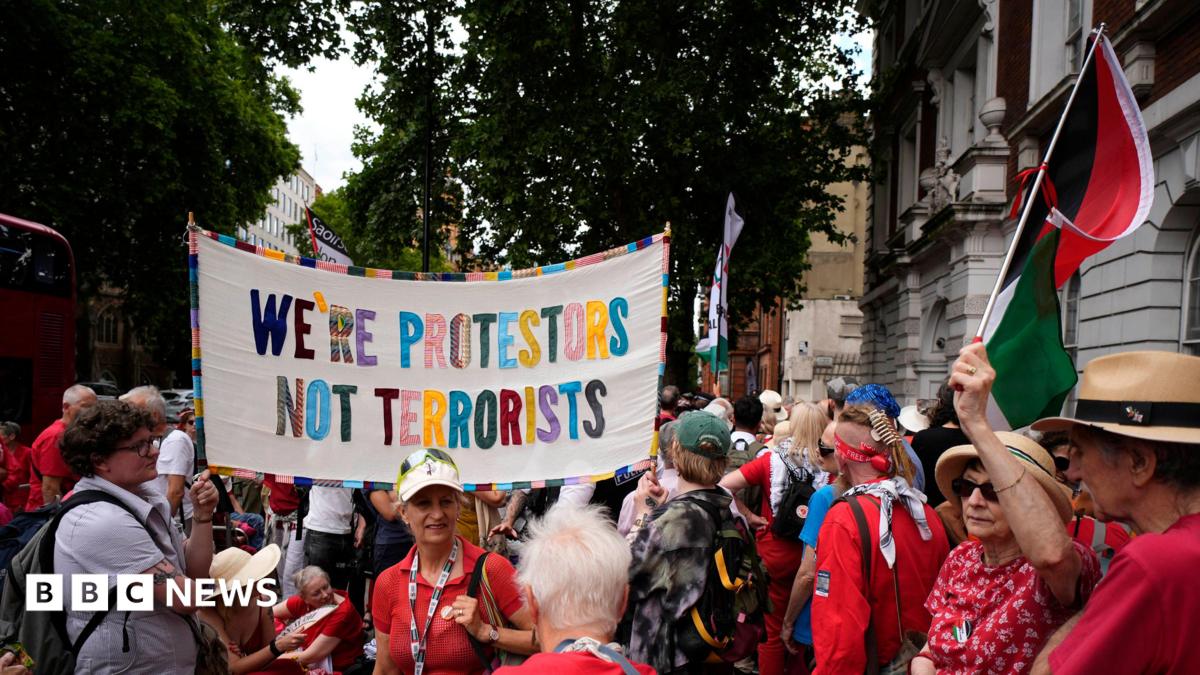
Protesters gathered outside Westminster Magistrates' Court on Thursday

The controversial ban under terrorism legislation of the protest group Palestine Action will be reviewed by the Supreme Court.

In a major blow to the Home Office, the court confirmed on Thursday that it had given the group’s co-founder permission to appeal the ban which came into effect in July 2025.

While the full details of the reasons for the appeal are yet to be published, the BBC understands they relate to Huda Ammori’s argument that the ban breaches human rights.

Officials at the court say the appeal will be expedited – which means it will be heard after the summer break. The eventual outcome of the case could have major implications for terrorism legislation in the UK.

Advertisement

The decision comes weeks after the end of the first major trial of members of the group which had caused more than £1m of damage to a defence firm near Bristol with an Israeli parent company. Four members of that break-in team were jailed, with one also sentenced for causing grievous bodily harm on a police officer who was hit with a sledgehammer.

Separately, more than 2,000 people are facing potential trial for protesting against the ban by declaring their support for a proscribed terrorism group in mass demonstrations.

The battle over the banning of Palestine Action has now gone on for more than year.

Former Home Secretary Yvette Cooper banned the group on advice from the police and security officials after an escalating spate of break-ins targeting Elbit, an Israeli-owned defence firm.

Advertisement

The High Court initially ruled that the ban was unlawful – but five judges on the Court of Appeal then overruled it, unanimously deciding the home secretary had acted lawfully and within her powers to proscribe Palestine Action.

That decision by the Court of Appeal will now be reviewed by the Supreme Court.

During Thursday, some 117 protesters were arrested outside Westminster Magistrates’ Court, with Metropolitan Police saying the majority of arrests were for expressing support for the group.

Scores of protesters had turned up there because they had expected to appear in court accused of allegedly showing support for the group at earlier public events. However, those cases had been listed in error. Many of the defendants said that they felt they had no choice but to turn up, despite the court and Metropolitan Police telling them not to do so.

Advertisement

Palestine Action co-founder Ammori welcomed the Supreme Court’s decision to hear her appeal – and said that the latest arrests were part of a wider crackdown on Palestinian solidarity.

“We will continue to fight this proscription all the way to the Supreme Court and, if necessary, to the European Court of Human Rights to overturn what has become one of the most extreme attacks on free speech and the right to protest in modern British history.”

Source link

Advertisement
Continue Reading

NewsBeat

The Mancunian Way: Not another one

Published

on

Manchester Evening News

If you don’t vote you can’t whinge PLUS Tributes to ‘El Tel’ AND A maze of entrepreneurs

Hello,

“You’re joking. Not another one?,” I hear you cry as voters go to the polls for the Greater Manchester mayoral by-election. I’m afraid it’s true.

Advertisement

After fiery, whole-hearted and at times angry campaigns in Gorton and Denton, Makerfield and of course for our local councils, we’re on our fourth election of the year here in GM – and it’s only July.

But I would argue that voting today is well worth your time. Casting your ballot for a new mayor means you are ushering in the person you think if best placed to handle a multi-billion pound budget, take over the Bee Network, policing oversight, housing and regeneration, adult skills and aspects of health policy across our city region.

Get MEN Premium now for just £1 HERE – or get involved in our WhatsApp group by clicking HERE. And don’t miss out on our brilliant selection of newsletters HERE.

They will also become the public face of England’s largest city region outside London. And let’s be honest, our last mayor did pretty well out of that position.

Advertisement

We’ve interviewed candidates including Reform UK’s Sian Astley, Green Geraldine Coggins, Labour’s Bev Craig, Conservative Phil Eckersley, Lib Dem Richard Kilpatrick, and Restore Britain’s Marlon West. And while Independent candidate Marcus Farmer very politely declined an interview, his final statement is here to view along with the other six candidates’. We also held a hustings with all of them which you can watch in full here.

Turnout has struggled ever since the mayoralty was created. It was 29 per cent in 2017. This year’s mayoral election has been overshadowed by Mr Burnham heading to Westminster and Nigel Farage fighting a bin in Clacton-on-Sea.

This means that turnout could be even lower. We understand that people are fed up with politics and politicians, but that’s why your vote matters.

Advertisement

Democracy works best when people take part, not when they leave it to everyone else. If you decide not to vote at all, don’t be surprised if other people end up making the big decisions for you. And you might not like them.

But more importantly than anything, if you don’t vote you can’t moan – or at least not with authority. As a perpetual complainer, that’s swung it for me.

After today elections in Greater Manchester will be over for at least 18 months. Famous last words?

Advertisement

We’ll bring you all the latest as the polls close and the results start coming in via our live blog here.

Remembering El Tel

Much has been made of Andy Burnham’s penchant for colloquialsims and addressing people as ‘lad’. But he isn’t the first affable politician to use this kind of language.

Terry Lewis, who has died aged 90, was Labour MP for Worsley from 1983 to 2005 and called everyone ‘kid’ – even our chief reporter Neal Keeling.

Advertisement

And as Neal writes in this lovely tribute, ‘El Tel’ knew everybody and everything. “He was fearless and could be both eloquent and direct when triggered,” he writes.

“The late MP was authentic – the personification of a great constituency representative. In the House of Commons he once confronted then Prime Minister, John Major, and asked him “Why don’t you resign you plonker”?”

The maverick and staunch socialist ironically represented a Tory enclave in Salford. You can read Neal’s full tribute to Terry Lewis here.

A maze of entrepreneurs

A short walk from Holt Town tram stop, you find yourself surrounded by signs of Manchester’s rich industrial heritage. Former cotton mills still stand between the trendy New Islington neighbourhood to the west and Etihad to the east.

Some historic mills here have been beautifully restored into hubs for theatre, community and music. Others have been converted into modern residential apartments.

Lying in their shadow is a maze of shipping containers. Though rather than simply lying dormant on derelict land, they boast a forward-thinking remit and a clear nod to the city’s industrious and entrepreneurial past.

As What’s On editor Jenna Campbell writes, Pollard Yard is a hub for the region’s most creative and promising start-ups. And owners Meanwhile Creative are now expanding further.

Advertisement

Jenna has the details here.

Hardly any crimes?

According to Greater Manchester Police neighbourhood data, just four crimes were committed in Piccadilly Gardens in the last 12 months.

Data journalist Richard Ault and chief reporter Neal Keeling have crunching the numbers and looking at why it appears hardly any crimes were committed there for this fascinating piece.

Advertisement

Weather etc

Friday: Sunny intervals, 19C.

Roads: A671 Rochdale Road, Royton, northbound closed for roadworks from Middleton Road to Market Square until January 29.

A58 Gerard Street Westbound, Ashton-in-Makerfield closed due to roadworks from A5062 Wigan Road to A58 / A49 (Kings Arms traffic lights) until November 22.

Source link

Advertisement
Continue Reading

NewsBeat

Mum who murdered toddler daughter filmed smoking cigarette as tot lay dying

Published

on

Daily Record

WARNING GRAPHIC CONTENT: Isabelle Welsh was just two years old when she was murdered by her own mother Alexandra Walker and her boyfriend Harrison Simpson

Alexandra Walker seen in the kitchen window reflection smoking a cigarette as her toddler lay dying

Footage has been released showing the mother of murdered tot Isabelle Welsh smoking while the toddler’s life ebbed away.

Advertisement

The two year old suffered appalling physical and sexual abuse leading up to her death. Medical staff discovered she had sustained 21 broken bones and a devastating head injury before collapsing at her Thornaby home.

Her despicable killers – her own mother Alexandra Walker and Walker’s paedophile partner Harrison Simpson – were both convicted of murder this week after a trial at Teesside Crown Court. They have now been handed life sentences.

The jury heard distressing testimony detailing how little Isabelle became “floppy and unresponsive” on September 13 last year while in her mother’s care at the Thornaby residence. Simpson had been minding Isabelle that morning before departing that afternoon.

In unsettling video footage released by Cleveland Police, Walker can be seen reflected in her kitchen window smoking a cigarette as her toddler lay dying. Rather than contacting emergency services, Walker had searched online for “why would my toddler be bleeding”, reports Teesside Live.

Advertisement

She only dialled 999 after being instructed to do so by her stepdad, whom she’d summoned to her Hartington Close address. Despite efforts, Isabelle could not be saved and the youngster tragically passed away hours later.

While conversing with a nurse, during her police questioning and throughout the court proceedings, Walker attributed all the child’s injuries to her new partner. In her sentencing remarks, Judge Ms Justice Norton described the murder as the culmination of a series of assaults that the pair attempted to conceal.

Advertisement

Addressing Walker’s delay in phoning 999, she stated: “I have no doubt whatsoever that your lack of urgency or concern for your child was because you wrongly believed that Isabelle was already dead, and you were working out what to do to save your own skin.”

On Tuesday, a jury convicted Walker, 26, and Harrison, 22, of murder and child cruelty. Simpson, from Greenham Close in Thorntree, was additionally found guilty of sexually assaulting the toddler.

The judge noted that the girl was sexually assaulted approximately when the fatal injury was delivered. The defendants caused the injuries and subsequently neglected to seek medical attention for Isabelle, she stated, “even though it was obvious that she needed it”.

No witnesses observed the abuse and CCTV cameras installed in the property failed to record it, with the judge noting a “wall of silence” surrounding the events. Simpson refused to answer police enquiries or testify during the trial, while Walker “lied from start to finish”, the judge remarked.

Advertisement

She noted that Walker had falsely claimed higher educational qualifications, pretended to have breast cancer, and told others she abstained from drugs while actually dealing them. The mother maintained she rarely drank, yet on the evening Isabelle was killed she consumed 10 cans of Stella Artois.

The judge branded her not merely a liar but “a fantasist and an attention-seeker” who inflicted wounds upon herself before alleging assault. She declared: “Right to the very end, your interest was not in Isabelle, but in yourself.”

The judge revealed she had weighed up imposing a whole life tariff on Simpson but couldn’t establish with certainty that the killing was sexually driven, despite it occurring around the moment of the fatal strike. This uncertainty arose because while the jury acquitted Walker of sexual assault, they found her guilty of murder.

Advertisement

The judge described the injuries sustained by the two year old as “sadistic”, noting she was “obviously in pain and distressed, and in the final week of her life, gravely ill”.

Simpson received a life sentence with a minimum term of 28 years behind bars. Walker, of Hartington Close, was similarly handed a life sentence, serving at least 22 years.

In additional footage issued today by police, Isabelle appears cheerful while playing on a sofa. The court heard that Isabelle had been a contented, thriving child until her mother began a relationship with Simpson last summer.

The footage was captured before the killers connected through Facebook Dating. Isabelle’s relatives said in a statement the youngster was “so loved”.

Advertisement

They stated: “Isabelle should have had her whole life ahead of her, but she was taken from us in the most heartbreaking way. She was so loved and our lives will never be the same without her.

“Whilst today’s result cannot undo the pain caused or bring Isabelle back, it does mean justice has been served. We will remember Isabelle forever and ask for privacy as we continue to grieve as a family.”

Outside the court following sentencing, senior investigating officer Detective Chief Inspector Steve Chatterton remarked: “This investigation exposed the heartbreaking and sustained abuse of a vulnerable little girl who should have been protected, loved and cared for.

“Instead, Isabelle suffered repeated and serious injuries over a prolonged period before ultimately losing her life as a result of a devastating attack. Our thoughts remain first and foremost with Isabelle.

Advertisement

“She was a defenceless child whose life was cruelly taken from her, and the circumstances of her death have deeply affected everyone involved in this investigation. Today, we remember Isabelle.

“She deserved a future filled with love, happiness and safety. She was denied that opportunity, and she must never be forgotten.”

Ensure our latest stories always appear at the top of your Google Search by making us a Preferred Source. Click here to activate or add us as your Preferred Source in your Google search settings.

Source link

Advertisement
Continue Reading

NewsBeat

FTSE 100’s early promise fades as Bank of England holds rates

Published

on

FTSE 100’s early promise fades as Bank of England holds rates

The FTSE 100 posted a new record high on Thursday, but ended lower as investors weighed a barrage of earnings and interest rate holds on either side of the Atlantic.

The FTSE 100 Index closed down 11.14 points, 0.1%, at 10,897.27.

The blue-chip index had earlier hit a new intra-day high of 10,979.60.

The FTSE 250 ended up 82.33 points, 0.3%, at 24,079.14, while the AIM All-Share closed up 3.05 points, 0.4%, at 764.90.

Advertisement

Investor focus in London was on a slew of earnings, while central bank meetings in the UK and US provided further food for thought.

In London, the Bank of England (BoE) left interest rates unchanged in a split vote as it weighs the impact on inflation from the Middle East crisis.

The BoE’s Monetary Policy Committee voted 6-3 to leave bank rate at 3.75%.

The central bank has maintained rates in each of its five meetings this year, with the last change a quarter point in December.

Advertisement

BoE chief economist Huw Pill and Megan Greene continued to argue for a quarter point rate increase as they did at the June meeting.

In July, they were joined by Catherine Mann.

Despite the vote turning more hawkish, BoE governor Andrew Bailey played down the idea that the central bank is setting up a hike.

“Please do not leave this room thinking that the Bank of England is edging towards a hike,” he told reporters at a press conference.

Advertisement

“We took a decision today to leave bank rate unchanged, and that is the relevant conclusion.”

The reaction in the bond market supported Mr Bailey’s view.

The yield on 10-year gilts softened to 4.99% on Thursday from 5.04% on Wednesday.

Analysts at RBC Capital Markets said while the vote split surprised in a hawkish direction, the meeting minutes read relatively dovish in their discussion of the disinflationary process that was in place prior to the outbreak of the Iran conflict.

Advertisement

Kathleen Brooks, research director at XTB, noted that although there was an increase in the number of members voting for a rate hike this month, financial markets are trimming expectations for a rate hike in September.

There is now a 40% chance of a hike at the BoE’s next meeting, this is down from more than 50% ahead of this meeting.

“Overall, we think that this meeting has solidified the BoE’s ‘active hold’ stance. The Bank has stated that it remains ready to act, if necessary, but we would need to see a sharp deterioration in the inflation outlook for this to happen,” Ms Brooks added.

On currency markets, the pound soared against the dollar but was steady against the euro.

Advertisement

The pound traded at 1.3439 dollars on Thursday afternoon, against 1.3284 dollars at the equities close on Wednesday.

Against the euro, sterling was slightly lower at 1.1671 euros from 1.1673 euros.

In European equities on Thursday, the CAC 40 in Paris closed up 0.9%, while the DAX 40 in Frankfurt ended up 0.6%, despite a 16% fall in sportswear firm Adidas.

Stocks in New York were higher, with mixed fortunes for Facebook owner Meta Platforms, down 8.9%, and software firm Microsoft, up 14%, after earnings.

Advertisement

The Dow Jones Industrial Average was up 0.3%, the S&P 500 index was 0.8% higher, and the Nasdaq Composite advanced 2.0%.

The gains came after Wednesday’s heavy falls, which followed a confused reaction to unchanged interest rates by the US Federal Reserve.

While Federal Reserve chairman Kevin Warsh continued to state his intention to bring inflation down to target, analysts suggested his actions did not back his words.

Analysts at Morgan Stanley said financial markets went into the July FOMC meeting thinking the new Fed chairman might take decisive action on interest rates to establish inflation-fighting bona fides, regardless of favourable incoming data.

Advertisement

“They likely came out of the meeting more confused than they went in,” the broker added.

JPMorgan analyst Michael Feroli said once again Mr Warsh failed to specify how he intended to achieve his stridently asserted inflation resolve.

“He also cast doubt on whether PCE inflation will remain the Fed’s inflation target in the medium run. Both of these points raise questions about the new chair’s credibility in delivering lower inflation,” he said.

The euro stood higher at 1.1516 dollars from 1.1380 dollars. Against the yen, the dollar was lower at 159.44 yen, compared with 163.85 yen.

Advertisement

The dollar was also impacted by data showing US economic growth slowed more than expected in the second quarter of 2026, although economists said the headline figure masked underlying resilience, as business investment, led by artificial intelligence spending, continued to underpin the world’s largest economy.

In addition, figures showed the personal consumption expenditures price index, a closely watched pricing gauge, fell 0.1% in June from May, matching FXStreet-cited market expectations.

Annual PCE inflation slowed to 3.7% from 4.1%.

Core PCE, which strips out food and energy prices, rose just 0.1% on the month, below market expectations for a 0.2% increase.

Advertisement

Annual core inflation eased to 3.3% from 3.4%.

The yield on the US 10-year Treasury stretched to 4.67% on Thursday from 4.64% on Wednesday.

The yield on the US 30-year Treasury widened to 5.21% from 5.12%.

Back in London, Rolls-Royce led the risers, up 6.0%, after the London-based aerospace and defence company raised guidance once more after a strong first half of 2026.

Advertisement

Rolls-Royce said operating profit increased 17% to £2.42 billion in the first half of 2026 from £2.07 billion the year prior.

Underlying operating profit grew 46% to £2.53 billion from £1.73 billion, which RBC Capital Markets said was 38% ahead of £1.84 billion consensus.

Revenue rose 21% to £11.45 billion from £9.49 billion, outstripping £10.17 billion consensus.

RBC Capital Markets analyst Mark Fielding called it “another very strong quarter with blow-out margins across the board”, while Chloe Lemarie at Jefferies was also effusive, calling it a “stellar performance”.

Advertisement

Lloyds Banking Group led a firmer banking sector higher, climbing 3.9%, as it set out financial targets to 2030 and reported better-than-expected results.

Peer NatWest gained 2.8% ahead of its own earnings on Friday.

But investors in Rentokil Initial had a day to forget as shares plummeted 21%.

The pest control specialist said it plans to invest more in its North American business, and as a result “retire” a margin target, as performance in the unit fell short of expectations.

Advertisement

Organic revenue growth in the North America Pest Control Services business slowed to 2.4% in the second quarter from 2.8% in the first three months of 2026, well below the 3.0% mid-point of the 2.6% to 3.4% guidance range.

Brent oil for September delivery traded lower at 89.84 dollars a barrel on Thursday afternoon, from 90.09 dollars late on Wednesday.

Gold was higher at 4,099.23 dollars an ounce on Thursday from 4,011.17 dollars on Wednesday.

The biggest risers on the FTSE 100 were Rolls-Royce, up 83p at 1,463p, Halma, up 164p at 3,574p, Antofagasta, up 155p at 3,704p, Lion Finance, up 450p at 11,590p, and Lloyds Banking Group, up 4.3p at 115.65p.

Advertisement

The biggest fallers on the FTSE 100 were Rentokil Initial, down 91.3p at 352p, Relx, down 199p at 2,675p, London Stock Exchange Group, down 592p at 8,606p, Experian, down 179p at 2,898p and Sage Group, down 54.6p at 967.4p.

Friday’s economic calendar has an interest rate decision in Japan overnight, eurozone inflation data, the Chicago PMI and the Michigan consumer sentiment index.

Friday’s UK corporate calendar sees half-year results from British Airways owner International Consolidated Airlines, bank NatWest and online property portal Rightmove.

Contributed by Alliance News

Advertisement

Source link

Continue Reading

Trending

Copyright © 2025