Cambridge City Council is considering introducing new charges on developers building in the city, in order to raise more money to be spent on infrastructure projects.
Developers building in Cambridge could face new charges to make sure they pay their “fair share” towards the city’s infrastructure. Cambridge City Council is considering introducing Community Infrastructure Levy (CIL), charges, which would see developers pay fixed amounts towards infrastructure in the city.
Advertisement
Other councils in the area already have these charges, including in Huntingdonshire and East Cambridgeshire. Councillor Katie Thornburrow (Labour), cabinet member for planning and transport, said there is not currently enough money available to deliver “all the necessary transport improvements” the city needs.
She said: “Simply put, CIL is a fixed charge that developers must pay to build new homes or commercial spaces. The money raised is pooled together to fund essential infrastructure, such as transport and community facilities, that our growing city needs.
“Cambridge currently relies on Section 106 contributions, which are negotiated site by site. Moving to CIL will secure more funding and speed up the planning process.
“There is a funding gap for transport issues, the Greater Cambridge Partnership has identified it does not have enough funds to deliver all the necessary transport improvements. If we introduce CIL we will have a more reliable way to reduce that gap and ensure developers pay their fair share towards what the city needs.”
Advertisement
The proposed charges developers could face include £175 per square metre for offices and research and development projects; £60 per square metre for houses, flats, retirement homes, and student accommodation; £50 per square metre for shops, restaurants, financial and professional services, and hotels; and £35 per square metre for industrial buildings and data centres.
A report published by the city council said if these proposed charges are introduced, based on previous levels of growth, it could generate at least £25million over the next five years.
The city council’s cabinet agreed this week (February 10) to move forward with the plans by holding a four week public consultation about the proposals, which is due to take place between February 16, and March 16.
Councillor Anna Smith (Labour) said she was “very much in favour of holding developers to account and making sure they pay their fair share”.
Advertisement
Councillor Naomi Bennett (Green Party) highlighted that CIL was introduced as an option for planning authorities in 2010, she asked why the city council held off introducing it.
She also raised concerns that it could be “avoided” by developers and asked what steps the city council plans to take to prevent developers from avoiding the charges.
Cllr Thornburrow said the city council had considered introducing CIL charges in the past, but had paused this work to see if the national government would be replacing it with a different system.
She said the government had confirmed in 2024 that CIL would not be scrapped, which she explained had offered the authority the “opportunity to rethink”.
Advertisement
Stephen Kelly, joint director of Greater Cambridge Shared Planning and 3C Building Control, said there was actually “quite widespread avoidance through Section 106 regime”.
He explained that there are enforcement measures available under CIL, which he said included being able to stop developments if a developer has failed to pay any up front CIL charges required.
To get more breaking news and top stories delivered directly to your phone, join our new WhatsApp community.Click this link to receive your daily dose of CambridgeshireLive content.
We also treat our community members to special offers, promotions, and adverts from us and our partners. If you don’t like our community, you can check out any time you like. If you’re curious, you can read ourPrivacy Notice.
The Nasa mission will see commander Reid Wiseman, pilot Victor Glover and mission specialists Christina Koch and Jeremy Hansen do a lap around the moon.
(L-R) Mission specialist Jeremy Hansen, pilot Victor Glover, mission specialist Christina Koch and commander Reid Wiseman earlier today (Picture: Getty Images)
They’ll live inside the 330-cubic-foot capsule for the next 10 days before splashing down in the Pacific Ocean, off the coast of San Diego.
Here’s what their life will be like.
Advertisement
What is the Orion spacecraft?
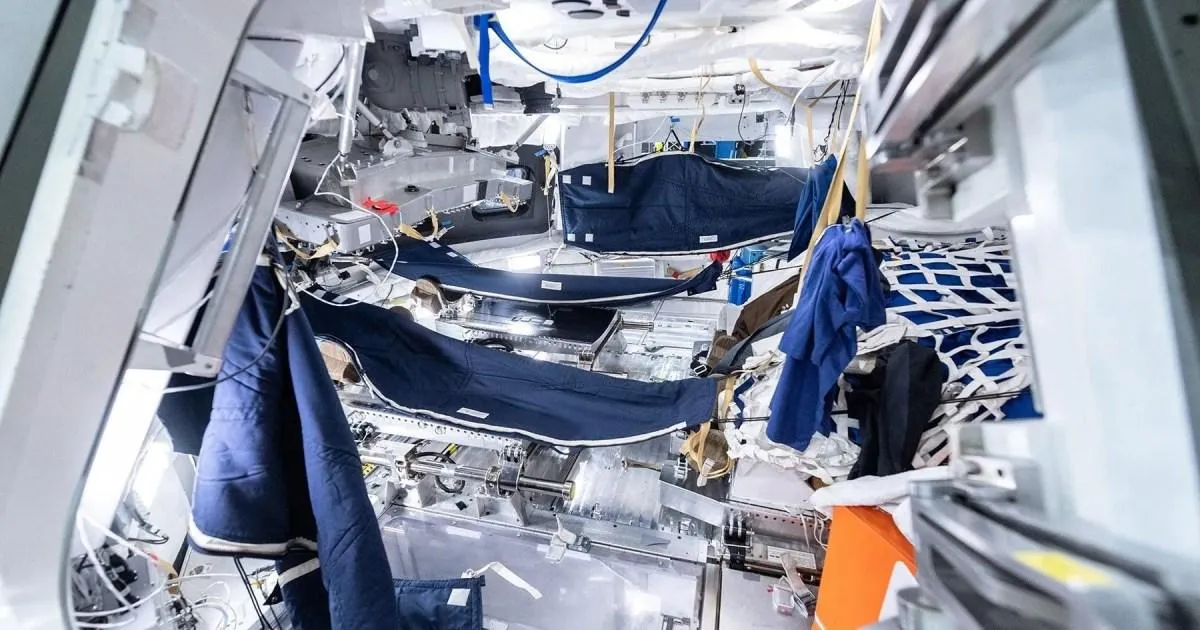
The capsule will be humanity’s home away from Earth – what it lacks in interior space it makes up for with, well, literal outer space.
It was built by Lockheed Martin, a US defence and aerospace manufacturer, and was christened Integrity by the crew for this mission.
The Orion sits atop the rocket and will separate after launch, throwing the capsule towards the moon before it loops around and flies back.
Advertisement
‘The Orion spacecraft is about the size of a small minivan, and there are four of them, and they can’t get out of 10 days, so it’s very cramped,’ Libby Jackson, who worked in Mission Control for a module on the International Space Station, tells Metro.
The Orion capsule is roomy (Picture: Metro)
‘In the future, they might have a lander with them and a bit more space. But these people are in a confined space for 10 days.’
The Orion spacecraft, which can sustain passengers for 21 days, has two main sections – the crew module and the service module.
During the 10-day mission, the Koch, Wiseman, Glover and Hansen will remain inside the crew module.
Once the launch phase ends, Koch and Hansen will set up a water dispenser, food warmer and the five-cubic-feet toilet.
Advertisement
This is under the floor near the main hatch, with astronauts having the option to install a curtain for privacy.
Hansen might need it, given he’s 6’2″, gigantic by astronaut standards.
The capsule will carry the astronauts to the moon and back (Picture: AFP)
Accidents do happen and if one does happen in the Orion’s toilet, the crew will need to rely on urine collection bags and fling their waste into space via a chute.
The Orion has… some five-star amenities, such as bags strapped to the wall where they can sleep with no gravity.
Advertisement
They will use water from the lower service module to rehydrate their vacuum-packed shrimp, macaroni and cheese and tortillas.
It even has a personal gym – kind of – in the form of a flywheel near the hatch, which allows the crew to row, squat and deadlift.
Exercise is important in the cosmos to prevent bodies from weakening, says Jackson, the head of space at the Science Museum in London.
‘When you go into space, your body instantly starts adapting.
Advertisement
There will be no such thing as privacy inside (Picture: Nasa)
‘Your fluid shifts around your body. Your bones get weaker, your muscles get weaker. You might feel sick when you first go into space because of the fluid balance.
‘But the 10 day mission, when you come back to Earth, your sense of balance and muscles won’t have significantly weakened, so you’d still be strong.’
What could go wrong?
The big thing the astronauts will face in the heavens is radiation.
The Earth has an invisible force field called the magnetic field, caused by all the molten metals churning inside our planet.
‘Our compasses pointing North is what protects everybody here on Earth from the radiation that is emitted by the sun,’ Jackson says.
Advertisement
‘Radiation is dangerous and damaging. When you go to the moon, you leave the protection that our Earth offers us.’
If a radiation event erupts, such as a solar flare lashing the capsule, the astronauts can shelter in the storage lockers under the seats.
Sorry, the video was not found
Beneath where the team are staying is the service module, a cylindrical piece provided by the European Space Agency.
Advertisement
Inside it houses the propulsion, power and life-support systems – these will be watched during the mission as Artemis II is mainly to test them.
The life-support system manages the air, pressure, water and waste of the capsule, according to a fact sheet from Nasa.
‘A regenerable air system efficiently removes carbon dioxide and humidity, conserving mass and volume,’ the document says.
‘Systems also continuously monitor temperature, humidity, and pressure to detect and respond to unsafe conditions.’
Advertisement
Lockheed Martin explains that the craft also has a launch abort system, which looks like a need sticking out from the top of the capsule.
The Artemis II crew inside a mock Orion (Picture: James Blair/Nasa)
This features three solid rocket motors that ignite a propellant, such as helium, to shove the capsule away from stellar dangers.
Nasa’s mobile app will let people track the capsule as it zips towards the moon. It can also be tracked with this website made by the space agency.
A private maternity industry is taking advantage of anxious mothers facing the biggest change of their lives.
An investigation has exposed a regulatory vacuum in the private maternity sector, where experts with as little as three days of training are making life-and-death decisions.
Advertisement
From doulas fatally ‘interfering’ with labour, to money-hungry high-street scan clinics failing to spot severe abnormalities, the cost of this profit-driven industry is being paid in infant lives and shattered families.
Charlotte Tolley, 36, is a single mum-of-three, one of whom, Lucas, five, requires intense amounts of care. The tot was born with his brain missing – which the private clinic that Charlotte used during her pregnancy didn’t notice.
Currently, anyone with an ultrasound machine can use that title, prompting Charlotte to campaign for change. She is urging other families to not rely on private scans, and for sonography to become a regulated industry.
Charlotte opted for private scans after suffering a miscarriage. At her first NHS appointment, she found herself in the same room where she’d lost her last baby. After discussing options with her midwife, she opted for a private clinic, where they found Lucas to be healthy, even though the abnormality was clearly visible on ultrasound.
Advertisement
Charlotte said: “Everything was quite standard and normal. I specifically asked the sonographer, ‘Can you see anything wrong? Would you be able to see if there’s any abnormalities?’” After he was born, Charlotte knew something was wrong, and the pandemic had begun, so in-person services were becoming less easily accessible.
Lucas struggled to feed, or focus, and suffered from jaundice. After he continued to struggle, Charlotte listened to her “mum gut” and called an ambulance.
She told the Mirror: “Had I not already been a mum of two children, I don’t think Lucas would be here now to be honest with you. He was chronically dehydrated, he was yellow, he had mottled skin, his head was bigger than his body, he looked like an alien where he’d not been able to gain any weight.
Advertisement
“He was constantly in and out of consciousness where he could barely stay awake because he had no energy to him.”
A hospital doctor conducted a cranial ultrasound which sparked panic. Charlotte said: “He dropped the ultrasound machine… and went off. He got on the phone… came back to me and said: ‘Your son has half of his brain missing’.”
Charlotte questioned how could her baby be alive without an entire brain while Lucas was rushed for an urgent MRI which confirmed the news. Charlotte added: “It was so obvious, you know, I’ve never seen an MRI of a brain before in my life, but even I could tell that it wasn’t right.”
Advertisement
Further tests were undertaken on the little boy, only weeks old, including hormone profiling that required bloods to be taken every three hours but his brain didn’t develop. Charlotte said: “He’s completely blind, he’s got cerebral palsy, epilepsy, he can’t chew or eat. I was told at the time, he would never walk, talk, eat, smile, do anything.”
Charlotte met with a solicitor and radiography and ultrasound experts who looked at the scans the private clinic had provided her and confirmed that “undoubtedly you can see there’s a problem.”
“Either he wasn’t qualified enough or he was told not to say anything,” Charlotte said, citing reports by the BBC that indicate some technicians at private clinics were told not to disclose certain information to their clients. She reached an out-of-court settlement with the clinic that was responsible for her failed scans.
If the abnormality had been reported to her, she should have been immediately sent back to the NHS and provided with a pregnancy-safe MRI, giving her the choice of whether to continue with the pregnancy or not.
Advertisement
Charlotte said: “I would definitely have had to terminate the pregnancy because I had two other children, I was a single parent that just left a marriage, and my eldest daughter is autistic as well.”
The progress her son Lucas has made is astounding compared to the “bleak” prognosis he was given as a baby. He walks, uses his cane, and only sometimes uses a wheelchair but still needs intense round-the-clock care.
Charlotte said: “I sometimes almost wish that I could outlive my own son because I’m worried for the future that he will have if he’s left on his own without any support. I do everything for him, and I always will have to even as he gets older, and no parent should ever have to feel like that.”
Charlotte feels strongly about some of these clinics that are cropping up across the UK. She said: “I think these other clinics should be avoided altogether. [Some] are money hungry vultures… they don’t care about the people walking through their doors… they just want to build a franchise, build a name and earn money and that’s it.”
Advertisement
Charlotte wants to make sonography a regulated profession and has started a petition to try and enforce greater transparency in this area.
Amy Heath, Medical Negligence Partner at the law firm, Stewarts who acted for Charlotte warns that her client’s “example is an extreme one, but it’s a good one to show how wrong it can go.” Amy explains that the NHS – for the most part – “mops up” the errors of these private clinics which are “money making enterprises”.
And it’s not just babies at risk, but mothers, too. Ectopic pregnancies occur when a fertilised egg implants outside the uterus, most commonly in a fallopian tube, making it a life-threatening, non-viable pregnancy.
Advertisement
Experts have also warned about the use of unregulated birthing assistants. In January, a coroner warned that more babies could die without greater clarity and guidance over the role of home birthing assistants, after the death of a 15-day-old baby girl.
Newborn Matilda Pomfret-Thomas died of a brain injury in November 2023, which was caused by a lack of oxygen to the brain either before or during birth. Her mother had experienced a difficult home labour and was not immediately transferred to hospital – despite signs of foetal distress, an inquest concluded.
Hampshire assistant coroner Henry Charles noted that midwives from Portsmouth’s Queen Alexandra hospital felt their access “was being restricted by the doula” when the child’s mother went into labour on 29 October 2023.
A midwife who attended the home birth first offered a transfer to hospital at 7.19am when meconium – a sign of foetal stress – was discovered, the coroner said. The offer was turned down, and again at 10am despite “deteriorating” labour as it was “not communicated [to the family] in such a way as to lead to a transfer to hospital”.
Advertisement
Charles said: “The presence and work of a doula did on this occasion negatively impact upon the effective provision of midwifery services in terms of building a rapport conducive to effective advice and care being given.
“I found that [the doula] did not actively discourage midwife access but that she was seen as, in effect, a buffer by members of the midwifery team. The doula was following the birth plan. The doula was supporting the parents per the birth plan, and this appears to have been perceived as grounds for hope that a home birth was still possible.” The coroner has called for a review and regulation on doulas and the training they receive.
In 2023, The Maternity and Newborn Safety Investigations (MNSI) warned that doulas were involved in 29 of the 2,827 maternity investigations it had completed. It said it “found evidence in 12 of the 29 investigations that doulas worked outside of the defined boundaries of their role. The care or advice provided by the doula was considered to have potentially had an influence on the poor outcome for the baby”.
Doula UK pushed back on the idea of regulating the profession to the Mirror, saying in part: “Doula UK members undertake approved training, mentored practice and ongoing professional development, guided by a shared code of conduct. We would therefore recommend parents find a Doula UK registered member.”
Women searching for extra support during one of the most challenging periods of their lives goes beyond pregnancy and labour itself, with unregulated and unqualified “night nurses” also posing a major risk to infants.
An inquest last week heard that a four-month-old baby, the grandson of football manager Steve Bruce, tragically died after being placed in an “unsafe sleeping position” by an unregulated maternity nurse. The parents of Madison Bruce Smith had employed Eva Clements via Ruthie Maternity Services believing she was fully trained, skilled and vetted, and that the firm was well established. In fact, neither was regulated Stockport Coroner’s Court heard.
The inquest was told that Madison’s parents would “never have dreamed” of putting their son asleep in the prone position had it not been for the advice of the maternity nurse, who was said to have informed them all four of her own babies had slept on their stomachs with no problems. Such advice is contrary to recognised safe sleeping guidance from the NHS and health professionals for young babies.
Advertisement
It has since been confirmed that Ruth Asare, head of Ruthie Maternity Services, had no medical qualifications and had only a first aid certificate and a Level 2 diploma in post-natal care, which she gained from a three-day course and a six-month coursework project. Clements said she had a degree in early years education but admitted she also had no medical qualifications.
The case led the senior coroner for south Manchester, Alison Mutch, to issue a prevention of future deaths report to the Secretary of State for Health calling for regulation.
An NCT spokesperson told the Mirror: “Understanding what makes a place safe to sleep is key. The safest place for a baby to sleep is in the same room as their caregiver. This should be for at least the first six months, both day and night. A separate sleep space is considered safest, with the baby on their back on a firm, flat and clear surface.
“Sleeping on their side or front increases the risk of SIDS, so put the baby on their back to sleep as a routine from day one. Once they can move themselves from their back to their front and back again by themselves, there is no need to worry but you can carry on placing them on their back to sleep when putting them in their sleeping space.”
Advertisement
Kate Marsh, midwifery manager for Tommy’s, the pregnancy and baby charity, told the Mirror: “Our hearts go out to the families of Madison and Matilda, whose lives have been devastated by their loss.”
Not every mum who spoke to the Mirror had negative impressions of the private maternity industry but almost all described a sense of anxiety, and a lack of support as their motivation for seeking out these supplementary services.
Nutritionist therapist Hanieh Vidmar opted for private care, citing long waiting times within the NHS, and concerns about overstretched resources
She said: “I think there needs to be more support and education for first time mums when giving birth. They opt in for things like doulas and night nurses thinking they absolutely need one and when they don’t know what they are looking for, and should look for, [it] can cause serious issues. I think that’s the issue.”
Advertisement
A Department of Health and Social Care spokesperson said: “Every parent deserves safe, high-quality maternity care. That is why we are changing the law so that anyone who falsely uses the title of nurse without being properly registered will be committing a criminal offence.
“We’re taking urgent action to rebuild confidence in NHS maternity services – hiring more midwives, introducing new standards to tackle the leading causes of maternal mortality, launching an anti-discrimination programme, and creating systems to identify safety concerns earlier.
“The Secretary of State is also personally chairing a new Taskforce to deliver rapid improvements in maternity and neonatal services, acting on the recommendations from Baroness Amos’ independent national investigation.”
For support after baby loss, please contact Sands’ national helpline on 0808 164 3332 or email helpline@sands.org.uk
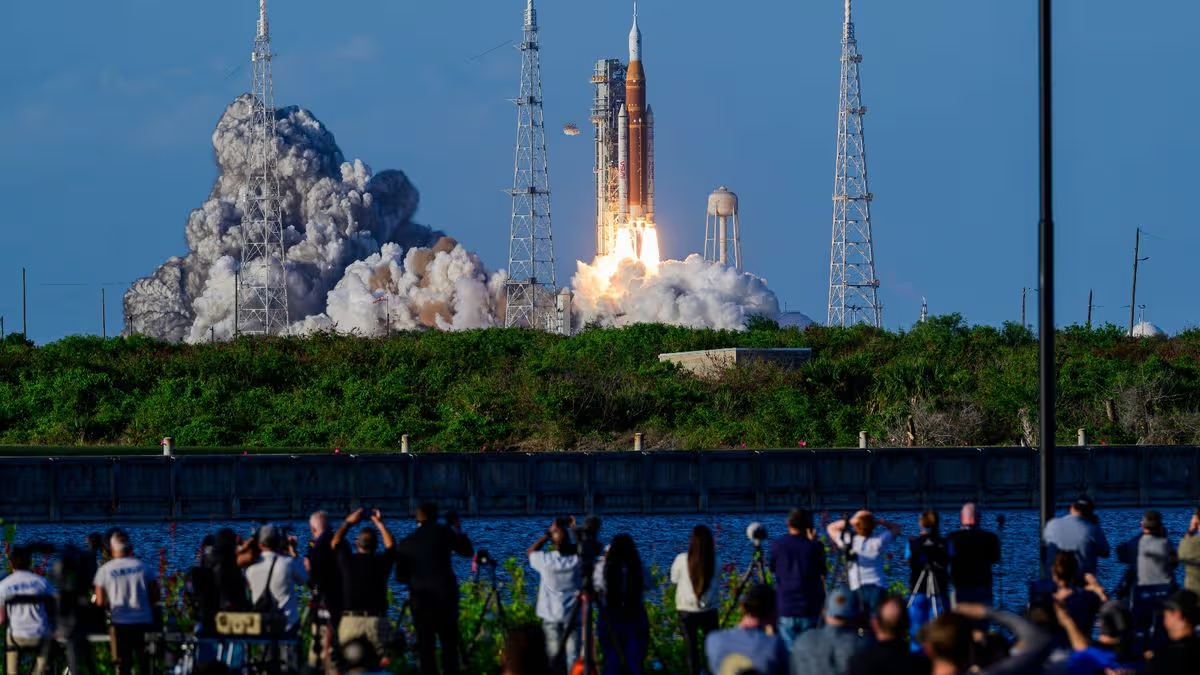
NASA’s Artemis 2 mission has finally launched and TV star Jeremy Clarkson has shared a string of hilarious posts about the first Moon mission in more than five decades
Jeremy Clarkson fans have been left in stitches after the TV personality shared a string of hilarious posts about NASA’s Artemis 2 mission last night.
Advertisement
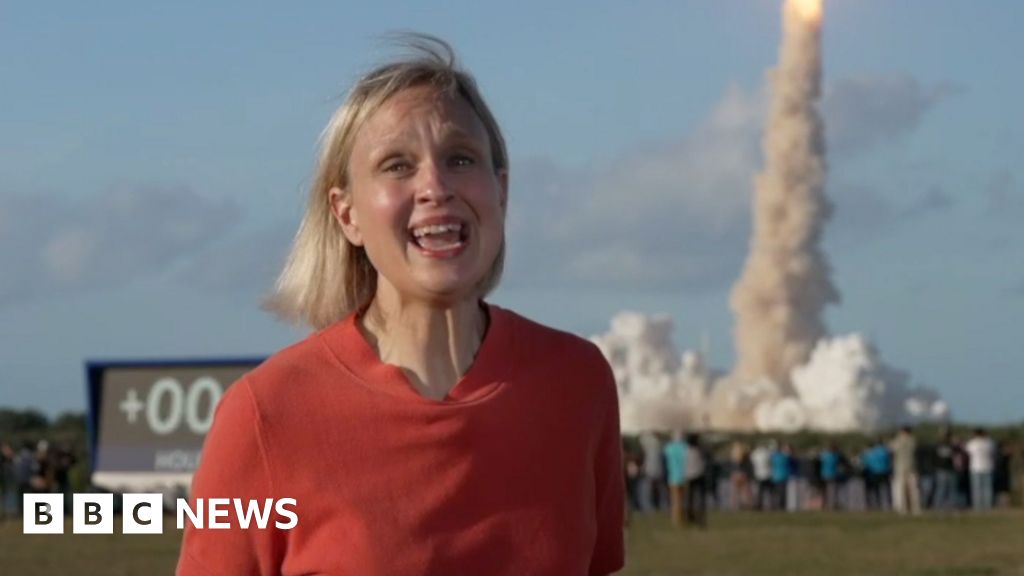
NASA’s Artemis 2 mission has finally launched marking humanity’s first lunar voyage in 53 years. NASA reported an issue with the flight termination system but clarified just over an hour before the launch that it has been resolved. The four astronauts are inside the Orion capsule on humanity’s first Moon mission in more than five decades.
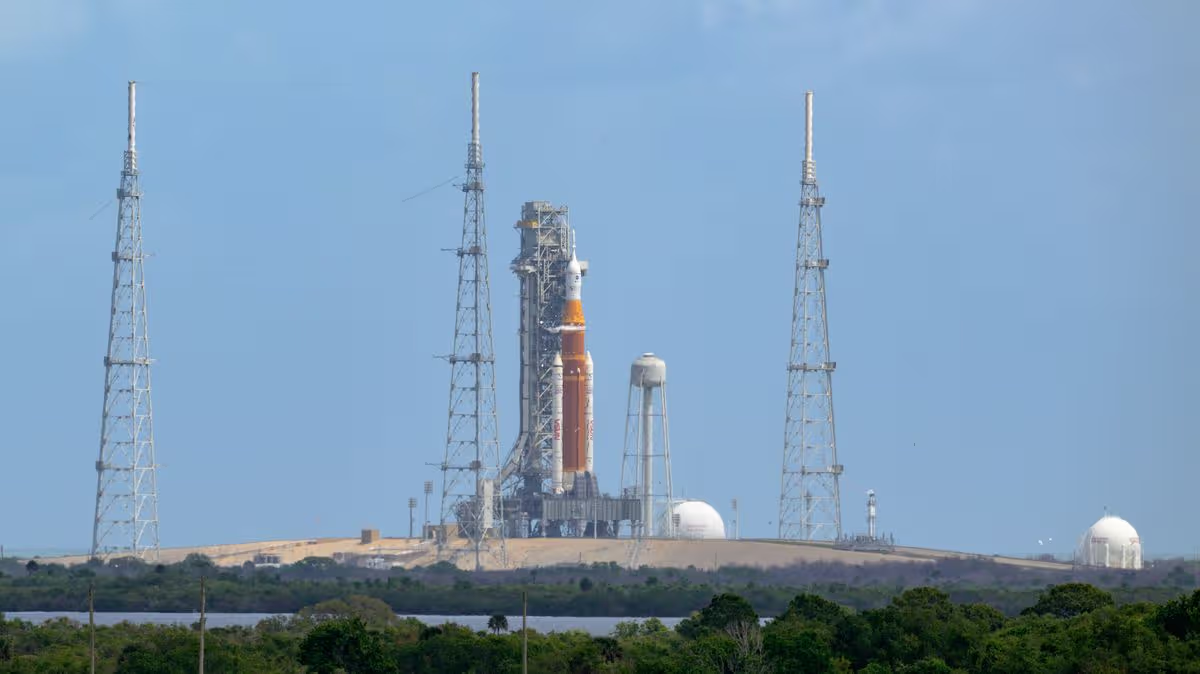
The Space Launch System rocket and the Orion spacecraft will carry the four astronauts from NASA’s Kennedy Space Center in Cape Canaveral, Florida, into deep space. The crew includes NASA astronauts Reid Wiseman, Victor Glover and Christina Koch, and Canadian Space Agency astronaut Jeremy Hansen.
Ensure our latest headlines always appear at the top of your Google Search by making us a Preferred Source. Click here to activate or add us as your Preferred Source in your Google search settings.
The Clarkson’s Farm star took to Instagram to share two hilarious posts about the launch. Captioning the first post “Thought we’d seen the rocket launch. Now think it may be Venus.” One fan commented: “Or your camera has a hot dead pixel.” Another wrote: “It’s Santa checking everyone’s behaving.” A third wrote: “Just here for the Uranus jokes.”
Minutes later he posted again with the caption: “We’ve seen another rocket” as fans commented: “Jeremy do you have your glasses on??” another wrote: “Are you drunk Clarkson?”
Content cannot be displayed without consent
The four astronauts will circle the Earth for about 25 hours before catapulting toward the moon. The Artemis mission will end with a splashdown homecoming into the Pacific. Navy recovery ships will be stationed off the coast of San Diego as Orion parachutes into the ocean.
Advertisement
Ahead of the Artemis 2 launch, Donald Trump wrote in a post on Truth Social: “We are WINNING, in Space, on Earth, and everywhere in between — Economically, Militarily, and now, BEYOND THE STARS. Nobody comes close!” He added: “God bless our incredible Astronauts, God bless NASA, and God bless the Greatest Nation ever to exist, the United States of America!”
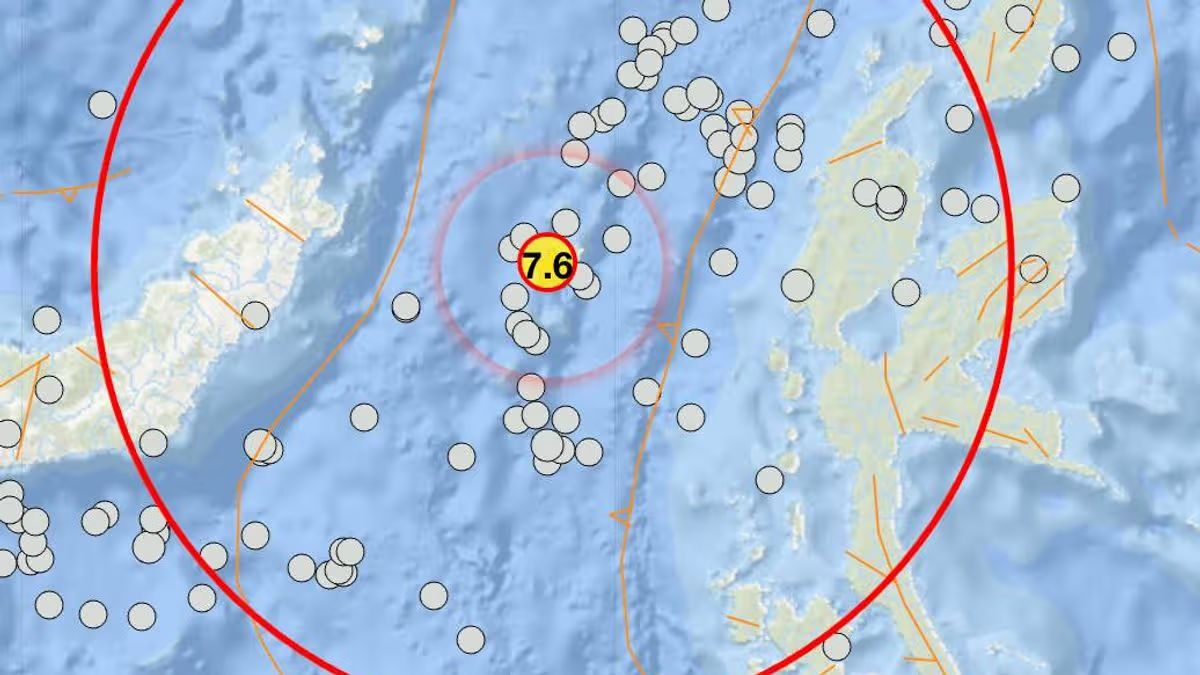
The US Geological Survey (USGS) said that the quake, which has since been downgraded to a magnitude of 7.6, struck at 6.48am local time at a depth of 35km
Rachel Vickers-Price UK and World News Reporter
01:23, 02 Apr 2026
A powerful 7.6-magnitude earthquake has struck Indonesia, triggering a tsunami warning.
The tremor hit the Northern Molucca Sea on Thursday (2 April), according to the US Geological Survey (USGS), with a US monitoring centre issuing an alert cautioning of potential “hazardous tsunami waves” within 1,000km of the quake’s epicentre.
Advertisement
The earthquake, which has since been downgraded to a magnitude of 7.6, struck at 6.48am local time at a depth of 35km. Its epicentre was 127 kilometres (79 miles) west-northwest of Ternate, in the archipelago’s North Maluku province, which has a population of over 205,000, according to USGS.
Ensure our latest headlines always appear at the top of your Google Search by making us a Preferred Source. Click here to activate or add us as your Preferred Source in your Google search settings.
The Hawaii-based Pacific Tsunami Warning Center confirmed that hazardous tsunami waves were possible “within 1,000km of the epicentre” along the coastlines of Indonesia, the Philippines and Malaysia. USGS also cautioned that tsunami waves reaching between 0.3 metres and one metre (3.2ft) above tide level were possible along parts of the Indonesian coastline, reports the Mirror.
In additional guidance, the US tsunami warning system predicted waves of less than 30 centimetres above tide level for the coastlines of Guam, Japan, Malaysia, Papua New Guinea, the Philippines, and Taiwan. Japan’s meteorological agency also noted that “slight sea level changes” may be observed along the nation’s coastline, though no tsunami damage was anticipated.
Advertisement
Australia’s Bureau of Meteorology confirmed there was no tsunami threat to the Australian mainland, nor to its islands or territories.
Indonesia, a sprawling archipelago of islands home to more than 280 million people, sits atop major seismic fault lines and is frequently struck by earthquakes and volcanic eruptions due to its location on the Ring of Fire, a 40,000-kilometre (25,000-mile) horseshoe-shaped belt encircling the Pacific Ocean. The Ring of Fire accounts for 75% of the world’s volcanoes and 90% of its earthquakes.
In 2022, a shallow 5.6-magnitude tremor claimed the lives of more than 600 people in West Java’s Cianjur city, making it the deadliest earthquake in Indonesia since a 2018 quake and tsunami in Sulawesi killed more than 4,300 people.
In 2004, a devastating Indian Ocean earthquake triggered a Boxing Day tsunami that killed more than 230,000 people across a dozen countries, with the vast majority of victims in Indonesia’s Aceh province.
A BBC presenter has suggested a minister was “patronising” the general public by downplaying concerns around energy prices.
The Iranians continue to limit the number of oil tankers which can travel through the Strait of Hormuz, a major shipping lane, in retaliation to the US-Israeli strikes.
Household energy bills are not yet increasing in line with the crisis in the Middle East but are expected to go up later in the year as a result.
Advertisement
The energy price cap, which was announced by Ofgem before the Iran war began, will see costs fall between April and the end of June – but that will change again in July.
However, the chief secretary to the Treasury James Murray told the BBC the public should remain calm for now.
Asked if it was time for the government to encourage the public to engage in personal rationing, the minister said: “No, I think people should go about their lives as normal, knowing the government is taking action to bring energy bills down.
“I think a lot of people will be seeing the news from the Middle East, will see the instability and uncertainty and might be worried about what is going to happen to energy bills in the months ahead.”
Advertisement
He pointed out that the energy price cap will be in place for the next three months, which gives the government time to make “contingency plans” – though he did not disclose exactly what that might mean.
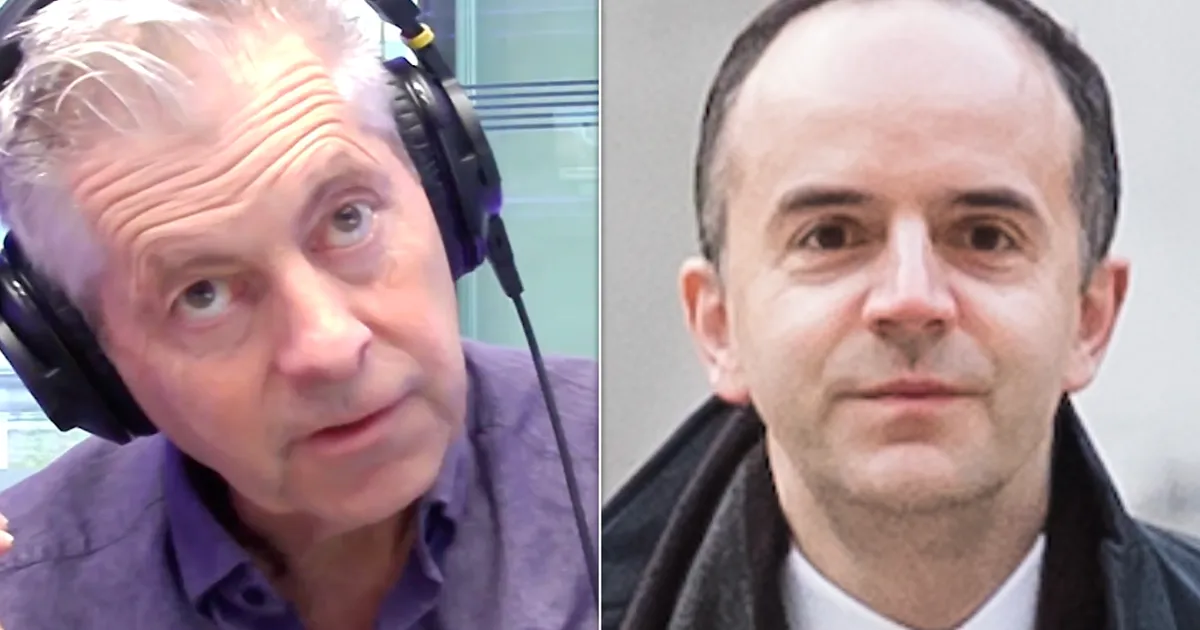
But Radio 4 Today presenter Justin Webb said: “Isn’t it a bit patronising to say to people, no don’t worry, carry on, we’ll sort all of this out?
“They can see perfectly well, can’t they, that this is a real proper crisis and there will have to be things done which are painful.
“It will make us poorer. It’s reasonable, isn’t it, for them to ask you to be straight with them about it?”
Advertisement
“I think we’re being straight is saying we honestly don’t know how long this conflict is going to go on,” Murray replied.
Webb asked: “Are you saying it is possible then, if for some reason it ends tomorrow – which doesn’t seem at all likely – that we just go back to normal?”
Murray admitted: “I think it’s clear that what is happening in the Middle East now will have an impact on our economy. It’s already having an impact on prices of energy and fuel.”
When Webb pointed out that economists have already warned the government may not be able to afford offering support for household energy bills, Murray said: “What I think is certainly true is we need to learn the lessons from past interventions.”
Advertisement
The government is widely expected to unveil targeted help for the households most in need later this year, rather than the universal support announced by the Tories during the previous cost of living crisis.
Listen to the latest episode of Commons People, the podcast that makes politics easy. Every week, our resident politics writers and Westminster regulars – Kevin Schofield and Kate Nicholson – unpack the week’s biggest story in a way that even the most politically dense can understand. Join us for straightforward, up-to-date and in-depth commentary on British politics from people in the know!
The charity is calling on people across Northern Ireland to support its message, ‘Be Kind to Different Minds’
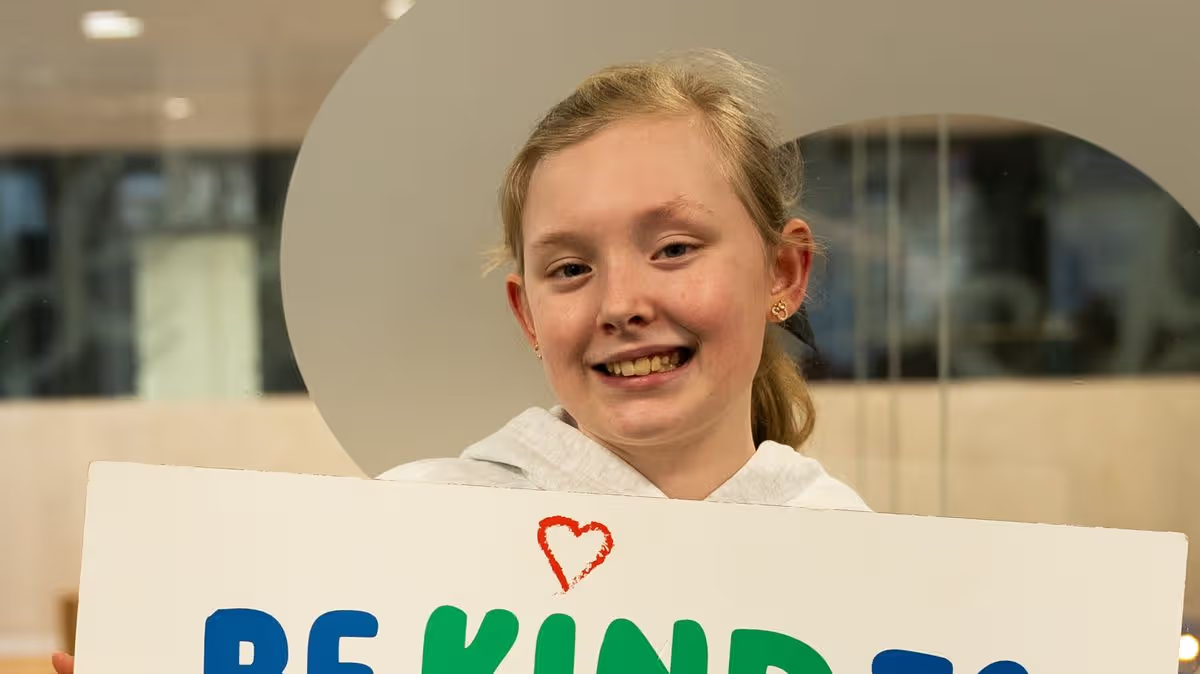
A Co Antrim schoolgirl has spoken out on World Autism Day, saying she is proud to be autistic and that it’s not something that needs to be ‘fixed’.
Advertisement
Emily McCreedy, aged 11, from Belfast, said she doesn’t see her autism as a limitation but rather something that makes her unique.
She said: “To me, being autistic means I experience the world differently, and that’s something to be proud of. Not everyone has to be the same, and those differences should be valued.
“Since my diagnosis, I’ve received more support at school and through Autism NI, which has made a big difference to my life.
Advertisement
Emily added: “Autism isn’t something that needs to be fixed, it’s part of who I am. I’m creative and kind, and with the right support, I feel safe, accepted, and proud to be autistic.”
Autism NI is marking World Autism Day by urging people right across Northern Ireland to back its campaign message, ‘Be Kind to Different Minds’. With over 35,000 autistic individuals living in Northern Ireland, the organisation is encouraging everyone to acknowledge, celebrate and demonstrate genuine support for the autistic community.
Kerry Boyd, CEO of Autism NI, adds: “This World Autism Day, we are asking the public to get behind our message, ‘Be Kind to Different Minds’. We want to build a greater understanding of autism, promote acceptance, and create a more inclusive society, but we cannot do this alone.
“Autistic people may face challenges, many of which are not visible to others. This reinforces the message that autism is a dynamic disability, and everyone’s experience is different.
“Through this campaign, we want to encourage people to deepen their understanding of autism and recognise how this can lead to meaningful changes in empathy, respect and inclusion.
“Whether at home, in school, or throughout April, Autism NI will be delivering a variety of activities and campaigns, offering chances for individuals to participate and demonstrate their support.
“Autism NI delivers essential services for autistic individuals and their families right across Northern Ireland and continues to advocate for improved understanding and acceptance of autism within society.”
New rules under Making Tax Digital for Income Tax come into force from April 6, requiring many self-employed workers and landlords to keep digital records and submit updates to HMRC throughout the year.
But research suggests a large number are unprepared and increasingly anxious.
A study by FreeAgent found:
Less than half feel confident they will be ready
Only 39 percent say they fully understand the rules
One in five do not know what is required
More than one in ten have lost sleep over the changes
The reforms will initially affect more than 850,000 sole traders and landlords earning over £50,000, with millions more set to follow in the coming years.
Concerns go beyond understanding the rules, with many worried about the consequences of getting it wrong.
Advertisement
47 percent fear being fined or penalised
17 percent admit avoiding letters or emails about the changes
Nearly half say they feel confused or anxious about the system
Some are even reconsidering their future:
23 percent are thinking about leaving self-employment
28 percent say they may take on less work
According to Oliver Harcourt from Taxfix, the scale of confusion is a major concern.
He said hundreds of thousands are heading into the changes without a clear understanding, adding that the reforms risk making tax feel like a second job for many.
Dominic Littlewood has teamed up with accountancy software company, Free Agent to help small businesses and landlords prepare for Making Tax Digital, as new data shows one in seven have considered retiring ahead of the April roll out. (Image: Free Agent)
What the new tax rules actually mean
Despite widespread confusion, the changes are about how tax is reported, not how much is paid.
Key points include:
You will still need to submit an annual tax return
Quarterly updates are summaries, not full tax returns
The rules do not mean you will pay more tax
Digital record keeping and approved software will be required
However, fewer than four in ten correctly understand the need for digital records, and only a third know they must use HMRC-recognised software.
Dominic Littlewood, working with FreeAgent, said the scale of the change explains why so many are worried.
Advertisement
He described Making Tax Digital as the biggest shake-up to tax submissions in two decades but stressed it does not have to be overwhelming.
He said many sole traders are asking the same questions about bookkeeping and potential fines, and need clear, simple guidance to stay compliant.
The rollout begins next week for higher earners but will expand:
Over £50,000 income from April 2026
Over £30,000 from April 2027
Over £20,000 from April 2028
In total, around 2.9 million people are expected to be affected.
Experts warn that without better awareness and preparation, confusion could lead to mistakes, penalties and added pressure on small businesses already dealing with rising costs.
On Wednesday night, the BBC reported that pre-launch testing revealed a fault in the rocket’s flight termination system
21:53, 01 Apr 2026Updated 00:53, 02 Apr 2026
The Artemis II mission had reportedly encountered an issue that could delay its scheduled launch.
On Wednesday night, the BBC reported that pre-launch testing revealed a fault in the rocket’s flight termination system. This system is critical for safety, designed to destroy the rocket mid-flight if it veers off course, ensuring it does not pose a danger to people on the ground.
Derrol Nail, a NASA commentator in the launch control room, explained that the termination system must be fully operational before launch. If any part of the rocket goes wrong during ascent, the launch abort system will lift the Orion capsule and its astronauts to safety, while the flight termination system would destroy the rocket to prevent it from entering populated areas.
Advertisement
Ground controllers are currently facing a communication issue with the system, which has prevented them from fully testing the hardware ahead of launch. Engineers are attempting to resolve the problem using equipment originally designed to communicate with the Space Shuttle.
However, NASA engineers confirmed that the fault had since been fixed and ‘all systems are now go’.
The launch could take place tonight starting in a two hour window from 11.24pm GMT, at the Kennedy Space Centre in Florida.














































You must be logged in to post a comment Login