

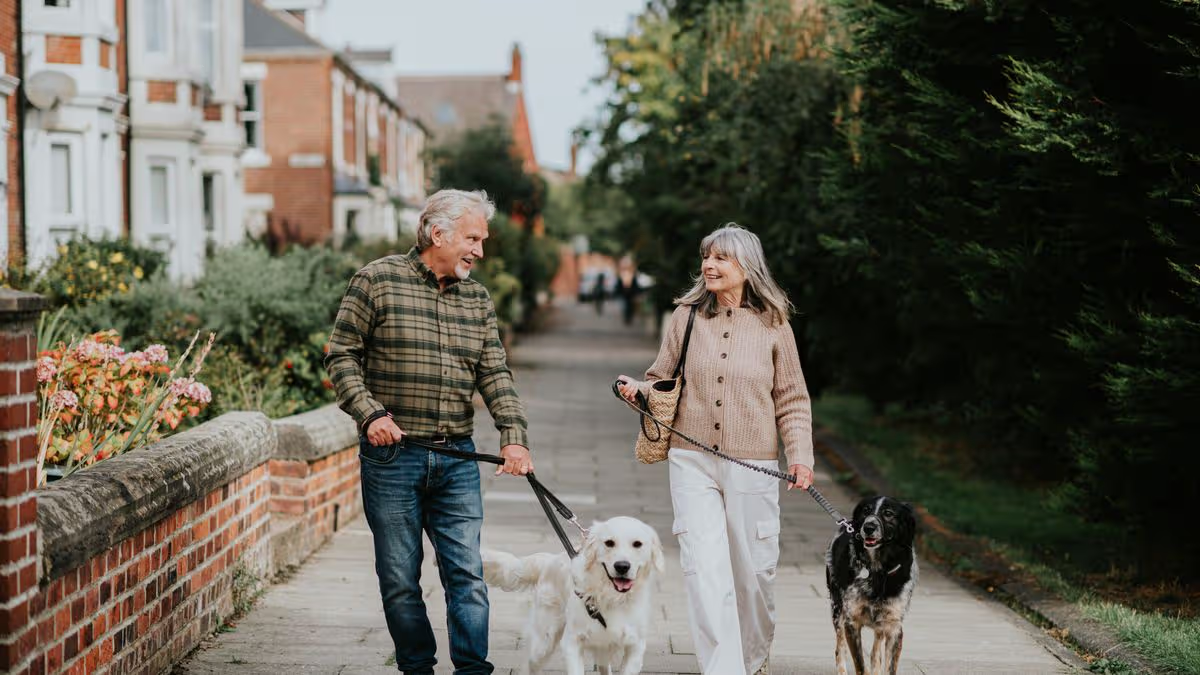
If your dog barks during walks, there could be a way to stop or reduce this habit
If your dog barks on walks, there may be a good reason behind it. And according to one trainer, the cause could lie in what happens right before you even leave the house.
According to Adam Spivey, Director and Head Trainer at Southend Dog Training, one of the worst things you can do is ask your dog if they want to go outside. The expert who set up his company in 2012, explained: “Stop saying ‘do you want to go walkies’ to your dog if it’s dragging you down the street or if it’s barking its head off at everything it sees.
“We know the dog ways to go for a walk. But when we say ‘do you want to go walkies’, all we do is excite the dog and amp up the dog.”
Because your four-legged friend gets overly excited, they may stop listening – and when you try to attach the leash, they’re already too worked up to stay under control.
He continued: “We wonder why the walk itself is an absolute disaster. The more excited the dog is, the more amped up it’s going to be.
“If you have a dog that’s overstimulated, it’s going to be much more reactive.” But what else can you do to help keep your dog calm during its walk?
Adam continued: “What we wanna do is when it comes time for a walk, call the dog, attach the lead, if the dog starts losing its mind, sit down for 5 minutes, wait for the dog to calm down, then when they’ve calmed down, go to the door, pop the dog behind you, not in front, open the door and if they go to rush out, shut the door.
“Wait until the dog is calm. If you do that walk in silence, it will be much calmer, more intuitive and much more successful.”
And some say this method really works. Taking to the comments a dog owner wrote: “Like you teach silent walks, I do silent “get ready” they know the routine, they know the days they work on the ranch and they know their walking days. I literally get ready quietly and go to the car and they quietly just follow. It’s all very calm and relaxed.”
Another added: “Why I love border collies, my boy just knows when I grab the leash he hears it and comes to me doesn’t jump or run around.”
Dogs Trust: How can I stop my dog pulling on the lead?
Further advice from the professionals at Dogs Trust recommends that owners “stop walking when the lead starts to tighten” to discourage pulling and encourage better leash manners.
It explains: “Teach your dog that walking next to you with a loose lead means they get to move forward – and pulling means they don’t.
“The second the lead starts to tighten, stop walking. Stand still, keep quiet and don’t move forward again until the lead is slack.
“Don’t jerk the lead back or tell your dog off – just stand and wait calmly and quietly. If your dog does not turn back to you, try walking a couple of steps in the opposite direction to get their focus back.”













































You must be logged in to post a comment Login