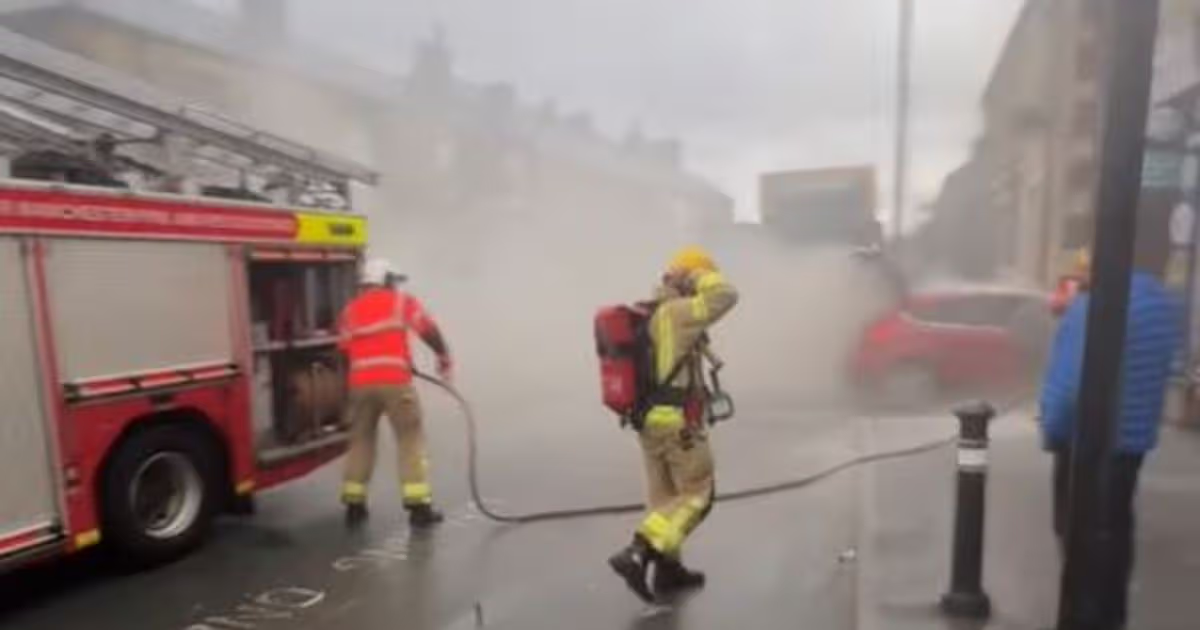
A dramatic car fire broke out and left a street smothered in smoke in Oldham on Monday afternoon (February 16). Emergency crews were called to the blaze on Milnrow Road at around 4.25pm.
The red vehicle, parked beside an off licence, became engulfed in flames. Fire engines arrived on blue lights and cordoned off the area and part of the road, causing significant traffic throughout the afternoon.
Dramatic videos shared on social media show thick smoke plumes smothering the street. The blaze took around 45 minutes to get under control, the Greater Manchester Fire and Rescue Service confirmed in a statement.
It is thought that no injuries were reported in the incident. The cause of the blaze has also not yet been confirmed.
A spokesperson for Greater Manchester Fire and Rescue Service (GMFRS) said: “At around 4.25pm this afternoon (Monday 16 February), one fire engine from Oldham Community Fire Station was called to attend a car fire on Milnrow Road in Oldham.
Advertisement
“Crews arrived quickly and used one hose reel and one breathing apparatus to extinguish the fire. Firefighters worked to make the area safe before departing after approximately 45 minutes at the scene.”
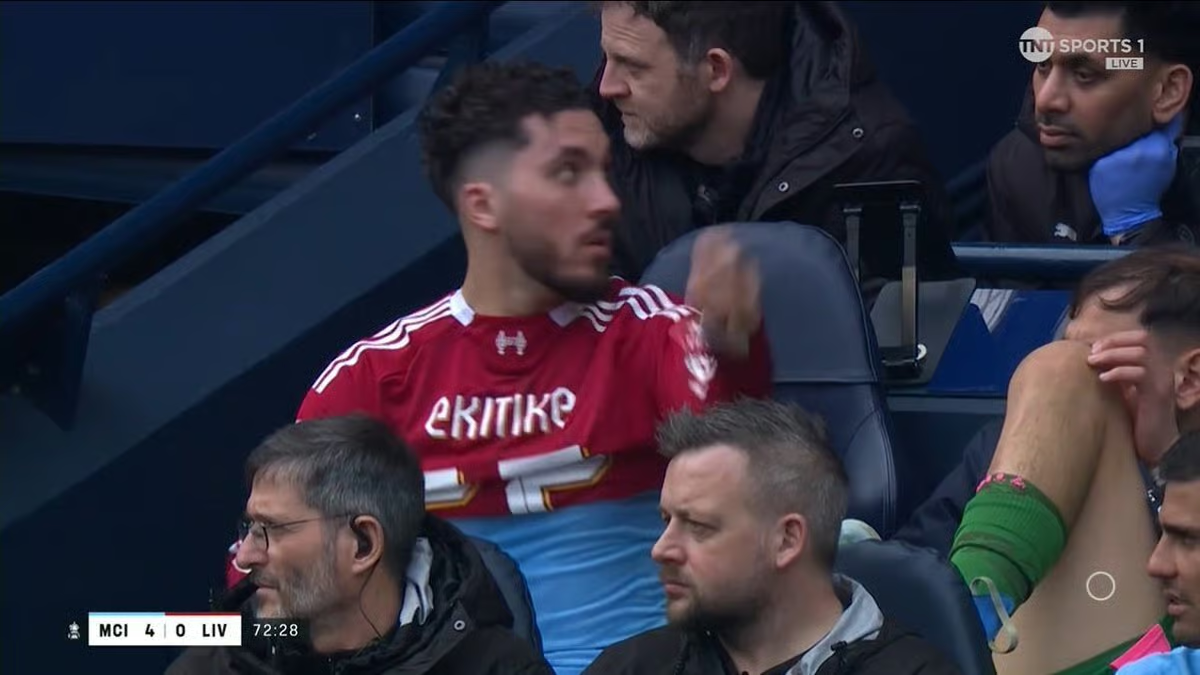
TV cameras soon after spotted Cherki putting on Ekitike’s shirt while sitting on the bench. The City forward then turns his head to a voice off camera and quickly removes the shirt, before holding up his hand in apology. The camera then panned to Ekitike, who was sitting motionless on the Liverpool bench wearing a black top.
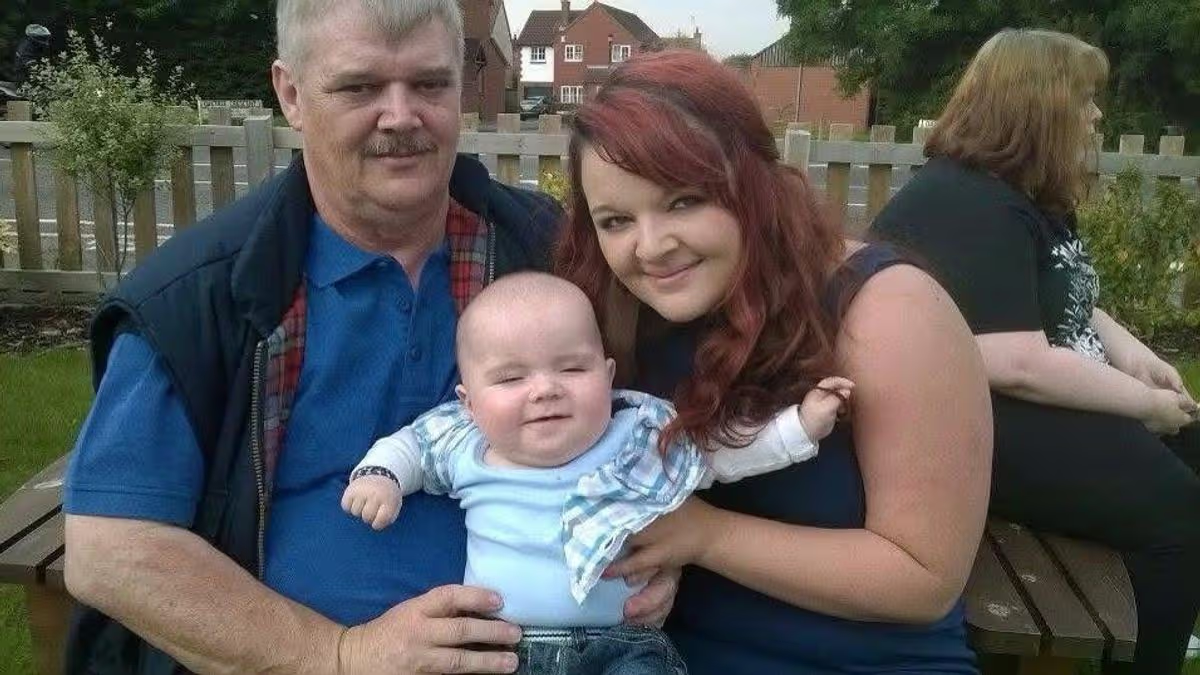
Russell Roberts, 51, died on March 15 in Bolton Hospital, surrounded by his loved ones.
The father-of-two had a rare heart condition.
He was born with only one heart ventricle and developed Eisenmenger syndrome.
Defying all the odds of his condition, he lived life to the full and was known as a “pillar of the community” in Atherton, where he was born and bred.
Advertisement
Daughter, Lilly Roberts, 17, is raising thousands of pounds for the Critical Care Unit to thank the staff for the exceptional care her father received and the support shown to her family.
On May 31, she will take on the Great Manchester Run, hoping to complete the 10k course.
Lilly said the staff “went above and beyond” during the brief time her father spent in the ward before his death.
“Whenever they updated us on what was happening, they made sure we were okay and wouldn’t take no for an answer if we hadn’t eaten,” she explained.
“They were just amazing and we couldn’t fault them,” she added.
Lilly and Russell Roberts (Image: Supplied)
When Russell first went into hospital, Lilly and her mum, Rachel, were stuck in Thailand due to the ongoing conflict in the Middle East.
Lilly said: “The doctors shared as much information as the family wanted us to have, and as soon as we arrived, they were really wonderful.”
Advertisement
Rachel and Russell met in a local Atherton pub, going on to build a life together for more than 25 years.
Lilly’s older brother, Samuel, 25, stayed with their father from the moment he went into hospital, never leaving his side.
Reflecting on her father’s life and legacy, Lilly said he spent much of his childhood in and out of hospital because of his heart condition.
Lilly said: “When he was 16, he said he had spent his life undergoing tests and procedures and decided to handle things on his own.
Advertisement
“He made it to 51, played every sport, went raving with my mum, and then had two kids.
“He took us everywhere, we did every sport too, and we never knew there was anything different about our family.”
Russell was a huge Manchester United fan and sat on the committee for Atherton Cricket Club, where Lilly and Samuel played.
An entrepreneur in property and a lifelong salesman at Firstcom Europe UK, Russell was described by doctors as nothing short of a “miracle”, Lilly said.
Advertisement
Discussing her friendship with her father, Lilly said: “Growing up, I was always with my dad, often spending more time with him than with my friends.
“We had a really special connection, we both just understood each other.
“He did amazing things in his life, and I have high ambitions too.
“A lot of people have told me not to let his death set me back, but it’s only made me stronger and more determined.”
Advertisement
Lilly and Russell Roberts (Image: Supplied)
Lilly attends Manchester College, studying media, with hopes of entering the marketing industry in the future.
She has already raised over £2,500 for Bolton Hospital through her fundraising page, www.gofundme.com/f/run-for-russ.
“He was a pillar of the community, brought people together and always helped everyone,” Lilly said.
Atherton Cricket Club said: “On behalf of the committee, members, players and the community of Atherton, it’s with great sadness and a heavy heart that we offer our condolences to the family of Russell Roberts.
“Russ has contributed so much to Atherton Cricket Club and our community over the years.
“He served our club, his friends and community with distinction.
“Russ was a dedicated father and husband, who was not only a great role model to the people close to him, but provided a link between the Atherton community and businesses, sports clubs and beyond.
Advertisement
“Russ, we are grateful for everything you have done, and you will always be remembered as a gentleman.
“Your legacy will make everyone smile. We are all grateful and honoured to have had you as our friend.”
Russell Roberts (Image: Supplied)
The Snug Coffee House on Market Street said: “We were deeply saddened to hear about the passing of an Atherton legend and a Snug regular, Russell Roberts.
“Russell wasn’t just a customer, he was part of The Snug’s Friday club.
Advertisement
“A friendly face, a chat at the counter, someone who helped make this place what it is, and the only person that could fix our internet issues.
Many Isa savers will have a “last chance” as the new tax year gets underway to stash their full £20,000 allowance in cash.
The new tax year, starting from April 6, gives Isa savers the opportunity to put up to £20,000 away under the annual allowance for adults.
From April 6 2027, however, changes will mean that, while the total annual Isa allowance will still be £20,000, adults aged under 65 will only be able to put away up to £12,000 in a cash Isa, with the remaining £8,000 allowance potentially going into stocks and shares.
Savers aged 65 and over will retain the annual £20,000 subscription limit for a cash Isa.
Advertisement
Catherine Wray, head of saving at Leeds Building Society, said: “This will be the last year that tax-free limit on cash Isas will remain at £20,000 for all.
“Next April it reduces to £12,000 unless you are over 65, in which case there is no change.
“The aim is to encourage people to invest by providing a higher tax-free wrapper on other Isas such as stocks and shares, but cash saving remains very important.”
She added: “Cash Isa savings remain indispensable; they help achieve savings goals, give people stability and financial resilience to allow them to consider investing at the right time for them.
Advertisement
“In an uncertain world, the security provided by savings gives psychological safety for consumers, as a third of consumers are put off investing by global instability.
“In fact, 49% of people we surveyed said they are drawn to cash savings for their accessibility, 46% for the predictable returns and 45% for their simplicity, which in turn help to reduce financial stress.
Get a free fractional share worth up to £100. Capital at risk.
“The start of the tax year is a good time to revisit your financial goals and ensure your plans still align with them.
“Think about your personal savings allowance, check how much you can save or invest tax‑efficiently, and make sure you’re using the options available to you.”
Michelle Holgate, director, wealth manager at RBC Brewin Dolphin, said the 40% reduction in the annual cash Isa limit for under-65s in 2027 “represents a potentially momentous shift in the UK savings and investment landscape, yet our recent survey shows that 50% of savers are not aware of this change”.
She added: “We know different people have varying levels of risk appetite, and investing in the stock market comes with the possibility of losses as well as gains.
Advertisement
“Understanding one’s emotional and financial ability to withstand these fluctuations is key to selecting the right approach.”
Isas allow people to ringfence their savings and investments from tax.
Another way that savers receive tax breaks on their pots is through the personal savings allowance (PSA), and the new tax year marks a decade since its launch.
The allowance, which has remained static, enables people to earn interest on savings without paying tax on it. Basic rate taxpayers can earn up to £1,000 in interest per year, while higher rate taxpayers can earn up to £500 under the tax-free allowance.
Advertisement
According to Moneyfactscompare.co.uk, savers now receiving interest from a top one-year bond a year ago that paid 4.58% on a £20,000 deposit would have earned £916, breaching the £500 PSA for higher-rate taxpayers, and just coming under the £1,000 PSA for basic-rate taxpayers.
Meanwhile, a £20,000 investment in the top one-year cash Isa that paid 4.45% would have earned £890 tax-free.
Rachel Springall, a finance expert at Moneyfactscompare.co.uk, said PSA levels have “not moved along with the times”.
She said: “Cash Isas don’t tend to pay rates too dissimilar to non-Isas at this time of year, because of the big push to improve deals during Isa season.
Advertisement
“So really, someone who has or is about to move up an income tax band would be wise to use up their cash Isa allowance, or lose it.”
She added: “The past 10 years have shown consumers the importance of building a healthy nest egg to help brave economic storms, it helps with financial resilience and to mitigate the reliance on short-term debt.”
Alice Haine, a personal finance analyst at Bestinvest by Evelyn Partners, said that while the PSA “was adequate when interest rates were at record lows, high interest rates in recent years, combined with frozen income tax thresholds, mean more people are finding themselves liable for tax on savings interest as salaries rise and individuals move into higher tax brackets.”
She added: “Effectively for every £100 in interest earned above the PSA on a standard savings account, a basic rate taxpayer keeps just £80…
Advertisement
“Ultimately, no one should be paying tax on their savings interest if they have an unused Isa allowance available.”
Ms Haine also said that “there can be a case for holding too much cash,” adding: “While a cash Isa can work well for short-term needs or those needing access to their money in the next five years, a stocks and shares Isa may be a better solution for long-term savers seeking returns that outpace inflation.
“A minimum five-year time horizon is recommended for investors considering a stocks and shares Isa, important when you consider that financial markets, especially equities, can be volatile over short-term time periods but have historically delivered much higher real returns – that is, returns that beat the effect of inflation – than cash over the long term.
“While, for the risk-averse, cash savings may feel safer and be easily accessible, they might limit the potential for wealth to grow in real terms.”
Advertisement
The value of investments can go down as well as up and investors may get back less than they paid in.
Derence Lee, chief finance officer at Shepherds Friendly, said stocks and shares Isas “could be better suited to those looking to grow their investments over the medium to long term, offering access to a wide range of funds to suit different goals, risk appetites and budgets”.
‘Kind‑hearted’ Barry Rhys James could only watch as his feet turned black while waiting days for a hospital bed
A much-loved grandfather died after his health deteriorated while spending well over two days in a chaotic hospital corridor. Barry Rhys James, 64, was in agony as his feet turned black at Caerphilly county’s Ysbyty Ystrad Fawr but his needs were neglected for days, his family have claimed in a formal complaint.
Advertisement
Barry, a taxi driver who lived in Bedwas, was described by his daughter Holly James-Dryland as a “kind‑hearted and gentle” family man who “consistently put others before himself”. He was admitted to the community hospital in Ystrad Mynach on the morning of January 6 with severely discoloured feet but was not given a bed until the night of January 8.
With blood no longer circulating to his feet, Barry suffered a cardiac arrest and died on January 10. The initial cause of his illness has not yet been confirmed.
Holly and her partner Shaun are speaking out to raise awareness of various alleged failings in Barry’s treatment. They told WalesOnline there were missed opportunities where the hospital did not follow the instructions of its own doctors while Barry sat helplessly in a corridor watching his feet blacken.
Barry was in “absolute agony” and rolling around in his chair in the corridor of the medical assessment ward, said Holly, who was told by staff that the ward had a capacity of 29 patients – and that at the time of her dad’s treatment some 63 patients were crammed into the ward.
Advertisement
“The first medical professional we encountered, a triage nurse, said this was the worst period she had experienced in 23 years and that she wanted to quit,” Holly added. “Staff frequently complained about conditions and a nurse encouraged us to formally complain.”
Barry, who was a winger for Newport rugby club in his youth, had three children and two grandchildren. Holly said: “Our dad wasn’t just our father. He played the role of our mother as well, stepping up and taking on the role of both parents. He did an outstanding job.
“He went out of his way to make sure his family were cared for and happy. Often it would be through small but meaningful gestures that showed how much he cared.”
Following a 20-hour wait for an ambulance, Barry’s family had taken him to the hospital themselves. He had been concerned that his feet were cold and painful, with a bluish tinge.
Advertisement
Barry arrived at Ysbyty Ystrad Fawr at around 11.30am on Tuesday, January 6. His family questioned why he was taken to a minor injury unit rather than the Grange A&E – which they suspect was explained by a Facebook post issued that week by Aneurin Bevan university health board, stating the A&E was under “severe pressure” amid high levels of illness.
Medics suspected the loss of blood supply to Barry’s feet may have been linked to his type-two diabetes. Shortly after his admission he was assessed by a consultant who “clearly stated that his feet needed to be warmed urgently”, said Holly.
“This instruction was not acted upon. My father remained in a chair in a corridor. There was no meaningful or sustained attempt to warm his feet throughout the week.”
Advertisement
Staff told the family that Barry could not use a Bair Hugger blanket – a device for maintaining a patient’s core body temperature – as there were not enough plug sockets in the corridor and it would be a “trip hazard”.
Holly said: “Staff refused to use plug sockets due to trip hazard concerns, yet the following day an extension cable was used across the corridor for another patient sitting in the exact same location.
“My dad could see his feet turning blacker by the minute. He was frequently vomiting with no privacy or dignity, in full view of other patients and visitors.
“The nurses themselves said they wanted change. One of them gave us a QR code and encouraged us to make a complaint, but that was for future change, not to help my dad there and then.
Advertisement
“On one occasion, a doctor said he would return in five minutes but left the ward for over an hour.”
Barry was eventually placed in one of the ward’s beds at around 9.25pm on Thursday (January 8). He was then finally able to use a Bair Hugger blanket but by this point his condition had deteriorated severely and his feet would not warm.
Holly said: “On Thursday evening I noticed his feet were being kept covered by medical staff. This was a change from the early and middle part of the week when his feet were frequently uncovered and clearly visible.
“On Thursday and Friday, I was explicitly told by doctors that my father still had a pulse in both feet. However, on Saturday at around 3pm I received a phone call from a doctor who informed me my father had not had any pulse in his feet for the previous 48 hours.
Advertisement
“During this call, the doctor apologised that I had previously been told otherwise and stated that his feet now required amputation.”
Holly was told her dad would be moved to the Grange. Soon afterwards she received another call saying Barry was in cardiac arrest. She had nearly reached the Grange by the time the final call came, telling her that Barry was still at Ysbyty Ystrad Fawr and had died.
“We later learned the hospital didn’t contact a kidney specialist until three hours before my dad died,” said Holly. “They had known his kidney was failing since the blood test on Tuesday.”
The family has been waiting nearly three months for the health board’s response to their formal complaint, which calls for the release of Barry’s medical records.
Advertisement
“My dad was 64 and had a lot of life left to live,” said Holly. “I want the hospital to learn and I want answers for why certain things happened that week.”
Paying tribute to Barry, she said he “took great pride” in his 37-year career as a taxi driver. “He was reliable, active, and routinely up early each day to work.
“When I was younger, he took me horse-riding twice a week in all weathers, even after waking up at 2am to go to work and working a 12-hour shift. He never complained or let me down. He did everything in his power to make sure I was happy, always encouraging and cheering me on.
“He adored his two grandchildren, Toby and Arielle, and put a great deal of effort into being an active part of their lives. With my son Toby, he would sit for hours debating football statistics, both stubborn and passionate but enjoying every minute of the discussion.
Advertisement
“With my daughter Arielle, he always looked forward to seeing her come down the stairs on a Sunday morning, ready with a joke as soon as she entered the living room.”
Barry gave daily care to Holly’s 27-year-old sister, who has learning difficulties. He would attend appointments with her, help her communicate with healthcare professionals, and manage her weekly medication.
“Sunday mornings were reserved for his visits,” Holly added. “Every week, without fail, he arrived at my door at 9am, often waking me up just so he could spend a few hours with us. He never missed a single Sunday. His absence has left a profound void in our family, and our home is no longer the same without him.”
Second only to his family, Barry’s other great love was for rugby, as a loyal follower of Wales and the Dragons. Following his death his ashes were placed in a Welsh Rugby Union ball and one of his rugby jerseys was made into a cuddly elephant toy bearing a message for his family: “These are the clothes that I used to wear. Whenever you hold me know that I am there.”
A spokesperson for the health board said: “Our thoughts are with Mr James’ family at this very difficult time and we’re sorry that they are unhappy with the care he received. Whilst we aim to conclude investigations within 30 working days, there are some instances where more complex cases may take longer than this.
“Investigations can take anywhere up to six months to conclude, which is outlined within the ‘putting things right’ regulations. We recognise that awaiting a response can be frustrating and we are working to conclude our investigation and respond to the family as quickly as possible.”
Last month we revealed Aneurin Bevan health board had put 21 Royal Gwent hospital patients at risk of serious infections by treating them with unsterilised medical instruments and had then failed to tell them until around three weeks later – which only happened after a whistleblower had come forward to WalesOnline.
Advertisement
Shortly after we reported on the sterilisation error, an anonymous petition was launched on Change.org calling for “an independent review of leadership and governance” at the health board. It pointed to various failings from recent years, including the mixing-up of bodies in a mortuary and the death of nine-year-old Dylan Cope after he was sent home from hospital despite having a perforated appendix. The petition is backed by Barry’s family.
They are also concerned by the wait for an ambulance before Barry’s admission to hospital. One finally arrived after repeated calls across a 20-hour period, though the family ended up taking him to hospital themselves. Shaun explained: “Because Barry was already sat in our car during the examination, the paramedic asked if we could take him to the hospital. [The ambulance service] was also definitely under pressure.”
Sonia Thompson, the Welsh ambulance service’s assistant director for emergency operations, said: “We would like to extend our sincere condolences to the family of Mr James at what must be a very difficult and upsetting time. We were facing sustained pressure on our service on January 5, with a high number of patients waiting for a face-to-face response within the community.
“At 5am on January 6 we were contending with 11-hour handover delays outside the Grange Hospital in Cwmbran. Pressures on the ambulance service are well recognised, with delays reflecting wider, system-wide challenges. When ambulances are held at hospital, they are unable to respond to other 999 calls in the community.”
Advertisement
Ms Thompson added: “If it is safe to do so, some patients may be asked to use alternative transport to get to hospital, helping us keep ambulances available for those who need them most.”
Holly’s partner Shaun said he was “angry and deeply disappointed” by Barry’s care at the hospital, adding: “I am very sad at seeing what Holly is going through. Losing her dad has been unbearable for us all.”
Get daily breaking news updates on your phone by joining our WhatsApp community here. We occasionally treat members to special offers, promotions and ads from us and our partners. See our Privacy Notice.
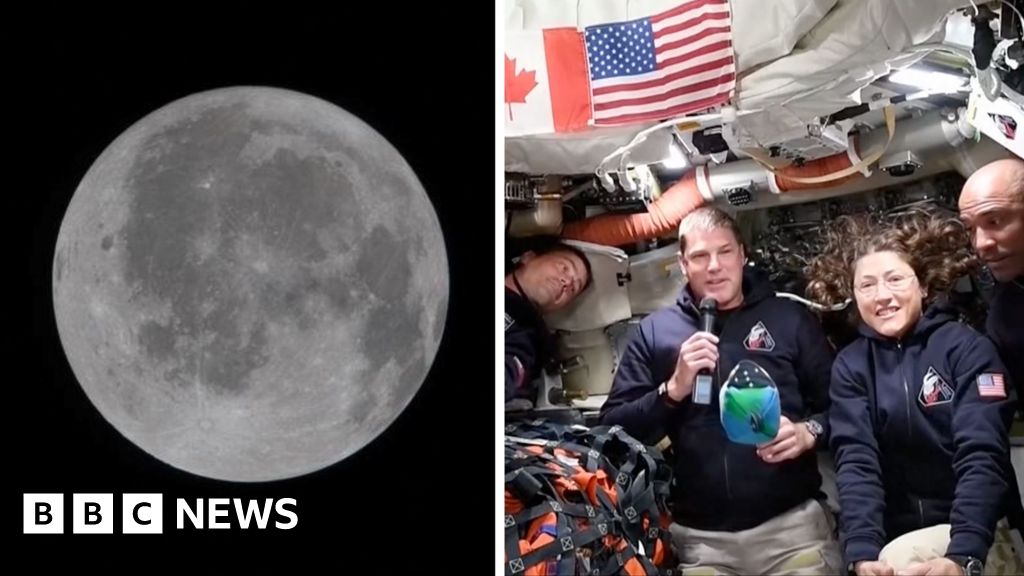
The crew for Nasa’s Artemis II mission have described seeing the far side of the Moon for the first time.
Nasa astronauts Reid Wiseman, Victor Glover, and Christina Koch, and Canadian Space Agency astronaut Jeremy Hansen have entered the third day of their mission on the Orion spacecraft that will carry them around the far side of the Moon and back to Earth.
“Something about you senses that is not the Moon that I’m used to seeing,” Koch said.
As of 23:00 BST on Saturday, Nasa’s online dashboard showed the Artemis II spacecraft was more than 180,000 miles (28,9681km) from Earth.
Salim Abbas Shah was in the western province of Prachuap in March when the collision happened.
Amy Fenton Senior reporter and Peter Hennessy UK & World News Editor
02:45, 05 Apr 2026
A 35 year old man from Lancashire lost his life following a road traffic collision in Thailand.
Salim Abbas Shah was in the western province of Prachuap in March when the crash occurred, reports Lancs Live..
Salim, who was originally from Blackburn but had moved to Great Harwood, was subsequently repatriated to the UK and his body was identified by Imran Patel from the Blackburn Muslim Burial Service.
Advertisement
An inquest into Salim’s death was opened and adjourned at Preston Coroners’ Court on Thursday (April 2).
The court was told that Salim was employed as a car valeter at the time of his death and resided on Blackburn Road.
Area Coroner Kate Bisset said during the brief hearing: “This gentleman died following a road traffic collision in Thailand.”
The coroner confirmed that the collision happened on March 18. Salim’s body was identified five days later.
Advertisement
A full inquest will be scheduled in due course, with the case set to be mentioned on June 25.
HOUSTON (AP) — Now more than halfway to the moon, the Artemis II astronauts prepared for their historic lunar fly-around to push deeper into space than even the Apollo astronauts.
On the downside, their toilet is on the blink again.
“The Earth is quite small, and the moon is definitely getting bigger,” pilot Victor Glover reported.
Advertisement
Until the Orion capsule’s bathroom is fixed, Mission Control has instructed the astronauts to break out more of the backup urine collection bags. The so-called lunar loo malfunctioned following Wednesday’s liftoff and has been hit-and-miss ever since. A version of the Artemis II toilet was tested on the International Space Station several years ago.
Engineers suspect ice may be blocking the line that is preventing urine from completely flushing overboard. The toilet is still open for No. 2 business.
Debbie Korth, NASA’s Orion program deputy manager, said the astronauts have also reported a smell coming from the bathroom, which is buried in the floor of the capsule with a door and curtain for privacy.
“Space toilets and bathrooms are something everybody can really understand .. it’s always a challenge,” she said, noting that the space shuttle toilet was also often on the fritz.
Advertisement
John Honeycutt, chair of the mission management team, said it is human nature to be interested in the space commode, and even though it is “in a good state right now,” he’d like it to be working at 100%.
“They’re OK,” he said of the astronauts. “They trained to manage through the situation.”
Artemis II is poised to set a distance record for humans, traveling more than 252,000 miles (400,000 kilometers) from Earth before hanging a U-turn behind the moon and heading home without stopping or entering lunar orbit. The record is currently held by Apollo 13.
The Canadian Space Agency celebrated the country’s role in the mission, speaking from Quebec with astronaut Jeremy Hansen as he headed toward his lunar rendezvous. Hansen is the first non-U.S. citizen to fly to the moon.
Advertisement
“Today he is making history for Canada,” Canadian Space Agency President Lisa Campbell said. “As we watch him taking this bold step into the unknown, let his journey remind us that Canada’s future is written by those who dare to reach for more.”
In the live televised linkup, Hansen said he has already witnessed “extraordinary” views from NASA’s Orion capsule.
Hansen, Glover, Reid Wiseman and Christina Koch are the world’s first lunar astronauts since Apollo 17’s crew of three in 1972. Koch and Glover are the first female and first Black astronauts to the moon, respectively.
Their nearly 10-day mission — ending with a Pacific splashdown on April 10 — is the first step in NASA’s bold plans for a sustainable moon base. The space agency is aiming for a landing by two astronauts near the lunar south pole in 2028.
Advertisement
___
The Associated Press Health and Science Department receives support from the Howard Hughes Medical Institute’s Department of Science Education and the Robert Wood Johnson Foundation. The AP is solely responsible for all content.
The warning extends from Harrogate to Robin Hood’s Bay on the coast, including Knaresborough, Ripon, Malton, Thirsk, Easingwold, Sutton on the Forest, Whitby and Staithes.
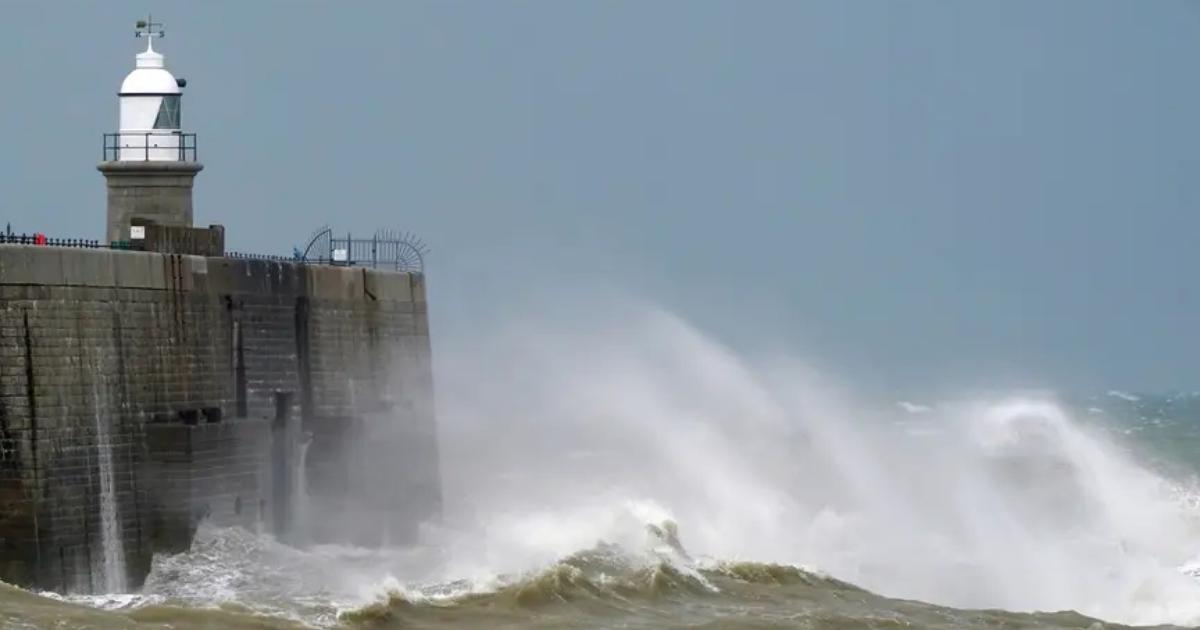
The Met Office has warned that the storm is bringing very strong southwesterly winds across the north, and in some areas, gusts of up to 70 mph.
Recommended reading:
Winds are expected to be at their strongest at around 11pm tonight.
Advertisement
In Staithes, these will reach to 39mph at 12am on Easter Sunday (April 5).
The storm will be less intense but still disruptive in Thirsk and Ripon, with winds reaching their peak at 28mph at approximately 12am.
An amber weather warning will be in place from 7pm tonight (April 4) (Image: Met Office)
Over in Harrogate and Knaresborough, these will be roughly 31mph.
The amber warning is due to begin at 7pm and will last until 3am tomorrow morning.
The Met Office has warned the public that driving in high winds may be dangerous and has urged motorists to be mindful of high-sided vehicles, caravans, cyclists and motorcyclists.
Some travel disruptions are to be expected, along with delays, closed roads and bridges, and power cuts.
A statement from the Met Office read: “A spell of very strong southwesterly, then westerly winds is expected across north Wales, northern England and southern Scotland on Saturday evening and overnight before easing early on Sunday.
Advertisement
“Gusts of 60-70 mph are possible widely with some coastal or exposed locations seeing gusts of around 80 mph.”
The Press will be keeping you up-to-date with all the latest weather news this afternoon.
Sixteen people were injured, five critically, after a vehicle struck parade participants at the Louisiana Lao New Year celebration in New Iberia.
Joe Smith News Reporter and Peter Hennessy UK & World News Editor
00:37, 05 Apr 2026
A vehicle has crashed into a parade in the United States, leaving 16 people injured.
According to local news outlet WBRZ2, 16 people were hurt – five of them critically – after a car struck parade participants in New Iberia, Louisiana.
Advertisement
Acadian Ambulance confirmed that ten ambulances and two air ambulances were deployed to the scene of the devastating incident, reports the Mirror.
Iberia Parish Sheriff’s Department has launched an investigation after the vehicle ploughed into a crowd attending a festival in New Iberia.
The gathering had assembled for a parade near Captain Cade and Melancon Road in the town of approximately 30,000 residents.
KPEL reported that the event was the Louisiana Lao New Year celebration in Iberia Parish.
Advertisement
Two casualties were airlifted to hospital, while a further 11 patients were taken by road ambulance to nearby medical facilities in the aftermath.
Footage and photographs circulating on social media captured the chaotic scenes that followed, showing emergency responders attempting to manage visibly distressed crowds at the event.
The Louisiana Lao New Year Festival is a well-established cultural event held annually in Iberia Parish. The three-day celebration, which got under way on Friday, honours Lao traditions, food, music, and community heritage.
It remains unclear what caused the collision or whether it was deliberate, and local authorities are yet to release information regarding the driver or any potential charges.
Advertisement
The full extent of the victims’ injuries is still being assessed as emergency crews continue to work at the scene.
Oven cleaning is arguably among the most neglected chores in kitchen maintenance. And after a busy day at work, it’s the last thing on our minds.
However, when we do tackle this awful chore, some of us are likely doing it incorrectly – and this could result in our oven door shattering unexpectedly.
Advertisement
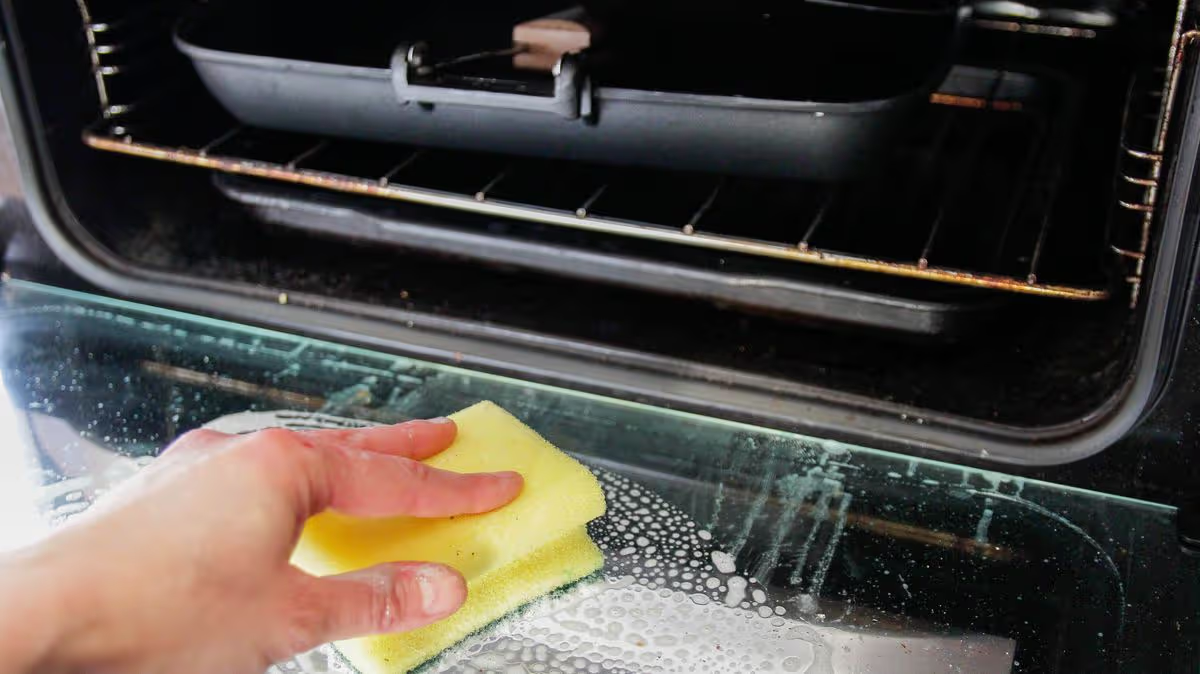
According to Which?, although bicarbonate of soda can be used for oven cleaning, it’s not about the product itself, but the method. It explains: “No matter what you use, you’ll need decent scrubbing brushes or sponges with scourers. An old toothbrush can help you get grease out of any nooks and crannies.
“Don’t use scourers on a glass oven door, though. These can introduce tiny scratches on the surface of the glass, which could leave it vulnerable to shattering in the future.”
If you want to clean your oven with bicarbonate of soda safely, try the following steps.
Advertisement
For a natural cleaning option, use everyday bicarbonate of soda
Make a paste by mixing equal parts of bicarbonate of soda and water
Apply to greasy or burnt-on spots and leave for a few hours
Scrub off to reveal a clean surface
To make the job more manageable, the consumer champions say that you should “clean little and often”. It advises: “Wipe down your oven at least once a month. If you’ve cooked something that you know has splattered everywhere (such as a roast or a bubbling casserole), you should wipe your oven down once it has cooled.”
If you smell something burning while the oven preheats, it’s usually leftover food from a previous spill. After the oven cools, wipe it clean to prevent residue from sticking.
Additional methods to prevent extra kitchen chaos include using a cover or foil to avoid bubbling and splashing. You should also place dishes on a baking sheet rather than directly on the oven shelf to catch any drips.



















































You must be logged in to post a comment Login