Connect with us
DAPA Banner

NewsBeat

Eating fruit is linked to lung cancer? Here’s what you need to know about that new study

Published

on

Eating fruit is linked to lung cancer? Here’s what you need to know about that new study

The idea that fruit and vegetables might cause cancer sounds bizarre. For decades, studies have shown that people who eat more plants tend to live longer, healthier lives, with lower rates of heart disease, stroke and several common cancers.

Lung cancer is no exception: in many large studies, higher intakes of fruits and vegetables are linked with lower risks, especially in smokers.

Against that backdrop, a new suggestion that fruit and veg might be driving lung cancer in young adults is surprising.

The story behind this latest wave of anxiety doesn’t come from a definitive, landmark trial. It comes from a brief presentation at a scientific conference, based on 187 people with early‑onset lung cancer.

Advertisement

Most had never smoked. When researchers asked about their diets, a lot of them reported eating plenty of fruits, vegetables and whole grains – the sort of pattern most of us would call “healthy”.

Instead of measuring pesticides in their food or blood, the team estimated probable pesticide exposure using average residue levels from other sources. From there, they speculated that pesticides on otherwise healthy foods might help explain why some young non‑smokers develop lung cancer.

That is a very long way from proving that fruit and vegetables themselves are harmful. Studies like this are meant to raise questions – “could pesticides be part of the story in young lung cancer?” – not to rewrite dietary advice on their own.

Crucially, this particular study looks backwards from people who already have cancer, rather than following healthy people forwards over time, so it cannot tell us whether their diet played any role in causing the disease. Nor does it show that these patients had higher pesticide exposures than comparable people without cancer. It only shows that they ate foods that, on average, can carry residues.

Advertisement

The bigger picture

When you zoom out from this single, tiny study to the broader body of evidence, the picture changes from alarming to reassuringly familiar. Large studies have followed tens or hundreds of thousands of people over many years, asked them what they ate, then waited to see who develops lung cancer. Time and again, those eating more fruit and vegetables either do better or, at very worst, no differently from those eating less.

Meta‑analyses that combine data from multiple studies find reductions in lung cancer risk with higher fruit intake and benefits from vegetables, too. These are the studies that inform official guidelines. They are not perfect – no nutrition study is – but they are far more informative than a single unpublished study of 187 patients.

So why do small studies like this latest one sometimes seem to say something different? One reason is simple statistical noise.

With small numbers, chance plays a huge role. If, for whatever reason, the particular group of young adults who turned up to that clinic happened to be unusually health-conscious, then fruit and vegetable intake will look high among people with lung cancer, even if diet has nothing to do with their disease.

Advertisement

Another issue is what scientists call “confounding”. People who eat more plants often differ in many other ways. They may exercise more, drink less, have different jobs, live in different neighbourhoods, or be more on the ball about seeking medical help.

When you start from patients and look backwards, it is very hard to disentangle these overlapping factors. That is why we place more weight on large, prospective studies that follow people forward in time and can better account for these differences.

Pesticides

Then there is the question of pesticides – the part of the story that understandably unnerves people. It is true that many conventionally grown fruits and vegetables carry measurable pesticide residues, and that people who eat a lot of produce tend to have higher levels of some pesticide breakdown products in their urine.

It is also true that farm workers who handle pesticides regularly and at high doses have higher rates of certain cancers, including some lung cancers. That tells us pesticides are not benign. But what it does not tell us is that eating sprayed apples or lettuce at normal dietary levels causes lung cancer in the general population.

Advertisement
Farm workers who are exposed to high doses of pesticides do have higher rates of certain cancers.
Kuro1982/Shutterstock.com

That doesn’t mean we should be complacent: there is an ongoing discussion about cocktails of many different chemicals, about vulnerable groups such as children and pregnant women, and about longer‑term hormone or brain effects that might not show up in crude cancer rates. However, these are arguments for improving how we farm and regulate pesticides, not arguments for abandoning fruit and vegetables.

If you are still uneasy about pesticides, there are practical, proportionate things you can do that don’t involve swapping an orange for a packet of crisps. Washing produce under running water helps remove surface residues and soil, and varying the types of fruit and veg you eat means you are not relying heavily on any one item that tends to carry higher residues.

If your budget allows, choosing organic versions of a few “high‑residue” foods can make sense. But the key point is that these are tweaks at the margins. They don’t change the central message that a diet rich in plant foods is overwhelmingly associated with better health.

Perhaps the most important lesson from this episode is about how to read nutrition headlines. Whenever you see “X food causes cancer” or “Y ingredient is the next miracle cure”, it helps to ask a couple of simple questions. How big was the study? Was it in healthy people followed over time, or patients looked at after the fact? Did the researchers actually measure what they are claiming (like pesticide levels)? And how do the new findings sit alongside decades of existing research?

Advertisement

In the case of the early-onset lung cancer study, the answers are sobering: it was small, it was retrospective, it used indirect exposure estimates, and its suggestion that fruit and vegetables might be harmful sits awkwardly with a much larger body of work pointing the other way.

None of this means we should ignore the possibility that pesticides contribute in some way to cancers in non‑smokers, or that diet is irrelevant to lung health. But we should be wary of turning one provocative conference talk into a reason to fear the very foods that consistently show up as markers of better health.

Source link

Advertisement
Continue Reading
Click to comment

You must be logged in to post a comment Login

Leave a Reply

NewsBeat

Major rule change for households without a driveway

Published

on

Daily Mirror

Millions of vehicle owners could take advantage of this

Millions of vehicle owners are expected to notice a major rule change that’s expected within just months.

Advertisement

People without driveways will soon find it significantly easier, and more affordable, to charge an electric vehicle from home. Homeowners will no longer require planning permission to install pavement charging “gullies”, enabling cables to be safely channelled underneath the pavement instead of stretching across it – a practice currently prohibited due to tripping risks. Ministers have announced that legislation will be fast-tracked this summer to classify these installations as permitted development.

Officials indicate that by year’s end, motorists could fit a gully outside their property without needing council consent. The reform aims to eliminate one of the most significant obstacles to electric vehicle ownership for those lacking off-street parking – a demographic spanning millions throughout Britain’s urban areas.

Home charging is substantially more economical than depending on public facilities. Figures from Zapmap reveal the typical cost of using a public charger sits at approximately 72p per kWh, while specialist domestic tariffs can drop to as little as 8p per kWh.

Advertisement

This stark difference means drivers able to charge at home could save hundreds of pounds annually compared with those reliant on public networks. The new framework will allow motorists to thread a charging cable through a slim channel fitted into the pavement, removing the necessity to drape leads across footpaths.

Nevertheless, installation costs may present a hurdle. While certain councils are already subsidising the gullies, in numerous regions, homeowners will need to cover the cost themselves – usually around £1,000. Even so, the initial outlay can be swiftly offset through reduced electricity bills compared with petrol, diesel or public charging points.

The initiative follows a spike in electric vehicle demand, fuelled partly by stubbornly high fuel prices. Energy provider Octopus Energy reported EV sales leapt by a fifth during the first three weeks of March compared with the preceding month.

Throughout Europe, appetite is growing even more rapidly. Data from transport research organisation NewAutomotive reveals electric car sales across the EU soared by 51 per cent last month compared with March 2025, with EVs accounting for more than a fifth of all new registrations.

Advertisement

In the UK, electric cars have also reached a crucial milestone on pricing. According to Autotrader, the average new EV now stands at £42,620 – marginally below the £43,405 average for a petrol vehicle. The Government is simultaneously attempting to address the steep cost of electricity, which has long weakened the economic argument for switching to electric.

Ministers have unveiled proposals today to sever the connection between electricity prices and wholesale gas costs – which presently determine the price around 60% of the time. Energy Secretary Ed Miliband has highlighted nations such as Spain, where greater dependence on renewables has helped protect consumers from the worst of recent price surges, as a blueprint for Britain.

Environmental campaigners have endorsed the drive. Angharad Hopkinson, political campaigner at Greenpeace UK, said: “Britain is sick and tired of an energy system where pump prices and… bills go up and down based on Trump’s latest social post. The government is absolutely right to be looking at every possible solution.”

For motorists who don’t have off-street parking, the regulatory shift could prove transformative – at last making domestic charging a viable prospect and reducing the expense difference between electric and traditional vehicles.

Advertisement

Source link

Continue Reading

NewsBeat

Boycott on Durham’s rise at Sunderland Roker Hotel event

Published

on

Boycott on Durham’s rise at Sunderland Roker Hotel event

The former England opener spoke ahead of his appearance at the Roker Hotel in Sunderland for An Evening with Sir Geoffrey Boycott, reflecting on the individuals instrumental in the club’s rise in 1992.

Sir Geoffrey said: “I have loved my visits to the North East through the years.

“It has been so good to return to Durham in recent times and catch up with lots of old friends in and around the area.”

Matty Roseberry (Image: Supplied)

He praised Durham’s home ground, The Riverside, calling it a “fantastic focal point for the area” with a “fantastic reputation for staging major international matches”.

Advertisement

Among those he remembered was Matty Roseberry of Sunderland, who played a key role in supporting the club’s development.

Sir Geoffrey said: “Matty organised many fundraisers for Durham.

“I built up a great friendship with him, his wife Jean, and their lovely family – and whenever I was in the area, I would often stay with them.”

Mr Roseberry, who had interests in a number of hotels and pubs — most notably the Rainton Arena — was renowned for his connections and his ability to bring people together for the benefit of the game.

Advertisement

Sir Geoffrey said: “Matty was incredibly well connected.”

He recalled a fundraising event organised by Mr Roseberry that brought together Sir Alex Ferguson, Sir Bobby Charlton, and Sir Booby Robson in support of the Bobby Robson Foundation.

The event remains a cherished memory for those who attended.

Sir Geoffrey said Mr Roseberry’s motivation to help elevate cricket in the region was partly inspired by his son Michael.

Advertisement

He said: “Matty’s place in Sunderland’s heritage will live on.”

He also paid tribute to former Durham chairman Don Robson, who led the campaign to secure first-class status for the club.

Sir Geoffrey said: “He’s someone I built up a great friendship with.

Don Robson (Image: Supplied)

“He and his team worked tirelessly to get first-class status for Durham over the line.

Advertisement

“They were so lucky to have Don on board because he simply never gave up.

“He was always on the phone, pushing for his dream and wanting it to happen.

“His lovely wife Jenny was a real driving force in it all too.”

Both Don and Jenny Robson have since passed away, but Sir Geoffrey stressed their enduring legacy at the club.

Advertisement

He said: “Without their drive, persistence of these very special people, Durham would likely not be the force it is today.

“No matter what obstacles they faced, they simply found a way around them and pushed on.”

Sir Geoffrey Boycott will share these memories, along with his views on the current state of English cricket and the England and Wales Cricket Board, at his event in Sunderland on Friday, April 24.

He will also appear at The Hub, Teesside University on Friday, June 19.

Advertisement

Tickets for An Evening with Sir Geoffrey Boycott are available from ticketsource or by calling Goffy Media on 07990 588 424.

Sir Geoffrey said: “We will have plenty to talk about and so many English cricket fans are still in shock following the Ashes disaster in Australia and I feel sure that will feature at some point.”

The evening promises a blend of stories, insights, and strong opinions from one of cricket’s most respected and outspoken voices.

It is a rare chance to hear directly from a figure who has helped shape the game on and off the pitch, while also acknowledging those who made lasting contributions to the sport in the North East.

Advertisement

Source link

Continue Reading

NewsBeat

Broken-down train blocks Cambridgeshire railway lines

Published

on

Cambridgeshire Live

Disruption was expected until the late morning

Some trains travelling from Cambridgeshire towards London were blocked on Tuesday morning (April 21). There were reduced services running from Huntingdon towards London.

Advertisement

This is a result of a broken down train in the Huntingdon area. Disruption was expected until at least 11am.

A National Rail spokesperson said: “A broken down train in the Huntingdon area is blocking one of the lines towards London. As a result, fewer lines than normal are available heading southbound.”

Great Northern trains between Peterborough and London Kings Cross are affected, as well as Thameslink trains between Peterborough, London Kings Cross, Three Bridges, and Horsham.

National Rail added: “If you’re travelling from Huntingdon towards Stevenage and London, you should travel on an alternative Thameslink / Great Northern service to Peterborough, and change there for an alternative Thameslink / Great Northern service towards Stevenage and London.

Advertisement

“If you’re travelling from Peterborough to Huntingdon, you should travel on a Thameslink / Great Northern service to St Neots, and change there for a northbound service calling at Huntingdon. While travelling, you should listen to announcements and check station screens for up-to-date train running information.”

Do you want more of the latest Cambridgeshire news as it comes in from across the county? Sign up to our dedicated newsletter to make sure you never miss a big story from Cambridge or anywhere else in the county. You can also sign up to our dedicated Traffic and Crime newsletters for the latest updates on the topics you are most interested in.

Source link

Advertisement
Continue Reading

NewsBeat

‘I managed Alejandro Garnacho – his attitude was a disgrace and Chelsea are paying the price’

Published

on

'I managed Alejandro Garnacho - his attitude was a disgrace and Chelsea are paying the price'

“Someone in that club or team at the time should have been swatting him down, and they might have been, and he ignored them. But the best thing Man United did was sell him because, forget his ability, and I don’t think he is that great anyway, but I thought his attitude was a disgrace when he was at Man United.

Source link

Continue Reading

NewsBeat

London shoplifting convictions surge as new technology boosts crackdown on thieves

Published

on

London shoplifting convictions surge as new technology boosts crackdown on thieves

“Latest figures show we’re making progress reducing shoplifting in London, but there’s more to do. The police will continue to work closely with businesses and use plain-clothed officers, extensive CCTV networks, and increased visible patrols to catch, arrest, and prosecute offenders, building a safer London for everyone.”

Source link

Continue Reading

NewsBeat

After 27 years in power, Welsh Labour’s dominance may soon be over

Published

on

After 27 years in power, Welsh Labour’s dominance may soon be over

Welsh Labour is in unfamiliar territory. While winning elections in Wales had become routine since 1922, the upcoming Senedd (Welsh parliament) election has thrown the party into uncharted waters, with the prospect of finishing a distant third.

So much is new about this election. The Senedd has been expanded from 60 to 96 members, alongside the introduction of a new electoral system which changes how members are elected, making this a contest like no other in the devolution era.

But it is not just the Senedd that is transforming. More than a century of Labour dominance now appears under serious threat, with Plaid Cymru and Reform UK emerging as beneficiaries of a potentially seismic realignment.


À lire aussi :
Wales is overhauling its democracy – here’s what’s changing

Advertisement

Polling suggests a stark outcome: around 12 seats for the party that has dominated Welsh political life, down from 29 at the last election. And that’s despite the Senedd’s expansion.

In trying to breathe new life into the party, Welsh Labour claimed in late 2025 to be ushering in a new generation of Senedd members. The upcoming election suggests otherwise, with more of the same and mostly familiar faces. At the centre of it all, the party’s leader, Eluned Morgan, is not just fighting a monumental battle for her party but for her own seat too.

Dominance and decline

The collapse of dominant parties can often appear sudden. Just five years ago, Welsh Labour was celebrating one of its best Senedd election results. Labour was still in a triumphant mood as recently as two years ago, dominating the 2024 general election and wiping out the Conservatives in Wales.

Yet the political mood has shifted dramatically. Vaughan Gething, a former Welsh Labour first minister, was forced out in 2024 following controversy over campaign donations. This fuelled perceptions of instability and corruption within the party. Declining confidence in the Welsh government and an electorate increasingly weary after more than two decades of uninterrupted Labour rule have left the party’s prospects looking bleak.

Advertisement

The pandemic has also played a role. It raised public awareness of the powers held by the devolved Welsh government, which includes health and education. While undoubtedly a positive in terms of political knowledge, it means Welsh Labour is less able to point the blame for problems towards Westminster.

Policies such as the introduction of a default 20mph speed limit in urban areas, alongside reforms affecting farming, have provoked vocal backlash among sections of the electorate.


À lire aussi :
Why has the 20mph limit become such a political issue in the Welsh election?


Welsh Labour’s impending defeat also points to something deeper and much longer term. The Senedd currently has 40 members elected in constituencies by first-past-the-post, and 20 regional members elected proportionally across five regions. This limited proportional representation has meant that the fundamental changes happening within Wales haven’t been fully captured by previous elections. This would include declining loyalty in traditional Labour strongholds, generational shifts, and the gradual rise of rival parties like Plaid Cymru and Reform reshaping the political landscape.

Advertisement

History and international comparisons also tell us that the dominant party eventually wears itself out in office, failing to keep up with the society in which it is rooted.

Through positioning itself as the natural party of Wales, Welsh Labour has consistently attempted to cling to its historic position.

References to party figures like Aneurin Bevan, the founding of the NHS, and appeals to solidarity and community sound increasingly hollow in a nation that has borne the brunt of deindustrialisation and austerity for decades. Rather than forging a new, positive future, Welsh Labour has become stuck in its own past.

Internal tensions

The party has also been hampered by internal tensions. Welsh Labour has long been split between those sceptical of further devolution and those who support expanding the powers of the Senedd. It’s a divide that often surfaces in tensions between its representatives in Westminster and those in Cardiff Bay.

Advertisement

Labour MPs in London have at times been dismissive of constitutional demands from their Senedd colleagues. Meanwhile, Welsh Labour Senedd members routinely express frustration at what they see as hostility from the UK leadership.


À lire aussi :
‘The red Welsh way’: Welsh Labour attempts to distance itself from the UK party


Eluned Morgan’s voice appears lost. She claims to be speaking for Wales within the party, but is regularly ignored by Keir Starmer and his team.

Since devolution in 1999, Welsh Labour’s success has rested partly on its ability to project a distinctively Welsh identity. Since Labour returned to power at the UK level in 2024, this emphasis on “standing up for Wales” has faded.

Advertisement

Channel 4 News – Welsh Labour focus on cost of living for Senedd elections.

Against this backdrop, Welsh Labour needed something substantial to present to the electorate when it launched its manifesto in March. One of the centrepieces trailed in the press was a pledge to freeze taxes if re-elected. While such a freeze may be welcomed by voters, it is ultimately emblematic of a party promising little more than continuity. In effect, freezing taxes means keeping things as they are.

After 27 years of Labour-led government in Wales, public frustration is evident. The pressures of long-term incumbency, internal party strains and shifting political dynamics have converged to challenge Welsh Labour’s claim to govern. As its century-long dominance appears to be drawing to a close, Welsh Labour can no longer easily present itself as the natural party of Wales.

Advertisement

Source link

Continue Reading

NewsBeat

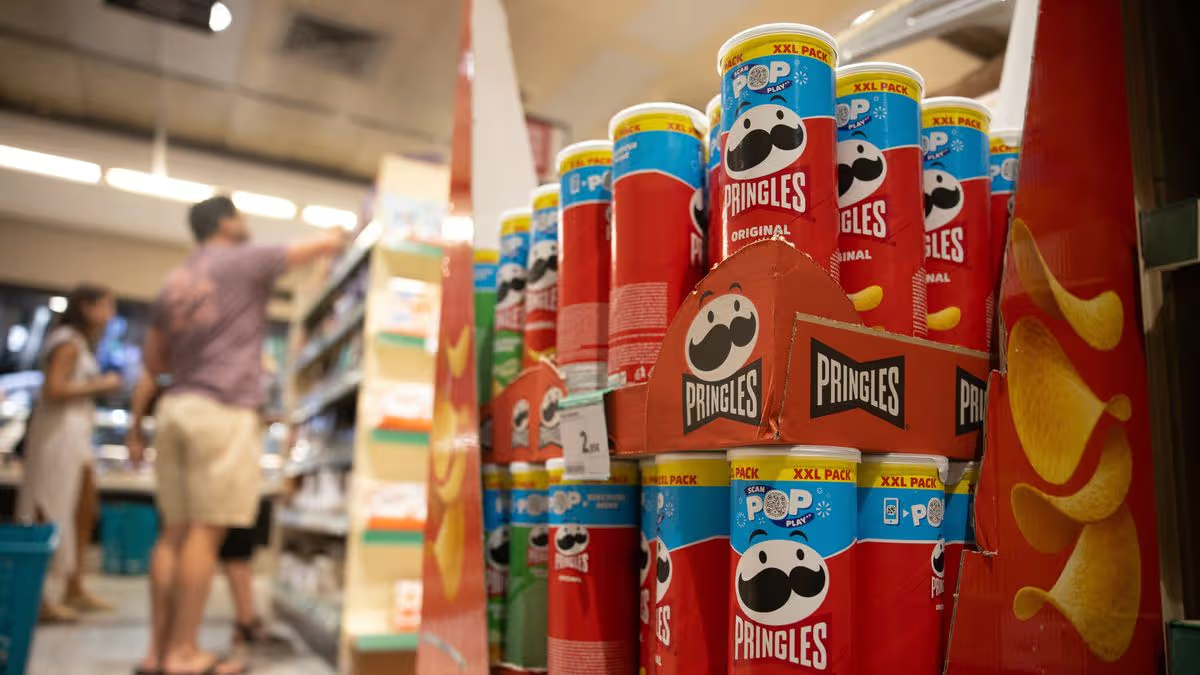
Pringles drops two new flavours and fans say ‘one is better than the other’

Published

on

Daily Mirror

Two new flavours of Pringles have been spotted in supermarkets and stores, and shoppers have been “buzzing” to try them out – though one is said to be much “better” than the other

Two new flavours of Pringles have hit the supermarket shelves and shoppers are “impressed” – though one has been branded “better” than the other.

Pringles were founded in 1968 and have become a firm favourite, thanks to its famed stackable, saddle shape. Tubes of its classic original ready salted, sour cream and onion, and salt and vinegar flavours are a regular feature at cinemas, party buffets, cosy nights in, and more.

Advertisement

The American brand is beloved for its strong flavours, with new editions, collaborations and limited flavour releases always going down well among Pringles fans and casual shoppers alike. Recently, popular food-focused social media account New Foods UK shared an image of two new Pringles flavours to Instagram, after spotting them in Iceland stores.

The supermarket chain boasts more than 950 stores across the country, as well as a multi-award-winning online shopping service. The retailer is a hit thanks to its wide selection of budget-friendly frozen food, as well as its regular releases of new products.

Alongside an image showcasing the two new cans of Pringles – launched in collaboration with fast food giant Burger King – which come in Bacon Double Cheese XL flavour and Chicken Royale flavour, New Foods UK penned: “Trying the new Burger King Pringles from @icelandfoods Wow! The Chicken Royale flavour is the star of the show!

“Every flavour comes through – can even taste the bun with the sesame seeds too! Absolutely incredible!”

Advertisement

In the comments section, fellow Instagram users were keen to share their thoughts. One person said: “Loved the chicken royale ones”.

Another said: “Wow just done the XL one and was so impressed with the flavour imitation. Buzzing to try the others now.”

Content cannot be displayed without consent

A third commented: “I need to get the XL bacon double cheeseburger ones. I seem to remember some cheeseburger pringles years ago that were amazing”.

A fourth added: “Yeah, the chicken ones are definitely the better ones”.

Advertisement

The new Pringles are being sold at Iceland stores, as well as other major UK supermarkets including Asda, Sainsbury’s, Morrisons, Co-op, Iceland and Tesco. They’re also available via wholesalers. They’re expected to be sold until the end of September, depending on availability.

Evie Pickering, assistant brand activation manager at Pringles, said: “This exciting collaboration represents a true meeting of two iconic brands, both famous for bold flavours and an uncompromising commitment to delivering what consumers love.

“Working closely with the Burger King crew, our food development team has taken the unmistakable taste of two of the best-loved menu items and translated them into limited edition, non-HFSS Pringles, perfect for sharing.”

Popular social media account New Foods UK has cultivated a dedicated online following thanks to its consistent posts, pictures and footage highlighting all the latest sweet treats, snacks and more spotted in supermarkets and other retail stores up and down the country.

Advertisement

It boasts hundreds of thousands followers across multiple social media platforms and often shares reviews and product updates, too.

Source link

Continue Reading

NewsBeat

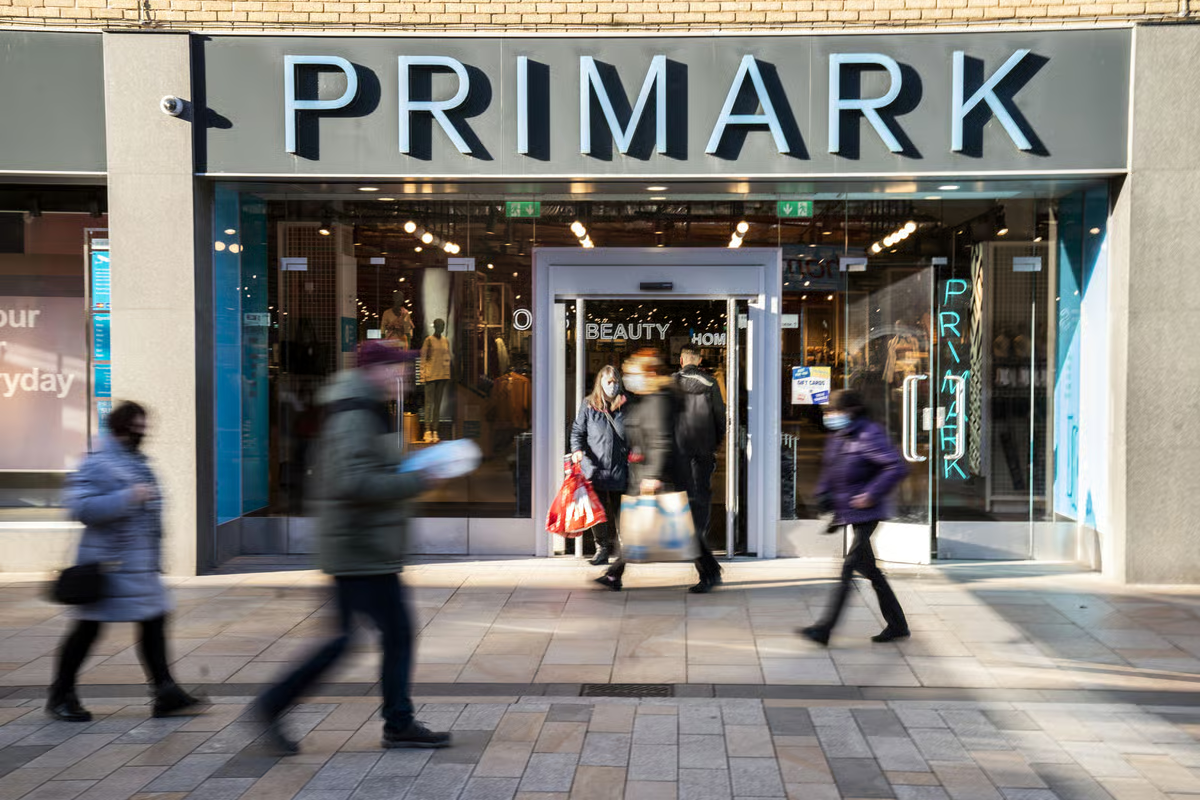
Primark owner ABF reveals plan to spin off high street fashion chain

Published

on

Primark owner ABF reveals plan to spin off high street fashion chain

Michael McLintock, chairman of ABF, said: “The board has now completed its in-depth review of the structure of ABF and has concluded that a demerger of Primark is the best way to maximise long-term returns for shareholders, reflecting Primark’s scale today and the need for a better understanding of the Food business.

Source link

Continue Reading

NewsBeat

FSA recall as cakes and biscuits contaminated by rodents

Published

on

Tesco, Morrisons, Sainsbury's and more issue food recalls

Saffron Pastries is recalling a number of its products because of a potential rodent contamination.

A spokesman for the Food Standards Agency (FSA) warned any shoppers who have purchased the affected products, listed below, not to eat them.

Full refunds will be offered to anyone who has bought the cakes and biscuits.

Advertisement

A statement from the FSA said: “Saffron Pastries is recalling the above Saffron Pastries brand products.

“Point of sale notices will be displayed in retail stores that are selling these products.

“These notices explain to customers why the products are being recalled and tell them what to do if they have bought the products.

Advertisement

“If you have bought the above products, do not eat them. Instead, return them to where you bought them from for a full refund.”


Recommended Reading:


These are the Saffron Pastries products affected by the latest recall:

  • Almond Biscuits (12 pack) – All best before dates from February 17, 2027, to April 5, 2027
  • Almond Madeira Slice (10 pack) – All best before dates from April 20, 2026, to May 12, 2026
  • Coconut Slice (5 pack) – All best before dates from April 23, 2026, to May 5, 2026
  • Cream Roll (5 pack) – All best before dates from August 10, 2026, to September 20, 2026
  • Family Almond Cake Rusk (26 pack) – All best before dates from January 20, 2027, to March 11, 2027
  • Family Cake Rusk (26 pack) – Best before date of March 11, 2027
  • Fruit Madeira Slice (10 pack) – All best before dates from April 20, 2026, to May 12, 2026
  • Fruit Slice (5 pack) – All best before dates from April 23, 2026, to May 30, 2026
  • Jam Biscuits (12 pack) – Best before date of February 18, 2027
  • Lemon Slice (5 pack) – All best before dates from April 16, 2026, to June 8, 2026
  • Original Cake Rusk (12 pack) – All best before dates from January 20, 2027, to March 10, 2027
  • Original Cake Rusk (18 pack) – All best before dates from January 16, 2027, up to March 10, 2027
  • Almond Slice (5 pack) – All best before dates from April 17, 2026, up to May 5, 2026
  • Pistachio Biscuits (12 pack) – All best before dates from February 17, 2027, up to April 5, 2027
  • Plain Madeira Slice (10 pack) – All best before dates from April 20, 2026, to June 18, 2026
  • Triple Pack Variety Madeira (3 pack) – All best before dates from June 30, 2026, to May 12, 2026
  • Twin Pack Madeira (2 pack) – All best before dates from April 23, 2026, to May 15, 2026
  • Vanilla Slice (5 pack) – All best before dates from April 17, 2026, to June 30, 2026
  • Angel Slice (5 pack) – All best before dates from April 17, 2027, to June 30, 2026
  • Cake Rusk Soonfi (12 pack) – Best before date of March 30, 2027
  • Cake Rusk Soonfi (18 pack) – Best before date of March 30, 2027
  • Cherry Madeira Slice (10 pack) – All best before dates from April 20, 2026, to May 12, 2026
  • Chocolate Slice (5 pack) – Best before date of April 20, 2026
  • Coconut Biscuits (12 pack) – All best before dates from February 18, 2027, to March 8, 2027
  • Coconut Madeira Slice (10 pack) – All best before dates from April 20, 2026, to May 12, 2026

For more information email info@saffronpastries.com or call 01274 726101.


Food Recalls Explained


What is a product recall?

If there is a problem with a food product that means it should not be sold, then it might be ‘withdrawn’ (taken off the shelves) or ‘recalled’ (when customers are asked to return the product).

The FSA issues Product Withdrawal Information Notices and Product Recall Information Notices to let consumers and local authorities know about problems associated with food.

Advertisement

In some cases, a ‘Food Alert for Action’ is issued.

This provides local authorities with details of specific actions to be taken on behalf of consumers.

Source link

Advertisement
Continue Reading

NewsBeat

The ‘Venice-like’ village in Wales designed to look Mediterranean has just turned 100

Published

on

The ‘Venice-like' village in Wales designed to look Mediterranean has just turned 100
The picturesque UK village would fit better in the Mediterranean (Picture: Getty Images)

Venice may be one of the most romantic and picturesque destinations on the planet, but there’s no chance of the crowds disappearing anytime soon. 

With overtourism rife in the city – inspiring its tourist tax – many travellers are looking elsewhere for their next idyllic escape.

Those in the UK don’t have to look too far. A charming village in England has earned comparisons, meanwhile in Wales, there’s a little slice of Italy closer to home.

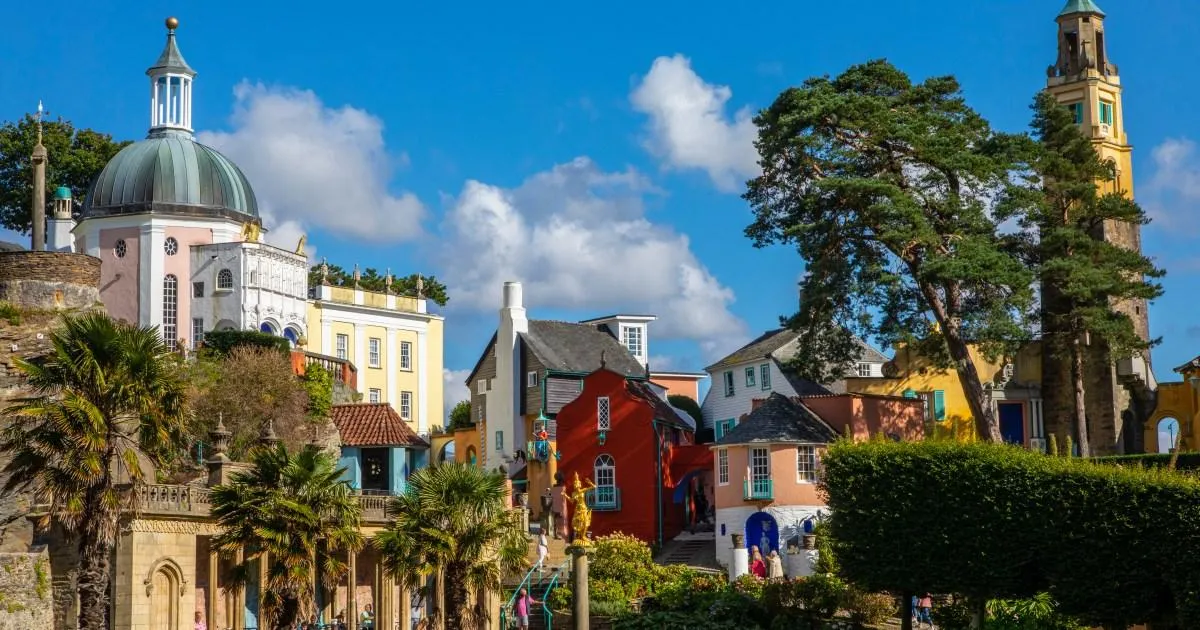
Portmeirion, located on the coast of North Wales in Gwynedd, is a unique folly tourist village that was actually designed to look like a Mediterranean village – and has just celebrated its 100th anniversary.

Advertisement

With its cobbled streets, brightly coloured buildings and quaint narrow alleyways, you’d be forgiven for thinking you’ve stepped right into a quieter Venice. 

Built between 1925 and 1975 by architect Sir Clough Williams-Ellis, Portmeirion was created to capture the atmosphere of a Mediterranean village within the Welsh countryside.

Best of Metro Deals

Get exclusive discounts with Metro Deals – save on getaways and spa days. Powered by Wowcher

Bannatyne Spa: Spa day for two with treatments, lunch & prosecco — save up to 57% off.

Advertisement

Get deal now

Mystery Escape: Hotel stay with return flights from as low as £92pp — save on worldwide holiday packages.

Get deal now

Beach Retreat (Lanzarote): 4* Lanzarote beach holiday with flights — save up to 58%.

Advertisement

Get deal now

Portmeirion, a village in North Wales designed to look like the Mediterennean.
The folly village looks like an Italian town (Picture: Getty Images)

While some think the design was based on the Italian fishing village of Portofino, Williams-Ellis claimed he wanted to pay tribute to the Mediterranean atmosphere and did not have a specific location in mind.

In recent years, the small Welsh village has been gaining attention on social media, with TikTokers calling it a hidden gem and a must-visit. 

Advertisement

Content creator Tabby (@thejohnsontravels) described the village as ‘Little Italy but in Wales.’ Her footage showcased virtually empty streets, a stark contrast to the crowded canals of its Italian lookalike, Venice.

Wide angle view of colourful buildings at Portmeirion, a tourist village in Gwynedd, North Wales.
The village features colourful buildings and cobbled streets (Picture: Getty Images)

‘Portmeirion is stunning and if you haven’t been, you need to – a little slice of Italy,’ she wrote in the caption.

The video sparked a flurry of comments from viewers in disbelief that such a place existed in the UK.

‘I feel like I’m living in the wrong Wales because where the hell is this,’ user @risqueebookn_ joked.

Another @sheshecollectif wrote: ‘Why have I never heard of this place before.’ User @izzy.bcrossland added: ‘I think Portmeirion is the prettiest place in the whole of the UK.’

Advertisement

Another TikToker @saltinourhair recorded their visit to the peaceful town. They wrote: ‘This isn’t Italy or France… It’s Portmeirion in Wales, UK.’

They urged their followers to add the Welsh village to their bucket lists, adding in the comment section: ‘I had no idea there was a place like this in the UK.’ 

One commenter declared it ‘the sweetest town in Wales’. Another, @henrypledger0, said: ‘[It is] well worth the visit, we stayed in one of the cottages and we were treated like royalty, food was fantastic accompanied by a harp player.’

Other content creators have declared the village ‘breathtakingly unique’ and ‘magical’.

Advertisement

Portmeirion is famously known as the setting of the 1960s TV show The Prisoner. It became the backdrop for the series’ storyline about a man imprisoned in a beautiful yet bizarre village.

Wide angle view of colourful buildings at Portmeirion village. Portmeirion is a village in Gwynedd, North Wales.
The village has been called ‘breathtakingly unique’ (Picture: Getty Images/iStockphoto))
A colourful archway in the picturesque village of Portmeirion in North Wales, UK.
Many have called Portmeirion a hidden gem (Picture: Getty Images/iStockphoto)

But unlike most picturesque villages in the UK, you have to pay to enter Portmeirion.

Entry costs £20 for adults during its main season (March to November), while an annual pass is available for £40 per adult and £25 for children.

Those who want to soak up the charm of Portmeirion for longer can stay overnight in the village’s various cottages, hotels, and accommodations.

The Portmeirion Hotel, the village’s flagship hotel, is rated four stars and overlooks the sandy beaches of the Dwyryd Estuary in Snowdonia, North Wales. 

Advertisement

It originally opened in April 1926 and has retained many of its Victorian features, including an intricate Italian fireplace and a grand mirror room, according to the website.

With 14 bedrooms to choose from, guests can enjoy fine dining at the hotel’s restaurants, a bar, a terrace, and even an open-air swimming pool.

We’ve found rooms for August 2026 from £255 per night – though prices may vary depending on when you want to stay.

You can also visit Castell Deudraeth Brasserie, a gothic-style castle often referred to as ‘the largest and most imposing single building on the Portmeirion estate’.

Advertisement

More UK and Europe Venice alternatives to explore

This article was originally published in March 2025, and has been updated.

Do you have a story to share?

Get in touch by emailing MetroLifestyleTeam@Metro.co.uk.

Advertisement

Source link

Advertisement
Continue Reading

Trending

Copyright © 2025