When Mathipa was assigned to the case a month later, he issued a subpoena to special forces to force them to hand over full details of this alleged training exercise and all the personnel involved.
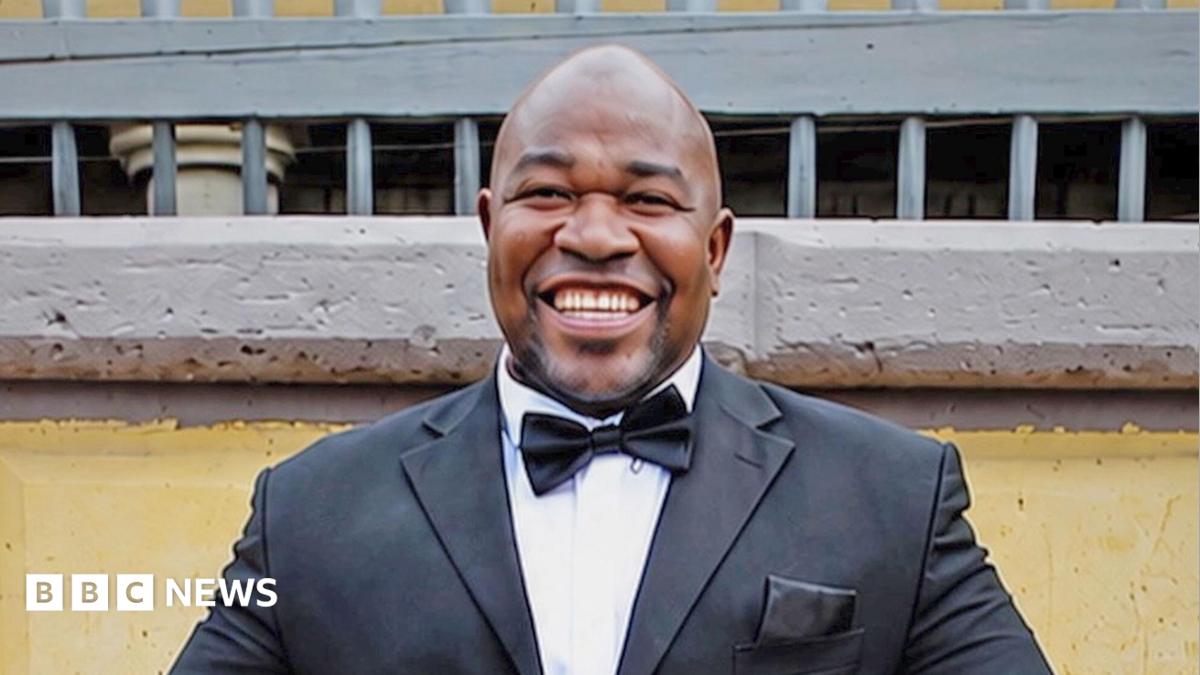
When access to these documents was finally promised, three months later, Mathipa had a premonition that he would be murdered – according to Brig Paulina Sekgobela, his commanding officer.
“When [Mathipa] left my office he said: ‘Brigadier, you know, these people – they are going to kill me. I’m going to die’,” she told the BBC.
On the day Mathipa was killed, he was phoned by a man calling himself Tebogo, who claimed he had information on the case for the detective – according to Mathipa’s daughter Basetsana, who was home with him at the time.
Advertisement
Mathipa and Tebogo arranged to meet at a petrol station in Pretoria.
When Tebogo failed to show, Mathipa drove away again, along the highway.
He was killed while driving, by rounds fired from high-velocity weapons which special forces would have had access to, according to South African police.
And footage from motorway toll gantries, police say, shows one of the occupants of the black BMW, which tailed Mathipa moments before his murder, was Maj Sunnybooi Wambi.
Advertisement
This car, like the three vehicles connected with Abadigga’s disappearance at the mall, was registered to PCT, they add.
New detectives were assigned to the case after Mathipa’s death, triggering a chilling message from special forces, that made its way to the police’s Criminal Intelligence division.
Police say it warned that, however many investigating officers were assigned to the case, “we will kill all of them”.
Twelve members of the South African military have been arrested in total, including Lt Col Sunnybooi Wambi, and the current head of South Africa’s special forces, Brig Gen Solomon Lechoenyo – both promoted to these positions since police first started investigating their roles in the case.
Advertisement
The 12 have been variously charged with the abduction and murder of Abadigga and Abotese, the murder of Mathipa, fraud, and obstruction.
All deny all charges and they were initially released on bail. But six of them later had their bail revoked, and were ordered to turn themselves in to custody.
Three of the six, including Wambi, have been charged with both Mathipa’s murder, and Abotese’s abduction and murder.
Royal Navy surveillance drones used by Britain’s elite special forces were fitted with cameras containing Chinese-made components that were secretly sending data to an address in China.
The K3 Scout drones, operated by Royal Marines, were found to be transmitting so-called ‘heartbeat’ communications to an IP address in China.
The signals were designed to tell a remote device that the cameras were online and operating normally.
The discovery has triggered national security concerns and forced the Ministry of Defence to strip the cameras of their internet connectivity.
Advertisement
Officials insist there is no evidence that sensitive military information or Ministry of Defence systems were accessed or transmitted overseas.
But the revelation has raised fresh questions about the security of Britain’s military supply chains – and whether Chinese technology has found its way into highly sensitive areas used by special forces.
The £12million fleet has been in use since March and was supplied by British defence contractor Kraken Technology Group.
Kraken had sourced the cameras from a third-party supplier which had provided assurances over their security.
Advertisement
The K3 Scout drones, operated by Royal Marines, were found to be transmitting so-called ‘heartbeat’ communications to an IP address in China
Defence Secretary Wes Streeting poses with outgoing Chief of Joint Operations, Lieutenant General Nicholas Perry (left), and incoming Chief of Joint Operations, Air Marshal Allan Marshall (right)
An investigation subsequently discovered that the cameras contained components manufactured in China and were communicating with an IP address in the country.
Advertisement
The incident was considered serious enough to prompt concerns over the potential exposure of personnel at the Special Boat Service headquarters in Poole, Dorset.
There are also fears that the cameras may have been operating in the vicinity of sensitive meetings involving senior special forces personnel.
Particular concern has been raised over reports that the cameras could remain active even when the drones themselves had been switched off.
A defence source familiar with the matter told the Telegraph the drones had been used during preparations for a potential British defence package designed to help protect freedom of navigation through the Strait of Hormuz.
Advertisement
The source described the discovery as a serious procurement failure, saying confidence in the platform had been lost.
The incident is a major blow to Project Beehive, the Royal Navy programme aimed at integrating unmanned vessels with conventional warships.
The K3 Scouts form part of the Navy’s surface flotilla and are operated by the Coastal Forces Squadron and 47 Commando Royal Marines.
The unmanned vessels are intended to give British forces greater surveillance and war-fighting capabilities while reducing the risks to personnel.
Advertisement
The K3 Scout is capable of carrying a payload of up to 600kg and can operate continuously for as long as 30 days.
The system has also been acquired by US Special Operations Command and has taken part in Nato exercises and trials in the Baltic.
The discovery comes as Britain faces growing warnings over the potential security risks posed by China’s dominance of global technology and manufacturing supply chains.
Alicia Kearns, the shadow security minister, called for urgent scrutiny of military equipment containing components sourced from China
Join the discussion
Advertisement
How should Britain protect its military from hidden foreign tech threats in our supply chains?
Alicia Kearns, the shadow security minister, said: ‘If we cannot say with confidence what is inside our own military equipment, we cannot say it is ours, or that we are sovereign.’
She called for urgent scrutiny of military equipment containing components sourced from China, warning that the incident demonstrated the risks posed by hidden vulnerabilities within apparently British systems.
The concerns come amid a wider series of warnings over Chinese technology.
Advertisement
Last year, MI5 warned MPs that Chinese intelligence services were making persistent efforts to interfere with and influence Parliament, including through professional networking platforms used to gather information.
The warning followed the collapse of a case involving two men accused of spying for China, after prosecutors faced difficulties in establishing the required legal classification of Beijing as an enemy state.
Britain has previously taken action against Chinese technology on national security grounds.
In 2020, the then Conservative government ordered the removal of Huawei equipment from the UK’s 5G network after security concerns were raised over the company’s links to China and the potential risks posed by Beijing’s national security laws.
Advertisement
More recently, vulnerabilities in military supply chains have led the MoD to remove Chinese-made hardware and cameras from sensitive locations.
The Labour Government has pursued a diplomatic reset with Beijing, including high-level visits aimed at improving relations and securing new trade opportunities.
Earlier this year, ministers approved plans for a controversial Chinese super-embassy at Royal Mint Court in London, despite concerns over the site’s proximity to sensitive communications infrastructure.
The case also comes shortly after British citizen and Hong Kong pro-democracy media tycoon Jimmy Lai was sentenced to 20 years in prison under the territory’s national security laws.
Advertisement
The MoD said the vulnerability was identified during a routine cyber security assessment.
It said investigators found no evidence that MoD information or systems had been accessed, compromised or transmitted outside approved channels.
An MoD spokesman said: ‘Our assurance and testing processes are designed to identify and address potential vulnerabilities early, and we continue to undertake routine security activity across our systems and equipment.’
Kraken Technology Group said it was aware that some of the cameras used in its systems contained a small number of components originating outside Britain.
Advertisement
The company said it had carried out a full audit alongside the Royal Navy and was satisfied that no sensitive information had been shared outside authorised channels, adding that any potential vulnerabilities had been identified and closed.
The cameras had been described as NDAA-compliant, a US defence procurement designation intended to ensure equipment does not contain components from prohibited manufacturers.
There’s an easy way to stop bananas from going brown and mushy quickly
Claire Schofield and Talya Honebeek Content Editor – Spare Time
03:25, 10 Aug 2026
Their wonderfully sweet flavour and minimal calorie content make bananas a perfect snack, but they do come with the drawback of having a relatively short shelf life.
If you purchase an entire bunch at the supermarket, you’ll frequently discover that several have gone brown and soft before you’ve had the chance to eat them, often resulting in unnecessary waste. When kept at room temperature, bananas typically last anywhere between two and six days, though this can differ depending on how ripe they are at the point of purchase.
Advertisement
Once fully ripe, they begin to turn brown rather rapidly, but will generally hold out for a few days before their texture and flavour become compromised. Unfortunately, bananas ripen more quickly in warmer conditions, and with summer well under way, you may notice your bananas are browning at an even faster rate.
Fortunately, it is possible to slow down the ripening process and preserve bananas for longer with a clever storage technique, which simply involves wrapping the stems in tin foil.
Tin foil works by trapping ethylene gas, a naturally occurring plant hormone that triggers and speeds up the ripening process, causing bananas to ripen and soften, reports the Express.
Advertisement
The gas prompts starches to convert into sugars and breaks down cell walls, which is what brings about a change in colour and texture in the fruit, turning green bananas yellow and sweeter, while yellow bananas will gradually begin to turn brown. Ethylene gas is mainly released from banana stems, so containing it with tin foil can help delay ripening and stop the fruit from browning too rapidly, thus prolonging its shelf life and maintaining its freshness for longer.
In its online guidance on preventing bananas from ripening too swiftly, Food Republic said: “Compared to other fruits and veggies, bananas are one of the biggest producers of ethylene gas, a natural chemical compound that promotes ripening.
“The majority of this gas is released through the exposed stem of the fruit, which allows a bunch of bananas to continue ripening even after it’s picked from the tree.
“Wrapping the top of your bunch with aluminium helps to trap in some of the ethylene, so it won’t escape into the atmosphere and touch the body of the bananas (or other produce you have sitting nearby, for that matter). This slows down browning and gives you more time to enjoy your bunch.”
Advertisement
If you haven’t got any tin foil available, then cling film should perform equally well, and both usually cost under £2 at most leading supermarkets.
It’s also advisable to keep your bananas separate from other fruit once you’ve covered the stems, as the ethylene gas can prompt neighbouring fruits to ripen more rapidly, meaning they will deteriorate sooner.
Numerous fruits react to the ethylene gas emitted by bananas, including apples, pears, and passion fruit, but citrus fruits like oranges and lemons remain unaffected. To prevent damaging other fruits, specialists advise hanging your bananas on a banana hook as this not only maintains separation but also avoids bruising that can occur from resting bananas against the kitchen counter.
Those who dream of staying in an enchanting Airbnb which feels like stepping into a ‘fairytale world’ can book this magical hideaway home in the Scottish Highlands.
Earthen Home situated in rural Moray, is described as a multiple award-winning hideaway ‘under the stars’ at the foothills of Ben Rinnes with spectacular views from every window.
This whimsical little Hobbit hut-style property, which is surrounded by nature and wildlife, sleeps four guests with two bathrooms and even comes with its own private fairy glen and pools that guests can enjoy a dip in.
On the outside, this natural home resembles something out of a fantasy film with an earthy moss-covered roof and large irregular tree trunk branches forming a covered porch at the entrance.
Advertisement
The property, which caters to three nights minimum stays, is surrounded by lush green grass in the open countryside at the foothills of Moray’s highest mountain with its rural setting making it the perfect peaceful escape.
Inside, the Earthen Home is open plan but is also deceptively spacious with room to comfortably accommodate four people in two quirky bunks and a double bedroom.
Advertisement
To add to the cosy feel, there is a wood-burning fire beside a cob sofa in the living area. There is also a spacious shower room with additional storage, instant hot water, and a flushing toilet.
The Airbnb listing states that guests are provided with firewood, towels, cruelty-free soaps & cleaning products, cooking essentials, and a variety of Fairtrade beverages. Dogs are also welcome to stay at the home and are provided with a treat, 2 bowls, and a towel.
Despite being so remote, the earthen home comes with unlimited wifi and a Bluetooth speaker. However, there also more traditional forms of entertainment inside such as books, games, jigsaw puzzles and giant Jenga.
Advertisement
In addition to this, the property comes with a private garden kitted out with a fire pit, BBQ, various seating areas and outdoor games.
Guests have full access to the child-friendly wider garden too which includes wide-open spaces to run and play, including a play den and a quirky seesaw.
There, you can pick your own fresh and seasonal produce for dinner in the property’s Garden of Eat’n, and learn about our permaculture garden and natural builds if it’s of interest.
Advertisement
Chickens and Indian Runner ducks also live on the grounds and visitors are welcome to meet the animals and enjoy some fresh eggs when in season.
The listing adds: “You are surrounded by wildlife, a multitude of birds, and you may spot a few passing deer, or on a rare occasion, an otter swimming down the stream. Be prepared to be amazed!”
That’s not all as down the bottom of the garden guests will also find an enchanting Fairy Glen with a witch’s hut, magic cauldron witches kitchen, bubbling brook, mini waterfalls, hidden fairies, and fairy pools for a refreshing dip.
Advertisement
At night guests can soak up the total lack of air, noise, and light pollution and a spot of stargazing with a Dobsonian telescope.
The closest village to the property is Aberlour, which is a 5-minute drive or a 45-minute walk away while Elgin is the closest city about a 40 minute drive away.
Earthen Home receives excellent reviews on Airbnb and is recognised in the top one per cent of highest ranked homes on the website based on ratings.
One impressed guest gushed: “Hideaway under the stars is a must stay! Magical is the best word to describe this place.
Advertisement
“The amount of effort that has been put into the place is phenomenal. The attention to detail is unmatched! Theres something for everyone here.
“The peace and quiet was amazing, so nice to block out the rest of the world and reconnect with nature and your family. Honestly hands down the best place we have stayed. Highly recommend.”
Another added: “I’m not sure I have enough words to review Kim as a host and her property. Incredible. Simply incredible. The place is so earth centered and nature focused, but with every detail and amenity thoughtfully addressed.”
Advertisement
More details on the Earthen Home listing can be found here.
Ms Bird added: “While young people in Scotland are benefiting from up to £1,140 a year in education maintenance allowance grants, to help them stay in education, the Labour Party’s refusal to reinstate the EMA means that young people in England will lose out on an estimated £775 million of support this year.
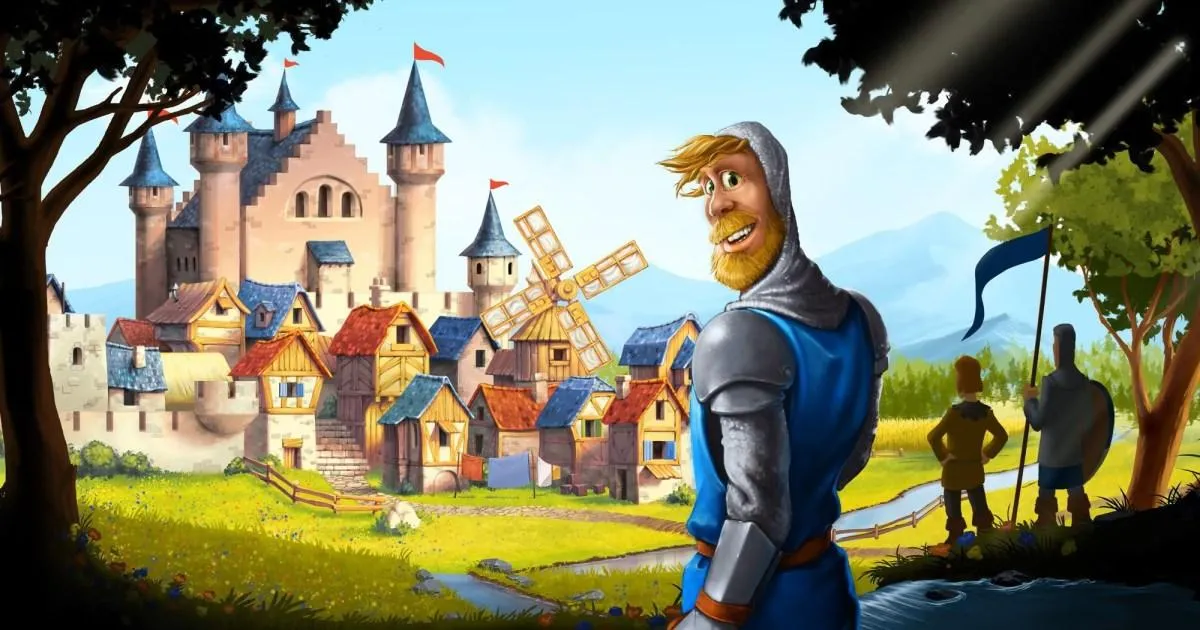
Townsmen: A Kingdom Rebuilt is one of this month’s best mobile games (THQ Nordic)
Tactical witch combat, medieval town building, and a cat-themed role-player are amongst the most interesting smartphone games this month.
As the games industry continues its traditional summer lull, touchscreen gaming continues as if it was Christmas. This month’s releases include the mobile ports of Middle Ages city builder Townsmen: A Kingdom Rebuilt, as well as Beat Hazard Arcade – which uses your music collection to procedurally generate a 2D shoot ‘em-up. Plus, there’s the latest addition to Game Stew’s long running Tower Of Fortune series.
Witchcraft!
iOS & Android, £2.99 (Mantita Games)
Advertisement
Witchcraft! is the touchscreen version of a solo card strategy game, that gives you control over a coven of witches with a set of discrete missions to undertake on behalf of local villagers, whose lives you must preserve.
Expert, exclusive gaming analysis
Sign up to the GameCentral newsletter for a unique take on the week in gaming, alongside the latest reviews and more. Delivered to your inbox every Saturday morning.
Advertisement
That’s no easy task given the difficulty of many of the randomly chosen tasks, your witches’ powers varying depending on when they’re played, which other witches are on the board, and whether you choose to reveal them, removing them from play for the rest of the round, or let them work in secret.
It’s extremely complex, with decisions having knock-on effects not just for your current mission but also potential future challenges, although having your phone set everything up and apply a rule set that seems to have endlessly complex networks of buffs and bonuses, makes this far more accessible than it is on a physical board.
Score: 8/10
Advertisement
Townsmen: A Kingdom Rebuilt
iOS & Android, free – unlock all maps £2.49 and scenarios £2.49 (Handy Games)
Townsmen is an isometric medieval city builder, that has you reconstructing dilapidated villages into thriving towns, making sure their populations’ need are met, along with ensuring town guards protect against bandits, and firewatch prevents conflagrations.
As is traditional for the genre, you’ll be managing increasingly intricate networks of dependencies, and working your way past bottlenecks using your town’s labour force to build, operate, and maintain various pieces of Dark Ages machinery.
There is a sandbox mode, which starts you in differing landscapes whose size and difficulty you can select, but the meat of the game is scenario based, where you take on an existing town with a problem to solve.
Advertisement
Its visuals might look friendly, but it’s a rigorous challenge, the balancing act between keeping your populace happy, managing their various appetites, and not going bust turning out to be a significant acquired skill.
Score: 7/10
Meow Knights: Idle RPG -people just do nothing (Monster Planet Corp)
Meow Knights: Idle RPG
iOS & Android, free (Monster Planet Corp)
This slick idle game features charming cartoon cats in armour, their increasingly powerful attacks auto-slaying legions of enemies and bosses, the game getting on with everything from battles to deciding which loot to keep, leaving you mutely following along in its robotic wake, collecting rewards when buttons flash to tell you they’re ready.
It looks great, has jaunty music, and progress is initially swift, but it doesn’t take long to notice that your own humble button pressing is the real inhibiting factor, and if those few dexterity and skill free interactions were also automated, things would work even better.
Advertisement
That slightly depressing realisation doesn’t add to Meow Knights’ longevity, leaving you feeling like a spare part rather than a managing director, even if its high production values prop up a facade of colourful good fun.
Score: 5/10
Beat Hazard Arcade
iOS & Android, free – full game £5.99 (Cold Beam Games)
Advertisement
Beat Hazard Arcade is a twin stick 2D shooter that uses music from your phone’s library to fuel procedurally generated waves of invaders, with each song creating its own unique level to fight through.
The sounds trigger the appearance of attacking enemies, which leave behind power-ups when they die, letting you gradually increase your ship’s firepower as you progress through each song, the aim being to complete an entire track. Doing that unlocks a choice of new ships that are also created from the music, the twist being that everyone gets the same ones, so a tune that gives you an especially choice reward ship will give the same one to a friend completing that track.
Without any progression between songs, things start to feel a bit formless after a while, and there’s something about the sparkling, strobing visuals that can make threats and buffs hard to distinguish, but if you’re looking for a quirky diversion, and one that features easily the best soundtrack of all time, the free version of Beat Hazard Arcade lets you see exactly what you’re getting.
Score: 6/10
Advertisement
Ringdown: Switchboard Puzzle
iOS, £3.99 (Ironic Thought)
Presented with an old school wooden switchboard that takes up your whole phone screen, your job is to connect incoming calls to the right internal phone line by dragging coloured leads and plugging them into the correct numbered sockets.
As you play, calls come in more rapidly and with shorter deadlines before they expire, forcing you to work quickly, prioritising high paying callers, who also have the shortest fuses, the whole thing becoming increasingly hectic as the calls rain in.
Advertisement
The interface works nicely, and is well suited to a mobile screen, but the switchboard process itself has too few surprises, settling for adding more lines and making you connect them more quickly, which doesn’t feel like enough to sustain interest.
Score: 5/10
Tower Of Fortune: Pralaya
iOS, £2.99 (Game Stew)
Advertisement
Game Stew’s Tower Of Fortune series has been trundling along for well over a decade, its peculiar mix of randomised action and role-playing scenarios soliciting an equally mixed response from players.
The latest, Pralaya, leans even further into RNG, with a fruit machine style interface that dictates your avatar’s movement, attacks, loot, and injury by enemies, with each turn bringing a new roll of almost completely random consequences.
It’s mildly compelling, the very small amount of input you have proving to be enough to make you feel at least involved. Its turn-based roguelike runs aren’t exactly tense, but they do leave you wanting to see more next time in this resolutely bizarre, pixel art take on role-playing.
Score: 6/10
Advertisement
Voidloop
iOS & Android, £1.99 (Jasper Levin)
Voidloop is a mining roguelite that arms you with a sword and pickaxe to take out enemies and mineral deposits as you adventure your way towards each level’s exit portal. Get through all 20 floors in a single run and you’ll find the material to forge a key to unlock the next biome.
You’ll need to do quite a bit of upgrading to get to that stage, smelting ore into ingots to improve your tools, unlocking new abilities in the game’s massive skill tree, and brewing potions at the witch’s hut to add temporary buffs.
Advertisement
Runs are tense, with each completed against the clock, but because movement speed and enemies are relatively slow, the touchscreen controls don’t feel too cumbersome, suiting the pace of the action, with Voidloop’s sense of compulsion coming mostly from its well-constructed meta game of upgrades and deeper exploration.
Its difficulty level is a bit uneven, causing plateaus in progress, and it suffers from a noticeable number of crashes, but with such a solid set of underlying mechanics those should be fixable problems, and despite its rough edges there’s a lot of entertainment here for a tiny price.
Learner drivers are being forced to wait more than four months to re-take tests in major UK cities amid enormous backlogs.
Test centres in Birmingham, Edinburgh, Glasgow and London are some of the hotspots for lengthy wait times, according to analysis of official figures.
The median average waiting time between booking and taking the test in June was 17.3 weeks (four months) or longer at 60 centres.
It means half of candidates in those locations waited more than that time, and half waited less.
Advertisement
A test centre serving Forfar in Angus, Scotland had the longest median average waiting time at 29.7 weeks (nearly seven months).
The analysis is based on the latest monthly statistics published by the Driver and Vehicle Standards Agency (DVSA) for 313 test centres.
The agency started publishing the figures in June following a recommendation in a National Audit Office report into the backlog.
Test slots can be booked up to 24 weeks in advance.
Advertisement
Advertisement
Learner drivers are being forced to wait more than four months to re-take tests in major UK cities amid enormous backlogs
Join the discussion
Are driving test delays unfairly holding young people back, or is it a necessary way to ensure safety?
Median average waiting times beyond that period occur when learners book a test but then change the date to a slot beyond the original window.
Advertisement
The long-standing measure of driving test waiting times is the average number of weeks until at least 10 per cent of weekly appointments are still available to book at test centres.
In June that was 20.9 weeks (nearly five months) across Britain, compared with 5.8 weeks in February 2020 before the coronavirus pandemic.
The DVSA missed an initial Government target of reducing the figure to seven weeks by the end of 2025, and Transport Secretary Heidi Alexander has warned it may not be achieved until autumn 2027.
Measures taken to tackle the backlog of driving tests include recruiting more examiners and training them faster, using military examiners and reforming the booking process to combat misuse.
Advertisement
It comes after driving instructors were banned from booking tests for their students.
Since May, driving tests can now only be booked and managed by learners amid concerns over the huge backlogs and reports some were being charged double for earlier tests by unofficial brokers.
It is hoped the new rules will make it harder for people to profit by using automated programmes, known as bots. Many people currently use these to quickly book available slots and resell them at a higher price.
A BBC investigation in December found some driving test touts were offering instructors up to £250 a month for the use of their booking website login details.
Advertisement
RAC Foundation director Steve Gooding said: ‘Greater transparency from the DVSA about the realities of getting a driving test booking at individual centres is to be welcomed.
‘The picture that emerges shows where management attention is most keenly needed in order to get the waiting time back down.
‘A four-month wait between making the booking and taking the test is still way longer than the DVSA ultimately hopes to achieve.
‘Frustrating as this is for learner drivers, the advice must be to make good use of the time to get in as much practice as possible to improve the chance of passing rather than having to trudge round to re-join the queue.’
Advertisement
A DVSA spokesperson said: ‘Our latest data shows the median waiting time for Great Britain was 10.7 weeks in June 2026.
‘Test slot availability was at its highest point since November 2024 and the pass rate remains above 50%.
‘But we recognise how frustrating it is for every learner who has to wait longer for their test date.
‘That’s why we’re continuing to put more tests into the system, with almost 280,000 extra tests carried out since June 2025.’
Advertisement
Share or comment on this article:
The UK hotspots where learner drivers have to wait more than four months to re-take tests amid huge backlogs
Daniel Kinahan has been charged by police in Ireland, after his high-profile extradition from the UAE
Joe Smith News Reporter and Adam Care
20:54, 09 Aug 2026
Daniel Kinahan has been remanded in custody after appearing before the Special Criminal Court in Dublin charged with directing an organised crime group, on his return from Dubai.
It comes after the arrest in the United Arab Emirates (UAE) in April of the 49-year-old Dublin-based boxing promoter, who is an alleged leader of the Kinahan organised crime group.
Advertisement
Mr Kinahan was flown on a £39 million government jet belonging to the Irish Air Corps from Dubai to Ireland today where he was arrested after touching down at Baldonnel Airport at around 7.20pm, reports the Mirror.
Kinahan was whisked under armed guard from both law enforcement and the Irish Defence Forces to a special Sunday hearing at the Special Criminal Court to face charges of directing an organised crime group.
He was charged with directing the activities of a criminal organisation between October 18 2015 and April 6 2017.
He appeared in the dock wearing a black hoodie and put on a pair of dark-rimmed glasses after taking his seat.
Advertisement
Detective Sergeant Colin Davidson told the court that he had arrested Mr Kinahan at Casement Aerodrome in Baldonnel at 6.49pm that day.
Mr Kinahan was remanded to next appear on October 5.
Earlier the ministers of justice for Ireland and the United Arab Emirates confirmed the extradition, after a formal request submitted by Irish authorities, and the final decision was issued after a judgment by the Dubai Court of Cassation, in accordance with the extradition treaty between the two countries.
Advertisement
Jim O’Callaghan and Abdullah bin Sultan bin Awad Al Nuaimi said that the final extradition decision “reflects the steadfast commitment of both countries to the rule of law and reinforces international judicial co-operation”.
The plane landed at Casement aerodrome in Baldonnel on the outskirts of Dublin just after 6.30pm.
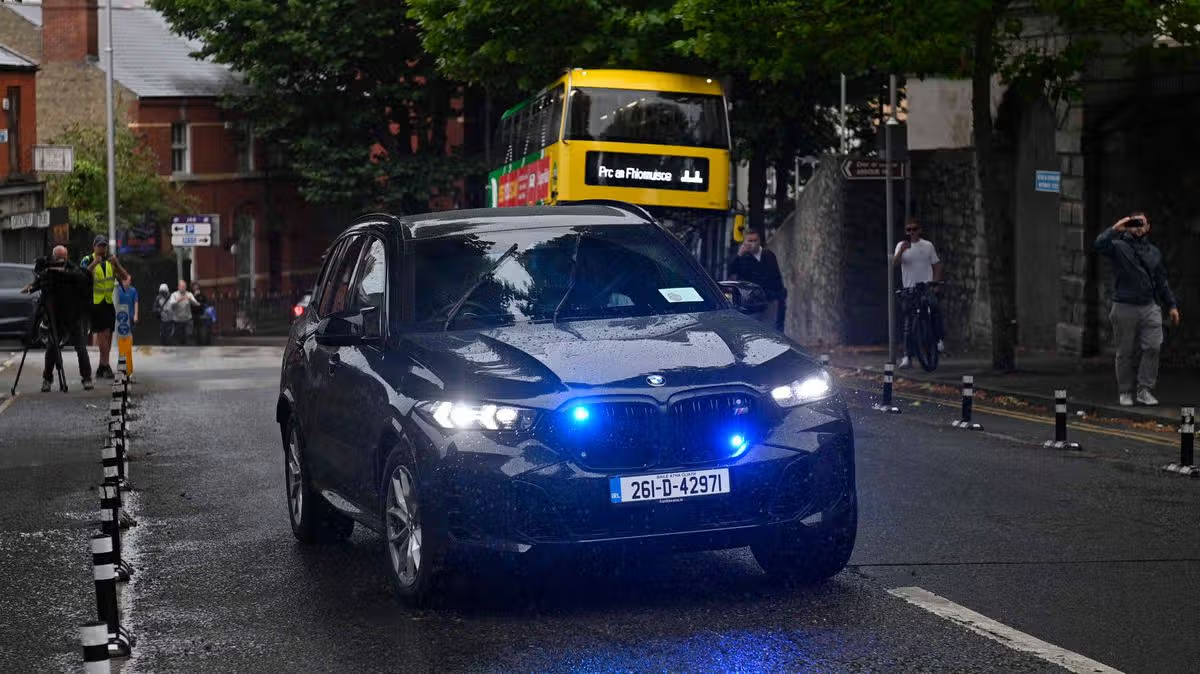
Shortly after the plane landed, a convoy of vehicles with blacked-out windows left the aerodrome at high speed.
Two separate convoys then arrived at Dublin’s Special Criminal Court, where Mr Kinahan was due to appear, as crowds watched.
Several BMWs drove through an open gate and into the underground car park at the court, with the gate swiftly closing behind them.
Ensure our latest stories always appear at the top of your Google Search by making us a Preferred Source. Click here to activate or add us as your Preferred Source in your Google search settings.
Final Fantasy 7 Revelation – you don’t have to have played the original (YouTube)
The Monday letters page is very dubious about the potential for the live action Zelda movie, as one reader looks forward to Take-Two’s post-GTA 6 era.
Games Inbox is a collection of our readers’ letters, comments, and opinions. To join in with the discussions yourself email gamecentral@metro.co.uk
Remake revelation I see Final Fantasy 7 Revelation is due to be shown at Gamescom Opening Night Live and that makes me happy, but I have noticed a general lack of hype for the game and the remake trilogy in general over the last few years. This is a real shame because in my view it’s an excellent remake and one of the best Japanese role-players of all-time, regardless of its connection to the old game.
In fact, I’ve begun to think that it’s the old game that’s holding things back. It’s going to be 30 years old next year and that means you’ve got to be a certain age to remember or appreciate it, because I really don’t think many people are going to get much enjoyment out of playing the original PS1 or PC version. Final Fantasy 7’s days of being the most popular Japanese role-player are well behind it, in my view.
Advertisement
Obviously, that’s the main reason for doing the remake but I think Square Enix have realised that people not knowing the original or thinking they need to know it to appreciate the new one is putting people off. Being of the right age I don’t see it like that, but I honestly think the first two are great games that anyone can enjoy, and I expect the third one will be too. Korbie
Yachts for everyone Being only moderately interested in GTA 6 I’m more interested in what happens after it comes out and Take-Two have more money than they know what to do with. I realise, obviously, most of their windfall is going to be spent on exec bonuses but surely they’ll be looking to put at least 1% of their profits into making new games, and 1% of GTA 6’s profits is nearly infinite.
Expert, exclusive gaming analysis
Sign up to the GameCentral newsletter for a unique take on the week in gaming, alongside the latest reviews and more. Delivered to your inbox every Saturday morning.
Advertisement
I read that they have 29 games in development right now, so even though they’ve cancelled one they’ve still got a lot more on the go, hopefully including Bioshock 4.
I agree that it is a worry that GTA 6 is going to be too big, and blot out everything else, especially if it has user-generated content like Roblox. But at this point I feel we’ve got to be optimistic and the best case scenario is that GTA 6 makes so much money Take-Two doesn’t have to try ever again, and just funds whatever because there’s no way it can lose more money than GTA 6 makes. At least there’s a chance, right? Tacle
GC: Take-Two has said this sort of thing before, about having a dozen or more games in development, and nothing ever comes of it. We think they must be counting Zynga and/or multiple versions of the same game on different formats.
Advertisement
No way out Agree completely with the Reader’s Feature about Mass Effect and BioWare needing to get out from under the control of EA. But I don’t think it’s going to happen. Double Fine might have left Microsoft but they had to lay off people just to keep the lights on and I doubt they’ll last much longer, not making the sort of games they used to anyway.
If BioWare did split off I don’t think there’s much chance that they’d be able to last long either and they definitely wouldn’t have the sort of budget they need to make Mass Effect. It’s like the reader said, Mass Effect is big but not that big, and it’s smaller now that it’s ever been, since it hasn’t had a proper new game out in ages. I think the only chance we have for a new game is if they stay on at EA, but I don’t think that chance is very big. The Bishop
Public demand Regarding Sony going all-digital and people complaining. I saw in the Inbox recently, someone saying they’re not interested in what we think and are not going to do what we want. If you are referring to the general population with we then these statements are false. They are acting on exactly what we have been doing and choosing for the last few years.
Advertisement
85% of sales are digital. That’s a vast majority of people voting with their wallets, consistently. Times are changing, it’s not our world any more. Now we just need to end the ridiculous concept of every household owning a valuable piece of tech with RAM and storage space in it and move to the inevitable future of everybody streaming from one central super computer.
All of these things are inevitable and necessary, we have been wasteful and hubristic and needs to change, I for one hope it’s not too late. Alex
Don’t miss Gaming news! Add us as a Preferred Source
As a loyal GameCentral reader, we want to make sure you never miss our articles when searching for gaming stories. We have all the latest video games news, reviews, previews, and interviews, with a vibrant community of highly engaged readers.
Click the button below and tick Metro.co.uk to ensure you see stories from us first in Google Search.
GameCentral has been delivering unique games news and reviews for over a decade
Fight the future When the Switch 2 is done and dusted in 10 years’ time, I really hope Nintendo name their next console Phoenix.
Reinvent console gaming just as they did with NES and the Wii, with innovative ideas. Let’s see the competition jump on the bandwagon.
Advertisement
Mandatory streaming of video games is not the future…
It will be, but not just yet. G4RBO
Catching up So the Xbox Series S is almost the same price as the Xbox Series X was at launch now. So what’s the point in the Xbox Series S, as it was supposed to be the budget entry into the next gen? Also, what other trump card do Xbox have up their sleeves to kickstart sales? I get the argument that it’s AI’s fault and component prices, but this is getting ridiculous.
Such a shame because this is the perfect time to reduce Xbox Series X/S and bundle it with Forza Horizon, Gears Of War, Halo, etc. before GTA 6 arrives. I bought the Xbox Series X four years ago and I just can’t believe the price of it now and how Microsoft had no contingency plans in place for any of this. icelticghost PS: I agree with a letter commenting on Assassin’s Creed and the Roman Empire. I agree with you that Ubisoft is maybe keeping that as a last resort. Ever since I was a kid, I was fascinated with that time period and an Assassin’s Creed game during that era could have limitless possibilities. It could be set during the first emperor Augustus, the Roman Civil War, or the Punic Wars. Ubisoft have so much to work with there.
Advertisement
Blu movies I’ve just realised, if Sony is ending Blu-ray discs for games, doesn’t that mean it will force Xbox to do the same?
Sony owns the rights to Blu-ray and if they’re saying no more surely that’s making Xbox do the same? Even if they don’t want to. David
GC: No, the Blu-ray format was co-developed by Sony, but it’s used for many other things, including movies (and including Sony Pictures movies). Sony has only said that it’s stopping making discs for PlayStation 5.
Even a good cast can’t work miracles (Getty/Nintendo)
Legendary reputation The problem with a Zelda live action film is that it all depends on the script. They’ve got the actors, including the late lamented Sam Neill, and I assume the effects will be good, but when was the last time one of these sort of films had a decent script, with a logical plot and good dialogue? It definitely wasn’t either of the Super Mario Bros. movies.
I can just imagine Sam Neill reading the script and doubling his fee immediately, and even then he probably only did it because it’s being filmed in New Zealand. I doubt anyone could make a Zelda movie make sense and be entertaining on anything but a visual level and this film has got the scriptwriter of Pacific Rim Uprising… so I think that makes it physically impossible that it could be good.
Advertisement
And then Nintendo will have three critically mauled movies in a row. Never mind how much they make (and I can’t imagine the Zelda one will make even half of what Mario does) the damage to Nintendo’s reputation I think is worrying.
To a non-gamer, Nintendo is not the maker of the finest video games in history but that company that keeps making the hyperactive kids’ movies with no plot and constant references to things they don’t understand.
I get that the films are profitable, but does it have to be at any cost? At some point these films are going to stop being box office gold (the second Mario movie was already down on the first) and then Nintendo is back to square one, relying only on games and its newly ruined reputation. Bison
Inbox also-rans I’m going to bet the reason Sony didn’t send out review copies of Marvel Tōkon: Fighting Souls ahead of time is because of the PC version being bad, nothing to do with the PlayStation 5 version. Not exactly good for creating early hype. Winston
Advertisement
It’s crazy that it’s now 10 years since Super Mario Odyssey and yet despite two Mario movies, that did really well, there’s still absolutely no sign of a new game. I wouldn’t be surprised if it wasn’t even out next year. Gildar
The small print New Inbox updates appear every weekday morning, with special Hot Topic Inboxes at the weekend. Readers’ letters are used on merit and may be edited for length and content.
You can also submit your own 500 to 600-word Reader’s Feature at any time via email or our Submit Stuff page, which if used will be shown in the next available weekend slot.
Advertisement
You can also leave your comments below and don’t forget to follow us on Twitter.
Our columnist looks at the success of Olix founder James Dacombe and asks why it does not happen in Wales
22:14, 09 Aug 2026Updated 22:16, 09 Aug 2026
The story of James Dacombe should be compulsory reading for everyone involved in economic development in Wales.
Advertisement
James left sixth form after only a few days, taught himself to code and established his first technology business while still a teenager. Now aged just 25, he is the founder of Olix, a British company developing specialist computer chips to make artificial intelligence faster, cheaper and more energy efficient.
Founded in 2024, the company has reportedly raised more than £200m at a valuation of approximately £2.5bn. It already employs more than 140 people and has attracted backing from major global technology companies and investors. It is a remarkable story, but for anyone who cares about the future of the Welsh economy, it should raise one obvious question – why not Wales?
South Wales has one of Europe’s most significant concentrations of semiconductor expertise, and the cluster around Cardiff and Newport brings together advanced manufacturing, specialist skills, world-class research, and companies developing technologies for artificial intelligence, communications, transport, energy and medical devices.
Advertisement
The problem is not that Wales lacks the science, engineering, capability or industrial foundations from which businesses such as Olix could emerge, but that we have failed to create a system capable of identifying, nurturing and backing young people with the ambition to build them.
For many years, entrepreneurship support in Wales has focused on encouraging self-employment and conventional small businesses. There is nothing wrong with that, and such firms make an important contribution to local economies but helping someone become self-employed is not the same as creating a genuinely entrepreneurial economy.
A support system centred on business plans, workshops and small grants is not necessarily equipped to support a teenager who wants to design the next generation of artificial intelligence chips. Too much of our approach to young entrepreneurship remains rooted in employability rather than innovation, and starting a business is often treated as another route into work rather than as a means of creating new industries, commercialising knowledge, and building internationally competitive companies.
An ambitious technology founder needs something different, including specialist knowledge, access to laboratories and equipment, experienced mentors, and early customers and investors who understand that breakthrough technology is expensive, uncertain and time-consuming.
Advertisement
Yet much of the support available remains generic, fragmented and cautious, and there is rarely a clear route for a founder who needs to move rapidly from an idea to a prototype and then to a business.
We measure how many people attend events or complete programmes but are less effective at measuring whether the businesses created survive, scale, export, attract investment or generate highly productive employment. In other words, we have built a system that can process young entrepreneurs without necessarily developing them.
The real test is simple – what would happen if a 16-year-old from Newport, Swansea, Wrexham or the Valleys approached the existing support system to say they wanted to build a billion-pound artificial intelligence or semiconductor company?
Would they be taken seriously? Would they be connected with Wales’s leading engineers, researchers and technology entrepreneurs, given access to facilities and introduced to investors who understood the opportunity?
Advertisement
Or would they be directed towards a generic business-planning course and told to return when they had more qualifications, experience or trading history?
That is the uncomfortable question we need to answer, as exceptional entrepreneurial talent rarely arrives in a conventional form. It may emerge from a university laboratory, but it may equally come from an apprentice, a school-leaver, a self-taught programmer, or someone who has never fitted comfortably within formal education.
A genuinely entrepreneurial economy must recognise potential even when it does not come with the right qualifications or networks. This matters in Wales, where many talented young people grow up without connections to business, technology or investment. They may have the ability and imagination, but not the contacts or financial security needed to turn an idea into a company.
The education system also has a role to play, as entrepreneurship is still too often presented through occasional competitions rather than sustained exposure to how ambitious companies are created.
Advertisement
Young people should learn about coding, product development, intellectual property, finance and investment, meet founders, and understand that entrepreneurship can be a serious career. Indeed, the fact that Cardiff University alone has 32,000 students but produced only 55 student startups in 2024-25 speaks volumes about the lost potential within our university system.
The new Welsh Government could take the lead on this by establishing a national young founder’s fellowship to identify exceptional talent in schools, colleges, universities and local communities.
Those selected should receive a living allowance, intensive mentoring, access to facilities, help in assembling a team and introductions to customers and investors with selection based on potential rather than qualifications or connections.
More importantly, those young founders should be able to enter the Welsh support system through one door and be connected rapidly to the people, knowledge and facilities needed to develop an idea.
Advertisement
The success of Olix is not simply the story of one unusually talented young person but demonstrates what can happen when ambition is met by technical expertise, experienced supporters and investors prepared to take a risk.
As we all know, Wales does not lack intelligent, creative or determined young people and nor do we lack technologies with the potential to create the industries of the future. What we lack is a coherent system designed to bring the two together.
For too long, our business support system has failed to encourage exceptional young people to think globally, take risks and build companies capable of transforming industries. Unless that changes, Wales will continue to possess the talent, technology and ideas from which the businesses of the future could emerge, while watching them being created somewhere else.
The party’s election result is still being pored over and there are feelings of anger, disappointment and bitterness
02:00, 10 Aug 2026
Advertisement
“We’re f**ked”. The bluntness of the statement from a senior Labour figure stopped me in my tracks. I’d asked how they saw the party’s chances on May 7 when Wales went to the polls. It was neither the sentiment nor the delivery that shocked me, but the honesty because, at that point, with months to go until the election day, few were admitting just how bad things looked.
At that time, party figures and candidates were publicly repeating the line that polls can be wrong. People kept saying Labour’s established, well-oiled ground machine would generate a late bounce for the party in Wales.
Behind the scenes, people inside Welsh Labour had known it was not looking good for a long time. And as the days and weeks passed with no change in the polls, staff and candidates were openly talking about their next jobs. By the time the election approached, activists knew, candidates knew, the First Minister herself knew.
When the 1.2m votes had all been counted, the result showed Labour’s 100-year-plus dominance in Wales – a record unmatched in western democracy was over. This year’s election had the highest ever turnout in a Welsh election since devolution began. And just 11% of those who voted backed Labour. It was as bad as it could have been.
The party is, it’s true to say, still trying to understand what went wrong and formal processes to make sense of it are underway including a review, but since the election WalesOnline has spoken to figures in the party to discuss what happened, and whether the catastrophic losses they had in May could be repeated when council elections take place in Wales in 10 months time.
From those sources there is anger, bitterness and disbelief at what happened, in the build-up to the campaign, during it and what has happened since and plenty of questions.
Who is to blame?
In the days afterwards senior figures in the party all had their say. Former First Minister’s Carwyn Jones, Vaughan Gething and Mark Drakeford all set their thoughts out, then Welsh secretary Jo Stevens did too.
Advertisement
Carwyn Jones told LabourList “political traditions do not survive on sentiment alone”.
It’s important to remember, as many of the above knew, it wasn’t just a catastrophic night in Wales. The same days brought poor results in Scotland and English councils. But in a Welsh context, across all those we spoke to, no single reason was identified but the blame was not once put at the door of Eluned Morgan, the Welsh Labour leader since August 2024.
Instead two main themes emerged.
Advertisement
The first was that even diehard supporters accepted Labour’s unbeaten run in Wales always had to come to an end. Many admit that without the pandemic and Mark Drakeford’s unexpectedly sky high approval ratings at the time of the 2021 election mean this result could well have happened five years ago.
But that doesn’t mean the fall was always destined to be so catastrophic. Labour’s collapse was intensified by the unpopularity of Keir Starmer coupled with the residual impact of Vaughan Gething taking huge donations from a criminal in Wales and some deeply unpopular political decisions here.
While some decisions by Eluned Morgan, mainly personnel ones were questioned, no-one spoken to for this article believed she could have done more.
“She was dealt a bad hand,” said one. “She couldn’t have done more” said another. The train was already moving “no matter how much she pulled the brakes she couldn’t slow the train down,” said a third.
Advertisement
In fact, most praise her energy, resilience and leadership. Many said that when she, in her speech on the stage of a school in Llandysul that it was all on her that was noble, but not right.
Unpopular policies cut through
Those knocking on doors are the best barometer of how things are going. While they were tasked with campaigning on a narrative of “stick with us”, “things will get better” when doors were being knocked it didn’t matter to someone that NHS waiting times were improving because they were still waiting, they still couldn’t get a GP appointment, their kids were still going growing up poor.
The residual anger at 20mph, not necessarily the policy per se, but the way it was introduced, and a feeling it was being forced on people came up too, despite it being something from two First Ministers previously. Expanding the Senedd was also unpopular.
Across Wales, people had reasons for being disillusioned with Labour. In south west Wales, healthcare has become an increasing sore point. In Newport, many never forgave the failure to solve the problems on the M4. Rail underfunding painted a picture of a party group in Wales unable to influence its own party leadership on an undefendable error.
Advertisement
Years of being in government had led to the party accumulating years of grievances.
“It doesn’t matter what you say to someone who doesn’t believe you,” one seasoned campaigner said.
It was impossible to get people to buy the narrative the party tried to push of ‘better the devil you know’, people told us. Plaid’s message was good, was different, and impossible to beat.
Labour’s warring factions
When Eluned Morgan took over from Vaughan Gething, she was the only person to put her name forward. She did so on a joint ticket with Huw Irranca-Davies.
The idea was that two people who had backed opposing horses in the leadership race earlier that year were the only possible way to unite a divided Senedd group.
But Welsh Labour isn’t just the Senedd group. There are MPs, activists, staff and campaigners, as well as councillors and MPs, all with their own connections.
In no sense were they ever united. The banner of Labour inevitably encompasses a range of beliefs and groups, and the party’s factionalism had been intensified by everything that happened in 2024.
You cannot talk about Labour’s issues without talking about Vaughan Gething. While he and those around him were, and are still, resolute in their belief that nothing was wrong with him accepting a £200,000 donation towards his leadership campaign, it was something voters, members and party staff all had opinions on.
He took over in March 2024 and for most of that time questions over his campaign.
It was described to us that by the time the general election campaign in Wales in 2024 started, it was more about showing support to the embattled Mr Gething than anything else. He was put front and centre, his picture of leaflets, the Prime Minister stood with him.
Advertisement
For those who didn’t support his decision to accept the donation, it was incredibly hard to watch. They were the ones hearing on doorsteps about the perception people had and that decision to try protect Mr Gething, at all costs, got into, I was told, the psyche of staff.
The general election was about protecting him and making Keir Starmer Prime Minister, not about Wales, we were told.
When Mr Gething resigned, for those who had backed him were distraught at how short his term had been, for those who backed Mr Miles they were bitter their guy hadn’t got the chance, and there was the ongoing impact the drawn-out debacle had on the Labour brand.
Advertisement
While the Senedd group rallied behind Team Miles or Team Gething, there was real personal bitterness on show too. It wasn’t just between, say Lee Waters and Vaughan Gething, or even between those who thought there was no case to answer on the donation and those who thought it was a complete failure to read the room, it was describing as going beyond the Senedd meeting room and rubbing off on others in Labour and people with historic grievances joined their side, dug their trenches and resolutely refused to move.
It should also be noted the party is still awaiting the results of a review led by Carwyn Jones into the leadership campaign donations that ended Mr Gething’s tenure as First Minister so the chapter isn’t closed.
Lack of ‘respect’ for Eluned Morgan
When Eluned Morgan took over, she inherited a party which had made poor political decisions and with a leadership that had been “hollowed out”, as it was put to us.
“The party wasn’t functioning,” one senior source said. That, combined with a lack of a solid leadership operation, meant this wasn’t going to be like other tough elections in 2017 or 2019 they felt.
Advertisement
She walked into the role with little authority partly because she’d made it clear, by not standing and in interviews, it wasn’t a role she wanted. The same group of Senedd colleagues now backing her hadn’t when she had embarked on a leadership bid.
While she appointed Huw Irranca-Davies as her deputy, she turned to two party stalwarts in Kevin Brennan and then in turn Wayne David as advisors. That was something that bemused many. Experienced, yes, but Westminster figures who critics felt were not equipped in the face of an unprecedented threat and election like no other before.
With the clock ticking, Luke Young, the party’s former head of communications was then brought in as the First Minister’s chief special advisor to try sort out the chaotic approach being taken at the top.
Advertisement
However, there was, more than one source said, never enough respect shown to her as leader of Welsh Labour. The party was responding to UK Labour or the Wales Office, not Eluned Morgan, as one described it.
The relationship between the party and its leader was strained too. “They just ignored her,” one said of Eluned Morgan, adding: “They wouldn’t have treated Carwyn, Rhodri or Mark like that”.
“I have never seen a leader treated so badly, with so little respect,” as one source phrased it.
The so-called glass cliff describes how women, and people of colour, are often put in a position of leadership at difficult times. More than one person used this phrase to say how they felt Wales’ first First Minister was appointed to begin with, and then treated throughout her time in office.
Advertisement
Leadership at the top
The buck should, many of those spoken to for this article believe, stop with Joe Lock. He is, after all, the top figure in Welsh Labour. Appointed as Labour’s acting general secretary nine days before the snap 2024 General Election was called. He was confirmed in role in October 2024.
Multiple sources have asked how Mr Lock has remained in position given he is the man who oversaw first the by-election loss in Caerphilly and then the Senedd election, both catastrophic for the party.
“There was a complete lack of leadership in the organisation,” it was said. There were, simply, “too many cooks”.
“The culture wasn’t right,” someone explained, saying there was no teamwork, people competing, people had backed their horse in the leadership contest and bedded down.
Advertisement
UK Labour’s role
Many in Wales feel that UK Labour failed to grasp that the threat in this election was Plaid Cymru not Reform UK. They feel that the UK party saw this election through the prism of UK politics and were focused solely on trying to save Keir Starmer. Reform’s surge here might even allow the UK party to rally support at the next UK General Election by pointing to the threat Nigel Farage’s party posed.
While Eluned Morgan was credited with putting in the hours, and miles, more than one person said they did not believe UK Labour – nor some in Welsh Labour – were in it for her to win it.
By now, Keir Starmer was in trouble too. Senior figures across UK and Welsh Labour decided, as a source put it, “we’re just going to lose Wales to save Keir”.
When the Caerphilly by-election took place in October 2025, in the saddest of circumstances for the party, it showed everything many had been saying would come true – the threats from Plaid and Reform, the change in voters mindsets – were right. It gave a signal to both Plaid Cymru that they could win somewhere they never had before, and to Labour their fears of a hiding were real.
Advertisement
Those in the Welsh ranks say there were long-term trends they had seen that were ignored more widely. The biggest threat was losing left and left of centre voters to Plaid Cymru. While those in the Welsh campaign maintain they kept reiterating to their UK colleagues the threat to Labour in Wales was from Plaid Cymru, they insisted centrally on fighting Reform UK.
The main distinguishing feature between the two parties was independence. Rhun ap Iorwerth had a clear line in opposition to his predecessor as Plaid leader – he wouldn’t pursue it in any first term. No matter what Labour said, campaigners say they were unable to make headway by attacking this.
A chaotic campaign
As they readied for the Senedd election, the party’s selection process for their candidates was cripplingly slow. It took until well into autumn 2025 for the list of candidates to be confirmed. With so many figures standing down, new candidates need time to establish themselves. They didn’t get it.
Advertisement
The machinery did not move quickly enough to support candidates. Even things like leaflets and campaign messages, while incumbents knew they could proactively send things for approval, those new to campaigning felt they were waiting too long.
There was a mix of disbelief and anger that weeks out, the First Minister was yet to be given a campaign director for Wales. Then, just weeks out Matt Greenough, one of Carwyn Jones’ right hand men was brought in. By then, the Titanic was on course for the iceberg.
“The campaign was a mess,” one senior source said. There was a lack of dynamism in the campaign, said another.
Even those at the top admitted that elections had changed beyond all recognition. The type of campaigns Labour has fought before have changed and the party wasn’t quick enough to adapt.
Advertisement
There was a chaotic staffing structure surrounding the First Minister. As well as eyebrows being raised about appointments she made, and that a narrative of “a new generation” was their slogan, yet there were a host of incumbent candidates. How could she, a politician who has been in the public eye for decades stand claiming her party was new?
Complacency and acceptance
More than one person has told us of the differing approaches and effort by candidates across Wales. In one area, Blaenau Gwent and Caerfilli, multiple sources told us that on election day, the number of doors knocked on election day itself was in the single figures.
“Some people didn’t deserve to win,” we were told.
As polls and their own sampling showed how bad things would get motivation inevitably slipped too. For all the Haribo that fuelled the First Minister, there wasn’t enough to motivate battered troops.
Advertisement
Post-election changes
Since the election there has been lots of soul-searching. People who thought they would be elected, or re-elected to the Senedd weren’t. The party may have realised it would be a bad night, but it was as bad as it could get.
Staffing changes and redundancies are being made at Transport House. Staff in, for example, communications and digital media teams have been cut and senior figures like Bridie Sedgebeer and Alvin Shum have been dismissed.
Some is a natural return to a non-election period when staff in campaigning roles in the Welsh party return to their day jobs but many have questioned the dismissal, in particular, of Ms Sedgebeer, who was made deputy general secretary in January 2025.
There is also a financial impact of losing your position of dominance.
Advertisement
The party is funded by unions, but also membership and donations, when the latter two dry up so does the pot. With another election looming, the party has to ensure it will have to be able to fund campaigns and an easy way of saving funds is cutting salaries.
The party gets a group allowance from the Senedd determined by numbers – albeit the formula does take into account whether a party is in government so the drop from the last Senedd to this one is in some regard softened
The countdown to May 2027
With morale at a low, questions over money, experienced staff gone, and an impending election campaign there are few who think Ken Skates can stem another inevitable hammering at the elections for all 22 councils in Wales in May 2027.
“Council elections look like a bloodbath,” one said, “unless Burnham can steady things”.
Advertisement
The key question isn’t necessarily how Labour performs – especially given the party’s expected approach is to make it effectively a referendum on Plaid’s first year in government. But how rivals Reform UK and Plaid Cymru can mobilise good people to stand as candidates. “There are no safe areas for Labour councils,” one said.
Even on a good night, an experienced campaigner said Labour should be preparing for “hundreds” of seats to be lost.
What has to change
When you ask what has to change, the responses vary.
“It has to be wholesale,” one senior UK Labour figure said. There has to be a willingness from UK Labour to listen to Wales. Others say that despite loyalties, factions and friendships, there needs to be a clearout and new blood brought in.
Advertisement
As Labour fell from a party of government to one with just nine of the available 96 seats, and a distant third in terms of parties in the Welsh Parliament, a new leader had to be found. The timetable to formally appoint Ken Skates as leader – a role he has held on an interim basis since the day after the election results were counted – was sped up when no-one else expressed an interest.
Mr Skates says he will spend the summer meeting party members in constituencies across Wales. He says he will also publish a “mission statement” spelling out what he thinks the party needs to stand for.
The problem many see is that when Ken Skates became the only person who wanted to put his name forward, he brought with years of baggage.
He was a staunch supporter of Vaughan Gething and he has been in successive governments. For those who people who couldn’t stomach Eluned Morgan’s message that she was promoting on the election campaign of a new chapter, there are questions about how Ken Skates can also now be something “new”.
Advertisement
His early decisions to appoint staff from Eluned Morgan’s team to his new leader’s office was something multiple people commented on. He told WalesOnline he would be ruthless if needed, but people fear the loyalty is overtaking that.
Since the result, more than one source asked how those who determined the strategy and delivered a disastrous campaign have kept their roles. That starts for many with the role of Joe Lock, the Welsh general secretary. How, more than one asked, can the person at the top of the organisation which suffered two historic election losses in Caerphilly and then on a national scale, remain in post.
The arrival of Andy Burnham as Prime Minister throws another unknown into the mix. As does the departure this autumn of Holly Ridley, the UK general secretary described by one as Mr Lock’s “last line of defence”.
What Welsh Labour says
We put the main themes of these interviews to Labour, including the criticism of Joe Lock and asking what the party thought what went wrong and how chances for May’s election looked.
Advertisement
A spokesperson said: “May’s election results were catastrophic for the Party in Wales and we’re not shying away from that. Ken Skates is clear that he is focussed on listening to voters and members to learn lessons. He’s doing just that as he visits constituencies across the country. We’ll continue to stand up for communities across Wales.”






















































You must be logged in to post a comment Login