





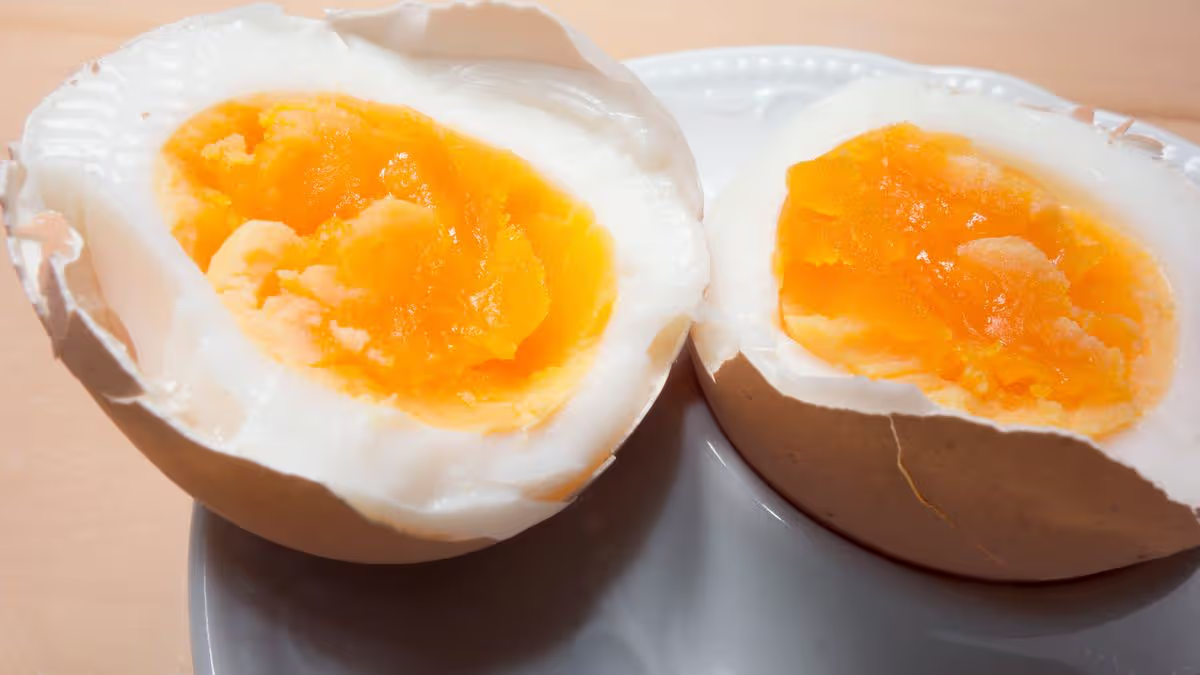
Achieving the perfect jammy egg can be a bit of a challenge
When it comes to breakfast, eggs are a popular choice for many Brits. Whether you’re tucking into a full English fry-up, avocado on toast, pancakes or crumpets, eggs provide a tasty accompaniment and are rich in healthy fats and protein.
Boiling them is one of the easiest preparation methods, but getting the perfect result is all about timing. While hard-boiled and runny eggs are fairly simple to master, nailing that ideal jammy yolk can prove far more challenging.
Thankfully, a food expert at Good Food has shared one crucial step that home cooks should take to nail the perfect jammy egg every single time.
What you need to do
The essential tip that the expert emphasises is to make sure the eggs are at room temperature instead of coming straight from the fridge. This allows the eggs to cook more uniformly and minimises the chance of cracking.
Placing a fridge-cold egg directly into boiling water can cause the shell to crack owing to the abrupt temperature shift, potentially compromising both the texture and the cooking duration needed to produce a perfectly jammy yolk.
How to make a jammy egg
To prepare perfectly jammy eggs, begin by filling a medium-sized saucepan with water and bringing it to a rolling boil. Next, gently lower the eggs into the boiling water using a spoon and cook them for approximately eight minutes to obtain a softly set, jammy centre.
Once the timer sounds, promptly move the eggs to a bowl of cold water to halt the cooking process and make peeling easier. After a minimum of three minutes in cold water, remove your eggs, peel them, and serve.
Exact cooking times for boiled eggs
For a runny egg that’s ideal for dipping toast, cook it for five minutes to achieve a just-set white and a flowing yolk.
If you prefer a slightly firmer egg, six minutes will deliver a liquid yolk with a softly set white that still has a touch of wobble.
A soft-boiled egg with a rich, sticky yolk can be accomplished in seven minutes, making it a favourite option for salads and breakfast dishes.
For a traditional hard-boiled egg, leave it in the water for 10 minutes, until both the white and yolk are completely set but still moist.
Alternatively, preparing a fried egg is nearly as straightforward. For crispy edges and a gooey centre, start cooking by warming the oil in your frying pan over a medium-high heat until it starts to shimmer.
Carefully crack the eggs straight into the hot oil and season liberally with salt and pepper. Tilt the pan towards you so the oil gathers at the edge, then use a spoon to repeatedly baste the egg whites with the bubbling oil.
Avoid the yolks to ensure they stay perfectly runny. Within just 45 seconds to one minute, the eggs will puff up nicely, developing crisp edges and fully set whites. Transfer to a plate and serve immediately.












































You must be logged in to post a comment Login