Connect with us

NewsBeat

Few leads in Guthrie investigation, yet cases often break unexpectedly

Published

on

Few leads in Guthrie investigation, yet cases often break unexpectedly

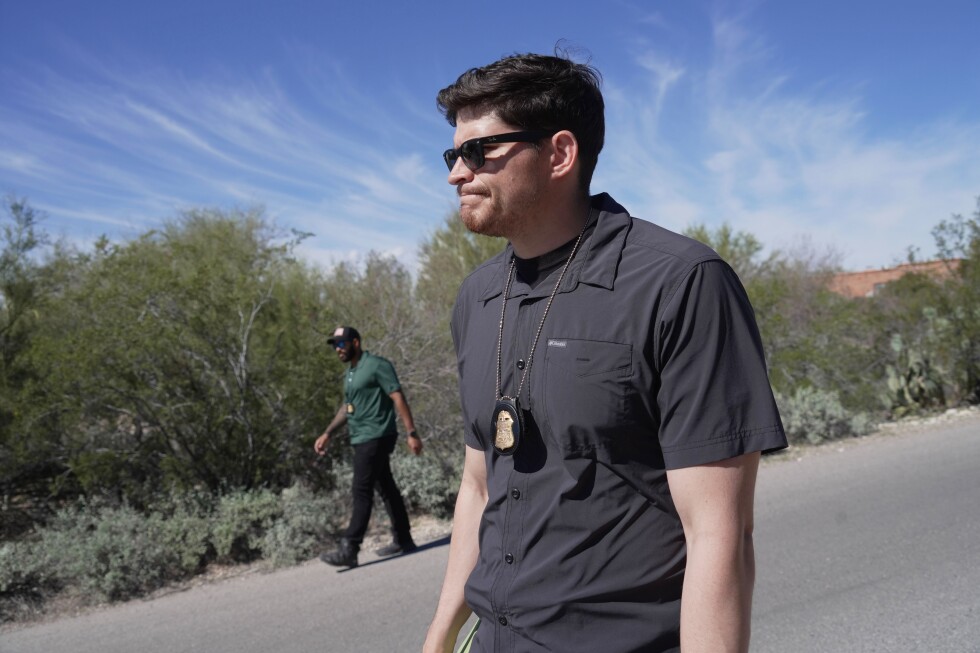
Eleven days after the mother of “Today” show host Savannah Guthrie vanished from her home in the foothills outside Tucson, Arizona, investigators had yet to identify a suspect or even a person of interest Wednesday.

What seemed like a major break Tuesday — when authorities detained a person for questioning — fizzled when the man was released hours later. The detainment followed another potential break earlier in the day when investigators released video footage showing a masked and apparently armed man at Nancy Guthrie ’s doorstep the night of her disappearance.

The overall lack of progress has generated pressure and questions for local and federal investigators who haven’t held a news conference in days. From the outside, it might seem like solving the case and finding the 84-year-old Guthrie is growing unlikely, but investigators may be further along than they let on.

It’s not uncommon for cases to seem dead in the water at the outset and still eventually get solved, said Mary Ellen O’Toole, a former FBI profiler who worked on the yearslong search for the “Unabomber.”

Advertisement

So how do investigators tackle cases like this?

The masked figure and the Unabomber

Surveillance footage released Tuesday showed a person on Guthrie’s porch wearing a ski mask, backpack and what looked like a holstered handgun.

It offered the best opportunity yet for the public to help identify the suspect, said O’Toole, thinking back to the hunt for Ted Kaczynski, known as the “Unabomber,” who was caught in 1996 after a yearslong search.

Advertisement

Kaczynski, who carried out a 17-year bombing campaign that killed three people and injured 23 others, wrote a manifesto that was published in The New York Times and The Washington Post before he was caught.

His brother recognized Kaczynski’s tone in the screed, tipped off the FBI, and Kaczynski was arrested in a cabin outside Lincoln, Montana.

Similarly, Luigi Mangione, who allegedly shot the CEO of UnitedHealthcare in New York, was arrested five days later when someone recognized him at a McDonald’s and called in a tip.

In Guthrie’s case, the release of the surveillance footage and Savannah Guthrie’s plea for the public’s help is the same strategy, O’Toole said.

Advertisement

Someone who knows the suspect may have noticed them acting unusual, such as not going to work, following the news closely or making offhand comments about the case.

If they recognize anything familiar about the masked person on camera, that could confirm their suspicions and lead them to tip off investigators, O’Toole said.

DNA and the University of Idaho murders

Investigators said DNA from blood on Guthrie’s porch matched her, and O’Toole said investigators will still be casing the area for DNA from a possible suspect, including hair or fingerprints, which have helped solve other cases.

Bryan Kohberger, the criminology student who sneaked into a home and stabbed four University of Idaho students to death in 2022, was arrested after trace DNA was found on a knife sheath left on one of the victim’s bed.

Advertisement

That DNA didn’t yield any results from standard law enforcement databases, so investigators turned to publicly available genealogy services, searching for possible relatives.

After homing in on Kohberger by tracking his car using surveillance footage near the crime scene, investigators got a Q-tip from the trash outside his family’s home and tested the DNA.

It matched the father of the person whose DNA was on the knife sheath.

Strange encounters and the Brown University shooting

In the days after a shooter killed two people at Brown University in 2025, investigators didn’t appear any closer to identifying the suspect.

Advertisement

When police eventually shared images of a person of interest, a man started posting on Reddit that he recognized the person and that police should look into a gray Nissan.

The source, named only as “John” in a police affidavit, told investigators that he’d bumped into a man in the bathroom and thought his clothing was “inappropriate and inadequate for the weather.” John saw him again outside acting nervous and jumpy near the Nissan.

John’s tip about the car helped identify the shooter, Claudio Neves Valente, six days later, leading investigators to a storage unit where he was found dead from suicide.

It’s unclear if John took the $50,000 reward for information that was offered in the case. The FBI is offering the same amount for information in Guthrie’s apparent abduction and hoping a tipster like John may come forward. The Pima County Sheriff’s Department said Wednesday that they have received nearly 18,000 calls since the day Guthrie was reported missing.

Advertisement

Connor Hagan, a spokesperson for the FBI, said in a previous statement: “Someone has that one piece of information that can help us bring Nancy home.”

Source link

Advertisement
Continue Reading
Click to comment

Leave a Reply

Your email address will not be published. Required fields are marked *

NewsBeat

Iran’s protest crackdown killed more than 7,000, activists say

Published

on

Iran's protest crackdown killed more than 7,000, activists say

DUBAI, United Arab Emirates (AP) — The death toll from a crackdown over Iran’s nationwide protests last month has reached at least 7,002 people killed with many more still feared dead, activists said Thursday.

The slow rise in the number of dead from the demonstrations adds to the overall tensions facing Iran both inside the country and abroad as it tries to negotiate with the United States over its nuclear program. A second round of talks remains up in the air as Israeli Prime Minister Benjamin Netanyahu pressed his case directly with U.S. President Donald Trump to intensify his demands on Tehran in the negotiations.

“There was nothing definitive reached other than I insisted that negotiations with Iran continue to see whether or not a Deal can be consummated. If it can, I let the Prime Minister know that will be a preference,” Trump wrote afterward on his TruthSocial website.

“Last time Iran decided that they were better off not making a Deal, and they were hit. … That did not work well for them. Hopefully this time they will be more reasonable and responsible.”

Advertisement

Meanwhile, Iran at home faces still-simmering anger over its wide-ranging suppression of all dissent in the Islamic Republic. That rage may intensify in the coming days as families of the dead begin marking the traditional 40-day mourning for the loved ones.

Activists’ death toll slowly rises

The U.S.-based Human Rights Activists News Agency, which offered the latest figures, has been accurate in counting deaths during previous rounds of unrest in Iran and relies on a network of activists in Iran to verify deaths. The slow rise in the death toll has come as the agency slowly is able to crosscheck information as communication remains difficult with those inside of the Islamic Republic.

Iran’s government offered its only death toll on Jan. 21, saying 3,117 people were killed. Iran’s theocracy in the past has undercounted or not reported fatalities from past unrest.

The Associated Press has been unable to independently assess the death toll, given authorities have disrupted internet access and international calls in Iran.

Advertisement

The rise in the death toll comes as Iran tries to negotiate with the United States over its nuclear program.

Diplomacy over Iran continues

Senior Iranian security official Ali Larijani met Wednesday in Qatar with Foreign Minister Sheikh Mohammed bin Abdulrahman Al Thani. Qatar hosts a major U.S. military installation that Iran attacked in June, after the U.S. bombed Iranian nuclear sites during the 12-day Iran-Israel war in June. Larijani also met with officials of the Palestinian Hamas militant group, and in Oman with Tehran-backed Houthi rebels from Yemen on Tuesday.

Larijani told Qatar’s Al Jazeera satellite news network that Iran did not receive any specific proposal from the U.S. in Oman, but acknowledged that there was an “exchange of messages.”

Qatar has been a key negotiator in the past with Iran, with which it shares a massive offshore natural gas field in the Persian Gulf. Its state-run Qatar News Agency reported that ruling emir Sheikh Tamim bin Hamad Al Thani spoke with Trump about “the current situation in the region and international efforts aimed at de-escalation and strengthening regional security and peace,” without elaborating.

Advertisement

The U.S. has moved the aircraft carrier USS Abraham Lincoln, ships and warplanes to the Middle East to pressure Iran into an agreement and have the firepower necessary to strike the Islamic Republic should Trump choose to do so.

Already, U.S. forces have shot down a drone they said got too close to the Lincoln and came to the aid of a U.S.-flagged ship that Iranian forces tried to stop in the Strait of Hormuz, the narrow mouth of the Persian Gulf.

Trump told the news website Axios that he was considering sending a second carrier to the region. “We have an armada that is heading there and another one might be going,” he said.

___

Advertisement

Associated Press writer Melanie Lidman in Washington contributed to this report.

Source link

Advertisement
Continue Reading

NewsBeat

Charities praise latest Darlington Volunteering Fair

Published

on

Charities praise latest Darlington Volunteering Fair

Thirty five community groups and charities took part in the latest Volunteering Fair at the Dolphin Centre, in Darlington.

Seth Pearson, Director of Darlington Cares, which organizes the event, said: “Despite poor weather, it’s a great turnout that really showcases volunteering opportunities in the Darlington area. It’s a fantastic way for voluntary organisations to network and to recruit new volunteers.”

Julia Bean, trustee of Darlington Town Mission, which tackles isolation among elderly people, described the Volunteering Fair as “invaluable”.

Advertisement

“We recruited new volunteers last year and one of them was a retired accountant who went on to become our treasurer,” said Julia.

“It’s a very relaxed atmosphere with great footfall, so it’s a great opportunity to connect with people who want to do some volunteering but aren’t sure what type of charity they want to be part of. The Volunteering Fair gives a real flavour of what’s on offer.”

Rachel Parry, of Darlington Oxfam, cited the example of a man who came forward as a volunteer at last year’s event and has gone on to train as a PAT (Portable Appliance Testing) specialist.

He has now helped generate thousands of pounds in revenue by PAT testing a stockpile of electrical items donated to the charity.

Advertisement

“It’s a great example of the value of the event,” said Rachel.

Darlington Lions President, Denis Pinnegar, added: “The real value for us is being able to network with other local charities and learn from each other.”

Source link

Advertisement
Continue Reading

NewsBeat

NI hospital among the first trial new device to treat common heart condition

Published

on

Belfast Live

A Belfast hospital is to be one of the first to trial an innovative new treatment for people with a common heart condition. The device uses electrical pulses to target and destroy heart tissue and stop irregular heart rhythms caused by atrial fibrillation (AF).

It is inserted into the heart in a minimally invasive procedure during which patients can remain awake rather than under general anaesthetic.

It is estimated that about 1.5 million people in the UK have AF, which can put patients at a higher risk of stroke. Some 15 hospitals will trial the Volt Pulsed Field Ablation (PFA) System as part of the pilot, including Belfast’s Royal Victoria Hospital.

The device, developed by healthcare company Abbott, comprises a small catheter which uses high-energy electrical pulses to destroy targeted tissues in the heart to treat irregular rhythms.

Advertisement

Christopher Piorkowski, chief medical officer of Abbott’s electrophysiology business, said: “We heard the physician feedback that patients need an alternative to general anaesthesia during a PFA ablation procedure that doesn’t sacrifice strong outcomes.

“The Volt PFA System is an option for patients who prefer conscious sedation, which can also lead to faster recovery times and shorter procedures for millions of people who suffer from an abnormal heart rhythm across Europe.”

Ulster Unionist Health Spokesperson Alan Chambers welcomed the news, saying: “This is a hugely powerful reminder that Northern Ireland’s Health Service can lead from the front. Often, the narrative around our health system focuses solely on pressures and waiting lists. While those challenges are real, today’s announcement shows another side of the story – Northern Ireland’s expertise, innovation and ambition.

“Atrial fibrillation is a debilitating condition affecting 1.4 million people across the UK. It increases the risk of stroke and heart failure and can severely limit a person’s quality of life. The ability of our clinicians to adopt cutting-edge technology that delivers safer procedures, faster recovery times and same-day discharge is a major step forward for patient care.

Advertisement

“This new approach is not only good for patients, it is good for the system. Treating up to three patients per day instead of one, reducing reliance on anaesthetic support, and freeing up hospital beds demonstrates exactly the kind of smart reform we need: better outcomes and better use of resources.

“Credit must go to the dedicated clinical teams in Belfast who have delivered this UK-first. It also reflects the leadership and ambition of my Ulster Unionist colleague, Mike Nesbitt, as Health Minister. His focus on transformation, innovation and rebuilding confidence in our health service is beginning to bear fruit.

Advertisement

“Northern Ireland may be small, but we have the expertise and drive to compete with the very best. Our task now must be to build on this momentum and ensure patients across Northern Ireland benefit from a modern, forward-looking health service that delivers real results.”

Other hospitals among those to first use the device are Glenfield Hospital in Leicester, Leeds General Infirmary, the Royal Devon, Royal Papworth Hospital in Cambridge and University Hospital Southampton.

Stuart Crossland, 57, from Lincolnshire, was the first patient to undergo the procedure at Glenfield Hospital in Leicester.

He said: “I was going into atrial fibrillation around once a month, and each time it left me feeling exhausted and very unwell.

Advertisement

“On one occasion it was so bad that I went straight to the emergency department, which is when I was put on the waiting list for this procedure.

“I was happy to be the first person to have this new treatment, even though it was quite daunting knowing I would be conscious during the procedure rather than going under general anaesthetic.

“The team’s kindness and reassurance made all the difference.

“The procedure itself was quick, and I can’t thank the staff enough – from the nurses and cleaners on the wards to the team carrying out the treatment.

Advertisement

“Six weeks on, I’m already back running 5k, and knowing this could stop my atrial fibrillation for years to come is incredible.”

Dr Riyaz Somani, a consultant cardiologist at the University Hospitals of Leicester NHS Trust, was one of the first electrophysiologists in the UK to use the Volt PFA system.

He said: “By providing a treatment option that doesn’t require general anaesthetic, we hope to be able to deliver atrial fibrillation ablation not only safely and effectively but also more efficiently, allowing us to treat more patients and help reduce our waiting lists.

“Our initial experience has been overwhelmingly positive, with all patients tolerating the procedure very well with excellent acute success rates.”

Advertisement

Don’t want to miss the latest from Belfast Live? Making us your preferred source on Google means you’ll get more of our exclusives, top stories and must-read content straight away. To add Belfast Live as a preferred source, simply click here.

Source link

Continue Reading

NewsBeat

How much will Sky Ultimate TV cost? World-first subscription

Published

on

How much will Sky Ultimate TV cost? World-first subscription

Never been done before, it means new customers will be able to get all of the above streaming platforms, as well as HBO Max (which launches in the UK next month), in one package.

The newly announced entertainment bundle will be known as Sky Ultimate TV and will be available from £24 a month, starting April 1.

It’s designed for those who want a “never-ending supply of brilliant entertainment for the best value in the market” and offers more than 130 channels in total.

Advertisement

Sky customers to get ‘world-first’ Sky Ultimate TV package

Existing customers will get “easy access” as part of their Sky Ultimate TV subscription, with over £20 worth of streaming apps included each month, such as:  

  • Disney+ Standard with Ads from March (date to be confirmed)
  • HBO Max Basic with Ads from when it launches in the UK & Ireland on March 26
  • Hayu from July, with a selection of top shows available from March

Additionally, current Sky Stream and Sky Glass customers with Sky Ultimate TV will get Disney+ Standard with Ads, HBO Max Basic With Ads and Hayu content added to their pack alongside Sky TV and Netflix.

Plus, existing Sky Q customers with Sky Signature, Sky Entertainment and other eligible packages will get Disney+ Standard with Ads, HBO Max Basic With Ads and Hayu content added to their pack alongside Sky TV. 

Sky Q customers with Sky Ultimate TV get all of these as well as Netflix.

Advertisement

Changes in TV Licence Fees Over the Years


Meanwhile, active Sky+ customers will have access to HBO Max Basic With Ads content and Hayu content alongside Sky TV.

Sky has also revealed that Disney+ Standard and Disney+ Premium customers can move their existing plans to Sky and save up to £5.99 a month on their bill (this may vary depending on their current subscription plan).

Sophia Ahmad, chief consumer officer at Sky shared that Sky Ultimate TV “marks a new era for Sky and NOW”.

Sophia explained: “Nowhere else offers this breadth of incredible entertainment in a fully integrated experience, with everything customers love watching side by side so viewers can jump from show to show with ease.

Advertisement

“Millions of existing customers will get easy access to this new line-up as standard at unbeatable value.

“All NOW Entertainment customers will get access to HBO Max, included at no extra cost, fully integrated within the NOW app.”

“We’re proud to continue Sky’s legacy of innovation, making it easier than ever for people to enjoy the very best entertainment and best experience, all in one place,” Sophia said.

Sky customers feel Sky Ultimate TV package is ‘too good to be true’

On Reddit , Sky customers have been sharing their thoughts on the entertainment giant’s latest move.

Advertisement

Someone wrote: “Holy cr*p that’s great.


Recommended reading:


“No doubt this sub will absolutely sh*t on this but honestly I think this is pretty decent that you get all that in a bundle. Content aggregation is exactly the way to go.”

Another posted: “This is a good deal, been thinking of getting Disney for a while but getting it for free soon is great!”

Advertisement

This person on X said: “£24 a month for basically every major streaming platform? I’m in… but can someone explain why I still feel like this is too good to be true?”

One user added: “That’s actually a serious bundle. Four major platforms under one subscription for £24 is going to turn a lot of heads convenience + value is a powerful combo. The streaming wars just took an interesting twist.”

Will you be buying the Sky Ultimate TV package when it launches? Let us know if you think it’s worth the price, by leaving a comment below.

Advertisement

Source link

Continue Reading

NewsBeat

the Trump administration’s frontal assault on the free press

Published

on

the Trump administration’s frontal assault on the free press

When the billionaire owner of Amazon, Jeff Bezos, bought the Washington Post from the Graham family in 2013, he promised a “golden era to come”. In February 2017, one month into Donald Trump’s first term as US president, the paper adopted the motto: “Democracy Dies in Darkness”, reflecting the perceived threat posed by Trump’s authoritarian leanings and the suggestion that Moscow had interfered in the 2016 election.

That motto was turned against Bezos last week when it was announced that the Post was laying off one-third of its editorial staff, including its sports section and several of its foreign bureaus. The news was greeted with dismay in America’s journalistic circles. Marty Baron, a celebrated former executive editor of the Post, called the layoffs “among the darkest days in the history of one of the world’s greatest news organisations”.

But in the years since Bezos acquired the Post it has become a symbol of a global wave of democratic backsliding in the US which accelerated as the prospect of a second Trump presidency grew through 2024. After an initial period of investing in the Post and hiring more reporters, he has now overseen a long period of decline.

Political concerns began seriously to mount in 2024 when, in the run up to that year’s presidential election, the newspaper broke a 36-year precedent by refusing to endorse a candidate (which most readers, given the paper’s traditionally liberal leanings, had assumed would be Democrat Kamala Harris).

Advertisement

Since Trump has returned to the White House further evidence of this backsliding at the Post includes suppression of a cartoon critical of Trump’s relationship with US tech oligarchs by the Pulitzer Prize winning artist Ann Telnaes and a refocusing of the opinion pages to centre them on “personal liberties and free markets”. The changes have reportedly cost the Post many thousands of subscribers.

The cartoon that led to Ann Telnaes quitting the Washington Post.
Facebook

But the malaise in US journalism is a much broader story than just the travails of the Washington Post. There’s a sustained campaign of cultural and structural violence against a profession that is under economic and political strain, yet essential to democracy.

Trump’s hostility toward certain sections of the press is not new. During his first term he used non-journalistic platforms to brand mainstream media outlets “the enemy of the people”. His hostility was directed at both institutional and personal level, launching attacks against individual journalists and their employers (the “failing New York Times”, his clash with CNN’s Jim Acosta, etc).

Advertisement

In his second term this hostility has intensified, its impact often obscured by the rapid pace of news emanating from the White House. We’re seeing press freedom in the US under attack on three distinct fronts: restricted access to information, threats to the safety of journalists and use of legal pressure to discourage dissenting voices.

Controlling the message

Restrictions began as soon as Trump was inaugurated for his second term in January 2025. Within a month, the Associated Press lost access to the Oval Office and Air Force One (in other words, to direct contact with the president) after refusing to adopt an executive order renaming the Gulf of Mexico the “Gulf of America”.

Accreditation rules soon tightened. In October, the newly minted secretary of war Pete Hegseth announced that henceforth journalists reporting from inside the Pentagon would be allowed to only report official government pronouncements. Many mainstream reporters handed back their Pentagon accreditation in protest. In response, Hegseth announced what he called the “next generation of the Pentagon press corps”, mainly comprising journalist from far-right outlets.

Meanwhile the president’s verbal attacks on journalists have escalated, particularly targeting women and especially women of colour. Incidents such as the “quiet Piggy” remark (directed at Bloomberg journalist Catherine Lucey) exemplify a broader pattern of public humiliation of female journalists. Research suggests that such conduct contributes to the normalisation of hostility toward female journalists, who were already disproportionately quitting journalism.

Advertisement

‘Quiet piggy’: Donald Trump targets a female reporter on Air Force One.

Journalists covering protests also face heightened risks. During the “no kings” demonstrations in October 2025, multiple incidents were reported in which police used force against accredited reporters. In November 2025 the White House escalated the pressure, launching a “Hall of Shame” site naming journalists and outlets it said had misrepresented the administration.

‘Lawfare’

The Trump administration has also brought considerable legal pressure to bear on the news media over the first year of its second term. The US president has filed multiple lawsuits alleging bias on the part of one or another media organisation that had attracted his disfavour.

In July, Paramount reached a US$16 million (£11.69 million) settlement over a 60 Minutes interview with Kamala Harris in 2024 that the president accused of bias. At stake was a US$8.4 billion merger that required approval from the Federal Communications Commission, a public body headed by Trump loyalist Brendan Carr.

Advertisement

The president also has active suits against the Wall Street Journal and the BBC (an episode which led to the resignation of director general, Tim Davie, and its head of news, Deborah Turness). By the middle of 2025, Axios reported that Trump-related media and defamation suits had already matched the annual historical record.


À lire aussi :
Why has the BBC’s director general resigned and what could happen next?


Democratic backsliding

Taken together, these developments reflect a broader pattern of institutional stress affecting US democratic structures. The pressure on these established media organisations has created a situation in which they manage to survive with their independence eroded.

Comparative research consistently demonstrates that journalists are among the first actors targeted in such processes because of their frontline work. Control over information remains central to the success of an authoritarian government.

Advertisement

What, then, should journalists and media organisations do? Standing together matters. We saw that in 2018, when about 350 American newspapers jointly defended press independence against Trump’s “fake news” attacks. This prompted the US Senate to adopt a resolution supporting a free press and declaring that “the press is not the enemy of the people”.

But the danger is that this structural violence against the news media and its attempt to hold power to account becomes normalised. If the Trump administration’s contempt for the fourth estate continues to percolate through to the public at large, a population already struggling to tell truth from lies will be further blindfolded and darkness will fall over American democracy.

Source link

Advertisement
Continue Reading

NewsBeat

M62 closed overnight for emergency repairs after lorry blaze damages carriageway

Published

on

Manchester Evening News

A diversion route is in place overnight

The M62 motorway is shut overnight on Wednesday night following a lorry fire that damaged the carriageway.

Emergency services were called to the eastbound carriageway on Tuesday morning, February 10.

Advertisement

The closure is in place to allow emergency resurfacing to take place.

Try MEN Premium NOW for just £1

The road is shut to traffic between Junction 18 and Junction 19 (Heywood) and is expected to reopen on Thursday morning.

A National Highways spokesperson said: “The M62 in Greater Manchester is closed eastbound between J18 (M60/ M66) and J19 near Heywood for emergency resurfacing works following a HGV fire which occurred shortly before 06:00 on 10th February.

Advertisement

“Service providers are in attendance. The closure is expected to remain ongoing throughout the night.”

M62 diversion route:

Drivers are being advised to follow the Hollow Triangle diversion symbols on the road signs: Exit the M62 at J18. At Simister roundabout, take first exit onto M66 clockwise and follow for 3.4km. Exit M66 at J3

At M66 J3, take first exit onto slip road, turn right on Pilsworth Road and follow for 1.3km. At Pilsworth Road/Moss Hall Road Junction, turn right onto Moss Hall Road and follow for 0.4km. At Moss Hall Road/Pilsworth Road Junction, turn left onto Pilsworth Road and follow for 1.1km

At Pilsworth Road/Hareshill Road Junction turn right onto Hareshill Road/Queen Elizabeth Way and follow for 1.9km. At Queen Elizabeth Way/M62 J19 roundabout take the second exit and re-join M62.

Advertisement

Source link

Continue Reading

NewsBeat

The Inbetweeners star discusses show’s comeback and says creators are ‘writing something’

Published

on

Wales Online

Joe Thomas has given an update on The Inbetweeners comeback after creators Damon Beesley and Iain Morris bought back the rights to the hit E4 comedy and confirmed they are writing new material

Joe Thomas, best known for playing Simon from The Inbetweeners, has revealed that creators Damon Beesley and Iain Morris are “writing something” new for the beloved teen comedy.

Advertisement

After the E4 coming-of-age series ended in 2010 and the follow-up films in 2011 and 2014 the writers secured an agreement with production company Banijay UK to develop additional Inbetweeners content. Ever since, there has been speculation online discussing a potential comeback for the show.

Now, Joe has offered fans fresh insight into what might be on the horizon for The Inbetweeners. Speaking at The Comedy Rooms, the 42-year-old actor explained: “What has happened is that the people who write The Inbetweeners a while ago sold the rights to a larger entity, and they recently bought them back so they can make some more.

“I’m really excited. I don’t know what they’re doing. I just know they’re writing something, and I would really love to do it.

“That’s pretty much it. I hope there’s more because I’ve not got that much else to do! I do like The Inbetweeners as well.” For the latest TV and showbiz gossip sign up to our newsletter

Advertisement

The Fresh Meat star mentioned that fans frequently yell catchphrases from The Inbetweeners at him on the street – including references to Simon’s love interest Carli D’Amato (Emily Head).

He added: “Well yeah. People shout ‘Carly’ and things like that. One time I was playing football with Simon Bird who plays Will, and someone just shouted out ‘Your mum’s a c***’. That’s not a line from the show, that’s just rude.”

Thomas appeared alongside Simon Bird (Will McKenzie), James Buckley (Jay Cartwright) and Blake Harrison (Neil Sutherland) throughout The Inbetweeners’ three E4 series and both films.

The quartet reunited in the 2019 special The Inbetweeners: Fwends Reunited, during which they looked back on the show’s enduring impact.

Advertisement

In October 2025, Beesley and Morris revealed they were developing fresh content for The Inbetweeners.

The duo told The Sun newspaper: “It’s incredibly exciting to be plotting more adventures for our four favourite friends (ooh, friends).”

Whilst the precise direction for The Inbetweeners’ future remains unclear, it has been confirmed the IP may return “across a range of platforms, including film, TV and stage”.

Source link

Advertisement
Continue Reading

NewsBeat

Police release call from boy, 13, who swam for hours to save his family stranded at sea | World News

Published

on

Austin Appelbee. Pic: ABC/AP

Authorities have released the audio of an emergency call made by a 13-year-old boy who swam for hours to save his family after they were swept out to sea.

Austin Appelbee, his mother, brother and sister, from Perth, were on an inflatable kayak and paddleboards when they got into difficulty off the west coast of Western Australia.

Mum Joanne Appelbee, 47, asked her son to swim around 4km (2.5miles) to shore – where he then ran 2km to find a phone he could use to call the emergency services.

Image:
Austin Appelbee. Pic: ABC/AP

With Ms Appelbee’s permission, the Western Australia Police Force has released the audio of Austin’s call, on which he can be heard calmly explaining the life-threatening situation.

Advertisement

“Hello, my name is Austin and I’m outside [the] beach,” he says, before explaining that he has two siblings, brother Beau, aged 12, and sister Grace, eight.

“We went out on a kayak trip and a paddleboard trip, and we got took out to sea and we got lost out there,” he continues.

“We got lost around about, I don’t know what time it was, but it was a very long time ago. You know, we couldn’t get back to shore and mum told me to go back and get help, and then I haven’t seen them since.”

Austin then suggests: “I think we need a helicopter to go find them.”

Advertisement

Advertisement

Teen swims 4 kilometres to save family

“I’m sitting on the beach right now, and I have to explain, I think I need an ambulance because I think I have hypothermia,” he adds.

When the emergency services operator checks that they have the correct information, Austin admits being “really scared” and explains: “I had a kayak, and then I had a bunch of water in it.

“It started to sink and I kept on, like, falling off it. So I decided to ditch the kayak and I decided to take off my life jacket, and I had to swim around about four kilometres facing the current.

Advertisement

“And like I’m really, I’m extremely tired. I think I have heatstroke and I feel like I’m about to pass out. I’m very dizzy.”

Austin Appelbee (right) with his family in Gidgegannup, Australia. Pic: ABC/AP
Image:
Austin Appelbee (right) with his family in Gidgegannup, Australia. Pic: ABC/AP

After Austin’s call, a multi-agency search and rescue response was coordinated and his family members were located clinging to a paddleboard at about 8.30pm local time – 10 hours after they had entered the water.

They were then safely brought back to shore by a volunteer marine rescue vessel.

Read more:
Australia swelters in record heatwave as temperatures soar
How Australian teens are coping with social media ban

WA Police Force has praised Austin for “his composure and ability to make critical decisions”, with Forward Commander Acting Sergeant Andrew McDonnell adding: “What Austin did was nothing short of extraordinary.

Advertisement

“His bravery and courage in those conditions were remarkable, and his actions were pivotal in bringing about a successful outcome.”

Source link

Advertisement
Continue Reading

NewsBeat

American man shares how he learned Welsh in 14 months

Published

on

Wales Online

Jeff Narvil, 58, from Mississippi, dedicated 14 months to learning Welsh independently before travelling to Cardiff University to sit his exam

A judge from the United States travelled 4,000 miles to sit a Welsh-language exam in Cardiff. Jeff Narvil, 58, from Jackson, Mississippi, has devoted the past 14 months to learning Welsh in his free time.

Advertisement

The administrative law judge learned the language mostly on his own using apps, textbooks and online resources. In January he made the journey to Cardiff University to take the A1 language exam which tests reading, writing, listening and speaking skills.

On his Welsh studies, Jeff said that the more effort he put in the more he enjoyed it. “I enjoyed it, or I would have quit, because nobody made me do this,” he said.

“It was 100% voluntary, and there are many languages, and there are many other things to do with your free time. But the more time I put into it the more I enjoyed it. Then the experience of finally getting to go to Wales.

“I planned it so that I could experience the country for the week before the exam, and I loved the few brief times I got to practice with somebody.

Advertisement

“I really enjoy trying to read the road signs, or read things at the restaurant. That, to me, was very entertaining, and people smiled and made it worth it.”

Besides Welsh, Jeff completed the European A2 levels in French, Spanish, and German and the A1 in Italian and Irish. He explained he has maintained a longstanding fascination with language and history.

He first encountered the Welsh language 15 years ago whilst studying Irish and various Celtic languages. As daily commitments increased, it wasn’t until late 2024 when seeking to learn another language that he chose to pursue Welsh.

“Welsh came to mind as something that I thought would be, in fact, very different and unusual,” he said. “I thought it was a great connection to my love of travel, and my love of my ancestors, and British history – and I have no regrets. I have really enjoyed the time that I spent on it.

“One of the attractions about studying Welsh is that there was an exam that was available, and having that deadline is very motivating sometimes. Knowing that I had to be ready by the end of January to do that.”

As someone who taught himself, apps, textbooks and digital resources proved essential, though he acknowledged the shortage of practice partners in the US presented challenges.

He recalled: “I did not take any lessons online. The only online class that I took was where the teacher was to prepare for the exam, which was a four-hour class, one week before the exam.

Advertisement

“I had to get up at 3am in order to do that, because of the time change I’m six hours behind Wales. I did Duolingo every day for over a year, I read some books about the history of the Welsh language.”

The time difference presented an additional obstacle, with certain online courses timetabled for the early morning hours in Mississippi.

“I would like to have taken the language course, because I do think they do a great job,” Jeff said. “It’s just that with a time change, it’s very difficult and with my work schedule.

“I would recommend other people do the class, though, because, especially living in Mississippi, there’s zero opportunity to speak to somebody who knows Welsh.

Advertisement

“Nobody can correct my pronunciation if I learnt it incorrectly. It would have been much better in hindsight for me to hire a tutor or something like that online.”

Alongside sitting the exam in Cardiff, Jeff and his partner Fran Weeks journeyed throughout the country, exploring Caerphilly castle, St Davids in Pembrokeshire, Betws-y-Coed in Conwy county and Harlech in Gwynedd.

He said: “I made the best of it. I made a complete circle around Wales. I went to all three national parks. I visited several castles.

Advertisement

“I love genealogy, and my partner and I, we’re both very, very great grandchildren of King Edward, so we went to visit some of his castles and I loved all that.”

He also seized the opportunity to practise his Welsh with locals, including shop assistants and café workers.

Jeff said people were supportive and understanding when he mentioned he was studying the language. Despite not yet knowing his exam results, he said the experience had already fulfilled its purpose.

“It’d been a long time since I was in a university classroom but it brought back a lot of good memories. I cannot believe how encouraging everybody’s been about the exam.

Advertisement

“It’s been overwhelming, and it’s been very, very positive, and it really makes me want to continue to study Welsh.

“But I’m going to wait to see how I do on these exams. If I failed it I don’t know that I can do much better in the future without courses or speakers.

“But if I passed it then maybe I could continue to go a little further beyond day one.”

Jeff’s exam results are anticipated in early March.

Advertisement

Source link

Continue Reading

NewsBeat

Where is Brandon Clark now as ITV’s The Murder of Bianca Devins airs

Published

on

Wales Online

Social Media Murders looks at the tragic death of 19-year-old Bianca Devins who was murdered by a friend she met online.

Social Media Murders returns to our screens tonight, highlighting the case of 19-year-old Bianca Devins.

Originally broadcast in 2021, the 10-part docu-series is being re-aired, with the third episode set to air tonight, Wednesday, February 11, at 11.40pm on ITV.

Advertisement

The episode, titled The Murder of Bianca Devins, delves into the harrowing circumstances surrounding the teenager’s death in July 2019. She was murdered by her friend Brandon Clark, 21, whom she had recently befriended on Instagram.

The pair were returning from a concert in Queens, New York City, when Clark fatally stabbed Bianca and shockingly posted graphic images of her body on social media.

Following the murder, Clark attempted suicide but survived. Upon his arrest, it was discovered that he had also filmed the horrific act.

Where is Brandon Clark now?

In February 2020, Brandon Clark pleaded guilty to second-degree murder and is currently serving a 25-year sentence at the Attica Correctional Facility in New York.

As reported by Distractify, during his sentencing, Clark expressed remorse, stating: “I hate myself for what I did to her.

“I don’t understand how I could do something like that. It disgusts me.”

This wasn’t his only public statement. Three years ago, he participated in a contentious interview with Yinka Bokinni for Channel 4’s Interview With A Killer.

Advertisement

At the time, Bianca’s mother Kim penned a letter to Channel 4 and Plum Productions, imploring them not to broadcast the documentary.

She expressed her concern that it would inflict “immense emotional distress” on Bianca’s family and friends.

In the wake of her daughter’s tragic passing, Kim has been advocating for changes in social media practices as images of Bianca’s body persistently circulated online.

Advertisement

Bianca’s Law was enacted in 2020, making it unlawful in New York State to share offensive images of crime victims.

Social Media Murders: The Murder of Bianca Devins is available to watch on ITVX.

Source link

Advertisement
Continue Reading

Trending

Copyright © 2025