Connect with us
DAPA Banner
DAPA Coin
DAPA
COIN PAYMENT ASSET
PRIVACY · BLOCKDAG · HOMOMORPHIC ENCRYPTION · RUST
ElGamal Encrypted MINE DAPA
🚫 GENESIS SOLD OUT
DAPAPAY COMING

NewsBeat

from UV apps to sun protection tips that actually work

Published

on

from UV apps to sun protection tips that actually work

The UK has already seen unusually hot weather this year, with temperatures high enough to make sun safety a live issue well before many people have packed for their summer holidays.

For many of us, the instinctive response to good weather is to get outside while it lasts. But sudden bursts of hot, bright weather are also a reminder that sun protection needs to start before we are already on the beach.

UV exposure is not only a problem on foreign holidays or during peak summer. In the UK, UV levels can reach 3 or above from as early as April – this is the point at which many public health bodies advise taking sun protection seriously, especially for people who burn easily.

Abroad, particularly in southern Europe or long-haul destinations, levels commonly reach 8, 9 or 10 in summer. That is a significant jump from what most people living in the UK are used to at home, and one reason holidays are often when their skin is most at risk.

Advertisement

My research with holidaymakers suggests that people want to manage sun exposure better – especially when they are given clear, location-specific information about UV levels, plus practical reminders about when to protect themselves.

Staying safe in the sun works best as a combination of habits: seeking shade, wearing a hat, covering up, limiting time in strong midday sun, and using sunscreen properly.

Not just sunscreen

One of the most effective things you can do is seek shade during the middle of the day, when UV levels are at their highest – typically 11am-3pm in the UK and during similar peak hours abroad. A wide-brimmed hat, a long-sleeved layer for the hottest part of the day, and sunglasses that offer UV protection all add meaningful protection that sunscreen alone cannot provide.

Advertisement

Planning ahead makes this much easier. Before you head out, check the UV index for your destination. Most weather apps now include this. Then plan the highest-exposure parts of your day around it.


À lire aussi :
What is the UV index? An expert explains what it means and how it’s calculated


Think of sun protection as part of your morning routine: apply sunscreen before leaving the house, just as you would brush your teeth, and pack a hat, sunglasses and sunscreen in your day bag. It is also worth taking a light cover-up such as a T-shirt, kaftan or sarong to protect your shoulders and chest.

When you stop for lunch, that is your natural cue to reapply sunscreen. Many people on holiday take a midday break anyway. A shaded lunch, and even a short siesta during peak UV hours, is not just a pleasant holiday habit. It is good sun safety.

Advertisement

By the time you head back out later in the afternoon, you’ll have rested, cooled down and reapplied sunscreen, and you are making better use of the lower-UV part of the day.

Simple “if-then” plans can help too. If the UV index is forecast to be 3 or above, then I will cover up and seek shade. If I am heading to the beach, then I will reapply sunscreen as soon as I arrive and again after swimming.

One thing our research consistently shows is that most people underestimate how quickly their skin can burn, particularly in strong sun. Rather than trying to calculate a safe window, treat the UV index as your guide. If it is 3 or above, cover up and seek shade during the strongest part of the day.

Sunscreen works best when applied generously and reapplied regularly, but guidance on how much to use can feel vague. Our research suggests a helpful rule of thumb: for your face, neck and ears, aim for around a teaspoon’s worth. For a full body application, you need considerably more than most people use, roughly the equivalent of a golf ball.

Advertisement

Applying more than you think you need, and reapplying every two hours when you are outdoors, makes a real difference to the protection your skin gets. You should also reapply after swimming, sweating or towelling off, even if the product is labelled water resistant.

Apps are useful – if they change what you do

Studies of sun protection apps suggest these digital tools can help when they give people specific, usable information rather than vague warnings. In my research into holidaymakers’ views of these apps, participants valued UV index information and location-based reminders because these helped them to plan their day, rather than simply reacting once already in strong sun.

Personalised guidance can make sun protection feel less like guesswork by taking account of your skin type, where you are and how strong the UV is at that moment.

If you use a sun protection app, look for one that provides real-time, location-specific UV forecasting and concrete, practical advice, rather than general reminders. Even a basic UV index tracker can help you decide when to cover up, when to seek shade and when UV levels are lower.

Advertisement

The SunSmart Global UV app (supported by the World Health Organization, the World Meteorological Organization, the UN Environment Programme and the International Labour Organization) shows what this can look like. It gives users location-specific UV information and indicates when sun protection is needed.

That is the kind of practical guidance holidaymakers in my research said they wanted: advice that helps them make decisions in the moment, not just general messages about staying safe in the sun.

Enjoy the good weather

Sun protection does not mean staying indoors. It means making the sun easier to enjoy: checking the UV index, packing a hat and sunscreen, seeking shade when UV is strongest, and reapplying before your skin reminds you.

Skin cancer is largely preventable, and small habits add up. The aim is to make sun protection part of the day – not an afterthought once you are already hot, tired and turning pink.

Advertisement

Source link

Continue Reading
Click to comment

You must be logged in to post a comment Login

Leave a Reply

NewsBeat

Heatwave live updates as 40C temperatures set to cause major nationwide travel disruption

Published

on

Wales Online

The Met Office extended its rare red extreme heat warning for parts of Wales wrning that temperatures could approach 40C during what has been described as a “severe weather event”.

The highest-level weather alert, originally due to expire at 9pm on Thursday, will now remain in force until 11pm. It covers Blaenau Gwent, Bridgend, Caerphilly, Cardiff, Carmarthenshire, Merthyr Tydfil, Monmouthshire, Neath Port Talbot, Newport, Powys, Rhondda Cynon Taf, Swansea, Torfaen and the Vale of Glamorgan

The Met Office said: “During the heatwave expected to affect a large part of England and Wales this week, the highlighted area now looks increasingly likely to see a two to three day period where maximum temperatures in the shade exceed 37 Celsius, perhaps rising to 38 to 40 Celsius in some places.”

Advertisement

Forecasters warned the heat will be accompanied by high humidity and unusually warm nights, making it harder for people to recover from the extreme daytime temperatures.

Source link

Continue Reading

NewsBeat

Tout site StubHub’s ‘drip pricing’ fine is a drop in the ocean

Published

on

Daily Record

Chief Reporter Mark McGivern believes the latest capitulation by the CMA offers the perfect justification for a UK legal ban on touting.

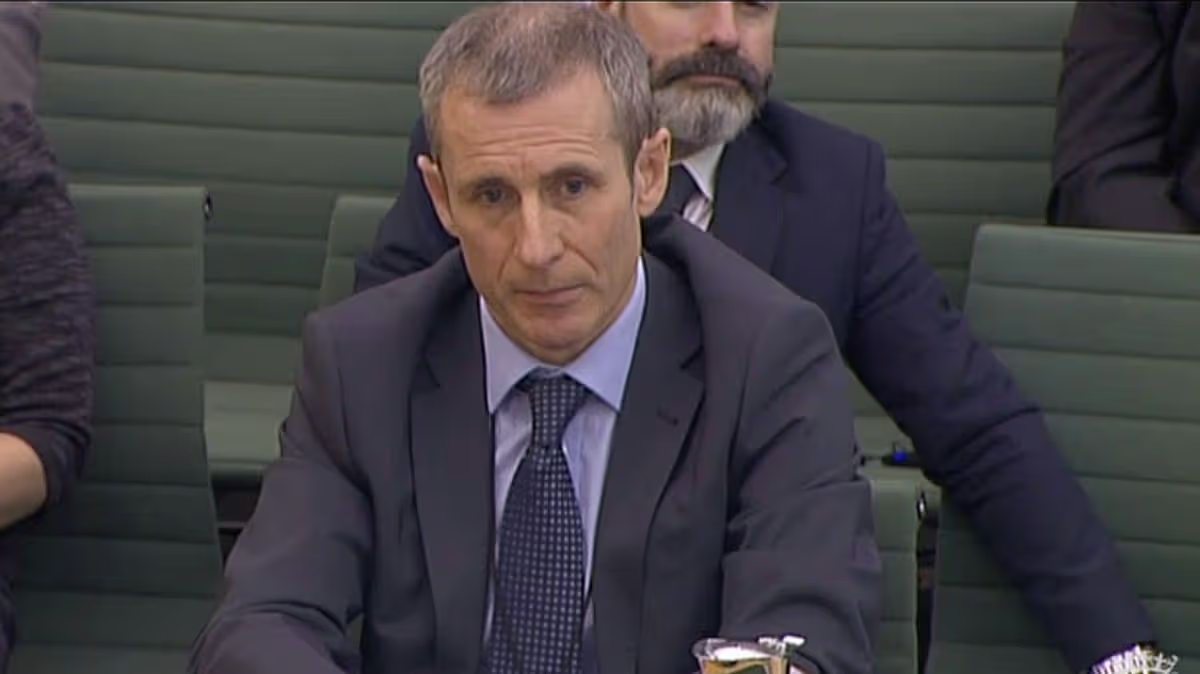
Ticket Touts – Daily Record’s Mark McGivern at the Culture, Media and Sport Committee

The Daily Record’s chief reporter Mark McGivern has written extensively about ticket touts – and the platforms that make millions from their dodgy profiteering. He believes the latest capitulation by the CMA offers the perfect justification for a UK legal ban on touting.

So, the UK’s consumer watchdog says it’s finally getting tough on ticket touts. Give me a break.

A £900,000 fine for “drip pricing” on the notorious StubHub UK site, as trumpeted by the Competition and Markets Authority (CMA) this week, is no more than a pittance.

It’s a drop in the ocean weighed against the tens of millions of pounds they’ve made on the back of handling rip-off sales for ticket touts- many of whom are crooks.

Advertisement

As a journalist who’s written umpteen articles on the wild profiteering of companies like StubHub and Viagogo over the years, via our Stub Out The Touts campaign, I can testify to the toothlessness of the (CMA).

It’s a frustration that’s shared by many in the music business and FanFair Alliance, a true consumer champion.

Advertisement

Action trumpeted by the CMA this week includes a refund of a tenner for around 51,000 customers who were given sneaky surcharges at the end of their buying process.

This will cost StubHub around £500,000 – a gentle slap on the wrist.

The miniscule level of penalty means the only winners in the action are StubHub, who will be rubbing their hands at getting away with it – again.

And this, again, is another win for StubHub – getting off even lighter by admitting to something for which they could have little defence in court.

The fact of the matter is that the CMA has used exactly the same soft-soap strategy they did with Viagogo, over whom they obtained a court order that, almost comically, instructed them to stop routinely breaking UK consumer law.

In relation to the current example of scandalous price gouging, StubHub has said the issue of hidden fees was not a part of its business model, and that it had fixed the issue.

Yet it’s a matter of record that, in 2020, StubHub UK was caught breaking a raft of consumer laws – like exaggerating scarcity of tickets and failing to tell buyers that touted tickets would be invalid. Predictably, they got away with a warning.

Advertisement

The bigger Viagogo court order was breached so many times it made a mockery of the CMA’s role.

Demonstrable toothlessness of the CMA was probably a significant factor in persuading the UK government to launch a proper crackdown on rogue sites and touts – via a legal ban on profit from the resale of tickets.

Keir Starmer pledged to bring forward a truly game-changing law that would protect fans. But the inclusion of a legal ticket tout ban as a less emphatic “draft bill” in the King’s Speech was a hammer blow to anyone who has campaigned for this.

Advertisement

The main takeaway from the “draft” status announced in May was that the UK government had been nobbled by lobbyists for the big secondary sites – who peddle nonsense about how touts are good for consumers and for the economy.

When I appeared as a witness at Westminster’s probe into ticket abuse by the Culture, Media and Sport Committee in 2017, Viagogo failed to even take their seat.

The lawlessness allowed on their site – and the breaches of UK law – were so indefensible they never bothered to make an effort.

Advertisement

For my part, I told of the investigation of the Daily Record into “supertouts” like Scot Andrew Newman and a host of others who made a fortune off ripping off others, all done on sites that profited hugely from the enterprise.

I told MPs that any referendum on the issue of ticket touting would bring a landslide vote for a crackdown.

The same sentiment would surely ring true today and the outrage over ticket profiteering by FIFA at the World Cup only underlines this.

With the Labour government currently caught up in its own current existential crisis, it may be that one draft bill among a comprehensive legislative programme will not be a number one priority for heir apparent Andy Burnham, who could be Prime Minister within weeks.

But if this party saviour is riding into power on a ticket of being a “man of the people” there are fewer easier ways of justifying that billing than being the hammer of the ticket touts.

Get Daily Record Premium for just £1 per month in exclusive offer to celebrate the world cup. Click HERE.

Get more Daily Record exclusives by signing up for free to Google’s preferred sources. Click HERE.

Source link

Advertisement
Continue Reading

NewsBeat

The sun shone for Lesmahagow Highland Games 2026

Published

on

Daily Record

It is the last surviving Games in Lanarkshire, and celebrated its 64th year.

The sun shone on Glebe Park for the annual Lesmahagow Highland Games.

Advertisement

Chieftain Eric Watson opened the event and Tartan Queen Ruby Manson looked lovely alongside Princesses Kirstie Morris, Gracie Carr and Clansmen Denis Kilgour and Jack Blackwood.

As ever, the community turned out in force to support the popular event that celebrated its 64th year.

David Abercrombie, chairman of Lesmahagow Highland Games, said: “Lesmahagow Highland Games, into its 64th year, is the only surviving Games in the whole of Lanarkshire.

“We have a very strong local community bond, and the villagers turn out in their thousands to watch the spectacle of the Chieftain’s Procession, followed by free entry to the Games which featured pipe bands, Highland dancing, Scottish back-hold wrestling, cheer and pom, street dancing, heavyweight contest, funfair, inflatables, pony rides, mini-pet zoo, climbing wall, market street and much much more.

Advertisement

“This year we had visitors from New Zealand, United States, France, Germany and Australia. Bill Right, who left lesmahagow for Australia some 60 years ago, returned to play the pipes in Coalburn IOR band for the first time since the early 60s.

“Eric Watson was our Chieftain, and our 64th Tartan Queen was Ruby Manson, now soon to be a pupil at Lesmahagow High School. Her court was made up of Princesses Kirstie Morris, Gracie Carr and Clansmen Denis Kilgour and Jack Blackwood.

Advertisement

“Although we had torrential rain over the preceding days, the sun shone all day long on Saturday, and the park remained busy all day in the afternoon heat. Our Chieftain, Tartan Queen and her Court later went on to the Chieftain’s Ceilidh, where they all danced the night away til the wee sma’ hours.”

*Don’t miss the latest headlines from around Lanarkshire. Sign up to our newsletters here.

Advertisement

And did you know Lanarkshire Live had its own app? Download yours for free here.

Source link

Continue Reading

NewsBeat

June’s temperature record set to be broken again

Published

on

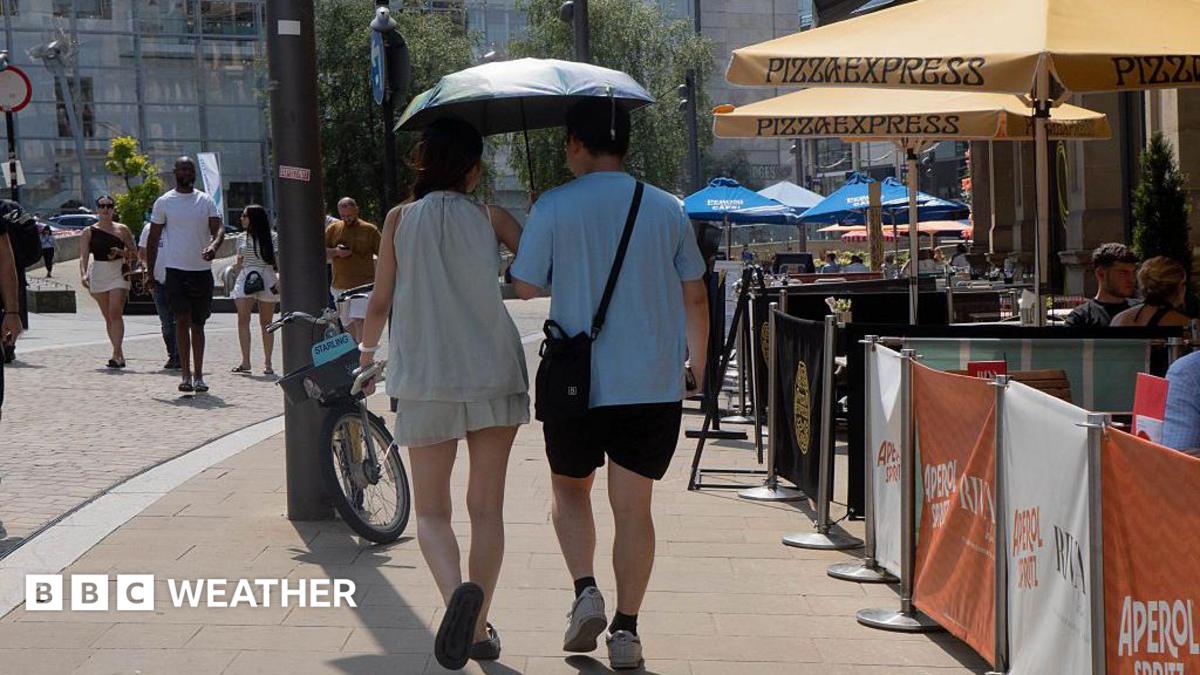
two people walking in the street holding umbrellas to shield them from the hot weather

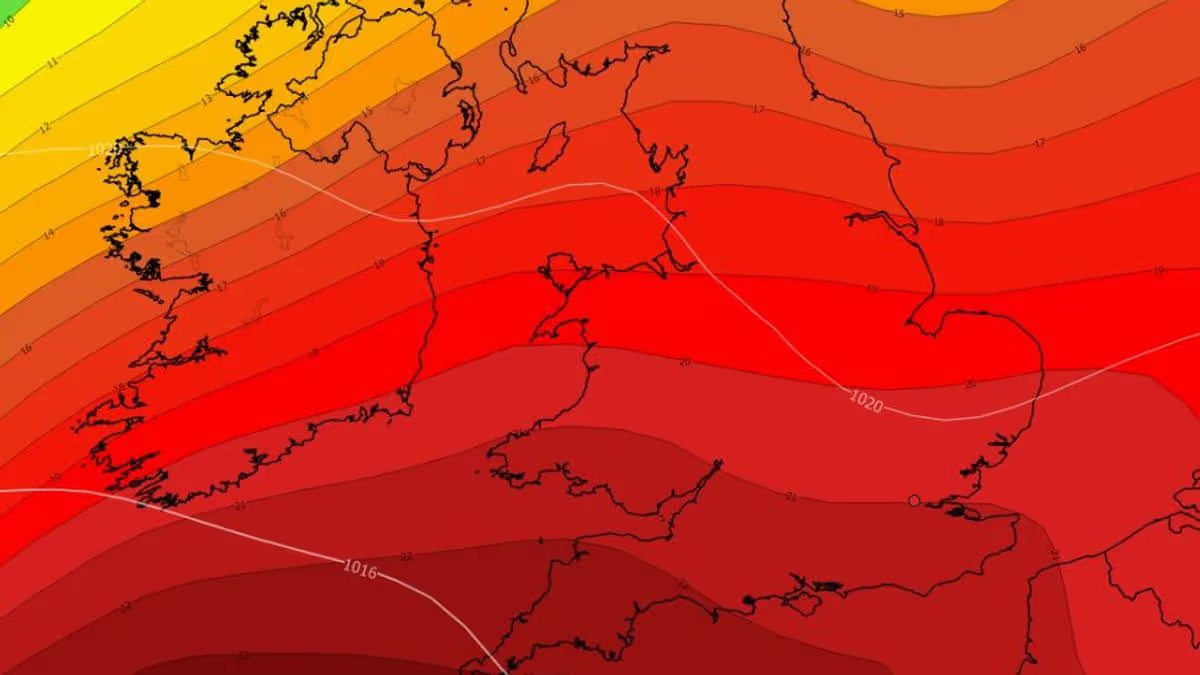
Thursday will bring another day of hot weather across most of England and Wales as temperatures will once again rise to the low to mid 30s Celsius.

For parts of central southern England, the Midlands, east and north-east Wales, Thursday will be hotter than Wednesday.

Temperatures could be as high as 37 or 38C around central southern England, which would beat the new June record set on Wednesday in Gosport.

It will also be a warmer day for Scotland and Northern Ireland with temperatures up to 25 to 30C for many.

Advertisement

Though, further north in Scotland it will still be cooler – or indeed around average – with highs of around 15-20C.

Disruption is likely to continue on the transport network with train operators asking passengers to travel only if absolutely necessary.

The Met Office red extreme heat warning for the south Midlands, south-east Wales and southern England is valid until 23:59 GMT Thursday.

But amber extreme warnings – the second highest level – will still be in place for parts of England through until Saturday.

Advertisement

While sunny for most of the UK, later on Thursday we’ll see some heavy showers and thunderstorms developing in south-west England where there is a yellow warning from the Met Office from 18:00 to 23:59 GMT.

With gusty winds and intense rainfall, there could be some localised flash flooding.

Source link

Advertisement
Continue Reading

NewsBeat

Northern Trains to continue operating reduced timetable all week

Published

on

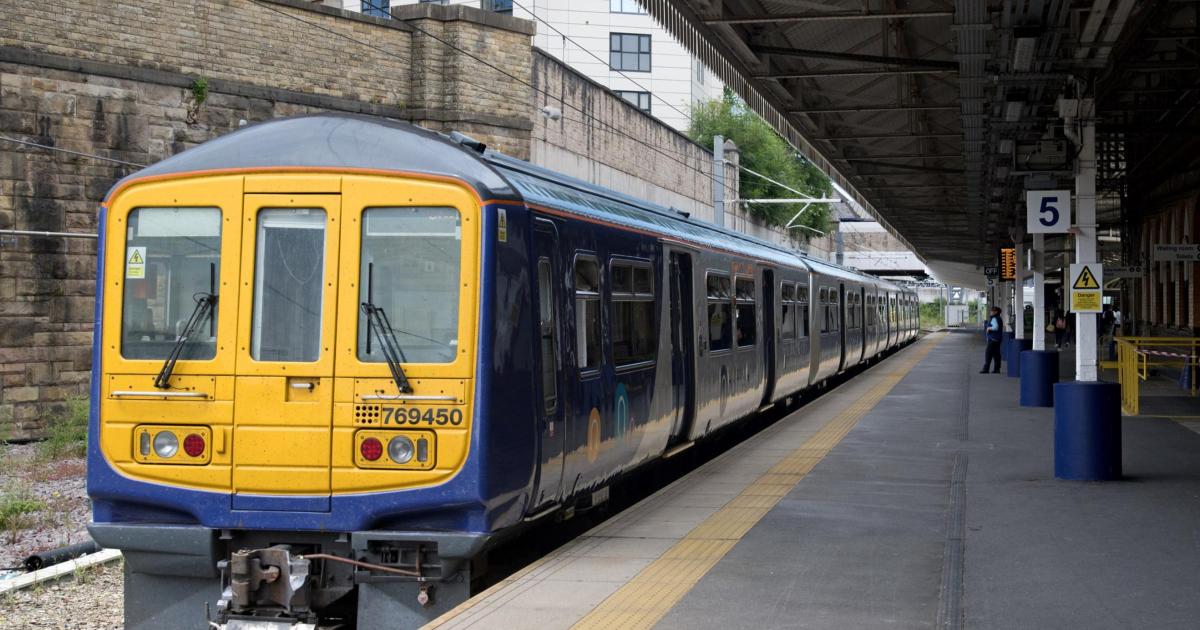
Northern Trains to continue operating reduced timetable all week

Rail passengers travelling to and from Greater Manchester are being urged to consider only making essential journeys this week as extreme heat continues to disrupt services.

Train operators have warned that the high temperatures can both rail infrastructure and train performance, increasing the likelihood of faults, delays and short-notice cancellations.

To minimise disruption, a reduced timetable has been introduced on several routes in and out of Manchester, with fewer services running so operators can focus on keeping trains that do run as reliable as possible. This timetable will continue into Friday.

Passengers have been told to expect longer waiting times, busy trains and potential last-minute changes to services.

A statement issued to customers said: “Due to the continued extreme heat, we have significantly reduced the number of trains running on routes in and out of Manchester, and services remain in high demand.

Advertisement

“We strongly recommend customers consider whether their journey is necessary.”

Rail bosses are urging travellers to check their full journey before setting off and to allow extra time if they do need to travel.

The warning comes as temperatures across the region are expected to climb above 30C, placing additional strain on the rail network.

Operators explained that extreme heat can cause rails to expand and equipment to overheat, making services less reliable and increasing the risk of delays.

Advertisement

As a result, services have been scaled back on key routes to reduce pressure on the system and avoid more widespread disruption.

Passengers who do travel are being advised to take precautions, including carrying water and staying hydrated during journeys.

The statement added: “If you feel unwell, please do not board the train and speak to a member of staff for help.”

Travellers can check live service updates using the Northern app or via the National Rail website, where a full list of affected routes has also been published.

Advertisement

Despite the challenges, operators say they are working to keep people moving as efficiently as possible during the heatwave.

A spokesman added: “We’ve introduced ticket easements for this week to help give you some flexibility.

“If you have a Northern ticket dated Tuesday 23, Wednesday 24, Thursday 25 June or Friday 26 June.

” You can travel on any of our trains earlier on the same day at no extra cost or your can use your ticket on Friday, 26 June or Saturday, 27 June.”

Advertisement

Source link

Continue Reading

NewsBeat

Thousands feared dead and buildings collapse after two powerful earthquakes hit Venezuela | News World

Published

on

Thousands feared dead and buildings collapse after two powerful earthquakes hit Venezuela | News World
More than 20 aftershocks have since been detected (Picture: Getty)

Venezuelans woke up to two back-to-back earthquakes last night as Donald Trump vowed to ‘help’.

Thousands were feared dead, and buildings collapsed after two powerful earthquakes hit one after another.

Venezuela is prone to earthquakes because it lies between two tectonic plates,but the 7.2 magnitude quake took many by surprise.

Last night’s earthquakes caused widespread building collapse as people begged for help. The quake was centred over the city of San Felipe, but the capital, Caracas, was also affected.

Advertisement

‘The two major earthquakes that just hit the great people of Venezuela are both massive in scale and have left a devastating number of deaths,’ Donald Trump wrote in a post on Truth Social.

‘The U.S.A. stands ready, willing, and able to help!’

Sign up for all of the latest stories

Start your day informed with Metro’s News Updates newsletter or get Breaking News alerts the moment it happens.

Advertisement

An initial estimate run by the U.S. Geological Survey found that potentially thousands of casualties are likely after the powerful earthquake.

An estimate from the USGS points to a potentially deadly quake (Picture: USGS)

Trump added: ‘We will be there for our new and great friends. Early reports are not good!!!’

Venezuela’s international airport has closed due to ‘significant damage’.

Advertisement

Source link

Continue Reading

NewsBeat

Low-tech gadgets for your kids’ no-screen summer

Published

on

Low-tech gadgets for your kids' no-screen summer

A screen-free summer doesn’t have to mean no tech at all. There are plenty of gadgets for school-aged kids designed to keep play, curiosity and conversation on the agenda. From instant camera to a pocket microscope, here are six charming low-tech devices

1. Tin Can

These punchy-coloured handsets from Seattle-based company Tin Can, allow kids to call each other securely on a Wi-Fi enabled landline. Parents can stay in control by approving contacts and setting available hours with an app, but the rest is up to the kids with the goal of growing phone confidence and independence.

“People talk about Tin Can with joy, relief, and peace of mind,” says Chet Kittleson, co-founder and CEO. “Kids love it because it feels like theirs. Grandparents tell us they’re having real conversations with their grandkids for the first time.” 

Advertisement

The phone (£100) is aimed at kids 5-12 and launched in the US and Canada in early 2025. It has since been sold to hundreds of thousands of global customers since who love the idea of a 90s-style voice-only connection without apps, internet access or camera.

The twirly cord is a particular throwback feature the team wanted to include. “It’s a wink to that simple childhood idea of two cans and a string,” shares Kittleson. “A playful reminder that connection doesn’t have to be complicated to be meaningful.”

Advertisement

2. 3Doodler

Eighties cartoon hero Penny Crayon could draw herself out of a scrape with a set of magic pens. While the 3Doodler can’t quite make a getaway car or cave entrance appear, it does invoke the thrill of turning two dimensions into three. This gadget pen mixes 3D printer and glue gun, allowing kids to draw lines in soft plastic that harden into a desired form. 

The 3Doodle Start+ (£39.99) is best for kids 5-13. It’s the easiest to learn intuitively and operates at a lower temperature than other models with no hot parts. Parents are happy that this mess-free creative kit helps children develop fine motor skills and spatial awareness, although the plastic filaments are expensive to replace. The other downside is that once your creation is made, there’s no melting it back. Choose 3Doodler’s Eco-Filament for fun that’s non-toxic and BPA-free. This type is also biodegradable and can be put in your household compost.

Advertisement

3. Pocket microscope

The Natural History Museum know what they are doing when it comes to inspiring little Attenboroughs. This robust and reasonably priced microscope (£15) is light, portable, can magnify 20-40x and survive drops, knocks and rough handling – suitable for ages 3 and up. It’s simple enough for little hands to use, and easy to chuck in a bag for the next outdoor family trip.

The inbuilt LED gives a rich, colourful image. When the base is detached, the microscope can be used directly on tree trunks, walls, rocks and stones to zoom into structure and details. When the base is in, it can be used with plastic slides (two are included) to see samples of leaves, bark, moss, feathers and the like. If you can’t get out, it can be just as fun to look at herbs, sugar crystals and other household bits under the magnifying lens. 

4. Karri Messenger

“As a kid, I loved gadgets that gave you a bit of independence,” says Pete Clifford, co-founder and CEO of Karri. “Gameboys and CD players felt personal and fun, but not as all-consuming as smartphones.” The idea for Karri Messenger 2 is a simple screen-free way for kids to stay in touch, with added GPS location and contact approval to reassure parents. 

“It needed to be voice-first, tactile and intuitive,” he says. “With children able to send and receive messages through a ‘slide-to-talk’ button inspired by traditional walkie-talkies.” 

Advertisement

Karri – which has the strapline The Device They’ll Actually Put Down – doesn’t look typically kidsy. There are no primary colours or puffy shapes here, meaning 13-year-olds might be willing to carry it with them as much as those 5 and up. The Messenger 2 version (£89.99) has a LED panel displaying your caller’s name as a matrix but that’s about as close to a screen as this pocket messenger gets.

5. Fujifilm Instax Mini 12

The Instax Mini first came out in 1998, boomed in popularity around 2014, and continues to be a runaway hit with kids. Pick the Mini 12 (£74.99) for an easy-to-use camera that’s robust, screen-free, and comes in a range of soft pastel colours. The joy is its inbuilt printer, which shoots out a sharp-enough image the size of a credit card shortly after you take a picture. It’s easy to see why kids love the instant gratification. Film comes in packs of 20, which is just enough to go wild with over a holiday. 

Advertisement

Operating this chunky camera for ages 8 and up is as simple as twisting the lens to turn it on or enter close-up mode. It’s not too hard to get a decent photo out of it either, with automatic exposure and a built-in mirror on the front of the lens to help line up and centre shots. Cheaper alternatives tend to come with a screen. Otherwise Praktica’s VF212 point-and-shoot (£24.99) is good for introducing kids to taking non-instant photos with 35mm film.

6. Ambessa Play DIY Torch

Ambessa Play’s STEM-learning kit for ages 8 and up includes all you need to make a wind-up torch (£45). Lifting the lid on its neatly packaged box reveals some 10 circuitry components, which a colourful 16-step manual (co-designed with kids) helps guide you through assembling. 

Advertisement

This battery free design works with a capacitor and hand crank to teach kids about kinetic energy. A couple of minutes of winding it up yields 15 minutes of light. Putting it together takes about 30 minutes to an hour, and there are two versions: transparent version so you can admire your circuitry, or a tasteful light blue and orange. 

When you buy a kit, you also donate one to a displaced child who lacks access to school and/or electricity, through Ambessa’s partners across eight countries. Founder Sara Berkai first came up with the idea of a DIY torch on a volunteer coding workshop in East Africa, and launched it on Kickstarter in 2023.

Main image: Karri

Advertisement

Be part of the solution

At Positive News, we’re not chasing clicks or profits for media moguls – we’re here to serve you and have a positive social impact. We can’t do this unless enough people like you choose to support our journalism.

Give once from just £1, or join 1,800+ others who contribute an average of £3 or more per month. Together, we can build a healthier form of media – one that focuses on solutions, progress and possibilities, and empowers people to create positive change.

Support Positive News

Advertisement

Source link

Continue Reading

NewsBeat

David Smith of York looks back at 50 years in brewing

Published

on

David Smith of York looks back at 50 years in brewing

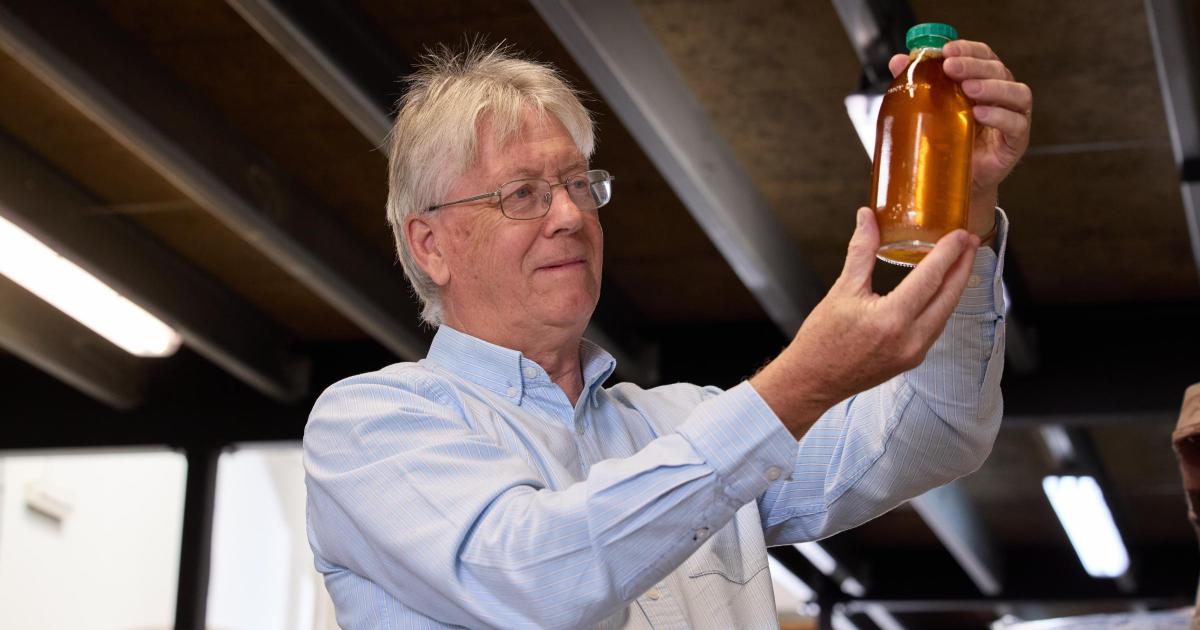
David Smith of Copmanthorpe began his career at Sam Smith’s Brewery at Tadcaster after studying Chemistry at University.

The 71-year-old recalled: “One afternoon, I went to see the careers tutor and he asked me what I do in my spare time. I replied if I am not wring essays, I would be in the student union bar. He said brewing would be a good career and that was a bit of a lightbulb moment.”

David returned to York, where he grew up, and started writing to breweries in the area “begging for a job.”

RECOMMENDED READING:

Advertisement

Fortunately, his letter arrived at the Tadcaster-based brewery the same day as a brewer resigned to move overseas.

He was interviewed the following week and started work the week after, on June 21 1976.

David Smith and son Rob Smith, who also works at the consultancy. (Image: Claire Wood Photography)

Sam Smith’s Old Brewery in Tadcaster is Yorkshire’s oldest brewery, established in 1758.

David believes it is “arguably still the best brewery in Yorkshire” and he doubts he could not have had a better grounding in brewing anywhere else.

Advertisement

David told the Press: “When I started brewing in what was very much a Victorian Brewhouse on one side of the Tower brewery, and in a slightly more modern lager plant next door.

David Smith (Image: Pic supplied)

“A few years later, we gained an even newer all singing, all dancing, all-purpose plant. Whilst Sam’s was very traditional in many ways, it was well ahead of its time in many others – producing for example low alcohol beers and organic beers all those years ago.

“You name it we had a go at it, which was a great way to learn all aspects of brewing many different beers styles with a variety of equipment. This was something that has continued to serve me well throughout my brewing career.”

After seven years of round-the-clock shift brewing, the now 71-year-old moved over to Quality Assurance to learn the microbiological side of keeping beer in good order and infection free.

Advertisement

David said: “It is still something I very much believe is the key to brewery survival in these difficult times, quality and consistency has to come first and this belief has stood me in good stead for the following 38 years and the many breweries I have worked with.”

In 1988, he left Sam Smith’s Brewery and set up DA Smith Brewing Services & Consultancy providing help and technical assistance to the ever-increasing number of new independent breweries.

At the time, the UK had around 80 breweries, with him helping out at 3-4 of them. By the time of the pandemic, their numbers had boomed to almost 3,000 before falling back since.

David Smith and son Rob Smith, who also works at the consultancy. (Image: Pic supplied)

David says such numbers were not sustainable was not sustainable as they opened up far too quickly. and though breweries are still closing, he believes the numbers will level out and confidence in the sector will eventually return.

Advertisement

He said: “Selling beer is the hard part. That’s always been the case. Our job is to make sure the beer is the best possible. You cannot sell a bad pint.”

Over the decades, David has worked with well over 250 breweries around the UK plus a few overseas, including a current project in Ibiza fitting a small brewery into a bar.

David Smith enjoying the fruits of his labour (Image: Claire Wood Photography)

His work has also taken him across Europe, including projects in Italy and France.

David continued: “We look after a solid core of breweries around the UK with whom we work closely, providing technical back-up and regular QA surveys, helping maintain quality and consistency year on year.

Advertisement

“More locally I have worked in the past with breweries such as York Brewery, Ainsty Ales, Treboom, all sadly now missing from the York beer scene, and many breweries still producing excellent beers such as Brew York and Yorkshire Heart and a bit further afield such as Brass Castle, Hambleton and Wold Top to name but a few and all regulars on the York beer scene.”

David Smith says you cannot sell bad beer. (Image: Claire Wood Photography)

As yet, David has no plans to retire, saying he is fortunate to have made a career in an industry that is great to work in.

He added: “I also work with wonderful brewers – many of whom have become good friends over the years, all dedicated to making great beer. So why think of retiring when brewing still offers so much and I’m fit enough to enjoy it, and the odd pint or two! Cheers!”

Is this your idea of a dream career? But whose beer do you think is best? Tell us what you think and why in the comments below.

Advertisement

Source link

Continue Reading

NewsBeat

Martin Lewis’s exact phrase to get ‘shedload’ of money off

Published

on

Martin Lewis's exact phrase to get 'shedload' of money off

The money expert says millions of customers are paying more than they need to because they automatically renew services such as broadband, mobile phone contracts, insurance policies and breakdown cover without negotiating.

Speaking on his podcast, Lewis said consumers should not be afraid to challenge renewal prices and ask for a better deal. “Don’t just accept your renewal,” he said. “Especially in the right industries, you can save a shedload.”

One listener to his Martin Lewis Podcast told him they had cut costs by £550 a year, while others reported securing discounts of up to 50% simply by threatening to leave.

Advertisement

Martin Lewis’s golden rule

Lewis said customers should never automatically accept a renewal quote.

He explained: “We do not have a right to a cheaper price, but they do not have a right to our custom.”

His advice is straightforward: before renewing, check what rival firms are charging and use those prices as leverage.

If your provider refuses to budge, you can simply switch elsewhere.

Advertisement

The companies most likely to offer discounts

Martin Lewis revealed research showing some firms are particularly willing to negotiate with existing customers.

Among the companies where customers reported the highest success rates when haggling were:

  • RAC
  • AA
  • Virgin Media
  • Admiral
  • Hastings Direct
  • TalkTalk
  • Sky Mobile
  • Sky TV
  • LV=

According to Lewis, more than nine in ten RAC customers who attempted to haggle reported success.

The secret department that can unlock bigger discounts

One of Lewis’s biggest tips is to ask to cancel rather than simply asking for a discount.

That’s because many companies have specialist retention teams whose job is to stop customers leaving.

Advertisement

Lewis explained that what customers know as the “disconnections department” is often known internally as the “retentions department”.

These teams frequently have greater authority to offer discounts and incentives than frontline customer service staff.

Why being nice could save you more money

While many people dread these conversations, Lewis says politeness can pay.

Rather than becoming frustrated or confrontational, he recommends being friendly and respectful.

Advertisement

According to Lewis, some call centre workers have limited discount allowances and may be more inclined to help customers who are pleasant to deal with.

He told listeners: “Always be polite and charming, never rude.”

Martin Lewis’s top haggling tips

The money-saving expert recommends:

1. Check competitor prices first

Know exactly what rivals are offering before making the call.

2. Have a reason prepared

Explain why you’re considering leaving.

Advertisement

This could be because:

  • You’ve found a cheaper deal elsewhere
  • The bill no longer fits your budget
  • You need to reduce household spending

Having figures to hand can help – what’s the price elsewhere, how much do you need to reduce your spending by etc.

3. Ask for cancellation

If you’re not getting anywhere, ask to speak to the team that handles cancellations.

4. Be willing to leave

The strongest negotiating position comes when you’re genuinely prepared to switch providers.

5. Stay calm and friendly

Aggression rarely works.

Advertisement

Lewis says charm and patience often produce far better results.

One mobile phone trick that could trigger a discount

Lewis also highlighted a shortcut for mobile phone customers.

If you’re out of contract and considering switching, requesting your PAC code can sometimes trigger a retention offer from your provider.

The PAC code allows you to keep your existing phone number when moving networks.

Advertisement

Some firms respond by offering discounts or improved deals to persuade customers to stay.


Recommended reading:


Why haggling matters more than ever

With household budgets still under pressure, Lewis believes consumers should treat negotiating bills as one of the easiest ways to reduce monthly outgoings.

Whether it’s broadband, TV packages, insurance or breakdown cover, a short conversation could result in meaningful savings.

Advertisement

And as Lewis points out, companies are often far more willing to negotiate than many customers realise.

Have you successfully haggled your bills down? Tell us your best deal in the comments below.

Source link

Advertisement
Continue Reading

NewsBeat

The Scotland star linked with shock free transfer to Manchester United | Football

Published

on

The Scotland star linked with shock free transfer to Manchester United | Football

Close Overlay

In The Mixer’s World Cup special

Everything you need to know about the World Cup – England updates, the games to watch and stories you missed – in five minutes, at 1pm, every day.

Source link

Advertisement
Continue Reading

Trending

Copyright © 2025