


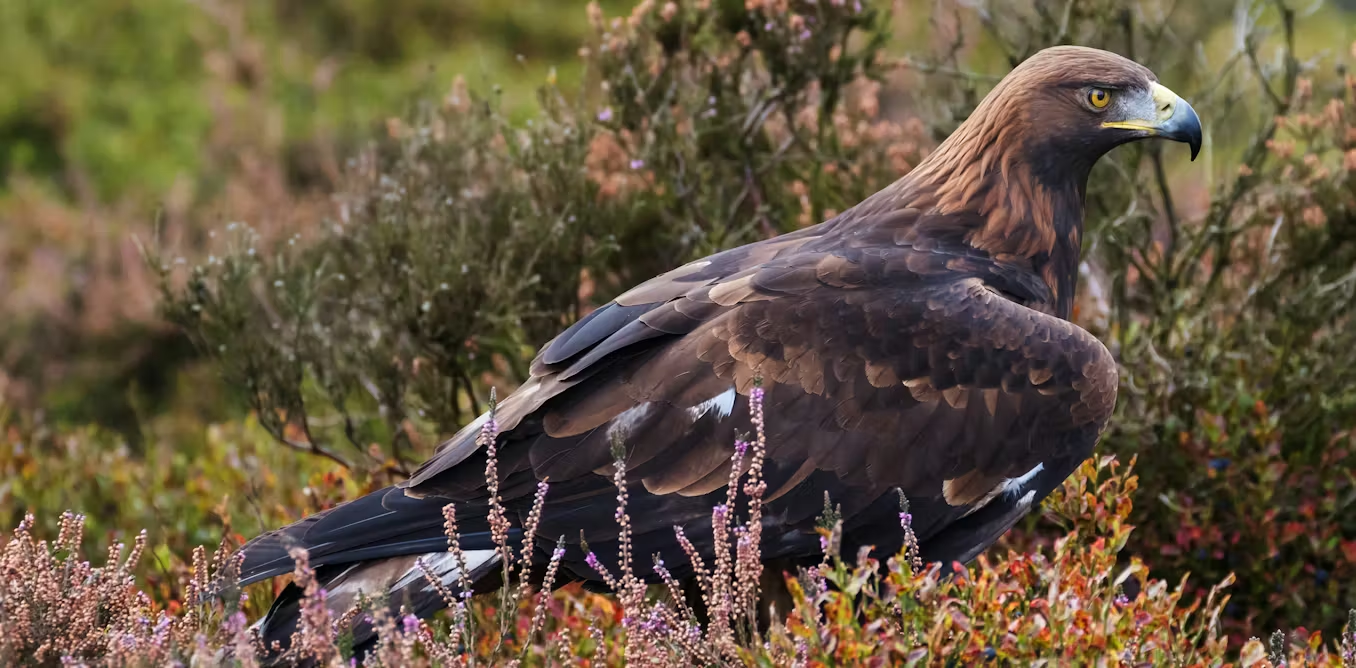
England’s last recorded pair of golden eagles lived in the Lake District. After the female died in 2004, the male was left alone for 12 years before his death in 2016.
This marked the end of golden eagles across English skies. Though they have lived on in Scotland, the birds were largely wiped out across England about 150 years ago, with only a few nesting attempts during that time.
Forestry England /, CC BY-SA
However, the UK government recently announced it will support reintroducing the species and has identified eight potential “recovery zones” across northern England and the south-west. This is good news for lots of reasons.
Reintroducing lost species aligns with the government’s 25-year environment plan to restore and recover nature. Golden eagles also have an important heritage as symbols of wilderness, freedom and power. We may even have a moral duty to return them to the landscape, since humans were largely responsible for their loss.
Reintroducing golden eagles would also benefit England’s natural environment, helping return it to a healthier and more dynamic state.
Restoring balance to the food chain
Golden eagles are apex predators, occupying the top of the food chain with no natural predators. The removal of a species like this can cause major shifts in ecosystems, as they exert top-down control.
When apex predators are missing from ecosystems, the middle predators of food chains – or “meso-predators” – become dominant. With its native bears, lynx and wolves long gone, England has a high number of meso-predators. These include badgers, red foxes and other birds of prey. These predators, in turn, can limit some populations of prey like seabirds, waders and gamebirds.

Serenity Images23 / shutterstock
Meso-predators typically avoid areas where apex predators are due to fear of competition or being eaten themselves. So, if golden eagles return then the predation pressure from smaller birds might be altered. For example, on the Isle of Mull in Scotland, meso-predators like kestrels and buzzards tend to steer clear of areas where golden eagles are.
Controlling prey numbers
Golden eagles also have an important role in the ecosystem by regulating their prey species. They hunt various prey, mostly medium-sized birds and mammals like rabbits, hares and occasionally, young deer.
When not controlled by predators, prey populations can boom. This can lead to greater competition for resources and a higher risk of disease spread among these prey species. Prey populations may also overuse resources, which can negatively affect plant growth.
Because apex predators are absent in England, humans must take up the role of controllers. Deer are shot where they are preventing woodland regeneration and rabbits are widely controlled in agricultural landscapes, costing £5 million a year. Although golden eagles are unlikely to reduce deer and rabbit numbers substantially, they may bring some balance back.
Keeping the environment clean
In addition to being excellent predators, golden eagles also scavenge carcasses – the remains of dead animals. Researchers in Spain found that 90% of the golden eagles in their study fed on carcasses.

Roy Waller / Alamy
Carcasses can quickly become disease and toxin reservoirs that may enter the wider environment if left uneaten. This can have consequences for other species, including humans. So scavengers have a crucial role in maintaining a healthy ecosystem.
If reintroduced back to England, golden eagles would join the cleaning crew, which also includes species like red kites, crows and red foxes.
Indicators of a healthy ecosystem
If a pollutant is in an environment, this could affect top predators through a process called biomagnification, where the concentration of the pollutant increases the further up the food chain. If in high concentrations, the pollutant may become toxic and the predator may fail to reproduce, become unwell, or die.

blickwinkel / Alamy
In the 1960s, birds of prey played a pivotal role in making the environmental dangers of certain agricultural pesticides clear in the UK and globally, leading to the widescale ban. Golden eagles could do something similar today.
A complex picture
If golden eagles are successfully reintroduced in England, they could restore balance to food chains, control prey numbers, scavenge carcasses and act as indicators of environmental dangers.
They will join other birds of prey that have been successfully reintroduced to England, such as red kites, ospreys and white-tailed eagles, all of which have been deemed a success.
However, ecological systems are not straightforward and predicting the consequences of the return of golden eagles is complex. As indicated by the risk assessment conducted by Forestry England, at worst the impacts on biodiversity of golden eagles will be neutral. At best it will be beneficial.


























































You must be logged in to post a comment Login