ATLANTA (AP) — Good Good Golf lost its partnership with Callaway on Thursday and no longer will be title sponsor of a PGA Tour event in November as the fallout continued over a video for a new Callaway driver that showed a man shoving a woman to the ground who was trying to touch the golf club.
Good Good, among the most popular in the YouTube Golf space, has said the video was meant to be a spinoff from the movie, “Obsession.” But the criticism was immediate and relentless, and the pressure began mounting by the day.
The video was deleted the same day it was posted on Aug. 20, but it continued to make the rounds on social media and apologies from Good Good and Callaway had little effect.
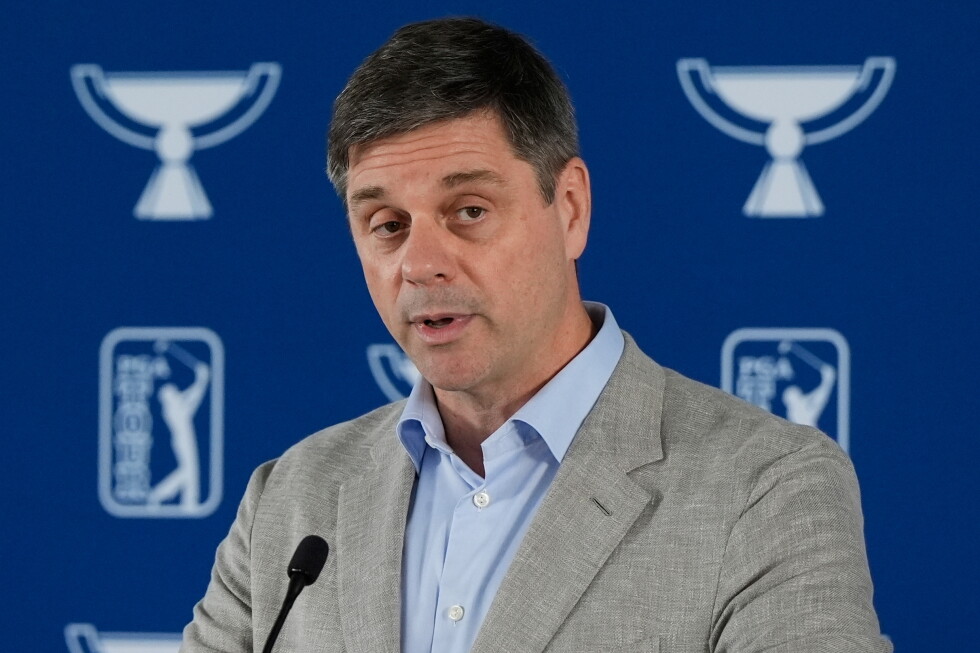
“We were disappointed with what we saw,” PGA Tour CEO Brian Rolapp said Tuesday of the response from Good Good. He said its role as a title sponsor was a “fluid situation.”
Advertisement
“We agree with their decision to use this time to focus on their organization and the work ahead,” the tour said in a statement Thursday. “The PGA Tour believes in golf’s ability to bring people together and create a welcoming environment for all.”
The tournament already was changed on the PGA Tour’s website to “Austin Championship.”
Golf Channel postponed a Good Good reality show Wednesday because a sponsor, reported to be Galaxy Golf, wanted its brand scrubbed from the telecast. Dick’s Sporting Goods removed the apparel from its stories. And then Callaway said it was ending the three-year sponsorship.
The PGA Tour confirmed Good Good said it would pull out as title sponsor of the new Nov. 12-15 tournament in Austin, Texas. The tour said the tournament still would be played.
Advertisement
“After thoughtful discussions with the PGA Tour and careful reflection, we have decided to step away as sponsor of the tour event in Austin this fall,” Good Good said in a social media post. “We recognize that we have work to do as an organization, and our focus right now is on our team, our culture and ensuring we will learn from this situation.”
In the 60-second video for Callaway’s new driver co-branded with Good Good, Garrett Clark shoves Alexis Miestowski to the ground as she reaches for the driver. As she is on the ground he leans over tells her, “Do not touch my new driver.”
Clark and Miestowski work for Good Good.
The video was pulled the night it was posted, and it was followed by apologies by Good Good Golf and Callaway Golf the next day. But then Callaway added another layer of apologies, this one from CEO Chip Brewer, who conceded that while Good Good produced the video, Callaway approved it before it was posted.
Advertisement
Brewer said the approval never should have happened and the company would investigate.
Callaway posted to its social media channels on Thursday that it has ended its relationship with Good Good effective immediately; has taken “appropriate internal corrective actions” and strengthened approval procedures to avoid another mistake; and has committed $1 million to support organizations working to prevent violence against women.
“These actions do not undo the harm caused or excuse our role in it,” the statement said. “We sincerely apologize to everyone who was hurt, disappointed, or offended by this incident.”
Good Good Golf was launched as a YouTube channel in 2020 and now is among the largest content creators in the sport, featuring eight men and four women competing in golf and various challenges. It has made-for-TV shows, apparel and other merchandise.
Advertisement
Clark, the Good Good founder, posted a rambling, eight-minute video Wednesday evening in which he called it “the worst ad known to man” and the reaction to the ad was “not what we stand for.”
“I do not support DV (domestic violence) or abuse or any of that of any kind,” he said.
The PGA Tour has embraced such content creators over the last several years, even staging exhibitions during the week of The Players Championship and Tour Championship.
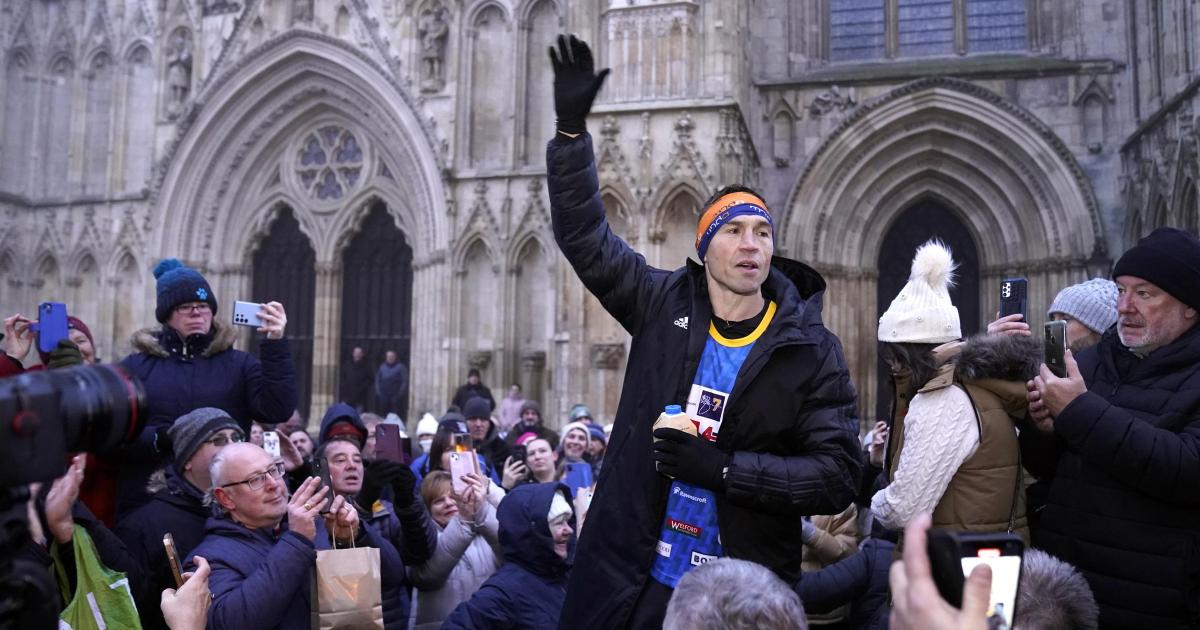
Sir Kevin will stop in York during his final ‘7 in 7’ challenge in September, in which he will try to complete an ultra-marathon every day for seven days.
It will be Sir Kevin’s seventh endurance challenges, having been inspired by former Leeds Rhinos team-mate Rob Burrow who died in 2024 after living with MND for four-and-a-half years.
Kevin Sinfield and Rob Burrow who died last year aged 41 (Image: Danny Lawson/PA Wire)
Sir Kevin, 45, who was knighted in June, will finish in York on the second day of the challenge on Monday, September 28.
He will run to York from Shiptonthorpe, near Market Weighton, after arriving in the East Yorkshire village from Hull.
Advertisement
Sir Kevin and his team will depart Shiptonthorpe for Bishopthorpe Palace on September 28, calling at the University of York, LNER Community Stadium for a visit to newly-promoted York Knights, then passing York Minster and York Racecourse on their way to the finish line at the palace.
Kevin Sinfield and his team passing Skelton as they entered York in November 2022 (Image: Kris Brown, The Press Camera Club)
In a letter to supporters ahead of the challenge, Sir Kevin said: “Every card, message, hug and handshake has fuelled us to do more and go even further in our fight against MND.
“To everyone who has turned out to support us, anyone who has donated, shared a message, told us their story, or given their time to volunteer – thank you.”
He said: “Seven years ago this December my friend and Leeds Rhinos teammate Rob Burrow CBE was diagnosed with motor neurone disease. In that moment, as anyone who has been affected by MND will tell you, life changed in an instant for him and his loved ones.
Advertisement
“While Rob and his incredible family; his adoring wife Lindsey, their three wonderful children and his parents Geoff, who we have since sadly lost, and Irene bravely came to terms with his diagnosis, his friends, teammates, colleagues and the wider Rugby League community were determined to make a difference.”
Recommended reading:
Sir Kevin, who has raised more than £11 million for the MND community, was at York Racecourse last week for the Ebor Festival, which saw 17 runners compete in the ‘Sir Kevin Sinfield 7 In 7 Grand Finale Handicap’.
When asked how his training compared to 18-year rugby league career, Sir Kevin said: “It’s different, I don’t get hit any more!
Advertisement
Kevin Sinfield at York Racecourse on Thursday, August 20 (Image: Richard Sellers/PA Wire)
“The rugby stuff, that I did for so long, is you’re coping with the contact. This is a different type of pain.”
He added: “We’ve got a wonderful team and I think when you’ve seen the impact, the awareness and the funds that have been raised for the families that are in such need, then we haven’t got time to be tired.
“We’ve got to keep going, we’ve got to keep fighting and keep trying to pull people together to help. I get enough rest, don’t worry.”
Jaime Lomas, 26, was gunned down in the US state of Washington last week, with his death now being treated as a homicide with major crimes detectives called in
Rachel Vickers-Price UK and World News Reporter
00:56, 28 Aug 2026Updated 01:29, 28 Aug 2026
A 26-year-old Briton has died in the US after being shot multiple times, local police confirmed, with a murder inquiry now launched in the wake of his untimely death.
Jamie Thomas Stephen Lomas was shot multiple times at a residential property in Lake Youngs, Washington State, last Saturday (August 22), the King County medical examiner has now confirmed.
Advertisement
The Manchester man’s death is now also being treated as a homicide, with officers from the King County Sheriff’s Office handing over its investigation to detectives from Seattle’s major crimes unit. Lake Youngs in located about 17 miles out of the city, which is the largest in the state.
No arrests have yet been made in connection to Lomas’ murder.
A King County Sheriff’s Office spokesperson said: “On August 22, at about 12:20pm, King County Sheriff’s Deputies were dispatched to a domestic disturbance that had occurred at a residence located on the 23000 block of 156 Ave SE.
“Deputies arrived and secured the scene. No arrests at this time and this remains an active investigation by our major crimes detectives,” the King County spokesperson added.
Advertisement
The UK Foreign Office has confirmed it is providing support to the man’s family during this distressing period, and remains in contact with local authorities as the investigation progresses.
Meanwhile, Lomas’ devastated family have paid tribute to their beloved son online and are working tirelessly to repatriate Jamie’s body, so that his loved ones can say a proper farewell. “It is with the heaviest of hearts that we are asking for your help to bring our Jamie home from America to Manchester,” reads the statement, shared via an online fundraiser set up to cover the costs of repatriating his body.
“Jamie was only 26 years old. He was a loving family man, deeply loved by everyone who knew him. He had so much life ahead of him, and we just cannot believe that we are having to say goodbye to him,” the online statement reads.
Advertisement
“Jamie was tragically murdered in America, and our family has been left completely heartbroken, struggling to come to terms with such a devastating sudden loss.
“We never imagined we would be in a position where we would have to ask for help like this, especially so soon after [losing] grandad.”
Now, the Lomas family are focusing on getting Jamie home so he can be laid to rest for “the goodbye he deserves, surrounded by his family and loved ones”.
Back in 2019, Forbes dubbed the reality star the ‘youngest-ever self-made billionaire’ after she sold 51 percent of her Kylie Cosmetics brand to beauty brand Coty Inc for $600 million.
Jenner, who was 21 at the time, unseated Facebook‘s Mark Zuckerberg, now 42, as the youngest-ever self-made billionaire – he was 23 when he made his first billion 11 years ago in 2008.
Advertisement
And now, the mom of two finally addressed the firestorm directly in her WWW cover story as many took umbrage with the claims she was ‘self-made’ despite coming from a rich family with several multimillionaires.
Jenner said: ‘None of the money I’ve ever made is inherited, so it’s technically true but people just feel like the privilege I’ve had was a major stepping stone.’
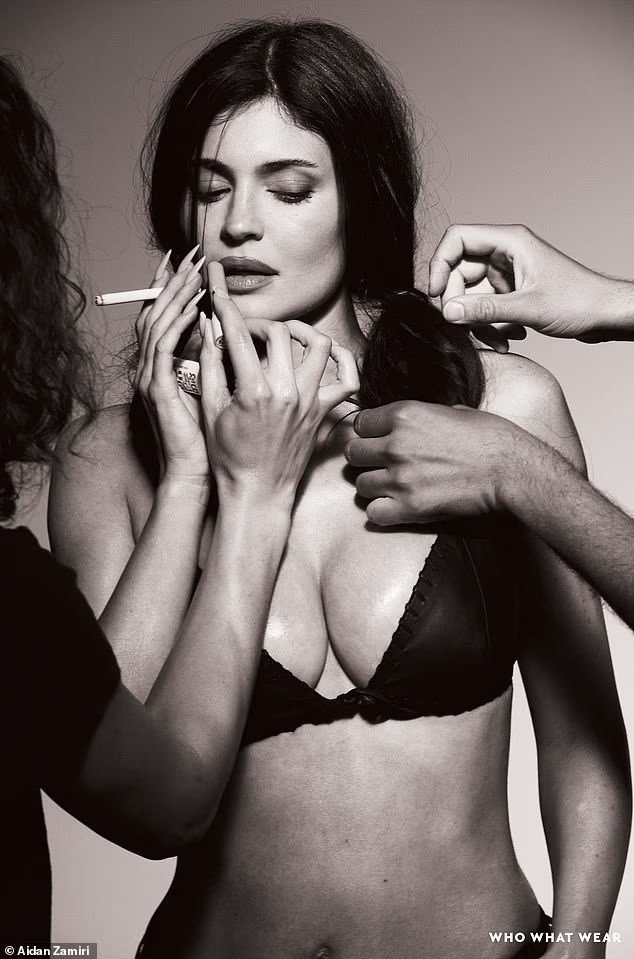
Kylie Jenner posed up for her sexiest shoot to date as she finally addressed the backlash received for being named a ‘self-made billionaire’ in 2018
Advertisement
Kylie put on quite the racy display
The 29-year-old cosmetics mogul scintillated in a sultry cover shoot for Who What Wear released on Thursday
Forbes has since reported that her actual net worth is around $670 million.
In the new feature, Jenner also got very candid about being a young mother and why she made the decision to not have any more children in her twenties.
Advertisement
The lip kit mogul shares two children with her amicable rapper ex Travis Scott, her daughter Stormi, eight, and son Aire, four.
She said: ‘I made a promise to myself at 25 that I was not going to have any more children—right now—and really just enjoy the last half of my 20s because the first half was like, “You’re pregnant,” and then it’s the year of recovery, and, you know, my mental state, my postpartum depression, and all those things.
‘It felt like I lost some of those young years of my life.’
She proudly put her cleavage on full display
Advertisement
Back in 2019, Forbes dubbed the reality star a ‘youngest-ever self-made billionaire’ which has been criticized for years (pictured on the 2018 cover)
And now, the mom of two finally addressed the firestorm directly in her WWW cover story as many took umbrage with the claims she was ‘self-made’ despite coming from a rich family with several multimillionaires
Jenner said: ‘None of the money I’ve ever made is inherited, so it’s technically true but people just feel like the privilege I’ve had was a major stepping stone’
The lip kit mogul shares two children with her amicable rapper ex Travis Scott, her daughter Stormi, eight, and son Aire, four
Advertisement
She said: ‘I made a promise to myself at 25 that I was not going to have any more children—right now—and really just enjoy the last half of my 20s because the first half was like, “You’re pregnant,” and then it’s the year of recovery, and, you know, my mental state, my postpartum depression, and all those things’
Join the discussion
Does Kylie Jenner truly deserve the “self-made billionaire” title given her family’s wealth and fame?
As the girlfriend of Timothee Chalamet recently entered the last year of her twenties, she will be turning 30 in August of next year and seems to be looking forward to evolving more.
Advertisement
Jenner was asked if there was something that once seemed important to her that she is now ready to leave behind as she replied: ‘I think having an enormous life.
‘ I changed my mind about that. When I was younger, I got really excited, and I got the craziest house I could in Beverly Hills, and I just kind of went for it. I’ve realized that my life got too big, and I said, “Yeah, never mind.” I think I lost control of my life a little bit for a while there.’
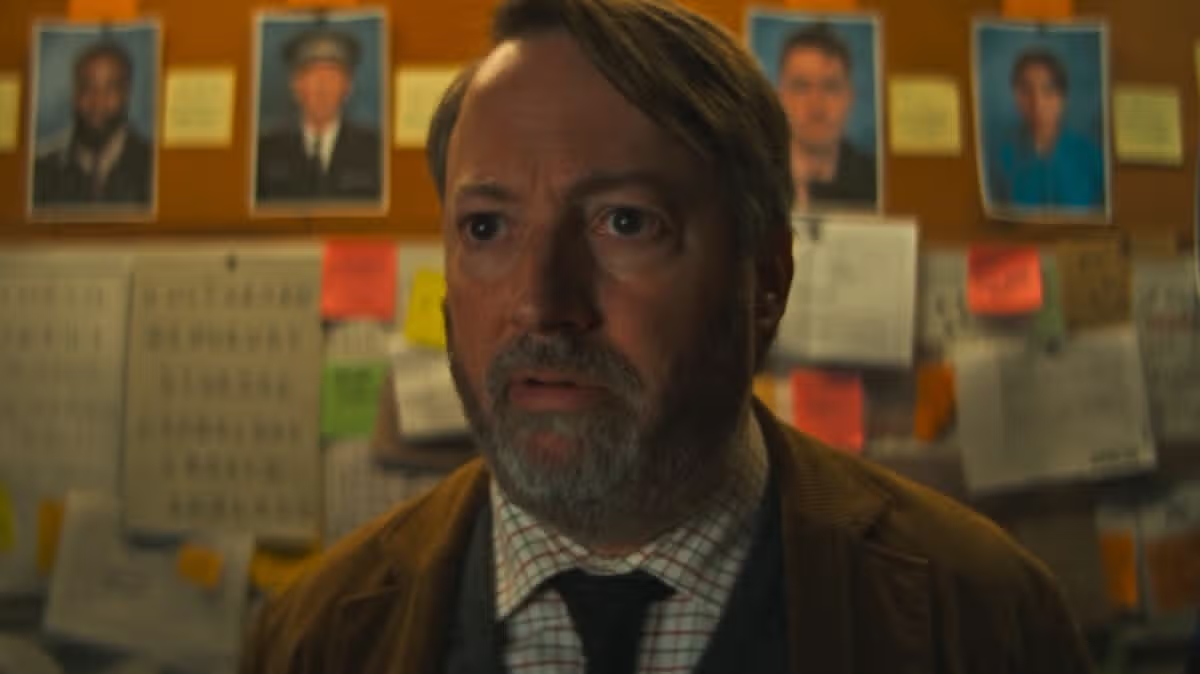
In the second episode of season two, the puzzle-designer-turned-detective is invited to solve a strange murder that was witnessed by an entire wedding party.
Advertisement
The victim, who was stabbed to death, had some enemies in attendance, which complicated the case. What’s more, the investigators suspected the killing took place during the wedding dance and everyone somehow missed it.
With this major case on his plate, Ludwig goes in circles trying to uncover exactly what happened. And after sitting through the episode, viewers at home have complained that the murder mystery wasn’t very convincing.
Writing on Reddit, one viewer explained: “The deduction in this one felt a bit unnecessary since based on what we saw of the murder there should be an enormous amount of forensic evidence.”
Advertisement
Someone else agreed, replying: “Seemingly, forensics doesn’t exist in this world. I’m finding this season more annoying than the first.”
It is revealed in the final minutes of the episode that the murder actually took place before the victim joined the rest of the wedding party.
The crime was completely unplanned and the suspect simply ran away after stabbing his victim, meaning there would have been forensic evidence on the deceased.
While the detectives uncover certain details based on forensics, viewers believe they would have been able to uncover the entire mystery because of how sloppy the original crime was.
Advertisement
Other fans joined in to agree that this episode’s mystery didn’t live up to other instalments.
“This episode wasn’t my favourite – purely because the murder of the week wasn’t as strong compared to others,” posted one.
Yet another viewer shared their verdict on the series thus far, stating: “So far somewhat disappointed in this series compared to series 1.”
Advertisement
But the show has also received some praise, with an X user raving: “Another fab episode of #Ludwig this week! The writers of this show are totally knocking it out of the park, I love immersing myself in this world weekly. More of these witty slick shows please.”
The first three episodes of Ludwig season 2 are streaming now on BBC iPlayer
“Nadine’s voice has been under the weather and she only wants to give [the] absolute best to you all, which sadly won’t be possible this weekend as she needs time to rest and recuperate.”
Lauren Harte Live News Reporter and Adam Maidment What’s On and LGBTQ+ Writer
20:07, 27 Aug 2026
Nadine Coyle has been forced to pull out of this weekend’s Manchester Village Pride event due to illness.
The city’s annual LGBTQ+ celebration will officially get underway on Friday, August 28 and continue over the Bank Holiday weekend, concluding with the Candlelight Vigil on Monday evening.
On Friday night, a number of performers are set to take to the stage for the first evening including Danny Beard, Freemasons and Katherine Ellis, and Lola Lasagne. Girls Aloud star Nadine Coyle had also been due to perform on the night.
Advertisement
However, it has now been announced that Nadine will no longer be able to attend due to illness, Manchester Evening News reports.
In a statement shared by Manchester Village Pride organisers, the Derry singer’s team said: “Nadine is so sorry to have to step out of Manchester Village Pride this year. It was her very first Pride many years ago and she loves getting to spend time with you all.
“Nadine’s voice has been under the weather and she only wants to give [the] absolute best to you all, which sadly won’t be possible this weekend as she needs time to rest and recuperate.
“We hate to do it so near the day. Nadine was really hoping she was going to be well enough and hopes she can see you all in Manchester for Pride again soon. Thank you for being so kind and understanding and we hope you have a wonderful weekend.”
Advertisement
Manchester Village Pride announced that the singer’s closing night slot on the Friday main stage will now be covered by Irish 90s pop group B*Witched, who are behind hits like C’est La Vie and Blame It On The Weatherman.
In a statement, Manchester Village Pride bosses said: “We know how excited many of you were for a massive hit of 2000s pop nostalgia, and we promised you a party. We’ve been working around the clock, and we are beyond thrilled to announce that pop royalty B*WITCHED are stepping in at the eleventh hour!
“From “C’est La Vie” to “Rollercoaster”, get your double denim ready because they are bringing the ultimate 90s/00s girl-group energy to the main stage. Let’s give them a massive Manchester welcome. We can’t wait to see you in the Village!”
Advertisement
B*Witched responded to the news on social media to add: “Can’t wait to see you guys. Wishing @nadinecoyle a speedy recovery.”
This year will mark the first Manchester Village Pride, which was created following the voluntary liquidation of the company behind Manchester Pride just months after last year’s event. A new Community Interest Company was set up to protect the future of the event and was backed by many venues within the Gay Village.
The Manchester Village Pride weekend will also feature performances from the likes of Kate Nash, DJ Sammy, Cascada, Gareth Gates, DJ Paulette, Misha B, Michael Marouli, Ghetto Fabulous, and Adam Rickitt.
A collapsing glacier in Tibet led to a devastating wall of water and debris roaring through a valley in Nepal, leaving hundreds dead and many hundreds still missing.
Stuart Dunning is a professor of applied geomorphology who researches disaster risk reduction in high mountain a areas nd has closely studied the 2021 Chamoli disaster, a similar event. He’s part of a loose group of 50 or more international experts who come together to pool expertise and provide rapid analysis of events like these.
The Conversation asked him about the science behind this event, and what we can expect in future.
What exactly happened – and how can a collapsing glacier generate such a powerful flood?
The exact sequence of events that sent so much debris and water downstream is something we are still trying to unravel. There are a number of possibilities. One is that a large bedrock landslide took the glacier with it. Another is that a bedrock landslide destabilised the glacier and it fell very shortly after. Another is that the glacier failed first and then the bedrock above failed.
Advertisement
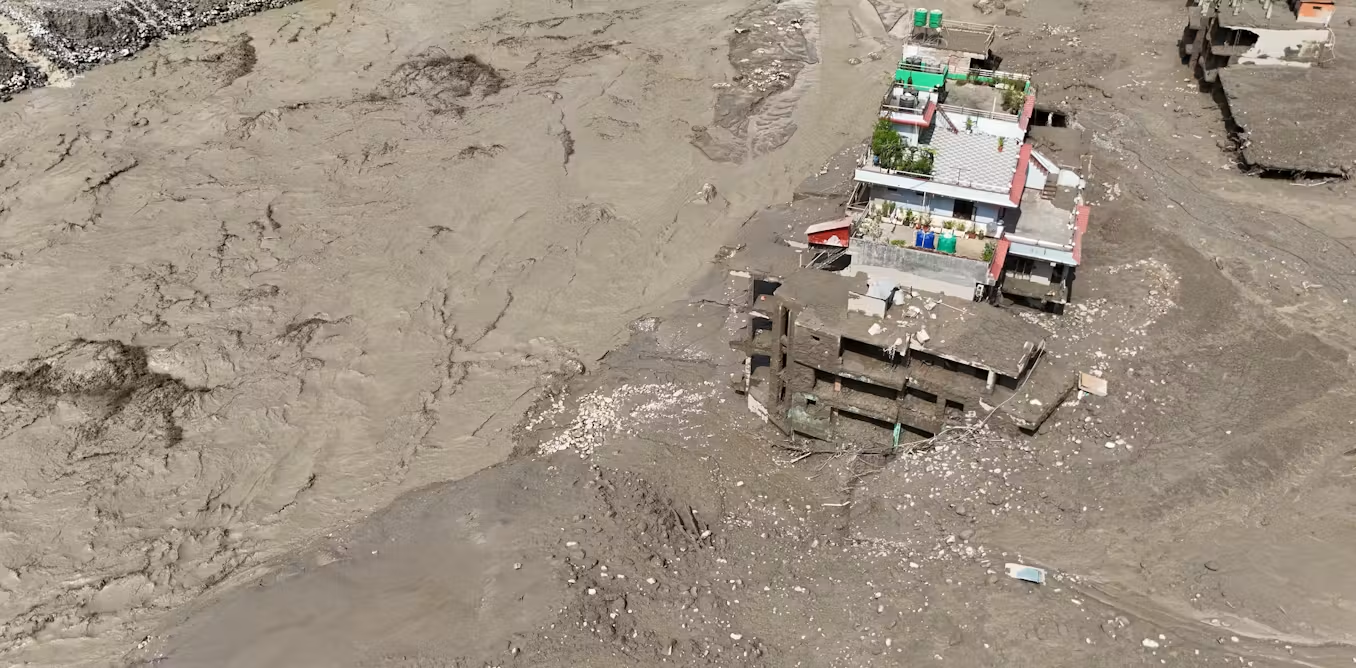
I think the best description is that a rock-ice avalanche began at around 4,800 metres and fell over 1,200 metres. There was enough ice in the initial collapse – and perhaps subsequently picked up – that it could generate the water to turn it into the devastating long runout debris flow. This is far more damaging than a dry rock avalanche.
The flow travelled along the river, so gaining water. It would have been eroding the valley floor and sides as it went. Further downstream, that material will have been deposited across the landscape.
What do we call this event? Is it a glacial outburst flood, a landslide, an ice avalanche… something else?
I’m part of a group of 50 or more hazard experts debating what to term this. It is easy to see why the first reports assumed it was a glacial lake outlet flood, or Glof, since that is perhaps the best known source of such cascades. However, in this case, there was no lake.
For now, I’m calling the whole “event” a hazard cascade or process chain. It started as a landslide of uncertain volumes of rock and ice. Most of that ice melted as a result of fragmentation and friction-generated heat. In other events we have found rounded bits of ice in the deposits that were transported along and then melted out much later.
Advertisement
What can satellite images tell us about what happened – both before and after?
Satellites are invaluable for a wide area picture of where the flood began – which is often in doubt at the start given the remote nature of the terrain – and where it travelled. With satellite data often updating daily, we can look for secondary hazards, such as water building up behind the debris, risking further sudden floods, or large sections of material that looks unstable.
It is the combination of ground data (photos, videos) and seismic data that lets us measure how fast it moved, how deep it was, how “watery” it was, which is then combined with the wide area satellite data.
How is climate change shaping the threats posed by Himalayan glaciers?
In general, ice is thinning and retreating. What that leaves throughout the Himalayas are glacial lakes (not an issue for this event) and slopes that are often unstable. This is combined with thawing permafrost, sometimes described as the “glue” holding bedrock together.
So, climate change plays a role – perhaps an increasing one – alongside other preconditioning factors such as earthquake damage to rock, rapidly uplifting mountains that gravity wants to bring down. And these events are more devastating because there are more people living in these landscapes than at any time in history.
Advertisement
There are more “reported” hazard cascades like this, but, extreme events are just that, extreme and rare, our knowledge back in time is not always strong enough to say with absolute certainty that we have crossed a threshold and there will be more disasters of this kind or even bigger.
What made this event so destructive – and what could have made it less deadly?
Events become disasters when they exceed our ability to cope. Little could withstand a wall of mud, rock and water moving at that speed. Anything on the valley floor, or up on the lower valley sides as the flow washed around corners was at risk.
The debris flow destroyed almost everything in its path. Niranjan Shrestha / Alamy
Rock avalanches happen regularly above the glaciers in Alaska. Some travel a few kilometres. The difference is they do not fully turn into fluid and people are not living immediately down-valley from them. In the Himalayas, steep, retreating glaciers are not that far from communities.
Advertisement
What did people and authorities get right, and what could be done differently next time?
It’s harder to reduce the risk posed by hazard cascades from a landslide than for, say, a glacial lake outburst flood. For a Glof you know where the source of the flood will be and you broadly know how much water there is, so you can pre-model and map where a flood may go.
There are thousands of slopes of this kind in the region so it’s difficult to monitor and predict. So far, we have not any spotted obvious precursors.
The Nepalese did what was possible. There was a gauge that captures flow from many valleys – you simply can’t monitor every stream. When the rapid rise in water level was noticed, my understanding is that alerts were sent out.
This is where next time becomes key. For an earthquake the advice is “drop, cover, roll”. What do you do for these events? Some people will have minutes, some hours. Some should simply get to a high concrete building while for others, a nearby building would not be safe and heading uphill is the answer. So, the advice is challenging and nuanced for those closest to the hazard.
Advertisement
One thing we might be able to do is increase the time people have to act. Seismic “noise” can cover wide areas, so there are ongoing efforts try to interpret those signals as rapidly as possible to distinguish earthquakes from landslides – and we know a flood itself generates seismic signals.
I think that is where some great advances can be made alongside targeted in-situ monitoring and working with exposed populations in pressured landscapes used for housing, agriculture and often hydropower. We also have to accept some areas are just too hazardous to live in.
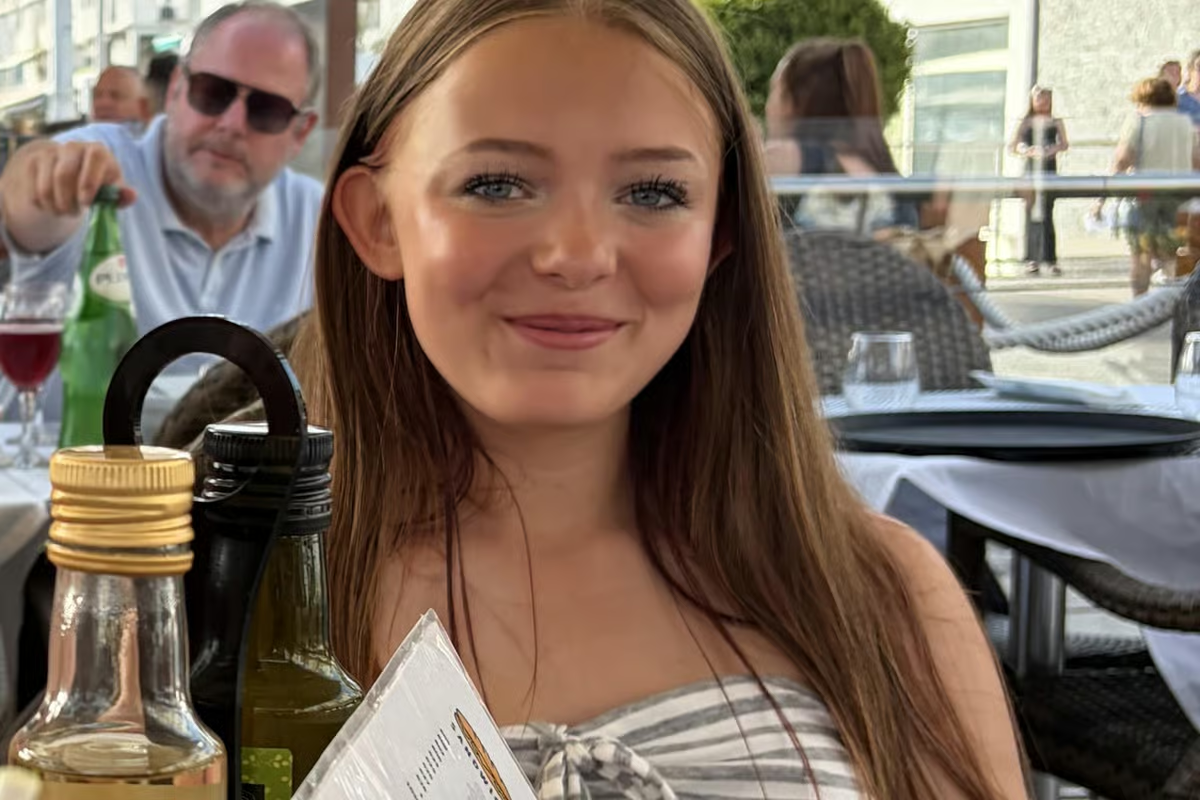
Lillie Yale, 14, has become the first UK patient to have a dissolvable heart implant fitted to treat atrial septal defect (ASD). The device, known as Memosorb, acts as a scaffold for the heart to heal the hole itself before disappearing completely. Lillie’s mother Becci Nichols said doctors at Alder Hey Children’s Hospital went “above and beyond” for her daughter, as a traditional metal implant would mean Lillie giving up rugby, which she hopes to play professionally one day (Becci Nichols/PA)
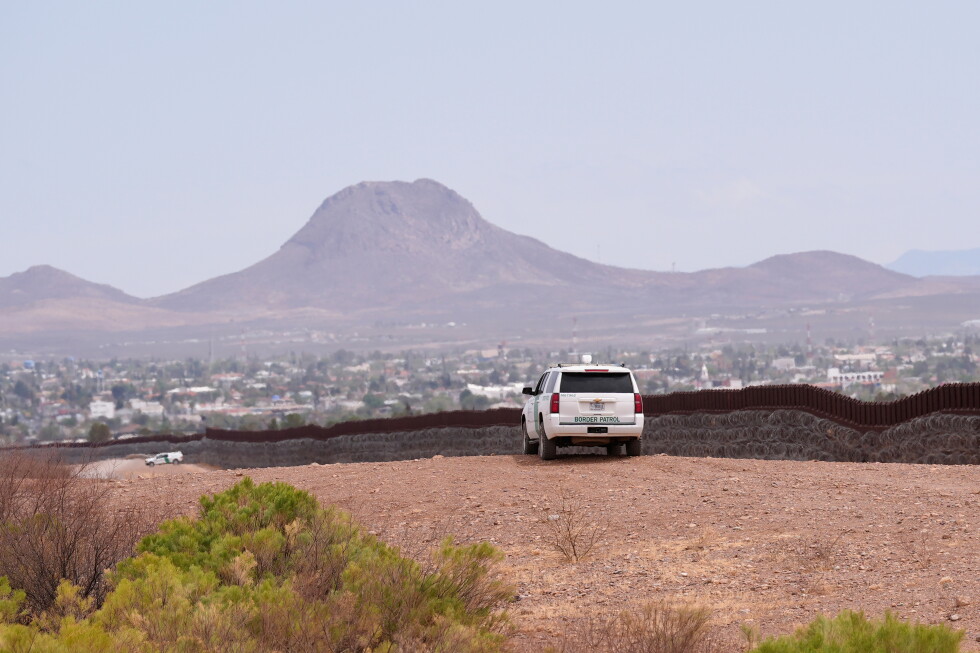
U.S. Customs and Border Protection says the area is a dangerous smuggling route and that building the wall will close a longstanding security gap. But members of the Tohono O’odham Nation, whose membership spans both sides of the U.S.-Mexico border, have accused the administration of trespassing and say the construction will damage land sacred to the tribe.
The wall segment is part of a $46 billion dollar effort by the Trump administration to fill the border with 30-foot (9-meter) steel bollard walls, vehicle barriers, and technology designed to stop undocumented immigration and smuggling.
But as building efforts have ramped up, the administration has run into opposition from landowners, environmental groups, and Native American tribes who say construction is violating property rights and desecrating sacred indigenous sites.
Advertisement
The Tohono O’odham Nation said in a statement Tuesday that about 20 Customs and Border Protection officers, working with contractors, went onto the tribe’s land early that morning to begin construction.
Drone videos published by nation officials show roughly 14 vehicles and an industrial drill at one of the sites.
A federal judge permitted the government to move forward with construction earlier this month, but the tribe says the contractors are violating tribal codes and trespassing to access the border wall site.
The Tohono O’odham Nation, which has 37,000 members including thousands who live in Mexico, sued the federal government in June in an attempt to block construction of the border wall. The tribe argued that the wall would cause “significant devastation” on the reservation, including the destruction of mountain peaks sacred to the tribe, and would alter boundaries of their nation.
Advertisement
US District Judge Richard Leon in Washington, D.C., an appointee of former President George W. Bush, ruled in favor of the government, noting that the border wall wpi;d be built on a 60-foot (18-meter) wide buffer zone of federally owned land called the Roosevelt Reservation.
“Defendants have not yet articulated plans to construct outside the Roosevelt Reservation,” the judge wrote in his opinion.
Advertisement
Sign up for Morning Wire:
Our flagship newsletter breaks down the biggest headlines of the day.
Advertisement
The Tohono O’odham Nation said that even if construction were contained to the Roosevelt Reservation, driving onto tribal land to access the area still constitutes trespassing.
“The contractors, who are on the Nation illegally, were accompanied by agents as they worked on three separate locations near the border with drill trucks to conduct soil sampling and other activities,” tribal officials said in a statement.
The CBP agents were masked, armed, and set up a vehicle blockade to stop tribal police from removing the contractors, according to Tohono O’odham officials. The nation had set up “No Trespassing” signs before Tuesday.
So far, no physical confrontations between police or members of the Tohono O’odham nation have been reported.
Advertisement
CBP defended the need for the wall in a statement Tuesday, saying the desert spanning the Tohono O’odham Nation is a corridor for drug smuggling.
“The project will close one of the most dangerous smuggling and trafficking corridors on the Southwest border: remote desert that has facilitated decades of drug loads, migrant deaths, and cartel activity,” said CBP Commissioner Rodney Scott.
Tribal officials said they’re exploring further legal actions in an effort to remove contractors.
SLSCO Ltd., the Texas-based construction company building the section in Arizona, has secured over $390 million in funding from the Department of Homeland Security to build the border wall since 2023.
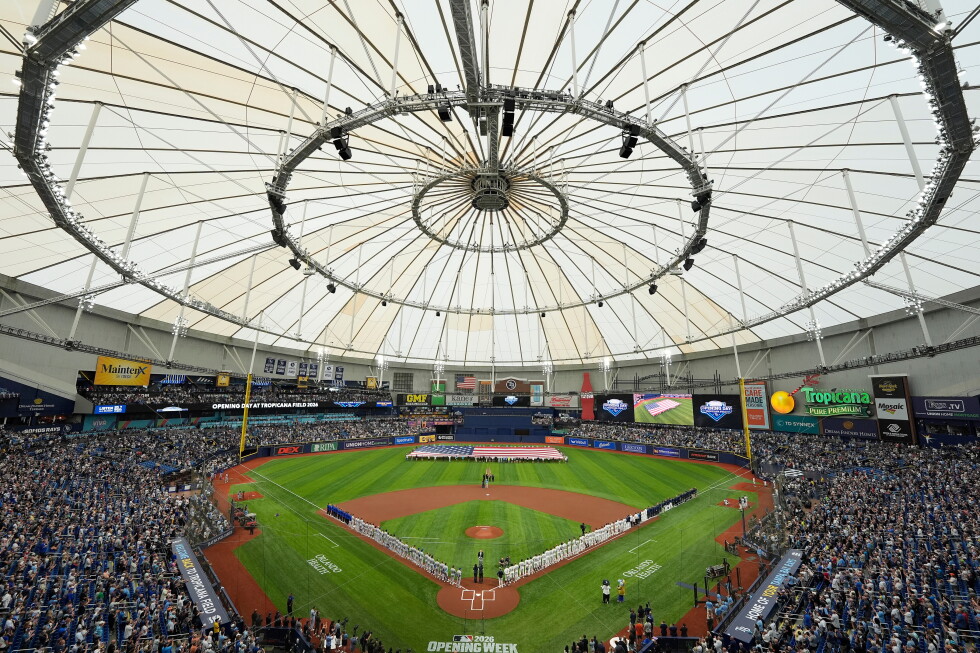
TAMPA BAY, Fla. (AP) — City officials on Thursday approved a $2.3 billion deal for a new Tampa Bay Rays ballpark funded by public and private money.
The 4-3 vote by the Tampa City Council came three months after a tentative agreement was reached for a stadium, which would include $967 million in tax money.
Rays Chief Executive Officer Ken Babby said in a statement that the stadium project will “deliver lasting benefits” for the region.
“The Tampa Bay Rays are grateful for the leadership and support of the City Council members to approve an investment that, when accompanied by the private funding guaranteed by the Rays, will secure the future of Major League Baseball in Tampa Bay while creating a landmark destination neighborhood that will serve our region for generations,” Babby said Thursday.
Advertisement
Hillsborough County Commissioners will vote on the project Friday morning.
The Rays ownership reached an agreement earlier this year with Hillsborough College to build the stadium and mixed-use entertainment district on the campus and to renovate some of the school’s buildings. The property is located next to the New York Yankees’ spring training facility and across a highway from Raymond James Stadium, home of the Tampa Bay Buccaneers.
The Rays have said they hope to have the new stadium built within three years.
Since the team took the field in 1998, the Rays have played at Tropicana Field in St. Petersburg, except for moving home games to the Yankees’ George M. Steinbrenner Field in 2025 following hurricane damage at the Trop. The Rays’ lease runs through at least the 2028 season. The team returned to the Trop last month for the start of this season.
Advertisement
A proposed $1.3 billion redevelopment deal for a new ballpark adjacent to the Trop fell through last year, raising new questions about the future of the team, which was bought last September by Patrick Zalupski’s ownership group.
A Jewish man who repeatedly kicked a Catholic nun has been acquitted based on his insanity defence – but has been ordered to be committed to a psychiatric hospital for up to six years.
The violent assault in April on a 48-year-old nun walking in her habit in Jerusalem‘s Old City sent shock waves across Israel and its many Christian communities.
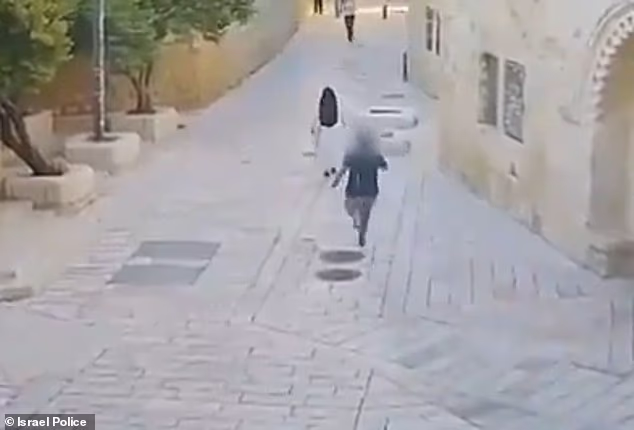
The attacker, who has not been named, shoved the elderly woman causing her to collapse to the floor hard, and began to walk away when he doubled back and repeatedly kicked the nun.
The assault that left severe bruising on the nun occurred in front of the Cenacle, a building on Jerusalem’s Mount Zion considered holy to both Christians and Jews, the latter of whom regard it as the burial place of the biblical figure King David.
Advertisement
A judge at Jerusalem Magistrate’s Court today ruled that there was evidence that a Jewish man from a settlement in the occupied West Bank committed the actions he was charged with.
However, he was entitled to an insanity defence after the district psychiatrist found he was psychotic at the time of the attack.
The director of The French Biblical and Archaeological School of Jerusalem, where the nun is a researcher, said that he hoped the psychiatric hospitalisation would be carried out in full ‘so that public safety can be assured, our colleague can recover psychologically, and people can live in and visit Jerusalem without fear, regardless of their belonging to any community’.
But Friar Olivier Poquillon added he regretted the decision not to impose a criminal penalty.
Advertisement
A Jewish man who repeatedly kicked a Catholic nun has been acquitted based on his insanity defence
The attacker, who has not been named, shoved the elderly lady causing her to collapse to the floor hard, and began to walk away when he doubled back and repeatedly kicked the nun who
The assault occurred in front of the Cenacle, a building on Jerusalem’s Mount Zion considered holy to both Christians and Jews, left the nun with heavy bruises to her face
Advertisement
‘At the moment of the incident, his judgment was nevertheless sufficient for him to deliberately choose a Catholic nun as his victim from among all the people present,’ he said.
Clergy and advocates say verbal abuse and spitting have grown increasingly common in the densely packed historic heart of Jerusalem.
There, Christians, Jews and Muslims cross paths daily, mostly uneventfully, as they visit some of the holiest sites of Christianity, Islam and Judaism.
But the violent beating of the nun was seen as a rare and worrisome escalation in the volatile environment that people of all faiths have been experiencing in nearly three years of war.
Advertisement
Yisca Harani, who founded the organization Religious Freedom Data Center to track harassment of Christians, said even mentally unstable people can be influenced to act by the prevailing discourse around them.
‘He is still someone who is the product of either the ignorance or the incitement that is around him,’ she said.
‘Even if he is mentally unstable, he was fed with all that anti-Christian material that is around us now.’
Harani’s organization has tracked a near-tripling of incidents in Jerusalem from four years ago to the last three months recorded – about one a day now – virtually all by Jewish religious nationalists.
Advertisement
Their hostility to Christians is grounded in the history of persecution of Jews in Christian-majority European countries, in faith practices they see as idol-worshipping, and in seeing their presence as an affront near areas historically sacred to Jews, like the Western Wall, experts say.
In April, an Israeli Defence Force soldier was filmed destroying a statue of Jesus Christ in a southern Lebanon village, an act that drew widespread condemnation
At the time of the attack, Israel’s foreign ministry condemned the ‘shameful act’ in a statement on X, and said Israel remained committed ‘to safeguarding freedom of religion and freedom of worship for all faiths’.
In April, an Israeli Defence Force soldier was filmed destroying a statue of Jesus Christ in a southern Lebanon village, an act that drew widespread condemnation.
Advertisement
The IDF said it viewed the incident with ‘great severity’ and that the conduct of the two soldiers related to the incident was ‘wholly inconsistent with the values expected of its troops’.
Ambassador George Deek, Israel’s new special envoy to the Christian world, said that earlier this month, Israeli police appointed an English-speaking officer to be a first point of contact for Christians in case of incidents, ‘so there will be a rapid response’.
‘We are going to come up with practical solutions to how we can minimise or stop, if possible, the phenomenon,’ Deek said. ‘We take these issues very seriously.’

















































You must be logged in to post a comment Login