Connect with us
DAPA Banner
DAPA Coin
DAPA
COIN PAYMENT ASSET
PRIVACY · BLOCKDAG · HOMOMORPHIC ENCRYPTION · RUST
ElGamal Encrypted MINE DAPA
🚫 GENESIS SOLD OUT
DAPAPAY COMING

NewsBeat

Graham Platner wins Maine Senate Democratic primary despite ‘Nazi’ tattoo scandal and women’s abuse claims

Published

on

Graham Platner wins Maine Senate Democratic primary despite ‘Nazi’ tattoo scandal and women’s abuse claims

Graham Platner, a 41-year-old oysterman with no prior experience in elected office who has been plagued by scandals since announcing his campaign, won the Democratic primary for U.S. Senate in Maine on Tuesday.

Platner’s victory comes despite months of damaging headlines over his background, including a Nazi-linked tattoo and accusations of abusive behavior in past romantic relationships, which caused deep division within his own party. Reporters also dug up his past comments on sites such as Reddit, which veered into crude and offensive territory.

His win will be seen as a heartening moment for the progressive left, which rallied behind Platner’s opposition to the Israel lobby, AIPAC, and dark money in politics. He’s also a supporter of Medicare for All, a system that would establish single-payer healthcare in the U.S.

But it raises serious fears for the party’s establishment flank. For months, Platner has been beset by negative press and denunciations from figures within the Washington Democratic establishment over a tattoo he got during his military service of a “Totenkopf,” a death’s head or skull and crossbones design that was used as an insignia by Nazi SS members.

Advertisement

Platner has denied knowing the image’s meaning when he got the ink, but the issue has led to condemnations from fellow Democrats, including Rep. Jared Moskowitz and Sen. John Fetterman, and calls for the party to abandon support for his campaign altogether.

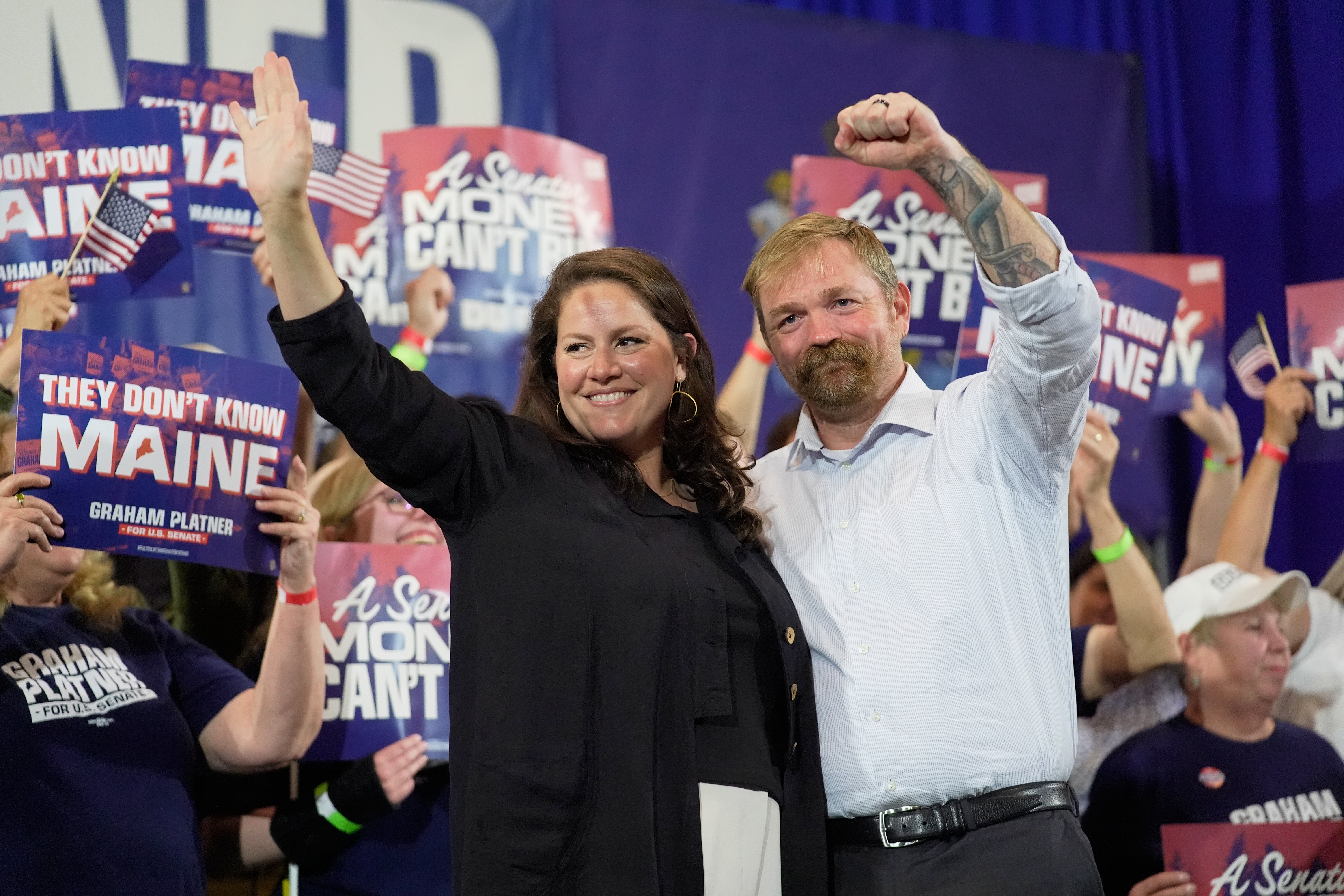
Democratic U.S. Senate candidate Graham Platner, right, and his wife Amy Gertner gesture to supporters during a primary election night watch party Tuesday, June 9, 2026, in Blue Hill, Maine
Democratic U.S. Senate candidate Graham Platner, right, and his wife Amy Gertner gesture to supporters during a primary election night watch party Tuesday, June 9, 2026, in Blue Hill, Maine (AP)

A report in The New York Times last week also detailed a pattern of past alleged behavior with girlfriends that was described at times as “unsettling.” The report’s central figure, who dated Platner for two years, detailed a pattern of behavior including incidents in which he would allegedly grab her hard enough to leave marks or held her in a room during arguments while not letting her leave. She said the incidents left her “shaken” and “afraid”; Platner denied that any instances of violence had occurred.

Coupled with the volume of negative headlines surrounding the tattoo scandal, the issues have led to a sort of “scandal fatigue” that was cited by many supporters of Platner leading up to Tuesday’s election as many voters viewed it as a sustained media smear campaign.

He defeated a handful of lesser-known candidates as well as the state’s Gov. Janet Mills, 78, who was recruited to run by Senate Democratic leadership and spurred on by the D.C. consultant class. Mills effectively ended her campaign in late April as polls showed her being roundly trounced by Platner at every turn.

Democrats who remain supportive of Platner through the onslaught of bad press counter that Senate Democratic leadership were ultimately to blame, as they failed to find a more inspiring candidate for the seat — pointing to the oysterman’s continued popularity and the inability of Mills to gain any traction in the race.

Advertisement

Platner heads now into potentially the most-watched Senate race of the cycle. His showdown with Susan Collins represents a major priority for Senate Democrats as they seek the majority this November; the chamber is currently split 53-47. Platner’s victory in Maine is crucial to the Democratic path to a majority next year, a possibility that didn’t seem real just one year ago.

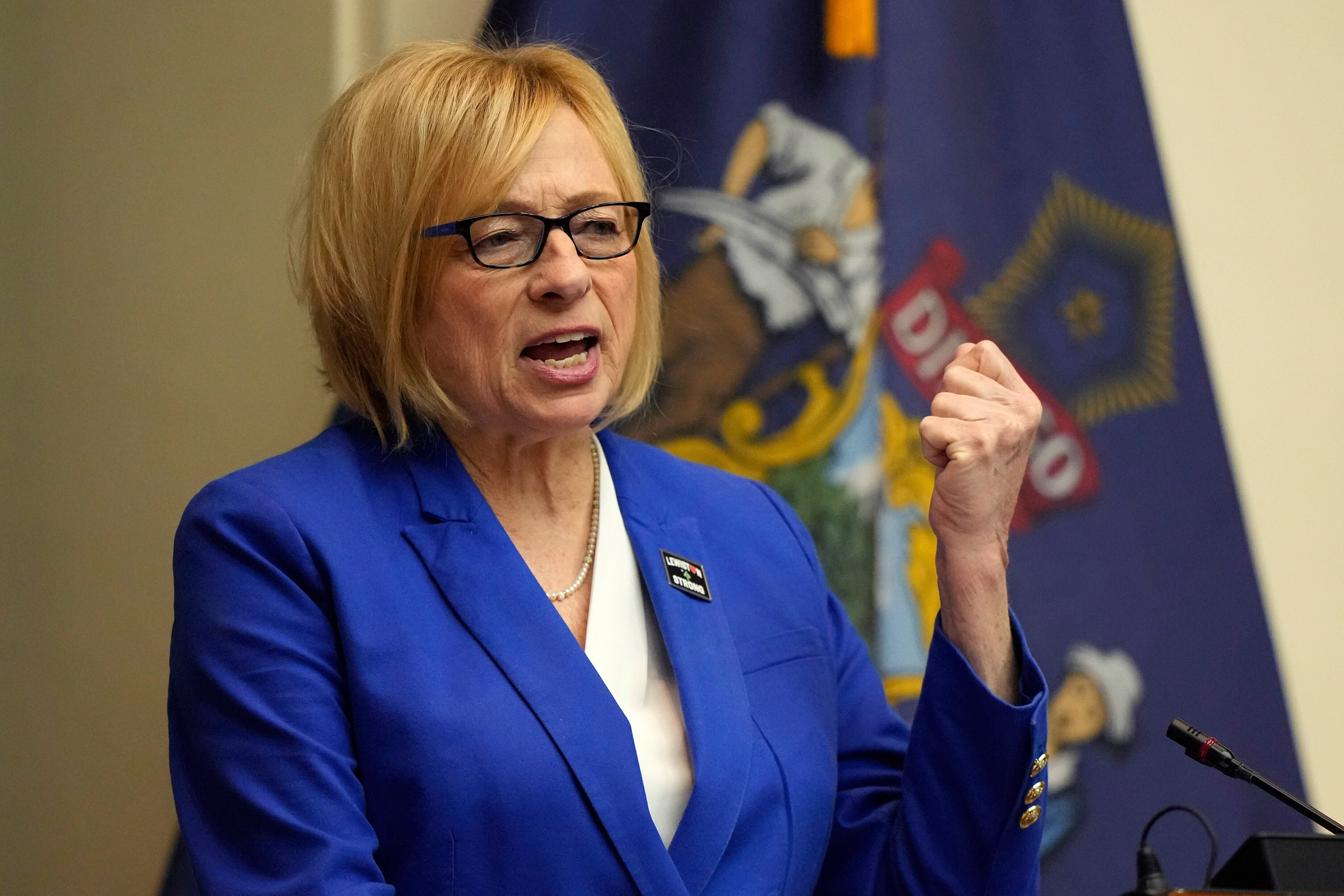
Maine Gov Janet Mills ran against Platner in the primary, but was criticized for running an unenthusiastic campaign and trailed him consistently in polling before she effectively dropped out in April
Maine Gov Janet Mills ran against Platner in the primary, but was criticized for running an unenthusiastic campaign and trailed him consistently in polling before she effectively dropped out in April (Copyright 2024 The Associated Press. All rights reserved.)
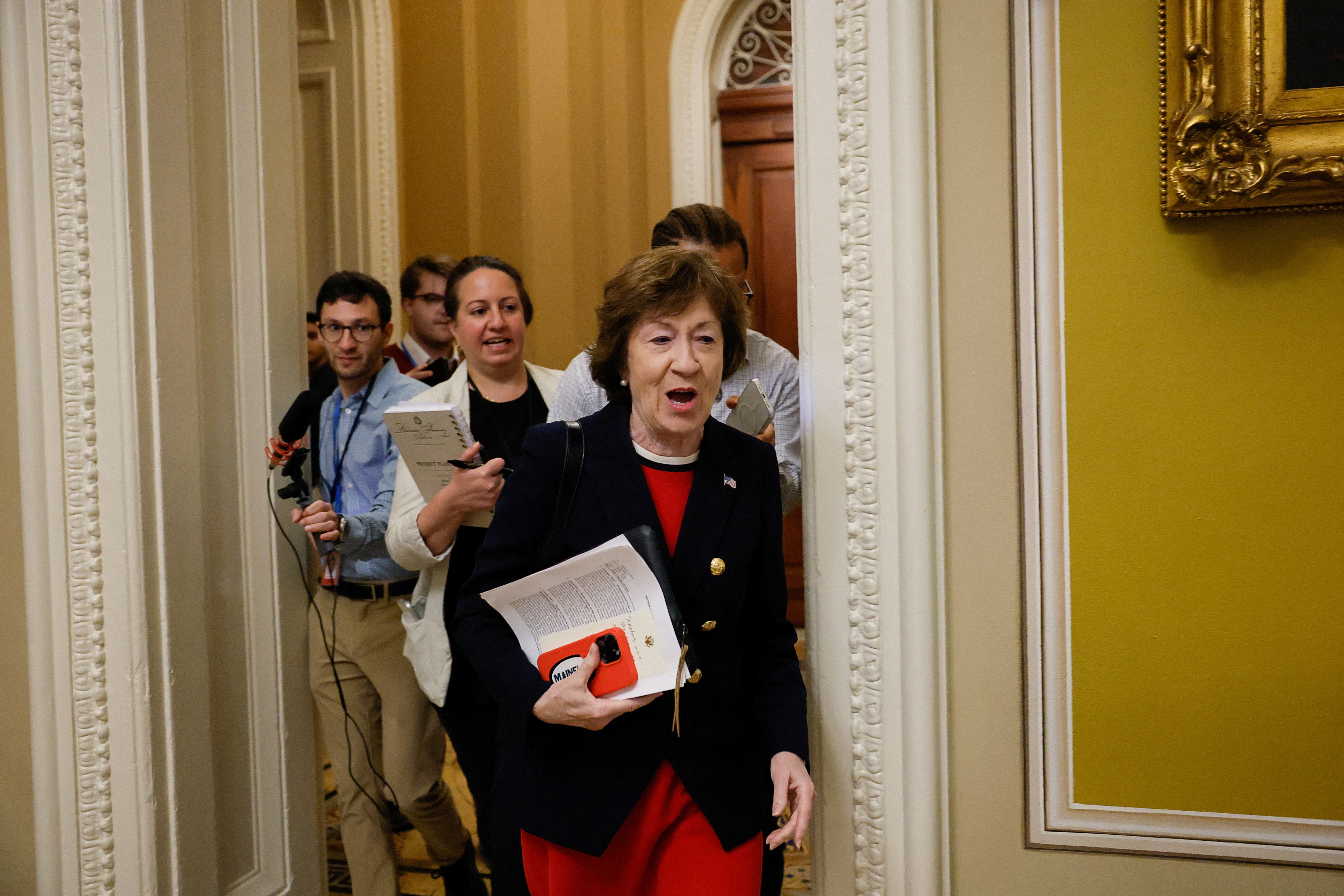
Susan Collins has held her seat since 1997 but is now a key target for Democrats hoping to seize control of the Senate
Susan Collins has held her seat since 1997 but is now a key target for Democrats hoping to seize control of the Senate (Reuters)

Democrats are already favored in many polls to win back the House by a small margin this cycle. A victory in the Senate would not just halt the Trump administration’s legislative agenda, but open up the possibilities of serious resistance to the president’s priorities — up to, and including impeachment.

The party needs to gain four seats in the upper chamber to secure a full majority, though persisent defections (like John Fetterman) could still hand Republicans some key victories. Aside from Platner, the party is eyeing seats in Alaska, Texas, Ohio and North Carolina all held by Republicans, two of which are in play as a direct result of Donald Trump picking fights with members of his own party.

Platner leads Collins in recent polling, but the race is expected to tighten significantly as Senate Republicans unload a massive war chest to defend Collins, one of their most reliable purple-state members. A five-term senator with a penchant for winning tough races, Collins is 73 and has been been criticized by Platner for supporting Trump’s war with Iran, which according to polls is now supported by only roughly one third of Americans.

Collins’s value to the Senate GOP’s numbers is so pronounced that she has escaped the brunt of Donald Trump’s wrath, even as she broke with the president on multiple votes including his “One Big, Beautiful Bill” last year. The president did not endorse Collins outright, but she did not face a meaningful primary challenge as a result of maintaining his tacit support. Other senators who did the same, or less, were not so lucky. Trump endorsed against two incumbent GOP senators this cycle who both lost their respective primaries.

Advertisement

He likely would have done the same in North Carolina had Sen. Thom Tillis not elected to retire instead.

Source link

Continue Reading
Click to comment

You must be logged in to post a comment Login

Leave a Reply

NewsBeat

Scotland heroes record custom alarms to wake Tartan Army up for World Cup

Published

on

Daily Record

Steven Naismith, Ryan Christie and Gordon Durie have recorded the custom alarms to help wake supporters up ahead of Scotland’s World Cup opener.

Scotland heroes give the ultimate wake-up call for World Cup games!

Scotland heroes have recorded unique wake-up calls for those in the Tartan Army thinking of having a quick nap before the national team’s 2am World Cup kick off.

Steven Naismith, Ryan Christie and France 98 hero, Gordon Durie, have teamed up with Tennent’s Lager to wake supporters up prior to Scotland’s return to the world’s stage for the first time in 28 years. They have recorded custom messages which fans can set as alarms to help them get up for the game versus Haiti on Sunday morning.

Scotland Assistant Manager Steven Naismith, who will be helping to rally the players ahead of their Group C crunch opener, is heard in his custom message telling fans “Haw you! Time to get up!”

Meanwhile former Scotland ace, Gordon Durie who starred in the last World Cup in 1998, is heard brazenly telling fans “Get OOT your bed!”.

And goal-hero of Serbia, Ryan Christie, has also sent his own Wake-Up call all the way from the US, telling fans back home to “Come on!!”.

While an expected 20,000 fans are travelling to Boston for the game, and pubs all over the country have been granted extended licenses to show the match, not every Scot is expecting to pull an all-nighter.

Advertisement

Scotland fan Chris Blackwood, 48, who followed Scotland to France in 1998, said he’s gutted not to be making the journey to Boston this week, but he’ll be cheering the boys on from home with his family.

He said: “I’d love to be over in Boston for the game, but couldn’t make it this time. In my younger days, I might have been able to last the pace but realistically, I’ll be trying to get a few hours kip before the game starts at 2am.

“And with these wake-up calls, I doubt I’ll need to worry about sleeping through the alarm. I’ll be springing out of bed, ready to cheer the boys on.”

The dad-of-two also thinks the alarm could work well in helping get his daughters up for their first experience of the World Cup.

Advertisement

He added: “I’ve got two daughters, and I struggle to get them up on a school day, so there’s nothing like Gordon Durie shouting ‘get oot yer bed’ to get them up and ready for their first World Cup.”

“He made us well up in Belgrade, now he’s helping us wake up for Boston,” said Hazel Alexander of Tennent’s Lager, recalling Ryan Christie’s emotional 2020 interview after Scotland qualified for the Euros, their first major tournament since 1998.

“While thousands will be planning all-nighters to watch the match, we know that doesn’t suit everyone and we thought some well-kent voices of Scottish football might make it that little bit easier for fans to get up and into the spirit of the game.

“It’s perfect for those pals who always sleep in, or that flatmate that will want ‘another 5 minutes.

Advertisement

“The nation has been waiting 28 years for this moment and nothing’s going to get in the way of us watching Scotland’s bid for World Cup glory – this isn’t an alarm we’ll be hitting ‘snooze’ on.”

Accompanied by Fonejacker-style animations, the recordings have been released on Tennent’s Instagram and are available to download as audio files from Tennent’s.com.

Get Daily Record Premium for just £1 per month in exclusive offer to celebrate the world cup. Click HERE.

Source link

Advertisement
Continue Reading

NewsBeat

Could the war in Ukraine bring political change to Russia?

Published

on

Could the war in Ukraine bring political change to Russia?

Volodymyr Zelensky recently suggested that the war in Ukraine was beginning to turn in his country’s favour. The Ukrainian president insisted that Russia was “losing the initiative each day”.

These comments came days after Zelensky wrote an open letter to his Russian counterpart, Vladimir Putin, in which he called for direct talks to end the war. Zelensky concluded the letter by stating: “when Russia grows tired, change comes”.

There is truth to Zelensky’s claim. As journalist Gideon Rachman pointed out recently in the Financial Times, Russia has experienced dramatic political change four times in the past 100 years or so after defeat in a war or a serious foreign policy miscalculation.

The 1905 revolution that led to the imposition of limits on the power of the ruling Tsars was sparked by Russia’s humiliating loss in the Russo-Japanese war. The Bolsheviks then came to power in 1917, laying the foundations for the Soviet Union, after Russia’s disastrous military performance in the first world war.

Advertisement

Nikita Khrushchev’s decision to place Soviet nuclear missiles in Cuba in 1962 brought the world to the brink of disaster and convinced other leading figures in the Kremlin that he had to go. And in 1991, just two years after withdrawing Soviet troops from Moscow’s failed war in Afghanistan, Mikhail Gorbachev faced an attempted coup that led to the collapse of the Soviet Union itself.

Public humiliation on the world stage was an important element in each of these cases. It focused attention on Moscow’s weaknesses, demonstrating that Russia was not as strong as it appeared. This display of weakness emboldened those who wanted change.

But more was needed. A real sense of hardship and grievance experienced by society or political elites – or both – was necessary to deepen and broaden that desire for change and provide an impetus for action. The leaders of political change also had opportunities to organise, gain support and establish a power base.

Afghan children playing on the wreckage of Soviet tanks in the outskirts of Kabul, Afghanistan, in 2019.
Jawad Jalali / EPA

So, will the war in Ukraine cost Putin his position as Russia’s leader? Some signs point in that direction. The war is increasingly becoming a public humiliation for Russia. When the so-called “special military operation” began in February 2022, Russian officers leading the invasion were told to pack dress uniforms to wear in a victory parade in the Ukrainian capital of Kyiv.

Advertisement

But more than four years later, Russia is struggling to achieve its far more limited goal of taking and holding the Donbas region of eastern Ukraine. During 2026, Russia’s rate of advance has slowed to a crawl and has even been reversed in some places. Meanwhile, Ukraine’s effective use of drones has given Kyiv the initiative.

There are now signs that the Russian government realises it cannot achieve its war aims in Ukraine. In May, a leaked document revealed that the Kremlin is making plans for a propaganda campaign to spin the war in a way that avoids conceding that none of its stated goals have been fulfilled.

The war is also unpopular among ordinary Russians. An April opinion poll, which was carried out by Russia’s Levada Center, showed 62% of Russians want the war to end. The poll found that only 27% of Russians favour continuing it.

Considering the pressure to give “the right” responses in such surveys out of fear of retribution from the state, it is remarkable that such a high proportion of those surveyed were willing to express dissatisfaction with the war. It also suggests that the true extent of war weariness among Russians could be even greater.

Advertisement

This desire for an end to the war may stem from the fact that the conflict is becoming increasingly real to Russians. While economic sanctions against Russia have been an inconvenience to most citizens, Ukraine’s ability to manufacture drones that can strike deep in Russian territory is truly bringing the war home. Russian oil refineries and depots have been particular targets, driving up prices and creating shortages and petrol rationing in several regions.

Limited signs of change

However, while there is a widespread desire among Russians for the war to end, there are no signs of mass protests that might put pressure on the state to end the war quickly or, indeed, bring about real political change.

Legislation rushed through days after the start of the mass invasion of Ukraine made it an offence to spread “false information” about the military or “discredit” the armed forces. And although some individuals continue to protest as “single pickets”, most Russians are discouraged from taking a public stance by the prospect of arrest and fines or custodial sentences.

Another factor that prevents large-scale protests or uprisings in Russia is the absence of any political opposition to the state. Russia’s remaining prominent opposition leaders are either in exile or in prison. The state also makes extensive use of legislation that allows it to declare individuals, organisations or groups that are critical of the state as “foreign agents” or “undesirable organisations”.

Advertisement

Those who are designated foreign agents face financial penalties and lose a number of legal rights, including the right to stand for election. Undesirable organisations face even harsher restrictions. They are not permitted to conduct financial transactions or spread information in the media or on the internet.

Mikhail Khodorkovsky attends a roundtable discussion in Brussels.
Mikhail Khodorkovsky, an exiled Russian opposition activist, pictured in June 2023.
Olivier Hoslet / EPA

The extent of legal restrictions on society and opposition figures mean that political change is most likely to come from inside the ruling regime. This happened in 1964 when Khrushchev was removed from power. A group of fellow political leaders confronted Khrushchev, who agreed to step aside when he found that no powerful institutions were willing to support him.

Putin is well aware of this precedent and has been careful to avoid naming a successor. He has also been very effective at keeping the various competing interests in Russian politics at odds with each other while ensuring that the country’s intelligence and security forces are loyal to him personally.

The obstacles to a coup are significant. But if Putin continues his refusal to consider making any concessions to end the war in Ukraine, those who surround him might decide that their own interests are better served by removing him from power.

Advertisement

Source link

Continue Reading

NewsBeat

Major car brand recalls 1,834 motors over ‘electrical fault’

Published

on

Daily Mirror

Owners are being warned that their cars may burst into flames even while parked, with motorists urged to park the affected vehicles outside and away from buildings

Thousands of cars already on British roads have been the subject of a mass recall amid fears they may catch fire, with the same issue impacting a staggering total of 1.3 million vehicles in total worldwide.

The fire risk has seen global carmaker Stellantis forced to recall more than one million Jeep vehicles globally, with many pulled from UK roads amid fears of spontaneous combustion, caused by overheating. The fire risk is caused by faulty wiring in electric hydraulic power steering pumps in the cars.

Advertisement

The cars at risk were made between 2021 and 2025, with Jeep Wrangler and Jeep Gladiator models impacted. Jeep has been aware of the fault since 2023, but closed an investigation into multiple cases of cars catching fire “due to the low rate of occurrence”. Investigations were reopened in August 2024 after “an increase in incidents”.

It then took the carmaker two years of investigation to confirm the fault in April of 2026, One person has been injured as a result of the fault, but documents indicate that Jeep is unaware of the fire fault causing any accidents.

Owners are being warned that their cars may burst into flames even while parked, with motorists urged to park the affected vehicles outside and away from buildings and other cars to allow time for an appointment.

Advertisement

Owners of vehicles at risk will be contacted so that an appointment at a Jeep retailer can be arranged.

Stellantis told The Sun that the global revall notice has impacted 1,834 Jeeps in the UK – a drop in the ocean, compared with the 1.07 million vehicles being recalled in the US, 106,000 from Canada, 23,000 from Mexico and a fruther 12,000 worldwide.

The global carmaker added that recalled models will undergo repairs or have the dangerous parts replaced. Stellantis hopes to have the issue rectified by July.

A Stellantis spokesperson said: “Having customer safety and satisfaction at the core of its values, Stellantis is voluntarily recalling 1,834 Jeep Wrangler in the UK to inspect, and if necessary, repair or replace the wiring harness and/or electric hydraulic power steering pump.

Advertisement

“An internal investigation determined that certain model-year 2021-2025 Jeep Wrangler and Jeep Gladiator vehicles may have an electrical connection issue in the electric hydraulic power steering pump wiring,” the representative added.

“In rare circumstances, this may cause combustible materials to overheat, potentially leading to a vehicle fire.

“As a precautionary measure, Stellantis is taking this action and advising owners of these vehicles to park away from structures or other vehicles until the remedy is obtained.”

Jeep owners with the models at risk of fire will be contacted by their retailer to arrange a remedy appointment.

Advertisement

This isn’t the first time this year Stellantis has issued an urgent vehicle recall amid fears their cars may catch fire.

Thousands of drivers in the UK were warned to stop driving their vehicles as it could set on fire after the manufacturer issued a major safety recall back in April.

Prominent brands like Peugeot, Jeep, Fiat, Citroen and Vauxhall have been affected but one expert is concerned that people won’t act on the warning.

Advertisement

Most car manufacturer’s websites will have a tool where people can check if their car has been part of a recall. Louise used an example of the Vauxhall website where people will need their vehicle identification number which can be found in your logbooks and various places around the car.

The other way to check if your car has been part of the recall is using the Government’s checker tool. There’s two ways of using this tool depending on what information you have about the car.

You can use the car’s registration number to check if it has been involved in safety recalls that have not been checked or fixed. Or if you don’t know the registration number you can check using the manufacturer, model and year of manufacture.

Source link

Advertisement
Continue Reading

NewsBeat

‘I visited Belfast food court and found Northern Ireland’s best burger’

Published

on

Belfast Live

YouTuber Sam Wilder is on a mission to find the best burger in the UK, and he thinks he’s found the best Belfast has to offer, revealing he loves one of the burgers he tasted

A burger enthusiast thinks he has discovered Belfast’s best burger, calling the meal “fantastic”.

With the weather set to improve this weekend, thoughts will be turning to barbecues once more. If you don’t want to fire up your own though, one YouTuber recommended a burger that he “loved”.

Advertisement

Sam Wilder is on a mission to find the best burger in the UK. His gut-busting challenge will see him visit 54 locations in total, and he will try two burgers in each venue – the bog standard offering and one burger recommended by his subscribers or a member of staff.

The latest leg of the burger odyssey saw him visit Northern Ireland, where he spoke very highly of Smash Bros in Belfast’s Common Market.

There was one item on the menu that he loved and said he would eat again – the burger joint’s Chipotle Smash.

He described it as “basically the same” as the original urger except they included chipotle mayo instead of the company’s special sauce. It also came with pickled jalapeños and pickled onions.

Advertisement

Sam said: “That is a damn beautiful looking burger. It’s everything I loved about the first burger but then that chipotle mayo really packs a punch, then you’ve got pickled onions in there as well. And then those pickled jalapenos which give a really nice, hot tang to your mouth.

“It definitely adds a lot to it. The sheer amount of cheese I love, the sheer amount of sauce I love, it’s really, really well balanced, a nice amount of heat to it, it’s not too overpowering like one of the other hot burgers I had.”

He went on to give the “solid” burger 8.4 out of 10, placing it at the top of the Northern Ireland leaderboard, before finishing the clip by thanking Smash Bros and lauding them for an “epic name”.

Advertisement

Smash Bros, which opened in the market in 2022, has become a hugely popular spot. The menu contains just four burgers but Sam also spoke highly of the bog standard burger.

It comes with a double patty, double cheese, onion, lettuce, pickle and Smash Bros’ special sauce.

Sam said: “And this looks like an absolutely phenomenal smash burger. A lot of smash burgers we find don’t seem to put the lettuce inside them so I’m intrigued to see how this actually helps it. You’ve got these incredibly nice caramelised edges, loads and loads of cheese.

Advertisement

“I really like the sauce first of all. The sauce is definitely mustard-based. The pickles and the lettuce add so much too much and those caramelised edges are gorgeous. Fantastic bun, fantastic beef, the pickles in there really help cut through it, this is a very very good burger.”

He concluded by saying that it was one of the best standard burgers he has had so far on his quest, scoring it 7.5 out of 10.

Smash Bros was up against Bunsen, with the firm’s double cheeseburger scoring 7.6 and the standard cheeseburger earning just 6.3 out of 10.

Source link

Advertisement
Continue Reading

NewsBeat

Direct Manchester Airport flights to Riyadh announced

Published

on

Direct Manchester Airport flights to Riyadh announced

Riyadh Air has announced the launch of a service connecting Manchester to the Saudi capital, Riyadh, with flights beginning July 23 this year.

The service will operate three times a week, reflecting the growing demand for stronger travel links and economic cooperation between Saudi Arabia and the UK.

Tony Douglas, chief executive of Riyadh Air, said: “The launch of our new service to Manchester marks another milestone in our journey to connect Riyadh to the world and the world to Riyadh.

The new Dreamliners include ergonomic seats (Image: JB McCabe)

“This route has been carefully selected to serve a key market for connecting the North of England to the Middle East, aligning with our ambition to become a global airline and a significant contributor to Vision 2030.

Advertisement

“We look forward to welcoming our guests aboard to experience our distinctive Saudi hospitality as we connect these two great cities and continue to redefine the future of air travel.”

Flights will operate on Riyadh Air’s Boeing 787-9 Dreamliners, which feature a four-class cabin configuration: Business Elite, Business, Premium Economy, and Economy.

Services from Manchester to Riyadh (flight RX0418) will depart at 8.40am and arrive in Riyadh at 5.20pm.

The return flight (RX0417) departs Riyadh at 1.30am and arrives in Manchester at 6.40am.

Advertisement

The route is expected to benefit the significant Asian communities in the North of England and support longstanding educational connections, including the large population of Saudi students living in the region.

It will also provide convenient onward connections from Riyadh to destinations such as Jeddah, Dubai, Cairo, and additional cities across Asia that will be announced soon.

Riyadh Air plans to offer passengers a “world-class travel experience” both on the ground and in the air.

The new Dreamliners include ergonomic seats made with premium materials, advanced in-flight entertainment, Bluetooth audio connectivity, and multiple charging options across all classes.

Advertisement

Flights will operate on Riyadh Air’s Boeing 787-9 Dreamliners (Image: JB McCabe)

Business Elite and Business cabins feature a fully flat-bed 1-2-1 layout, immersive audio in the headrests.

Sfeer members will benefit from a “Best Offer Guarantee,” no points expiry, and the ability to share level points with family and friends.

Early members, known as “The Founders,” will receive priority access to new routes and other exclusive perks.

Passengers will also enjoy Saudi-made Kayanee wellness products, Disney amenity kits for children, and premium bedding by John Horsfall.

Advertisement

Business Elite and Business travellers will also receive Kayanee loungewear, while Premium Economy guests will be provided with a Kayanee top.

Bookings for both routes are now open through the Riyadh Air app, website, and approved travel agents.

Source link

Advertisement
Continue Reading

NewsBeat

Why impressionists loved to paint gardens

Published

on

Why impressionists loved to paint gardens

Dahlias thrust their colours skywards; hollyhocks frame a child at play; peasants tend cabbages; water lilies dot the surface of a pond. The “impressionist garden” captures all of these moments and more.

But why were Monet, Renoir, Morisot, Pissarro and their colleagues so attracted to gardens? It’s a subject I sought to answer in my book In the Gardens of Impressionism.

One answer lies in the sheer ubiquity and sensory intensity of gardens by the second half of the 19th century, when impressionism came into being. Social change that made leisure gardens accessible to all (no longer just kings and aristocrats) combined with “the great horticultural movement” – the introduction of new and exotic plants, trees and flowers as a result of imperial expansion, international trade and developments in technology.

Advertisement

Monet Painting in His Garden by Pierre-Auguste Renoir (1873).
Wadsworth Atheneum Museum of Art

“Ward cases”, named after their British inventor, botanist Nathaniel Bagshaw Ward, facilitated the transportation of live plants across the world. Glass and iron construction gave rise to greenhouses that allowed exotic and tender plants to be overwintered. New understanding of hybridisation, fuelled by Charles Darwin’s discoveries, made flowers ever bigger, more scented or overtly decorative, while also boosting commercial vegetable growing.

Gardens, in short, were central to the “modern life” that the impressionists radically pursued – answering powerfully their desire to capture the sensations of the present moment in spontaneous brushwork and vibrant palette.

Green lungs

In Paris, the new parks introduced by Napoleon III from the 1850s were essential to public hygiene: green lungs above ground complementing the new sewer-arteries below ground, as part of France’s fight against cholera.

The city’s trees and lavish corbeilles (floral display beds) were also undeniably alluring. Yet the impressionists’ response was highly selective and often trod a delicate balance between the old and new.

Advertisement
A lively crowd of elegantly dressed Parisians gathers among trees in a sunlit garden, capturing a bustling social scene in Music in the Tuileries Gardens by Édouard Manet

Music in the Tuileries Gardens by Édouard Manet (1862).
The National Gallery

Édouard Manet subversively chose an old park, the Tuileries Gardens, for his pioneering depiction of modern life in 1863. Its fashionable figures listening to an off-scene band recede into a mass of trees that seems more like primal forest than cultivated green space.

And Pierre-Auguste Renoir recalled in old age how, before the modern tree-lined boulevards, manicured squares and English-style parks, there was “behind every house … a garden … Plenty of people still knew the pleasure of eating freshly-picked lettuce.”

Evicted in childhood to make way for the “new Paris”, Renoir had reason for his regret. Already in 1867, he had naughtily plonked a not-yet-in-bloom corbeille in the foreground of his painting of the Champs-Élysées. Napoleon’s prefect Baron Haussmann’s famous “bedding out” regime, intended to ensure continuous floral colour, here experiences an embarrassing glitch.

Advertisement
A bustling boulevard filled with crowds, carriages and festive displays along the tree-lined avenue in The Champs-Élysées during the Paris Fair of 1867 by Pierre-Auguste Renoir.

The Champs-Élysées During the Paris Fair of 1867 by Pierre-Auguste Renoir (1867).
WikiCommons

In 1875, Renoir made an old, overgrown garden in Montmartre, full of “poppies, convolvulus and daisies”, the subject of Woman with a Parasol in a Garden, in which nature seems to return to its original, uncultivated state.

Claude Monet likewise eschewed the arterial path newly driven through the Parc Monceau, capturing instead the play of light and shade on figures chatting under tall trees in a secluded corner of the former aristocratic garden appropriated by Haussmann for public use and speculative building.

It was, rather, in his private gardens at Argenteuil in the 1870s that Monet seemed – at least to some extent – to have echoed Haussmannian horticulture, by cultivating display beds and trying out new flowers. But even here, in the 1873 painting The Artist’s Garden in Argenteuil, his novelty giant dahlias surge across the picture surface like some colourful, organic riptide.

The private garden

If the impressionist garden was both outdoor studio and motif, what strikes the viewer in images like this is the evocation of what art experts nowadays call an attachment environment – a place imbued with personal significance, because it was cultivated by the artist himself.

Monet often inscribed his wife and young son within his Argenteuil artist’s garden. These paintings project familial pride and even hope for national renewal.

Advertisement
A young child stands amid tall blooming hollyhocks in a softly rendered garden scene, capturing light and innocence in Child Among the Hollyhocks by Berthe Morisot.

Child Among the Hollyhocks by Berthe Morisot (1881).
Wallraf–Richartz Museum

After the horror of the Franco-Prussian war and Paris Commune of 1870-1, when Monet and Camille Pissarro had taken refuge with their young families in London, the very act of growing a garden was inherently symbolic. It was a celebration of French soil following the loss of Alsace-Lorraine to Germany.

Pissarro’s multiple depictions of kitchen gardens near his home at Pontoise, meanwhile, asserted his utopian socialist vision of a better future based on working off the land – just as Berthe Morisot’s airily brushed images conflate the growth of her young child with that of cultivated nature.

Such images suggest that, for all their modernity, the impressionists shared the nostalgia for rural existence that accompanied urban expansion and industrialisation.

At rural Vétheuil, where he lived from 1879-81, Monet planted sunflowers almost obsessively in his steep, terraced garden overlooking the Seine. Their late-summer gold and yellow seems almost elegiac after Monet’s wife Camille’s tragic death in 187.

Advertisement
A vibrant garden path overflowing with colorful flowers leads toward a sunlit house, painted with lively brushstrokes in The Artist's Garden at Vétheuil by Claude Monet.

The Artist’s Garden at Vétheuil by Claude Monet (1881).
National Gallery of Art

Monet’s most ambitious garden was in turn at Giverny in Normandy, his near-sole painting motif for the last third of his life.

The new, scented and coloured hybrid water lilies he grew there were showpieces of modern horticultural invention – yet his serial paintings of his pond, capturing successive effects of light and atmosphere, construct a profoundly poetic vision of nature as a perpetually unfolding harmony. Coordinates disappear leaving only water, flowers and the reflected sky; the garden now embraces the cosmic.

It was only logical that Monet used this motif for his Paris Orangerie murals, which he gave to France as a first world war memorial. Water lilies open to the light, defeating darkness.

Though often called precursors of abstraction, the Orangerie’s Water Lilies offer the ultimate logic of the garden as attachment environment – encircling the viewer, placing us physically within the impressionist garden’s better world.

Advertisement

Do you have a favourite impressionist garden painting? Let us know in the comments below.


This article features references to books that have been included for editorial reasons, and may contain links to bookshop.org. If you click on one of the links and go on to buy something, The Conversation UK may earn a commission.

Source link

Advertisement
Continue Reading

NewsBeat

Breightmet residents raise concerns as Travellers remain on field

Published

on

Breightmet residents raise concerns as Travellers remain on field

More than a dozen caravans have camped on New House Farm playing field, near Blenheim Road.

A resident said the group arrived on Thursday, June 4, with cars and caravans parked around the edge of the field.

The Bolton News approached individuals at the site last week, where two women and their children were present.

One woman said: “We’re just here for a few days.

Advertisement

“We won’t be here for long, and we’re not here to cause any trouble.”

Today (June 9), we returned to the playing field, where the travellers remain.

Most of the caravans are still on the field, however, it appears the family we spoke to last week have moved on.

Rubbish on New House Farm playing field, near Blenheim Road.New House Farm playing field, near Blenheim Road (Image: NQ)

The ground was littered with rubbish, a single tyre, a pair of shoes, a small TV and items of clothing.

Advertisement

Muddy tyre tracks were visible across the pitch, cutting through the grass and soft ground.

A Breightmet resident told The Bolton News: “Portable toilets have been emptied on the field.

“My kids are stuck inside, it smells so bad and they can’t play on the field.

“My autistic son can’t cope with the noise and being stuck inside, it’s a joke.”

Advertisement

New House Farm playing fieldNew House Farm playing field (Image: NQ)

This comes just weeks after human waste was found at Longsight Park after a traveller encampment left the area.

In May, eight caravans had been parked there before Bolton Council served a legal notice ordering those on the site to leave.

The litter left behind, believed to have been left by the travellers, resulted in a “major clean-up operation” involving councillors, volunteers and community groups.

The traveller encampment in BreightmetThe traveller encampment in Breightmet (Image: NQ)

The Gypsy and Traveller way of life can involve travelling across the country and staying in different locations for varying periods in order to earn a living.

Advertisement

They are protected from discrimination under the Race Relations Act 1976 and the Human Rights Act 1998, alongside all ethnic groups with distinct cultures, languages or values.

When Gypsies park their caravans and vehicles in public places, such as car parks or on land where they should not be, it is classed as an “unauthorised encampment”.

Bolton Council has been contacted for comment regarding the encampment in Breightmet.

Shoes and rubbish left on the playing fieldShoes and rubbish left on the playing field (Image: NQ)

The illegal dumping of larger rubbish items is referred to as fly-tipping.

Advertisement

Under new government reforms aimed at tackling illegal waste dumping, fly-tippers could face up to five years in prison.

A new and tougher permit-based system will be brought into force in 2027, and those caught mishandling waste could face serious prison sentences.

Supporting the crackdown, Labour MP for Bolton West, Phil Brickell, said: “One of the issues raised with me time and time again on the doorstep is the issue of fly-tipping.

“It’s simply not good enough that some think it’s acceptable to dispose of their rubbish however they like.”

Advertisement

Source link

Continue Reading

NewsBeat

Graham Platner wins Maine Democratic primary for US Senate, will face Sen. Susan Collins

Published

on

Graham Platner wins Maine Democratic primary for US Senate, will face Sen. Susan Collins

PORTLAND, Maine (AP) — Graham Platner won the Maine Democratic primary for U.S. Senate on Tuesday, setting up a high-stakes race against Republican Sen. Susan Collins.

Platner, an oyster farmer and combat veteran, has little political experience but has drawn hundreds of people to rallies around the state. He also has faced a string of controversies that have been the focus of attacks from his rivals. Since entering the race, Platner has stressed the importance of believing in redemption for those like him who have made mistakes but are now working to be better people.

“If you believe, as I do, that we can change our politics and change our country, then you must also believe that people can change,” Platner said during his acceptance speech in Blue Hill, a rural town where he was born. “And the reason I believe that is because I have lived it.”

Democrats see Maine as a top opportunity to flip a GOP-held seat. It is the only state with a competitive Senate race where voters supported Democrat Kamala Harris over Donald Trump in 2024. Collins is the only Republican senator from New England.

Advertisement

Platner, a progressive who had early support from Sen. Bernie Sanders, has said he plans to focus on economic issues such as housing and healthcare.

“Any of those who feel let down, or disappointed, or disillusioned, it is my job to earn your trust, faith and support, and I will spend every day of this campaign, and if I have the privilege, every day in the United States Senate doing exactly that,” Platner said.

Maine voters also were choosing nominees for governor U.S. House. The Democratic primaries for governor and the 2nd Congressional District will be decided by ranked choice voting, a process that may take more than a week, after no candidate won a majority Tuesday.

Platner blasts Collins as ‘spineless’

After thanking his supporters for helping him secure the Democratic nomination, Platner quickly pivoted to attacking Collins, attracting boos and jeers from the Blue Hill crowd.

Advertisement

Collins was unopposed in the GOP Maine primary on Tuesday. This means the matchup between Platner and Collins will pit a progressive with no experience in high office against one of the most powerful legislators in the Senate, and one of its few remaining moderate Republicans.

“Susan Collins has never met a war she didn’t like, she’s been supporting endless wars since I was a teenager, and I know, I had to fight in two of them,” Platner, a Marine and U.S. Army veteran, said. “You and your friends profited, and my friends died.”

He also criticized Collins for voting alongside Trump, particularly pointing out that she was a key vote in voting in favor of putting conservative judges on the U.S. Supreme Court.

“She has become just as spineless and corrupt as the establishment she now serves,” Platner said, pointing out that Collins once promised to only serve two terms but has been in the position for decades.

Advertisement

First elected in 1996, Collins has said her experience and key position as chair of the powerful appropriations committee are two reasons to send her back to the Senate.

Platner energized Democratic voters

Platner, 41, has focused his campaign on fighting the high costs he says hold down the middle class and said he got in the race to focus on income inequality.

His background has repeatedly generated criticism from both the right and the left.

Old online comments made by Platner in which he appeared to endorse political violence, dismiss rape in the military and criticize police officers and rural America surfaced last year. Platner apologized for the comments and said he was struggling with post-traumatic stress disorder and depression when he wrote them.

Advertisement

He’s also faced questions about a skull-and-crossbones tattoo recognized as a Nazi symbol. Platner said he got the tattoo on his chest during a night of drinking while he was on leave in Croatia. He has maintained that he was unaware until recently that the image had been associated with Nazis, and he has since covered the tattoo with a different design. A former girlfriend told New York Times has since said that he did.

More recently, he went on the defensive amid reports that he previously exchanged sexually explicit text messages with several women while married. Platner hasn’t directly denied the existence of the texts but instead criticized the aide who talked to news outlets and accused the media of running gossip.

The New York Times last week reported about his relationships with previous girlfriends, some of whom viewed him positively and others who described him as volatile and insulting. One woman said Platner twisted her arm during an argument and locked her in a room. Platner’s campaign disputed the allegation.

Annette Babcock, who is from Platner’s hometown of Sullivan, said she’s met him a few times and likes that he’s not an established politician. His recent controversies didn’t dissuade her from supporting him Tuesday.

Advertisement

“The Republicans don’t have much moral high ground to stand on when they’re criticizing him for what he’s done when (President Donald) Trump is a convicted felon,” she said.

Democratic governor and 2nd House District races to be decided by rank choice

In the governor’s race and 2nd Congressional District, no Democratic candidate won the majority of votes Tuesday, so the race will go to a ranked runoff.

Democrats are choosing gubernatorial candidates between Maine Secretary of State Shenna Bellows; former Maine Senate President Troy Jackson; former Speaker of the Maine House of Representatives Hannah Pingree; energy executive Angus King III; and former director of the Maine Center for Disease Control and Prevention Nirav Shah.

In the 2nd Congressional District, former Maine Secretary of State Matt Dunlap, state Sen. Joe Baldacci, former U.S. Senate candidate Jordan Wood and social worker Paige Loud are on the ballot for the Democrats. The winner will face former Gov. Paul LePage, a Trump ally.

Advertisement

The Republican ballot for governor is even more crowded. Republicans will choose between former U.S. Assistant Secretary of State Bobby Charles; healthcare executive Jonathan Bush; former Maine Senate Majority Leader Garrett Mason; University of Maine System trustee Owen McCarthy; former Paris, Maine, selectman Robert Wessels; and business owners David Jones and Ben Midgley.

___

Associated Press journalist Rodrique Ngowi contributed from Sullivan, Maine.

Advertisement

Source link

Continue Reading

NewsBeat

Calls for public enquiry into breast cancer service failings

Published

on

Calls for public enquiry into breast cancer service failings

Hudgell Solicitors, which represents a growing number of former patients of the Trust and suspended breast surgeon Mr Amir Bhatti, has backed calls for a judge-led inquiry with powers to require witnesses to give evidence under oath.

The demand comes as the scale of harm identified through ongoing patient reviews continues to emerge.

Rachel O’Connor from Hudgells (Image: Neil Holmes)

As of June 3, the Trust said 389 lookback reviews had been completed, with 65 cases of moderate or severe harm identified and one death linked to concerns raised during the investigation.

Independent reviews, which were published last year, have already highlighted what were described as “decade-long systemic failures within the Trust’s breast cancer service, including missed cancers, delays in diagnosis and unnecessary mastectomies.

Advertisement

Rachel O’Connor, a specialist medical negligence solicitor at Hudgell Solicitors, said the current investigations do not go far enough.

“We don’t feel the current investigations are going back far enough, given it has been identified in independent reviews that systemic failures were dating back a decade at least,” she said.

“We’ve been contacted by patients who were treated well before January 2023 who have serious concerns over the care provided to them, and whether it impacted their own outcomes.”

The legal team believes significant questions remain not only about patient care but also around governance, oversight and decision-making within the Trust.

Advertisement

County Durham and Darlington NHS Trust (Image: NORTHERN ECHO)

Ms O’Connor said concerns over healthcare failures, governance issues, the establishment and operation of private clinics, the Trust’s decision to prevent Mr Bhatti from carrying out clinical duties, and the ongoing Durham Police investigation all pointed towards the need for a Public Inquiry.

“We believe a Public Inquiry must be called,” she said.

“Women have been left harmed and traumatised when they turned to the NHS at a vulnerable time.

Mr Amir Bhatti (Image: NORTHERN ECHO)

“This was not an issue which suddenly arose; it escalated over many years because of a lack of action and accountability.”

Advertisement

The call is being supported by patients and bereaved families, including Amelia Green, whose sister Michaela died from breast cancer in 2009 and who later received treatment through the Trust’s breast cancer service herself.

Ms Green has launched a petition calling for a national inquiry, reform of breast cancer surgery services at the Trust and accountability for those responsible.

Meanwhile, lawyers have also criticised the pace of the ongoing review programme.

At a meeting in March, the Trust reported that 357 reviews had been completed. By early June, that figure had risen to 389, an increase of just 32 cases over more than two months.

Advertisement

“Given the worry and stress this is causing to patients, that is unacceptable,” Ms O’Connor said.

“We need full answers and accountability, and that will only come with the full scrutiny of people being compelled to give evidence under oath, so we fully support the call for the Inquiry.”

Around 1,500 patient records are currently being reviewed as part of the Trust’s investigation into breast cancer services, while Durham Police continues to examine whether any criminal offences may have been committed.

The Trust has apologised to patients and families affected by failures identified within breast services and says a series of improvements have since been introduced, including additional specialist staff, revised clinical pathways and strengthened clinical leadership.

Advertisement

Source link

Continue Reading

NewsBeat

Pope Leo urges Spain’s young people to persevere in their faith

Published

on

Pope Leo urges Spain's young people to persevere in their faith

BARCELONA, Spain (AP) — Pope Leo XIV on Tuesday sought to encourage Spain’s young people to persevere in their faith, as he presided over an evening rally that was notable for its frank discussion of depression, domestic violence and “toxic” family relationships.

The U.S.-born pope received a raucous welcome at the Olympic stadium in Barcelona, the second stop of his weeklong visit to Spain that has drawn huge crowds despite the country’s strong secular bent.

The crowd, estimated at 40,000, erupted in cheers when Leo emerged from the stands in his popemobile and looped around the grounds. He thrilled sections of the crowd each time he stopped to bless babies or to do the “6-7” hand gesture that has now become a signature.

The event featured several nods to Catalan culture, including a demonstration of the region’s famed human tower acrobats, known as castellers. The eight-level tower drew an appreciative applause from the pope after the smallest child reached the top, waved, and then quickly shimmied down.

Advertisement

Leo also spoke in Catalan, more than initially foreseen, during the prayer vigil that featured a question-and-answer session with young adults. Such exchanges are scripted in advance and are typical features of papal trips. But Tuesday’s edition was particularly raw given the subject matter Leo covered.

One young woman told Leo of a suicide attempt and the “darkness” she had experienced with bouts of depression. Another spoke about her father’s attempt to kill her mother and a childhood spent in juvenile detention. She asked how she could ever forgive her father.

Leo thanked the youths for their honesty and willingness to share their stories publicly. He blamed the malaise on what he said was a society that demands perfection of its youth and silences “moments of darkness and suffering.”

He compared the “silent illness” of depression among young people to the suffering of Christ on the cross.

Advertisement

“In those dark hours, as he was dying on the cross, Jesus shared our pain and revealed to us the face of a compassionate God, who bears our sorrows, who suffers with us, weeps our tears and remains at our side with his presence full of love and mercy,” Leo said.

But he also identified abusive families where domestic violence is normalized as being behind many problems facing today’s young people.

“So many crime reports, even today, reflect a toxic climate in family relationships marked by abuse and oppression and, in particular, by violence against women, which unfortunately often leads to femicide,” Leo said.

Leo urged young people to find solace in their faith. And he drew applause when he demanded better health services and care for mental health problems and domestic violence.

Advertisement

“We are all called to address this dramatic reality, both personally and as a society, because we are responsible for confronting it in all its dimensions,” he said.

Leo has been emphasizing a message of hope for youths in Spain, a once overwhelmingly Catholic country that experienced a religious crisis after its 20th century dictatorship ended and democracy took root.

Recently, church officials and sociologists alike have pointed to indications that young Spaniards are showing an increasing interest in their spiritual lives, with anecdotal reports of rises in conversions among young adults.

Patricia Garzón, a 25-year-old who attended the prayer vigil with her friend, said her faith helps her every day.

Advertisement

“I believe that it is more difficult (for young people) today because before social media didn’t exist, and today we are constantly comparing ourselves with one another (online),” she said. “And we need someone from above to help us, to help us see that he loves us for who we are, not how others want us to see ourselves.”

The highlight of Leo’s visit to Spain comes Wednesday when he inaugurates the soaring central Tower of Jesus Christ on Barcelona’s famed Sagrada Familia basilica.

___

Associated Press religion coverage receives support through the AP’s collaboration with The Conversation US, with funding from Lilly Endowment Inc. The AP is solely responsible for this content.

Advertisement

Source link

Advertisement
Continue Reading

Trending

Copyright © 2025