Squadron Leader George Morley Fidler was just 27 when his Hawker Hurricane was brought down over France on May, 19, 1940.
Members of the public gathered in France on Tuesday (May 19) to witness the burial with full military honours of the World War Two Hurricane Pilot.
Fidler joined the RAF in 1934 and spent several years in Egypt, with brief spells in Cyprus and India.
He was described as an ‘exceptional’ pilot by his superiors and in February 1940, he joined 607 Squadron.
Advertisement
The bearer party, comprised of serving personnel from RAF Halton, carry Squadron Leader Fidler’s coffin (Image: RAF/MOD)
On the afternoon of May, 19, 1940, his plane was shot down above Cambrai.
It was initially believed the pilot’s remains had been recovered and buried in the French village of Bachy.
However, in 2005 metal detectorists discovered wreckage 35km away in Oisy-le-Verger.
One piece had a serial number ‘P3535’, suggesting it came from his Hurricane.
Advertisement
The Ministry of Defence (MOD) investigated the grave to see if it was that of the 27-year-old.
Squadron leader George Morley Fidler, provided by the Great Ayton History Society (Image: UNKNOWN)
Then in 2022, work on the Seine-Nord Canal at Oisy-le-Verger, in northern France, unearthed a Hurricane with the pilot still inside near to where Fidler’s aircraft was last seen.
Squadron Leader Fidler was laid to rest yesterday, with the service organised by the MOD’s ‘War Detectives’ who work to identify the recovered remains of British military casualties.
War detective Nicola Nash said: “Squadron Leader Fidler has been buried today 86 years after he was killed.
Advertisement
“His story has been known to us since his grave was ‘unnamed’ many years ago. It has been wonderful to finally find him and be able to put him to rest.
“Today we honour him and the sacrifices he made all those years ago.”
The pilot’s service took place at Commonwealth War Graves Commission (CWGC) London Cemetery and Extension, France.
Dr James Wallis, head of commemorations at the CWGC, said: “It is an honour for the Commission to pay our respects to Squadron Leader Fidler, following the 2022 discovery of his Hurricane along the route of the future Canal Seine-Nord Europe.
Advertisement
Members of RAF Halton, 607 Squadron and a Trumpeter of the Band of the Royal Air Force College stand behind Squadron Leader Fidler’s headstone (Image: RAF/MOD)
“That another commemorative service will be held today at his local church – in Great Ayton, Yorkshire – shows the power and impact of his war experience eight decades on.
“Now resting amongst fellow airmen at London Cemetery and Extension, Longueval, his grave will be cared for in perpetuity.”
The Great Ayton History Society previously said: “Following the recent discovery in Oisy-le-Verger, France, where engineers uncovered the remains of Squadron Leader George Morley Fidler – found seated in the cockpit of his Hawker Hurricane almost 86 years after being shot down – the story of this young man from Great Ayton has taken on renewed significance.
“George, just 27-years-old, was the son of George and Christiana Fidler and served as a pilot with 607 Squadron.
Advertisement
“His aircraft, Hurricane P3535, was brought down by a Messerschmitt Bf 109 over France on 19 May 1940, where it buried itself in the ground with George still inside.
“In light of this remarkable discovery, the Great Ayton History Society will be updating George’s story as part of its annual Remembrance Day memorial plaques at Christ Church.”
Nationwide, which acquired the 188-year-old lender earlier this year, announced the move on June 24 as part of wider changes to the group’s mortgage offering.
All remaining mortgage products will be withdrawn by July 2.
A spokesman for Nationwide said: “We’ll stop all new residential mortgage lending through Clydesdale from July 2.
Advertisement
How to Save for a Mortgage Deposit
“The two variable-rate products will be withdrawn and the fixed-rate products previously withdrawn will not be reintroduced.
“Existing customers are unaffected and will continue to hold their Clydesdale mortgage, with access to Clydesdale switcher products.
“New lending for first-time buyers, home movers and remortgage customers will be provided through Nationwide and Virgin Money, which will continue to deliver expert support, a broad product range and strong intermediary relationships.”
Clydesdale Bank recently removed fixed-rate products from the market, leaving only two variable rate options currently available.
Advertisement
Both of these variable rate mortgages will be withdrawn from offer by July 2.
The decision forms part of ongoing changes since Nationwide’s acquisition of Virgin Money and its subsidiary brands in April.
Virgin Money’s website stated that Clydesdale Bank’s website was taken offline on April 2 as part of the bank’s phasing out process.
Clydesdale Bank and Yorkshire Bank had previously merged to form CYBG in 2016 before acquiring Virgin Money Holdings in 2018.
Advertisement
The group later began rebranding as Virgin Money.
Nationwide continues to encourage customers seeking a mortgage to explore their other options with either Virgin Money or Nationwide bank.
Founded in Glasgow in 1838, Clydesdale Bank supported Scottish trade and industry throughout the Industrial Revolution.
It became Scotland’s largest bank for a brief period following its 1920 acquisition by Midland Bank and subsequent merger with North of Scotland Bank.
According to Greater Manchester Fire and Rescue Service (GMFRS), two fire engines from Farnworth attended the incident on Derwent Road.
A GMFRS spokesperson said: “At around 3.20pm on Thursday 25 June, two fire engines from Farnworth attended an outbuilding fire on Derwent Road, Farnworth.
“Whilst in attendance firefighters used specialist equipment including one hose reel, positive pressure ventilation and a Honeywell gas monitor to extinguish the fire and bring the incident to a close.
Advertisement
“Crews were in attendance for approximately one hour.”
A spokesperson for Greater Manchester Police (GMP) said the incident appeared to be being led by GMFRS.
Police and firefighters had to be called, to hand out water to angry passengers
Kelly Williams Content Editor and Adam Care
18:04, 25 Jun 2026
Angry passengers were stranded on a train for eight hours without electricity or air conditioning.
The Eurostar train had had left Gare du Nord in Paris and was bound for Amsterdam.
Advertisement
But a technical problem forced the driver to stop the train near Fresnoy-le-Luat (Oise) just after 7.30pm on Wednesday (June 24), Le Parisien reports.
Passengers were left without electricity and air conditioning and had to wait either on the train or on the side of the tracks.
It ended up being delayed by more than eight hours as people on board took to social media to share their ordeal, reports the Daily Star.
One wrote on X: “Eurostar, our train from Paris to Brussels is stopped on the tracks, what the hell is going on?”
Advertisement
The company replied to say: “A technical incident caused by exceptional heatwave conditions has occurred on board the train.”
One passenger described the situation as “hell” and said police, firefighters and civil protection crews arrived and assisted the elderly as well as handing out water.
A rail replacement finally arrived at 12.30am the following day allowing passengers to continue their journey to Brussels.
The original arrival in the Belgian capital was scheduled for 7.47pm on Wednesday. The other passengers continued their journey to Amsterdam by bus or taxi.
Amar Chaabi, Eurostar’s chief pperating officer said: “We fully understand what our passengers experienced last night and offer them our sincerest apologies.
“The safety of our customers guided every decision taken throughout this incident. I would like to commend the exemplary efforts of our teams, SNCF Réseau, Infrabel, and the emergency services in assisting passengers to their destinations.
Advertisement
“We will analyze this incident in detail to learn all the lessons and continue to improve our customer service.”
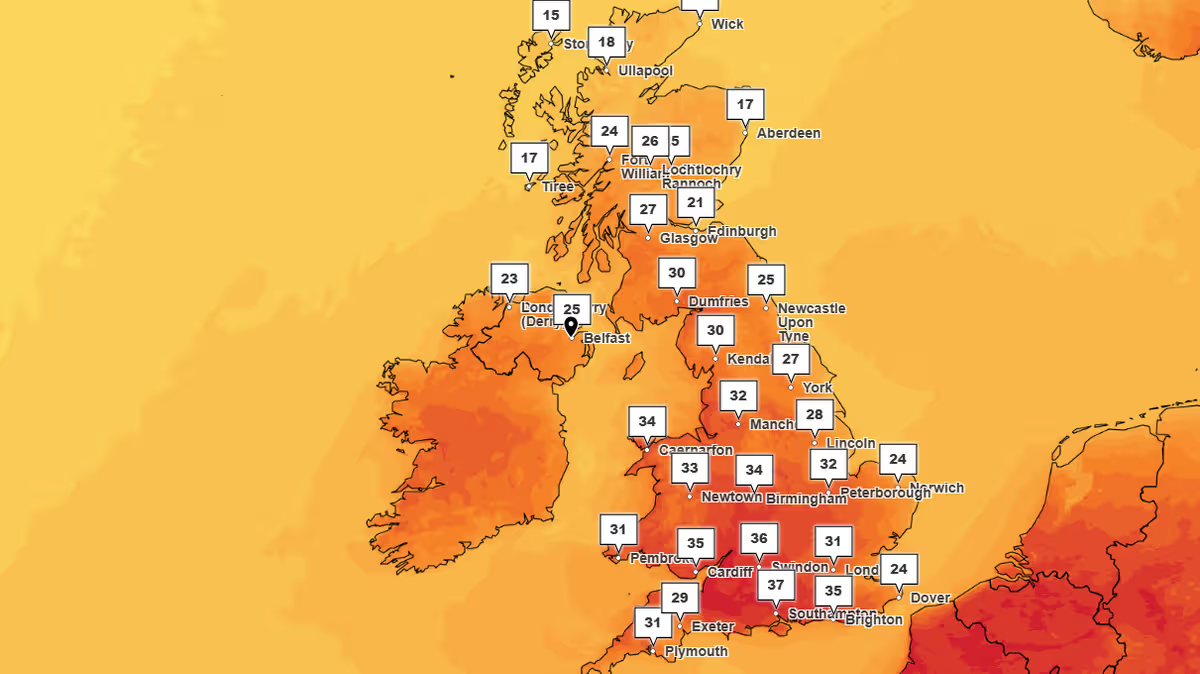
Northern Ireland reached heatwave criteria yesterday by exceeding 25°C for three days
The Met Office has explained why Northern Ireland hasn’t been feeling the same heat as the rest of the UK.
Advertisement
On Thursday, the forecaster said that temperatures in some parts of the country could climb to 29°C, the hottest day so far as part of the current heatwave.
However, with parts of England and Wales currently facing a red extreme heat warning, the Met Office said previous cloudy days have contributed to lower temperatures.
A spokesperson told Belfast Live that the cloud “reduced any residual heat getting trapped under the clearer skies further across England and Wales”.
They said: “Much of the heat and the hottest temperatures that the UK experiences come from mainland Europe… as Northern Ireland is mostly coastal, this keeps temperatures here relatively cooler than further southeast.”
Advertisement
Northern Ireland reached its heatwave criteria on Wednesday by exceeding 25°C for three days in a row in Castlederg.
Temperatures on Thursday have already exceeded this by reaching 27.8°C and is likely to go higher as it reaches close to 30°C on Thrusday evening.
The Met Office spokesperson continued: “The highest June on record for Northern Ireland is 30.8 Celsius in Knockarevan, which could be at risk of getting broken but is a low probability at this time.
“It’ll start to cool off from tomorrow with a thundery breakdown into the weekend, before a westerly wind will introduce a weather front, bringing cooler and less mild air across the UK, returning temperatures to close to average.”
Advertisement
A yellow warning for thunderstorms had been across the country from midnight to 10am on Friday, June 26, following the period of hot weather.
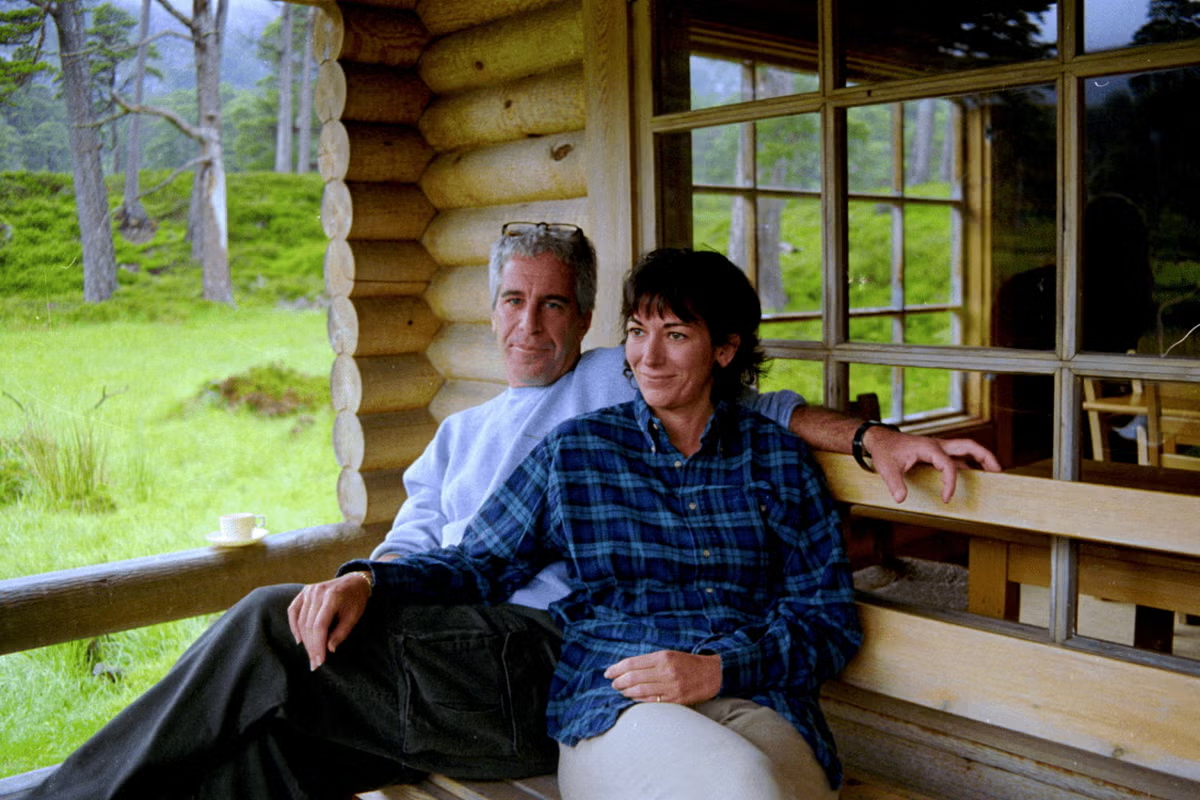
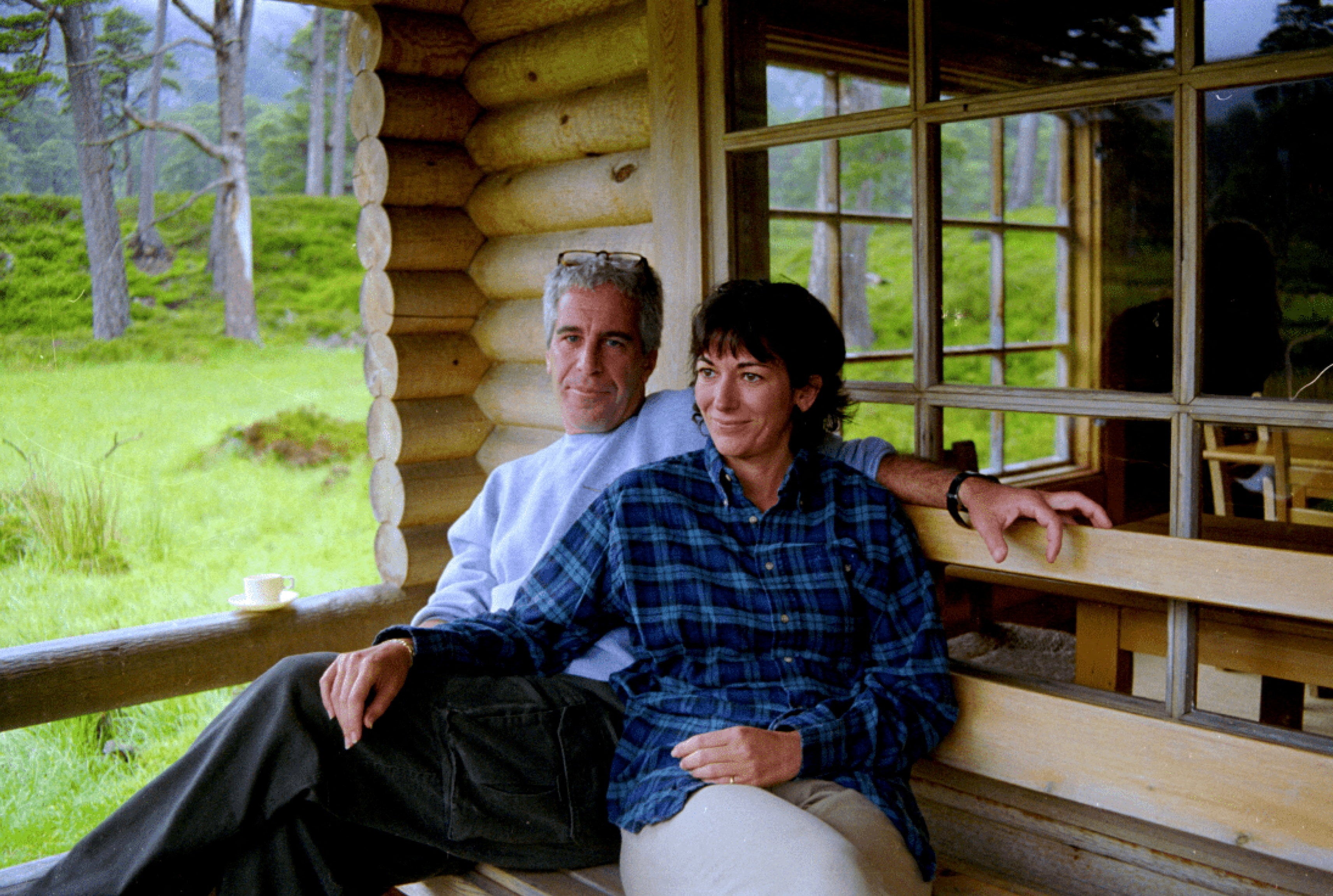
Convicted sex trafficker Ghislaine Maxwell is asking a judge to revisit a jury’s verdict and her 20-year prison sentence after recently published documents stemming from investigations into Jeffrey Epstein exposed what she believes contain new evidence that vindicates her.
Her 2021 conviction should be rendered “invalid, unsafe and infirm,” she wrote in a newly unsealed court filing.
Maxwell, who is now representing herself in her appeals, was found guilty of recruiting and grooming young women and girls for Epstein, who died by suicide in prison in 2019 while awaiting his own trial on trafficking charges.
With all her appeals exhausted, she filed a new petition for her release inside a USB drive mailed from prison inside a FedEx envelope that was postmarked April 16. Those documents — which contain 60 pages of arguments that Maxwell wrote herself — were unsealed Wednesday night.
Advertisement
A furious, 101-page response from the Department of Justice urged a judge to dismiss what government lawyers described as factually incorrect and legally baseless arguments. Maxwell’s papers also repeatedly allege government misconduct, claims that are “unmoored from law, logic, or the record,” according to a response from Assistant U.S. Attorney Lara Pomerantz in Manhattan.
Unsealed court filings show Ghislaine Maxwell trying to overturn her sex trafficking conviction based on what she claims is new evidence from the Epstein files (Department of Justice)
“Her victims deserve finality,” Pomerantz wrote. “She should not be permitted another attempt to level unsupported, false allegations of Government misconduct, particularly given the length of her papers, and when her request to amend further is conclusory.”
Maxwell, 64, is the only person charged in Epstein’s alleged trafficking conspiracy other than Epstein himself.
She is not scheduled to be released from prison until 2040, and her best chance of early release is a presidential pardon. Her attorney, David Markus, has previously said she would “welcome” one, and Donald Trump has publicly acknowledged he has the power to do so.
In October, the Supreme Court declined to review whether prosecutors fairly brought a case against her. Maxwell was “deeply disappointed,” Markus told The Independent at the time.
Advertisement
“But this fight isn’t over,” he said. “Serious legal and factual issues remain, and we will continue to pursue every avenue available to ensure that justice is done.”
“The petition involves a substantial body of post-trial evidence disclosed years after conviction through a statutory transparency process that did not exist during the underlying proceedings,” Maxwell wrote.
“The Court’s task therefore is not to evaluate each disclosure in isolation, but to consider the cumulative force of a record that is substantially different from the record available during trial, direct appeal, and prior collateral review,” she argued.
Advertisement
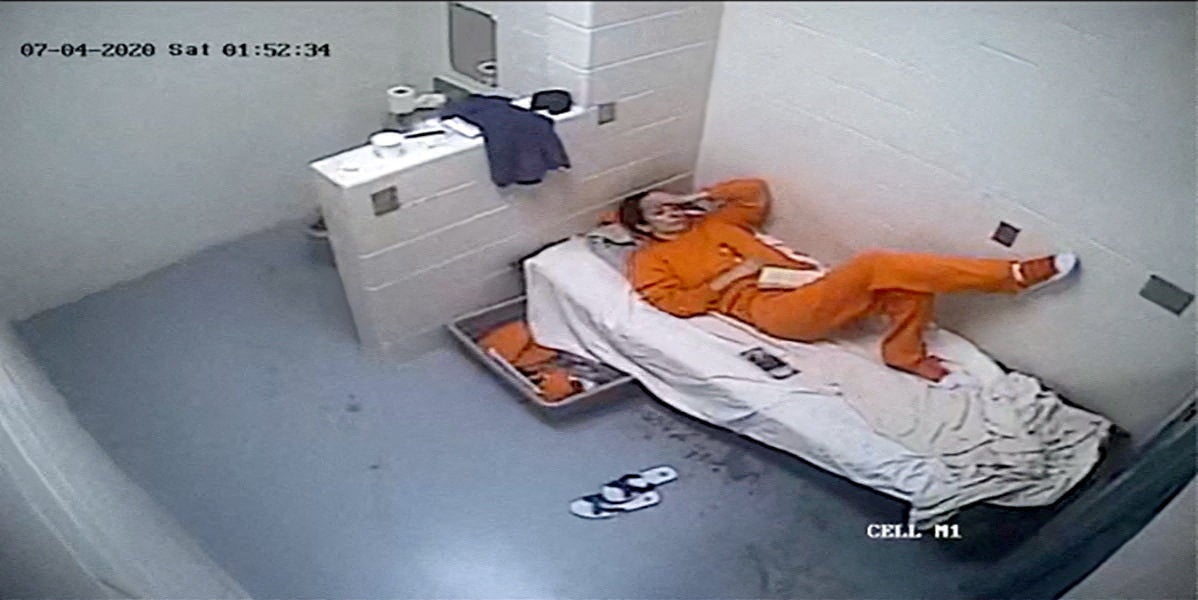
Maxwell, seen in her prison cell in 2020, is trying to ‘sweep away’ a jury’s verdict with ‘baseless’ arguments, according to the Department of Justice (Department of Justice)
In response, the Justice Department condensed her lengthy arguments as an attempt to “sweep away the judgment of conviction representing the solemn verdict of a jury following a four-and-a-half week trial, convicting her for her instrumental role in the horrific sexual abuse of multiple young teenage girls, and the considered 240-month sentence.”
But that “supposedly newly available evidence … affords her no relief,” Pomerantz wrote.
“At bottom, the defendant’s claims — to the extent not barred, and nearly all are — are speculative (at best); rest on a misreading or mischaracterization of the record; fail to establish even potential prejudice, much less the required actual prejudice; and/or rely on a misunderstanding or misstatement of the law,” she wrote.
Maxwell “utterly fails” in her arguments to overturn her conviction and sentence, according to Pomerantz.
Then-Deputy Attorney General Todd Blanche — who Trump has nominated as Attorney General — also interviewed Maxwell as part of that Justice Department’s revived investigations into Epstein-related cases. Shortly after the interview last summer, Maxwell was transferred to a minimum-security women’s prison in Texas.
In December, she filed a petition for her release from prison, citing “substantial new evidence” had emerged in her case, alleging constitutional violations that she believes undermined her right to a fair trial.
U.S. District Judge Paul Engelmayer had declined Maxwell’s request for the Justice Department to send her the so-called Epstein files, leaving her with what she called an “almost impossible task” of relying on media reports about them.
If her latest efforts fail, Maxwell’s best chance of early release from jail is a presidential pardon from Donald Trump, which prosecutors and members of Congress are vehemently opposed to (House Oversight Committee)
If her latest move fails, her best bet at getting out of jail is a pardon from the president.
Maxwell, however, has refused to voluntarily testify to Congress without assurances that she can receive some form of clemency.
In a letter to the House Oversight Committee last year, her legal team asked for immunity protections — and made another appeal to Trump for clemency.
“If Ms. Maxwell were to receive clemency, she would be willing — and eager — to testify openly and honestly, in public, before Congress in Washington, D.C.,” according to the letter, which Maxwell’s attorneys provided to The Independent at the time. “She welcomes the opportunity to share the truth and to dispel the many misconceptions and misstatements that have plagued this case from the beginning.”
Blanche, however, told members of Congress last month that he will not recommend a pardon.
As the UK Health Security Agency extends red heat health alerts across the South West, South East, London, East of England, West Midlands and East Midlands through to 11pm on Friday 26 June, drivers in Portsmouth will still head outside to wash their cars. It is, after all, the obvious thing to do in sunny weather.
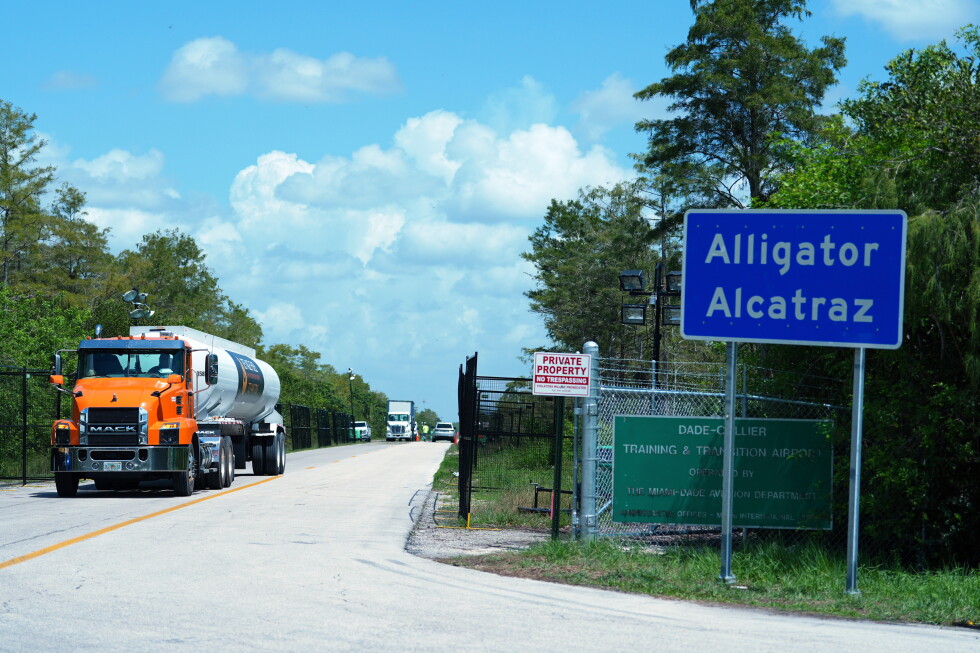
The immigration detention center in the Florida swamps known as “Alligator Alcatraz” is closing after nearly a year, Gov. Ron DeSantis said Thursday.
DeSantis said the center was always supposed to be temporary and now federal officials have enough ability to handle detention and deportation in more permanent facilities.
“It served its purpose for the time,” the Republican governor said.
Officials announced a temporary closure of the facility earlier in June, saying hurricane season made it unsafe to keep the detainees in the Florida Everglades. All the of people kept at the isolated airstrip had been sent to other facilities.
Advertisement
Immigration advocates said the tents were never safe or humane to hold people. Detainees at the facility have talked about their difficulty accessing lawyers, and have described poor physical conditions, including worms in the food, toilets that don’t flush, flooding floors with fecal waste, and mosquitoes and other insects everywhere.
The detention center was built by DeSantis’ administration in a matter of days in 2025 and President Trump came to visit site.
DeSantis and Trump said the detention center was critical to Republican efforts to return people in the country illegally back to their home countries. The Republican governor said 21,000 people were deported through the facility.
‘What’s he called?’ the Celebrity Big Brother star asked as Adam joked: ‘I mean, he is pretty much a horror story!’
Encouraging his brothers, he said it was ‘something Starmer’, prompting them to come up with ‘Jeffrey Llama’.
Advertisement
Their production team burst out laughing and corrected the confused trio with the name of cannibal Jeffrey Dahmer.
Also known as the Milwaukee Cannibal or the Milwaukee Monster, Dahmer was an American serial killer and sex offender who killed and dismembered 17 men and boys between 1978 and 1991.
He was sentenced to jail for 16 terms of life imprisonment in 91 but was beaten to death by another inmate in 1994.
Jeffrey Dahmer killed 17 men and boys between 1978 and 1991 (Picture: Marny Malin/Sygma via Getty Images)
Adam shared he had to switch off a film about Dahmer ’10 minutes in’ then went back to watch it again later.
Scott then reminded Ryan he had, in fact, met Sir Keir, to which he confessed: ‘I didn’t even know he was the prime minister at the time’.
Advertisement
Unfortunately for the former Labour leader, Ryan not knowing he resided at 10 Downing Street turned out to be slightly prophetic.
Sir Keir faced the dreaded lectern outside No 10 earlier this week but has confirmed he will stay on as an MP as his successor steps up to the plate.
That successor will almost certainly be Andy Burnham, dubbed the King in the North, who has made his move from Manchester’s mayor to MP over the last few weeks.
Maybe the Thomas household has been too busy watching scary movies to pay attention to the political shambles happening in Westminster – and we can’t blame them for that.
When work deadlines pile up, financial worries linger or an unexpected public speaking obligation looms, we often treat anxiety as a purely psychological challenge – something to be overcome with a bit of willpower.
But our bodies don’t separate the psychological from the physical. Your brain is not an island, and anxiety does not stay trapped between your ears. It triggers a rapid cascade of biochemical changes that travel through the bloodstream and affect the body in measurable ways.
New research from my colleagues and I captured this mind-body connection in real time. By putting healthy volunteers through a laboratory stress test, we discovered that acute mental stress acts as a direct chemical catalyst. Within minutes, it increases the production of highly reactive molecules known as free radicals. These molecules then alter the way blood clots form.
Advertisement
In other words, psychological stress can physically remodel your blood, making it more prone to clotting.
Scientists have known for decades that chronic stress is bad for the heart. Large population studies have repeatedly identified emotional stress as a risk factor for cardiovascular disease. What has been less clear is exactly how an emotion translates into a biological change that could increase cardiovascular risk.
When we experience psychological stress, the body’s finely balanced haemostasis – the system which keeps blood flowing normally while remaining ready to prevent bleeding when needed – becomes disrupted. The blood moves into what scientists call a hypercoagulable state, meaning it becomes more likely to clot.
But the mechanism behind this process has remained a subject of scientific debate.
Advertisement
Some experts suggested that stress activates the immune system, causing widespread inflammation. Others proposed that stress causes blood to become more concentrated as blood pressure rises. That’s an idea known as the haemoconcentration hypothesis.
My colleagues and I suspected something different, that the true instigator was oxidative stress. This is an explosion of free radicals triggered by the body’s fundamental stress response acting as an upstream master switch that directly changes the blood’s structural properties.
Putting stress to the test
To investigate this idea, we conducted a randomised controlled crossover study involving eight healthy young men between the ages of 18 and 30. That may seem like a surprisingly small group, but experiments that examine biological changes in real people under tightly controlled laboratory conditions are complex, labour-intensive and expensive. Rather than looking for broad population trends, studies like this are designed to uncover the underlying mechanisms at work inside the body.
Each participant visited our laboratory twice, one week apart. During one visit they sat quietly and rested. During the other, they completed the Trier social stress test, the gold standard in research for inducing acute psychological stress. The order in which they did the visits was completely random.
Advertisement
The test is deliberately uncomfortable because it mirrors everyday social pressures. Participants were given five minutes to prepare a speech before delivering it to a camera and a panel of expressionless judges. Just before they began speaking, their notes were taken away.
Immediately afterwards, they were asked to complete a mental arithmetic challenge, counting backwards from 2003 in intervals of 17. Whenever they made a mistake, they had to start again.
We collected blood samples immediately before and after both sessions. To measure free radicals, we used a highly sensitive technique called electron paramagnetic resonance spectroscopy. We also analysed the structure of blood clots as they formed, allowing us to examine how stress was affecting blood at a microscopic level.
Your brain is not an island, and anxiety does not stay trapped between your ears. PeopleImages/Shutterstock
Biological changes
The results were stark. During the quiet resting session, participants’ blood chemistry remained stable. After the stress test, however, two things happened at the same time: free radical levels increased and the structure of blood clots completely transformed.
Advertisement
We observed a rise in the ascorbate free radical, our marker of oxidative stress, indicating that emotional stress rapidly increased oxidative stress within the body. At the same time, the forming blood clots became larger, denser and more tightly packed with fibrin, which are the protein fibres that provide a clot’s structural framework. We also found evidence that stress activated part of the body’s coagulation system known as the intrinsic pathway.
Perhaps just as importantly, we found no evidence that stress changed blood viscosity or thickness. This challenges the idea that stress primarily works by concentrating the blood.
Instead, our findings suggest that stress alters the quality and architecture of the clot itself. This provides new evidence that even brief periods of psychological stress can trigger rapid biological changes associated with increased clotting potential.
Of course, our study does not mean that a stressful presentation or difficult day at work will immediately cause a heart attack or stroke. Cardiovascular disease is far more complex than that.
Our findings provide important clues about how psychological stress affects the body, but they should be interpreted with appropriate caution. Because the study involved only eight healthy young men, larger studies involving women, older adults and people with cardiovascular disease will be needed to determine how widely the findings apply.
The findings may also point towards new approaches for reducing cardiovascular risk. Rather than focusing solely on the psychological experience of stress, future research could explore whether targeting the underlying biochemical pathways can help protect the cardiovascular system from some of stress’s physical effects.
In a statement he made, the injured party set out the extensive surgeries he has undergone, the continued difficulties he faces and that he may have to have his knee replaced.
16:55, 25 Jun 2026
Advertisement
A Co Antrim man who “clearly has a serious problem with temper” was jailed for 16 months today for assaulting another man in Carrickfergus Bowling Club.
David Hilditch will spend an additional 16 months on a supervised licence when he is released from custody.
From West Street in Carrick, the 43-year old admitted a charge of inflicting grievous bodily harm on the injured party and was sentenced at Belfast Crown Court by Judge Patrick Lynch KC.
The charge arising from an incident in Carrick Bowling Club on January 15, 2023 where both Hilditch and the injured party were socialising.
Advertisement
The two men did not know each other and during the course of the evening Hilditch approached the other male, who was sitting with his son.
Words were exchanged between the injured party and Hilditch, who walked away.
Hilditch then returned to where the father and son were sitting and after further words were exchanged, the injured party stood up and grabbed Hilditch.
Hilditch responded by punching the injured party in this face, which caused him to fall backwards into his seat and resulted in a fracture injury to his right leg which required multiple surgeries.
Advertisement
The incident was captured on the Club’s CCTV and Hilditch was identified from the footage.
During a police interview, whilst he gave a largely ‘no comment’ response he did confirm it was him on the footage.
The father-of-two said he had been drinking and claimed he struck out after being grabbed as he was in fear for his life, but did not intend to cause the injury to the other man.
Advertisement
In a statement he made, the injured party set out the extensive surgeries he has undergone, the continued difficulties he faces and that he may have to have his knee replaced.
Branding the injury sustained as “long-lasting”, Judge Lynch said it was “particularly poignant” that the injured party’s wife passed away whilst he was undergoing rehabilitation.
Regarding Hilditch, Judge Lynch noted he was in full-time employment with a self-reported history of depression and social drinking.
The Judge added that whilst Hilditch is now taking steps to deal with his “alcohol difficulties”, he has accepted he becomes “unpredictable when intoxicated.”
Advertisement
Defence submissions by barrister Luke Curran set out that his client’s plea spared the injured party the ordeal of coming to court and giving evidence.
Mr Curran also pointed out this was a ‘single punch’ case as opposed to a sustained assault and that the nature of the leg injury was unforeseen.
Also noted by the Judge was Hilditch’s criminal record, “which does not speak well for him,” and which includes prior serious assaults that resulted in prison sentences.
Judge Lynch said Hilditch was the “instigator of the whole unfortunate situation” in the bowling club.
Advertisement
The Judge added: “The defendant clearly has a serious problem with temper and this is particularly exacerbated by the use of alcohol.
“He has failed to learn his lesson from three serious assault charges for which he was convicted and for which he served sentences of imprisonment of varying lengths.”
Following this, the 32-month sentence was imposed.



















































You must be logged in to post a comment Login