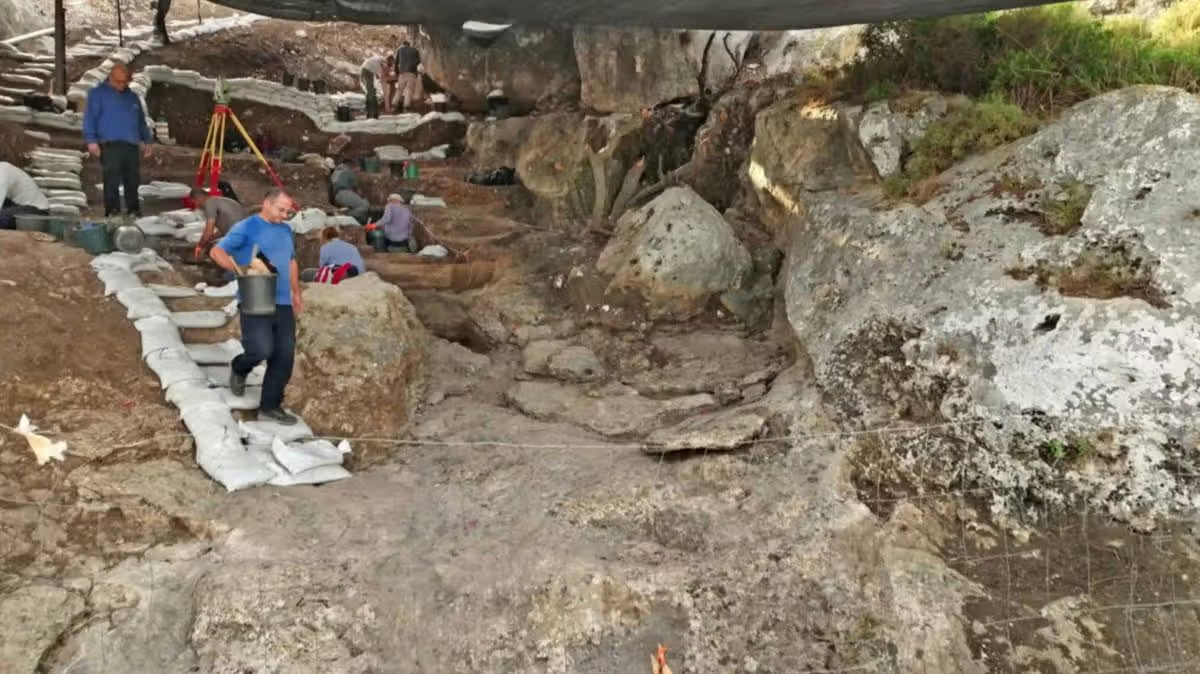
The prehistoric cave dates back to the Lower Paleolithic era and was likely populated between 400,000 and 250,000 years ago, offering a rare glimpse into ancient daily life that archaeologists know very little about
A trailblazing archaeological find has unearthed a ‘time capsule’ showcasing the everyday life of an ancient population, remarkably preserved for millennia.
Advertisement
Archaeologists have made the extraordinary discovery of a prehistoric cave in Israel, which lay undisturbed for thousands of years, providing a snapshot of human life dating back between 400,000 and 250,000 years. This groundbreaking find, remarkably intact, is a treasure trove of information about an era of which archaeologists had hitherto known very little.
The cave, thought to have been inhabited towards the end of the Lower Paleolithic or Old Stone Age, offers a fascinating glimpse into the lives of early hunter-gatherers.
This period, predating the advent of agriculture, urban settlements, monarchies, and written records, was marked by the use of basic stone tools for everyday tasks such as processing game, woodworking, and crafting simple garments.
What makes this discovery even more remarkable is that relics found within the cave remain precisely where their long-forgotten users left them, affording scientists a rare opportunity to piece together an authentic account of the daily lives of these ancient people.
Researchers attribute the findings to the Acheulo-Yabrudian culture, not a specific ethnic group or civilization, but rather an archaeological label for sites that exhibit comparable technological developments and daily patterns.
As these people were unable to read or write, archaeologists identify the Acheulo-Yabrudian culture through the stone tools discovered across sites in the Levant, including handaxes, scrapers, and blades, reports the Express.
These artefacts enable archaeologists to categorise sites and determine which groups were exchanging which technologies, before dating the areas using geological and radiometric techniques.
Advertisement
The cave appears to be a snapshot in time with flint tools found alongside the bones of animals such as gazelles, deer, and horses, as well as indications that water was accessible nearby.
These findings imply the cave was an appealing spot for prehistoric hunter-gatherers to set up camp and return to repeatedly.
Researchers aim to determine how long people lived there and whether the tools and bones might indicate longer stays at campsites and more intricate social interactions.
Advertisement
The researchers also characterise the Acheulo-Yabrudian culture as existing during a significant transitional period in prehistory.
During this epoch, people crafted increasingly advanced stone tools, utilised caves more frequently, and left increasing evidence of the controlled use of fire.
Archaeologist Ron Shimelmitz from the University of Haifa said: “This time capsule belongs to a unique period at the end of the Lower Paleolithic era, just before Neanderthals and modern humans became dominant and spread across many regions. Only a handful of sites from this important phase have been uncovered in Israel and the wider Levant, and most of them are inaccessible for research.”
There are few surviving sites from this prehistoric chapter and it could offer a revolutionary new insight into the lives of prehistoric hunter-gatherers.
It was owned by an Oxford university college for over 700 years
Across Cambridgeshire, there is history right on peoples’ doorstep, with many parts of the county dating back to ancient periods. Many of the buildings that stand in the county today are hundreds, or even thousands, of years old.
Advertisement
However, there are natural sights that are even older. One woodland that dates back thousands of years is the ancient Gamlingay Woods.
The 48 hectare woodland is at least 1,000 years old. The Wildlife Trust, which oversees the woods, describes it as “magical” woodland that is “atmospheric at any time of year”.
The woodland has played an important role over time for the local community. It was useful as it was used as a source for building materials and firewood. There are conifers planted across the woods that were first planted during the Second World War. However, the Wildlife Trust is gradually removing these.
An array of wildlife inhabits the woodland, including a myriad insects like the speckled wood and purple hairstreak butterflies, longhorn beetles and different species of dragonfly.
Advertisement
A Wildlife Trust spokesperson said: “Along the grassy rides and paths, clouds of butterflies rise up from the flowers, then, as dusk gathers, bats hawk along the rides to take advantage of the abundance of moths. Birds are active year-round, whether trilling warblers, tapping woodpeckers or hooting owls.”
Despite being in Cambridgeshire, part of the woodlands were once owned by the University of Oxford. From 1268 to 1959, parts of the woods were owned by Merton College.
The reserve is a popular site for people to visit. There are numerous pathways for people to enjoy a walk around including the 3km Rippengal’s walk, named after Robert Rippengal, who was an archeologist. He founded and directed a Cambridge-based company selling wood-fuelled renewable heating systems. Robert enjoyed walking through the woods. After he died, his family and friends felt naming a walk after him would be a fitting tribute.
It’s worth bearing in mind that there is no dedicated parking when planning a visit to Gamlingay Woods. The nearest parking is 200m away to the west of allotments on Church End Road.
Traders from across the North East spent the day dishing out everything from sweet treats to salty snacks and handmade artisan products.
Meanwhile, visitors soaked up the atmosphere and stocked up on goodies to take home.
At some stalls, children begged their parents to let them buy brownies, cakes and more, including fresh takes on the normal baked fayre like ‘cookie pizzas’.
Others dined on paellas packed with flavour and Yorkshire pudding wraps stuffed with meat and roasties.
Advertisement
Elsewhere, focaccias with every topping you could want, mac and cheese, foot-long Geordie Banger sausages, and warming build-your-own crumbles were on offer.
Some knocked back a tipple while others relaxed on sunloungers sipping from hollowed-out pineapples.
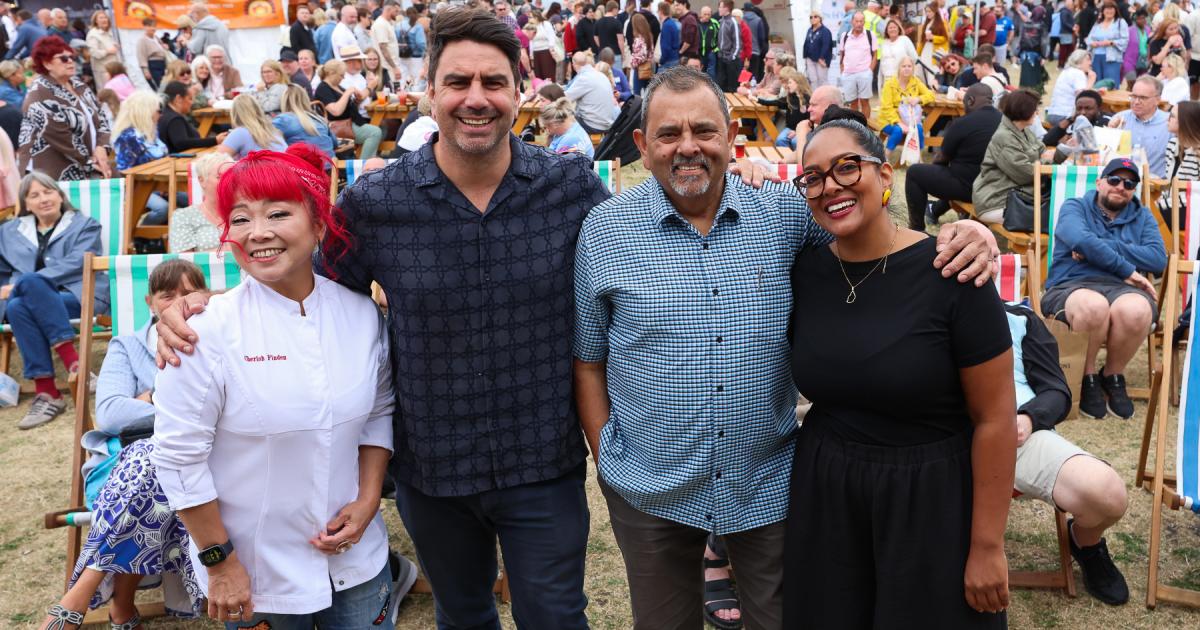
At the TV cookery stage, returnee Chris Bavin once again hosted events and welcomed demonstrations from celebrity chefs including Masterchef 2012 winner Shelina Permalloo and Indian chef Cyrus Todiwala.
The festival continues on Sunday (August 2) from 10am til 4pm, with more traders, live music and attractions set to draw crowds back for a second day.
Advertisement
Here are 47 pictures from the opening day of Seaham Food Festival 2026 – can you spot yourself in the crowds?:
Seaham Food Festival takes place in the town. (Image: Chris Booth)
Seaham Food Festival takes place in the town. (Image: Chris Booth)
Seaham Food Festival takes place in the town. (Image: Chris Booth)
Seaham Food Festival takes place in the town. (Image: Chris Booth)
Seaham Food Festival takes place in the town. (Image: Chris Booth)
Seaham Food Festival takes place in the town. Celebrity cook Shelina Permaloo and host Chris Bavin. (Image: Chris Booth)
Seaham Food Festival takes place in the town. (Image: Chris Booth)
Seaham Food Festival takes place in the town. (Image: Chris Booth)
Seaham Food Festival takes place in the town. (Image: Chris Booth)
Seaham Food Festival takes place in the town. (Image: Chris Booth)
Seaham Food Festival takes place in the town. (Image: Chris Booth)
Seaham Food Festival takes place in the town. Macaroons on offer. (Image: Chris Booth)
Seaham Food Festival takes place in the town. (Image: Chris Booth)
Seaham Food Festival takes place in the town. Celebrity cook Shelina Permaloo and host Chris Bavin. (Image: Chris Booth)
Seaham Food Festival takes place in the town. (Image: Chris Booth)
Seaham Food Festival takes place in the town. (Image: Chris Booth)
Seaham Food Festival takes place in the town. (Image: Chris Booth)
Seaham Food Festival takes place in the town. (Image: Chris Booth)
Seaham Food Festival takes place in the town. (Image: Chris Booth)
Seaham Food Festival takes place in the town. (Image: Chris Booth)
Seaham Food Festival takes place in the town. Macaroons on offer. (Image: Chris Booth)
Seaham Food Festival takes place in the town. (Image: Chris Booth)
Seaham Food Festival takes place in the town. (Image: Chris Booth)
Seaham Food Festival takes place in the town. Celebrity cook Cherish Finden, weekend host Chris Bavin, and celebrity cooks Cyrus Todiwala and Shelina Permaloo. (Image: Chris Booth)
Seaham Food Festival takes place in the town. Celebrity cook Cherish Finden, weekend host Chris Bavin, and celebrity cooks Cyrus Todiwala and Shelina Permaloo. (Image: Chris Booth)
Seaham Food Festival takes place in the town. (Image: Chris Booth)
Seaham Food Festival takes place in the town. Bell & Bullock present ‘The Garden Show’. (Image: Chris Booth)
Seaham Food Festival takes place in the town. Celebrity cook Cherish Finden, weekend host Chris Bavin, and celebrity cooks Cyrus Todiwala and Shelina Permaloo. (Image: Chris Booth)
The festival continues tomorrow (August 2) from 10.00am to 4.00pm, with more traders, live
Seaham Food Festival takes place in the town. Bell & Bullock present ‘The Garden Show’. (Image: Chris Booth)
Seaham Food Festival takes place in the town. Bell & Bullock present ‘The Garden Show’. (Image: Chris Booth)
Shane Richie’s circle fear over his ‘gruelling schedule and nineties drinking buddies’ as his wife ‘walks away from their business’ – after he was arrested for drink driving
There are reportedly fears within Shane Richie‘s circle over his ‘gruelling schedule’ and ‘nineties drinking buddies’ amid claims his wife has walked away from their business together.
It emerged on Friday the EastEnders star has been charged with drink-driving after police were called following a row with petrol station staff.
Richie, 62, who plays Alfie Moon on the BBC soap, was challenged after he was seen vaping at the Tesco petrol station in Harlow, Essex.
Footage of the incident, which unfolded just after 11pm on Wednesday, saw Richie tell staff ‘I don’t give a f***’ when warned about the dangers of using any kind of smoking device around petrol.
Advertisement
Now a new report in The Sun has claimed those close to Shane think he could be ‘spiralling’ and could end up being let go from the soap.
A source told the publication: ‘This has been a long time coming. Shane has been struggling to keep up with the demands of his workload and it appears it has all got a bit much. Everyone is so concerned about him.
There are reportedly fears within Shane Richie’s circle over his ‘gruelling schedule’ and ‘nineties drinking buddies’ amid claims that his wife has walked away from their business together
Advertisement
It emerged on Friday that the EastEnders star has been charged with drink-driving after police were called following a row with petrol station staff
‘Since his character Alfie took over as landlord of the Queen Vic, he has been filming all the time because he is at the centre of the show.’
‘It is a pretty gruelling schedule. Plus he’s got a big tour in September which he has been rehearsing for. When Shane gets stressed he does like a drink, he has made no secret of that.’
The source went on to claim that BBC bosses ‘won’t take the incident lightly’, adding: ‘It wouldn’t be a surprise if they suspended him.’
Advertisement
Next month Shane is due to perform in nationwide theatre tour Prat Pack alongside Bradley Walsh, Brian Conley and Joe Pasquale but the publication claims there are fears he will be away with his ‘drinking buddies from the nineties’ for a whole month.
There are now also reported questions over his marriage to actress Christie Goddard who he wed in 2007. They have three children together.
The publication claims that Christie was terminated as director of their joint company Bluebelle Skye Productions in June so now has no control over the business empire they have run together since 2017.
A representative for Shane has been contacted by The Daily Mail for comment.
Advertisement
The row at the petrol station this week began after Richie, real name Shane Roche, drove his white Hyundai onto the forecourt seemingly with a flat tyre.
After exiting his vehicle and being spotted with a large vape by staff, the actor was told he could not smoke at the station.
Brandishing the vape, Richie replied: ‘It’s not smoking.’ Upon realising he was being filmed, the EastEnders star then claimed: ‘This is not a vape.’
Join the discussion
Advertisement
Should stars facing personal struggles step back from the spotlight or does the show always go on?
It has been claimed that his wife Christie was terminated as director of their joint company Bluebelle Skye Productions in June so now has no control over the business empire they have run together since 2017
He was previously married to Loose Women star Coleen Nolan from 1990-1999. They share son Shane, 37. Shane was unfaithful to Coleen during the marriage
After staff told him the vape ‘is a risk’, the actor, while reaching back inside his car and with his back to the employee, said: ‘I don’t give a f***.’
Advertisement
As the manager of the petrol station phoned police, claiming Richie was being ‘aggressive,’ he told the man filming: ‘Someone’s coming to change my tyre.’
Police were later seen arriving at the forecourt.
Richie was arrested and later charged with drink-driving. He is set to appear in court next month.
It is a criminal offence to smoke a cigarette at a petrol station due to the danger posed by sparks in the proximity of fuel, which is highly flammable.
Advertisement
It is not a specific offence to vape on forecourts, but firms strictly prohibit it over concerns about the same risk.
A spokesman for Essex Police said: ‘Officers were called to reports of a suspected drink-driver in Church Langley Way, Harlow, shortly before 11.20pm on Wednesday July 29.
‘On arrival, officers arrested a man. A charge of drink-driving has subsequently been authorised against Shane Roche, 62, of Surrey.
‘He is due to appear at magistrates’ court on Wednesday, September 9.’
Advertisement
Richie is best known for his EastEnders role, having appeared on the soap for multiple stints since 2002, and his character has currently been part of the line-up since 2022.
He portrayed Alfie Moon again in a six-part spin-off Redwater in 2017.
A representative for Richie was contacted for comment on Saturday morning.
Shane has had a complicated past with his relationships and was previously married to Loose Women star Coleen Nolan from 1990-1999. They share son Shane, 37.
Advertisement
Shane was unfaithful to Coleen during the marriage.
‘He was so brilliant at convincing me I was wrong,’ Coleen said in 2017.
‘He would look me right in the eyes and convince me I was wrong,’ she said. ‘He made me feel paranoid.
‘I remember that feeling of elation when I found out [he was having an affair] I went ‘Yes! I knew it.’
Advertisement
‘It was a feeling of euphoria before the absolute devastation hit me – he still convinced me to stay.’
In 1996 Shane had an affair with dancer Claire Tyler while married to Coleen, and admitted his deception in his 2003 autobiography Rags to Richie: The Story So Far.
Shane once confessed: ‘I lost my first wife through my drinking. A bottle of Jack Daniel’s and I was off.’
The city and the river have both seen their names evolve over the centuries
Cambridgeshire is known for its many natural landmarks and among the most famous is the River Cam. People may think that the city was named after the river, but it was actually the other way around.
Advertisement
Long before the university, there was an Anglo-Saxon trading town on the river ‘Granta’, which likely meant ‘Muddy Waters’. This Old English town was called ‘Grantabrycge’, or ‘Granta Bridge’. It centred on the Great Bridge that features on the city’s crest.
After the Norman Conquest of 1066, French-speaking nobles struggled with pronouncing Anglo-Saxon placenames. ‘Grantabrycge’ evolved into the more elegant ‘Cantebrigge’ by the late 14th century before the middle was thrown out entirely to form ‘Cambridge’.
All the while the river continued to bear its Anglo-Saxon name, ‘Granta’. But as ‘Cambridge’ grew in popularity, its inhabitants started to question its source of life.
Assuming the town was named after the river, they changed its name. By the 17th century, the River Cam had usurped the Granta.
Advertisement
Beyond the city walls the ancient moniker survives. Residents upstream from the Mill Pond embrace the River Granta, as does the Granta pub on Newnham Terrace. Indeed ‘Grantchester’ itself survived the fate of ‘Granta Bridge’.
Grantchester joins the hundreds of other Old English placenames that proudly survived the Norman Conquest.
A number of criminals have been caged in Scotland after French authorities cracked the highly encrypted EncroChat messaging service in 2020.
Gangsters, drug lords, weapons dealers and county lines runners have been rounded up after their dodgy dealings were exposed on the app.
The Record’s new series will explore Scotland’s biggest encrochat busts – and the individuals behind the deals who believed they were untouchable.
“Elpazzo” and the Wonka bars
Aaron Bradford was the first person in Scotland to be convicted following a trial using EncroChat evidence.
Advertisement
The drug trafficker, who operated under the EncroChat handle “Elpazzo”, was caught flooding the country with cocaine, amphetamine and cannabis laced ‘Wonka’ chocolate bars.
The 35-year-old believed his conversations about his drugs empire were hidden from law enforcement on the encrypted platform. But French authorities infiltrated the messaging service, favoured by criminals and gangsters.
The breakthrough triggered Operation Venetic – a UK-wide investigation that exposed organised crime groups operating across Europe.
Bradford, from Dundee, was jailed for eight years at the High Court in Aberdeen after being found guilty of being concerned in the supply of controlled drugs.
Advertisement
The court heard Bradford was involved in plans to distribute significant quantities of cocaine, amphetamine and cannabis products, including cannabis-laced “Wonka” chocolate bars.
Investigators uncovered messages in which he discussed a £17,000 drugs deal. He also flaunted a photograph of a large block of cocaine while using the messaging platform.
Advertisement
Police raided his home in June 2020 as part of Operation Venetic. Detectives recovered equipment linked to large-scale drug dealing.
They also seized a blender, hydraulic press and digital scales, along with paperwork detailing drug debts, customer names and amounts owed.
The offences were aggravated by a connection to serious organised crime, with prosecutors also beginning confiscation proceedings under the Proceeds of Crime Act to recover any criminal profits.
Advertisement
The case was the first of many to follow, with Encrochat communications forming evidence for some of the biggest crime busts.
Following the sentencing, Sineidin Corrins, Deputy Procurator Fiscal for Specialist Casework at the Crown Office and Procurator Fiscal Service, said: “This was a coordinated effort to release a sizable quantity of drugs into Dundee.
“But now, thanks to the efforts of Police Scotland and COPFS, this individual faces a lengthy prison sentence.
“We will continue to target all those who threaten communities across Scotland, not only drug couriers but also those who direct their movements.
Advertisement
“With each case of this kind we can help reduce the harm these drugs inflict on those communities.
“COPFS will continue working with the police and other agencies as a member of Scotland’s Serious and Organised Crime Taskforce to ensure that these crimes are detected and those responsible prosecuted using all measures at our disposal.
“Proceeds of Crime proceedings have now been commenced to ensure the profits obtained through criminal conduct are confiscated.”
Advertisement
Detective Inspector Julia Ogilvie, of Police Scotland’s Organised Crime Unit in Dundee, said the case highlighted the success of international cooperation against organised crime.
She said: “There is no doubt the excellent working partnership between law enforcement agencies is paying dividends.
“We will continue to carry out systematic, targeted operations which lead to arrests and cause significant disruption to the criminal fraternity. This sentencing underlines our commitment to the Serious Organised Crime Taskforce and the country’s Serious Organised Crime Strategy.
“We remain committed to our fight against those involved in serious and organised crime to ensure our communities are safe.”
Advertisement
EncroChat was an encrypted communications service marketed as offering complete privacy through modified mobile phones with disappearing messages and a remote “panic wipe” function.
Although owning an EncroChat handset was not illegal, the platform became widely used by organised crime groups across Europe. In 2020, French investigators infiltrated the network, allowing police to read messages exchanged by thousands of users and leading to hundreds of arrests under Operation Venetic.
Get more Daily Record exclusives by signing up for free to Google’s preferred sources. Click HERE.
More than 500 of the supplement drops have been bought in the past month on Amazon
This article contains affiliate links, we will receive a commission on any sales we generate from it. Learn more
Advertisement
For one mum, feeling tired had become the norm after nearly 10 years of poor sleep – but she says a simple addition to her morning routine has helped her feel ‘much better’, with her energy levels higher than before. The BlueIron Liquid Iron Supplement with Nordic Blueberries + Vitamin C is now down to £13.60, from £16, on Amazon in a limited-time deal.
The product is a liquid iron supplement designed to make it easy to add iron to a daily routine, with a 10ml serving from the 250ml bottle costing around 55p a day. It can be mixed into food or drinks and contains iron, which contributes to the reduction of tiredness and fatigue and normal energy-yielding metabolism, the brand says.
Feeling tired all the time, which is sometimes dubbed TATT, or ‘Tired All The Time’, has become something many people simply accept as part of modern life. But iron plays an important role in the body, including normal oxygen transport and the formation of red blood cells and haemoglobin, meaning getting enough can be important for overall wellbeing.
READ MORE:
Advertisement
BlueIron has also launched its High Strength Drops (50ml) formula for those looking for a higher-strength option. It is priced at £10.35, down from £13, and delivers 20mg of iron per daily serving, equivalent to 142% of an adult’s recommended daily intake of iron, the brand says. It comes in a 50ml bottle with an easy-to-use pipette.
The original BlueIron Liquid Iron comes in a 250ml bottle and is made with wild Nordic blueberries, giving it a naturally fruity flavour. It also contains vitamin C, which contributes to normal immune function and helps with iron absorption, while the liquid format is designed to be easy to take.
The BlueIron Liquid Iron Supplement is available from Amazon
The brand uses a micro encapsulated form of iron, which is designed to be released in the intestine, and says the formula is gentle on the stomach. The supplement is suitable for vegetarians and vegans and can also be used during pregnancy, although anyone considering an iron supplement should check that it’s suitable for them with a healthcare professional.
BlueIron is available through Amazon, as well as Holland & Barrett, where the 250ml liquid supplement is currently listed at £16. With women particularly vulnerable to iron deficiency due to factors including menstruation and pregnancy, the brand is tapping into growing awareness around how nutritional deficiencies can contribute to tiredness.
Advertisement
However, persistent or unexplained fatigue can have many causes, so it’s worth speaking to a GP rather than assuming low iron is responsible. An alternative option is the Kiki Health Ionic Iron Liquid Concentrate (50ml) for £20 from LookFantastic.
This is described as an iron supplement drink that is designed to be added to water. Each serving contains 5mg of iron, which is 36% of the recommended daily intake, the site says, and it contributes to normal cognitive function, energy-yielding metabolism, red blood cell and haemoglobin production and oxygen delivery.
Or at Superdrug, there’s the Vitabiotics Feroglobin B12 Iron Supplement Liquid (200ml) for £4.99. The site says Feroglobin is specially formulated with a gentle source of moderate level iron, vitamins and co-factors, ideal to help support health and vitality for the whole family.
Advertisement
The BlueIron Liquid Iron Supplement on Amazon has been rated highly by shoppers. One said: “I have suffered badly from low iron on and off for nearly 10 years, since I had my children. Tablets make me feel nauseous and give me an awful tummy, so when I found out about Liquid Iron, I had to try it out. Wow!!! It’s absolutely fabulous! A wonderful taste with no metallic aftertaste! Within a couple of days I felt a difference, my sleep is much better, and my energy levels are higher. So easy to include into your morning routine! Great price. Will most definitely buy again!”
A second said: “Since purchasing BlueIron, I feel less tired. My sleep routine has been terrible and I really feel that taking BlueIron has given me back a restful night’s sleep, which means my days have been full of energy. The taste is great, meaning I am happy to keep taking it. Will keep on top of things.”
Others, however, deducted stars and left feedback. One said: “Blueberry flavour doesn’t fully cover the bloody taste of an iron supplement, but it does help. Very thick liquid, almost like gel. I used it in the second trimester of my pregnancy and it worked great.”
Advertisement
Another said: “Not a bad taste, not too sure of the texture being syrup-like. But it’s high quality and drinkable.”
Overall, though, most were happy with their purchase. Another reviewer commented: “I love this product, BlueIron Liquid Iron Supplement is above any beyond the standard of other supplements with its delicious Nordic blueberries and vitamin C, B12, Folic Acid. I would say this is the best Iron supplement on the market.”
Enlli Thompson has had chemotherapy, lost her hair, had a full hysterectomy, had to freeze her eggs, and entered immediate menopause all before turning 20
Enlli Thompson was 19 when she first went to her GP for help with the persistent headaches and stomach issues she was suffering from. What followed was a journey resulting in a diagnosis of ovarian cancer. Since then, she has had chemotherapy, lost her hair, had a full hysterectomy, had to freeze her eggs, and entered immediate menopause all before turning 20.
Advertisement
Her story is one of life-changing medical procedures, and understandable physical and mental strain. It is also a story of what she believes were missed chances to diagnose her, but it is one of hope, and strength, because she says her cancer, the treatment and all she went through – and continues to do so – has changed her life for the better.
March 2024 is where Enlli starts her story, but her symptoms had actually started before that. She was underweight and was struggling a lot with stomach pains and migraines so she went to her GP.
She was on the birth control pill and the GP recommended she come off that, wait for two cycles, and return if things hadn’t improved. They hadn’t and the pain was unmanageable.
In October 2024 she went to A&E at Ysbyty Gwynedd hospital in Bangor with suspected appendicitis. When her blood test came back clear, she was told she wasn’t a priority because it wasn’t appendicitis and she had a total 16 hour wait. Enlli says a junior doctor told her it was likely a urine infection, and that she shouldn’t be wasting A&E time.
When she was told she would be discharged, she asked for a second opinion.
A senior doctor then arrived, the 20-year-old said. “He barely examined me, and he could see the pain I was in, and he just instantly told me, ‘You need a CT scan’.”
It was that which revealed a mass in her pelvic area. She says she was told in the waiting room and told she would be taken to the gynaecological ward. “I was just sat there then, millions of thoughts in my head. I instantly thought, ‘I have cancer’,” she explains.
Advertisement
After an ultrasound and other tests she asked that question aloud and was told they couldn’t say.
In the first week of December she went back for another ultrasound and eventually a 10cm mass was found. She says it wasn’t until she was put under the care of Richard Peever’s team, a leading cancer specialist gynaecologist, she felt she was taken seriously.
“I could never ask for a better team from then. Honestly, if it wasn’t for them and the senior doctor in A&E, I would not be here today, which is really scary. Especially the senior doctor in A&E, if he wouldn’t have listened to me, I would definitely not be here today,” she says.
In February 2025, she had one ovary, a tube and the tumours removed, and biopsies were carried out but it actually took until the following month for her to have an official diagnosis of cancer.
Enlli, from just outside Caernarfon, immediately had to go through fertility treatment in the hope of one day having a family.
“I always knew I wanted a family of my own, but at 19 I had no plans of having children for a good while. It wasn’t on the agenda.
“I wanted to get my career on the go, I wanted to do everything else. I wanted to get married,” she says.
Advertisement
Then in May 2025, she had a full hysterectomy which put her into immediate menopause. She was 19.
How did she keep going through the diagnosis, chemo, surgery and then menopause? “It was hard, but I think I’m quite grateful that I’m the type of person who can’t sit still. Even when I was in agony, I was going 100 miles an hour. I was desperate to get back to work,” she said.
She went into remission on November 6, 2025, just before her 20th birthday. She continues to have checks, every few months, but remains on medication.
Of the many changes she’s faced, another is her career. She loved training as a mechanic, but had to give it up due to the physical effect of cancer. She initially began work as an NHS admin, but that too had to stop.
Advertisement
“I had suffered a real bad burnout. But I always knew after being diagnosed, I wanted to do something with cancer, being a public speaker advocating for people, or advocating for better knowledge and awareness for gynaecological cancers and young people’s cancers.
“If that means me going into the medical world and becoming a specialist nurse I am not sure at the moment, but I am absolutely loving the public speaking at the moment,” she says.
“I think cancer has changed me for the better, because it’s given me this passion for advocating and gaining awareness and fighting for change.
“Whilst I was going through treatment, I was doing a lot of TikToks, and I tried to not show the negative side at that point, because I felt enough of that was in the media. When I got diagnosed, I was watching a show where someone got diagnosed with cancer, and I thought, ‘Oh my God, that’s what I’m going to be like’. So, I wanted to show you can actually still smile, you can still be dancing whilst you’re going through treatment.”
Advertisement
One of the first things she did with Tenovus was a fashion show, at the suggestion of her specialist nurse, some with wigs, some without.
“I could not say no to that. I was so excited and so grateful I got that chance, and from that I think I gained a lot more confidence because I went on without a wig, I went on with a blonde wig and then I went on at the end with a brown wig as well, which I loved,” she says.
Between the menopause symptoms and heatwave, she has had to put wearing a wig to one side for now. Instead, she is embracing the curls that have grown after her chemo.
Advertisement
“Everyone knew that I was a patient as well, and again, I think that shows that cancer’s not just all this depressing stuff. You can still live your life when you can,” she said.
Every year, there are nearly 1,200 cases of gynaecological cancers in Wales and around 470 women die of the disease and targets for timely cancer treatment are not being met, while women report feeling dismissed, delayed and unheard when presenting with symptoms.
The survey found 34% of GPs feared over-referring patients to the NHS, there was limited consultation time for GPs as well as difficulty distinguishing cancer symptoms from other benign issues.
For Enlli all that rings true. She doesn’t, she says, blame her GP for not immediately suspecting cancer but she does think her diagnosis and treatment were delayed because of her age and gender. She was repeatedly told her symptoms could be due to anxiety or her mental health.
“If I was a bit older, I don’t think they would have been saying ‘Yeah, it’s mental health’. Even after my diagnosis and my treatment and being in remission, they’d still tend to say, ‘Oh yeah, it’s anxiety. It’s this, it’s that’.
Advertisement
“I do also think it’s because I am a woman, because they were not fussed about the gynaecological aspect to it.
“I did tell them that I was getting really bad pains, and my periods were getting much more painful that even when I was not on my period, I was getting a lot of pelvic pain. A lot of things to do with that, my periods were getting heavier, which was not usual for me and they never thought to refer me to a gynaecologist.
“I was young, I had bleach blonde, long hair. I looked very girly, but I was a mechanic so I wasn’t one of those girls who would complain, ‘Oh, I’m in pain’ after stubbing my toe. I was like, ‘Get on with it’.
“I do think they just saw what I looked like. I think, ‘Oh yeah, she’s not really in pain. She’s just a young girl that has a low pain tolerance’ but realistically, I was working full-time as an apprentice as a mechanic in constant pain.”
Advertisement
A number of times, as she explains her story, she says she “regrets” not speaking up sooner.
Of the period between scans, she says: “I regret letting them do that looking back, because once you’ve heard that you’ve got a mass, I personally, I regret I didn’t advocate for myself in that time, asking them to do more tests then, and not being discharged,” she said.
“Maybe if I had advocated for myself earlier, it wouldn’t have reached stage three,” she says.
Advertisement
Referencing the finding that GPs said they didn’t have time to look at notes properly, she says: “If they had looked at my symptoms in the time that I was going back and forth between March and October, I was going nearly every month at this point and I was complaining about the same issues, and a lot of it was a gynaecological issues.
“I don’t blame them for not thinking cancer, because who does expect ovarian cancer in an 18-year-old?
“I don’t blame them for that. I blame them for not taking the gynaecological issue seriously, because it points to so many different gynaecological issues.”
She says even now, when she arrives at an appointment, the bulk of time is spent with her explaining her history.
Advertisement
“I still have to advocate for myself, I’m still not listened to. Even after everything I’ve been through, I’m still not listened to, and it’s still pointed to anxiety or my age or whatever,” she says.
A Welsh Government spokesperson said: “As a new government, we are taking decisive action on cancer by developing a 10-year National Cancer Strategy to transform how the health service prevents, diagnoses, and treats the disease, with a focus on earlier diagnosis.
“We are determined to ensure women’s pain is taken seriously. The Deputy Minister for Women’s Health recently brought together clinicians, researchers and women with lived experience at a summit to tackle the normalisation of pain in women’s healthcare.
“Following this, minimum standards for service user engagement will be drafted to ensure women’s voices continue to shape the Women’s Health Plan.”
If your neighbour’s cat or dog is regularly fouling in your garden, you might be wondering what your rights are – and what you can realistically do about it. I consulted some experts to find out, and I was quite surprised
If you’re a homeowner with a garden, you’ll understand that a lot of effort goes into maintaining its appearance. It’s particularly vital to keep it looking good, especially during the summer months, when you’re using the outdoor space more often.
Advertisement
However, one issue that can be genuinely frustrating is when your neighbour’s pet repeatedly fouls on your lawn. Naturally the animals aren’t aware it’s inappropriate, and it can be overlooked occasionally.
But if it’s turning into a frequent problem and you’re unsure how to proceed, I consulted several legal experts – and they all offered the same guidance, which can help you to avoid a potential conflict with your neighbours.
What to do if a cat keeps pooing in your garden
Interestingly, the regulations differ for dogs and cats – meaning your rights vary too.
Advertisement
Jack Malnick, Founder and Managing Director at Sell House Fast, explained: “When it comes to cats, the law is different compared to dogs. Cats are not covered by any specific legislation that requires owners to keep them confined, unlike dogs, which are subject to rules under the Dangerous Dogs Act 1991.
“This means cat owners are generally not legally responsible if their cat wanders into a neighbour’s garden or enters another property, as long as the cat is not causing structural damage or health issues. However, cat owners do have a “legal duty of care” to make sure their pets’ welfare needs are met. This includes allowing cats to display normal behaviours, such as exploring and roaming.”
However, his guidance — which was what basically all the professionals suggested — is to speak with your neighbour initially before escalating matters. He said: “If a neighbour’s cat or dog is causing problems, the best first step is usually to have a calm conversation with your neighbour. They may not even realise there is an issue, and talking it through can help both sides find a simple solution and avoid rising tensions.”
What if it’s a neighbour’s dog?
If it’s a dog that’s making a mess of your garden, the situation is different. According to David Gammill, owners of dogs have more responsibility, and are more liable.
Advertisement
He said: “Dogs are treated differently because their owners are expected to keep them under control. If a dog leaves waste in a public or shared area covered by local rules, the person responsible for the dog will usually need to clean it up. If they fail to do this, the council may issue a fine.
“Communal gardens, shared courtyards, and paths may be covered by council, housing association, or building rules. If dog waste is regularly left in one of these spaces, you can report it to the council, landlord, housing association, or property manager.
“If a neighbour’s dog repeatedly enters your private garden, the situation may involve trespass or nuisance. If the dog damages your grass, plants, fence, or other property, you may also be able to ask the owner to pay for the damage.”
What do the professionals advise?
As mentioned earlier, the majority of experts recommended that you shouldn’t confront your neighbour aggressively. Instead, attempt to collect some evidence initially, so you can present it if needed.
Benson Varghese, a Board Certified Criminal Lawyer, observed: “The first thing that homeowners suffering from a long-lasting problem should do is to keep a journal of the situation with pictures or video evidence.
“Having an evident example of the ongoing problem will be much more effective compared to a one-off case. Usually, before any legal action is taken, mediation is the preferable way to settle a dispute, as it often proves to be quicker and cheaper.”
If talking to your neighbour is unsuccessful and you’re still experiencing the issue, the sensible next move is to send a letter. This also establishes a record demonstrating that the owner was informed about the matter, according to Everett Lupton from Slaughter & Lupton.
Advertisement
Following this, the local authority might investigate whether any local regulations are being violated. Everett said: “If the pet causes clear damage, the homeowner may ask the owner to cover the cost. A civil claim may also be possible when there is strong evidence and a specific financial loss.”
The experts also agreed that while pursuing your neighbour through the courts might ultimately be an option, it should be an absolute final measure, so it’s worthwhile attempting to resolve matters amicably first.
How to deter cats and dogs from your garden
Thankfully, there are numerous safe methods to discourage animals from entering your garden and causing disruption.
Advertisement
Peter Thum-Bonanno, Co-Founder and CTO of GetAgent, suggested motion-activated sprinklers, citrus peel and proprietary cat repellent granules, describing them as ‘all legal and widely used’.
He went on to say: “Securing boundaries where possible, checking for gaps in fencing or hedging, removes the point of entry entirely. These are not legal remedies but they solve the practical problem quickly while any formal process runs its course.”
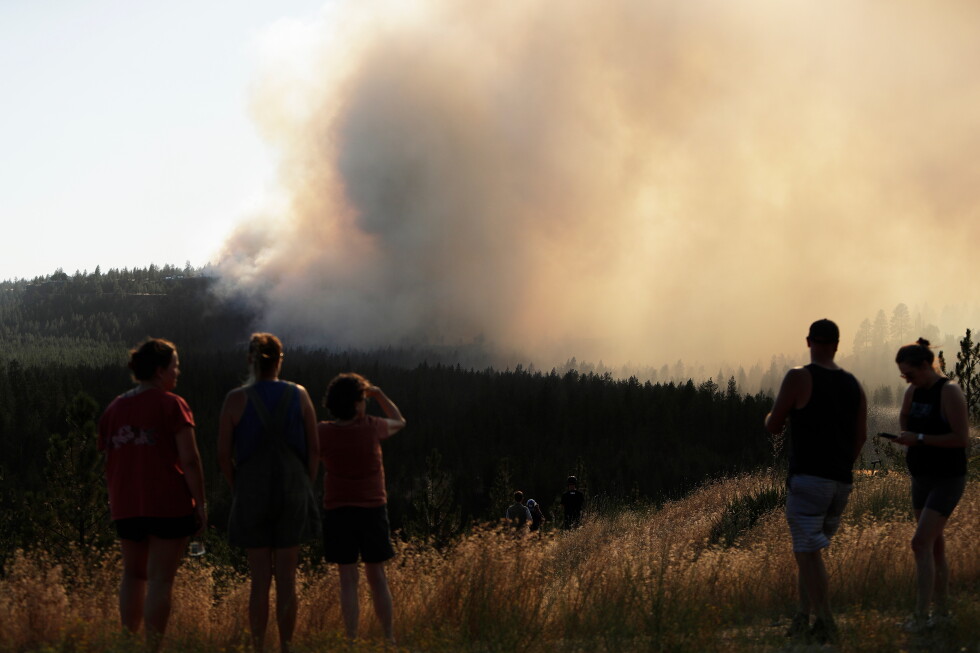
SPOKANE, Wash. (AP) — A fast-moving wildfire driven by strong winds and high temperatures swept across northwest Spokane on Saturday before jumping the Spokane River and prompting the evacuation of thousands of people.
The Old Trails Fire started around noon, burning brush and grass in an open area, but quickly spread north and east toward residential areas. Cars lined the roads as people fled their homes, and orange and red flames were visible from the highway.
The blaze sent a plume of smoke billowing over the region, and as of the evening almost 4 square miles (10 square kilometers) of terrain had been burned, said Courtney James, spokesperson for the Washington State Department of Natural Resources.
The cause was under investigation.
Advertisement
“We urge residents of Spokane to heed evacuation orders and to stay alert to changing conditions and evacuations as they are rapidly changing,” James said.
Some structures were lost but officials did not yet have a solid count, said Jessica Watson, a DNR spokesperson for the fire. Firefighters had zero containment as of the evening and the wind continued to blow, she said.
Power company Avista said it implemented public safety shutoffs in the area due to elevated fire risk.
Gov. Bob Ferguson declared a state of emergency Saturday after unusually high temperatures and high winds exacerbated record wildfires across the state. The National Weather Service issued a “particularly dangerous situation” red flag alert for eastern Washington.
Donald Trump says he has cancelled strikes against Iran provided a deal was struck “rapidly” with the country.
In a post on Truth Social, the US president wrote that he had decided to “cancel the attack, subject to being able to rapidly make a DEAL” – which would include the immediate opening of the Strait of Hormuz and an end to “Iran’s nuclear threat”.
Trump said the decision had been taken alongside Israel. The announcement came amid US media reports that Washington might have been planning new, intense strikes on Iran over the weekend.
Tehran earlier accused the US of escalating tensions, saying any regional state co-operating with Washington would be “engulfed by the flames of war”.
Advertisement
In the post, Trump said the US was “locked and loaded and ready to go against the Islamic Republic of Iran, at levels of Military Terror, Strength, and Power not seen since World War II”.
But he said he had cancelled the strikes after being“asked” by Iran and other countries in the Middle East to “hold off” on any attack to allow for a deal to be reached.
He appeared to suggest progress towards an agreement had been made, saying that the “perimeters of a deal has been agreed to”.
“This would include the Immediate, Complete, and Total OPENING OF THE HORMUZ STRAIT, and an end to Iran’s nuclear threat,” he wrote.
Advertisement
Iran has not yet responded to Trump’s announcement.
The US government had earlier urged Americans across the Middle East to be alert and ready to leave “should there be escalation” in the region.
“Americans currently in the Middle East should exercise caution and heightened vigilance and should be prepared for flight cancellations, periodic airspace closures, and potential travel disruptions,” the security alert said on Saturday.






















































You must be logged in to post a comment Login