


Connect with us

NewsBeat

Here’s what’s going to happen to BrewDog now it’s ‘up for sale’ | News UK

Published

on

Here's what's going to happen to BrewDog now it's 'up for sale' | News UK
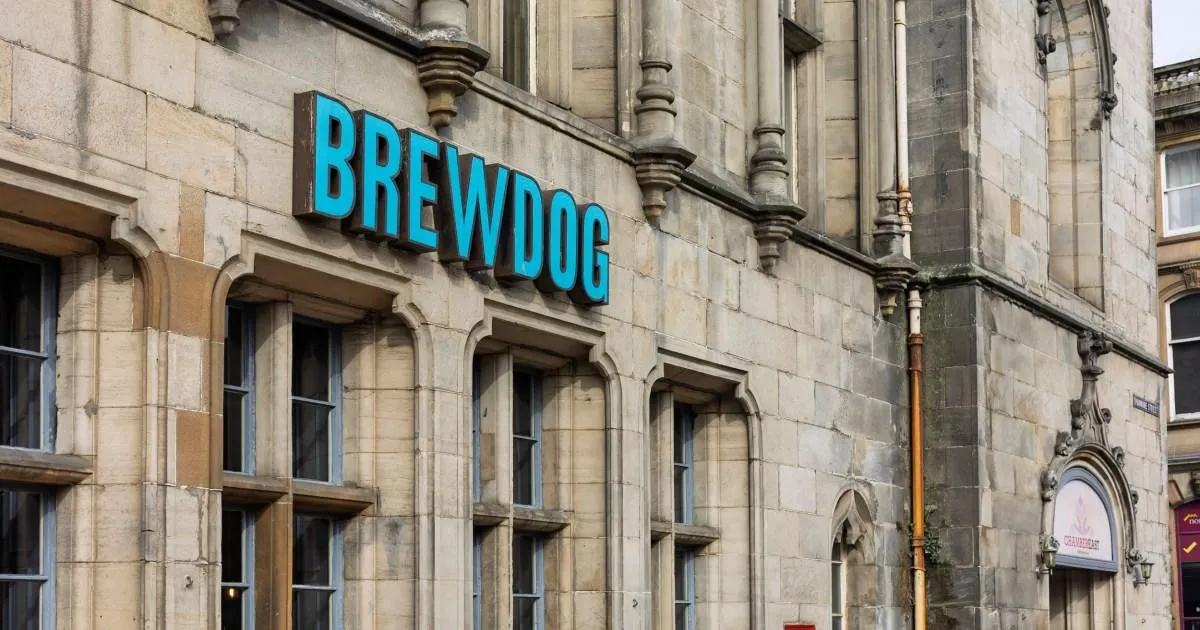
BrewDog could be up for sale amid a challenging economic climate (Picture: Getty Images)

Beermaker BrewDog, which makes craft beer such as Punk IPA and Elvis Juice, could be up for sale.

The move comes months after the Scottish-based brewer announced its beers were taken off the taps at almost 2,000 pubs across the UK.

Before that, the brewery also announced the closure of 10 of its bars in July last year, citing ‘ongoing industry challenges’ such as rising costs.

Consultants have since been called in to help look for new investors, which could result in significant changes for BrewDog.

Advertisement

One point of concern was job security for its staff at Ellon in Aberdeenshire after the company announced the closure of its distilling brands.

Sign up for all of the latest stories

Start your day informed with Metro’s News Updates newsletter or get Breaking News alerts the moment it happens.

Advertisement

BrewDog, which was founded in 2007 by James Watt and Martin Dickie, have appointed consultants AlixPartners to oversee a sale process.

The brewery said it wanted to focus more on its beer products, but maintained that there has been no formal decision to sell the company.

Cans of BrewDog beers on a shelf
BrewDog produces Hazy Jane and Punk IPA beer (Picture: Getty Images Europe)

It described the current economic climate as ‘challenging’, which was cited as a factor in considering a sale process.

A spokesperson for BrewDog said: ‘As with many businesses operating in a challenging economic climate and facing sustained macro headwinds, we regularly review our options with a focus on the long-term strength and sustainability of the company.

‘Following a year of decisive action in 2025, which saw a focus on costs and operating efficiencies, we have appointed AlixPartners to support a structured and competitive process to evaluate the next phase of investment for the business.

Advertisement

‘This is a deliberate and disciplined step with a focus on strengthening the long-term future of the BrewDog brand and its operations.’

The spokesperson described the company as a ‘world-class consumer brand’, adding that it is rated the number one independent brewer in the UK.

They said: ‘We believe that this combination will attract substantial interest, though no final decisions have been made.

‘Our breweries, bars, and venues continue to operate as normal. We will not comment on any further speculation.’

Advertisement

BrewDog operates 72 bars globally and owns four breweries.

The company gained popularity in the 2010s as pub goers craved independent beers and IPAs.

The brand gained a reputation for its bold marketing stunts, such as driving a tank through London.

Modern BrewDog bar in Manchester features a glass frontage, terrace seating, and inviting warm lights
BrewDog has 72 bars around the world (Picture: Getty Images)

It received an unexpectedly bad reputation after a school teacher was spotted drinking what was thought to be a can of BrewDog Punk IPA on the job.

Watt stepped down as BrewDog’s CEO in May 2024 after 17 years, handing over to chief operating officer James Arrow.

Advertisement

Arrow then stepped down from the role in March this year due to ‘personal reasons’, and James Taylor took over.

Watt is still ‘captain and co-founder’ at BrewDog, according to his LinkedIn profile.

Get in touch with our news team by emailing us at webnews@metro.co.uk.

For more stories like this, check our news page.

Advertisement

Source link

Advertisement
Continue Reading
Click to comment

Leave a Reply

Your email address will not be published. Required fields are marked *

NewsBeat

Why Sigmund Freud is making a comeback in the age of authoritarianism and AI

Published

on

Why Sigmund Freud is making a comeback in the age of authoritarianism and AI

Psychoanalysis is having a moment. Instagram accounts dedicated to Freudian theory have amassed nearly 1.5 million followers. Television shows like Orna Guralnik’s Couples Therapy have become compulsive viewing. Think pieces in The New York Times, The London Review of Books, Harper’s, New Statesman, the Guardian and Vulture are declaring psychoanalysis’s resurrection. As Joseph Bernstein of the New York Times put it: “Sigmund Freud is enjoying something of a comeback.”

For many, this revival comes as a surprise. Over the past half century, psychoanalysis – the intellectual movement and therapeutic practice founded by Sigmund Freud in 1900 Vienna – has been shunned and belittled in many scientific circles. Particularly in the English-speaking world, the rise of behavioural psychology and a ballooning pharmaceutical industry pushed long-form talking therapies like psychoanalysis to the margins.

But there’s a more complex global story to tell. In Freud’s own lifetime (1856-1939), 15 psychoanalytic institutes were established worldwide, including in Norway, Palestine, South Africa and Japan. And around the world – from Paris to Buenos Aires, from São Paulo to Tel Aviv – psychoanalysis often flourished throughout the 20th century.

Across South America, psychoanalysis continues to wield huge clinical and cultural influence. It remains so popular in Argentina that people joke you can’t board a flight to Buenos Aires without having at least one analyst on board.

Advertisement

There are several reasons why psychoanalysis became popular in some countries but not others. One relates to the 20th-century history of Jewish diaspora. As the Third Reich expanded, many Jewish psychoanalysts and intellectuals fled central Europe before the Holocaust. Cities like London, which received Freud and his entire family, were culturally reshaped by this refugee crisis.

But another, perhaps less obvious reason concerns the rise of authoritarianism. Psychoanalysis may have been created and spread in the crucibles of wartime Europe, but its popularity has often surged alongside political crisis.

Take Argentina. As left-wing authoritarian Peronism gave way to a US-sponsored “dirty war”, paramilitary death squads abducted, killed or otherwise “disappeared” roughly 30,000 activists, journalists, union organisers and political dissidents. Loss, silence and fear enveloped the emotional worlds of many.

Yet at the same time, psychoanalysis – with its interest in trauma, repression, mourning and unconscious truth – became a meaningful way of grappling with this oppression. Therapeutic environments for talking about trauma and loss became a technique for responding to, and perhaps even resisting, this political disaster. In a culture of state lies and enforced silence, simply speaking truth was a radical exercise.

Advertisement

Many of Freud’s original followers used psychoanalysis in a similar way. Surrounded by the inexplicable horrors of European fascism, figures like Wilhelm Reich, Otto Fenichel, Theodor Adorno and Erich Fromm saw psychoanalysis, typically combined with classical Marxism, as an essential tool for understanding how we develop and desire authoritarian personalities.

Frantz Fanon relied on psychoanalysis to critique French colonial oppression.
GL Archive/Alamy

Half a world away in Algeria, the psychiatrist and anti-colonial activist Frantz Fanon relied heavily on psychoanalysis to protest the oppressive racial regimes of French colonialism. For all these doctors and philosophers, psychoanalysis was essential to political resistance.

Something similar appears to be happening today. As new forms of multinational autocracy rise, as immigrants are demonised and detained, and genocide is live-streamed, psychoanalysis is thriving once more.

A tool for making sense of the senseless

For some, neuropsychoanalysts like Mark Solms have provided the necessary links to take psychoanalysis up again. In his new book, The Only Cure: Freud and the Neuroscience of Mental Healing, Solms uses neuroscientific expertise – specifically his work on dreaming – to argue that Freud’s theory of the unconscious was right all along.

Advertisement

According to Solms, while drugs may be temporarily effective, they offer only short-term solutions. Only psychoanalytic treatments, he argues, provide any long-term curative effect.

But Solms is just one among many such resurgent figures – a growing cadre of clinician-intellectuals whose work has returned psychoanalysis to cultural esteem. Where Solms veers towards neurology, others including Jamieson Webster, Patricia Gherovici, Avgi Saketopoulou and Lara Sheehi return us to psychoanalysis’s political urgency.

Their work shows how psychoanalysis’s core concepts – the unconscious, the “death drive”, universal bisexuality, narcissism, the ego and repression – help make sense of our contemporary moment where other theories fall short.

Advertisement
Freud explained.

In a world of increasing commodification, psychoanalysis resists commercialised definitions of value. It emphasises deep time in a climate of shortening attention spans and insists on the value of human creativity and connection in a landscape of artificial intelligence overwhelm. It challenges conventional conceptions of gender and sexual identity, and prioritises individual experiences of suffering and desire.

The reasons for psychoanalysis’s contemporary resurgence mirror those that drove its earlier waves of popularity. In times of political upheaval, state-sponsored violence and collective trauma, psychoanalysis offers tools for making sense of the seemingly senseless. It provides a framework for understanding how authoritarian impulses take root in individual psyches and spread through societies.

More still, in an era where quick fixes and pharmaceutical interventions dominate mental health care, psychoanalysis insists on the value of sustained attention to human complexity. It refuses to reduce psychological distress to chemical imbalances in the brain or symptoms to be managed. Instead, it treats each person’s inner world as worthy of deep exploration.

The collective resurgence of interest in psychoanalysis is also challenging the field itself to transform. Old assumptions – like the idea that therapists should be neutral or that heterosexuality is the norm – are being challenged. And psychoanalytic practice is being reimagined alongside many social justice and solidarity movements. This is a moment in which many are coming together to reimagine what psychoanalysis can be.

Advertisement

Whether this renaissance will endure remains to be seen. But for now, as political crises mount and traditional therapeutic approaches seem insufficient, Freud’s insights into the human psyche are finding new audiences eager to understand the darkness of our times.

Source link

Advertisement
Continue Reading

NewsBeat

How Epstein used former head of Nobel Prize committee to entice global elites | News US

Published

on

How Epstein used former head of Nobel Prize committee to entice global elites | News US
Entrepreneur Richard Branson was among the elite roped into Epstein’s web of contacts (Picture: US Department of Justice)

The Epstein files have painted a chilling picture of how the convicted paedophile billionaire built up an unparalleled network of influence by trading access to the rich, famous and powerful.

Among high profile figures caught up his social Ponzi scheme was Thorbjørn Jagland, the head of the Nobel Prize committee from 2009 to 2015.

Jagland, who is mentioned hundreds of times in the latest tranche of documents, was Epstein’s key to reeling in countless members of the global elite, from Richard Branson to Donald Trump.

An investigation prompted by the release of the files has seen the former Norwegian Nobel Committee chief charged with ‘aggravated corruption’.

Advertisement

The crime unit of the Norwegian police force, Økokrim, is probing whether loans or gifts were exchanged through Jagland’s influence.

Authorities have searched Jagland’s homes in Oslo, southern coastal town Risør and Rauland in the west.

None of the documents released so far contain evidence of explicit lobbying for the coveted Nobel Peace Prize.

Lawyers on behalf of Jagland say he denies charges against him and confirmed he had been questioned by police on Thursday.

Advertisement

Epstein met Jagland through the Norwegian diplomat Terje Rød Larsen, one of the main architects of the Oslo Peace Accords between Israel and Palestine.

FILE - Chairman of the Norwegian Nobel Committee Thorbjorn Jagland announces the winner of the Nobel Peace Prize, at the Nobel Institute in Oslo, Friday Oct. 11, 2013. (Heiko Junge/NTB Scanpix via AP, File)
Epstein used Nobel Prize committee chief Thorbjørn Jagland (pictured) to further his sphere of influence (Picture: AP)

Larsen and his wife are also being investigated due to their connection with Epstein.

Jagland’s presence at Epstein’s homes in Paris and New York was much played up by the convicted financier.

Trump has long aspired to win the world’s premier trophy for peacemakers, publicly blasting the Nobel committee after it selected Venezuelan opposition leader Maria Machado last year rather than himself.

Advertisement

And in another snapshot of Epstein peddling his contacts, the sex offender wrote to MAGA figure Steve Bannon in 2018 suggesting the president’s head would ‘explode’ if he connected Bannon with Jagland.

His email read: ‘Donalds head would explode if he knew you were now buds with the guy who on monday will decide the nobel peace prize.

‘I told him next year it should be you when we settle china.’

In 2013, Epstein wrote to Virgin founder Richard Branson to tell him Jagland would be staying with him, inviting the British entrepreneur to join them, saying the Nobel committee head would be ‘interesting’ to get to know.

Advertisement

Two years later Epstein invited Kathy Ruemmler, White House counsel to Barack Obama, to meet Jagland.

Bill Gates - Jeffrey Epstein Estate PHOTOS RELEASED BY US House Oversight Committee - December 18, 2025 - https://www.dropbox.com/scl/fo/cl62lochkdzdalbzzqgq8/ADJIDEfLD1oQZrKmNeae2So?rlkey=y7529bx9tl7db6zf279jp3cyu&e=1&st=mxn6k82e&dl=0
Bill Gates pictured in the Epstein files with an unidentified woman (Picture: House Oversight Committee)

The sex offender also offered the same to Larry Summers, the former president of Harvard university in 2012, according to the emails released by the US justice department 

Epstein told Summers that while Jagland was ‘not bright’ , he was someone with a ‘unique perspective’.

The paedophile also discussed Jagland with Microsoft co-founder Bill Gates in 2014, explaining the Nobel chief had been re-elected as head of the Council of Europe.

Gates replied that was ‘good’, adding: ‘I guess his peace prize committee job is also up in the air?’

Advertisement

Get in touch with our news team by emailing us at webnews@metro.co.uk.

For more stories like this, check our news page.

Advertisement

Source link

Continue Reading

NewsBeat

Woman, 57, says she ‘barely has wrinkles’ thanks to ‘liquid gold’ 83p-a-day drink

Published

on

Daily Mirror

The liquid collagen contains marine collagen, hyaluronic acid, biotin, vitamin C, and zinc

Advertisement

As the years advance, our skin, hair and nails age, with fine lines emerging and locks becoming thinner. Ageing is a natural process, but there are methods consumers can use to prevent or even lessen its signs.

Collagen – the body’s most plentiful protein, which acts as a ‘framework that upholds our skin, bones and even internal organs’ – slows down in production. This decline compromises our complexion, resulting in more pronounced wrinkles and sparser hair.

Whilst targeted moisturisers and serums have shown promise in addressing these concerns, their effectiveness has its limits – which is where oral supplements step in. Brand Reverse Life has earned acclaim from customers for its capacity to not only ‘support skin elasticity during menopause ‘ but also alleviate joint discomfort, reports the Express.

Reverse Life’s Marine Collagen is a liquid supplement – rather than tablets, allowing for superior and swifter absorption. Its formulation contains 10,000mg of marine collagen, hyaluronic acid, biotin, vitamin C, and zinc, all working together to create a ‘potent, age-defying formula that operates from within’.

Advertisement

Research conducted by Reverse Life reveals that 93% of participants experienced noticeably more moisturised skin, while 88% reported firmer, more supple skin. The formula has recently been awarded the M-Tick by GenM, an innovative company that recognises menopause-friendly products, and utilises 10,000mg of hydrolysed marine collagen to enhance skin luminosity and hydration.

Shop now

Shoppers can get 15% off Reverse Life’s Marine Collagen 

From £30

Reverse Life

Buy Now on Reverse Life

Shoppers can get 15% off Reverse Life’s Marine Collagen when applying the discount code LINKBY15 at checkout. The Reverse Life liquid collagen formula is easy to digest, highly bioavailable and readily absorbed.

Advertisement

The inclusion of vitamins C, D, zinc, and biotin also helps bolster immunity and improve joint health. Unlike conventional collagen capsules, which often require two daily doses, users only need to take one capful a day of this product, such as Swallow’s Marine Collagen Peptide capsules, £30 for a month’s supply.

Reverse Life says its Marine Collagen is particularly beneficial for dealing with perimenopause and menopause, stating: “Collagen combined with Hyaluronic acid and Biotin (as it is in the Reverse Life formula) can also help peri and menopausal women combat a range of common issues including joint pain, loss of skin hydration, dryness and itching as well as thinning hair and brittle nails.”

Its formulation also includes protein, which helps address hormonal challenges during this phase. Currently, one bottle (20 servings) is discounted to £29, from its original price of £40.

Reverse Life also offers a subscription service for further savings. For instance, its three-bottle supply is now £59, down from £120, effectively working out at 99p per day.

It is also extending a 15% discount to customers who use the code LINKBY15 at checkout. This brings a single bottle down to £24.65, whilst a three-month subscription drops to £50.15 (working out at 83p daily).

For those who’d prefer mixing a powder into their morning smoothie, Free Soul’s CreaGlow: Creatine + Collagen Powder is available on subscription for £27.99. It’s described as a ‘strength and beauty blend, formulated with Creatine, CreaDrateTM and Naticol® Marine Collagen for strength, recovery and radiance’.

However, Reverse Life’s collagen offering, which is a mixed berry flavour, has earned praise from shoppers, with one saying: “This is great collagen. Pleasant taste and no need to add to drinks. Since taking this, my hair and nails have grown a lot, and sciatica has hardly been noticeable, which is an unexpected bonus. My face appears smoother and more radiant.”

Advertisement

Another reviewer said: “It’s the best stuff, my hair is the best ever and helps nails too, but I find my hair is where I’ve really noticed the difference. Love it.”

A third customer added: “I have been using this for almost two years, it definitely has helped my skin elasticity with menopause. I get comments all the time on having barely any lines or wrinkles at age 57, almost 58.”

Another user described it as ‘liquid gold’, adding: “I’m still in love with Reverse Life because that’s what it is doing for me reversing my wrinkles etc, love it.”

Advertisement

Whilst the majority of feedback suggests impressive outcomes, backing up its solid 4.4-star rating on TrustPilot, a handful of users weren’t entirely convinced. One buyer commenting: “Taste is great. I’ve tried it before for six months. Didn’t seem to change anything.”

A final consumer commented: “Noticed a huge improvement in my skin, hair, nails and joints. I have no wrinkles at all and people comment asking if I’ve had Botox!”

Source link

Advertisement
Continue Reading

NewsBeat

Man United Women’s players poke fun at men’s team with haircut celebration

Published

on

Manchester Evening News

It comes after the men’s team ended their winning streak earlier this week

The Manchester United women’s team have poked fun at their male counterparts in a recent goal celebration following their sixth consecutive win. The Red Devils are now on a run of six consecutive victories in all competitions, and players marked the achievement by cheekily pretending to cut their hair.

Advertisement

It is understood to be a reference to viral Manchester United fan Frank Ilett, known as The United Strand online, who is waiting for the men’s team to win five games in a row to cut his hair. This week, he was hoping that his 493-day challenge would finally come to an end after Michael Carrick’s men won four straight games against Manchester City, Arsenal, Fulham and Tottenham.

But Ilett was forced to wait after the men’s team failed to beat West Ham United on Tuesday night.

After celebrating Benjamin Sesko’s late equaliser in injury-time, Illett cut a frustrated figure after the full-time whistle blew. Over 265,000 fans were viewing the live stream on Kick! at full-time, with the fan claiming he was “heartbroken” after the final whistle.

Following a goalless first-half, Tomas Soucek crushed the hopes and dreams of the social media star 50 minutes into the match, putting West Ham 1-0 up on home soil. Two days later, on February 12, the women’s team beat Atlético by three goals UEFA Women’s Champion’s League – marking their six consecutive victory in all competitions.

Advertisement

Forward Elisabeth Terland celebrated scoring the game’s opener, along with women’s captain and defender Maya Le Tissier, by pretending to cut their hair – poking fun at the men’s team’s loss two days earlier.

Content cannot be displayed without consent

Fans were quick to take to social media after noticing the jibe – with some calling it ‘hilarious’ and others even calling it ‘a big slap to the face’s of the men’s team’. It comes after Wayne Rooney has vented his frustration with The United Strand as he continues to claim fame from Manchester United’s demise.

While appearing on Sam Allardyce’s No Tippy Tappy Football podcast, the former United hero was asked if he would cut the fan’s hair if requested. Rooney was clear as he said: “I’d put him to the other side of the country, he’s doing my head in.

“We’re talking about Carrick and United trying to win their fifth game in a row and the whole thing is about this guy getting his haircut. I bet he’d be devastated if United win the fifth game because all of a sudden he’s irrelevant.

Advertisement

“That’s where social media’s taken this now – it’s all about a guy getting his haircut if Man United win a game of football.”

Source link

Continue Reading

NewsBeat

ITV commentator forced to apologise during Scotland’s Six Nations dismantling of England

Published

on

Wales Online

Scotland took on England in the Six Nations on Saturday afternoon, with the hosts running out 31-20 winners at Murrayfield to clinch the Calcutta Cup on home turf

Commentator Nick Mullins was compelled to apologise for any offensive language captured on ITV’s coverage of Scotland versus England in the Six Nations, as an enthusiastic Murrayfield Stadium celebrated an impressive home display.

Gregor Townsend’s side started strongly against the Red Roses, whose challenge was significantly hindered approximately 25 minutes in following Henry Arundell’s dismissal.

Advertisement

Having established a 31-13 advantage over Steve Borthwick’s side, Flower of Scotland rang out from a capacity home support, with ITV’s microphones seemingly capturing one supporter shouting: “I f***ing love this.”

Responding swiftly, Mullins was then heard apologising for any language picked up. He said: “Apologies for the language in the middle of all that, no apologies for the general noise around Murrayfield right now.”

JOIN OUR WALES RUGBY FACEBOOK PAGE! Latest news, analysis and much more

A 20-minute reduction to 14 players proved the least of England’s concerns when Arundell received a second yellow card during the opening period, given the Red Roses were already trailing 24-10 following a blistering Scottish start.

Advertisement

Having previously been sin-binned within nine minutes for failing to release the ball, the Bath winger collected a second caution and consequently a red for a reckless tackle on Kyle Steyn.

Scott Hastings appeared stunned by the incident, remarking during his commentary duties: “Wow, wow, wow. That is a real turning point in this game. It was reckless, he wasn’t challenging for the ball.

“And he is absolutely right. I was very impressed with Sione Tuipulotu, the way he spoke to the referee. The right decision was made in that case, a 20-minute red card. This game has drama written all over it.”

Advertisement

**Ensure our latest sport headlines always appear at the top of your Google Search by making us a Preferred Source. **Click here to activate or add us as Preferred Source in your Google search settings

Meanwhile, David Flatman remarked: “I don’t think you can argue that call. I quite like what you said about Tuipulotu. I quite like how he handled it because just before he said, ‘I’ll take the lads away’, he said, ‘That is dangerous, that is dangerous.’

“No argument there. Scotland were quite good against 14 a few minutes ago, weren’t they?”

Whilst not a decisive moment in determining the match’s outcome, Arundell’s absence certainly benefited Scotland, who emerged as 31-20 victors over England to secure the Calcutta Cup on home soil.

Advertisement

The victory also puts Scotland top of the Six Nations table on six points, having picked up two bonus points from their two matches.

Sky Sports discounted Premier League and EFL package

This article contains affiliate links, we will receive a commission on any sales we generate from it. Learn more
Content Image

£49

£35

Sky

Advertisement

Get Sky Sports here

Sky has slashed the price of its Essential TV and Sky Sports bundle for the 2025/26 season, saving members £336 and offering more than 1,400 live matches across the Premier League, EFL and more.

Sky will show at least 215 live Premier League games this season, an increase of up to 100 more.

Source link

Advertisement
Continue Reading

NewsBeat

How to watch India vs Pakistan: TV channel and live stream for T20 World Cup match

Published

on

How to watch India vs Pakistan: TV channel and live stream for T20 World Cup match

The 2026 World Cup, taking place from 7 February to 8 March, is co-hosted by Sri Lanka and defending champions India, but controversy began before the tournament when Bangladesh were removed from the competition after refusing to tour India due to political tensions and security concerns.

Scotland were called up to replace them, but then Pakistan considered a boycott of the tournament in support of Bangladesh before settling on a boycott of their match against India alone under direction from their government.

However, after Bangladesh insisted that Pakistan end the boycott for “the benefit of the entire cricket ecosystem”, the country’s government confirmed this week that it had reversed its decision, meaning the Pakistan team will take to the field on Sunday as scheduled.

Advertisement

Both countries are unbeaten in the tournament so far, with Pakistan trumping the Netherlands and then the United States while India beat the US in their opener followed by Namibia on Thursday.

It means that at present the pair are level on four points, with India top of Group A due to their superior net run rate of +3.050 to Pakistan’s +0.932.

The nations’ matches must be played on neutral ground due to geopolitical tensions. They will therefore meet on Sunday in the Sri Lankan capital of Colombo, with the R Premadasa Stadium the setting for the latest instalment in this heated rivalry.

It remains arguably cricket’s fiercest rivalry and one of the sport’s most-watched contests, despite India winning 13 of the 16 T20 internationals between the countries.

Advertisement

On Wednesday, India – skippered by Suryakumar Yadav – then take on the Netherlands in Ahmedabad after Pakistan, led by captain Salman Ali Agha, face Namibia in Colombo.

Those games will conclude the group stage, with both India and Pakistan among the favourites to advance to the Super 8 round, which commences on February 21.

Source link

Advertisement
Continue Reading

NewsBeat

What to know about US airports and security lines during DHS shutdown

Published

on

What to know about US airports and security lines during DHS shutdown

A shutdown of the U.S. Department of Homeland Security that took effect early Saturday impacts the agency responsible for screening passengers and bags at airports across the country. Travelers with airline reservations may be nervously recalling a 43-day government shutdown that led to historic flight cancellations and long delays last year.

Transportation Security Administration officers are expected to work without pay while lawmakers remain without an agreement on DHS’ annual funding. TSA officers also worked through the record shutdown that ended Nov. 12, but aviation experts say this one may play out differently.

Trade groups for the U.S. travel industry and major airlines nonetheless warned that the longer DHS appropriations are lapsed, the longer security lines at the nation’s commercial airports could get.

Here’s what to know about the latest shutdown and how to plan ahead.

Advertisement

What’s different about this shutdown?

Funding for Homeland Security expired at midnight. But the rest of the federal government is funded through Sept. 30. That means air traffic controllers employed by the Federal Aviation Administration will receive paychecks as usual, reducing the risk of widespread flight cancellations.

According to the department’s contingency plan, about 95% of TSA workers are deemed essential personnel and required to keep working. Democrats in the House and Senate say DHS won’t get funded until new restrictions are placed on federal immigration operations.

During past shutdowns, disruptions to air travel tended to build over time, not overnight. About a month into last year’s shutdown, for example, TSA temporarily closed two checkpoints at Philadelphia International Airport. That same day, the government took the extraordinary step of ordering all commercial airlines to reduce their domestic flight schedules.

John Clark, arriving at Detroit Metropolitan Airport from a business trip in Mississippi, said he was impacted by that earlier shutdown and is worried.

Advertisement

“You might not be able to get home if you’re already out, or it might delay if you worked all week and you’re trying to get home,” said Clark, who frequently travels for his job balancing machines. “It’s really bad.”

John Rose, chief risk officer for global travel management company Altour, said strains could surface at airports more quickly this time because the TSA workforce also will be remembering the last shutdown.

“It’s still fresh in their minds and potentially their pocketbooks,” Rose said.

What is the impact on travelers?

It’s hard to predict whether, when or where security screening snags might pop up. Even a handful of unscheduled TSA absences could quickly lead to longer wait times at smaller airports, for example, if there’s just a single security checkpoint.

Advertisement

That’s why travelers should plan to arrive early and allow extra time to get through security.

“I tell people to do this even in good times,” Rose said.

Experts say flight delays also are a possibility even though air traffic controllers are not affected by the DHS shutdown.

Airlines might decide to delay departures in some cases to wait for passengers to clear screening, said Rich Davis, senior security adviser at risk mitigation company International SOS. Shortages of TSA officers also could slow the screening of checked luggage behind the scenes.

Advertisement

Burnest R. Green, who flew to Detroit from Phoenix for his sister’s 70th birthday, says he wants the shutdown ended before he flies back in over a week’s time.

“I just hope that things start to get better before they get any worse,” he said.

What travelers can do to prepare

Most airports display security line wait times on their websites, but don’t wait until the day of a flight to check them, Rose advised.

“You may look online and it says two-and-a-half hours,” he said. “Now it’s two-and-a-half hours before your flight and you haven’t left for the airport yet.”

Advertisement

Passengers should also pay close attention while packing since prohibited items are likely to prolong the screening process. For carry-on bags, avoid bringing full-size shampoo or other liquids, large gels or aerosols and items like pocketknives in carry-on bags.

TSA has a full list on its website of what is and isn’t allowed in carry-on and checked luggage.

At the airport, Rose said, remember to “practice patience and empathy.”

“Not only are they not getting paid,” he said of TSA agents, “they’re probably working with reduced staff and dealing with angry travelers.”

Advertisement

Will the shutdown drag on?

The White House has been negotiating with Democratic lawmakers, but the two sides failed to reach a deal by the end of the week before senators and members of Congress were set to leave Washington for a 10-day break.

Lawmakers in both chambers were on notice, however, to return if a deal to end the shutdown is struck.

Democrats have said they won’t help approve more DHS funding until new restrictions are placed on federal immigration operations after the fatal shooting of Alex Pretti and Renee Good in Minneapolis last month.

In a joint statement, U.S. Travel, Airlines for America and the American Hotel & Lodging Association warned that the shutdown threatens to disrupt air travel as the busy spring break travel season approaches.

Advertisement

“Travelers and the U.S. economy cannot afford to have essential TSA personnel working without pay, which increases the risk of unscheduled absences and call outs, and ultimately can lead to higher wait times and missed or delayed flights,” the statement said.

___

Associated Press writer Mike Householder contributed from Romulus, Michigan.

Advertisement

Source link

Continue Reading

NewsBeat

Eddie Howe feels referees now too reliant on VAR after mistakes in Newcastle win

Published

on

Eddie Howe feels referees now too reliant on VAR after mistakes in Newcastle win

Newcastle boss Eddie Howe believes referees have become too reliant on VAR after Chris Kavanagh’s horror show in his side’s 3-1 FA Cup win at 10-man Aston Villa.

In the absence of VAR, Kavanagh and his assistant referees seemingly got at least three major decisions wrong in a blundering performance at Villa Park which could easily have cost the Magpies.

Tammy Abraham’s opening goal for Villa was clearly offside, Kavanagh failed to send Lucas Digne off for a shin-high tackle on Jacob Murphy and then the worst decision of all came after the break when Kavanagh and assistant referee Nick Greenhalgh ruled Digne’s handball to be outside the area when it was at least three yards inside.

Former England captain Wayne Rooney called it “one of the worst decisions I have ever seen in football… it’s an absolute shocker”.

Advertisement

The one major decision Kavanagh got right was to send Villa goalkeeper Marco Bizot off for taking out Murphy near the centre-circle and that gave Newcastle a platform to fight back against 10 men in the second half.

Sandro Tonali scored from the free-kick which should have been a penalty then added a second with a sweet strike from distance before Nick Woltemade wrapped up the win at the end.

Howe says VAR has given referees something to hide behind.

“I think there’s an argument to say that, because when VAR is there, there’s always a, ‘Well, I won’t give that, but let’s check it’,” he said.

Advertisement

“And I think then your decision-making maybe isn’t as sharp as it may normally have to be so maybe there’s a difference there.

“I’m always torn on VAR. I said this many times because I still love the emotion, even tonight, when a goal is given and you don’t see a flag or a referee, it’s a goal, and no-one’s going to take it away from you.

“That joy that you get in that moment, I still really love and VAR takes it away. But then on the other side, I was wishing there was VAR on the first goal against us, and probably throughout that game.

“I think it does give accurate results. It does make the game more concise in terms of decision-making and those moments, you have to respect that they’re worth their weight in gold, especially for us today, when we’re on the wrong side of it.

Advertisement

“So I’m still very much torn on it.

“The officials don’t make any (wrong) decision on purpose. It’s what they think at the time. But with without VAR, I thought there was a lot of errors.”

Howe was pleased with how his players kept their cool amid a host of decisions going against them.

“I thought the players did really well to control their emotions, to stay calm, not let it affect our performance negatively.

Advertisement

“And that’s not easy to do in that situation where you feel aggrieved, so I think that certainly helps our performance in the second half.”

A fortnight ago, Villa boss Unai Emery said VAR was “unfair” after it cruelly intervened to deny a goal they scored in a Premier League defeat to Brentford.

But the Spaniard admitted: “Today VAR makes sense. VAR is necessary to help the referees.”

He added: “We played a very competitive match. I was so, so happy about us in the first half. With the red card, and Newcastle scoring, it was more difficult for us.”

Advertisement

Source link

Continue Reading

NewsBeat

Alexei Navalny poisoned with rare toxin from poison dart frogs, say European labs

Published

on

Alexei Navalny poisoned with rare toxin from poison dart frogs, say European labs

LONDON (AP) — Russian opposition leader Alexei Navalny was poisoned by the Kremlin with a rare and lethal toxin found in the skin of poison dart frogs, five European countries said Saturday.

The foreign ministries of the U.K., France, Germany, Sweden and the Netherlands said analysis in European labs of samples taken from Navalny’s body “conclusively confirmed the presence of epibatidine.” The neurotoxin secreted by dart frogs in South America is not found naturally in Russia, they said.

A joint statement said: “Russia had the means, motive and opportunity to administer this poison.”

The five countries said they were reporting Russia to the Organization for the Prohibition of Chemical Weapons for a breach of the Chemical Weapons Convention. There was no immediate comment from the organization.

Advertisement

Navalny, who crusaded against official corruption and staged massive anti-Kremlin protests as President Vladimir Putin’s fiercest foe, died in an Arctic penal colony on Feb. 16, 2024, while serving a 19-year sentence that he believed to be politically motivated.

“Russia saw Navalny as a threat,” British Foreign Secretary Yvette Cooper said. “By using this form of poison the Russian state demonstrated the despicable tools it has at its disposal and the overwhelming fear it has of political opposition.”

French Foreign Minister Jean-Noël Barrot wrote on X that the poisoning of Navalny shows “that Vladimir Putin is prepared to use biological weapons against his own people in order to remain in power.”

The European nations’ assessment came as Navalny’s widow, Yulia Navalnaya, attended the Munich Security Conference in Germany, and just before the second anniversary of Navalny’s death.

Advertisement

She said last year that two independent labs had found that her husband was poisoned shortly before he died. She has repeatedly blamed Putin for her husband’s death. Russian officials have vehemently denied the accusation.

Navalnaya said Saturday that she had been “certain from the first day” that her husband had been poisoned, “but now there is proof.”

“Putin killed Alexei with chemical weapon,” she wrote on She said Putin was “a murderer” who “must be held accountable.”

Russian authorities said that the politician became ill after a walk and died from natural causes.

Advertisement

Epibatidine is found naturally in dart frogs in the wild, and can also be manufactured in a lab, which European scientists suspect was the case with the substance used on Navalny. It works on the body in a similar way to nerve agents, causing shortness of breath, convulsions, seizures, a slowed heart rate and ultimately death.

European officials said they had a high degree of confidence in the assessment that Navalny died from epibatidine poisoning. Asked why the results had taken so long, German Foreign Minister Johann Wadephul said that it had been “a complicated process.”

Wadephul said “no one but Putin’s henchmen will be able to say in detail what happened on Feb. 16, 2024, in the Russian penal colony. But it is clear that Russian authorities had the possibility, the motive and the means to administer the poison to Navalny.”

Navalny was the target of an earlier poisoning in 2020, with a nerve agent in an attack he blamed on the Kremlin, which always denied involvement. His family and allies fought to have him flown to Germany for treatment and recovery. Five months later, he returned to Russia, where he was immediately arrested and imprisoned for the last three years of his life.

Advertisement

The U.K. has accused Russia of repeatedly flouting international bans on chemical and biological weapons. It accuses the Kremlin of carrying out a 2018 attack in the English city of Salisbury that targeted a former Russian intelligence officer, Sergei Skripal, with the nerve agent Novichok. Skripal and his daughter became seriously ill, and a British woman, Dawn Sturgess, died after she came across a discarded bottle with traces of the nerve agent.

A British inquiry concluded that the attack “must have been authorized at the highest level, by President Putin.”

The Kremlin has denied involvement. Russia also denied poisoning Alexander Litvinenko, a former Russian agent turned Kremlin critic who died in London in 2006, after ingesting the radioactive isotope polonium-210. A British inquiry concluded that two Russian agents killed Litvinenko, and Putin had “probably approved” the operation.

___

Advertisement

Associated Press writers John Leicester in Paris, Mike Corder in The Hague and Philipp Jenne in Munich contributed to this report.

Source link

Advertisement
Continue Reading

NewsBeat

The best Chinese restaurants in Cambs to celebrate the Lunar New Year according to readers

Published

on

Cambridgeshire Live

We asked readers where their favourite Chinese restaurants were in the county in celebration of the Year of the Horse

Celebrations for the Lunar New Year will begin on Tuesday (February 17). In celebration of the coming Year of the Horse, we asked readers for their top picks for Chinese cuisine in Cambridgeshire.

Advertisement

The Lunar Year, based on the traditional Chinese calendar, begins with the first moon after the winter solstice. It is an important event celebrated throughout East and Southeast Asia.

Cambridgeshire has plenty of Chinese restaurants dotted around the county that you could visit to celebrate the Lunar New Year. If you are new to the area or want to try somewhere different, you might struggle to choose just one restaurant.

CambridgeshireLive asked its readers to share their favourite Chinese restaurants to help narrow down your options. Here are the three food spots that got the most votes.

Cinta

Location: 12 Post St, Godmanchester, Huntingdon, PE29 2BA

Advertisement

Taking third place in our survey is Cinta in Godmanchester. Many customers have praised the restaurant for its “absolutely fantastic” food, service, and atmosphere, with some going as far as to say it is the “best Chinese around”.

The restaurant serves a range of Chinese favourites as well as Malaysian options if you fancy something different. However, if you are thinking of visiting Cinta for Lunar New Year, you might want to book early, as the restaurant can get quite busy soon after opening.

Jade Fountain

Location: 42-46 High St, Sawston, Cambridge, CB22 3BG

Sawston is a village just outside of Cambridge that is lucky to have a few great food spots. As well as a range of coffee shops and several pubs, the village is home to Jade Fountain, described as a “beloved gem”.

Advertisement

Customers mention the ‘delicious’ food and the restaurant’s many gluten-free options. Many people love the taster menu, which lets you try a range of dishes.

The Welcome

Location: 2-4 East St, St. Ives, PE27 5PB

Whether you want to dine in on Lunar New Year or fancy enjoying some restaurant-quality food from the comfort of your own home, The Welcome can do both. The restaurant has an extensive a la carte menu featuring a variety of Cantonese and Malaysian dishes.

The Welcome also offers a buffet menu at £30.90 per person, ideal for those wanting to try a bit of everything. You can get any of the dishes for takeaway to enjoy at home.

Advertisement

Source link

Continue Reading

Trending

Copyright © 2025