WASHINGTON (AP) — A shutdown for the Department of Homeland Security appeared certain Thursday as lawmakers in the House and Senate were set to leave Washington for a 10-day break and negotiations with the White House over Democrats’ demands for new restrictions had stalled.
Democrats and the White House have traded offers in recent days as the Democrats have said they want curbs on President Donald Trump’s broad campaign of immigration enforcement. They have demanded better identification for U.S. Immigration and Customs Enforcement and other federal law enforcement officers, a new code of conduct for those agencies and more use of judicial warrants, among other requests.
The White House sent its latest proposal late Wednesday, but Trump told reporters on Thursday that some of the Democratic demands would be “very, very hard to approve.”
Democrats said the White House offer, which was not made public, did not include sufficient curbs on ICE after two protesters were fatally shot last month. The offer was “not serious,” Senate Democratic Leader Chuck Schumer of New York said Thursday, after the Senate rejected a bill to fund the department.
Advertisement
Americans want accountability and “an end to the chaos,” Schumer said. “The White House and congressional Republicans must listen and deliver.”
Lawmakers in both chambers were on notice to return to Washington if the two sides struck a deal to end the expected shutdown. Sen. Patty Murray, the top Democrat on the Senate Appropriations Committee, told reporters that Democrats would send the White House a counterproposal over the weekend.
Impact of a shutdown
Senate Majority Leader John Thune, R-S.D., said after the vote that a shutdown appeared likely and “the people who are not going to be getting paychecks” will pay the price.
The impact of a DHS shutdown is likely to be minimal at first. It would not likely block any of the immigration enforcement operations, as Trump’s tax and spending cut bill passed last year gave ICE about $75 billion to expand detention capacity and bolster enforcement operations.
Advertisement
But the other agencies in the department — including the Transportation Security Administration, the Federal Emergency Management Agency, the Secret Service and the Coast Guard — could take a bigger hit over time.
Gregg Phillips, an associate administrator at FEMA, said at a hearing this week that its disaster relief fund has sufficient balances to continue emergency response activities during a shutdown, but would become seriously strained in the event of a catastrophic disaster.
Phillips said that while the agency continues to respond to threats like flooding and winter storms, long-term planning and coordination with state and local partners will be “irrevocably impacted.”
Trump defends officer masking
Trump, who has remained largely silent during the bipartisan talks, noted Thursday that a recent court ruling rejected a ban on masks for federal law enforcement officers.
Advertisement
“We have to protect our law enforcement,” Trump told reporters.
Democrats made the demands for new restrictions on ICE and other federal law enforcement after ICU nurse Alex Pretti was shot and killed by a U.S. Border Patrol officer in Minneapolis on Jan. 24. Renee Good was shot by ICE agents on Jan. 7.
Trump agreed to a Democratic request that the Homeland Security bill be separated from a larger spending measure that became law last week. That package extended Homeland Security funding at current levels only through Friday.
Schumer and House Democratic leader Hakeem Jeffries of New York have said they want immigration officers to remove their masks, to show identification and to better coordinate with local authorities. They have also demanded a stricter use-of-force policy for the federal officers, legal safeguards at detention centers and a prohibition on tracking protesters with body-worn cameras.
Advertisement
Democrats also say Congress should end indiscriminate arrests and require that before a person can be detained, authorities have verified that the person is not a U.S. citizen.
Thune suggested there were potential areas of compromise, including on masks. There could be contingencies “that these folks aren’t being doxed,” Thune said. “I think they could find a landing place.”
But Republicans have been largely opposed to most of the items on the Democrats’ list, including a prohibition on masks.
Sen. Eric Schmitt, R-Mo., said Republicans who have pushed for stronger immigration enforcement would benefit politically from the Democratic demands.
Advertisement
“So if they want to have that debate, we’ll have that debate all they want,” said Schmitt.
Judicial warrants a sticking point
Thune, who has urged Democrats and the White House to work together, indicated that another sticking point is judicial warrants.
“The issue of warrants is going to be very hard for the White House or for Republicans,” Thune said of the White House’s most recent offer. “But I think there are a lot of other areas where there has been give, and progress.”
Schumer and Jeffries have said DHS officers should not be able to enter private property without a judicial warrant and that warrant procedures and standards should be improved. They have said they want an end to “roving patrols” of agents who are targeting people in the streets and in their homes.
Advertisement
Most immigration arrests are carried out under administrative warrants. Those are internal documents issued by immigration authorities that authorize the arrest of a specific person but do not permit officers to forcibly enter private homes or other nonpublic spaces without consent. Traditionally, only warrants signed by judges carry that authority.
But an internal ICE memo obtained by The Associated Press last month authorizes ICE officers to use force to enter a residence based solely on a more narrow administrative warrant to arrest someone with a final order of removal, a move that advocates say collides with Fourth Amendment protections.
Far from agreement
Thune, R-S.D., said were “concessions” in the White House offer. He would not say what those concessions were, though, and he acknowledged the sides were “a long ways toward a solution.”
Schumer said it was not enough that the administration had announced an end to the immigration crackdown in Minnesota that led to thousands of arrests and the fatal shootings of two protesters.
Advertisement
“We need legislation to rein in ICE and end the violence,” Schumer said, or the actions of the administration “could be reversed tomorrow on a whim.”
Simmering partisan tensions played out on the Senate floor immediately after the vote, as Alabama Sen. Katie Britt, the chairwoman of the Senate Appropriations subcommittee that oversees Homeland Security funding, tried to pass a two-week extension of Homeland Security funding and Democrats objected.
Britt said Democrats were “posturing” and that federal employees would suffer for it. “I’m over it!” she yelled.
Connecticut Sen. Chris Murphy, the top Democrat on the Homeland spending subcommittee, responded that Democrats “want to fund the Department of Homeland Security, but only a department that is obeying the law.”
Advertisement
“This is an exceptional moment in this country’s history,” Murphy said.
___
Associated Press writers Lisa Mascaro, Joey Cappelletti, Stephen Groves and Rebecca Santana contributed to this report.
The circumstances surrounding the death of a man at a home in Co Antrim are being investigated.
Officers were in attendance at a residential property in the Ballymena area in the early hours of Thursday, April 2. In a statement to Belfast Live, a police spokesperson said a woman, aged in her 20s, was arrested at the property on a suspicion of drug-related offences.
Advertisement
The statement read: “Police are investigating the circumstances surrounding the sudden death of a man at a residential property in Ballymena in the early hours of this morning, Thursday, 2nd April.
“A post-mortem will take place in due course, however the death is not being treated as suspicious at this time.
“A woman, aged in her 20s, was arrested at the property on suspicion of a number of drug-related offences and remains in custody.”
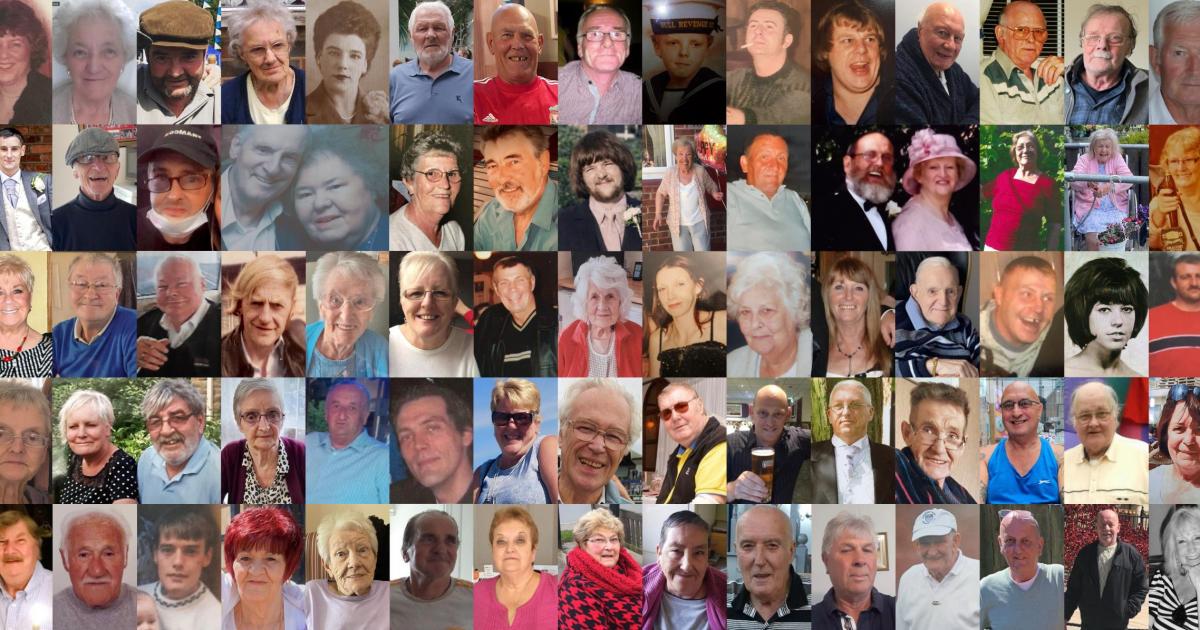
Bush, 48, has pleaded guilty to 67 offences spanning 12 years at his firm, Legacy Independent Funeral Directors.
Hull Crown Court heard that about 240 victim impact statements from affected people will be submitted before he is sentenced in July.
Funeral director Robert Bush leaves Hull Crown Court on Thursday (April 2) (Image: Scott Heppell/PA Wire)
Robert Bush (Image: Humberside Police)
These include families of the 31 bodies that were kept at his site for months after they should have been cremated, ashes found there that could not be identified, and about 150 people who were sold fraudulent funeral plans.
Speaking outside court after Bush pleaded guilty to all charges, campaigner Karen Dry, whose parents were both cremated at Legacy Independent Funeral Directors, said: “There is an enduring sense of deep betrayal, emotional stress, and damage caused by this individual, to many families right across this city.
Advertisement
“From the torment of not knowing whether we have the ashes of our loved ones, to families having the trauma of DNA profiling to establish the identity of their deceased loved ones and having the distress of a second funeral, not to mention the anguish and hardship caused by fraudulent, and now worthless, funeral plans.”
Senior investigating officer Detective Superintendent Alan Curtis, of Humberside Police, said: “The utter devastation and emotional harm Robert Bush has caused to hundreds of victims and families cannot be underestimated.
“Thirty-one families believed that their loved one had been cremated, when in fact they remained on site within the Legacy premises on Hessle Road. Most had been given ashes and had been advised that their loved ones’ cremation had taken place.
“Other families, who had chosen cremations through Legacy, were left waiting for ashes that have never been provided, or were deceived by Bush and given ashes that we now know were not their loved ones.
Advertisement
“The distress and devastation that this has caused for those families is simply unimaginable.
“People paid Bush for funeral plans, so in the future their families didn’t have to worry about costs and arrangements for their own funerals.
“He betrayed this trust, leaving some victims with the uncertainty around their own funeral arrangements and without the means to pay for them.
“The damage he has caused to families across our communities is quite possibly irreparable, with so many victims who have suffered and continue to do so.”
Advertisement
Victims of Robert Bush
Thirty people whose bodies were found at the funeral home:
Norman Bridger
Jonathan Butler
Muriel Winning
Raymond Dagnall
Colin Wainman
Maureen Graham
Susan Gorbutt
Shirley Wright
Mark Hotham
John Carlill
Joyce Moulton
Terence Buck
David Burton
Audrey Leach
Danny Middleton
Tony Munro
Jessie Stockdale
Peter Moody
Jean Collinson
Alan Gray
Hilda Mary Rhodes
Stephen Perrins
Joan Stark
Brian Johnson
Graham Finn
Terence White
Susan Stone
Herbert James Porter
Peter Brown
Julie Web
Four “foetus allegations” where Bush falsely told mothers the ashes he gave them were the remains of their unborn children:
Jasmine Beverley
Katie Woolston
Stacey Foster
Lucy James-Guest Ness
Fifty-seven victims of fraud over ashes:
Michelle Drewry
Shelly Chearman
Richard Collins
Brooke Atkinson
Linda Hall
Billie-Jo Chapman
Petrina Featherstone
Carl Osler
Dianne Scandole
Carol Brown
David Greensides
Norma Ellam
Maxine Penrose
Sharon Shimmells
Claire Wilkinson
Mark Anderson
Kadie Laws
Tracy Hudson
Paul Whitehead
Harry Welsh
Tracey Hartley
Jackie Delaney
Jillian Townhill
Christine Colville
Kirstie Hobden
Michelle Martin
Donald Leslie Brigham
Lee Clark
Curtis Neylon
Susan Brown
Gillian Owst
Sheila Robinson
Brett Moses
Richard Shaw
Mandy Bailey
Valerie Coates
James Meikleham
Yvonne Robinson
Heather Welford
Michael Endall
Debra Lawson
Joyce Rispin
Peter Welburn
Samantha Rosenquest
Lisa Thompson-Frazer
Sylvia Rawson
Mark Hague
Lynn Farmery
Macey Urry
Kirsty Young
Tracey Brigham
Bille-Jo Suffill
Jill Hall
Brendon Brown
Rebecca Windas
Sophie Tibbles-Carrott
Rebecca Thompson
Twelve charities that Bush stole from by failing to pass on donations collected at funerals
An architect of change, his achievements touched every corner of Greater Manchester. His wisdom, leadership and ability to bring people together inspired many. He was a man who got things done.
Advertisement
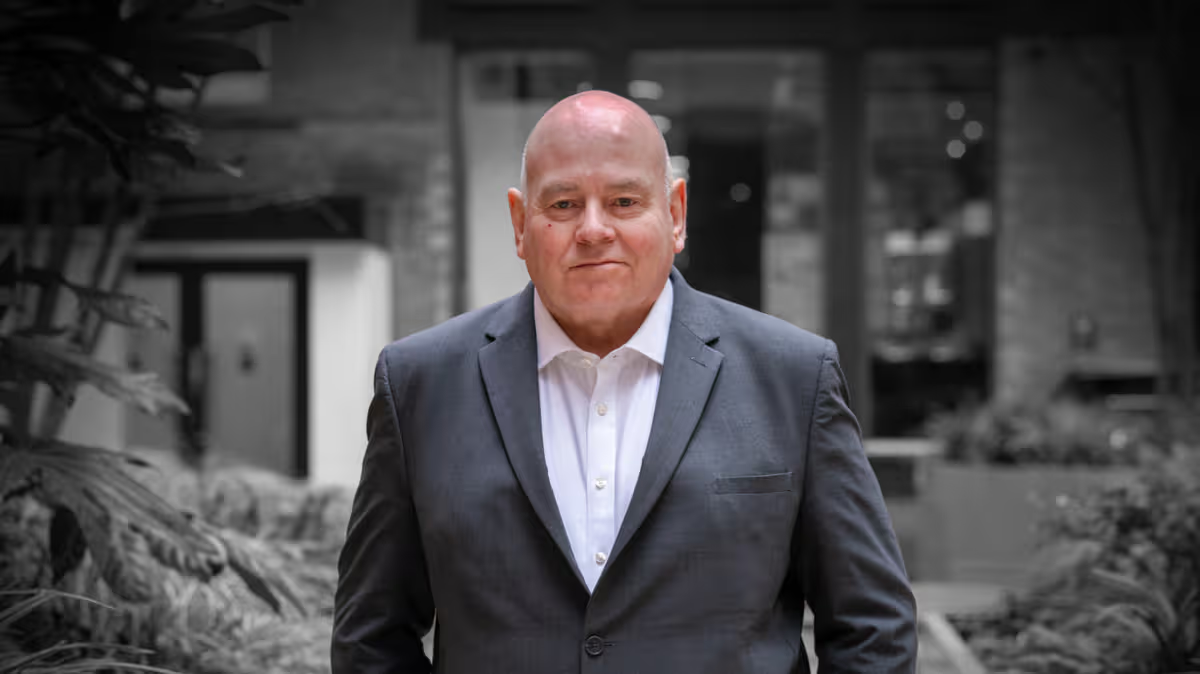
Eamonn Boylan OBE, one of the region’s most influential and powerful political figures, has died aged 66. He leaves behind wife Maria and two children.
In a career spanning more than four decades, he worked roles in local government in Greater Manchester, Sheffield and London. He dedicated his life to public service and left his mark wherever he went.
Get MEN Premium now for just £1 HERE – or get involved in our WhatsApp group by clicking HERE. And don’t miss out on our brilliant selection of newsletters HERE.
“When he spoke, you listened,” one former colleague said. He made Greater Manchester an ‘effective, efficient machine’.
Advertisement
He was deputy chief executive in Manchester from 2001 to 2008 and served as Stockport’s top boss from 2010 for seven years, laying the foundations for the town’s future success.
Mr Boylan led the Greater Manchester Combined Authority (GMCA) as chief executive from 2017 to 2024, with responsibility over Greater Manchester Fire and Rescue Service (GMFRS).
In 2019, he also took over Transport for Greater Manchester (TfGM), overseeing the return of buses under public control.
Mr Boylan steered the GMCA and TfGM through a period in which the government gave the organisations more responsibilities to make decisions and run services locally. He spearheaded the ‘trailblazer’ devolution deal, giving politicians and public officials in more influence over transport, education and housing.
Advertisement
He guided the GMCA through difficult times – from the Manchester Arena terrorist attack that led to big changes at GMFRS, to the Covid crisis and the appointment of a new chief constable of GMP after the force’s failings were exposed in 2020.
Mr Boylan stepped down from the GMCA in 2023, saying: “I am immensely proud of what we have created together in Greater Manchester, and I hope that we continue to grow and prosper and make this city-region the best place to get on, grow up and get old.”
A return to Stockport soon beckoned as interim chair of Stockport Mayoral Development Corporation (MDC). And in 2024 when Manchester needed an interim chief executive while a permanent replacement was found for Joanne Roney – there was only one name in contention. He also served as Homes England interim chief executive in 2025.
Advertisement
When he was needed, he stepped up. He was trusted. In the world of local government, where change is slow and difficult, Mr Boylan had a knack for getting things done.
Like the man he deputised for in Manchester, he was a fixer who talked big and delivered. Like the late, great Sir Howard Bernstein, Mr Boylan led with steely determination and dedication. His leadership inspired those around him.
Following Mr Boylan’s death, less than two years after Sir Howard, former colleagues sense the end of an era in drawing is near. His fingerprints are all over Greater Manchester’s finest achievements, But Mr Boylan wasn’t one to hog the limelight.
“Eamonn was the public servant’s public servant and a giant of English devolution,” Greater Manchester mayor Andy Burnham said.
“He led from the front but was rarely in the spotlight, taking every opportunity to lift up and empower those around him.”
“At the most crucial moment in Greater Manchester’s devolution journey, he took the foundations laid by past leaders and built it into an effective, efficient machine that continues to deliver.”
As tributes poured in, one word continued to appear in former colleague’s statements – ‘humour’. Mr Burnham spoke of his ‘great support, guidance, good humour and friendship’.
Advertisement
Tom Stannard, current Manchester chief executive said: “He has been a mentor, confidante and adviser to me and many colleagues – always a source of great wisdom, advice and humour in the face of challenges, generous with his time and attention, and someone with an unswerving commitment to improving the whole of Greater Manchester for the benefit of its residents.”
GMCA group chief executive Caroline Simpson said Mr Boylan was a ‘a friend and a mentor whose massive intellect, humility, humour and kindness shone through every day’.
‘Stockport is the place it is today because of him’
It was while working at Stockport MDC that Mr Boylan planted the seeds of much of the town’s staggering transformation, which has seen it win national accolades as a place to live and work.
A massive £1bn of investment has flooded into the borough, creating a new transport interchange, apartments and business hub. The changes are not stopping anytime soon, with the regeneration area recently expanding to cover the entirety of Stockport town centre.
Advertisement
Councillor Mark Hunter, a former Stockport council leader, said of Mr Boylan: “He was a public service man through and through and helped shape the vision for the town centre transformation.
“He was there at the very beginning, he was one of the architects of the whole thing. He played a key role, there is no doubt about that, both in Stockport and across the wider Greater Manchester region.”
Councillor David Meller, former leader of the opposition at Stockport council, said Mr Boylan’s ‘fingerprints are all over the borough’.
Advertisement
He added: “He was plain-talking, really pleasant and focused on wanting to get stuff done. He wanted to cut through the blockers and find ways to get things done, bringing people together.
“He just had that gravitas and expertise in what he had done. He was a person who when he spoke, you would listen.”
Mark Roberts, current leader of Stockport council, said: “Stockport is the place it is today because of the strong foundations Eamonn helped to build. His leadership gave our borough confidence, and his legacy can be seen in our town’s physical investment and ambition that carries through to today and the future.
Advertisement
“Eamonn dedicated his life to public service and was held in high regard not just for his professionalism, but for the way he worked with people across the council and across political lines with a focus on always doing the right thing for local communities.”
Mr Boylan was made an Officer of the Order of the British Empire (OBE) for his services to local government in 2023. It marked the pinnacle of an extraordinary career.
GMCA group chief executive Ms Simpson said: “His dedication and his determination to get things done will leave a lasting legacy here. He will remain an indelible part of the fabric of our city region’s growth and success.”
“Grenfell is not a throwaway line. It is a national tragedy that demands respect. If these are the voices Reform is putting forward, then this is what the party stands for, and voters should take note”
Reform UK’s Simon Dudley’s comments about Grenfell are as shocking as they are revealing.
Advertisement
To dismiss a disaster that claimed 72 lives with “everyone dies in the end” is not just callous, it is utterly devoid of humanity. Nigel Farage was right to sack him.
But this cannot be waved away as a one-off mistake. It raises serious questions about Reform UK – the tone it sets, the judgment it shows and, crucially, the kind of people it chooses to represent it.
Take Councillor Lynn Dean, suspended by the party this week, after it was alleged that racist posts were made on an X account belonging to her. Time and again, figures linked to Reform have displayed a willingness to provoke, to trivialise serious issues, show a startling lack of empathy, or worse.
That is not bad luck. It is a pattern. Grenfell is not a throwaway line. It is a national tragedy that demands respect, care and accountability. If these are the voices Reform is putting forward, then this is what the party stands for, and voters should take note.
Advertisement
‘This devastating breach of trust can never happen again’
It is a betrayal almost beyond words. Families trusted Robert Bush at their most vulnerable and he repaid that trust with deception and cruelty.
Preventing burials, handing over the ashes of strangers and stealing charitable donations is not just criminal, it is profoundly cruel. Funeral directors are meant to offer dignity in death and comfort in grief.
Instead, this case has caused unimaginable distress to families who deserved far better. The scale and duration of these offences only deepen the horror.
Justice must now follow. As this case moves to sentencing, the priority must be accountability and ensuring such a devastating breach of trust can never happen again.
Advertisement
‘A very happy Easter to you’
Even in these uncertain times, Easter reminds us of hope, renewal and togetherness. As the world feels in turmoil, may this time bring moments of peace, laughter and love.
However you spend it, with family, friends or quiet reflection, we wish you a happy and restful Easter.
The Netflix star has explained why her TV partner attended the reunion solo
Kimberly Nhundu Under 35s Screen Time reporter
18:14, 02 Apr 2026
An Age of Attraction star has gone public with her new relationship after notably skipping the cast reunion. The Netflix dating programme brought together 40 singles aged between 22 and 60, for a chance at finding love without knowing their partner’s age.
Among the hopeful contestants was Pfeifer Hill, 23, who sparked a connection with Derrick Fleming, 43. Despite their 20-year age gap, the pair formed a strong bond and left the show hand-in-hand. However, fans were left puzzled when Derrick attended the reunion alone, confirming that their relationship had broken down away from the cameras.
Advertisement
Pfeifer has now revealed exactly why she turned down her invitation to the reunion. Sharing a video on Instagram, she explained: “I never want to speak on a podcast that doesn’t feel like an authentic choice or one that I’m not enthusiastic about,” reports the Mirror.
“I want the first time that I speak out about the show to be on a platform that aligns with me and is one of my choosing. I want to tell my story on my own terms.” Unlike other Netflix dating shows, the Age of Attraction reunion aired on hosts Nick Viall and Natalie Joy’s podcast, The Viall Files.
Advertisement
Pfeifer has suggested she would have preferred an alternative platform to discuss her experience. The graphic designer added: “This is not shade to the hosts of the podcast, anybody who went on the reunion or anybody who listens.”
She continued: “I made a different choice because for me, that choice for me upholds what I believe in, which is authenticity to myself. Derrick and I ended on good terms, I have no bad blood with anybody in the cast, so I kind of just wanted to leave it that way honestly #protectyourpeace.”
Get Netflix free with Sky
This article contains affiliate links, we will receive a commission on any sales we generate from it. Learn more
Sky is giving away a free Netflix subscription with its new Sky Stream TV bundles, including the £15 Essential TV plan.
This lets members watch live and on-demand TV content without a satellite dish or aerial and includes hit shows like Stranger Things and The Last of Us.
The reality star went on to disclose that she has found a new partner, who whisked her away on a surprise birthday trip around the time the reunion was being filmed. “I am in a relationship, my partner is my best friend,” she said.
“Even though our relationship is relatively new, it is one of the biggest joys in my whole life. For my birthday, my boyfriend surprised me with tickets to Japan.
“Even if I had wanted to attend [the reunion] in the first place, I would have had to reschedule our trip. I always want my boyfriend to know that our relationship is my priority,” she explained. While Pfeifer didn’t find her perfect match on the dating show, she appears perfectly happy with her new romance.
Fans will be delighted to hear that a fresh batch of singletons will be taking part in the experiment for Age of Attraction Season 2, which will see married couple Nick and Natalie return to the helm as hosts.
A mother and daughter from Bolton have been banned from keeping equines after leaving an emaciated pony for dead on a freezing Bolton field.
The pair also received suspended prison sentences after admitting to neglecting a pony that had to be put down.
Chloe Hudson, 27, and Shantel Tansley, 46, of Ainsworth Lane, were prosecuted by the RSPCA and sentenced at Wigan Magistrates’ Court on March 20.
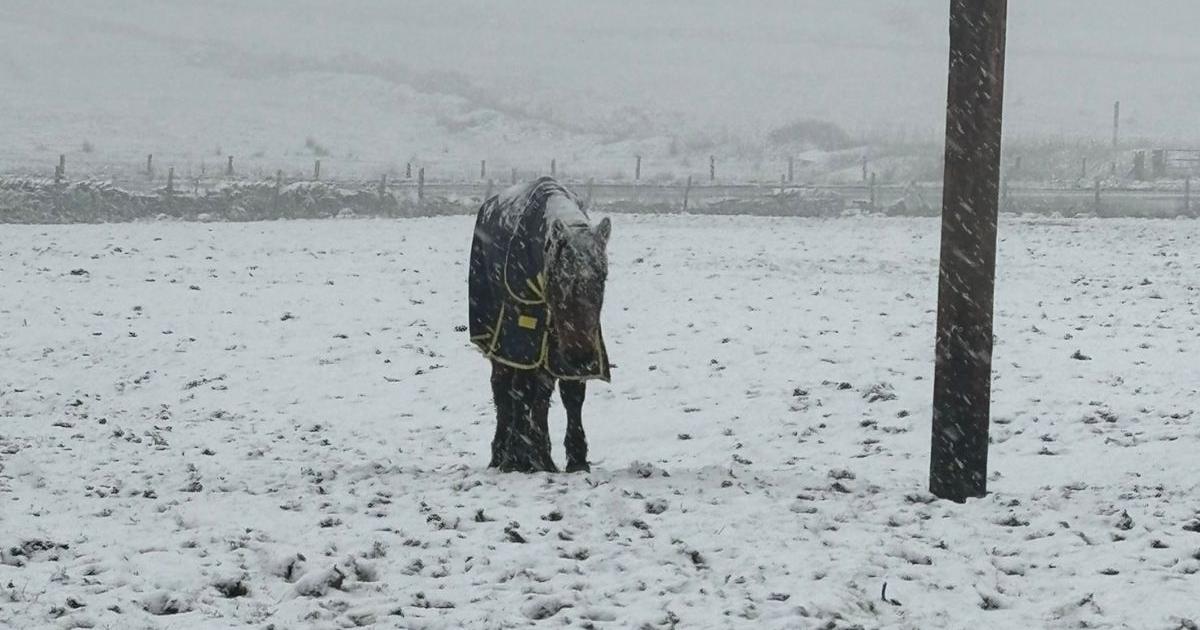
The offence related to the neglect of a bay pony named Jewell, one of five equines kept by the pair in a field at Higher Pasture Barn on Broadhead Road in Bolton.
Advertisement
Jewell had to be put down (Image: RSPCA)
A concerned neighbour who kept horses on adjacent land contacted the RSPCA on January 7, 2024, after becoming alarmed by the ponies’ condition.
In a statement, the neighbour described two of the ponies as “skin and bone,” and said Jewell “looked ready to drop.”
The neighbour noticed she was suffering from diarrhoea and was uninterested in eating after she had offered to put hay out for the defendant’s equines during a period of snowfall a week later.
When she was looking after her own horses a couple of days later she saw that Jewell had collapsed in the neighbouring field.
Advertisement
A vet attended the scene and determined that the only humane option was to put Jewell to sleep.
Jewell at Higher Pasture Barn in Broadhead Road, Bolton, (Image: RSPCA)
“I ran down to the field and saw that the pony was laid on her side and not moving. She was breathing but she didn’t get up. The temperature was around minus six, it was freezing cold,” said the vet, who tried unsuccessfully to contact Hudson.
“The pony had profuse diarrhoea around her back end and on her tail and that had frozen to the ground. I was shocked by her condition.”
RSPCA inspector Jennie Ronksley said none of the equines kept in the field had natural or man-made shelter and the field was open to the elements with witnesses describing 80 mph gusts of gusts.
Advertisement
The vet, who attended at the field, stated the pony was dying and he put her to sleep. When he rolled her body over the extent of emaciation became clear as her pelvic bone was protruding and femur was visible through wasted thigh muscle.
“It was clear that this pony did not get into this condition overnight and with more timely intervention and treatment (for a possible parasite infection) there would have been a different outcome. Her owners were negligent in failing to move her to a more sheltered and warmer environment and failing to seek veterinary help,” concluded the vet.
In mitigation, the court heard that both defendants were “very regretful” and had now rehomed all the other equines they owned. Hudson was pregnant at the time of the offence and suffered from mental health issues, while Tansley has received treatment for cancer.
As well as the disqualification, Hudson was sentenced to a 20-week prison sentence, which was suspended for 24 months. Tansley received a 16-week prison sentence which was also suspended for 24 months.
In the race to conserve our oceans, Chile has emerged as a frontrunner after its president signed a decree to create one of the world’s largest marine reserves.
Following a campaign led by ecologists and coastal communities, President Gabriel Boric signed off plans to protect 337,000 sq km of ocean around the Juan Fernández archipelago. The region teems with species, including whales, seabirds and the Juan Fernández fur seal (pictured), once thought to be extinct.
Once implemented, the protected area will link up two other marine reserves, covering a combined total of 899,268 sq km, which is roughly the size of Nigeria.
Advertisement
“For generations, our community has lived in harmony with the sea, relying on it for food, livelihoods, and identity,” said Julio Chamorro Solís, president of the Organización Comunitaria Funcional Mar de Juan Fernández. “By expanding our marine protections, we ensure that future generations will inherit healthy oceans, thriving fisheries, and the cultural traditions that bind us to our home.”
The designation means that Chile will soon have more than 50% of its waters under protection, far exceeding the 30% by 2030 target agreed by 190 nations in 2022.
Reports that the Government is considering restricting Freedom of Information (FOI) requests have sparked concerns about implications for accountability and transparency of local decision-making.
The Financial Times (FT) reported that the Government is considering introducing restrictions on FOI requests by reducing the cost ceiling for processing Freedom of Information requests as the number of annual submissions has increased.
Currently, the cost threshold for complying with a request is set at £450 for public bodies and £600 for central government, but this could be reduced.
Advertisement
Cllr Michelle Donohue-Moncrieff, an Independent on North Yorkshire Council, said: “Materials obtained through Freedom of Information requests are very important for the public and those who represent them.
“As a councillor, I regularly use websites such as whatdotheyknow.com to see what information has been disclosed by public bodies. This helps me hold the council to account.
“Some public bodies already exploit clauses in the current legislation to avoid being open and transparent.
“The proposed changes to FOI legislation will make public bodies less accountable.”
Advertisement
The Freedom of Information Act provides public access to information held by public authorities by obliging public authorities to publish certain information about their activities, and by entitling members of the public to request information from public authorities.
More than 10 million people have made an FOI request since the law came into force in 2005, according to Warren Seddon, director of FOI and transparency at the Information Commissioner’s Office.
Responding to the reports, Dawn Alford, Chief Executive of the Society of Editors, said: “The Freedom of Information Act is a vital mechanism for ensuring accountability and transparency in government, and any attempt to restrict the scope of the legislation would be damaging to democracy.
“The Prime Minister has spoken of his desire to restore trust and integrity in UK politics and the importance of openness and transparency. Restricting the scope of freedom of information requests – a vital tool for both the media and the public to hold government to account – would run counter to these objectives. We urge officials to urgently rethink such plans.”
Advertisement
Labour councillor and former journalist, John Ritchie, said: “ I share the concerns expressed by leaders in the newspaper industry.
“As a member of North Yorkshire Council, I fully appreciate that researching complicated and involved FOI requests can be costly and time consuming for local government employees, but this must be balanced against the damage this proposed reduction in costs would cause, foremost a lack of transparency and openness at a time when politicians of all hues need to rebuild public trust.”
Speaking to the Local Democracy Reporting Service (LDRS), Alison Hume, the MP for Scarborough and Whitby, said it “would be concerning if people are having to pay more to get less”.
Calls for “clarity” have also been made by the News Media Association (NMA), which represents the UK’s national and regional news businesses, citing the FT’s reporting.
Advertisement
NMA chief executive Owen Meredith said: “It is not routine or trivial requests that would be excluded.
“It is the most sensitive and significant ones – those involving complex decision-making, high-value contracts, safeguarding, multi-agency correspondence, and procurement.”
In March, the Government announced its Local Media Strategy with up to £12 million in funding to help local news publishers invest in digital technology and support community radio stations.
The strategy states that “there is more that local authorities and other local public services can do in partnership with local media […], including through increased openness in providing local journalists with access to information”.
A social experiment is giving away half a million dollars to fund acts of kindness globally – its already having a positive impact
Most of us, we would like to think, would help out a relative, a friend and perhaps even a stranger in need. Maybe giving directions or lending a few quid. But how many of us would donate one of our organs to someone we will never meet?
That is exactly what Tom Cledwyn did in 2012. Since then, his life has been shaped by acts of generosity towards strangers, culminating in Drop Dead Generous, a social experiment giving 1,000 people $500 (£378) each to spend on helping others in creative ways. Backed by an anonymous philanthropist, the project is part grant scheme, part provocation: what happens if you trust people to be generous?
Advertisement
Cledwyn donated his kidney at 25, after reading about Kay Mason, the first person in the UK to give a kidney to a stranger.
Solutions every Saturday Uplift your inbox with our weekly newsletter. Positive News editors select the week’s top stories of progress, bringing you the essential briefing about what’s going right. Sign up
“I read the article and didn’t think about it. It just felt like a very profound opportunity,” he says. After a year of medical and psychological assessments, he went through with it.
“The feeling I had when I woke up from that operation is something I want other people to experience.” Cledwyn is not the zealot you might expect. Thoughtful and measured, he says the act was a privilege.
Advertisement
“It was an honour to be able to do it. And the same applies to all forms of giving. It doesn’t have to be a kidney. It can be a smile, some time, or being there when someone is struggling,” he says. “The experience of giving is the closest thing I’ve experienced to something that really matters.
“I knew I’d get minimal feedback and would never meet the recipient. That felt important too, doing something without seeing the outcome.”
After donating his kidney aged 25, Tom Cledwyn’s life has been shaped by acts of generosity towards strangers. Pictured here with his wife Claudia. Image: Carys Huws
Advertisement
After the operation, he set up a blog called The Free Help Guy, trawling Gumtree and offering anonymous help to people who needed it, whether that meant moving house or fixing things around the home. Demand grew quickly, until the money ran out.
A stint at Meta followed, where he rose to become a senior executive, but after seven years he left, pulled back towards the idea that generosity could be scaled.
Together with co-founder John Sweeney, he launched Drop Dead Generous, with a $500,000 (£378,000) fund. At the time of writing, 266 grants have been awarded across 21 countries.
Advertisement
Applicants are asked two simple questions: who needs help, and what would you do with $500 to “blow their socks off”?
The experience of giving is the closest thing I’ve experienced to something that really matters
“We ask what’s the hook, the originality, the heart. You can’t just give the money away, it has to facilitate an idea. And it can’t be too similar to something we’ve already funded,” says Cledwyn.
The $500 fund is a fixed amount but what it can do varies not just on the project but the location too. “Someone in London gave out 80 flowers and someone in Uganda built a house,” he says.
In Brazil, one grant is helping to start a book club in a prison, where inmates can reduce their sentences by reading and writing about literature. Elsewhere in the country, two young chess players from a favela were able to enter national competitions and secure coaching, going on to win and attract wider support.
Advertisement
In Uganda, a communal dance floor now sits at the centre of a community, offering young people a space for creativity over conflict. In the UK, one project is giving an as yet undiscovered busker the chance to record a professional demo, while another brought a Shetland pony into a care home, coaxing residents out of their rooms.
Kendall Concini and her young family were one of the recipients who wanted to thank local librarians in her home town of Baltimore, US.
Advertisement
“We wanted to give back the same happiness they exude when you walk in and the best way I could think of was walking in with a fun surprise to give back,” says Concini. It started as an idea from her four-year-old, to bring librarians breakfast doughnuts but that was just the beginning.
“I wanted them to really feel the love, so we created an entire breakfast arrangement, collected love letters from friends, families and strangers online, and created giveaway gifts for librarians to pass on to patrons, keeping the acts of kindness going.”
You can’t just give the money away, it has to facilitate an idea
Concini’s initial concept has continued and now packages have been delivered to 12 libraries in the area, funded from profits from a children’s book she has written and from public donations.
“Seeing librarians go grab their colleagues with excitement, and hearing ‘I needed a pick me up this morning’, was an amazing feeling. The exact feeling actually that I had intended to give. ‘We care about you. Your community notices you’.”
Advertisement
For Cledwyn, that ripple effect is the real measure of success.
The philosopher Jacques Derrida argued that a pure gift cannot exist, because even the act of giving carries an expectation of return, whether that is gratitude or simply the feeling it gives the person who gives.
‘At a time when the opposite of generosity often feels normalised, even in how leaders communicate, it feels more important than ever to frame generosity as a superpower, not just a nice thing,’ says Cledwyn. Image: Meera Kumar
Advertisement
Cledwyn does not dismiss the idea. “There’s always a mixed set of motivations, and that’s fine. The danger is ignoring intrinsic motivation, because that’s what makes you do it again,” he says. “It becomes problematic only if you expect something back, rather than accept it if it comes.
“If I had donated my kidney expecting to feel something in return, that would have felt wrong. But waking up and feeling pride and meaning is something I’m happy to accept.”
The timing feels pointed. In a climate where division often dominates, generosity can feel either naive or performative. “At a time when the opposite of generosity often feels normalised, even in how leaders communicate, it feels more important than ever to frame generosity as a superpower, not just a nice thing,” says Cledwyn.
Advertisement
The project is now experimenting with handing decision-making to earlier recipients, allowing them to fund others in their own communities. If it works, generosity stops being a centralised act and becomes something more distributed, less controlled.
For now, the invitation is simple. “Hop on the website and submit an idea,” he says. “Think imaginatively.”
At Positive News, we’re not chasing clicks or profits for media moguls – we’re here to serve you and have a positive social impact. We can’t do this unless enough people like you choose to support our journalism.
Give once from just £1, or join 1,800+ others who contribute an average of £3 or more per month. Together, we can build a healthier form of media – one that focuses on solutions, progress and possibilities, and empowers people to create positive change.
On the hunt for the best pizza oven to give to a foodie, or to get ahead for this summer’s al fresco dining? These days you can take your pick from hundreds of wood-fired, gas-fired and even electric pizza ovens. Wood-fired ovens deliver the classic smoky flavour preferred by traditionalists. Gas ovens are smaller, easier to use and offer better temperature control. Electric pizza ovens can cook more evenly.
Ooni leads the way, but Sage, Gozney and La Hacienda are also strong brands. At the top end sits Stefano Ferrara, whose domed, hand-bricked ovens appear in pizzerias worldwide, with prices starting at £6,000. For home cooks, you can achieve near-authentic results with a £300 model from Ninja.
We’ve tested all of these, among others, and you can read our reviews below, followed by answers to some frequently asked questions. But if you’re in a rush, here’s a quick look at our top five:
The best pizza ovens: At a glance
How to choose the best pizza oven
Matt Williams, Co-Founder of the The Oxford Charcoal Company, says the two things to factor is are size and fuel-type. Barbecue-top and portable pizza ovens which can run on gas or electricity are the best option for most homes, because they can be stored away more easily. If you want the best results, however, you do need a wood-fired oven.
Advertisement
“Being able to recreate that incredible wood-fired flavour and texture in your own garden is the ideal,” Williams says and for that, you’d probably need a wood-fired oven hot enough to cook a pizza in 60 seconds – which Italians will tell you is the best cooking time for a standout crust.”
Small wood-fired ovens are available, such as the Roccbox (reviewed below), but most are fairly large. All of the ovens in our guide will enable you to create a freshly-made pizza far superior to anything you’ll buy in a supermarket.




















































You must be logged in to post a comment Login