Connect with us

NewsBeat

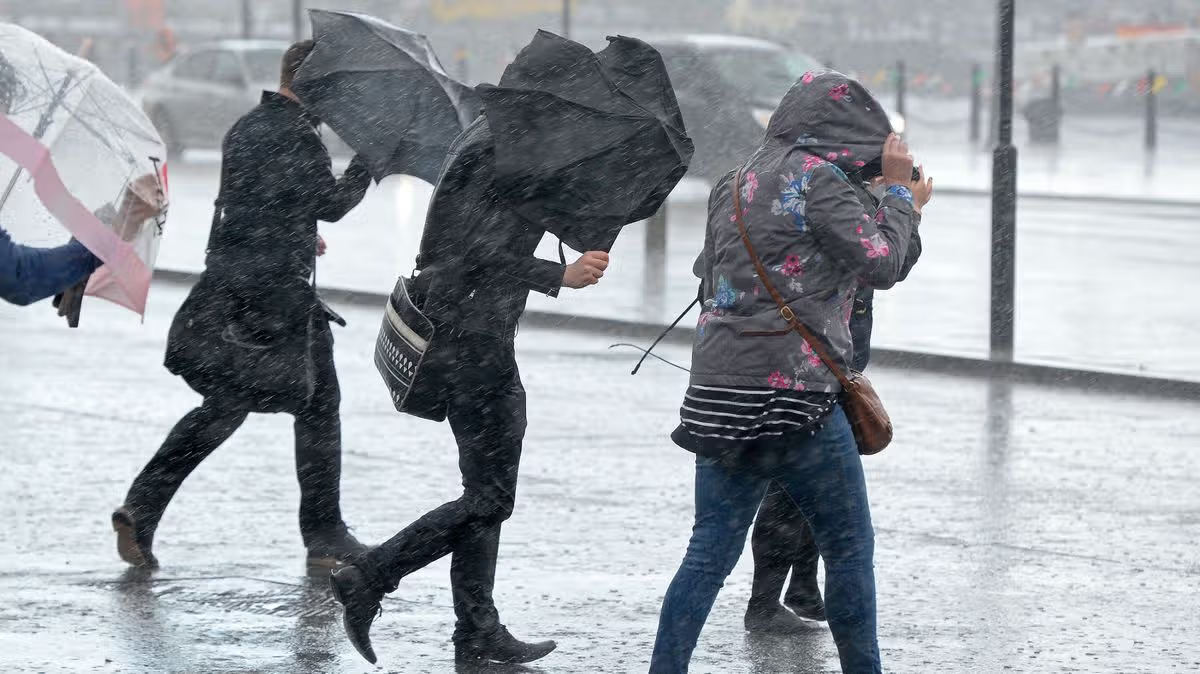
Hours of heavy rain to batter Cambridgeshire as new 16-hour weather warning issued

Published

on

Cambridgeshire Live

A 16-hour warning has been announced by the Met Office

Cambridgeshire has been issued with a fresh thunderstorm warning covering 16 hours on Thursday (August 27). It comes after a separate warning was issued for Wednesday (August 26).

Advertisement

The Met Office has announced a yellow thunderstorm warning covering the county on Thursday. The warning is in place from 6am until 10pm.

This means that there is a chance that homes and businesses could flood, with damage to some buildings from floodwater, lightning strikes, or hail. There is also a chance that power cuts could occur and other services to some homes and businesses could be lost.

The Met Office says: “A broad band of thunderstorms and heavy rain will move north across England and Wales, perhaps becoming slow moving in the afternoon and evening. Accumulations of 20-30 mm in three hours can be expected fairly widely and up to 50 mm in a 12 hour period can be expected in places.

“There is a small chance that some places may see more than 50 mm in three hours and more than 75 mm through 12 hours, especially over east facing high ground. Lightning and hail of 1-2 cm will also be hazards and, in a very few places, strong gusts may also present a hazard, these most likely in the south of England early on Thursday morning.”

Advertisement

Source link

Continue Reading
Click to comment

You must be logged in to post a comment Login

Leave a Reply

NewsBeat

How a ‘devil’ mother recruited her teen son to carry out ‘Fatal Attraction’ slaughter of driving instructor’s wife… and why a detective nicknamed ‘Mr Murder’ tried to frame him

Published

on

Pictured: Rene Sampat and her son Roy Aziz who jailed for the Fatal Attraction-style murder of Janet Marshall in April 1991

Ancell Marshall had to bow his head to dodge a barrage of stones pelted at him as a police escort rushed him through a baying mob and into a waiting car outside the Old Bailey.

Scenes of such fury are usually reserved for the suspects of the most repugnant violent crimes, but Mr Marshall was neither. In fact, he was a victim.

The happily married driving instructor had been in Britain’s highest criminal court for the sentencing of Rene Sampat, a woman he would later describe as ‘evil’ and the ‘devil’.

Sampat had become infatuated with Mr Marshall and, after he spurned her advances, she recruited her teenage son Roy Aziz to carry out a Fatal Attraction-style murder of his wife Janet.

Advertisement

The mother-of-four, 36, was stabbed 15 times, battered and strangled at home in north London by Aziz, then 16, the eldest of Sampat’s five children from her first marriage.

Both mother and son were eventually jailed over the murder, with Sampat screaming: ‘I am not guilty of murder, I am guilty of love,’ as guards led her away to begin a life sentence.

But not before Mr Marshall had been wrongly charged with her brutal murder and held in custody for two months, the trauma of which would haunt him until the day he died 35 years later aged 69.

Tragically some twisted individuals, such as the mob outside the Old Bailey in 1994, still believe Mr Marshall was the true murderer of Sunday school teacher Janet.

Advertisement

But now, The Crime Desk can reveal disturbing allegations about the botched Scotland Yard investigation that saw Mr Marshall wrongfully arrested.

Pictured: Rene Sampat and her son Roy Aziz who jailed for the Fatal Attraction-style murder of Janet Marshall in April 1991

Pictured: Aziz outside the Old Bailey in 1994 where he was jailed over the murder of Ms Marshall

Pictured: Aziz outside the Old Bailey in 1994 where he was jailed over the murder of Ms Marshall

Advertisement
Pictured: Ancell Marshall, Janet's husband, was wrongly accused of the murder and lived with the trauma of the ordeal his whole life

Pictured: Ancell Marshall, Janet’s husband, was wrongly accused of the murder and lived with the trauma of the ordeal his whole life

Mr Marshall’s murder trial was over before it began. In February 1992, Judge Bruce Laughland dismissed the case, ruling there was ‘not a scrap of evidence’ against him and ordering an inquiry.

Gavin Robertson, then a high-flying Metropolitan Police detective superintendent, had been handpicked to re-investigate Janet’s death and soon uncovered the dark truth – ‘evil and manipulative’ Sampat was hiding in plain sight.  

Mr Robertson suggests his predecessor ‘jumped the gun’ charging Mr Marshall in order to maintain a 100 per cent record of solving murders before retiring.

Advertisement

‘When I read the case papers, there just wasn’t any evidence,’ he said. ‘It clearly wasn’t Ancell and the blame lay elsewhere.

I know why Jack the Ripper was protected for so long


Hi, I’m Alex Matthews, Editor of The Crime Desk.

Advertisement

In 2014, we revealed the bombshell evidence identifying Aaron Kosminski as the fabled Jack the Ripper. Now, we can reveal his astonishing connection to the Freemasons and claims this motivated his killings and protected him from life in prison. 

Sign up here to get our exclusive piece for free.

<!- – ad: https://mads.dailymail.co.uk/v8/de/truecrimeuk/none/article/other/mpu_factbox.html?id=mpu_factbox_1 – ->

Advertisement

‘The guy I replaced, they used to call him “Mr Murder.” He liked to say there was no murder he’d never solved. He was given the job to investigate before I got there and before he retired. I think he jumped the gun and charged Ancell with murder. It was his last one before retiring.’

Responding to Mr Robertson’s claims, Mr Marshall’s second wife Delphine has urged Scotland Yard, the CPS and the police watchdog to investigate further, adding: ‘I cannot stand injustice.

‘It’s sad and painful that a human being would use another person’s life to achieve their goal. Some people don’t mind who they trample on to get somewhere. No matter how you mask the truth, it always comes out.’

Advertisement

Mr Marshall, then 35, had two businesses – a driving school and a Caribbean takeaway food shop – and was a home missionary at his Seventh Day Baptist church. On April 29, 1991 he arrived home from the takeaway to discover his wife of 17 years dead, slumped on their sofa in their home on St Loys Road in Tottenham, north London.

The attack had been so ferocious that one of the two knives used had cleaved as it was repeatedly plunged into her body. Janet’s hands were cut to ribbons as she raised them to protect herself.

Mr Marshall noticed a television was blaring loudly in an attempt to muffle the noise from their daughters who were asleep upstairs.

Detectives wrongly arrested the grieving widower. While in custody Mr Marshall was refused permission to attend Janet’s funeral because of the ‘security risk’.

Advertisement

Following Mr Marshall’s acquittal, detectives began looking closer into Sampat, who had been a prosecution witness in the first trial. Since 1985 she had been unsuccessfully trying to win Mr Marshall’s affections after enrolling for lessons with his driving school in Stoke Newington. 

She would touch his leg and hand as they drove along. On one occasion the car almost lost control as a result. Mr Marshall arranged for Sampat to have another instructor after it became clear she was attracted to him.

Sampat showered gifts on Mr Marshall’s children, decorated the family’s home, organised a birthday celebration for Janet and became a trusted babysitter.

Unable to lure him into an affair, Sampat converted from Islam to Christianity to join the missionary’s church. Having got nowhere, she claimed three times that she had been raped so the home missionary would counsel her.

Advertisement

The second time, Mr Marshall arrived at Sampat’s terraced house in nearby Seaford Road to find her half-dressed. She kissed him on the lips and begged him to make love to her. He refused.

Another incident saw police called when Sampat claimed she’d been raped at knifepoint by a mystery intruder who climbed through a window and tied her up.

When an officer warned her children could be taken away, she broke down in tears and attempted to stab herself with a kitchen knife claiming ‘nobody believed her story.’ Sampat lied to friends she had aborted Mr Marshall’s baby.

Pictured: Sunday school teacher Janet Marshall who was murderd by Rene Sampat and her son Roy Aziz

Pictured: Sunday school teacher Janet Marshall who was murderd by Rene Sampat and her son Roy Aziz

Advertisement
Aziz, pictured after the murder, told The Crime Desk that he did not murder Mrs Marshall but was there at the time

Aziz, pictured after the murder, told The Crime Desk that he did not murder Mrs Marshall but was there at the time

What happened next could have been a scene from Fatal Attraction, the 1987 psychosexual thriller, where Alex Forrest (Glenn Close) cooks a pet rabbit on a stove that belonged to her ex-lover Dan Gallagher (Michael Douglas) when he refuses to leave his wife.

Prosecutor Sir Nigel Sweeney told jurors Sampat resorted to a poison pen letter campaign designed to split the Marshalls up before plotting murder by proxy ‘so that Ancell could be hers’.

One cruel handwritten note informed Mr Marshall his wife was ‘the most ugly thing on St Loys Road from top to bottom’. Another claimed Janet was pregnant by a man named Erek, with whom she had been having an affair and he’d left a condom in their toilet.

Advertisement

A box of dead roses was delivered to the Marshalls’ home and a second parcel contained a doll with its arms and legs ripped off. The church they all attended was daubed with graffiti about Janet.

A third letter said Janet preferred her lover to Mr Marshall, adding: ‘When you touch her body she say [sic] it feels like a snake. Your breath stink. You cannot kiss good.’

Chillingly, a fourth suggested Janet would die on the first birthday of the couple’s youngest daughter in May 1991. That prophecy was brutally fulfilled just a few days before.

In police interviews, Sampat claimed Mr Marshall killed his wife while Aziz pointed the finger at an older friend. Both were convicted of murder in February 1994. Sampat, 37, was sentenced to life imprisonment and her son, then 18, detained at Her Majesty’s pleasure.

Advertisement

After the verdicts, Mr Marshall continued to work in his local community and at foodbanks, dedicating a total 50 years’ service, until the stress of church life became too much, said his widow Delphine, a former teacher who now lives in Hackney, east London.

She met him while teaching his daughters in the Nineties. Delphine ignored what she’d heard about his past. They fell in love and had two girls of their own during 29 years of marriage until he passed away suddenly from lymphoma, a rare and aggressive blood cancer, in November.

‘He was a fantastic husband and father,’ adds Delphine who said he never forgot Janet, whom he wed when they were teenagers. ‘He was the most selfless person, always doing things for other people and God. ‘Everybody’s problem was his.’

Delphine, 60, said: ‘I don’t know what to do other than cry. [The murder] affected Ancell the totality of his life.

Advertisement

‘At his church, there was this guy saying, “He’s a murderer, he killed his wife”. Other people said things but Ancell knew his conscience was clear.

‘He was a very strong man. However, there were times when he’d break down and pray. Faith gave Ancell the courage to carry on.’

After her release, Sampat moved to Spain where she keeps a low profile, according to Aziz when approached by The Crime Desk.

The now 51-year-old understandably disowned his mother. He now runs a successful mobile phone screen repair business from a shed in the back garden of his detached new-build home in a quiet cul-de-sac near Diss, Norfolk.

Advertisement

Speaking at his workshop, Aziz said: ‘I don’t mind telling people what happened, but at the end of the day there was an innocent lady that died.

Pictured: Mr Marshall's second wife Delphine described him as a 'fantastic husband and father'

Pictured: Mr Marshall’s second wife Delphine described him as a ‘fantastic husband and father’

‘So, it’s not right to try and bring all that back up because the person who actually did it is still out there.

‘That doesn’t mean to say I’m not guilty. I was there, I was present, but I didn’t do it. But I didn’t open me gob and say, ‘He did it.’ Because, as a boy, you don’t grass on your mates.’ Of Sampat he added: ‘I don’t talk to her. I don’t have nothing to do with her.’

Advertisement

In Jean Ritchie’s 1994 book Stalkers, Mr Marshall describes his nemesis as ‘the woman from hell’ who ‘by hook or by crook was going to try to possess me’.

‘She was obsessed, but I believe she was something else besides: she was evil,’ he said. ‘The woman is wicked, she was taken in by the devil.’

Ironically, in later life Mr Marshall’s favourite TV show became the BBC crime series Death in Paradise because he liked to see justice prevail, Delphine says.

It was something Mr Robertson, who joined the Met in 1966, achieved many times during his near 32-year career.

Advertisement

After more than a decade in uniform, he transferred to the criminal investigation department, fraud and regional crime squads and went on to become staff officer to the then deputy assistant commissioner at a time, Mr Robertson says, when the force was ‘synonymous with policing excellence around the world’.

In 1997, he put Charlie Kray, elder brother of gangland twins Reggie and Ronnie, behind bars for 12 years after an undercover sting caught him conspiring to smuggle £39million worth of cocaine into the country. In another notable success from 1990, former Met detective sergeant Rodney Whitchelo got 17 years for blackmail after spiking jars of Heinz baby food.

Despite seeing the very worst of human nature, Mr Robertson, 79, lies awake in bed thinking of the real possibility of Mr Marshall languishing in jail for a murder he didn’t commit.

He remembers local newspapers ‘quite rightly’ sparking public debate about Mr Marshall’s rough justice. ‘It’s so awful it doesn’t bear thinking about,’ he told us.

Advertisement

‘I was really proud to have done the reinvestigation – it righted a wrong. It’s not very often you get the chance to do that.’ He admits: ‘I didn’t think we’d have a hope in hell of convicting Sampat.

‘But from the start of my investigation, the whole thing about her was weird and unexplained. Something was off and didn’t fit. It was like a copper’s gut feeling and we pursued it. Pursuing Sampat was the answer.

‘It was well-known she was after Ancell and had made advances for some unknown and twisted reason. He’d rebuffed that.’

Mr Robertson said ‘you didn’t need to be a brain surgeon’ to realise Sampat was the prime suspect because, as he quickly concluded, ‘all of sudden, the thing that stood in her way, the wife, was conveniently off the scene.

Advertisement

‘What sort of woman could manipulate her own teenage son to go and kill another woman purely and simply because she wanted the husband?’ asks Mr Robertson.

‘The power and influence she had – that’s frightening. She was not going to take no for an answer, so she killed the wife. Janet’s family were really devastated. It was a good marriage. Ancell had done nothing wrong.

‘He really was a lovely guy. The tragedy was he was locked up and couldn’t even attend his own wife’s funeral.’

He concluded: ‘I remember saying to Ancell before the trial of Sampat: ‘I can’t guarantee anything, but we’ll give it our best shot’.

Advertisement

‘When I met him after her conviction, he quoted those words back to me and stated: “I’m really pleased you did.”‘

Mr Robertson now runs Mr Robertson & Co, an Essex-based fraud investigation, claims handling and surveillance firm.

But says of his previous role: ‘There’s nothing distinguished about a job you enjoy. I’ve had a great life. The Met Police were really good to me.’

In court Graham Boal, defending Sampat, told Judge Richard Lowry: ‘You may well agree that all the indications point to a woman who was obsessed to a point which can properly be described as mentally abnormal.’

Advertisement

He added: ‘You may think that you are not dealing with a normal person. In particular, you may think that this has been realistically described as a fatal attraction and you may think it could also be described as a fatal obsession.’

Jonathan Goldberg, defending Aziz, told the court he was ‘sucked in by a manipulative mother to a quarrel which was not of his making’.

Judge Lowry, concurred with Mr Marshall’s trial judge Mr Laughland, and wrote to the authorities demanding a further investigation ‘into the first inquiry which led to an innocent man being charged with the murder of his wife’.

‘I think criticism is to be made of certain persons in that regard,’ he said.

Advertisement

Journalist Guy Toyn, co-owner of news agency Court News UK, has covered the Old Bailey for more than three decades.

‘In all my career, I’ve never known a case where it was such a shambles,’ he says. ‘Not only had police initially got the wrong person, but the real killer was there before their eyes, in the same room.

‘Ancell Marshall had been a mild-mannered, hardworking, churchgoing driving instructor and family man. Of all those I’ve seen in dock, you looked at him and wondered what on earth he was doing there.’

Source link

Advertisement
Continue Reading

NewsBeat

What Andy Burnham can learn about devolution from Britain’s Victorian industrial cities

Published

on

What Andy Burnham can learn about devolution from Britain’s Victorian industrial cities

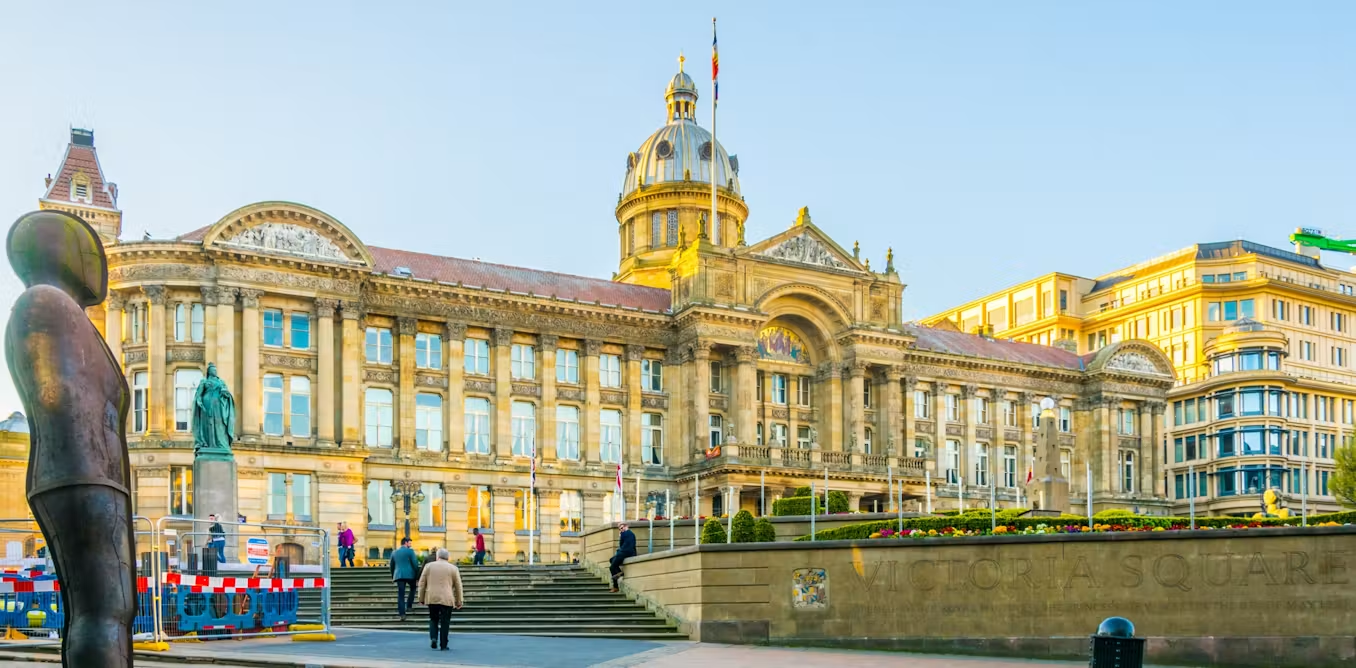
Andy Burnham’s central vision is for a devolved system of local government that promotes economic growth and fosters local pride. The prime minister’s approach resonates with something known as the “municipal gospel” that swept through Victorian cities in the late 19th century. This history offers some useful insights into the current challenges.

By the middle of the 19th century, Britain’s rapidly industrialising northern cities began to recognise that they had to take direct action to improve infrastructure and ameliorate poverty and slums. This approach became known as the “municipal gospel”. By the early 20th century, gas, water, local transport and electricity were mostly run – profitably – by municipal authorities (what would be councils today). These had often bought out the companies that provided them previously.

The legacy of the municipal gospel is all around – from parks to concert halls, art galleries, town halls, universities, libraries and hospitals. But it was not just physical infrastructure that characterised the new philosophy. The industrial cities also sought to stimulate science, innovation and education, as well as art, culture and leisure. The aim was to foster a sense of municipal pride as well as keep their industries at the forefront of invention.

Joseph Chamberlain, who became mayor of Birmingham in 1873, most clearly articulated the doctrine. He argued that only municipal authorities had the capacity to tackle the problems that blighted lives and damaged industry.

Advertisement

Chamberlain demonstrated that Birmingham could run basic services more efficiently after the city profitably took over the supply of gas from two inefficient private companies. Birmingham went on to take control of the water companies, building a (controversial) reservoir in Wales connected to the city by a 70-mile aqueduct.

Public transport was revolutionised with municipal trams in more than 100 areas across the country. And electricity also became a widespread municipal function.

Chamberlain also played a key role in working out how to fund it all. He issued municipal bonds to pay the costs of acquiring the private suppliers, with the interest payments met by the profits of the much more efficient city company.

These bonds, issued by cities across the country, became very popular. They offered higher interest rates than many other private investments and were often bought by better-off residents. By the end of the 19th century, half of all government bonds were issued by local authorities rather than central government.

Advertisement

The 20th century

While the Thatcher government in the 1980s dramatically cut funding to local government, the takeover of many municipal functions began much earlier.

The legacy of the first world war left central government with a huge debt burden. It was forced to offer high interest rates on its bonds, known as consols, to ensure people would buy them. This squeezed out the municipal bond market.

In addition, central government took control of or funded many key services previously run independently by councils. This continued under the 1945 Labour government, which nationalised many key industries – including gas, electricity and transport – as a way to achieve both efficiency and fairness. It did, however, continue to give local authorities a central role in a programme to build more council houses, which the Conservatives continued in the 1950s.

Margaret Thatcher’s policy in the 1980s of selling council homes at big discounts to tenants was popular, but undermined councils’ ability to house homeless people and those on waiting lists. Her government also introduced stringent controls on how much councils could spend, borrow and raise rates, which have broadly remained in effect.

Advertisement

Today, councils have only a few statutory duties they are obliged to provide, such as care for vulnerable adults and children and housing homeless people. It recently emerged that some councils in England are spending nearly 80% of their budget on social care for children and adults alone . Unsurprisingly, there is little room for non-statutory services such as libraries, parks, adult education, road repairs and sports facilities.

Some councils in England are spending up to 80% of their budget on social care.
PintoArt/Shutterstock

Reversing a century of change to local government, as Burnham has pledged, is not an easy or short-term task.

The biggest challenge will be finding innovative ways of funding local government projects. One possibility might be allowing councils to borrow money on their own again. In principle, this could mean issuing bonds tied to specific projects that have their own revenue streams.

Advertisement

To speed up house-building, councils may need to fund infrastructure spending, which currently depends on payments from builders as part of planning agreements. And they may need more powers and resources to acquire land for development. Eventually, they may also need to receive a proportion of central government tax revenues that are raised in their area.

Another lesson from history for the prime minister is the need for closer local links with the business community and its resources. Its expertise and experience greatly contributed to the success of the municipal gospel. Burnham has already offered tax breaks for some businesses, but he could go further and allow councils to offer more tailored tax regimes. New mechanisms of collaboration with local business, including better use of the apprenticeship levy, are needed.

The third lesson is the importance of tapping into the innovation that was fostered by the creation of red-brick educational institutions with close ties to local industries. They could become centres for developing technologies and improving training. Both of these could boost local productivity and job growth. The prime minister should ensure these universities are funded as their incomes are squeezed by the reduction in overseas students. He could also improve the funding – and prestige – of technical education.

The most important achievement of the municipal gospel was creating a sense of pride in local achievements. There was optimism that the problems of rapid industrialism could be overcome. Now that the country is facing an era of de-industrialism, it needs a new path to prosperity. As Burnham has recognised, it also needs a sense of hope and possibility. Both could go a long way to turning around the current malaise.

Advertisement

Source link

Continue Reading

NewsBeat

Paris’ first butter boutique offers 30 varieties, from seaweed to raspberry

Published

on

Paris’ first butter boutique offers 30 varieties, from seaweed to raspberry

PARIS (AP) — The contradiction of the trim Parisian and the butter croissant now has a storefront.

Le Butter Shop, billed as Paris’ first boutique devoted entirely to butter, opened last month a short walk from the Eiffel Tower — with 30 varieties from small family producers in Brittany, the Loire Valley and northern France.

France eats around 8 kilograms (18 pounds) of butter per person a year, so says the agriculture ministry. It’s among the most in the world. Yet the home of Chanel and Dior keeps an obesity rate well below the average for wealthy nations — 14%, compared to an average of 19% for the developed countries that make up the Organization for Economic Cooperation and Development.

At the new boutique, customers taste by the spoonful before buying anything from a 10-gram pat to a kilogram (2.2-pound) block: the classics, then shallot, pepper, seaweed, wild garlic, fine herbs and lemon with green pepper.

Advertisement

At the sweet end: vanilla, raspberry, strawberry and chocolate.

“Most people don’t expect to like a raspberry butter or to like chocolate butter,” said owner Erwan Leo, 34. “And when they try it, this is where they’re just like, ‘Oh wow, OK.’”

Leo, who also runs a wine-tasting business, said butter should be used like wine, to make a meal better — “the goal isn’t to get drunk.”

Tourists and locals are curious about the butter

Mehreen Himayat, 25, and Salman Bin Ehsan, 27, of Dublin, Ireland — a country known for its rich golden butter — saw videos of the shop at home in Dublin, Ireland, before traveling to France.

Advertisement

“We came here just to taste the butter,” Bin Ehsan told The Associated Press.

Alexandra Incolano, a 36-year-old who lives near Paris, came to the shop with a specific mission.

“I’m getting married on Saturday and I’m going to have a cheese centerpiece,” Incolano said. “I saw on Instagram that they had lots of great butters and I thought it could be a little something extra for my guests, a little surprise.”

The reputation of French butter is also attracting visitors who work professionally with food.

Advertisement

“I know that there’s some of the best butter in France, but I’ve never tried any,” said Aleksandr Balaban, a 31-year-old Estonian chef working in Norway. “I work in Norway, they really like salted butter, and my friend asked me to bring him some French butter as well.”

The French butter paradox

Leo said the secret to savoring fatty butter is to be like Parisians: Walk a lot, and practice moderation. “We don’t go beyond four tartines a day,” he said, referring to a French open-faced sandwich.

Tasting butter works like tasting wine, he said: “You have to grab your spoon, you put it on your palate, on your tongue, it has to melt a little bit, and then the flavors are going to start coming one by one.”

“The Italians choose olive oil, we choose butter,” Leo said. “We learn how to master it.”

Neighborhood supermarkets give butter a vocabulary: beurre doux, demi-sel and beurre salé, sometimes studded with salt crystals. Bakers fold it into croissants; cooks whisk it into sauces.

Butter is the fat of France’s dairy-producing north and west, and of Brittany above all.

Advertisement

Salt preserved it before refrigeration, and Brittany’s exemption from the gabelle, France’s old salt tax, kept Breton butter salted as much of the country went unsalted.

The legacy lives on in crêpes, salted caramel and kouign-amann, whose Breton name means “butter cake.”

Leo’s producers churn from selected cows and higher-fat milk; an extra 2 or 3 percentage points, he said, “really makes a huge difference.”

The tiny shop has drawn crowds through social media and now has a staff of four.

Advertisement

“From day one, it’s been crazy,” Leo said. “Most people come in with wanting to try one or two butters, they end up trying 25 butters because they’re just so curious.”

Next up: a croissant-flavored butter, and perhaps violet.

“This is limitless,” Leo said.

Advertisement

Source link

Continue Reading

NewsBeat

Many UK landline users unaware of analogue phone switch-off

Published

on

Many UK landline users unaware of analogue phone switch-off

The UK’s traditional phone network is being switched off in the New Year as services move to digital technology, meaning households with landline phones need to make the transition to internet-based calls.

A poll of 2,000 adults who have a landline telephone in their home has found 53% use it on a weekly basis, but 45% don’t fully understand what they need to do ahead of the switch-off to ensure their phone keeps working as it should.

Landlines are vital for many, with one in three relying on theirs to keep in touch with friends and family, while 29% use it to speak with healthcare providers.

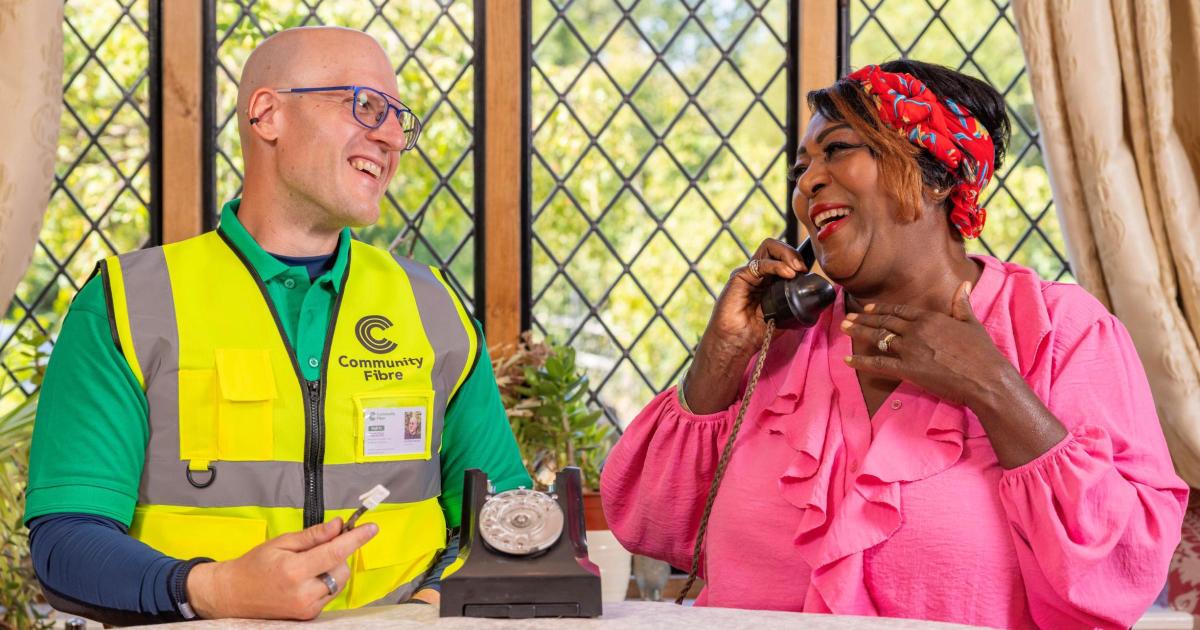
TV chef Rustie Lee on the phoneA new poll has revealed 45% don’t fully understand what they need to do ahead of the switch-off to ensure their phone keeps working as it should (Image: Ben Stevens/PinPep)

Nearly six in 10 (57%) said their landline remains an important part of their household, with 17% saying it’s cheaper for overseas family or friends to call versus a mobile phone.

Advertisement

The research was commissioned by Community Fibre, which offers broadband and calls packages that allow customers across London and the southeast to switch easily to a full fibre home phone service.

TV chef Rustie Lee, who uses her landline regularly has partnered with the broadband provider to raise awareness of the change.

She said: “The landline switch-off is one of the biggest changes to our home phones in years, so if you haven’t switched yet, there are a few things you need to do.

“My top tip is this: don’t just accept the first deal you’re offered by your current provider.

Advertisement

“Take a moment to shop around, especially look at the newer fibre broadband providers as they will often save you a lot of money.

“The extra good news is that switching to a new fibre provider is also simple and risk free. 

“You can keep your telephone number, and your new provider can handle the switch on your behalf with your current provider so you won’t have any break in service.”

It also emerged from the research that 48% of landline users are not confident they know exactly what they need to do to manage the transition.

Advertisement

Nearly half (47%) of these haven’t seen enough information about the change, while 33% are confused about what action is actually required.

A fifth (22%) are unsure who is responsible for arranging the switch and as a result, 43% are concerned the transition could lead to a loss, breakage or interruption of their service.

TV chef Rustie Lee with a worker from broadband provider Community FibreTV chef Rustie Lee, who uses her landline regularly has partnered with the broadband provider Community Fibre to raise awareness of the landline switch off (Image: Ben Stevens/PinPep)

Before taking the survey, which was carried out via OnePoll, 48% were unaware that the landline service, known as the Public Switched Telephone Network (PSTN) could affect devices in the home other than telephones.

These include alarms designed to help elderly or vulnerable people live independently by connecting them to a 24/7 emergency response centre, as well as some home security systems.

Advertisement

Rustie added: “If you use a telecare alarm or other devices that use a phone line, check with the providers of those services if they’ll be affected too, rather than your phone company.”

In fact, 53% are worried about elderly people in their lives being left isolated if they lose access to their landline and other services.

Another 54% expressed concerns that older generations may need additional support to navigate the switchover process.

Peter Rampling, a broadband expert at Community Fibre, said: “The switch from analogue to digital phone services is a nationwide change that is affecting millions of households.

Advertisement

“But unfortunately, many of those needing to switch may not be offered the best available full fibre service by their existing provider, so it’s important to explore what else is out there before committing.”

“Whether you’re sorting your own line or helping someone else to do it, shopping around and switching provider makes absolute sense with the cost-of-living crisis and can save money and effort in both the short and the long run.”

Source link

Advertisement
Continue Reading

NewsBeat

Dolly Parton revealed she wanted country-gospel song played at her funeral

Published

on

Dolly Parton revealed she wanted country-gospel song played at her funeral

Elsewhere in the interview, she spoke about her love of British singer Cat Stevens, now known as Yusuf Islam, and said she had always wanted to cover The Rolling Stones’ (I Can’t Get No) Satisfaction, which she eventually did with P!nk and Brandi Carlile on her final album, Rockstar, in 2023.

Source link

Continue Reading

NewsBeat

Hundreds of tourists missing including 12 Brits as flash flooding triggered by earthquake sweeps away buildings and bridges in Nepal

Published

on

Hundreds of people are missing following the deadly floods in Nepal, which swept away large pieces of infrastructure

Hundreds of tourists, including 12 Britons, are missing after devastating floods in Nepal swept away buildings and bridges. 

Terrifying footage shows a tsunami wave of flood water crashing through a town, sweeping away everything in its path in the mountainous Rasuwa region. 

At least eight have been confirmed dead after the wall of water cascaded down the valley along the Bhote Koshi River following landslides that officials believe were triggered by an earthquake

Officials said as many as 384 tourists and trekkers are unaccounted for, made up of 291 foreign nationals and 93 Nepali citizens. 

Advertisement

Among the unaccounted are 12 from the UK, 105 Indian nationals, four from South Africa, 17 from Malaysia and three from the United States. One each from Australia and the Netherlands are also unaccounted for.

South Korea said eight of its citizens were unaccounted for, while an additional 12 were stranded following the deadly floods. 

The nationalities of nearly 100 more people has not yet been established, while an additional 37 people are believed to be non-resident Indians living in Nepal. 

Across the border, Tibet reported ‘major casualties’ with some missing in the neighbouring county of Gyirong after a mudslide hit a land crossing between China and Nepal. 

Advertisement

Hundreds of people are missing following the deadly floods in Nepal, which swept away large pieces of infrastructure

At least eight people have been killed by the flash floods, with many more casualties expected to be reported

Houses lie partially submerged in muddy water along a riverside after flash floods at Trishuli Bazar in Nepal's Nuwakot district on August 26, 2026

Houses lie partially submerged in muddy water along a riverside after flash floods at Trishuli Bazar in Nepal’s Nuwakot district on August 26, 2026

Advertisement

The Nepal Army said 14 helicopters and disaster response teams have been deployed for rescue and relief. 

But officials said the waters were too high for helicopters to land in Nepal’s affected areas of Syapru Besi and Timure in the mountainous district of Rasuwa, with a population of about 50,000. 

Nepal’s rescue helicopters would be unable to land in the affected areas until the waters recede, however, army spokesperson Raja Ram Basnet said. 

‘There could be heavy casualties or loss of property,’ district administrator Narendra Pariyar told Reuters. 

Advertisement

‘But I cannot say for sure now.’ Pariyar urged those living on the banks of the Bhote Koshi river in the area to seek higher ground, pointing to reports that nearby villages and infrastructure project sites were washed away.

‘It all came suddenly,’ the Onlinekhabar portal quoted a witness from the area as saying. ‘We heard a loud sound, like a volcano erupting. People started to scream and ran away.’

Around 60 houses in the Trishuli Bazaar area were swept away, while the nearby Devighat was also badly affected. Two bridges over the nearby Trishuli River were also washed away. 

The flood also damaged the Trishuli and Devighat hydropower projects.

Advertisement

Nepal’s energy ministry said 430 MW of electricity supplies were affected, mostly from hydroelectric projects, or more than 12% of total national hydropower capacity of 3.2 GW, a Reuters calculation showed. 

The mudslide on the Nepali side hit China’s Gyirong port, cutting off roads, communications and power in the Shigatse region near the border with Nepal. 

Damaged houses and vehicles are seen in the aftermath of flash floods along the Trishuli River in Nepal's Nuwakot district, Wednesday, Aug. 26, 202

Damaged houses and vehicles are seen in the aftermath of flash floods along the Trishuli River in Nepal’s Nuwakot district, Wednesday, Aug. 26, 202

Nepal's foreign minister said today initial reports indicated that an earthquake caused an avalanche which triggered the flooding

Nepal’s foreign minister said today initial reports indicated that an earthquake caused an avalanche which triggered the flooding

Advertisement
An aerial view of damaged homes in Trishuli Bazar following a flash flood, in Nuwakot district, Nepal, August 26 2026

An aerial view of damaged homes in Trishuli Bazar following a flash flood, in Nuwakot district, Nepal, August 26 2026

Houses lie partially submerged in muddy water along a riverside after flash floods at Trishuli Bazar in Nepal's Nuwakot district on August 26, 2026

Houses lie partially submerged in muddy water along a riverside after flash floods at Trishuli Bazar in Nepal’s Nuwakot district on August 26, 2026

Houses lie partially submerged in muddy water along a riverside after flash floods at Trishuli Bazar in Nepal's Nuwakot district on August 26, 2026

Houses lie partially submerged in muddy water along a riverside after flash floods at Trishuli Bazar in Nepal’s Nuwakot district on August 26, 2026

President Xi Jinping urged ‘all-out’ search efforts for the missing as well as stronger monitoring and early warning systems to prevent secondary disasters.

Advertisement

Prime Minister Balendra Shah said police and military were joining rescue and relief teams.

‘Instructions have been given … to move the people living in the lower areas to safer places,’ he said. ‘People along the river are advised to exercise extra caution and remain alert.’

From its origins in Tibet, the Bhote Koshi river empties into Nepal’s Trishuli river that eventually flows into India as the Gandak river.

A deadly flash flood on the same river last year was eventually traced to the draining of a glacier lake. 

Advertisement

Last year’s Bhote Koshi flood killed nine people, with 24 missing, as it washed away a ‘Friendship Bridge’ linking Nepal and China to disrupt trade and transport for months.

That flood was triggered by the draining of a supraglacial lake in Tibet. 

The Himalayan region, which crosses Nepal and several nearby countries including India, is especially vulnerable to heavy rains, floods and landslides because the area is warming up faster than the rest of the world due to human-caused climate change. 

People watch floodwaters sweeping through Trishuli Bazar following a flash flood, in Nuwakot district, Nepal, 26 August 2026

People watch floodwaters sweeping through Trishuli Bazar following a flash flood, in Nuwakot district, Nepal, 26 August 2026

Advertisement
Houses lie partially submerged in muddy water along a riverside after flash floods at Trishuli Bazar in Nepal's Nuwakot district on August 26, 2026

Houses lie partially submerged in muddy water along a riverside after flash floods at Trishuli Bazar in Nepal’s Nuwakot district on August 26, 2026

Officials admitted there could be 'heavy casualties' as a result of the flash floods

Officials admitted there could be ‘heavy casualties’ as a result of the flash floods

The cause of the inundation was not immediately clear

The cause of the inundation was not immediately clear

Entire bridges and buildings were decimated by the flooding

Entire bridges and buildings were decimated by the flooding 

Advertisement

Research has shown that extreme weather events including heat waves, heavy rains and melting glaciers have become more frequent in the region.

Researchers at the Kathmandu research group found earlier this year that glaciers across the Hindu Kush Himalaya region are melting at an accelerating rate, with ice loss rates doubling since 2000 primarily due to rising global temperatures and climate change.

The Daily Mail has contacted the UK’s foreign office for comment.  

Source link

Advertisement
Continue Reading

NewsBeat

Nepal floods live: 100s of tourists including Brits missing as Bhotekoshi River swells

Published

on

Daily Mirror

Climate experts at the Kathmandu-based International Centre for Integrated Mountain Development say an avalanche from a glacier likely caused Wednesday’s flash flood.

The Lhende Khola River, a tributary of the Bhotekoshi River, witnessed maximum flooding Wednesday, they said.

“The Lhende Khola has flooded twice in fourteen months, this time triggered by an ice rock avalanche from a glacier on the Nepal side that blocked the river and released a sudden surge downstream,” said Saswata Sanyal, a disaster risk reduction specialist at the climate research group.

Advertisement

“In a warming Himalaya, early warning is the first line of adaptation,” he added.

Source link

Continue Reading

NewsBeat

Alejandro Balde performs U-turn and makes decision on Man Utd transfer | Football

Published

on

Alejandro Balde performs U-turn and makes decision on Man Utd transfer | Football
Alejandro Bale has emerged as a late transfer window target for Manchester United (Credits: Breton/NurPhoto/Shutterstock)

Manchester United appear likely to be frustrated once again in their search for a new left-back with Alejandro Balde the latest player to snub a move to Old Trafford.

Michael Carrick’s defensive issues were laid bare last weekend when his side slumped to a 2-0 opening weekend defeat against newly-promoted Hull City.

With Lisandro Martinez and Matthijs de Ligt not yet available for selection, United went into the new season with Harry Maguire and Ayden Heaven as their central defensive pairing.

Once that pair recovers, United should have enough in that department, especially with Leny Yoro also in reserve, but it is at full-back where they look particularly short.

Advertisement

Exclusive Premier League previews

Get ahead of the start of the season with our weekly football newsletter. Sign up now for free.

Luke Shaw featured in all 38 Premier League games last season but doubts remain over his durability, particularly given the Red Devils will have, unlike last term, European commitments to contend with.

Advertisement

Newcastle United’s Lewis Hall had represented United’s top left-back targe all summer, but the England international looks almost certain to remain at St James’ Park.

Indeed new Magpies manager, Matthias Jaissle, issued a stern hands-off warning following Sunday’s game against Liverpool when it was put to him by Peter Schmeichel, working as a pundit on TV, that Hall was of interest to United.

Alejandro Balde left-back of Barcelona and Spain during the Joan Gamper Trophy between FC Barcelona and Al Ahly SC at Spotify Camp Nou on August 19, 2026 in Barcelona, Spain.
Alejandro Balde wants to stay and fight for his place (Credits: Shutterstock)

Frustrated in their efforts to sing the fomer Chelsea defender, United have been casting their net far and wide in order to find a solution for one of their problem positions which had led them to Balde.

Signing the 22-year-old, either permanently or on loan, had initially seemed like a realistic prospect and one which gained momentum after he didn’t make the squad for Sunday’s 5-0 win against Elche.

Ask Metro


Advertisement

Use AI to go deeper into the stories you care about – powered by Metro and trusted publications.

According to multiple sources in Spain, however, Blade is now minded to stay and fight for his place.

Lewis Hall of Newcastle United warms up before the Premier League match against Liverpool at St. James's Park in Newcastle, United Kingdom, on August 23, 2026.
Manchester United have also been frustrated in their attempts to sign Lewis Hall (Credits: Images/NurPhoto/Shutterstock)

Balde has immediately been rewarded by Hansi Flick who has included him in his squad ahead of Monday’s game against Rayo Vallecano.

‘Alejandro Balde is part of the squad for tomorrow,’ said Flick on Wednesday.

Advertisement

‘I’ve spoken with him, and the important thing is that he’s fully committed to us. He’s 22 years old and very young; he has potential.’

Advertisement

Source link

Continue Reading

NewsBeat

GMB’s Richard Madeley fights back tears live on air as he recalls interviewing Dolly Parton during emotional tribute segment

Published

on

GMB's Richard Madeley fights back tears live on air as he recalls interviewing Dolly Parton during emotional tribute segment

Richard Madeley fought back tears on Wednesday’s Good Morning Britain as he recalled interviewing the late Dolly Parton

It was announced on Tuesday that the music icon had died at the age of 80, with her death confirmed in an Instagram video posted by her nephew Bryan Seaver.

And joining his co-stars on the latest instalment of the ITV daytime show, Richard, 70, became emotional as he remembered chatting to Dolly alongside his wife Judy Finnigan, 78, during their time as hosts of This Morning. 

Speaking on the show, Richard said: ‘That was an interview via satellite, a live interview, from a few years ago. Judy and I first met Dolly on This Morning…’ before his voice then cracked, telling his co-stars ‘two secs’.

Advertisement

His co-host Ranvir Singh, 49, then rubbed his back in support as Richard – who first met Dolly in 1999 before interviewing her again in 2001 – quickly composed himself before continuing his anecdote.

He shared: ‘Right! On This Morning. She was so funny and halfway through the interview, she kept putting her little legs out, sticking her legs out and I looked down and said “God, you’ve got really small feet, haven’t you?” and she went “Nothing grows in the shade honey!” 

Richard Madeley fought back tears on Wednesday’s Good Morning Britain as he recalled interviewing the late Dolly Parton

Advertisement
It was announced on Tuesday that the music icon had died at the age of 80, with her death confirmed in an Instagram video posted by her nephew Bryan Seaver

It was announced on Tuesday that the music icon had died at the age of 80, with her death confirmed in an Instagram video posted by her nephew Bryan Seaver 

‘Which I didn’t think she’d ever said before. A lot of people think her one-liners were crafted, and I suppose some of them were, but I think a lot were spontaneous – that was spontaneous!’

Paying tribute to the star, he added: ‘She had a real sharp wit, she was as smart as a whip.’ 

Agreeing with him, Richard Arnold, 56, added: ‘Grit and wit – honed from her upbringing, absolutely. We nicknamed her the ‘Dolly Lama’ amongst our group of friends because she had so many gems and pearls of wisdom. 

Advertisement

‘She could always distill a thought or a moment and just have that turn of phrase like a verbal gymnast and incredible lyricist.’

Dolly’s death was greeted with a flood of tributes, including from Reba McEntire, Maren Morris, Kacey Musgraves, Sarah Jessica Parker, Pedro Pascal, Khloe Kardashian, Hillary Clinton and more. 

Her representatives confirmed the country superstar’s death in a statement to People, sharing that the Jolene singer died following a ‘brief battle with cancer‘. They did not disclose what type of cancer it was.

‘Our beloved Dolly Parton spent her life and career bringing joy, laughter, hope and integrity into everything she touched,’ the statement read.

Advertisement

‘After bravely facing a brief battle with cancer, Dolly departed her Earthly life today at the Vanderbilt-Ingram Cancer Center surrounded by loved ones.’

Richard, 70, became emotional as remembered chatting to Dolly alongside his wife Judy Finnigan, 78, during their time as hosts of This Morning [pictured in 2001]

Richard, 70, became emotional as remembered chatting to Dolly alongside his wife Judy Finnigan, 78, during their time as hosts of This Morning [pictured in 2001]

Richard said: 'That was an interview via satellite, a live interview, from a few years ago. Judy and I first met Dolly on This Morning...' before his voice then cracked, telling his co-stars 'two secs'

Richard said: ‘That was an interview via satellite, a live interview, from a few years ago. Judy and I first met Dolly on This Morning…’ before his voice then cracked, telling his co-stars ‘two secs’

‘Her unmatched generosity reached the lives of countless people whom she would never meet, yet she was always there to offer a helping hand,’ the statement went on.

Advertisement

‘Whether it be the hundreds of millions of books donated through her invaluable Imagination Library or funding research that helped create a lifesaving vaccine used around the world, Dolly’s unconditional love for all people was the guiding force for her lasting impact.’

The legendary country singer’s death was first confirmed Tuesday in an Instagram video posted by her nephew Bryan Seaver, who also acted as her head of security.

She died Tuesday morning after being admitted Friday to Nashville’s Vanderbilt University Medical Center with autoimmune and kidney problems, according to TMZ.

Dolly’s loved ones began racing to Nashville upon hearing news of her hospitalisation but not all were able to reach her while she was alive.

Advertisement

‘This video announcement is something Dolly asked of me years ago before I fully absorbed it as a future reality,’ Seaver said.

He hailed his aunt for having ‘lived in the light’ and said she was now ‘in the arms of Jesus’ and the company of her late husband Carl Dean, as well as her parents and ‘countless others who have watched her and longed to meet her in the heavens’.

Dolly, who is often referred to as the Queen of Country, enjoyed an illustrious music career that spanned an incredible six decades and was arguably best known for her hits Jolene and 9 to 5.

Dolly died Tuesday morning after being admitted Friday to Nashville's Vanderbilt University Medical Center with autoimmune and kidney problems, according to TMZ

Dolly died Tuesday morning after being admitted Friday to Nashville’s Vanderbilt University Medical Center with autoimmune and kidney problems, according to TMZ

Advertisement

Her passing came after months of health woes fueling fan fears for her wellbeing.

She pulled out of multiple public appearances, including a residency in Las Vegas and the opening of a new ride, NightFlight Expedition, at her Dollywood theme park.

The star was supposed to attend the ride’s grand opening on August 14. Instead, a video recording of the star addressing her fans was shared on a screen at the park, which is now regarded as her last public appearance.

Last October, the hitmaker’s younger sister, Freida Parton, worried fans when she asked for prayers for Parton.

Advertisement

However, hours later Freida returned to Facebook with an update, sharing she didn’t mean to ‘scare anyone’ and adding that Parton has ‘been a little under the weather’.

The songstress died just over a year after her husband Carl, whom she had been married to for nearly 60 years. 

Source link

Advertisement
Continue Reading

NewsBeat

Dad of Treasury worker who took her own life says it failed duty of care | News UK

Published

on

Dad of Treasury worker who took her own life says it failed duty of care | News UK
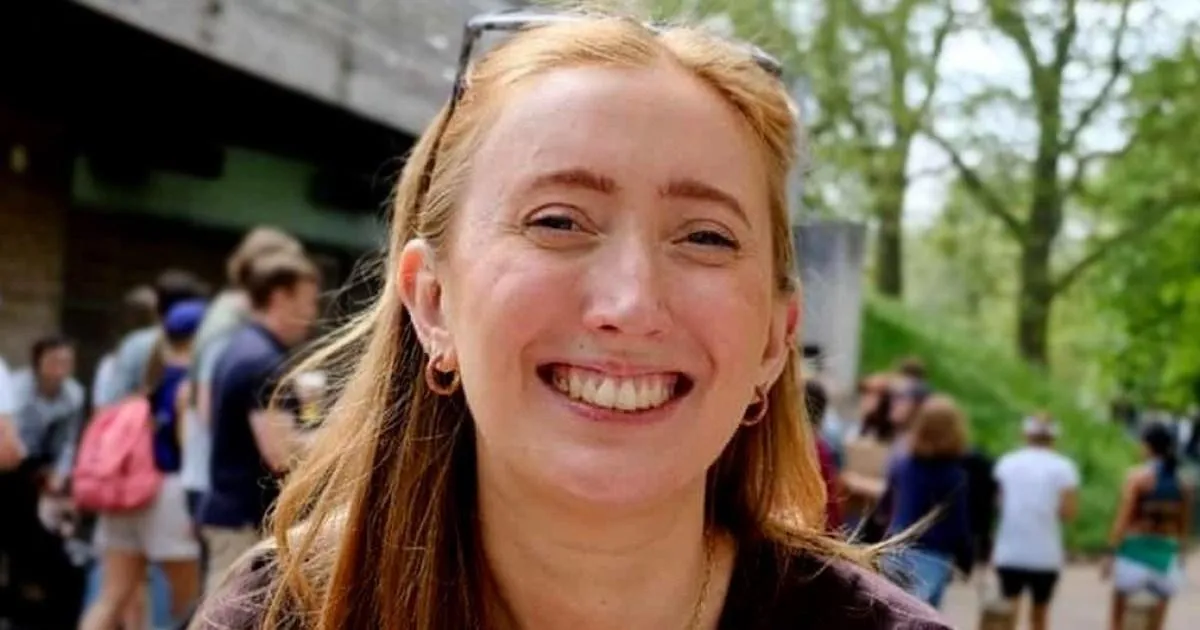
Chloe Moffat, a personal assistant to a Treasury director, died last year (Picture: Facebook/chloe.moffat)

The dad of a civil service worker who took her own life a day after a meeting with her managers has accused the Treasury of failing in its duty of care.

Chloe Moffat, 26, was a personal assistant to a Treasury director when she died on May 20 last year.

The day before her death, she had attended what she believed would be a routine one-to-one meeting with her line manager.

However, instead, a more senior manager was present as she was told about allegations that she had shared sensitive information about colleagues, which she denied.

Advertisement

Her father, David Moffat, told BBC Radio 4’s Today programme that the family’s loss had ‘torn such a big hole in our lives’.

Sign up for all of the latest stories

Start your day informed with Metro’s News Updates newsletter or get Breaking News alerts the moment it happens.

He also described the way that the meeting was handled by the Treasury as ‘beggars belief’.

Dad of Treasury worker who committed suicide says it failed duty of care ' NO CREDIT SOURCE; https://www.facebook.com/chloe.moffat.129/photos
The 26-year-old was told of allegations she had shared sensitive confidential information about colleagues, which she denied (Picture: Facebook/chloe.moffat)

‘Chloe’s first comment was, “Oh, this must be serious, there’s two of you here”,’ he said.

‘And then they worked through and put several allegations to her that she’d shared confidential information.’

Advertisement

During the meeting, Chloe repeatedly asked whether she could lose her job and whether she could have a friend present, but both requests were refused, her father said.

An inquest earlier this month found that the Treasury had not followed its written disciplinary policy, which stated that if the allegations were proven, the likely punishment would have been a written warning rather than a dismissal.

David added: ‘Even though she asked, they said they could not determine the outcome.’

Chloe was also locked out of her work emails immediately after the meeting.

Advertisement

The coroner found that the meeting with her managers had ‘materially contributed’ to her death.

London, England, UK - 5.15.2020: Her Majesty's Treasury; Shutterstock ID 1732997135; purchase_order: -; job: -; client: -; other:
In a statement, Moffat’s family said they believed the Treasury failed in its duty of care (Picture: Shutterstock/N.M.Bear)

‘There was no safeguarding, there was no support during or after that meeting, from what we’ve seen and what we’ve read,’ David continued.

‘It beggars belief that an organisation that is front and central in our government cannot get it right.’

Asked whether he believed the Treasury had taken responsibility for its role in Chloe’s death, David replied: ‘Not yet.’

He said he and his wife Anne now said that they are focused on ensuring that ‘lessons are learned’ after they received a letter from Treasury permanent secretary James Bowler, who also met him last August.

Advertisement

‘If something positive can come from this unbearable loss that we’re suffering, that’s all we look to achieve,’ David said.

The Moffat family has not yet said whether they are deciding to take further action against the Treasury.

A Treasury spokesperson told the BBC: ‘The Treasury’s deepest sympathies continue to be with Chloe’s friends and family, and the department continues to mourn our colleague.

‘We will learn the lessons from this tragedy. We are working urgently to respond to the coroner’s findings and we have introduced immediate changes to our guidance, support and wellbeing arrangements.’

Advertisement

Metro has contacted the Treasury for comment.

Source link

Advertisement
Continue Reading

Trending

Copyright © 2025