

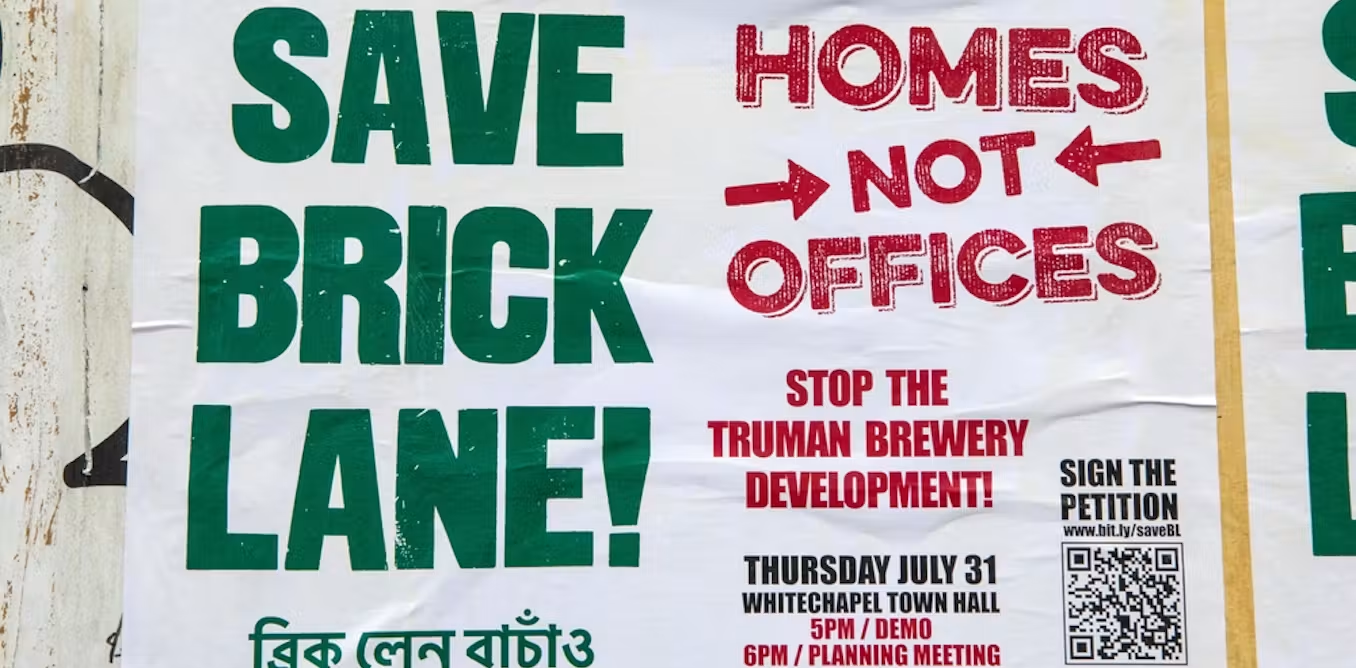
Plans for a new data centre on the site of a historic former brewery in east London prompted significant local protest. But, following planning reports and a public inquiry, the secretary of state overrode these concerns and approved the project.
The Truman Brewery, located in Brick Lane – the street famous for its curry houses and Bangladeshi culture – is a local landmark with a rich history.
Founded in the 17th century, it expanded through the 18th and 19th centuries to meet demand for porter beer. Then, changing tastes and competition led to a long decline. The brewery finally closed in 1989.
Changing plans
After the site was purchased for redevelopment in 1995, it grew into a creative hub. It hosted galleries, studios, shops, restaurants, offices, markets and music venues. A new shopping centre development was proposed in 2021 for the underused areas of the estate. This generated opposition from residents, traders and heritage groups, eventually producing the Save Brick Lane campaign, and wasn’t progressed.
Then owners, Truman Estates, developed a much broader master plan. In August 2024, they submitted planning applications for offices, retail, leisure, public space, housing and a 5,200 m², 3MW (megawatt) data centre. In the planning process, the data centre was described as quite small. For comparison, hyperscale facilities, which are now used to power AI, can be tens or even hundreds of megawatts.
When Tower Hamlets council failed to determine the applications within the statutory period, Truman Estates lodged a non-determination appeal to the Planning Inspectorate. In July last year, Tower Hamlets’ Strategic Development Committee considered the applications and its planning officers recommended approval. Despite this, councillors said they would have opposed the plans. They cited concerns over the impact on local heritage and businesses and the limited amount of new housing.
Tower Hamlets has one of the country’s most acute housing shortages, and local campaigners argued the plan was a missed opportunity to allocate urban land for social housing. The councils own local plan had earmarked the site for up to 800 homes, but the government gave that draft policy only “limited weight” because they had seen “no detailed evidence” that such a housing-led alternative was viable. The approved scheme does include some housing, with 44 apartments — 11 affordable, six for social rent.
Critics questioned whether siting a data centre in a dense urban neighbourhood was an appropriate use of land, flagging how they sometimes use high levels of water for cooling and electricity. This could put pressure on local utilities.
whereguygoes001
In October, a public inquiry was held to examine the appeals, considering concerns and evidence from the developer, local councillors and campaign groups. Finally, on July 29, Housing Minister Matthew Pennycook issued a decision letter on behalf of Secretary of State Angela Rayner, approving the new data centre.
Geography still matters
Perhaps the site owners could have considered a data centre in a less built-up location. After all, many major data schemes are large edge-of-town facilities. These can also be controversial- for example, as the £1 billion development at Iver in Buckinghamshire. However, they can at least make use of spaces that are less suitable for other things.
The Truman Brewery data centre is presented in the planning proposal as a “retail co-location”. Potential clients include legal, online gambling and financial firms. However, the attraction of the location is about the data centre’s proximity to London’s financial institutions, which can be critical for digital performance. As author Michael Lewis vividly explained in Flash Boys, a few milliseconds can be very significant in trading and other high-value digital services.
Tower Hamlets is already at the heart of this financial activity. It has the third-largest economic output of any local authority in the UK, with financial and professional services contributing some £11 billion and 160,000 jobs. Pennycook attached “significant weight” to the scheme’s economic benefits, noting it was essentially a facility designed to supply high-speed data infrastructure for London’s financial sector.
In the decision letter, Pennycook acknowledged the importance of the Bangladeshi population in the area: “She [Rayner] has taken into account community concerns around the potential impact of the proposals on this specific community.” Also, he said, the six homes for social rent had been “specifically designed to meet local housing needs and accommodate larger Bangladeshi heritage families”.
A historical brewery and a brand new data centre appear to have little in common. Yet, they both owe their existence to their physical location within London’s economy. The site is about three miles from Canary Wharf, close to other data centres and the dense fibre routes that cut across London. It is near the Osborn Street substation (a site with its own long industrial history). Although data centres are the heart of the virtual economy, it is proximity to users, wider connectivity and power that decide where they are located.
So why does any of this matter?
Local opponents argue the Truman Brewery data centre is likely to alter Brick Lane’s identity. They say it’s a redevelopment that will only accelerate gentrification and undermine local communities.
And the situation in Brick Lane resonates far beyond east London. It signals a willingness by government to prioritise digital infrastructure and economic growth, even when this conflicts with local preferences.
Since 2024, data centres have been classified as critical national infrastructure. The National Planning Policy Framework (NPPF) recognised the UK’s need for more data centres, noting their specific geographical and wider infrastructural requirements.
Planning may still designate data centres as “sheds” – the Truman Brewery was consented within use Class B8 (“storage and distribution”) – but they are now considered to be very important sheds. As location really matters, this means data centres being sited where the infrastructure allows – and often where users are located.
It is clearly time to stop thinking of data centres as largely invisible out-of-town boxes. They are now a major urban land-use issue. Increasingly, this nationally important digital infrastructure is in competition for expensive land (and power) with commerce, housing, heritage and local culture.
























































You must be logged in to post a comment Login