Connect with us
DAPA Banner
DAPA Coin
DAPA
COIN PAYMENT ASSET
PRIVACY · BLOCKDAG · HOMOMORPHIC ENCRYPTION · RUST
ElGamal Encrypted MINE DAPA
🚫 GENESIS SOLD OUT
DAPAPAY COMING

NewsBeat

how language classrooms respond to linguistic change

Published

on

how language classrooms respond to linguistic change

When an exam board for England, Wales and Northern Ireland recently clarified that students are now permitted to use gender-inclusive or gender-neutral forms in French, Spanish and German exams, it marked more than a technical adjustment to assessment criteria.

These updates highlight an important fact about the nature of languages. They are not fixed systems but evolving, social practices.

The exam board guidance has not been universally embraced. Allowing references to diverse gender identities is perceived by some opponents to be ideologically driven. It has also been criticised that these novel forms, such as the French gender-neutral pronoun “iel”, are not widely used or endorsed by authorities (yet).

These arguments surface some common misunderstandings of how languages work and what language education is for. Two fundamental insights of sociolinguistics – the academic discipline that studies language in its social contexts – are that languages are as diverse as the people who use them, and they are constantly changing and shifting.

Advertisement

The ‘rizz’ of languages

Languages are not neatly defined, unambiguous systems, but rather complex and dynamic. How we express ourselves is influenced by a range of factors including geographical regions, social aspects and identity, formality, medium and context – as well as individual preferences. Consider the differences between varieties of English spoken around the world, or the way you speak in a formal work meeting compared with how you talk to your friends in a café or pub.

In addition, languages are constantly evolving and adapting. Youth language and slang are well-known and frequently discussed examples of language change. In 2025, I took part in a radio debate about the decision to include Gen-Z slang words like “skibidi”, “delulu” and “rizz” in the latest edition of the Cambridge Dictionary, a dictionary for learners of English.

The discussion asked a central question about the purpose of dictionaries: do they tell us how languages should work, or how they actually do work? And which is it that language learners need?

At the core of this question lies an important distinction that linguists make: prescriptive versus descriptive approaches to discussing language.

Advertisement

Prescribe or describe?

Prescriptivism is an approach that focuses on standardised rules and norms, telling us (that is, prescribing) how to express ourselves in a way that is considered “correct”. Descriptivism, on the other hand, observes and describes how a language is really used and acknowledges its variable, constantly evolving nature.

In dictionaries, both approaches have their place, but we need to be clear what the purpose of any given dictionary is.

Language classrooms may, for good reasons, lean towards a prescriptive approach. Exams need clear marking criteria. Learners need stability, especially at the beginning.

There are also very practical considerations: you can’t teach everything, especially with limited contact time and set curricula to be covered – so how do you choose? As a teacher, how do you stay on top of all these new developments? These are all valid points and the answers are not always straightforward.

Advertisement

On the flip side, you could argue that language teaching should represent languages the way they really are, and learners should be introduced to their nuances. Languages are not just transactional tools for ordering food or asking directions (although they are that too, of course!).

Importantly, they are a means through which people describe their lives, relationships and identities. If teaching and assessment materials only reflected a narrow slice of this, they would fail to represent cultures, societies and communication authentically.

Be it in films, social media or interactions with other users of the language, learners encounter not just textbook-standard language, but a wide range of forms and styles. The annual German youth word of the year competition, for example, is a great resource for students to learn slang words that are popular among young German speakers. In 2025, shortlisted words included “checkst du”, meaning “get it?” or “do you relate?”

‘Checkst du?’
Dragon Images/Shutterstock

It’s easy to see why it’s important to equip learners with the means to express themselves flexibly and appropriately in a range of different contexts and situations.

Advertisement

Ultimately, it’s about finding the right balance between prescriptivism and descriptivism in language education. This, as is often the case, is easier said than done. In my view, though, the exam board guidance did not deserve the criticism it received.

After all, the guidelines afford students the freedom to express themselves flexibly using gender-neutral forms, without mandating it. This approach empowers learners to express themselves in a way that reflects their own identities if they wish to do so.

Relatable classrooms

Allowing and modelling inclusive language is a way to ensure that all learners see themselves reflected and respected. It helps create environments where students are able to engage fully and relate to the content, which is a core part of responsible curriculum design.

Language both reflects and shapes social reality. Therefore, excluding diversity from language teaching risks perpetuating invisibility and bias. It may also create an unrealistic, unrelatable and potentially rather bland curriculum.

Advertisement

And this is where some of the real potential lies. Creative, culturally rich and linguistically diverse content, which reflects current shifts in societies and empowers learners to connect them to their own experiences and realities, may be just the recipe to make learning a language even more exciting.


Source link

Advertisement
Continue Reading
Click to comment

You must be logged in to post a comment Login

Leave a Reply

NewsBeat

Harry Kane equals England’s World Cup goals record, beats Croatia 4-2

Published

on

Harry Kane equals England's World Cup goals record, beats Croatia 4-2

ARLINGTON, Texas (AP) — Hey, Jude, you and Harry didn’t let England down.

Harry Kane scored twice to equal the English record for World Cup goals, and Jude Bellingham put England in front for good two minutes into the second half of a 4-2 victory over Croatia on Wednesday.

Martin Baturina and Petar Musa answered each of Kane’s first-half goals in a rematch of a 2018 semifinal won by Croatia. Musa’s goal came on the final play before the whistle ending the first half.

The even score didn’t last long once play resumed.

Advertisement

Bellingham took a long pass from Elliot Anderson and stayed clear of the defender the rest of the way, sending a shot past Dominik Livakovic and in off the far post. Marcus Rashford padded the lead in the 85th minute.

“He just told us to let the shackles off,” Kane said of coach Thomas Tuchel’s halftime message after Croatia pulled even so late before the break. “The way we conceded that second goal is not the team we want to be. He finally just said, ‘What’s the worst that can happen? We lose the match, first group game, we get on with it.’ We move on. Just go and kind of show the world who we can be.”

Kane, who won the Golden Boot at the 2018 World Cup in Russia by scoring six times, is up to 10 World Cup goals, tying Gary Lineker’s mark from the 1986 and 1990 tournaments.

The 32-year-old’s first goal came on his second chance on a penalty kick after Livakovic’s save on the first try was nullified by a video review that showed both his feet off the goal line as Kane was striking the ball.

Advertisement

Kane went the same way toward the right post with the second attempt, while Livakovic lunged the other direction, to his right.

The penalty was called when Luka Modric, the 40-year-old midfielder who extended his Croatian record by appearing in his fifth World Cup, kicked Noni Madueke in the thigh.

Kane matched Lineker’s mark when the Bayern Munich striker easily beat Livakovic with a powerful header off a corner kick from Declan Rice. Kane has 81 international goals.

“We scored two goals that were good actions and good situations, but they were too little,” Croatia coach Zlatco Dalic said through an interpreter. “England was very difficult, (we) also have to be strong on the defensive side.”

Advertisement

Bellingham almost immediately had another great scoring chance after the Real Madrid player’s seventh international goal. Livakovic made that save and about a half-dozen more in a matter of minutes during a frenetic English attack.

“We could have scored probably three goals in that 20-minute spell coming out (after halftime),” Kane said. “In the end, we just had too much for a great team that will probably go far in the tournament themselves.”

Musa scored the first World Cup goal for an active player from Dallas of Major League Soccer, which plays its home games about 40 miles from AT&T Stadium.

The retractable-roof venue that is home to the NFL’s Dallas Cowboys is giving World Cup fans an air-conditioned reprieve from the muggy Texas heat, this time for white-clad English fans and Croatian supporters who were mostly wearing their country’s familiar red-and-white checkered uniforms, not the blue kits the players had on.

Advertisement

Musa tracked a header from Ivan Perisic and put a one-timer past Jordan Pickford, who was also beaten in the 36th minute by Baturina. That shot into the left corner ticked off Pickford’s hand.

Bukayo Saka’s pass left plenty of room for Rashford as the Barcelona player entered the penalty area, faked a shot with his left foot and scored his 19th international goal with his right.

“I loved the second half, all of it,” Tuchel said. “I encouraged them to go for it. To play with more courage, to be brave, to be ourselves. And like I said, I loved their reaction.”

England next plays Ghana in Foxborough, Massachusetts, in Group L on Tuesday, the same day Croatia plays Panama in Toronto.

Advertisement

___

AP World Cup: https://apnews.com/hub/fifa-world-cup

Advertisement

Source link

Continue Reading

NewsBeat

Popular York restaurant Clucking Oinks opening at The Fox

Published

on

Popular York restaurant Clucking Oinks opening at The Fox

Much-loved York fried chicken restaurant Clucking Oinks has announced it will be taking up residence at a popular York pub – The Fox in Holgate Road – ahead of summer.

This follows the closure of their Castlegate location at the end of last month, something that the owners said was due to the ‘climate situation of hospitality in the UK’ – adding that “it’s become clear the idea of a restaurant isn’t a viable one”.


RECOMMENDED READING:

Advertisement

Their original location inside Spark:York will remain open, as will its other premises inside Stack – a similar venue to Spark – in Newcastle city centre.

The truck is set to open its hatch tonight, catering to pub quizzers and football fans who will be visiting the pub to watch the England v Croatia game.

In a post on Instagram, the restaurant dubbed the opening ‘the next episode’.

They said: “After closing Castlegate we promised something exciting was coming and here she is! Our stunning new truck will be at @foxpubyork Wednesday-Sunday through the summer!

Advertisement

“She debuted at @burger_fest_uk this weekend where we won The Best Chicken Burger Award which was judged by @wingfestuk”

Source link

Advertisement
Continue Reading

NewsBeat

Chaos erupts in Manchester fanzone as Harry Kane scores England’s first goal of World Cup

Published

on

Manchester Evening News

The Three Lions are taking on Croatia in their opening game of the tournament stateside

There were joyous scenes as England opened their account at the 2026 World Cup tonight.

The Three Lions are taking are taking on Croatia in Dallas, Texas, in their first group game in the newlly expanded tournament being held in the USA, Mexico and Canada.

And it was a dream start when a foul by Luka Modric on Noni Madueke saw England awarded a penalty.

Advertisement

Click here to get the biggest stories straight to your inbox in our Daily Newsletter

Captain Harry Kane’s initial effort was saved by the Croatian goalkeeper Dominik Livakovic.

However the referre ordered it to be retaken due to encroachment from two Croatian players,. and Kane made no mistake second time around, slotting home to give England a 12th minute lead.

Watch: Harry Kane gives England the lead from the spot

Advertisement
Content cannot be displayed without consent

At the ‘We Are Football festival’ in Freight Island, where more than 2,000 fans have packed in, chaos erupted as England opened their account.

Beer was launched through the air as a sea of bodies bounced around in joy.

Stunned silence as Croatia equalise

Content cannot be displayed without consent

That joy was cut short, with the fans reduced to stunned silence when a thundering strike from Martin Baturina drew Croatia level in the 36th minute.

Advertisement

It took Kane just eight minutes to get them celebrating again.

Kane restore’s England’s lead

Content cannot be displayed without consent

A powerful header from a corner sent the raucous venue into raptures again.

Croatia draw level

Advertisement
Content cannot be displayed without consent

Following an action-packed first-half, Croatia levelled again, with Petar Musa volleying home seconds before the half-time whistle.

Jude Bellingham puts England 3-2 up

Content cannot be displayed without consent

But after a bright start to the second period, Jude Bellingham slotted home after a surging run to put England back in front and sparked further scenes of delerium in the fanzone.

Marcus Rashford makes it 4

Advertisement
Content cannot be displayed without consent

Manchester United striker wrapped up the victory as he slotted home Bukayo Saka’s pass to make it 4-2 and a very satisfactory night for England faithful.

There chants of ‘It’s Coming Home’ and a booming rendition of Sweet Caroline following the full-time whistle.

Source link

Advertisement
Continue Reading

NewsBeat

Ashfield Caravan Park near Hartlepool goes up for sale

Published

on

Ashfield Caravan Park near Hartlepool goes up for sale

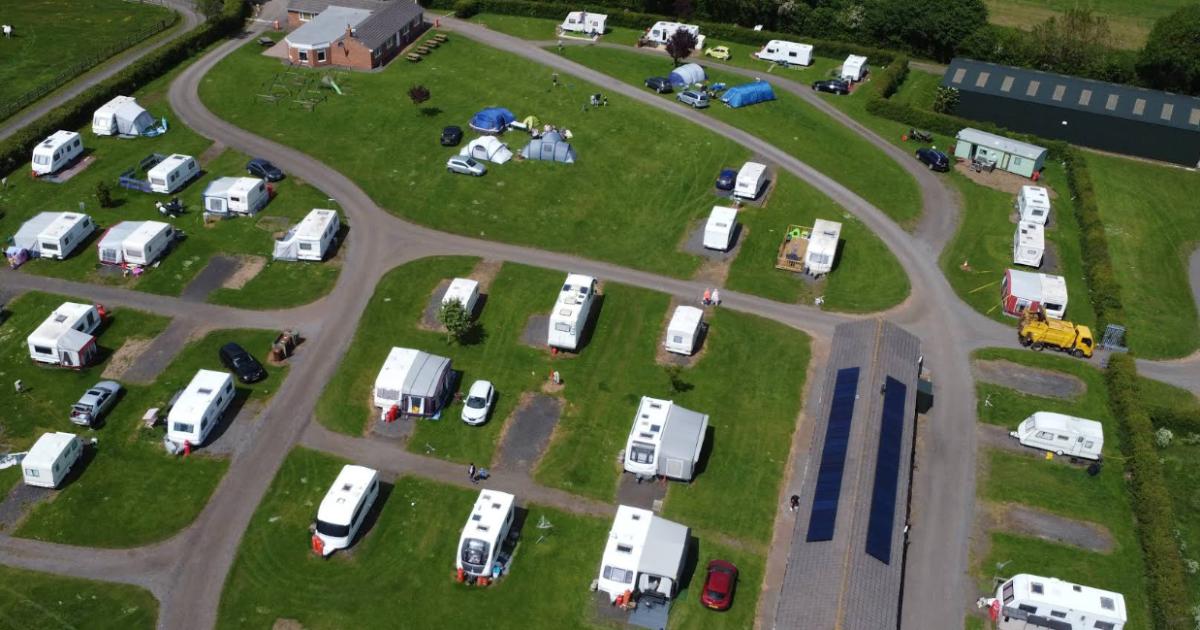
Ashfield Caravan Park, on the outskirts of Dalton Piercy, near Hartlepool, is on the market.

The park spans around 11 acres and includes planning permission for 37 static holiday caravans, with the potential to increase to 47 units, and storage for up to 143 touring caravans.

Ashfield Caravan Park (Image: GSC Grays, Farm Agency)

It also has planning permission for a four-bedroom detached house.

The caravan park is operational all year round, with each of the 105 touring pitches developed with hardcore bases and electric hook-up points.

Advertisement

The site is divided into three main areas.

The western side, which makes up almost five acres, is home to the touring caravan pitches.

The north eastern section, covering about 1.8 acres, has planning permission for the storage of up to 143 touring caravans and a four-bedroom dwelling for owner or manager accommodation.

To the south eastern section, covering just over three acres, there is planning permission for 37 static holiday caravans, with potential to increase to 47 units, subject to further surveys and planning guidelines.

Advertisement

The park also includes a central reception with a licensed social club, a fully equipped amenity block, and a single static caravan for staff use.

The amenity block, built in 2006, provides a reception foyer with space for a convenience store, staff amenities, a commercial kitchen, and rear access into the social club with a bar and seating.

The block also includes showers and toilets, baby changing facilities, and a pot-washing station for all touring pitches.

Part of the internal space is currently used for storage, but it could be converted to self-contained manager accommodation, subject to planning consents.

Advertisement

The park is located in a rural landscape close to the coast, offering a peaceful and scenic environment.

The sale of the park includes numerous vehicles, plant, and equipment, with an inventory to be provided to seriously interested parties.

The sale of the park, which is bordered predominantly by mature hedgerows and open farmland, is listed by GSC Grays, Farm Agency.

Advertisement

Source link

Continue Reading

NewsBeat

World’s number one golf course planning to modify legendary links

Published

on

Belfast Live

The prestigious golf club have announced a planning application for ‘modifications to the championship course’

Royal County Down is widely regarded as the finest golf course anywhere on the planet.

Advertisement

But as anyone in the sporting world knows, if you are standing still, you are falling behind.

The prestigious golf club have announced a planning application for ‘modifications to the championship course’.

It’s difficult to improve on perfection.

The course recently came top of Golf Digest’s annual top 100 courses in the world list, and has been hailed as the best there is by the likes of Rory McIlroy and others many times.

Advertisement

With the stunning Mourne Mountains as the backdrop – on a clear day – the links sit right against the Irish Sea on the edge of Newcastle, Co Down.

Old Tom Morris’ famous track is renowned for its natural, rugged look, devilishly deep bunkers and dramatic blind tee shots. That all combines for one of the toughest tests in the game.

However, change is afoot at the bottom of the Mournes.

The Golf Club has filed a pre-application planning notice, proposing modifications to its championship course.

Advertisement

The finer details of those changes will be revealed on August 26, online – through their consultancy firm Clydeshanks – and at a consultation meeting in Newcastle.

The proposal to the council states: “Information relating to the proposed development will also be available to be viewed at www.clydeshanks.com/public-consultations, where an online consultation magazine will be available from 26 August 2026, and will be available to view for a minimum of 28 days thereafter.

“The online consultation will display details of the proposed development and facilitate comments from members of the public, relating to the proposed development.”

Advertisement

A cover letter on the proposal also explains: “The community consultation will take place at Newcastle Centre, 10-14 Central Promenade, Newcastle, Co. Down, BT33 0AA on Wednesday 26 August 2026 from 4-7pm.

“It will comprise a number of large wallboards that will graphically explain what is proposed, enabling interested parties to understand the nature of the development and how the scheme may look when completed.”

Sign up to our free sports newsletter to get the latest headlines to your inbox

Source link

Advertisement
Continue Reading

NewsBeat

how convents helped power medieval Vienna’s economy

Published

on

how convents helped power medieval Vienna’s economy

Retirement planning might seem like a thoroughly modern concern, with pensions, investments and annuities forming part of today’s financial toolkit. But these financial tools are much older than they appear. In the later Middle Ages, people were already exchanging lump sums for steady income streams – and, in cities like Vienna, these arrangements underpinned entire urban economies.

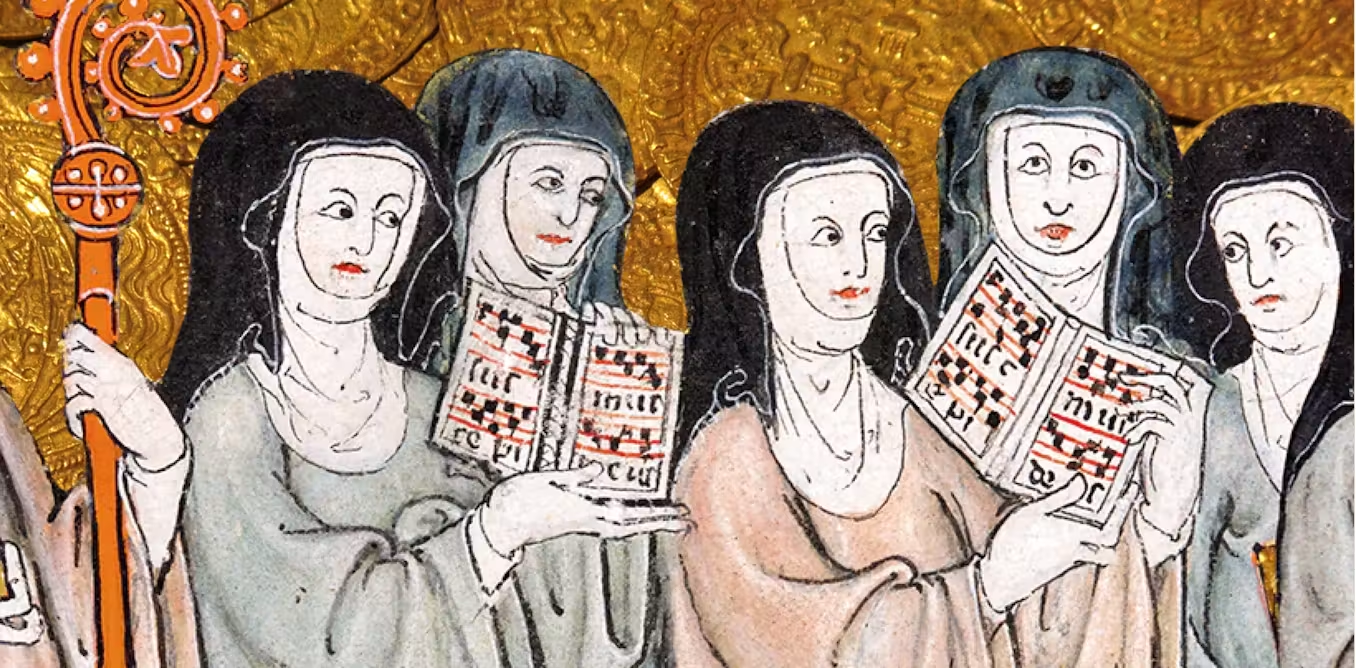
Less expected, perhaps, is who helped make this system work. Alongside merchants and elites, communities of nuns quietly emerged as some of the city’s most reliable financial operators.

Annuities existed in several forms, each suited to different needs. At their core, these contracts involved one party providing a lump sum in exchange for a regular payment, usually secured on property or urban revenues. The most common type in medieval Vienna – my area of research – was the perpetual annuity, which generated a fixed annual return without a set end date and could be transferred or sold.

Advertisement

The Artist’s Sister in the Garb of a Nun by Sofonisba Anguissola (circa 1535–1625).
Southampton City Art Gallery

Alongside these stood life annuities, which paid people an income for their lifetime. This arrangement provided security in old age and helped with managing inheritance. There were also public annuities issued by civic authorities, through which the city itself raised funds by promising regular payments backed by its revenues.

These different forms of annuity supported a wide range of financial strategies. Households used them to access liquidity, investors secured predictable income streams and institutions managed long-term assets.

In cities such as Vienna, this system formed the backbone of urban finance and enabled sustained economic activity in the absence of formal banking institutions.

Women, credit and the records of a city

My research in Vienna’s city records offers an unusually detailed view of this system. A data-set of more than 2,000 annuity contracts recorded in the Grundbücher, the city’s property registers, between about 1360 and 1450 makes it possible to trace who participated in these markets and how their activity evolved over time.

Advertisement

Women are especially visible in these records, appearing frequently as both borrowers and lenders. Wives participated in household finance alongside their husbands, widows managed and reinvested their assets and some women acted as independent economic agents in their own right. Far from being marginal, women were embedded in the everyday functioning of late medieval credit markets.

Over the course of the 15th century, however, these patterns began to change. Individual women appear less frequently in annuity transactions. In their place, a different kind of female economic actor becomes increasingly visible: the convent.

Painting of a woman gathering tulips in a garden with a nun in the distance.

The Convent Garden by George Dunlop Leslie (circa 1857-1870).
National Museums Liverpool

Life cycle stages shaped how women engaged with credit within Vienna’s legal framework. Urban regulations defined when women could control property, including widowhood, entry into a convent and recognised economic maturity later in life.

Within these conditions, women appear in the annuity market across different stages, sometimes acting independently and sometimes with spouses or kin. At the same time, wider institutional changes shaped how credit moved through the city. Women remained an integral part of this system, even as the forms of their participation evolved.

Advertisement

One of the most striking developments during this period is the growing importance of female religious houses as lenders. As individual women appear less in annuity transactions, convents emerge as increasingly active providers of credit.

This shift becomes particularly visible after 1420, when Vienna’s Jewish community – long an important source of credit – was expelled. As established channels of lending contracted, new opportunities opened up. Convents stepped into this space, expanding their lending activity and becoming key providers of urban credit.

Convents as lenders

Convents gathered resources through dowries, donations and rents, building up substantial pools of capital behind cloistered walls. They then deployed this wealth through annuity contracts, often over long periods, carefully spreading risk by lending to a wide range of borrowers.

Convent administrators tracked payments, negotiated contracts and cultivated reputations for reliability. In a world where trust underpinned financial exchange, nuns became known as dependable creditors.

Advertisement
Painting of a group of nuns gathered round a sickbed
Miracle of Sister Candida Agudi by Filippo Abbiati (1610).
Milan Cathedral

Their borrowers varied too. Viennese private annuity records show households, artisans, elites and institutions all turning to convents for credit. These loans supported property transactions, the management of existing debts, household needs and investment. Convent lending formed part of the everyday functioning of Vienna’s economy.

Understanding these records reshapes how women’s economic history can be understood. Though individually women were less represented in the financial systems, there was a shift toward collective and institutional forms of financial participation. Women continued to shape economic life, often through structures that organised and amplified their resources.

At a time when discussions about financial inclusion and stability remain central, there are lessons to be learned from Vienna. Trust, adaptability and a diversity of participants are integral to any healthy financial system. When established sources of credit change, new ones can step forward to sustain the system. In this case, female religious communities played a central role in supporting economic resilience.

Source link

Advertisement
Continue Reading

NewsBeat

18-year-old dies after being thrown from horse-drawn carriage in Central Park

Published

on

18-year-old dies after being thrown from horse-drawn carriage in Central Park

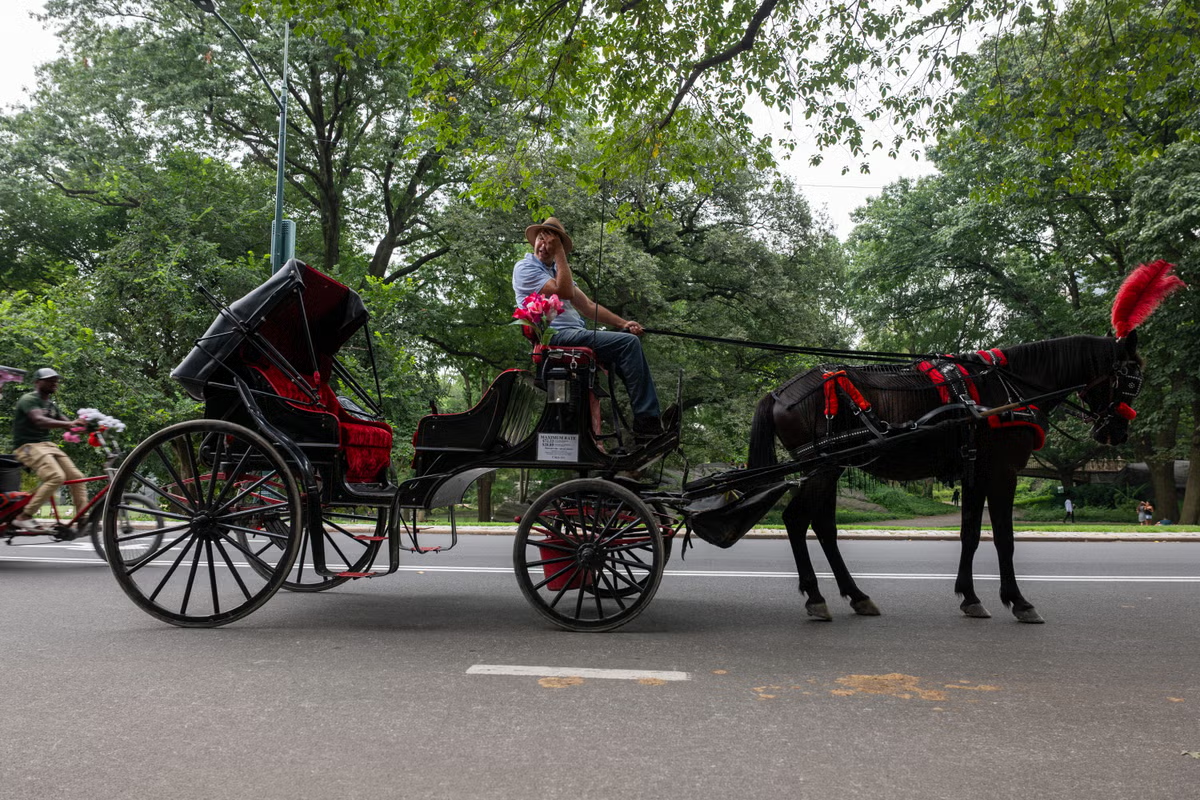
An 18-year-old has died following a harrowing incident in Central Park where a horse-drawn carriage bolted, throwing him and other passengers to the ground.

The New York Police Department confirmed the teenager‘s death after he was initially hospitalized in critical condition.

The accident occurred just before 3 p.m. on Wednesday. The 18-year-old was one of four passengers in the carriage when the horse suddenly took off, causing at least two individuals to be ejected from the careening vehicle.

A representative for the Transport Workers Union, which represents carriage industry employees, stated that the driver had dismounted to take a photograph of his passengers, an action they are not permitted to do. The other passengers involved in the incident reportedly refused medical treatment at the scene.

Advertisement
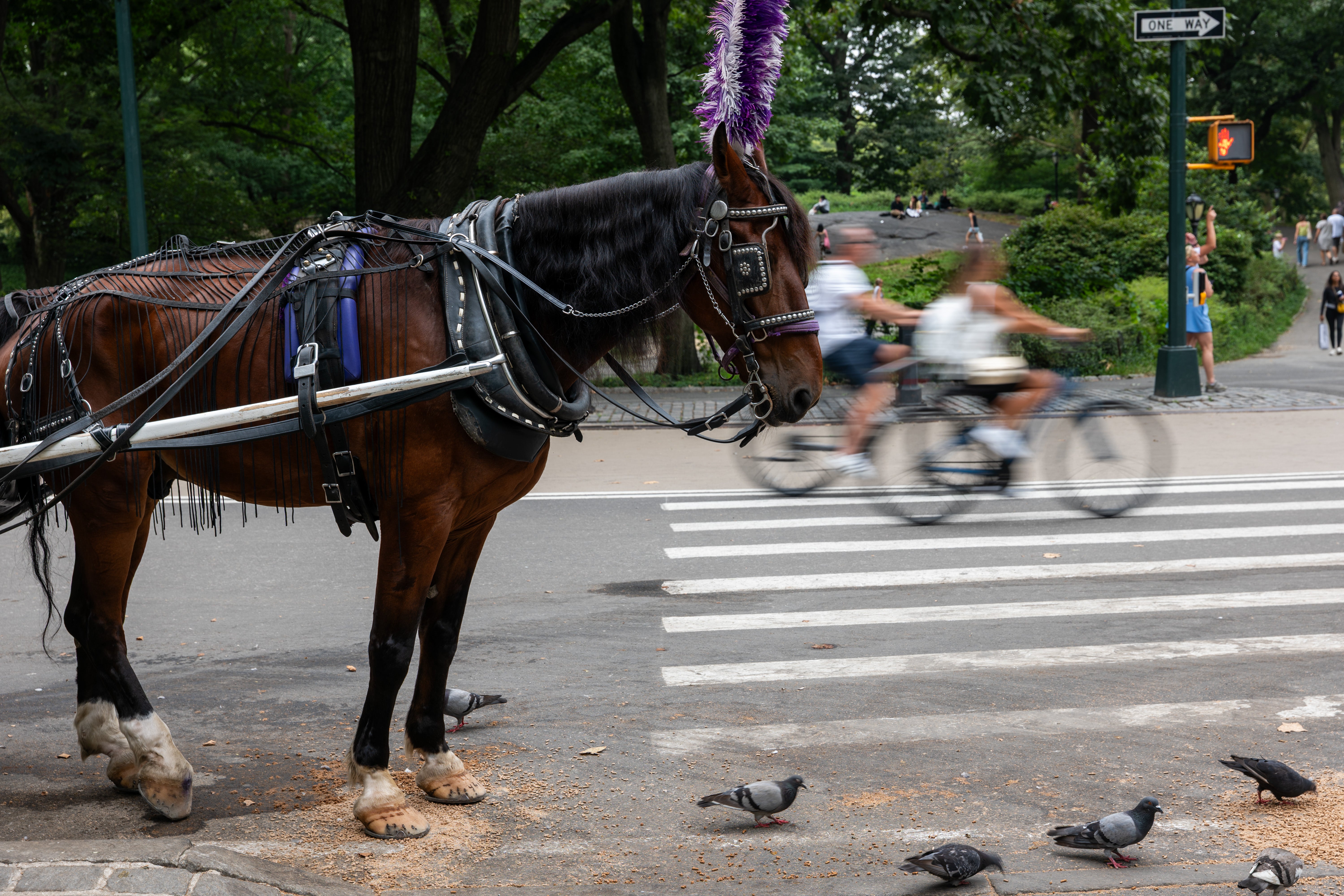
The horse had been in the park for only six weeks
The horse had been in the park for only six weeks (Spencer Platt/Getty Images)

The horse had been in the park for only six weeks, according to Alexander Kemp, the administrative vice president of the union’s local chapter. He said he wants a full investigation.

“Safety in the park has been a growing concern among many, and improvements are needed to be made with respect to all vehicles, including e-bicycles, delivery vehicles, pedicabs, and horse-drawn carriages,” he said in a statement.

Video showed the horse sprinting through the park as two people appeared to jump from the four-wheeled carriage. A second video shows the cab toppling over after clipping the wheels of another carriage on the park’s busy loop.

It’s a fraught moment for Central Park’s 150-year-old horse-drawn carriage industry, which is facing the growing threat of a ban from opponents who say the rides are both inhumane to horses and a danger to city residents.

Wednesday’s event follows several recent horse-related problems in the park, including the fatal collapse of a horse last week.

Advertisement

The Central Park Conservancy, the nonprofit which operates the park and came out last summer in support of banning horse-drawn carriages, said the back-to-back events should bring an end to the industry.

“A young man came to enjoy our park and lost his life,” the group said in a statement. “That is not an acceptable cost of an antiquated industry operating in the middle of one of the most heavily used public spaces in America.”

Source link

Advertisement
Continue Reading

NewsBeat

Man charged with burglary, assault and having offensive weapon

Published

on

Belfast Live

Suspicious activity was reported near a property in South Belfast

A man has been arrested following suspicious activity near a property in South Belfast.

The incident took place in the Iverna Close area of the city on Wednesday June 17.

The 31-year-old man now faces several charges including burglary with intent to steal, common assault and possessing an offensive weapon.

Advertisement

A statement from the PSNI on Wednesday evening said: “A man arrested following a report of suspicious activity at the Iverna Close area of south Belfast on Wednesday 17th June, has been charged to court.

“The man, aged 31, has been charged with a number of offences including burglary with intent to steal, common assault and possessing an offensive weapon in a public place.

“He is expected to appear before Belfast Magistrates Court tomorrow, Thursday June. 18 As is usual procedure all charges will be reviewed by the Public Prosecution Service.

For all the latest news, visit the Belfast Live homepage here and sign up to our daily newsletter here.

Advertisement

Source link

Continue Reading

NewsBeat

Spate of new care home approvals in Belfast vital for “chronic shortage”

Published

on

Belfast Live

Belfast is at least short by 820 beds in terms of elderly care

A spate of newly approved Belfast care homes are vital to address an ageing population across the city, particularly in East Belfast, planners have explained at City Hall.

Advertisement

This week the Belfast City Council Planning Committee approved four major applications relating to care homes and assisted living quarters for the elderly -three of those pertaining to East Belfast, one at the old Netherleigh House, two at Stormont Hotel, and one at Halifax House, the Gasworks, South Belfast.

One of the planners involved with Netherleigh House said there “was a chronic shortage” of beds for “an ageing population,” and said the city is already 820 beds short for those elderly members of the public in need.

READ MORE: Sinn Féin push through care home plans for Stormont Hotel despite local opposition

READ MORE: No extra crime or antisocial behaviour reported outside site of controversial Belfast homeless centre

Advertisement

Two of the applications courted controversy in the chamber on Tuesday evening. Sinn Féin pushed through plans in East Belfast to convert the Stormont Hotel site into a huge care home and assisted living complex, despite major opposition from local residents and elected representatives. The applications got through on knife-edge votes in the chamber.

The first application involves the change of use from hotel, conference centre and offices to a 97-bed care home and 1,559 square metre diagnostic medical facility, with associated access, car parking, landscaping and open space. The site is the still functioning 105 bed Stormont Hotel, 587 Upper Newtownards Road.

The second application involves outline planning permission for independent living units and up to 62 assisted living units, as well as associated internal access roads, communal open space, revised access and car parking, and landscaping. The plan involves the demolition of a host of dwellings at Castleview Road and Summerhill Parade.

The applicant for both is Summerhill Retirement Developments Ltd, Victoria House, Gloucester Street, Belfast. The council received 47 third-party representations, from 26 persons, all of which objected to the scheme. Objectors and local elected reps objected to the closure of a tourist offering, and said car parking for the new facility would overwhelm residential areas.

Advertisement

A representative for the applicant told the committee: “Retirement living has become a highly sought after housing requirement across the city, not least in this part of Belfast. East Belfast has a very high level of population over the age of 65, much higher than the average across the rest of the city.”

Two other major applications relating to elderly care were passed at the Planning Committee, without controversy.

In the Gasworks area of South Belfast, councillors unanimously approved a proposed change of use from offices at the Halifax Building, 24 Cromac Place, to a nursing home comprising 156 bedrooms.

The application, by the Healthcare Ireland Group, Holywood, includes an ancillary scanning unit and all associated accommodation including dining and café areas, day rooms and lounges, a hairdressers, cinema rooms, treatment rooms and internal courtyard. The proposal also includes ancillary offices, landscaping, and cycle parking.

Advertisement

The five storey office building is currently vacant and was previously occupied by Lloyds Banking Group and Halifax. Healthcare Ireland says the proposal represents an investment of £16 million to the local economy, with the potential for 80 to 100 construction jobs and creation of 180 permanent employment positions.

Only NI Water objected from the list of statutory consultees, and council Planning officials recommended the application for approval. There were no third party objections.

A plan to convert the former headquarters of Stormont’s Department for the Economy into a nursing home was also approved at the Planning Committee on Tuesday.

Councillors unanimously approved the conversion of the listed Netherleigh House and existing blocks, at 1 Massey Avenue, East Belfast, to a nursing home, and the erection of assisted living apartments over two four-storey blocks. The site is currently vacant.

The residential and nursing care facility plan involves extensions to an existing office block, including a fourth storey floor, eastern and western gable extension and two front projections from the northern elevation. The proposed development overall will provide 209 one bed residential units and 36 assisted living apartments.

Further works will include new site parking, landscaped amenity areas, and woodland trails across the six acre site. The applicant is Y3 Care Ltd, of Holywood.

Council Planning officials recommended the application for approval, while NI Water objected to the plan. The council received one letter of objection and one letter of support from third parties.

Advertisement

The Planning officer’s report states: “Policy states that Planning permission will be granted for the change of use of a listed building where this secures its upkeep and survival and the character and architectural or historic interest of the building would be preserved or enhanced.

“The new use of residential and nursing care is considered appropriate for Netherleigh House and will bring the vacant building back into use which ensures that the architectural and historic interest of the building is preserved.

“Although the proposal does not include any extension to Netherleigh House itself, it includes various extensions and alterations to the existing built form on site which is attached to the listed building along with two new build assisted living units and are consequently subject to the same level of statutory protection.”

Alliance Councillor for Ormiston Hedley Abernethy asked at the committee meeting: “How do we assess the need for nursing care facilities? It seems everyone must be getting sick in East Belfast, because we seem to be getting more of these facilities.”

Advertisement

An agent for Y3 Care Ltd replied: “We highlighted in our submission that in the 2021 census, data obviously shows there is an ageing population. We highlighted stats around the need for specialist residential and nursing dementia services, all which will be offered in the Netherleigh House proposal.

“The council’s own team states there is an additional need for another 820 bed spaces in residential care homes during the planned period of the Local Development Plan. The council’s LDP team is supportive of this proposal and that we have demonstrated that there is a need for the proposal.” He said there was “a chronic need and a chronic shortage of beds.”

A council officer said: “The Local Development Plan identifies the need for beds, and we take that statement of need and consult. The consultation response said there was a fall in nursing bed care due to certain homes closing since 2015.

“We had a baseline of 820 beds, but we have identified that due to those closures but there are probably more than that. And we certainly haven’t exceeded that in terms of any of the applications we have seen so far.”

Advertisement

For all the latest news, visit the Belfast Live homepage here and sign up to our daily newsletter here.

Source link

Continue Reading

NewsBeat

England fans react after Mr Brightside played during hydration break in World Cup opener against Croatia

Published

on

Manchester Evening News

“Playing The Killers at full volume in the middle of a game during the hydration break. Games never been more gone man”

Whether you like it or not, Mr Brightside by the Killers is the iconic soundtrack to thousands of nights of partying.

It doesn’t matter if it’s a particularly raucous bar, the final few moments of a wedding or a dozen other types of occasion, many people have at some point found themselves bellowing the chorus out with a pint in hand.

Advertisement

Now it seems the song has started making appearances in more place – second half hydration breaks in the World Cup 2026.

The breaks, which essentially divide the game into four quarters, have proved controversial, with many England fans booing the one during the first half of the team’s opening match against Croatia on Wednesday night.

Click here to get the biggest stories straight to your inbox in our Daily Newsletter

However the familiar tune was played during the hydration break in the second half, with many fans at the stadium singing along.

Advertisement

There was a bit of a mixed reaction to the popular song being blasted out however – with users on X, formerly known as Twitter, divided.

Some people welcomed the choice, with one writing: “They are legit playing the English national pub anthem during the hydration break..”

Another wrote: “Not sure I’ll ever get over that Mr Brightside hydration break. Soccer.”

Content cannot be displayed without consent

A third added: “Watching the footy and the music during the hydration break is Mr Brightside by The Killers …. I would bet good money that it’s one of the few songs that everyone in the world knows pretty much all the words to.”

Advertisement

Another added: “They are legit playing the English national pub anthem during the hydration break.

Not everyone was happy however.

One fan wrote: “Hydration break and if that isn’t bad enough they’re playing Mr Brightside. And just in case that isn’t bad enough, the crowd are singing along to it.”

Another added: “Playing The Killers at full volume in the middle of a game during the hydration break. Games never been more gone man. The Yanks have won.

Advertisement

Source link

Continue Reading

Trending

Copyright © 2025