Connect with us
DAPA Banner
DAPA Coin
DAPA
COIN PAYMENT ASSET
PRIVACY · BLOCKDAG · HOMOMORPHIC ENCRYPTION · RUST
ElGamal Encrypted MINE DAPA
🚫 GENESIS SOLD OUT
DAPAPAY COMING

NewsBeat

How studying friendship has changed the way I understand my own loneliness

Published

on

How studying friendship has changed the way I understand my own loneliness

A few years ago, I had just moved into a house.

As relatively recent graduates, my husband and I had struggled with the banks to secure a mortgage – and worse still, I had a humanities background that didn’t exactly guarantee employment.

But after approaching several banks, we managed to persuade a kind loan officer to say yes. Suddenly, we found ourselves settled in the suburbs, with 190 square meters, two children and a garden trampoline.

One summer evening, while the children were asleep, we sat out on the terrace in the sunshine. We had eaten well, lit candles and were drinking wine. It sounds like the perfect evening, doesn’t it?

Advertisement

On paper, we had realised our dream. The problem was, it didn’t feel that way. I had a strange sense that something was missing, even though I adore my family.

What was missing were friends.

And although I felt lonely, I wasn’t alone. Studies show that many of us have experienced loneliness.


Advertisement

This essay was published as part of a collaboration between Insights, The Conversation’s longform series, and Videnskab.dk.


I research friendship and, over the past few years, I’ve immersed myself in everything from scientific studies to literary texts on the subject.

It is especially literature that has given me a new perspective – both professionally and personally – on what friends are, and what friendship can be.

Hungry for friendship

In other words, I have what romantic movies and popular culture tell us is important: a partner, children, a job and a mortgage.

Advertisement

But it isn’t quite enough.

And it made me wonder whether the life path many of us – myself included – are following might, in fact, contain some built-in flaws.

Does this path leave too little room for the relationships defined by choice and equality? The relationships that aren’t about starting a family, but about friends?

We are raised to follow a particular social script in life. One in which career, marriage and children take centre stage and where friendship is assigned a less important role.

Advertisement

Many of us leave behind youth – when friendship often plays a central part – in favour of the so-called serious romantic relationship of adulthood. More broadly, some people tend to treat friendship as a kind of optional icing on the cake rather than the dough that holds it all together.

But what if this script doesn’t make us happy? What if we are depriving ourselves of something essential? Renowned feminist writer and activist Betty Friedan wrote about the widespread unhappiness of women in the 1960s in her groundbreaking book The Feminine Mystique.

Among its core arguments is this: women who stay at home and care for children are bound to be unhappy due to wider social structures that hold them down. A challenge she labelled “the problem with no name”.

Certainly, an element of being tired of caring for others and not being at the centre of one’s own life played an important role in my own feelings of sadness and yearning. But it couldn’t account for everything: I had a job, and things to do outside the home – contrary to many women in the 1960s. I had things I wanted to do. Friedan’s analysis didn’t entirely capture the problem.

Advertisement

A midlife phenomenon

And so, you may recognise the feeling of being hungry for friendship, even if you don’t live in the suburbs, play house day to day, or identify as female.

Perhaps you’ve structured your life very differently from mine, and yet still found yourself wondering where your friends went.

Indeed, when do our friends slip out of our lives?

It is particularly in midlife that finding time for friends can become difficult.

Advertisement

American psychologists Willard Hartup and Nan Stevens have found that we spend less than 10% of our waking time with friends during the years when work and family take up most of our time and energy.

Another study, also from the US points in the same direction: more than 40% of adult participants said they wished they were emotionally closer to their friends and would like to spend more time in their company.

In concrete terms, we now spend less than three hours a week with friends, compared with six hours a decade ago. A halving, plain and simple.

This trend goes hand in hand with a broader societal shift: fewer people are members of political parties, affiliation with religious institutions is declining, and fewer engage in unions or local sports clubs. Developments the US political scientist Robert D. Putnam described in his 1995 book Bowling Alone.

Advertisement

And it is happening across the western world.

Even in Denmark where I live, with its strong traditions of clubs and associations, we are seeing the same pattern: we simply meet up with other people less often, and increasingly spend time alone and feel lonely. While being alone doesn’t necessarily entail feeling lonely – the latter being a subjective state – being alone does indeed raise the risk of subjective loneliness.

In my own case, there was plenty of time for friendship in my early twenties. I lived in student halls, and the best thing about those years was that I didn’t have to make plans to have a social life.

Advertisement

The author at a music festival in Denmark.
Author provided (no reuse)

There were always people in the kitchen to talk to. Always someone to have coffee with. It was a life with built-in friendships.

So why leave that kind of collective life?

Why have children at all and, in my case, move to the suburbs?

It’s a fair question, and one I’ve asked myself. The simple answer is that I became pregnant and children weren’t allowed in student accommodation. In addition, housing in larger cities – such as Copenhagen – is almost impossible to afford for young people and young families. We are driven out of cities, to put it bluntly.

However, I was also somewhat tired of other people’s parties and other people’s mess. And sometimes, you simply want to drink your coffee alone.

Advertisement

If it had been possible to stay in some form of shared living that could accommodate children and still have a private kitchen, I would have done so. No question about it. But that option is rare.

And so we return to the social script I mentioned earlier.

What we might call both the social structure and the physical architecture leave little room for ways of living outside the standard couple, the nuclear family, or single life (more people than ever now live alone).

Cue a longing for new norms around friendship and community.

Advertisement

Literature and company

There are those who argue that the family is an oppressive institution that should be abolished altogether.

This stance builds on the radical feminism of the 1970s, where voices such as Shulamith Firestone argued that reproduction should be handed over to technology, freeing women from the burden altogether.

More recently, Sophie Lewis has made a similar case. In her book Abolish the Family: A Manifesto for Care and Liberation, she calls for dismantling the social structure of the family in favour of a more collective culture of care.

I understand the motivations behind arguments like these. But if people want to fall in love and have children together as a couple, then by all means they should. Regardless of what any intellectual might think about the matter.

Advertisement

Are there problems with families? Can they make us lonely by taking time away from friendships? Yes and yes.

Can they also be a source of joy and meaning? Just as much so.

The reason I bring up this critique of the family is that it reflects a broader trend in books, films and culture more generally: a growing willingness to question how we live and what place friendship should have in our lives.

I’ve written about this development elsewhere, describing how friendship is gaining prominence and offering three possible explanations for why that is.

Advertisement

One is the rise in loneliness , which makes friendship more valuable simply because it has become more scarce.

Another is that friendship can confer status and prestige in a world shaped by social media and visual culture.

Finally, I would argue that there is a growing cultural curiosity about whether friendships can serve as a framework for life in the same way romantic relationships historically have.
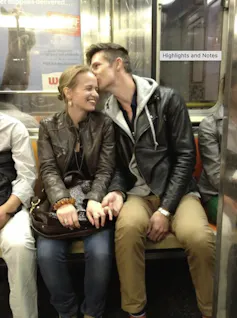
So much emphasis is placed on our romantic relationships: our ‘signficant’ other. (The author and her partner.)
Author provided (no reuse)

The French literary star Édouard Louis is one of the most prominent figures on the literary scene grappling with friendship.

In Change: A Method (2021), he describes his life as a movement away from his family. Instead, he seeks out different friendships that help him escape a homophobic working-class environment in northern France and move towards the literary scene in Paris.

Advertisement

He describes how his friendship with Elena, a middle-class girl, completely overturns his worldview, and how he later becomes close friends with notable French intellectuals Didier Eribon and Geoffroy de Lagasnerie.

The latter has described their friendship of three as a “way of life” and a “radical form of life” that breaks with the status quo.

One might object that cultural portrayals of the importance of friendship like these are the culmination of contemporary individualism.

For Louis, it is about living exactly as he wants to live – entirely free from conventions and expectations. And that does indeed invoke a particularly modern form of individualism.

Advertisement

At the same time, they contain a longing for other people and for community.

He seems to be asking if it’s possible to burn down existing social conventions and develop our own norms for friendship and togetherness. Both Louis and de Lagasnerie conclude that yes, that is indeed possible.

Breaking with convention

The Danish author Thomas Korsgaard’s stories about Tue offer a parallel to the French Louis: Tue comes from a poor, non-academic provincial background and, like Louis, Tue moves to the city to create a new life for himself.

In his book, You Probably Should Have Been There (2021), Korsgaard writes about Tue’s turbulent early days in Copenhagen, where he spends a long time living as a destitute homeless man, until he meets Victoria (the Danish version of Elena, if you like) and, through her, learns the social codes of the upper middle class. Slowly but surely, he begins the same kind of transformation that Louis describes.

Advertisement

Cultural and literary history also offers many examples of female friendships that have allowed people to live outside the norms and be themselves.

The Swedish writer, Selma Lagerlöf, did not marry and instead had close relationships with other women, and Virginia Woolf’s life and work were also shaped by deep female friendships.

For many years, it was not seen as suspicious or improper for women to have romantic and borderline erotic relationships with one another – they were in many cases regarded as intimate friendships.

Male homosexuality, by contrast, has in many cases and historical contexts been met with hatred and resistance, with the important exception of ancient Greek and classical societies.

Advertisement

The accounts of Louis, Korsgaard, Lagasnerie, and many others, all testify to a powerful urge to break with the structures that dictate that we must live our lives in a certain way and remind us of the importance of asking ourselves if we are living according to our own standards – or the standards of someone else.

An adult friend

The feeling of missing friends, the one that hit me that evening on the terrace, may be about something deeper than simply missing having lots of people to invite to one’s birthday party or many people one can call on on a rainy day. And that, above all, is what literature made me realise.

My hunger for friendship was not so much about a need for having people around. It was more about a need to broaden my horizon and listen to other perspectives.

I didn’t just miss friends; I missed different viewpoints, fresh input and new ways of thinking.

Advertisement

Friendships can help us see and explore the odd and unconventional sides of life – and in doing so challenge the status quo, much like the portrayals we find in literature.

Put simply, they can make us see the world differently.

When I went to elementary school, one of my closest friends was a woman in her seventies who had looked after me as a child.

After she was no longer being paid to spend time with me, I kept seeking her out. Her name was Lise, born in 1928. With her dark humour, curls and a wardrobe full of high-heels, her apartment was my number one refuge.

Advertisement

Lise had a Jewish background and, at 15, had fled the Nazis in Denmark on a Swedish fishing boat.

I loved her stories from the past and everything else about her. She cooked terrible food, always gave me presents and was impeccably elegant.

Our friendship cut across all the usual boundaries. It was unusual, even odd. But it was exactly what we both needed.

What can you do?

Inspired by literature’s many examples, can we live a life in which friends take up more space, where friendships are allowed to challenge our assumptions about life?

Advertisement

Even if we are not ready, or willing, to throw family and all other social conventions onto the scrapheap?

I am convinced that it is possible. But it requires us to push back, at least a little, against today’s emphasis on choice and individualism, and to do something slightly unfashionable: send a message instead of scrolling. Commit. Invite someone over. Perhaps someone who you never thought of as a friend before. But who nonetheless may turn out to be valuable to have in your life.

It also requires us to view strangers as potential friends. After all, this is what friendship boils down to: strangers that you come to know, like, and trust – a definition I describe in more detail in my book Friendship from Aristotle to Snapchat (in Danish).

Say hello to your neighbour. Smile and speak to people in shops or on the bus, because so-called “weak ties” are actually really good for us and give us a sense of belonging. Sometimes it’s as simple as this: Be friendly!

Advertisement

It is also helpful to reach out to those who are not like us on paper.

And in so doing, move beyond the idea that like attracts like, and instead connect with those who are different from us, just as Louis, Korsgaard’s Tue and de Lagasnerie did.

To recognise that friendships can take many forms and do not have to resemble the perfect parties and baby showers that dominate social media. For some, reading a book or being out in nature may facilitate a feeling of friendship – even if these things are done in solitude.

So, as strange as it may sound, friendships may not even require other people. I recently heard German sociologist and renowned thinker Hartmut Rosa give a lecture in Copenhagen, and his reflections on resonance were highly conducive for thinking about friendship. We resonate with other beings, says Rosa, and with the world broadly speaking – not just with other people.
Advertisement
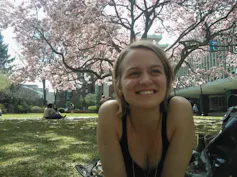
Can a tree be my friend? I think so.
Author provided (no reuse)

As for me, I’ve started bringing friends together, including people I haven’t seen in a long time, for various gatherings.

It’s not exactly trendy or reminiscent of student life; people often bring their children, and time is spent building Lego or settling disputes. But that hardly matters. What matters to me is that we can make space for one another across different stages of life.

I’ve also broadened my understanding of friendship to include everyday interactions, everything from smalltalk with other parents at nursery to lunches with colleagues and friendly online messages.

Because you don’t need a large circle of friends.

As I see it, friendship is a practice.

Advertisement

It’s a way of being in the world – something you do, rather than something you have.

That shift has genuinely eased my hunger for friendship, and I now see my suburban life in a different light. I’ve learned that I’m not missing anything – it’s simply a matter of doing something.

Punctuating the notion that friendship necessarily looks a certain way has also really helped me. Because friendships come in all shapes and forms: from micro-interactions to life-long bonds. Perhaps with a tree or a dog?


This article was commissioned as part of a partnership between Videnskab.dk and The Conversation. You can read the Danish version of this article here.

Advertisement

For you: more from our Insights series:

To hear about new Insights articles, join the hundreds of thousands of people who value The Conversation’s evidence-based news. Subscribe to our newsletter.


Source link

Advertisement
Continue Reading
Click to comment

You must be logged in to post a comment Login

Leave a Reply

NewsBeat

How to watch Chelsea FC vs Man City: TV channel and live stream for FA Cup final today

Published

on

How to watch Chelsea FC vs Man City: TV channel and live stream for FA Cup final today

It has been a typically chaotic season for the Blues, who have dispensed with two managers and are in danger of failing to qualify for European football.

Source link

Continue Reading

NewsBeat

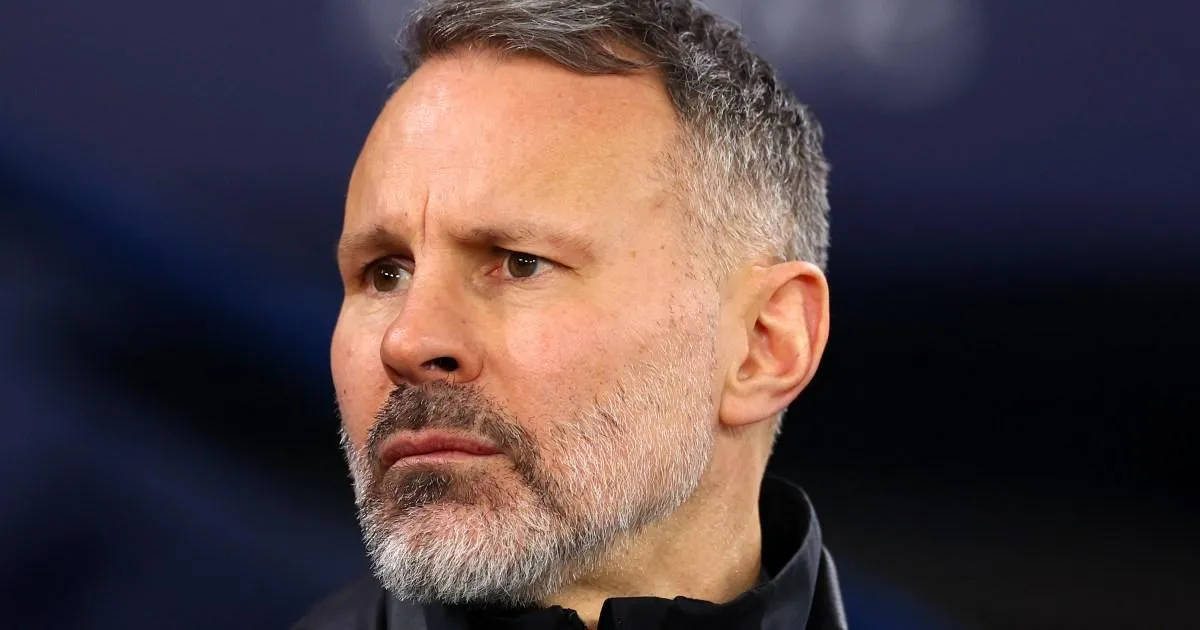
Ryan Giggs says Cole Palmer would ‘fit the bill’ if he swapped Chelsea for Man Utd | Football

Published

on

Ryan Giggs says Cole Palmer would 'fit the bill' if he swapped Chelsea for Man Utd | Football

Close Overlay

In The Mixer’s World Cup special

Get previews of every single team at the World Cup sent directly to your inbox, featuring the players to look out for, games you shouldn’t miss and Metro’s big England predictions.

Source link

Advertisement
Continue Reading

NewsBeat

December 10 open up about working with Simon Cowell – from barbecue’s to sharing his wisdom

Published

on

Daily Mirror

In little over a year, December 10 have emerged as one of the fastest growing new acts in British pop, racking up more than 16 million streams and over 8.4 million YouTube views

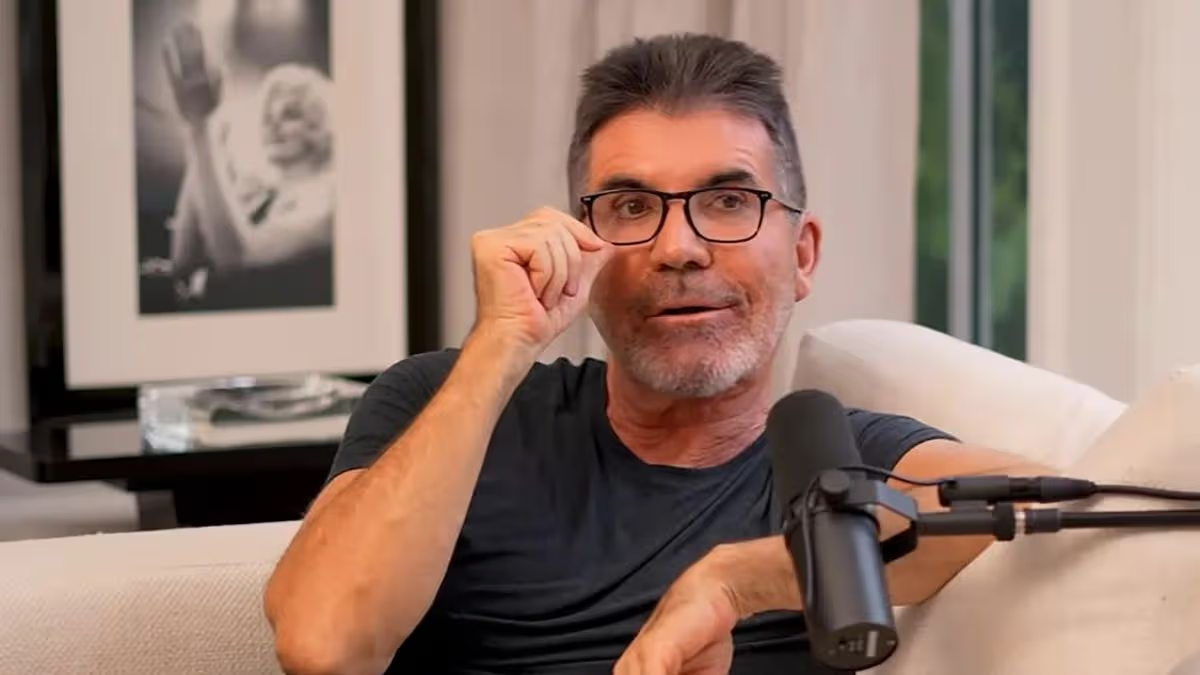
Boyband December 10 have opened up on what it’s like working with Simon Cowell and why they feel lucky to have him as a mentor.

The lads consist of Cruz Lee-Ojo (19), Danny Bretherton (17), Hendrick Christoffersen (19), John Fadare (17), Josh Olliver (17), Nicolas Alves (16) and Sean Hayden (19). They are from Chorley, Rochester, Dublin, London, Lisbon and Walsall, and between them Irish, Brazilian, Indian, Nigerian and Jamaican heritage

The seven-piece group were formed by pop guru Simon Cowell on the Netflix series Simon Cowell: The Next Act.

Advertisement

In little over a year, December 10 have emerged as one of the fastest growing new acts in British pop, racking up more than 16 million streams, over 8.4 million YouTube views and building a social media following of more than 3.2 million people.

READ MORE: British man breaks his neck falling out of a tree on French holiday – and is left with huge medical billsREAD MORE: Student dies after jumping into Alabama lake while celebrating college graduation

Speaking in January, Cowell, who launched the careers of the likes of Leona Lewis, Little Mix, Susan Boyle and One Direction, admitted he formed December 10 as he missed the buzz of managing a boy band.

Advertisement

“I just got to a point where I felt so comfortable. And I think when you feel comfortable, it gets boring,” he told The Times.

“Even though I like my job, what I used to do was just so much more risky. Did I need to do it? No. But you know when you go to Disneyland, you look at one of those rides and you think, ‘I’m not sure I should do this, but I’m going to do it anyway’? It’s that adrenaline. I really missed working with bands.”

Now they have opened up about life in the music industry and have detailed what it’s like to work with Simon.

When asked if they are in regular contact with Simon, Danny said: “Yeah, we talk to him a lot. We were all at his house the other day for a barbecue chilling but also talking about the next steps that we’re going to go through. We couldn’t ask for anyone better to guide use what we’re going through at the minute.”

As you can expect a barbecue at Simon’s house is quite the event and Simon doesn’t get his hands dirty flipping burgers. When asked if Simon got stuck into the cooking Danny said: “Nah!” To which Sean interjected: “We had chef Jeff to do that!”

When asked if Simon leads the suggestions with songwriters and producers they can work with, Danny said: He’s definitely got a good say, but we’re lucky that he’s happy for us to give our input a lot of the time. We respect him for doing that.”

The band are in regulat contact with Simon, despite his hehtic schedule. Nicholas said: “Obviously with Simon he’s had so many years in this industry and he has so much experience so every opportunity we get to spend time with him he’s always imparting his wisdom upon us. It’s just a really good thing to have him as our mentor we’re really lucky to have him by our side.”

Advertisement

Their tour started next month and will see them travel from Amsterdam to Berlin, Paris and almost everywhere inbetween.

Like this story? For more of the latest showbiz news and gossip, follow Mirror Celebs on TikTok , Snapchat , Instagram , Twitter , Facebook , YouTube and Threads .

Source link

Advertisement
Continue Reading

NewsBeat

Locals say they face ‘David and Goliath’ fight as college scales back building plans

Published

on

Cambridgeshire Live

Hughes Hall bought the land three years ago but residents still fear the college’s plans for new buildings will leave them ‘horribly enclosed’

Residents are still concerned about plans to build next to Fenner’s cricket ground as Hughes Hall prepares to submit a full planning application.

Advertisement

The Cambridge University college bought the land three years ago with plans to build student accommodation there. It has since held a series of drop-in events for residents. Several drawings have been shared and a full planning application is expected to be submitted before July.

Hughes Hall said the new buildings are needed to “improve and increase academic spaces”. They are also intended allow more students to be housed on-campus so they can “benefit from a supportive community environment” and reduce reliance on the private rental market, since only around 34% of Hughes Hall students can currently be housed on campus.

The college has proposed building on four sites. One that will replace an existing pavilion at the Margaret Wileman building has caused Covent Garden residents concern.

Eileen O’Brien, landlady of the Six Bells and Covent Garden resident, told the Local Democracy Reporting Service she fears the new building will block light from reaching her back garden.

Advertisement

The 69-year-old said: “We would feel horribly enclosed, it would block out the light and, frankly, I think a lot of my neighbours would think about selling and the community that’s been established here for decades would be decimated.”

Hughes Hall will be demolishing the existing pavilion, which the college says is no longer able to support academic requirements.

Eileen said the one to two-storey building is already “massive” and the college wants to replace it with a three-storey building. This has been updated to partly two storeys on the latest published plans.

Advertisement

She said: “For years, people kept saying to me – ‘why have you got a spacecraft in the back garden?’ I’ve got used to it and now they want to build a three-storey block of student accommodation in my back yard.”

Plans published online show the replacement building stepping from two to three storeys and further back from the boundary than the pavilion. To stop the rooms from looking directly into back gardens, frosted glass has been proposed.

Eileen said: “How horrible to live somewhere where you can’t look out the window – like living in a toilet. Not very nice for the students who’ll be there for nine months – not very nice for the residents who’ve been here for decades.”

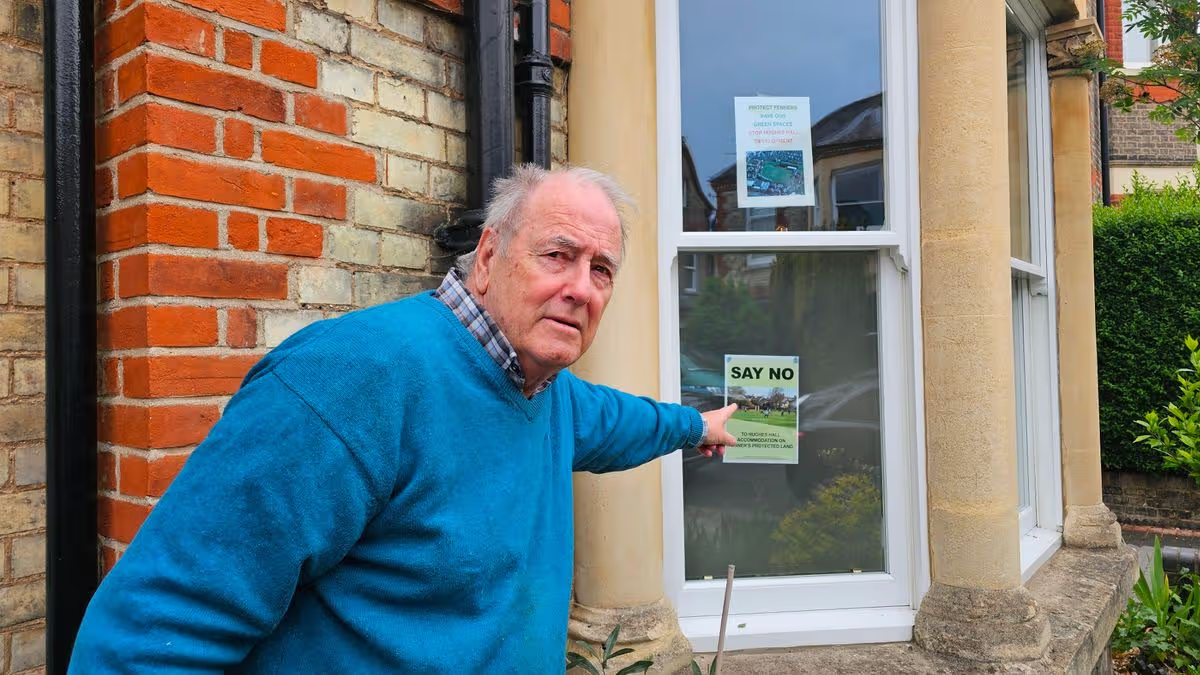
Glisson Road resident Andrew Warren shared concerns that it could set a precedent and said that protected open space “ought to be sacrosanct”. The 77-year-old said: “There are not very many of these spaces in central Cambridge and certainly not in the Petersfield area and we want to see that retained.

Advertisement

“If you get the right to develop part of Fenner’s – and we have the tennis courts right there – once the council has set the precedent of saying, yes, you can do that – then it’s much more difficult to say no in planning terms.”

Covent Garden resident Ian Bent said it’s “almost the home of cricket” and said the situation had been “frustrating” for residents.

The 88-year-old said: “When they purchased this land they wanted to build all the way along, and a three-storey building behind Glisson Road. It was our resistance that prevented them from doing that but they still, stubbornly, insist on building on this land.”

Advertisement

Tony Murphy, another local resident, compared their fight to David versus Goliath. He said he fears they won’t hear the birds sing anymore when the trees are cut down during construction.

The 71-year-old said: “We get sunlight quite late in the evening in our back gardens, so it’s lovely to sit out and read a book or something – that’s all going to be gone. Hopefully now we’ve got a Green politician, maybe they’ll lean more towards our side.” A petition was started on Change.org around two years ago and is now approaching 5,000 signatures.

Sir Laurie Bristow, president of Hughes Hall, thanked residents for joining drop-in sessions and said the college had listened to feedback. He said: “In response to resident feedback, we have moved as much of the proposed development away from our neighbours as possible with 70% of new student accommodation now proposed on two previously developed brownfield sites.

Advertisement

“We have also reduced the size of the Pavilion Building replacement, Wileman Court, to two storeys adjacent to the Covent Garden boundary, only stepping up to three storeys at the front to match the height of the existing Margaret Wileman Building. We are also proposing site-wide landscaping and gardens, and are talking to our immediate neighbours about new pedestrian access on Covent Garden.

“These changes will give both the College and neighbours access to more and better open spaces.”

Source link

Advertisement
Continue Reading

NewsBeat

Tobutt Sports, Astley Bridge, said running has got popular

Published

on

Tobutt Sports, Astley Bridge, said running has got popular

Tobutt Sports, in Astley Bridge, said in this year alone there’s been an increase in people taking up the exercise- and it goes much further than simply losing weight.

It comes as some groups in the borough have seen more people aiming to hit 5k runs, which are just over three miles, and even further.

It’s not just at daytime. (Image: Mel Goodall)

Mandy Foster, from the fourth generation of the Tobutt Family, said: “This last year, there’s been a huge increase in the younger generation

“From a business point of view, it was really good last year, and it affected us positively.

Advertisement

“We’re happy to keep going, and I can’t see it running down. It is so good to see the streets filled with people doing it.”

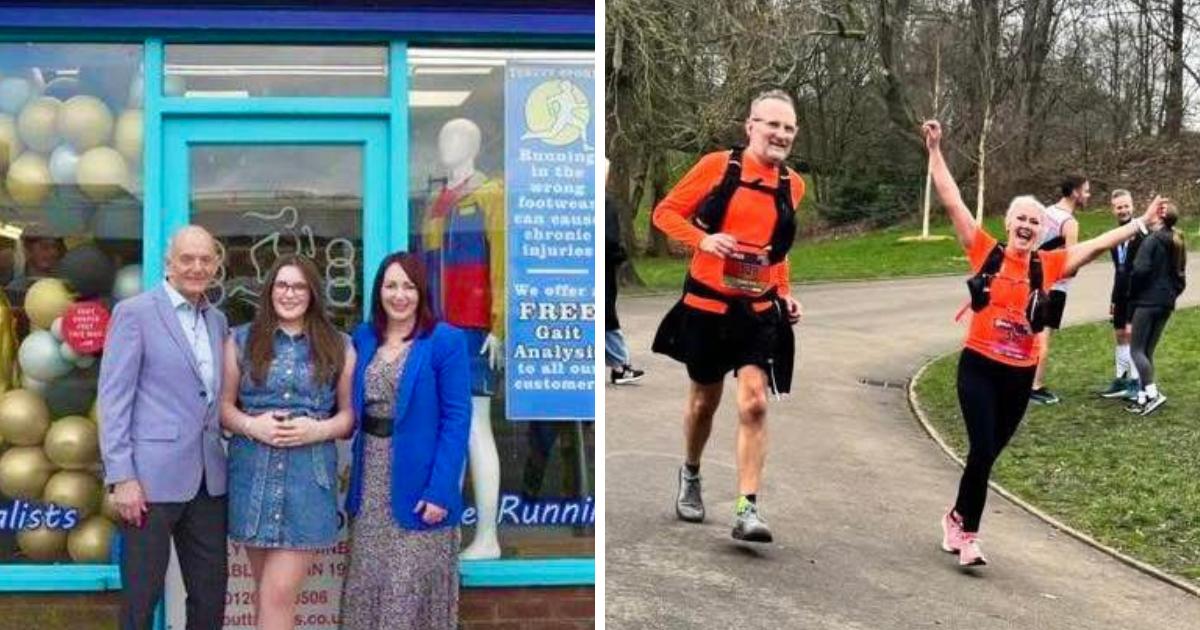
Tobutt Sports is 103 years old.Dougie Tobutt, Phoebe Foster and Mandy Foster. (Image: Tobutt Sports)

Tobutt Sports is a family-run business which was founded in 1923 by Len Tobutt, who was a professional cricketer from Middlesex.

They’re not the only enthusiasts who have noticed there’s more people hitting the ground, quite literally, running.

Mel Goodall, 50, set up the Cutacre running group, which sees people from Over Hulton getting together each week to overcome distance challenges.

Advertisement

Mel Goodall on a run. (Image: Mel Goodall)

So far, Mel has seen that more people have started running since the end of last year, and the sunny season quickly approaching is also to blame.

She said: “Running is such a popular thing. I’ve been marathoning now for the past 25 years and wasn’t as popular even 20 years ago.”

“It’s been fantastic to see so many people coming to it and going through my Couch to 5k programme, saying they’re so proud.

A group of runners in the centre. (Image: Mel Goodall)

“Mental health has been a big driver; we’ve been told to get in the fresh air, and also socialising with like-minded people has been a driver.”

Advertisement

The mother-of-two said it’s people in their 20s that are the main group you’ll see when on the pavements.

What both of these have in common, other than athletics, is how they’ve noticed HYROX has garnered more attention for the sport.

Runners from Cutacre running club. (Image: Mel Goodall)

HYROX is a global, standardised indoor fitness competition that combines running with functional strength training. It is designed for everyday gym-goers and athletes alike.

Mel added: “It’s mentally a big learning curve, you have to be very resilient, for that distance. It’s pushing yourself through discomfort.

Advertisement

“I am just looking forward to the next year, looking to get more people through.”


Source link

Advertisement
Continue Reading

NewsBeat

NHS tells metformin takers to ‘call 111’ now for this skin symptom

Published

on

Daily Record

Here’s what you need to know about the side effects of this medication

People taking a common medication have been urged to seek help if they spot a symptom on their skin. This side effect of metformin could be an indicator of serious liver problems.

Advertisement

Metformin is one of the most widely prescribed drugs in the world, with around 200 million people globally thought to be taking it. It is mainly used to treat type 2 diabetes and gestational diabetes.

It’s also used to help prevent type 2 diabetes if you’re at high risk of developing it. Further to this, metformin can be used to improve fertility if you have polyendocrine metabolic ovarian syndrome (PMOS, which was previously called polycystic ovary syndrome – PCOS).

However, as with any medication, it can cause side effects. Often, these are not serious and can be treated, such as nausea, loss of appetite, and stomachache.

However, if these side effects don’t go away and are bothering you, you should speak to a doctor or pharmacist. But other side effects can be more serious and need immediate medical attention.

On the NHS website, the health body explained that serious side effects of metformin as “rare” and happen in “less than one in 10,000 people”. If you experience any of these, the NHS said you should “call your doctor or call 111 straight away”.

This includes jaundice, which you might notice on your skin or in the eyes. The NHS said: “The whites of your eyes turn yellow, or your skin turns yellow, although this may be less obvious on brown or black skin – this can be a sign of liver problems.”

The health body also urged people to seek help if “you get a general feeling of being unwell with severe tiredness, fast or shallow breathing, being cold and a slow heartbeat”.

Advertisement

Common side effects

The NHS lists common side effects of metformin as:

  • Feeling sick (nausea)
  • Being sick (vomiting)
  • Diarrhoea
  • Stomach ache
  • Loss of appetite
  • A metallic taste in the mouth

It also warned the drug can cause a vitamin B12 deficiency and low blood sugar for which you may need to speak to your doctor.

When to call 999

In rare cases, it’s possible to have a serious allergic reaction (anaphylaxis) to metformin. The NHS said you should call 999 now if:

  • Your lips, mouth, throat or tongue suddenly become swollen
  • You’re breathing very fast or struggling to breathe (you may become very wheezy or feel like you’re choking or gasping for air)
  • Your throat feels tight or you’re struggling to swallow
  • Your skin, tongue or lips turn blue, grey or pale (if you have black or brown skin, this may be easier to see on the palms of your hands or soles of your feet)
  • You suddenly become very confused, drowsy or dizzy
  • Someone faints and cannot be woken up
  • A child is limp, floppy or not responding like they normally do (their head may fall to the side, backwards or forwards, or they may find it difficult to lift their head or focus on your face)

The NHS added: “You or the person who’s unwell may also have a rash that’s swollen, raised, itchy, blistered or peeling. These can be signs of a serious allergic reaction and may need immediate treatment in hospital.”

For more information, visit the NHS website here.

Advertisement

Source link

Continue Reading

NewsBeat

Police station in busy Swansea community closes down

Published

on

Wales Online

Police say the officers who were based at the station have been redeployed to ‘nearby’ locations while the building is now up for sale

Police say the closure of a station in a busy community will not affect the service it provides to the public.

Advertisement

South Wales Police has shut Sketty police station in Swansea as part of a review of its portfolio of properties and has redeployed officers who were based there to other locations.

Until recently the Gower Road station was used as a base for response officers.

It hasn’t had a front desk open to the public for more than a decade. The building is already up for sale.

Police have said they recognise the closure will be of concern to some people in the local community but say the officers who operated from the station are now based in “nearby locations” – Townhill, Mumbles, and Swansea city centre – and the force has “the same ability to respond quickly and effectively to incidents and calls for service”.

Advertisement

The force also says new technology allows its officers to “remain visible, accessible, and engaged within the community” without having to return to a base.

South Wales Police chief superintendent Stephen Jones said: “We recognise that the recent closure of Sketty police station will be of concern to some members of our community and I want to offer clear reassurance that this change will not impact the policing service we provide.

Sketty police station previously housed our response officers for the area and has closed as part of an ongoing review of the police estate.

“However this in no way alters our operational capability or our commitment to keeping communities safe.

Advertisement

“Our officers continue to work from nearby locations including Townhill, Mumbles, and Swansea city centre, all of which are a short distance from Sketty.

“This ensures that we maintain the same ability to respond quickly and effectively to incidents and calls for service.

“Importantly our teams are equipped with modern mobile technology which allows them to remain visible, accessible, and engaged within the community without the need to return to a station base.

“This enables officers to spend more time on the streets supporting the public rather than being tied to buildings.

Advertisement

“The safety of our communities remains our absolute priority and residents can be confident that there will be no reduction in service or response as a result of this change.”

Last month plans were submitted to Neath Port Talbot Council to convert the former Skewen police station ,which closed in 2020, into eight flats.

Get daily breaking news updates on your phone by joining our WhatsApp community here. We occasionally treat members to special offers, promotions and ads from us and our partners. See our Privacy Notice.

Source link

Advertisement
Continue Reading

NewsBeat

Dave Allen reveals surprising IQ ahead of toughest fight of his career

Published

on

Daily Mirror

Heavyweight cult hero Allen is targeting the biggest win of his career tonight when he takes on Filip Hrgovic at the Eco-Power Stadium in Doncaster

Dave Allen reckons he could have been a genius if he hadn’t been bashed in the head for a living.

Advertisement

Heavyweight cult hero Allen is targeting the biggest win of his career tonight when he takes on Filip Hrgovic at the Eco-Power Stadium in Doncaster. He knows he will have to use his brains as well as his brawn if he is to cause an upset against the dangerous Croatian. But despite suffering bad beatings at the hands of David Price, Frazer Clarke and Tony Yoka, Allen insists his mind and body are as sharp as ever.

“The honest truth is, there are 10 pro boxers in our gym and I’ve been hit less than all of them over the last five years,” he said. “I’ve sparred probably 100 rounds max in five years and I’ve had three fights that I’ve been hit back in; I feel fresh. I’ll only stop when either my coaches or my mum say I’ve had enough or if I can’t compete at a certain level anymore.

“But I’m still passing medicals and I did an IQ test about six weeks ago. I think I’m in the top three per cent so it’s all good. My IQ was 132 which is very, very good. I think Mensa is 150 so maybe I could have been there if it wasn’t for the boxing.” But despite his bravado, Allen knows he will be up against it when he trades with Hrgovic.

READ MORE: Dave Allen to headline stadium after snubbing job with rugby kidsREAD MORE: Daniel Dubois slapped into life before dishing out brutal beating to Fabio Wardley

Advertisement

“From the outside looking in, it’s a bit of a mismatch on paper,” he admitted. “I would say we have a world-class operator with a domestic-level heavyweight, but the domestic-level heavyweight has shown glimpses of being able to compete with a guy like this. So Hrgovic should win, but don’t be surprised if the underdog causes the upset.

“I’m in better shape now than I’ve been for the last 10 or 15 years. And with that, my hand positioning’s been better in sparring, my hands are in the right place, I’ve been bending my legs, I’ve been moving at the waist and my hips. I’ve not felt this good for a very long time and I don’t think I’ve ever boxed better, so I’m well up for it.

“I’ve faced lot of different problems over the years and lot of it’s been self-sabotage, a lot of it’s been my own doing. But I really, really think now I’m on the straight and narrow now.”

Source link

Advertisement
Continue Reading

NewsBeat

Wayne Rooney’s FA Cup tears during live broadcast and Man United icon’s BBC salary

Published

on

Manchester Evening News

Former Manchester United striker Wayne Rooney has become a leading pundit with the BBC

Wayne Rooney has transitioned from being one of the most talented players of his generation to an emerging punditry career. In fact, Manchester United’s all-time leading scorer has made such an impression since moving into analysis that he has been chosen for the BBC’s coverage of this summer’s World Cup.

Advertisement

Following his retirement from playing, Rooney, 40, endured unsuccessful stints managing Plymouth Argyle and at Birmingham City, leading him to shift towards a career in punditry.

After joining the BBC in 2025, he rapidly adapted to life in the studio. Now a familiar presence on Match of the Day, Rooney will have the opportunity to shine for the Beeb in his most significant assignment yet, covering matches for the forthcoming tournament, which is being hosted across Canada, Mexico and the United States.

Get MEN Premium now for just £1 HERE – or get involved in our United WhatsApp group by clicking HERE. You can also join our United Facebook page by clicking HERE and don’t miss out on our brilliant selection of newsletters HERE.

Before that, however, he will be stationed at Wembley Stadium for the FA Cup final between Chelsea and Manchester City on Saturday. MEN examines Rooney’s punditry journey to date.

Advertisement

Wayne Rooney’s tears during a live broadcast

Rooney revealed his emotional side when he was brought to the brink of tears on the BBC after his younger brother, John, orchestrated Macclesfield’s historic FA Cup triumph over Crystal Palace in January.

John was let go by Everton at the age of 12. He subsequently played for Chester, Wrexham, Stockport, Oldham and Macclesfield. He accepted his first managerial role with the Silkmen last summer before delivering one of the greatest FA Cup upsets of all time.

The emotion was evident in his older brother. As the siblings embraced at the final whistle, Rooney’s voice wavered as he told the BBC: “I’m actually getting emotional. To see my younger brother achieve this, he’s not long been in management.

Advertisement

“To get to the fourth round of the FA Cup and beat a Premier League team in Crystal Palace, I’m so proud of him. He looked calm – I don’t know how. It’s such an achievement what he’s done today. Absolutely superb.”

Wayne Rooney’s BBC salary

Rooney’s promising start in the punditry world has reportedly secured him a lucrative broadcasting agreement. Reports indicate the former Everton striker penned a two-year deal with the BBC valued at around £800,000 – positioning him amongst the corporation’s highest-paid football pundits on approximately £400,000 annually.

That remarkable sum puts him narrowly behind Match of the Day legend Alan Shearer. The ex-Newcastle United icon collected between £440,000 and £444,999 last year, according to BBC figures.

BBC executives were understood to be eager to secure Rooney following his impressive performance during Euro 2024, where his candid and perceptive commentary resonated with viewers.

The ex-England star already possesses a substantial bank balance, however. During his playing days, Rooney is reported to have earned in excess of £300,000 per week.

Factor in highly profitable sponsorship deals with the likes of Nike, Coca-Cola and EA Sports, and his overall fortune is estimated to be in the region of £127m, according to Celebrity Net Worth.

Sky Sports, HBO Max, Netflix and Disney+ with Ultimate TV package

Advertisement
This article contains affiliate links, we will receive a commission on any sales we generate from it. Learn more
Content Image

Sky has upgraded its Ultimate TV and Sky Sports bundle to now include HBO Max, Netflix, Disney+, discovery+ and Hayu, as well as 135 channels and full Sky coverage of the Premier League and EFL.

Sky broadcasts more than 1,400 live matches across the Premier League, EFL and more with at least 215 live from the top flight alongside Formula 1, darts and golf.

Source link

Continue Reading

NewsBeat

reset for US-Chinese relations but tension over Taiwan remains

Published

on

reset for US-Chinese relations but tension over Taiwan remains

The initial top line emerging from the Trump-Xi summit in Beijing was that while the two leaders had talked trade, technology and the US war in Iran, the most potentially hazardous issue was Taiwan. The Chinese foreign ministry reported that the Chinese president, Xi Jinping, told the US president, Donald Trump, that “the Taiwan question is the most important issue in China-US relations”.

Handled properly, China’s statement said, relationship between China and the US will remain stable. “If handled poorly”, Xi told the US president, “the two countries will collide or even clash, putting the entire US-China relationship in an extremely dangerous situation.”

A White House statement didn’t mention Xi’s warning over Taiwan, instead focusing on the two leaders’ agreement that the Strait of Hormuz must be kept open and the importance of China buying US agricultural produce and curtailing the flow of fentanyl precursors into the US.

In other words, the two sides’ reports neatly reflected their respective priorities.

Advertisement

So, despite the warm words and bonhomie at the subsequent banquet at which the two leaders raised glasses to each other over lobster, beef ribs and Beijing roast duck, there is clearly the potential for a serious misunderstanding over Taiwan. Last week a bipartisan group of senators sent a letter to the US president urging him to sign off on a US$14 billion (£111 billion) package of arms to Taipei. If he proceed with this, it would seriously hamper any efforts the two leaders might make to stabilise relations between the two countries.

The problem, write international affairs specialists Nicholas Wheeler and Marcus Holmes, is that the two sides come at the issue from completely different directions. For the US, continuing to provide Taiwan with state-of-the-art US defence weaponry is about deterring Chinese aggression. For China, US arms sales to Taiwan are themselves an aggressive move.

The situation is fraught with possibilities for misunderstanding. But surely this is what summits are for, argue Wheeler and Holmes. They recall the crisis in 1983 sparked by a US military drill that the Soviet Union convinced themselves was a preparation for a real nuclear strike by the US. It was Ronald Reagan’s realisation that “maybe they are scared of us and think we are a threat” which led him to develop warm relations with the next Soviet leader, Mikhail Gorbachev, precipitating a new era in arms control.

Maybe this week’s summit could help the pair to – as Xi put it – “make 2026 a historic, landmark year that opens up a new chapter in China-US relations”.

Advertisement


À lire aussi :
Trump-Xi summit: in a high-stakes meeting the two leaders can’t afford to misread each other


Where would this new era leave Taipei? Distinctly nervous, you’d have to think. As Trump prepared to leave for Beijing, he commented that he was planning to discuss US arms sales with Xi – which, as Andrew Gawthorpe notes – breaches one of the Six Assurances that has been part of America’s policy towards Taiwan since the 1980s.

Gawthorpe, an expert in US foreign policy at the University of Leiden, cautions that the Trump administration breaking one of these promises could embolden Xi to press Trump on the other five, which include a US commitment on Taiwanese sovereignty.

The fact is, Gawthorpe concludes, if US arms sales to Taiwan are on the table now, they a likely to stay there, which could prove perilous for Taiwan if the US wants any major concessions, say on China’s support for Iran.

Advertisement


À lire aussi :
Trump-Xi summit: US president says he will discuss arms sales to Taiwan – breaking decades of US policy


Xi talked about his hope that the summit could work towards “a new paradigm of major-country relations”. The importance of this bilateral relationship was a theme the Chinese president returned to several times in the meeting, at one point referencing what he called the “Thucydides trap”, which refers to the stresses that occur when a rising power challenges an established one. (You may recall Canadian prime minister Mark Carney made reference to the revered Greek historian in his widely praised Davos speech in February.)

But where was Russia in all this? Stefan Wolff, professor of international security at the University of Birmingham, observes that any stabilising of relations between Washington and Beijing is likely to come at Moscow’s expense and will certainly be a blow to Vladimir Putin’s aspiration to restore his country to great power status.

So as not to be left out, Kremlin spokesman Dmitry Peskov announced as Xi and Trump toured the Temple of Heaven in Beijing (an honour that has yet to be afforded to Putin) that preparations are underway for the Russian president to visit China “very soon”.

Advertisement
Still best friends? Vladimir Putin and Xi Jinping at celebrations to mark the 80th anniversary of the end of the Sino-Japanese war, September 2025.
EPA/Alexander Kazakov/Sputnik//Kremlin pool

That’s not to say that Putin’s “no-limits friendship” with Xi is at threat, writes Wolff. But he observes that “the Xi-Trump summit is a party to which Putin was not invited”, which “indicates that his efforts to make his presence felt have largely failed”.


À lire aussi :
Why Putin will have been watching the Trump-Xi summit nervously


Damp squib for Putin

It hasn’t been a great week for the Russian president, all things considered. On May 9, what has traditionally been a red letter day for Vladmir Putin – Russia’s Victory Day celebration – proved to be something of a damp squib.

Ukraine’s recent successes in long-range drone attacks, one of which successfully struck a luxury high-rise apartment block less than ten miles from Red Square, prompted Putin to scale back the parade. What is usually a showcase of Russia’s military might, parading tanks, ballistic missile launchers and an array of other state-of-the-art weaponry in front of invited world leaders, was reduced to a march past with a couple of Putin allies and assorted second world war veterans.

Advertisement

Russia-watcher Jennifer Mathers of Aberystwyth University has examined the Victory Day parades since the Ukraine war begin in 2022 and believes they reflect Russian national morale. This year’s, she says, saw Russia looks “fearful, diminished and isolated”.


À lire aussi :
Fearful, diminished and isolated: what this year’s Victory Day parade in Moscow tells us about Russia’s war against Ukraine


Caspian Sea

With all the attention – understandably – on the Strait of Hormuz in recent weeks, little has been written about the Caspian Sea. But the world’s largest landlocked body of water has played an important role in both the Iran and Ukraine wars.

During the Ukraine war, Iran used it to supply Russia with Shahed drones, now Russia is returning the compliment. The two countries have also found it useful in avoiding western sanctions on trade in all manner of other goods.

Advertisement

Here’s a piece from maritime security expert Basil Germond, of Lancaster University on just how significant the Caspian Sea has become.


À lire aussi :
Why the Caspian Sea has become so important in both the Ukraine and Iran wars


Source link

Advertisement
Continue Reading

Trending

Copyright © 2025