Expert said prices are soaring now and he told energy customers to switch off price cap to fixed tariffs immediately
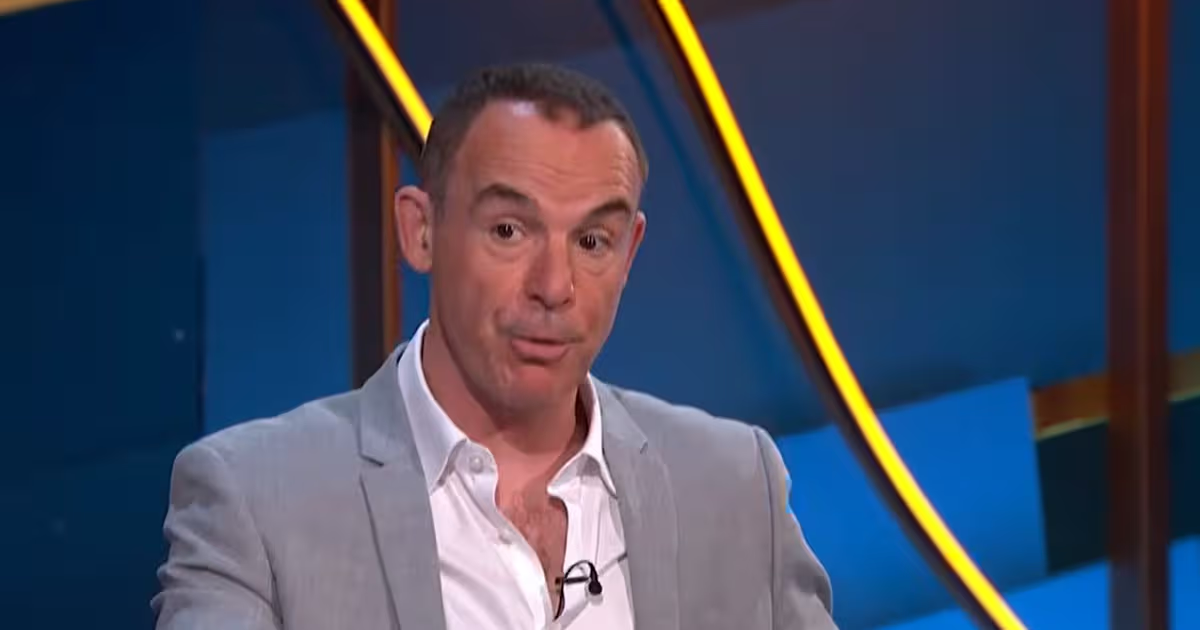
Martin Lewis has urged customers of energy firms including E.On, British Gas, OVO and Octopus to switch their tariffs ‘right now’. The money-saving guru issued the warning as gas and oil prices rocketed amid escalating tensions in the Middle East.
Oil prices have climbed further as the Middle East conflict entered its fourth day, triggering stock market falls across the UK and Europe on concerns about a protracted war. Gas prices on Monday also jumped at their fastest rate since the Ukraine war began, surging 52% after Qatar suspended liquified natural gas production following Iranian attacks, with a further 20% rise on Tuesday.
Fears are growing over steep increases in petrol costs and household energy bills, which could hit UK families hard in the months ahead.
Writing on X, Mr Lewis warned: “Important: If you can get off the Energy Price Cap right now, you should and urgently!”
“The wholesale gas rate is spiking due to the Iran conflict, and it is a prime driver or UK elec prices. If that’s sustained (big if), it will likely push the Price Cap rate up from July
“- Some of the cheap fixes from before the weekend haven’t (yet) been pulled, so you can still lock in a rate at around 14% less than the current Price Cap, both saving you money and giving peace of mind that the rate can’t rise. You can do a whole-of-market comparison via http://cheapenergyclub.com
“- However, many firms are reassessing their fix prices today and may reprice their deals upward. There’s a risk many of the current cheapest fixes will be gone by this time tomorrow””- Plus, fix now, and unprecedentedly the rate you lock in at will be reduced on 1 April. This is because govt is changing the underlying way energy bills work and moving some policy costs to general taxation. That reduces the elec and gas unit rates even for those already on fixes. So even if you fix now the amount you pay will drop by 7% to 9% on typical usage on 1 April.
“- Fixes are available for most payment methods except prepay. Those on smart prepay can look at the EDF Simply Tracker tariff, which is effectively a price cap tariff with £100 lower Standing Charges (and £70 extra cashback on top via the link above)””PS How to know if you’re on a Price Cap? The Price Cap only applies to firms’ Standard Variable tariffs. It’s the default tariff you’re on if you haven’t chosen another deal, or your deal (eg a fix) ended and you did nothing. If you’re fixed, on an EV tariff, a time of use tariff, or other specialist tariff, you are not on the Price Cap.”
Meanwhile, Brent crude climbed a further 4% on Tuesday, reaching a 12-month peak of almost 81 US dollars per barrel following Iran’s move to obstruct a vital shipping channel for oil tankers, whilst London’s FTSE 100 Index tumbled sharply, dropping over 2% during morning trade. An Iranian official has reportedly issued warnings to vessels in the Strait of Hormuz that no ships would be permitted passage, forming part of Tehran’s retaliation to a US and Israeli military offensive against Iran, which has persisted following an initial attack that killed Supreme Leader Ayatollah Ali Khamenei on Saturday.
Oil prices surged by as much as 13% during Monday trading, climbing above 82 dollars per barrel, before retreating slightly. Across financial markets, the FTSE 100 plunged 2.2% or 240.2 points to 10539.9, following a 1.2% fall on Monday, with comparable drops throughout Europe as Germany’s Dax shed 3% and France’s Cac 40 declined 1.8% on Tuesday.
This follows US President Donald Trump’s caution that military action against Iran might extend “far longer” than the originally anticipated four-to-five-week period. Aviation shares faced continued battering due to flight cancellations stemming from the crisis, whilst banking stocks also weakened amid concerns about wider economic consequences.
Susannah Streeter, chief investment strategist at the Wealth Club, commented: “Downbeat sentiment is pervading equity markets as the conflict in the Middle East escalates, with global repercussions. “London’s FTSE 100 has fallen deeper into the red as the war widens and companies assess the impact of severe disruption across the region on their operations. “
Richard Hunter, head of markets at Interactive Investor, suggested the slowdown in oil price increases indicates “a more sanguine approach to the implications of the US/Iran situation”. “Oil price spikes usually follow conflict outbreaks, but the fact remains that escalation and duration is more of a concern than the immediate outlook,” he said.
Tehran’s warnings regarding the Strait of Hormuz have raised concerns that oil prices will keep climbing steeply, given the waterway handles roughly a fifth of global oil supplies and seaborne gas transported by tankers.Gas prices on Monday also jumped at their fastest rate since the Ukraine war began, surging 52% after Qatar suspended liquified natural gas production following Iranian attacks, and climbed a further 20% on Tuesday.
Worries have intensified over sharp increases in petrol costs and household energy bills, which could hit UK families hard in the months ahead. The effect on fuel prices has already been severe, with the Strait of Hormuz blockage pushing the cost of chartering an oil supertanker to transport crude from the Middle East to China to a record high of nearly £300,000 on Monday.Ms Streeter said: “The resilience of global shipping is once again being tested and, as the crisis widens, more carriers are halting transits through the Red Sea.
“”This will add significant time and cost to journeys, risking further snarls in supply chains. “.