Connect with us
DAPA Banner
DAPA Coin
DAPA
COIN PAYMENT ASSET
PRIVACY · BLOCKDAG · HOMOMORPHIC ENCRYPTION · RUST
ElGamal Encrypted MINE DAPA
🚫 GENESIS SOLD OUT
DAPAPAY COMING

NewsBeat

I’ve found the 12 best early Amazon Prime Day 2026 deals

Published

on

I've found the 12 best early Amazon Prime Day 2026 deals

Amazon Prime Day is officially back. Thousands of deals are about to drop in the online giant’s annual event, which takes place between 23 and 26 June. From beauty and tech to appliances and books, the offers are exclusively for Prime members.

Second only to Black Friday, Amazon Prime Day is the sale to bookmark if you’re thinking of making a big purchase – think Ninja air fryers, Dyson hair tools or Apple AirPods.

Previous Prime Day events have delivered some of the year’s strongest savings on big brand names such as Oura or Sony, alongside discounts on Amazon’s own products (Kindles, Fire TV’s and more). So if you’ve been planning to upgrade your old TV or treat yourself to a new electric toothbrush, now’s the time.

With years of experience as a shopping expert, I’ll be hand-picking the best discounts as they drop – and imparting my advice on how to navigate the event.

Advertisement

Best Amazon Prime Day deals at a glance


Apple AirPods 4 wireless earbuds: Was £119, now £79, Amazon.co.uk

Ninja foodi dual zone digital air fryer: Was £199, now £129, Amazon.co.uk

Ring video doorbell: Was £79, now £39, Amazon.co.uk

Advertisement

Ninja creami ice cream maker: Was £249, now £199, Amazon.co.uk

Shark stratos cordless vacuum: Was £399, now £218, Amazon.co.uk

When is Amazon Prime Day 2026?

Amazon has confirmed that Prime Day 2026 will run from 23 to 26 June, starting at 12:01am on Tuesday 23 June, making it one of the earliest slots of the sale event so far. While the retailer hasn’t released the full list of discounts yet, it has promised a schedule of daily themed offers for Prime members, including short-lived deals on new product launches, top 100 picks and “epic Prime deals” spread across the event. Based on previous years, I’m expecting some of the steepest discounts to be across luxury beauty, home appliances and tech.

Advertisement

What is Amazon Prime Day?

Prime Day is Amazon’s exclusive shopping event for Prime members, with an offer of limited time deals and tailored deals from major brands. It began on 15 July 2015 as part of Amazon’s 20th birthday celebrations, originally intended as a one off thank you to subscribers, but proved so popular that it now runs three times a year, returning in summer and again in October (often marking the unofficial start of Christmas shopping season) and March as Prime Big Deal Days.

Best early Amazon Prime Day deals

How can you shop Amazon Prime Day deals?

Advertisement

If you’re not already signed up, now’s the time to sign up and make sure you don’t miss the biggest bargains. A 30-day free trial should be enough to get you through the sale and unlock all the usual perks along the way. That includes access to the discounts, next-day delivery, and Prime Video (you can cancel at any point if you don’t want it to roll on).

Source link

Continue Reading
Click to comment

You must be logged in to post a comment Login

Leave a Reply

NewsBeat

Election-year friction between Trump and Republican senators is growing

Published

on

Some in GOP have harsh reviews of Trump's agreement with Iran

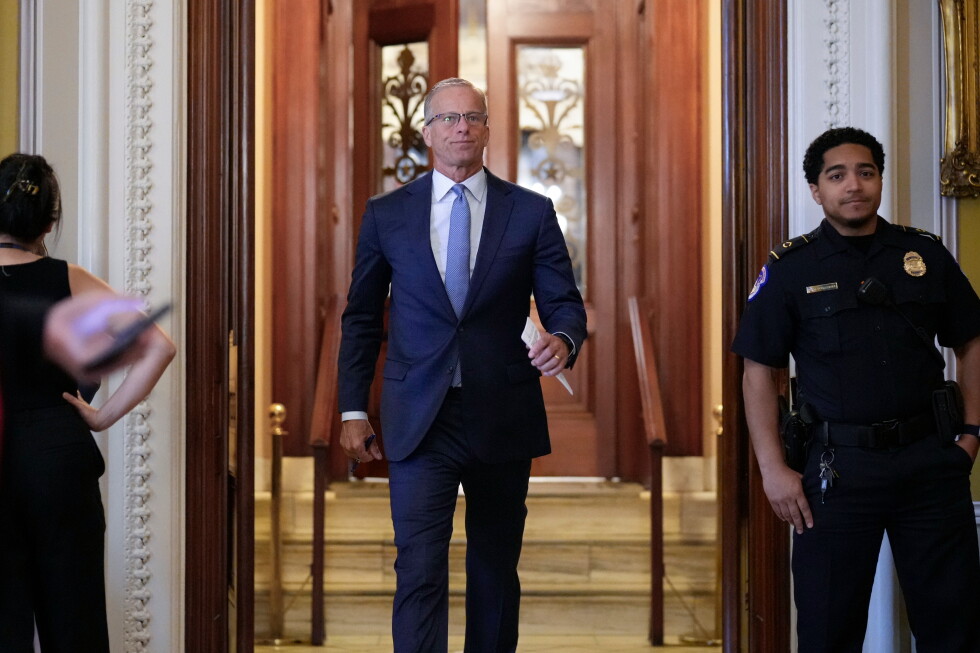
WASHINGTON (AP) — The relationship between President Donald Trump and Senate Republicans neared a breaking point this week as he upended their efforts to speedily confirm one of his own nominees and said he would not sign the renewal of a key surveillance law unless they agree to new terms.

Trump’s overnight social media post Wednesday that he was delaying Jay Clayton’s nomination to become national intelligence director, just hours before the U.S. attorney’s confirmation hearing, further strained relations between the Senate and White House that have been worsening for weeks. Later that day, some Republican senators who have been hesitant to challenge the president directly on the Iran war were blunt in their criticism of his deal to end it.

“This is the worst foreign policy blunder in decades,” Sen. Bill Cassidy, R-La., said in a post on X.

The open tensions are an almost complete reversal from a year ago when Senate Republicans worked closely with Trump on a complicated effort to push through his massive package of spending and tax cuts.

Advertisement

At the time, criticism of the president was almost nonexistent among Republicans on Capitol Hill, and they planned to highlight passage of that bill in the midterms. But as the November election draws closer and Republicans are trying to defend their majorities, Trump is instead needling Congress with his demands and reversals, driving several Republican senators to disparage his actions publicly for the first time.

“I think somebody’s not dialing the president into the complexities of what he’s done here,” Sen. Thom Tillis, R-N.C., said Wednesday after Clayton’s confirmation was postponed. “I mean, my God.”

The slow unraveling of what once seemed like an airtight alliance between the executive and legislative branches in a Republican-led Washington extends to their policy priorities.

Trump appears to have lost interest in most of the GOP agenda and has become almost singularly focused on his voting legislation to require proof of citizenship, which has almost no chance of passing. At the same time, he has asked members of Congress to fund parts of his White House ballroom project, allow a temporary intelligence director that none of them like and cede their powers on the Iran war.

Advertisement

The growing rift has brought much of the Senate’s business to a halt and put Republicans who are up for reelection this year on the defensive. It has also put pressure on Senate Majority Leader John Thune, who has been up-front with Trump about what he can and cannot do in the Senate.

Trump pressures Thune on voting bill

Trump has pressured Thune relentlessly to scrap the filibuster and pass the strict proof-of-citizenship legislation, called the SAVE America Act. Thune, R-S.D., has told Trump publicly and privately that the votes are not there for either step. Still, Trump has kept up the push.

In a social media post Thursday, Trump said he would be “the last Republican president” if the voting bill does not pass.

“Senate Majority Leader John Thune, and the Republican Senate, must not let this ‘carnage’ happen,” Trump said. “They will go down on the wrong side of History, as will all Republicans who just stood by and watched.”

Advertisement

Nonetheless, Trump has yet to go after the well-liked Republican leader on a personal basis, as he often did with Thune’s predecessor, Sen. Mitch McConnell, R-Ky.. Trump once called McConnell a “ dour, sullen, and unsmiling political hack.”

Trump and Thune talk frequently, even as Thune is sometimes giving the president news he does not want to hear. As Trump pushed for the voting bill, Thune scheduled weeks of floor time to consider it, an effort to make clear that the Senate was supportive, even if the votes are lacking.

Missouri Sen. Eric Schmitt, one of the president’s closest allies in the Senate, said he has never heard Trump say anything negative about Thune.

“It’s a difficult position,” Schmitt said of Thune’s role in the Senate. “I think they have a good working relationship.”

Advertisement

One of Thune’s closest allies, Republican Sen. Mike Rounds of South Dakota, said the even-keeled leader is the “right person at the right time.”

“In the Capitol today, he is the stable force,” Rounds said. “In Washington, D.C., today, he is the stable force.”

No signs of revolt among Senate GOP

There were no signs of a revolt within the GOP conference, for now, despite Trump’s pressure.

Thune “has managed it better than anyone else could manage it,” said Cassidy, who has become a more frequent Trump critic since a primary loss to a Trump-backed challenger.

Advertisement

Criticism of Trump has at times surfaced even among his closest Senate allies, especially with his proposed $1.776 billion settlement fund for his political allies and his pick for acting intelligence director, Bill Pulte, who has no known intelligence experience.

But the rift with Trump has also stoked some new internal tensions.

Several Republican senators criticized Sen. Mike Lee, R-Utah, who has waged an online campaign to eliminate the filibuster and pass the SAVE America Act, in a private conference lunch this week for stoking dissension within the party in an election year.

Unbowed, Lee has kept up his social media campaign, including a post Friday on X in which he said that giving up because Republicans lack the votes is a “recipe for failure.”

Advertisement

Texas Sen. John Cornyn, one of those who spoke out at the meeting, replied that it is Lee’s job to find the votes, “if you can.”

“Can’t just complain about others,” Cornyn posted. “Prove us wrong.”

Trump’s dwindling number of allies

Some Senate Republicans have made clear they have no plans to separate themselves from Trump.

As several of his colleagues criticized Trump’s agreement with Iran this week, first-term Sen. Bernie Moreno, R-Ohio, aggressively defended it on social media.

Advertisement

“Let’s get the Nobel Peace Prize ready!” Moreno posted on X.

But Trump has far fewer of those Senate allies than he did when they narrowly passed the tax and spending cuts legislation a year ago. That is in part because he has picked off some of the most loyal Republican votes himself.

Both Cassidy and Cornyn lost in primaries last month after Trump endorsed their opponents. Tillis announced he was not running for reelection last year after Trump repeatedly criticized him on social media.

Now all three have become frequent critics.

Advertisement

Shortly after his election loss, Cornyn posted on social media a fable about a frog and a scorpion. The scorpion asks the frog to carry it across a river, according to the fable, and then stings the frog in the middle of the river, “dooming them both.”

“The dying frog asks the scorpion why it stung despite knowing the consequence,” Cornyn’s post read. “To which the scorpion replies: ‘I am sorry, but I couldn’t help myself. It’s my character.’”

Advertisement

Source link

Continue Reading

NewsBeat

Queen’s 2026: Arthur Fery beaten by Francisco Cerundolo, Alex de Minaur out

Published

on

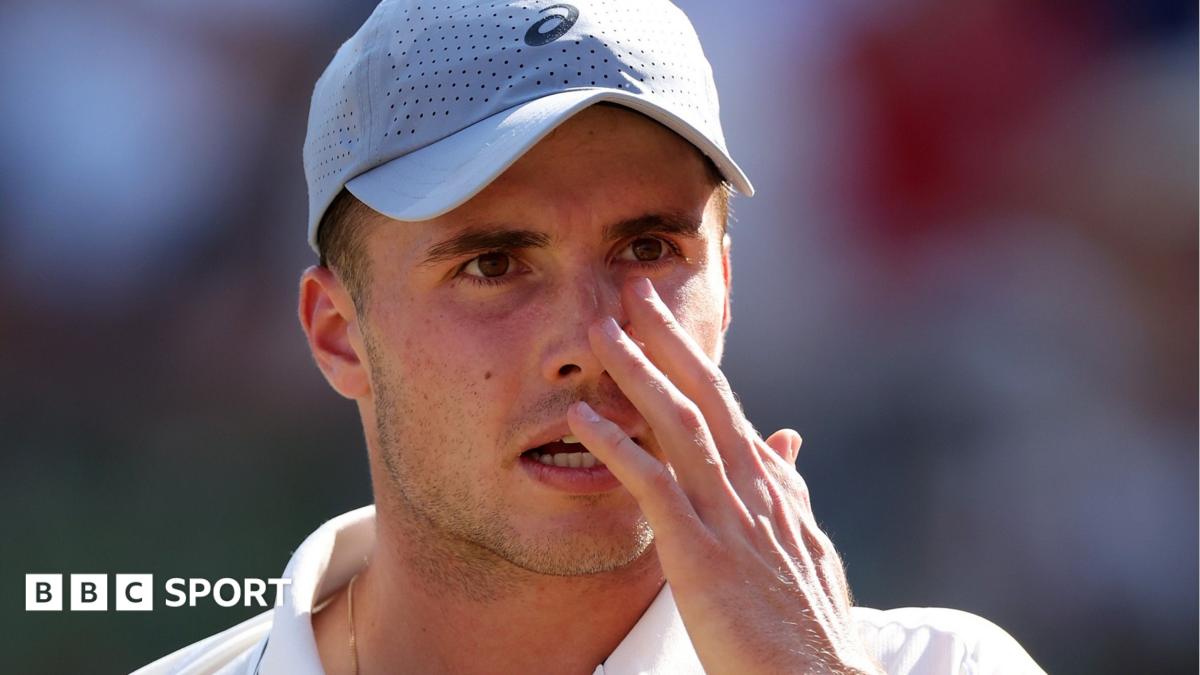
Arthur Fery reacts

Fery may not be well-known outside of British tennis circles but sport is a huge part of his family life – his mother, Olivia, was a professional player, while father Loic owns Ligue 1 football club Lorient.

As a teenager, Fery opted to go on a scholarship to Stanford University in California and also played collegiate tennis.

He lost just two games in his opening-round win over compatriot Toby Samuel at Queen’s, before recording what he described as the “best result” of his career against veteran Frenchman Mannarino.

He and Cerundolo both made nervous starts, with numerous break point opportunities, but Fery broke to serve for the set at 5-4.

Advertisement

However, Cerundolo won the next three games and dominated the tie-break, with the only point Fery won in it coming from a double fault from his opponent.

Cerundolo broke to start the second set but took a painful hit at the net when Fery accidentally sent a volley straight into his throat.

The Argentine fell to the floor, with Fery hopping over the net to check on him – and the pair shared a wry smile as on the next point, Cerundolo came close to hitting Fery with a passing winner.

But from that moment on, Cerundolo’s serve disappeared, and Fery restored parity before breaking to serve for the set.

Advertisement

A lovely serve and volley from Fery to force the deciding set established the tone, and a horrible double fault from Cerundolo handed the Briton the early initiative.

Cerundolo’s experience showed, though, as he put enough pressure on his opponents’ forehand to first break back and then secure victory on Fery’s serve.

Source link

Advertisement
Continue Reading

NewsBeat

England vs New Zealand: James Rew drops and Henry Nicholls ton hit home side

Published

on

BBC Sport microphone and phone

Second Rothesay Test, The Kia Oval (day three of five)

New Zealand 391 (Phillips 100, Blundell 51; Bethell 3-26) & 252-3 (Nicholls 119*, Ravindra 76)

England 291 (Gay 53, Fisher 50*; Henry 5-80)

New Zealand are 352 runs ahead

Advertisement

Scorecard

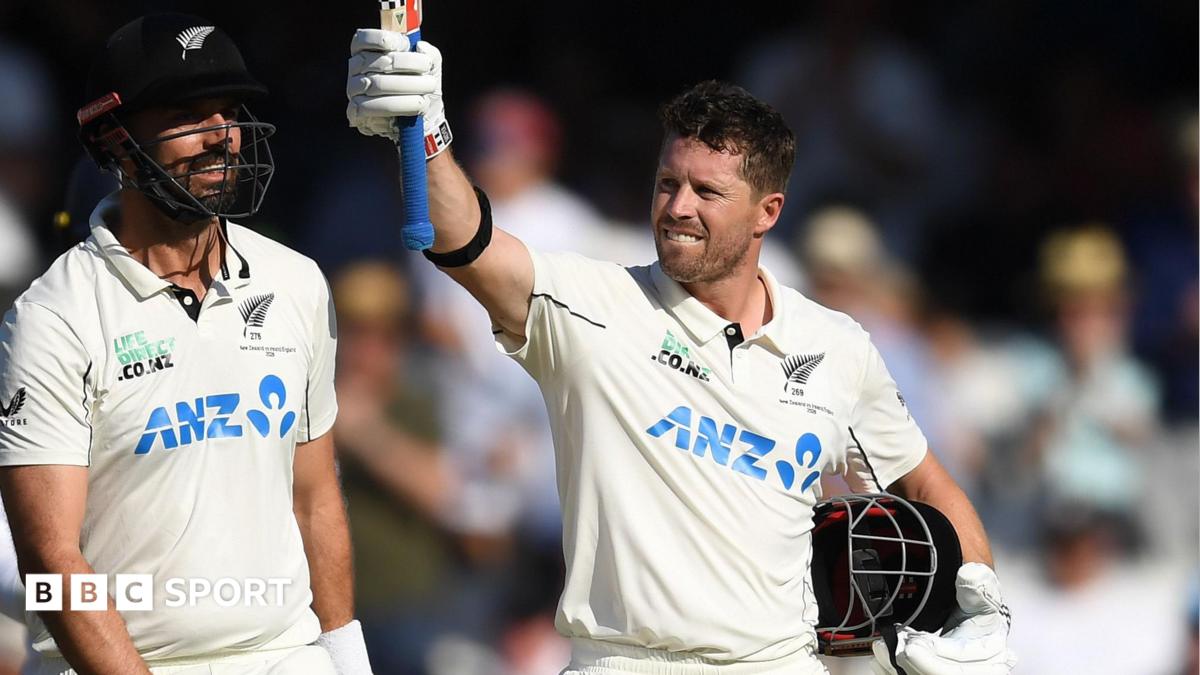
England’s parlous position in the second Test against New Zealand was compounded by drops from debutant wicketkeeper James Rew and a superb century by Henry Nicholls.

On the day Ben Stokes made his return to action for Durham following an incident in a London nightclub, an England team without their captain were slowly roasted in the heat of The Oval.

By the end of the third day, New Zealand had moved to 252-3 in their second innings, leading by 352 and primed to level the series at 1-1.

Advertisement

Rew was one of five changes and three new caps brought in by England from the team that won the first Test at Lord’s. The chances he missed were difficult, yet catchable and costly.

Diving to his left, Rew put down Rachin Ravindra when he had only seven. Nicholls, on 42, gloved an attempted hook down the leg side and Rew parried the ball high to his right.

Reprieved, the New Zealand third-wicket pair added 161. Ravindra was lbw to Jacob Bethell for 76, but Nicholls pushed on to end the day on 119 not out.

England earlier gave up a first-innings lead of 100 by being bowled out for 291. It was a below-par total on a good pitch and would have been worse had it not been for number nine Matthew Fisher’s maiden unbeaten half-century.

Advertisement

From 222-6 overnight, the home side were reduced to 238-9 by Matt Henry’s five-wicket haul, before Fisher added 53 for the 10th wicket with last man Sonny Baker.

Source link

Continue Reading

NewsBeat

Man arrested in Halliwell as police search property

Published

on

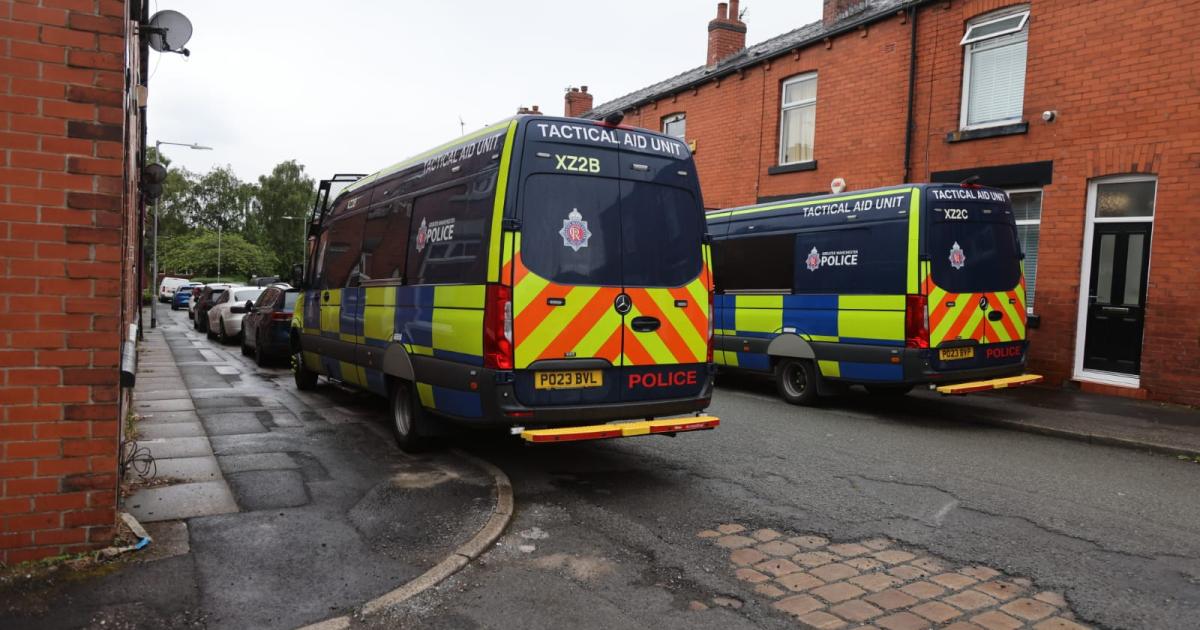
Man arrested in Halliwell as police search property

Officers with the Tactical Aid Unit were at Canada Street, just off Cloister Street, with police currently in a property.

They have been at the scene since around 4.30pm.

Residents said they were alarmed to see the police vehicles, as well as a large number of uniformed officers flooding the residential street.

Advertisement

A man was arrested on suspicion of possessing drugs with intent to supply.

Investigations are still ongoing.

The arrest comes just days after a property was raided in Halliwell as part of a drugs investigation following complaints from locals.

Ward councillor Rabiya Jiva told The Bolton News this week tackling drugs in the area remains a priority, with residents bringing the issue up at meetings.

Advertisement

The arrest comes just days after a property was raided in Halliwell as part of a drugs investigation following complaints from locals.

This week is Neighbourhood Policing Week with forces teaming up to tackle the issues that mean the most to residents.

 Residents may have noticed an increased police presence throughout, with officers available to discuss any issues that residents have.

 The week highlights the role of local officers and PCSOs, showcasing the work they put in every day to keep people’s neighbourhoods crime free.

Advertisement

 In the last year, neighbourhood crime has been reduced by 15 per cent across Greater Manchester – including in each borough.

Source link

Advertisement
Continue Reading

NewsBeat

Fire in Clifton Backies, York – police to investigate

Published

on

Fire in Clifton Backies, York - police to investigate

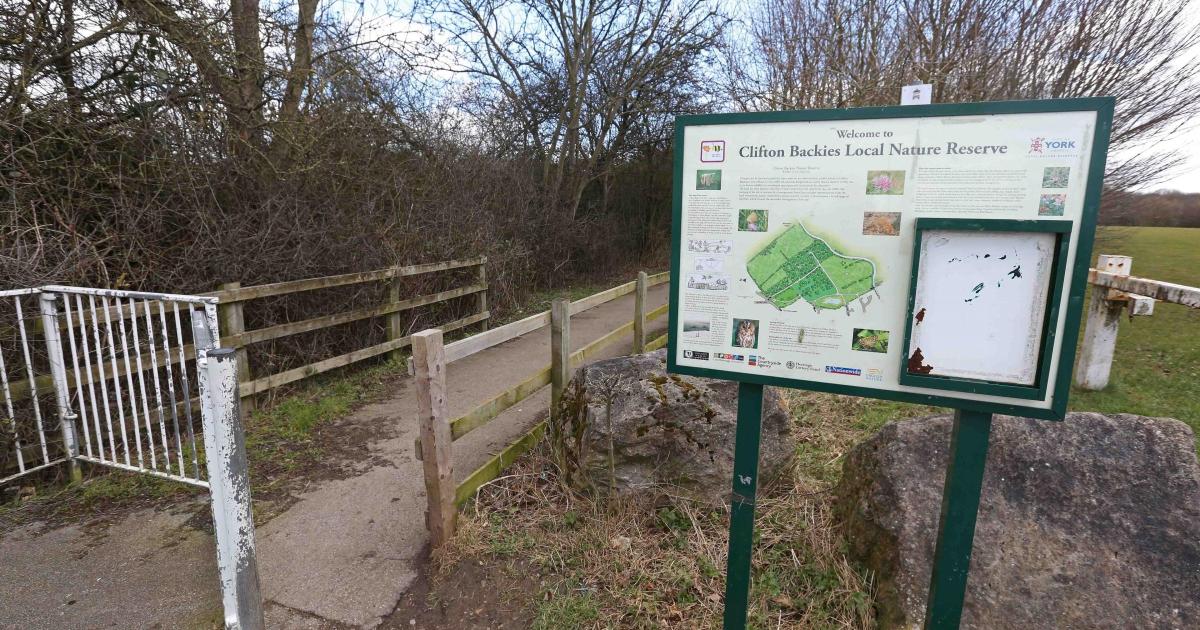
Firefighters were called to the small fire in Clifton Backies shortly before 9.30am on Friday (June 19).

North Yorkshire Fire and Rescue Service said the cause of the fire is “believed to be deliberate”.

The crews used knapsack sprayers to extinguish the blaze, the fire service said.

Advertisement

A service spokesperson added that he fire was “left in the responsibility of the police”.

Source link

Advertisement
Continue Reading

NewsBeat

Heatwave warning for Cambridgeshire splits views as some say ‘it used to be called summer’

Published

on

Cambridgeshire Live

The UK Health Security Agency (UKHSA) has issued an amber heat health alert for the East of England

Cambridgeshire Live readers have been sharing their thoughts on the recent amber heat alert and the associated risk of “heat deaths”, which has divided opinions. While some readers raised concerns about climate change and called for caution, others argued that the forecast temperatures were typical for this time of year and nothing to be alarmed about.

The heat health alert for Cambridgeshire has been upgraded, with temperatures forecast to climb as high as 28C this week. The UK Health Security Agency (UKHSA) has issued an amber heat health alert covering the East of England.

Advertisement

The alert came into effect at approximately 12pm on June 18. Cambridgeshire is not the only affected region, with neighbouring counties including Essex and Norfolk also placed under a heat health alert.

The warning is set to remain in place for around five days, ending at 8pm on June 23, next Tuesday. The UKHSA has warned that there could be an increase in fatalities, particularly among those aged 65 and over or individuals with pre-existing health conditions, with younger age groups also potentially affected.

One reader, Garyblowpants, comments: “As we head deeper into uncharted climate change territory, the effects continue to compound with more extreme weather becoming increasingly common. It’s time for the deniers to admit they were wrong and that their arguments were always indefensible.

“Climate change doesn’t mean every day is extreme. It means the average temperature is rising over time, with more heatwaves and still some normal or cooler days. Perfect time to install a solar panel on your house.”

Advertisement

Calumen Nomen writes: “Are the Maldives underwater yet? What’s indefensible is spaffing all our money up the wall in the pretence that mankind can alter the climate. If and when the climate changes, we will have to adapt – not pretend we can stop it with heat-pumps and windmills.”

Rhodabike says: “Up to 28°C in June is not extreme. It’s to be expected around this time of year. A few days of pleasantly warm weather in June doesn’t indicate any cause for concern.”

Over on our Facebook page, Tony H comments: “It used to be called summer…”

Simon W says: “In short, old, very seriously ill people might want to limit how much time they spend in the sun. For everybody else, it looks like it’s going to be a lovely weekend.”

Advertisement

Tim C replies: “I would have thought heat ‘deaths’ would have warranted a full-on red warning, they must only be moderately bad deaths as opposed to really, really bad ones!”

Matthew B adds: “It does say ‘younger age groups’. Translation: ‘Parents, please don’t be idiots and leave your children out in the burning sun or a boiling hot car’. Some of them won’t realise it’s wrong to do so.”

Are you looking forward to the warmer weather? Comment below or HERE to have your say.

Source link

Advertisement
Continue Reading

NewsBeat

Calls For Starmer To Set Exit Timetable Increase After Burnham Win

Published

on

Calls For Starmer To Set Exit Timetable Increase After Burnham Win

Keir Starmer is allegedly facing growing pressure from his own cabinet to set out an “orderly transition” of power to his greatest rival Andy Burnham.

Burnham’s victory in the Makerfield by-election in the early hours of Friday has paved the way for the soon-to-be-former Greater Manchester mayor to challenge the prime minister.

The new MP comfortably saw off the electoral threat from Reform UK and secured a majority of 9,000 votes, fuelling hope that he could revive Labour’s poor performance in the polls if he got into No.10.

Asked if he would stand in any possible leadership election on Friday morning after Burnham’s victory, Starmer insisted “there isn’t one at the moment” and that holding one would send “the country into chaos”.

Advertisement

But he added: “If there is a contest, then yes I will run, I will stand, and I’ve said repeatedly I’m not going to walk away from that.”

Pressure from his own cabinet ministers continues to grow, however, according to reports.

The Times, The Independent and The Guardian report that several frontbenchers have joined home secretary Shabana Mahmood and energy secretary Ed Miliband in calling on Starmer to set out a timetable for his departure.

The newspapers say that multiple cabinet members will tell Starmer his “time is up” and encourage him to set out a timetable for an “orderly transition” of power.

Advertisement

Approximately 100 Labour MPs have publicly urged Starmer to step down in the six weeks since the party’s horrific performance in the May elections in England, Scotland and Wales.

Two Labour grandees, David Blunkett and Harriet Harman, have also called for the PM to set out a timetable preparing for new leadership.

Leader of the National Education Union, Daniel Kebede, also told Times Radio he wants Labour to “crack on” with a “quick transition” of power.

He added: “Andy becoming the leader of the Labour party is an inevitability from this point.”

Advertisement

Burnham’s allies are hoping the newly minted MP could avoid having to trigger a contest himself if Starmer goes of his own accord, removing the need for a potentially fractious leadership race.

But, if the prime minister refuses to step aside, he will automatically be put on the ballot of a leadership race.

Labour Party rules state only an MP with the support of 81 other MPs can fire the starting gun on a leadership challenge.

The incumbent leader does not need any nominations to stand again.

Advertisement

Burnham is said to have the numbers to fire the starting gun on a challenge.

Nearly half (44%) of all voters think Burnham should now challenge Starmer for the leadership role, according to snap polling from YouGov.

But voters were divided on whether the PM should fight for his job, with 36% saying he should stand in any contest while 38% think he should step aside.

Downing Street refused to comment on private conversations when approached by HuffPost UK.

Advertisement

Listen to Commons People, the podcast that makes politics easy. Every week, Kevin Schofield and Kate Nicholson unpack the week’s biggest stories to keep you informed. Join us for straightforward analysis of what’s going on at Westminster.

Source link

Advertisement
Continue Reading

NewsBeat

Belfast could have “silent” fireworks at future big events

Published

on

Belfast Live

Councillor highlights how fireworks noise distresses certain people, pets, livestock and wildlife

Big events in Belfast might feature “silent” fireworks, if a Green Party initiative comes to fruition at City Hall.

Elected representatives at Belfast City Council have agreed a motion to explore the use of low-noise fireworks at events and include low-noise alternatives in future procurement processes. The motion, agreed at the People and Communities Committee this week at City Hall, will go to the full council meeting next month for ratification, where it is expected to pass.

The Green Party motion, forwarded by Councillor Anthony Flynn, states: “This council recognises the distress caused by high-noise fireworks to many residents, including autistic people, those with sensory issues or PTSD, elderly residents, pets, livestock and wildlife. It notes that low-noise fireworks are increasingly used at public events and can provide the same visual impact while significantly reducing noise disruption to communities.”

Advertisement

READ MORE: Spate of new care home approvals in Belfast vital for “chronic shortage”

READ MORE: Two more hotels approved in Belfast City Centre, with questions over one not having windows in its rooms

The committee agreed to “explore” the use of low-noise fireworks at events run or funded by the council. This will include looking at “low-noise alternatives” in future procurement.

The committee also agreed to commission an internal report on implementation options and costs for a new low-noise fireworks policy. Elected representatives also agreed to write to the Stormont Justice Minister calling for a review of fireworks legislation and the sale of high-noise fireworks in Northern Ireland.

Advertisement

Councillor Flynn said after the committee meeting: “Many residents enjoy fireworks displays, but we also know that traditional high-noise fireworks can cause significant distress for autistic people and those with sensory sensitivities, people living with PTSD, older residents, as well as pets, livestock and wildlife.

“People may remember numerous occasions over the years where dogs have suffered or died, some have gotten out of their houses and later found dead by their owners because of the immense distress caused by fireworks.”

He added: “Silent fireworks are already being used successfully elsewhere and still provide the same visual spectacle whilst reducing many of the negative impacts associated with traditional fireworks displays.

“I believe that a sensible and proportionate approach is possible for this issue, I think the public are crying out for some leadership on this issue both from local councils and the assembly.”

Advertisement

For all the latest news, visit the Belfast Live homepage here and sign up to our daily newsletter here.

Source link

Continue Reading

NewsBeat

This Father’s Day, it’s time to listen to dads

Published

on

This Father’s Day, it’s time to listen to dads

Father’s Day is a time to celebrate fathers and father figures. Today’s dads may be more involved in their children’s lives than ever before, sharing the day-to-day responsibilities of raising children.

But while expectations of fathers have evolved, the support available to them has not always kept pace.

My colleagues and I undertook research in partnership with Children in Wales, an umbrella body for organisations and people who work with children and families. Speaking with 97 fathers in Wales, we heard honest accounts of the joys and challenges of modern fatherhood. Their experiences revealed a common theme: many dads feel overlooked, unsupported and insufficiently recognised in their role as parents.

That’s something to consider because fatherhood can be one of the most rewarding experiences in a person’s life. As one father told us: “Being a parent is hard and life is never easy. There are always new hurdles and challenges. But it is so rewarding and I love being a dad.”

Advertisement

Becoming a father can also be one of the most significant transitions a man experiences. Biological changes, including a drop in testosterone levels, combined with shifts in relationships, responsibilities and finances, can leave many fathers vulnerable at a time when they are expected to be strong and dependable.

Despite this, many dads still feel unable to speak openly about their struggles. Some fear stigma. Others do not know where to seek support. In many areas, support specifically designed for fathers simply does not exist.

The consequences can be severe. Fathers can experience postnatal depression and many report suicidal thoughts. Men are around seven times more likely to die by suicide than women after becoming parents. This means that an estimated two to three babies every week in the UK lose their father to suicide within the first 1,001 days of life. The effects on children, families and communities is profound.

But our research suggests this picture is not inevitable. When we asked fathers what would make the greatest difference to their lives and wellbeing, three clear themes emerged.

Advertisement
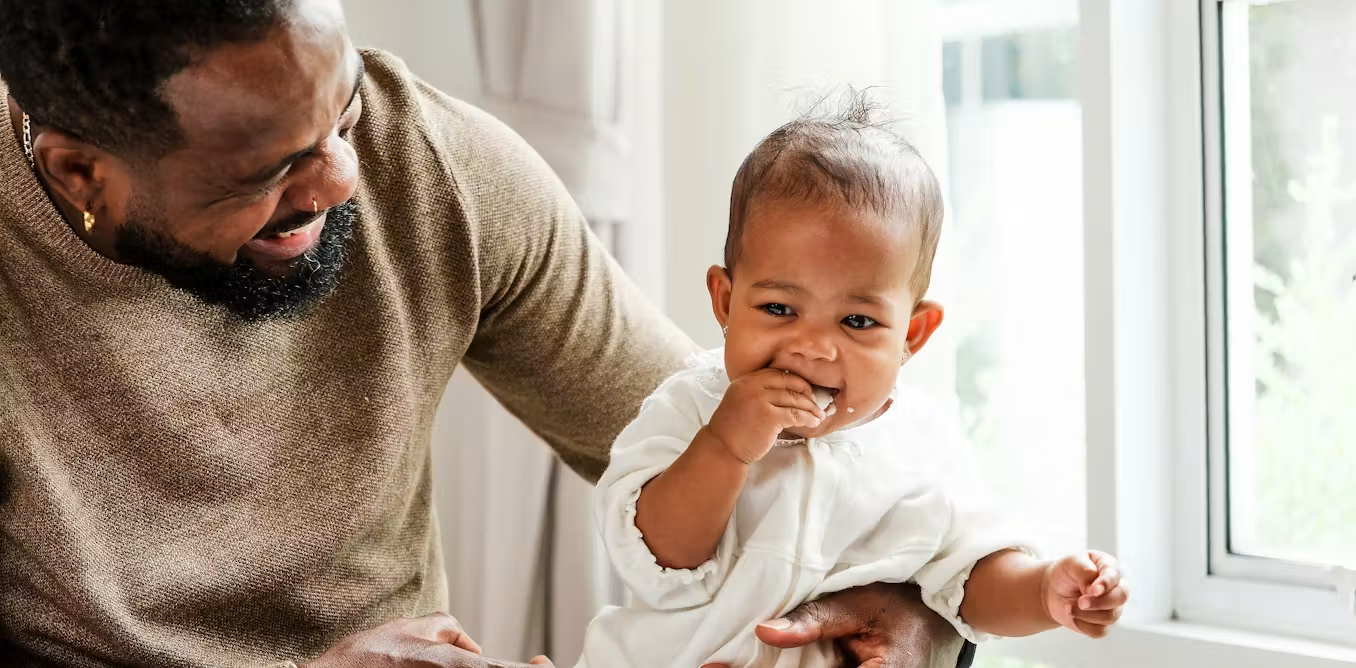
Many fathers feel vulnerable at a time when they’re expected to be strong and dependable.
KieferPix/Shutterstock

The first was a desire for society to rethink the role of fathers. Many dads told us they still encounter outdated assumptions that their primary purpose is to provide financially while mothers take the lead in caring for children. They want to be recognised not only as breadwinners but also as caregivers, nurturers and active participants in family life.

Fathers described the need for parenting to be seen as a shared responsibility and for dads’ involvement in everyday activities – from school runs to bedtime routines – to be seen as normal rather than exceptional. They also called for greater visibility of dads in public messaging, advertising and media campaigns, where parenting content is still frequently directed mainly towards mothers.

The second message was that fathers’ contributions to children’s lives need to be more consistently recognised by the systems and services that support families. Many dads spoke about feeling peripheral during interactions with healthcare, education and other public services. They wanted professionals to recognise that in two-parent families there are two parents whose voices matter.

For many dads, inclusion starts from the earliest days of a child’s life. Fathers should be routinely involved in conversations about their children, consulted when decisions are being made and recognised as important figures in their children’s development and wellbeing. Small changes in professional practice could make a big difference to how valued and engaged fathers feel.

Advertisement


À lire aussi :
Trying for a baby? Here’s why the father’s health is just as important as the mother’s


The third theme centred on support. Fathers told us they need access to services and resources that help them become the best parents they can be. That support should begin early, ideally before or during the transition into fatherhood, when many men are navigating unfamiliar challenges and responsibilities.

Many mentioned the importance of improving paternity leave, giving fathers more time to bond with their children, support their partners and adjust to family life. Others called for services designed with fathers in mind, including dad-specific support groups, activities for fathers and children and practical guidance on parenting.

Some also pointed to the value of wider family support, including relationship counselling, mediation and legal advice when families encounter difficulties. Of course, none of these changes will happen overnight. Changing attitudes, reforming services and expanding support require commitment from policymakers, professionals and communities alike.

Advertisement

Optimism

But there are also reasons to be optimistic. Across Wales and beyond, researchers, practitioners, charities and fathers themselves are already working towards the shared goal of improving dads’ wellbeing so that families can flourish.

Our Dads’ Wellbeing Research Network brings together policymakers, service providers, community organisations, dads and people committed to driving that change. Father’s Day is an opportunity to celebrate dads. It should also be an opportunity to listen to them.

The fathers who took part in our research weren’t asking for special treatment. They were asking to be recognised, included and supported in one of the most important roles they will ever have.

If society can achieve that, it will not only mean improving the lives of fathers. It may also help build stronger families and give more children the best possible start in life. And that is something worth considering this Father’s Day.

Advertisement

Source link

Continue Reading

NewsBeat

Andy Burnham needed a big win. The Makerfield result means Labour might have reason to hope

Published

on

Andy Burnham needed a big win. The Makerfield result means Labour might have reason to hope

The possible nominative determinism of the Makerfield constituency may prove as significant to political historians as it has been a blessing to newspaper sub-editors crafting puns on “Makerfield or Breakerfield”.

The immediate futures of Andy Burnham and Keir Starmer were decided in the historic happening of the first UK byelection to effectively elect a prime minister. It was a battle of our times.

Burnham’s success will make a new administration as it breaks the present one. Prime Minister Starmer’s government has been largely an ineffectual one – of which Burnham, crucially, was not a part.

This may be the moment – “the final chance to change”, as the victorious candidate put it – that transforms the performance and perception of Labour. But it also demonstrates how profoundly, and rapidly, politics in Britain is changing.

Advertisement


À lire aussi :
Andy Burnham is back at Westminster: what this says about Britain’s changing political system


Governing parties don’t win byelections, and certainly not on 23-point swings. Burnham’s 54.8% vote share, more than 20 percentage points more than that of Reform UK, was unexpectedly emphatic – a personal triumph.

The momentum behind Reform UK’s leader, Nigel Farage, has if not stalled then noticeably decelerated. A second seat in the north-west that Reform ought to have won this year, it hasn’t – and this time resoundingly.

Much was down to Labour’s exceptional candidate – and Reform’s exceptionally inappropriate one. In the May local election, Reform was rampant, Labour won only 24% of the vote in Makerfield, and Restore Britain didn’t stand. Last night, Rupert Lowe’s party finished third.

Advertisement

Lowe has checked Farage with politics of such unabashed illiberalism as to make Reform resemble the Liberal Democrats. It is too simplistic to assume that had Restore not stood, its voters would have turned to Reform (and in any case, Burnham would still have won conclusively). But rather than deal in switchers, Restore’s menace is its appeal to non-voters.

This byelection was not merely a matter of getting someone into parliament to supplant a prime minister. It was intended, and needed to be, a statement.

More than any incumbent party in history, given the unique febrility of politics in 2026, Labour could not hope, much less expect, to win a byelection anywhere. Never competitive in rural constituencies, in cities Labour is prey to the Greens, in towns to Reform and Restore, and in Scotland and Wales to nationalists. (Labour did poorly in the other byelections on the same day, both in Scotland.)

Reform and tactical voting

Ironically, given the central importance of “place” in this byelection, Makerfield isn’t one. A swathe of small towns and bits of larger ones, its identity is regional and emblematic, if not typical, of seats which used in lore to weigh rather than count votes for Labour. However, new parties now appeal in a political marketplace for the disaffected.

Advertisement

Andy Burnham contesting a seat in Greater Manchester was almost the only likely Labour victory. There were more propitious seats, such as Gorton and Denton in February, but a weak Starmer blocked Burnham’s candidature. Weakened further by the May elections, the prime minister was unable to do so a second time for Makerfield.

As it turned out, that initial rebuff has burnished Burnham’s subsequent success. The greater marginality of Makerfield makes the statement much greater.

Reform’s rise has been tempered by two otherwise unrelated phenomena. Just as Farage inspires, he also repels: his is a unique talent for encouraging tactical voting (the Conservative, Liberal Democrat and Green party combined vote share of just 3.3% in Makerfield suggests as much).

Burnham’s clearest and most long-term policy – electoral reform – is intended to address the negativity surrounding politics today. The salience of proportional representation has never been greater than in Britain’s new multi-party politics. With Burnham as prime minister, it is likely to be a Labour manifesto commitment for the first time.

Advertisement

Is popularity portable? Andy Burnham is about to find out.
EPA/Adam Vaughan

But Burnham’s undoubted personal popularity provides more questions than answers – not least, whether a politician who has been highly successfully regionally can translate that record to the national, and international, level.

There is also the question of whether the affability and relatability so integral to his appeal can withstand the vicissitudes of the highest office – as well as the scepticism, cynicism and increasing impatience of voters. Burnham will soon discover that the quickest way for a popular politician to become an unpopular politician is to become prime minister.

This is not Burnham’s first attempt to lead Labour. To the political questions of the day in 2010 and 2015, he was not the answer. In the post-New Labour world, Burnham lost to a softer leftist in Ed Miliband. And in the electoral wild west begat by Miliband’s party reforms, he lost to a harder leftist in Jeremy Corbyn.

Advertisement

But third time around, Burnham might just be the answer. The fractured multi-party politics of 2026 may respond more favourably to Labour with a leader whom its members and voters actually want to vote for.

Getting Labour’s vote out next time will be its highest priority. As almost never happens, the turnout in yesterday’s byelection was higher than in the general election.

Burnham’s re-election to parliament would always – to use the word of the age – change things. The measure would be the scale of his victory. For him to be a serious alternative leader, much less a saviour, the victory needed to be big. It was, and it was also personal.

But whether his appeal is portable will soon be the question. Some in Labour may see in Makerfield, as Churchill did El-Alamein, “the bright gleam” of victory. It certainly denotes both the beginning of Starmer’s end, and the end of Burnham’s beginning.

Advertisement

Source link

Continue Reading

Trending

Copyright © 2025