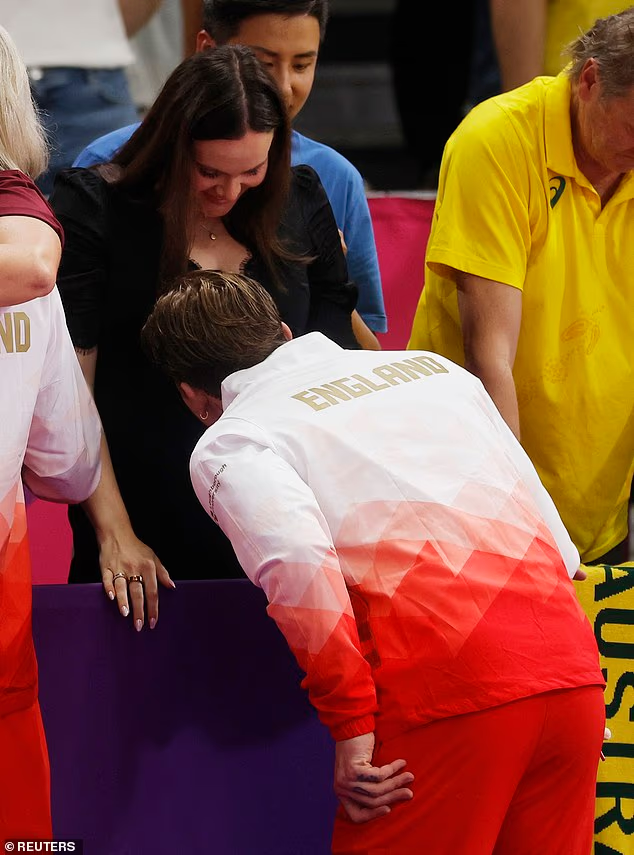
Adam Peaty kissed his pregnant wife Holly Ramsay’s baby bump as he celebrated winning a silver medal for the 4x100m medley relay at the Commonwealth Games on Wednesday.
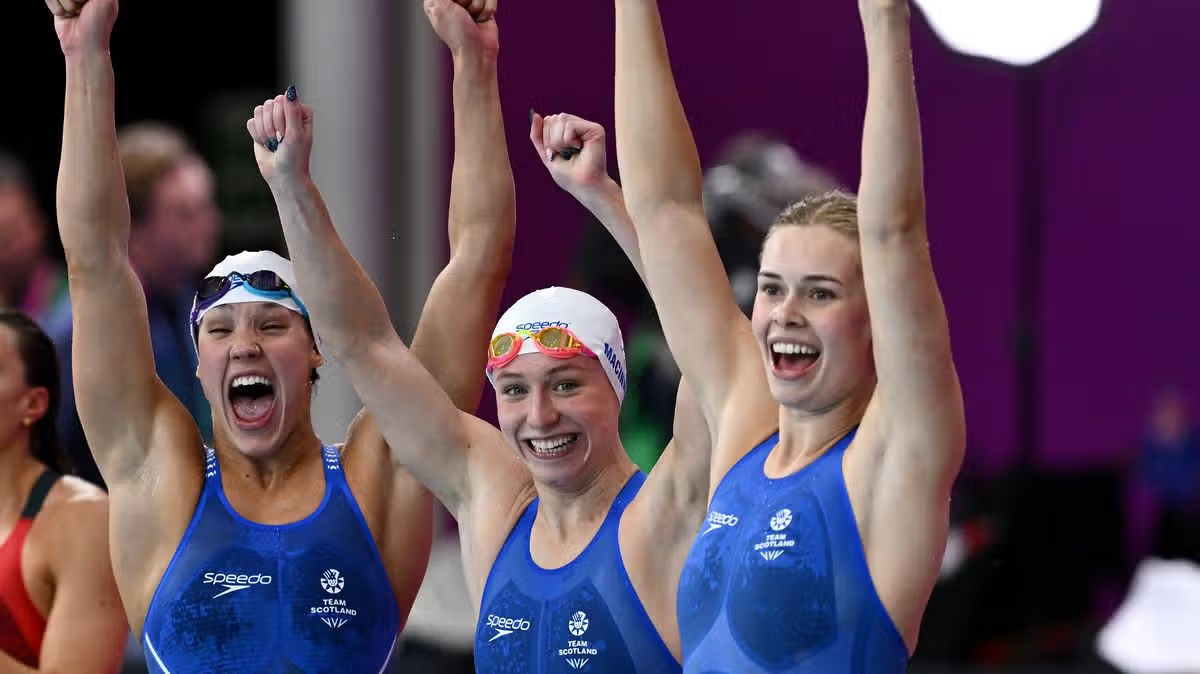
The influencer, 26, watched from the stands as the three-time Olympic champion came second alongside teammates Oliver Morgan, Edward Mildred and Jacob Mills.
Holly, who is expecting her first child, a daughter, with Adam, was ever the supportive wife as she cheered him on at the Tollcross International Swimming Centre in Glasgow.
Holly looked stylish in a plunging black lace dress for the sporting event and looked delighted to greet her husband.
It comes as Adam hinted his family rift is weighing on him as he said he has been feeling ‘off this week and doesn’t know why’ after failing to secure gold earlier in the week.
Hours before his 50m breaststroke final, Adam’s mother Caroline Peaty declared she will ‘always support him from afar’.
Adam Peaty kissed his pregnant wife Holly Ramsay’s baby bump as he celebrated winning a silver medal for the 4x100m medley relay at the Commonwealth Games on Wednesday
Holly looked stylish in a plunging black lace dress for the sporting event and looked delighted to greet her husband
Caroline, 60, claimed she and her husband Mark expect nothing back from her Olympian son, who is embroiled in a bitter family rift with her.
Throughout his life, his parents have sat poolside during his competitions, and the games marked the first major competition since their public fallout.
It was agony for Adam as he missed out on gold once again, finishing in third place to earn another bronze medal, with South Africa‘s Michael Houlie storming to victory.
Speaking after the race, Adam admitted he’s already struggled with ‘ups and downs’ during his swimming career, and he’s felt ‘off’ throughout his time in Glasgow.
Reflecting on a difficult couple of years, Adam said: ‘The harder you try the slower you go. The last two years have been tough to get the speed back.’
When asked what his ‘main takeaways’ from the games have been, Adam said: ‘Quite a lot, too many.
‘For me, just getting back to enjoying my training. I’m not going to be too hard on myself.
‘I think my whole career there has been a lot of ups and downs, two thirds of it was very good and then I lost my way, lost my purpose.
‘I don’t even know what tomorrow looks like really, there’s a lot of learning. I’ve felt ‘off’ this week and I don’t know why. We are trying new things.’
Speaking over the weekend, Adam seemed to blame his estrangement from his family on his inability to secure a gold medal so far at the Commonwealth Games.
Holly, who is expecting her first child, a daughter, with Adam, was ever the supportive wife as she cheered him on at the Tollcross International Swimming Centre in Glasgow
The influencer, 26, watched from the stands as the three-time Olympic champion came second alongside teammates Oliver Morgan, Edward Mildred and Jacob Mills
It comes as Adam hinted his family rift is weighing on him as he said he has been feeling ‘off this week and doesn’t know why’ after failing to secure gold earlier in the week
Adam looked focused as he competed in the relay race
Hours before his 50m breaststroke final, Adam’s mother Caroline Peaty declared she will ‘always support him from afar’
And just before the race, Caroline seemingly responded to Adam’s statement as she said she expects nothing back from her Olympian son.
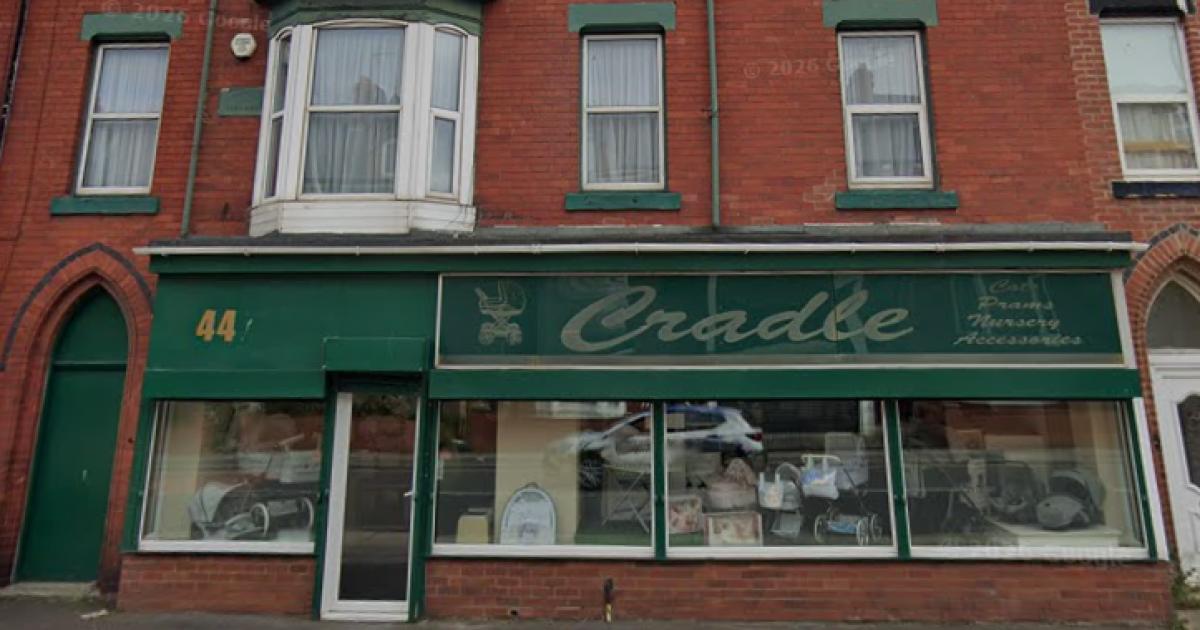
The former nursery manager penned: ‘He’s our son whom we love, whom we supported to reach his aspirations.
‘Our love, our time, our sacrifices were given freely with no expectation or financial reward, just genuinely given with the love any mother and father would do for their child.’
Caroline revealed that she and her family had been subjected to cruel abuse from online trolls who have been ‘vile’ and ‘truly evil’.
It comes after he failed to win a predicted gold medal in the 100m breaststroke on Saturday, finishing third, and appeared to blame his lacklustre performance partly on his family feud, saying it ‘has taken its toll’.
While Holly, who is expecting the couple’s first child in December, has been a high-profile spectator cheering her husband on at the Tollcross International Swimming Centre, his parents have not been poolside for the first time to support their son in person.
Caroline fears there is ‘something or someone at play wanting to destroy our family completely’.
But the defiant mum posted: ‘I have news for you. We are strong, we love and we are always there for each other.’
She stated on Facebook: ‘It has taken a lot of thought and deep strength to write this post.
‘There are many trolls on social media and making comments about us, which are truly evil and very untrue.
‘The very nature of our strength as a family has helped us move past the nastiness, the lies that have been told about us.
‘We have nothing to prove, we just want to be left alone.’
Caroline, who told the Daily Mail she hit rock bottom when Adam banned her from his life and had even contemplated suicide in the depths of her despair, pleaded with people to leave her alone to ‘move on with our life’.
The grandmother of seven, who now has two more grandkids on the way, is said to ‘live for her grandchildren’.
Adam and Holly are expecting a daughter in five months, while her daughter Bethany, a mother-of-two, recently revealed she is also pregnant with a new baby due in January.
Caroline wrote: ‘I’ve taken this for over eight months and enough is enough. Leave us alone to move on with our life and enjoy growing our family.’
Her post is alongside a carefully chosen but cryptic saying entitled: ‘Truth is so important to me.’
It states: ‘I forgive people but that doesn’t mean I accept their behaviour or trust them. I forgive them for me so I can let go and move on with my life.’
These Games represent the first time Adam’s parents have not been poolside cheering him on at a major event, with them reportedly being excluded from watching him compete.
Adam’s remarks, apparently blaming his former loved ones for his bronze, also caused a backlash against him on social media.
In the interview after his defeat, a visibly upset Adam acknowledged the family feud and said the fallout ‘has taken its toll’.
‘It’s hard because I know how hard I’ve worked,’ he said. ‘I know the s**t I’ve been through, which is no fault of my own. It does take a toll.’
The roots of the family conflict go back to 2024, when Adam and Holly snubbed wider members of the Peaty family by not inviting them to their engagement party and wedding.
His mum Caroline, who spent years ferrying her son to early-morning training sessions, was also not invited to Holly’s glamorous hen do.
Then, months later, Adam broke his silence on the feud as he insisted there are ‘two sides to every story’ in a statement he posted on Instagram.

















































You must be logged in to post a comment Login