The US president threatened that he could change the terms of the US-UK trade deal as he hit out again at the UK
Sir Keir Starmer said he is ‘not going to yield’ over the Iran war after Donald Trump’s latest criticism of the Prime Minister.
Advertisement
It comes after the US president threatened that he could change the terms of the US-UK trade deal as he hit out again at the UK during an interview with Sky News.
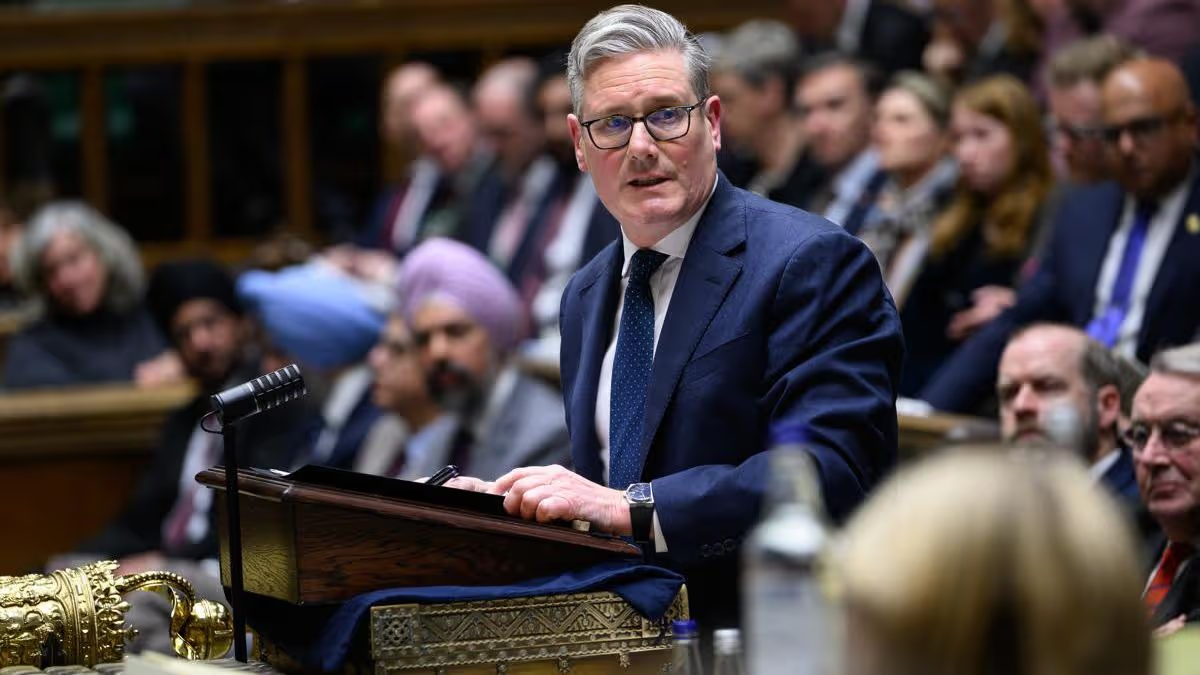
Speaking at Prime Minister’s Questions in the House of Commons, Sir Keir addressed Mr Trump’s overnight comments.
He told MPs: “My position on the Iran war has been clear from the start. We’re not going to get dragged into this war. It is not our war.
“A lot of pressure has been applied to me to take a different course, and that pressure included what happened last night.
Advertisement
“I’m not going to change my mind. I’m not going to yield.
“It is not in our national interest to join this war, and we will not do so. I know where I stand.”
“The monarchy is an important reminder of the long-standing bonds and enduring relationship between our two countries, which are far greater than anyone who occupies any particular office at any particular time.”
Relations between the British and American leaders have deteriorated after Sir Keir rejected the prospect of UK involvement in the Middle East conflict.
Advertisement
In an interview to Sky News the US president hit out at Sir Keir Starmer for making “tragic” mistakes on winding down drilling in the North Sea and on migration, and suggested the terms of the UK-US trade deal brokered last year could be changed.
He told the broadcaster that while he liked the Prime Minister, he had made a “tragic mistake in closing the North Sea oil”, as well as “a tragic mistake on immigration”.
Asked for his thoughts on the special relationship, Mr Trump replied: “With who?”
Advertisement
Sky then clarified they meant with the UK, to which the president reiterated his disappointment that Britain and other Nato allies had not joined the war with Iran “when we needed them”.
He then said that America had given the UK “a good trade deal, better than I had to”.
In what appeared to be a threat to the agreement with Britain, Mr Trump suggested the deal “can always be changed”.
He also told Sky News an agreement to end the war with Iran is “very possible”.
Advertisement
The president has reportedly said talks to end the conflict could resume in the next “two days”.
American vice-president JD Vance took part in negotiations in Islamabad, Pakistan, over the weekend aimed at ending the war, which concluded without any major breakthrough.
Zelensky says Russia has ‘no intention’ of ending war
Russia’s war in Ukraine is reaching a turning point as the initiative is likely shifting in Kyiv’s favour, experts monitoring the conflict say.
Moscow’s spring offensive failed to yield gains as its forces recorded a net territorial loss – of about 113 sq km – last month for the first time since August 2024, The Institute for the Study of War, an American think tank, claimed.
Battlefield losses are mounting as well, Ukraine’s defence minister Mykhailo Fedorov claimed earlier this month, declaring a Russian casualty count of 35,000 per month, far more troops than Moscow would be able to recruit.
Ukrainian president Volodymyr Zelensky, meanwhile, said Russia had no intention of ending the war, leaving Kyiv to brace for further attacks.
Advertisement
“Russia has no intention of ending this war. And we are, unfortunately, preparing for new attacks. But peace must come. That is exactly what we are working for,” he said.
Both sides reported fighting along the long frontline despite the ongoing ceasefire, and each accused the other of launching drone and artillery strikes.
Zelensky says Russia launched over 200 drones at Ukraine overnight
Russia launched more than 200 drones overnight at Ukraine, president Volodymyr Zelensky said on Tuesday.
Advertisement
“Overnight, more than 200 attack drones were launched against Ukraine. Aerial bombs were used again on the front – more than 80 of them, and over 30 air strikes were recorded. Attack drones were shot down in the Dnipro, Zhytomyr, Mykolaiv, Sumy, Kharkiv, and Chernihiv regions, as well as in Kyiv and the region,” Zelensky said on X this morning, sharing photos of the areas hit in the overnight strikes.
He added that energy facilities, apartment buildings, and a kindergarten were damaged in the attack.
“…there was also a strike on an ordinary civilian locomotive on the railway… People have been reported injured as a result of these strikes. And, unfortunately, there are fatalities,” he said.
Arpan Rai12 May 2026 12:00
Advertisement
Putin suggests war in Ukraine is ending
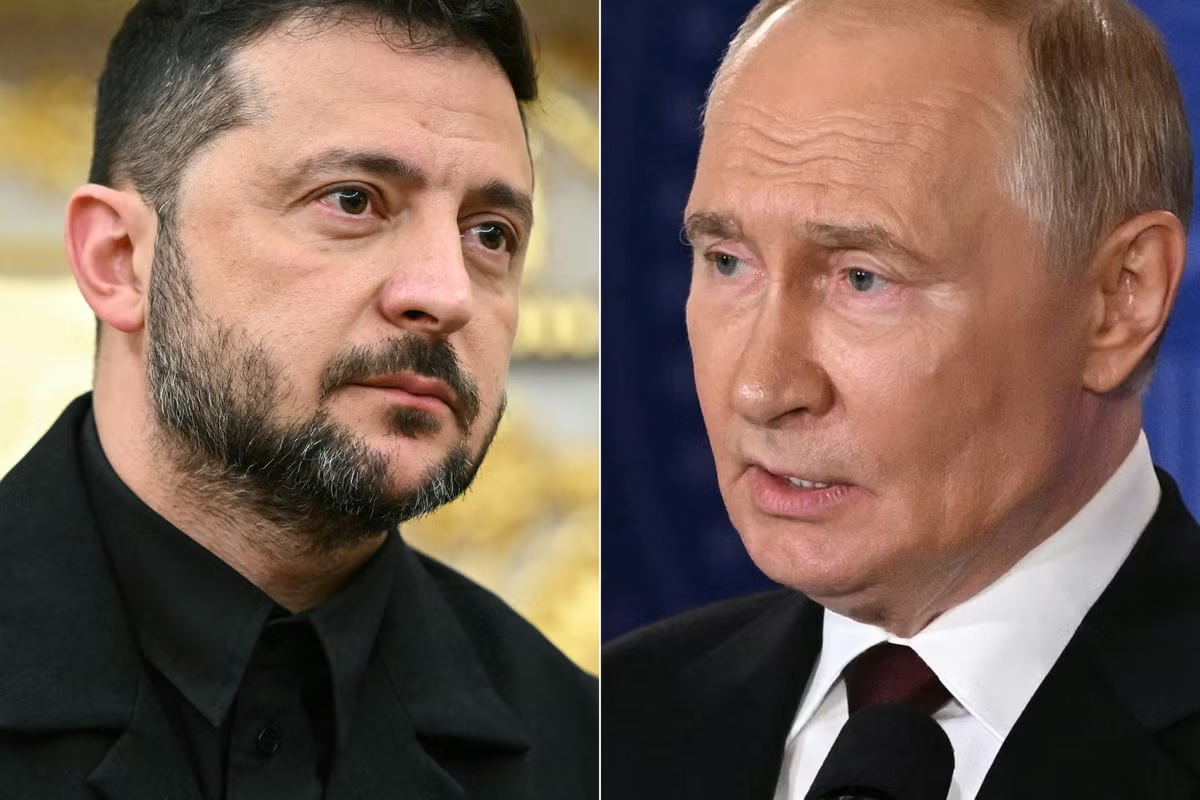
Vladimir Putin said after the Victory Day commemorations that he thought the war was coming to an end.
He said he would be willing to negotiate new security arrangements for Europe, with Germany’s former chancellor, Gerhard Schroeder, as his preferred partner.
But European foreign ministers, meeting in Brussels on Monday, rejected Putin’s suggestion about Schroeder. They dismissed any role for Schroeder, who has worked for Russian state companies and cultivated a close relationship with Putin.
Advertisement
Russian state news agencies reported yesterday that Russia’s defence ministry had said it had recorded 23,802 ceasefire violations by Ukraine since the start of the ceasefire.
Russian troops had responded in kind to Ukrainian attacks, the ministry was quoted as saying.
Putin claims Russia-Ukraine war is ‘coming to an end’
Arpan Rai12 May 2026 11:30
Advertisement
The ex-German chancellor and Putin’s ‘buddy’ who Russia want to mediate Ukraine peace talks
Vladimir Putin hinted over the weekend that he foresaw the war in Ukraine coming to an end soon, while raising the prospect of talks with the EU to draw up new security arrangements for a post-war Europe.
The Russian president told reporters that he would be open to reopening lines of communication with Ukraine and Europe, ideally mediated by former German chancellor Gerhard Schröder.
“For me personally, the former Chancellor of the Federal Republic of Germany, Mr Schröder, is preferable,” Putin said, asked on Saturday if he was willing to engage with Europe.
Arpan Rai12 May 2026 11:00
Advertisement
UK sanctions dozens over ‘Russian campaign to deport and indoctrinate Ukrainian children’
The UK has sanctioned dozens of people and entities allegedly involved in the forced deportation, indoctrination and militarisation of Ukrainian children.
New measures target 29 people linked to a Russian campaign to forcibly deport and militarise children, and a further 56 linked to information warfare.
More than 20,000 Ukrainian children have been forcibly transferred or deported to Russia and within the occupied territories of Ukraine.
Advertisement
Among those forcibly deported, an estimated 6,000 children have reportedly been taken to re‑education camps and subjected to propaganda designed to erase Ukrainian identity.
As part of their response, the UK unveiled an additional £1.2m in funding to help identify and return Ukrainian children to their homes and communities.
Britain’s Prime Minister Keir Starmer (R) and Ukraine’s President Volodymyr Zelensky (L) attend a bilateral meeting ahead of the 8th European Political Community (EPC) summit in Yerevan (AFP/Getty)
Arpan Rai12 May 2026 10:35
Ukraine suggests ‘ceasefire’ for airports with Russia
Ukraine’s foreign minister Andrii Sybiha said Europe can help the war-hit nation achieve a ceasefire with Russia – starting with each other’s airports first.
Advertisement
“We probably need a new role of Europe in our peace efforts. Maybe we would try to resolve or to achieve a so-called airport ceasefire,” Sybiha told Politico yesterday in Brussels.
Sybiha, a close-aide of Volodymyr Zelensky said the proposal seeks a limited Moscow-Kyiv agreement not to strike airports which helps Putin as well.
The Russian leader, he said, may have an incentive to engage with such a deal which helps him protect major Russian hubs like Moscow’s Sheremetyevo International Airport and St Petersburg’s Pulkovo Airport.
“Maybe our European allies, by establishing a platform, or maybe an ad hoc group, we could discuss [the airport ceasefire],” he said.
Advertisement
Sybiha said Zelensky has already discussed the idea with some European leaders.
Arpan Rai12 May 2026 10:15
Europe rejects Putin’s pick for peace mediator: ‘Not very wise’
The EU’s foreign policy chief on Monday rejected Vladimir Putin’s suggestion that former German chancellor Gerhard Schröder could represent Europe in future talks with Moscow on European security arrangements.
Advertisement
Putin told reporters on Saturday that he believed the war was “coming to an end”, and said he would be open to negotiating new security terms with Europe, ideally via Schröder as a mediator.
But Kaja Kallas dismissed the offer this morning as she arrived for a meeting of EU foreign ministers in Brussels.
“If we give the right to Russia to appoint a negotiator on our behalf, you know, that would not be very wise,” she said, adding that as Schroder had lobbied for Russian state companies, “he would be sitting on both sides of the table”.
After leaving office in 2005, Schroeder almost immediately took a job as chairman of a controversial German-Russian gas pipeline consortium and has faced heavy criticism in Germany for his closeness to Putin.
Advertisement
European Council President Antonio Costa said last week he believed there was “potential” for the EU to negotiate with Russia, and to discuss the future of the security architecture of Europe.
EU vice-president for foreign affairs and security policy Kaja Kallas delivers a statement after a Foreign Affairs Council in Brussels (AFP/Getty)
Arpan Rai12 May 2026 09:55
Watch: Zelensky says Russia has ‘no intention’ of ending war
Zelensky says Russia has ‘no intention’ of ending war
Arpan Rai12 May 2026 09:35
Advertisement
Ukraine reports 180 battlefield clashes as fighting kills three
The General Staff of Ukraine’s military, in a Monday morning report, said 180 battlefield clashes had been recorded along the front line over the previous 24 hours.
The General Staff said on Monday afternoon that Russian troops had carried out 38 new assaults on Ukrainian positions, adding: “Artillery shelling of border areas continues.”
Regional governors in Ukraine reported on Monday that at least three people had been killed in the southeastern Zaporizhzhia and southern Kherson regions over the past 24 hours.
Russian soldiers fire a grenade launcher towards Ukrainian positions on an undisclosed location in Ukraine (AP)
Arpan Rai12 May 2026 09:15
Advertisement
EU targets Russians with sanctions over alleged abduction of Ukrainian children
The European Union has imposed sanctions on 16 officials accused of helping Russia to abduct tens of thousands of children from Ukraine and force many to change their identities or be put up for adoption.
Sanctions were also slapped on seven centres suspected of indoctrinating the children or training them to serve in the armed forces, either for Russia or pro-Russian militias inside Ukraine.
Over 130 people and “entities” are now under EU travel bans and asset freezes over the abductions.
EU headquarters said the measures target “those responsible for the systematic unlawful deportation, forced transfer, forced assimilation, including indoctrination and militarized education, of Ukrainian minors, as well as their unlawful adoption and removal to the Russian Federation and within temporarily occupied territories.”
Advertisement
Since Russia launched its full-scale invasion of Ukraine in early 2022, about 20,500 children have been unlawfully deported or forcibly transferred to Russia or Russian-held territories in eastern Ukraine.
EU officials say many of the children are stripped of their Ukrainian identity and culture, given Russian passports and put up for adoption. Some are forced into schools for indoctrination or into military camps.
“Russia is trying to erase their identity,” Latvian foreign minister Baiba Braže said yesterday at a meeting with EU counterparts in Brussels, where the sanctions were endorsed.
“When you look at the Genocide Convention, it’s one of the features of the genocide crime. So, it’s very serious.”
Advertisement
Arpan Rai12 May 2026 08:55
Zelensky says Russia launched over 200 drones at Ukraine overnight
Russia launched more than 200 drones overnight at Ukraine, president Volodymyr Zelensky said on Tuesday.
“Overnight, more than 200 attack drones were launched against Ukraine. Aerial bombs were used again on the front – more than 80 of them, and over 30 air strikes were recorded. Attack drones were shot down in the Dnipro, Zhytomyr, Mykolaiv, Sumy, Kharkiv, and Chernihiv regions, as well as in Kyiv and the region,” Zelensky said on X this morning, sharing photos of the areas hit in the overnight strikes.
Advertisement
He added that energy facilities, apartment buildings, and a kindergarten were damaged in the attack.
“…there was also a strike on an ordinary civilian locomotive on the railway… People have been reported injured as a result of these strikes. And, unfortunately, there are fatalities,” he said.
The incident took place on a footpath next to the park in Trefoil Drive in Killinghall, near Clover Way, at 7.30pm last Monday (May 4)
RECOMMENDED READING:
“A large, ginger coloured, Labrador cross, was let off the lead, it ran to attack the victim’s dog, the victim fell to the ground and was bitten by the Labrador when he tried to fend it off,” said a spokesperson for the force.
Advertisement
Police are appealing for witnesses and any footage that could help identify the owner or person in charge of the dog.
Anyone with information is asked to contact Constable 1222 David Fulford at david.fulford@northyorkshire.police.uk.
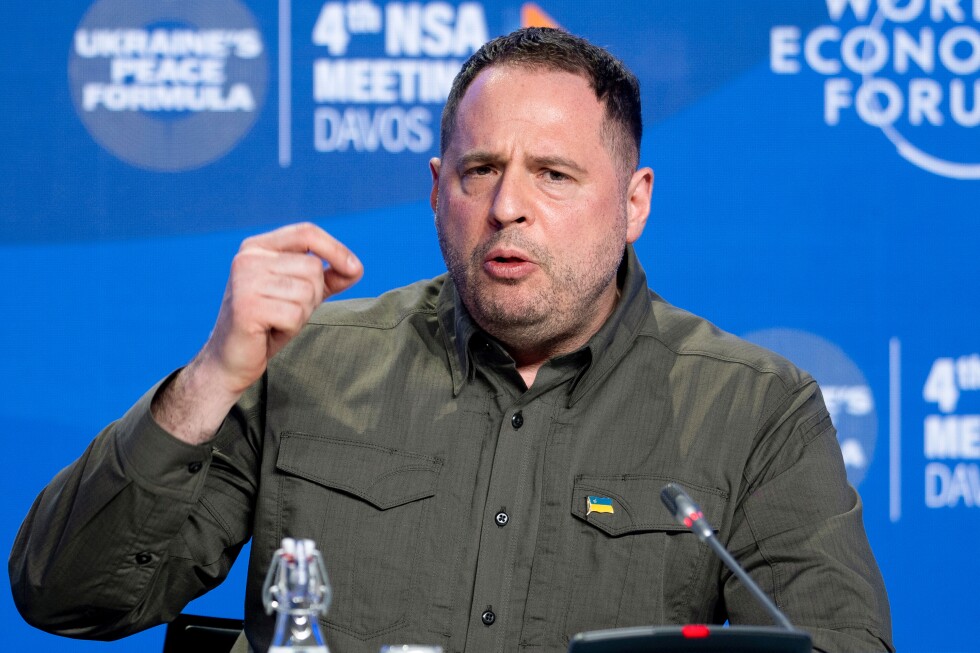
KYIV, Ukraine (AP) — Two national agencies fighting corruption in Ukraine have named Ukrainian President Volodymyr Zelenskyy’s former chief of staff as an official suspect in a major graft investigation.
Ukraine’s National Anti-Corruption Bureau and the Specialized Anti-Corruption Prosecutor’s Office announced late Monday that Andriy Yermak is suspected in an alleged 460-million-hryvnia ($10.5 million) money-laundering scheme.
The announcement coincided with, but was not connected to, the end of a three-day U.S-brokered ceasefire that decreased the fighting but failed to stop it altogether as Russia’s invasion of its neighbor stretches into its fifth year with no sign of a peace settlement within reach.
Ukraine offered to extend the pause in hostilities, Ukrainian Foreign Minister Andrii Sybiha said. But he reported Tuesday that Russia launched over 200 drones against Ukraine overnight, striking civilian infrastructure and killing at least one person and wounding another six.
Advertisement
“It is time to strengthen our positions and force Moscow to end the war,” Sybiha said on X. Russian President Vladimir Putin “must realize that it will only get worse for him.”
Western analysts say Ukraine’s battlefield position has recently improved as it deploys cutting-edge drone technology to hold Russia’s bigger army at bay.
The Russian Defense Ministry said Tuesday that its air defenses intercepted 30 Ukrainian drones over Russian regions on the border with Ukraine.
Zelenskyy holds talks with CEO of US firm Palantir
Zelenskyy said Tuesday he met in Kyiv with the CEO of Palantir Technologies, Alex Karp, as part of Ukraine’s growing cooperation with the U.S. defense sector.
Advertisement
The Ukrainian leader said in a social media post that Ukraine and Palantir “can be useful to each other.”
“We discussed directions of technological development both in the context of combat operations and civilian needs,” Zelenskyy said.
Palantir Technologies is an artificial intelligence software company that helps global defense agencies. It specializes in software platforms that pull together and analyze large amounts of data and has been partnering with Ukraine for several years.
AI can help combatants quickly sift and decipher a huge volume of battlefield information, enabling more accurate attacks, among other things.
Advertisement
Graft investigation embarrasses Zelenskyy
Corruption investigators said in an announcement on the Telegram messaging app that the investigation into Yermak is ongoing.
The move is a step short of formally charging Yermak, who resigned in November. He was the country’s lead negotiator in talks with the U.S and left during the scandal that brought the biggest threat to Zelenskyy’s government since Russia’s full-scale invasion.
The investigation is deeply embarrassing for the Ukrainian leader as he pushes for his country to be admitted as a member of the European Union, a process which likely will take years. Endemic corruption is one of the obstacles slowing Ukraine’s admission.
Yermak was a trusted confidant of Zelenskyy, who resisted persistent pressure to replace him, and a powerful figure in the government.
Advertisement
Zelenskyy made no public comment on the anti-graft agencies’ announcement, but his press officer Dmytro Lytvyn said “the investigation is ongoing, it’s early to draw conclusions.”
Any charges against Yermak may take months
Investigators said Yermak is suspected of being involved in laundering money through construction projects near Kyiv, the Ukrainian capital. They searched his home in November. No other suspects have been named.
Yermak’s attorney, Ihor Fomin, called the suspicion notice groundless and denied his client’s involvement in the alleged laundering of 460 million hryvnias through an elite construction project outside Kyiv.
“In my view, this entire situation has been provoked by public pressure,” Fomin said in an interview with Ukrainian public broadcaster Suspilne.
Advertisement
A decision on whether to bring formal charges against Yermak could still take months.
At the time of Yermak’s resignation, Zelenskyy said he was rebooting the presidential office and thanked Yermak for his work on peace negotiations.
The victim spent more than three weeks in hospital
11:40, 12 May 2026
Advertisement
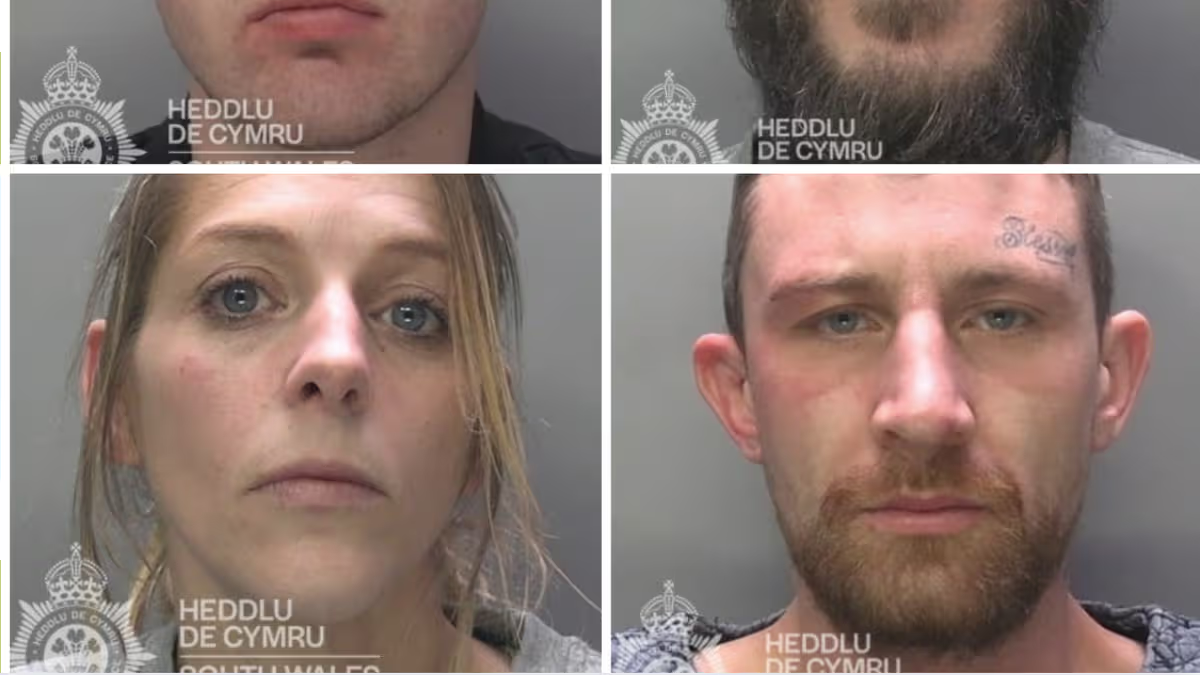
A Wetherspoons customers was followed out of the pub and attacked in the street by a group of people who had spent Christmas Day morning drinking in the bar, a court has heard. Jorie Rees, Hayley Murphy, Daniel Evans and Jackson Greensalde set upon their victim as he sat on a bench and repeatedly punched and kicked him before making off.
All four defendants have now been locked up for what a judge at Swansea Crown Court described as an attack displaying a “pack mentality”. A fifth individual involved in the incident has not been found and remains at large.
Harry Dickens, prosecuting, told the court that the victim of the assault attended the Potter’s Wheel pub on The Kingsway in Swansea city centre on the morning of Christmas Day last year. Don’t miss a court report by signing upto our crime newsletter here
He said the complainant fell into conversation with an unknown male and subsequently joined him sitting with the four defendants.
Advertisement
The court heard that around midday the complainant went to the toilet where he was assaulted by a male who has not been identified. The complainant then returned to the group and confronted them about being involved in the assault on him before walking out.
The prosecutor said the complainant walked down Dillwyn Street and onto Oxford Street but was followed by the defendants who were shouting at him. Rees, Murphy, Evans and Greenslade continued to follow the man along Oxford Street until he sat down on a bench at which point they “set upon” him with each defendant punching and kicking the man. Mr Dickens said “all parties delivered various blows” but it was not possible to say how many each had delivered or in what order.
The court heard the defendants then walked off and the males were seen to “gesticulating” in the direction of their victim in what the prosecution said was “mocking” behaviour.
Advertisement
The prosecutor said that the following day the victim was taken to Morriston Hospital by ambulance suffering with lacerations and bruises and a “reduced level of consciousness”. He said the man also had a chest infection which the prosecution cannot say was linked to the assault, and said complications developed which mean he ultimately spent more that three weeks in hospital.
Meanwhile the assault had been reported to the police, and the four defendants were identified and arrested. Rees, Murphy, and Evans all answered “no comment” to questions asked in interview.
In his interview, Greenslade said he could not recall the incident. He said he had been in Neath at the time but then added he had been having a psychotic episode, that he did not know his co-defendants, and that he had fought with someone in the pub toilets after they had made an inappropriate sexual remark about children.
Advertisement
Jorie Rees, aged 21, of Margam Road, Taibach, Port Talbot; Jackson Greenslade, aged 32, of Alexandra Road, Swansea city centre; Hayley Murphy, aged 38, of Geiriol Road, Townhill, Swansea; and 29-year-old Daniel Evans, of no fixed abode, had all previously pleaded guilty to assault occasioning actual bodily harm when they appeared in the dock via prison videolink for sentencing. They had originally been charged with robbery but the prosecution offered no evidence in regard to that matter.
Rees has 12 previous convictions for 36 offences including a “large number” of dishonesty matters, and possession of a bladed article. In November last year he was sentenced to 12 weeks in prison for assaulting emergency workers and was on licence for that matter at the time of the Christmas Day assault.
Greenslade has three previous convictions for six offences including drugs matters, theft, and criminal damage; Murphy has 27 previous convictions for 57 offences including public disorder, assaulting an emergency worker, dishonesty matters, and drug trafficking; Evans has two previous convictions for three offences including possession of a bladed article.
Advertisement
David Singh, for Rees, said it had to be conceded his client had taken part in a “unprovoked group attack” on the vicitm. He said it was acknowledged that at the age of 21, the defendant had already accumulated a significant antecedent record and said it was clear his client was a young man who needs “professional intervention” and is someone “who needs to grow up”.
Emily Bennett, for Evans, said the defendant had previously worked as a painter and decorator and had lived in the Blaenymaes area but currently was without stable accommodation. She said the father-of-one accepted he had been in a “highly emotional” state on the day in question and had consumed alcohol which led him to act in a way which was not usual for him.
Huw Davies, for Greenslade, said his client accepts that his behaviour on Christmas Day 2025 was “appalling”.
Advertisement
Sarah John, for Murphy, said for family reasons linked to her daughter, her client had been at a “low point” on the day in question, and said she was remorseful for her actions.
The barrister asked the court to take into account the defendant’s “difficult background” which included spending time in the care system as a child, and being the victim of domestic violence. Ms John went on to say Murphy had been diagnosed with ADHD, anxiety, and schizophrenia.
Judge Huw Rees said that on December 25 the defendants had not been at home and none of them had been “remotely celebrating the true meaning of Christmas”. He said the foursome along with another unidentified male had set up on their victim “with a pack mentality” and said each was jointly responsible for what happened.
The judge told them: “It goes without saying you need help and support. The best help and support you can get is self-discipline to abide by society’s norms and demands”.
Advertisement
With one-third discounts for their guilty pleas Rees was sentenced to 16 months in prison, Evans to 12 months in prison, and Greenslade to 12 months in prison. With a one-quarter discount for her guilty plea – which was entered later in the court process – Murphy was sentenced to 18 months in prison.
The defendants will each serve up to half their sentences in custody before being released on licence to serve the remainder in the community. Each defendant was also made subject to a five-year restraining order banning them from contacting their victim.
Get daily breaking news updates on your phone by joining our WhatsApp community here. We occasionally treat members to special offers, promotions and ads from us and our partners. See our Privacy Notice
Opening with Great Lakes, the reverence of the surroundings and the reflective offering let the songs breathe and unfold.
With a sound and style reminiscent of Fleet Foxes and Ray Lamontagne, there is an honesty in Smith’s writing where restraint becomes a strength. The beautiful Freezing Winds of Change was followed by the stirring Joanna, a song about connection and distance and which tonight included extracts from Van Morrisons’s Tupelo Honey.
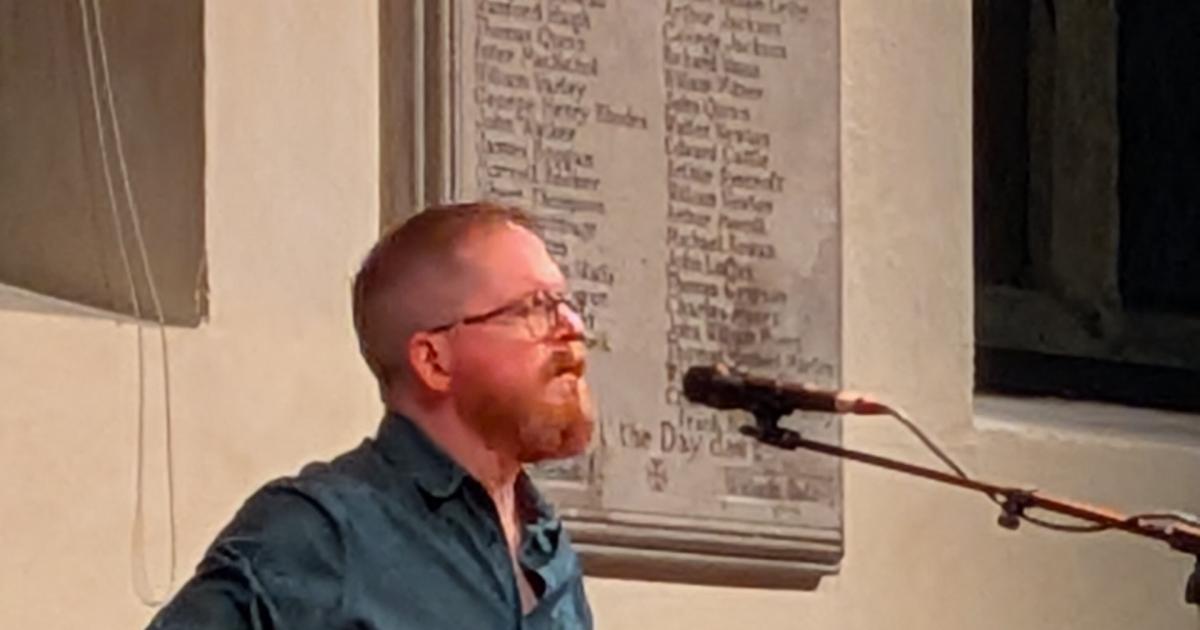
John Smith, National Centre for Early Music, York. (Image: Gareth John)
Throughout the evening, Smith’s storytelling included tales of illness, touring, songwriting and relationships. The restlessness of Burden of the Road was followed by the haunting Hummingbird before Smith introduced Sanctuary, a fan-requested track inspired by his move from Kent to Merseyside as a 19-year-old.
He spoke of the challenge and torment of song writing and how some songs are often formed years after the initial scraps of an idea. His mid‑set sequence included Milestones and Town to Town, highlighting the depth of Smith’s song writing.
Advertisement
Smith introduced his cover of the Richard Thompson classic Down Where the Drunkards Roll as he moved through his set with the perfect balance of grit, introspection and narrative drive. Smith also spoke of his relationship with singer-songwriter and mentor Joe Henry as he sought Henry’s opinion on his track Trick of the Light, one of this evening’s highlights.
Smith introduced the stunning Save My Life as the saddest song he’d ever written and moved towards the end of the set with the lovely Salty and Sweet. Tonight’s set felt carefully crafted.
John Smith has released his album Gatherings. (Image: Gareth John)
Far Too Good carried a quiet emotional weight, while the final notes of Winter brought the evening to a fittingly beautiful and haunting close. This was not a performance built on spectacle, but on craft and connection with audience and instrument.
In a venue that favours simplicity and nuance over noise, and in promotion of his April 2026 album release Gatherings, John Smith delivered a set that was both thoughtful and assured, a reminder that sometimes the most memorable concerts are the ones that simply trust the songs.
The conversion of an 18th-century Grade-II listed former post office in the centre of Whitby has been approved by the council.
The Crown Bar, which now also features a log burner, is located in a terraced property at 100, Church Street.
The site was formerly used as a post office but had been vacant for several years and now “invites visitors into a world where gothic fiction and local heritage collide”.
Advertisement
“The interior leans fully into Whitby’s connection with Dracula, wrapping guests in a moody, immersive setting that feels equal parts museum, storytelling chamber, and late-night haunt,” according to the bar’s website.
The application was approved despite Whitby Town Council raising concerns “that the proposal does not appear to provide adequate accessibility or servicing arrangements”.
“In particular, the only toilet is shown up a step with no clear step-free route from the front retail area, and no log storage has been identified on the submitted plans,” WTC added.
However, planning officers said the proposal was considered appropriate and noted that the internal alterations, including fireproofing of timbers, the installation of a log burner, and internal decorative work, did not raise any objections from the conservation officer.
Advertisement
A planning report states: “The proposed development would not result in structural alteration to the building, or loss of historic fabric.
“There are proposed features which are to be attached to the historic masonry of the walls and floors, with an island bar fixed to the ground and shelving to the walls. These are modest additions and do not significantly alter the significance of the designated heritage asset and is not considered to result in harm to the significance of the designated heritage asset.”
The development includes the installation of a new fascia signage board, which officers said would be placed over the existing, early to mid-20th century, shopfront fascia sign, “which will be retained and concealed”.
North Yorkshire Council concluded that the development would not have a harmful impact on the historic building and approved the application on Friday, May 8.
The DVSA opted to change its rules as average waiting times for a practical examination now exceed 22 weeks, with individuals using automated programmes – known as ‘bots’ – to secure available slots rapidly and resell them at inflated prices.
A National Audit Office (NAO) report published in December found that learners were paying up to £500 to book a black market slot, far in excess of the standard £62 booking fee.
Under new laws, it’ll be against the law for driving instructors, or anyone else, to book tests for pupils. They will not be able to change, swap or cancel a test for someone else either.
Advertisement
A report from the NAO found learner drivers were paying up to £500 to book a black market driving test slot (PA Archive)
Emma Bush, managing director of AA Driving School, said that these changes wouldn’t solve all the issues currently facing learner drivers, as more test examiners are needed.
“Learner drivers continue to face unacceptable delays in accessing driving tests,” she said.
“The data clearly shows more needs to be done to really get a handle on the situation and start to push waiting times back. To really improve waiting times over a prolonged period, there needs to be unrelenting focus from the DVSA on retaining and recruiting driving test examiners.”
Here is what the changes mean for learner drivers.
Who can book a driving test?
Advertisement
From Tuesday, only learner drivers can book and manage their driving test. This is a change from previously, where driving instructors could take control of these bookings. Tests already booked by instructors are unaffected.
Driving instructors will not be able to book tests or change bookings for learners (Getty/iStock)
How many times can a booking be changed?
Learner drivers will only be able to change their booking twice, in a rule that’s been in place since 31 March. Prior to this, learner drivers had up to six changes.
People can change the date or time, test centre or swap appointments with other learner drivers. Changing more than one thing at once – such as the date and test centre – counts as one change.
What doesn’t count towards the change limit includes:
Advertisement
Updating your address or contact details
Adding or removing your driving instructor’s reference number
If the DVSA changed your test due to bad weather, your changes would be reset, but you would only be able to make these extra changes by phone.
If a learner needs to make more changes after using up the two, they will need to cancel their test and book a new one. Prospective motorists have up to 10 working days before the test date to cancel the test and get a full refund.
Where can a test be moved to?
From 9 June, learner drivers will only be able to change their booking to the three nearest test centres. You can also use your second change to revert back to the test centre you first booked at on that current booking. Current rules stipulate that learners can move their test to any available centre in the country.
“What is the same as Sunday is what happened three years ago at Leicester. Ben White, at Leicester, had a grip on the goalkeeper’s glove. He then hooks in and makes sure he can’t lift his right arm up. Arsenal got the ball back, Leandro Trossard put it in, and the goal was disallowed.
British Airways is advising passengers to pack this souvenir in checked luggage
British Airways passengers could find themselves flagged at security over a popular keepsake that many might not realise is banned from cabin baggage.
Advertisement
The unexpected offender is the humble snow globe, which falls under the category of liquids according to airport security regulations and is therefore subject to stringent hand luggage rules. UK aviation security guidelines generally require liquids in cabin baggage to be carried in containers of 100ml or less, stored in a clear resealable plastic bag when passing through screening — although this is beginning to change at select airports.
The long-established restriction was introduced across the UK and Europe in 2006 following fears over liquid explosives being concealed on aircraft, and has since remained one of the most strictly enforced security measures at airports across the country.
That said, the UK aviation system is currently going through a period of change, with major airports including Heathrow, Gatwick, Birmingham and Edinburgh installing new CT scanners that allow travellers to carry greater volumes of liquid in their hand luggage.
At those airports where the upgraded technology has been introduced, the 100ml rule has effectively been scrapped, permitting passengers to keep liquids in their bags without the previous restrictions applying – though the rollout has yet to reach every airport across the nation.
Advertisement
Despite this, the vast majority of UK airports still operate under the traditional rules, meaning passengers may face different security requirements depending on where they’re flying from. Snow globes fall foul of the restrictions because of the sealed liquid and glitter contained within their glass or plastic casing, which nearly always exceeds permitted hand luggage limits.
The Civil Aviation Authority classes them as restricted items in hand luggage, meaning security staff are required to confiscate them during screening if they’re found in cabin bags.
British Airways advises passengers to pack such items in hold luggage to avoid delays or confiscation at security checkpoints.
Advertisement
Travel experts say confusion is rife during the festive season, as Christmas souvenirs are often bought without any knowledge of aviation liquid regulations. Airports continue to urge travellers to check guidance before heading off, particularly as UK security systems remain in a phased rollout of new screening technology.
Lee Andrews has begged Katie Price to “support” him in a new voice note after he failed to make what was meant to be their first joint TV interview on Tursday morning
10:52, 12 May 2026Updated 10:52, 12 May 2026
Katie Price shares a voice message from Lee Andrews
Lee Andrews has begged Katie Price to “support” him in a new voice note. The Dubai businessman tied the knot with ex-glamour model Katie, 47, just two weeks after they met in January but is yet to travel to England where she lives to see her.
On Tuesday, the pair were due to give their first joint interview on Good Morning Britain with Susanna Reid and Ed Balls but, after failing to get on a flight from Dubai, Katie had to make the appearance solo.
Advertisement
In a video posted to Katie’s YouTube, she is seen listening to a voice note where Lee tries to assure her he is “definitely trying” to do everything he can amid the situation.
He says: “Please can you, all I’m asking you to support me, I know you’re worried about things. I don’t want you to lose faith in it all because I am definitely following through with everything and I am trying. Love you.”
Katie then smiles to herself as the message cuts off. She captioned the post: “I’LL WAIT FOREVER FOR YOU!” She titled the video: “Supporting my husband through the hard times!!!!!”
The whole morning was shrouded in chaos as speculation mounted that Lee had been issued with a travel ban. Susanna told viewers: “Katie and her husband Lee were booked to appear and up until yesterday that was still the case.”
Susanna said the GMB team contacted the Foreign Office yesterday to see if Lee had any travel ban when they were told he’d be a surprise ‘no-show.’ The Foreign Office responded: “We supported a British man who was detained in the UAE.”
Advertisement
Ed then asked Katie directly if Lee had been arrested. She hit back: “No, I feel like they just said it to me in there [backstage] so I just said to Lee apparently a British man has been detained, can you confirm its not you?” and he’s done a voice note back and said it’s not him and sent laughing emojis.”
Katie claimed Lee was at the airport and had been sending pictures and was on his way. She said: “He said ‘No, it’s not me,’ in a voice note. He’s sent me pictures, he’s at the airport and on his way.
“He’s coming over to spend quite a few months now, he’s sorting out my visa and my international driving license. He had things to do, didn’t make the flight, because of all his business stuff he has to do. We did the research chat and everything – but he is at the airport now and he is on his way. He said he’d even come on a Zoom.”
Katie then added: “I know no one believes me, your face says it all, [Susanna]. I can’t keep going to Dubai because I’ve got work and my kids here. He pays for it anyway but I can’t keep going to Dubai so he’s shifting over here. I said ‘I keep flying to you, you’ve got to come to England now.”
When the Foreign Office was mentioned again, Katie was asked if it “raised a concern” for her. She said: “No you’ve asked the question to them – they haven’t come to you. He wouldn’t have his phone, he wouldn’t be at the airport, so it’s definitely not Lee. I’ve just had him on FaceTime at the airport; it’s definitely not Lee. He does a lot of stuff. I know what he does, so I believe it.”
Advertisement
There is ongoing speculation that Lee is unable to leave the United Arab Emirates city after allegedly forging his ex-girlfriend Dina Taji’s signature to secure a £200,000 loan – something he’s strongly denied.
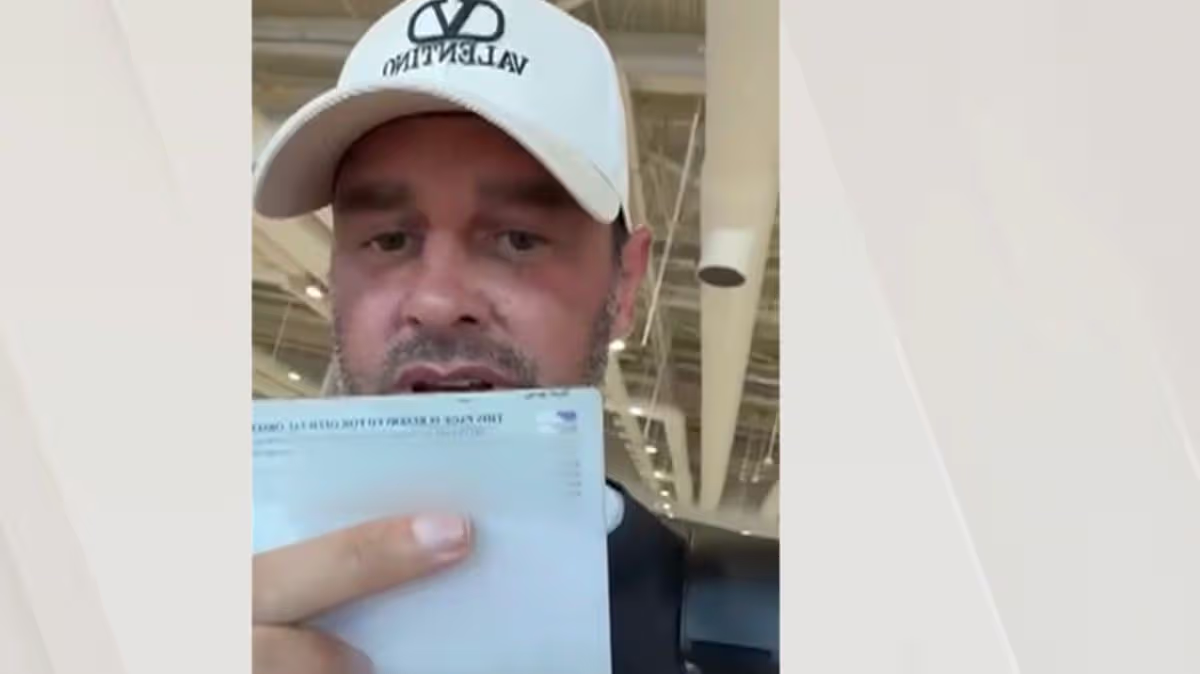
However, Lee did not make it and just seven hours ago was sharing posts about him being there, fully aware he couldn’t make it. GMB were instead forced to share a short video clip in which Lee as he thanked them for the ITV morning show for their invite but had to miss out on this occasion.
























































You must be logged in to post a comment Login