EXCLUSIVE: Raye was the headline act at Reading Festival’s second day, and even though she was battling multiple technical difficulties and messed up her lyrics, watching her was the biggest joy
12:49, 30 Aug 2026Updated 12:49, 30 Aug 2026
I declare and I decree Raye the queen of Reading Festival 2026. The South London singer battled technical difficulties that made her late to her set and restarted a song after messing up the lyrics, and yet fans still left her headline slot on Saturday 29 August feeling like they’d just witnessed the show of their lives.
“I can’t believe how good she was,” one fans says in teary, hiccupy breaths as she leaves the festival grounds. “Wow. Just… wow,” says another. Girls everywhere are crying, smiling and hugging as they make their way home.
Anyone whose seen Raye perform live will be familiar with this sight. The singer’s performance is the equivalent of the first hug from an excitable puppy you just adopted. There may be tough times ahead and things are going to go wrong but it’s impossible not to giggle with all the love you feel.
Advertisement
The first moment of sheer joy comes when Raye is finally seen on stage. Choosing to opt out of heels, she runs on, grabs her microphone and belts out one of her classics, Escapism, before telling the audience she’ll chat to us soon and barrelling straight into South London Lover Boy. Everyone’s already forgotten that this is all happening about 10 minutes later than expected.
When she’s finished her second song, she explains that the backlights spelling her name weren’t working and she was trying to get them fixed for us before she came out. But wouldn’t work. “We’re going to have fun anyway, aren’t we?” she screams. And we all scream with her.
That’s the thing about Raye. She’s messy and has no interest in pretending otherwise. If things don’t work, who cares? That’s life. If a song is too quick and you mess up the opening rap, like Raye did in WhatsApp Shakespeare, that’s okay! Rather than carry on, Raye stops the performance saying: “Nah, nah, nah that sucked, let’s do it again.”
Advertisement
“She’s so real for that,” one fan says. This isn’t the only instance where Raye is unafraid to show us who she really is, as she takes a moment to explain that she previously ‘begged’ to perform at Reading.
She tells the us: “Six years ago, I said to my agent, ‘Please book me for Reading’ and they kept saying ‘We’re sorry but they’re not interested’. I never thought that six years later I would be headlining.”
That’s enough to make the waterworks start for pretty much everyone in the crowd. They start flowing even more for the sisters in the crowd, when Raye brings out her own sisters, Amma and Absolutely, for her penultimate song Joy.
Advertisement
Poor Amma has an issue with her ear piece and stumbles through her lyrics, but Raye just gives her the biggest hug, as does Absolutely when she comes on stage. Despite the mistakes, Amma can’t stop smiling thanks to the way the crowd gets behind her, cheering her on.
When the set ends, everyone’s knees are tired from jumping around, throats soar from screaming and cheeks aching from grinning, but there is just one thing on each and every mind: Can Raye come back again tomorrow?
The Mirror were at Reading Festival courtesy of Nordic Spirit.
A gardener has issued advice to homeowners over a common landscape fabric weed control mistake that some experts say may cause more harm than good
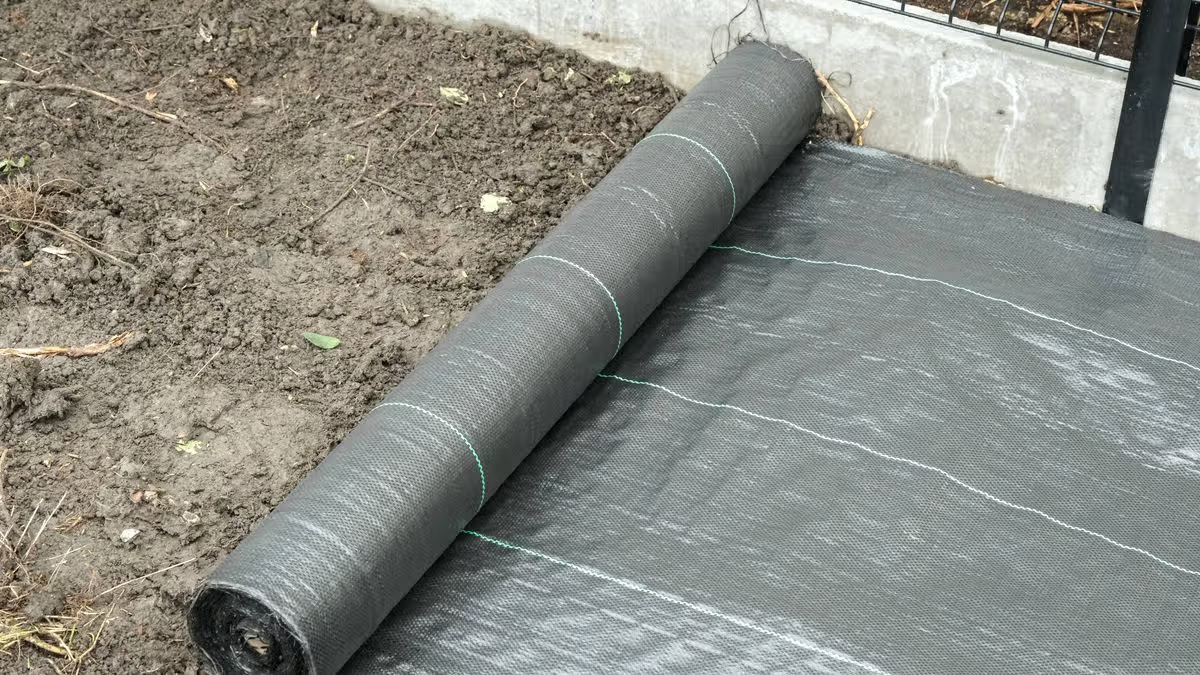
There is a cheaper and more effective way to keep weeds out of your garden – and it does not involve expensive landscape fabric that can do more harm than good.
Advertisement
Many gardeners spend significant sums on synthetic or organic sheeting laid over soil to inhibit weed growth by cutting off sunlight and stopping seeds from germinating. While it is marketed as a low-maintenance solution, experts and experienced gardening enthusiasts warn it frequently ends up costing homeowners considerably more money in the long run and may prove largely ineffective.
A far simpler and cheaper alternative involves layering newspaper or cardboard directly on the soil and topping it with mulch. Not only does this method cost next to nothing, but it also breaks down naturally over time, enriching the soil rather than damaging it – and can suppress weeds for up to two years.
Gardener Gabriella the Garden Sage brought the issue to wider attention after sharing a Facebook post featuring photographs of kniphofia plants with compressed, stunted roots that were unable to push through a layer of landscape fabric buried beneath several inches of mulch. She explains that while mulch ordinarily breaks down and enriches the soil with nutrients, the fabric serves as a barrier, preventing those benefits from penetrating the clay soil underneath.
In the caption accompanying her post she wrote: “Builders and landscape companies convinced homeowners to roll out acres of the stuff, extolling it as a key tool to make landscaping low maintenance and weed free. Not to mention that weeds grow quite happily on top of the fabric! For the sake of your plants, your soil, the planet, and your friendly local garden sage, just say no to landscape fabric!”
Advertisement
Several gardening enthusiasts left encouraging remarks on Gabriella’s post, with one writing: “Yup. Our backyard is full of the stuff, it’s so frustrating!”
Another contributed: “I have had decent luck with either layers of newspaper or cardboard, then mulch on top.” They added: “Weed suppression lasts about two years with this method.”
A third sided with Gabriella, commenting: “Exactly!” while another Facebook user noted: “Wow! That’s good to know! How about laying newspapers down?”
Although landscape fabric may appear to offer a simple solution to garden weeds, numerous experts warn that it frequently creates more difficulties than it resolves. It can obstruct root growth, deprive soil of air and moisture, and ultimately become a nuisance once weeds begin establishing themselves on top.
Advertisement
Removing it is far from straightforward and can require hours of gruelling work. Instead, householders may wish to explore more sustainable and soil-friendly alternatives, such as transforming their lawns with native plants, clover, buffalo grass, or considering xeriscaping — which involves replacing lawn areas with soil, rocks, mulch, or native plant species.
These alternatives not only cut down on maintenance and reduce water consumption, but also provide vital support for pollinators — insects that are fundamental to our food supply. Even transforming just a section of your garden can save both time and money, while improving soil health and encouraging a more balanced ecosystem.
A wall of ice, rock and mud tore through Nepal and Tibet this week, killing hundreds of people. Scientists believe the disaster began when part of a glacier and the mountainside beneath it collapsed. Though it is unclear what set it off, it has raised a bigger question: are the Himalayas becoming a more dangerous place to live?
High on Langtang Lirung, a 7,000m mountain on the Nepal-Tibet border, part of the mountainside gave way and took a section of glacier with it.
The resulting mass of ice, rock and debris crashed into the Lhende Khola river below and grew as it travelled, picking up sediment and water before surging downstream into Nepal’s Rasuwa, Nuwakot and Dhading districts.
A lake formed by the initial landslide has since begun overflowing, triggering fresh panic in communities already devastated by Wednesday’s disaster. The death toll from this week’s Himalayan flash floods has risen to 768 in Nepal and Tibet combined.
Advertisement
The Red Cross says more than 90,000 people had been directly affected and were in urgent need of help, and warned the crisis was “still unfolding” as officials braced for further flooding.
Jeffrey Kargel, a senior scientist at the Planetary Science Institute, calculated that the flow covered its first 22km at an average speed of 193kmph, reaching the valley floor in under seven minutes.
Rivers in the affected valleys are reported to have risen by as much as nine metres in half an hour.
This is not the first time disaster has struck this exact stretch of the Himalayas.
A flood in July last year killed nine people and swept away the same border bridge, after heavy rain sent the Lhende and Bhote Koshi rivers over their banks.
Advertisement
The wider Langtang region was also badly damaged by an avalanche during Nepal’s 2015 earthquake, which destroyed the village of Langtang itself.
The mountains around Langtang are warming at an exceptional rate, and that warming is already reshaping the region in ways scientists say make disasters like this one more likely. Land above 4,000m in the Langtang catchment has warmed at roughly five times the global average since the 1960s, according to research led by Bethan Davies, chair in glaciology at Newcastle University, with that trend sharpening further over the past decade.
Part of the reason, she tells The Independent, is that as snow and ice disappear, they expose darker rock underneath, which absorbs more heat from the sun and warms the mountain even faster.
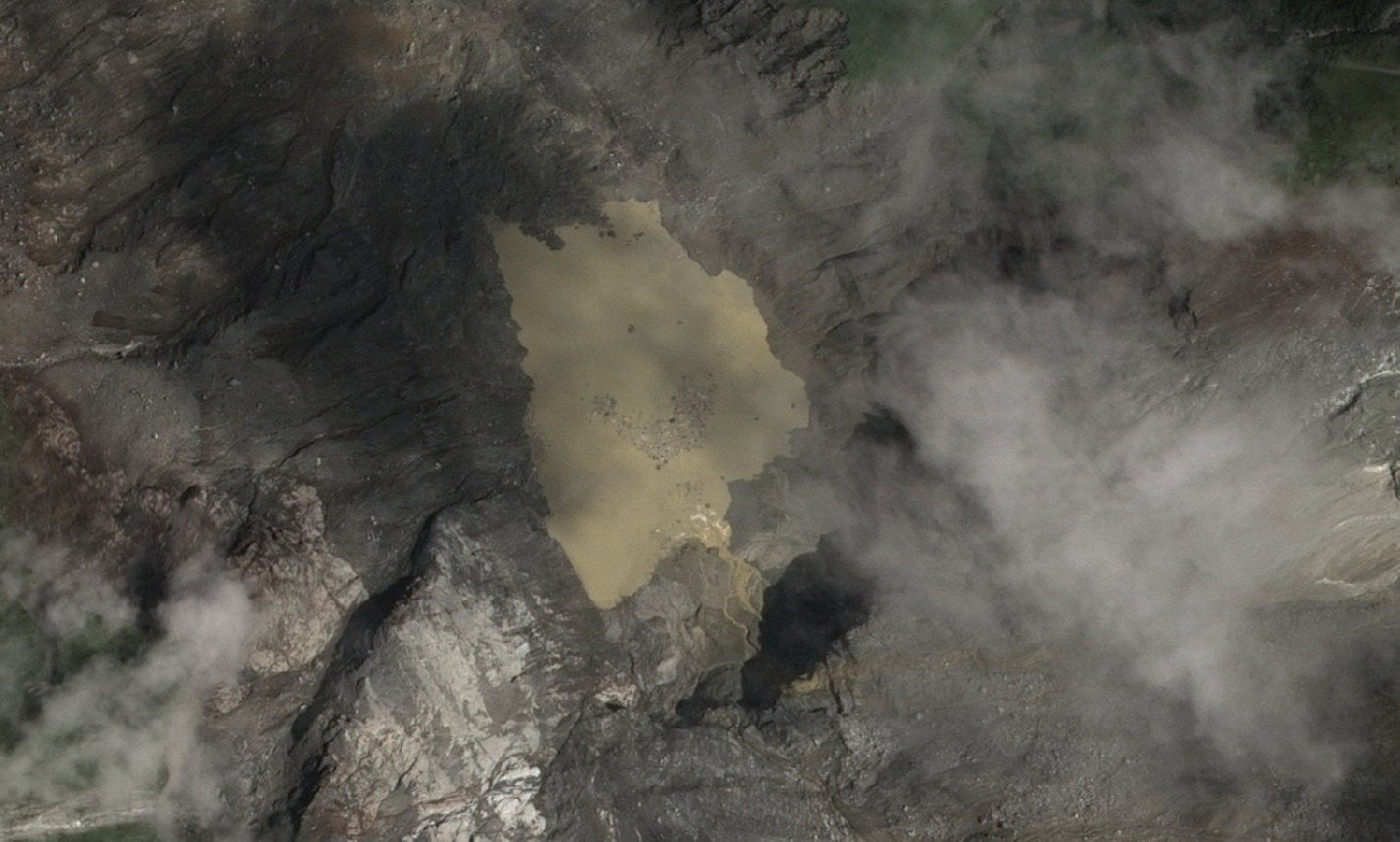
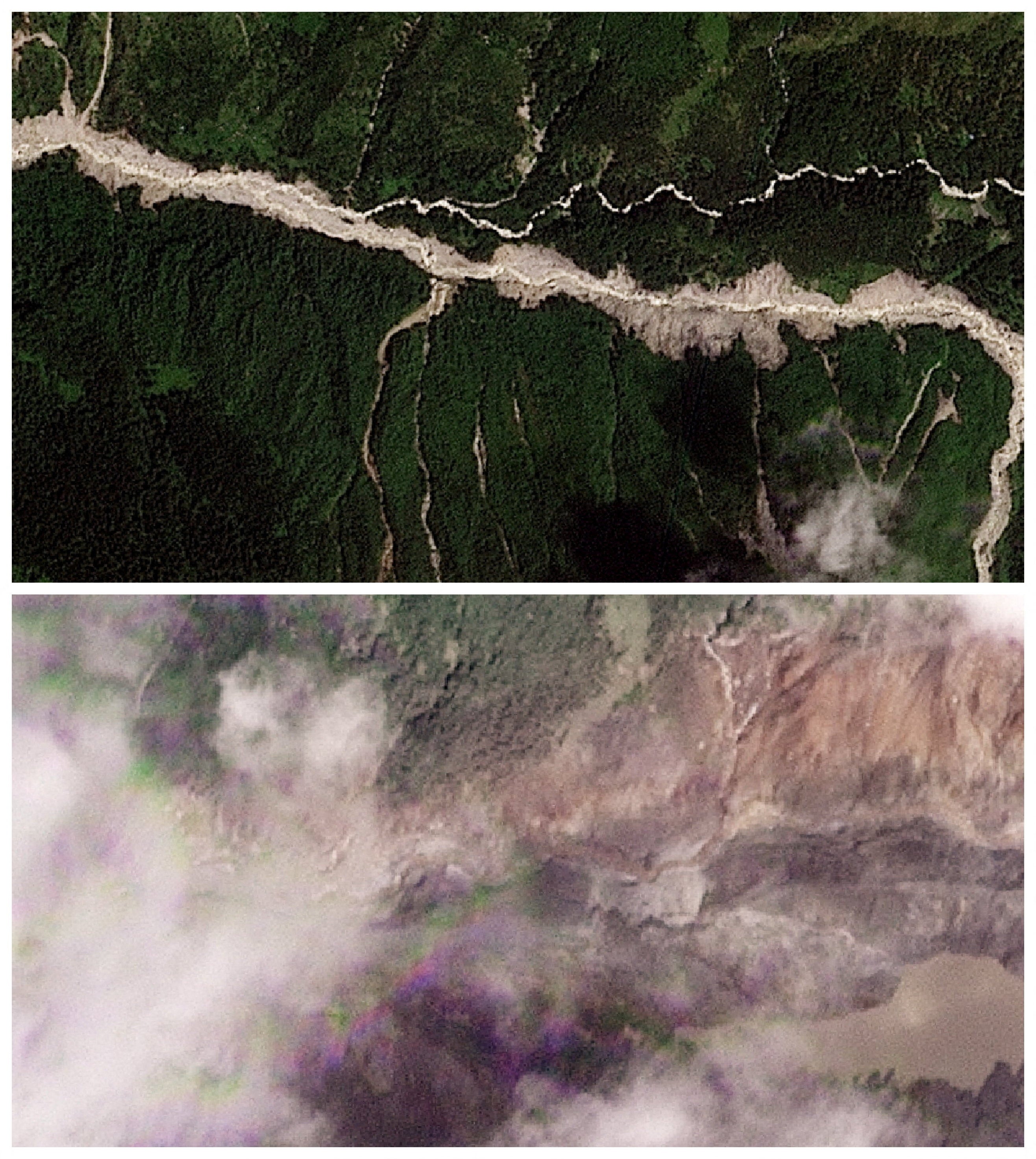
Satellite image shows one of two lakes at the site of the glacial collapse,in the border area between Nepal and Tibet Autonomous Region, China (Reuters)
Across the wider Himalayan region, the rate of ice loss from glaciers has doubled since 2000, according to Ella Gilbert, a climate scientist at the British Antarctic Survey.
“We know that climate heating is destabilising glaciers in the Himalaya,” she says, “when glacier stability is undermined, sudden failures can occur, leading to horrible incidents like this one.”
Advertisement
Dr Davies points to a related process: the thawing of permafrost, ground that normally stays frozen year-round and helps hold steep mountainsides together.
“Permafrost is like the ‘glue’ that holds rocks together,” she says.
As that ground warms and the glue melts, steep slopes like the one above Langtang Lirung become progressively less stable.
The Intergovernmental Panel on Climate Change has said, with high confidence, that declining glaciers, snow and permafrost are already destabilising mountain regions worldwide, and that events like this week’s collapse are likely to become more frequent as the climate continues to warm.
Advertisement
However, experts are not connecting this disaster to climate change yet.
“We don’t know exactly what happened here,” Dr Gilbert says, “but it’s likely that some combination of these factors was at play, and we know that all of these are enhanced by climate change.”
Asked whether the unusually warm, dry conditions reported in the area this week fitted the pattern typically seen before a major glacier collapse, Dr Gilbert says: “I’ve seen reports that temperatures were unusually warm and snow cover was low, which is consistent with what happens before a major calving or collapse event.”
Why some communities had time to escape and others did not has become a central question of its own. Hannah Cloke, professor of meteorology and climate science at the University of Reading, says the disaster unfolded across three distinct zones, each with different lessons for early warning.
Advertisement
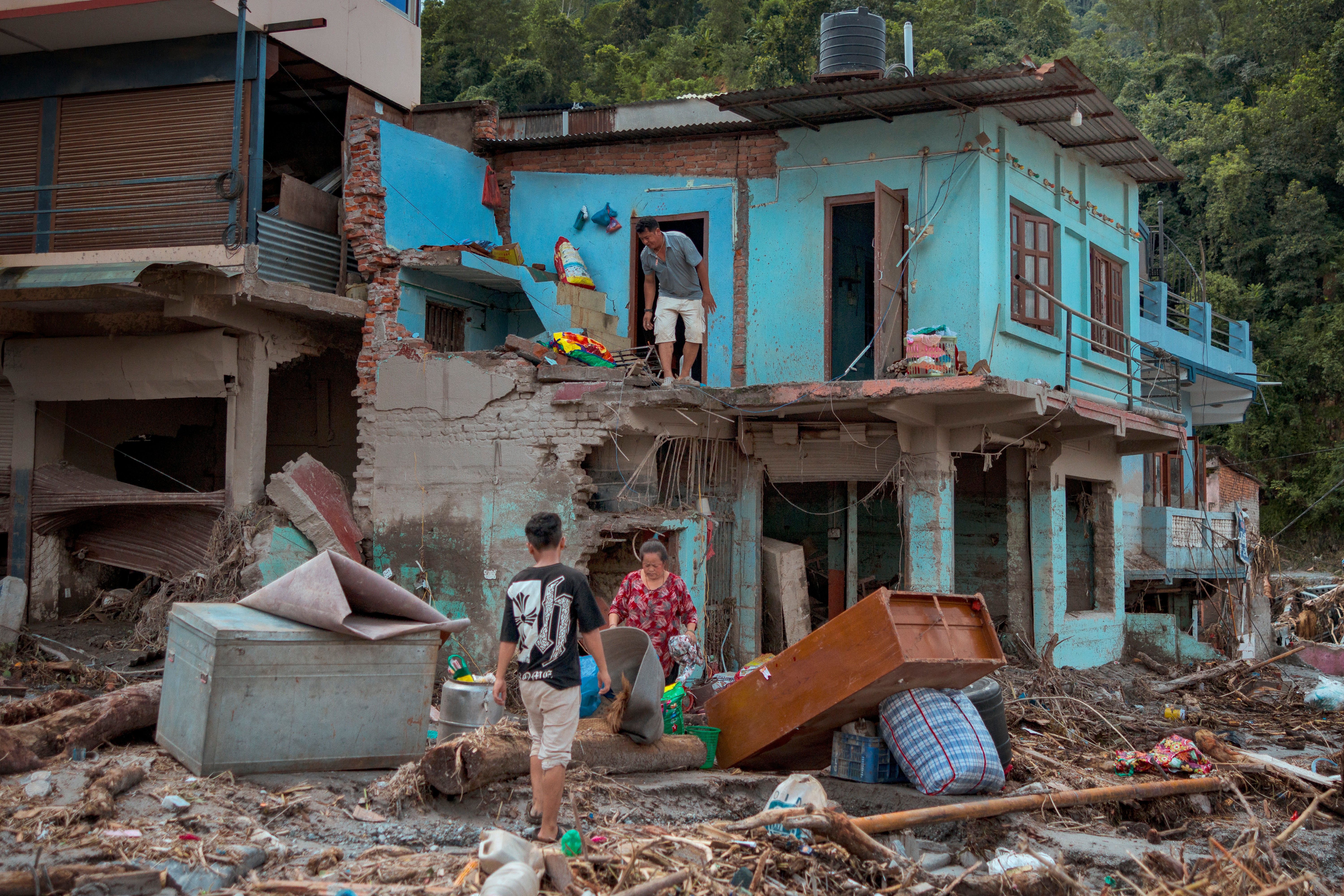
Residents salvage belongings from their destroyed home following flash floods (Getty)
Closest to the source, floodwaters arrived within minutes, leaving little chance for any warning to matter.
Further downstream, by contrast, Nepal’s forecasting authorities issued warnings several hours before the flood arrived, which officials say helped save many hundreds of lives.
The hardest zone lay in between, she says: a flood that struck under clear skies, with no rain to signal danger.
“For many, a flood is something that follows a storm,” Dr Cloke says. “When a warning describes a threat that does not match people’s mental picture of danger, it can be easy to dismiss.”
The physical unpredictability of the disaster also compounded that problem.
Advertisement
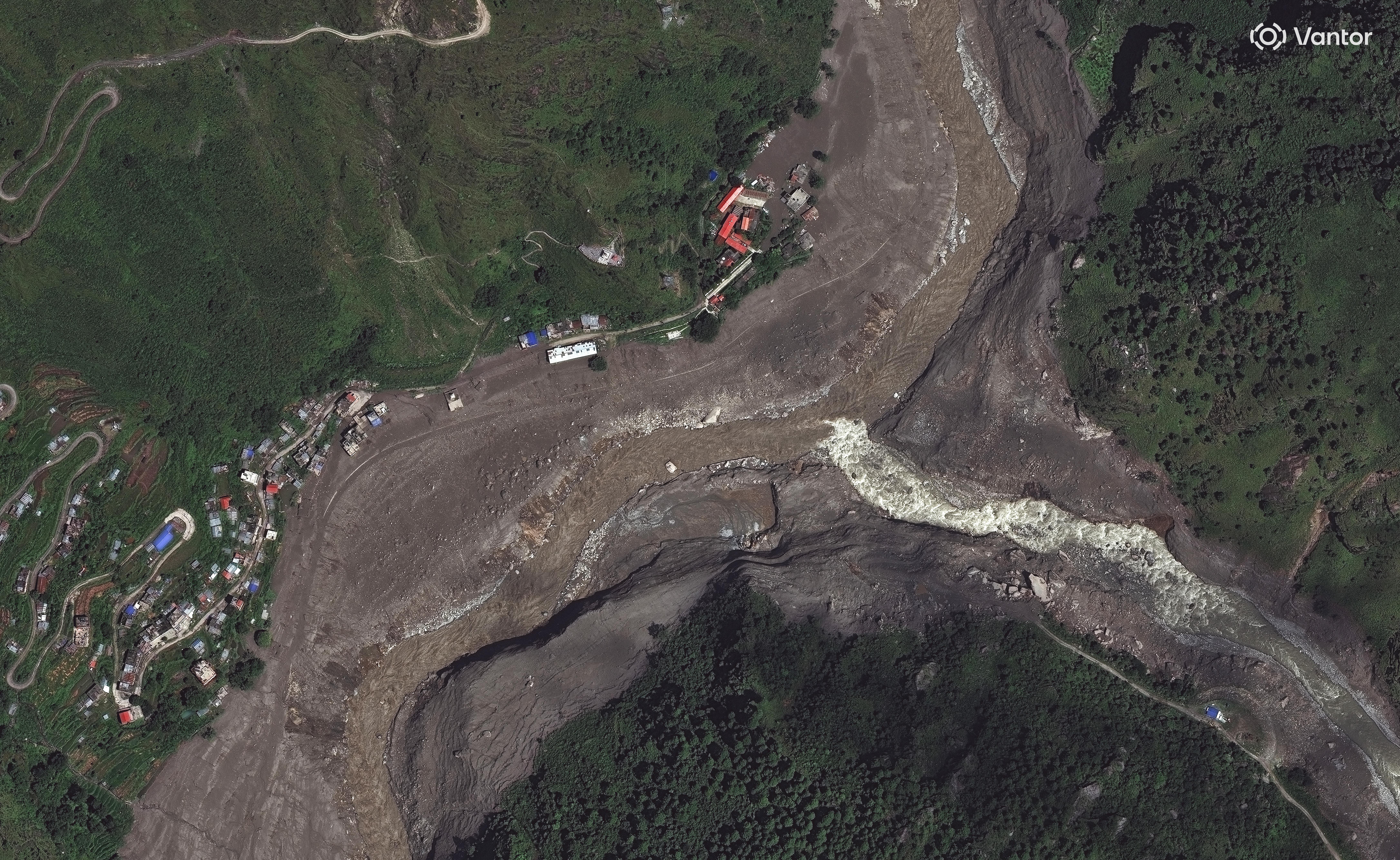
Fatima Pillosu, a hydrometeorologist at the University of Reading, said the debris blocking the river after the initial collapse formed what is known as a barrier lake, a natural dam with no engineered structure and no way to release pressure safely.
“Unlike an engineered dam, this barrier has no spillway and no solid core,” she says.
“The exact moment of failure cannot be predicted, because it depends on the internal structure of the dam.” That is largely why the same lake now threatens a second wave of flooding, days after the first.
A combination of satellite images shows a site at the border of Nepal and Tibet Autonomous Region, China, before and after a barrier lake formed as a result of flash floods and a mudslide (Reuters)
Jeff Da Costa, a researcher in hydrometeorological hazards at the University of Reading, says the risk was worsened by a known gap in cross-border cooperation. After last year’s flood on the same river, he said, Nepal’s officials reported receiving no advance warning from China and said there was no formal mechanism for sharing that kind of information across the border.
Nepal subsequently committed to strengthening that coordination, though it remains unclear how much had changed by the time this week’s disaster struck.
Advertisement
“This is a transboundary river system, and information about the barrier lake is being shared between China and Nepal,” he says.
“Observations upstream can give people downstream valuable time, but they become useful when they are connected to modelling, warnings and practical decisions on the ground.”
Residents salvage belongings from their destroyed home following flash floods (Getty)
Beyond what caused the collapse, the disaster has reopened a longer-running argument about climate justice.
Nepal produces less than 0.1 per cent of the greenhouse gas emissions driving global warming, yet it is ranked as one of the most vulnerable countries in the world to climate-related disasters.
“This is the reality: those who have contributed the least are paying the highest price, especially with their lives,” Savio Carvalho, of the campaign group 350.org, says.
Advertisement
He says wealthier countries had a duty to help fund disaster preparedness before a crisis hits, not just respond afterwards, pointing to the well-resourced early warning systems used in the Alps as an example of what Nepal lacks.
“If only Nepal had good technology, like the Swiss or Italians do for the Alps, they could have had better forecasting mechanisms,” he said. He also called for taxes on the windfall profits of fossil fuel companies to help pay for the response.
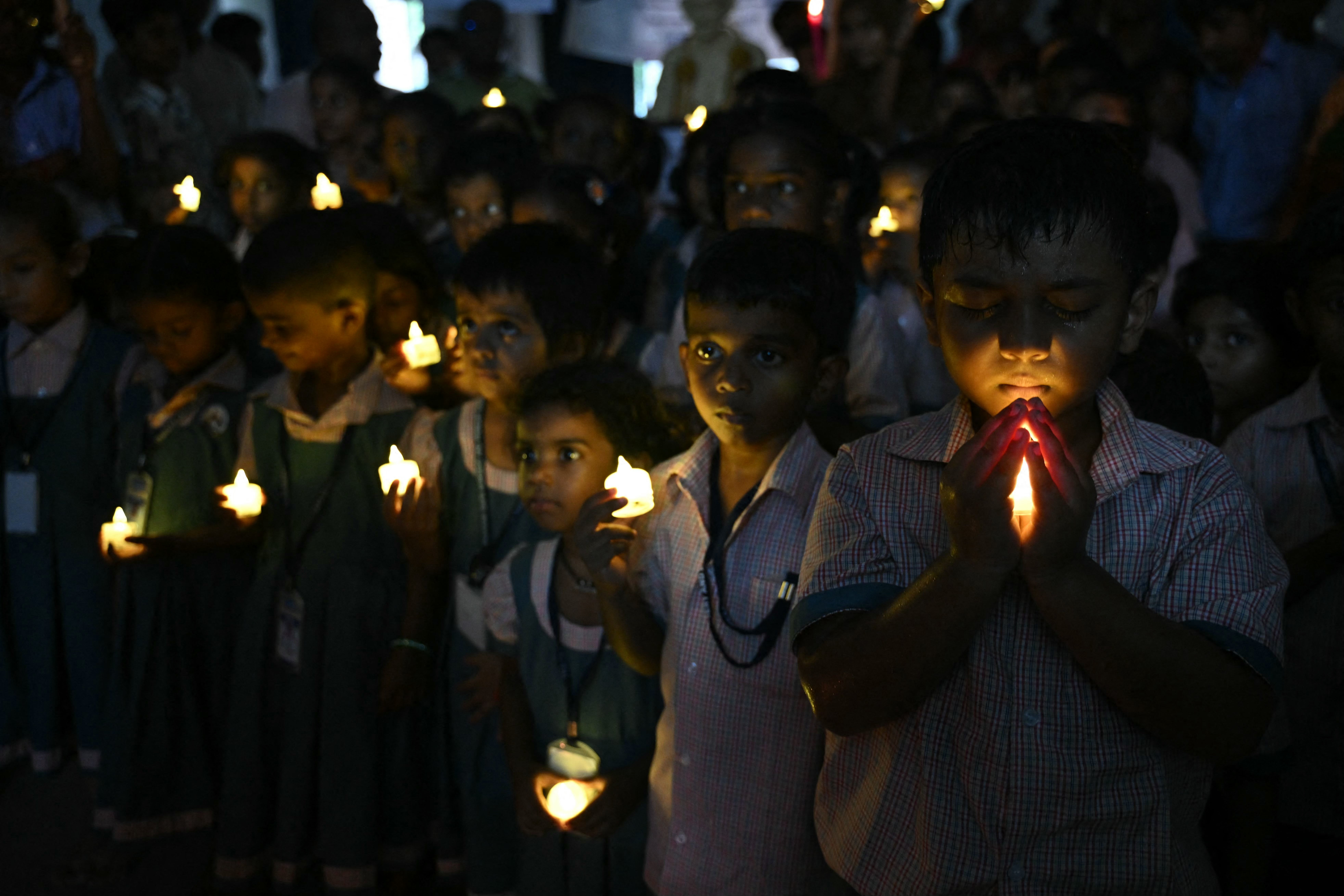
School students hold LED candles as they gather to pay their homage to people who died in Nepal’s flash flood, in Chennai (AFP/Getty)
Carvalho says the economic damage would reach far beyond the disaster zone itself.
Rasuwa sits on a major trekking and pilgrimage route, and tourism supports large numbers of people in Nepal, work that comes with none of the safety net available to workers in wealthier countries.
“Most of these communities, unlike many parts of the global north, have no state protections like unemployment allowances,” he said. The damage extends well beyond tourism too, he added, pointing to destroyed hydropower plants, bridges, power lines and roads.
Advertisement
Existing international funds meant to help countries like Nepal cope with disasters, he said, remain inadequate and hard to access, often taking months or years to arrive, and sometimes coming as loans that leave poorer countries deeper in debt rather than grants.
Sudarshan Neupane, WaterAid Nepal’s country director who grew up in Rasuwa district, says the damage to water and sanitation systems would need urgent attention during the recovery to protect public health and stop disease spreading through communities already reeling from the disaster.
“Having grown up in Rasuwa district, one of the hardest hit regions in the recent flash floods in Nepal, it is truly devastating to see so many families facing unimaginable loss, displacement and uncertainty,” he says.
The scheme, which took effect on August 28, includes a wide range of furniture and home essentials.
In a statement, IKEA said: “From much-loved favourites to everyday essentials, customers can discover New Lower Prices both online and in-store, helping make it easier to create a home you love, whatever your budget.”
Among the discounted items is the KALLAX shelving unit, soon to be available for £49—down 18% from £60.
Advertisement
The HEMNES daybed, which functions as a sofa, single bed, double bed, and storage unit, will be reduced by 15% from £329 to £279.
In addition to these savings, IKEA is offering more than 1,000 exclusive in-store-only prices with discounts up to 25%.
The company said: “In time for cosy season, in stores nationwide, IKEA is also offering 20% off throws, bedspreads, candles, floor and table lamps, plus selected rugs, thermal curtains, seasonal duvets and cookware, from 7th September to 1st November nationwide.”
The history of IKEA
IKEA was founded in 1943 by Ingvar Kamprad when he was just 17 years old.
Originally, the company sold small goods such as pens and wallets, but in 1948, Kamprad expanded into furniture.
Advertisement
This was facilitated by Ingvar’s father, who gave him a small sum of money for doing well in school, which he used to set up a company.
In 1953, the company adopted flatpack furniture, solving costly transportation problems.
IKEA grew steadily throughout the 1950s in Sweden, before expanding into Denmark and Norway in the 1960s.
By the 1970s, the brand had entered markets in Australia, Austria, Canada, Germany, Hong Kong, Japan, Kuwait, the Netherlands, Singapore, and Switzerland.
The first UK store opened in Warrington in 1987, marking the start of IKEA’s growth in the British market.
Advertisement
Today, IKEA employs nearly 12,000 people across its 22 UK locations.
Have you bought items from IKEA before? Let us know in the comments.
How ‘quiet’ Lady Louise is using the late Queen and Prince Philip as a blueprint for her blossoming relationship with university boyfriend Felix da Silva-Clamp: ROBERT JOBSON
From sporting suits and smart skirts for a night out at the theatre to cheering each other on for a day of carriage racing the Royal Windsor Horse Show; 22-year-old Lady Louise and her boyfriend Felix da Silva-Clamp may look young and fresh-faced, but channel an ‘old-fashioned’ romance typically seen in pairs decades older than them.
The couple, who met at university, are more likely to be spotted at the garden centre than a rowdy night out at a club.
So it’s perhaps no wonder that they remind royal fans of another sensible, down-to-earth courtship – that of late Queen Elizabeth and Prince Philip.
According to author Robert Jobson, Louise first met Felix at St Andrews, where they became friends after being cast in a student play at the Byre Theatre.
Advertisement
The pair were first linked in 2024 and have been together since June 2025, but have kept things remarkably low-key – so much so that royal reporters simply called Felix Louise’s ‘pal’ for a time.
Now they are appearing together at family events and royal engagements, but their quiet romance is a world away from the drama surrounding other royals.
They reportedly grew closer during rehearsals, with their friendship eventually blossoming into romance.
Yet, even after dating for over a year, the couple have managed to keep things private.
Advertisement
Despite being a frequent face at royal events, Lady Louise Windsor has kept largely out of the spotlight: her relationship with boyfriend Felix da Silva-Clamp
Louise, 22, first met Felix, 22, at St Andrews University, where they became friends after being cast in a student play at the Byre Theatre
He has also supported Louise at carriage-driving competitions, including Ashfields in Essex, where, according to Mr Jobson, ‘onlookers watched him punch the air as she came through the water’.
The author added: ‘Nothing royal about him, just a young man in love standing in a wet field in Essex, cheering his girlfriend on.’
According to Mr Jobson, Felix’s background is well-suited for Louise, given that her mother, Sophie, originates from a middle-class background.
Born in Kensington in 2004, he is the son of London solicitor Jonathan da Silva-Clamp, a former Conservative parliamentary candidate, and Australian doctor Kendall Searle.
Advertisement
The family later moved to Australia, where Felix attended Melbourne Grammar School before heading to St Andrews.
He and Louise also joined the same reserve army unit and share interests including theatre and traditional Scottish dancing.
Their low-key relationship is a far cry from Prince Harry’s ‘Party Prince’ days, when his nights out stumbling out of nightclubs and relationships with former girlfriends Chelsy Davy and Cressida Bonas regularly made headlines.
The same could be said for other relatives like Princess Eugenie, who earned a reputation in her early twenties as a regular on the London club scene, frequently photographed leaving popular West End and Mayfair hotspots.
Advertisement
Felix has supported Louise at carriage-driving competitions, including The Sandringham Festive of Carriage Driving (pictured) and Ashfields in Essex
The Duke and Duchess of Edinburgh attended the Edinburgh International Festival TRH alongside Lady Louise and Felix, where they met the cast of INALA
The couple’s low-key relationship is a far cry from Prince Harry’s ‘Party Prince’ days, when his nights stumbling out of nightclubs regularly made headlines
The same could be said for other relatives like Princess Eugenie, who earned a reputation in her early twenties as a regular on the London club scene
Advertisement
According to royal author Robert Jobson, there has long been a striking resemblance between Lady Louise and her grandmother Queen Elizabeth II – both physically and in temperament
Instead, it appears Louise and Felix appear happy to keep their heads down and get on with life. And in many ways, that is very much keeping in line with Louise herself.
According to Mr Jobson, there has long been a striking resemblance between Lady Louise and her grandmother – both physically and in temperament.
He wrote: ‘Some say it is her grandmother all over again. Elizabeth made up her mind as a teenager about a Greek prince with royal blood, Philip – even though he has no money and unhelpful German relations, and never moved an inch while the courtiers sniffed.
Advertisement
‘Constancy and steadfastness was at the heart of her character, in marriage as in everything else, and it was perhaps underestimated.
‘Like Lady Louise, Princess Elizabeth was a quiet girl who knew exactly what she wanted when it came to love.
‘People say Lady Louise looks like her grandmother. There is a resemblance. But the likeness that matters more is not in the face.’
Before her passing aged 96 in 2022, Louise was known as the granddaughter who spent huge amounts of time with the Queen, regularly staying at Windsor Castle during her childhood.
Advertisement
While some of her older cousins came and went, Louise was often there at weekends, giving her years to watch how her grandmother lived.
What the young royal appears to have picked up was the Queen’s unfussy approach to life.
Experts say the young royal appears to have picked up the late Queen’s unfussy approach to life
While some of her older cousins came and went, Louise was often at Windsor Castle at weekends, giving her years to watch how her grandmother lived
Advertisement
Pictured: Lady Louise Windsor views the flowers left by mourners for Queen Elizabeth II outside Balmoral Castle on September 10, 2022 in Aberdeen, Scotland
Lady Louise bear similar traits to her grandmother, who, aged 19, trained as a mechanic and driver with the Auxiliary Territorial Service during the Second World War
Mr Jobson added: ‘[The Queen] regarded clothes as a uniform; a way of being visible in a crowd. Taking good care of them so they would last. Always immaculately turned out, she gave them very little further thought.
‘Lady Louise is the same. Always smart, but unfussy. She wore her coronation dress again to Trooping the Colour.
Advertisement
‘At Christmas she was in her mother’s beige Prada coat, first worn at Royal Ascot a decade earlier, with a Jane Taylor hat Sophie had worn to a Rifles homecoming in 2017.’
But that level of modesty extends beyond her outfit choices – her mother Sophie has spoken openly about bringing her children up with the expectation that they would have to work for a living, and Louise certainly has.
At 18, she spent the summer working at a Surrey garden centre for around £6.60 an hour, serving customers and working behind the till.
One shopper described her as ‘really modest and sweet’, saying you would ‘never imagine the Queen’s granddaughter’ working there.
Advertisement
She later worked in the university canteen while studying English literature at St Andrews.
This very trait links her once more to her grandmother, who, aged 19, trained as a mechanic and driver with the Auxiliary Territorial Service during the Second World War, after pushing her father, King George VI, to let her play a role in the war effort.
Felix (left) with Louise’s mother Sophie at a carriage driving competition at the Royal Sandringham estate in Norfolk
While Prince William and Kate’s romance at St Andrews became a media obsession, Louise and Felix have enjoyed something much closer to an ordinary student relationship
Advertisement
Louise’s love of horses and carriage driving, meanwhile, comes from Prince Philip, taking the sport up seriously after his death, driving his carriage at Windsor Castle and competing herself.
Mr Jobson wrote: ‘She has her grandmother’s temperament and her grandfather’s hobby.
‘Level headed, thoughtful and kind. Those who knew the late Queen at that age would recognise a good deal of her in this young woman.’
And now, her relationship with Felix seems to fit the same mould.
Advertisement
While Prince William and Catherine’s romance at St Andrews became a media obsession, Louise and Felix have enjoyed something much closer to an ordinary student relationship.
A royal commentator Richard Fitzwilliams told The Telegraph: ‘They look like a very normal, well-suited couple who have been able to lead normal university lives and develop common interests.’
He has also said Louise and her younger brother James, the Earl of Wessex, are ‘clearly of conservative tendencies’.
For now, Louise is taking a gap year after graduating from St Andrews and is considering a career in the Armed Forces, while continuing with carriage driving, with Felix seemingly content with cheering her on from the sidelines.
Advertisement
According to Jobson, the late Queen was often at her most relaxed away from the cameras – at the racecourse, in the stables or simply getting on with the job.
Lady Louise appears very much the same, grounded and happiest when nobody is really watching.
The 31-year-old will face no further action after the blaze in Grangetown, which killed Valentina Foster, seven, and Natalie McDonald, 34,
A second man, 23, remains in custody for questioning.
An investigation into the fire on Birchington Avenue on Wednesday (August 26) morning remains ongoing, Cleveland Police said.
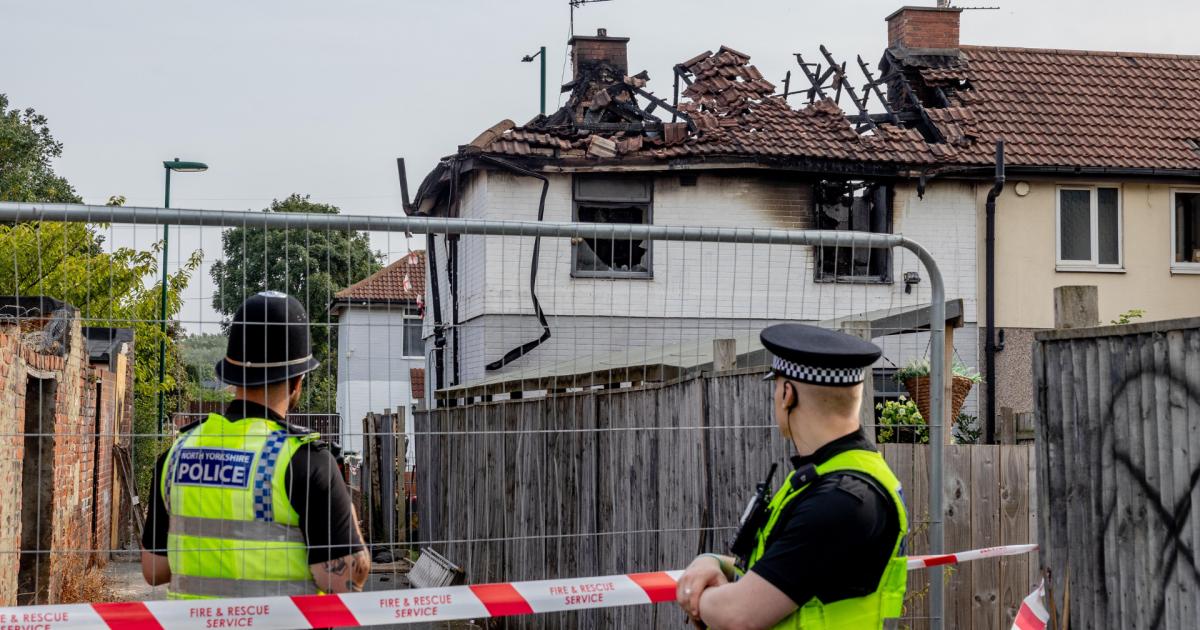
Police stand outside the house on Birchngton Avenue, Grangetown, following the fatal fire (Image: NORTHERN ECHO)
Over the weekend, further tributes, balloons and stuffed animals have been left near the scene of the devastating fire.
Advertisement
A48-year-old woman left fighting for her life remained in a “critical but stable” condition at the RVI in Newcastle, Cleveland Police said on Friday (August 28). The Northern Echo has asked the force for an update.
Andy Burnham has said the Government is offering “all of the support that the authorities need” after a “terribly tragic” Grangetown house fire that killed Natalie, 34, and her niece Valentina, seven (Image: UGC)
Following the tragic incident, tributes, messages and floral arrangements were left near the home on Birchington Avenue.
Pictures of the victims have been left, with messages attached to flowers, cuddly toys and a set of balloons.
Tributes left at the scene of a fatal fire on Birchington Avenue, Grangetown (Image: NORTHERN ECHO)
A 27-year-old man also injured in the fire remains at James Cook University Hospital, where he is receiving treatment.
Advertisement
Two teenage girls who suffered non-life-threatening injuries were discharged following treatment.
The property remains unstable and work to make it safe will be carried out in the coming days.
Police previously confirmed that they are not treating the fire as linked to the fatal crash on the A66 which killed seven, including two police officers, PC Matthew Blades and PC Tom Clough.
Officers initially said they could not rule out a link with wider gang violence breaking out on Teesside after the smash, which also killed five young men in a VW Passat going the wrong way up the A66.
In the letter, his legal team is understood to have alleged the head of the Executive Committee for the Protection of Royalty and Public Figures (Ravec) was aware of a threat made by al Qaida, but did not pass this to his security staff or to the authorities in the United States, where he was living at the time, The Sunday Times reported.
Barcelona are closing in on a move for Arsenal striker Gabriel Jesus in a deal worth £8.6m (10m euros).
A deal for the Brazil international is believed to be at an advanced stage and, while the finer details still require finalising, the transfer is expected to be completed before Tuesday’s deadline.
Napoli had shown an interest in Jesus, but the 29-year-old is set to join last season’s Spanish league champions and will travel for a medical on Monday.
Jesus joined Arsenal from Manchester City in 2022, scoring 32 goals and adding 22 assists in 123 appearances for the Gunners.
Enzo Fernandez has been left out of Chelsea’s squad for their last two games and Blues boss Xabi Alonso has discussed the midfielder’s future ahead Tuesday’s transfer deadline
14:39, 30 Aug 2026Updated 14:39, 30 Aug 2026
Xabi Alonso has said that keeping Enzo Fernandez out of the Chelsea team is ‘for the best’, while suggesting Robert Sanchez could be shown the exit door. The Argentine midfielder has been linked with a move away from Stamford Bridge over recent days.
Manchester City have emerged as suitors and Enzo Maresca’s side are expected to lodge a big-money bid soon despite having already signed Elliot Anderson and Ayoubb Bouaddi to bolster their midfield.
In the meantime, Fernandez has been exiled from first-team action. He was left out of the side that took on Luton Town in the second round of the Carabao Cup in midweek, while he was also sidelined for the clash with Brighton at Stamford Bridge.
Advertisement
Asked why he was left out once again, Chelsea boss Alonso said: “We assess what’s best for the team. We need the team to be focused.”
Meanwhile, another absentee was goalkeeper Robert Sanchez, the Spaniard having lost his starting berth to summer arrival Emi Martinez. And asked about the stopper, the Chelsea boss was somewhat cryptic. He said: “We will see. Sometimes you have to take tough decisions.”
Alonso’s comments on Fernandez come after he made a similar claim in the week. Asked about Fernandez’s situation, the Spanish coach said: “I have said we need the players that are in the best situation to play.
“We need to take everything into consideration — players that are in a good moment, players that are not feeling that energy to play. For me, it is very important that they feel this desire to play and to have good preparation.”
Advertisement
Asked if Fernandez had lost the desire to play, Alonso replied: “We talked, and we decided for [Luton] it was better not to be part of the squad. He is a top player.”
Fernandez, 25, signed for Chelsea from Benfica in 2023 and he has gone on to make 170 appearances for the club and scored 31 goals. He still has six years left to run on his deal in West London.
It has previously been suggested that Chelsea will only sell for around £120m. Should Fernandez move to the Etihad, he would become the latest high-profile midfield addition of the summer after Anderson and Bouaddi.
Asked this week if more additions could be on the way, City boss Maresca said: “We have experienced players, for sure we have leaders. Now we need to wait 4-5 days for when the transfer window closes also to see if we can add one or two more captains to Ruben [Dias] and Erling [Haaland], at the moment they are the two captains. It’s a young squad and also we have some experienced players.”
Join our new WhatsApp communityand receive your daily dose of Mirror Football content. We also treat our community members to special offers, promotions, and adverts from us and our partners. If you don’t like our community, you can check out any time you like. If you’re curious, you can read ourPrivacy Notice.
Essential 26/27 Sky Sports Bundle
Advertisement
This article contains affiliate links, we will receive a commission on any sales we generate from it. Learn more
Sky’s Essential TV and Sky Sports bundle includes at least 215 live Premier League clashes across the 2026/27 season, with more than 1,500 games from the EFL and beyond, plus F1, golf and darts.
This introductory offer saves £384 compared to the standard price, with every package also providing 100 regular channels alongside free Netflix and discovery+ subscriptions.
The British Army is rejecting more than 200 applicants every day – despite failing to hit recruitment targets every year since 2010.
Almost 74,000 applicants were rejected by the army in 2024-25, up 20,000 on the previous year.
More than 32,000 were rejected on medical grounds, for conditions including psoriasis, diabetes or a serious food allergy, while 360 were rejected for having tattoos or piercings.
Meanwhile, 22,000 were rejected from Commonwealth countries due to a rule limiting foreign recruits to 1,350 per year.
Advertisement
The figure for annual recruitment targets is estimated to be around 11,000, the number needed to replace troops leaving the armed forces.
The shortage comes as Russian threats towards the UK intensify, following revelations that British drones were used in attacks by Ukraine.
The size of the British Army is at its smallest since the Napoleonic era, with just 75,000 full-time trained soldiers.
In the 2023-24 financial year, the army failed to reach its target of 10,450 troops by nearly 4,000.
Advertisement
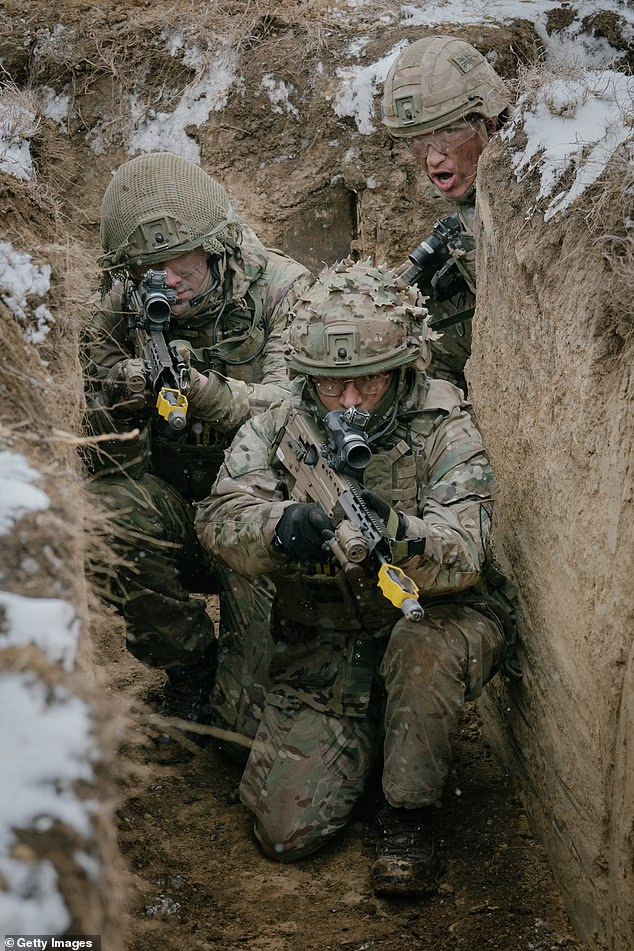
The British Army is rejecting more than 200 applicants every day. (File image of UK troops training in Romania)
The government’s strategic defence review, published in June last year, advised increasing personnel to 76,000 when funding is possible.
Shadow defence secretary James Cartlidge said Britain requires a government ‘willing to commit to funding more recruits right now’.
Advertisement
He also accused the Labour Party of kicking the plans for higher personnel numbers ‘into the long grass’.
‘With Russia ramping up its threats every day, Labour needs to be growing the armed forces and strengthening our deterrence,’ he added.
Applicants are still being rejected for tattoos and piercings, despite the army relaxing its rules on tattoos more than 10 years ago.
Tattoos on the head and face are still considered ‘unacceptable’, while ink portraying ‘sex acts, violence or illegal drugs’ and piercings which ‘change the way you look’ are also not allowed.
A senior adviser to Vladimir Putin warned that the ‘highest levels of the Russian government’ were considering a ‘hybrid attack’, such as sabotage or arson, rather than an ‘outright military strike’ that would unleash a response from Nato.
Among the Kremlin’s targets is a drone factory owned by a British-Ukrainian firm, Ukrspecsystems.
Advertisement
On Saturday night, Defence Secretary Wes Streeting said: ‘The reckless rhetoric and attempts at intimidation we have seen from the Kremlin in recent weeks reflects the weakness of Putin’s position and we will not be intimidated.
‘This has been a bad year for Putin. The front line has barely moved. Russian casualties continue to mount. The Russian people are paying a heavy price for Putin’s war.
‘It is also in our national interest that Putin’s aggression must not be rewarded. The Prime Minister, the Foreign Secretary and I are working together to mobilise support for Ukraine ahead of winter.’
The Daily Mail has contacted the Ministry of Defence for comment.
Advertisement
Share or comment on this article:
British Army is rejecting 200 would-be applicants every single day – despite failing to hit recruitment targets every year since 2010
The Met Office has issued yet another yellow weather warning for Wales as the end of the summer holidays comes to a very wet and stormy end.
The thunderstorm warning, covering the whole of the country on Sunday, is the latest in a series of weather warnings issued by forecasters which have disrupted the August bank holiday weekend for many.
Some local events organised for the last bank holiday of what has been a very dry and warm summer were cancelled on Saturday due to the severe weather with flash flooding seen in parts of Bridgend where water poured through the roof of a McDonald’s restaurant.
Advertisement
The latest warning covers the whole of the country from midday on Sunday until 11.59pm with the Met Office warning the public to expect heavy and thundery showers, frequent lightning, and gusty winds. Full details here.




























































You must be logged in to post a comment Login