Connect with us

NewsBeat

M4 road closures to hit drivers in Wales this week – full list

Published

on

Wales Online

A schedule of works are planned including maintenance and refurbishment

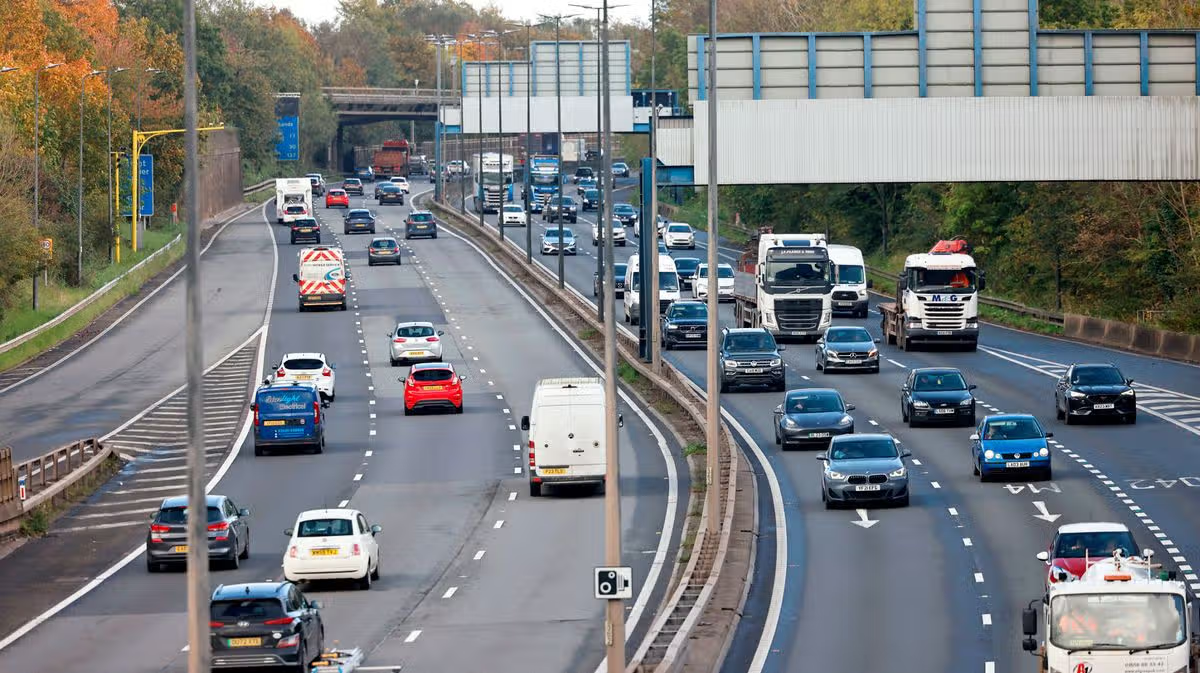
Drivers have been warned of disruption ahead on the M4 from Monday as a number of works are carried out. The areas affected will be Coldra, Coryton, Miskin, and notably, the Brynglas Tunnels.

Advertisement

There’s also plans for surveys to be carried out in the Pyle area.

Here, we’ve compiled information published by Traffic Wales detailing all the disruption ahead that you need to be aware of. Stay in the know by making sure you’re receiving our daily newsletter.

M4 westbound

  • Maintenance work will take place between junction 24 Coldra to junction 28 Tredegar Park, resulting in the Brynglas Tunnel being closed. A diversion will be in place between September 7 and 9 from 8pm until 6am.
  • Resurfacing work will take place at junction 32 Coryton, resulting in the entry slip road being closed. A diversion will be in place between September 11 and 12 from 8pm until 6am.
  • There will also be resurfacing work at junction 34 Miskin, resulting in the exit and entry slip roads being closed. A diversion will be in place between September 11 and 15 from 8pm until 6am.

M4 northbound

  • At junction 32 Coryton, the exit slip road will be closed for resurfacing work. Diversions will be in place between September 8 to 9 from 8pm until 6am.

M4 eastbound

Maintenance work is being carried out from junction 28 Tredegar Park to junction 24 Coldra, resulting in the Brynglas Tunnel being closed. A diversion will be in place between September 9 to 11 from 8pm until 6am.

Advertisement

At junction 37, surveys will be carried out, resulting in the entry slip road being closed. A diversion will be in place between September 10 and 11 from 8pm until 6am.

Get daily breaking news updates on your phone by joining our WhatsApp community here. We occasionally treat members to special offers, promotions and ads from us and our partners. See our Privacy Notice.

Source link

Advertisement
Continue Reading
Click to comment

You must be logged in to post a comment Login

Leave a Reply

NewsBeat

Controversial right-to-die campaigner dubbed ‘Dr Death’ speaks in London to promote his ‘suicide collar’ – but without the device over fears ‘it would get stopped at customs’

Published

on

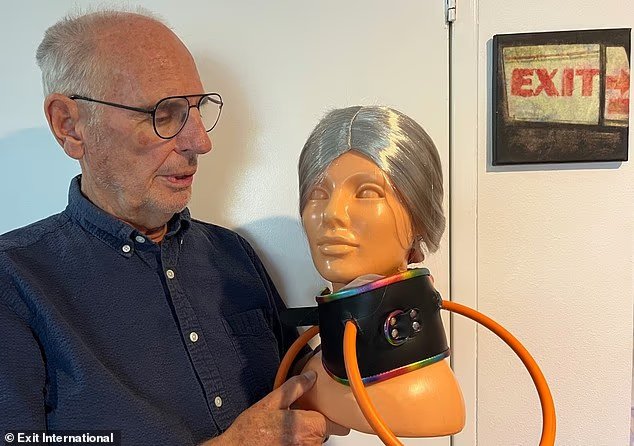
Dr Philip Nitschke - also known as 'Dr Death - did not bring his 'suicide collar' into Britain (pictured) amid fears it would be seized by customs

A GP dubbed ‘doctor death’ failed to bring his ‘suicide collar’ into Britain amid fears it would be seized by customs.

Hugely controversial Dr Philip Nitschke said he feared it being confiscated so instead left it in Holland before making the trip to Britain for a talk.

MPs and campaigners had called on the Home Secretary, Shabana Mahmood, to ban Dr Nitschke from even being allowed to enter Britain.

He had planned to do a live demonstration of the Kairos ‘suicide collar’ at an event in London on Saturday.

Advertisement

The Australian spoke exclusively to the Daily Mail at a packed event, held just six days before MPs vote at Second Reading on Lauren Edwards’ revived assisted dying Bill.

He was on stage at an Exit Workshop in west London, which was packed, with almost every seat taken by a largely elderly audience who were considering assisted suicide.

Dr Nitschke, the controversial founder of Swiss euthanasia organisation Exit International, defended the device.

The collar, called ‘Kairos’, consists of two balloons that exert pressure on the carotid artery, leading first to unconsciousness and then to death.

Advertisement

Dr Philip Nitschke – also known as ‘Dr Death – did not bring his ‘suicide collar’ into Britain (pictured) amid fears it would be seized by customs

The collar, called 'Kairos', consists of two balloons that exert pressure on the carotid artery, leading first to unconsciousness and then to death (Pictured: A model of the 'Kairos' collar)

The collar, called ‘Kairos’, consists of two balloons that exert pressure on the carotid artery, leading first to unconsciousness and then to death (Pictured: A model of the ‘Kairos’ collar)

Earlier this year, Dr Nitschke said that he would conduct the first assisted suicide using the collar on a woman in Switzerland who would be his first ‘test subject’.

Advertisement

Devices could be legal to use for assisted suicides here if new Bill passes.

He told the Daily Mail: ‘I have left the device in the Netherlands. I feared it would be stopped at customs. We are under pressure from authorities about what they call “giving dangerous information to vulnerable people”.

‘It’s a difficult environment.

‘The device is not expensive to make but we are currently in the testing phase and it would be a real setback to lose it.’

Advertisement

Dr Nitschk shrugged off the controversy around his visit and the device itself.

He said that the interest in his device and the visit to London was the result of the political deadlock over legalising assisted dying.

He said: ‘People are a little worried or frustrated by the slow pace of legislated change in the country. So they often look around and ask what else is available.’

Dr Nitschk said he would conduct the first assisted suicide using the collar on a woman in Switzerland who would be his first 'test subject'

Dr Nitschk said he would conduct the first assisted suicide using the collar on a woman in Switzerland who would be his first ‘test subject’

Advertisement
Dr Nitschk shrugged off any controversy surrounding the collar (Pictured: Dr Nitschke lies down in a 'suicide pod' in 2024)

Dr Nitschk shrugged off any controversy surrounding the collar (Pictured: Dr Nitschke lies down in a ‘suicide pod’ in 2024)

Carlos Cabrera, a representative from the Swiss euthanasia clinic, Athanasios, also spoke at the event, explaining the process of an assisted suicide in the country.

He said: ‘The Swiss have a unique law and don’t restrict it to just Swiss nationals.

‘Switzerland lets other people benefit from this very progressive legislation.

Advertisement

‘When you touch the ground in Switzerland you have indirectly or directly the right to die.

‘We support people to die without selfish intentions.’

Under Swiss law, there are few restrictions on undergoing an assisted death, with a terminal condition not being a requirement.

‘When you have the mental capacity to leave this world, you can do it,’ Cabrera says.

Advertisement

Mr Cabrera told the Mail that between 40 and 60 people from the UK have chosen to end their lives through his organisation.

One relative of a person considering using the device, said: ‘My main concern about all of this is what would happen to us when we returned to Britain. What legal consequences would there be for going to Switzerland with them?’

But Mr Cabrera explained that he has never seen problems with family members being prosecuted.

‘All information on what happens in Switzerland, stays in Switzerland. We cannot give information to UK authorities.’

Advertisement

After the discussion about the option of travelling to Switzerland, many in the audience stayed on for a ‘do-it-yourself guide’ to assisted suicide given by Nitschke.

Participants had to sign waivers to declare that they had not been influenced by Nitschke in order to take part in the talk.

  • For help and support, contact the Samaritans on 116 123 or go to samaritans.org

Source link

Continue Reading

NewsBeat

Three men hacked young father to death with machete and crutch in random attack

Published

on

Daily Record

Gregory Catillo Volquez was murdered after a night out with friends, in an unprovoked and seemingly random attack

Three men who murdered a young father in cold blood on a London street have been jailed for a combined total of 68 years.

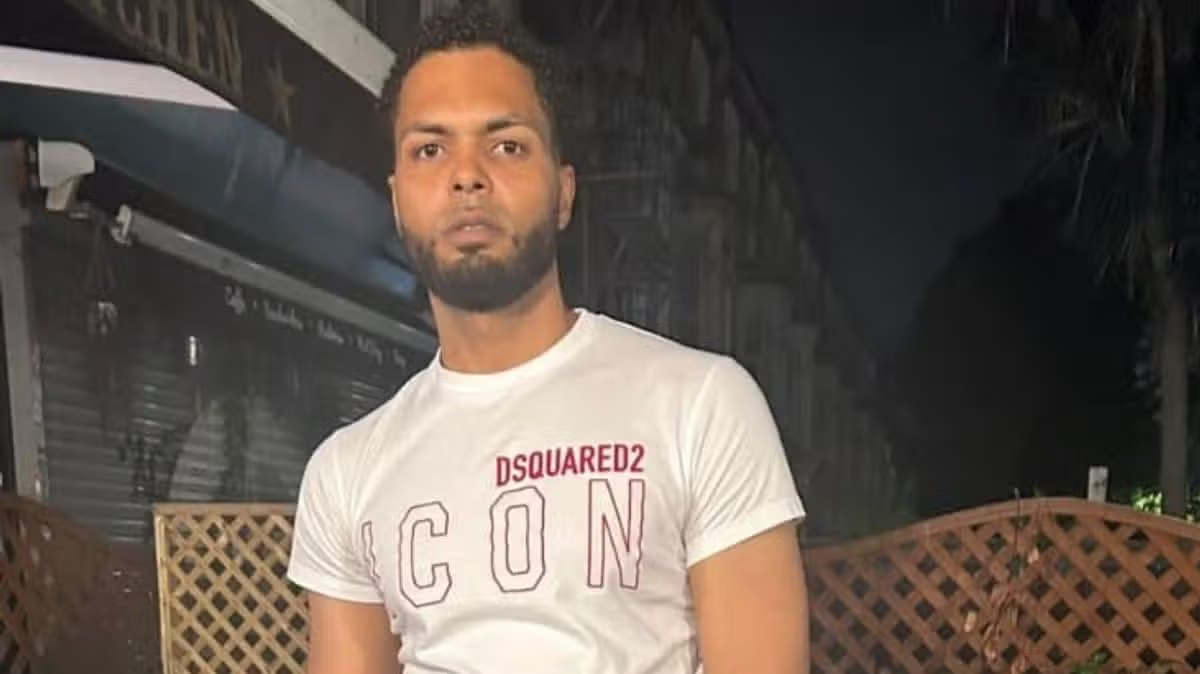
Gregory Catillo Volquez, 36, from South London, had been enjoying a night out with friends on Monday, January 13 last year, when they travelled north, and he was set upon by the trio in Tiverton Road, Haringey.

Footage showed two of men wielding a machete and crutch as Mr Volquez was stabbed 22 times, while the crutch was used to repeatedly rain down blows upon him. Mr Volquez, who had a young daughter with his partner, was pronounced dead in the street by paramedics, reports MyLondon.

Advertisement

On Friday, September 4, following an an eight-week trial in Southwark Crown Court, Benito Ramirez Kones, 20, Carlos Akum Metumbe, 22, and Italian national, Luiggi Perelli Santana, 22, were convicted of murder and sentenced to life in prison.

Kones, 21, of Hackney, received a minimum term of 23 years; Metumbe, also from Hackney, a minimum of 22 years; and Santana, of Lambeth, a minimum of 23 years.

Kones was arrested in Swansea, less than a week after the attack.

Advertisement

In a victim impact statement read out to the court, Gregory’s partner, Teresa said: “We have a daughter, a little girl, who misses her dad. She asks for him, she still expects to see him coming back. She needs his hugs, his words, and his presence.

“It is very painful to see a little girl suffering the absence of her father and how she tries to understand why he is not with us. They robbed her of the opportunity to grow up beside him, to share her birthdays, graduations and all the important moments of her life.

“This tragedy not only destroyed our lives, but also broke the heart of a mother, who lost her only son. There are no words that can describe the suffering of this mother who had to say goodbye to her son in such a cruel and unjust way. Our family has been marked forever.”

Advertisement

The investigation found that Gregory did not know the three men who carried out the violent attack, and the motive of the attack still remains unclear.

Of the three, Kones was detained five days after the attack in Swansea. Kones’ trainers, which were seen on CCTV, were seized upon arrest and forensic evidence confirmed they were covered in traces of Gregory’s blood.

While two of the three killers, Metumbe and Santana, did succeed in leaving the country, the pair were traced to Spain and were respectively extradited by Met officers in August and October 2025.

Advertisement

Both Metumbe and Santana were captured on CCTV repeatedly raining down blows on Gregory with a machete and crutch.

Gregory’s post-mortem examination stated that he had 22 stab wounds – many of which were caused by a long knife – as well as bruises that were caused by a blunt object. Forensic evidence supported the footage and Santana’s bloody fingerprints were identified on both the crutch and large knife.

READ MORE: Drug gang enforcers linked to Scots kingpins face jail after savage attack

Advertisement

READ MORE: Graeme Souness’ devastation over heart diagnosis at 38 after ‘no obvious symptoms’

Detective Inspector Jim Barry, who led the investigation, said: “Our thoughts go to Gregory’s loved ones who have demonstrated commendable togetherness and strength throughout this turbulent process. I know nothing will bring him home but am hopeful that this result offers justice and closure for his family, who have been left without a much-loved dad, brother, and son.

“Our team of officers showed huge tenacity to build a solid case with undisputable forensic evidence which resulted in these violent men being taken off our streets for a long, long time. It’s this hard work that is enabling the force to secure a positive outcome from 95 per cent of our murder investigations.”

A fourth man was found not guilty.

Advertisement

Ensure our latest news and sport headlines always appear at the top of your Google Search by making us a Preferred Source. Click here to activate or add us as Preferred Source.

Source link

Continue Reading

NewsBeat

Indonesia cancels flights as Anak Krakatau volcano erupts

Published

on

Indonesia cancels flights as Anak Krakatau volcano erupts

JAKARTA, Indonesia (AP) — Indonesia’s Anak Krakatau volcano erupted early Sunday, prompting the cancellation of all flights at Jakarta’s Soekarno-Hatta International Airport as volcanic ash drifted across parts of western Indonesia.

Indonesia’s Geological Agency said the volcanic island located in Indonesia’s Sunda Strait between the main Java and Sumatra islands showed signs of activity Saturday and erupted for 30 seconds at 3:53 a.m. Sunday.

There were no casualties reported and no evacuation order issued. The nearest settlement is more than 16 kilometers (10 miles). But the agency warned residents and visitors to stay at least 3 kilometers (1.9 miles) from the volcano’s active crater.

Volcanic ash spread across parts of the capital Jakarta and Lampung province on the southern tip of Sumatra island, Indonesia’s Center for Volcanology and Geological Hazard Mitigation said.

Advertisement

“Due to increased activity from the Mount Anak Krakatau eruption, Soekarno-Hatta International Airport has temporarily suspended flight operations from 5:30 a.m. to 9.30 a.m.,” the airport said in a travel advisory early Sunday.

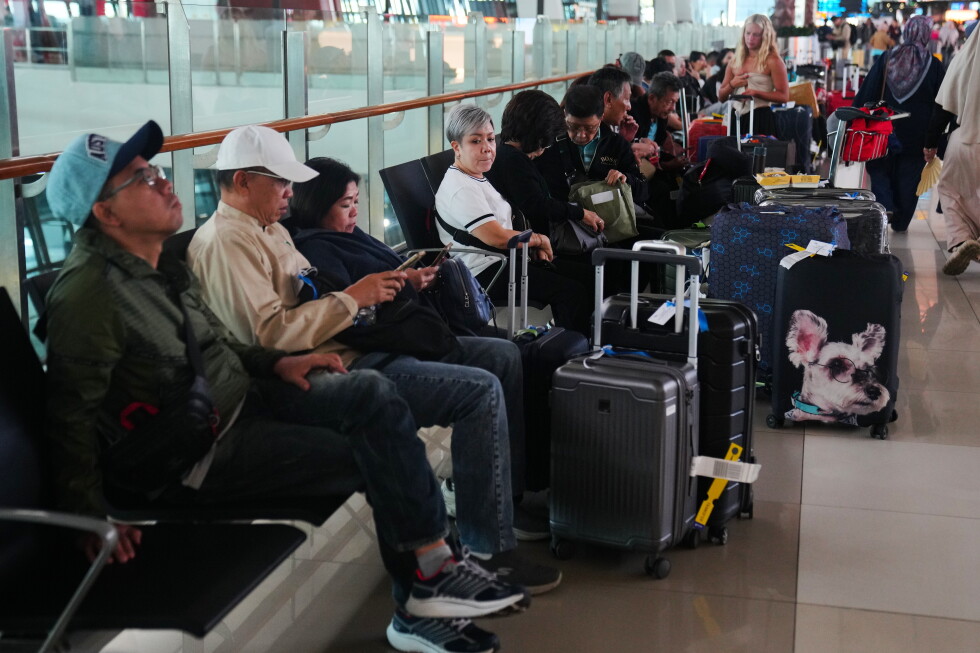
Passengers at the country’s busiest airport sought refunds and reclaimed checked baggage as departure boards displayed a growing list of canceled flights.

Indonesia’s volcanology agency and the Darwin Volcanic Ash Advisory Centre in Australia identified two ash clouds using satellite imagery.

One plume rose to an altitude of 20,000 feet (6,100 meters) while drifting northeast, affecting parts of Jakarta, Banten, West Java and surrounding waters.

Advertisement

A second cloud reached 50,000 feet (15,200 meters) and was moving westward and northwestward, covering parts of Banten, Lampung and Bengkulu provinces, the southern Sunda Strait and sections of the Indian Ocean west of Sumatra.

The explosive collapse of Anak Krakatau caused a tsunami in 2018 that killed at least 430 people in Sumatra and Java.

Advertisement

Source link

Continue Reading

NewsBeat

Why you must visit Aylesford one of the UK’s most overlooked villages

Published

on

Why you must visit Aylesford one of the UK's most overlooked villages

Located close to Kent’s county town of Maidstone, Aylesford has a few interesting historical features to explore.

Alongside that, visitors can find a couple of highly regarded pubs and some beautiful scenery to admire.

Although Aylesford is a village rather than a town, it was named among the UK’s 6 most overlooked towns by World Atlas.

Visitors can reach Aylesford by train (Image: Carlo Simone/Newsquest)

The Friars Priory and the nearby Kit’s Coty House were highlighted by the publication as some excellent spots to visit there.

Advertisement

Aylesford is only a relatively short train journey away from me, so I wanted to pop along to see if the village justified its inclusion on the list.

Why you need to visit the village of Aylesford

After heading over on the train, it takes about 10-15 minutes to walk over the main High Street area of Aylesford.

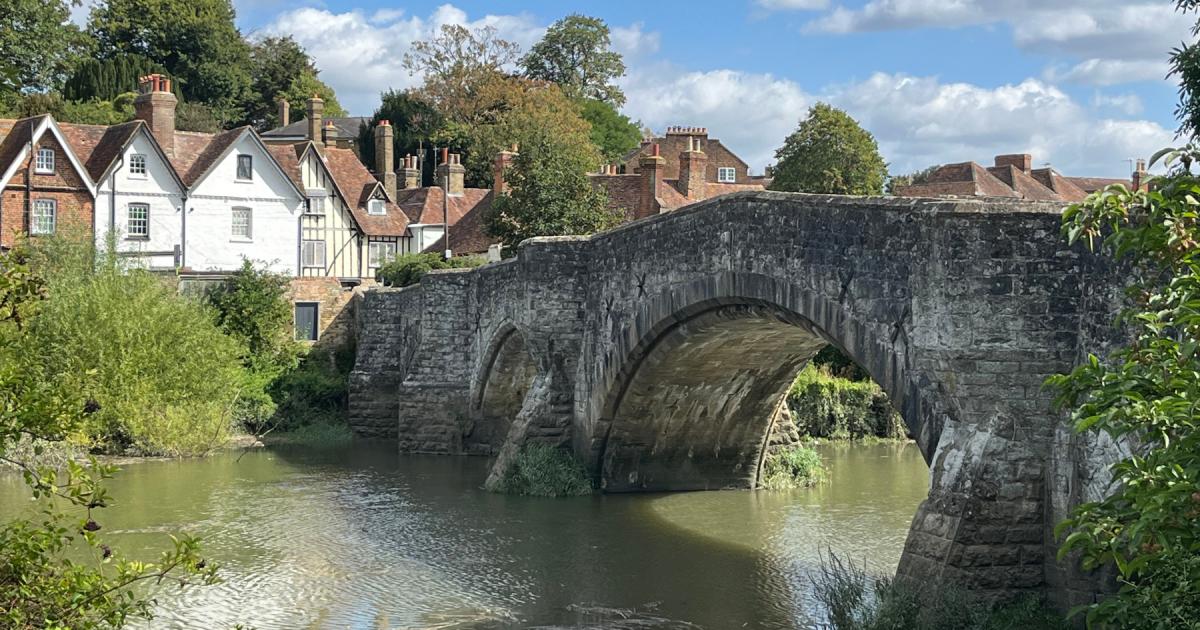
The entrance to Aylesford bridge (Image: Carlo Simone/Newsquest)

On the way over, there isn’t much of note to point out aside from some houses and a park, but once you’re nearly at the High Street you’ll be treated to a gorgeous sight.

To reach Aylesford’s main area, you’ll need to cross over a bridge on the River Medway, and if you’re there on a sunny day, it’s a proper feast for the eyes.

Advertisement

Arguably, this landmark is what the village is best known for, whether you’re viewing it from the side or walking over the bridge and admiring the views.

A view of Aylesford from the bridge (Image: Carlo Simone/Newsquest)

Once you’re over the bridge, you enter the High Street area itself, which is a narrow street with plenty of pretty shops, pubs and houses on either side.

If you head right once you cross the bridge, the pathway opens up a bit, and you can find a bit of seating.

Aylesford’s High Street was rather pretty (Image: Carlo Simone/Newsquest)

Heading up the hill next to this section, I then went to see St Peter and St Paul’s Church.

Advertisement

The oldest parts of the church date back to the Norman period, while other sections like the nave and chancel were built in relatively more recent centuries.

It’s certainly an attractive church from the exterior and worth a quick visit if you’re having an explore.

The oldest parts of St Peter and St Paul’s Church date back to the Norman period (Image: Carlo Simone/Newsquest)

After that, I then headed over to the Friars Priory, which is arguably the most famous attraction that can be classed as being in the village itself.

I was on foot, so I walked over from the High Street area, but it is easy to drive to as well.

Advertisement

If you are approaching on foot, I would recommend using the higher path that can be accessed close to the church up some steps, which I didn’t discover until I walked back later on.

Regardless, it was a short walk over the Friary, which has plenty of grounds to explore and is free to enter.

The Friary has plenty for visitors to see (Image: Carlo Simone/Newsquest)

It is the home to a small community of Carmelite Friars, who first came here in 1242.

They left at the dissolution of the monasteries in 1538, but were able to return in 1949.

Advertisement

Walking around the grounds and admiring the architecture of the place was very peaceful, and the whole site had a sense of quiet serenity.

Although we were in the height of drought when I visited, the place was still beautiful to admire and it was intriguing to see the various statues and religious imagery.

The ground of the Friary were quite peaceful (Image: Carlo Simone/Newsquest)

There was even a small garden to admire and a tea room (although I didn’t go in).

It was very pleasant to sit awhile on one of the benches, though, and just take it all in.

Advertisement

Once I had finished exploring, I made my way back to the main part of the village and took in a glorious view from the high path.

The stunning view over Aylesford (Image: Carlo Simone/Newsquest)

It was after midday at that point, so I went for a spot of pub lunch at an establishment called The Chequers Inn.

I was hoping it wasn’t going to be too busy outside, as we were enjoying some gorgeously sunny weather.

Thankfully, I was able to grab a spot on the terrace, which was perfect for enjoying a view out onto the River Medway and the bridge.

Advertisement

The view out onto the River Medway from the Chequers Inn (Image: Carlo Simone/Newsquest)

As a result, it was such a lovely spot to sit down after all the walking I had done, and I tucked into a plate of delicious fish and chips with relish.

Although I didn’t go in, Aylesford has a couple of other options for pubs, including The Little Gem, which is claimed to be the smallest pub in Kent.

There’s also The Bush, which can be found up on Rochester Road, just off the High Street.

Overall, while there isn’t loads to explore in the village, what is there is exceptionally pleasant and can make for a lovely day trip.

Advertisement

Plus, the benefit of it being reachable by train is an added bonus if you’re coming from afar.

Have you ever visited Aylesford before, and what did you think? Let us know in the comments.

Source link

Advertisement
Continue Reading

NewsBeat

It was meant to be the week Reform showed us they could govern… but even senior aides admit they’ve blown it: DAN HODGES

Published

on

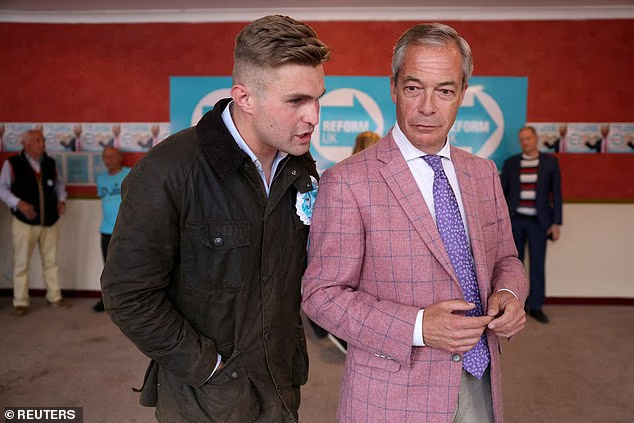
Ex-aide Dan Jukes, seen with Nigel Farage ahead of the 2024 general election, will no longer advise the Reform UK leader

Source link

Advertisement
Continue Reading

NewsBeat

Oasis: Don’t Look Back in Anger first reviews as critics issue verdict on documentary

Published

on

Manchester Evening News

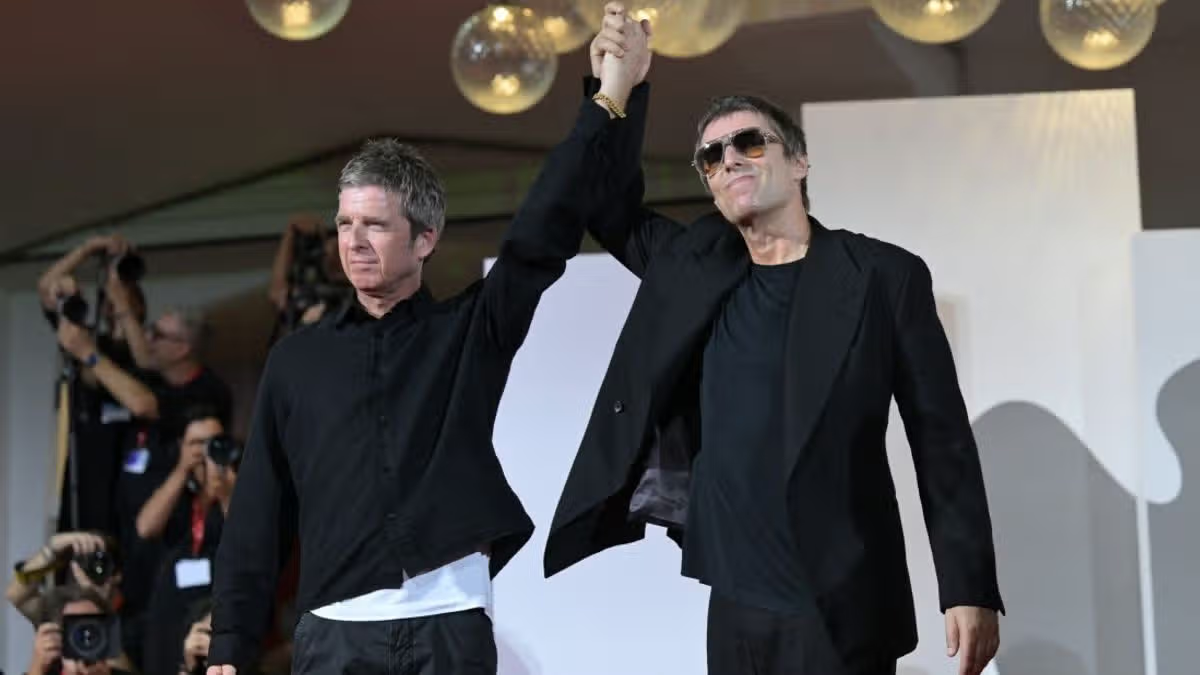
The reviews for the new Oasis film have landed. Don’t Look Back In Anger received its world premiere at the Venice Film Festival today (September 5), which saw the Gallagher brothers reunite in front of paparazzi to promote the new film, which will be released in cinemas next week.

From acclaimed directors Will Lovelace and Dylan Southern, the film features behind-the-scenes footage from the band’s Live ’25 reunion tour, as well as the Gallagher’s first joint interview since the series of gigs began last July. It has also been written by Peaky Blinders creator Steven Knight.

Click here for the latest on Manchester’s food & drink scene, gigs and more in our CityLife newsletter

Ahead of its cinema release on Wednesday (September 9) and its arrival on streaming platform Disney+ later this year, reviews for the film have been published today following the world premiere at the prestigious festival and it appears to be a resounding success. The documentary has been hailed as both a ‘beautiful, emotional thing’ and ‘powerfully nostalgic’.

Advertisement

For a review in the Manchester Evening News, What’s On editor Jenna Campbell said the documentary was a ‘triumphant homage to Manchester’s favourite sons’, but features a series of ‘tense’ and ‘even a little stilted’ initial interactions with the brothers as they begin rehearsals for the 41-date tour.

Giving her verdict on the film, she wrote: “There is no other way around it, what you watch is utterly captivating. Whether you were there or not, you feel part of it again – the tears, the sheer euphoria of people dancing and singing their hearts out – it’s pure alchemy. There’s plenty of humour too, as the two personalities collide and eventually find a meeting point.

Advertisement

“Underpinning it, though, is the story arc of the brother’s relationship. Those first few scenes of rehearsals feel like things remain unsaid, but rather than thrash it out, the gigs themselves feel like the perfect remedy for years of misunderstanding, miscommunication and growing distance.”

You can read the Manchester Evening News’ full review of Don’t Look Back In Anger here.

Also praising the film, Time Out Worldwide’s film editor Phil de Semlyen gave it a five-star review as he said the documentary is ‘loud, hopeful and surprisingly emotional’. TheWrap’s Siddhant Adlakha, meanwhile, said it could ‘turn agnostics into believers’ in a positive breakdown.

The Hollywood Reporter described it as a ‘rich and poignant celebration’, with Richard Lawson writing that directors ‘Lovelace and Southern have compellingly stitched together interviews, performance clips, audience reactions, and a few detours into the lives of individual fans’. He also said it may be the most expletive-laden film to arrive on Disney+ yet.

Advertisement

Lawson added that the brother’s interviews are ‘charmingly self-effacing and humble’, which goes somewhat against the reputation they are used to having in the press – suggesting they may be ‘putting on a good act for the cameras’.

NME’s Rhian Daly said the ‘masterfully done doc captures [the Gallagher’s] journey’, and said ‘watching the pair repair their relationship is a beautiful, emotional thing’ to witness on the screen.

In a four-star review, The Guardian’s Peter Bradshaw described it as a ‘mammoth tour movie’ that ‘brings the joy and poignancy of reunion’ to the big screen. He added: “It was always difficult to be cynical about Oasis and now it’s impossible.”

Advertisement

Also giving it four-stars for The Telegraph, film critic Robbie Collin said it is ‘powerfully nostalgic’ but slightly lacking when it comes to any ‘Gallagher gossip’ or drama that some fans may be hoping for.

IndieWire’s Marshall Shaffer also downplayed the drama on-screen, adding: “Anyone expecting fireworks, or even a confrontation of any kind, may be sorely disappointed by how anticlimactic the moment proves.” But the writer said the films ‘offers a definitive behind-the-scenes glimpse of how this secular sanctuary came to be’, even if its lengthy setlist may put off casual viewers.

The film’s release comes as rumours mount over the band’s 2027 touring schedule, as leaks have suggested they could be on the brink of announcing at least 23 UK dates over the summer including a 12-night residency at Manchester’s Etihad Stadium. The band have also been adding to the specualtion with a series of cryptic videos hinting towards Glasgow, Manchester and Munich.

Source link

Continue Reading

NewsBeat

African languages make a comeback, from diaspora tutors to prime-time TV

Published

on

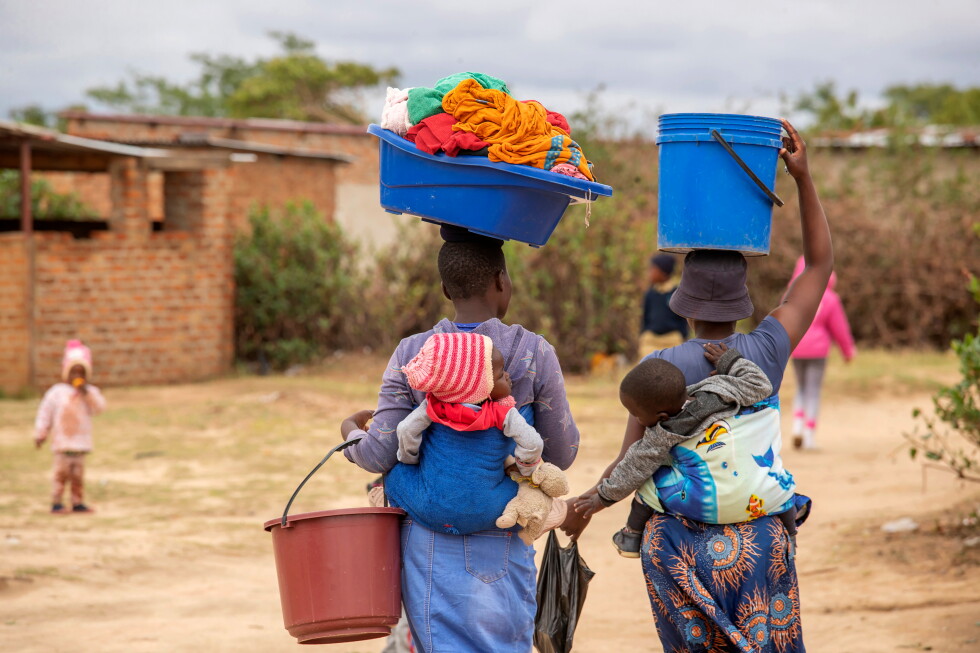
African languages make a comeback, from diaspora tutors to prime-time TV

HARARE, Zimbabwe (AP) — A television game show in Nigeria’s commercial hub of Lagos has an unforgiving rule: Speak English and you lose. For a U.S.-born millennial in the audience and a student of her parents’ mother tongue, the high-stakes setting is a perfect classroom.

Meanwhile, a 15-year-old Canadian speaks to a teacher about 13,000 kilometers (8,000 miles) away in Zimbabwe, learning a language her parents feared she would never speak.

“Mhoroi,” Nyashadzashe Machingura says cheerfully with a pronounced Canadian accent while greeting in Zimbabwe’s vernacular Shona.

The scenes capture a new generation of interest and entrepreneurship around African languages once pushed to the margins by decades of colonialism. Often seen as secondary to English, French and Portuguese, they are enjoying a renaissance that is also creating business opportunities.

Advertisement

There are between 1,500 and 3,000 languages in Africa

Africa is home to over 1 billion people speaking roughly a third of the world’s languages, with between 1,500 and 3,000 across 54 countries, according to UNESCO.

Experts say the revival in some of them is driven partly by second- and third-generation Africans in the diaspora finding it easier to reconnect with their roots and communicate with older relatives, thanks to social media, online learning and entertainment.

“There were times I definitely felt left out because my family around me were all speaking Shona. And I just couldn’t understand them,” Nyashadzashe said after a lesson covering traditional greetings, proverbs and ancestral clan symbols. She said she had eaten the food and worn the traditional clothing but still felt left out.

But now her conversations with her grandparents in Zimbabwe are growing longer.

Advertisement

“Being able to connect with them on that level makes me really proud of my heritage,” she said.

African languages were never ‘modernized’

Her Zimbabwe-based tutor, Shungu Chidovi, left her banking career in January to focus full-time on ZimbOriginal, an online platform that teaches Shona through storytelling, book clubs and “buddy pairing” exchanges.

Now she teaches about two dozen learners in Zimbabwe, Canada, Australia, South Africa, Ireland and Scotland, charging $50 a month.

The business, part of a small but growing number of online initiatives teaching African languages, emerged almost by accident. Chidovi began writing a blog about Zimbabwean traditions in 2016. Readers began asking whether she taught Shona.

Advertisement

“I didn’t see it at the time that I was really writing about the Shona language,” Chidovi said.

Western languages were prioritized

Like many in Africa, she grew up with the understanding that to get ahead she had to embrace Western languages instead of her mother tongue. English remains the dominant language for education, business and government affairs in the southern African nation that officially recognizes 16 mostly Indigenous languages.

Advertisement

“When you talk of Africa, you talk of English, French, Portuguese,” said Believe Mubonderi, a linguistics lecturer at Zimbabwe Open University. His research notes the importance of ensuring that African languages have a place in technologies shaping how people communicate, learn and trade.

“In most cases, African languages were sidelined. They were never exposed or modernized to be used in commerce, science and technology,” he said. “When a language has a very low status, there’s a danger that that language eventually becomes endangered.”

Culture and connection are driving the new interest

Governments and international organizations are trying to reverse that trend.

The African Union’s 2022 decision to adopt Kiswahili, spoken in much of east Africa, as an official working language has raised its international profile. The United Nations declared 2022-2032 the International Decade of Indigenous Languages.

Advertisement

And the AU continental body and UNESCO are supporting efforts to document and revitalize African languages, including using artificial intelligence to generate and translate children’s books and teacher guides.

But there’s a steep digital disadvantage. UNESCO says only 10 languages around the world dominate the “internet ecosystem,” while less than 2% of African languages have a meaningful online presence. That leaves many with too little data to train artificial intelligence systems.

Still, momentum for change is growing, with much of it from Africans abroad.

“People of African descent have come to realize that we also have our own identity which we need to embrace and be proud of. You go on Facebook, you go on TikTok, you are seeing many different efforts,” Mubonderi said. Younger diaspora Africans “are trying by all means to revive, to revitalize, to make use of these languages.”

Advertisement

Chindovi said she hears that desire from children and their parents.

“When people are away from home, they long for home more than when they are home,” she said.

Nigerian game show penalizes English speakers

That hunger for connection is also reshaping culture.

In Nigeria, a game show called “Masoyinbo,” meaning “Do not speak English,” has turned Yoruba, one of the country’s most widely spoken languages, into prime-time entertainment. Contestants, including diaspora Nigerians, are tested on Yoruba language and culture, with prizes reaching thousands of dollars.

Advertisement

Host Olalekan Fabilola, who started the show in 2024, sees its popularity as part of a wider shift.

“If ‘Masoyinbo’ had started like 10 years ago, it wouldn’t have been what it is now,” he said. “But we are in the age of cultural resurgence. People want to go back to their roots. Everyone wants to know why, where they are from, and so it’s timely.”

Tomi Adeshokan, a New Jersey resident who is learning to perfect her Yoruba with Fabilola as a tutor, was part of the audience during a recent recording of the show. She said she lost daily exposure to Yoruba after moving out of her father’s home before the COVID-19 pandemic. During the pandemic, she joined Clubhouse just to hear the language and later began taking classes. Now she was back visiting family.

“It’s very important for us to immerse ourselves in our culture and not to fully identify with other cultures, like the American, the Western culture,” Adeshokan said.

Advertisement

___

Ikpoyi reported from Lagos, Nigeria.

___

For more on Africa and development: https://apnews.com/hub/africa-pulse

Advertisement

The Associated Press receives financial support for global health and development coverage in Africa from the Gates Foundation. The AP is solely responsible for all content. Find AP’s standards for working with philanthropies, a list of supporters and funded coverage areas at AP.org.

Source link

Advertisement
Continue Reading

NewsBeat

Robert Jenrick vows to cut taxes for millions… and says he’ll quit if pledge isn’t met in the first 100 days

Published

on

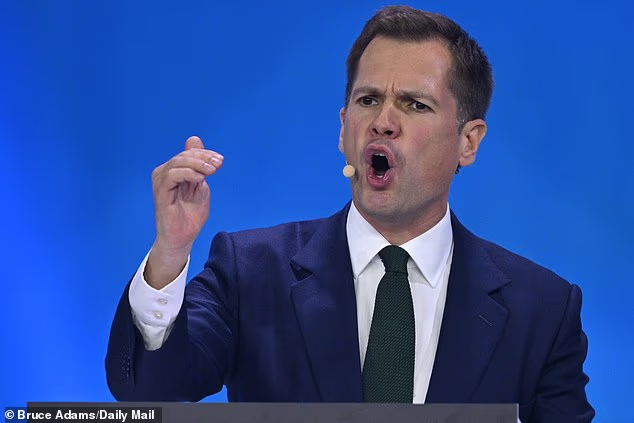
Robert Jenrick spoke at the Reform UK party conference in Birmingham

Robert Jenrick tried to put Reform UK’s chaotic conference back on track on Saturday by pledging to cut taxes for millions of voters within the first 100 days of forming a government.

Mr Jenrick, who is expected to become Chancellor if Nigel Farage wins the next general election, said that he would raise the tax-free personal allowance to £15,000 – taking 2.9 million people out of income tax altogether and ensuring the state pension remains out of reach of the Treasury.

Mr Jenrick – who promised to resign as Chancellor if he failed to deliver the tax cut within the promised timescale of 100 days – said it was his ‘mission’ to deliver the ‘biggest rise in the personal allowance in its history’. Reform said that for a typical family the move would save £1,000 a year.

The annual earnings at which income tax starts to be paid has been frozen at £12,570 since 2021 and is due to stay at that level until 2031, but that has been penalising ever-greater numbers of workers as rising inflation erodes the value of the allowance. 

Advertisement

And the increase to the state pension next year to £13,000 will push millions of pensioners above the threshold, meaning they will have to start paying income tax.

The move came as Reform tried to escape the controversy over undercover filming aired by Channel 4 on Thursday which led to the suspension of aides Dan Jukes and James Orr over alleged attempts to circumvent electoral law.

Reform says that its long-term aim is to raise the personal allowance to £20,000 a year. Mr Jenrick told the conference in Birmingham: ‘The task is mighty. But our cause is right and our country is worth it. They tried to knock us down. We’re still standing. Now let’s get Britain standing again.’

Mr Jenrick said the cost to the Treasury of raising the allowance would be £17.7billion in the first year, rising to £21billion in the fifth year of the next Parliament, and that it would be funded through £80billion of savings from cutting the welfare bill, Net Zero spending and the foreign aid budget.

Advertisement

Robert Jenrick spoke at the Reform UK party conference in Birmingham

Mr Jenrick has promised to resign as Chancellor if he failed to deliver the tax cut within the first weeks of a Reform government

Mr Jenrick has promised to resign as Chancellor if he failed to deliver the tax cut within the first weeks of a Reform government

He told delegates: ‘There has never, in our lifetimes, been a worse time to be a worker in Britain. Britain now has the highest tax burden since records began…higher than when we were paying for the war.’

Advertisement

He added: ‘Now, for the first time, the freeze means they’re going to be taxing the state pension. What a disgrace…no wonder so many of our most ambitious young people are seeking their futures abroad.’

Mr Jenrick challenged Prime Minister Andy Burnham to match his pledge, saying: ‘The hard choice for Burnham and for us is exactly the same. It’s either welfare waste, foreign aid and migrants – or the British worker. We choose the worker.’

Speaking to GB News after the announcement, Mr Farage said: ‘I have been arguing for raised allowances for 20 years,’ adding: ‘The next pension increase will take nearly ten million pensioners into paying tax. Just think of the cost and bureaucracy of all of that. So it actually helps simplify the tax system. It takes three million out of tax, but also it widens the gap between whether it’s worth going to work or not going to work.

‘And what Andy Burnham picked up on the door is what I’ve been picking up for ages. People say, “I get up at 5.30, I go to work, the traffic’s awful, the job is hard, and I’m almost no better off than the people next door who sit around and smoke dope all day”.

Advertisement

‘If we don’t get Britain working again, if we don’t increase our productivity, we are going bust. It’s just as simple as that.’

And Mr Farage also repeated his prediction on Saturday that Mr Burnham would call a general election in the spring.

A Labour Party spokesman said: ‘Robert Jenrick only seems to be interested in making people better off when Reform UK are trying to distract from the latest scandal engulfing their party.’

A Tory Party source on Saturday told the MoS: ‘Nigel said he would sack anyone if they can’t deliver on their 100-day plans. We all know Rob wants the top job, so I guess this is one way of getting rid of a leadership rival.’

Advertisement

– READ MORE: Nigel Farage says ‘bad period’ is over for Reform as family urges him to quit as he faces barrage of questions over donations to his party 

– READ MORE: It was meant to be the week Reform showed us they could govern… but even senior aides admit they’ve blown it: DAN HODGES

Source link

Advertisement
Continue Reading

NewsBeat

Nigel Farage says ‘bad period’ is over for Reform as family urges him to quit as he faces barrage of questions over donations to his party

Published

on

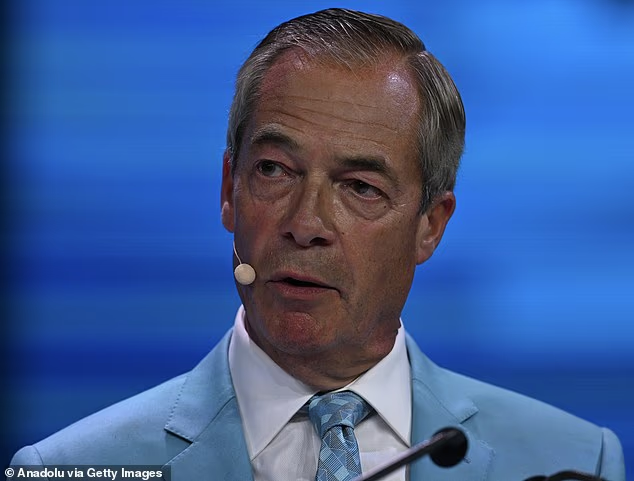
Reform UK leader Nigel Farage spoke at the Reform UK annual conference in Birmingham

Advertisement

Nigel Farage revealed that his family urged him to quit politics in the face of a barrage of questions about the legitimacy of donations to his party.

The Reform UK leader admitted that recent months had been ‘difficult’, saying: ‘For the first time, really, in my political career, I haven’t got my family’s support. They would rather I packed it up and walked away.’

Mr Farage made his remarks after the start of his annual party conference in Birmingham was overshadowed by an undercover sting broadcast on Channel 4 which appeared to show senior aide Dan Jukes and Reform’s head of policy James Orr suggesting a way around electoral law to secure foreign party donations – one of which would have totalled £500,000.

The aides have both stood down pending the outcome of an internal probe into the claims. Reform denies any wrongdoing and say the party has taken no illegal money.

Advertisement

There is also an ongoing Commons standards investigation into a £5million donation to Reform from the crypto-billionaire Christopher Harborne.

Mr Farage told the BBC that despite his torrid few months, he had not been tempted to take the advice to resign, saying: ‘When you’ve got your family begging you to, it’s not easy. But I think we’re through that now. 

‘I believe we’re through that bad period. I think the general public do understand that I have got some unusual circumstances that others don’t have to deal with.’

He added that he ‘frankly wasn’t even listening’ when he met the fake donors in the undercover filming, saying: ‘I was just there to come and say hello.’

Advertisement

Reform UK leader Nigel Farage spoke at the Reform UK annual conference in Birmingham

Mr Farage's partner Laure Ferrari is pictured watching his keynote speech at Reform's conference on Friday

Mr Farage’s partner Laure Ferrari is pictured watching his keynote speech at Reform’s conference on Friday

Farage spoke with BBC's Laura Kuenssberg at the Reform UK's party conference

Farage spoke with BBC’s Laura Kuenssberg at the Reform UK’s party conference  

Advertisement

He criticised the suspended advisers, saying they ‘should have done basic checks…nobody, nobody should be brought to me, unless they’ve been vetted’. 

In a separate interview with GB News, Mr Farage said that the sting had been part of a co-ordinated attempt to target his party.

He said: ‘There has been a heavy, co-ordinated attempt by political parties, media outlets to try to sully the name of Reform. And I suspect it won’t go away. I asked the voters of Clacton a few weeks ago what they thought of all this, and they returned me with a massively increased majority.’

His comments came as the electoral watchdog faced calls to seize hard drives from Reform UK over the undercover filming, which was carried out by a group called Verbatim Investigations – founded by journalists from the Centre for Climate Reporting.

Advertisement

If the police launch a criminal investigation over the footage the Electoral Commission (EC) would have the power to ‘obtain information’ from the party’s HQ, including the confiscation of equipment. The powers are contained in the Political Parties, Elections and Referendums Act (2000).

An offence under that law includes whether any money is transferred for the benefit of the party – which could be ‘any study or research organised on or behalf of the party’.

Labour and the Liberal Democrats have reported Reform to the Metropolitan Police over the allegations. The force said on Thursday it would assess the matter and any information provided to it.

Tory MP Joe Robertson said: ‘It appears that Reform may have broken the criminal law in relation to foreign and hidden donations. The Electoral Commission and the police should launch an investigation without delay and take steps to preserve evidence by seizing hardware from Reform premises.’

Advertisement

And Tory MP Charlie Dewhirst added: ‘There are clearly unanswered questions here – not least who are the other individuals Mr Jukes claims may have given potentially illegal donations to Reform UK?’

– READ MORE: Robert Jenrick vows to cut taxes for millions… and says he’ll quit if pledge isn’t met in the first 100 days

– READ MORE: It was meant to be the week Reform showed us they could govern… but even senior aides admit they’ve blown it: DAN HODGES

Advertisement

Advertisement

Source link

Continue Reading

NewsBeat

RABBI DR JONATHAN ROMAIN: I’m a man of God, but I don’t think William should make peace with Harry… some wounds can never be healed

Published

on

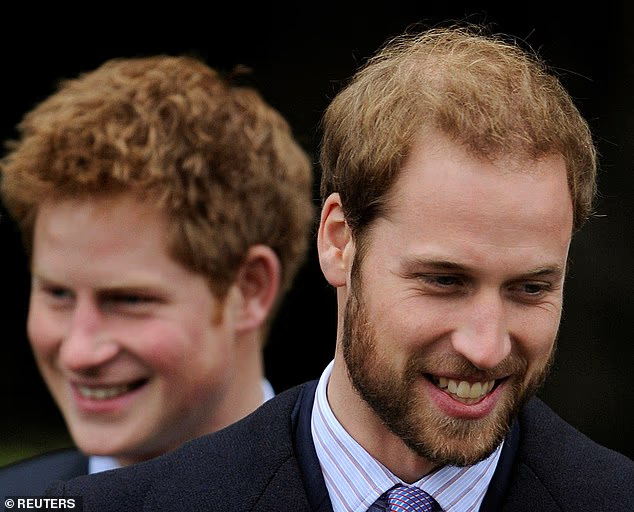
Prince William and Harry are understood not to have spoken for the best part of four years, and were last seen together in public at Charles's Coronation in May 2023

I never thought I would presume to say that I know how the Prince of Wales feels – but sadly I can now do so.  

Should he twist or stick, reach out to Harry on his return to England or shun him?

Should he act like a wiser big brother or decide that relations have deteriorated too far for that?

Every fibre in my body screams out, go for a reconciliation, see if it is possible. Isn’t that what family means? Doesn’t the New Testament tell him as a future Supreme Governor of the Church of England to turn the other cheek?

Advertisement

Certainly, the tale of the prodigal son has the message of welcoming a renegade member of the family back into the fold. The principle is the same towards a brother – life is warmer together and colder apart.

And yet my drive for a happy family reunion is brought to a screeching halt when I think of one of my own brothers. We have not spoken for eight years and have no intention of doing so. I don’t even know where he lives.

In fact, I am ashamed of admitting this as everything above indicates that we should meet and reconcile. But sometimes theory and reality clash, and they certainly do in our case.

The added sadness is that, like William and Harry, we were once very close. 

Advertisement

Prince William and Harry are understood not to have spoken for the best part of four years, and were last seen together in public at Charles’s Coronation in May 2023

There is a 13-year gap between us, and my mother often said I was like a second father to him, changing his nappies as a baby, taking him in the pram to the local playground, spending time with him as he grew up.

It is hard to pinpoint the moments when the relationship soured and the bond snapped. I left home for university and saw much less of him. When I did return home, we squabbled. Somehow it turned to distrust and dislike.

Advertisement

When he was an adult, we also had very different views as to how to look after our ageing parents. 

One result was that when he lived in the family home, he limited access to my mother, initially at my expense and later my children’s. He would say that she was too unwell to see them, which I found unlikely as she adored her grandchildren.

It ended with a complete blackout of all news about her – including her decline, so much so that we were not informed of her death by him or even the funeral.

Hurtful, especially to my children who should not have suffered because of whatever went wrong between he and I.

Advertisement

Did I try to improve the relationship earlier? Yes, although looking back I cannot be sure if I tried as hard as I could have done.

I do take part of the blame for the fall-out, but definitely not all of it. I also know that we are not alone in our fraternal enmity.

Harry, Meghan and their children Archie and Lilibet have recently returned to Britain - but relations between the brothers are complicated

Harry, Meghan and their children Archie and Lilibet have recently returned to Britain – but relations between the brothers are complicated

It is surely significant that the very first example of brothers in the Bible – Cain and Abel – is not a story of lovey-dovey harmony with violins in the background.

Advertisement

Instead, it is a tale of a dysfunctional relationship, of jealousy and anger that gets so out of control that it results in one murdering the other. Biblical fratricide is at the extreme end of family feuds. 

Most, thankfully, only feature stubbornness, pride or a sense of betrayal – just ask the Gallagher brothers, who admirably completed their Oasis tour last year after a decade of bubbling animosity, or Brooklyn Beckham, who has severed ties with his family so publicly on social media.

‘Just pick up the phone and make up,’ I hear you cry in exasperation. It’s perfectly sensible advice, but it is not that easy.

For a start, there is a feeling that this is not my task but the other person’s. He offended me, so he should take the first step!

Advertisement

Yes, it might be healthy to reconcile, but pride means I will respond but not initiate. The trouble is that when both parties feel that way, the impasse continues.

Another obstacle is embarrassment. It is awkward to say, ‘Hello, it’s me’ after so long not speaking and plenty of blue air when we did. 

I know the best way would be to write down a couple of lines so as not to blurt out something mangled, but that still begs two questions about how the other person might respond.

The Waleses and the Sussexes are not thought to have communicated for some time

The Waleses and the Sussexes are not thought to have communicated for some time

Advertisement

What if he spurns the effort, repeats past insults and slams the phone down? Do I really want to expose myself to that rejection?

Alternatively, what if he accepts, and warmly welcomes the rapprochement? That is wonderful in many ways, but it does come at a cost of having to let go of my own resentments at past hurts and wipe the slate clean.

Maybe I’m just not ready. It is much cosier being wrapped in a blanket of anger and victimhood. It also saves me having to ask where I might have gone wrong.

This is why I do not advise Prince William to offer the hand of peace to his brother. Sometimes a wound is best left untouched.

Advertisement

Instead, he could turn away and let go of the relationship completely. 

There is at least an honesty in recognising that there are points of no return, nor does it trade a deeply held conviction for the thin reward of forced smiles and small talk at the next family occasion.

Therapists will argue that, despite the initial distress contact might cause, it could eventually lead to mutual understanding and a rich relationship. 

Maybe, but in my case, I would want to be convinced of the odds and there are no guarantees.

Advertisement

Giving up on one’s brother may be a painful situation, but at least it has been accepted, put in a box and stored away. It will be even more painful to reopen it.

Still, I am bothered by the fact that as a minister of religion I have frequently met with warring families and my usual response has been that they should err on the side of generosity.

But I also know that some hurts cannot be forgotten and some misdeeds cannot be undone: Prince William has endured the ignominy of his brother divulging their private quarrels to the world for a fast buck. My brother buried my mother without telling me.

This may not be as high a moral or religious a response to which I could aspire, but it is real. I regret it but won’t change it.

Advertisement

I truly hope that Prince William can do better than me, but he will know very well that much depends on the wounds already suffered and the likely response he might receive.

– Jonathan Romain is author of Confessions Of A Rabbi, published by Biteback.

Source link

Advertisement
Continue Reading

Trending

Copyright © 2025