Connect with us

NewsBeat

Man Utd in talks to beat Arsenal to signing of ‘fearless’ midfielder | Football

Published

on

Man Utd in talks to beat Arsenal to signing of 'fearless' midfielder | Football


Source link

Advertisement
Continue Reading
Click to comment

You must be logged in to post a comment Login

Leave a Reply

NewsBeat

Inside The Rapture star Ruth Madeley’s life from ‘epic’ wedding to huge family discovery

Published

on

Daily Mirror

Ruth Madeley is currently taking on lead role, Dr Gabrielle Fox, in BBC’s thrilling new series The Rapture

BBC viewers have been left hooked with new thriller show The Rapture.

The five-part psychological series is adapted from Liz Jensen’s bestselling novel. A synopsis teases of the show: “As temperatures rise, a convicted murderer foretells apocalyptic disaster – is she a manipulative psychopath or does she know the truth? High-stakes thriller crackling with danger.”

In the show, Ruth Madeley plays Dr Gabrielle Fox, who starts a new job at a psychiatric hospital where she is assigned 17-year-old inmate Bethany Krall, played by India Amarteifio.

Advertisement

As talented actress Ruth, 39, takes on the lead role, viewers have been keen to learn more about the actress’ life off-screen, especially as she recently appeared in BBC’s Who Do You Think You Are?

Huge family discovery

On Ruth’s episode of Who Do You Think You Are?, the genealogy team uncovered what turned out to be a huge family secret on her dad’s side.

The family discovered that Ruth’s grandmother, Beatrice, was adopted and no one else knew, including her father, Geoff, as his mother Beatrice never told him this fact.

Advertisement

Talking about the discovery on the show, Ruth said: “No one knew. My dad had no idea. So that was a huge shock. As far as, like, we’re concerned, we’re all just born, raised, died in Manchester.”

Meanwhile, while talking to her father, he responded over the bombshell: “When I got that phone call, I thought, ‘what’s going on?’ You could have knocked me down with a feather” to which Ruth replied: “Wow!”

Her dad continued: “I’m dead surprised that my grandma never said anything. That’s the only thing that I can’t get my head around.”

On the show, Ruth revealed that she and her family – her parents and sister Liz – are “really close, like, shockingly close”. The actress joked: “We are quite a stubborn, determined family, so it wouldn’t surprise me if we had traits of that here, there and everywhere.”

Advertisement

‘Epic’ wedding

Away from the TV sets and shows, Ruth is loved-up with her husband Joe Lawrence, whom she has known since they were five-years-old.

Unlike his wife Ruth, Joe doesn’t work in showbiz or the acting world. He is the owner of a company that trains people to operate cranes and for many years he was also a motorbike racer.

In 2024, after 12 years together, Ruth and Joe made things official and tied the knot. Talking about their wedding on Who Do You Think You Are?, Ruth revealed they had their wedding reception at fully accessible theatre, 53two in Manchester, which Ruth is a patron of.

Advertisement

Ruth said: “It is like my special place. I feel very at home here. And the best bit, so we had our wedding reception here and it was epic. It was so good.”

The actress previously said: “We were friends forever, we were always going to end up together, and obviously now he thinks that what I’m doing for a living is absolutely hysterical. He’s not an actor, he’s very grounded, it’s nice to be able to go home and not talk about it.”

The couple have two fur children – a cat and an adorable Bulldog, who both made an appearance of Who Do You Think You Are?

Acting career

Ruth, who has spina bifida and uses a wheelchair, underwent many spinal operations throughout her childhood. Opening up, Ruth said: “In my secondary school years, those teenage years were really, really hard, but it was never seen as a reason to not achieve or not be happy.

“I never grew up seeing anyone who looked like me on screen. I really didn’t. Oh, acting was a complete accident. I was doing some work experience at the BBC and a producer I met was casting something for, I think it was a children’s drama.

“Yeah, I landed my first role and it developed in a very wonderful way, thank goodness.”

The actress joked: “I absolutely love my job. I feel so privileged to say that I do what I do for a living. I mean, I would do it for free. Actually, don’t say that on camera!”

Advertisement

Source link

Continue Reading

NewsBeat

Locals argue ‘tree was there long before houses’ after historic tree cut down

Published

on

Cambridgeshire Live

A 200-year-old oak tree in St Ives, Cambridgeshire, has been felled by Huntingdonshire District Council, sparking anger among locals who say the homes nearby should never have been built so close to the tree

CambridgeshireLive readers have voiced their concerns following the removal of a long-established oak tree, arguing that neighbouring properties should never have been constructed in such close proximity. Many believe the planning system failed to safeguard a mature tree, and that replacement planting cannot compensate for what has been removed.

Residents in a part of St Ives have been left feeling “deeply upset” after a 200-year-old tree was felled. Huntingdonshire District Council (HDC) maintains that removing the tree was a “last resort”, as it was causing “structural damage” to three nearby properties.

Advertisement

However, local residents claim they received no notification about plans to fell the tree, and believe a distinctive feature of their street has been removed.

Huntingdonshire District Council took the decision to remove the tree as it was causing “structural damage” to three neighbouring properties. A HDC spokesperson said: “We understand why people are upset by the loss of this mature oak tree.

“The tree was removed following a complex insurance subsidence claim affecting three neighbouring properties. Independent investigations concluded that it was a significant contributing factor to ongoing structural damage.”

The council spent three years attempting to identify options to preserve the tree, however “no viable alternative was identified”. They added: “Although the tree appeared healthy, healthy trees can contribute to subsidence due to soil conditions and moisture demand.”

Advertisement

One of the readers, Archer3757, comments: “The tree was there a long time before the houses, typical council.”

Carbonneutralfeminist says: “The tree was there long before. The houses obviously weren’t built with adequate foundations or with regard to the location. They should have been demolished or repaired another way.”

Over on Facebook, Sarah S mentions: “Perhaps when the houses were built, someone should’ve advised that the oak tree needed more space around it for the roots and the houses wouldn’t have been built so close.”

Darren S says: “They did the same thing in Peterborough a couple of years ago, they chopped down the Bretton Oak Tree, which was 600 years old, dating from the 14th century, because some new build houses started suffering foundation problems. If anything, the problem houses in these cases should be pulled down rather than the ancient trees that were there first.”

Advertisement

Jo F asks: “Why do they keep doing this! Trees help keep the land cool with shade, are home to wildlife and help with flooding. Planting new ones is just not cutting it, as they take decades to get to a size that makes a difference. An oak tree was felled near us recently that should have been left alone. Perhaps they shouldn’t have put the houses so close.”

Tracy H writes: “Perhaps the planners should look better at applications before granting permission, as this is happening too often. The tree was well established long before the houses were built. We had to have a tree removed because of the same issue, despite developers and the council being made aware that the new homes were too close to the existing trees.”

June S says: “Cutting trees down, building on greenbelt, does anyone care about the environment?

Rod I mentions: “The tree was there many years before the current houses were built. I also understand it was there before the previous houses that were demolished in the 80s. Going forward, you would like to think that HDC would take trees into account, leave them standing, and not build too close to them. Giving older trees significance in any future construction plan.”

Advertisement

Carole Ann M says: “Okay, they shouldn’t have built the houses so close to it in the first place, but I can see their point. I have 9 huge trees outside my property, not only do they take up 75 per cent of the light. The council had to remove the brick wall surrounding my area and replace it with fencing. I can’t plant anything for the roots, and they are now lifting up the slabs on my patio and will soon go into the drains and foundations. But having said that, these are not 200 years old.”

Heather W asks: “I don’t understand why this significant tree was not protected by a Preservation Order.”

Pauline D says: “Better than falling in a storm and killing someone.”

What else could the council do other than cut down this tree? Comment HERE to have your say.

Advertisement

Source link

Continue Reading

NewsBeat

Paddy McGuinness recalls glory days on Corrie 11 years ago

Published

on

Paddy McGuinness recalls glory days on Corrie 11 years ago

The TV presenter from Bolton is known for fronting shows such as Take Me Out, Top Gear, and Inside the Factory.

But McGuinness also spent a week playing a character on ITV’s iconic Coronation Street in 2015.

McGuinness reflected on his time on the show this week while co-hosting This Morning, describing this period of his life as “the glory days”.

Advertisement

His co-presenter Josie Gibson was shocked when he shared he was on the show while the pair discussed Corrie with soaps expert Sharon Marshall, reports Digital Spy.

Paddy McGuinness reflects on Coronation Street role in 2015

He said: “The glory days.

“I was in Corrie. I did a week in Corrie.”

Advertisement

He played a survivalist on the show called Dougie Ryan and “just did a week in the woods.”

Dougie taught Chesney and Tyrone how to forage for food on a camping trip in the woods.

Josie playfully said Paddy “just keeps giving and giving” and they later shared a clip of his appearance on the show.


How many of these emotional Coronation Street storylines do you remember?


A BAFTA statue from the This Morning set was jokingly presented to Paddy, honouring his performance.

Advertisement

Paddy McGuinness to host the revival of TV gameshow 24 years after it last aired

It was announced in May that Paddy will also appear on our TV screens when the hit 90s snooker-themed game show Big Break returns.

He’ll host the show with seven-time world snooker champion Stephen Hendry.

The popular programme will return to BBC Two over two decades after it last aired, with the broadcaster saying it will keep the “spirit of the original show” with a “brand new look and feel.”

McGuinness said: “I am absolutely delighted to be a part of Big Break.

Advertisement

“It is one of those shows everyone knows and loves so to be hosting it alongside legend Stephen Hendry will be something special.

“Bring it on!”

It follows three contestants who will be paired up with professional snooker players, straight off the competition circuit, as they battle it out over three rounds in a bid to win a cash prize in a dramatic finale.

The game show previously aired on the BBC between 1991 and 2002 and was hosted by Jim Davidson and snooker star John Virgo, who died earlier this year aged 79.

Do you remember watching Paddy McGuinness on Coronation Street? Tell us in the comments below.

Advertisement

Source link

Continue Reading

NewsBeat

Marcus Rashford, Kobbie Mainoo and more join Man United squad as team touch down in Ireland

Published

on

Manchester Evening News

The Manchester United squad have landed in the Republic of Ireland with Marcus Rashford and Kobbie Mainoo among those to join up with the rest of the players

Marcus Rashford and Kobbie Mainoo have joined up with the rest of the Manchester United squad for their pre-season tour in Republic of Ireland.

Rashford and Mainoo were both part of the England squad at the 2026 World Cup and were allowed an extended break while their teammates returned to pre-season.

But now, the duo are back and travelled in a private jet to Ireland alongside Lisandro Martinez, who was involved with Argentina at the World Cup, Benjamin Sesko, Senne Lammens, Matheus Cunha and Matthijs de Ligt.

Advertisement

There will be more to follow. We’ll bring you the very latest updates on this breaking news story.

For the latest news and breaking news visit our Manchester United page. Get all the big headlines, pictures, analysis, opinion and video on the stories that matter to you.

Follow us on Twitter @‌ManUtdMEN – the MEN’s United Twitter account – for all the latest football news as it happens in real time.

Advertisement

We’re at facebook.com/ManUtdMEN where we’ll bring you breaking stories and images, plus you can chat with United fans around the world. We’re also on Instagram here.

And if you sign up to our free United newsletter here, we’ll send all the latest headlines, reaction and features straight to your inbox, every day.

Source link

Advertisement
Continue Reading

NewsBeat

Wes Streeting reveals ‘unbelievable volume’ of online homophobia since becoming defence secretary

Published

on

Wes Streeting reveals ‘unbelievable volume’ of online homophobia since becoming defence secretary

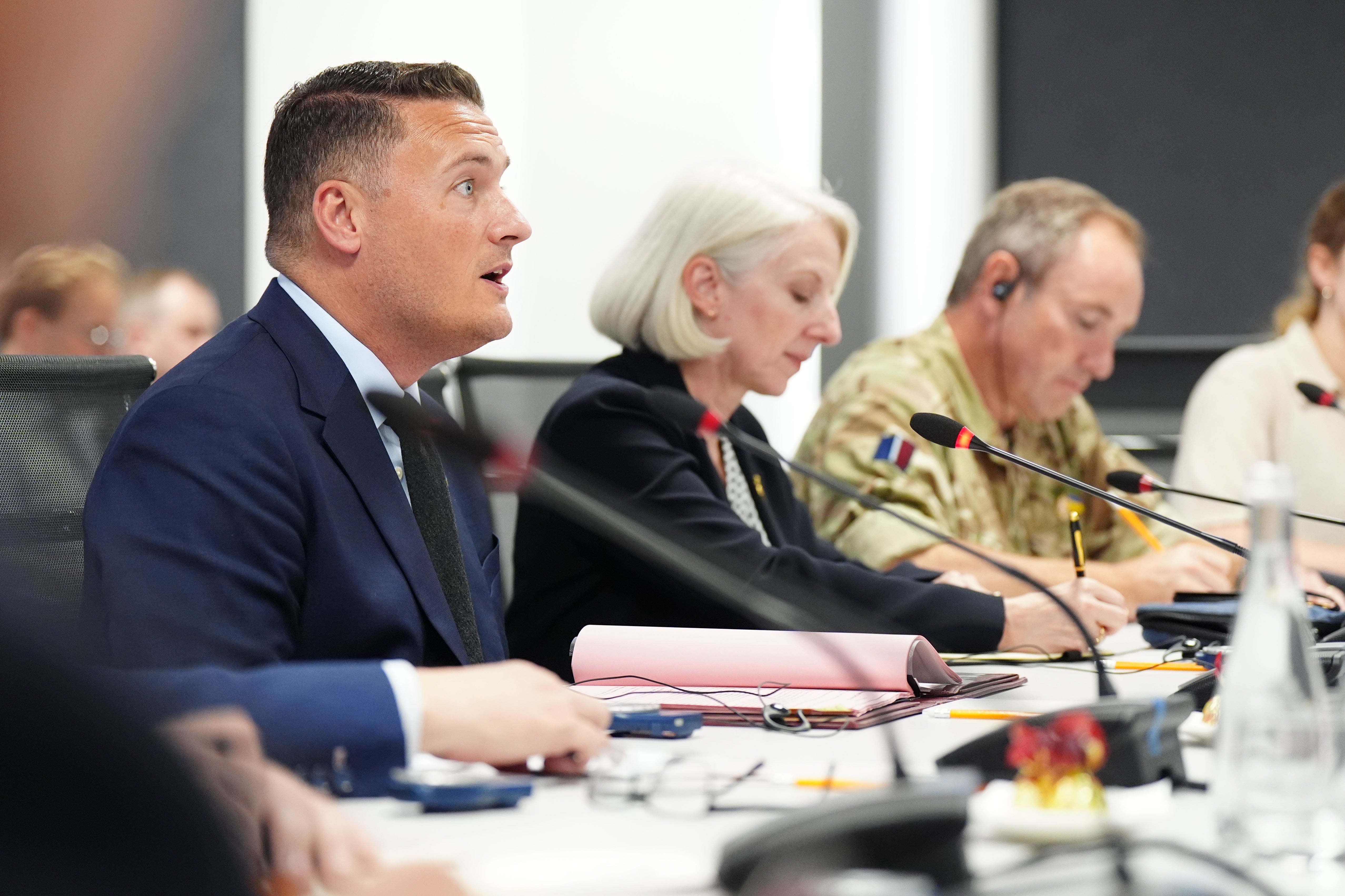
Wes Streeting, the newly appointed Defence Secretary, has revealed he has encountered an “unbelievable volume” of online homophobia since taking up the role, surpassing all previous experiences in his career.

Speaking at the Edinburgh Fringe, Mr Streeting noted that while his appointment three weeks ago was “almost entirely unremarked upon in the media,” the online reaction has been starkly different.

He attributed the abuse to individuals who “cannot cope with the idea” of a gay Defence Secretary.

Despite the negativity, he views the position as a chance to demonstrate “strength” and “challenge this sort of stereotype that clearly persists in dark corners of the internet.”

Advertisement
Despite the negativity, he views the position as a chance to demonstrate ‘strength’
Despite the negativity, he views the position as a chance to demonstrate ‘strength’ (Jane Barlow – WPA Pool/Getty Images)

Despite the decriminalisation of homosexuality in 1967, it remained a criminal offence for military personnel until 1994.

Even after that date, homosexuality remained classed as “conduct prejudicial to good order and discipline” until 2000, meaning service personnel could still be dismissed for being gay.

Mr Streeting added: “I am proud of the fact that in my lifetime we’ve gone from gay people not being allowed to serve in the military to a gay Defence Secretary.

“And in my first week, someone in the MoD said to me, you know, as a gay man, I’m really proud that we have our first gay Defence Secretary, and it means a lot to many of us who remember the bad old days.”

Prior to his appointment, Mr Streeting had been considered a potential challenger to Andy Burnham in the contest to succeed Sir Keir Starmer.

Advertisement

But once Sir Keir announced his resignation and Mr Burnham formally launched his bid for No 10, Mr Streeting said he would not stand in the leadership contest.

He told the audience in Edinburgh that he had spoken to Mr Burnham during the Makerfield by-election campaign and decided there were not enough “fundamental differences” between the two men to justify standing.

He said: “I sort of went in with the aim of saying I think we can show a different way of doing politics in terms of how we debate the future of the Labour Party and how we conduct ourselves in a contest.

“And we sat around over a cup of tea, talking about what had gone wrong. And inevitably, when you talk about what’s gone wrong, you give hints to each other about what you think you need to do to make it right.

Advertisement

“And the more we were talking, the more I was thinking, how much do I fundamentally disagree with this guy on anything?”

Mr Streeting said he had told Mr Burnham he would back him on the Friday after the Makerfield by-election, and agreed to make the announcement the following Monday.

He said he and his partner had “gone into hiding over the weekend”, adding: “I sort of spent three days desperate to tell people.

“And the moment I did, I felt like the weight of the world had been lifted off my shoulder.”

Advertisement

Asked whether he thought Mr Burnham would be Prime Minister if he had not resigned as health secretary, Mr Streeting said: “Probably not.”

He added: “What I think my resignation did that week was force choices for others.”

Source link

Advertisement
Continue Reading

NewsBeat

Hidden charges. Sky-high prices. Bills so chaotic that even their own staff can’t read them: The sneaky, underhand tactics rogue bars and restaurants use to rip off British holidaymakers in Corfu

Published

on

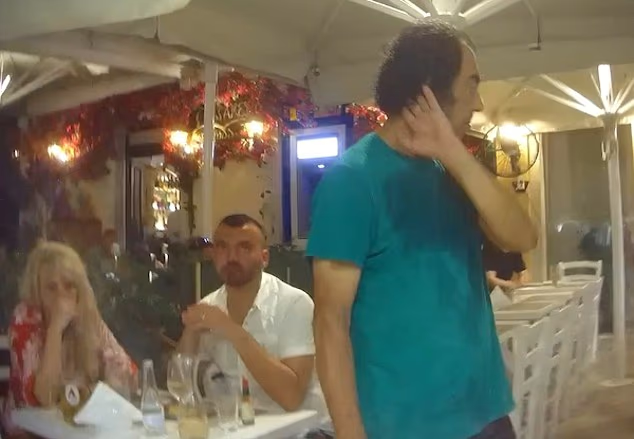
A Daily Mail undercover investigation found British tourists are being routinely fleeced by unscrupulous bars and restaurants in Corfu. At The Corner restaurant the sweaty owner pictured was brusque when neither our reporter nor the waitress could understand the bill

British holidaymakers are being ripped off by rogue bars and restaurants in Corfu using hidden charges, unclear prices and bills so chaotic that even their own staff cannot explain them.

An undercover Daily Mail investigation found tourists being charged for food they had not ordered, quoted one price only to be billed another – and pressured to pay up in cash.

Over three days in historic Corfu Town, we uncovered an extraordinary catalogue of questionable practices designed to squeeze unsuspecting visitors of every last euro, including: 

  • Chaotic handwritten bills that even restaurant staff struggled to decipher;
  • Food and drinks charged above advertised prices; with one modest meal reaching an astonishing €74; 
  • Unwanted appetisers quietly added to the final total; 
  • Expensive ‘specials’ promoted without a clear price; 
  • €8 soft drinks, weak €14 cocktails and €12.50 ice creams; 
  • And meals of such dubious quality that their eye-watering prices appeared impossible to justify.

Little wonder then that one waitress, asked if tourists were being fleeced in Corfu, candidly replied: ‘All of them.’ 

For generations, picture-perfect Corfu has lured British visitors with its sun-drenched beaches, cobbled old town and famous Mediterranean hospitality.

Advertisement

But holidaymakers who have already spent thousands reaching the Greek island increasingly complain that they are seen not as valued guests – but as ‘walking wallets’ to be emptied before the flight home.

For many, the great Corfu rip-off begins within minutes of leaving the airport.

The island is notorious for steep taxi fares and drivers who conveniently ‘forget’ to start the meter. A four-minute and ten-second journey to our reporter’s hotel cost €17. The return trip was steeper still, at €20.

Then, there are the well-documented complaints surrounding some of the island’s less scrupulous hire car firms.

Advertisement

But we found that restaurants, bars and cafés appeared just as determined to wring every last cent from visitors.

The most troubling experience came at a cafe tucked among the tourist-trodden alleys of Corfu’s Old Town.

There, our reporter was handed a handwritten bill so illegible that even the waitress appeared unable to understand it.

Figures had been scrawled across the paper without clear itemisation, making it almost impossible to establish how the total had been calculated.

Advertisement

A Daily Mail undercover investigation found British tourists are being routinely fleeced by unscrupulous bars and restaurants in Corfu. At The Corner restaurant the sweaty owner pictured was brusque when neither our reporter nor the waitress could understand the bill  

At the end of the meal, our reporter was presented with this illegible, hand written bill which seemingly included items that hadn't been ordered. The waitress couldn't understand it, but it made perfect sense to the owner when he came over to explain in an awkward encounter

At the end of the meal, our reporter was presented with this illegible, hand written bill which seemingly included items that hadn’t been ordered. The waitress couldn’t understand it, but it made perfect sense to the owner when he came over to explain in an awkward encounter 

One of the items our reporter did order was this salad - but it arrived with an accompaniment of bread and tzatziki, which the reporter presumed came complimentary with his dishes. Imagine his surprise when an extra €7.50 had been added to his bill at the end

One of the items our reporter did order was this salad – but it arrived with an accompaniment of bread and tzatziki, which the reporter presumed came complimentary with his dishes. Imagine his surprise when an extra €7.50 had been added to his bill at the end  

Advertisement

Bread costing €2.50 and tzatziki priced at €5 had been added. A small lager was charged at €6.50 – despite being listed on the menu at €5 – and arrived flat.

Asked to explain the bill, the waitress stared at the jumble of numbers in bewilderment.

‘Bread… oh my God. I don’t understand all this,’ she said, pointing uncertainly at the scribbles. ‘There is salad, maybe?’

Unable to unravel it, she summoned her boss. He briskly recited what our reporter had ordered, then walked away before further questions could be asked.

Advertisement

The figures may have made sense to the apparent owner, an unkempt man in his 60s who smoked close to diners.

But they were clearly a deliberate ruse to trick customers – a tangle of figures that was impossible to audit for a Dutch family left questioning why their modest lunch had set them back €75.

The answer lay in three pita bread (€7.50) and tzatziki (€10) which were strategically placed on the table.

‘He gave us free appetisers and he put it on the bill,’ one of the group said. ‘We thought it was free.’

Advertisement

A woman in the party then said with a glum shrug of acceptance: ‘It’s holidays.’

The experience echoed a remarkable catalogue of criticism posted online. When the Daily Mail examined the restaurant’s Tripadvisor page, 40 of 44 reviewers had awarded it just one star.

Customers complained of illegible bills, aggressive staff and charges for items they said they had never ordered.

One visitor claimed to have been billed €13 for a single scoop of ice cream. Others alleged that prices inside differed from the cheaper offers displayed outside.

Advertisement

One furious visitor wrote: ‘The people who run this shabby place tarnish the reputation of this beautiful country with very nice, hospitable people.

‘Doesn’t even deserve one star. You’d better go next door.’

A couple of tourists peruse the plastic menu outside The Corner in the heart of Corfu's Old Town. Our reporter's experience there is shared by other customers if the criticism online is anything to go by. On Tripadvisor 40 of 44 reviewers awarded it just one star

A couple of tourists peruse the plastic menu outside The Corner in the heart of Corfu’s Old Town. Our reporter’s experience there is shared by other customers if the criticism online is anything to go by. On Tripadvisor 40 of 44 reviewers awarded it just one star

The owner, dressed in a green cotton t-shirt drenched in sweat after a laborious day hassling passing tourists, delivered an enthusiastic description of the day's recommendation, a €22 fish. But the eventual €74 bill with lots of hidden extras told a very different story

The owner, dressed in a green cotton t-shirt drenched in sweat after a laborious day hassling passing tourists, delivered an enthusiastic description of the day’s recommendation, a €22 fish. But the eventual €74 bill with lots of hidden extras told a very different story 

Advertisement

Our reporter returned to The Corner on his final evening after hearing further about hidden charges.

This time, the owner – his green cotton t-shirt drenched in sweat after a laborious day hassling passing tourists – delivered an enthusiastic description of the day’s recommendation.

‘Today I have very nice, good, fresh sea bass,’ he said. ‘Fantastic. From the Corfu sea. With vegetables – peppers, green bell pepper.’

Any reasonable diner would have assumed the vegetables were included with the €22 fish.

Advertisement

The eventual €74 bill told a very different story. The peppers appeared as a separate €9.50 dish. Bread and tzatziki had again been bolted on.

Three beers were charged at €6.50 each rather than the €5 advertised on the menu, while two scoops of sorbet added an extraordinary €12.50.

How did it come to €74? Well, three beers were charged at €6.50 each rather than the €5 advertised on the menu, while two scoops of sorbet were priced at an extraordinary €12.50

How did it come to €74? Well, three beers were charged at €6.50 each rather than the €5 advertised on the menu, while two scoops of sorbet were priced at an extraordinary €12.50

And any reasonable diner would assume the vegetables served without explanation alongside the €22 'catch of the day' were included in the price. Not so. When the bill arrived, the peppers appeared as a separate dish, priced at €9.50

And any reasonable diner would assume the vegetables served without explanation alongside the €22 ‘catch of the day’ were included in the price. Not so. When the bill arrived, the peppers appeared as a separate dish, priced at €9.50

Advertisement
The male staff member behind the counter was eager to take payment for the €74 bill before our reporter had the opportunity to properly look at it. He hurriedly handed over the card machine and huffed and seemed impatient when the bill was asked for

The male staff member behind the counter was eager to take payment for the €74 bill before our reporter had the opportunity to properly look at it. He hurriedly handed over the card machine and huffed and seemed impatient when the bill was asked for 

When he was afforded the luxury of looking at the bill before paying, this is what he was presented with
The customer was given a barely legible scribbled note that somehow came to an eyebrow raising €74

When he was afforded the luxury of looking at the bill before paying, this is what the customer was presented with – a barely legible scribbled note that somehow came to €74

When challenged, the man insisted that the fish and vegetables were entirely separate dishes.

Then, rather incredibly presenting himself as magnanimous, he offered to remove the pepper charge.

Advertisement

‘I pay for the bell pepper,’ he said. ‘No problem.’

Asked to settle the bill, our reporter was presented with a card machine before having sight of the bill. 

When one was shown upon request, it again was an illegible series of handwritten scribbles. 

As he left The Corner, a waiter at a neighbouring restaurant remarked: ‘Next time, come here.’

Advertisement

Poring over the illegible scribbled bill, he told our reporter he should ‘go to the police’.

‘It’s terrible,’ he exclaimed apologetically. ‘You don’t pay this for food in England – even in London.’

He insisted the experience was ‘not normal’ – yet a growing number of British tourists visiting Greece might disagree.

Last year, we told of how British tourists in Rhodes were left paying more than €40 for a cocktail and more than €20 for a beer through underhand bar tricks.

Advertisement

In Corfu Town, our reporter was charged €14 for a tepid Aperol Spritz, which resembled more of a flat Irn-Bru than the famous Italian aperitif.

It was served at Piperista, another venue with poor Tripadvisor reviews complaining of high prices and disappointing food.

A €12 fish soup proved to be a watery broth filled with mushy carrots and potatoes, with only the faintest suggestion that a white fish had once been involved.

It was edible – and we endured worse elsewhere – but its quality hardly justified the price.

Advertisement

Bread placed on the table for dipping later appeared as another €2 charge, as did table water.

At another Corfu Town venue - At Piperista - a €12 fish soup proved to be a watery broth filled with mushy carrots and potatoes, with only a faint suggestion white fish had been involved

At another Corfu Town venue – At Piperista – a €12 fish soup proved to be a watery broth filled with mushy carrots and potatoes, with only a faint suggestion white fish had been involved

The most revealing moment, however, came when a young waitress, a Corfiot student, openly acknowledged that tourists were treated as cash cows.

She said: ‘People here are not open-minded. They are so used to their daily lives and the tourists, and they just don’t do anything to pass the time and extend their knowledge.

Advertisement

‘People say, “We have money because of the tourists”, and I don’t like this mentality.’

Asked whether some holidaymakers were being ripped off, she answered immediately: ‘All of them. I’m going to be honest with you – all of them.

‘If you to go a bar, if you go to club, they steal money from you. They are not honest with you.

‘Or even with the shops here, maybe something is €30 and they will give it to you for €60 and say it’s 100 per cent cotton and most of the time, it is not.’

Advertisement

She also said younger visitors who had been drinking were especially vulnerable to being ripped off: ‘They take advantage of that. They take a lot of advantage.’

When a €2 charge was added for bread and another for water, we asked a young waitress asked whether some holidaymakers were being ripped off. She answered immediately: 'All of them. I'm going to be honest with you - all of them'

When a €2 charge was added for bread and another for water, we asked a young waitress asked whether some holidaymakers were being ripped off. She answered immediately: ‘All of them. I’m going to be honest with you – all of them’

On Corfu Town’s elegant Liston promenade, the view was grand as the sun set. However, the bill at Pecorino Wine Bar was less impressive.

A €14 Greek salad appeared reasonable enough, but the €32 total included an extra charge for pitta bread – and an eye-watering €8 for a flat Coca-Cola.

Advertisement

When our reporter attempted to pay by card, having been shown the total on a waiter’s iPhone calculator, he was told it was impossible.

‘It’s only cash my friend because I’ve a problem with my terminal today – a big problem,’ the waiter said.

At Pecorino Wine Bar, on Corfu Town's elegant Liston promenade, our reporter was prevented from keeping a receipt and was instead told to photograph the waiter's notepad

At Pecorino Wine Bar, on Corfu Town’s elegant Liston promenade, our reporter was prevented from keeping a receipt and was instead told to photograph the waiter’s notepad 

Greek businesses are required to accept electronic payments, with the rules tightened as part of efforts to tackle tax evasion.

Advertisement

It is perfectly possible that the restaurant’s terminal had simply malfunctioned that evening – as it seemingly had on numerous other recent occasions, according to online reviews.

‘The staff kept lying the whole time that paying with card is not possible, trying to swindle out as much money as possible,’ claimed one diner. ‘Then they tried to destroy the receipt, because they’re trying to scam their guests.’

Another wrote: ‘The staff kept lying the whole time that paying with card is not possible, trying to swindle out as much money as possible. Then they tried to destroy the receipt, because they’re trying to scam their guests.’

Our reporter was also prevented from keeping a receipt and was instead told to photograph the waiter’s notepad.

Advertisement

Holidaymakers should note that Greek consumer rules allow customers to refuse payment where a business fails to issue a lawful receipt.

Corfu is filled with tavernas, bistros and cafes – many of which are run honestly and with hospitality at the forefront.

Yet the suspicion voiced repeatedly to the Daily Mail by holidaymakers in Corfu Town is that some businesses viewed them as easy targets.

Darren Sambrook, 54, and wife Kathryn, 57, had already decided against returning – despite being on the island for less than 24 hours.

Advertisement

Kathryn, a production worker, said: ‘It’s so expensive. When you go on holiday, you don’t expect to be paying more than back home.

‘It was €12.50 for a Malibu and Coke. But they can obviously get away with it.’

Civil servant Darren added: ‘We’re making the most of it, but we won’t be back. We’ve been rinsed, straight away.

‘We’ve travelled a lot – it’s not how it’s been when we’ve been to Spain or the Canary Islands. Here, we’re just treated like walking wallets.’

Advertisement
British holidaymakers - Darren Sambrook, his wife Kathryn and their friends, Donna and Martin Griffiths certainly raised their eyebrows at some of the prices they were being asked to pay

British holidaymakers – Darren Sambrook, his wife Kathryn and their friends, Donna and Martin Griffiths certainly raised their eyebrows at some of the prices they were being asked to pay

Martin Griffiths, 60, and his wife Donna, 48, from Cannock, Staffordshire, were also shocked by the prices.

The couple, who run taxi firm M&D Travel, said basic holiday purchases appeared to cost far more than they remembered.

Martin said: ‘I’ve been looking for a belt today. There’s nothing under €25.

Advertisement

‘They’re more expensive than the shops back home. It’s just like they’re after every single penny.

‘It doesn’t make you feel valued. You feel like a target. It puts you on edge, thinking: “Am I being ripped off here?”‘

At the Gondola restaurant, a seafood platter was promoted on a blackboard without a visible price.

A tried and tested sneaky tactic routinely used in Corfu is the ruse of putting the day's specials on a blackboard outside the restaurant to entice diners - while omitting the prices, like the seafood platter advertised outside the Gondola restaurant

A tried and tested sneaky tactic routinely used in Corfu is the ruse of putting the day’s specials on a blackboard outside the restaurant to entice diners – while omitting the prices, like the seafood platter advertised outside the Gondola restaurant 

Advertisement

It promised a mouth-watering array of fresh fruits de mer, yet there was no mention of the dish – or its cost – in the printed menu.

A waitress informed us that the mixed shellfish would cost €70 but insisted: ‘It’s worth it. Trust me, it’s worth it.’

What arrived upon our paper tablecloth was anything but – a heap of deep-fried seafood; rubbery squid, tightly shut mussels, oven chips and a mountain of tough whitebait.

There was no recognisable shrimp saganaki – speciality Greek prawns in tomato and feta – as advertised, nor grilled calamari.

Advertisement

‘If you wanted it grilled, you should have asked,’ the waitress later insisted.

A small glass of white wine cost another €9 – twice the price at a neighbouring restaurant.

Even a bottle of water, desperately needed to counter the ferociously salty seafood, added another euro.

One online reviewer described a similarly miserable experience.

Advertisement
And things became no clearer once you got inside the Gondola with no mention of the special or its cost on the printed menu, laminated making it easy to wipe off a price using a felt tip - and replacing it with a higher price if necessary

And things became no clearer once you got inside the Gondola with no mention of the special or its cost on the printed menu, laminated making it easy to wipe off a price using a felt tip – and replacing it with a higher price if necessary

When he sat down, the waitress informed our reporter that the mixed shellfish would cost €70 but insisted: 'It's worth it. Trust me, it's worth it.' What arrived (pictured) upon our paper tablecloth was anything but - a heap of deep-fried seafood; rubbery squid, tightly-shut mussels, oven chips and a mountain of tough whitebait

When he sat down, the waitress informed our reporter that the mixed shellfish would cost €70 but insisted: ‘It’s worth it. Trust me, it’s worth it.’ What arrived (pictured) upon our paper tablecloth was anything but – a heap of deep-fried seafood; rubbery squid, tightly-shut mussels, oven chips and a mountain of tough whitebait

‘We ordered a plate of mixed seafood and it was very disappointing,’ they wrote.

‘The calamari was gum-like, the fried potatoes were rock solid and the taste could get a serious improvement. Would not recommend.

Advertisement

‘Also the lady serving was sticking her hands in my plate to take out an unopened shell.’

Across the island, business owners complained of falling visitor numbers, quieter streets and empty tables during the crucial summer season.

Yet our investigation found that a minority appeared determined to rinse every possible cent from those who still came.

One venue disclosed a €3 cover charge only in small print inside its menu, not on the prominent boards used to lure diners from the street.

Advertisement

One customer dubbed the hidden fee as a ‘knife and fork charge’. In other cases, prices were not clearly stated until after the food had arrived.

At Cofineta, another centrally located café, the atmosphere turned hostile when our reporter attempted to replace an unpalatable drink.

After asking a waitress to swap a sickly off-menu shandy concoction for a small beer, he was told he would have to pay for both.

The atmosphere became tense when our reporter dined at At Cofineta, another centrally located café - and was served a 'sickly' off menu shandy. When he complained and asked for a small beer instead, the waitress said he could - but he'd have to pay for both drinks

The atmosphere became tense when our reporter dined at At Cofineta, another centrally located café – and was served a ‘sickly’ off menu shandy. When he complained and asked for a small beer instead, the waitress said he could – but he’d have to pay for both drinks

Advertisement

Her boss then summoned him over. ‘What’s your problem, my friend?’ he demanded, rising confrontationally from his seat.

Our reporter made clear that the waitress was not at fault – but the drink was not as had been suggested.

We were told that was our fault – for not knowing what we were ordering. And to take the hint that we were not welcome any longer.

Online reviews described similarly ugly encounters.

Advertisement

One customer said staff had initially been ‘kind, helpful and welcoming’ when their party complained about food they could not eat.

But when they requested a discount, they claimed the chef shouted at them, demanded full payment and threatened to call the police.

The confrontation at Cofineta lasted only minutes, but exposed one of the most powerful weapons available to unscrupulous businesses: most holidaymakers simply do not want a scene.

They are in an unfamiliar country, perhaps travelling with children, and may decide that swallowing an extra charge is easier than risking an ugly confrontation.

Advertisement

There was, however, one small piece of good news for British visitors to Corfu.

One of the island’s most notorious venues could not be tested – because it had closed after years of extraordinarily poor feedback.

Before shutting its doors, Cafe Bar Spilia had accumulated a Tripadvisor rating of just 1.2 out of five.

Of its 93 reviews, 89 had placed it in the lowest ‘terrible’ category.

Advertisement
For generations, Corfu has attracted British visitors with its sun-drenched beaches, cobbled old town and famous Mediterranean hospitality. But holidaymakers increasingly complain that they are seen not as valued guests - but as 'walking wallets'

For generations, Corfu has attracted British visitors with its sun-drenched beaches, cobbled old town and famous Mediterranean hospitality. But holidaymakers increasingly complain that they are seen not as valued guests – but as ‘walking wallets’ 

Customers repeatedly claimed they had not been shown menus or price lists before ordering – only to be confronted with staggering bills for ordinary coffees, beers and cocktails.

One review last year of the ‘absolute tourist trap’ raged: ‘They don’t provide menus unless you specifically request one, and it quickly became clear why.

‘Their prices are outrageous, more than double what you’d expect to pay. It’s obvious they’re preying on cruise ship passengers who might not know local pricing.

Advertisement

‘We were charged a ridiculous €7.50 for an apple juice and €10 for a small bottle of beer. When we questioned the bill, the staff insulted us, implying we couldn’t afford it.’

Source link

Continue Reading

NewsBeat

Morrisons’ new yellow stickers are not reduced items

Published

on

Morrisons' new yellow stickers are not reduced items

However, they’re not the usual reduced item stickers you usually see in supermarkets.

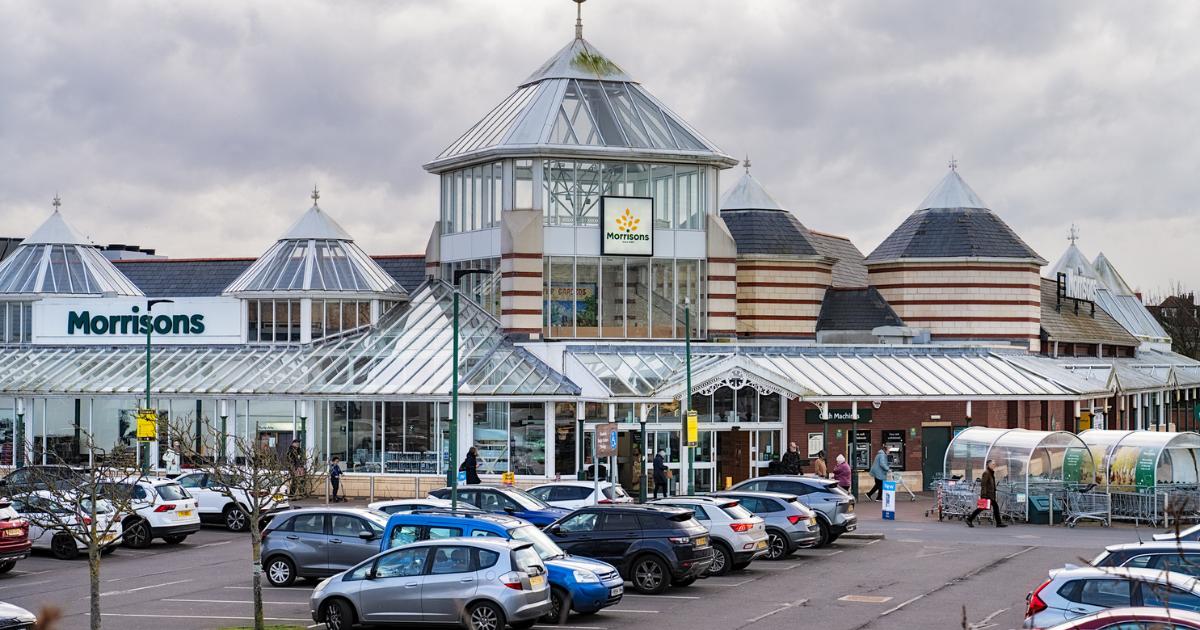
They have been introduced to show customers how the supermarket is supporting UK charity Marie Curie.

The supermarket has joined forces with the charity to launch the Every Pack Gives Back campaign this summer.

Advertisement

The fundraising event will help support the end-of-life charity and the people who rely on it.

When shopping at your local Morrisons store or ordering online, you might spot the bright yellow stickers on items such as the Coburg Cob, a staple at the supermarket’s bakery.

That’s because the yellow sticker is a nod to the charity’s emblem and means that when buying the bakery item, 25p from every sale will be donated to Marie Curie during the fundraising event.

Throughout August, there will be hundreds of Every Pack Gives Back promotional products including:

  • Warburtons Crumpet Thins (8 pack)
  • Lenor Scent Booster Spring Awakening 735g
  • Soreen Malt Loaf 250g

The products will appear on Morrisons shelves and online so customers can support the campaign from home too.

So far, Morrisons and Marie Curie have reached a significant milestone, having successfully raised £7 million.

Advertisement

The supermarket aims to raise £15 million for the charity by October 2027.


Customers can also choose to donate their Morrisons More Card points to the charity in multiples of 1,000 (£1 value).

David Scott, Corporate Affairs Director at Morrisons, said: “Marie Curie’s dedication to people and communities up and down the UK could not be more important, so we are urging customers to pick up a special ‘Cob for Care’ and show their support for end of life care.

“Throughout August, customers can help raise all-important funds for Marie Curie by buying a product in our promotional Every Pack Gives Back range – where a percentage of the sale price is donated to the charity.”

Advertisement

Emma-May Ward, Marie Curie Clinical Nurse Specialist, said: “Every day, I meet patients and families whose stories stay with me long after my shift ends.

“Every person deserves dignity, support and compassion at the end of their life.

“As a charity, we depend on the generosity of the public to fund the expert care we provide day and night for people who need us most.

“The Every Pack Gives Back initiative helps to raise vital funds so we can reach more patients and families when and where care is needed.”

Advertisement

Morrisons to make self-checkout change at 200 stores

Morrisons is making a major change to its self-checkouts as it introduces new AI-driven technology.

The Evercheck system, developed by technology company Everseen, will be installed in 200 stores during the first phase of the supermarket’s rollout, reports What’s The Jam?

It uses real-time computer vision to compare scanned items with those visibly placed in a customer’s basket and alerts shoppers on-screen if it detects a potential missed item.

The system intends to improve efficiency at self-checkouts by reducing interruptions and wait times and the need for staff intervention in cases of routine scanning errors.

Have you seen the yellow stickers in stores or online? Tell us in the comments below.

Advertisement

Source link

Continue Reading

NewsBeat

‘High risk of fire’ at Cambridgeshire nature reserve as visitors asked ‘help protect it’

Published

on

Cambridgeshire Live

The statement was issued after a Suffolk wildfire destroyed a National Trust reserve

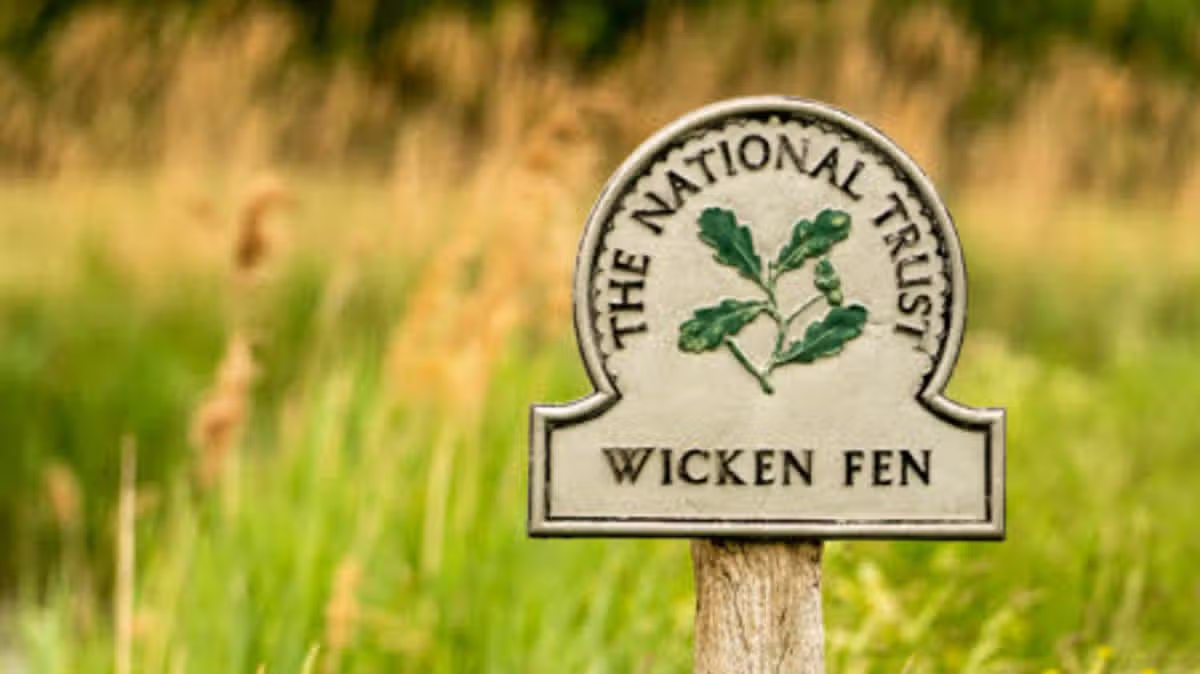
Visitors to a Cambridgeshire nature reserve have been urged to help “protect” it due to a “high risk of fire”. Wicken Fen Nature Reserve has told the public to not bring or light barbeques there due to the “hazardous summer season”.

Advertisement

Visitors have also been asked to not smoke there and to dispose of all litter or take it home. This follows a “devastating fire” at Dunwich Heath, which grew to the equivalent of 220 football pitches in size, according to the National Trust.

A spokesperson for Wicken Fen Nature Reserve added: “Our thoughts are with our colleagues on the Suffolk Coast. We are also mindful of what a fire could mean at Wicken. Thank you for helping us to keep the Fen as safe as possible in this hazardous summer season.”

Firefighters were called at about 5pm on July 29 to a wildfire, which later spread onto Dunwich Heath. The entire landscape was engulfed in flames.

Source link

Advertisement
Continue Reading

NewsBeat

Your bedroom could be the unhealthiest room in your home

Published

on

Your bedroom could be the unhealthiest room in your home

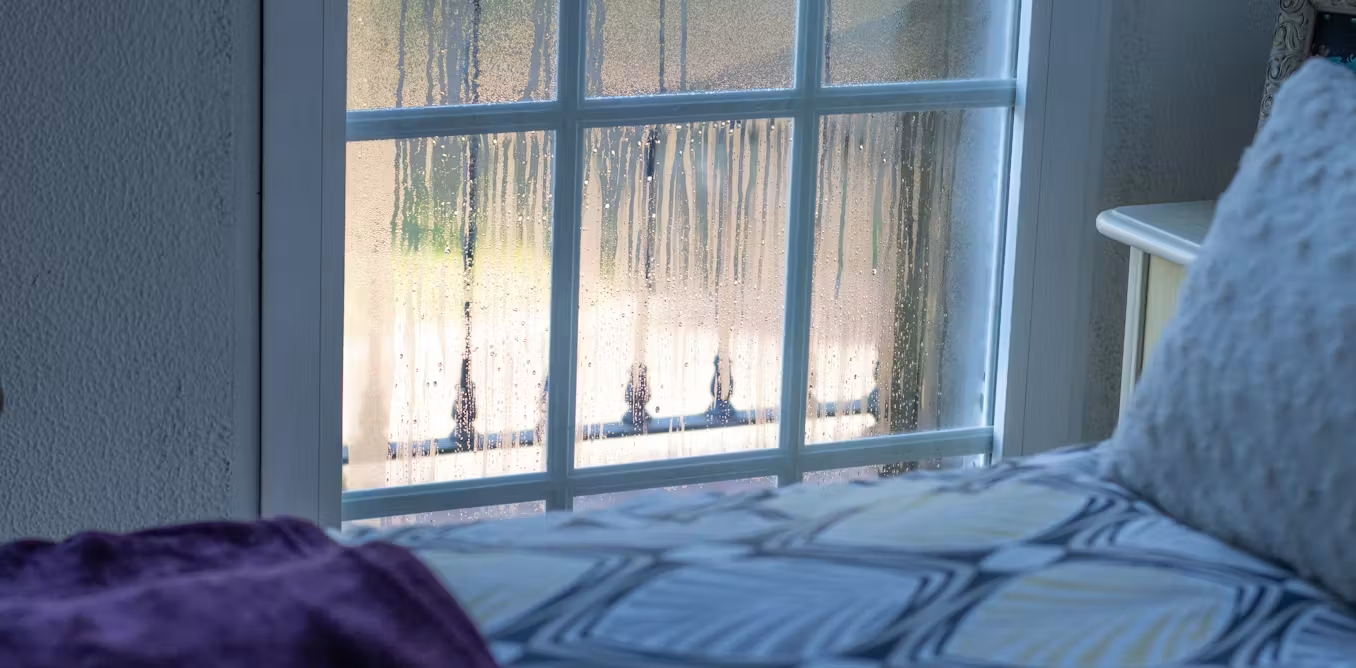
Close the door, shut the windows and turn up the heating, and you have all the ingredients for a sick bedroom in your home – and you spend about eight hours in there every night.

Kitchens and bathrooms usually take the blame for stale air and damp. But researchers spent a winter monitoring airtight, naturally ventilated homes across Scotland. In more than four out of five homes the carbon dioxide (CO₂) in the air remained above the level considered a safe threshold for the entire night. Despite this, more than nine in ten of the occupants thought the air in their bedroom was good.

The reason is not the room. It is you. Awake in the living room, you are a thermostat with hands. When the air turns stuffy, you crack a window. When you feel cold, you close it. This correction stops in bedrooms once you fall asleep, and two things build up: the CO₂ you breathe out and moisture with it.

High levels of CO₂ act as a proxy for stale air. CO₂ levels are measured in parts per million (ppm), a unit of measurement used to describe very small concentrations of a substance.

Advertisement

A study examining 40 Danish bedrooms revealed a troubling threshold: when CO₂ levels reach 1,800ppm, participants’ cognitive function the following day suffered. And sleep quality starts to suffer well below that.

Recognising this risk, strict European standards allow living spaces to reach 1,350ppm above outdoor levels, while restricting bedrooms to just 950ppm above outdoor levels. For reference, CO₂ levels in fresh outdoor air are typically between 420 and 450ppm.

Between 2022 and 2025, I continuously monitored temperature, humidity and CO₂ data using sensors from around 200 Irish rooms in highly energy-efficient but airtight Irish social housing. The bedrooms spent roughly two hours every night in winter above unhealthy levels, while the living rooms next door were fine. The same bedrooms were fine again during summer. The likely reason is that people keep their windows shut in winter to stay warm and open in summer.

Serious health consequences

Two sleeping adults breathe out about a pint of water a night. I run a dehumidifier at home over the winter – it holds two litres, and from October onwards I empty it every other morning.

Advertisement

Moisture, when trapped indoors, settles on the coldest surface – usually, the window or the wall behind a wardrobe. A cold, damp surface in a warm, moist room is an ideal condition for mould to grow.

This is not just a cosmetic problem. Prolonged exposure to mould in a flat in Rochdale, a town in Greater Manchester, killed two-year-old Awaab Ishak in 2020. Consequently, Awaab’s law now legally compels social landlords in England to address damp and mould within strict, fixed deadlines.

Small children are the most exposed of any of us, their lungs and immune systems are still developing, and they sleep longer than adults.

Airing a room by opening the window clears the stale air and the moisture at once, but it lets the heat out. That is the trade-off between fresh or warm air.

Advertisement

The trickle vents (small slots built into window frames for background airflow) are often found shut after energy upgrades, and a 2024 Irish study of retrofitted homes found bedroom CO₂ higher after the work than before, with around half showing visible mould.

People often shut trickle vents.
s.borisevich/Shutterstock.com

This feels like deja vu. After the oil shocks of the 1970s, offices were sealed and ventilation cut to save fuel, and the occupants got headaches, itching eyes and a fog that lifted only when they went home. It was called sick building syndrome. It’s the same – except nobody gets to go home from their bedroom.

Energy-efficient but sick buildings often cost society far more than they save. Renters sit in the middle of it, unable to carry out expensive building changes.

What to do

If an open window loses heat, at least keep trickle vents open. Leave the bedroom door ajar, which gives the moisture somewhere to go.

Advertisement

A generational practice and German daily ritual of Lüften is now popularised on TikTok as “house burping”. By throwing the windows wide open for ten to 15 minutes immediately after getting up, you rapidly purge the stale air and moisture while saving heat loss.

When it is extremely cold, even for Lüften, people often reach for a dehumidifier. These devices cost roughly between £90 and £300, and a typical dehumidifier draws around 250 watts and costs around 6p to 9p an hour to run.

Most dehumidifiers have a humidistat (a small electronic device used to measure and control the humidity) that you can set to a minimum target. A sensible target for a bedroom is 60% – the machine runs until the room reaches it, shuts itself off, and wakes again when the humidity creeps back up. Others run for a specified period, set as desired, or continuously.

Dehumidifiers are a genuine help for a cold, damp bedroom when there are few other options.

Advertisement

While none of this replaces a proper ventilation system, it changes what you breathe at night. For definitive proof of bad air quality in your bedroom, use an indoor air quality monitor. Seeing the hard data is often the best prompt to open a window, clear a vent, or switch on a dehumidifier.

Source link

Advertisement
Continue Reading

NewsBeat

We live in the colourful cottages in Wales’ best place to live by the sea

Published

on

Wales Online

The people of this coastal town are proud of their history, community and vibrant painted streets

When you picture charming painted houses beside the sea in a beautiful Welsh setting, perhaps your thoughts immediately transport you to Tenby, but they probably shouldn’t because there’s a delightful little town considerably further along the coast that has been greeting visitors with spectacular views of colourful homes for generations.

Advertisement

Aberaeron is a town in Ceredigion that sits snugly into the dramatic coastline between New Quay and Aberystwyth at the estuary of the river Aeron, and it has just beaten all the other pretty coastal towns and villages, including Tenby, to be crowned Wales’ best place to live by the sea.

As you descend into it, or pop round the bend while walking along the renowned coastal path, an explosion of pastel hues and darker shades welcomes you — virtually every Georgian and Victorian era property can claim a lovely colour to make their frontage stand out and, when gathered together, the chorus of colour is captivating. For more home, renovation and interiors stories sent to your inbox twice a week sign up to the property newsletter here.

READ MORE: Our noisy neighbour never shuts up and attracts crowds of visitors but we love it

YOU MIGHT ALSO LIKE: We fought off developers to buy an empty building and turned it into a dream home

Advertisement

The town may not be unique in providing houses that lift even the greyest of days but perhaps what enhances the delightful visual spectacle is that so many of the houses appear identical in design and scale and that is largely due to the area’s distinctive history. According to website Coflein the town was conceived and construction commenced in 1805 by the Reverend Alban Thomas Jones as he started upgrading the harbour to establish a more functional port.

The charming central square bears Alban’s name, though architect Edward Haycock was equally instrumental in shaping the town, and together their endeavours earned considerable acclaim, with Aberaeron being described as ‘one of the best examples of a planned township of small scale in Wales’.

According to the website aberaeron.info, a significant number of the houses surrounding the harbour were owned by local sea captains, with many named after distant destinations such as Gambia and Melbourne.

This single phase of construction accounts for the striking consistency found along many of the predominantly Georgian townhouse and Victorian cottage-lined streets, though more recent periods of development are also evident as you venture further from the town centre.

The town flourished as the port expanded, at one point boasting as many as 35 pubs, yet with the arrival of the railways from around 1911, its seafaring heritage gradually faded.

Advertisement

Today, Aberaeron is a thriving tourist destination that swells its resident population of 1,274 by hundreds of visitors, yet even on a cold, wet Tuesday in November, it retains a bustling atmosphere with a warm, community spirit.

The area is also fast establishing itself as a culinary destination, boasting an impressive selection of notable dining spots to suit all tastes, including the renowned Harbourmaster, The Hive, McCowans, The Stubborn Duckling, Y Seler, New Celtic Restaurant, Osteria 1815, and Naturally Scrumptious, alongside a number of pubs serving food such as The Black Lion.

Just two miles outside the town, The Moody Cow is truly special place to unwind and take in sweeping views of the lake and surrounding countryside.

Advertisement

Back in the town centre, the area is equally celebrated for its artisan bakeries, fish and chip shops and Chinese cuisine, alongside charming independent retailers stocking beautiful Welsh homeware, gifts, clothing and accessories, including Seld and Glanmor. The town has also earned a notable reputation for honey production.

Yet it is the town’s picturesque streets, adorned with a wonderful array of heritage colours along most roads, that truly captivate every visitor. Living in one of these iconic painted houses — endlessly photographed and featured across websites and magazines — must be both a privilege and something to grow accustomed to, particularly for those residing on the roads that line the harbour, where visitors flock throughout the year to stroll and snap photographs.

Chris and Jen have resided in their terraced townhouse on one of the more prominent painted streets since 2019, having relocated to the area to support elderly parents. Chris explains: “We fell in love with Aberaeron when we came to visit and looked at a variety of properties because we love the sea, it’s an ideal place and it was a beautiful house as well so we were very lucky to find this.”

Advertisement

The property was perfectly suited to their requirements as, beyond its warm and inviting atmosphere, it required no renovation work and served as an ideal base for Jen’s wellbeing venture, Seedling Retreats and Holidays, which provides sessions and courses across a range of disciplines — from mindfulness and yoga to breathwork — both locally in Aberaeron and on retreats overseas.

Passers-by have occasionally stopped to photograph the property and even peered through the windows, yet Chris remains entirely unfazed by the additional attention their home attracts. He says: “I don’t see it as an intrusion, of course it gets busy during the summer season and the holiday season but that’s part of the nature of a town like this.

“We have some wonderful businesses and restaurants around here and without the tourism we wouldn’t be able to invest as a town into those facilities, and enjoy them for ourselves.

Advertisement

“Throughout the year the town has got carnivals, festivals and there’s a real community here, it’s a lovely place to live. We were living in a more rural location so living in a townhouse on the harbour is a bit different but it’s a wonderful location; waking up in the morning and looking out of the window to the beautiful scenery and the houses, it’s really lovely. We’re by the sea, there’s New Quay nearby, dolphins visiting – the list goes on.”

The pair have maintained the same exterior colour on their house’s façade, believing it was a fundamental part of the property’s character, and integral to the overall street scene and the town’s identity.

Chris says: “It’s a real feature, Aberaeron is well photographed, it’s so picturesque , every angle seems to have a lovely view, we’re really proud of how the town is kept and you can see it all around, it’s echoed in the way the people keep their houses looking so good.”

Advertisement

Local resident Sian grew up in the area and attended secondary school in the town, giving her a deep connection not only to her hometown but also to the house she now lives in — the very property where the trend for painting houses in the town first began.

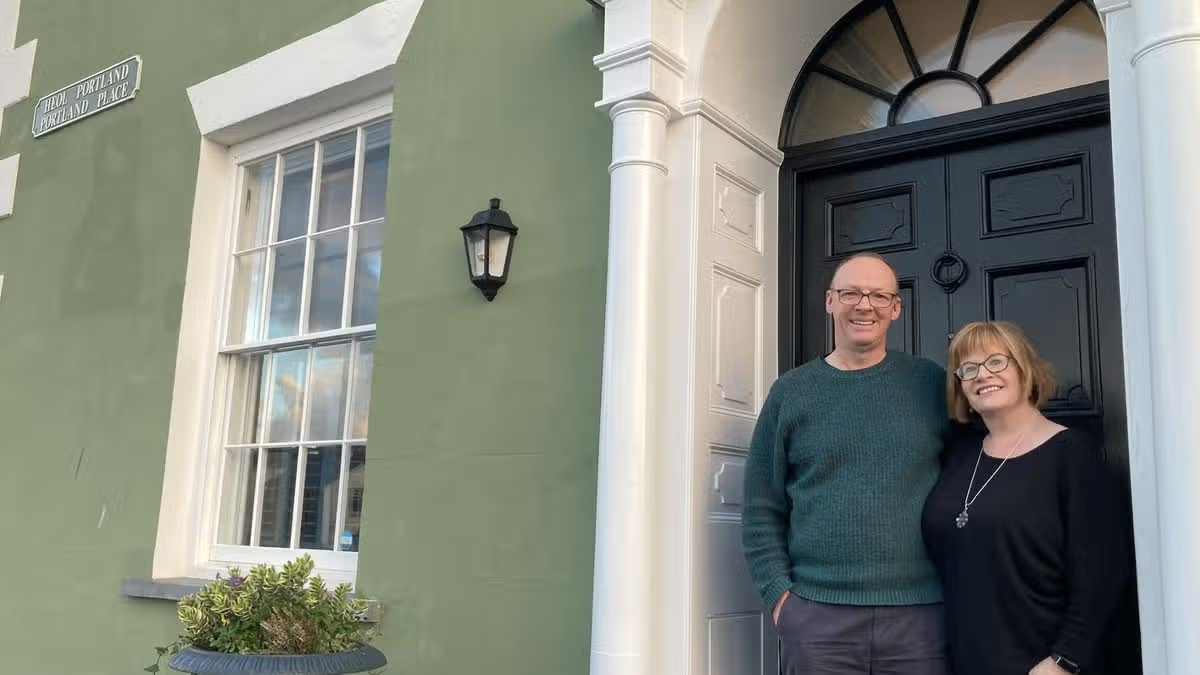
Sian and her partner Billy purchased Portland House four years ago, though they didn’t move in until June 2023, as the four-storey property was virtually derelict and full of unpleasant surprises, including dead birds. Despite this, Sian was determined to rescue it, having always had a deep admiration for the building.

Sian says: “I used to walk down the back road behind the house into town from our old house and would think ‘who on Earth would buy this house?’ Then it came on the market and I had my moment of madness and decided it would be me.

Advertisement

“I’ve always had a particular connection to this house because when I was in secondary school the pupil ‘houses’ were named after the first three chairs of the governors and one of them was Portland House, and I was captain of Portland House, so it’s always been a house that’s had a connection for me, an emotional link, and I used to hate to see the state it was in.”

Yet Portland House holds a distinction that surpasses all its vibrant neighbours — a former owner was the very first person to introduce colour to Aberaeron, having encountered and fallen in love with brightly painted properties in harbour villages during a visit to Ireland. Sian says: “When my mother used to come to town she used to say that it was all grey, a dull town, and every house was just stone.”

During the 1950s, Phyllis Sewell owned three houses in Aberaeron as houses of multiple occupation and, inspired by her Irish travels, painted them all bright pink.

Advertisement

“There was an absolute uproar, everyone thought it was terrible, what was she doing to Aberaeron? The council even got involved,” says Sian, “but gradually people started coming round to the thought that it was a lovely idea and everybody started painting their houses and now there’s probably less than half a dozen houses that aren’t painted, but I actually think that’s quite nice, to see the original houses as they were and then the contrast.”

Portland House now looks stunning, both inside and out, with the faded yellow façade that had replaced Phyllis’ controversial pink now giving way to a serene, deep green — Sian’s preferred colour — offering three floors of living space for the couple, alongside a two-bedroom basement flat that currently operates as a holiday let.

Lucy, 36, lives on one of the quieter side streets off the main road that winds through the town, where the atmosphere is far more relaxed and the likelihood of being disturbed is considerably lower.

Advertisement

She has called Aberaeron home for 15 years and adores living there. She says: “It’s quite busy in the summer but it’s very friendly, everybody knows everybody and they’ll help you if you need help, it’s just a nice place to live.”

A terraced house has been her home for roughly the past five years, and it has recently been transformed from light green to a shade of pink.

Lucy says: “It was recently painted last year, I just wanted something different to stand out really, the painter gave us a chart and we just chose it from there, it’s in a conservation area so there are only certain colours that you’re allowed.

Advertisement

“I’m not changing it any time soon, I’m so indecisive, it took me ages to choose this colour. It is easier to paint your house in Aberaeron because you look down the street and everyone has got different colours, so I think it makes it a bit easier to choose something a bit brighter, but I say if you’re thinking about it just go for it, it just looks so much better.”

For more property, renovation, and real life stories join our Amazing Welsh Homes Facebook group here.

Source link

Advertisement
Continue Reading

Trending

Copyright © 2025