Workers who use their own cars for their jobs could be missing out on hundreds of pounds after a major change to mileage rates – and Martin Lewis says it is one of the most overlooked money-saving measures this year.
The MoneySavingExpert highlighted a little-known rule that could boost payments for millions of employees who drive between workplaces, visit clients or travel as part of their job.
From April, the Government increased the approved mileage allowance for cars and vans from 45p to 55p per mile for the first 10,000 business miles driven each tax year – the first rise in more than a decade.
Advertisement
The change does not apply to ordinary commuting between home and work. Instead, it affects workers who regularly travel for business, including care workers visiting clients, tradespeople, sales staff, community nurses, engineers and anyone required to drive between different locations during the working day.
Speaking on BBC Radio 5 Live, Martin Lewis said: “The big one that I think is going to be under-covered, but is actually really important, is the increase in the mileage allowance for people who drive as part of their work.
“This has been frozen at 45p since, I think, 2011, so the increase from 45p to 55p for the first 10,000 miles that you drive is really important.”
The new rate means employers can reimburse staff up to 55p a mile without the payment being subject to tax or National Insurance.
Advertisement
But Mr Lewis warned there is another part of the rule many workers may not know about.
If an employer pays less than the approved rate, employees may be able to claim tax relief on the difference through HMRC.
He explained: “If your employer doesn’t give you the full amount of the mileage allowance – let’s imagine they give you 30p and the allowance is 55p – you can claim tax back on that 25p per mile that you drive as part of your work, not commuting.”
Recommended reading
Advertisement
And if an employer pays nothing at all, workers could claim tax relief based on the full 55p rate.
After the first 10,000 business miles, the approved rate falls to 25p per mile.
The rules also apply to self-employed people using their own vehicles for business purposes, although mileage rates for motorbikes and bicycles remain unchanged at 24p and 20p per mile respectively.
For workers covering thousands of miles each year, the change could mean significantly more money back – but only if they know to check what their employer pays and whether they are eligible to make a claim.
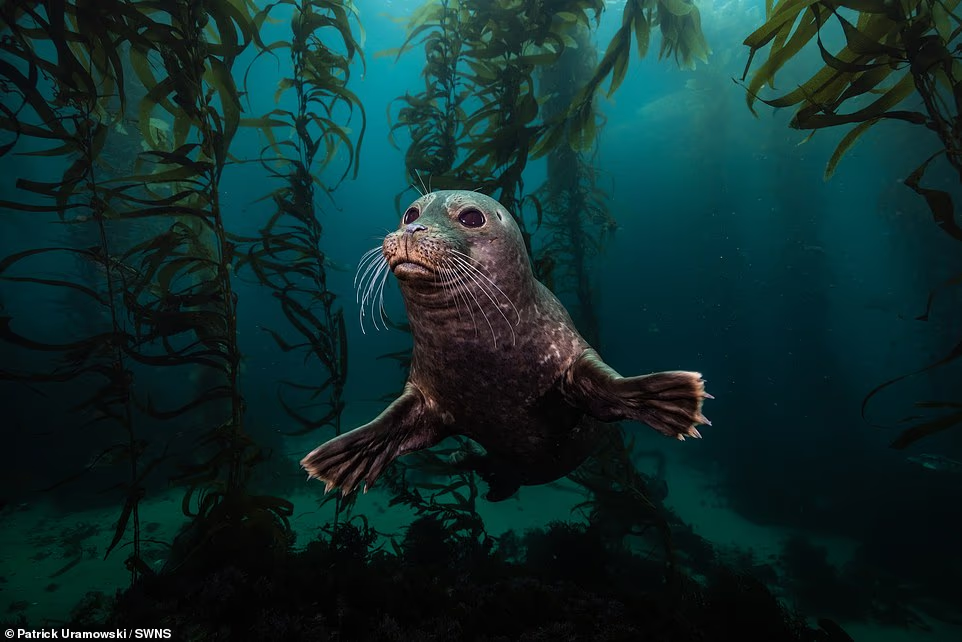
A seal in a kelp forest and a juvenile whale shark surrounded by divers feature among winners and runners-up in the Underwater Awards Australasia 2026.
The results of the photographic competition were announced on Saturday, with nine category winners chosen from hundreds of photo and video entries.
Underwater photographers from around the world submitted entries captured in the region, along with those from international waters.
Highlights of the contest included incredible close-up views of a Bryde’s whale in Mexico‘s Magdalena Bay, a sea turtle in Florida and a leopard seal in Antarctica.
Advertisement
Another impressive photo shows two bottlenose dolphins working together to herd a tightly packed school of parrotfish, while the effects of wildlife tourism are documented as a juvenile whale shark is surrounded by divers off Koh Tao, Thailand.
Contest organisers said: ‘The competition called for passionate underwater shooters from around the world to submit their most captivating and compelling images and videos from the Australasian region.
‘Shooters were invited to immerse themselves in the challenge of capturing the essence of this extraordinary realm, where every frame tells a story of the delicate balance and breathtaking beauty that characterises our oceans.’
Advertisement
A seal in a kelp forest features among winners and runners-up in the Underwater Awards Australasia 2026. Nine category winners were chosen from hundreds of entries
A turtle surfaces at sunrise in waters around Florida
A leopard seal is seen showing its teeth in Antarctica
This photo titled ‘Teeth of the Reef’ was captured in Kurnell in Sydney
Advertisement
A juvenile whale shark and scuba divers are seen off Koh Tao, Thailand
Two bottlenose dolphins herd a tightly packed school of fish in Western Australia
The common Sydney octopus is pictured in Port Kembla, in NSW, Australia
Bryde’s whale pictured with a mouthful in Magdalena Bay off the west coast of Mexico
Advertisement
Two seahorses are seen canoodling in this photo captured in Rye Pier, Victoria, Australia
A clownfish is seen in defensive mode in Romblon in the Philippines
A female blanket octopus is seen migrating in Anilao, Batangas, Philippines
A lionfish is seen on Ribbon Reef on the Great Barrier Reef in Queensland
Advertisement
A humphead wrasse, a coral reef fish that grows up to six feet long, on the Great Barrier Reef
A diver is pictured inspecting a long-running coral restoration initiative in Bali
Share or comment on this article:
Incredible sight to sea! Winners and runners-up of the Underwater Awards Australasia are revealed
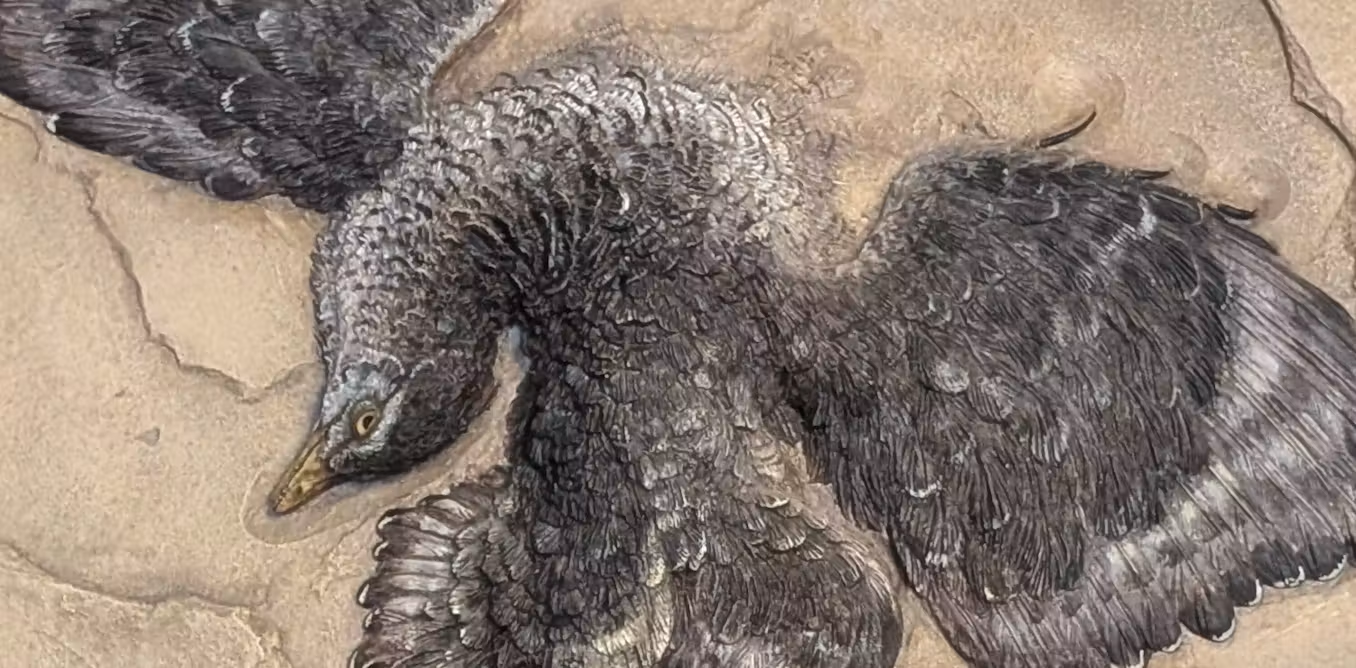
Archaeopteryx is an icon of evolution and is often called the first bird. Scientists have long debated just how it took off from the ground but a recent study published by my colleagues and I has brought new insights to the mystery.
Our study compared Archaeopteryx with the anatomy of modern birds, and our findings suggest it generated the force needed to take off by taking several jumps forwards.
Archaeopteryx, a fossil uncovered from the Jurassic rocks of Germany, dates back 150 million years. It was covered in feathers and it had wings. But it retained a number of distinctly dinosaur features such as a long bony tail, claws on separate fingers and teeth in a beakless jaw.
Charles Darwin predicted, in the first edition of On the Origin of Species published in 1859, that fossils would later be found linking major groups of animals. A year after publication a feather, and within two years, an entire skeleton of Archaeopteryx had been discovered, showing clear links between birds and the dinosaurs. Archaeopteryx is one of those transitional forms that links one group to another.
Advertisement
The “first bird” was not perfectly developed, as birds have evolved to be today. We would not expect them to be. It had relatively weak flight muscles, with no keeled sternum for strong muscle attachment, and could not have raised its wings above the horizontal.
Rather than call it the first bird, it is better to describe it as the earliest branching species, yet known, on the lineage of birds after the whole bird group split from non-avian dinosaurs some time more than 150 million years ago.
In 2016 my friend Colin Palmer asked a colleague, Markus Heller (professor of biomechanics) and me to join him in exploring a tricky problem: how did early birds slip the bonds of Earth and take to the sky?
Palmer had been working on the flying cousins of dinosaurs, the pterosaurs for over a decade, and also a peculiar (although now one among several known) four-winged, feathered and flying dinosaur called Microraptor. However, pterosaurs are not dinosaurs and Microraptor is a dinosaur closer to Velociraptor (small meat-eating dinosaurs) than to birds.
There have been a number of suggested mechanisms for the evolution of flight and takeoff, quite literally from the ground up, or the trees down, to flapping while running to climb a slope. The problem is that these are difficult to test experimentally. So we turned instead to the best example of takeoff there is: birds themselves.
Palmer had already filmed a number of birds, out of curiosity. As some other scientists had observed, but had never followed up, Palmer saw that they all showed the same sort of pre-takeoff behaviour. Two leg jumping. The wings appeared to do little in getting the bird off the ground, and this opened up some possibilities for research into the earliest of birds.
The ancestors of birds, the theropod dinosaurs, had powerful legs. They could definitely jump, and jumping could provide an important evolutionary advantage. Being able to get out of the way of a hunter, and maybe adding in a flap of your feathered arms to extend your leap, might just save your life.
Advertisement
The first bit of this research, which we carried out with then undergraduate student Erik Meilak, was developing a means to see how much force the hindlimbs of birds generate in getting off the ground. We used a force plate (a modified kitchen scale) and a Raspberry Pi computer controlling some high-speed photography, along with CT scanning of the skeleton to see exactly how bones were articulated. We worked out how magpies got off the ground. They used their legs as the primary generator.
This undergraduate summer project became a fully-fledged PhD project, with Meilak looking at several birds such as starlings and crows. We worked with evolutionary biologist Pauline Provini in Paris who had done work with doves and finches, demonstrating how all of these birds used their legs in takeoff.
And with detailed kinematics, all of the forces and moments generated by the muscles around the hindlimb joints, we fitted the model to Archaeopteryx and looked to see if the first bird could get into the air in a similar way to modern birds.
Archaeopteryx is by definition 150 million years behind the “leaps” of modern birds, and couldn’t take off as we had observed modern birds do when startled, explosively, with a single jump and then add flapping into the sky. Archaeopteryx couldn’t do that, and as I said couldn’t rely on its wings for powerful flaps. So we had asked what its legs could do. And like birds today, when taking off more leisurely, we demonstrated that Archaeopteryx could have got into the air with two leg leaps. Archaeopteryx could have used three jumps increasing in velocity, and once airborne its flapping wings could have maintained a flight speed of 7 metres per second.
Advertisement
Archaeopteryx may have used a jump start to get in the air. Science Graphic Design, Author provided (no reuse)
However, if Archaeopteryx had added in a flap, it would have got to that speed – jump-flap-jump – with just two leaps. And all this without the highly evolved and flight-adapted anatomy of pigeons, crows, hawks and even chickens.
In the future we may find a fossil that is still a bird rather than a non-avian dinosaur, but is less, well, “birdy” than Archaeopteryx, and then that would become the earliest branching taxon. But we haven’t yet. So Archaeopteryx still sits on its perch as the first bird that we know of.
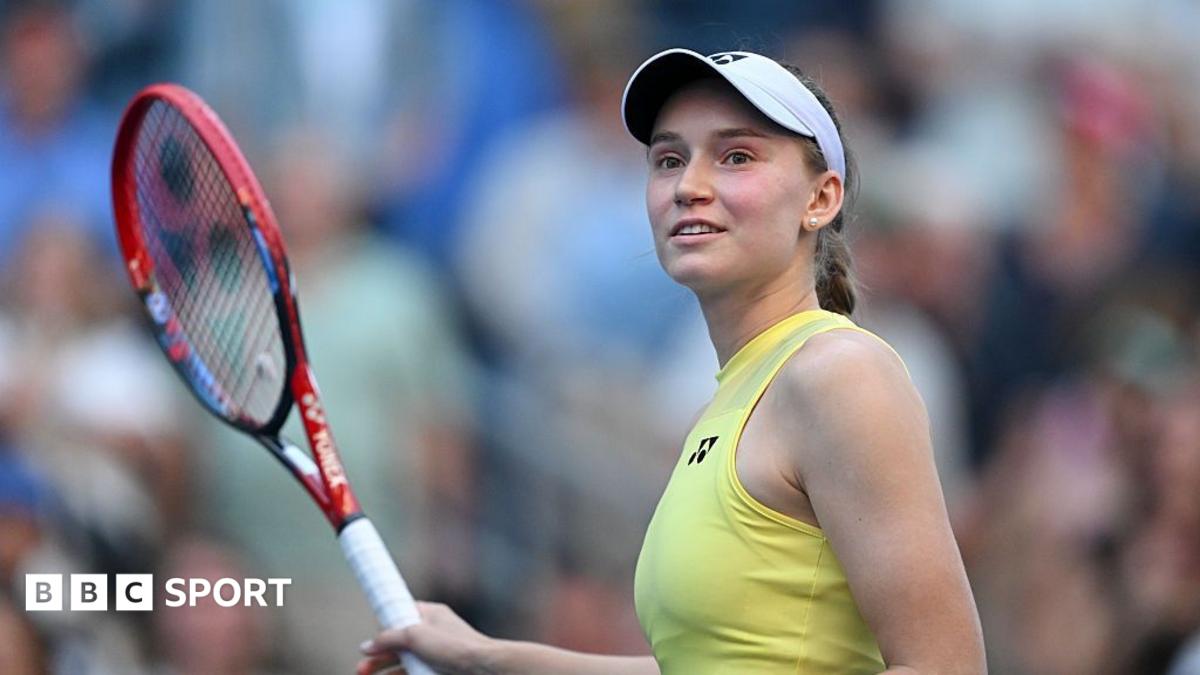
Rybakina, 27, dropped only four points in a near flawless performance on serve against four-time Grand Slam champion Osaka, who said after the match she was struggling with pain in her leg.
She faced the 28-year-old full of confidence, having not dropped a set in her opening three matches at the tournament, and took control of the contest in a dominant first set.
Reigning Australian Open champion Rybakina opened up a double break over Osaka, before sealing the set in just 21 minutes.
Osaka showed greater resistance early in the second set but, after failing to convert her only break point of the match, Rybakina soon seized control again.
Advertisement
She broke to go 4-3 up, before safely seeing out the rest of the match, with Osaka unable to contend with her opponent’s deep groundstrokes.
Rybakina sealed the match inside 66 minutes with her seventh ace of a match where she hit a total of 29 winners to Osaka’s nine.
Asked about the gap of almost six years since her last major win, at the 2021 Australian Open, Osaka said: “I thought about it, and if I win another Grand Slam, it’s not going to change my life.
“That’s kind of crazy that I can say that, because I remember the first Slam that I won, it was, like, a huge whirlwind.”
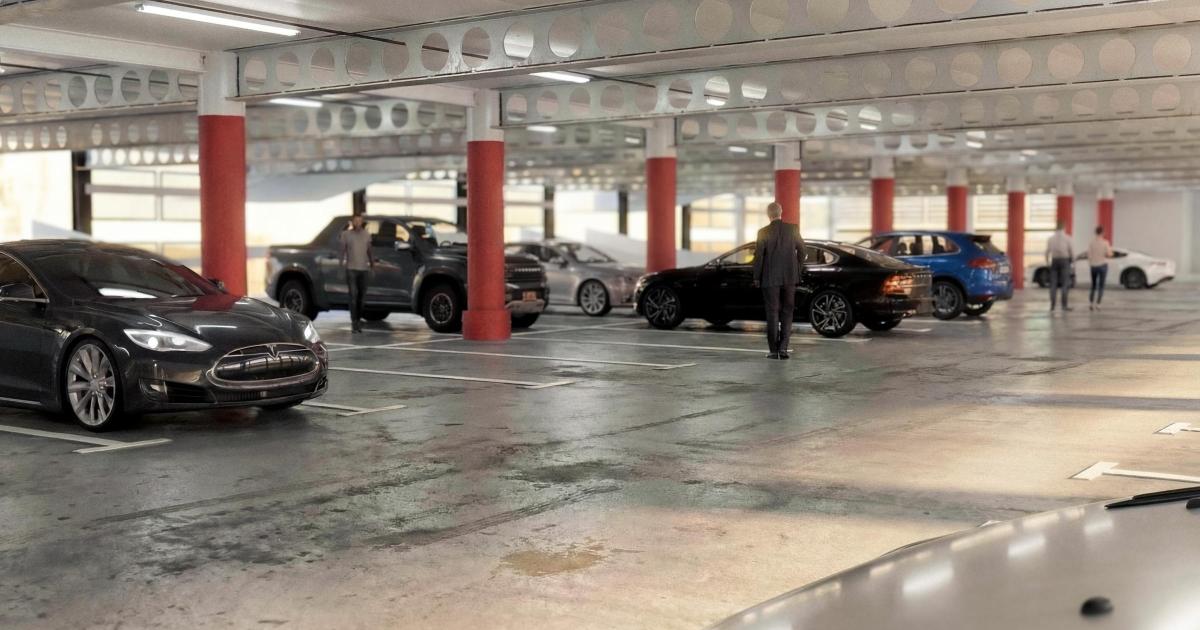
Ten concrete pillars at Newcastle’s six-storey Times Square multi-storey have been reinforced.
MGM Construction carried out the project for the Centre for Life, which believes it is the first of its kind in Europe and could guide other ageing car parks.
Large batteries can make electric vehicles much heavier than equivalent petrol or diesel models, raising concerns about the strain on decades-old structures.
Times Square car park
Phil Burridge, managing director of MGM Construction, said: “While electric vehicles are greener, their huge batteries mean they can weigh up to 600kg more than petrol and diesel cars.
Advertisement
“As more people drive electric vehicles, all that extra weight risks putting undue stress on a car park’s existing concrete pillars.
“When car parks were built decades ago, such heavy vehicles didn’t exist, and the logic was always that cars would get lighter – not heavier.”
Times Square Car Park is widely used by commuters as well as football and music fans because of its proximity to Newcastle city centre, the Utilita Arena and St James’ Park.
Mr Burridge said closing the car park during the work was not realistic because so many people rely on it.
Advertisement
Engineers initially thought three columns needed strengthening, but investigations showed all ten required reinforcement.
Mr Burridge added: “Nothing like this has ever been attempted before, so it took a lot of our team’s expertise and vast skill set to ensure we could do so with minimal disruption whilst, most importantly, keeping the public safe at all times.”
Workers wrapped the pillars in steel collars before pouring high-strength concrete around them during tightly controlled 45-minute windows.
The collars left little room for access, while the concrete took about three days to reach its initial set.
Advertisement
MGM said post-work tests showed the car park was ready to handle future demands.
Mr Burridge said: “Thankfully, our comprehensive testing shows that having future-proofed this car park for electric vehicles, the site is now in phenomenal shape to meet any future demands.
“However, car park operators across the UK will need to ensure that their sites are ‘EV-proof’ and can withstand potentially hundreds of tonnes of extra weight in the coming years.
“We hope that our work can act as a blueprint for other sites going forward.”
Advertisement
Claire Adams, chief operating officer at Life, said the investment would prepare the Newcastle site for changing travel habits and extend the building’s life.
She said: “This investment supports Life’s strategic direction by helping to future-proof an important city-centre asset responsibly and sustainably.
“By strengthening the existing structure, we are preparing Times Square Car Park for changing travel habits, including the growth of electric vehicles, while extending the life of the building.”
It said that rates are highest in the most deprived areas, and Northern Ireland now has the highest infant mortality rate in the UK
Northern Ireland now has the highest infant mortality rate in the UK, paediatricians have said.
Advertisement
The Royal College of Paediatrics and Child Health (RCPCH) said its Northern Ireland-focused briefing, following a recently launched UK State of Child Health 2026 report, should be a “wake-up call” for everyone in the region.
The report provides an overview across the UK, analysing progress against 12 child health indicators, such as infant mortality, mental health, obesity, immunisation, and asthma.
The analysis of Northern Ireland data carried out by the RCPCH said that infant mortality in Northern Ireland has increased from 4.2 deaths per 1,000 live births in 2018 to 4.5 per 1,000 in 2024.
It said that rates are highest in the most deprived areas, and Northern Ireland now has the highest infant mortality rate in the UK.
Advertisement
Their figures also said that MMR vaccination uptake has fallen steadily since 2020.
The RCPCH said that by age five, just 86% of children had received both doses of the MMR vaccine.
It also said that Northern Ireland has the lowest uptake of the 6-in-1 childhood vaccine in the UK and that more than a third of 11- to 12-year-olds (34.7%) were classified as overweight or obese in 2023/24.
The Royal College also said that mental health indicators in the region are worsening.
Advertisement
It said an estimated 45.2% of 16-year-olds have a probable mental illness, while wellbeing among 11-year-olds is at its lowest recorded level since 2010.
The RCPCH said: “Since the first State of Child Health report in 2017, Northern Ireland has experienced several years without a functioning Executive.
“This turbulent political context, combined with an increase in the demands on paediatrics services, has contributed to lengthening waiting lists, expanding inequalities and a system under immense pressure.
“Without urgent action, paediatricians are clear that we are potentially raising one of the unhealthiest generations of children in decades.
Advertisement
“Failure to improve child health today risks lifelong health problems, poorer educational outcomes and entrenched inequalities.”
The College said it has set out a “clear and achievable roadmap for the next Executive to advance child health”.
It added: “The manifesto focuses on building a sustainable workforce, creating a data-informed system, ensuring equitable investment in child health services and tackling the root causes of poor health and inequality.
“Together, they offer an opportunity to create a healthier future where every child has the best possible start in life.”
Advertisement
RCPCH officer for Ireland, Dr Thomas Bourke, said: “The findings in this briefing should be a wake-up call for everyone in Northern Ireland.
“Across a range of key indicators, from infant mortality and obesity to mental health and vaccination uptake, we are seeing evidence that too many children are being let down.
“Children are paying the price for years of political instability, underinvestment and a failure to prioritise their health and wellbeing.
“As paediatricians, we see the consequences of this shocking decline every day in our clinics, hospitals and communities.”
Advertisement
“Ahead of the next Northern Ireland election, we are calling on all political parties to make child health a priority.
“Meaningful change is possible, but it requires leadership, long-term commitment and investment in the services children and families rely on.
“Every child deserves the healthiest possible start in life, and we must act now to create a better future for children across Northern Ireland.”
Here’s what the stars have in store for your day (Picture: Metro.co.uk)
As the Moon and Jupiter connect in forthcoming Leo, conversations and interractions will have a warm quality. Enjoy how easy the day ahead is.
Pisces, Aquarius and Capricorn, your relationship realm will be particularly fulfilling today. Allow bonds to grow and change.
Take this chance to communicate an idea or get to know someone better. Sometimes, the most unexpected connections yeild the most fruitful outcomes.
Ahead, you’ll find all star signs’ horoscopes for today: Tuesday September 8, 2026.
Advertisement
Like checking your horoscope every morning? You can now sign up to our free daily newsletter to get a personalised reading for your star sign delivered straight to your inbox.
To order your unique personal horoscope based on your time, date and place of birth, visit patrickarundell.com.
Aries
March 21 to April 20
The Moon and Jupiter forge a lovely connection in the warm and generous Leo. This can create a feelgood factor and also make you more inclined to spend time with friends or support a good cause. However, this uplifting planetary energy can also be linked to a larger theme developing, and a new friendship or group may be poised to become more important.
Use AI to go deeper into the stories you care about – powered by Metro and trusted publications.
April 21 to May 21
Advertisement
There has been a very social dimension to your chart of late, which has given you plenty of opportunities for playful interaction, or to showcase your unique talents. If you have played host through this, this may have proven particularly enjoyable. However, today, getting together with those you are really close to, including family members, may be a bigger draw.
The Sun and Mercury have recently emphasised your personal, family and home strands, or a business you run from your abode. Today brings a welcome shift of energy. Your word power is boosted in two lovely ways and gives you a greater desire to enjoy linking up with a friend or contact. Whilst enjoying their company, you could also have a powerful conversation.
If you’ve been trying to be careful with your diet, you may find yourself tempted today. It could be with a calorific goodie, one you may have resisted for some while. Will you give yourself a treat? If you are determined to stick to the plan, you may decide to enjoy yourself in another way, with a slice of retail therapy, but here your resistance can be lower, Cancer!
There is little doubt that, astrologically, you have been blessed with a unique platform over the last six weeks to show what a one-off you are. And whatever type of Leo you perceive yourself to be, burnish this brightly. Today gives you another chance to dazzle people with your charisma, but equally your generosity can see you offer warm support or a kind gift.
You have been the zodiac’s busiest of signs of late, initiating new beginnings, injecting more vibrancy into ongoing strands, and showcasing your plans in a single-minded way. However, with the Moon and Jupiter linking in a gentle, reflective area today, you may appreciate a little more you time, kicking back and taking stock of all, you have started or achieved.
Cosmic messages for Cosmic messages for Virgo today
Libra
September 24 to October 23
You might have been more cautious around the company you have kept recently – understandably with the Sun and Mercury sitting in a secluded but cautious part of your horoscope. Today, however, is the perfect time to meet up with a longtime or trusted friend for a catch-up. You may both enjoy it so much you agree to meet again before too long.
Your contacts and connections have likely proved helpful recently. Then again, you may have given someone in your circle some valuable support. Today, whether in a work or worldly scenario or within your family, people may look to you for leadership. If so, it’s because they believe that you will encourage them to shine, not look to draw attention to yourself, Scorpio.
The Moon and your ruler Jupiter encourage you to think bigger, especially when it comes to travel, learning, or experiences that broaden horizons. You may also find yourself more generous with your time, knowledge or encouragement. Venus’s lovely, developing link with the North Node suggests that a conversation could be more significant than it first seems.
You may be ready to invest in something that brings greater comfort or security. However, this doesn’t have to be a financial strand, although it could be, as much as a situation with deeper meaning. This may be a friendship, new relationship or even a pastime you find compelling. Freshness and greater resonance are a very attractive mix for you just now.
As the Moon and Jupiter link arms, they can bring a wonderfully warm quality to your relationships. Someone may be particularly generous, or you may be the one helping people out. This can be even more so if there is a bigger meaning to all this. Be it a community meet-up, support group, or an online forum, these kinds of connections can be appealing.
You have recently had a fine chance to enjoy the company of a special friend or partner. With the Moon and Jupiter linking in a practical zone today, you and your companion can enjoy one another’s company by going to the gym, playing sport, or car sharing to get the groceries. Either way, you can support each other but make also have fun as well as being productive.
Your daily Metro.co.uk horoscope is here every morning, seven days a week (yes, including weekends!). To check your forecast, head to our dedicated horoscopes page.
As a loyal Metro reader, we want to make sure you never miss our stories when searching for your news. Whether it is the latest politics news explained, live football coverage or a showbiz scoop.
Click the button below and tick Metro.co.uk to ensure you see stories from us first in Google Search.
Most of these cases of high blood pressure are shaped by how we live and what we eat. This means that making changes to your diet can have a big impact on your risk of developing high blood pressure.
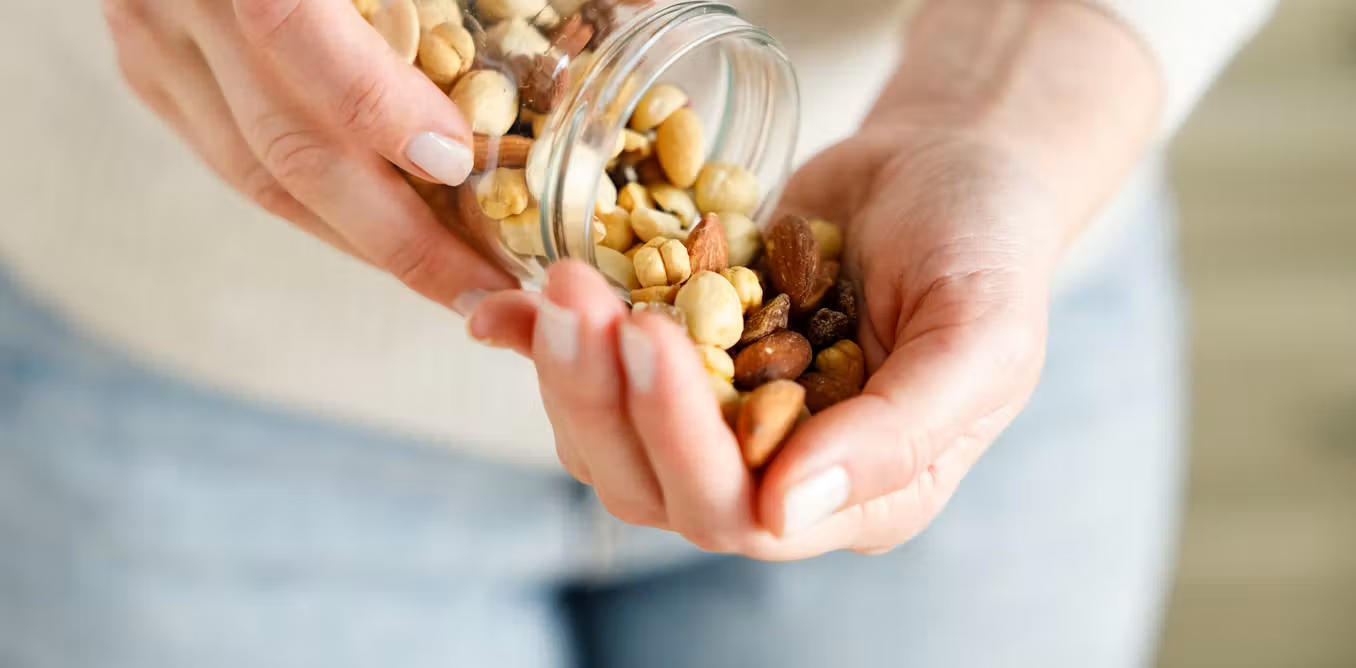
Even small changes can help, as our latest research shows. We found that adding just one serving of nuts into your daily diet is linked with lower hypertension risk.
It’s well known that eating more plant foods is associated with a lower risk of hypertension – but research on the impact of nuts has been limited to date.
Advertisement
Fruits and vegetables are associated with a lower risk of hypertension, with consumption of 800g (ten portions) per day reducing the risk by 11%.
Whole grains – brown rice, oats, wholemeal bread – are similarly linked to lower risk of hypertension. Our research found that the people who consumed the highest amount of whole grains each day had a roughly 26% lower risk compared to people consuming the least.
Our latest analysis published in the British Journal of Nutrition, now shows the clear impact eating nuts can have on hypertension risk.
Advertisement
Our study pooled data from 143,000 people – including 20,665 people who had hypertension. We found that eating around a handful of nuts daily (between 30-35g) was linked with a 26% lower risk of hypertension compared to not eating any nuts.
Why plant foods work
Plant foods share a few key characteristics, which may explain why they’re beneficial for the heart.
Plant foods also provide fibre that feeds gut bacteria so they can produce short-chain fatty acids – compounds that are linked to lower blood pressure.
Advertisement
Many plant foods also contain L-arginine and nitrates, which the body converts into nitric oxide in order to widen blood vessels. Plant foods are rich in polyphenols, which have also been associated with lower blood pressure.
These overlapping mechanisms all nudge blood pressure down, and help explain the link between plant-rich diets and lower risk of cardiovascular diseases.
Eating a well-balanced diet that contains plant foods will have the greatest heart health benefits. Kabachki.photo/ Shutterstock
But as tempting as it might be to call nuts a heart health “superfood,” their real power lies within a broader pattern of healthy eating. While reductions in hypertension risk are observed with intake of even just one daily serving of nuts, a diet built around several whole plant foods may provide even further benefits.
Advertisement
This is exactly what Dash, Mediterranean and plant-based diets prove. They all work because they put these different plant-based foods on the same plate.
However, it’s worth noting that the studies included in our analysis are observational. This means they show that people who eat more nuts tend to have lower blood pressure, but they cannot fully prove that nuts are the cause.
People who consume more plant foods in their diet also tend to follow other healthy lifestyle habits such as regular physical activity. Although our analysis adjusted for many of these factors, we cannot fully rule their impact out.
But the randomised controlled Dash diet trials, where diet is actually changed to include more vegetables, whole grains and lean protein, are what give us confidence the link is real. Similarly, intervention trials, which compared the effects of multiple different plant-based diets, also show benefits for blood pressure reduction.
Advertisement
There are knowledge gaps to note, too. The nut studies we included in our review did not separate salted from unsalted. Since salt raises blood pressure, the true benefit of unsalted nuts may even be larger than reported.
Most of the data also came from Europe, the Americas and East Asia. Little evidence came from Africa and India. More large studies conducted in a variety of regions will help sharpen the evidence base.
The takeaway is practical and affordable. You don’t need supplements or fads. Fill half your plate with fruit and veg, choose whole grains, build meals around beans and tofu and add a handful of unsalted nuts. These are small habits that add up to a significant reduction in one of our biggest health risks.
It then travelled through a perimeter fence and collided with a Toyota Corolla, coming to rest about 1,300ft (394m) beyond the runway.
Homendy described the crash scene as “devastating”, with debris from the aircraft, vehicles and airport fencing scattered across the area.
“It’s hard to see, and I’m sure very difficult for the first responders as well,” she said.
She said recovering victims’ bodies was the current priority, adding: “The investigation and access to the aircraft, as well as evidence, can wait.”
Advertisement
The flight data recorder and cockpit voice recorder have been recovered and are being sent to NTSB headquarters for evaluation.
Homendy said investigators could not yet say anything substantive about the cause of the crash as they were still collecting evidence at the scene.
Investigators will examine the flight history, crew experience and training, radar data, and aircraft performance. Separate teams will look at the plane’s systems and engines, while a meteorologist will assess the weather conditions at the time of landing.
The NTSB will also examine whether the runway should have had an engineered materials arresting system (EMAS), which is designed to slow and stop aircraft that overrun a runway. Homendy said this would be a “key” part of the investigation.
Advertisement
Earlier analysis by BBC Verify found there was an active thunderstorm near the airport shortly before the crash, with winds gusting up to 26 knots.
The NTSB has appealed for members of the public to share photographs or videos that could aid the investigation.
Homendy said the agency would make safety recommendations at the end of its investigation. “That’s why we’re here – to prevent the next tragedy,” she said.
“Our recommendations must be implemented, or we’ll be here again.”
Advertisement
Two of the four runways at the airport remained closed following the crash. Passengers have been warned to expect further disruption after Sunday’s cancellations affected the arrival of aircraft and flight crews.
The crash happened during the Labor Day holiday weekend, one of the busiest travel periods in the US.
Amazon said it was “heartbroken” by the loss of life and that it was working closely with authorities.
21 Air, the company operating the aircraft, expressed its condolences and said it was co-operating with the investigation.
WASHINGTON (AP) — Iran state media on Monday said a ballistic missile with improved capabilities was demonstrating a new doctrine: Tehran “will take action against any threat, even before it is carried out.”
The report by Iran’s state news agency repeatedly cited comments aired on state TV the day before by the head of Iran’s Supreme National Security Council, Mohsen Rezaei, who boasted of new missile capability and claimed it had been “tested” against a U.S. warship. But it was not clear whether what was tested was the missile the new report described, the solid-fueled Qassem Basir.
The U.S. on Saturday said ballistic missiles were launched at U.S. warships and it struck three Iranian oil tankers in response. Experts called the launch a dangerous escalation, noting that until then Iran’s attacks at sea had targeted commercial shipping during six months of war. The U.S. said the warships evaded the attacks.
Iran’s messaging in recent days has become more assertive, and Monday’s report said the Qassem Basir marks “a turning point in Iran’s defense strategy.” It described the missile as having greater range and accuracy and a half-ton warhead. The missile was unveiled last year, when it was described as having at least a 1,200-kilometer (745-mile) range.
Advertisement
Concerns about Iran’s ballistic missile program were one of the stated reasons the U.S. and Israel attacked Iran early this year, sparking the war.
US dismisses talk of Iran-imposed ‘exclusion zone’
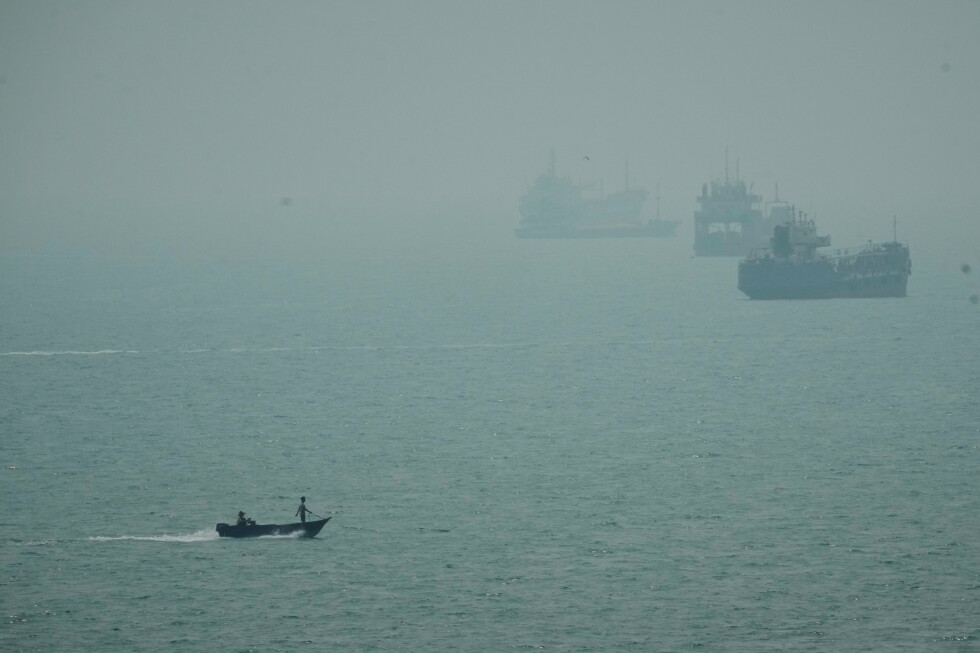
The White House responded to plans announced by Rezaei to create an “exclusion zone” near the Strait of Hormuz that’s aimed at vessels trying to transit, saying the waterway is open and controlled by the U.S.
It also said the U.S. Navy had cleared the strait of mines, and that tanker traffic to non-Iranian ports would increase. A U.S. blockade on Iranian ports continues in an effort to increase Tehran’s economic pain by limiting its oil exports. The U.S. military said that as of Monday, 94 commercial vessels had been redirected and three had been disabled.
Tehran wants ships to follow a route it chooses through the strait, which was considered an international waterway before the war. Rezaei acknowledged that the U.S. has been helping a limited number of ships transit on a route off Oman, and said Tehran isn’t sinking them because they carry oil, noting environmental concerns.
Advertisement
As both countries continue to assert claims about the strait and the flow of shipping, global commerce information firm Kpler noted on X that transits through the waterway dropped sharply last week.
A week ago, an attack on a Saudi-owned tanker killed two crew members and left seven unaccounted for. If they are confirmed dead, that would make the attack the deadliest on a commercial vessel since the war began on Feb. 28 with U.S. and Israeli strikes.
Regional countries express frustration
Frustration emerged again in the Gulf over the uncertainty around the waterway that’s crucial for shipping global supplies of oil, natural gas and related products like fertilizer.
“No single state” should control the strait, Anwar Gargash, a diplomatic adviser to the UAE president, said at a forum of world leaders in Abu Dhabi, adding: “Our energy exports will not be held hostage, nor will our trade and economic activity.”
Advertisement
The UAE, a close U.S. ally, has repeatedly come under Iranian missile and drone fire in the war. Last month, the UAE suspended all trade with Iran after saying it had come under renewed fire.
Rebuilding trust between Iran and the Gulf countries could take decades, Gargash warned.
Advertisement
Sign up for Morning Wire:
Our flagship newsletter breaks down the biggest headlines of the day.
Advertisement
And Nabil Fahmy, secretary-general of the Arab League, told a ministerial-level meeting in Cairo that “we will not accept our maritime corridors to become a bargaining chip in the calculations of others” and condemned Iran’s attacks on Gulf nations.
___
Anna reported from Jerusalem. Associated Press writers Josh Boak in Washington and Fatma Khaled in Cairo contributed.
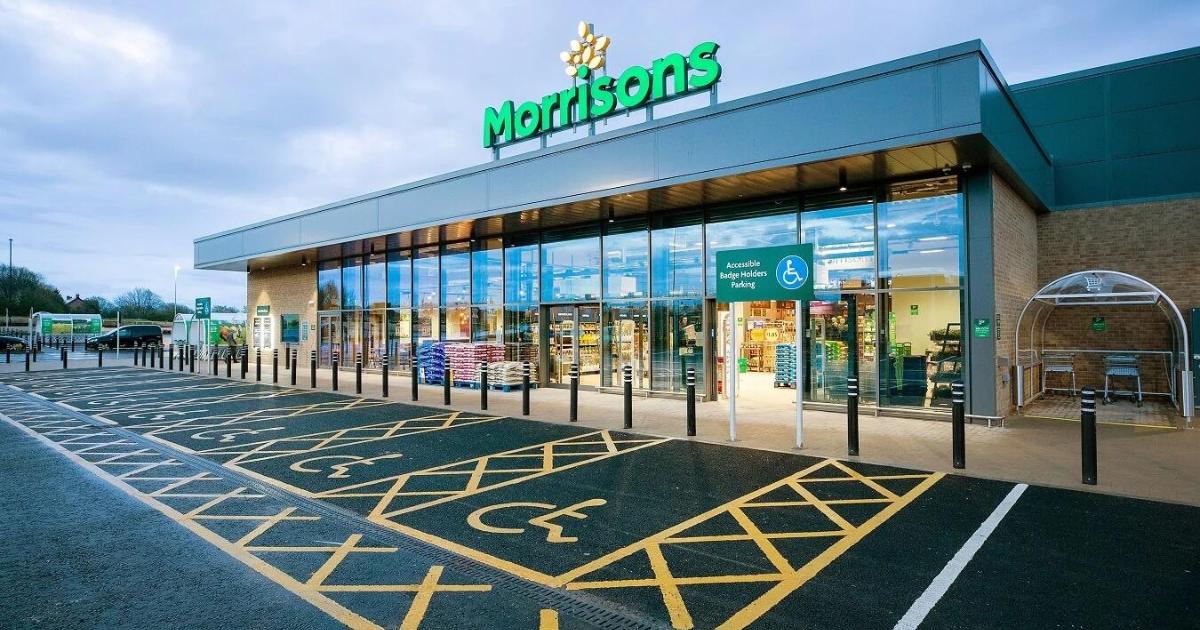
The supermarket has extended its popular free cake offer from one day to a full seven days, giving members the chance to enjoy a treat every day from Monday, September 7 to Sunday, September 13.
The offer is available at Morrisons Cafés nationwide and comes as part of the supermarket’s Baby Event.
Parents can choose from a tempting selection of cakes and sweet treats, including Blueberry Muffins, Salted Caramel Brownies, Coffee and Walnut Loaf Cake and Biscoff Cheesecake.
Advertisement
Other options include Sticky Toffee Muffins, Lemon Muffins, Toffee Crunch Pie, Apple Crumble Tart and Raspberry & Almond Slice.
To get the freebie, Baby & Toddler Club members simply need to buy any hot drink and scan their Morrisons More Card through the app at the till.
The offer is only available to Baby & Toddler Club members and iced drinks are excluded. All items are subject to availability.
Recommended reading
Advertisement
The free cake deal is not the only saving available to families at Morrisons.
The supermarket also runs its Kids Eat Free scheme nationwide, allowing parents to get a free children’s meal when they buy an adult main meal worth £5 or more.
With the free cake offer running for just one week, parents who want to take advantage will need to claim it by Sunday, September 13.















































You must be logged in to post a comment Login