





She has gone on to secure a dream job
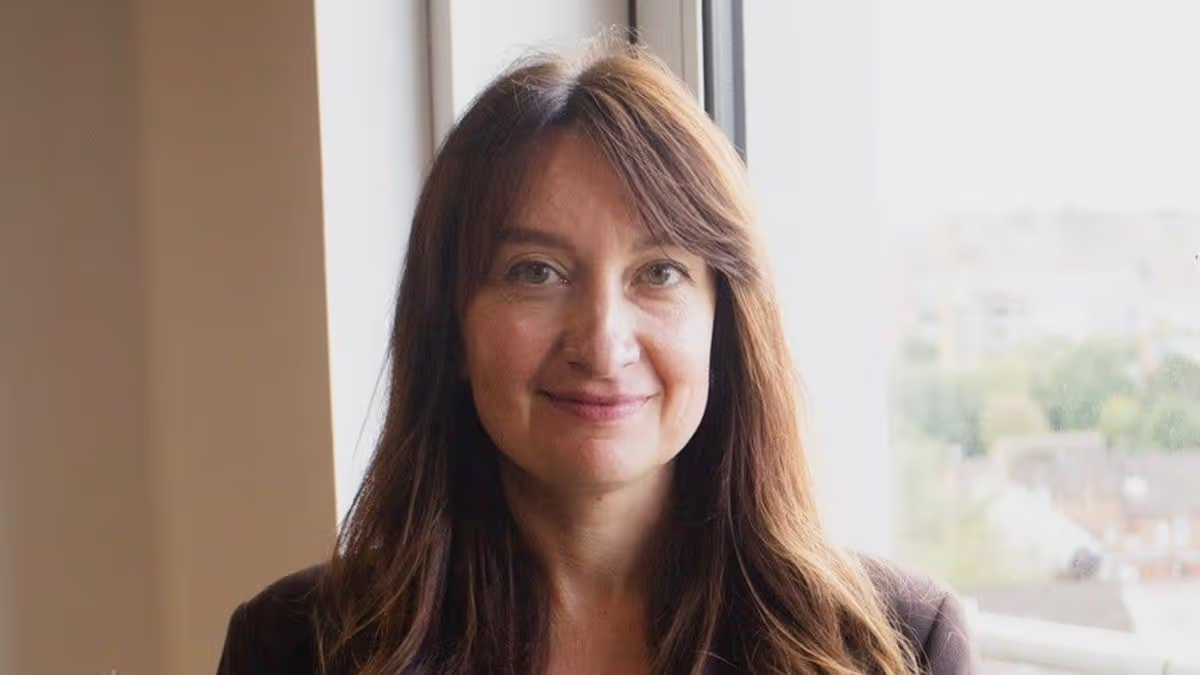
A little over four years ago, Yulia Davydenko was running her own online business, an independent tea shop she marketed on social media.
With a young son, she was smart and ambitious, with high hopes for the future. Then war broke out.
Based in Kyiv, Ukraine, when the Russian invasion began in February 2022, Yulia fled for the Romanian border with her son, before securing a visa and making her way to Northern Ireland.
READ MORE: ‘If that was my partner, I’d be gone,’ nurse tells woman after husband’s dementia diagnosis at 39READ MORE: ‘I’m living with MS and face judgement and assumptions every day’
“At first we stayed with the family of a friend, before I found an apartment to rent,” recalls the 39-year-old. “I didn’t expect to be here for long. I thought it would be a month or two, and then we’d go back home.”
But as the months rolled on, Yulia took steps to improve her set-up in Northern Ireland.
“When I arrived, my English was very basic,” she says. “I put a lot of effort into learning the language, and enrolled in some courses, hoping I could find a pathway back to a career I loved.”
Then last year, after signing up for the Belfast Digital Skills and Employability Programme, an initiative run through Belfast Met, that longed-for pathway opened up for Yulia.
Launched in 2023 with sponsorship from Bank of America, the programme runs a series of Digital Skills Academies designed to open doors to further training and fulfilling careers for underrepresented groups.
So far, 18 of 30 planned courses have been completed, covering areas from digital marketing and data analytics to media production and software development, giving expert training and support to participants from a range of backgrounds including women returning to work, neurodiverse learners, new arrivals to the city and people not currently in education or training.
Yulia completed a Digital Marketing course in September 2025, one delivered in partnership with Women in Business.
“Before I started the course, I was feeling quite stuck,” she says. “I thought I might never find a job here that I really loved, and after enjoying what I did so much in Ukraine, that was disheartening.
“But I met so many incredible women through the Digital Skills Academy, all of them with amazing stories to tell, and I came away not just with a qualification as a Digital Marketing Specialist, but very inspired and much more confident for the future.
“As well as the essential digital skills we were trained in, they taught us how to present our CVs, how to prepare ourselves for interview, and how to back ourselves enough to really put ourselves out there.”
After an eight-week course, where Yulia made a long list of connections from classmates to industry insiders, she secured a job earlier this year with Belfast-based creative digital marketing agency Yellow Zest.
“My boss has actually been involved in the programme, although we didn’t cross paths directly during my course,” says Yulia. “It’s great because she obviously understands the value of the programme, and what its learners have to offer.
“Sometimes it can feel difficult to break into a network when you’re a little bit on the outside, whether that’s because you’re not originally from the place where you live, you’re a woman who’s been away from the workplace for a while, or any other reason.
“What the programme gave me was a sense of connection with women from all sorts of backgrounds. We’re able to share experiences, advise one another and access this big community. As lonely as it can feel sometimes, it’s comforting to know others have been in the same boat.
“The impact has been great for me and my son – who strangely, for me, speaks with a Northern Irish accent! It’s put opportunities in front of me and given me the confidence to pursue them. Having employment and all these connections has helped me so much, and I really appreciate this opportunity to build my career here.”
Juliana Germinio, Founder at Yellow Zest, said: “Yulia has been a fantastic addition to the team, and we’re delighted to have her. I’ve been involved directly with the Belfast Digital Skills and Employability Programme and not only is it playing an important role in opening doors and creating opportunities for its learners, from an employer’s perspective, it’s supporting a pipeline of new talent.
“People are coming out with a solid grounding in the digital skills which businesses are crying out for, as well as a strong industry contacts, confidence and a drive to progress.”
Diana Atchison, Belfast Met’s CDIT Project Manager, added: “We love to hear about the success of our alumni, and Yulia is a wonderful example of how the programme can make an impact – supporting progress and opening doors to further opportunities for our learners.”
To find out more about the Belfast Digital Skills and Employability Programme, visit https://www.belfastmet.ac.uk/support-for-business/digitalskills.
Want to see more of the stories you love from Belfast Live? Making us your preferred source on Google means you’ll get more of our exclusives, top stories and must-read content straight away. To add Belfast Live as a preferred source, simply click here.












































You must be logged in to post a comment Login