Connect with us

NewsBeat

Moment brazen fly-tippers dump sofas, armchairs and huge piles of rubbish at Welsh beauty spot – before leaving Good Samaritan bystander ‘trembling with fear’

Published

on

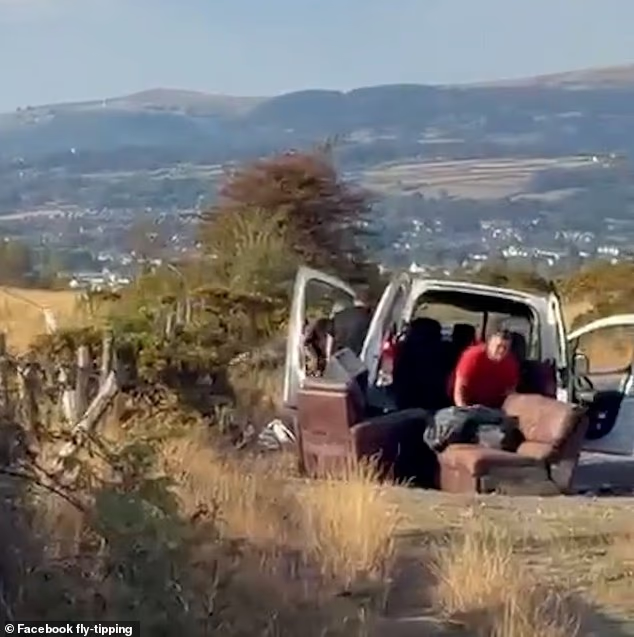
A trio of fly-tippers were caught dumping sofas, armchairs and bin bags on a Welsh road in the countryside near Maesycwmmer last week

This is the shocking moment three serial fly-tippers are spotted dumping sofas, bin bags and chairs at a beauty spot before speeding away in a white van. 

The eye-opening clip was filmed on a scenic hillside popular with dog walkers on the outskirts of the quaint village of Maesycwmmer in south Wales last week. 

It shows a trio of men hopping out of an allegedly unlicensed vehicle and unloading two leather armchairs, more than one desk chair and a huge pile of litter onto the middle of a road.

Incredibly, pictures shared with the Daily Mail revealed that the men also left behind unopened letters including names and addresses.

Advertisement

The footage was captured by a local man in his 20s who had been enjoying a walk through the countryside when he stumbled across the incident. 

As the fly-tippers zoom away from the scene into the distance, he is heard shouting: ‘I’m calling the police and I’ve got your number plate!’ 

The trio are then said to have turned around and chased after him in a desperate bid to have the footage deleted. The brave walker, however, managed to evade the fly-tippers by dashing to a nearby farm. 

‘I had to pick the boy up basically trembling out of his socks on the floor,’ a farmer, who discovered the Good Samaritan while out on a stroll, tells the Mail.

Advertisement

‘He saw them dumping their rubbish from afar, ran towards them and then the guys chased him. It frightened him to death. I happened to be coming over 30 or so seconds after.

A trio of fly-tippers were caught dumping sofas, armchairs and bin bags on a Welsh road in the countryside near Maesycwmmer last week

In footage posted to Facebook, the men are seen hopping out of a van before quickly unloading their rubbish

In footage posted to Facebook, the men are seen hopping out of a van before quickly unloading their rubbish

Advertisement
They then drive off, leaving their waste strewn across the floor while a good Samaritan films

They then drive off, leaving their waste strewn across the floor while a good Samaritan films

‘The lad was really shaken up, he’s quite a nervous boy who doesn’t like confrontation. He hadn’t experienced something like that before. For me, it happens a lot.’ 

Indeed, last year alone there is thought to have been more than 40 cases of fly-tipping at the very same spot – and the trio responsible for last week’s dumping are allegedly serial offenders. 

Only a couple of weeks ago they were spotted disposing of bin bags on the rural road during the early hours of the morning. 

Advertisement

The farmer, who preferred not to give his name, added: ‘Fly-tipping is a real problem around here. I’ve been trying to combat it for years but it’s probably got worse since lockdown. 

‘In the last month or so the same group of boys have come up here three times. We’ve got cameras and I spotted them literally two weeks ago. 

‘Usually we’d be able to pick the vehicle up using its registration plate, which we’ve got, but the van was off the road, not taxed and not insured. 

‘I must have about 200 crime reference numbers from Gwent Police. It’s amazing seeing what happens up here at night. Well, I say amazing, but it’s highly dangerous. 

Advertisement

‘It doesn’t just stop at fly-tipping. You get the boy racers up here, kids taking drugs and drinking. You wouldn’t believe what goes on in a rural environment when you can see it.’ 

The video was posted to Facebook by a local woman who frequents the hills to ride her horse. So far the clip has racked up almost 1,000 likes and close to 100,000 views. 

Hundreds of residents flocked to the spot where the fly-tipping occurred to watch the solar eclipse only a matter of weeks ago. Dogs are also regularly walked along the path, sparking fears that shards of glass left behind by fly-tippers could cause injuries. 

Fly-tipping is common in the rural area near the south Wales valleys. Only a matter of weeks ago a huge pile of rubbish was disposed of on the road

Fly-tipping is common in the rural area near the south Wales valleys. Only a matter of weeks ago a huge pile of rubbish was disposed of on the road

Advertisement
In another case, desks, chairs and planks of wood were left behind in the countryside

In another case, desks, chairs and planks of wood were left behind in the countryside

The three men who were filmed fly-tipping last week were brazen enough to leave behind letters containing addresses and names

The three men who were filmed fly-tipping last week were brazen enough to leave behind letters containing addresses and names

One woman, who lives just a couple of miles away, accused the men – and other culprits – of ‘ruining’ an area offering sprawling views over the Welsh valley. 

She fumed: ‘The video was just so frustrating to see. People walk their dogs around that area and it could have been glass which they’d left on the road. It’s really dangerous. 

Advertisement

‘For the eclipse, the amount of cars up there was amazing to see – but then somebody has got to do that. 

‘There was practically nothing there that couldn’t have gone to the tip though. They’re ruining our countryside for quite literally the sake of a few quid. It’s horrible. 

‘We’re fed up. It’s the mentality of it, you know, they’ve done it in broad daylight and expected not to be seen. They don’t care about anybody else.’

Statistics released earlier in February revealed that incidents of fly-tipping reached record levels last year. 

Advertisement

More than 1.26million cases were recorded by authorities between 2024 and 2025, marking a nine per cent increase on the 1.15million confirmed the year before, according to data published by the Department for Environment, Food and Rural Affairs.

However, the number of court fines handed out for fly-tipping during the period decreased from 1,378 to 1,250. That meant that only 0.2 per cent of cases resulted in court action. 

Speaking at the time the statistics were released, John Read – the founder of charity Clean Up Britain – described the country’s fly-tipping crisis as an epidemic. 

‘The fly-tipping stats are further evidence of the national pandemic we’re facing in England, and indeed the whole of the UK,’ he said.

Advertisement

‘To be effective, we have to create real jeopardy and fear in the minds of fly-tippers. The cost – and risk – of ‘doing business’ has to become too exorbitant for them.’ 

The Mail approached Gwent Police for comment.  

Source link

Advertisement
Continue Reading
Click to comment

You must be logged in to post a comment Login

Leave a Reply

NewsBeat

deadly desire stalks queer teens in this rural Australian horror

Published

on

deadly desire stalks queer teens in this rural Australian horror

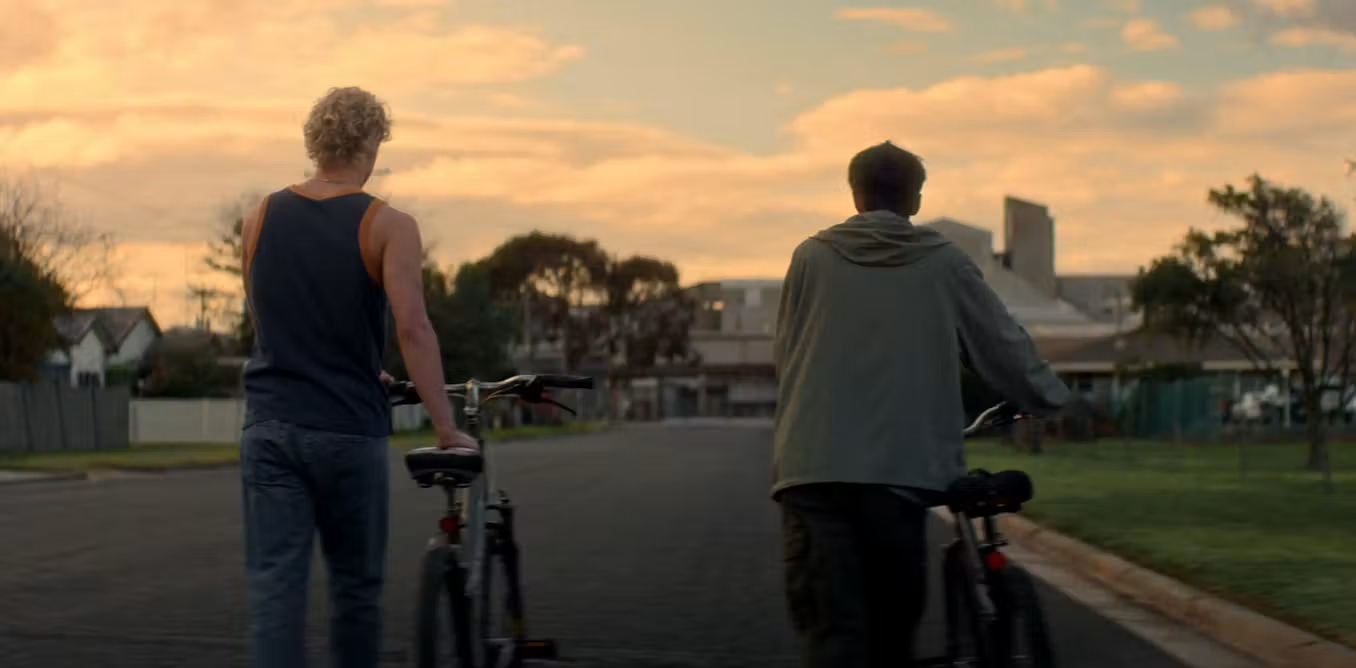
You can imagine being a queer teen in a Christian fundamentalist community in rural Australia is not an easy ride. In his debut feature Leviticus, writer and director Adrian Chiarella imagines how much harder that would be if there were also supernatural forces conspiring against you.

The film centres on the burgeoning romance between 17-year-old Naim – played by Joe Bird, who recently impressed in the wonderful Australian horror film Talk to Me (2022) – and Ryan (Stacy Clausen). The pair are forced to attend a fire-and-brimstone sexual conversion therapy session with a fundamentalist “healer” on a mission to convert the town’s gay and lesbian teens.

After sessions with this mysterious figure end in Exorcist-style convulsions and gouts of vomit, participants are pursued by an entity that looks identical to the person they desire most. In classic horror-film fashion, if a teen succumbs to their desire for the lookalike, they are torn to shreds in the midst of sex. Ryan and Naim are caught between their desire for one another and the fact that the person they become intimate with might kill them.

Leviticus is an excellent independent drama. The film’s success lies less in its execution of effective scares and horror tropes and more in the emotionally resonant, superbly acted depiction of a forbidden young gay relationship in an oppressive community. Save one or two jump scares, it is not an especially harrowing or nail-biting horror spectacle. But the film builds a desolate atmosphere and creates a complex and likeable young couple for audiences to root for.

Advertisement

Chiarella has based his screenplay on his experiences as a gay man growing up in Sydney, Australia, which he adapts with heady atmosphere into a beautifully desolate depiction of rural Australia.

With the success of Backrooms (2026), about horror lurking in an endless network of interconnected rooms, horror filmmakers and audiences are particularly attuned right now to in-between spaces and the inherent creepiness to be found in the blandly everyday. Leviticus follows other excellent examples of Australian mystery and horror cinema, from Picnic at Hanging Rock (1975) to Wolf Creek (2010) and Killing Ground (2016), in using the unique starkness of the countryside to convey a distinctive strangeness and melancholy.

Leviticus was shot in rural townships west of Melbourne. It depicts the Australian small town as we might expect to see an oppressive southern gothic American backwater. Outside of the judgmental eyes of the town, romantic encounters take place in haunting liminal spaces. These include dilapidated barns surrounded by abandoned rusted machinery and across stretches of bleak, blanched grassland.

Advertisement

Mia Wasikowska is superb in the film as Naim’s young mother, Arlene. You might recognise her from films like Tim Burton’s awful Alice in Wonderland (2010) or Jane Eyre (2011). After such early career success, Wasikowska rejected Hollywood and fame for a series of interesting and unconventional independent films like Leviticus.

Arlene has converted to Christian fundamentalism after the death of her son’s father. Wasikowska articulates with moving complexity the tension between the love for her son and her anxiety around his sexuality within the context of the intolerant wider community.

The main conceit of Leviticus is simple but clever: transgressive sexual desire = death. The pursuit of teenagers by a relentless entity after sexual activity has been explored in the influential and acclaimed film, It Follows (2014) – a film that Chiarella cites as an inspiration for Leviticus. That film was similarly set in the downbeat environment of a small rural town. Its “monster” also in part represents the simultaneous excitement and anxiety of young desire. In Leviticus, however, the anxiety is a specifically queer one, where longing, self-acceptance and internalised shame battle for dominance in the young mind.

The film scholar Harry Benshoff influentially wrote about horror film through a queer lens, pointing out the tension between horror cinema’s popularity among LGBTQ+ audiences and the genre’s subtext of societal homophobia.

Advertisement

Monsters in some of the biggest horror films, from A Nightmare on Elm Street’s (1984) Freddy Krueger to Terrifier’s (2016) Art the Clown, have been interpreted as physical embodiments of the homophobic fear of repressed transgressive queer sexual urges. At the same time these figures have been paradoxically embraced as queer icons that challenge the norms of a repressive society.

In Leviticus, this subtext of queer horror is made into a conscious, deliberate theme. The film is perhaps a little too determined that audiences grasp its themes at the expense of being allowed to make their own interpretations. But overall, is a beautifully made, eerie and emotionally sophisticated horror film. Its two charismatic young stars are clearly destined for bright careers and Adrian Chiarella as a brilliant new directing talent in the genre.

Source link

Advertisement
Continue Reading

NewsBeat

‘Four of our family members were diagnosed with cancer in four years – we had to do something’

Published

on

Manchester Evening News

‘The hard work we’re doing is nothing compared to what they’ve been through’

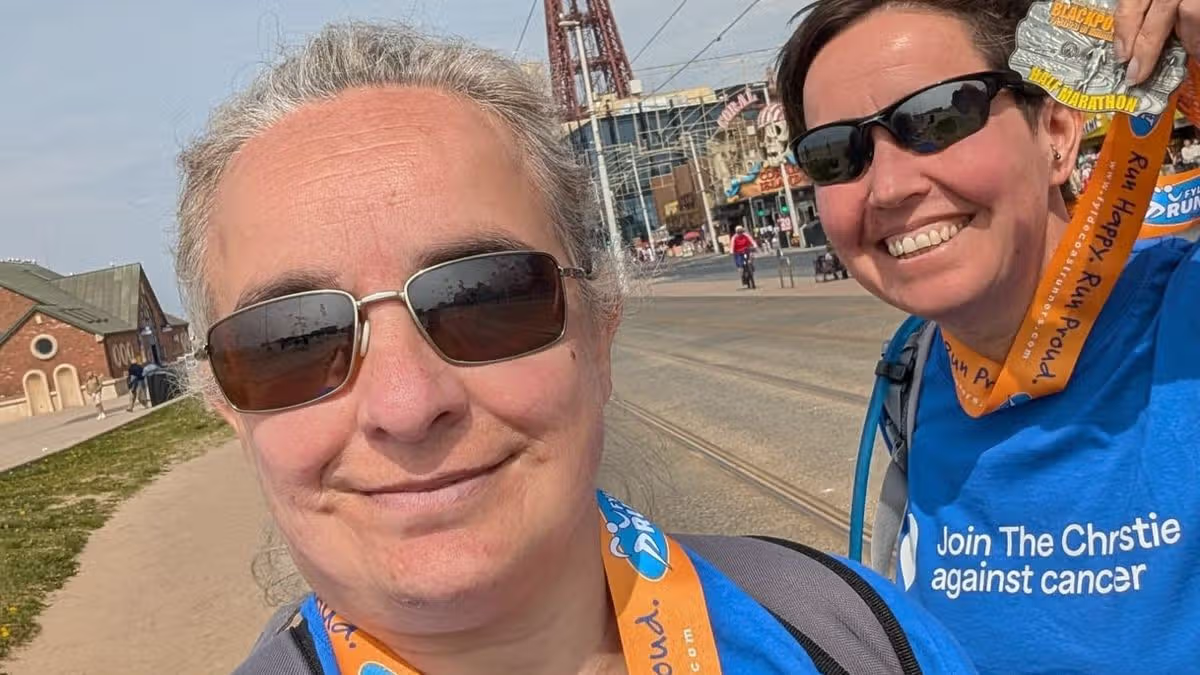
A couple who saw four of their close family members diagnosed with cancer in just four years are running 12 half marathons in 12 months to raise money for The Christie Charity after seeing first-hand the impact of its care.

Advertisement

Deb and Alex Beachell, originally from Manchester, will take on the ASICS Manchester Half Marathon this October as part of their challenge, having already completed eight races so far.

Deb and her wife Alex decided to take on the challenge after four members of their family, Alex’s mum and stepdad, as well as Deb’s dad and brother, were diagnosed with cancer over the last four to five years.

Click here to get the biggest stories straight to your inbox in our Daily Newsletter

The couple, who met at Manchester Pride 20 years ago and have been married for 13 years, say they want to give something back after The Christie’s care helped to give their family the all clear.

Advertisement

Alex, 49, said: “It started with my stepdad Alan before Christmas four or five years ago. We found out that he had cancer and he went to the Christie for treatment.

Deb, 48, added: “A year later my younger brother Paul, a week before Christmas again, got diagnosed with cancer and again was treated at the Christie. They were treated so quickly. From finding out they had it to starting treatment at the Christie happened in the blink of an eye. It was amazing the treatment they had.”

Deb added that her brother’s treatment was quite complicated and lasted a long time, including some complicated surgeries to remove his cancer.

Advertisement

Alex said: “And whilst her brother was being treated my mum Jill was diagnosed with cancer. And then at the end of last year Deb’s dad Derek was diagnosed with cancer as well. This was about the time that we were thinking of doing a challenge and wanting to run for The Christie and that really sealed out fate with doing it.”

Deb said: “It was just like we had to do it now. There was no way we couldn’t do it. It was that emotional thing with it being my dad as well – we just had to do something.”

The couple, who now live in Leek, said that all of their family has now had the all clear, apart from Derek who is waiting for his last scans following surgery to remove his cancer.

Advertisement

Deb said: “It feels like the hard work we’re doing is nothing compared to what they’ve been through. The speed of the treatment they’ve had, we’re just so lucky we’ve got them all with us today. Some are not so lucky, so we definitely count out blessings.”

In an effort to raise money for the hospital that has helped their family so much, the couple came up with the idea to run the 12 half marathons.

They came up with the idea in October last year over a couple of pints. Alex said: “We were in the pub and we were thinking of doing something for charity and then I thought, well why don’t we make it a proper challenge?

“So we decided to do one each month. It sounded like a good idea. Everything seems like a good idea after a couple of pints doesn’t it?”

Advertisement

Starting in March in London, the pair have ran one every month since and will finish their challenge in December in Milton Keynes.

So far, they have completed races in London, Llandudno, Blackpool, Chester, Leamington Spa, Birmingham and one from The Christie in Manchester to The Christie in Macclesfield.

The couple said the challenge has given them a focus and an outlet through the difficult times and has allowed them to clear their heads while training.

However, Alex said that the Blackpool race was particularly difficult for her, as her sister passed away just days before the race.

Advertisement

She said: “That was a really tough one mentally, because my sister passed away two days before unexpectedly. But we did it anyway. But it was mentally hard to get through it.

“I saw a group of people wearing matching t-shirts on the way round and I realised they had angel wings on and they were wearing them as a tribute to someone so that upset me on the way round, but in a good way.”

Deb said: “We’re so excited for Manchester. We’ve done a few runs between us over the years, but Manchester is by far our favourite because the atmosphere is fantastic.

“We’re both busy at work and have had a lot going on, so fitting in training runs and mentally getting ourselves out there has definitely been the hardest part. But a couple of hours out running is nothing compared to what people going through cancer treatment face every day.

Advertisement

“The most surprising thing has been realising just how many people we know who have been affected by cancer, either themselves or through family and friends, and have received treatment at The Christie.

“For families affected by cancer, just knowing there are people out there who understand what they’re going through and are prepared to support the work The Christie does is really important. And if it inspires anyone else to get up and start their own challenge to raise funds, that would just be amazing.”

Deb and Alex will be running the Manchester Half Marathon on October 4. To donate to their fundraiser click here.

Source link

Advertisement
Continue Reading

NewsBeat

BMW car fire off Walmgate in York – crews on scene

Published

on

BMW car fire off Walmgate in York - crews on scene

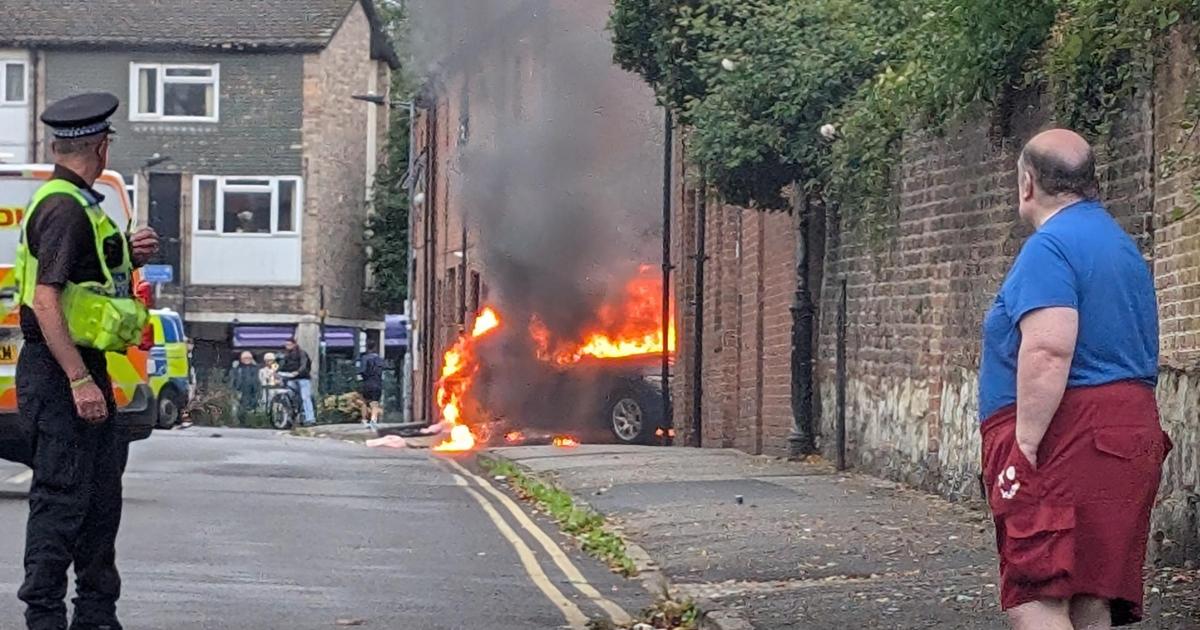
Two fire engines and police were on the scene in Navigation Road, off Walmgate, on Wednesday evening (September 2) after the blaze.

The fire had been extinguished by 5.30pm on Wednesday but cordons remain around the burned-out BMW car.

Seven police officers stood guard by the cordon across Navigation Road at the junction with Walmgate on Wednesday evening.

Advertisement

Some police officers were speaking to residents behind the tape.

Images shared with The Press showed the car engulfed in flames as residents stood outside their homes behind the cordon.

A passerby who witnessed the car exploding told The Press: “I was coming from Foss Islands Road and I saw smoke and realised it was a car well alight.

“It was clear there was something wrong. The driver had pulled up on the pavement and was trying to get things out of the car while it was smoking.

Advertisement

“He was clear before it suddenly caught fire and then started to explode – it was popping.

“The police arrived before the fire service and closed the road. They have been doing a great job keeping everyone well back.”

A woman living in flats opposite where the car burst into flames said she heard a “bang like a shot”.

“[I] ran outside and saw the smoke,” she said. “My neighbour in Hope Street said there were already some police there when the car went up.”

Advertisement

The incident came at a time when traffic had been building in Walmgate due to drivers being diverted from the York inner ring road which is closed at Fishergate due to storm damage.

Source link

Advertisement
Continue Reading

NewsBeat

21 gigs happening in Belfast to get you through the festival season blues

Published

on

Belfast Live

There are plenty of great shows happening right up until the end of the year

What a summer of music we were treated to in Belfast!

Advertisement

As CMAT closed out CHSq with her second sold-out gig at the city centre music festival on Tuesday, it is officially time to say goodbye to festival season.

From Belsonic to AVA to the new Summer Series at Custom House Square, the music hasn’t stopped over the last number of months and as always, we love to see it.

If September has hit you like a ton of bricks and you are already marking your calendars for festival season 2027, do not fret – there are still plenty of fantastic gigs happening in Belfast for the remainder of 2026.

If you are a country fan, a rock music lover and everything in between, there are plenty of brilliant acts set to perform in Belfast over the next few months to get you through the impending darker evenings.

Advertisement

Here are only some of the upcoming gigs taking place in Belfast to close out 2026:

Freya Ridings

Where: Ulster Hall

When: September 6

Billy Ocean

Where: Waterfront Hall

When: September 14

Anastacia

Where: Waterfront Hall

Advertisement

When: September 17

Jane McDonald

Where: Waterfront Hall

When: September 19 & 20

Advertisement

Megan Moroney

Where: The O2 Belfast

When: October 1

Duran Duran

Where: The O2 Belfast

When: October 18

Katherine Jenkins

Where: Waterfront Hall

Advertisement

When: October 27

Westlife

Where: The O2 Belfast

When: October 27 – November 6

Advertisement

The Script

Where: The O2 Belfast

When: November 2

Cody Johnson

Where: The O2 Belfast

When: November 4

The Fray

Where: Ulster Hall

When: November 13

Advertisement

Niall Horan

Where: The O2 Belfast

When: November 15 & 16

The Shamrocks

Where: The O2 Belfast

Advertisement

When: November 20

Picture This

Where: Telegraph Building

When: November 25

Advertisement

The Darkness

Where: Telegraph Building

When: December 1

Nathan Carter

Where: Waterfront Hall

Advertisement

When: December 10

Ash

Where: Ulster Hall

When: December 10

Advertisement

Razorlight

Where: Telegraph Building

When: December 13

Florence Road

Where: Ulster Hall

When: December 14

Colin Graham

Where: Ulster Hall

When: December 18

The Tumbling Paddies

Where: Ulster Hall

When: December 19

For all the latest news, visit the Belfast Live homepage here and sign up to our What’s On newsletter.

Source link

Advertisement
Continue Reading

NewsBeat

Wales breaking news plus weather and traffic updates (Wednesday, September 2)

Published

on

Wales Online

A man and a woman have been charged with burglary offences in Newport city centre.

A 33-year-old man was charged in connection with a burglary at a commercial address on Usk Way, Newport, on Saturday 29 August.

Rory Hiscox, of Chepstow Road, Newport, was charged with burglary other than a dwelling, and two counts of fraud by false representation.

Advertisement

A 33-year-old woman has been charged in connection with a burglary at a commercial address on Millennium Walk, Newport, on Tuesday 25 August.

Nicole Clarke, of no fixed address, was charged with burglary other than a dwelling, and theft from a shop on Cambrian Road, Newport, on Sunday 23 August.

Both defendants were remanded into police custody to appear at Newport Magistrates’ Court on Wednesday 2 September.

Source link

Advertisement
Continue Reading

NewsBeat

Giardiasis cases are rising in England: should we be worried?

Published

on

Giardiasis cases are rising in England: should we be worried?

Cases of giardiasis, an intestinal infection that causes diarrhoea, bloating and gas, have reached their highest level in England since 2016 according to newly published data by the UK Health Security Agency (UKHSA).

The agency reported 6,069 lab-confirmed cases of giardiasis in 2025, an 11.4% rise from 2024. It is the highest yearly total in almost a decade.

This rise might sound alarming. But while the increase in cases is real, it doesn’t necessarily mean that England is facing a crisis. Instead, the rise is probably happening for a mix of reasons, including: increased international travel in the post-pandemic era; upgrades to lab testing; changes in rainfall and flooding; and better awareness of Giardia duodenalis – the tiny parasite that infects the small intestine.

What is giardiasis?

The Giardia parasite infects the small intestine, and is one of the most common causes of diarrhoea by a parasite. It infects hundreds of millions of people each year globally.

Advertisement

The infection it causes, called giardiasis, can result in diarrhoea, bloating and nausea. In longer lasting and moderate to severe cases, it can also result in weight loss. Some people can feel tired for weeks, even after the infection has gone. Symptoms usually start one to three weeks after being exposed.

Not everyone who becomes infected by Giardia develops symptoms of giardiasis. Some people can carry the parasite without knowing it’s there and spread it to other people.

For most people, giardiasis is merely unpleasant rather than outright dangerous. But it can cause lasting illness and be a bigger problem for children, older adults and people with weaker immune systems.

Most people get better on their own, though some may have symptoms for weeks or even months. Those whose symptoms are more severe or longer-lasting can be treated with anti-parasite medicine.

Advertisement

In children, especially under two years old, infections lasting more than several weeks can affect their growth.

How does it spread?

Giardia spread by the faecal-oral route. This means that if tiny Giardia cysts in infected poo are inadvertently swallowed, they can cause illness. As few as ten microscopic cysts can be enough to cause infection.

The best-known route that the parasite spreads is by drinking water or eating food that has been contaminated with infected poo.

Infection can also spread by close contact between people in the same house (especially when there is poor hygiene and hand washing), nurseries and infected animals such as cats and dogs.

Advertisement

International travel is important too. Travellers visiting regions with poorer sanitation can be exposed to Giardia through contaminated food and water.

Another route that is gaining attention is sexual transmission. Giardia can be passed on during sexual activities where there’s oral contact with the anus (rimming) or where fingers with infected poo on them (from fingering or fisting) come into contact with a mouth.

Why are cases rising?

There are probably multiple reasons. One is that we’re getting better at finding giardiasis.

More NHS labs in England have upgraded their testing technology. This means testing equipment is better able to look for multiple potential causes of gastrointestinal illness in a single sample. These tests have also become more sensitive, and can identify infections that, in the past, might have been missed.

Advertisement

So, part of the rise in giardiasis cases that we’re seeing may be explained by upgrades to the tracking and diagnosis of infections.

International travel is another route to think about. Travel fell during the Covid pandemic, which potentially lowered exposure and reporting of gastrointestinal infections. As travel has somewhat recovered, imported infections have risen. The UKHSA noted that giardiasis cases went back to pre-pandemic levels in 2023, and have continued to rise.

Giardiasis can cause diarrhoea, bloating and nausea.
Prostock-studio/ Shutterstock

Changes in the environment may also play a role. The Giardia parasite is linked to water quality, so heavy rain and flooding can increase the chances of water becoming polluted with Giardia-infected poo.

These overlapping factors are probably the key reasons for the rise in giardiasis cases being reported in England.

Advertisement

Don’t panic!

Giardiasis deserves attention, but not panic. For most healthy adults, it is not fatal. The bigger problem is that symptoms can last a long time and affect people’s quality of life.

People should seek medical advice if symptoms last more than seven days, if they’re experiencing bloody diarrhoea and if they know they have been in contact with someone who has giardiasis.

Thankfully, there are practical ways to lower the risk of becoming infected. Good hand-washing with soap is very effective, especially after changing nappies, touching animals and using the toilet.

Washing hands, genitals, the outer anus and sex toys before and after sex may be helpful too. Waiting for several weeks after diarrhoea caused by Giardia has stopped before having sex again also helps to stop passing it on to someone else.

Advertisement

Travellers should be weary of drinking untreated water. Swallowing water when swimming should be avoided. Anyone with diarrhoea should not swim until two weeks after they have fully recovered from the infection.

Giardiasis has been under-recognised for many years now. The recent rise in reported cases in England might be telling us about better detection, but also may be telling us about changes in risk. Either way, it’s a reminder that water and food-borne infections are still an important part of public health.

Source link

Advertisement
Continue Reading

NewsBeat

Texas facing 30 inches of rain in 24 hours as rescues underway

Published

on

Texas facing 30 inches of rain in 24 hours as rescues underway

Water rescues are underway in southern Texas as former Tropical Storm Edouard continued to dump heavy rain, flooding streets and trapping people in their homes.

An unidentified woman and her four children were rescued from their Livingston mobile home after a creek overflowed, according to Click 2 Houston.

And people in the area were pulled from their cars stuck in flooded roads, KTRE said.

Rainfall rates have reached a whopping five inches an hour, ABC News also reported.

Advertisement

The storm has dropped 30 inches over Texas in the course of just 24 hours, WFLA meteorologist Jeff Berardelli wrote on social media.

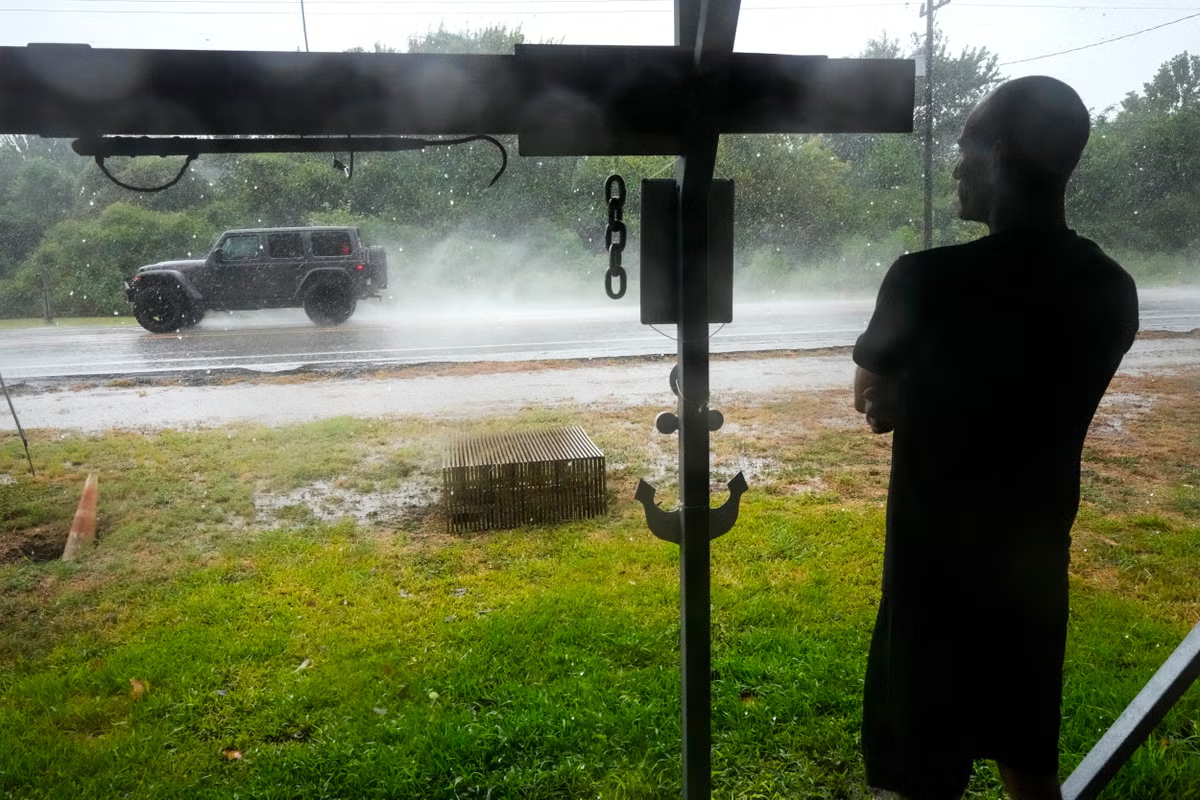
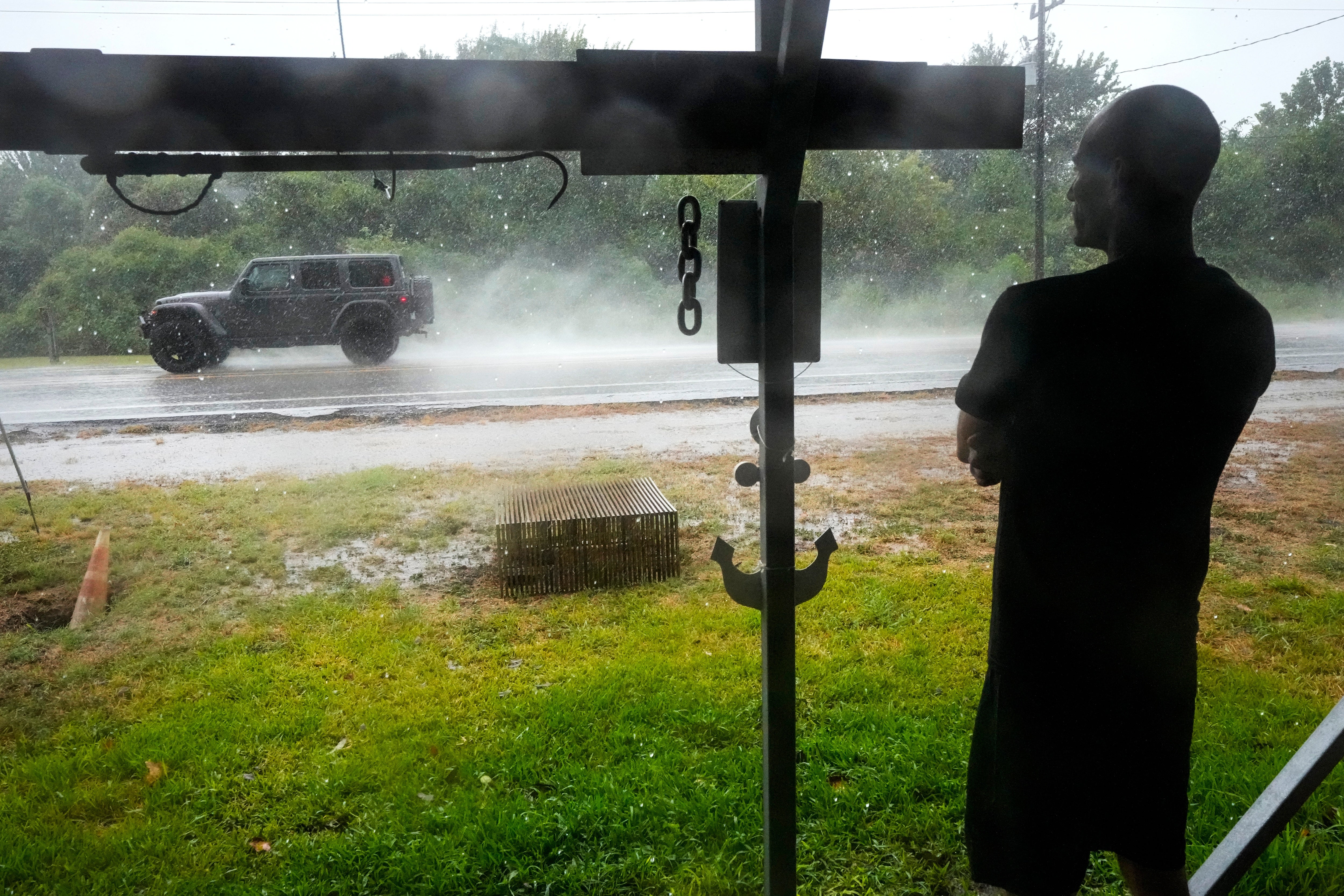
A man watches flooding rain from Edouard fall in High Island, Texas, on Tuesday. Water rescues are underway in the area as the depression continues to dump inches of rain
A man watches flooding rain from Edouard fall in High Island, Texas, on Tuesday. Water rescues are underway in the area as the depression continues to dump inches of rain (AP)
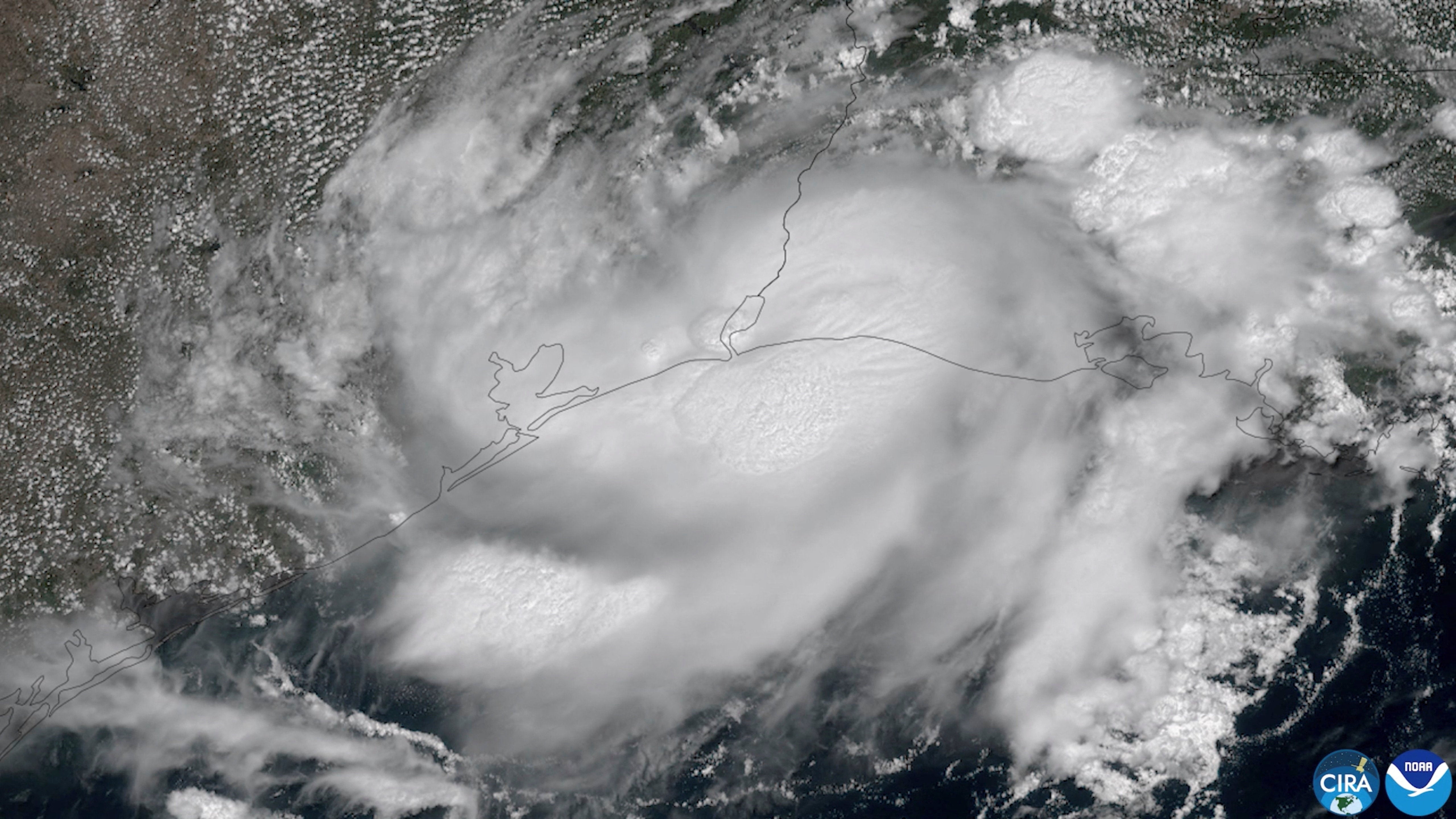
Tropical Storm Edouard nears landfall along the Texas and Louisiana coast in this Tuesday image from a federal satellite. The storm has weakened - but forecasters say impacts will linger into Wednesday
Tropical Storm Edouard nears landfall along the Texas and Louisiana coast in this Tuesday image from a federal satellite. The storm has weakened – but forecasters say impacts will linger into Wednesday (NOAA)

A flash flood emergency has also been declared in Hardin and Tyler Counties, northeast of Houston, with rain expected to continue throughout Tuesday and into Wednesday.

“Widespread damaging and potentially catastrophic flooding is possible with a HIGH risk of flooding in effect,” the National Weather Service warned residents of southeastern Texas.

Social media videos showed cows moving their way through flooding and cars and trucks navigating water-covered highways.

The strengthening super El Niño climate pattern is tied to the “huge amounts” of rain in eastern Texas, meteorologist Ben Noll wrote on X. An El Niño typically brings warmer and wetter conditions to the Southeast.

Advertisement
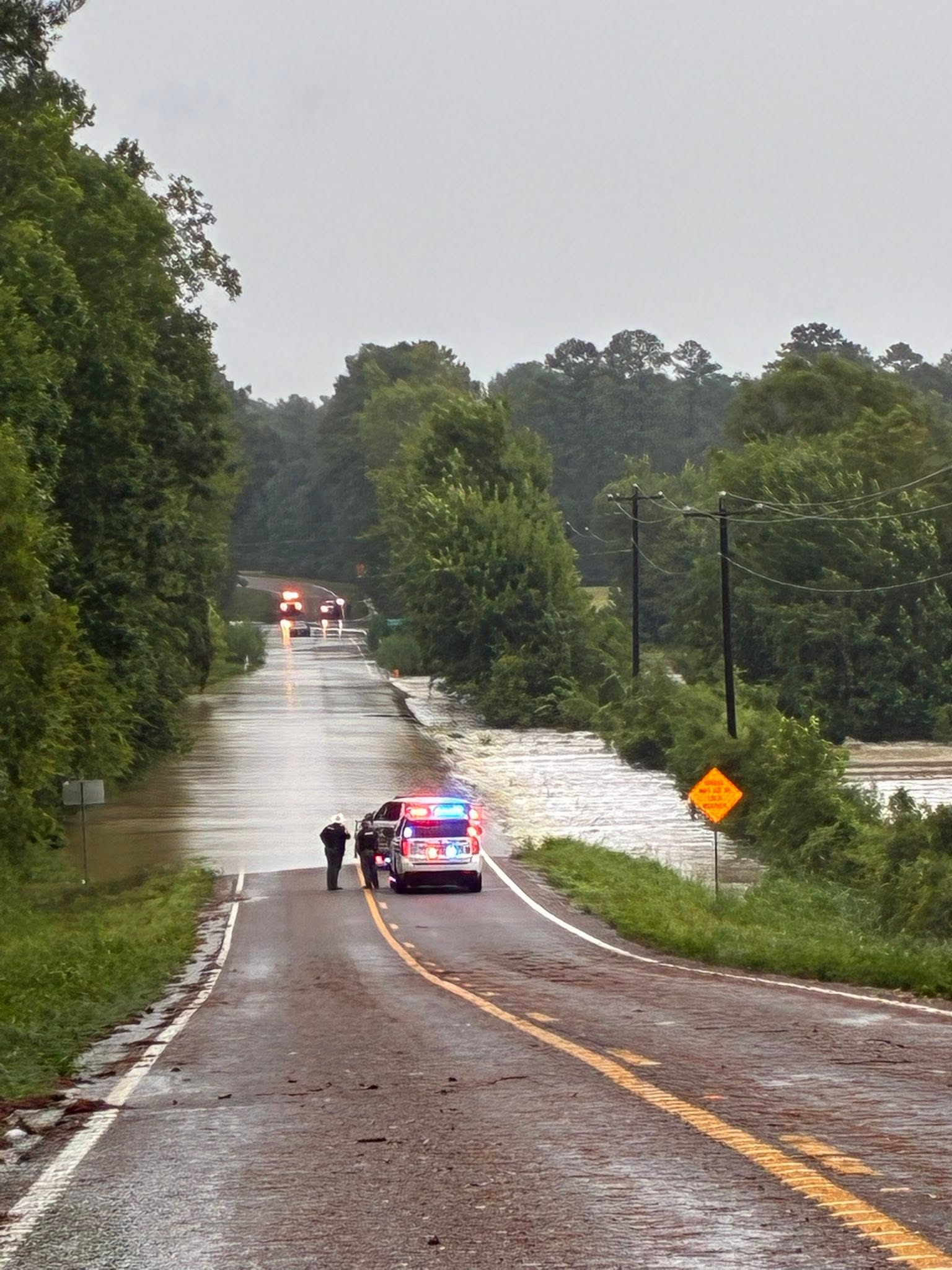
Flooded roads around Hickman Creek are seen in this image from Polk County, Texas
Flooded roads around Hickman Creek are seen in this image from Polk County, Texas (Polk County Fire Marshal’s Office)
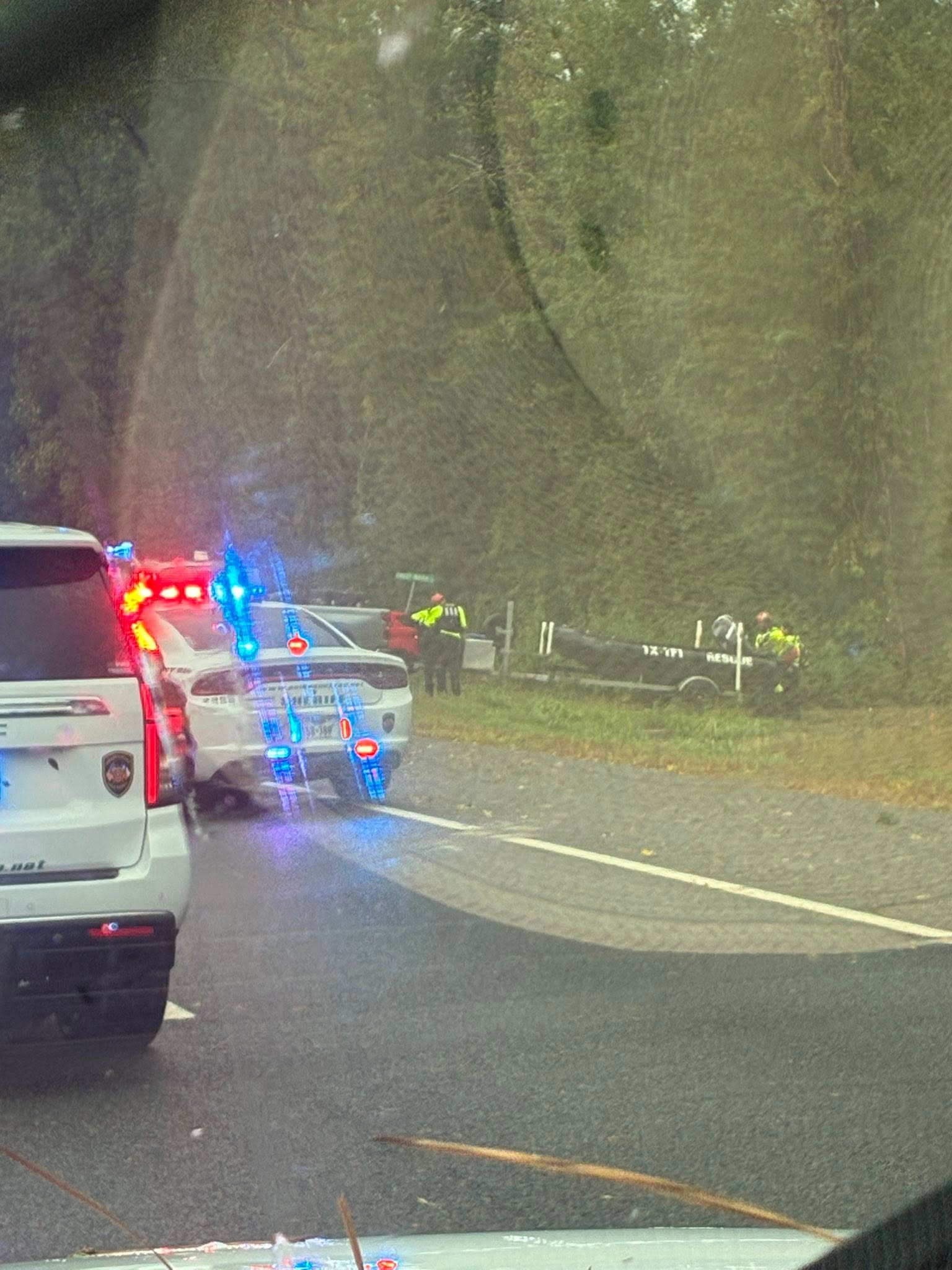
Rescue rafts are seen in this image from Polk County, Texas
Rescue rafts are seen in this image from Polk County, Texas (Polk County Fire Marshal’s Office)

But rain isn’t the only threat from Edouard. Trees fell into roadways and winds gusting up to 30 miles an hour in Livington’s Polk County have led to widespread power outages.

The county’s emergency managers told residents to avoid travel on Tuesday.

The storm had knocked out power for more than 72,000 customers by late Wednesday morning, according to tracker PowerOutage.US.

Some schools and government offices around Houston and the hardest-hit areas were closed, with plans to reopen on Wednesday, 12 News reported.

Edouard made landfall near the Texas-Louisiana border on Tuesday afternoon with maximum sustained winds of 60mph, according to the National Hurricane Center.

Advertisement
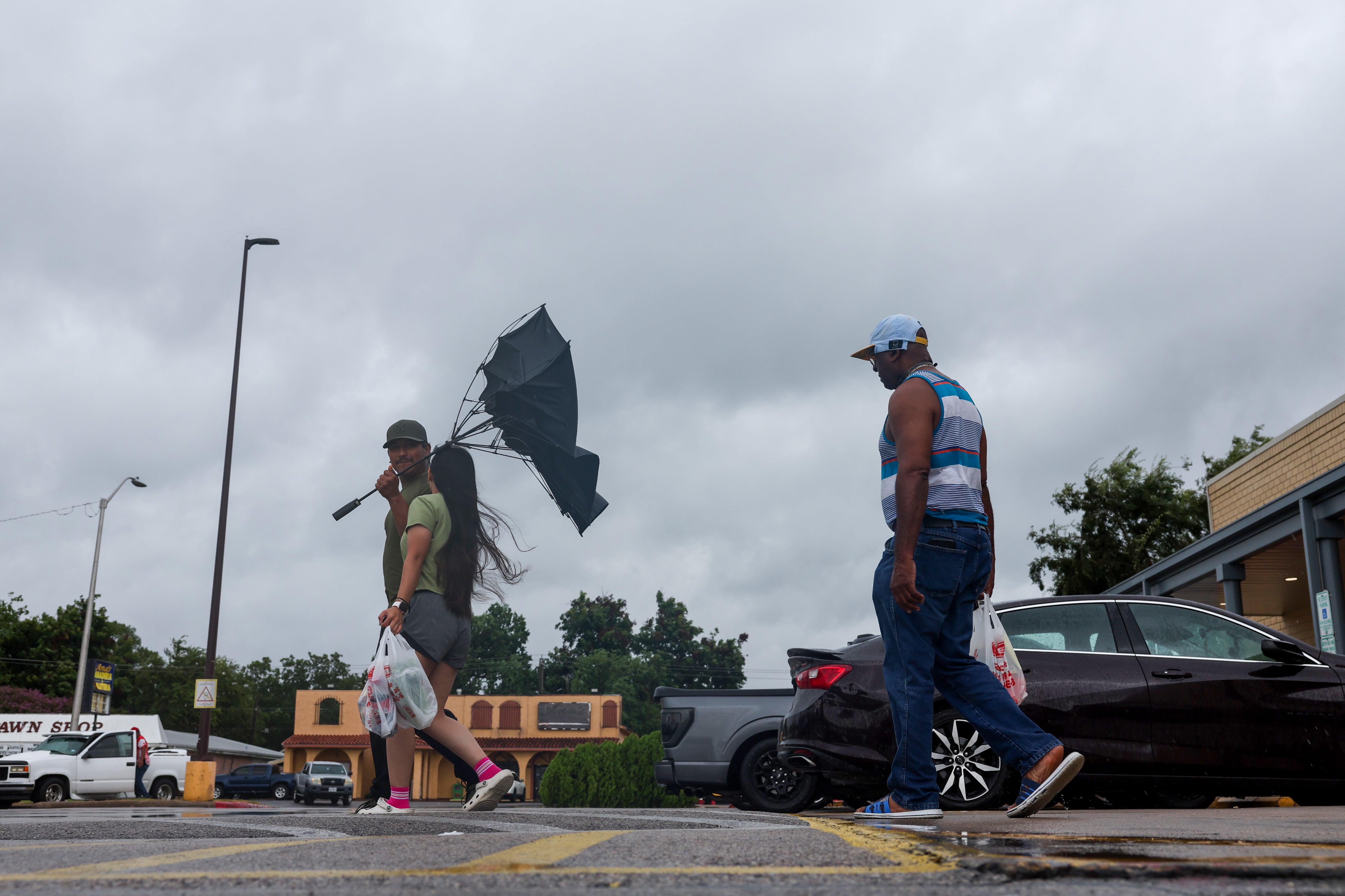
A man tries to hold onto an umbrella as he walks out of a grocery storm on Tuesday in Port Arthur, Texas. Edouard made landfall along the Texas-Louisiana border on Tuesday afternoon
A man tries to hold onto an umbrella as he walks out of a grocery storm on Tuesday in Port Arthur, Texas. Edouard made landfall along the Texas-Louisiana border on Tuesday afternoon (Getty)
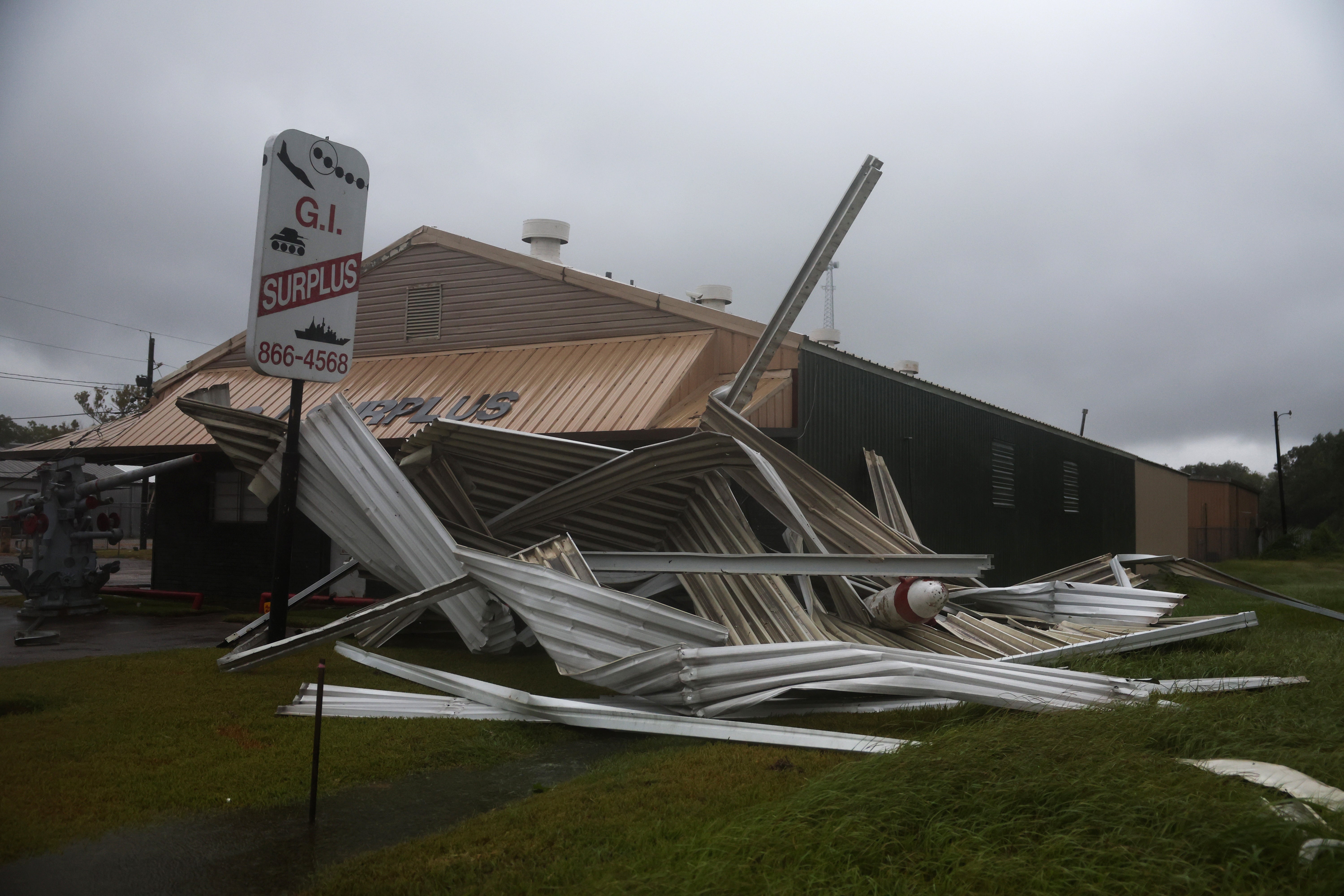
A damaged G.I. Surplus store is seen during Tropical Storm Edouard on Tuesday in Beaumont, Texas. Edouard is the fifth named storm of the Atlantic hurricane season
A damaged G.I. Surplus store is seen during Tropical Storm Edouard on Tuesday in Beaumont, Texas. Edouard is the fifth named storm of the Atlantic hurricane season (Getty)

One weather station in Port Arthur, Texas, recorded a 90mph wind gust from the storm.

Edouard is the fifth named storm of the Atlantic hurricane season, which has been less active than normal due to the El Niño.

This is a developing story with reporting from The Associated Press

Source link

Advertisement
Continue Reading

NewsBeat

Son killed dad in pub after finding out he was his biological father | News UK

Published

on

Son killed dad in pub after finding out he was his biological father | News UK
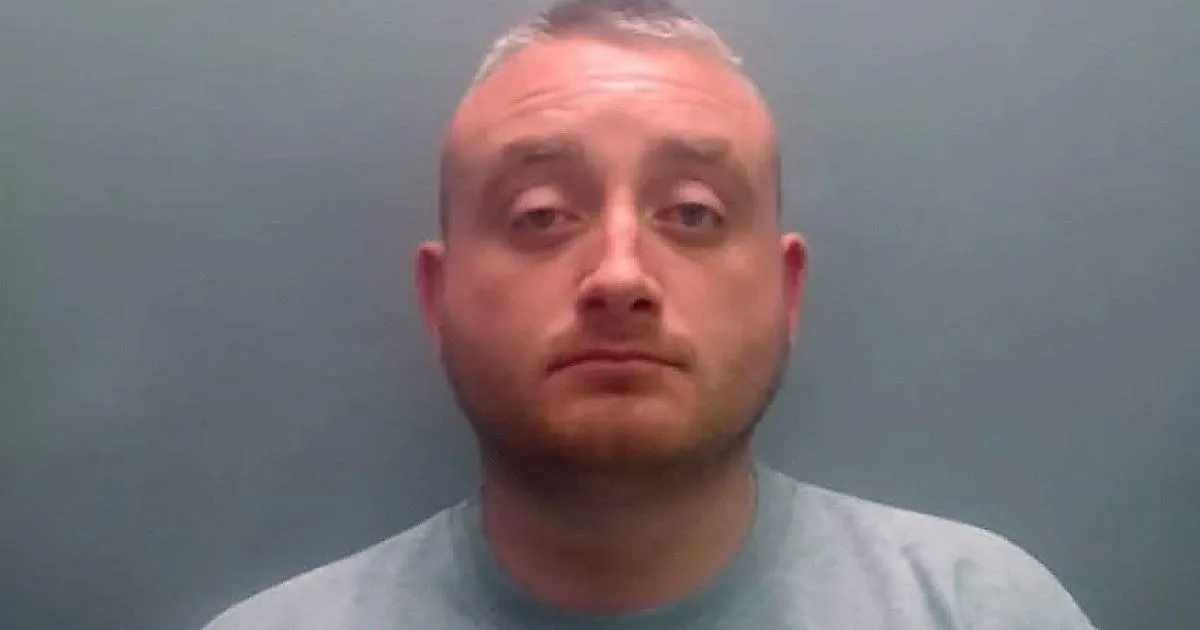
Martin Greensmith admitted to pushing Mr Shevels after finding out he was his biological father (Picture: NNP)

A man is facing prison time after he killed his own dad just hours after discovering he was his biological father.

Steven Shevels, 61, died after hitting his head on the concrete floor of the beer garden of the Queen’s Head pub, in Willington, County Durham, on Christmas Eve last year.

Martin Greensmith, 37, admitted pushing Mr Shevels but denied manslaughter.

Following a seven-day trial at Teesside Crown Court this week, a jury found him guilty.

Advertisement

Greensmith had just been told Steven was his biological father hours before the incident took place, the court heard.

Sign up for all of the latest stories

Start your day informed with Metro’s News Updates newsletter or get Breaking News alerts the moment it happens.

Shortly after hearing this news, Greensmith and Steven had an interaction in the beer garden which culminated with the defendant pushing his dad, who fell and struck his head on the ground.

Greensmith was one of several people who went to help Steven, but he left the pub shortly before emergency services arrived.

Advertisement

He was arrested on Christmas Day after returning to his home in Willington.

Examination of his mobile phone revealed he had spent an hour searching online for solicitors and looking at a page about involuntary manslaughter.

Speaking after the verdict, Steven’s sister Angela spoke of how his death had affected their family.

‘My brother Steven was the victim of an unprovoked act of violence that took his life far too soon,’ she said.

Advertisement

‘His passing has left a hole in all our hearts, and a future forever changed for all of his family, friends, and everyone who knew him.’

Detective Chief Inspector Alfie Keane, of Durham Constabulary, said: ‘This is a truly devastating case. It shows how split-second decisions can have life-long consequences and an unimaginable impact on everyone around them.

‘Our thoughts remain with Steven’s family and friends at this difficult time.’

He will be sentenced at Teesside Crown Court on October 21.

Advertisement

Get in touch with our news team by emailing us at webnews@metro.co.uk.

For more stories like this, check our news page.

Advertisement

Source link

Continue Reading

NewsBeat

First of ten new Elizabeth line trains begins passenger service in London

Published

on

First of ten new Elizabeth line trains begins passenger service in London

Nimesh Tailor, project director Elizabeth line + at Alstom, said: “Seeing the first of the additional ten Elizabeth line units enter passenger service is a special moment for everyone involved at our Derby site, as well as all those across the country involved in their creation.

Source link

Continue Reading

NewsBeat

NSPCC advice on what age children can walk home from school alone

Published

on

Manchester Evening News

Every child is different, but the UK’s leading children’s charity has issued guidance for parents on what to do

The National Society for the Prevention of Cruelty to Children (NSPCC) has issued advice for parents who may be toing and froing with the decision of whether or not to let their child walk home from school alone.

Advertisement

As the days start to get shorter and the weather gets colder, the fear of letting your kid roam free in the outside world grows. Coming to a decision on whether or not it’s safe to let your loved one make their own way back from school is quite anxiety-inducing, especially over the dark mornings and evenings of autumn and winter.

There is so much objectivity and nuance surrounding what age it’s appropriate, but luckily for you, the NSPCC has guidance for parents grappling with this question.

Click here to keep up to date with the latest Family news in our newsletter

“There’s no legal age that your child can travel home from school alone – this is up to you and your best judgement, or your school’s rules and policies,” the NSPCC website states. “However, you should never leave a child alone who isn’t ready or is unable to care for themselves.

Advertisement

“Every child is different – but some schools advise children under eight shouldn’t walk home without an adult or older sibling.”

The guidance suggests that if both you and your child feel they’re ready to come home alone, it helps to go over some rules about staying safe.

The practices the NSPCC recommends running through with your child are:

  • Make sure they know their address and your telephone number by heart, in case they get lost or have to navigate home from somewhere new.
  • If they have a mobile phone, remind them to fully charge it before leaving the house, and make sure they have all your contact numbers saved.
  • Talk to them about road safety. They should always look both ways before crossing the street, and never be on their phone whilst crossing a road.
  • Remind them never to accept a lift from someone they don’t know, or let a stranger into the house. They should never give personal information away – in real life or online.
  • Remind them that if they feel unsafe or uncomfortable at any time, they can call you or a trusted adult.
  • If they ever feel like they’re in immediate danger, they should call the police straight away on 999.

Elsewhere, a thread on the popular parenting forum, Mumsnet, from 2022 poses the question: “What age do you let your children walk to school alone?”.

The post received 62 replies, with many mothers agreeing that the summer term of Year 5 (ages 9 to 10) is typically a suitable time to allow your kid to start experiencing this rite of passage, providing you feel they are ready.

Advertisement

A user by the name of SauvignonGrower wrote: “Summer term year 5 is common where we are. Certainly, all the year 6 like to walk with friends.”

A user with the handle ShowOfHands argued that Year 6 is a more appropriate juncture. “Year 6 here and it’s a 15 minute walk,” she wrote. “One village road but a blind bend.

“I don’t worry about the traffic, I worry that DS is hot headed and impulsive. I genuinely worry that he’d end up going to the park instead or when grumpy, just won’t go to school. He starts y6 in September and I don’t know whether I’ll let him.”

SartresSoul commented: “Year 5, I don’t think many schools would let them walk alone before this. It’s common from year 5 in my child’s school and virtually zero year 6’s travel home with parents.”

Advertisement

Opinion on the topic varies from parent to parent, with knowledge of their local areas playing a key factor when considering the safety of their child.

Source link

Continue Reading

Trending

Copyright © 2025