Connect with us
DAPA Banner

NewsBeat

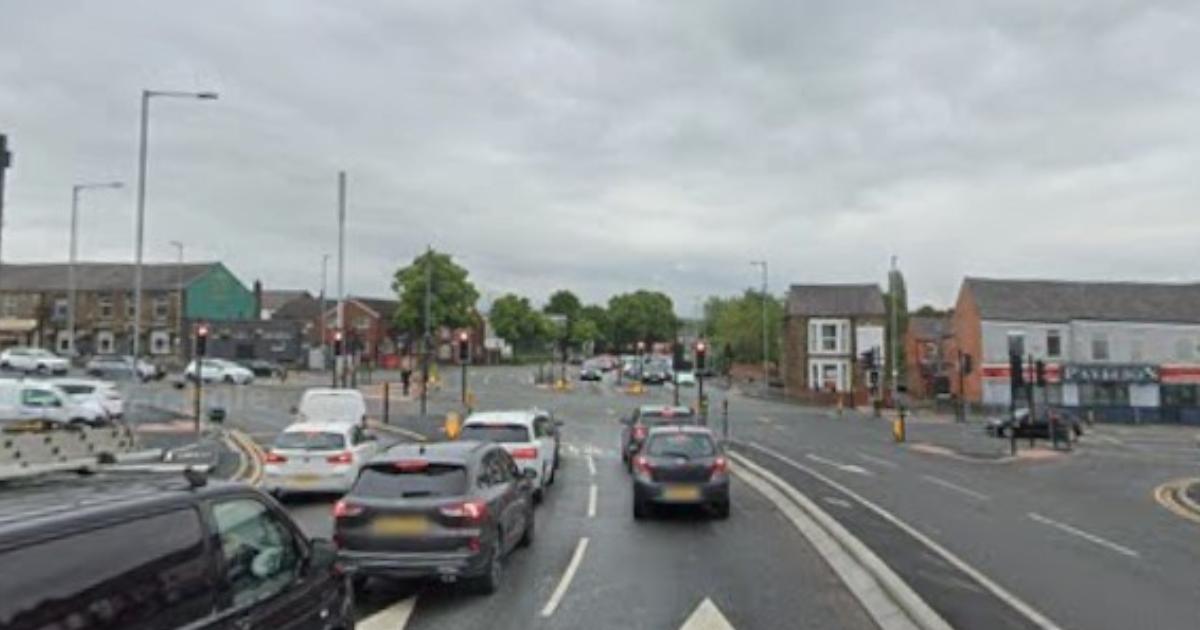
Moss Bank Way: Emergency services on scene after crash

Published

on

Moss Bank Way: Emergency services on scene after crash

As a subscriber, you are shown 80% less display advertising when reading our
articles.

Those ads you do see are predominantly from local businesses promoting local
services
.

These adverts enable local businesses to get in front of their target audience – the local
community
.

It is important that we continue to promote these adverts as our local businesses need
as much support as possible during these challenging times.

Advertisement

Source link

Advertisement
Continue Reading
Click to comment

You must be logged in to post a comment Login

Leave a Reply

NewsBeat

Jamie Laing says move for wife Sophie Habboo’s first Mother’s Day ‘backfired’ as she’s left in tears

Published

on

Manchester Evening News

Jamie Laing has joked that his gift to celebrate his wife Sophie Habboo’s first Mother’s Day backfired as he videod her breaking down in tears.

The couple are best known for starring together in E4 reality show Made In Chelsea, and they tied the knot in 2023 in a civil ceremony in London before a larger, more extravagant celebration in Seville, Spain.

It was then in June last year that they announced they were expecting their first child together, and in early in December, the they announced their baby’s arrival, as Jamie showed the first photos of him and Sophie with their newborn son, revealing his unique name. He wrote at the time: “Ziggy, you have our whole heart”.

Jamie and Sophie have since given glimpses into their lives as new parents, while keeping their son out of the spotlight as much as possible. But following Mother’s Day in the UK on Sunday (March 15), podcast host Jamie took to social media with a video of his wife in tears.

Advertisement

In the short clip, Sophie, 31, is seen sobbing as Jamie, 37, asks: “Wait, why are you upset?” As she holds her head in her hands, she emotionally responds: “He’s never going to be that small.”

A message across the video read: “POV: When your Mother’s Day present backfires,” while Jamie also captioned the post: “Reminder… Don’t make your wife a photo album of your newborn baby for Mother’s Day.”

Advertisement

It comes after Sophie marked her first Mother’s Day by posting a snap of herself pushing her pram around London, dressed in a black leather jacket and white trousers. She also gave a glimpse at the two-month-old, posting a photo of his feet as they sat at a restaurant table.

Alongside the post, she penned: “15 weeks of being a mama and wow… what a ride it’s been. I didn’t realise it was possible to feel so many emotions all at once. I totally get now what people mean when they say they wish they could freeze time. One minute I’m dreaming about the day I can sleep through a full night again, and the next I’m tearing up at the thought of you not needing me in the night or falling asleep in my arms anymore.

“The emotional rollercoaster is wild, it has changed me in ways I never expected, and I’m so grateful for that. The hardest, most rewarding and most magical little bundle of joy all in one. Being your mama is, and will always be, my greatest achievement and joy and the thing I am most proud of. You really are the missing piece to my puzzle.”

She added: “To all the mamas who have been by my side through these early weeks, I love you. And to all the mamas around the world, you truly are all heroes.”

Advertisement

Source link

Continue Reading

NewsBeat

The best washer-dryers for a two-in-one solution to laundry

Published

on

The best washer-dryers for a two-in-one solution to laundry

A washer-dryer seems the perfect space-saving alternative to buying separate washing machines and tumble dryers, and is usually more affordable. Still, you don’t want to get stuck with a subpar combo, which could run up high electricity costs and leave clothes damp after the drying cycle. If this is the case, you may want to buy a cheap-to-run heated clothes airer.

Washer-dryers can cost anywhere from £350 to more than £2,000 but for most people, you’ll still be making a saving compared to buying separate machines. The two main types of washer-dryers are freestanding and integrated, which are fairly self-explanatory, but you can read more about what to look for in a washer-dryer in the FAQs section below.

Freestanding washer-dryers tend to be more popular, which is why I’ve focused on them for this guide. I’ve also asked experts for advice and their own recommendations of specific washer-dryers.

Advertisement

The best washer-dryers: At a glance


How to choose a washer-dryer

Choosing the best size and capacity for your home are key when buying a washer-dryer. “It’s important to check the dimensions to ensure it will fit in your space,” says Gwil Snook, buyer at AO. “Think about the drum size you’ll need. Washer-dryers with up to 7kg capacity are suitable for six trousers and t-shirts or one single duvet. 8-9kg is ideal for eight trousers and T-shirts or a double duvet and 10-11kg suits 10 trousers and T-shirts or one king-size duvet.”

“Remember that the machine’s drying capacity is often 50-70 per cent of the washing load, so factor this into your decision making,” Carly Pearson, buyer at Argos adds. Secondly, consider energy rating. “More efficient models use less water and electricity, so could save money in the long run,” says Pearson. “Some models also offer eco-friendly wash and dry cycles that further reduce energy and water consumption.”

The final thing to consider, says Pearson, is noise level. “If your washer-dryer will live in a part of your home that can’t be shut away to keep quiet, make sure you go for the quieter option.”


How we chose the best washer-dryers

To help you decide which washer-dryer to purchase, I sought the input of experienced buyers Carly Pearson of Argos and Gwil Snook of AO, asking how they choose the washer-dryers to sell at their retailers. They advised me on the best washer-dryers based on factors like energy efficiency, drum size, washing and drying capacity, ease of the control panel, spin speeds and how well they expel water.

Advertisement

As many of the machines below have been recommended by experts rather than tested by us at home, we haven’t scored them. For those that were tested at home, the testing was done by home and appliance writer Emily Peck, who used each machine on a variety of loads including bedding, towels and sports clothes to see how they fare against each other.

Visit our Who We Are page to learn more about the testing process.


Source link

Advertisement
Continue Reading

NewsBeat

Could Ozempic help people whose cancer has spread to the brain?

Published

on

Could Ozempic help people whose cancer has spread to the brain?

Weight-loss injections that have become famous for helping people shed pounds may also help some patients with advanced cancer live longer when the disease has spread to the brain, according to a new study.

These medicines belong to a group of drugs called GLP-1 receptor agonists, and they include Wegovy and Ozempic. They were first developed to treat type 2 diabetes, but over the past few years they have drawn global attention because many people taking them experience significant weight loss.

The new study does not show that these injections directly treat cancer. Instead, it suggests something more subtle but potentially important: they might help some very ill patients live longer.

The study focuses on brain metastases. This happens when cancer cells travel from somewhere else in the body – such as the lung, breast or skin – to form tumours in the brain. Unfortunately, brain metastases are relatively common and usually indicate that cancer has reached a late and dangerous stage.

Advertisement

Many patients in this situation also have type 2 diabetes. This matters because the condition can make serious illness harder to manage. High blood sugar can cause chronic inflammation, damage blood vessels and weaken the body’s ability to cope.

In my own clinical practice, I often prescribe steroids to help patients with brain metastases manage symptoms such as swelling in the brain. Steroids can be very effective, but they also tend to raise blood sugar levels and can make diabetes harder to control. This has led researchers to ask whether GLP-1 drugs might have additional benefits.

When diabetes drugs meet cancer care

Laboratory studies suggest they may protect brain cells, reduce inflammation and help preserve the brain’s blood supply. Until now, however, there has been very little evidence from everyday clinical practice showing how patients with both diabetes and brain metastases fare when they take these medicines.

The new study, published in Jama Network Open, set out to explore that question. Researchers used a medical database of anonymised health records from 151 hospitals and healthcare systems around the world.

Advertisement

They searched for adults who had three conditions: cancer, type 2 diabetes and brain metastases. The records covered patients seen between 2018 and 2024. The researchers were particularly interested in whether these patients had been prescribed a GLP-1 drug – such as semaglutide, dulaglutide, liraglutide or tirzepatide – around the time their diabetes and brain metastases were first diagnosed.

GLP-1 drugs may have many benefits besides weight loss, but clinical trials need to confirm these benefits.
Rebel Red Runner/Shutterstock.com

To make a fair comparison, the team matched people who received one of these injections with similar patients who did not. They took into account factors such as age, sex, type of cancer, other medical conditions and treatments including chemotherapy, radiotherapy and steroid use. Statistical matching cannot eliminate every difference between groups, but it helps reduce the risk that the results simply reflect one group being healthier at the start.

In total, the researchers identified more than 19,000 patients with cancer, brain metastases and type 2 diabetes. Among them, 866 had been treated with a GLP-1 drug, while over 11,000 had not. After careful matching, the analysis compared two balanced groups of 850 patients each who were similar in terms of their cancers, body mass index, diabetes control and other health issues.

The researchers then followed these patients for up to three years after their brain metastases were first recorded. Their main question was straightforward but important: how many people in each group died during that period?

Advertisement

The researchers found that patients who were taking GLP-1 drugs were significantly less likely to die during the follow-up period than those who were not. Overall, people taking GLP-1 drugs were about 37% less likely to die over the three years.

The pattern was fairly consistent across several major cancer types, including lung cancer, breast cancer and melanoma. It also appeared across different drugs within the GLP-1 class.

When researchers compared GLP-1 medicines with other modern diabetes treatments – including drugs called SGLT2 inhibitors and DPP-4 inhibitors – the GLP-1 group still seemed to fare better. That hints that something about GLP-1 signalling itself might be beneficial, rather than the effect simply coming from better blood sugar control.

Important limitation

Even so, the researchers emphasise an important limitation. This study looked back at medical records rather than testing treatments in a controlled trial. To do that, researchers would need randomised clinical trials in which patients are deliberately assigned to receive a GLP-1 drug or another treatment and then followed over time.

Advertisement

So how might these so-called weight-loss jabs help people whose cancer has spread to the brain?

One possibility is that they help indirectly by improving diabetes itself. Better blood sugar control, reduced body weight and improved heart health could help patients cope better with surgery, radiotherapy or chemotherapy.

But there may also be more direct effects on the brain. Scientists have discovered that GLP-1 receptors are in brain tissue and play a role in controlling inflammation, protecting nerve cells and helping maintain the blood–brain barrier – a protective layer that keeps harmful substances out of the brain.

Animal studies suggest that activating these receptors can reduce damage in brain cells and help them function properly. In theory, that might help the brain tolerate metastatic tumours better or make it a less favourable environment for cancer cells to grow. The new clinical findings are consistent with these ideas, although they do not yet tell us which mechanisms matter most in people.

Advertisement

For patients and families reading about this research, it is important to understand what the results do – and do not – mean. The study does not suggest that people with brain metastases should rush to start GLP-1 drugs, nor that these medicines can replace standard cancer treatments such as radiotherapy, surgery, targeted therapies or immunotherapy.

The potential benefits were seen specifically in people who already had type 2 diabetes. Like any medication, these injections can cause side-effects such as nausea and vomiting, and there are ongoing discussions about rare but serious risks.

Anyone considering them would need careful guidance from both their oncology and diabetes teams rather than making decisions based on a single study.

Still, the findings open up an intriguing new line of research linking cancer, metabolism and brain health. If future trials confirm that GLP-1 drugs genuinely improve survival in patients with brain metastases and diabetes, they could eventually become part of supportive care for people facing this difficult complication.

Advertisement

Source link

Continue Reading

NewsBeat

Water trip risk assessment not sufficient before boy’s death, inquiry told

Published

on

Daily Record

Kayden Walker, 12, drowned after getting into difficulty in the River Tay while on a day trip with a community group in July 2019.

A risk assessment for a river boarding trip which led to a 12-year-old boy’s death was not “suitable and sufficient”, an inquiry has heard. Kayden Walker, who could not swim, died after becoming trapped on the upstream side of a weir while on a day trip with the Church House community group in July 2019.

A Fatal Accident Inquiry (FAI) heard from Katrina Pearson, an environmental health officer with Perth and Kinross Council, who was involved in the investigation following his death. Asked by procurator fiscal depute Catherine Fraser whether she would consider the weir to be a “high risk location”, she replied “absolutely” and said the main hazard would be body entrapment.

However, she said a number of reasonable precautions could have been taken to prevent the incident. She told the inquiry on Tuesday: “In the first instance I would expect that the risk assessment for the activity would have been suitable and sufficient, which it was not in this case.

Advertisement

“And if it was they would have known about the hazard of the weir and the potential for body entrapment and also the risk to non swimmers and to swimmers. And I would expect that sufficient controls would be put in place to mitigate this – avoidance of the weir or not taking non-swimmers to such a high risk location, or additional supervision or robust safety briefing.”

Kayden, from Glasgow, was separated from his board during a river boarding session on the River Tay, near the village of Stanley, Perthshire, on July 28 2019. After being pulled from the water, he was airlifted to Ninewells Hospital in Dundee and was then transferred to the Royal Hospital for Children in Glasgow where he died on July 29.

The FAI, taking place at Falkirk Sheriff Court, follows the prosecution of Outdoor Pursuits Scotland Ltd in October 2024 for a contravention of health and safety legislation which led to Kayden’s death. The company was fined £10,000. Aimee Doran, representing Outdoor Pursuits, put it to Mrs Pearson that she was commenting on reasonable precautions from a health and safety point of view and without having any particular expertise in water-based activities.

Mrs Pearson replied: “Yes, from the health and safety point of view, not technical aspects.”

Advertisement

The joint FAI is also considering the death of Ruaridh Stevenson, 39, from Cupar, Fife, who drowned after trying to help a client who experienced difficulties in the waters flowing through Dollar Glen, Stirlingshire on April 13, 2024. Mr Stevenson was a director of a company which offered “canyoning” experiences on Scottish rivers.

The inquiry heard from Peter Carroll, a volunteer assistant ranger with the National Trust for Scotland (NTS) which cares for the area where the incident happened. He helped give CPR to Mr Stevenson after a member of the public came to tell them what was happening as he worked with NTS countryside ranger Laura Livingstone.

Mr Carroll went to the scene which was in an area called the Devil’s Cauldron which Ms Livingstone had described to the FAI as a “water feature hollowed out which forms a bowl that goes down about seven or eight feet.”

Advertisement

He told the inquiry: “When I looked down into the cauldron I could see Mr Stevenson on a ledge lying on his back and a chap was doing CPR.”

Mr Carroll then went to guide emergency services to the scene, which could not be reached by vehicles, before getting into the water himself to help with CPR. He said: “I was in the water until Mr Stevenson was pronounced dead and the recovery process started.”

Ms Livingstone, who has been an NTS ranger for 10 years, said the water level looked “high” on the day of the incident and she thought it was “borderline” as to whether canyoners should be in it. She told the inquiry that the area around the Devil’s Cauldron is fenced off after an incident around a decade ago where someone jumped in and died after hitting their head.

Ms Fraser asked: “Despite the fence do canyoners move the fence to access it?” to which Ms Livingstone replied, “yes.”

Advertisement

The inquiry also heard that there is a section nearby not managed by NTS that is not fenced off. Karen Railton, representing NTS asked: “Do you think if a sign was put up saying it was dangerous that would stop canyoners?”

Ms Livingstone said, “no.”

The FAI continues before Sheriff Keith O’Mahony.

Get more Daily Record exclusives by signing up for free to Google’s preferred sources. Click HERE.

Advertisement

Source link

Continue Reading

NewsBeat

Donald Trump says US will ‘do what we have to’ over Cuba days after rare riot | World News

Published

on

Social media footage of a riot in Cuba showed protesters throwing rocks through windows. Pic: Reuters

Donald Trump has warned the US could take action in Cuba after his Iran war, days after a rare riot on the island.

The US president said on Sunday that they could reach a deal with Cuba or “do whatever we have to do”.

But Mr Trump suggested no action would be taken in Cuba until his war in Iran was over.

It also comes after a rare riot in Cuba on Saturday, during which protesters attacked the Communist Party office over blackouts, according to local media.

Advertisement

Iran war latest: Trump issues warning to NATO over Iran

‘We’re going to do Iran before Cuba’

Image:
Donald Trump spoke to reporters on Air Force One on Sunday. Pic: Reuters

Speaking to reporters on Air Force One, Trump said: “Cuba also wants to make a deal, and I think we will pretty soon either make a deal or ​do whatever we have to do.

“We’re talking to Cuba, but we’re going to do Iran before Cuba.”

Advertisement

He also suggested on Monday that Cuba may be the target of a “friendly takeover” before adding it “may not be a friendly takeover”.

His comments follow years of tensions between Washington and Havana, with sanctions and disputes over migration and security among issues.

Cuba’s President, Miguel Diaz-Canel, said on Friday his country had opened talks with the US as it continues to face one of its worst economic crises in decades.

‘Away from confrontation’

Advertisement

Advertisement

Iran war: Trump demands help from allies

He said: “These talks have been aimed at finding solutions through dialogue to the bilateral differences we have between the two nations.”

Mr Diaz-Canel added that he hoped negotiations would move the long-term rivals “away from confrontation”.

Cuba’s economic turmoil has been exacerbated by disruptions in imported oil, which it relies on to run power plants and transportation networks.

Advertisement

Fuel shortages have also forced authorities to impose rolling electricity outages and to limit some public services.

During Saturday’s riot, the anti-government protesters began rallying peacefully before turning violent, a state-run newspaper said.


‘We will soon get the Hormuz Strait’

Read more:
Emergency crews called to 15-vehicle crash on motorway
Laptop found in search for missing academic

Advertisement

Videos on social media showed people throwing rocks through the windows of a building as they shouted “liberty” in the background.

Mr Diaz-Canel said he felt the anger was understandable but that “there would be no impunity for vandalism and violence”.

In recent weeks, Mr Trump has insisted Cuba was on the verge of collapse or eager to make a deal with the US.

Advertisement

Source link

Continue Reading

NewsBeat

Would more North Sea drilling lower UK energy bills? Our analysis says no

Published

on

Would more North Sea drilling lower UK energy bills? Our analysis says no

As the Middle East conflict intensifies and oil and gas prices swing wildly, the UK has seen renewed calls to drill more in the North Sea. The argument is straightforward: if Britain produces more of its own oil and gas, household energy bills should fall.

But our analysis suggests the effect would be minimal. Even if the UK maximised North Sea extraction and returned revenues directly to households, the reduction in energy bills would be at most a modest £82 per year – far smaller than the savings expected from accelerating the shift to renewable energy.

In fact, a faster transition away from gas-powered electricity could cut household energy bills by three times as much as maximising North Sea oil and gas.

Why UK energy bills are so high

A typical UK household has a single “dual fuel” bill covering both electricity and gas. This can be divided into several different components.

Advertisement

The largest share is the wholesale cost – the price suppliers (the company named on your bill) pay for electricity and gas – which accounts for about 41% of the bill. The rest covers the costs of running and maintaining energy networks (23%), operating costs and debts (15%), policy costs such as environmental and social levies (12%) and VAT.

At the wholesale level, the UK does not consistently pay more than other European countries. At various points since 2022, countries such as Italy and Germany have faced similar or higher wholesale costs.

Yet UK households still pay some of the highest retail electricity prices in Europe. That’s because of how the electricity market works.

Advertisement

Last year, about 27% of UK electricity was generated by gas power plants like this one in North Wales.
Phil Silverman / shutterstock

In Britain, the wholesale electricity price is usually set by the most expensive generator needed to meet demand. That generator is often a gas-fired power station. As a result, electricity prices tend to rise and fall with gas prices – even when much of the electricity is produced by cheaper sources such as wind or solar.

Gas also dominates home heating – 85% of UK households still rely on gas boilers, far more than in most comparable countries

This makes UK households highly exposed to swings in global fossil fuel prices. Gas prices are set on international markets, which are heavily exposed to geopolitical shocks, as seen both in 2022 after Russia’s invasion of Ukraine and again today.

Britain’s poorly insulated homes – among the least energy efficient in northern Europe – compounds the problem. This means households consume more gas to achieve the same level of warmth.

Advertisement

Why more North Sea drilling wouldn’t cut bills

Producing more oil and gas in the North Sea would not create the UK’s “own special supply”, nor could its price be set specifically for UK citizens.

That’s because any new production would be sold on international markets at international prices. The UK simply doesn’t have the ability to extract, refine and use oil all by itself even if it wanted to – some international trading will always be necessary.

The only way North Sea extraction could reduce household bills is through government revenues. Taxes and levies on oil and gas profits – the so-called fiscal “take” – could in principle be redistributed to households.

To explore this possibility, we modelled a scenario in which the UK maximised North Sea oil and gas and used all revenues collected to subsidise lower energy bills.

Advertisement

Even under those assumptions, the effect would be limited. Household bills would fall by between £16 and £82 per year. That’s roughly 1% to 4.6% of the current average household energy bill of £1,776, according to UK regulator Ofgem.

Bigger savings from renewables

A different policy direction – one that reduces the role of gas in electricity production – produces much larger savings.

If the price of electricity was set by cheaper renewable energy rather than by gas, our analysis suggests households could save £105 to £331 per year through lower wholesale energy costs.

That is roughly three times more than the “maximise oil and gas” scenario.

Advertisement
offshore wind farm

The North Sea’s other future.
Nuttawut Uttamaharad / shutterstock

Importantly, these savings would also be recurring. Once electricity prices are less tied to volatile gas markets, and instead are set by cheaper and infinitely available resources – wind and sun – households benefit every year.

Savings could be still higher if the structure of electricity bills were rebalanced. At present, many policy costs – including support for renewables – are added to electricity bills rather than funded through general taxation.

If those policy costs were moved into general taxation, as announced in the government’s autumn 2025 spending review, the average household could save up another £110 or so annually. In our renewables scenario, that would bring the total savings to about £441 per year.

Moving policy and system costs from bills onto general taxation is one way to make energy costs fairer and more egalitarian. That’s because energy bills take a larger share of income from lower income households while taxes better reflect ability to pay.

Advertisement

Our analysis used oil and gas prices in January 2026, prior to the breakout of the US-Israel war on Iran. In other words, ours is a conservative scenario that assumes relatively favourable conditions for fossil fuels. If global prices rise further, the advantages of renewable energy would become even greater.

Reducing exposure to fossil fuel shocks

Recent history illustrates how costly dependence on fossil fuels can be.

Research by our colleagues at Oxford Smith School found that if the UK had moved away from importing Russian oil and gas after its 2014 invasion of Crimea, it would have saved about £22 billion in energy costs during the price spike after the invasion of Ukraine in 2022.

Similarly, had the UK adopted the “balanced net zero” pathway proposed by its official advisory Climate Change Committee, it could avoid spending around £70 billion on crude oil and natural gas between 2022 and 2030.

Advertisement

Today’s energy crisis simply reiterates this argument: if the UK was less reliant on oil and gas today, it would be in a much better economic position.

The best way to keep energy bills low in the long run is to reduce dependence on gas altogether. That means expanding renewable generation, investing in energy storage and grid infrastructure, improving home insulation and electrifying heating through technologies such as heat pumps. Support for vulnerable households will also be crucial during the transition to a lower-carbon energy system.

Our findings refute speculation that draining the North Sea of all oil and gas would significantly lower bills and make the UK energy secure. Even if further fossil fuel extraction went ahead and all tax revenues were returned directly to consumers, the savings for consumers would be modest. Meanwhile the UK would remain exposed to geopolitical shocks and be economically worse off.

Staying the course on clean energy would not only save households three times as much money but render the UK truly energy secure for generations to come.

Advertisement

Source link

Continue Reading

NewsBeat

Gerry Adams tells court he ‘had no involvement whatsoever’ in IRA bombings

Published

on

Belfast Live

“I was never a member of the IRA or its Army Council, and I never held any role or rank within the IRA.”

Gerry Adams has told the High Court that he had “no involvement whatsoever” in Provisional IRA bombings in England and that he was never a part of the organisation.

The former Sinn Féin president entered the witness box on Tuesday in defence of a legal claim against him brought by three victims of bombings in England in the 1970s and 1990s.

Advertisement

John Clark, a victim of the 1973 Old Bailey bombing in London; Jonathan Ganesh, a 1996 London Docklands bombing victim; and Barry Laycock, a victim of the 1996 Arndale shopping centre bombing in Manchester, all allege that Mr Adams was a leading member of the Provisional IRA on those dates, including of its Army Council, and are seeking £1 in damages.

Mr Adams is defending the claim, claiming in a witness statement that membership of Sinn Féin “does not equate to membership of the IRA”.

Wearing a dark suit and tie, a shamrock and a badge of the Palestinian flag, Mr Adams began his evidence by wishing the judge, Mr Justice Swift, “a very happy St Patrick’s Day”.

Advertisement

In his 20-page witness statement, Mr Adams said he “was not involved in any way in the planning, preparation or conduct of” any of the bombings, and “have never been a senior, let alone most senior figure, in the IRA”.

He continued: “I had no involvement in or advance knowledge of the Old Bailey bombing (1973), the Canary Wharf bombing (1996) or the Manchester bombing (1996).

“I have never been charged, prosecuted or convicted of any offence in connection with any of the bombing incidents in which the claimants were injured.”

He also said: “I was never a member of the IRA or its Army Council, and I never held any role or rank within the IRA.

Advertisement

“I repeat that I had no involvement whatsoever in the authorisation, planning or conduct of the bombings in which the claimants were sadly injured.”

Mr Adams also said that opponents of Sinn Féin, of which he was president from 1983 to 2018, “have repeatedly sought to conflate” the party with the Provisional IRA.

“As I have always stated, Sinn Féin and the IRA are separate organisations,” Mr Adams said.

He continued: “I have no knowledge, beyond what has been widely reported in the public domain, as to the structure or decision-making processes of the IRA.”

Advertisement

Mr Adams told the court that he was “very conscious” that the three bomb victims had “suffered significantly”, and that his statement should not be taken “as criticism of the claimants, or as any attempt to deny or diminish their awful experiences”.

During cross-examination by barrister Sir Max Hill KC, Mr Adams agreed that 1,178 deaths were caused by the Provisional IRA, the business of which was “to resist armed British occupation and aggression in the part of Ireland that I lived in”.

He had earlier said that the ignorance of Irish history among British people is “shocking”.

Anne Studd KC, for the three bomb victims, previously told the trial that Mr Adams was “directly responsible for and complicit in those decisions made by that organisation to detonate bombs on the British mainland in 1973 and 1996”.

The barrister also said that the difference between being in “the Army” and being a member of Sinn Féin was not a “clear either/or choice”.

She added: “The claimants’ case is that none of these bombings in the United Kingdom mainland took place without the knowledge and agreement of the defendant in his role in the Provisional IRA and latterly as a member of the seven-man Army Council.”

She concluded: “There is no doubt that the defendant contributed to the peace in Northern Ireland, but the claimants say that on the evidence he also contributed to the war.”

Advertisement

Ms Studd also told the court that Mr Adams had “a foot in each camp” of the military and political sides of the Irish Republican movement, and that was likely “as involved as the people who planted and detonated those bombs”.

The trial is due to conclude later in March.

For all the latest news, visit the Belfast Live homepage here and sign up to our daily newsletter here.

Source link

Advertisement
Continue Reading

NewsBeat

Man in court over Guisborough Market Cross Jewellers robbery

Published

on

Market Cross Jewellers staff 'shaken' after 'robbery'

Jason Barstow, 29, is accused of robbery and possession of a firearm with intent to cause fear of violence following an incident at Market Cross Jewellers on Westgate in Guisborough on Saturday afternoon, March 14.

Barstow, of St Ann’ Court, Hartlepool, appeared before Teesside Magistrates’ Court on Monday, March 16. He did not enter a plea to either charge during the hearing.

Barstow was remanded in custody and is due to appear next at Teesside Crown Court on April 16 for a plea and trial preparation hearing.

Advertisement

Police were called to the jewellery shop shortly before 4pm on March 14 following reports of a robbery.

It is alleged a man smashed his way through a window with a hammer, threatened staff and took items before fleeing.

Members of the public chased and detained the suspect until officers arrived at the scene.

Following the incident, Cleveland Police confirmed a 29-year-old man had been arrested on suspicion of robbery and taken into custody.

Advertisement

Source link

Continue Reading

NewsBeat

Lawns won’t be bumpy or uneven if you sprinkle 3 simple things to ‘make grass flourish’

Published

on

Daily Mirror

It has been called the ‘easiest way’ to make lawns look better.

Now that it is spring, many of us are turning our attention to lawns in preparation for sunny days. Lawns can seem difficult to deal with, especially if they aren’t level.

Advertisement

However, a garden expert has explained how to achieve a lush lawn this summer without any bumps. The key is all in the preparation, which can be done now.

Expert Michael, who shares hacks on social media @themichaelgriffiths, revealed his fix that uses a mix of sand, soil and compost. He said: “It’s one of the easiest ways to make a lawn look instantly better without re-turfing.”

To make a lawn level, Michael started by preparing the area. He mowed the grass “really short” to two to three centimetres.

Michael explained: “This makes it easier to apply top dressing and you get better visibility of any low spots.” He then made sure to have his top soil, sand and compost to hand.

Advertisement
Content cannot be displayed without consent

The expert said you need to combine the materials to a two to one part mix. This means two parts top soil, two parts sand and one part compost.

Michael said: “This combination provides bulk drainage and nutrients to help the grass flourish.” Once combined together, spread it over the bumpy area you mowed.

He then levelled the mix, which can be done with the back of a rake or a lawn-levelling rake. Ensure the mix has been spread across the lawn evenly.

Michael walked on top of the mix to tread it into the ground. He said you can repeat the steps if necessary, to ensure all bumps are covered and a level area has been created.

Advertisement

The social media expert said: “Finally, water in gently to help the mix settle. And if it’s needed, you’re now ready to reseed your lawn.”

Michael told his followers: “If your lawn feels more bumpy than flat, don’t rip it out, you can level it.

“A simple top-dressing mix of sand + soil + compost brushed into the low spots helps smooth the surface while keeping the grass growing through.”

Advertisement

One person asked Michael if it is too early in the year to follow his advice. He replied: “Perfect time to do this now – still probably a little too cold for grass seed but in about 2 weeks it’ll be fine. So you can do this now to get ready.”

Another commented: “Perfect, I got a quote for this that was over £2k which I couldn’t justify. This is brilliant I’m going to attempt myself. Thank you so much for posting.”

Source link

Advertisement
Continue Reading

NewsBeat

Woman brutally raped by man who asked her for ‘no strings fun’

Published

on

Wales Online

Jason Bailey, 48, carried out an ‘opportunistic’ sex attack upon his victim

Advertisement

A woman was brutally raped by a man while she was working despite her telling him she was not interested in a sexual relationship. The victim said she “blamed herself” for the rape and has “struggled to come to terms with her reaction” having previously believed she could have fought back, a court heard.

Jason Bailey, 48, of Porthcawl, had previously asked his victim if she “fancied some no strings fun” but she had not responded and thought to herself: “Who the hell does he think he is?”. He later approached her and asked her what he thought about his proposition, which she turned down.

A sentencing hearing at Cardiff Crown Court on Tuesday heard Bailey walked towards the victim as she repeatedly told him: “No”. For the biggest stories in Wales first sign up to our daily newsletter here..

He manhandled her and pinned her down before pulling down her leggings and underwear.

Advertisement

The defendant sexually assaulted the victim by forcibly performing oral sex upon her before raping her with his penis.

He only finished raping her when he ejaculated and walked off and told her: “Between us yeah?”.

The victim later confided in friends who contacted the police.

Bailey, of New Road, was later convicted of rape and assault by penetration following a trial. The court heard he has no previous convictions but has a caution for burglary.

Advertisement

In a victim personal statement read to the court by prosecutor Nigel Fryer the victim said: “When it first happened it had such a huge impact on me for so many months of my life – the big stuff and everyday stuff…

“The thought that he could be there and feelings of intimidation made me feel sick… There were regular occasions I could not get out of bed for days on end. I did not wash or brush my teeth. I have always had feelings of anxiety and depression. I felt so angry at myself and blamed myself. I was in shock for some days afterwards.

“I would describe myself as a feisty person and thought I could fight back but I have struggled to come to terms with my reaction and didn’t fight as I thought I would. I started having flashbacks and started drinking in the house, which I never did.”

The victim said she cries and shakes at the thought of seeing the defendant and panics when she sees someone who looks like him. She said she is now unable to socialise other than at her local pub.

Advertisement

In mitigation Andrew Davies said his client has suffered financially and with his mental health while waiting for the trial and described the defendant as a “broken man”.

The barrister said Bailey’s family had suffered tragedy after his younger brother took his own life and he serves as a carer for his mother who has spinal problems and is immobile. He also has a son who he provides for.

Sentencing, Recorder Andrew Hammond said: “This was an opportunistic sexual attack. You took the opportunity to force yourself upon her and did not take no for an answer.”

Bailey was sentenced to six years imprisonment.

Advertisement

The defendant was also made subject to a restraining order indefinitely and was made subject to sex offender notification requirements for life.

Get daily breaking news updates on your phone by joining our WhatsApp community here. We occasionally treat members to special offers, promotions and ads from us and our partners. See our Privacy Notice.

Source link

Advertisement
Continue Reading

Trending

Copyright © 2025