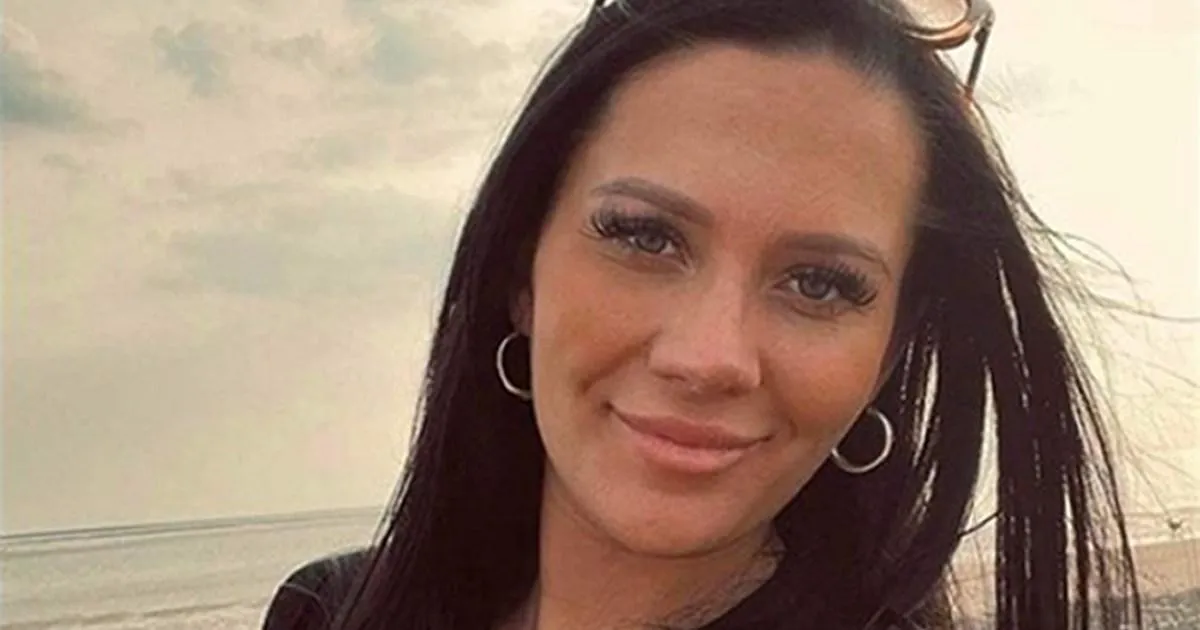
Kiena Dawes had written a note before ending her life saying ‘Ryan Wellings killed me’ (Picture: Lancashire Police/PA)
‘I hope my life saves another.’
Kiena Dawes’ last words before ending her life were a plea for her abuser to be held accountable for the ‘torture’ he put her through – and for no other women to be failed in the way she was.
But while Ryan Wellings was eventually found guilty of assaulting Kiena and subjecting her to prolonged domestic abuse, he was cleared of having any ‘criminal responsibility’ for her death.
High profile trials like Kiena’s ending in not guilty verdicts on manslaughter charges have led families, campaigners and even police and lawyers to call for a new law to ensure perpetrators are held responsible when their abuse leads to a person ending their own life.
Advertisement
Kiena’s Law would see the creation of a new standalone offence for domestic abuse- related suicide.
Campaigners are also calling for coercive and controlling behaviour to be included within the ‘dangerous offender’ framework, allowing courts to impose extended sentences.
Kiena’s mother, Angela Dawes, backed calls for a law in her daughter’s name, saying: ‘My girl didn’t want to die. My girl wanted to live. But she lived in fear.’
That is despite the grim fact that women in abusive relationships are now more likely to kill themselves than die at the hands of a current or former partner.
In its latest annual report, the Domestic Homicide Project, a programme led by the National Police Chiefs’ Council (NPCC), recorded 150 suspected domestic abuse-related suicides in England and Wales.
That is up from 98 suicides in the previous 12 months, and significantly higher than the 80 recorded intimate partner homicides.
This Is Not Right
On November 25, 2024 Metro launched This Is Not Right, a campaign to address the relentless epidemic of violence against women.
Advertisement
With the help of our partners at Women’s Aid, This Is Not Right aims to shine a light on the sheer scale of this national emergency.
You can find more articles here, and if you want to share your story with us, you can send us an email at vaw@metro.co.uk.
Read more:
Advertisement
Yet figures show only 3% have resulted in any kind of prosecution.
When it comes to manslaughter, there has been just one conviction – that of Nicholas Allen, who pleaded guilty and was jailed for 10 years in 2017.
Kiena’s Law
Kiena’s Law would see the creation of a new standalone offence for domestic abuse-related suicide (Picture: Lancs Live/MEN Media)
Lancashire’s Police and Crime Commissioner Clive Grunshaw in partnership with charity Advocacy After Fatal Domestic Abuse (AAFDA), hosted a conference in Blackpool last month to launch a petition calling for Kiena’s Law and address concerns about the link between sustained domestic abuse and suicide.
He told Metro: ‘If you can imagine the pain, the anguish, the trauma that somebody must be in for them to be in such circumstances that they feel that taking their own life is the only escape from the abuse they’re enduring, it is horrendous.
Advertisement
‘We believe that the courts and the judicial system need to have the power in those circumstances to get justice for the victims, and there needs to be a greater deterrent for perpetrators.’
Frank Mullane, founder of AAFDA, said law change is critical if perpetrators are to be properly held to account.
He told Metro juries are ‘struggling’ with the link between domestic abuse and suicide and the legal concept of ‘causation’.
Ryan Wellings was found guilty of abusing Kiena but he was cleared of having any ‘criminal responsibility’ for her death (Picture: Lancashire Police/PA)
Defence teams are also being left free to ‘exploit any mental health difficulties the deceased may have had – even though some or all of those difficulties may have been caused or contributed to, by the abuse’.
‘Causation’ and the link between domestic abuse and suicide
In simple terms, causation is proof that a defendant’s conduct contributed to a victim’s death in a ‘significant’ way.
Advertisement
Several problems arise from that in cases of domestic abuse-related suicide.
They include the victim likely being nowhere near the defendant when they die and the suicide being seen as a ‘choice’ freely made by the deceased.
Another obvious difficulty is the absence of the victim’s voice from the witness box.
In that void, defendants can point the jury in the direction of myriad other issues to explain why they may have taken their own life, minimising the effects of their abusive behaviour and avoiding accountability for it.
Advertisement
Jurors are then left with what can appear to be a choice between either the abuse or the victim’s mental health as factors behind the decision to end their life, rather than an appreciation of how the two are intrinsically linked.
Dr Anne Lodge, a senior lecturer in law at Teesside University, told Metro: ‘Too often, suicide is treated as a completely independent choice of the victim.
‘But where someone has been subjected to years of coercive control, their autonomy may have been so eroded that they no longer see any other way out – they may be effectively stripped of their freedom to make choices.
‘That’s something the law needs to recognise.’
Advertisement
Tim Woodhouse, suicide prevention researcher at the University of Kent, found that one in three suicides in the county between 2018 and 2024 were impacted to some extent by domestic abuse.
If that number was applied nationwide, it could mean as many as 1,000 domestic abuse victims are taking their lives each year.
Mr Woodhouse told Metro: ‘Being physically abused, sexually attacked and emotionally tortured, week after week, month after month, is clearly exceptionally damaging to anyone’s mental health.
‘It’s made even worse when the person abusing you is someone you once loved.
Advertisement
‘So, on the one hand, it’s easy to understand why such a high number of victims are killing themselves, but we are just beginning to understand that these tragic deaths actually happen for a number of different reasons.
‘Some victims have been beaten so badly in the past that believe that they are going to be murdered by their perpetrator, so they attempt suicide as a way of controlling the way they die – even though they don’t actually want to stop living.
‘Others attempt suicide because they believe the lies that their perpetrator tells them, for example that their family and friends hate them and the world would be a better place without them it.
‘Finally other victims feel so isolated, trapped and helpless, that they simply can’t see another way of making the abuse stop.
Advertisement
‘Many of the victims in this group will have reached out to services like the police, the family court, domestic abuse charities and social services but not got the support they needed to make the abuse stop.’
In 2022, a coroner ruled that Jessica Laverack, 34, ended her life at her home in East Yorkshire after suffering domestic abuse.
Hers was the first inquest to make clear the link between domestic abuse and suicide.
Phyllis Daly, Jessica’s mother, told the Blackpool conference coercive control ‘leaves few visible signs, but can destroy a victim’s life’.
Advertisement
‘Jessica stated that she felt she had no escape and her life wasn’t her own anymore,’ she said. ‘She was trapped, miserable and fearful.’
She added: ‘Sustained domestic abuse that ends in suicide is not incidental. It’s a foreseeable outcome, a preventable outcome, and accountability has to follow.’
‘I didn’t want to end my life – I wanted the fear to end’
Dr Lodge said: ‘Many victims already have existing vulnerabilities, whether that is previous trauma or mental health difficulties.
‘Those factors can be used by the defence to argue that the abuse was not a sufficient or significant enough cause of the suicide.
Advertisement
‘This narrative potentially downplays the devastating impact prolonged coercive control can have and makes it harder to hold perpetrators criminally responsible for manslaughter.’
Kiena Dawes was a young mother who took her own life four years ago in July 2022 after suffering prolonged domestic abuse (Picture: Lancs Live/MEN Media)
The conference got a harrowing glimpse of what a jury might hear if a victim could give evidence at their own manslaughter trial.
One survivor bravely spoke publicly for the first time about how she contemplated ending her life.
‘When people hear the words domestic abuse, they often imagine bruises, broken bones, black eyes,’ she said.
‘But abuse is rarely defined by one incident. It took years and a whole new vocabulary – gaslighting, stonewalling, coercive control – before I fully understood what had happened.’
Advertisement
She added: ‘People often think suicide is about wanting to die. For me, it wasn’t.
‘I didn’t want to end my life. I wanted the fear to end. I wanted the intrusive thoughts to end. I wanted to feel safe again.
‘There is a profound difference between wanting a life to end – all the things you love – and desperately wanting unbearable pain to stop, because when you’re in so much pain you can’t feel anything anyway.
‘No joy, no pleasure, no hope. You’re not living anymore anyway.
Advertisement
‘When someone dies after domestic abuse, we often ask “why did they take their own life?”
‘Perhaps we should begin by asking a different question – “what happened in the years before they died?”’
Local MPs Chris Webb and Lorraine Beavers pledged to campaign for Kiena’s Law in Parliament.
And Jess Phillips, the former minister for safeguarding and violence against women and girls (VAWG), told the conference ‘justice is evading us’ currently but insisted the issue is ‘a fundamental part’ of the government’s VAWG strategy.
Advertisement
Ministers are ‘keen to look at what the solutions are in this space’, she added.
A Government spokesperson said: ‘We are committed to halving violence against women and girls, and our thoughts remain with all those who have lost loved ones as a result of domestic abuse.
‘We have now introduced better protection for victims by strengthening the management of offenders convicted of controlling and coercive behaviour.
‘The Law Commission is currently reviewing homicide law, including the use of manslaughter offences where abuse may have driven someone to suicide.’
Advertisement
‘Girls shouldn’t have to die to be heard’
During Wellings’ trial, the jury heard he was an ‘entitled, aggressive bully’ who would regularly slap and ‘rag’ Kiena by her hair.
He also threatened to use a drill to take her teeth out and ‘make her look like Katie Piper’ by throwing acid in her face.
More than once police were called, but Wellings threatened Kiena that she would have their daughter taken off them if she told them what was happening, so she declined to help prosecute him.
A final assault ‘broke’ Kiena, leaving her needing hospital treatment. This time she did make a statement to police and her tormentor was arrested.
Advertisement
He then broke his bail conditions but was not locked up, leaving her feeling let down by police.
Angela Dawes (right), the mother of Kiena Dawes, pictured at the Home Office (Picture: PA)
Four days later she killed herself.
In her suicide note, she wrote: ‘The end. I fought hard, I fought long. I went through pain no-one could imagine.
‘I was murdered. Ryan Wellings killed me. He ruined every bit of strength I had left. I had dreams. I had a future at one point. That was taken away from me.’
But Wellings’ defence team described Kiena as a ‘very troubled young lady’ who ended her life not because of him, but because of ‘multiple factors’ including the loss of her father.
Advertisement
They also pointed to the fact she had made several attempts to end her life in the past, before she met Wellings.
Mr Mullane said: ‘Kiena’s Law represents an opportunity to recognise the devastating and sometimes fatal consequences of coercive and controlling behaviour, improve accountability and help prevent future deaths.
‘We owe it to Kiena and to every family affected by domestic abuse-related suicide to make that change.’
Mrs Dawes added: ‘Girls shouldn’t have to die to be heard, and my daughter had to die to be heard.
Advertisement
‘Nothing is ever going to bring my baby back, but if we can change things moving forward, I’d hate to see another family go through what we’ve been through.’
You can sign the petition Kiena’s Law: Recognise domestic abuse–related suicide in law by clicking here.
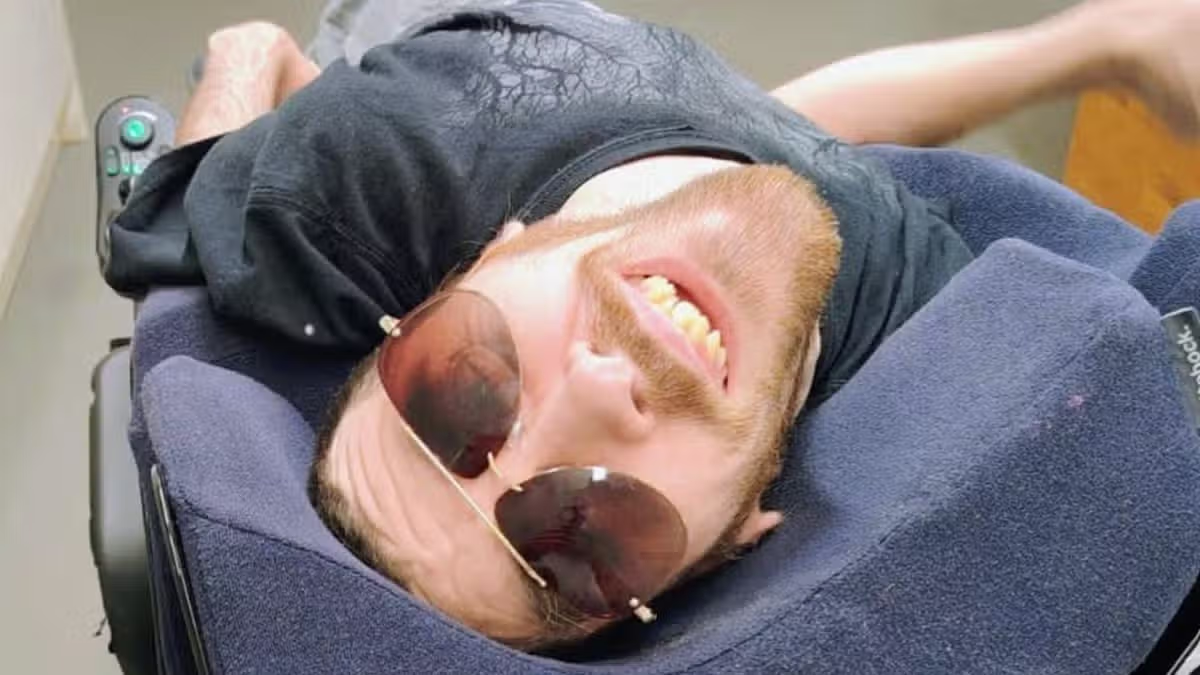
Donald Munro has been diagnosed with a rare, incurable cancer and has been placed on palliative care.
A terminally ill man is facing a race against time to fulfil his dying wish to see Bon Jovi live in concert. Donald Munro, 45, from the Highlands, has lived with the incurable muscle condition idiopathic torsion dystonia since childhood.
Advertisement
Despite spending most of his life in a wheelchair and facing significant physical challenges, he has refused to let his illness define him – even after being diagnosed with a small-cell carcinoma of the bladder, a rare, incurable cancer.
He has since been placed on palliative care. Donald, who now lives in Inverness, says his final wish is to see his music icons Bon Jovi, whose music has helped him through “good times and bad”. He was delighted when the rockers announced a show at Murrayfield Stadium in Edinburgh on August 28, but sadly failed to secure accessible tickets.
As time has become precious to him and his family, he is more determined than ever to make his wish come true – to attend the concert or even receive a short personal video message or video call from Jon Bon Jovi himself.
“If that’s not possible, a short video message or a quick video call would be something I’ll treasure forever.
“I tried to see Bon Jovi under my own steam and was disappointed to miss out.
“But I never imagined that, only a short time later, my circumstances would change so dramatically.
Advertisement
“I did everything I could to make seeing Bon Jovi live again happen. Unfortunately, it wasn’t to be.
“The right medication and Bon Jovi’s music and has helped me build a life for myself I never imagined possible.”
Donald started experiencing muscle spasms in his arm aged eight which gradually spread to the rest of his body.
By the time he was diagnosed aged 10, his legs were too weak to support him and he used a wheelchair full time.
Advertisement
Music became his passion, particularly Bon Jovi. He says the band has provided the “soundtrack to his life”.
He was able to see them in concert at London’s Hyde Park in 2003, but has never had the opportunity again.
Donald said: “Bon Jovi allowed my body respond to music without me worrying about what anyone thought.
Advertisement
“For the first time in a long time, I felt like myself again.”
Donald’s friends have created a short documentary sharing Donald’s extraordinary story to help his wish come true.
They are inviting people to help spread the word in the hope that it reaches Jon Bon Jovi and his team.
Abi Macdonald, who has been helping coordinate the campaign, said: “Donald has faced challenges that most of us can’t begin to imagine, but anyone who meets him is struck by his warmth, humour and positivity.
Advertisement
“This campaign isn’t about sympathy—it’s about helping a genuinely remarkable man achieve one final dream. If enough people share his story, you never know where it might end up.”
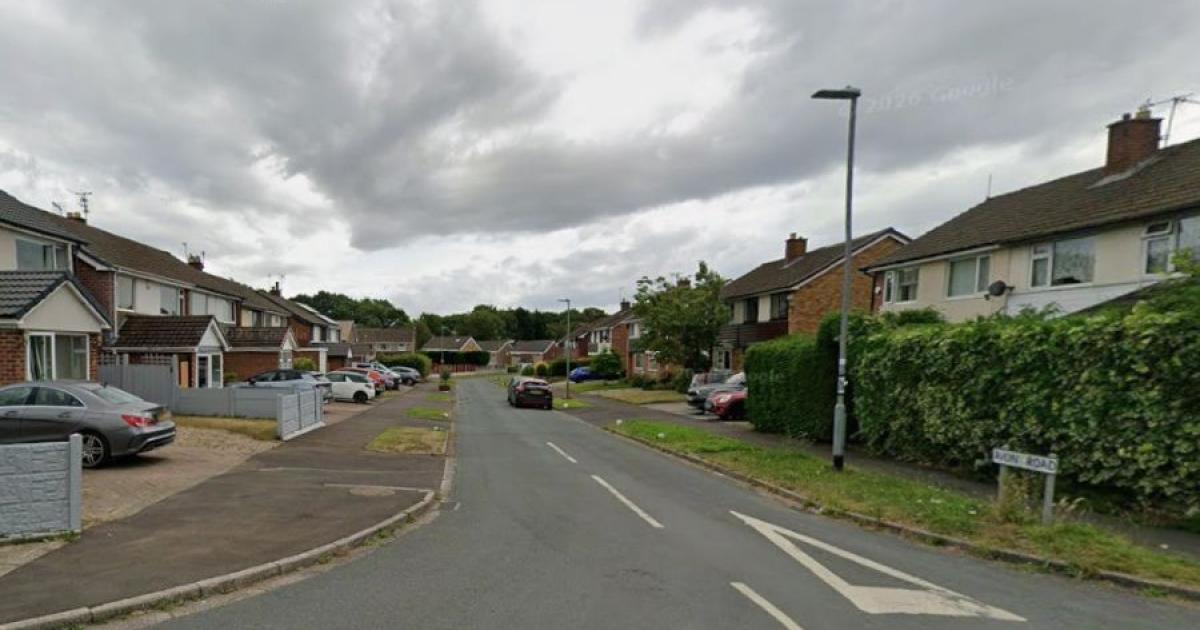
The M29 7HN postcode that covers Avon Road in Tyldesley was one of 20 of the most recent winners announced on Friday, August 7.
Ticket holders who live in the postcode are entitled to a prize of £1,000.
They won today alongside 19 other postcodes nationwide.
The postcode around Avon Road in Tyldesley was one of the winners (Image: Google Maps)
Postcode Lottery is a subscription-based lottery which raises money for charities.
Advertisement
Not only do players win cash prizes, but good causes also receive essential support.
A participant’s postcode works as your ticket.
For £12.50 a month, participants are entered into every prize draw and there are guaranteed winners every day.
People play with their chosen postcode and are automatically entered into all draws.
Advertisement
Prizes include the weekly Millionaire Street prize and monthly £250,000 or Postcode Millions prizes.
If a postcode gets picked in the £250,000 prize, for example, every ticket in that postcode wins £250,000.
Every day, there are £1,000 prizes to be won for every ticket in 20 postcodes.
Anyone who plays with two tickets will receive double the winning prize amount.
Advertisement
Players have raised more than £1.8 billion for thousands of good causes in Britain and internationally, funding charities including Maggie’s, Alzheimer’s Society, Dogs Trust, Mind, NSPCC, and many others, as well as thousands of small local community projects.
Man City goalkeeper transfer thinking – James Trafford deal, clauses, add-ons, replacement – Manchester Evening News
Need to know
James Trafford has completed his move from Manchester City to Leeds United
James Trafford has completed his move from Manchester City to Leeds United
Everything you need to know about James Trafford’s transfer to Leeds United from Manchester City…
James Trafford has completed a move to Leeds United, joining the Elland Road club on a five-year deal for an initial £40million fee which could rise to £45m
Trafford only returned to City a year ago when the Blues activated a buy-back clause to sign the goalkeeper from Burnley for £27million
It seemed as though Trafford had been signed to be first choice at the Etihad but Pep Guardiola then swooped for Gianluigi Donnarumma
The Italian was City’s No.1 with Trafford limited to playing in the cup competitions, where he played a key role as City won the FA Cup and Carabao Cup
City have banked a sizeable transfer fee from the deal and have also included a 20 per cent sell-on feeon any profit should Leeds sell the goalkeeper in the future
The Blues are now likely to look for another goalkeeper ahead of the new season as Enzo Maresca shapes his squad. Marseille stopper Gerónimo Rulli is a target. Read the current City transfer state of play here
While most runners are chasing after a new goal or a personal best, some are chasing after something slightly more elusive: a runner’s high.
Some describe it as euphoria. Others as calm, clarity or even a sense of being completely absorbed in the moment. Many people experience some version of it after a long run or a spin class.
For years, scientists believed the phenomenon was caused by endorphins, the body’s natural opioids. But more recent neuroscientific research now indicates that this might not wholly be the case.
Instead, a runner’s high appears to emerge from several brain systems working together. This explains why a runner’s high has so many far-reaching effects – and why these effects can often persist long after the initial experience of euphoria.
Advertisement
The brain’s own cannabis system
Endorphins are naturally-occurring brain chemicals which are released during periods of physical stress help to reduce pain.
Aerobic exercise increases circulating endorphins. Numerous studies have demonstrated higher levels of the endorphin beta-endorphin following prolonged aerobic exercise, such as running. This is why endorphins were long believed to be the sole cause of a runner’s high.
But there’s a key problem with the endorphin theory. This is because endorphins circulating in the blood struggle to cross the blood-brain barrier – the tightly regulated system that protects the brain from substances in the bloodstream.
So while endorphins may well contribute to pain relief elsewhere in the body, they cannot fully explain the feelings of euphoria and emotional wellbeing generated by a runner’s high within the brain itself.
Advertisement
So scientists began searching for another explanation.
Endocannabinoids are naturally produced by our bodies. They help with functions such as pleasure, memory and stress regulation.
One of the most important chemicals produced by the endocannabinoid system is anandamide, one of the brain’s natural “feel-good” chemicals. It helps to reduce anxiety, ease pain and create feelings of calm and wellbeing. And, unlike endorphins, anandamide crosses the blood-brain barrier with ease.
Advertisement
After a long bout of aerobic exercise, blood concentrations of anandamide rise substantially. Once inside the brain, it activates cannabinoid receptors in regions involved in emotion, motivation, reward and pain perception.
The resulting effects are remarkably similar to many features of the runner’s high – including reduced anxiety, better movement, less pain and feelings of calm.
This isn’t to suggest that endorphins play no role in a runner’s high. Modern neuroscience suggests endorphins and endocannabinoids work together – with endocannabinoids probably playing the larger role in producing the emotional aspects of the experience.
Dopamine, which is central to motivation and reward, helps reinforce actions that are beneficial for survival. Rather than simply producing pleasure, dopamine encourages us to repeat a behaviour that the brain considers valuable.
A runner’s high appears to emerge from several brain systems working together. Gorodenkoff/ Shutterstock
Although BDNF probably doesn’t produce the immediate euphoria associated with runner’s high, it may help explain why regular running can improve various aspects of wellbeing.
Advertisement
The benefits of a runner’s high
A runner’s high is about far more than pleasure chemicals.
Running changes how different brain networks communicate. During prolonged, rhythmic exercise (such as running), activity within the default mode network – the collection of brain regions associated with self-reflection, worry and thinking – appears to decrease.
At the same time, brain regions involved in attention, movement and sensory processing become more coordinated. This shift may help explain why running often produces feelings of mental clarity or being completely immersed in the present moment.
Exercise influences stress regulation, inflammation, neuroplasticity (the brain’s ability to adapt and change), sleep quality and emotional processing. This combination of benefits is something which few medical interventions achieve.
Importantly, scientists are increasingly recognising that the mental health benefits of exercise extend well beyond the runner’s high itself. Even people who never experience the euphoria of a runner’s high still show meaningful improvements in mood, cognition and resilience with regular physical activity.
But for those who still want to chase after a runner’s high, research suggests there’s a sweet spot to achieving it – and it doesn’t require long-distance, extreme endurance.
Most studies report increases in endocannabinoids after approximately 30 to 60 minutes of continuous aerobic exercise performed at moderate to vigorous intensity – so roughly 70-85% of maximum heart rate. The key is that the physiological stress is high enough to trigger these neurochemical responses without overwhelming the body.
Advertisement
That said, there is considerable individual variation. Although one survey found that around two-thirds of recreational runners had experienced a runner’s high at least once, it didn’t necessarily happen on every run.
Some people also appear naturally more responsive to exercise-induced endocannabinoid release. Genetics, sex, fitness level, sleep quality, psychological state and even expectations may all influence whether someone experiences runner’s high on any given day, too.
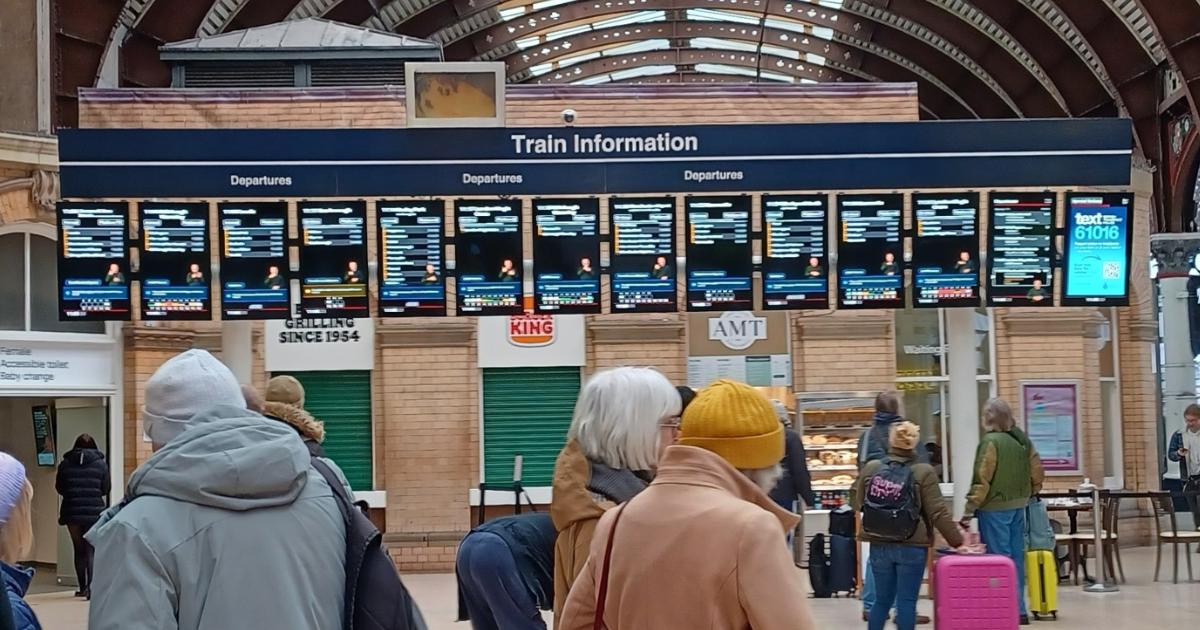
TransPennine Express (TPE) said a reduced service will run until 10am today.
A spokesperson for the train operator also said trains across the network may be delayed or cancelled at short notice until noon.
Recommended reading:
Advertisement
Around 2pm yesterday, electricity cut out in the main control hub for North West England’s railways – the Manchester rail operating centre – near Ashburys station in the city’s east.
National Rail said the severity of the disruption means a number of trains and crew are in the wrong locations for the start of today’s planned services.
Passengers are being advised to check their journeys before travelling.
TPE said tickets dated for August 6 can be used on any of its trains on the booked route today, August 7, without additional charges.
Advance Purchase tickets for today will have relaxed restrictions, allowing travel on any TPE train on the booked route.
Refunds are available for cancelled journeys or if TPE passengers are unable to complete their travel.
Advertisement
Affected TPE passengers can also use their tickets at no extra cost on Avanti West Coast services between Edinburgh/Glasgow Central and Preston, CrossCountry services between Leeds, York, Newcastle, and Edinburgh, and LNER services between York, Newcastle, and Edinburgh, up until 12:00 today.
East Midlands Railway services between Liverpool Lime Street and Sheffield, Metrolink services between Manchester Airport, Manchester Piccadilly, and Manchester Victoria, and all Bee Network buses are also accepting these TPE tickets up until 12:00 today.
The main services through York to the North West area terminate at Manchester Airport and Liverpool.
The business that owns iconic Nottingham bike manufacturer Raleigh has begun insolvency proceedings.
Accell, based in the Netherlands, acquired Raleigh for $100million in 2012 but said this week it had ‘exhausted all the available options’ and was ‘no longer able to meet its financial obligations’.
The fate of the Raleigh brand will now be decided by administrators.
Raleigh confirmed a loss of £30.1million before tax in 2023 in its annual financial statement published in January 2025, against losses of £6.8million in 2022.
Advertisement
Raleigh previously confirmed redundancies in Nottingham in 2024 following a review of the company at the end of 2023 and left its headquarters in Church Street, Eastwood, to move to new premises.
Raleigh was founded in 1887 and grew to be the largest bike manufacturer in the world.
Downfall of an icon: The fate of Raleigh is now in the hands of administrators
Advertisement
At its peak, Raleigh was making 1million bikes a year at its factory in Nottingham and employed more than 8,000 people.
Raleigh created the popular Chopper bike, with extended handlebars and seat with a backrest, in the 1970s.
Jonas Nilsson, chief executive of Accell, said it was ‘a deeply sad and frustrating situation’.
Accell underwent a restructuring in February 2026, securing additional funding from shareholders and lenders, and reducing debts.
Advertisement
Accell said it had held discussions with several interested potential buyers, scrutinised multiple offers and looked at getting regulatory approval for a potential merger to help ensure Raleigh stayed viable.
Nilsson said: ‘It is an especially difficult moment for our employees, creditors, customers, suppliers, and partners.
‘Every realistic option for the future of the business has been tirelessly explored, and none have resulted in a solution to continue the Group in its current form.
‘Our immediate focus is to support an orderly process, provide clarity wherever possible, and work with the relevant court-appointed administrators to preserve viable activities and employment where circumstances allow.’
Advertisement
European bike and parts makers have come under pressure from Chinese rivals in recent decades, leading to fewer survivors in the sector.
Accell was bought in 2022 in a £1.2billion buyout by the US private equity firm KKR.
DIY INVESTING PLATFORMS
AJ Bell
AJ Bell
Easy investing and ready-made portfolios
Hargreaves Lansdown
Hargreaves Lansdown
Free fund dealing and investment ideas
interactive investor
interactive investor
Flat-fee investing from £4.99 per month
Freetrade
Freetrade
Investing Isa now free on basic plan
Trading 212
Trading 212
Free share dealing and no account fee
Affiliate links: If you take out a product This is Money may earn a commission. These deals are chosen by our editorial team, as we think they are worth highlighting. This does not affect our editorial independence.
Residents living in the shadow of the Llanwonno wildfire have described the fear of watching flames and smoke creep towards their homes, coming within just yards of their gardens.
South Wales Fire and Rescue Service (SWFRS) said on Thursday that the major incident had been stood down following days after helicopters releasing water onto the scorched earth. The fire covers 400 hectares – the equivalent to about 560 football pitches. On Sunday afternoon the scale was equivalent to 28 football pitches.
Residents in the nearby village of Blaenllechau say they have been living with smoke, road closures and fears they could be forced to leave their homes over the last few days. Read more here.
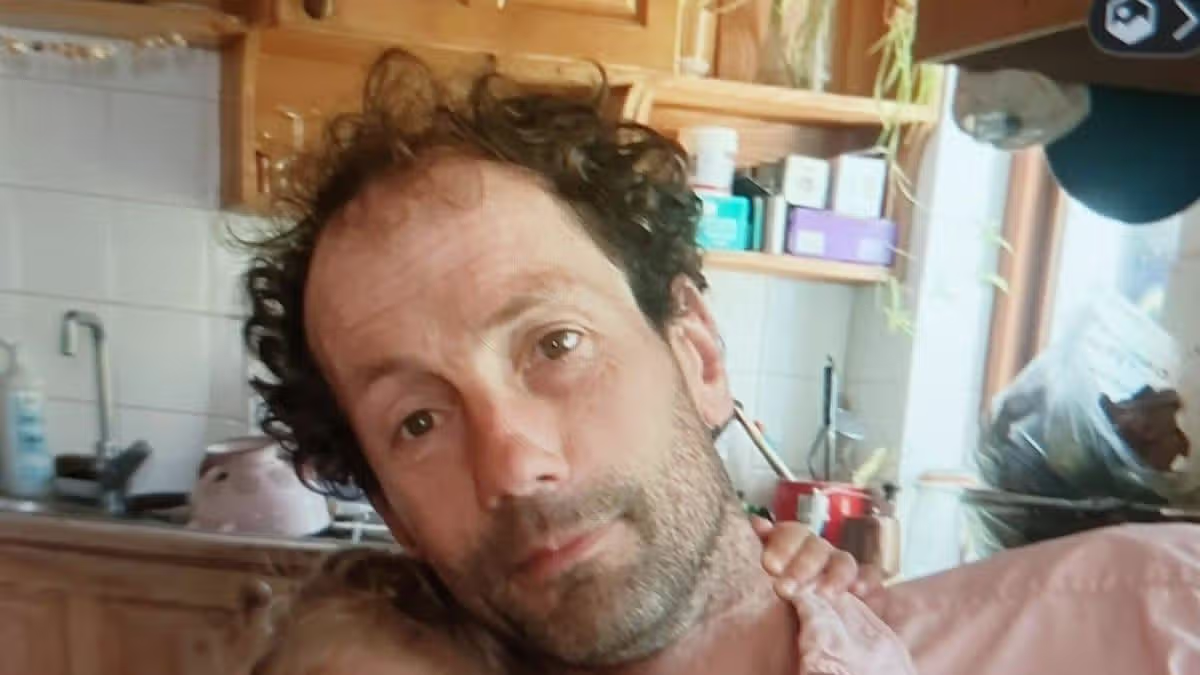
Ben, 47, from is believed to have been intending to go rock climbing when he was reported missing on Wednesday, August 5
Abbie Wightwick and Rachel Vickers-Price UK and World News Reporter
07:29, 07 Aug 2026Updated 07:34, 07 Aug 2026
A body has been discovered during the search for a missing man.
Ben, from St Davids, in Pembrokeshire, wales, is believed to have been planning a rock climbing trip before he was reported missing on Wednesday, August 5.
Advertisement
Dyfed Powys Police confirmed that on Thursday, a body was recovered in the coastal area of Caer Bwdy.
In a statement released on Thursday evening, the force said: “Formal identification has not yet taken place, and while the family have been informed of this development, we are not in a position to confirm the identity of the deceased at this time. They are being supported by specially trained officers.
“We ask that the family’s privacy is respected while enquiries continue.”
Ben, 47, is thought to have set out from his St Davids home on Wednesday, August 5 at around midday with the intention of going rock climbing, reports Wales Online.
Advertisement
It is understood he was heading to either the Carreg y Barcud area, near Trelerw, or Caer Bwdy Bay, on the outskirts of St Davids in Pembrokeshire.
Concern grew amongst Ben’s family and friends after hours passed without any contact, prompting them to raise the alarm and call the emergency services.
Both a Coastguard vessel and helicopter were deployed as part of the search operation.
Analysis by Asthma + Lung UK Scotland reveals there was a sharp spike in the number of asthma emergency admissions for children when Scottish kids went back to school last year.
As children prepare to head back to the classroom, Asthma + Lung UK Scotland warns many could be at risk of having a potentially life-threatening asthma attack.
Advertisement
Analysis by Asthma + Lung UK Scotland reveals there was a sharp spike in the number of asthma emergency admissions for children when Scottish kids went back to school last year.
The number of children rushed to hospital with asthma symptoms in September 2025 was more than twice that in July 2025.
Now the charity is concerned asthma hospital admissions for children in Scotland may increase again in August and September this year, as children return to school.
Asthma + Lung UK Scotland’s most recent data from 2025 shows there were 55 hospital admissions for school-aged children in July, 73 in August and 146 in September.
Advertisement
In the last five years there have been 1,138 children admitted to hospital in an emergency for asthma in August and September.
This increase in hospital admissions can be explained by the disruption of preventer inhaler routines over school holidays, leading to children’s airways becoming more sensitive to asthma triggers when they go back to school.
According to the charity’s annual survey of people with lung conditions these triggers often include viruses, colds and dust.
Public Health Minister Maree Todd said: “We welcome Asthma + Lung UK Scotland’s campaign work to raise awareness and help ensure children with asthma get the support they need to stay safe and well at school.
Advertisement
“Alongside this, Scotland’s National Severe Asthma Pathway, introduced earlier this year, is helping to improve the early identification and management of severe asthma across NHS Scotland.
“The Scottish Government has also issued guidance to schools, education authorities and health boards on the use of reliever inhalers in an emergency.
“Schools have discretionary powers to buy and hold spare salbutamol inhaler devices, without the need for a prescription, to use in emergency situations when a pupil’s own device is not available.”
Joseph Carter, Head of Asthma + Lung UK Scotland, added: “When children go back to school after the summer holidays, a rise in the number of asthma attacks is often seen, unfortunately leading to more hospital visits. An increase in viruses, coughs and colds or dust mites in schools could be to blame.
Advertisement
“With this in mind, Asthma + Lung UK Scotland is asking parents and teachers to look out for signs that their child or pupil’s asthma may be worsening. This could be breathlessness, wheezing, coughing, chest tightness, and if it is, to take urgent action.
“Over the hectic summer holidays, preventer inhaler routines can sometimes slip, which can leave children much more vulnerable to an asthma attack when they return to school and are around more triggers.
“As a reminder too for schools, we would encourage them to download our fantastic free Asthma at School poster, so they are prepared for the new term and know what to do if a pupil does have an asthma attack.”
If you are concerned about your child’s asthma, please call Asthma + Lung UK’s helpline, which is run with thanks to funds raised by players of the Postcode Lottery. The number to call is 0300 222 5800.
Advertisement
*Don’t miss the latest headlines from around Lanarkshire. Sign up to our newsletters here.
And did you know Lanarkshire Live had its own app? Download yours for free here.
Singer Jesy Nelson shared an update on her twin daughters as they’re set to have an operation
Jesy Nelson has admitted to feeling ‘terrified’ as she revealed her twin daughters were set to undergo an operation as they continue to face their heartbreaking diagnosis.
Advertisement
The former Little Mix star revealed in January that her twin daughters, Ocean Jade and Story Monoroe, both aged 15 months, had been diagnosed with the rare condition spinal muscular atrophy (SMA), more specifically SMA Type 1, a rare genetic condition that causes progressive muscle weakness.
Jesy has kept fans updated on life with Ocean and Story, whom she shares with ex-fiance Zion Foster, since their diagnosis and has been seen fighting to change UK newborn screening laws.
The Department of Health were seen confirming last month that the national newborn screening programme for SMA will be rolled out across England as part of an evaluation programme from the end of this year, which means hundreds of thousands of babies will be screened as part of the simple heel prick blood test shortly after birth.
But it was on Thursday (August 6) that Jesy revealed the babies were having their nasogastric (NG) tubes removed on Friday (August 7). A nasogastric tube is a feeding tube passed through the nose, down the throat, and into the stomach, which delivers nutrients, fluids, and medications when a baby is unable to swallow unaided.
Advertisement
Sharing a picture of her little girls, Jesy wrote on Instagram: “Today is the last day of my baby girls having their ng tubes on their faces, as terrified as I am about them having their operation tomorrow, I cannot wait to finally see their faces again and see their little dimples that are always hidden under these plasters.”
She added: “I’ve honestly forgotten what it feels like to cuddle them and not worry about pulling their tube out of their nose or plasters off their faces. It really is the littlest things we take for granted as parents.”
It comes after doctors warned Jesy Ocean and Story were not responding to treatment the way they had hoped during their most recent three-month review at Great Ormond Street’s Children’s Hospital.
Advertisement
Jesy told The Sun: “Unfortunately, some of the numbers have gone down. We had a long discussion and there’s a possibility they may have to go back on treatment, which is just heartbreaking. I constantly battle between manifesting they’re going to defy the odds and trying to come to accept that that may not happen.
“It’s a really weird position to be in because you you think ‘well, if that doesn’t happen, am I just going to feel heartbroken for the rest of my life?’ Then you worry, if I accept it, am I also manifesting that?”






















































You must be logged in to post a comment Login