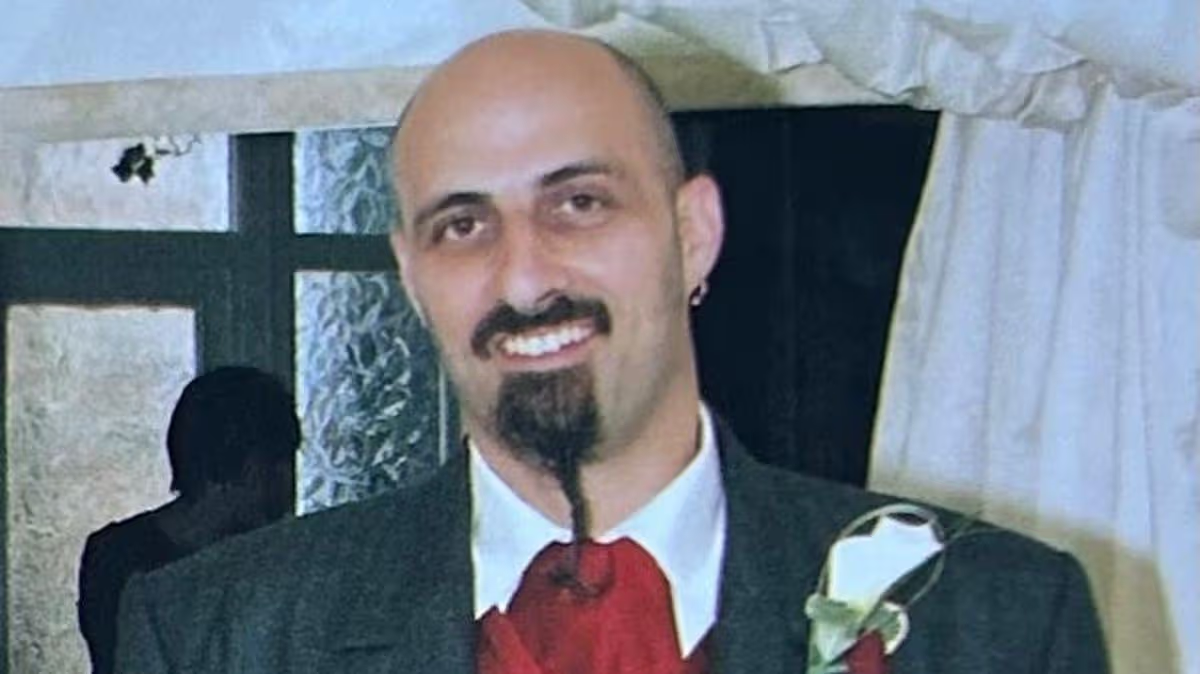
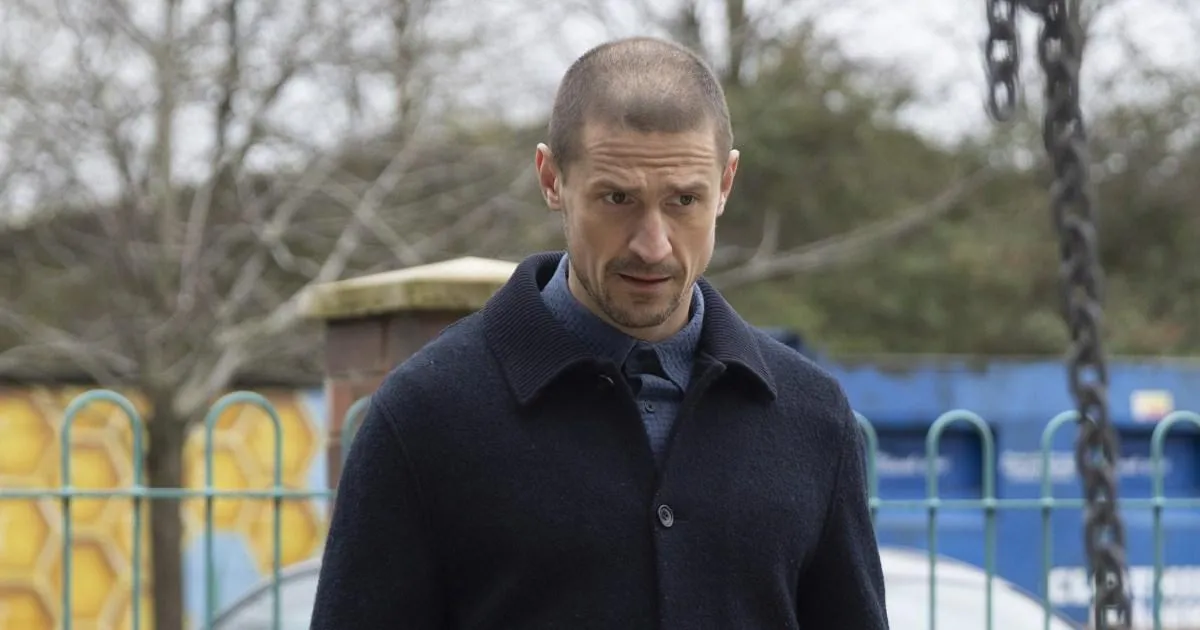
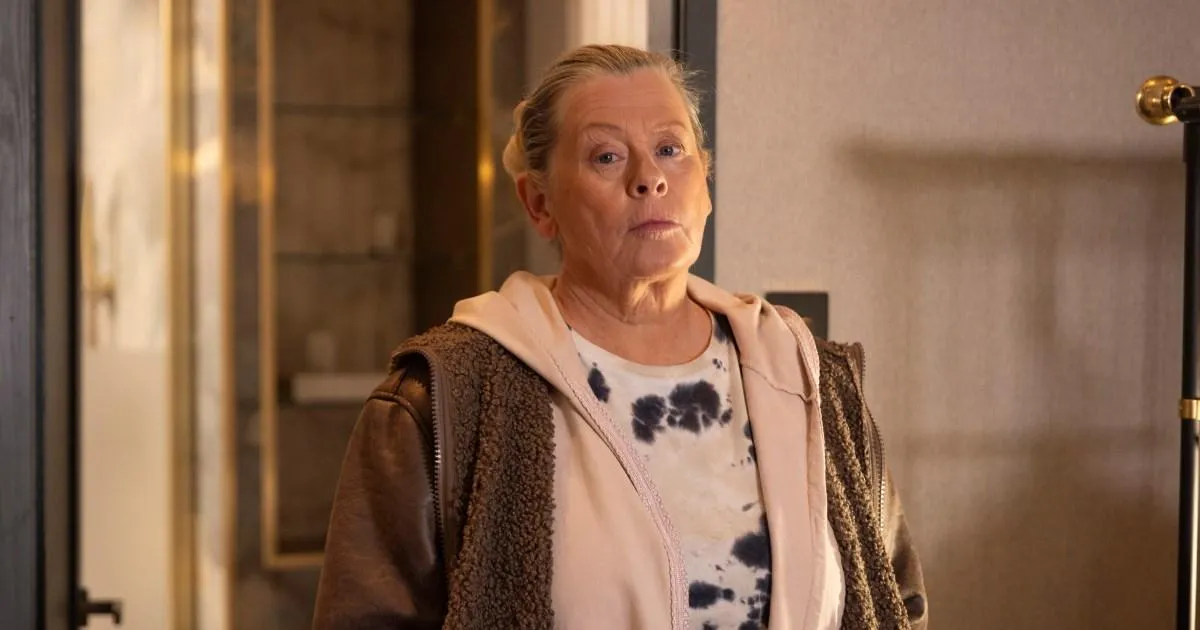
Stephen McCullagh, who turns 36 today, denies murdering Ms McNally, who was 15 weeks pregnant at the time of her death
13:43, 17 Feb 2026Updated 13:47, 17 Feb 2026
The trial of a man accused of the murder of Natalie McNally did not start today (Tuesday) due to legal arguments.
Stephen McCullagh, who turns 36 today and who is from Woodland Gardens in Lisburn, has denied murdering Ms McNally, who was 15 weeks pregnant at the time of her death.
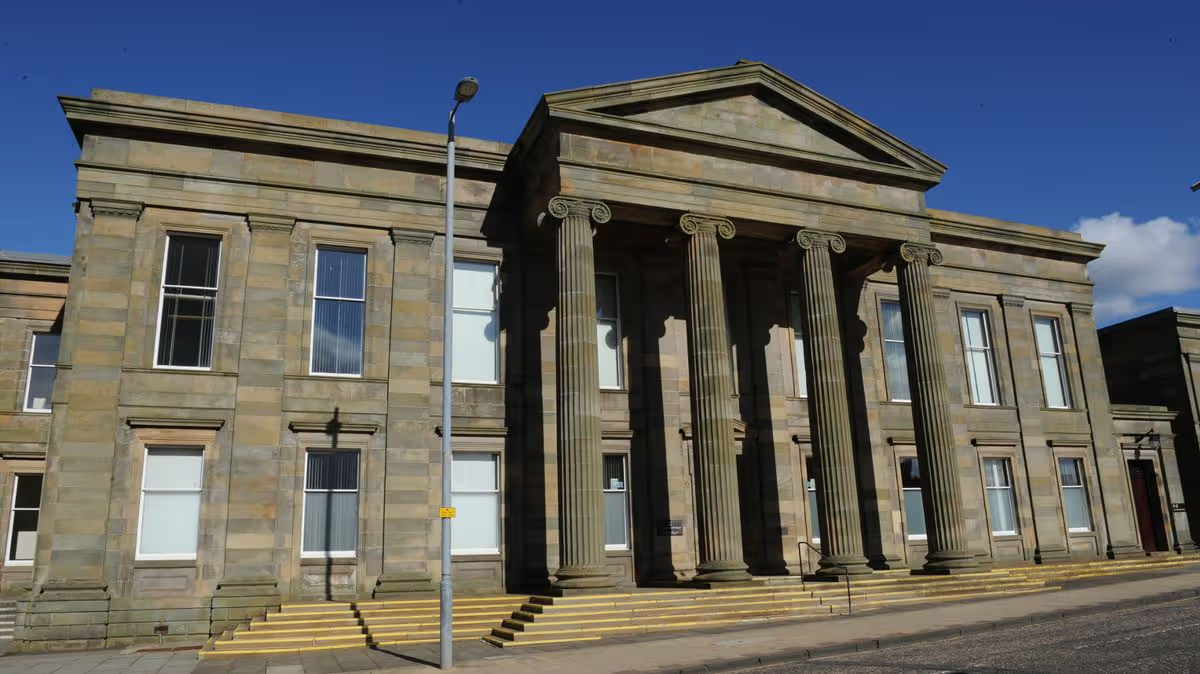
He appeared in the dock of Belfast Crown Court flanked by two prison officers.
Advertisement
Ms McNally (32) sustained fatal stab wounds in her Silverwood Green home in Lurgan on December 18, 2022.
On Monday, a jury consisting of six men and six women was sworn in at Belfast Crown Court to preside over the murder trial, which is expected to last up to five weeks.
It was anticipated that the prosecution would open its case to the jury today before calling its first evidence.
Advertisement
However, due to legal arguments, Mr Justice Kinney sent the 12 jurors home for the day and told them to return to court on Wednesday morning when he said it was “anticipated” that the Crown’s case against McCullagh would be opened.
Before they left, the jurors were again reminded not to carry out any research on the case or discuss it with anyone else.
The former church building is more than 160 years old.
A gothic-style church built in the 1800s could be turned into a house. Plans have been submitted to East Cambridgeshire District Council to turn the former Mission Church of St Andrew in North Street, Burwell, into a house.
Advertisement
The church was built in 1863. It is unknown when it stopped operating as a church, but it was later used as an office.
It has been vacant since 2020 and listed as a Grade II listed building in 2024. The applicant bought the building for its “heritage value”.
The planning application said: “Their intention is to restore, maintain, and enhance its original features while adapting the interior for residential use in a sensitive and minimally invasive manner.” The proposal involves creating an open plan kitchen and dining area from the front porch.
There will then be steps down into a bedroom, utility, and study area. Above, there are two galleries which are proposed to be a bedroom and landing area.
Advertisement
The applicant proposed to keep the “gothic-style” details such as the windows, as well other original features. These also include “prominent landmark chimneys”, “queen post roof trusses”, and “gold-leaf biblical inscriptions on tie beams”.
The applicant added that by changing the former church into a house, it is “ensuring its long-term preservation and continued maintenance through active use”. The plans added that the proposals “protect key heritage features” and “complements the character” of the area.
Walls that surround the building will be kept in order to “preserve the character of the site”. The wall boundary along Silver Street will be repaired and a trellis will be added to it for privacy.
It was reported that both the victim, 18, and his attacker got on the bus at 2.14pm on Sunday from stand L at Leigh bus station.
The victim was sat at the back of the bus and the person reported to have assaulted him was on the seat in front.
It was alleged that the victim was jumped on and then punched and kicked in the head, resulting in him losing consciousness.
Advertisement
Paramedics preformed CPR on the victim who now remains in hospital in a stable condition. The attacker is believed to have got off the bus on Newton Road at 2.24pm.
A Greater Manchester Police spokesperson said: “We would like to speak to this man as we believe he might have witnessed a serious assault that took place on a Greater Manchester Bus – Bus number: 3559 – Route 610 (Leigh to Wigan Route) around 2.20pm today (Sunday 15 February).
“If you have any information please contact police on 101 or LiveChat quoting Log 1683 of 15/02/2026. Always call 999 in an emergency.”
Dr Cat Barlow, chief executive officer of RUN, said: “While we strongly support the role of well-sited renewable energy in tackling the climate crisis and safeguarding nature in the long-term, our detailed analysis evidences that Scawd Law in the Moorfoot Hills is the wrong location for a wind farm development.
As the Hodge review shows, my experience was not an isolated case – and my frustrations have been shared by operators across the sector. Now, this should not be used as an excuse to simply criticise the Arts Council or the people working within it. Public bodies operate under real pressure, and accountability for public money matters. The issue is not whether scrutiny exists, but whether the way it is applied is proportionate, transparent and fair.
A recent study discovered 50 is the age when people ‘no longer feel young’ – but John Thomson says simple healthy tweaks can help you embrace ageing positively
John Thomson speaks to a nutritionist about ageing
The top 25 telltale signs you’re getting older include sitting down to pull your socks on, noticing your vintage wardrobe making a comeback – and muttering ‘who?’ when watching the BRIT Awards. Other key indicators according to research include preferring a quiet pint over a raucous night out, becoming indifferent to the latest fashion trends, and suffering from a persistent ache.
Commissioned by American Pistachio Growers, the study of 5,000 people aged over 40 revealed 50 was the age when people began to feel they were ‘no longer young’, but 38% said being old these days is actually when you reach your 80s rather than your 50s or 60s.
John Thomson, who partnered with American Pistachio Growers to inspire middle-aged Britons to view ageing in a positive light, said: “Getting older is inevitable, but you can still live life to the full.
“It’s about embracing experience, having a laugh about the realities of ageing and making small changes that actually make a difference.”, reports the Mirror.
“You don’t need to overhaul your life – just make some healthy tweaks to your daily routine.”
Indeed, 36% of respondents have adopted healthier habits in an attempt to stay youthful, including taking vitamins or supplements, choosing nutritious snacks (19%), and consuming more protein (17%).
Advertisement
Maintaining a nutritious diet has emerged as a clear priority, with 60% of men and 61% of women saying they’ve become more health-conscious. Among the ageing population, the primary concerns were avoiding illness (59%), maintaining physical activity (58%), and preserving their independence (47%).
TV nutritionist Rob Hobson, who has partnered with American Pistachio Growers to promote the nut as a simple, everyday food that can support healthy ageing, stated: “Getting older isn’t about slowing down, it’s about making smarter choices.”
“Simple habits like eating nutrient-rich snacks, staying active and prioritising sleep can help you feel youthful for longer,” Rob added. “Age is just a number, but how you fuel your body makes all the difference.”
Advertisement
Suzanne Devereaux–McKinstrie, spokesperson for the non-profit organisation, added: “Getting older isn’t just about limitations, it’s about opportunities.
“It’s the perfect time to explore new hobbies, prioritise wellbeing and celebrate the confidence that comes with experience.
“A big part of that is focusing on diet. Unshelling a classic snack such as an American pistachio can help you stay strong and vibrant so you can say yes to life’s opportunities.”
THE TOP 25 SIGNS YOU’RE GETTING OLDER:
Talking about aches and pains with friends
Groaning when bending down
Preferring quiet venues to noisy ones
Preferring a quiet drink over a night out
Enjoying an early night
Not caring about the latest fashion trends
Thinking that new music isn’t as good as it used to be
A recurring ache that doesn’t disappear
Using phrases like ‘back in my day’ or ‘remember when….?’
Sitting down to put socks on
Caring less about how you look
Taking shoes off as soon as you get inside – slippers have become a necessity!
Noticing something you wore in your youth is now back in fashion
Starting conversations with ‘Do you remember when…?’
Reading menus at arm’s length
Talking to yourself
Moaning about politics
Feeling more confident/self-assured
Getting up at 6am naturally
First “Who?” when watching the Brit Awards
Looking forward to gardening
Feeling confounded by AI
Listening to the radio or podcasts instead of club music
Walking through the doors of London’s Charles Dickens Museum is always a special moment. This handsome, tall London townhouse – middle class by Victorian standards but practically palatial to visitors today – was the crucible in which a young, ascending Charles Dickens wrote himself into international superstardom.
It is here that The Pickwick Papers, Oliver Twist and Nicholas Nickleby spilled from his pen. And it is here, as the new exhibition Extra/Ordinary Women compellingly demonstrates, that Dickens lived in constant proximity to the intelligent and talented women who shaped his imagination, his domestic life and his enduring theatricality.
The Extra/Ordinary Women exhibition offers insights to many of these women. His wife, Catherine Dickens, who also wrote within these walls. His sister, Mary Hogarth, whose sudden death here devastated him. His sister-in-law, housekeeper and adviser Georgina Hogarth, who remained his rock for the rest of his life.
Victorian culture, which was suspicious of women who moved in theatrical, artistic or public spheres, left deep traces on Dickens’s portrayals of women. In his writing, Dickens either sanitised his female characters, like the “saintly” Little Nell in The Old Curiosity Shop (1841) or the “innocent” Rose Maylie in Oliver Twist (1838); or he reformed them, like the “fallen” women, Martha Endell and Little Em’ly in David Copperfield (1850). He gave these characters emotional clarity and symbolic weight that belies the more complex real-world inspirations.
Advertisement
Photograph of Charles Dickens, friends and family, by Adolphe Naudin. Charles Dickens Museum
The exhibition shows that Mary Hogarth, for instance, is scattered through Dickens’s fiction in the form of saintly young women whose deaths confer moral meaning. Dickens’s close friend Angela Burdett‑Coutts – a philanthropist and powerful progressive – was softened into Agnes Wickfield, a gentle moral influence in David Copperfield.
Dickens the performer
Looking around the exhibition, I found myself thinking about performance. Not just the performances of the women around him, but Dickens’s own lifelong, desperate theatricality.
It has always seemed obvious to me, as a performer of Dickens’s work, that he wrote with an actor’s mind. My own performed reading of A Christmas Carol taught me that his prose demands embodiment: the regretful cadences of Scrooge’s former fiancée Belle, the anguish of Bob Cratchit, the vocal changes that illustrate the transformative journey of Scrooge himself. These characters were not merely written to be read, they were written to be heard.
Dicken’s daughter Katey Perugin was an artist of real talent. Charles Dickens Museum
The deputy director of the museum, Emma Harper, informed me that while writing, Dickens would break from his desk to perform the characters he was developing in the mirror. He also performed domestic dramas for his children, founded amateur dramatic troupes and he threw himself into public readings so intensely that doctors monitored his pulse before and after each performance. He made himself physically ill with the sheer force of his acting. This is not a writer who happened also to perform. This is a performer who happened also to write.
And the women around him were, in many ways, part of that theatrical and artistic world. His daughters are good examples. Mamie Dickens loved performing, and Katey Perugini, an artist of real talent, appears in the exhibition through in a newly displayed painting that mimics her own painting style. The exhibition also reminds us that Ellen Ternan – Dickens’s longtime mistress – came from a theatrical family.
All of this becomes shockingly vivid with the exhibition’s centrepiece: the newly revealed, previously unpublished letter to the French opera singer Pauline Viardot. It is, in many ways, a perfect artefact, because it shows Dickens in full, contradictory colour.
Here is the great novelist, in Paris for his triumphant theatrical readings, writing with unabashed admiration to a woman whose artistry moved him to tears. But here is also Dickens the flirt – offering her an invitation to dine and promising tickets to his next reading.
Dickens wrote the letter while en route to see his mistress, Ternan, in Geneva. “I am going to Geneva tomorrow night, but will be back in seven days,” he says breezily, attempting to schedule dinner with Viardot for the following week.
Advertisement
The exhibition also includes a letter from Viardot to Dickens’s biographer, where she recalls Dickens “raining tears” during her performance of Orphée. And it reveals something about Dickens that the exhibition continually circles back to: he existed in a self-made world of performance, admiration, emotional excess and artistic intoxication. He was drawn to women who were brilliant, expressive and creative, because they belonged to that same world of heightened feeling and dramatic possibility.
This is what makes Extra/Ordinary Women so compelling: it reframes Dickens not only through the women he knew, but through the theatrical culture they collectively inhabited. Stepping outside, I felt his familiar voice linger, now joined by the sense that the women behind the scenes were finally stepping into the light – something the dramatist in Dickens might have appreciated.
Extra/Ordinary Women is at the Charles Dickens Museum in London until September 6
Looking for something good? Cut through the noise with a carefully curated selection of the latest releases, live events and exhibitions, straight to your inbox every fortnight, on Fridays. Sign up here.
Advertisement
This article features references to books that have been included for editorial reasons, and may contain links to bookshop.org. If you click on one of the links and go on to buy something from bookshop.org The Conversation UK may earn a commission.
North Yorkshire Council bosses have said they are working to address the high rates of vacant shop premises in Scarborough and Malton.
The town centre vacancy rate in Scarborough is almost two and a half times that of Whitby and York, recently published data reveals.
Scarborough has the highest town centre vacancy rate in the county at 18.6 per cent, followed by Malton at 17.1 per cent, and Ripon at 12.8 per cent, while Whitby has a vacancy rate of just 7.6 per cent.
Advertisement
The national high street vacancy rate across the UK stood at 13.8 per cent at the end of the fourth quarter of 2024, Savills reported.
Cllr Mark Crane, executive member for open to business, said: “It’s something we can do more on and we’d like to work with communities and businesses to bring some of those shops back into use.”
A council performance report for the third quarter states that “vacancy rates are still below the national average” and that the data for Scarborough is “skewed due to the Brunswick Centre redevelopment, and this obviously impacts the initial optics of the data return”.
The report states that “by removing the Brunswick Centre from the calculations, [the rate for] Scarborough, whilst still high, would fall from 18.6 per cent to 15.8 per cent vacant”.
Advertisement
The shop vacancy rate for York city centre was 7.5 per cent as of last November – the lowest level recorded since July 2023 – according to the York Business Improvement District.
Cllr Crane said: “We are working to look at vacancy rates in Scarborough and, surprisingly, in Scarborough and Malton, they are in line with national averages, though that average is still higher than we’d like it to be
“We’re hoping the Brunswick will be redeveloped and that will be a significant boost to the high street once it’s completed.”
The former Brunswick Centre, renamed Square One, is being redeveloped into an Odeon multiplex cinema by the Scarborough Group.
Advertisement
Cllr Crane said the council was also looking at whether it could “get hold of some property and make that available to people who want to start up a business, it’s something we’re looking at, and would like to do.”
“But we own no shops in the town and we don’t set the rates or the rents,” he added.
“Members should understand that going forward, high streets will not be what we have known growing up. We have seen massive increases in the likes of Amazon, and town centres are increasingly becoming places of cafés and places for people to meet.”

At a public meeting of the United Scarborough residents’ group on Monday (February 16) concerns were raised about the high number of empty town centre businesses.
Advertisement
Several residents said that while large chains were moving out of town centres, business rates were often “far too expensive for independent local businesses”, and also noted the “excessive number of e-cigarette and gambling shops”.
Embracing a café culture was supported by many of those in attendance, with one resident noting that “we have a better variety of cafés than York”.
The NYC performance report said: “All towns had a lower vacancy rate than the Great Britain average, except Scarborough and Malton – this was the case for the previous KPI return.
“Vacancy in most town centres has either increased marginally or remained the same in recent months.
Advertisement
“The high street alone in Scarborough, without the Brunswick, has seen a fall in vacancy rates, from 18.9 per cent in 2024 to 15.8 per cent in 2025.
“This shows progress in the right direction, and we know where the issues are and are proactively addressing them.”
Huntingdonshire District Council has delayed making a decision on plans to build a “substantial industrial and logistics” development on the edge of Huntingdon.
The wait continues to see whether controversial plans to build a “substantial industrial and logistics” development can go ahead, after councillors agreed to delay making a decision. The plans for the Hinchingbrooke Logistics Park were due to be considered by councillors at a Huntingdonshire District Council meeting on Monday (February 16).
Advertisement
However, planning officers asked to defer consideration of the application after the developer had agreed to liaise further with the highway authority, to “secure further clarity” on the potential highway impacts of the development.
Officers said once this had taken place the application would be brought back for councillors to consider at a future meeting. Councillors unanimously agreed to this proposal.
The new industrial and logistics development is proposed to be built at Brookfield Farm, to the northwest of Huntingdon, next to the A1307 and A141. Developer Newlands Property Developments (Huntingdon) Ltd has said it wants to create up to 205,000sqm of general industrial and storage and distribution space, as well as a bus depot, or similar transport-related use.
The plans said the maximum building heights would range from 18.5m to 24m, which the developer said “reflect market demand” and accommodate modern standards for storage and distribution facilities. The developer also said these heights responded to the “site levels and surrounding landscape context”.
Advertisement
The plans also set out that “over 50 per cent” of the site would be used for “green and blue infrastructure”. A new access road to the proposed logistics park is proposed to be created off the A141.
The developer has said it hopes to start work on the site in mid to late 2026, with the aim of the first occupation of the new buildings in 2028 and the last building to be occupied in 2033.
In planning documents, the developer said there is a “clear, current and identified need” for facilities like this in the district. They said: “There is currently a very limited provision of existing large-scale quality units to meet modern occupier needs in the area, presenting the case for immediate release of additional land.
“The proposed development is being brought forward specifically to address significant market demand for industrial and logistics space within Huntingdonshire, as there is no capacity left in the existing allocations for such growth.
Advertisement
“The delivery of 205,000sqm of modern employment floorspace represents a major new capital investment in the area, which will help to enhance the profile of Hinchingbrooke and will address underlying issues by raising the overall level of access to skills, training and employment, as well as boosting economic activity and expenditure in the area.”
Concerns raised about size of the proposed development
The plans have faced backlash with 51 formal objections against the project lodged with the district council by members of the public. Many objectors raised concerns about potential traffic impacts, with one arguing that adding more lorries to the roads in the area would “cause unprecedented gridlock”.
Another objector said: “With a major hospital, a large secondary school, and the police headquarters already situated in close proximity, I would think common sense would urge developers to look to other less built up locations, as long queues and wait times affect both us and them.”
Concerns were also raised about the heights of the proposed buildings. One objector said: “The proposals are just not suitable for this location. It is situated right beside a large residential estate and the proposed height of these warehouses is far too tall so close to residential houses.
Advertisement
“The look of so many warehouses of this size as you approach Huntingdon will really be an eyesore on the landscape.”
However, some support has been shared with one person saying they hoped the district council would approve the project to help create new jobs in the area.
Before proposing the delay, planning officers had recommended that the application should be approved, subject to conditions and the completion of a legal agreement. They also recommended that if the legal agreement was not completed then the application should be refused.
The Trump administration has been accused of “purposefully muddying the waters” after releasing a list of hundreds of names mentioned in the Epstein files.
A six-page letter sent to Congress by Attorney General Pam Bondi over the weekend included a list of high-ranking politicians, including the likes of President Donald Trump, Barack Obama and former UK Prime Minister Margaret Thatcher.
Also named was Andrew Mountbatten-Windsor, whose royal and military titles were removed in light of his links to the late convicted paedophile Jeffrey Epstein, and Peter Mandelson, who recently quit the Labour Party and resigned from the House of Lords following more revelations about his relationship with Epstein.
Image: Donald Trump and Jeffrey Epstein in 1992. Pic: NBC
The list also included celebrities including Mick Jagger, Elvis Presley, Marilyn Monroe, George Clooney, Beyonce, Cher and Janis Joplin.
Advertisement
Both Andrew and Mr Mandelson have denied any wrongdoing in relation to Epstein.
Being named in the files does not suggest wrongdoing and some of those names featured in the list may not have had any correspondence or interaction with Epstein.
The attorney general claimed the list of names included all those who “are or were a government official or politically exposed person”, as well as people whose name has appeared in the files released under the act at least once.
‘Recruiters laughed as Epstein sexually assaulted me’
Advertisement
The letter stated the DoJ has released all “records, documents, communications and investigative materials in the possession of the Department” as required under the Epstein Files Transparency Act.
It added: “No records were withheld or redacted ‘on the basis of embarrassment, reputational harm, or political sensitivity, including to any government official, public figure, or foreign dignitary’.”
It comes after more than three million more documents related to disgraced financier Epstein, including email exchanges, more than 2,000 videos and 180,000 images, were released on 30 January.
‘All horror’: Epstein survivors’ stories told for first time
Democrat Ro Khanna, who wrote the Epstein Files Transparency Act alongside Republican Thomas Massie, criticised the list, saying: “The DOJ is once again purposefully muddying the waters on who was a predator and who was mentioned in an email.
“To have Janis Joplin, who died when Epstein was 17, in the same list as Larry Nassar, who went to prison for the sexual abuse of hundreds of young women and child pornography, with no clarification of how either was mentioned in the files is absurd.
“Release the full files. Stop protecting predators. Redact only the survivor’s names.”
Advertisement
Mr Massie also criticised the DoJ’s approach to the Epstein files’ release, telling ABC’s This Week On Sunday: “They’re citing deliberative process privilege in order not to release some of the documents.
“The problem with that is the bill that Ro Khanna and I wrote says that they must release internal memos and notes and emails about their decisions on whether to prosecute or not prosecute, whether to investigate or not investigate.”
Advertisement
He added: “I know the DOJ wants to say they’re done with this document production.
“The problem is they’ve taken down documents before we were able to go over to the DOJ and look at the unredacted versions. They took down some of the most significant documents.”
The names of both Mr Khanna and Mr Massie also appeared on the list.
Epstein was found dead in his prison cell in August 2019 shortly after he was arrested on sex trafficking charges.
Advertisement
Sky News has contacted the Department of Justice for comment.
The grade II listed property in Newcastle city centre is now home to Newcastle Building Society’s new 10,000 sq ft UK super bank.
The prime location, next to Grey’s Monument, was refurbished in a multi-million-pound project led by Silverstone Building Consultancy.
The branch offers financial services alongside collaboration and free-to-use community spaces for customers, local charities, civic groups, and businesses.
Advertisement
Josh Brown, associate director at Silverstone Building Consultancy, said: “This was an ambitious project which has breathed new life into an iconic building that had been vacant for many years.
“There were challenges along the way, including restricted access, working within listed-building confines and water ingress, but the whole professional team and the client worked cohesively and effectively together to overcome these.
“We’re incredibly proud of the end result.”
The 200-year-old, six-storey corner unit has been extensively upgraded, including a full-height rear extension housing a new staircase, and significant mechanical and engineering works.
Advertisement
The 11-month programme faced unexpected complications, most notably water ingress on the lower ground floor, which sits beneath Eldon Square shopping centre.
When the existing wall coverings were stripped back, the team found the entire level required waterproofing on both walls and floor to create a fully tanked, impermeable barrier.
Another key part of the refurbishment involved filling large floor cavities left after the removal of a large central stairwell.
The project team included Arcas Building Solutions as lead contractor, Architects Group, interior designer M Worldwide, M&E engineers Clark Degnan, and planning consultants KLR.
Advertisement
Andrew Haigh, chief executive of Newcastle Building Society, said: “Monument is our biggest single branch investment and a huge commitment to our home city.
“It is much more than a branch; it’s a place with the next generation in mind, with free-to-use spaces serving our community and civic partners.
“I’d like to thank Silverstone for steering this redevelopment forward and helping us realise our ambition of creating a hub that will benefit the whole community.”
Silverstone Building Consultancy, which has offices in Leeds and Newcastle, is a national firm of chartered building surveyors and project managers.
Advertisement
The company has previously managed restoration projects for the Inn Collection Group, including the award-winning Harrogate Inn in Harrogate.