

Connect with us
DAPA Banner
DAPA Coin
DAPA
COIN PAYMENT ASSET
PRIVACY · BLOCKDAG · HOMOMORPHIC ENCRYPTION · RUST
ElGamal Encrypted MINE DAPA
🚫 GENESIS SOLD OUT
DAPAPAY COMING

NewsBeat

Nearly 300 humpback whales were seen in a rare ‘supergroup’ that shows their recovery

Published

on

Nearly 300 humpback whales were seen in a rare 'supergroup' that shows their recovery

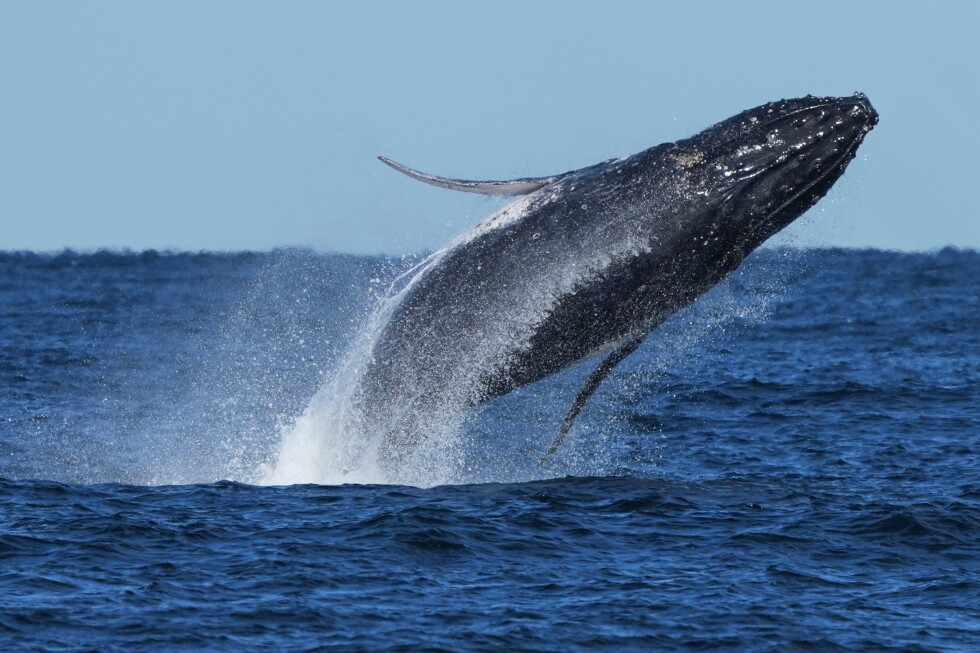
CAPE TOWN, South Africa (AP) — A South African couple found themselves in a rare situation when they witnessed a humpback whale “supergroup” consisting of nearly 300 of the giant marine mammals gathering together.

It’s an indication, scientists say, of how some whale species numbers have strongly rebounded in the southern hemisphere oceans decades after an international whale hunting ban came into effect in 1986.

Chris and Monique Fallows said they were used to seeing bigger and bigger groups of humpback whales off the west coast of South Africa but weren’t prepared for what they saw one morning last December. Plumes of whale breath and spray burst into the air one after the other from blowholes, and the husband and wife found their boat in the midst of what’s known as a supergroup.

“It was extraordinary,” said Chris Fallows, a renowned fine art wildlife photographer who has documented marine animals for 35 years. “Quite quickly we realized that there must be several hundred whales coming together in one particular area.”

Advertisement

He said what they saw can best be described as a “Manhattan skyline” of whale breath plumes.

Chris and Monique documented 299 humpback whales in the group, they said. They count whales by taking a photograph of their tail, which is called a fluke, said Monique Fallows, an author and naturalist.

Each whale’s tail is different and it’s a common tactic used by scientists to identify individuals.

It appears to be the biggest group of humpback whales sighted, according to Alex Vogel, the Africa coordinator for Happywhale. That organization has a global database of whales built off photos and information sent in largely by what it calls “citizen scientists” — ordinary people who capture images of whales that are then verified.

Advertisement

The organization did a count of the group that the Fallows came across.

Humpback numbers have strongly recovered in the southern hemisphere from less than 10,000 at the height of whaling to more than 100,000 whales now, according to assessments by scientists and the International Whaling Commission, which monitors whale numbers.

Only a few countries still hunt whales commercially.

Humpbacks are generally solitary or move in small pods, but they sometimes gather in supergroups in food-rich areas. They feed on krill or small fish.

Advertisement

Sightings of humpbacks are also increasing in other parts of the Southern Hemisphere.

Els Vermeulen, the chief scientist at the University of Pretoria’s Whale Unit in South Africa, said humpback supergroups started to be seen again around 2012 and it’s likely a result of their recovery from whaling.

“In general, the moratorium on whaling can be classified as one of the strongest conservation success stories in the marine environment,” said Vermeulen, who has a doctorate in zoology.

Vermeulen said that humpbacks feeding in supergroups make underwater sounds that attract other whales.

Advertisement

While humpbacks have seen the biggest comeback from whaling, the World Wildlife Fund says the recovery has been mixed for other whale species and that various threats remain, like entanglement in commercial fishing equipment, collisions with ships and climate change.

Seven out of the 14 great whale species are classified as endangered or vulnerable by the International Union for Conservation of Nature, including the critically endangered North Atlantic right whales, which number only around 380 now.

Vermeulen also raised a new threat for whales around South Africa: the conflict in the Middle East.

She said a recent preliminary assessment she co-authored showed that shipping around the southern point of Africa had quadrupled since December 2023 — after the Israel-Hamas war broke out and Yemen’s Houthi rebels began attacking ships in the Red Sea.

Advertisement

That is being made worse by the Iran war and the security crisis over the Strait of Hormuz, diverting more ships around Africa.

Because most whales killed by ships sink in the ocean there are no detailed statistics. But Gregg Oelofse, the coastal and environmental manager for the city of Cape Town, said more whales and more shipping clearly increase the risk.

He said some whale carcasses wash ashore with evidence they’ve been killed by vessels.

“We’ll see the propellor strike often through the whale’s body,” Oelofse said. “So, it’s like these big cuts in the whale’s body.”

Advertisement

Vermeulen said she and others are lobbying for official speed limits for ships near the South African coast to give them time to spot any whales in their path.

___

Associated Press writer Gerald Imray contributed to this story.

___

Advertisement

AP Africa news: https://apnews.com/hub/africa

Source link

Advertisement
Continue Reading
Click to comment

You must be logged in to post a comment Login

Leave a Reply

NewsBeat

Edinburgh Airport drop-off charge among UK’s highest as costs rise across UK

Published

on

Daily Record

Motorists face paying up to £10 just to drop off passengers at major UK airports

Scots families heading off on holiday are getting hit before they’ve even reached security, as airport drop-off charges continue to climb. New figures suggest the cost of giving a loved one a quick lift to the terminal – and nipping away again – has shot up across the UK, turning a simple goodbye into another travel bill.

Advertisement

For travellers using Edinburgh Airport, the fee is now among the steepest on the list, adding to the cost pressures already facing households. People dropping off there pay £8.50 for 10 minutes.

The RAC says the average “farewell fee” at Britain’s busiest airports has risen from £5.30 last summer to £7 – an increase of around a third in 12 months – with 16 of the UK’s 20 busiest airports putting their prices up. Drivers can now be asked to pay as much as £10 just to stop briefly at the terminal, and the analysis suggests free drop-offs have now disappeared entirely across the top 20 airports after London City removed its last free option.

At the top end are London Gatwick and London Stansted, where motorists pay £10 for a short stop outside the terminal. Edinburgh and Bristol both charge £8.50, while Leeds Bradford, Bournemouth and London City are £8.

The RAC says the UK’s approach looks even tougher when compared internationally. It points out that none of Europe’s 10 busiest airports charges drivers simply to drop passengers at the terminal – and the same applies at major global hubs including Atlanta, Dubai, Shanghai and Istanbul.

And when the fees are broken down by the minute, some charges look even more punishing. At London City Airport, £8 covers just five minutes – equivalent to £1.60 a minute – making it the most expensive in Britain on that basis. Manchester follows at £1.10 a minute, with Gatwick at £1 a minute. Edinburgh works out at 85p per minute.

Most expensive UK airport drop-off charges (RAC)

  • Gatwick – £10 (10 mins)
  • Stansted – £10 (15 mins)
  • Edinburgh – £8.50 (10 mins)
  • Bristol – £8.50 (10 mins)
  • Leeds Bradford – £8 (10 mins)
  • London City – £8 (5 mins)
  • Bournemouth – £8 (30 mins)

Britain’s priciest by cost per minute (RAC)

  • London City – £1.60
  • Manchester – £1.10
  • Gatwick – £1.00
  • Edinburgh – 85p
  • Bristol – 85p
  • Leeds Bradford – 80p

In one comparison, the RAC says paying £1 a minute can actually be more expensive than the cost per minute of a return flight for two from Gatwick to the Greek island of Zakynthos this summer. The organisation also flagged a trap for drivers at airports using barrier-free “pay later” systems. At Heathrow, Gatwick, Manchester, Stansted and Luton, motorists must pay online or by phone before midnight the following day rather than paying on the way out.

Miss that cut-off and a parking charge notice of up to £100 could drop through the letterbox. Rod Dennis, senior policy officer at the RAC, said: “It’s disappointing to see so many airports charging so much for what many regard as a simple act of kindness in dropping off family and friends.

“Having a captive audience should be no excuse for these ‘farewell fees’ – especially when they’re completely at odds with how major airports around the world operate.” He also warned: “Those that drop off but miss the signage, or forget to go online or phone the airport to pay soon afterwards, can face a parking charge notice as high as £100 – a fee that feels distinctly disproportionate to the contravention.”

The RAC said motorists should look out for cheaper or free options, such as using short- or long-stay car parks with shuttle buses to the terminal. However, that can mean extra walking or a longer transfer.

A spokesman for Edinburgh Airport said: “This increase has been driven by a substantial £8 million rise in our business rates bill. That is a significant additional cost which cannot simply be absorbed. As a membership organisation that regularly adjusts its own prices in response to rising costs, the RAC will more than understand these commercial realities.

Advertisement

“Passengers continue to have access to a free pick-up and drop-off area for up to 30 minutes, which has recently been extended and brought closer to the terminal.”

A London Gatwick spokesperson said: “Drop-off charges are part of a range of measures aimed at disincentivising ‘kiss and fly’ trips and supporting our sustainability commitment of at least 52% of passengers travelling to and from the airport by public transport by 2030.

“We don’t take decisions related to this charge lightly, however data indicates that it is effective in influencing passengers to seek alternative options. Passengers can still be dropped off for free in our long-stay car parks, with a free shuttle bus to the terminal and Blue Badge holders are exempt from the charge.

“London Gatwick also has excellent public transport connectivity, with passengers able to travel directly to more than 120 train stations across London and the South East, with eight local bus routes serving the airport 24 hours a day, seven days a week.”


Advertisement

Source link

Continue Reading

NewsBeat

One in three Brits living with ‘silent killer’ could be helped by these drinks

Published

on

Belfast Live

Certain fruit juices could help lower blood pressure

One in three adults in the UK could benefit from drinking three drinks. These juices have the potential to lower blood pressure, according to studies.

Sometimes known as a “silent killer” because it often has no obvious symptoms, high blood pressure is dangerous it makes the heart work harder to push blood around the body. Over time, that extra pressure can damage blood vessels and vital organs, and has been linked with conditions including heart disease, stroke and dementia.

Advertisement

As reported by Blood Pressure UK, around one in three adults in the UK are living with the condition. Luckily blood pressure can often be improved with lifestyle changes. Cutting down on salt, being more active, losing excess weight, stopping smoking and keeping alcohol within recommended limits can all help.

Diet is a big part of that too – and while some foods and drinks may push blood pressure up, others may help bring it down. Here are three red-coloured juices that research suggests may have a positive effect.

Pomegranate juice

Pomegranate juice has been linked with improvements in blood pressure in several studies. A 2017 meta-analysis in Pharmacological Research reviewed eight randomised, placebo-controlled trials involving 574 participants.

Some people drank pomegranate juice for as little as two weeks, while others continued for up to 18 months. The analysis found the juice lowered both systolic and diastolic blood pressure, with systolic improvements seen regardless of how long participants drank it.

Advertisement

Beetroot juice

Beetroot juice is naturally rich in nitrates. In the body, nitrates can be converted into nitric oxide – a compound that helps blood vessels relax and widen, which can improve blood flow and reduce blood pressure.

A 2022 scientific review published in Frontiers in Nutrition looked at seven studies on beetroot juice and blood pressure, and found it reduced systolic blood pressure in people with hypertension.

Tomato juice

Tomato juice has also been studied for its potential heart-health benefits. In a 2019 study published in Food Science and Nutrition, researchers investigated the effects of drinking unsalted tomato juice.

Participants drank about 200ml a day for an average of a year. Researchers reported reductions in both systolic and diastolic blood pressure among 94 people who had untreated high blood pressure or prehypertension.

Advertisement

NHS advice

The NHS recommends a number of steps that can help reduce blood pressure, including:

  • Eating a healthy, balanced diet
  • Exercising regularly (aim for at least 150 minutes a week)
  • Losing weight if you’re overweight
  • Cutting down on salt (avoid salty foods and adding extra salt to meals)
  • Keeping alcohol within guidelines (no more than 14 units a week regularly)
  • Not having too much caffeine (found in coffee, tea and cola)
  • Not smoking

If you’re worried about your blood pressure, or think you may have hypertension, you should speak to your GP.

Source link

Continue Reading

NewsBeat

Man United latest: Club losing patience over transfer as fee emerges for ‘next Dembele’

Published

on

Manchester Evening News

There is plenty of work left to do for Manchester United in the transfer market

Manchester United are navigating a pivotal transfer window as they seek to build upon the progress made under Michael Carrick.

Advertisement

Securing Champions League football means bolstering the squad is essential, with the midfield remaining a key area of focus. United have already reinforced their core with the additions of Andrey Santos from Chelsea and Youri Tielemans from Aston Villa.

French midfielders Manu Kone of Roma and Real Madrid’s Aurelien Tchouameni are both now under consideration. The chase for Alex Scott has, however, been abandoned, with United unwilling to meet Bournemouth’s £70m asking price.

Meanwhile, Marcus Rashford’s future remains unclear after Barcelona opted not to exercise their permanent purchase clause. After a youthful side’s impressive triumph over Rosenborg on Friday, here’s a summary of the latest United developments…

Get MEN Premium now for just £1 HERE – or get involved in our United WhatsApp group by clicking HERE. You can also join our United Facebook page by clicking HERE and don’t miss out on our brilliant selection of newsletters HERE.

Advertisement

Roma’s frustration

Roma are eager to complete the sale of Kone to United as quickly as possible to avoid a substantial UEFA sanction.

Old Trafford remains the France star’s most probable destination this summer, but impatience is said to be mounting in Rome regarding the sluggish progress of the deal. Roma must offload a player before the end of the month to satisfy financial regulations and avoid a fine of up to £12m.

According to Corriere dello Sport, United are yet to table a firm bid and are ‘moving slowly’ regarding the potential signing. They are believed to be preparing an offer of £42m, while Roma are holding out for a figure closer to £50m.

Advertisement

However, with the clock ticking, the Serie A outfit may be forced to reduce their asking price, particularly as United have demonstrated they’re willing to abandon a deal if valuations don’t align.

Competition for ‘next Dembele’

United find themselves in a straight battle with Everton for Bologna’s attacking talent Jonathan Rowe.

The 23-year-old, whose playing style has previously been compared to current Ballon d’Or holder Ousmane Dembele, has been catching the eye in Serie A since his switch from Marseille last year, having begun his career at Norwich City.

According to Corriere di Bologna, they’re seeking approximately £35m for the two-footed forward, who can feature across either wing, with David Moyes’ Toffees equally keen on securing his signature.

Rowe, who has British-Jamaican citizenship, has represented England at various youth levels. At the 2025 European Under-21 Championship, he came off the bench to score the winning goal in the final against Germany.

Thousands of Man United fans upgraded their matchday last season. This is how they did it.

This article contains affiliate links, we will receive a commission on any sales we generate from it. Learn more
Content Image

Various Prices

Seat Unique

Advertisement

Buy official packages at Seat Unique

Official premium experiences at Old Trafford are available now for the 26/27 Premier League season. Make it easier than ever to turn a regular fixture into something genuinely unforgettable.

Source link

Continue Reading

NewsBeat

why useful social media content gets lost online

Published

on

why useful social media content gets lost online

When Amy posts a photograph of herself on Instagram, she knows what will attract attention. A picture of her in a bikini may receive thousands of views. A post explaining the realities of living with a stoma (an opening in her abdomen that directs waste to a bag attached to it) may reach far fewer people.

“I get caught up in the numbers game like anyone,” said Amy. She has around 5,000 followers on Instagram, which is a respectable following considering that she creates content about surviving bowel cancer. Amy, like many others we have spoken to, uses social media to share her experience, connect with others and raise awareness. But what happens when sharing health information becomes tied to the rules of social media attention?

Finding others facing similar situations can be life-changing for people with rare or rarely discussed conditions. Amy has Lynch syndrome, an inherited condition that substantially increases the risk of developing certain cancers, often at a younger age. About one in 400 people are affected by Lynch syndrome, yet only 5% are aware of having it. Amy’s posts provide something many people with Lynch syndrome struggle to find: accessible information and the experience of someone with the condition.

In our research into how hereditary cancers are discussed online, we spoke to dozens of people around the world who share their experiences of illness on social media. They all told us that their primary goal is to educate others and support their peers.

Advertisement

Some want to represent their communities, especially if they feel these communities are underserved by the healthcare system. Kiara (not her real name) told us: “If you are a black or brown person and you don’t see yourself represented, then the immediate thought is that, ‘Oh, this is not something that we do, this is just something that white women do’.”

Those who post about their experiences of illness often offer information that would be extremely useful in the public domain. Yet the way social media platforms operate can make it difficult for even the most useful health information to reach the people who need it.

Social media platforms are designed around engagement: posts that generate reactions, comments and shares are more likely to be shown to users. Users have increasingly less influence over what appears in their feeds as recommendation systems decide which posts are shown to users. This means that engagement-savvy posts are more likely than others to appear on feeds and searches and face less risk than in the past of being fact-checked and moderated.

Designed around engagement.
Tada Images/Shutterstock.com

Those who share content on social media and want their content to be seen are usually aware of how the platforms work and try to make the most of it. Amy told us: “I’m like, that post is so important and then my dumb post of me in a bikini gets so many more views. I get mad about it, but I think to myself – Hey, if that bikini picture makes them go, ‘What is that on her stomach?’, and brings them to my page, they’re going to see the information.”

Advertisement

Like Amy, the people we spoke to have learned what makes their posts more visible and use this knowledge to curate their content. Sometimes, they even use it to control its visibility and reduce the risk of receiving harmful comments, which can go unmoderated. But this also means that the posts reaching the largest audiences may not always provide the most balanced picture of a health condition. We found that highly visible content creates narrow representations of illness.

What good content looks like

The problem is amplified because social media companies reward content creators whose posts generate high levels of engagement. This does not mean that all users who receive financial rewards are “bad influencers” – but they operate in a profit-driven environment with limited fact-checking and inconsistent moderation. In other words, they deserve scrutiny.

Based on our research, we have put together a set of recommendations to promote helpful health information on social media. If you come across someone sharing their experience, ask yourself: in what capacity do they share information on social media? Do they collaborate with external organisations? What sources do they rely on? How is their personal experience relevant? Use knowledge from reputable sources (health professionals, advocacy organisations) to cross-check the information they share.

Don’t rely on social media alone. Pair information you find on social media with other trusted sources. Charity websites, for example, can host content that would be removed or suppressed from social media platforms. Also, remember that platform algorithms can throw content in unexpected ways – and this can be emotionally triggering. You can control your feed by muting words and turning off notifications as a way of engaging with content on your own terms.

Advertisement

People like Amy are filling gaps that many patients experience between diagnosis, treatment and everyday life. But it may be harder to see them because social media are designed to reward attention over anything else.

Source link

Advertisement
Continue Reading

NewsBeat

Whitby traffic alert over swing bridge weekend closures

Published

on

Whitby traffic alert over swing bridge weekend closures

Traffic will be affected in the popular tourist town at peak times as the bridge will be closed to vehicles at weekends during the school summer holidays, as well as on bank holidays and special events between 10.30am and 4pm.

Buses will be exempt from the order, with public transport allowed to continue using the route while other vehicles are diverted.

Road users are being reminded of summer bridge closures at peak times in Whitby.Whitby traffic alert over swing bridge weekend closures. (Image: Kevin Glenton)

The closure is intended to protect pedestrian safety and support the local economy.


Recommended reads:

Advertisement

York garage confirms permanent closure as prime site faces uncertain future

‘Wrong proposal in wrong location’: council demands rethink over Linton asylum bid

Three York roads face disruption as works get underway

Motorbike ‘faces the crusher’ after riders flee North Yorkshire police

Advertisement

This measure will be operational on specific dates, including, among others, Saturday, July 25, and Sunday, July 26, and the following Saturdays and Sundays up to September 5 to 6.

The bridge will also be closed for the Whitby Regatta on, Monday, August 10, as well as for the summer bank holiday on Monday, August 31 when it is expected to be heavily used by crowds moving between the town centre and the seafront.

North Yorkshire Council says the closure of the bridge, which carries vehicles and pedestrians across the River Esk between Whitby’s east and west sides, is aimed at easing congestion on the narrow approaches and cutting the risk to pedestrians at one of the town’s busiest pinch‑points.

The 75‑foot swing bridge, which dates from 1909, regularly sees vehicles nose‑to‑tail in summer as visitors cross between the harbour and the old town. Recent timed closures around school holidays and bank holiday weekends have already been trialled and are now being extended into this summer season.

Advertisement

The latest order covers weekends from mid‑July through to early September.

Highways bosses say they will continue to monitor the impact of the closures on congestion and footfall, with signage and traffic management in place to direct drivers to alternative routes and parking.

Traders on both sides of the Esk have previously reported benefits from traffic‑free periods on the bridge, saying people feel safer and are more likely to linger when the road is given over to pedestrians

Advertisement

Source link

Continue Reading

NewsBeat

Plans for more than 100 flats over city centre bank given green light

Published

on

Cambridgeshire Live

The flats are proposed to be ‘co-living’

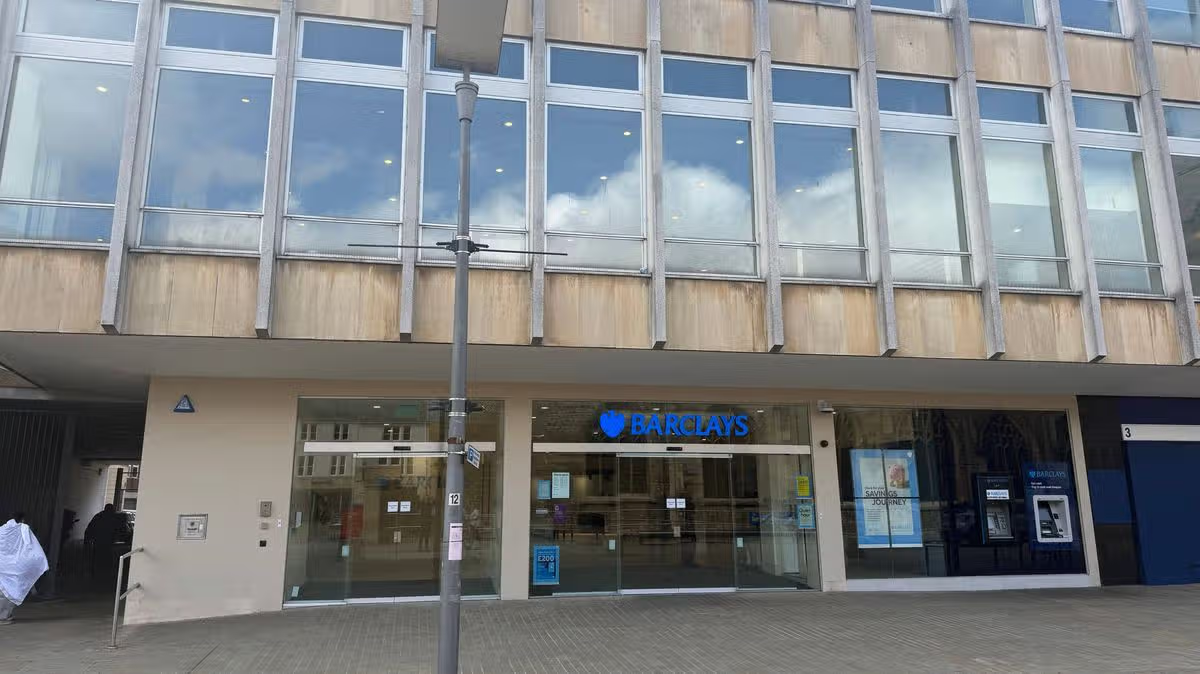
Plans for more than 100 flats above a city centre bank have been approved. Progressive Property Ltd proposed to Peterborough City Council to change the upper floors of 1 to 3 Church Street, Peterborough, into 104 co-living flats. The bottom floor of the building is used by Barclays Bank.

Advertisement

Among the plans, the applicants proposed a number of different facilities. These include en-suite accommodation completed to a “high-end finish”, themed lounge spaces, kitchen spaces and dining spaces aimed to create a “variety of ambient vibes”.

Other facilities include lounges, quiet lounge areas, secure cycle storage and laundry services. The flats are proposed to be co-living to help the council meet HMO standards.

The applicant added: “This ensures that the units will provide adequate internal space for future occupants, with appropriate room sizes, storage areas and overall floor area.

“By adhering to these standards, the units will offer a comfortable, functional and high-quality living environment, aligned with modern housing requirements, as well as flexible and affordable accommodation.”

Advertisement

No car parking will be provided for the flats, as there is “no requirement to provide spaces for residents and visitors”, according to the council’s local plan car parking standards. However, a total of 120 cycle parking spaces form part of the plans.

Before approval, the plans received a mixed reaction. Urban design officer Khalifa Abubakar showed support for the plans, and considered it a “welcomed improvement of the pre-application scheme”.

However, the officer asked for a number of matters to be addressed. The officer said the plans lacked a “comprehensive landscaping strategy”. They were also concerned that the upper storey appeared “overbearing and visually dominant” in several eye-level views from Cathedral Square.

The Peterborough Civic Society objected to the plans. The society said the changes to the building for the flats would make it a “visually jarring element” in the city centre.

Advertisement

A society spokesperson said: “When viewed across Cathedral Square, the increased mass of a greatly enlarged fourth storey on what is already a visually intrusive building in an otherwise highly attractive townscape façade to the south side of the square will present a visually jarring element to this highly important urban space in the city centre.” They also felt the design was “cramped and over-insensitive”.

The plans were however approved by the council.

Source link

Advertisement
Continue Reading

NewsBeat

Trump doubles down on threat to build ‘North America Air Filter Barrier’ between the US and Canada to block wildfire smoke

Published

on

President Donald Trump has doubled down on his threat to build an air filter barrier between the United States and Canada by sharing this AI-generated image on his Truth Social platform

President Donald Trump has doubled down on his threat to build an air filter barrier between the United States and Canada

Trump took to his Truth Social platform Saturday evening to share an AI-generated image of his proposed ‘North America Air Filter Barrier’.

The image depicted an enormous furnace filter lining the border between the northern US states and Canada.

‘Clean Air. Clear borders,’ a sign beneath the filter reads. 

Advertisement

The president on Monday imposed a 50 percent tariff on Canada over wildfire smoke which has been choking US cities.

The White House said in a fact sheet that the tariffs would go into effect in 30 days and cover ‘products ranging from wine to hockey sticks to cement.’ 

A Trump administration official said the US president had also requested that his aides look into additional tariffs on Canada after accusing the country of ‘coming in and poisoning our air.’  

It came after Trump declared that Canada has unfairly discriminated against American autos, alcohol and dairy products. 

Advertisement

President Donald Trump has doubled down on his threat to build an air filter barrier between the United States and Canada by sharing this AI-generated image on his Truth Social platform

Trump vowed to hold ‘Canada responsible for the fact that they are not properly maintaining their forests and brush’ after wildfires in Ontario caused massive plumes of smoke to blanket cities across the US

Trump last week said the US was being ‘invaded by filthy, polluted, and unhealthy air, the quality of which is dangerous, and totally unacceptable.’

Advertisement

He also vowed to hold ‘Canada responsible for the fact that they are not properly maintaining their forests and brush.’

Trump then pulled the surprise tariffs on Canadian Prime Minister Mark Carney after he met the liberal leader the day before at the World Cup final, where the two appeared chummy

Carney warned that the tariffs have hurt people on both sides of the border and that he was ready to work to strengthen his country and support Canadian workers. 

More than 70 percent of Canada’s exports go to the US, making America its largest trade partner.

Advertisement

Carney said Canada is intensifying negotiations with the US to reach a comprehensive trade deal but is prepared to respond should Trump’s threat of 50 percent tariffs on Canadian goods go into effect.

‘If these tariffs, or other measures come into force, there’s a full range of things that we can do in that regard,’ Carney said after meeting with Canada’s premiers and territorial leaders in Charlottetown, Prince Edward Island on Thursday.

Carney said ‘everything’s on the table’ if an agreement can’t be reached before the tariffs kick in.

‘We don’t need to respond in advance,’ he said. ‘In fact, I think it would be counterproductive at this stage to respond in advance.’

Advertisement
Smoke rises from the French Bar Creek wildfire northwest of Cache Creek in British Columbia, Canada on July 17

Smoke rises from the French Bar Creek wildfire northwest of Cache Creek in British Columbia, Canada on July 17

Wildfire damage is pictured from the air in Collins First Nation, a small, remote Ojibwa community located in northwestern Ontario on Wednesday

Wildfire damage is pictured from the air in Collins First Nation, a small, remote Ojibwa community located in northwestern Ontario on Wednesday

The new tariffs cover a wide range of goods, including honey, liquor, cement, dairy products, some wood products, hockey sticks and other items. 

They exclude energy products, potash, fish and critical minerals, but would include goods previously protected from import taxes by the United States-Mexico-Canada Agreement, or USMCA. 

Advertisement

That 2020 trade pact was not renewed by the US, triggering a new set of negotiations that could run until 2036.

Carney said the tariff threat could be a negotiation tactic by the US.

‘We’ve seen a series of trade negotiations that the US has undertaken, and normally there’s a deadline,’ he said. ‘Normally there’s an outsized tariff associated with that deadline.’

Carney believes there is a willingness among American officials to reach a trade deal.

Advertisement

Trump and Carney spoke about the wildfires in Ontario that caused massive plumes of smoke to blanket cities across the US during their meeting at the World Cup final last Sunday.

The President said the conversation went well, ‘But I told him, “You’ve got to stop these fires from coming in and poisoning our air.” Our air’s being poisoned.

Wildfire smoke from Canada shrouds the sun as it rises behind the skyline of midtown Manhattan and, the Chrysler Building and the Empire State Building in New York City on July 17

Wildfire smoke from Canada shrouds the sun as it rises behind the skyline of midtown Manhattan and, the Chrysler Building and the Empire State Building in New York City on July 17 

The Bronx was also overtaken by an eerie orange haze. Smoke from wildfires is more dangerous than polluted air due to the dangerous materials it carries

The Bronx was also overtaken by an eerie orange haze. Smoke from wildfires is more dangerous than polluted air due to the dangerous materials it carries 

Advertisement

‘I have a good relationship with Mark Carney, but you know, we got to stop the fires up there,’ Trump said. 

‘If we can help them, we’ll help them – but maybe they should pay us some damages or something, or [we] should do some tariffs,’ he then threatened.

Trump went on to call the smoke ‘terrible,’ specifically pointing out the situation in Detroit, Michigan, where assembly line workers at Ford Motor’s Michigan Assembly Plant were sent by ambulance to nearby hospitals on Thursday, according to the Detroit Free Press. 

But the poor air quality was felt in other parts of the country as well, with smoky conditions being felt in Washington, DC and New York City.

Advertisement

Trump has further threatened to impose tariffs over a major outbreak of an ‘explosive diarrhea’ parasite potentially linked to lettuce from Mexico.

In a press briefing at the White House Friday, the President said: ‘I think what we are going to do is put a major tariff on Mexico because of the lettuce.’

Trump weighed in as cases of cyclosporiasis soared to 11,000 across 41 states, leaving public health officials scrambling to find the cause.

Health officials have suggested that cases of the parasite, a disease transmitted by food or water contaminated with human feces, may be linked to shredded iceberg lettuce from Taylor Farms that was sent to Taco Bell restaurants in nine states.

Advertisement

Illinois, Kansas, Oklahoma and Pennsylvania are also now suggested to be affected, alongside Indiana, Kentucky, Michigan, Ohio and West Virginia.

First Lady Melania Trump, President Donald Trump, Canadian Prime Minister Mark Carney and Mexican President Claudia Sheinbaum pose for photos during the World Cup Final in East Rutherford, New Jersey on July 19

First Lady Melania Trump, President Donald Trump, Canadian Prime Minister Mark Carney and Mexican President Claudia Sheinbaum pose for photos during the World Cup Final in East Rutherford, New Jersey on July 19

Tests on lettuce from Taylor Farms’ manufacturing facility in Mexico have returned a false positive, however, a voluntary recall of the products is still in place.

The business temporarily closed its Central Mexico site on Thursday.

Advertisement

The Trump Administration on Friday also announced a new wave of blistering tariffs targeting 60 trading partners

The levies, which range from 10 percent to 12.5 percent and impact major economies like China, India and the European Union, sparked protests from Beijing and other targets. 

The Trump administration has moved swiftly to rebuild the president’s tariff wall after the Supreme Court struck down a host of his duties in February – dealing a blow to his ability to unleash steep levies at will. 

After the setback, Trump tapped different authorities to reimpose a 10 percent tariff on imports. But this only lasted 150 days and expired on Friday.

Advertisement

The volley of new duties, initially proposed in June, now takes its place and will impact 60 US trade partners, which constitutes 99.4 percent of American trade in total.

Source link

Continue Reading

NewsBeat

Genevieve becomes a hurricane off Mexico but poses no direct threat to land

Published

on

Genevieve becomes a hurricane off Mexico but poses no direct threat to land

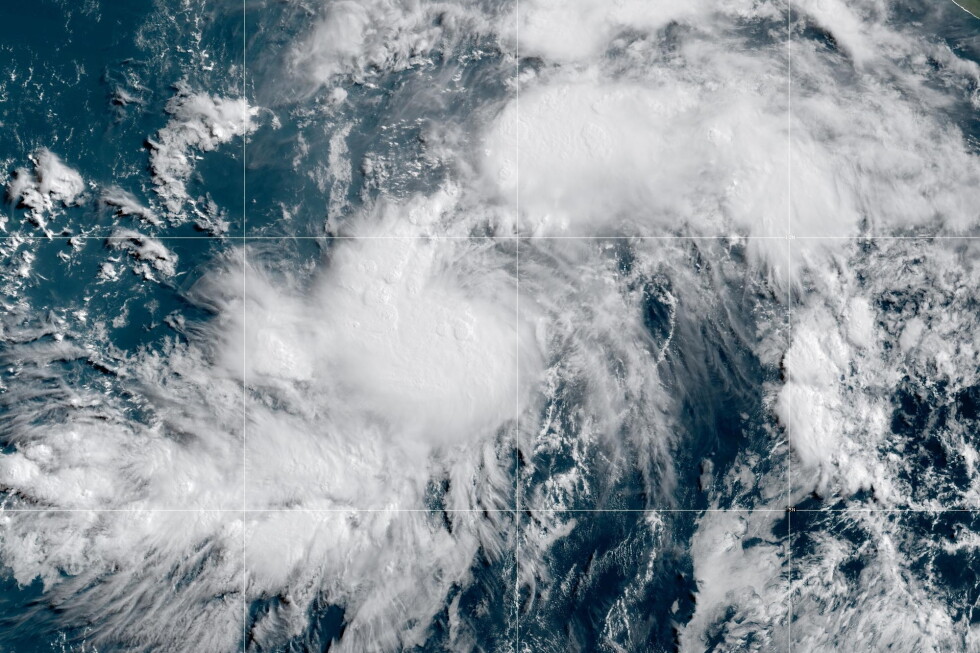
MIAMI (AP) — Tropical Storm Genevieve strengthened into a hurricane Saturday in the Pacific Ocean southwest of Mexico. It was forecast to pick up even more steam and become a major hurricane in the coming days but stay well out to sea on a course roughly parallel to the shore.

Genevieve had maximum sustained winds of 80 mph (130 kph), making it a Category 1 hurricane, according to the National Hurricane Center in Miami. A major hurricane is Category 3 or higher.

Genevieve’s center was located about 500 miles (810 kilometers) south-southwest of Manzanillo, and it was headed west-northwest at 15 mph (24 kph).

No coastal watches or warnings were in effect, but the hurricane center said swells from the storm — likely causing “life-threatening surf and rip current conditions” — were affecting parts of Mexico’s southwestern coast on the weekend and would likely hit southern parts of the Baja California Peninsula on Sunday night or Monday.

Advertisement

Farther west in the Pacific, meanwhile, Hurricane Fausto remained a Category 2 storm as it continued on a projected path in the general direction of the Hawaiian Islands.

Forecasters said it was expected to be downgraded to a tropical storm in the coming days, but warned that it could still generate dangerous surf and said “Interests in the Hawaiian Islands should monitor” its progress.

Fausto had maximum sustained winds of 100 mph (155 kph); was located about 1,060 miles (1,705 kilometers) east of Hilo; and was moving west at 13 mph (20 kph).

Advertisement

Source link

Continue Reading

NewsBeat

County Monaghan: Man charged over bomb in car

Published

on

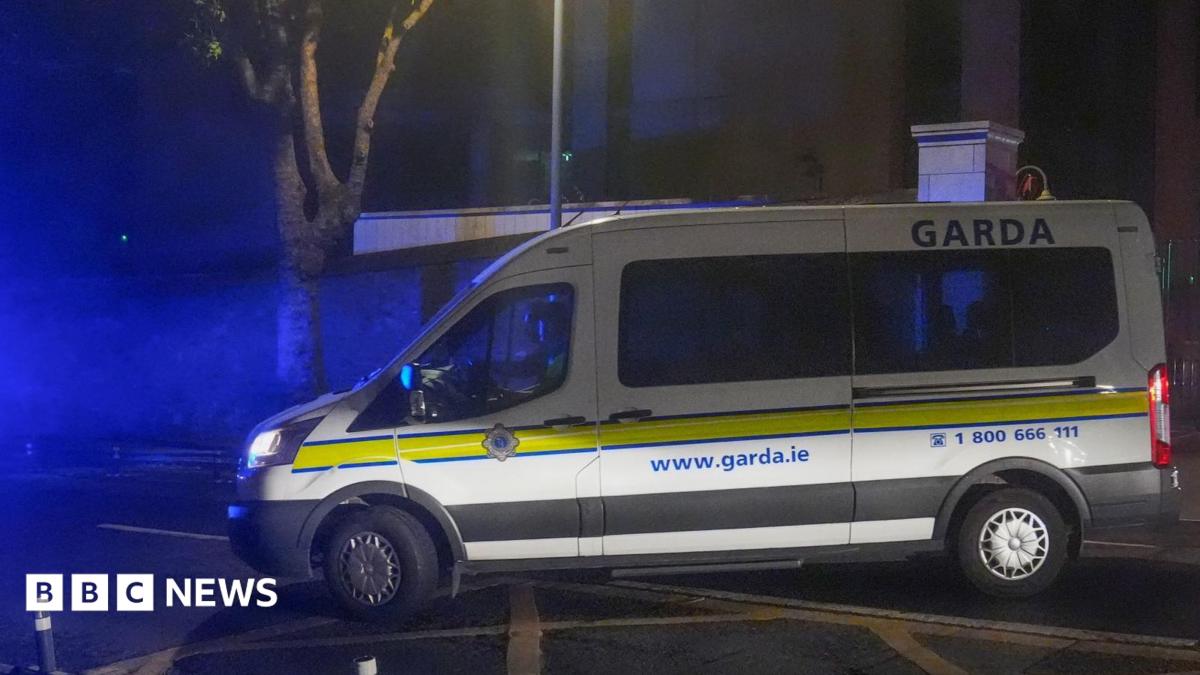
A white Garda van with a yellow stripe along its side pulls out onto a main road on a dark night.

At the sitting of the Special Criminal Court, Det Sgt Shane Noone said he arrested O’Donovan at 17:07 local time on Friday and informed him he would be charged with the offence.

Solicitor Darragh Mackin said he had not taken instruction from O’Donovan as he was observing a strike over changes to criminal legal aid fees and was only appearing in court out of courtesy.

O’Donovan told Judge Patrick McGrath that he had “no representation at all”, and had asked for “the services of this gentleman beside me”, referring to Mackin.

O’Donovan was remanded in custody until Monday.

Advertisement

Law student Isobella Perrie Sullivan, 25, of Abbeylands Park in Clane, County Kildare, appeared before a district court on Friday charged with possession of explosives in connection with the same incident.

Her solicitor said she had been asked to take a bag to Northern Ireland, and had not been aware what was in it.

Perrie Sullivan was granted bail but remains in custody ahead of a further bail hearing on Monday.

Source link

Advertisement
Continue Reading

NewsBeat

Is another heatwave coming? Met Office forecast for UK

Published

on

Is another heatwave coming? Met Office forecast for UK

Some forecasters are predicting highs of up to 35C across England and parts of Wales, with the heat expected to become more widespread and intense as the week progresses.

Heatwaves are defined as periods of three consecutive days where temperatures meet or exceed a specific threshold.

This threshold varies across the UK, from 25C in the north and west to 28C in parts of eastern England.

Is another heatwave coming in the UK?

The UK has already experienced three heatwaves this year, with the last one ending for most of England and Wales last weekend when cooler air brought temperatures down to 20-24C.

Advertisement

However, Usk in Monmouthshire and Exeter in Devon continued to hit heatwave levels and on Friday, marked 20 consecutive days of reaching the criteria.

A short period of cooler weather with some rain in parts of the UK is expected over the weekend, but the heat is likely to return quickly.

High pressure is forecast to build over the south of the UK next week, preventing the arrival of rain-bearing weather fronts in southern regions.

This pattern will confine wet weather to the north and west, particularly north-west Scotland, while temperatures begin to climb once more in the south.

Advertisement

The Met Office said that “if only one or two stations reach heatwave criteria, that would not be defined as a heatwave”, but a broader area could trigger the declaration of a fourth heatwave.

People enjoying the warm weather in Queen Square, Bristol2026 became the first year to record temperatures of 35C on six separate days (Image: Ben Birchall/PA Wire)

For much of next week, temperatures in England and Wales are expected to peak at 25C to 32C, with the hottest conditions focused on central and eastern England by Tuesday, the BBC weather team predict.

Some computer models suggest east Wales and most of England could see temperatures between 30C to 35C by next weekend, raising the likelihood of another officially declared heatwave.

Met Office verdict on potential fourth heatwave

The Met Office is forecasting a “return to very warm weather in the south next week”.

Advertisement

It says: “This more unsettled spell is not expected to last long for much of southern UK with dry weather and sunny periods likely to return on Monday and continue into midweek.

“Further north, it will be cloudier with further showers or longer outbreaks of rain.  

“Temperatures are expected to recover quickly in the south. 

“Many parts of England and Wales are likely to return to the mid to high twenties Celsius early next week, with the potential for temperatures to reach 30C again in southern and eastern England by Tuesday.

“Conditions in the southeast could become very warm or locally hot, with the possibility that some locations may once again reach heatwave criteria, potentially making this the fourth heatwave episode of the year for parts of the UK.”

Advertisement

Recommended reading:


How to stay cool in summer in the UK

The NHS suggests staying out of the heat if possible, adding that it is best to stay shaded, particularly between 11am and 3pm.

It also recommends using sunscreen, wearing a hat and light clothes, and avoiding exercise or activity that makes you hotter.

To cool yourself down, have cold food and drinks and have a cool shower or put cool water on your skin or clothes.

Advertisement

It is also vital to keep your living space cool, closing windows during the day and opening them at night when it is cooler.

Have you enjoyed temperatures cooling down recently? Let us know in the comments.

Source link

Advertisement
Continue Reading

Trending

Copyright © 2025